

Germany halts UN refugee resettlement programme
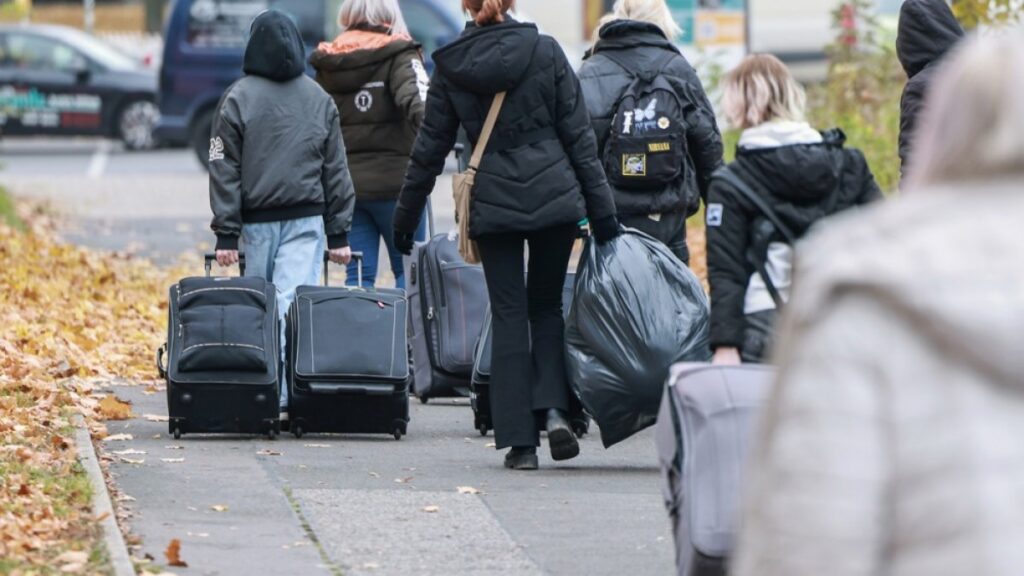
The next German government, likely to be led by the centre-right CDU, is expected to be tougher on migration. Germany has suspended the admission of refugees through a United Nations programme, according to a document seen by the Reuters news agency, as a new conservative-led coalition government prepares to take office. Reuters reported on Tuesday that the Federal Ministry of the Interior had made the decision as negotiations between the centre-right Christian Democrats (CDU) and the centre-left Social Democrats (SPD) continue, with both sides likely to agree on a tougher migration and asylum policy. The German dpa news agency also reported that the Interior Ministry and the UN High Commissioner for Refugees (UNHCR) had confirmed news of the suspension. Migration has been a contentious issue in Germany, the third largest refugee-hosting country in the world, with 2.5 million refugees, including more than one million refugees from Ukraine. But a growing number of German voters want the country to accept fewer migrants. Immigration and asylum were hotly discussed before February’s German elections in which the far-right Alternative for Germany (AfD) doubled its vote share after several violent attacks blamed on refugees or asylum seekers. Advertisement The issue has been discussed as part of the coalition negotiations between the CDU and the SPD, with the CDU pushing for asylum seekers to be turned away from Germany’s borders on the grounds they have already passed through a safe country. The two sides have struck a preliminary agreement to end voluntary federal admission programmes for refugees such as the UN programme – the only one currently active – and not to launch any new ones, according to the document seen by Reuters. Since 2016, Germany has participated in a European Union resettlement scheme that accepts refugees selected by UNHCR. Most come from Turkiye, Egypt, Jordan or Kenya. The Interior Ministry said 4,711 people had arrived in Germany through the programme since 2024, out of the 13,000 refugees that Germany has promised the European Commission it would take in for 2024 and 2025 combined. Despite the suspension, admissions that are already well advanced, with concrete commitments, will go ahead, a ministry spokesperson said. On Monday, Germany said it no longer took top spot in the European Union for new asylum applications, local media outlets reported, citing EU data that put France and Spain ahead. Interior Minister Nancy Faeser was quoted as saying that the latest figures reflected measures taken to restrain “irregular migration towards Europe as a whole as well as to Germany itself”. Adblock test (Why?)
Are Iran and the US having ‘direct’ talks on the nuclear file?
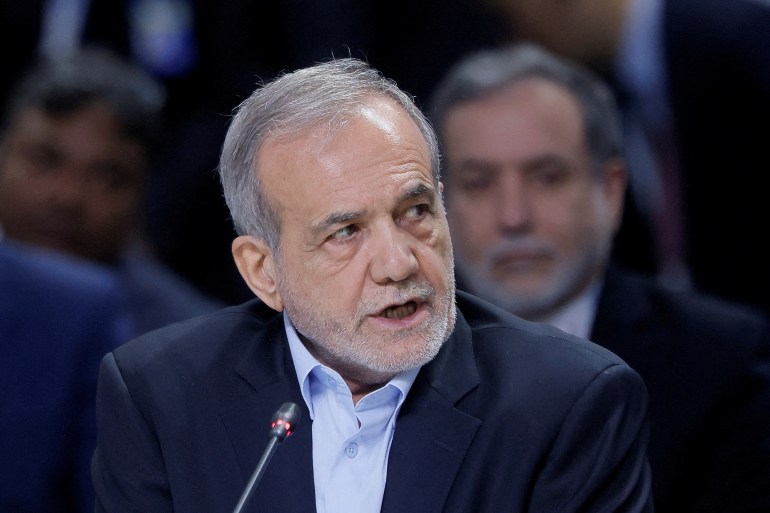
In a news conference on April 7, United States President Donald Trump said there were direct talks between Iran and his administration on the future of Tehran’s nuclear programme. “We’re having direct talks with Iran,” Trump said. “On Saturday, we have a very big meeting.” Iran denied the direct talks but admitted talks were set to take place through Omani mediation. Trump’s announcement came as a surprise to many, as Iran has long refused to hold direct talks. So, has something changed? Here’s everything we know so far. What did Trump say? Interestingly, he has doubled down on the talks being “direct”, saying they have begun and the next meeting would be on Saturday. “A lot of people say, oh, maybe you’re going through surrogates or you’re not dealing directly, you’re dealing through other countries,” he said. “No, we’re dealing with them directly. And maybe a deal’s going to be made. “Doing a deal would be preferable to doing the obvious,” he said, presumably in reference to attacking the regional giant, something that US ally Israel has done twice in the last 12 months. Advertisement In early March, Trump told reporters that he had written to Iranian authorities demanding talks on the country’s nuclear programme and threatening military action if there was no reply. Iran’s Supreme Leader Ayatollah Ali Khamenei said at the time that Iran would not negotiate with “bullying governments”. Trump has until now applied what he calls a policy of “maximum pressure” on Iran, consisting of intensified sanctions. What did Iran say? Iran’s Foreign Minister Abbas Araghchi said indirect talks between himself and US Special Envoy for the Middle East Steve Witkoff would take place in Oman. “It is as much an opportunity as it is a test,” Araghchi wrote on X. Iran has long said it will not hold direct talks with the US, but agreed to work through an Omani intermediary, who was announced by Iranian state media to be Omani Foreign Minister Sayyid Badr Albusaidi. Iran and the United States will meet in Oman on Saturday for indirect high-level talks. It is as much an opportunity as it is a test. The ball is in America’s court. — Seyed Abbas Araghchi (@araghchi) April 7, 2025 Iran’s messaging has oscillated between an openness to negotiate and rejection of the US’s threatening tactics. Iran’s President Masoud Pezeshkian said in September that direct talks were possible if the US showed it was amenable to good-faith talks. “We are not hostile towards the US. They should end their hostility towards us by showing their goodwill in practice,” Pezeshkian said at the time. “We are brothers with the Americans as well.” Advertisement However, earlier this week, Araghchi questioned Washington’s sincerity in calling for negotiations, saying on Sunday, “If you want negotiations, then what is the point of threatening?” Iranian President Masoud Pezeshkian [Maxim Shemetov/Reuters] What would Trump want to negotiate? Despite bombing Yemen and allowing Israel to have a free hand in Lebanon and Syria as well as to restart the war on Gaza, Trump says he wants to be seen as a “peacemaker”. He says he wants to negotiate Iran’s nuclear programme, to make sure that Iran never builds a nuclear weapon. During his first term in office, Trump actually withdrew the US from a nuclear deal between Iran and world powers that curbed Iran’s nuclear programme in return for some sanctions relief. After withdrawing, Trump reapplied sanctions. He said any agreement with Iran would have to limit its conventional weapons arsenal as well, not just the nuclear programme. In recent weeks, he has said Iran is materially aiding Yemen’s Houthis, blaming Iran whenever the Houthis launch an attack on Israel or what they say is Israel-linked shipping in the Arabian or Red seas. It is not clear if that will come up in negotiations. Trump may also want to discuss Iran’s increased oil sales to China. What would Iran want to negotiate? Iran is interested in sanctions relief to ease economic pressure on Tehran as the country suffers an economic crisis that has hit all sectors of society. This would include assurances that Iran would be able to access the SWIFT money transfer system as well as international investment. Advertisement However, Iran also wants recognition of its nuclear programme, including the right to some level of enrichment and to use its centrifuges, built since 2018. That said, the two sides’ starting positions are further apart than when negotiations first started on the Joint Comprehensive Plan of Action (JCPOA), widely known as the “Iran nuclear deal”. Iran is asking for more extensive sanctions relief than provided under Obama, while Trump has threatened to bomb Iran if they don’t cut a deal. Isn’t there already a deal on Iran’s nuclear programme? Yes, the JCPOA. As we mentioned above, it exchanged assurances from Iran on limiting its nuclear programme for sanctions relief. Trump withdrew the US from the agreement in 2018, and his close ally, Israeli Prime Minister Benjamin Netanyahu, has been one of the loudest voices opposing the JCPOA. Trump and Netanyahu are in agreement, saying the JCPOA didn’t go far enough for long enough, in reference to the JCPOA only prohibiting certain nuclear activities for 10 to 15 years. They said Iran’s conventional weapons programme should be included in any deal with Iran, and that any relief the Iranian economy receives would only enable Tehran to fund its regional allies to carry out activities assumed to “threaten Israel’s security”. Trump meets with Netanyahu in Washington, DC on April 7, 2025 [Kevin Mohatt/Reuters] How close is Iran to a nuclear weapon? No one really knows. Iran says its nuclear programme is for peaceful purposes and it does not want to develop a nuclear weapon. Advertisement Supreme Leader Khamenei issued a religious ruling to that effect in 2003, and that has been the cornerstone of Iran’s nuclear policy since. Some Western analysts claim that, in terms of capabilities, Iran is incredibly close to a nuclear weapon. In March 2025,
Pro-Palestine protesters ‘shut down’ New York’s Grand Central station
[unable to retrieve full-text content] Pro-Palestine protesters staged a demonstration at New York’s Grand Central station.
Has the dire wolf come back to life? Here is what we know
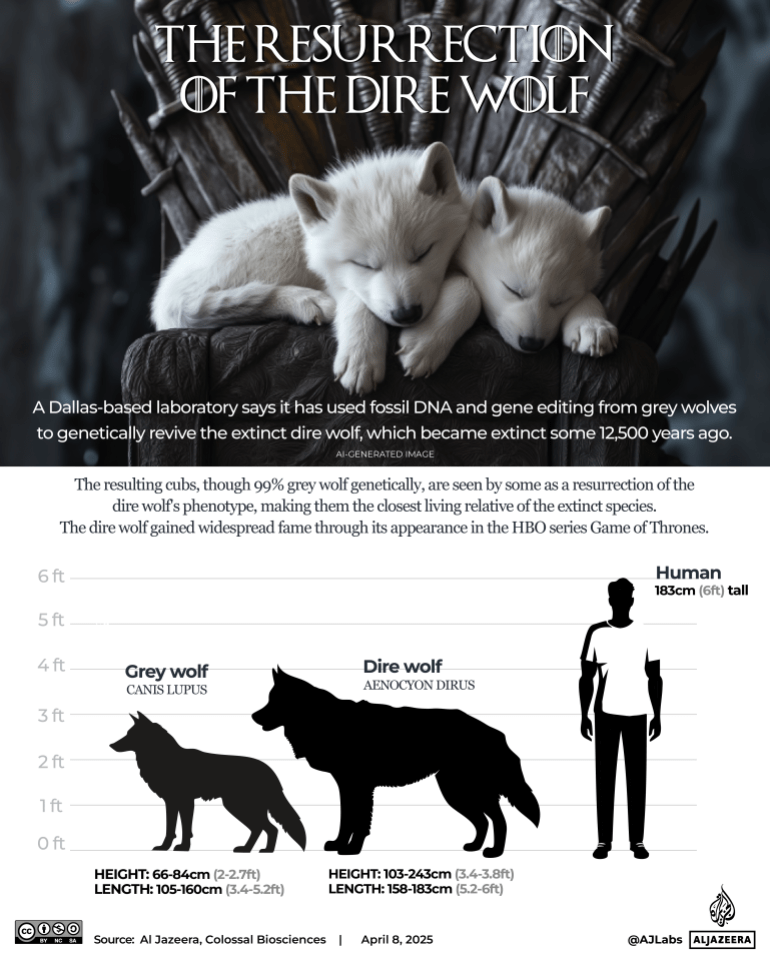
The dire wolf, a species that went extinct some 12,500 years ago but was made famous by the Game of Thrones series, has been brought back to life, according to Texas-based biotech firm Colossal Biosciences. The company has described the dire wolf as the “world’s first successfully de-extinct animal”. On Monday, the company announced that its research had led to the birth of three pups — Romulus, Remus and Khaleesi. But the recently born wolves have DNA which is very close to that of the grey wolf, leading to criticism of the company’s claims. So are Romulus, Remus and Khaleesi truly dire wolves? Here is what we know about them: What is a dire wolf? The dire wolf, the real-life inspiration behind the wolves in HBO’s Game of Thrones, was once a dominant predator across North America. Fossils suggest that dire wolves were built for strength, not speed. They had more muscle and a heavier build than other ancient or modern wolves. But despite their size, fossils show that the dire wolf could still move well through different environments, Colossal Biosciences said. It could hunt big animals and live alongside other species. Their powerful bodies made dire wolves strong predators. Advertisement These carnivores hunted large Ice Age animals like bison, horses and possibly mammoths. As many of their prey species disappeared, likely in part due to human hunting, dire wolves may have been driven to extinction, paving the way for the grey wolf to move down from northern Canada and Alaska to take over its ecological role. SOUND ON. You’re hearing the first howl of a dire wolf in over 10,000 years. Meet Romulus and Remus—the world’s first de-extinct animals, born on October 1, 2024. The dire wolf has been extinct for over 10,000 years. These two wolves were brought back from extinction using… pic.twitter.com/wY4rdOVFRH — Colossal Biosciences® (@colossal) April 7, 2025 “Many people view dire wolves as mythical creatures that only exist in a fantasy world, but in reality, they have a rich history of contributing to the American ecosystem,” said Game of Thrones author George RR Martin, who is also an investor and cultural adviser to Colossal. “I get the luxury to write about magic, but [they] have created magic by bringing these majestic beasts back to our world.” How are dire wolves different from more common wolves? According to Colossal, at first glance, dire wolves — their formal, scientific name is Aenocyon dirus — appeared more heavily built, with thicker legs, broader heads and shoulders, a stockier frame, and a more pronounced snout. Although they look alike, dire wolves are not closely related to grey wolves and are not their ancestors. Genetic studies reveal that the two species diverged millions of years ago and evolved separately in the Americas. How did scientists bring a dire wolf ‘back’? Scientists extracted and sequenced DNA from two ancient dire wolf specimens — a 13,000-year-old tooth and a 72,000-year-old ear bone. This analysis identified 20 key genetic differences between dire wolves and their closest living species, grey wolves. Advertisement Using CRISPR technology, a kind of molecular scissors to cut DNA at a specific spot, researchers edited the genomes of grey wolf cells to incorporate these 20 specific genetic variants associated with dire wolf traits, such as larger size, broader heads and thicker fur. The genetic material was inserted into an egg cell from a domestic dog. Once the embryos were developed, they were implanted into surrogate dogs. Sixty-two days later, the genetically engineered pups were born. What do we know about Romulus, Remus and Khaleesi? Romulus and Remus, both males, were born on October 1, 2024, while Khaleesi, a female, was born on January 30, 2025. Romulus and Remus, at six months old, each measure nearly 4 feet (122cm) in length and weigh approximately 80 pounds (36kg), with projections to reach 6 feet (183cm) and 150 pounds (68kg) at full maturity. Khaleesi, at three months, is developing similarly. The wolves exhibit physical characteristics such as white coats, larger body sizes, and broader heads. When the first dire wolf pup was delivered by Caesarean section, Colossal’s chief animal officer, Matt James, recalled gently rubbing the newborn between two towels to stimulate its first breath. “Good lord, this thing is huge,” he remembered thinking. The first two pups that were genetically engineered [Colossal Biosciences via AP] Are dire wolves really back? While Colossal Biosciences referred to these animals as “de-extincted” dire wolves on Monday, some experts argue that they are genetically modified grey wolves rather than true representations of the extinct species. Advertisement “We call them dire wolves,” Ben Lamm, founder and CEO of the Dallas-based startup, said. Love Dalen, a professor in evolutionary genomics based at the Centre for Palaeogenetics at Stockholm University and adviser to Colossal, also argued this is more of a philosophical question. “There’s no secret that across the genome, this is 99.9 percent grey wolf. There is going to be an argument in the scientific community regarding how many genes need to be changed to make a dire wolf, but this is really a philosophical question,” Dalen said. “It carries dire wolf genes, and these genes make it look more like a dire wolf than anything we’ve seen in the last 13,000 years. And that is very cool,” he added. The two newly born baby Dire Wolves, brought back from extinction by genetic engineering, seated on the Iron Throne. 🐺 George R.R. Martin serves as a Colossal Biosciences cultural advisor and investor, with Peter Jackson loaning his Iron Throne prop for the photoshoot. pic.twitter.com/Yax9WjCp7a — westerosies (@westerosies) April 7, 2025 Why bringing it back? According to Colossal, the project helps push the boundaries of genetic engineering and could provide tools for conservation, especially for species with shrinking genetic pools. The dire wolf also served as a high-profile case to demonstrate these capabilities. “This project demonstrates the awesome potential for advances in genetic engineering and reproductive technologies to recreate lost diversity,” Andrew Pask, Colossal advisory board member, said.
Devastation after deadly flooding in DR Congo’s capital
[unable to retrieve full-text content] Hundreds of people have been moved to emergency shelters after flooding in DR Congo’s capital, Kinshasa.
Hundreds mourn Palestinian-American teen killed by Israeli forces
[unable to retrieve full-text content] Footage shows the moment 14-year-old Palestinian teen Omar Mohammad Rabea was allegedly fatally shot by Israeli forces.
Trump claims US held direct nuclear talks with Iran
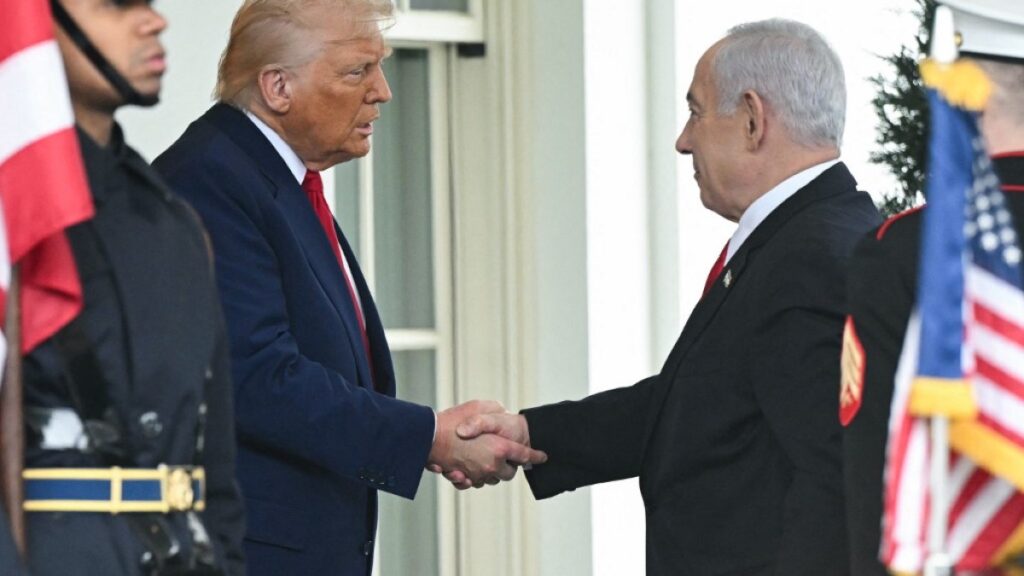
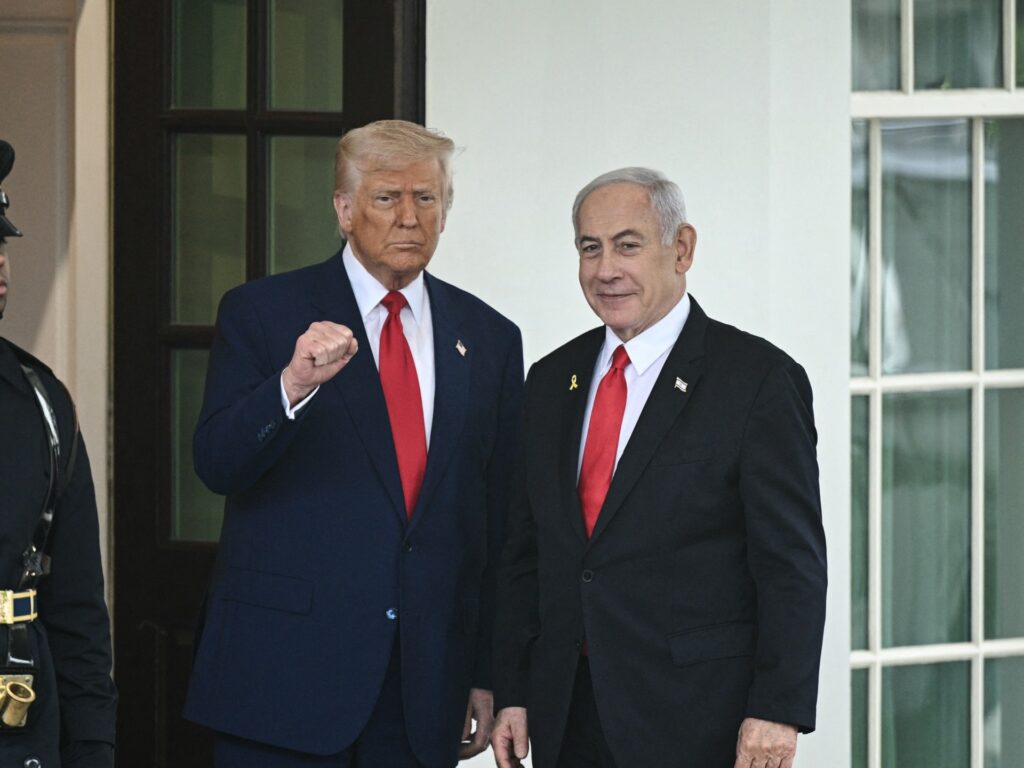
President Donald Trump has announced that the United States has begun direct negotiations with Iran over its nuclear programme, after Tehran had earlier dismissed Washington’s calls for the talks. “We’re having direct talks with Iran, and they’ve started. It’ll go on Saturday. We have a very big meeting, and we’ll see what can happen,” Trump told reporters at the White House on Monday, alongside Israeli Prime Minister Benjamin Netanyahu. “And I think everybody agrees that doing a deal would be preferable,” he added, without providing further details. Trump also warned that Iran would be in “great danger” if diplomatic efforts to curb its nuclear ambitions failed, adding that Tehran “can’t have nuclear weapons”. Earlier this month, Trump told NBC News: “If they [Iran] don’t make a deal, there will be bombing”. He added that the bombing would be “the likes of which they have never seen before.” Trump’s announcement of direct talks with Tehran would not be to Netanyahu’s “liking”, as the Israeli leader has long wanted to simply bomb Iran, said Marwan Bishara, Al Jazeera’s senior political analyst. Advertisement “Trump has wanted a deal for a long time,” Bishara said. However, “Netanyahu certainly thinks Iran’s defences have been weakened by last year’s Israeli air strikes on Iran. And he sees this as a great opportunity, with US support, for Israel to finish off Iran.” “In reality, Trump doesn’t want to enter a war with Iran while he is in the midst of trade wars with the rest of the world,” Bishara added. ‘Meaningless talks’ Over the weekend Iranian Minister of Foreign Affairs Abbas Araghchi described the prospect of direct negotiations with the US on Tehran’s nuclear programme as “meaningless”. Araghchi’s remarks came after Trump said last month in a letter to Iran’s Supreme Leader Ayatollah Ali Khamenei that he hoped there would be a negotiation between the countries. Tehran, which maintains that it is not seeking a nuclear weapon, has so far rejected Washington’s overtures, but has said it is open to indirect diplomacy – a stance repeated by Araghchi in Sunday’s statement. In 2018, during his first presidency, Trump withdrew the US from the 2015 nuclear agreement between Iran and world powers, which had placed strict curbs on Tehran’s nuclear activities in exchange for sanctions relief. Iran says its nuclear activities are solely for civilian purposes. Israel, the US’s top ally in the region, is widely believed to have an undeclared nuclear arsenal. Netanyahu calls for Palestinians to leave Gaza Speaking next to Netanyahu, who has been issued an arrest warrant by the International Criminal Court (ICC) for alleged war crimes in Gaza, Trump suggested that the war in Gaza could soon come to an end. Advertisement “I’d like to see the war stop, and I think the war will stop at some point that won’t be in the too-distant future,” Trump told reporters in the Oval Office. However, he did not provide specifics on how or when a ceasefire might be reached. Netanyahu claimed that Israel was working on a new agreement following January’s temporary ceasefire, which he broke unilaterally in March before unleashing more bombing on Gaza and killing hundreds more Palestinians. “We’re committed to getting all the hostages out, but also eliminating the evil tyranny of Hamas in Gaza and enabling the people of Gaza to freely make a choice to go wherever they want,” he said. The Israeli leader also said he had discussed with Trump what he called the US president’s “bold vision” for Gaza, referring to a controversial proposal for US control over the enclave. The plan, widely condemned as a blueprint for ethnic cleansing, has drawn sharp criticism internationally. Luciano Zaccara, assistant professor in Gulf politics at Qatar University, said that the comments did not reveal any change in policy towards Gaza. “Both share the belief that fewer people in Gaza is better – for the United States and Israel,” Zaccara told Al Jazeera. The word “ceasefire” barely came up in the media conference, said Zaccara, adding that “Trump’s main focus was business, trade deficits, and corporate deals, including with Israel. He was not paying much attention to Gaza as a whole, except when discussing expelling Palestinians from their land”. Advertisement Turning to Syria, Trump positioned himself as a potential mediator between Israel and Turkiye, despite tensions between Netanyahu and Turkish President Recep Tayyip Erdogan. “Any problem that you have with Turkey, I think we can solve, as long as you are reasonable,” Trump told Netanyahu. “I have a very, very good relationship with Turkey and with their leader, and I think we’ll be able to work it out. So I hope that’s not going to be a problem. I don’t think it will be a problem,” added Trump. Trump, who described Erdogan as “very smart”, praised Turkiye’s role in Syria, referring to the overthrow of leader Bashar al-Assad’s regime in December. “Nobody has done in 2,000 years what Turkey has done in Syria,” he said. Israel, which has carried out extensive air strikes against Syrian military targets, remains wary of Turkiye’s growing influence in Syria. Israeli officials fear that a permanent Turkish military presence in Syria could limit their operational freedom to attack Syria. Adblock test (Why?)
Trump: US having direct talks with Iran on nuclear program
NewsFeed “A very big meeting.” President Trump says the US is holding direct talks with Iran on its nuclear program. He says they will have “a very big meeting” on Saturday but declined to say where or who would attend. Published On 7 Apr 20257 Apr 2025 Adblock test (Why?)
Targeted, killed, burned alive: Journalists in Gaza attacked by Israel
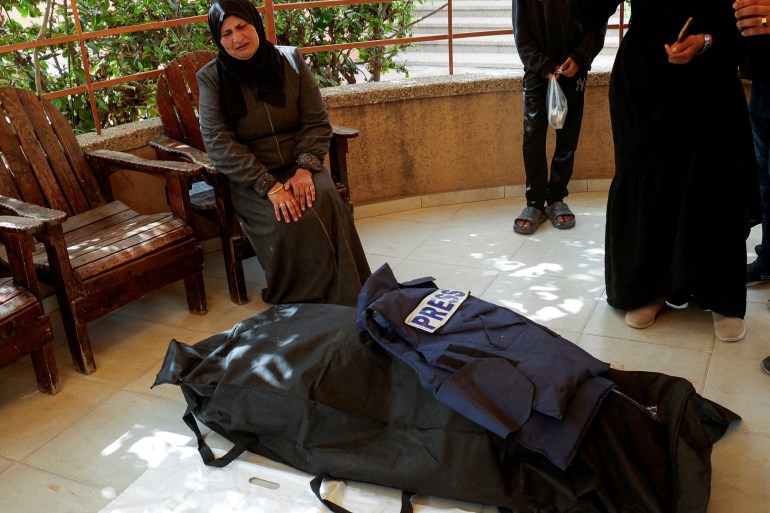
Abed Shaat drifted off to sleep on Sunday night, exhausted after covering Israeli air strikes all day. The 33-year-old freelance photographer had returned to a tent in front of Nasser Hospital in Khan Younis in southern Gaza where he’d been based along with other journalists since the start of Israel’s war on Gaza. Then, they were jolted awake. “I woke up to the sound of a huge explosion nearby,” Shaat said. “My colleagues and I immediately rushed out of the tent. [I had] my mobile phone to film. “The strike had directly hit the journalists’ tent across from us. I was horrified – to target journalists like this!” Burned to death The tent belonged to the TV station Palestine Today. “I started taking pictures from a distance, but as I got closer to the burning tent, I saw one of my colleagues on fire,” Shaat said. “I couldn’t continue filming. I don’t even know how I summoned the courage to approach the flames and try to pull the burning person out. “The fire was intense. There was a gas canister that had exploded, and another one that was burning. I tried to pull him out by his leg, but his pants tore off in my hand. I tried from another angle, but I couldn’t. Advertisement “The fire grew so strong, I fell back, I couldn’t bear it any longer. Then some of the men came with water to put the fire out. “I suddenly felt really weak … and lost consciousness.” The mother of Palestinian journalist Islam Maqdad, who was killed in an Israeli strike, sits near her body at Nasser Hospital on April 6, 2025, a day before another Israel killed another journalist in the hospital [Hatem Khaled/Reuters] Israel’s attack burned Palestine Today reporter Hilmi al-Faqaawi to death along with another man named Yousef al-Khazindar. Journalists Hassan Eslaih, Ahmed al-Agha, Muhammad Fayek, Abdallah Al-Attar, Ihab al-Bardini and Mahmoud Awad were also injured. The Israeli army said on X it had launched the attack to capture Hassan Abdel Fattah Muhammad Islayh (Eslaih), alleging he was a member of Hamas posing as a journalist. Eslaih, a journalist with a large social media following, was badly wounded in the strike. He had been threatened multiple times by Israeli authorities for covering an attack on an Israeli kibbutz during the Hamas-led attacks on southern Israel on October 7, 2023. The Israeli army also said it took steps “to reduce the chance of harming civilians” but did not explain why it chose to bomb a tent full of sleeping journalists to capture one of them. ‘Nothing new in … crimes against journalists’ More than 200 journalists and media workers have been killed by Israeli forces since October 2023, according to the Palestinian Journalists Syndicate, making it the deadliest ever conflict for journalists. Advertisement The tent targeted on Monday was outside one of the largest hospitals in southern Gaza. Journalists have been gathering in hospitals from the beginning of Israel’s war on Gaza, seeking relatively steady internet service, electricity and safety in numbers. Locals said journalists have been stationed and reporting from Nasser Hospital throughout the conflict. “We live, sleep and work there. We see each other more than we see our own families,” Shaat said. “What connects us … is more than just work.” Experts told Al Jazeera in September that Israel’s killing of journalists in Gaza shows a clear pattern of targeting journalists. “There’s nothing new in the Israeli occupation’s crimes against journalists,” Jad Shahrour, spokesperson for the Samir Kassir Foundation, a Beirut-based media freedom watchdog, told Al Jazeera. “This isn’t the first time during this war, from October 7 to today, whether in Lebanon or Gaza, the Israeli army has directly targeted journalists’ centres. “This, of course, according to international law, is a war crime, and nothing justifies it.” Hossam Shabat was killed in March in a targeted attack by Israel [Filip Singer/EPA] Other journalists killed in Gaza since the start of the war include Al Jazeera Mubasher journalist Hossam Shabat and Al Jazeera reporter Hamza Dahdouh, son of Al Jazeera’s Gaza bureau chief Wael Dahdouh. Both journalists were killed in targeted attacks on their cars, and Israel justified its actions by saying they were part of armed groups but did not provide evidence for the allegations. Advertisement Since October 7, 2023, Israel has killed at least 50,700 people in Gaza, most of whom are children or women and, therefore, not considered members of “terrorist groups” in Israel’s classification. Many civilian men – a protected group under international law – have also been killed. Reporters Without Borders told Al Jazeera it was investigating Monday’s attack. Palestinians go through the remains of a tent that housed journalists and was hit by an Israeli strike in Khan Younis on April 7, 2025 [Hatem Khaled/Reuters] Whose turn is it next? Journalists in Gaza are walking with targets on their backs, media rights organisations said. “Israel deliberately bombs journalists because it doesn’t want anyone to report the situation,” Shahrour said. The idea, the groups said, is to discourage reporting of possible war crimes Israel is committing to allow Israel to avoid any accountability. The Palestinian Journalists Syndicate gave a news conference on Monday, calling for international accountability for Israel’s crimes against journalists in Gaza. Speaking to Al Jazeera just after returning from al-Faqaawi’s funeral, Shaat spoke of the deep psychological scars the experience has left on him. “Even now, I don’t feel I can move past what I saw. I never imagined in my life that I would be pulling someone while they were on fire.” He sustained minor burns on both hands during the rescue attempt and now cannot hold a camera. “I feel completely paralysed. … Who are we even doing this for? Does anyone care? Is there anything more horrific than this scene to move people?” Advertisement “This isn’t the first time someone has burned to death, and it’s not the first time journalists have been directly targeted,” Shaat said. “We still
Africa must shun Trump’s push to resurrect coal
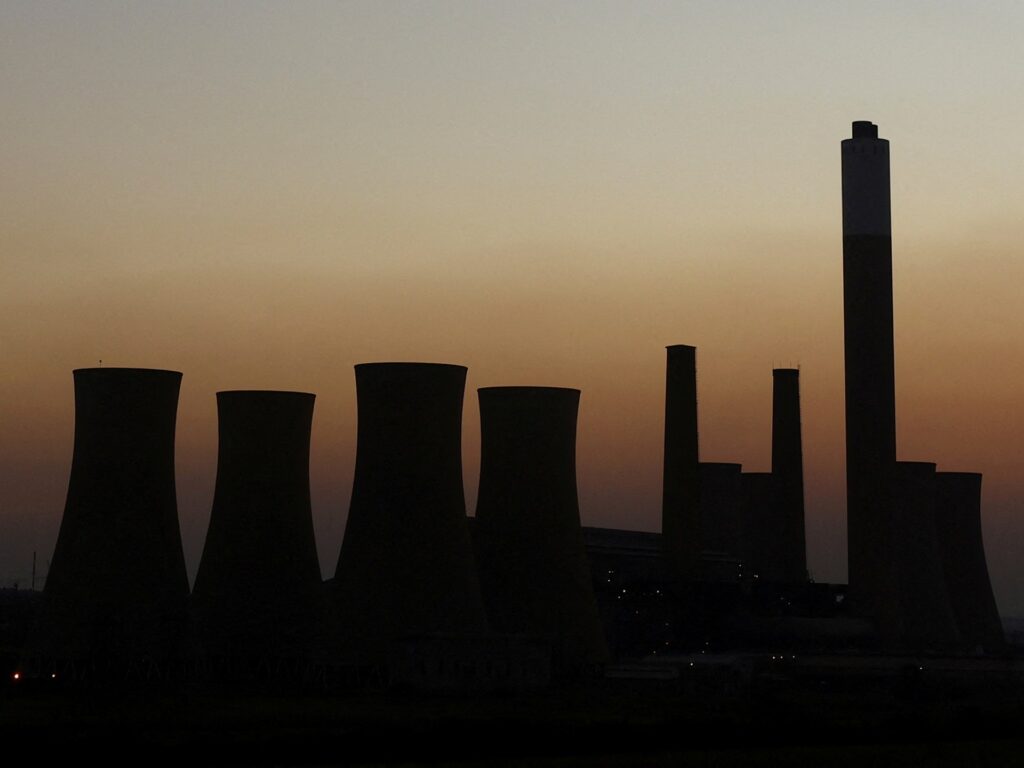
President Donald Trump’s administration has recently taken to urging African leaders to burn more planet-heating fossil fuels, and in particular coal, the dirtiest of all of them. Simultaneously, it scrapped USAID funding, which had been helping millions of the poorest people in Africa survive amid expanding climate breakdown. Those thinking of aligning with Trump’s agenda would do well to remember that the droughts, floods, and storms which have destroyed the lives and livelihoods of Africans across the continent have been supercharged by US energy policy. The US alone has produced about a quarter of all historic carbon dioxide emissions since the Industrial Revolution, which are now responsible for accelerated global warming. Not only would a coal-based development pathway for Africa heap more misery onto its citizens who are already living on the front lines of the climate crisis, but it would also be economically suicidal. The economic impact of the climate emergency is already taking a terrible toll on Africa, and a 2022 report by the charity Christian Aid showed that under the current climate trajectory, African countries could suffer a reduction in gross domestic product growth of 64 percent by 2100. Advertisement There is also no need for Africa to shackle itself to the outdated fossil fuel infrastructure of coal when the continent is blessed with a spectacular potential for developing clean renewable energy. The US fossil fuel advocates would be happy to see Africa trail along in the footsteps of the Global North, rather than see the continent leapfrogging the dirty energy era in the same way it leapfrogged landline telephone technology and adopted mobile phones en masse. But Africans should know better. No other continent has more untapped wind and solar power than Africa, and this remains the key to its long-term prosperity. From the sun-drenched deserts of North Africa to the wind-swept plains of East Africa, the continent has the natural resources to become a global leader in clean energy. Countries such as Morocco, Kenya and South Africa are already making significant strides in renewable energy development, with projects that harness solar, wind, geothermal, and hydropower. Investing in renewable energy offers numerous benefits. It can improve energy access for millions of people, create jobs, and boost economic growth. Renewable energy projects are often more scalable and adaptable to local needs, making them ideal for rural electrification and community-based initiatives. By contrast, coal has wrought a terrible cost to Africans. It is often touted as a cheap and reliable energy source, but this ignores the hidden costs of environmental degradation, health impacts, and the overall economic harm of climate breakdown. Moreover, the global shift towards clean energy means that investments in coal are increasingly risky and likely to become stranded assets. Advertisement African countries must resist the lobbying efforts of Trump’s fossil fuel backers and instead focus on building a sustainable energy future. This requires a multifaceted approach, including investment in renewable energy infrastructure, strengthening governance and policy frameworks, and fostering international cooperation. Investing in clean energy infrastructure is crucial. This includes not only large-scale projects like solar parks and wind farms but also decentralised systems that can bring electricity to off-grid communities. Many countries across Africa are already leading the way with community-focused solar systems and microgrids, and these initiatives demonstrate how renewable energy can be both ambitious and pragmatic, addressing energy access challenges while reducing reliance on imported fuels. Strengthening governance and policy frameworks is equally important. African governments must prioritise climate adaptation and resilience in their urban planning and development processes. This involves integrating climate considerations into all new projects and ensuring that resources are allocated where they are most needed. Effective governance structures can enable the implementation of climate adaptation strategies and ensure that investments in renewable energy are sustainable and equitable. International cooperation and support are also vital. The global clean energy transition holds new promise for Africa’s economic and social development. Countries representing more than 70 percent of global CO2 emissions have committed to reaching net zero emissions by mid-century, including several African nations. These commitments can help attract climate finance and technology, enabling African countries to achieve their energy-related development goals on time and in full. Advertisement Africa’s path to sustainable economic development lies in embracing renewable, clean energy. The continent has the natural resources and innovative spirit to become a global leader in renewables, improving energy access, creating jobs, and reversing the climate crisis. By resisting the fossil fuel industry’s attempts to perpetuate coal use, African countries can build a resilient and prosperous future for their people. Clean energy can be Africa’s greatest success story. For that to happen, African leaders must not take advice from a US president who admits he only cares about “America First”. The views expressed in this article are the author’s own and do not necessarily reflect Al Jazeera’s editorial stance. Adblock test (Why?)