

Video: Palestinians in Gaza unload flour as limited aid finally arrives
[unable to retrieve full-text content] Palestinians in Gaza received long-awaited aid trucks into the enclave.
Deadly floods in Eastern Australia as torrential rains continue

NewsFeed Heavy rains in New South Wales have caused record-breaking floods, killing two people and isolating tens of thousands of residents. Authorities warn of more rain and life-threatening flash floods as emergency teams continue rescue efforts. Published On 22 May 202522 May 2025 Adblock test (Why?)
‘Refuge to all African Americans’ – What Ramaphosa should have told Trump
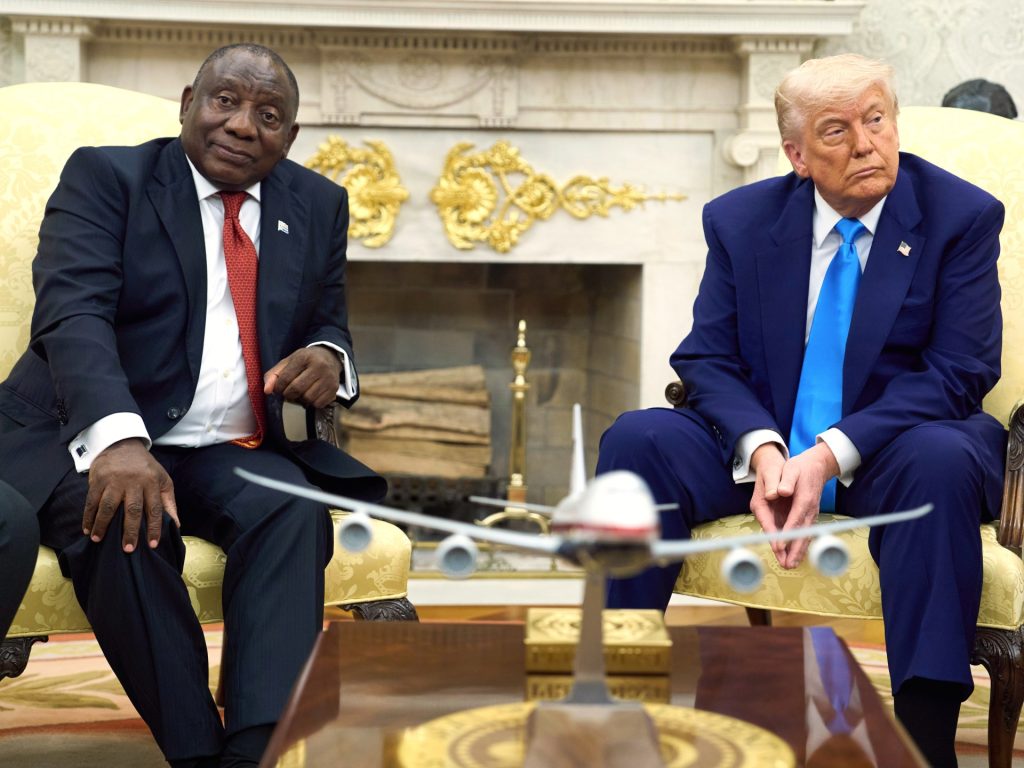
On May 21, South African President Cyril Ramaphosa stunned the world by announcing that his government had officially granted refugee status to 48 million African Americans. The decision, made through an executive order titled “Addressing the Egregious Actions and Extensive Failures of the US Government”, was unveiled at a news conference held in the tranquil gardens of the Union Buildings in Pretoria. Poised and deliberate, Ramaphosa framed the announcement as a necessary and humane response to what he called “the absolute mayhem” engulfing the United States. Flanked by Maya Johnson, president of the African American Civil Liberties Association, and her deputy Patrick Miller, Ramaphosa declared that South Africa could no longer ignore the plight of a people “systematically impoverished, criminalised, and decimated by successive US governments”. Citing a dramatic deterioration in civil liberties under President Donald Trump’s second term, Ramaphosa specifically pointed to the administration’s barrage of executive orders dismantling affirmative action, gutting DEI (diversity, equity, inclusion) initiatives, and permitting federal contractors to discriminate freely. These measures, he said, are calculated to “strip African Americans of dignity, rights, and livelihood – and to make America white again”. Advertisement “This is not policy,” Ramaphosa said, “this is persecution.” President Trump’s 2024 campaign was unabashed in its calls to “defend the homeland” from what it framed as internal threats – a barely veiled dog whistle for the reassertion of white political dominance. True to his word, Trump has unleashed what critics are calling a rollback not just of civil rights, but of civilisation itself. Ramaphosa noted that under the guise of restoring law and order, the federal government has instituted what amounts to an authoritarian crackdown on Black political dissent. Since Trump’s inauguration in January, he said, hundreds of African American activists have been detained by security forces – often on dubious charges – and interrogated under inhumane conditions. While Ramaphosa focused on systemic oppression, Johnson sounded the alarm on what she bluntly described as “genocide”. “Black Americans are being hunted,” she told reporters. “Night after night, day after day, African Americans across the country are being attacked by white Americans. These criminals claim they are ‘reclaiming’ America. Police departments, far from intervening, are actively supporting these mobs – providing logistical aid, shielding them from prosecution, and joining in the carnage.” The African American Civil Liberties Association estimates that in the past six weeks alone, thousands of African Americans have been threatened, assaulted, disappeared, or killed, she said. The crisis has not gone unnoticed by the remainder of the continent. Last week, the African Union convened an emergency summit to address the deteriorating situation in the US. In a rare unified statement, AU leaders condemned the US government’s actions and tasked President Ramaphosa with raising the issue before the United Nations. Advertisement Their mandate? Repatriate African Americans and offer refuge. Ramaphosa confirmed that the first charter flights carrying refugees will arrive on African soil on May 25 – Africa Day. “As the sun sets on this dark chapter of American history,” Ramaphosa said, “a new dawn is rising over Africa. We will not remain passive while a genocide unfolds in the United States.” *** Of course, none of this has happened. There was no statement on “Egregious Actions and Extensive Failures of the US Government” from South Africa. There was no news conference where an African leader highlighted the plight of his African brothers and sisters in the United States and offered them options. There will be no refuge flights from Detroit to Pretoria. Instead, after the US cut off aid to South Africa, repeated false accusations that a “white genocide” is taking place there and began welcoming Afrikaners as refugees, a pragmatic Ramaphosa paid a respectful visit to the White House on May 21. During his visit, watched closely by the world media, he did not even mention the millions of African Americans facing discrimination, police violence and abuse under a president who is clearly determined to “Make America White Again” – let alone offer them refuge in Africa. Even when Trump insisted, without any basis in reality, that a genocide is being perpetrated against white people in his country, Ramaphosa did not bring up Washington’s long list of – very real, systemic, and seemingly accelerating – crimes against Black Americans. Advertisement He tried to remain polite and diplomatic, focusing not on the racist hostility of the American administration but on the important ties between the two nations. Perhaps, in the real world, it is too much to ask an African leader to risk diplomatic fallout by defending Black lives abroad. Perhaps it is easier to shake hands with a man who calls imaginary white suffering a “genocide” rather than to call out a real one unfolding on his watch. In another world, Ramaphosa stood tall in Pretoria and told Trump`: “We will not accept your lies about our country – and we will not stay silent as you brutalise our kin in yours.” In this one, he stood quietly in Washington – and did. The views expressed in this article are the author’s own and do not necessarily reflect Al Jazeera’s editorial stance. Adblock test (Why?)
Tottenham defeat Manchester United to win Europa League final
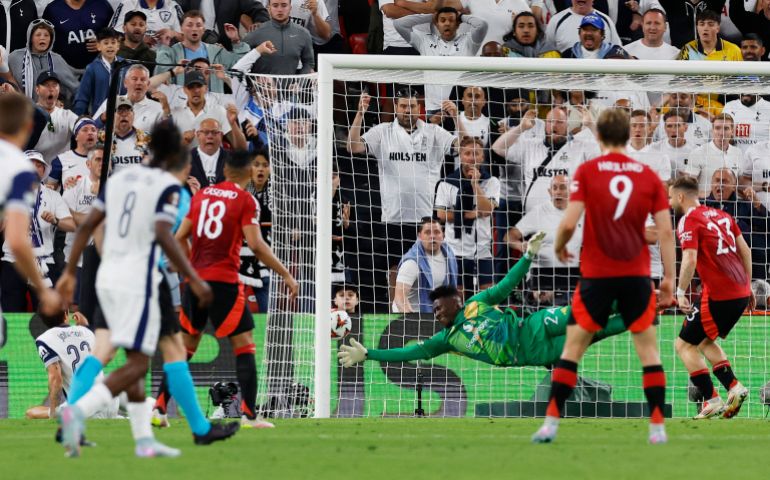
Brennan Johnson scores the only goal as Tottenham beat Man Utd to lift the cup and qualify for the Champions League. Tottenham beat Manchester United 1-0 to win the Europa League final, lifting its first European trophy in more than four decades to qualify for next season’s Champions League. It is the first major title for Tottenham since it won the English League Cup in 2008, and its first European triumph since it won its second UEFA Cup — the equivalent of the Europa League now — in 1984. Brennan Johnson squeezed in the winner at the end of the first half on Wednesday to help Spurs salvage a dismal season, in which it will finish near the bottom of the Premier League standings. The title guarantees Spurs a spot in next season’s Champions League, and brings some much-needed relief for manager Ange Postecoglou after he struggled to keep his team on track all year. Tottenham Hotspur’s Brennan Johnson, left, scores their first goal [Vincent West/Reuters] The victory comes six years after Tottenham fell short against Liverpool in the Champions League final. The defeat adds pressure on United coach Ruben Amorim, whose team sits in 16th place — just ahead of Tottenham — in the Premier League. The club will not play in any European competition next season. United came close to equalising the match on Wednesday when a header by Rasmus Hojlund was cleared at the goal line by Tottenham’s Micky van de Ven in the 68th. Deep into stoppage time, a header by Luke Shaw prompted a difficult save by Tottenham goalkeeper Guglielmo Vicario. Tottenham Hotspur’s Micky van de Ven clears the ball off the line [Andrew Couldridge/Reuters] It had been an even match, with neither team creating many significant scoring opportunities, until Tottenham got on the board in the 42nd minute after a cross by Pape Sarr into the area. Advertisement The ball ricocheted off Shaw and fell in front of Johnson, who seemed to get just enough of it to poke it across the goal line. United pressed forward after conceding, but was not able to get the equaliser in front of a split crowd of nearly 50,000 at Athletic Bilbao’s San Mames Stadium. Manchester United’s captain, Bruno Fernandes, looks dejected as he walks past the trophy after collecting his runners-up medal [Isabel Infantes/Reuters] United had last won a trophy in the 2024 FA Cup, and its last European triumph was at the 2017 Europa League under manager Jose Mourinho. The Red Devils lost all four matches against Tottenham this season and is winless against its rival in seven straight games, with the last six under Postecoglou. United and Tottenham had met in just one previous final — the 2009 League Cup when Alex Ferguson’s United won 4-1 on penalties after a 0-0 draw. Tottenham striker Son Heung-min, who came off the bench in the 67th, finally ended his decade-long trophy drought with Spurs. Tottenham Hotspur manager Ange Postecoglou celebrates with his players after winning the Europa League [Isabel Infantes/Reuters] Adblock test (Why?)
Pro-Palestinian Columbia alumni torch diplomas
[unable to retrieve full-text content] Columbia University alumni burned diplomas and police arrested protesters outside a commencement ceremony.
US Justice Department ends post-George Floyd police reform settlements
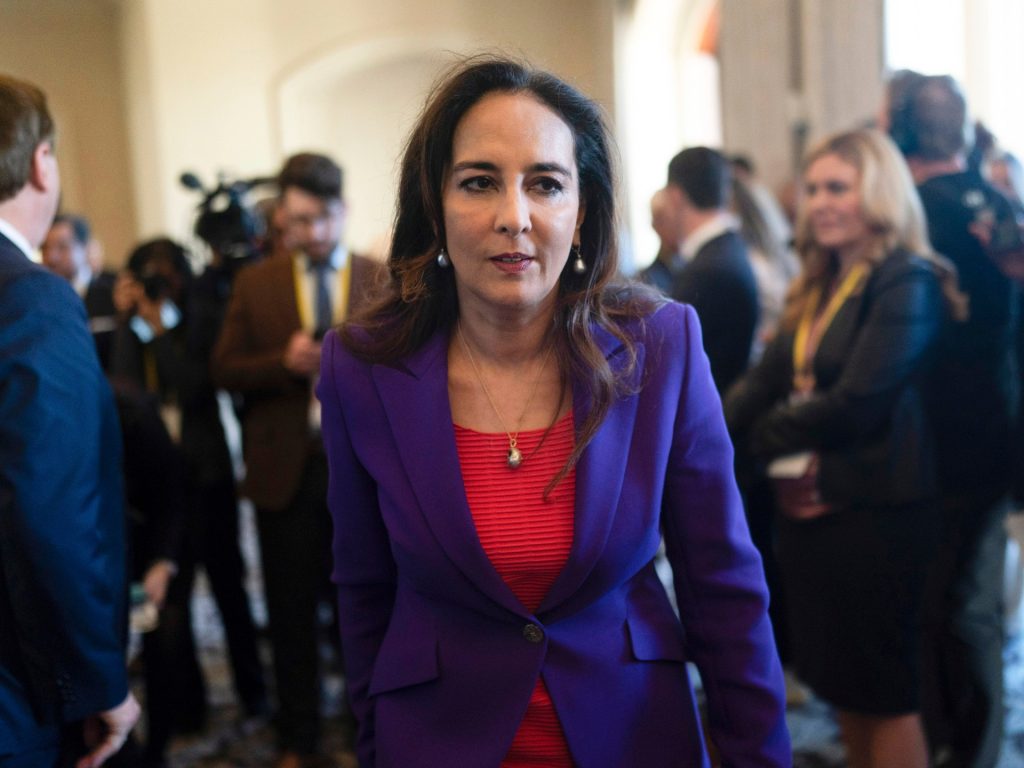
The administration of President Donald Trump has begun the process of ending the federal government’s involvement in reforming local police departments, a civil rights effort that gained steam after the deaths of unarmed Black people like George Floyd and Breonna Taylor. On Wednesday, the United States Department of Justice announced it would cancel two proposed settlements that would have seen the cities of Louisville, Kentucky, and Minneapolis, Minnesota, agree to federal oversight of their police departments. Generally, those settlements — called consent decrees — involve a series of steps and goals that the two parties negotiate and that a federal court helps enforce. In addition, the Justice Department said it would withdraw reports on six other local police departments which found patterns of discrimination and excessive violence. The Trump administration framed the announcement as part of its efforts to transfer greater responsibility towards individual cities and states — and away from the federal government. Advertisement “It’s our view at the Department of Justice Civil Rights Division under the Trump administration that federal micromanagement of local police should be a rare exception, and not the norm,” said Harmeet Dhillon, an assistant attorney general at the Justice Department, said. She argued that such federal oversight was a waste of taxpayer funds. “There is a lack of accountability. There is a lack of local control. And there is an industry here that is, I think, ripping off the taxpayers and making citizens less safe,” Dhillon said. But civil rights leaders and police reform advocates reacted with outrage over the news, which arrived just days before the fifth anniversary of Floyd’s murder. Reverend Al Sharpton was among the leaders who called for police departments to take meaningful action after a viral video captured Floyd’s final moments. On May 25, 2020, a white police officer, Derek Chauvin, leaned his knee on Floyd’s neck for more than nine minutes, causing him to asphyxiate and die. “This move isn’t just a policy reversal,” Sharpton said. “It’s a moral retreat that sends a chilling message that accountability is optional when it comes to Black and Brown victims.” He warned that the Trump administration’s move sent a signal to police departments that they were “above scrutiny”. The year of Floyd’s murder was also marked by a number of other high-profile deaths, including Taylor’s. The 26-year-old medical worker was in bed late at night on March 13, 2020, when police used a battering ram to break into her apartment. Her boyfriend feared they were being attacked and fired his gun once. The police responded with a volley of bullets, killing Taylor, who was struck six times. Advertisement Her death and others stirred a period of nationwide unrest in the US, with millions of people protesting in the streets as part of social justice movements like Black Lives Matter. It is thought that the 2020 “racial reckoning” was one of the biggest mass demonstrations in US history. Those protests unfolded in the waning months of Trump’s first term, and when Democrat Joe Biden succeeded him as president in 2021, the Justice Department embarked on a series of 12 investigations looking into allegations of police overreach and excessive violence on the local level. Those investigations were called “pattern-or-practice” probes, designed to look into whether incidents of police brutality were one-offs or part of a larger trend in a given police department. Floyd’s murder took place in Minneapolis and Taylor’s in Louisville — the two cities where the Trump Justice Department decided to drop its settlements on Wednesday. In both cities, under Biden, the Justice Department had found patterns of discriminatory policing. “Police officers must often make split-second decisions and risk their lives to keep their communities safe,” the report on Minneapolis reads. But, it adds, the local police department “used dangerous techniques and weapons against people who committed at most a petty offence and sometimes no offense at all”. Other police departments scrutinised during this period included ones in Phoenix, Arizona; Memphis, Tennessee; Trenton, New Jersey; Mount Vernon, New York; Oklahoma City, Oklahoma; and the Louisiana State Police. Advertisement Dhillon, who now runs the Justice Department’s Civil Rights Division, positioned the retractions of those Biden-era findings as a policy pivot. She also condemned the consent decrees as an overused tool and indicated she would look into rescinding some agreements that were already in place. That process would likely involve a judge’s approval, however. And while some community advocates have expressed concerns that consent decrees could place a burden on already over-stretched law enforcement departments, others disagree with the Justice Department’s latest move, arguing that a retreat could strip resources and momentum from police reform. At the Louisville Metro Police Department (LMPD), Chief Paul Humphrey said the commitment to better policing went beyond any settlement. He indicated he would look for an independent monitor to oversee reforms. “It’s not about these words on this paper,” he said. “It’s about the work that the men and women of LMPD, the men and women of metro government and the community will do together in order to make us a safer, better place.” And in Minneapolis, Mayor Jacob Frey doubled down, saying he could keep pushing forward with the police reform plan his city had agreed to. “We will comply with every sentence of every paragraph of the 169-page consent decree that we signed this year,” he said at a news conference. “We will make sure that we are moving forward with every sentence of every paragraph of both the settlement around the Minnesota Department of Human Rights, as well as the consent decree.” Advertisement Adblock test (Why?)
Politicians embrace crypto
[unable to retrieve full-text content] World leaders are betting big on crypto. But are they innovating or exploiting their supporters’ trust?
Pakistan promotes army chief Asim Munir to field marshal: Why it matters
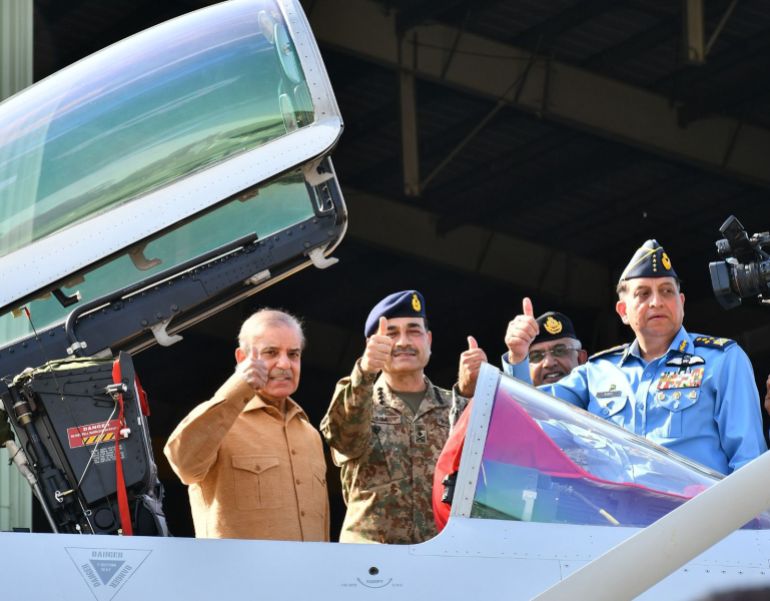
Islamabad, Pakistan – Pakistan’s cabinet on Tuesday promoted Syed Asim Munir, the country’s chief of army staff, to the rank of field marshal, following the country’s recent military conflict with India. That short but intense confrontation had brought the South Asian neighbours to the edge of their fifth war, as they launched missiles and drones towards each other over four days in early May. Ultimately, a ceasefire on May 10, announced by United States President Donald Trump, pulled the nuclear-armed neighbours back from the brink after they each targeted the other’s military installations in missile strikes earlier that day. Both New Delhi and Islamabad claimed wins in the conflict. And Pakistan’s government has drawn a direct link between those clashes and its decision to promote Munir. So why was Munir promoted, what does the rank of field marshal signify, and what does the promotion portend for the future of Pakistan’s military leadership and its role in the country’s domestic affairs? Advertisement Why was Munir made field marshal? According to a statement from Prime Minister Shehbaz Sharif’s office, Munir was promoted in recognition of his leadership of the army, with “exemplary courage and determination,” and for devising a strategy to counter Indian attacks. “In recognition of his brilliant military leadership, courage, and bravery, ensuring Pakistan’s sovereignty and territorial integrity and courageous defence against the enemy, the cabinet approved the prime minister’s proposal to promote General Syed Asim Munir to the rank of field marshal,” the statement said. The cabinet also granted a second extension to Air Chief Marshal Zaheer Ahmed Babar Sidhu, currently in his fourth year as head of the Pakistan Air Force (PAF), following a previous extension. Talal Chaudhry, state interior minister, told Al Jazeera that the decision to promote Munir was based on his leadership. “The Pakistani military was engaged on two flanks, fighting the menace of terrorism on our western borders, and during that, they also had to fend off our adversary on eastern flank, which has one of the world’s largest armies, and yet under Munir’s leadership, we came out on top decisively,” Chaudhry said. Asim Munir, centre, is only the second army official to be promoted to the rank of Field Marshal in Pakistan’s military history. [Handout/Inter-Services Public Relations] How has Munir responded? In a statement issued by the Inter-Services Public Relations (ISPR), the military’s media wing, Munir said he was humbled by the honour and dedicated it to the “entire nation, the armed forces of Pakistan, especially the civil and military martyrs and veterans”. Advertisement “This is not an individual honour but an honour for the armed forces of Pakistan and the entire nation,” he said. A field marshal is the highest rank in armies – like Pakistan’s and India’s – that follow the British Army’s traditions. How rare is the field marshal rank? Very. In Pakistan, a full general – denoted by four stars – is usually the standard rank for the army chief and the chairman of the Joint Chiefs of Staff Committee (CJCSC), who convenes the heads of all three services: army, navy and air force. Although the CJCSC role is open to any of the three branches, only army generals have held the post since 1997, with General Sahir Shamshad the current incumbent in the role. Since gaining independence in 1947, Pakistan has had 17 army chiefs. Munir is only the second among them – after Ayub Khan – to be promoted to field marshal. Ayub Khan became army chief in 1951 and seized power in a military coup in 1958. A year later, he promoted himself to field marshal while appointing General Musa Khan as the new army chief. “A field marshal has his own insignia and their own stick which they carry with them. A field marshal does not have to respond to a salute, but instead they only have to wave the stick to acknowledge it,” Inam ul Rahiem, a lawyer and former military officer, told Al Jazeera. Once conferred, the field marshal rank is held for life. Does India have the field marshal rank, too? Yes, and it is as rare in India as it is in Pakistan. Since 1947, the Indian government has awarded the title of field marshal to two generals. Advertisement The first was General Sam Manekshaw, who received the rank in 1973 for his leadership during the 1971 war with Pakistan that India won and that led to the creation of Bangladesh. “Manekshaw led their army in exemplary fashion and the Indian Prime Minister Indira Gandhi, after the war, awarded him with the title of field marshal. Although he retired from the position of army chief in 1973, he retained the rank for the rest of his life, and attended official events in his uniform,” Rahiem said. The second was Kodandera M Cariappa, India’s first post-independence army chief. He was awarded the title in 1986, three decades after retiring. Cariappa, who led Indian forces during the country’s first war with Pakistan in 1947, was previously in the British Indian Army, like Ayub Khan. In fact, Khan served under Cariappa in 1945 when they were both posted in Waziristan, in present-day Pakistan. How powerful is Pakistan’s military? Pakistan’s army is considered the most powerful institution in the country, wielding deep influence across nearly every sphere of society. It has ruled the country directly for more than three decades since independence in 1947. The army chief is widely seen as the single most powerful position in Pakistan, often overshadowing the elected civilian government. The military has long faced allegations of manipulating election results to support favoured candidates. Munir’s predecessor, General Qamar Javed Bajwa, acknowledged the military’s history of political interference in his farewell speech in November 2022 but said that such meddling had ended. Advertisement But under Munir, the Pakistani military has been accused by leaders of former Prime Minister Imran Khan’s Pakistan Tehreek-e-Insaaf party of cracking down on the group’s leaders, including Khan. In Pakistan’s 2024 election, the PTI alleged widespread rigging, even
Ukrainian former politician shot dead outside school in Madrid
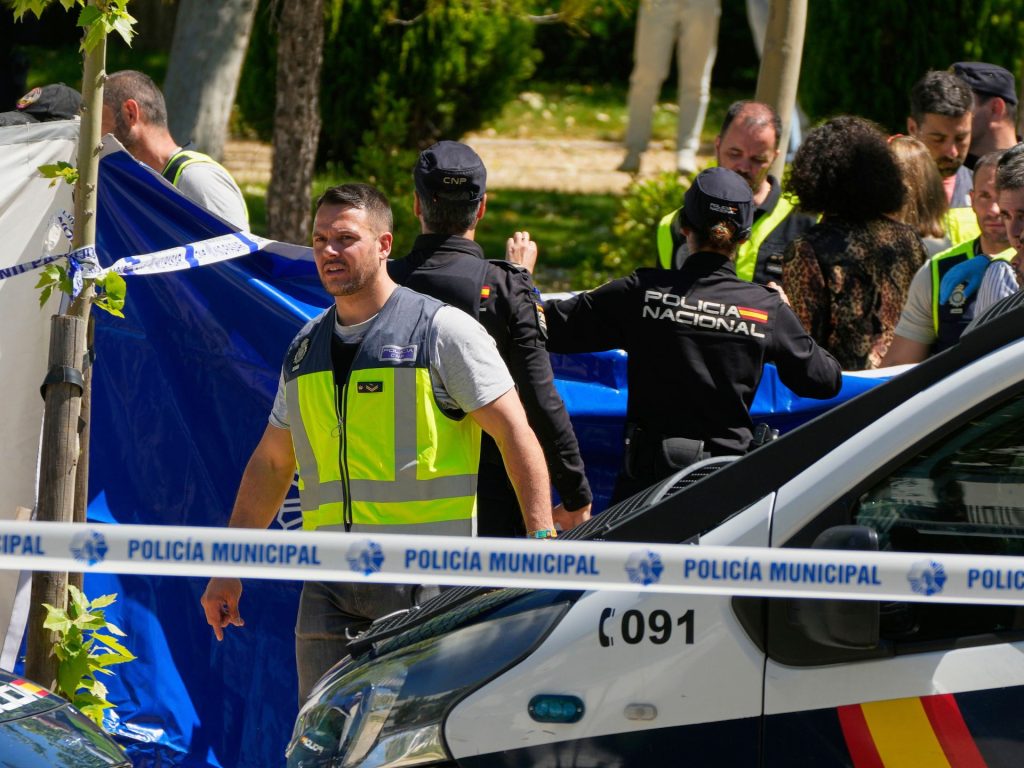
DEVELOPING STORYDEVELOPING STORY, Andriy Portnov was previously a senior aide to removed former President Viktor Yanukovych and had been the subject of US sanctions. A Ukrainian former politician has been shot dead by an unknown assailant outside a school in Madrid, Spain, authorities said. The man was identified by Spain’s Ministry of Interior as Andriy Portnov, who was previously a senior aide to Ukraine’s former President Viktor Yanukovych. The attack on Wednesday morning took place outside the gates of the American School in the Spanish capital’s upscale neighbourhood of Pozuelo de Alarcon. Police were called at about 9:15am (07:15 GMT) and notified that a man had been shot in the street. Witnesses quoted by the police said he was shot “several times” in the head and body by more than one assailant. The attackers fled on foot, police said. Radio station Cadena SER reported that Portnov was taking his children to school when he was attacked. Portnov had been closely tied to Ukraine’s pro-Russian former leader Yanukovych, having served as deputy head of the presidential office from 2010 to 2014. During Yanukovych’s time in power, Portnov was involved in drafting legislation aimed at persecuting participants of the 2014 revolution in Ukraine. He was later placed on several sanctions lists, including by the US Treasury in 2021. Advertisement This is a developing story. More to come… Adblock test (Why?)
Uganda confirms military trials for civilians despite Supreme Court ruling
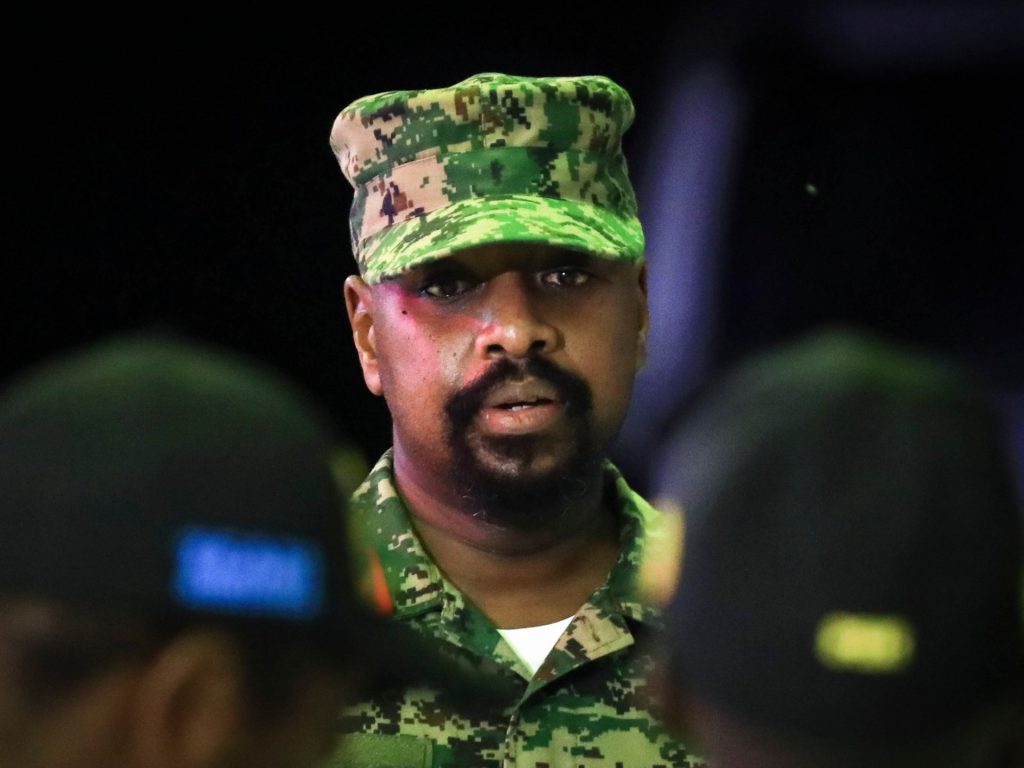
President Yoweri Museveni’s government has frequently defended military trials, citing national security concerns. Uganda’s parliament has passed a controversial bill authorising military tribunals for civilians, drawing condemnation from opposition figures and rights groups, who accuse the government of trying to silence opponents, which it denies. The practice has long been used in Uganda, but was struck down by the country’s top court in January. The Supreme Court had ruled that the military tribunals lacked legal competence to try civilians and failed to meet fair trial standards. Despite that ruling, lawmakers moved ahead Tuesday with the legislation, which permits civilians to be tried in military courts. “Today, you proved you are fearless patriots! Uganda will remember your courage and commitment,” said General Muhoozi Kainerugaba, head of the military and son of President Yoweri Museveni, in a post on X. Earlier this month, Kainerugaba said that he was holding a missing opposition activist in his basement and threatened violence against him, after the man’s party said he was abducted. Museveni’s government has frequently defended military trials as necessary for national security amid concerns about armed opposition and alleged threats to state stability. Advertisement Military spokesperson Chris Magezi said the legislation would “deal decisively with armed violent criminals, deter the formation of militant political groups that seek to subvert democratic processes, and ensure national security is bound on a firm foundational base”. But critics say the move is part of a broader pattern of repression. “There’s no legal basis to provide for the trial of civilians in the military court,” opposition MP Jonathan Odur told parliament during debate on the bill. He described the legislation as “shallow, unreasonable and unconstitutional”. Uganda has for years used military courts to prosecute opposition politicians and government critics. In 2018, pop star-turned-opposition-leader Bobi Wine was charged in a military court with illegal possession of firearms. The charges were later dropped. Kizza Besigye, a veteran opposition figure who has challenged Museveni in multiple elections, was arrested in Kenya last year and returned to Uganda to face a military tribunal. Following the Supreme Court’s January ruling, his trial was moved to a civilian court. His party, the People’s Front for Freedom (PFF), has denounced the charges as politically motivated. Human Rights Watch (HRW) has previously criticised Uganda’s military courts for failing to meet international standards of judicial independence and fairness. Oryem Nyeko, senior Africa researcher at HRW, said earlier this year: “The Ugandan authorities have for years misused military courts to crack down on opponents and critics”. Advertisement Adblock test (Why?)