

EU to sustain Radio Free Europe with emergency funding after Trump cuts
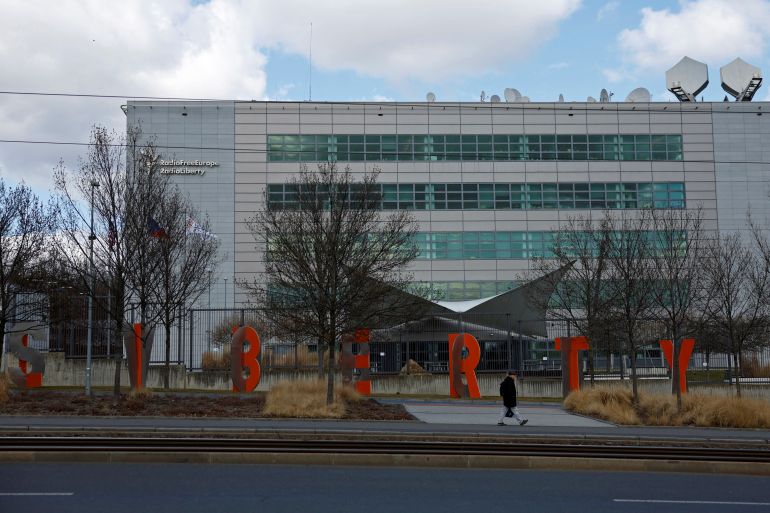
Outlet is one of several media services whose funding was cut by the Trump administration amid an aggressive downsizing effort. The European Union plans to step in to help save longtime media outlet Radio Free Europe/Radio Liberty (RFE/RL) after United States President Donald Trump’s administration abruptly stopped funding it. The bloc’s foreign policy chief, Kaja Kallas, told reporters after a meeting of EU foreign ministers in Brussels on Tuesday that 5.5 million euros ($6.2m) will be provided to “support the vital work of Radio Free Europe”. “It’s short-term emergency funding designed as a safety net for the independent journalism,” she added. Trump suspended all funding for RFE/RL in March along with other US broadcasters, including Voice of America, to slash government spending. Critics of the administration said the cuts are also politically motivated and part of a push to control and curb news media that do not hew to its outlook. Trump earlier this month signed an executive order slashing federal subsidies to two US public broadcasters, PBS and NPR , accusing them of biased reporting and spreading “left-wing” propaganda. Advertisement Lawyers for RFE/RL, which has been operating for 75 years, secured an order last month from a US federal judge for the Trump administration to restore $12m that was appropriated by Congress. The money has not been sent so far as lawyers said the service will have to shut down in June without the funding. Radio Free Europe/Radio Liberty headquarters in Prague, Czech Republic [File: David W Cerny/Reuters] Kallas said on Tuesday that the EU funding would not cover the work of the outlet across the globe but would focus on interests closer to the agenda of the bloc. “So our focus should be really to help Radio Free Europe to work and function in those countries that are in our neighbourhood and that are very much dependent on news coming from outside,” she said. The EU’s top diplomat said she hoped the 27 EU member countries would also provide more funds to help Radio Free Europe longer term. Kallas said the bloc has been looking for “strategic areas” where it can help as Washington cuts life-saving foreign aid. The outlet’s corporate headquarters are in Washington, DC, and its journalistic headquarters are based in the Czech Republic. The service has aired programmes in 27 languages in 23 countries across Eastern Europe, Central Asia and the Middle East and has more than 1,700 staff. The outlet has been heavily criticised and banned by Russia for its coverage of the war in Ukraine. Radio Free Europe began broadcasting in 1950 in the early years of the Cold War to several Eastern European nations that had become Soviet Union satellites. Radio Liberty began broadcasting to Russia a few years later. Both were initially funded by the US Congress through the Central Intelligence Agency. Adblock test (Why?)
Why is Donald Trump fixated on South Africa?
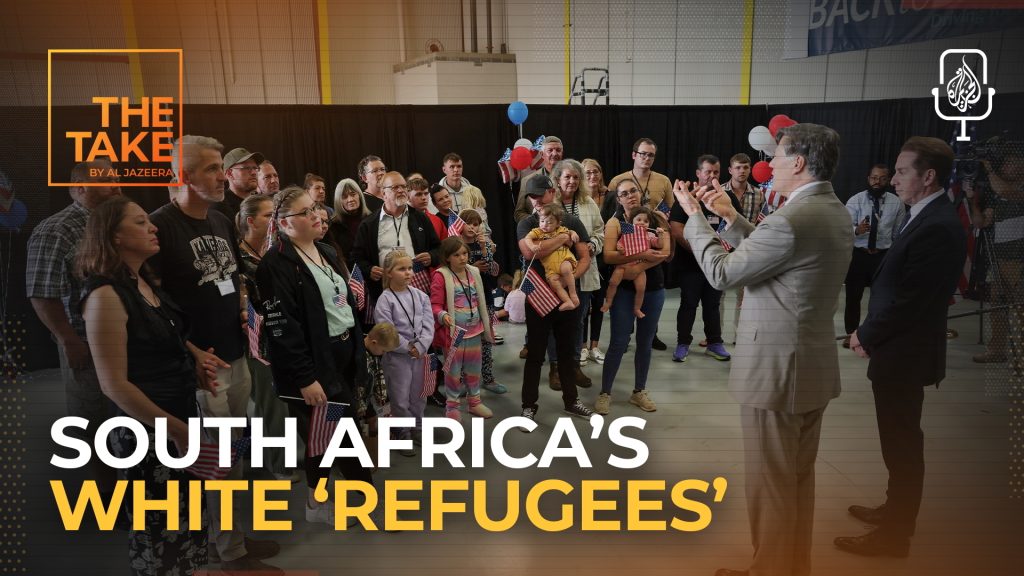
How did the US right become fixated on a debunked conspiracy theory of ‘white genocide’ in South Africa? The administration of US President Donald Trump has granted refugee status to 49 white Afrikaners, echoing a debunked conspiracy theory about “white genocide” in South Africa. The move comes after Trump cut aid to the nation and threatened to boycott meetings with its government. What’s behind Trump’s fixation on South Africa? Adblock test (Why?)
Video: UK, France, Canada threaten action against Israel over Gaza
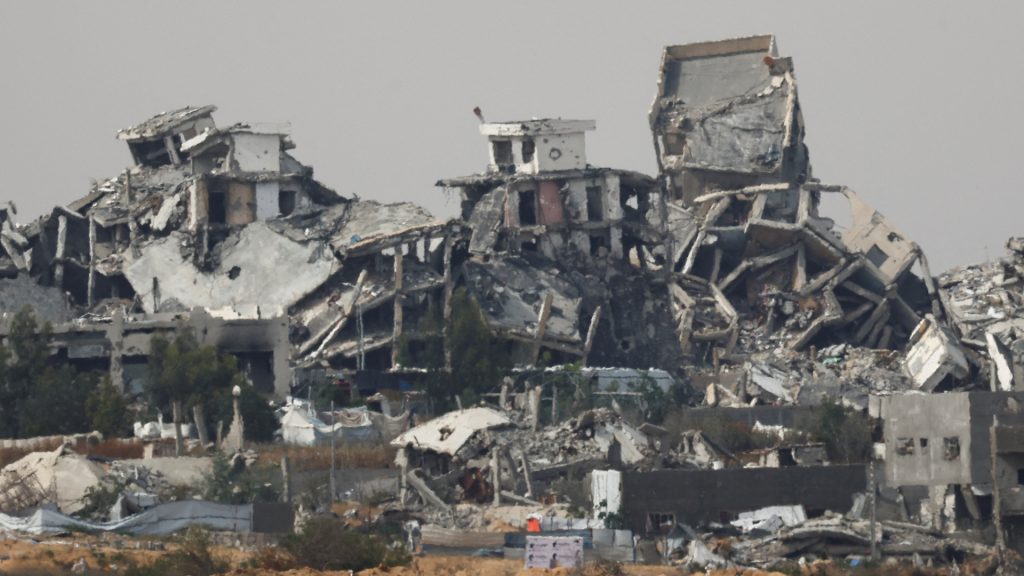
NewsFeed Leaders from Canada, France and the UK threaten to impose sanctions on Israel if it continues its offensive in Gaza. Hamdah Salhut has more from the Jordanian capital Amman. She’s there because the Israeli government has banned Al Jazeera from reporting inside Israel. Published On 20 May 202520 May 2025 Adblock test (Why?)
Pregnant woman among victims of Israeli strike on Gaza school shelter
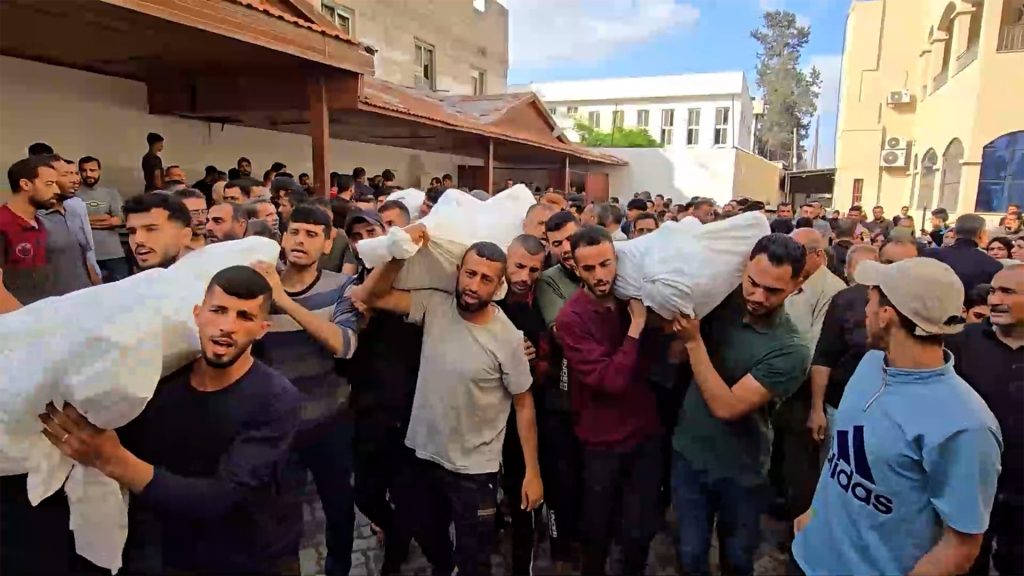
NewsFeed An Israeli air strike on the Musa bin Nusair School in Gaza City has killed at least a dozen Palestinians, including children and a pregnant woman. The school had been sheltering forcibly displaced families. Published On 20 May 202520 May 2025 Adblock test (Why?)
Detained student Mahmoud Khalil honoured at alternative graduation
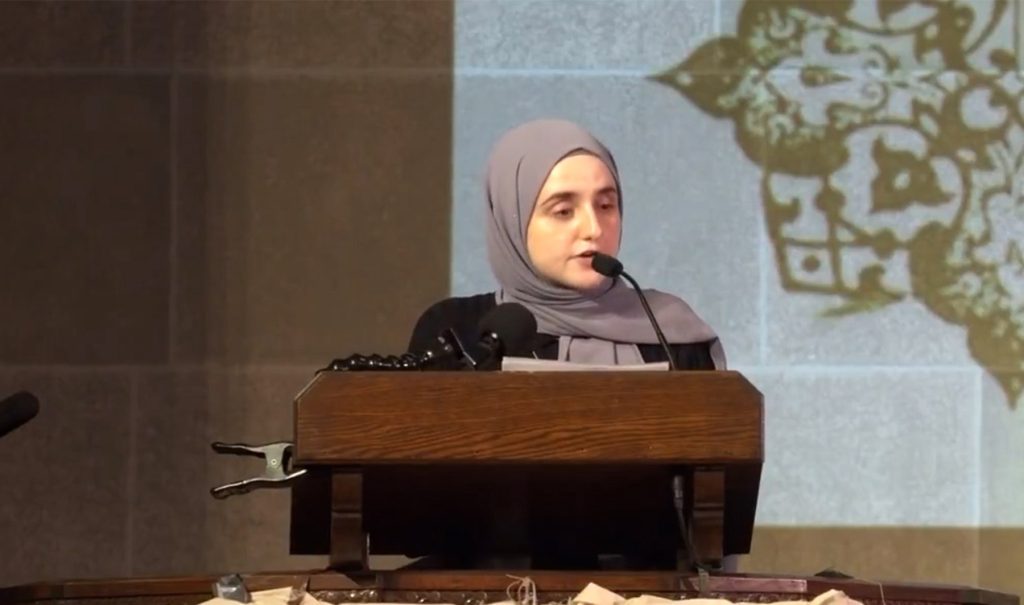
NewsFeed Palestinian activist Mahmoud Khalil was honoured at an alternative graduation ceremony in New York, where his wife and baby accepted a diploma on his behalf while he remains detained at an immigration facility in Louisiana. Published On 20 May 202520 May 2025 Adblock test (Why?)
Trump tries to jump start peace talks with calls to Zelenskyy, Putin
[unable to retrieve full-text content] US President Donald Trump spoke with the leaders of both Ukraine and Russia in back-to-back calls.
Eyewitness video shows Israeli airstrike on Khan Younis
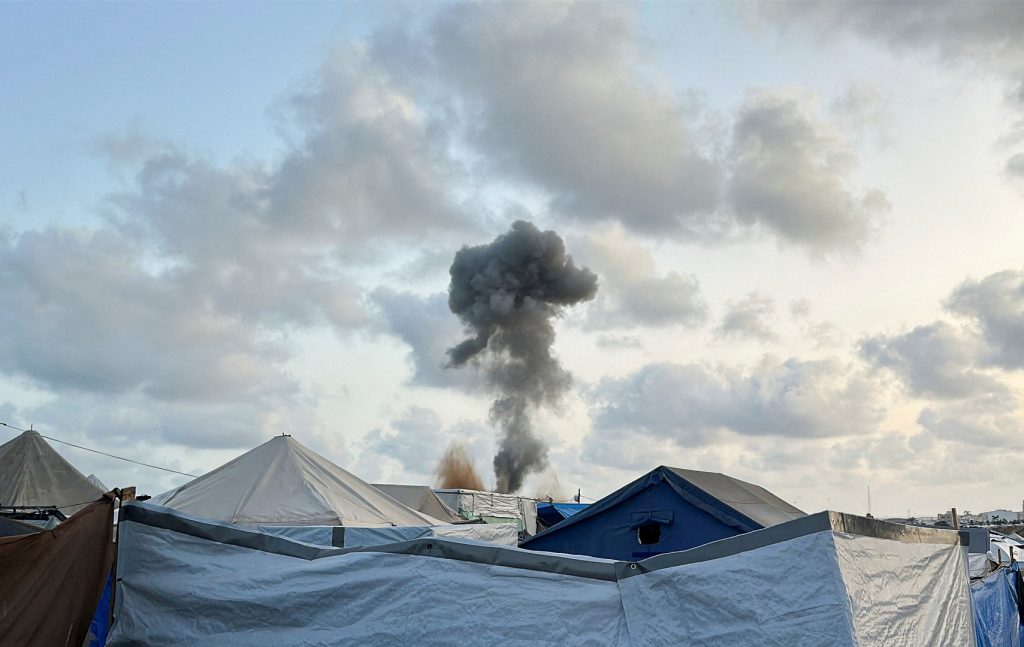
NewsFeed Eyewitness video captured an Israeli airstrike hitting west Khan Younis in Gaza as people flee tents amid gunfire. Israel had warned of an “unprecedented attack” and ordered evacuations. Israeli Prime Minister Netanyahu has vowed to control all of Gaza, despite global pressure and famine fears. Published On 19 May 202519 May 2025 Adblock test (Why?)
El Salvador arrests prominent human rights lawyer who defends deportees
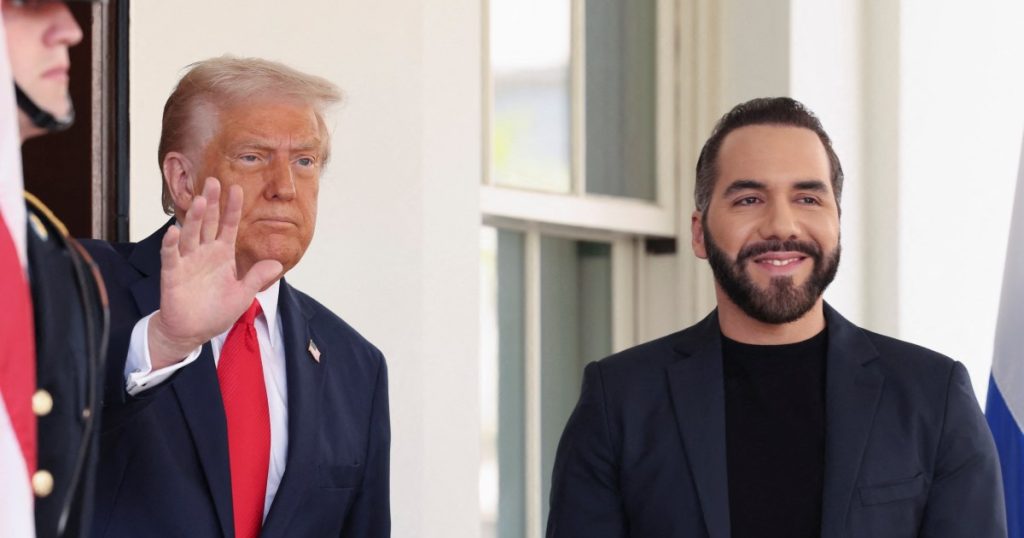
Ruth Eleonora López has defended Venezuelan immigrants deported to El Salvador by US President Trump’s administration. A prominent human rights lawyer known for defending immigrants deported amid United States President Donald Trump’s hardline anti-immigration policies has been arrested in El Salvador. Ruth Eleonora López, 47, a senior figure at the rights group Cristosal and a vocal critic of El Salvador’s president, Nayib Bukele, a Trump ally, was detained late on Sunday. The arrest was confirmed by the country’s attorney general’s office, which in an online post accused López of embezzling state funds during her time at El Salvador’s electoral court more than a decade ago. “Neither her family nor her legal team has managed to find out her whereabouts,” Cristosal said in a statement, calling the refusal to disclose her location or allow access to lawyers “a blatant violation of due process”. The group said her arrest “raises serious concerns about the increasing risks faced by human rights defenders in El Salvador”. López has publicly criticised the government’s mass incarceration of alleged gang members, many of whom have not been charged. Advertisement Cristosal, one of the most prominent human rights groups in Latin America, has assisted Salvadoran families caught in Bukele’s security policies, as well as more than 250 Venezuelan immigrants who have been deported to El Salvador under Trump’s administration. Bukele, who has called himself “the world’s coolest dictator” and has cultivated close ties with Trump, said earlier this year that El Salvador is ready to house US prisoners in a sprawling mega-prison opened last year. In March, Trump used rarely invoked wartime powers to send dozens of Venezuelans to El Salvador without trial, alleging ties to the Tren de Aragua gang – a charge their families and lawyers deny. The US Supreme Court on Friday barred the Trump administration from quickly resuming swift deportations of Venezuelans under the Alien Enemies Act of 1798. In April, Cristosal reported that police had entered its offices during a news conference to film and photograph journalists and staff members – part of what observers say is a broader campaign of harassment and intimidation against civil society organisations and independent media. López was recognised by the BBC as one of the world’s 100 most inspiring and influential women for her commitment to justice and the rule of law. A joint statement signed by more than a dozen rights organisations, including Amnesty International and Human Rights Watch, demanded her immediate release. “El Salvador’s state of exception has not only been used to address gang-related violence but also as a tool to silence critical voices,” the statement said. Advertisement “Authoritarianism has increased in recent years as President Nayib Bukele has undermined institutions and the rule of law, and persecuted civil society organizations and independent journalists,” it added. Adblock test (Why?)
US PGA Championship 2025: Scottie Scheffler wins third major title
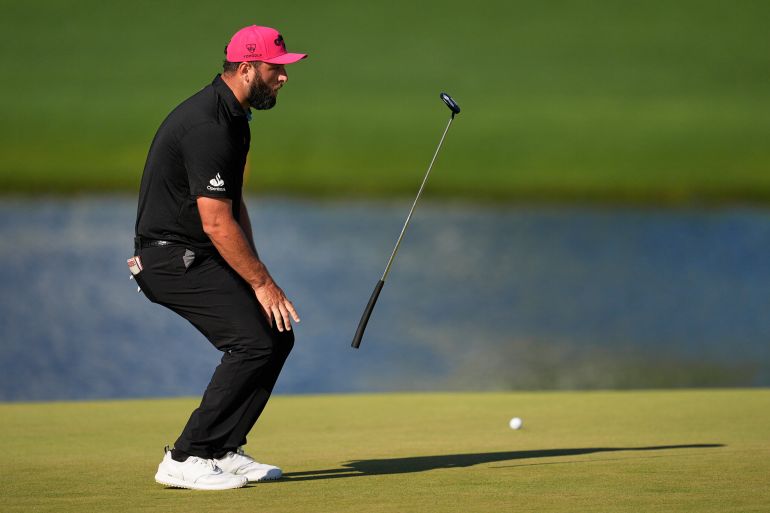
World number one Scottie Scheffler outlasts a final round challenge from Jon Rahm to record a five-stroke victory in golf’s second major of the year. Scottie Scheffler held off a spirited effort by Spain’s Jon Rahm to secure a five-shot PGA Championship victory at Quail Hollow Club for his third career major title. The top-ranked Scheffler, who was three shots clear of Swede Alex Noren at the start of the day, struggled off the tee early on Sunday but righted the ship in time for the back nine to card an even-par 71 that left him at 11 under for the week. “I knew it was going to be a challenging day, finishing off a major championship is always challenging,” Scheffler said on the 18th green after being presented with the Wanamaker Trophy. “I didn’t have my best stuff … but stepped it up on the back nine.” Ryder Cup hopeful Harris English, who began his day 11 shots adrift, shot a 65 that was the low round of the day and finished in a distant share of second place alongside fellow Americans Bryson DeChambeau (70) and Davis Riley (72). Twice major champion Rahm (73) gave Scheffler a scare early on the back nine but came apart in stunning fashion with five dropped shots over his final three holes to slide back into a share of eighth place. Advertisement Rahm, who began the day five shots back of the lead and playing two groups ahead of Scheffler, took a while to get going in the final round but found his groove right in time to set up some back-nine drama at Quail Hollow Club. The Spaniard joined Scheffler atop the leaderboard when, at the par-four 11th, he made his third birdie over a four-hole stretch, but Scheffler reclaimed the outright lead with a 9-foot birdie at the 10th moments later. Rahm nearly answered right back, but his perfectly paced 19-foot birdie attempt at the par-three 13th curled around and out of the cup before going on to misread birdie putts at the next two holes, followed by his brutal closing stretch. Jon Rahm, of Spain, reacts after missing a putt on the 16th hole during the final round of the PGA Championship [George Walker IV/AP] Scheffler added birdies at 14 and 15 and then saw his lead suddenly grow to five over JT Poston after Rahm made double-bogey at the par-three 17th, where he blasted his tee shot into the water. “It’s a tough pill to swallow right now,” said Rahm. “Pretty fresh wound right now. But there’s been a lot of good happening this week and a lot of positive feelings to take for the rest of the year.” US Open champion DeChambeau, who finished runner-up at last year’s PGA Championship, was driving the ball and giving himself chances, but struggled on the greens. “I felt like I had the game to win this week, and the golf course suited me pretty well, missed a few putts coming down the stretch and got a little unlucky in this great game of golf,” said DeChambeau. Advertisement “It was a good fight, good battle, take a lot from it. It’s just burning a bigger fire in my belly.” Noren, playing alongside Scheffler and alone in second place to start the day, stayed in the mix until his round unravelled with a trio of bogeys early on the back nine. Scheffler took home a $3.42m top prize from a record $19m purse. Scheffler plays a shot from the bunker on the 14th hole during the final round of the PGA Championship [Andrew Redington/Getty Images via AFP] Adblock test (Why?)
Trump-Putin call: What’s holding up a Russia-Ukraine ceasefire?
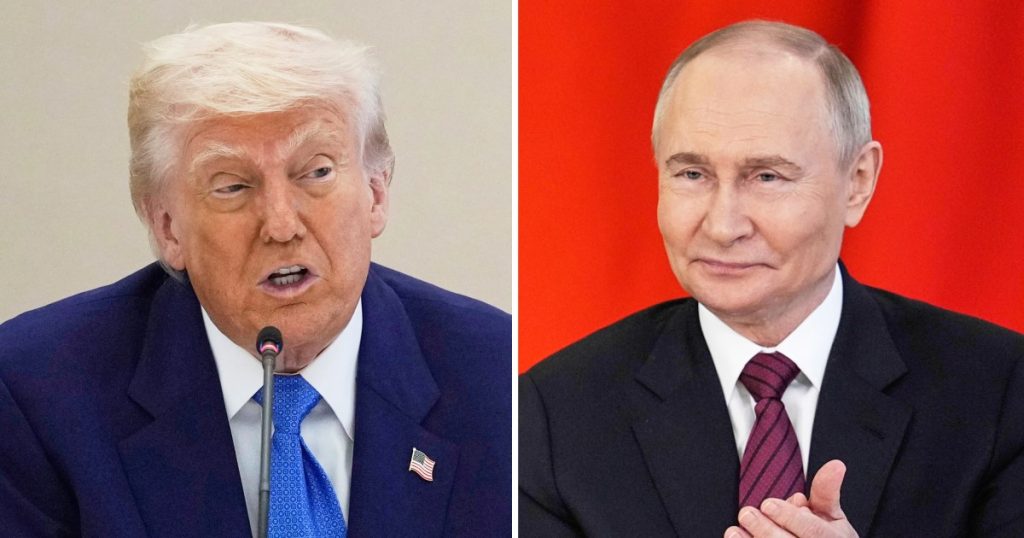
United States President Donald Trump has said he will speak with his Russian counterpart, Vladimir Putin, on Monday to discuss an end to the war in Ukraine. His announcement came a day after direct talks between Russia and Ukraine, hosted by Turkiye, ended inconclusively. Before Trump’s call with Putin, European leaders spoke to the US president and voiced their hopes that Putin would accept a ceasefire. Trump said he also plans to speak to Ukrainian President Volodymyr Zelenskyy after talking to Putin. Here is where talks on a potential ceasefire between Kyiv and Moscow stand, more than three years after Russia launched a full-fledged invasion of Ukraine in February 2022. What did Trump say? In a post on his Truth Social platform, Trump wrote that he would speak to Putin on a call at 10am (14:00 GMT). “THE SUBJECTS OF THE CALL WILL BE, STOPPING THE ‘BLOODBATH’ THAT IS KILLING, ON AVERAGE, MORE THAN 5000 RUSSIAN AND UKRAINIAN SOLDIERS A WEEK, AND TRADE,” Trump said in the post. He added that, after speaking to Putin, he would also speak to Zelenskyy and various NATO members. Advertisement “A CEASEFIRE WILL TAKE PLACE, AND THIS VERY VIOLENT WAR, A WAR THAT SHOULD HAVE NEVER HAPPENED, WILL END. GOD BLESS US ALL!!!” What happened during the Russia-Ukraine talks in Istanbul? On Friday, Turkiye hosted direct talks between Russia and Ukraine for the first time since the early days of the war in 2022 in Istanbul’s Dolmabahce Palace. Proposed by Putin, the talks were originally scheduled for May 15 but were deferred by a day. In advance of the talks, Zelenskyy had announced that he would personally attend the talks if Putin also joined the meeting. However, on May 14, the Kremlin announced that Putin would not attend, and instead announced a negotiating team led by a former culture minister who had also headed previous Russian delegations in unsuccessful talks on the war in Ukraine. In response, Zelenskyy, who was in Ankara, where he met Turkish President Recep Tayyip Erdogan, appointed his defence minister to lead the Ukrainian delegation. The talks were ultimately held on Friday, but failed to yield any breakthrough on a ceasefire. However, the two sides reached a prisoner exchange deal. Representatives from both sides confirmed that each country had agreed to release 1,000 prisoners of war. The leader of the Russian delegation and adviser to Putin, Vladimir Medinsky, said the swap would take place “in the coming days”. The two teams also discussed a potential meeting between Putin and Zelenskyy, whose legitimacy as Ukraine’s leader has frequently been questioned by the Russian president. Advertisement What is holding up a ceasefire? Zelenskyy said Putin’s empty seat at the negotiating table kept a ceasefire agreement from taking shape since Russia was represented by a low-level delegation of officials who could not make decisions. But while the Ukrainian leader was critical of Putin, Trump appeared empathetic. At a news conference in Doha, Qatar, on the second leg of his Middle East trip last week, Trump suggested it was unrealistic to have expected Putin to attend the talks unless the US president attended too. He doubled down on that view hours later. “Nothing’s going to happen until Putin and I get together,” Trump told reporters on Thursday on board Air Force One flight to the United Arab Emirates, where the US president visited after Qatar. “Everyone could see that the Russian delegation in Istanbul was of a very low level. None of them were people who actually make decisions in Russia. Still, I sent our team,” Zelenskyy wrote in an X post on Friday after the talks in Turkiye concluded. What is each side saying? Kremlin spokesman Dmitry Peskov confirmed to Russian news agencies that Putin would speak with Trump on Monday. Meanwhile, Zelenskyy met US Vice President JD Vance and Secretary of State Marco Rubio in Rome on Sunday, on the margins of Pope Leo XIV’s inaugural mass. “We discussed negotiations in Istanbul to where the Russians sent a low level delegation of non-decision-makers,” Zelenskyy wrote in another X post. “I reaffirmed that Ukraine is ready to be engaged in real diplomacy and underscored the importance of a full and unconditional ceasefire as soon as possible.” Advertisement On Friday, after the talks, Zelenskyy wrote on X: “President Trump wants to end this war. We need to keep working closely with him and stay as coordinated as possible.” He also said long-term US support is essential. Ukraine is calling for an unconditional, 30-day ceasefire. Russia, however, has raised concerns that Ukraine might use such a truce to rearm and mobilise more troops. What is Europe saying? In advance of Trump’s call with Putin, leaders of the United Kingdom, the US, Italy, France and Germany discussed the war in Ukraine, a spokesperson representing British Prime Minister Keir Starmer’s office said on Monday. French President Emmanuel Macron wrote in an X post that the conversation, which took place on Sunday, was between him, Trump, Starmer, German Chancellor Friedrich Merz, and Italian Prime Minister Giorgia Meloni. “Tomorrow, President Putin must show he wants peace by accepting the 30-day unconditional ceasefire proposed by President Trump and backed by Ukraine and Europe,” Macron wrote. In an X post, Merz echoed Macron’s sentiments that Putin must accept the ceasefire proposal. “We want to continue this exchange today,” he wrote. In an X post, Meloni said Moscow ought to “seriously engage” through direct contact. What is the state of the war? On Sunday, Russia launched its largest drone attack since the beginning of the war, Ukraine said, killing at least one woman. The Ukrainian air force said Russia launched 273 drones on Sunday morning. Later on Sunday, Kyiv’s intelligence service claimed that it believed Russia planned to fire an intercontinental ballistic missile to intimidate the West. It was not clear if it actually happened. Moscow has not yet responded to these allegations. Advertisement Trump had pledged to bring a swift end to the war. And starting in February this year, representatives