

‘Exploding inequality’: The fight for the hearts and minds of Poland’s left
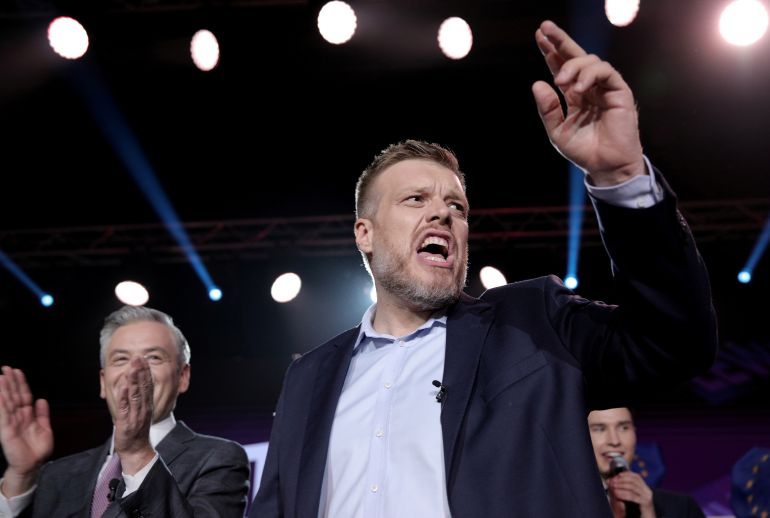
Krakow, Poland – As Adrian Zandberg, leader of Poland’s left-wing Razem (Together) party, prepared to speak to the large crowd at his rally in one of Krakow’s central squares on Wednesday this week, he wasn’t just getting ready to contest Sunday’s presidential election. Speaking with a revolutionary zeal to the cheering crowd, Zandberg put forward his ideals: Quality public services, affordable housing for all, investment in education and science and the end to a toxic right-wing duopoly in Polish politics. Zandberg is one of two presidential hopefuls of Poland’s left – the other is Magdalena Biejat of the Lewica (The Left) party. Between the two of them, they represent a political force that has long remained on the margins of politics. Sunday’s contest is also a fight for the leadership of this movement which is popular with urban, generally younger people. Opinion polls suggest that the final presidential battle – first-round voting takes place on Sunday – will be between the two favourites, Rafał Trzaskowski and Karol Nawrocki, representatives of right-wing parties Civic Platform and Law and Justice (PiS) which have dominated the country’s political scene for the past 20 years. Advertisement Nevertheless, Zandberg was confident and full of passion as he addressed his supporters. “I believe that we can build a different, better Poland. I believe that we can afford for Poland to become a country with decent public services,” he declared. “That we can afford for people in the 20th economy in the world to stop dying in line to see a doctor. That we can afford for young, hard-working people to be able to rent a roof over their heads for a normal price, so that they can afford to start a family.” Calling the current system “unconstitutional” and one which “explodes with inequalities”, he called for a change. The system, he said, “is a threat to the future of Poland”. Like other left-wing politicians, he has been a staunch critic of the neoliberal views of the two main candidates, their lack of commitment to securing affordable housing for people (which is a constitutional right), attempts to privatise the healthcare system, and their seeming embrace of rising anti-migrant sentiment within the country. Adrian Zandberg, leader of Razem party, reacts after exit poll results for the parliamentary elections are announced in Warsaw, Poland, on October 13, 2019 [Jedrzej Nowicki/Agencja Gazeta via Reuters] Having a ‘real’ effect on Polish politics The day before, in another square in central Krakow, Biejat, Zandberg’s main competitor for the hearts and minds of Poland’s left and deputy marshal of the Senate, stood before her own crowd of supporters. Unlike Zandberg’s Razem, her party, Lewica, is part of the ruling Civic Coalition along with the centre-right Civic Platform. Advertisement Lewica’s decision to enter the coalition government in late 2023 prompted criticism among some on the left, and has become the main bone of contention between the two leftist presidential candidates. Speaking at her rally on Tuesday, Biejat defended the decision to join the coalition as the right one. According to her, it has allowed her party to have a real effect on politics in Poland. She listed their achievements: “It is thanks to Lewica being in the government that we managed to introduce a pension supplement for widows. We managed to introduce a pilot programme which shortened working hours. We managed to increase the funeral allowance,” Biejat said. “We have changed the definition of rape, so that women no longer have to explain to the judges that it was not their fault that someone had hurt them. Thanks to us, parents of premature babies have received additional leave days for each week spent in hospital with a small child.” The Krakow crowd, albeit smaller than Zandberg’s, cheered Biejat’s declarations of support for the rights of women, LGBTQ people and those with disabilities and for affordable housing. Magdalena Biejat of the Lewica party speaks at her rally in Krakow on May 13 [Agnieszka Pikulicka-Wilczewska/Al Jazeera] A fragile resurgence? The two-term presidency of the left-wing Aleksander Kwasniewsk, an independent but also one of the founders of the Democratic Left Alliance, was highly successful. Under his presidency, which ended in 2005, Poland joined NATO and the European Union and introduced a new constitution. Since his departure, however, the left has been in crisis. Advertisement While the ideals of the left-wing candidates barely differ from those of left-wing candidates in other European countries, their appeal in Poland is limited these days as people have become disillusioned with immigration, and resentment towards the one million Ukrainian refugees taking shelter from the war with Russia has grown. According to Politico’s latest aggregate poll, the two leftist candidates are each expected to win 5 percent of the vote. In the most recent European election in 2024, Lewica secured just 6.3 percent of the vote, the lowest score in its history. In the most recent parliamentary elections of 2023, the party secured just 5.3 percent of the vote. The question now is whether leftist parties can start to make a comeback. Some observers see signs of a possible resurgence – but it is fragile. “Any result above 5 percent for each of the candidates [in the upcoming presidential contest] would be a good score. And below 4 percent – a bad one,” said Bartosz Rydlinski, a political scientist at Cardinal Stefan Wyszynski University in Warsaw. He credits Zandberg with “restarting the Razem party project” by appealing to younger voters. “Recent studies show that he is competing with Slawomir Mentzen [the highly popular ultraconservative and free-market-enthusiast leader of the Confederation Party] to be number one among the youngest voters. “Magdalena Biejat, on her part, represents women from the middle class, living in large cities. She is their mirror image. The election will show which one of them is more popular,” Rydlinski said. Who’s ahead in the polls? Poland election interactive (Al Jazeera) Limited appeal At the last presidential election five years ago, Robert Biedron of Lewica, who now serves as a Polish member
Ukraine says Russian drone attack on bus kills 9, hours after direct talks
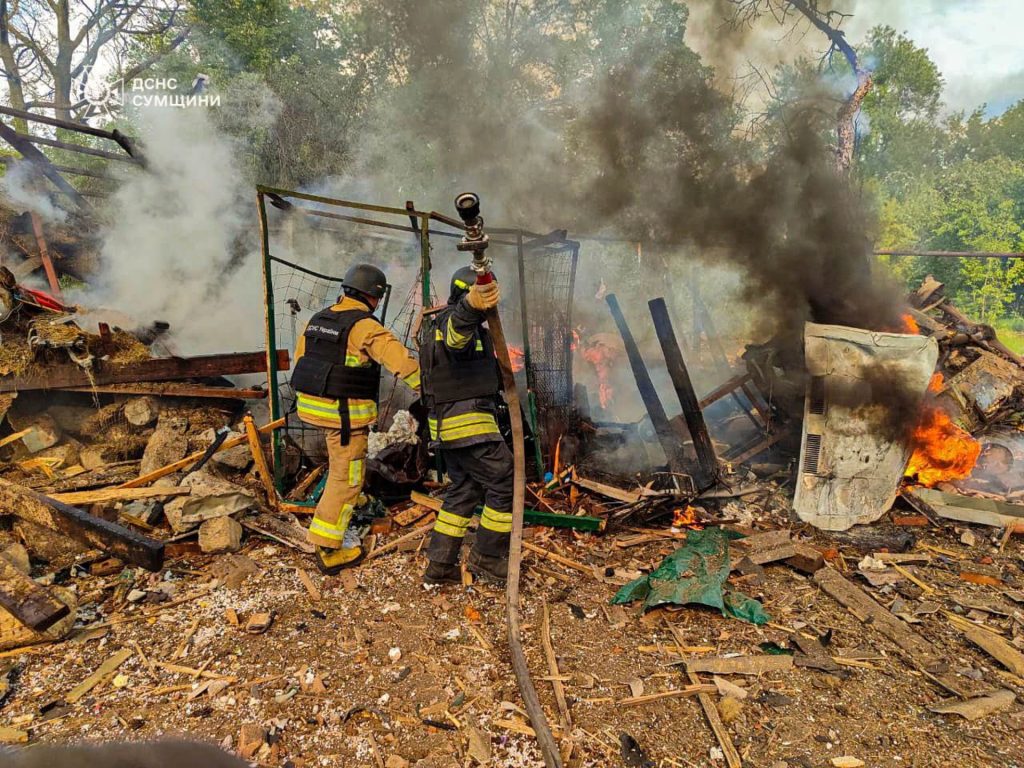
The drone strike in the Sumy region amounts to ‘a cynical war crime’, Ukraine’s National Police say. A Russian drone strike on a civilian bus has killed nine people, says Ukraine, with the attack coming hours after the two countries held their first direct peace talks in years. Four others were injured in the attack in Ukraine’s northeastern region of Sumy, officials said on Saturday, as Russia’s Ministry of Defence said it had targeted Ukrainian military equipment. “This is not just another shelling – it is a cynical war crime,” Ukraine’s National Police said in a post on Telegram messaging app, which featured photos of the badly damaged vehicle. Ihor Tkachenko, head of Sumy’s military administration, said on Telegram that a rescue operation was under way. Russia’s TASS news agency, citing a statement from the Defence Ministry, said Russian drones had struck a Ukrainian military equipment staging area in Sumy. The strike came shortly after Russian and Ukrainian officials met in Istanbul on Friday to broker a temporary ceasefire. The 90-minute talks failed to reach a breakthrough, but ended with both sides agreeing to swap 1,000 prisoners in what would be the largest such exchange since the start of the war in 2022. Advertisement Vladimir Medinsky, the lead Russian negotiator, expressed satisfaction with the talks and said Moscow was ready for further negotiations, including on a ceasefire. “We have agreed that all sides will present their views on a possible ceasefire and set them out in detail,” he said after the meeting. A source in the Ukrainian delegation told Reuters news agency that Russia’s demands were “detached from reality and go far beyond anything that was previously discussed”. The source told the agency Moscow had issued ultimatums for Ukraine to withdraw from parts of its own territory to get a ceasefire, “and other non-starters”. Al Jazeera’s Zein Basravi, reporting from Kyiv, said Medinsky had sent a clear message during the negotiations that Moscow was ready to continue the war for years – and had no problem in continuing to conduct the war at the same time as it held talks. “And that is exactly what they have done,” said Basravi. Adblock test (Why?)
Knicks oust Celtics in Game 6 playoffs, make Eastern Conference finals

New York’s 38-point victory against Boston Celtics in Game 6 was the largest win in Knicks playoff history. Jalen Brunson and OG Anunoby each scored 23 points as the New York Knicks reached the Eastern Conference finals for the first time since 2000 by steamrolling the visiting Boston Celtics 119-81 in Game 6 of their second-round series. Mikal Bridges had 22 points and Karl-Anthony Towns added 21 points and 12 rebounds for third-seeded New York, which led by as many as 41 points on Friday. The Knicks wrapped up the best-of-seven series with the largest winning playoff margin in franchise history. “There’s more to go,” Bridges said. “We’re not done. We came out there tonight and played hard and handled business. But our season is not over. We have much more to go.” New York surpassed a 36-point playoff victory over the Milwaukee Bucks in the decisive Game 5 of the 1970 Eastern Division finals. Josh Hart contributed 10 points, 11 rebounds and 11 assists to record New York’s first postseason triple-double since Walt Frazier accomplished the feat in 1972. “I want to congratulate the Celtics on a terrific season,” Knicks coach Tom Thibodeau said. “Unfortunate injury to Jayson Tatum. They’re a terrific organisation, ownership, front office, Joe Mazzulla is a terrific coach, great players. Advertisement “They’re not going to hand you anything. You have to earn it.” The Knicks will open the conference finals at home against the fourth-seeded Indiana Pacers on Wednesday. Defending NBA champion Boston was led by Jaylen Brown, who had 20 points, six rebounds and six assists before fouling out late in the third quarter. The Celtics were again short-handed after losing Tatum to a ruptured right Achilles during Game 4 on Monday. “Upset or not, we beat a great team,” Brunson said. “They obviously lost a huge piece (in Tatum). The way they came out in Game 5, they’re still a good team. Regardless of what anyone thinks – upset or not – we’re just happy to come out of the series with a win and now we’ll prepare for another team.” Jalen Brunson #11 of the New York Knicks drives to the basket during the game against the Boston Celtics during Game 6 [Brian Babineau/Getty Images via AFP] New York shot 46.2 percent from the field, including 16 of 45 (35.6 percent) from 3-point range. The Knicks held a 55-36 rebounding advantage. Payton Pritchard scored 11 points and Al Horford added 10 for Boston, which shot 36 percent and was 12 of 40 (30 percent) from 3-point range. The score was tied at 16 before the Knicks began pulling away. New York led 26-20 at the end of the first quarter and then opened the second with a 16-4 surge to open up an 18-point lead midway through the period. After Boston’s Luke Kornet interrupted the burst with a three-point play, the Knicks rattled off 16 of the next 21 points to take a 58-32 lead on a putback dunk by Miles “Deuce” McBride with 1:31 left. Advertisement McBride buried a 3-pointer as time expired in the half for a 64-37 lead at the break. That marked New York’s largest halftime advantage at the break since leading the Los Angeles Lakers 69-42 in Game 7 of the 1970 Finals, won by the Knicks. “You win a championship and you have that target on your back from Day 1,” Celtics guard Derrick White said of falling well short of winning back-to-back NBA titles. “There’s ups and downs through every season. This part sucks and we didn’t complete the goal that we set out to get.” The contest was effectively over when Brown fouled out with 2:50 left in the third quarter and Boston down by 33. Anunoby poured it on with consecutive 3-pointers to end a 10-0 push as the margin went above 40 at 92-51 with 1:51 remaining in the third. “They played better than we did,” Mazzulla said. “I’m happy for Thibs [Thibodeau]. He’s been coaching for a long time. That’s the biggest thing. You pay your dues, you put forth everything. That guy is a lifer. He’s what a coach is all about and he deserves it. And they deserve it as a team. You got to take your hat off to them.” New York Knicks fans celebrate after their team won Game 6 of the NBA playoffs against the reigning champions Boston Celtics outside Madison Square Garden in New York on May 16, 2025 [Leonardo Munoz/ AFP] Adblock test (Why?)
Malcolm X at 100: Ibram X Kendi looks to the future
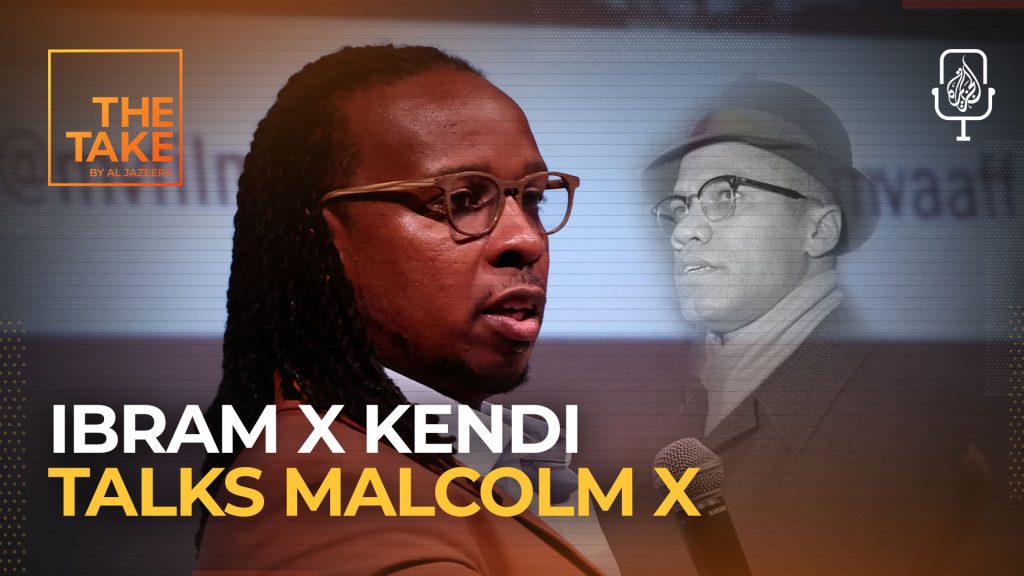
Author Ibram X Kendi on what still needs to be learned about Malcolm X’s legacy and race in the United States. A hundred years after the birth of Malcolm X, and in the shadow of a second Donald Trump presidency, Ibram X Kendi – author of the international bestseller How to Be an Antiracist – returns to the meaning of Malcolm’s legacy in his newest book. What does it reveal about where the US is now, and what still needs to be said about race in America? Adblock test (Why?)
Can Trump end birthright citizenship? The US Supreme Court could decide

Gaining citizenship by simply being born in a country is not the global norm, but it has been a long-standing practice in the United States. President Donald Trump, however, wants to change that. Al Jazeera’s Joseph Stepansky explains how the Supreme Court could be the deciding factor. Published On 16 May 202516 May 2025 Adblock test (Why?)
Five key takeaways from US President Donald Trump’s Middle East trip
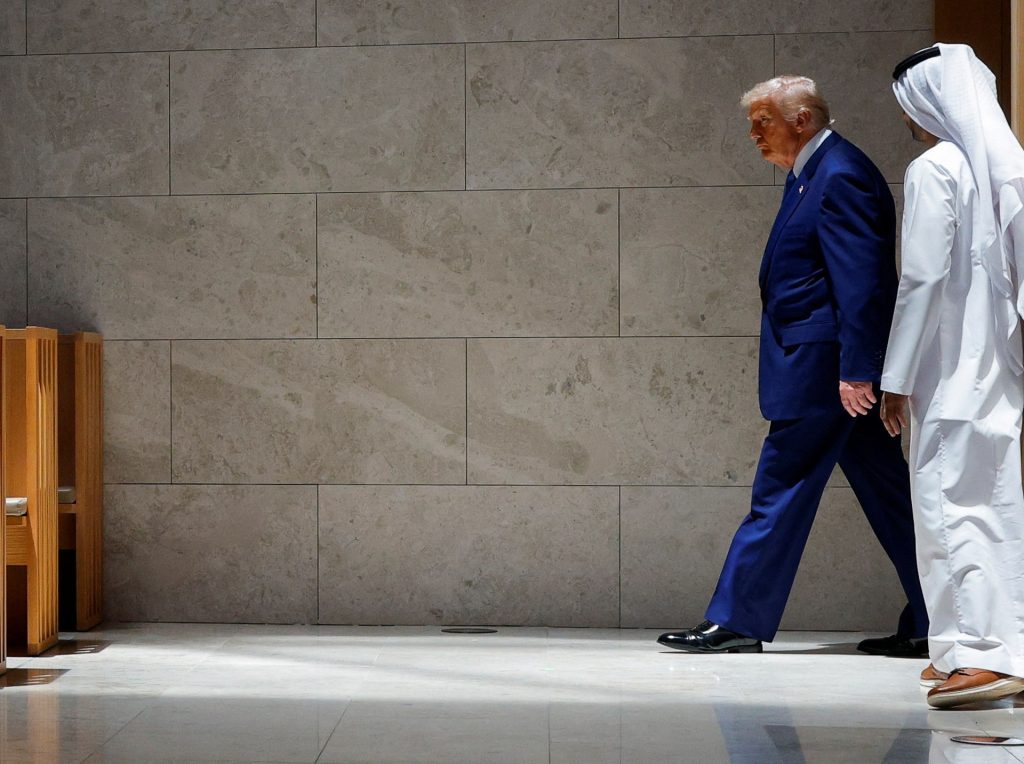
Washington, DC – Three days, three countries, hundreds of billions of dollars in investments and a geopolitical shift in the United States’s approach to the region: Donald Trump’s trip to the Middle East has been eventful. This week, the United States president visited Saudi Arabia, Qatar and the United Arab Emirates in the first planned trip of his second presidency, after attending Pope Francis’s funeral last month. Trump was visibly gleeful throughout the trip as he secured investments, criticised domestic political rivals and heaped praise on Gulf leaders. The word “historic” was used more than a few times by US officials to describe the visits. With Trump returning to the White House, here are five key takeaways from his trip: A rebuke of interventionism Addressing an investment summit in Riyadh, Trump promoted a realist approach to the Middle East — one in which the US does not intervene in the affairs of other countries. He took a swipe at neoconservatives who oversaw the US wars in Iraq and Afghanistan, as he lauded Gulf leaders for developing the region. Advertisement “This great transformation has not come from Western intervention or flying people in beautiful planes, giving you lectures on how to live and how to govern your own affairs,” he said. “The gleaming marbles of Riyadh and Abu Dhabi were not created by the so-called nation-builders, neo-cons or liberal nonprofits like those who spent trillions and trillions of dollars failing to develop Kabul, Baghdad, so many other cities.” Trump built his political brand with his “America First” slogan, calling for the US to focus on its own issues instead of helping — or bombing — foreign countries. But his words at the investment summit marked a stern rebuke of the neo-cons who dominated Trump’s Republican Party a decade ago. “In the end, the so-called nation-builders wrecked far more nations than they built, and the interventionists were intervening in complex societies that they did not even understand themselves,” Trump said. Israel sidelined, but no Gaza solution It is rare for US presidents to travel to the Middle East and not visit Israel, but Trump omitted the US ally from his itinerary as he toured the region. Skipping Israel was seen as a reflection of the deteriorating ties between the US administration and the government of Israeli Prime Minister Benjamin Netanyahu. This week’s trip also came in the context of several moves perceived as evidence of the US marginalising Israel. The US has continued to hold talks with Israel’s rival Iran, announced a ceasefire with the Houthis in Yemen, and conducted unilateral negotiations to release Israeli soldier Edan Alexander, a US citizen, from Hamas captivity. Advertisement Moreover, while touring the Gulf, Trump did not use his remarks to prioritise the establishment of formal diplomatic ties between Saudi Arabia and Israel, which had been a top goal during his first term. It remains unclear how Trump’s decisions will affect the “special relationship” between the two allies, but experts say it is becoming increasingly apparent that the US no longer views the Middle East solely through the lens of Israel. “Is it a tactical problem for Netanyahu and the entire pro-Israel lobby? I think it is,” Khaled Elgindy, a visiting scholar at Georgetown University, said of Trump’s shift. “It does throw a wrench in the machinery because it is a president who is showing openly daylight with Israeli decision-making, and not just in rhetoric, but acting on it — leaving Israel out of the process.” With that chasm emerging, some Palestinian rights advocates had hoped that the US president’s trip to the region would see Washington pursue a deal to end Israel’s war on Gaza. But as Trump marvelled at the luxurious buildings in the Gulf, Israel intensified its bombardment to destroy what’s left of the Palestinian territory. No ceasefire was announced, despite reports of continuing talks in Doha. And Israel appears to be pushing forward with its plan to expand its assault on Gaza as it continues to block aid for the nearly two million people in the enclave, leading to fears of famine. United Nations experts and rights groups have described the situation as a genocide. Advertisement But despite preaching “peace and prosperity” for both Israelis and Palestinians, Trump made no strong push to end the war during this week’s trip. On Thursday, Trump suggested that he has not given up on the idea of depopulating Gaza and turning it over to the US — a proposal that legal experts say amounts to ethnic cleansing. “I have concepts for Gaza that I think are very good. Make it a freedom zone,” he said. “Let the United States get involved, and make it just a freedom zone.” Lifting Syria sanctions In a move that surprised many observers, Trump announced from Riyadh that he will offer sanction relief to Syria, as the country emerges from a decade-plus civil war. Trump also met with interim Syrian President Ahmad al-Sharaa and described him as a “young, attractive guy”. A wholesale lifting of sanctions was not expected, in part because of Israel’s hostility to the new authorities in Syria. Israeli officials often describe al-Sharaa, who led al-Qaeda’s branch in Syria before severing ties with the group, as a “terrorist”. But Trump said he made the decision to lift the economic penalties against Syria at the request of Saudi Arabia’s Crown Prince Mohammed bin Salman and Turkiye’s President Recep Tayyip Erdogan. “I will be ordering the cessation of sanctions against Syria in order to give them a chance at greatness,” the US president said. The White House said on Wednesday that Trump had a list of requests for al-Sharaa, including establishing diplomatic relations with Israel and deporting “Palestinian terrorists”. Advertisement Removing US sanctions, which had been imposed on the government of former President Bashar al-Assad, is likely to be a boost for the new Syrian authorities, who are grappling with an ailing economy after years of conflict. “Lifting sanctions on Syria represents a fundamental turning point,” Ibrahim Nafi
Peru arrests suspect in gold rush massacre
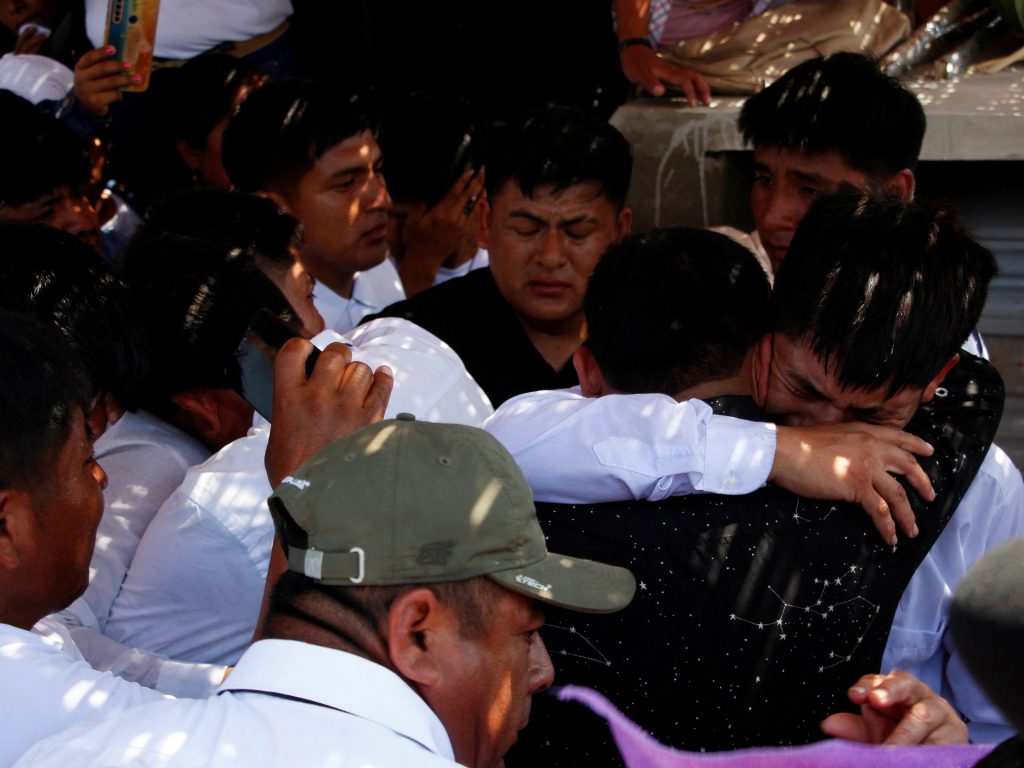
‘Cuchillo’ (Knife) accused of organised crime, aggravated kidnapping and homicide over murder of 13 miners. Police have arrested the main suspect in the kidnapping and murder in early May of 13 gold miners in Peru. Miguel Antonio Rodriguez Diaz, also known by the alias “Cuchillo” (Knife), was detained in the Colombian city of Medellin on Thursday, the Ministry of the Interior in Lima said. The murders in early May put the spotlight on increasing violence provoked by a gold rush in Peru’s northern Pataz district. The burned bodies of 13 missing gold miners were recovered after being reported as kidnapped by illegal miners allied with criminal armed groups. Diaz was detained in a joint operation by the Peruvian National Police, Interpol and the Colombian National Police, the Peruvian ministry stated. He is accused of “organised crime, aggravated kidnapping, and aggravated homicide” and due to be extradited back to Peru. Colombia’s police chief, Carlos Triana, wrote on X that the capture of Diaz was with the support of the United States Homeland Security Investigations agency, which is responsible for investigating transnational criminal gangs. Advertisement The suspect’s lawyer, Kevin Diaz, told local radio station RPP that his client had been in Venezuela for “a few days” before returning to Colombia, where he was arrested. Wave of violence The wave of violence sparked by the gold rush in Pataz has led the government to establish a military facility in the area. Mining company La Poderosa, which owns the mine where the murders took place, claimed earlier this month that nearly 40 people, including contractors and miners, have been recently killed in the district by criminal gangs. The threat is of national importance. As one of Latin America’s biggest gold producers, mining is a key economic avenue in Peru. However, with the financial success of the market, illegal mining has taken off. The practice involves more money than drug trafficking, amounting to $3bn-4bn per year, according to the government. That has helped bring an unprecedented wave of gang violence, with several areas of the country under a state of emergency. Adblock test (Why?)
Russia-Ukraine war: List of key events, day 1,177
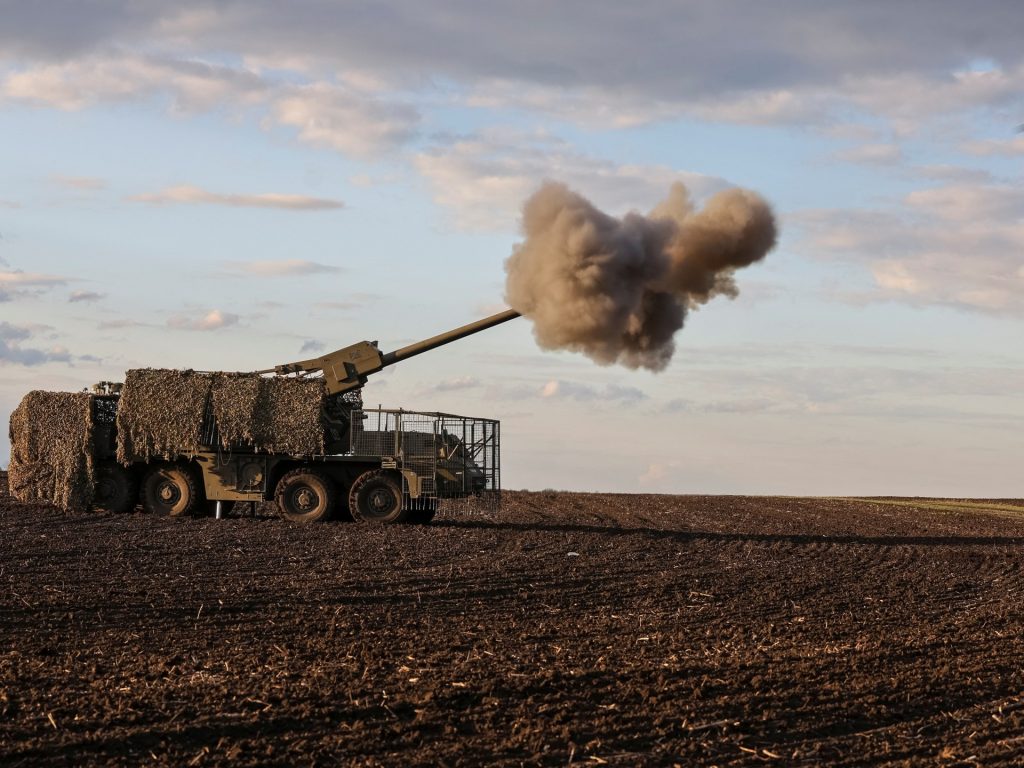
These are the key events on day 1,177 of Russia’s war on Ukraine. Here is where things stand on Friday, May 16 : Fighting Fighting continues along the 1,100km (683 mile) front line, where Russia’s Ministry of Defence said its forces captured two settlements located near Moscow’s long-term targets. Russia claimed to have taken Novooleksandrivka, a rural village near Pokrovsk, a logistics hub in Ukraine’s Donetsk region, as well as the town of Torske, which is located near the cities of Sloviansk and Kramatorsk. The Ukrainian military acknowledged that Novooleksandrivka had been under attack, but it did not mention Torske in its latest report. Oleksandr Syrskii, Ukraine’s top military commander, said on Telegram that Russia “has turned its aggression against Ukraine into a war of attrition and is using a combined force of up to 640,000 troops”. Ukraine lost its first F-16 fighter jet on Friday due to an “unusual situation on board”, but the pilot successfully ejected, according to the Ukrainian Air Force. Ceasefire Turkish, Russian and Ukrainian envoys will hold trilateral talks in Istanbul, although hopes are low for any breakthrough after Russia sent a lower-level delegation to the meeting than hoped. The meeting marks the first direct talks between Russia and Ukraine since a meeting in 2022 also held in Istanbul. Turkiye will take part in two trilateral meetings on Friday as part of the renewed diplomatic efforts to end the war in Ukraine, Turkish Foreign Ministry sources told the Reuters news agency. A meeting will take place between Turkish, US and Ukrainian officials and is scheduled to take place at 10:45am local time [07:45 GMT], followed by talks between Turkish, Russian and Ukrainian delegations at 12:30pm [09:30 GMT], the sources told Reuters. The Ukrainian delegation will now be led by Defence Minister Rustem Umerov instead of Ukraine’s President Volodymyr Zelenskyy, who met with Turkish President Recep Tayyip Erdogan in Ankara on Thursday. “We can’t be running around the world looking for Putin,” Zelenskyy said after a meeting with Erdogan. “I feel disrespect from Russia. No meeting time, no agenda, no high-level delegation – this is personal disrespect. To Erdogan, to Trump.” US President Donald Trump said an agreement between Russia and Ukraine is not possible without him first meeting Putin. “I don’t believe anything’s going to happen, whether you like it or not, until he and I get together,” Trump told reporters on Air Force One. Advertisement Adblock test (Why?)
‘New paradigm’: A fractured Portugal votes, again, amid corruption cloud
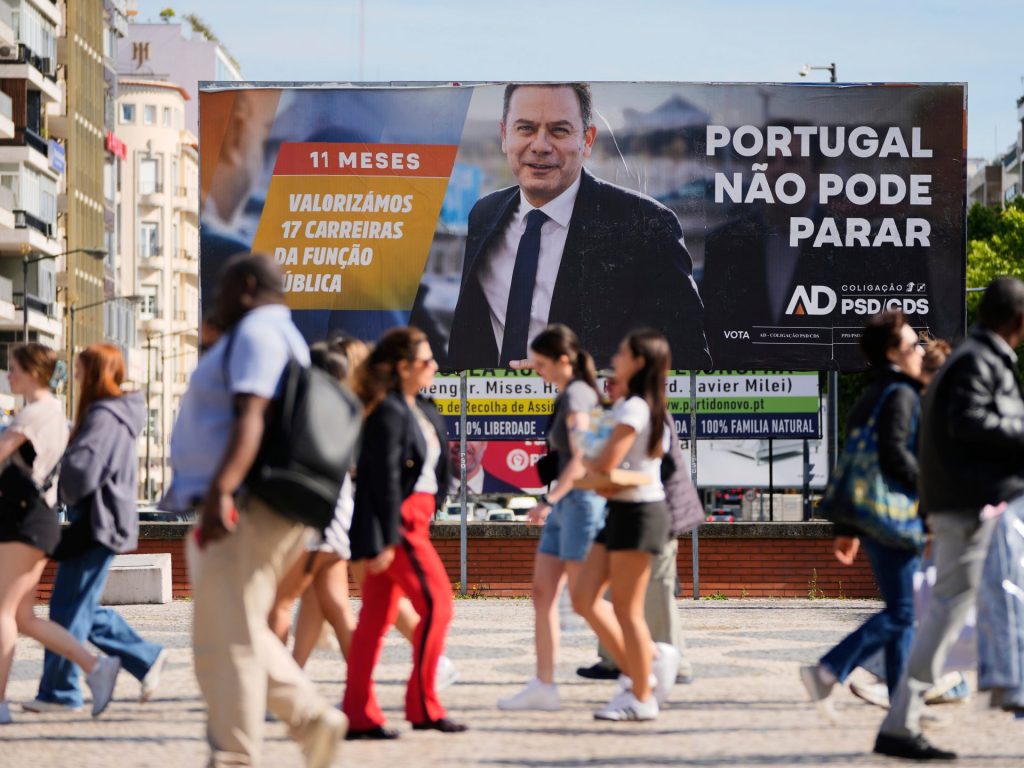
Lisbon, Portugal — Portugal is summoning its citizens to vote in their third general elections in three years on May 18, amid rapid shifts to the country’s political landscape that have left the country facing the prospect of yet another fractured mandate after decades of relative stability. This year’s snap election comes at a moment when rising living costs, a housing crisis, the future of the national health service and perceptions of immigration are all significant issues on the public agenda – as is a corruption scandal that precipitated the upcoming vote. The government of Prime Minister Luis Montenegro, the leader of the Social Democratic Party (PSD), fell in March, when parliament voted against a motion of confidence, triggering elections. It’s the second Portuguese government in a row that had left office under a cloud of corruption allegations. Now, the country’s 10 million voters will need to choose the makeup of their next parliament, where 230 seats are up for grabs – and a divided mandate appears likely. Advertisement ‘A very serious case’ Montenegro led a right-wing minority government for less than a year before accusations of corruption emerged over a consultancy firm that he set up, called “Spinumviva”. A string of media investigations into potential conflicts of interest revealed the firm had received thousands of euros a month in consultancy fees from previously undisclosed clients, including companies with government contracts. When a defiant Montenegro appeared on national television back in March to issue his response, he insisted that he had not broken the law because he had transferred his shares in the company to his wife and sons before he became prime minister in 2024. But his defence is controversial, say experts. “Under Portuguese civil law, even if it was possible to sell shares to someone you’re married to, you’d still be a joint owner of them, and, therefore, still able to profit from them,” said Portuguese lawyer and political commentator Carmo Afonso. “Spinumviva is a very serious case – and revelations are still emerging.” Just hours before a live debate a few weeks later with his main rival, the Socialist Party’s Pedro Nuno Santos, Montenegro submitted an updated declaration of his business interests to the national online transparency portal. According to an investigation by the Portuguese newspaper Expresso, some of Spinumviva’s clients earned at least 100 million euros ($112m) a year in government contracts during Montenegro’s mandate alone. Montenegro, meanwhile, says that he has not been involved with Spinumviva since becoming prime minister in March 2024. Advertisement How the race is shaping up Still, the attention on Spinumviva may not have damaged Montenegro’s chances of re-election. According to Portuguese political scientist Vicente Valentim, “perceptions of corruption in Portugal are traditionally high, but it may not to be a significant factor in how people vote”. Despite the ongoing scandal, the conservative Democratic Alliance (AD) coalition, in which Montenegro’s Social Democratic Party (PSD) is the majority party, leads the race, and is polling at 34 percent. And according to a poll by Lisbon’s Catholic University, a third of voters think the Spinumviva case and its potential legal ramifications are irrelevant to the elections. Montenegro’s brief period in government has seen him enjoy the support of the professional class, riding on a budget surplus attained by the previous government of the centrist Socialist Party (PS) of Antonio Costa, who was prime minister from 2015-2024. Meanwhile, “the loss of the charismatic Antonio Costa has affected the PS’s popularity,” says Afonso. “Costa is a hard act to follow.” “Ironically, the more Spinumviva gets talked about, the better it is for Montenegro, is what some commentators are saying,” says Afonso, who believes Montenegro was well aware of this when the government collapsed. “Montenegro chose to bring a vote of confidence in parliament knowing full well that he would lose it, because there really couldn’t be a better time to hold elections – better for him, that is.” The PS, by contrast, is polling several points below the AD at about 26 percent. Advertisement Currently, it looks highly improbable that any of the parties or alliances running will win an outright majority of 116 seats or more. That leaves two likely possibilities: either a post-electoral coalition of parties that forms a majority in alliance; or a minority government, which needs the tacit support of other parties in parliament to push through essential legislation, including budgets. About half a dozen parties are serious contenders for the rest of the 230 seats in parliament. These include the traditional players such as the Communist Party-Greens alliance (CDU), the Left Bloc, and the People-Animals-Nature party, as well as new parties including the Europeanist-Socialist party Livre (“Free”), the radical right-wing Iniciativa Liberal (“Liberal Initiative”), and the extreme right Chega (“Enough”). The rise of the far right Chega, which opposes immigration, abortion, and LGBTQ rights, and has targeted minorities like Portugal’s substantial Romani population, won a surprising 50 parliamentary seats in the 2024 elections, with Andre Ventura as leader. It won 18 percent of the national vote. The party is currently in third position in the polls and is predicted to win close to what it did in the last elections. Valentim, the political scientist, warns against interpreting Chega’s support base as representing a protest vote. “A lot of people who vote for them already held the ideas they espoused, long before the party actually appeared; generally, the rapid growth of radical right-wing parties is not down to them changing people’s ideas,” he said. “So, Chega going from 1 percent of votes, to 7 percent, to 18 percent over the course of the last three elections doesn’t mean that the number of people with right-wing ideas has grown in those proportions.” Advertisement What it means, he said, is that “more and more people who already had those ideas, but used to feel that they were not socially acceptable, and that they would be judged, or made social pariahs or disadvantaged professionally because of them, no longer feel that”. With the
Al-Qaeda affiliate claims 200 soldiers killed in Burkina Faso attack
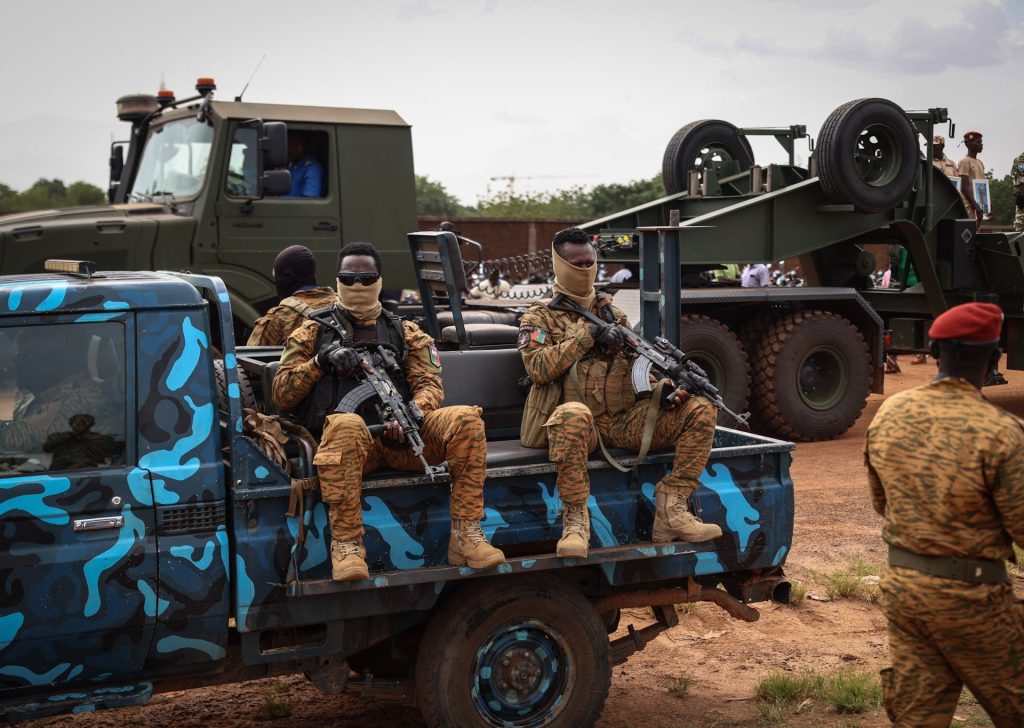
Jama’a Nusrat ul-Islam wa al-Muslimin (JNIM) claims attack on Djibo military outpost, SITE Intelligence Group says. An al-Qaeda affiliate has claimed it killed 200 soldiers in an attack on a Burkina Faso army base this week, according to an NGO that tracks armed groups’ online activity. The base in the northern town of Djibo came under attack on Sunday morning, and a police station and market were also targeted, security sources told the news agency Reuters. Although there was no official toll, three Djibo residents told Reuters that dozens of soldiers and civilians were killed. Al Jazeera was not able to independently verify the death toll. A Burkina Faso military source told Al Jazeera that the armed group was exaggerating the number of casualties. The United States-based SITE Intelligence Group, which tracks online activity of armed groups, said Jama’a Nusrat ul-Islam wa al-Muslimin (JNIM) made the claim in a formal statement. “The operation comes amid increased JNIM activity in Burkina Faso over the past month inflicting a high number of casualties,” SITE said. The organisation previously said Ousmane Dicko, head of JNIM in Burkina Faso, had appeared in a video urging residents of Djibo to leave the town for their own safety. Advertisement Reporting from Dakar, Senegal, Al Jazeera’s Nicolas Haque said the attack took place over a number of days. “One of the major military outposts that was supposed to protect this town of about 200,000 people was razed to the ground, such was the firepower of the armed groups,” said Al Jazeera’s Nicolas Haque, reporting from Senegal, Dakar. “This is one of the deadliest attacks in Burkina Faso, and it comes just as Ibrahim Traore [Burkina Faso’s military leader] has been saying that the country has been gaining territory, encouraging people to go back to their homes, but this latest attack proves the opposite,” said Haque. A video circulating on social media from the al-Qaeda affiliate warned people to leave their homes and said it would seize more territories. “What we’re seeing here is the pivot point where these armed groups that normally attack villages are now trying to take over towns. It’s a major blow for Burkina Faso’s armed forces,” Haque said, noting the attacks come just as Traore was visiting Russia, asking President Vladimir Putin for more training and arms to fight off armed groups. JNIM claimed responsibility for another assault this week targeting a military post in Burkina Faso’s northern Loroum province in which the group said 60 soldiers were killed, according to SITE. The attacks highlight the difficulties the three Sahel nations of Burkina Faso, Mali and Niger, ruled by military leaders, are facing in containing the armed groups. Burkina Faso authorities have not commented on the latest attacks. Advertisement A notable attack occurred in the Burkina town of Sole, where JNIM fighters raided the army military post and killed soldiers, SITE Intelligence said, without specifying on which day it took place. A Military government took power in Burkina Faso in 2022, but they have largely failed to provide stability, as more than 60 percent of the country is estimated to be outside government control. Adblock test (Why?)