

US Supreme Court grills Trump administration over birthright citizenship
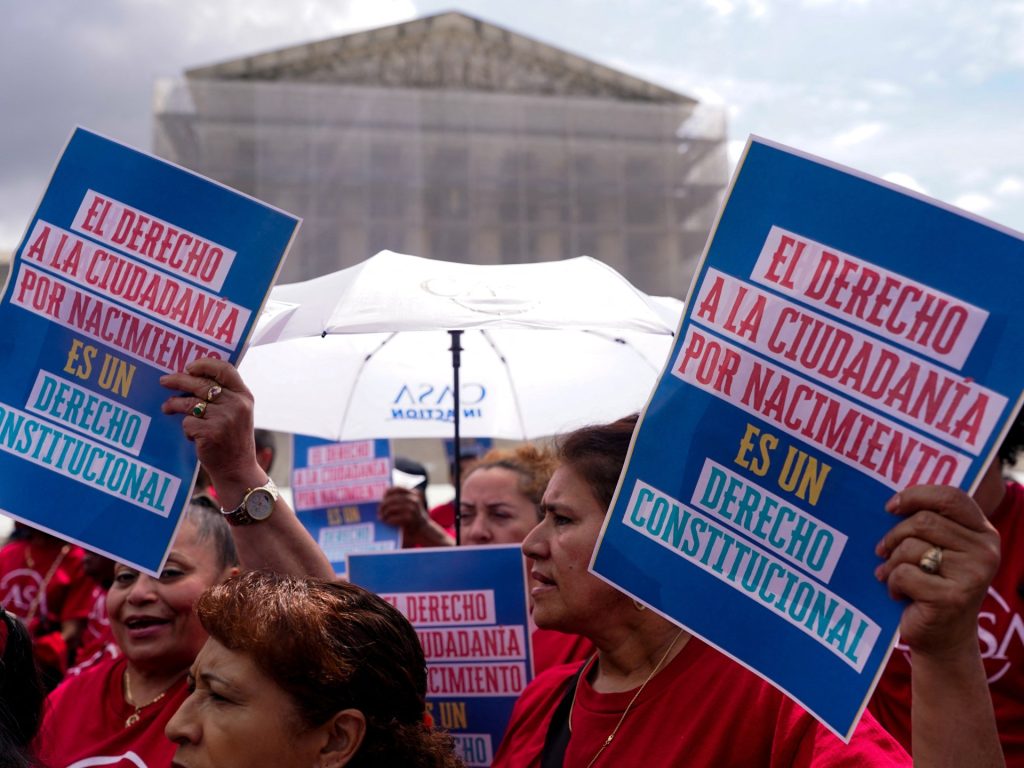
Washington, DC – Justices at the US Supreme Court have questioned lawyers representing the administration of US President Donald Trump and those challenging his effort to end birthright citizenship in the country. The hearing on Thursday represented the first time the top court in the United States has heard a case related to Trump’s January 20 order seeking to do away with the more-than-century-old policy, which grants citizenship to nearly all infants born on US soil, regardless of their parents’ legal status. It was not immediately clear when the court would issue a ruling in the case, although an outcome could take weeks. It also remained unclear if the justices would address the underlying constitutionality of Trump’s order, or if they would only rule on the narrower question of whether lower federal court justices are empowered to block the implementation of the order nationwide. Still, demonstrators and lawmakers who gathered outside of the Washington, DC courthouse said any ruling challenging birthright citizenship would corrode the national fabric of the US. Advertisement “We are here at the highest court in the land because a fundamental promise of America is under attack. And we are here to say not on our watch,” Ama Frimpong, the legal director of CASA, told those gathered in protest. “All persons born in the US are citizens of the US,” Frimpong said. Legal experts have also said a ruling limiting federal courts’ ability to order a “national” or “universal” injunction to block Trump’s executive actions would in and of itself be transformative. “That question, in a normal sense, would already shake the legal foundation of the country: whether lower courts have the right to order nationwide injunctions,” said Al Jazeera’s Heidi Zhou-Castro from outside the courthouse. “But it’s the second question that really people are focused on, and that is if Trump has the power to cancel birthright citizenship for the children born to undocumented immigrants and certain visa holders visiting the US,” she said. “Now it is up to the justices whether they want to go in either of those directions.” ‘Catch me if you can kind of regime’ Over two hours of questioning, lawyers for the Trump administration, as well as those representing states and individuals who have challenged Trump’s order, addressed matters both of constitutional grandeur and legal minutia. Solicitor General John Sauer began by laying out the Trump administration’s broad argument that the US Constitution’s 14th Amendment, ratified in 1868, has been incorrectly interpreted since then. The amendment, Sauer argued, “guarantees citizenship to the children of former slaves, not to illegal aliens or temporary visitors”. Advertisement Trump also reiterated that position in a Truth Social post ahead of the hearing, saying birthright citizenship makes the US a “STUPID Country” that incentivises people to visit to have children. Sauer also took aim at the three federal judges who have ruled in favour of separate lawsuits challenging the law’s constitutionality. Plaintiffs in those cases include 22 state attorneys general, immigrant rights organisations, and individuals affected by the rule. Sauer argued that the judges’ decisions should only apply to the plaintiffs in the cases, and not the entire nation. Liberal Justice Sonia Sotomayor questioned whether the broader constitutional question could be unpicked from the narrower question of the judges’ reach, saying the president’s order violates “by my count, four established Supreme Court precedents”. That included the 1898 Supreme Court case, United States v Wong Kim Ark, which first established that the 14th Amendment applies to immigrants, she said. Other justices questioned the implications of a scenario where the court ruled that the judges could not issue “national injunctions” in the case, without answering the underlying constitutional question. Legal scholars have noted that this could create a situation where Trump’s end to birthright citizenship would not apply to states and individuals who successfully challenged his order in court. That would mean birthright citizenship – at least temporarily – would end in 28 other states if they do launch their own challenges. Advertisement “Does every single person that is affected by this EO [executive order] have to bring their own suit?” Justice Elena Kagan questioned. Justice Ketanji Brown Jackson said the Trump administration’s argument turns the US justice system into a “catch me if you can kind of regime”. Under that, “everybody has to have a lawyer and file a lawsuit in order for the government to stop violating people’s rights”. Adblock test (Why?)
Lawyers for US Mayor Ras Baraka argue he was targeted for arrest at protest
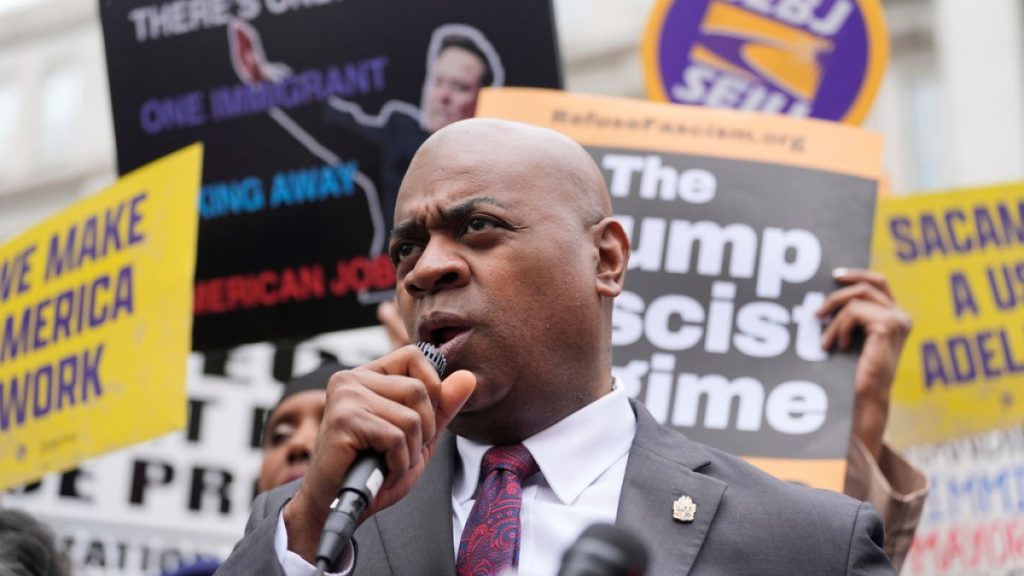
Baraka’s defence team say they will file a motion to dismiss trespassing charges pursued by the Trump administration. Lawyers in the United States have said they will file a motion to dismiss trespassing charges directed at Newark Mayor Ras Baraka, following his arrest during a protest at an immigrant detention centre in New Jersey. During a hearing in a New Jersey federal court on Thursday, Baraka’s defence team said that they believed he was being selectively prosecuted by the administration of President Donald Trump. “We believe that the mayor himself was targeted here,” said Rahul Agarwal, one of Baraka’s lawyers. “The mayor was invited into the facility on Friday,” Agarwal added, pointing out that Baraka was “outside the facility when he was ultimately handcuffed and detained”. Baraka himself attended the hearing and spoke to supporters outside afterwards. On social media, he framed the criminal complaint as a sham. “Today, the U.S. Attorney General’s office chose to move forward with a trial over trespassing charges at Delaney Hall. While the charges are unwarranted, we will fight this,” Baraka wrote. “This is bigger than me. It’s about all of us.” Advertisement The incident is the latest to underscore growing tensions between the Trump administration and local authorities who oppose his immigration crackdown. Civil liberties groups have argued that the government is using its power to intimidate or coerce officials who do not align with its priorities on immigration. The Trump administration’s complaint centres on the events of May 9, when lawmakers and protesters showed up at Delaney Hall, a new detention facility in Newark run by the private company GEO Group. Baraka has long opposed the 1,000-bed facility, saying it lacks the proper permitting, and he has appeared outside its gates multiple times since its May 1 opening. On the day of his arrest, Baraka joined three members of the US Congress — LaMonica McIver, Bonnie Watson Coleman and Rob Menendez — who arrived unannounced “to conduct lawful congressional oversight” of the facility, according to their statements afterwards. Agarwal said that Baraka was the only person arrested in the incident. Baraka has maintained that he was invited in to the facility and shared a video on social media on Wednesday that he says shows a guard opening the gate to allow him inside the premises. “Mayor Baraka was at Delaney Hall to join a tour of the detention facility with a congressional delegation as part of their authorized oversight responsibilities,” the American Civil Liberties Union (ACLU) said in a statement on the arrest of Baraka last week. “Mayor Baraka — and lawmakers across New Jersey and the country — are being targeted by the Trump administration for refusing to be complicit with its ongoing violations of due process.” Advertisement However, the government’s criminal complaint alleges that Baraka entered and remained inside the private facility despite multiple warnings to leave. He faces up to 30 days in prison. “We believe there’s clear evidence that the mayor was within the property,” Assistant US Attorney Stephen Demanovich told US Magistrate Judge Andre Espinosa. Video of the incident shows an official behind the gate at Delaney Hall telling Baraka he must return outside because “you are not a congressmember”. Judge Espinosa on Thursday told Baraka he needed to be processed by US Marshals Service after proceedings came to an end. The Associated Press said the request sparked a moment of confusion in the courtroom. Baraka pointed out that he had already been processed after his arrest, but ultimately agreed to give his fingerprints and take a mugshot a second time. “They’re trying their best to humiliate and degrade me as much as they possibly can,” said Baraka. “I feel like what we did was completely correct. We did not violate any laws. We stood up for the constitution of this country, the constitution of the state of New Jersey.” Baraka is considered a leading candidate in the 2025 New Jersey governor’s race. Adblock test (Why?)
‘Significant step’: Russia-Ukraine talks in Turkiye – what to expect
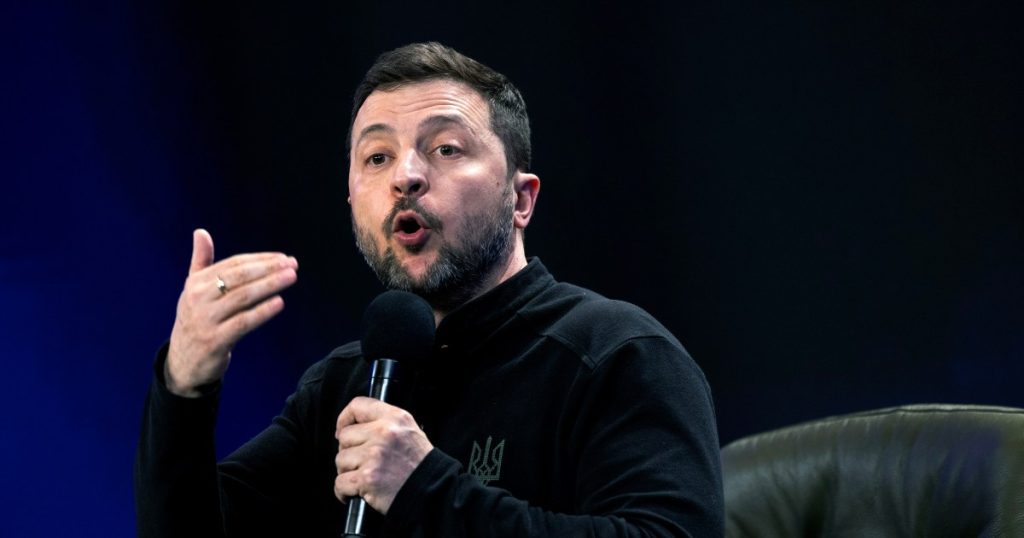
Russia and Ukraine are poised for talks in Turkiye on Thursday, even though the prospects of President Vladimir Putin and his Ukrainian counterpart Volodymyr Zelenskyy meeting directly for the first time in three years were dashed by the Kremlin late on Wednesday. United States President Donald Trump, who had earlier indicated that he might join the negotiations, will also not attend, according to American officials. Here’s what we know about the talks, what prompted them, who’s expected to attend, and why the negotiations matter: Why are the talks being held? On Sunday, Putin proposed the idea of direct negotiations between Russia and Ukraine in Turkiye, instead of the rounds of indirect talks that the US and others have tried to mediate between the neighbours at war. Putin referenced direct talks that took place in 2022 while pitching for their resumption. “It was not Russia that broke off negotiations in 2022. It was Kyiv. Nevertheless, we are proposing that Kyiv resume direct negotiations without any preconditions,” Putin said on Sunday. Advertisement In February 2022, Russia launched its full-scale invasion of Ukraine. Shortly after, Russia and Ukraine held talks in the Turkish capital, Istanbul. According to Zelenskyy, the talks fell apart because Russia demanded that Ukraine concede the Donbas region, which spans Ukraine’s Donetsk and Luhansk regions – parts of which Russia occupied during its invasion. Zelenskyy added that Russia wanted Ukraine to surrender long-range weaponry, make constitutional amendments to declare neutrality and significantly reduce its armed forces. “There were never any negotiations; it was an ultimatum from a murderer,” Zelenskyy said at the time. While Zelenskyy had earlier held that any peace agreement would require Russia to give up Ukrainian territory it had occupied, in December last year, Zelenskyy said the “hot phase” of the war could end if NATO offered security guarantees for the part of Ukraine currently under Kyiv’s control. He added that the return of land that Russia has occupied could be diplomatically negotiated later. “The pressure that the US has exerted to attempt to bring an end to the fighting in Ukraine has evolved over time,” Keir Giles, a senior consulting fellow at the London-based Chatham House think tank, told Al Jazeera. “It appears that the most recent elements in that evolution, particularly in terms of European solidarity with Ukraine, have led Russia to engage in direct talks.” Putin’s recent push for talks came a day after Ukraine’s four major European allies gave Putin an ultimatum to accept an unconditional 30-day ceasefire or face renewed sanctions. This ultimatum came after leaders of the European countries, France, the United Kingdom, Germany and Poland, visited Kyiv. Advertisement They gave Putin a deadline until May 12. On Sunday, May 11, Putin – without committing to a ceasefire – said: “We are committed to serious negotiations with Ukraine. Their purpose is to eliminate the root causes of the conflict, to establish a long-term, lasting peace for the historical perspective.” When and where are they being held? The talks are scheduled to start at approximately 10am local time (07:00 GMT), according to Russia’s TASS news agency. They are being held behind closed doors in Dolmabahce Palace in the Turkish city of Istanbul, which straddles the boundary between Asia and Europe. The palace, which sits on the Bosphorus Strait, was the main administrative complex of the Ottoman Empire for most of the period between the mid-19th century and 1922. What role did Trump play in this? The four European leaders – Britain’s Keir Starmer, France’s Emmanuel Macron, Germany’s Friedrich Merz and Poland’s Donald Tusk – said that they had briefed Trump about their ultimatum to Russia over a phone call and suggested that he was on board. But after Putin called for direct talks between Kyiv and Moscow, Trump issued a statement on his Truth Social platform asking Ukraine to meet with Russia “immediately”. Trump ran his campaign for the 2024 election on the promise to bring a swift end to the Ukraine war. The Trump administration held multiple meetings, starting February, with Russian and Ukrainian representatives separately in Saudi Arabia in attempts to broker a deal. Also in April, the Trump administration indicated that it was taking a step back from providing security guarantees to Ukraine. The Trump administration said it wanted Europe to take the lead in supporting Ukraine’s defence instead, noting that the US had other priorities, including border security. Advertisement In recent weeks, however, Trump and his team, including Secretary of State Marco Rubio, have expressed growing frustration at the lack of meaningful progress in negotiations and have threatened to walk out of efforts to mediate peace. Explaining his insistence that Ukraine join the May 15 Istanbul talks, Trump argued: “At least they will be able to determine whether or not a deal is possible, and if it is not, European leaders, and the US, will know where everything stands, and can proceed accordingly!” Who will be there? “I supported President Trump with the idea of direct talks with Putin. I have openly expressed my readiness to meet. I will be in Turkiye. I hope that the Russians will not evade the meeting,” Zelenskyy wrote in an X post on Monday. On Tuesday, Zelenskyy announced he will be in Ankara on Thursday, where he will meet Turkish President Recep Tayyip Erdogan. The talks with Russia, however, are supposed to be held in Istanbul subsequently. Trump has said he will send Secretary of State Marco Rubio, Middle East envoy Steve Witkoff and Special Envoy for Ukraine and Russia Keith Kellogg to attend the talks in Istanbul. Russia on Wednesday night announced its team for the meeting. Vladimir Medinsky, a close Putin aide and former culture minister who also led previous rounds of unsuccessful talks with Ukraine in 2022, will lead Moscow’s team. With him will be Deputy Defence Minister Alexander Fomin and the director of the Main Intelligence Directorate, Igor Kostyukov. Advertisement Trump’s earlier offer to attend the talks himself had been welcomed by Kyiv. “All of us in Ukraine
‘Adolescence’ is right: We’re failing both young men and women

In 2014, I was teaching English to undergraduate freshers at a university in Massachusetts. A student in class, behind on his work, grew angry with a new assignment we were working on. He picked up a chair and threw it past an aisle of students and across the room. He then sat down as if nothing had happened. The chair did not strike anyone, but several students had to duck their heads. As someone who struggles with (post-traumatic stress disorder) PTSD and dissociation as a result of childhood abuse and domestic violence, I found myself frozen in front of my classroom, momentarily flashing back to previous violent incidents with a former partner. I recalled this scene with my former student when I recently rewatched the four-part series Adolescence on Netflix. The series explores the consequences that befall a 13-year-old boy, his family, and community after he kills a female student who has bullied him online. As the police question Jamie, the main character, he continually denies his involvement. Eventually, a video of the murder is shown with Jamie stabbing the teenage girl. Advertisement To me, the fact that a boy could kill a girl and convince himself that he had done nothing wrong points to a major societal failure. Boys are taught that acting on anger is acceptable. We have normalised it. When I was 25, I had been dating a man for several months. A friend of his was visiting and asked me if I was ready to go on an outdoor adventure with the two of them. In the spirit of the day, I said, “I was born ready.” My boyfriend misinterpreted this as a sexual innuendo and immediately slapped me hard across the face. No one said a word, and the day proceeded as if nothing had happened. My boyfriend’s friend never reached out to me after the incident. He never did or said anything that suggested that he thought the violence was unwarranted. That taught me that the violence was normal, acceptable behaviour. My student’s behaviour frightened me to the point that afterwards, I did not feel confident that I could keep the other 20 class students safe in his presence. I approached my supervisors, who suggested I contact both campus security and our on-campus learning disabilities centre, which offered services for students with physical or cognitive issues. I had expected campus security to have a conversation with the student and to document the chair event, so a paper trail could exist should further acts or threats of violence continue. Instead, campus police said no one had been hurt, so there was no incident to report. The learning disabilities centre could tell me that the student was in their programme, but that they could not share any information with me about the student or how best to handle him. Advertisement Addressing these issues in young boys is critical to preventing serious violence in their behaviour when they grow older. We are failing our children and stand at a crossroads with increased violence in boys and young men that will only escalate if viable solutions are not found. My abusive former partner did not have a healthy male role model as he grew up. According to my abuser and his mother, he was not taught to curb his temper or monitor his anger. I believe that awareness must begin with parents and at an early age. Frustration and anger must be recognised, named and confronted. If young people can be taught to identify the actions that trigger their defensive or even uncontrollable responses, escalation can be prevented. When parents can acknowledge the child’s behaviour and point it out, solutions and alternatives to acting out can be offered. “Time out” at home and school should not be used as a punishment but as an opportunity to step back, take a breath, and re-evaluate the situation. The process must be repeated and reinforced to become a new pattern of response. Encouraging boys to identify and express their feelings, whether they be anger, sadness, or frustration, can be a huge step forward in teaching them to become aware of those feelings, rather than just acting on them. Once children enter school, discussions regarding feelings and appropriate actions must become a regular part of class instruction. A new definition of “time out” can offer students a practice in self-care, a healthy alternative to acting out anger. A time out in a school therapist’s office or with a guidance counsellor, or other trained staff, can become a safe place to calm down and discuss alternative responses to acting on anger. Advertisement In classroom instruction, role-play situations can help students learn and practise alternative responses to anger and aggression when they are confronted with upsetting stimuli. This type of practice and reinforcement can become a new automatic response if children are given sufficient feedback and opportunity in both home and school situations. Teaching issues of mental health in classrooms beginning at an early age can help destigmatise emotions of shame, isolation and powerlessness. Embarrassment and shame can be significant triggers for both boys and girls, and in Adolescence, did in fact lead Jamie to fatally stab the girl who bullied him online. Shame and anger are normal human responses to certain situations, but addressing these feelings from a very young age can assist children in learning healthy and safe ways of coping rather than lashing out against others. My abuser was also experiencing shame when he assumed my response to his friend was sexual. As a society, we teach boys and men that anger is acceptable. TV commercials and movies portray men as both physically and mentally strong to the point where any expression of vulnerability makes them weak and inferior. It is time we teach boys and men that they are stronger, not weaker, when they are aware of and comfortable with their emotions. Until men and boys can identify and switch emotional gears instead of acting on anger, we will
Russia-Ukraine war: List of key events, day 1,176
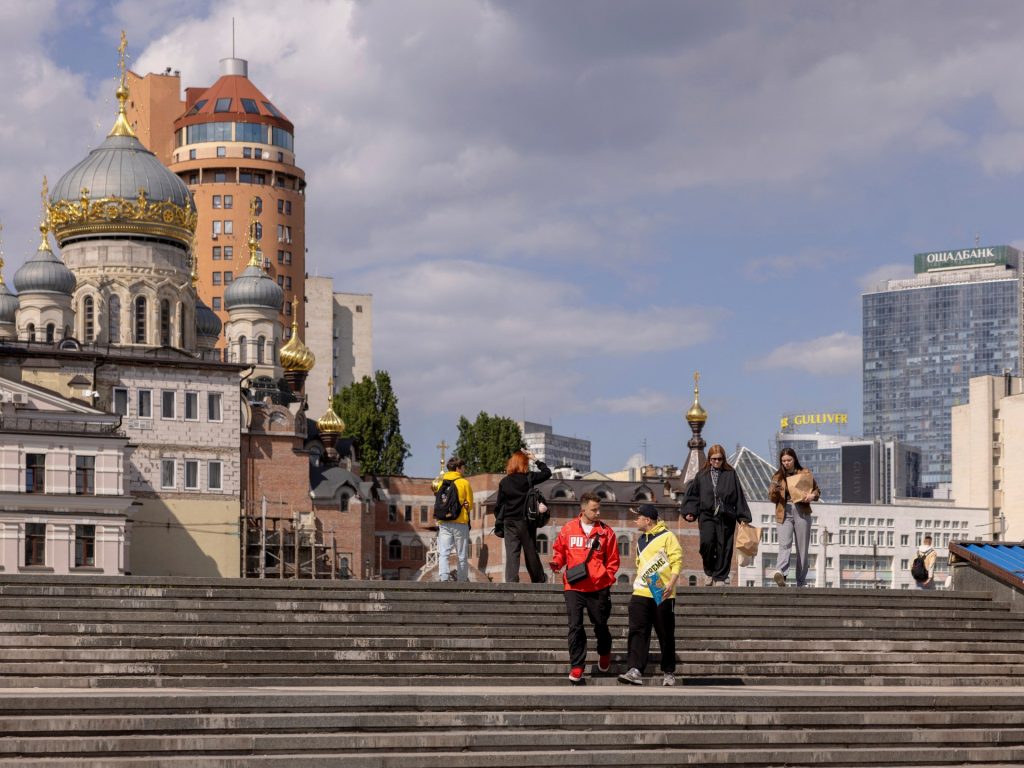
These are the key events on day 1,176 of Russia’s war on Ukraine. Here is where things stand on Thursday, May 15: Fighting A Russian missile strike targeted Ukraine’s northeastern city of Sumy, killing at least three people, Ukrainian officials said on Wednesday. Governor of Kherson, Oleksandr Prokudin, said that on Wednesday until early Thursday, about 35 areas, including the city of Kherson, were under Russian drone “terror” and artillery shelling that injured at least nine people. Russia’s defence ministry said air defence systems downed two Ukrainian drones overnight over the Rostov and Belgorod regions. Diplomacy Ukraine and Russia will hold direct talks in Turkiye on Thursday for the first time since the war started in 2022. The two sides are expected to discuss a 30-day ceasefire and a possible exchange of prisoners. Russian President Vladimir Putin was not listed in Moscow’s delegation to the talks, despite the leader proposing the discussions last week. Deputy Foreign Minister Mikhail Galuzin, Deputy Defence Minister Alexander Fomin and Igor Kostyukov, director of Russia’s GRU military intelligence agency, are part of the Russian delegation. After the Kremlin’s announcement, a United States official said President Donald Trump would also not be attending the meeting. Estonian Foreign Minister Margus Tsahkna said that Putin sending a low-level delegation to Turkiye for talks was “like a slap in the face”. US Secretary of State Marco Rubio met with his Ukrainian counterpart Andrii Sybiha on the sidelines of a NATO summit in Antalya, Turkiye. NATO chief Mark Rutte said he was “cautiously optimistic” for progress towards peace in Ukraine, but that it was up to Russia to take the “next steps necessary”. “[If] the Russians are willing to play ball, and not only the Ukrainians are doing this … that you could get to some breakthroughs over the next couple of weeks,” he said at the NATO summit. Latvian Foreign Minister Baiba Braze said they did not see any indications that Russia wants peace in Ukraine. “Weakening Russia’s military capabilities is the most direct and cheapest way… to achieve peace in Ukraine,” he told reporters in Turkiye. On Wednesday, the European Union approved a new sanctions package on Russia to clamp down on its “shadow” oil fleet. German Chancellor Friedrich Merz said there must not be any deal in Ukraine that is a “dictated peace” from Russia. Advertisement Adblock test (Why?)
Qatar Airways inks 96B Boeing jet deal during Trump visit
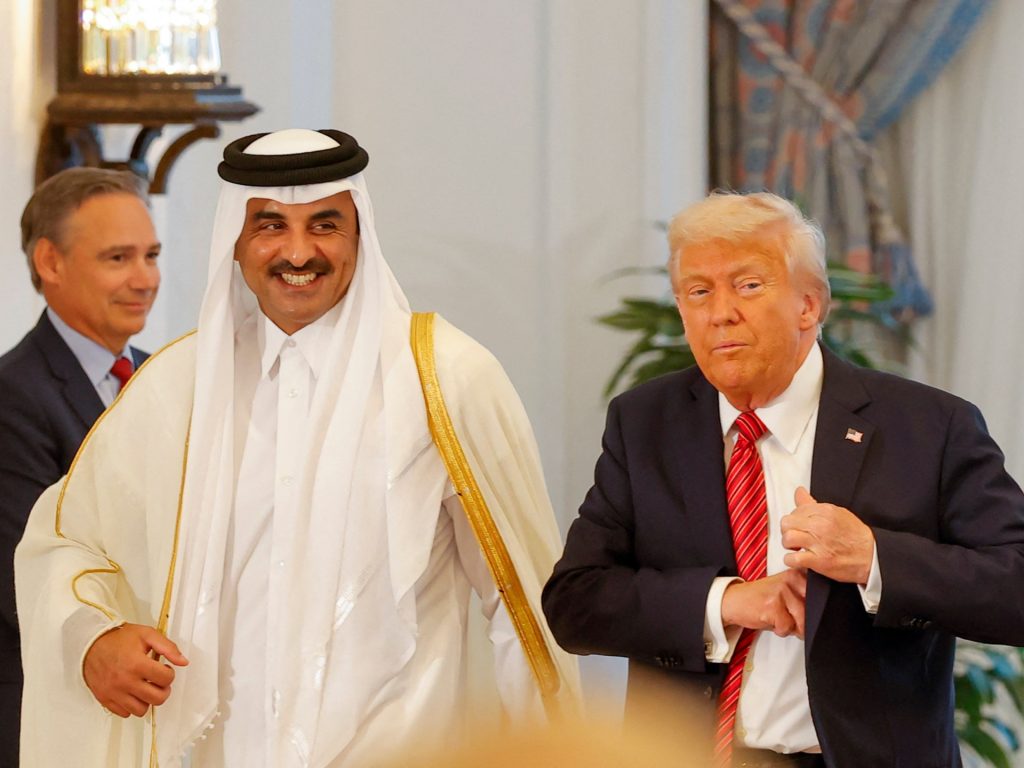
State-owned airline Qatar Airways has signed an agreement to buy 210 aircraft from United States manufacturer Boeing, coinciding with President Donald Trump’s visit to Qatar as part of his tour of the Gulf region. Trump and Qatar’s emir, Sheikh Tamim bin Hamad Al Thani, witnessed the signing ceremony in Doha on Wednesday. The White House said that the deal for the Boeing 777X and 787 planes with GE Aerospace engines was worth $96bn. Trump said Boeing CEO Kelly Ortberg, who signed the deal with Qatar Airways CEO Badr Mohammed Al Meer next to Trump and the emir, told him: “It’s the largest order of jets in the history of Boeing. That’s good.” Trump had initially said that the deal was worth more than $200bn and was for 160 planes, before the White House issued updated numbers after his comments. The White House also said that agreements signed by the US and Qatar would “generate an economic exchange worth at least $1.2 trillion”. The sale is also a boost for Boeing and its biggest engine supplier at a time when large versions of rival Airbus’ A350, powered by Rolls-Royce engines, have struggled with maintenance problems from operating in the world’s hottest climates, including the Gulf region. Advertisement Boeing shares rose 0.9 percent in New York, while GE Aerospace stock edged up 0.1 percent. For the 787s, Qatar opted for GE Aerospace’s GEnx engines rather than Rolls-Royce’s Trent 1000, according to the administration. GE Aerospace’s GE9X is the only engine option for the 777X. It is the largest widebody engine deal for GE Aerospace, the company’s CEO Larry Culp said in a statement. Faisal al-Mudahka, editor-in-chief of the Gulf Times, said the Qatar Airways purchase of Boeing aircraft is a “win-win”. As one of the world’s top airlines with a growing market, Qatar Airways has more demand than supply at the moment and will need the fleet, he said. “I think Donald Trump and Qatar know how to package things to make political gains and economic gains.” Trump’s Qatar visit is the second destination of his Gulf tour, after an initial stop in Riyadh, Saudi Arabia, where he made a surprise announcement about lifting sanctions on Syria and then met the country’s president, Ahmed al-Sharaa. Trump is to land on a third and final stop in the United Arab Emirates on Thursday for a one-day visit. No mention of Gaza The Qatari emir said the two leaders had a “great” few hours of discussion covering a range of issues. “I think after signing these documents, we are going to another level of relations,” he said. Trump thanked the emir and said it had been a “very interesting couple of hours” discussing topics including the Russia-Ukraine war, Iran and trade relations. However, Israel’s war on Gaza was not mentioned by either leader. Advertisement Omar Rahman, a fellow at the Middle East Council on Global Affairs, said the fact that Gaza wasn’t mentioned led him to believe the discussion is “ongoing”. “When it comes to Gaza, you have the Israelis there as well. On the issue of a ceasefire, Trump can put pressure on the Israelis, … but you still have the Israelis there making decisions. This is going to be a little bit more difficult to work out,” he told Al Jazeera. US Middle East envoy Steve Witkoff, who was also in Doha, said “we’re making progress” in response to a question by Al Jazeera Diplomatic Editor James Bays on whether discussions on Gaza were ongoing. “His tone was pretty telling. He was very positive,” Bays said. “When I asked him whether that was regarding aid deliveries or a ceasefire, he said, ‘We’re making progress on all fronts.’” “He said he hopes there would be a positive announcement ‘soon’, but we have no indication of what that might mean,” Bays added. Adblock test (Why?)
What does the PKK’s disarming mean for its regional allies?
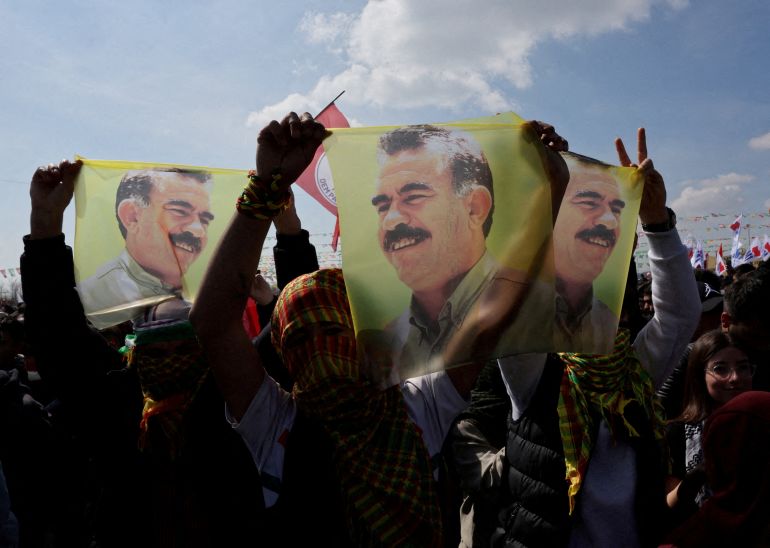
When Abdullah Ocalan said his Kurdistan Workers’ Party, or PKK, should lay down its arms and disband after more than four decades of conflict with the Turkish state and tens of thousands of deaths, there was an instant look across the border to Syria. Syria’s northeast is largely controlled by the Syrian Democratic Forces (SDF), a Kurdish-led military force Turkiye has repeatedly fought against over the past decade. The SDF is led by the People’s Protection Units (YPG), which Turkiye views as a “terrorist” group and the Syrian branch of the PKK. The United States, however, has backed the YPG in Syria to fight against ISIL (ISIS). Since the fall of Syrian President Bashar al-Assad in December, the SDF has been negotiating with the new Turkish-allied government in Damascus over what its future role in a newly unified Syria and as a military force will be and what kind of governance will extend to the northeast of the country. PKK leader Abdullah Ocalan said the group should disband and disarm, ending decades of violence [Umit Bektas/Reuters] No laying down of arms The removal of the PKK from the equation will likely facilitate the SDF’s integration with Damascus, analysts told Al Jazeera. “For the SDF, it makes it much easier to talk with the government in Damascus and also to de-escalate their relations with Turkey,” said Wladimir van Wilgenburg, an analyst of Kurdish politics based in Erbil, the capital of the autonomous Kurdish region of northern Iraq. While the SDF rejects Turkiye’s assertions that it is the Syrian arm of the PKK, analysts said the groups have strong links. Advertisement While the PKK’s announcement that it would heed Ocalan’s call and disarm was welcomed by SDF leader Mazloum Abdi, he said his group would not disarm and Ocalan’s decision did not extend to Syria. Ahmed al-Sharaa, right, and SDF commander-in-chief Mazloum Abdi sign an agreement, to integrate the SDF into state institutions in Damascus on March 10, 2025 [SANA via AFP] But this could give the group further incentives to bring its fighting force and governing structure – called the Autonomous Administration in North and East Syria (AANES) – under the umbrella of the new government in Damascus. When reached for comment on Monday, an AANES spokesperson told Al Jazeera: “The autonomous administration is not concerned with the internal affairs of other countries.” The SDF has clashed with Turkish-backed Syrian factions, including in the immediate days after the fall of al-Assad’s regime, and sustained attacks from Turkiye’s air force. In December, the US negotiated a ceasefire between the SDF and the Turkish-backed Syrian National Army, which has since been incorporated into Syria’s new armed forces. Abdi has been in discussions with the new Syrian government, led by Ahmed al-Sharaa, over how best to integrate the SDF into the post-Baathist Party security forces and govern Syria’s northeast. Increased pressure to negotiate The SDF has engaged in the talks with the pressure of an impending US troop withdrawal from northeast Syria. Without a US presence and support, the SDF has feared it might be vulnerable to attacks from Turkiye or Turkish-backed factions in Syria. But should the PKK’s decision to disarm bring a feeling of security to Turkiye along its border with Syria, analysts said the relations between the SDF and Turkiye would also likely improve. Advertisement “We know that Turkey’s hardline stance towards the SDF was very much linked to concerns over the PKK and not so much about the SDF being Kurdish-dominated,” Thomas Pierret, a Syria specialist and senior researcher at the Institute of Research and Study on the Arab and Islamic Worlds, told Al Jazeera. SDF members flash victory signs while departing the city of Aleppo on April 9, 2025, as part of an agreement with the Syrian government [Ahmad Fallah/EPA] This is evident by Turkiye’s relations with Masoud Barzani and his Kurdish Democratic Party in northern Iraq’s Kurdish region, Pierret said. Of course, this new reality “doesn’t mean it will be easy”, according to Pierret. Under the agreement between Turkiye and the PKK, some fighters could be relocated to third countries – essentially sent into exile. There’s also the possibility some fighters may decide to make their way to northeast Syria, in which case, Pierret said, Turkiye could see the SDF as a haven for PKK fighters. So Turkiye will keep a close eye on the SDF in Syria and the SDF’s negotiations with Damascus. In the past, the Turkish military has launched drones, fired artillery and carried out air strikes against Kurdish fighters, including the SDF. And analysts said military options may still be on the table going forward. “For now, they seem to be letting negotiations take their course,” Aron Lund, a fellow at Century International with a focus on Syria, told Al Jazeera. “And that’s probably related both to events in Syria but also to the PKK process.” Advertisement Beyond Syria The PKK’s affiliates and allies are spread across regions of the Middle East where Kurds live. Historically, the PKK has operated in Turkiye as well as northern Iraq. And their allies have operated in places where Kurds live in Syria and Iran. Their struggles have often opposed the national authorities in those places or sought self-determination or federalism. One example is the Kurdistan Free Life Party, or PJAK, in Iran, which says its goal is to declare an autonomous Kurdish region in Iran. “It’s unclear what will happen with the … PJAK because they also have a number of Iranian Kurdish fighters inside the PKK,” van Wildenburg said. “It’s possible that they will continue as a political party and not as an armed group because they are already not doing much fighting against the Iranian state anyway.” Analysts agree it is unclear whether the PKK’s allies will follow Ocalan’s lead and lay down their arms or, as is the case with the SDF in Syria, if they will view their own struggles as independent and make decisions on their own. Fighters display the SDF
Toddler separated from mother deported from the US returned to Venezuela
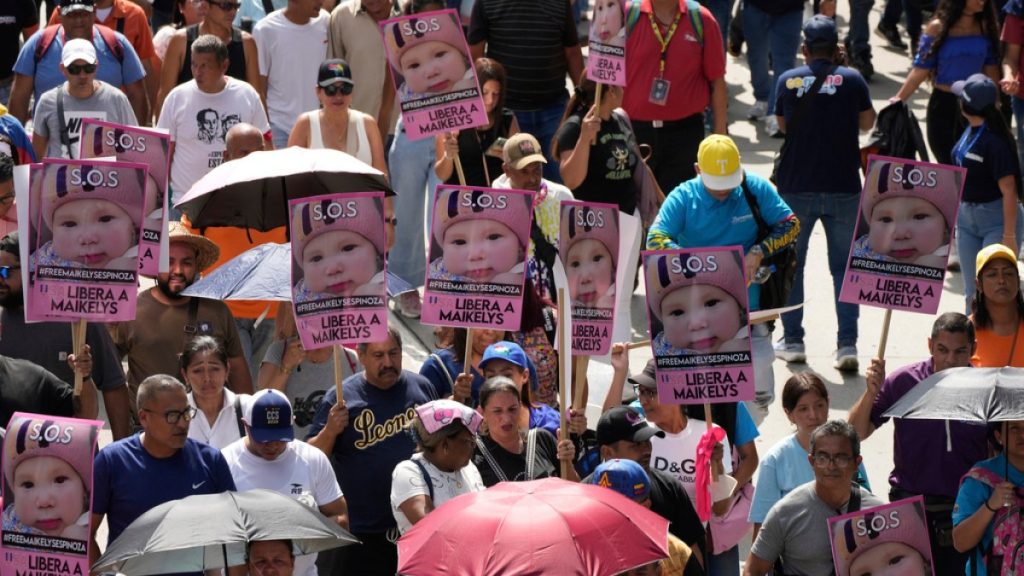
Two-year-old Maikelys Espinoza Bernal was reunited with her mother in Venezuela following calls for her return. A Venezuelan toddler who was separated from her parents after they crossed the United States-Mexico border together has been returned to Venezuela, to where her mother was deported in April. Venezuelan President Nicolas Maduro thanked the administration of United States President Donald Trump for the return on Wednesday of two-year-old Maikelys Espinoza Bernal to her mother, Yorely Bernal. “We must be thankful for all the efforts, for [Trump special envoy] Rich Grenell for his efforts … and thank Donald Trump, too,” Maduro said, calling the child’s return “an act of justice”. Both of the toddler’s parents were accused by the Trump administration of involvement with the Tren de Aragua gang, a claim for which the government has offered no evidence and is firmly denied by family members. The child’s father, 25-year-old Maiker Espinoza, was among at least 137 Venezuelans sent to a prison in El Salvador in March. Venezuelan officials had sought the return of Maikelys, and footage shown on state television showed First Lady Cilia Flores holding Maikelys after she arrived at an international airport near the capital of Caracas. Advertisement The child was reunited with her mother and grandmother in an event at the presidential palace attended by Maduro, who has voiced occasional criticism of Trump’s deportation push but reached an agreement in March to receive Venezuelans deported from the US. The Trump administration has invoked sometimes vague and unsubstantiated claims of Tren de Aragua membership to send Venezuelan migrants to CECOT, a maximum security prison in El Salvador, notorious for abusive conditions, without due process under the 1798 Alien Enemies Act. The toddler’s father, 25-year-old Maiker Espinoza, has been accused by the Trump administration, without evidence, of being a “lieutenant” in Tren de Aragua who oversees “homicides, drug sales, kidnappings, extortion, sex trafficking and operates a torture house”. “At no time has my son been involved with them,” his mother, Maria Escalona, told the news agency Reuters this month, of claims that her son is a member of Tren de Aragua. “I think this is political – they are using the case of my son to cover up the horror that is being committed against all these innocents.” The Department of Homeland Security (DHS) also accused Yorely Bernal of recruiting young women for narcotics smuggling and sex work, but has not provided any evidence for those claims and deported her to Venezuela in April. The Trump administration has invoked the Alien Enemies Act, a rarely used wartime law that grants the president powers to expeditiously expel people from the country without usual protections, under the pretext that irregular migration to the US constitutes a foreign “invasion”. Advertisement A report by the US intelligence community found no evidence for public claims by the Trump administration that Tren de Aragua was coordinating activities with the Maduro government as part of a clandestine attack on the United States. On Wednesday, Director of National Intelligence Tulsi Gabbard fired two top members of the intelligence body that authored that assessment. Adblock test (Why?)
Can you find these Palestinian cities?
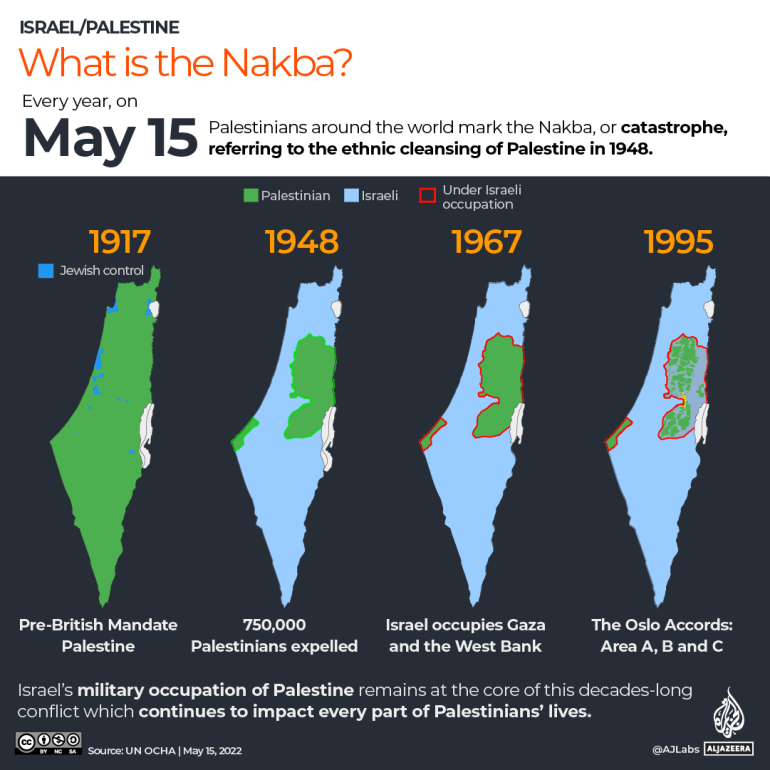
What happened in Palestine in 1948? Every year on May 15, Palestinians around the world mark the Nakba, or catastrophe, referring to the ethnic cleansing of Palestine in 1948. Having secured the support of the British government for the creation of a Jewish state in Palestine, on May 14, 1948, as soon as the British Mandate expired, Zionist forces declared the establishment of the State of Israel, triggering the first Arab-Israeli war. Zionist military forces expelled at least 750,000 Palestinians from their homes and lands and captured 78 percent of historic Palestine. The remaining 22 percent was divided into what are now the occupied West Bank and the besieged Gaza Strip. The fighting continued until January 1949 when an armistice agreement between Israel and Egypt, Lebanon, Jordan and Syria was forged. The 1949 Armistice Line is also known as the Green Line and is the generally recognised boundary between Israel and the West Bank. The Green Line is also referred to as the (pre-) 1967 borders, before Israel occupied the rest of Palestine during the 1967 war. Israel’s military occupation of Palestine remains at the core of this decades-long conflict that continues to shape every part of Palestinians’ lives. Mapping the Palestinian villages Israel destroyed Between 1947 and 1949, Zionist military forces attacked major Palestinian cities and destroyed some 530 villages. About 15,000 Palestinians were killed in a series of mass atrocities, including dozens of massacres. On April 9, 1948, Zionist forces committed one of the most infamous massacres of the war in the village of Deir Yassin on the western outskirts of Jerusalem. More than 110 men, women and children were killed by members of the pre-Israeli state Irgun and Stern Gang Zionist paramilitary organisations. Palestinian researcher Salman Abu Sitta documented detailed records of what happened to these 530 villages in his book, The Atlas of Palestine. Where are Palestinian refugees today? Some six million registered Palestinian refugees live in at least 58 camps located throughout Palestine and neighbouring countries. The UN Relief and Works Agency for Palestine Refugees in the Near East (UNRWA) provides assistance and operates hundreds of schools and health facilities for at least 2.3 million Palestinian refugees in Jordan, 1.5 million refugees in Gaza, 870,000 refugees in the occupied West Bank, 570,000 refugees in Syria and 480,000 refugees in Lebanon. The largest camps in each are Baqa’a in Jordan, Jabalia in Gaza, Jenin in the occupied West Bank, Yarmouk in Syria, and Ein el-Hilweh in Lebanon. More than 70 percent of Gaza’s residents are refugees. About 1.5 million refugees live in eight refugee camps around the Gaza Strip. According to international law, refugees have the right to return to their homes and property from which they have been displaced. Many Palestinians still hope to return to Palestine. The plight of Palestinian refugees is the longest unresolved refugee problem in the world. (Al Jazeera) Adblock test (Why?)
‘We need our bananas back’: Traders left in limbo amid Malawi-Tanzania spat
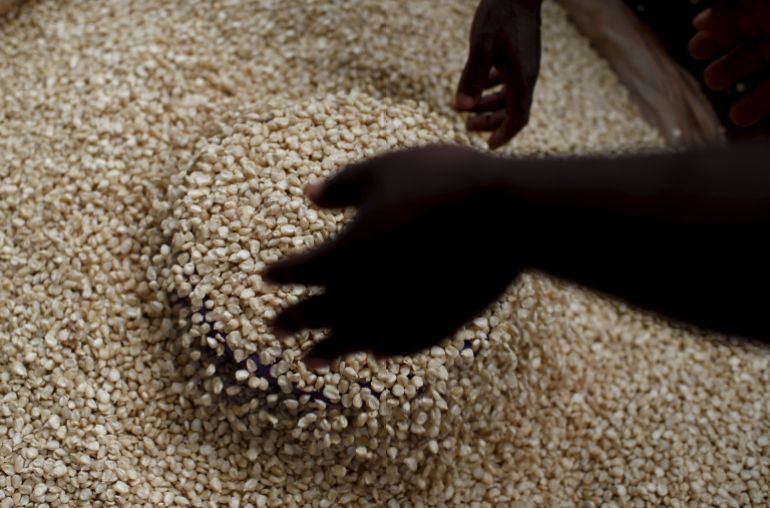
Lilongwe, Malawi – Since he was young, Enock Dayton has made a living from bananas. The 30-year-old was born and raised in Molele, in the southern Malawian district of Thyolo, which was at the heart of local banana production until a plant virus devastated crops more than a decade ago. At his stall at Mchesi market, in Malawi’s capital Lilongwe, Dayton serves customers from the bunches of green bananas that he has. “I started this business when I was young, and we had farms where we were growing bananas and we would take trucks and bring them here and sell them to individuals,” he told Al Jazeera. But in 2013, the deadly banana bunchy top disease wiped out almost all the crops in the country. Farmers were asked to uproot their banana plants to avoid the spread of the virus; hundreds of thousands of people were affected. Bananas are Malawi’s fourth biggest staple crop, after maize, rice and cassava, according to the Food and Agriculture Organization (FAO). The United Nations body – which is working with other organisations to help revive banana farming in the country – said in 2023 that with “the right investments and strategic support, the banana sector has the potential to provide greater benefits in food and nutrition security and commercial value for growers, transporters, consumers and food processors”. Advertisement But in the meantime, to maintain their businesses in the absence of sufficient local produce, farmers and fruit-sellers like Dayton turned to neighbouring Tanzania to import the crop and complement their own meagre local supplies. In 2023 alone, for instance, Malawi imported more than $491,000 worth of bananas, with the majority of that – 5,564,180kg (12,266,920lb) – coming primarily from Tanzania. The remainder came from South Africa and Mozambique. But this year, that arrangement came to a sudden halt. In March, Malawi said it was temporarily banning the import of some farm produce, including bananas, from Tanzania and other countries. The government said this was to help support local industries and stabilise the country’s foreign exchange shortage, which has led to challenges that include the inability to import some necessities, like pharmaceuticals. But Malawi might have underestimated the effect of its bold move, observers say. In retaliation, in April, Tanzania banned the entry of all agricultural imports from Malawi, responding to what it described as restrictions on some of its exports. That ban also extended to South Africa, which for years prohibited the entry of bananas from Tanzania. This was bad news for Malawi, observers say, as it is more on the receiving end of trade between the neighbours. According to data from the Observatory of Economic Complexity (OEC), Malawi exports less than $50m worth of products to Tanzania, including soybean meal, soybeans and dried legumes, while it imports hundreds of millions of dollars in the form of mineral fuels, oil, distilled products, soaps, lubricants, cement and glassware, among other products. A Malawian trader sells maize near the capital Lilongwe [File: Mike Hutchings/Reuters] In its response, Dar es Salaam went a step further, extending its trade ban to the export of fertiliser from Tanzania to landlocked Malawi. It also threatened to stop goods en route to Malawi from passing through Tanzania. Advertisement By land, Malawi depends on Tanzania, Zambia and Mozambique for the import of goods. As it lacks direct access to the sea, Malawi utilises seaports in Tanzania and Mozambique. But the instability of the Mozambique route – due to insecurity caused by conflict, recent post-election violence and truck drivers facing harassment – made the deadlock with Tanzania a bigger challenge for industry. Businesses that rely on the import of farm produce started crying foul as their trucks of groundnuts and other produce stood in line at the Songwe border. Malawi also found itself in a tricky situation as it depends on Tanzania for its harbours to import fuel. Soon, even Kenya found itself entangled in the conflict as cargo from Malawi, which has to travel through Tanzania, was also stopped en route. The ensuing row shone a light on Malawi’s precarious geographical location, as well as regional agreements aimed at facilitating trade, the efforts by individual nations to follow the rules, and the macroeconomic imbalances in a nation designated as one of the poorest in the world. After weeks of tensions, this month, a high-level meeting between Malawi and Tanzania appeared to have brokered the differences, paving the way for the lifting of the bans between the two countries, according to a spokesperson for Malawi’s Ministry of Foreign Affairs. ‘Symptom of a huge challenge’ For Ernest Thindwa, a political commentator based at the University of Malawi, the recent trade dispute does not exist in isolation – and should also be viewed from a political lens. Both countries are heading for polls this year, first Malawi in September and then Tanzania in November. Within an election environment, the dispute says something about the attempts by both countries’ leaders to display patriotism and a sense of empowerment to their citizens, the analyst said. “The current administration [in Malawi] wants to be seen to be delivering and they want to be seen to be responding to people’s concerns,” Thindwa told Al Jazeera. “And certainly they need to make sure that local producers are protected, which has become more urgent as we go towards elections.” Advertisement Thindwa said that both Malawi and Tanzania are signatories to regional and international trade agreements, the frameworks of which entitle them to take measures to protect their trade interests when they deem necessary. However, he questioned the timing of these moves, asking why the initiatives by Malawi were not implemented earlier if they were indeed to protect local industries. Answering his own question, he said, “Because then it might have not been an agent in terms of attracting votes.” “What you would call subsistence or smallholder producers … would be significant for the government in terms of trying to win votes from such social groups,” he observed. Malawi is one of