

‘The Australian way’: PM Anthony Albanese wins landslide re-election
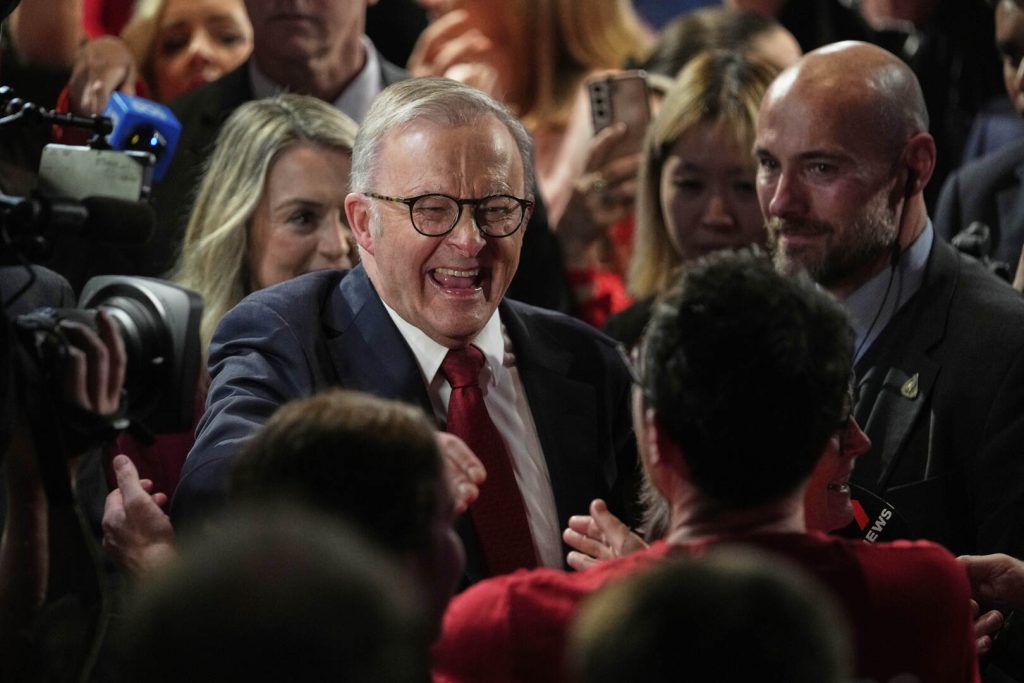
NewsFeed Australian Prime Minister Anthony Albanese rode an anti-Trump wave to a landslide victory and a historic second term Saturday. Voters, he said, chose “the Australian way.” Liberal Party leader Peter Dutton conceded defeat. Published On 3 May 20253 May 2025 Adblock test (Why?)
Warren Buffett to retire as Berkshire Hathaway CEO at end of 2025

‘Oracle of Omaha’ stuns shareholders, but pledges to maintain investments in group and says he will still be ‘hanging around’. Billionaire investor Warren Buffett has announced that he will retire from leading his Berkshire Hathaway business group at the end of the year. Buffet told the group’s annual shareholder meeting on Saturday that he would step down as chief executive at the close of 2025, handing over the reins to vice chairman Greg Abel, already known to be his anointed successor. “I would still hang around and could conceivably be useful in a few cases, but the final word would be what Greg said in operations, in capital deployment, whatever it might be,” said Buffett at the meeting in Omaha, Nebraska. He added that the board of directors would be “unanimously in favour” of his recommendation. About an hour later, Abel came out to oversee a formal Berkshire business meeting without Buffett. “I just want to say I couldn’t be more humbled and honoured to be part of Berkshire as we go forward,” he said. Abel, 62, who has been the group’s vice chairman since 2018, managing non-insurance operations, was named Buffett’s expected successor as chief executive in 2021, but it was always assumed he would not take over until after Buffett’s death. Advertisement Previously, 94-year-old Buffett, known as the “The Oracle of Omaha” because of the influence he wields in business and financial circles, has always maintained he has no plans to retire. His decision to step down caps a remarkable 60-year run during which he transformed Berkshire from a failing textile company into a $1.16 trillion conglomerate with liquid assets of $300bn. Buffett’s net worth as of Saturday is $168.2bn, according to Forbes magazine’s real-time rich list. On Saturday, he pledged to keep his fortune invested in the company. “I have no intention – zero – of selling one share of Berkshire Hathaway. I will give it away, eventually,” Buffett said. “The decision to keep every share is an economic decision because I think the prospects of Berkshire will be better under Greg’s management than mine,” he said. Earlier Saturday, Buffett warned about the dire global consequences of President Donald Trump’s tariffs, saying that “trade should not be a weapon” but “there’s no question that trade can be an act of war.” Buffett said Trump’s trade policies have raised the risk of global instability by angering the rest of the world. Adblock test (Why?)
S Korea’s conservative party picks Kim Moon-soo as presidential candidate
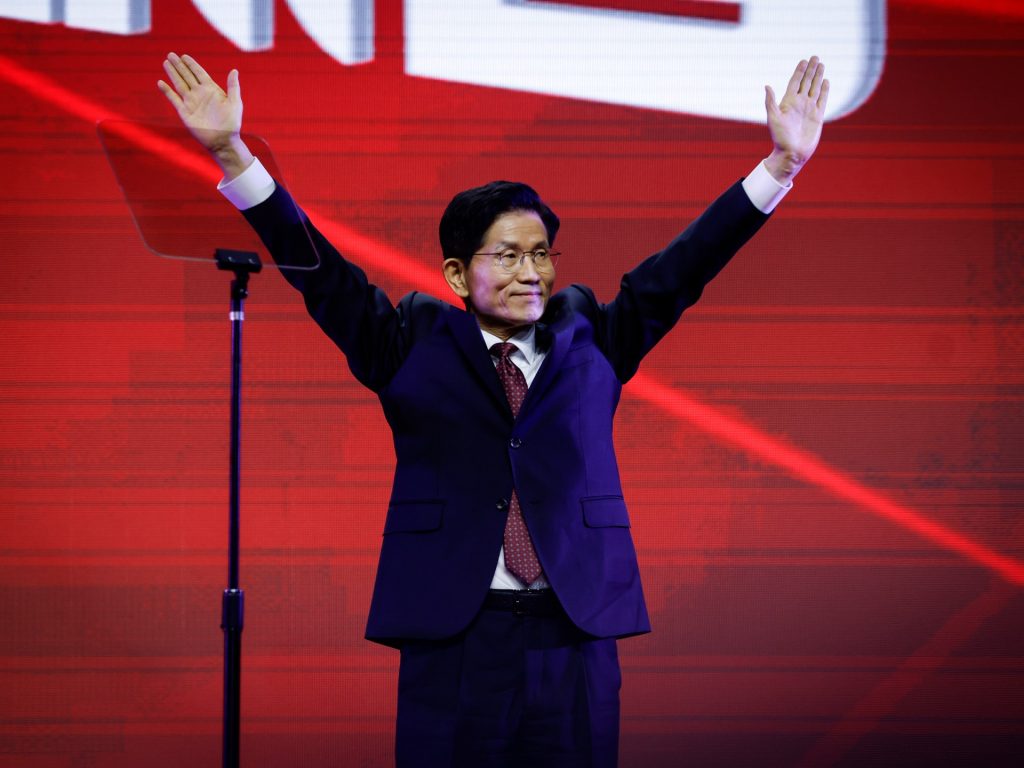
The snap election was triggered by the removal of Yoon Suk-yeol from the presidency for declaring martial law on December 3. South Korea’s main conservative party has nominated Kim Moon-soo, a former labour minister and veteran political figure, as its presidential candidate for the snap election to be held on June 3. Kim, 73, secured the People Power Party (PPP) nomination with 56.5 percent of the vote at the party’s national convention in Goyang city in Gyeonggi Province on Saturday. The election was triggered by the dramatic impeachment of conservative President Yoon Suk-yeol after South Korea’s Constitutional Court ruled that he had grossly violated his duties by declaring martial law without justification on December 3. The ruling ended Yoon’s presidency and forced the country into an early vote to choose his successor. Kim, a former labour activist who later shifted to the conservative camp, previously served as labour minister under Yoon and governor of South Korea’s Gyeonggi Province from 2006 to 2014. Kim will face liberal Democratic Party candidate Lee Jae-myung, who remains a clear frontrunner with nearly 50 percent of public support, according to a survey by the pollster Realmeter released on Monday, while Kim had 13 percent support. Advertisement Kim has pledged to implement business-friendly policies if elected. He laid out a sweeping conservative vision for the country in his acceptance speech, promising to take a hard line against North Korea and implement incentives for businesses and for innovation and science. He also pledged to strengthen policies to support young workers and the underprivileged, recounting his experience as a labour and democracy activist while in university for which he was jailed and expelled from school. “I have never abandoned the weakest among us in the lowest of places,” he said. But the race was rocked this week by a court ruling that cast doubt on Lee’s eligibility to run for the presidency, overturning a lower court acquittal that cleared him of violating election law in a previous race. The Supreme Court sent the case back to an appeals court and it was not clear when a new ruling will be made. On Friday, Yoon’s former Prime Minister Han Duck-soo announced his entry into the presidential race, hoping to leverage his higher profile. Han, while not a member of the conservative party, has been mentioned as a potential partner of the party to join forces against the liberals in the race. Adblock test (Why?)
Rockets, VanVleet beat Warriors in Game 6, force playoff decider

Fred VanVleet scored 29 points as the Houston Rockets produce stunning 115-107 victory over the Golden State Warriors. The Houston Rockets rode a crushing fourth quarter to a 115-107 victory over the Golden State Warriors on Friday to set up a game-seven showdown in their NBA Western Conference playoff series. The Rockets will be trying to become just the 14th team to rally from 3-1 down to win an NBA playoff series when they host game seven on Sunday. Fred VanVleet scored 29 points and Alperen Sengun added 21 points and 14 rebounds for the Rockets, who led most of the game and silenced an 18,000-strong crowd at the Warriors’ Chase Center arena with an explosive fourth quarter – putting together a 12-0 scoring run in the final frame to push their lead to as many as 17. Amen Thompson added 14 points for Houston and veteran New Zealand big man Steven Adams added 17 points off the bench, connecting on four of four from the floor while providing a formidable defensive presence. Houston Rockets guard Fred VanVleet holds onto the ball next to Golden State Warriors guard Stephen Curry, left, guard Brandin Podziemski, second left, and guard Moses Moody, second right, during the NBA match [Cary Edmondson/Reuters] Adams had three of Houston’s five blocked shots as the Rockets kept the Warriors’ potent offence led by Stephen Curry in check. Advertisement Curry scored 29 points, but he connected on just nine of 23 shots from the field and coughed up five turnovers. Jimmy Butler added 27 points but no other Warriors starter scored in double figures. “Just make everything tough,” VanVleet said of the Rockets’ mindset as they took a two-point lead into the fourth quarter. “Obviously, we know what they bring to the table. “You want to make everything tough, contest everything … I just think our youth and our athleticism can wear on them over the course of the game, and we’re able to have some success lately.” Overwhelmed early in game five on Friday, the Warriors got off to a marginally better start, but in a nip-and-tuck first quarter that featured 10 lead changes they never led by more than two and Houston were up 25-21 at the end of the first period. A Curry three-pointer tied it at 46-46 with 1:59 left in the first half, but again the Rockets pulled away to lead 53-48 after a first half in which the Warriors made 11 of their 17 turnovers. “That’s the key to the whole series is our ball security,” said Warriors coach Steve Kerr. Houston led 86-84 going into the fourth, but VanVleet drilled a three-pointer in the opening seconds, drawing a foul and making the free throw in a sign of what was to come. “I thought the key play was a four-point play to start the (fourth) quarter,” Kerr said. “We didn’t guard VanVleet, they threw it up the floor and he knocks it down and gets the free throw, and it felt like a game-changing play.” Draymond Green added: “We can’t give up a four-point play in a two-point game.” Advertisement Kerr also singled out 31-year-old Adams, whose 31 minutes on the floor were his season-high. “Adams was fantastic tonight,” Kerr said. “They controlled the game while he was out there.” The Warriors resorted to fouling Adams, a low-percentage free-throw shooter, but he made nine of 16 foul shots and the Rockets managed to grab the rebounds of a couple of his misses to score anyway. The winners of the series will take on the Minnesota Timberwolves, who ousted the Los Angeles Lakers in five games. Adblock test (Why?)
Romania election 2025: Results, who’s standing and what’s at stake?

Romanians will head to the polls on Sunday, May 4, to elect their next president in the first round of a “do-over” election, the second such poll within six months. The Eastern European country previously held a presidential election on November 24, 2024, from which far-right candidate Calin Georgescu, who was polling in single digits during the campaign, surprisingly emerged victorious. That result was annulled after reports emerged of alleged Russian election interference in favour of Georgescu, throwing the country into a political crisis. Romania’s elections authority banned the pro-Moscow independent in March. He is now subject to criminal investigations. Here’s everything you need to know about the redo vote and who the top contenders are: Where and when will polls open in Romania? Polls will open at 7am (04:00 GMT) on Sunday, May 4 and close at 9pm (18:00 GMT). Voters can cast their ballot at any of 18,979 polling stations around the country. An additional 965 stations will be set up in countries with big diaspora communities, including Malta, Italy, Spain, the United Kingdom, Germany, France, Moldova and the United States. Advertisement How do presidential elections work in Romania? The president is elected for a five-year term in a two-round voting system. A president can serve up to two terms. A candidate must secure more than 50 percent of all registered votes to be declared a winner in the first round. If no candidate achieves the 50 percent threshold on May 4, a run-off will be held on May 18 between the two top finishers. The candidate with the most votes will be declared the winner. What are the main issues driving this election? Wages and inflation The rising cost of food and other basics in the country is likely to be the biggest factor in how people choose to vote. The country’s economy has steadily been on the decline for decades, forcing many young people to seek work abroad. Close to one-third of the population faces poverty. Corruption There is deep-rooted anger over how establishment parties have run the country since the fall of the communist government in 1989. Romania scores among the bottom four countries in Europe in terms of corruption, according to Transparency International. Voters generally have little trust in public institutions and politicians. Ideological divide Romania, like several other European nations, faces growing questions from sections of its population about its support for Ukraine in the war against Russia. More right-leaning voters are against additional backing for Kyiv. Overall, voters are split between wanting a government more removed from the West and closer to Russia, and one that’s pro-European Union and NATO. Advertisement This divide is reflected in the makeup of Romania’s parliament. Following parliamentary elections on December 1 last year, Romania’s pro-Europe parties came together to form a majority government in a bid to shut out far-right nationalists. The ruling National Coalition for Romania was formed when the pro-Europe Social Democratic Party (PSD), which topped the polls in the December election but failed to achieve a majority, reached an agreement with the centre-right National Liberal Party (PNL), the reformist Save Romania Union party (USR), and the small ethnic Hungarian UDMR party. Overall, the coalition holds 58 of the 134 seats in the Senate, the upper house, and 135 seats out of 331 in the lower Chamber of Deputies. On the anti-EU side, the most popular party is the far-right Alliance for the Union of Romanians (AUR), which is led by presidential candidate George Simion. It holds 28 seats in the Senate and 61 in the Chamber of Deputies. SOS Romania, also a far-right party, holds another 12 seats in the Senate and 28 seats in the Chamber of Deputies. The far-right Party of Young People (POT) holds 24 lower and seven upper seats. Overall, these euro-sceptic parties hold 113 seats in the Chamber of Deputies – not far behind the ruling coalition’s 135. Given this divide, the EU will have its eyes on this presidential election. Who are the main contenders? George Simion, 38 The right-wing, eurosceptic politician is leader of the Alliance for the Union of Romanians (AUR) and is currently leading the polls with support from 30 percent of voters as of April 26, according to Politico’s Poll of Polls (an average of all the polls). Advertisement Simion, who is perceived as being pro-Moscow – like Georgescu who is a former member of AUR – and is backed by nationalist camps, criticised the decision to annul the controversial November elections. He is opposed to same-sex marriage and is a euro-sceptic. He has also spoken out against sending aid to Ukraine. He has advocated for taking back territory from Ukraine and Moldova that once belonged to Romania. In May 2015, Simion was declared “persona non grata” by Moldova and barred from entering the country for five years on the grounds that he was “endangering national security”. This ban was renewed for a further five years in February 2024. Simion was criticised in 2019 for supporting the election to parliament of two former military officers accused of suppressing revolutionaries in the country’s 1989 overthrow of communist rule. The leader of the radical-right Alliance for the Union of Romanians (AUR) party, George Simion, looks on following initial exit polls at the party’s campaign headquarters on the day of the parliamentary election, in Bucharest, Romania, December 1, 2024 [File: Alkis Konstantinidis/Reuters] Crin Antonescu, 65 The independent candidate and longtime politician is backed by the more centrist governing Social Democratic Party and National Liberal Party alliance (PSD-PNL). According to Politico’s Poll of Polls, Antonescu, who was a one-time acting president and head of the Senate, was polling at 24 percent as of April 26. He supports Romania’s membership of the EU and NATO. He is also in favour of sending more aid to Ukraine. Advertisement Antonescu has highlighted his political experience in his campaigns. Electoral posters are seen in Bucharest before Romania’s presidential elections on April 29, 2025 [Andreea Campeanu/Reuters] Nicusor Dan, 55 The activist
Singapore votes as city-state prepares to mark 60 years of independence
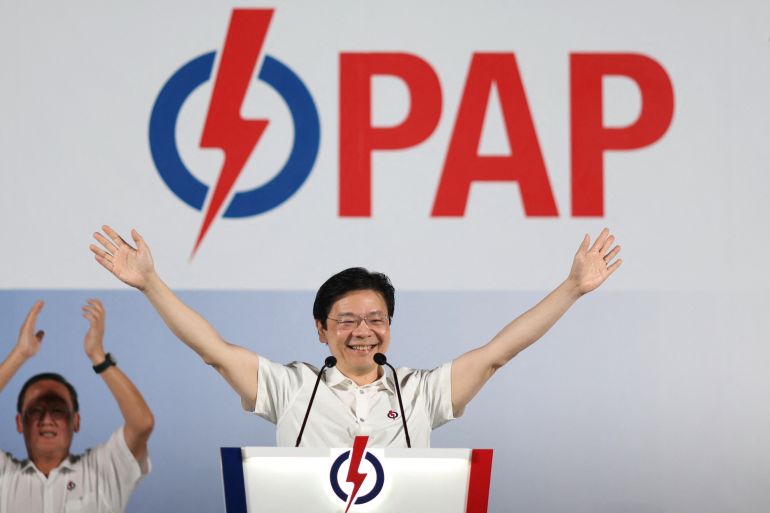
Singapore – David Wee has lived in the same terrace house with his family in the east of Singapore his entire life. But over more than 40 years, the Wee family have been a part of five different electoral constituencies. Singaporean electoral boundary changes occurring shortly before every general election have led government critics to raise accusations of gerrymandering – deliberately manipulating constituency boundaries to favour a particular political party. According to Singapore’s Elections Department, which is overseen by the Prime Minister’s Office, the latest boundary changes – the most extensive in years – were driven by voter growth and future housing developments. Despite the criticism, Saturday’s election in Singapore – where some 2.76 million people are scheduled to vote – is set to return the long-ruling People’s Action Party (PAP) to power. The PAP has won every election in this prosperous global financial centre since declaring independence in 1965. While there is little danger of the PAP losing power, elections here are seen as a test of public sentiment towards the ruling party. This election is also seen as a referendum on Prime Minister Lawrence Wong, who took over from former premier Lee Hsien Loong last year. Singapore’s Prime Minister Lawrence Wong at a People’s Action Party (PAP) rally in advance of the general election in Singapore on April 26, 2025 [Edgar Su/Reuters] Voting is also compulsory in Singapore – where elections are held every five years, and though modelled after the United Kingdom’s Westminster parliamentary system, one of the quirks of Singapore is that voters are either part of a single-member voting constituency or a Group Representation Constituency (GRC). Advertisement People in a GRC, rather than vote for individual candidates, cast their ballots for teams of up to five politicians. Within each team, at least one candidate must be from a minority ethnic group. Authorities say the team vote is to ensure minority representation in the city-state’s parliament, but critics say it is a means of parachuting new candidates into the legislature as part of a group. The vote will see 97 members of parliament elected in 33 constituencies made up of 15 single-member constituencies and 18 GRCs. But with no opposition to contest one of the GRCs, the PAP has already scored a walkover for a five-member team, meaning just 92 seats will be contested today. For David Wee, constituency boundaries are not really an issue. “It’s something that can happen to anybody, especially if you live in a Single Member Constituency, which can be easily absorbed” into a GRC, he told Al Jazeera. What is an issue though, he says, is the rising cost of living, inflation, and other concerns around life and work in one of the world’s richest nations. “I will support whomever I think can serve the residents well,” he said, adding that Singapore’s voters are more discerning now and should not be taken for granted. “Our voters have become more educated,” he said. Singapore, after all, is “a developed country, not a developing country”, he added. The Merlion statue in front of Singapore’s business district in 2019 [Vincent Thian/AP] Singapore bling Singapore is one of the world’s most expensive cities, with some of the highest living standards globally. Advertisement Alongside a world-class public transport system, it also has the most expensive cars in the world, thanks to a licensing system that sees owners shell out tens of thousands of dollars simply for the right to own a vehicle, alongside congestion pricing, road tax and other expenses. “If you can’t afford it, you can’t afford it,” said Lim Meng Wee, 57, a consultant in the local real estate capital field who has owned several cars over the years. “A car is a very expensive luxury. It eats into your balance sheet and you will have to keep working harder. I know of people who bought a car, and within two to three years, they were back to public transport,” he said. Singapore’s economic success, generally low crime and expectation of personal safety for citizens has come in tandem with a low tolerance for dissent. That has been enforced by wide-ranging laws that allow for, among others, penalties for wounding racial and religious feelings, as well as detention without trial. Labour strikes are outlawed too, and a permit is required for demonstrations, which is strictly observed. One prominent dissident who held up a cardboard sign with a smiley face outside the State Courts in 2020 to make a symbolic point about the administration of justice was fined for illegal assembly. In February, six people in their 20s were questioned by police and had their electronic devices seized over a protest at a local university against Israel’s war on Gaza. Attendees hold signs during a protest against the death penalty at Speakers’ Corner in Singapore on April 3, 2022 [Roslan Rahman/AFP] Critics and media outlets have been the subject of defamation lawsuits by government ministers, while many politicians and activists were imprisoned from the 1960s into the 1980s. Advertisement In addition, the mainstream media is solidly pro-establishment while the country is ranked 123rd in the world in terms of press freedom. All media outlets must tread carefully with a government accustomed to taking matters to court when unhappy with coverage. Two ministers recently launched a defamation lawsuit against Bloomberg News – which is continuing – over an article about multimillion-dollar property transactions in the country. Singapore at 60 – the social compact going strong In August, this multicultural, multilingual island nation of about six million celebrates its 60th year of independence. It turns 60 as an economic heavyweight, and one of the cleanest, safest, least corrupt places in the world. Gross domestic product (GDP) per capita in 1965 was about $500. Last year, figures from the International Monetary Fund showed the figure was about $93,000. All this has been accomplished under the PAP, which was co-founded by the country’s first premier Lee Kuan Yew, and which remains the only governing party Singaporeans have ever
Former Tunisian PM handed 34-year sentence, rejects ‘terrorism’ charges
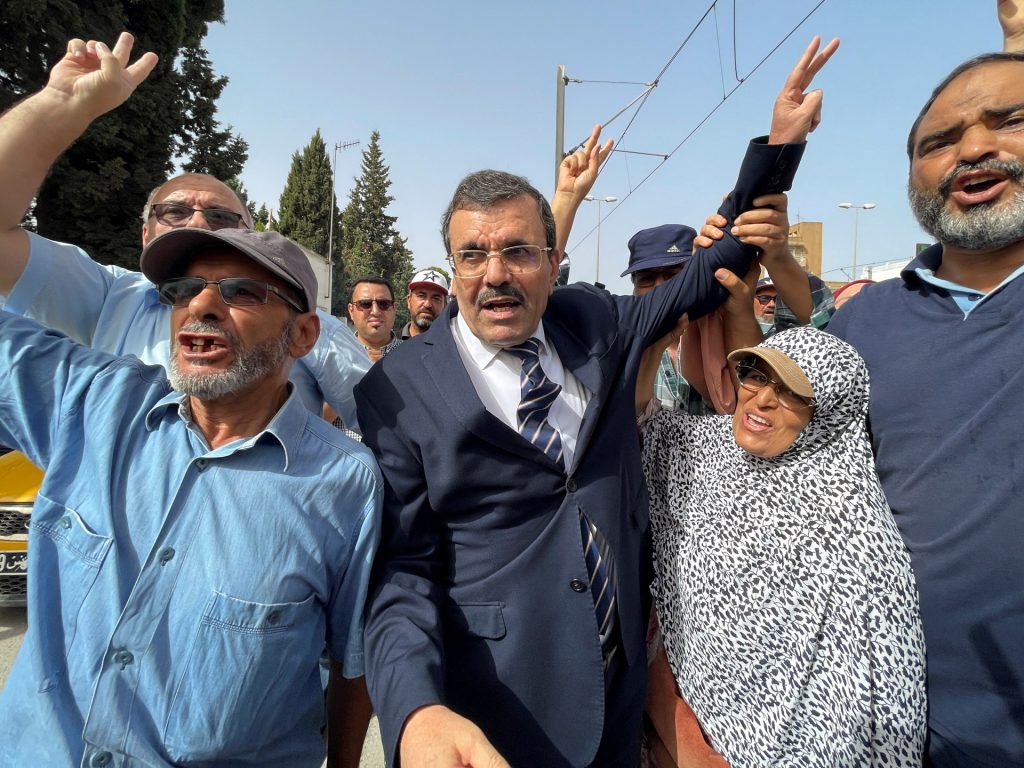
Former Prime Minister Ali Larayedh and the opposition Ennahdha party have denounced the trial as politically motivated. A Tunisian court has sentenced former Prime Minister Ali Larayedh to 34 years in prison over accusations he facilitated the departure of fighters to Syria – a charge the opposition figure strongly denies. “I was neither sympathetic, nor complicit, nor neutral, nor lenient towards violence, terrorism,” Larayedh told the judge on Friday, rejecting what he and his Ennahdha party have called a politically motivated prosecution. The ruling is the latest blow to the Ennahdha party, a major opposition force to President Kais Saied. Larayedh, who served as prime minister from 2013 to 2014, has been in detention since 2022. His sentencing comes just a week after the arrest of vocal Saied critic Ahmed Souab and new prison terms handed down to political opponents, media figures and businesspeople on various conspiracy charges. According to state news agency TAP, the sentences apply to eight individuals, with prison terms ranging from 18 to 36 years. The court did not name those convicted alongside Larayedh. Advertisement Ennahdha denies all terrorism-related allegations, arguing that the case is part of a broader campaign against dissent that has intensified since Saied suspended parliament and assumed sweeping powers in 2021. The government maintains that Tunisia’s judiciary is independent, rejecting claims of political interference. Human rights groups, however, say the crackdown on opposition voices – including the jailing of Souab – marks a dangerous escalation. Many warn that democratic gains in the birthplace of the Arab Spring in the years since the 2011 revolution are being steadily rolled back. Growing protests against Tunisian president Saied faced protests on Thursday as opponents took to the streets of Tunis, accusing him of using the judiciary and police to silence dissent. The demonstration, the second in a week, comes amid growing alarm over what critics see as an authoritarian drift in the country that sparked the Arab Spring. Marching down Habib Bourguiba Avenue, anti-Saied protesters chanted slogans including “Saied go away, you are a dictator” and “The people want the fall of the regime” – echoing the calls that fuelled the 2011 uprising that ousted former President Zine El Abidine Ben Ali. Supporters of Saied held a counter-rally on the same boulevard, shouting, “No to foreign interference” and “The people want Saied again”. The opposition accuses Saied of undermining the democracy won in the 2011 revolution, since he seized extra powers in 2021 when he shut down the elected parliament and moved to rule by decree before assuming authority over the judiciary. Advertisement Adblock test (Why?)
Judge strikes down Trump’s executive order targeting law firm Perkins Coie
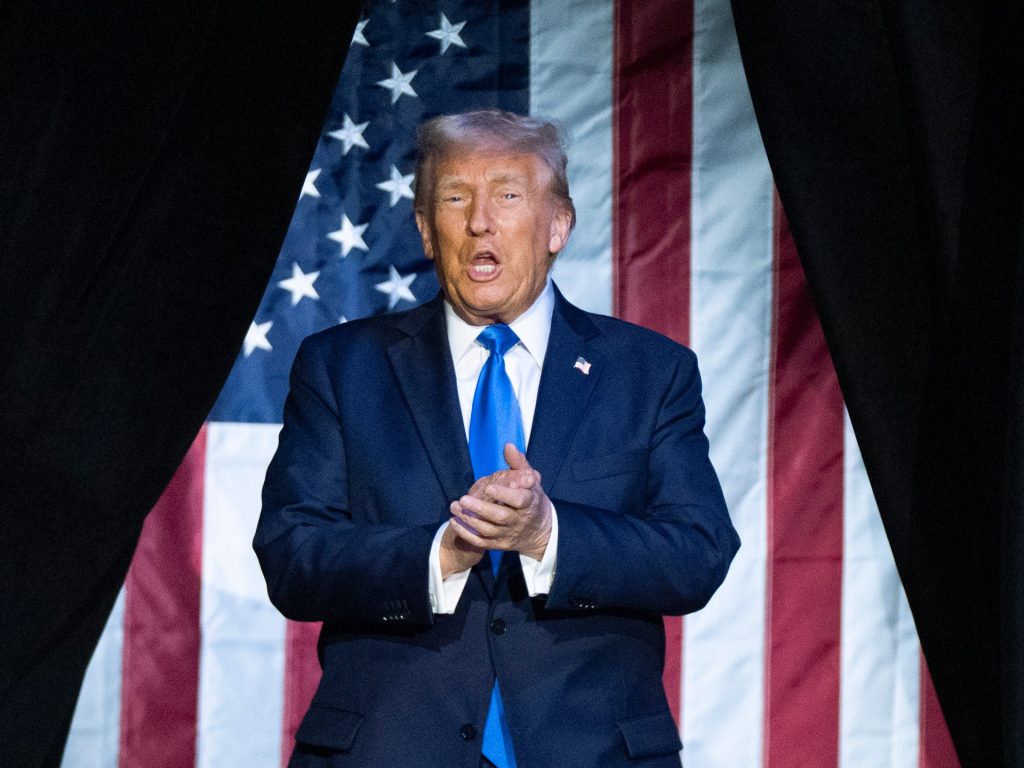
A United States district judge has struck down an executive order from President Donald Trump that targeted the law firm Perkins Coie over its representation of his Democratic election rival Hillary Clinton. On Friday in Washington, DC, Judge Beryl A Howell issued a five-page order declaring the executive order unconstitutional. “Executive Order 14230 is unlawful, null and void in its entirety and therefore should be disregarded,” Howell wrote in the order. The ruling is the first to permanently nullify one of the executive orders Trump has issued against a law firm. His administration is expected to appeal. As part of Judge Howell’s order, the Trump administration must cease any investigations of Perkins Coie, restore any rescinded services and allow the law firm to resume its “ordinary course of business” with the government. In her full 102-page ruling, Judge Howell spelled out her rationale, declaring Trump’s executive order represented “an unprecedented attack” on the country’s “foundational principles”. Advertisement “No American President has ever before issued executive orders like the one at issue in this lawsuit,” she said in her opening lines. “In purpose and effect, this action draws from a playbook as old as Shakespeare, who penned the phrase: ‘The first thing we do, let’s kill all the lawyers.’” Trump’s executive order, she added, offers a new twist on that Shakespearean phrase: “Let’s kill the lawyers I don’t like.” The case began on March 6, when Trump published Executive Order 14230 under the title, “Addressing Risks from Perkins Coie LLP”. Citing the law firm’s work with Clinton during the 2016 presidential campaign, the executive order suspended the law firm’s security clearances, limited its access to government buildings and ordered agencies to terminate contracts with Perkins Coie when possible. A handful of other law firms were also targeted with executive orders, including WilmerHale, Paul Weiss and Jenner & Block. Many had either represented causes unfavourable to Trump or had employed individuals with whom the president had expressed open displeasure. But the idea that the president could withdraw services, security clearances, and even building access — simply because he disagreed with a law firm — raised questions about the constitutionality of those orders. Critics pointed out that the First Amendment of the US Constitution protects individuals and companies from facing government retaliation for their free speech. The Fifth and Sixth Amendments, meanwhile, protect the right to due process and the right to seek legal counsel from law firms like Perkins Coie. Advertisement Many of the law firm’s clients had cases intimately involved with the inner workings of the government. Perkins Coie even said in its filings that its lawyers had to “necessarily interact with the federal government on behalf of their clients”. It also added that some of its clients had started to reconsider working with Perkins Coie, in light of the executive order’s restrictions. In April, more than 500 law firms signed an amicus brief in support of Perkins Coie, arguing that Trump’s actions “would threaten the survival of any law firm” — and scare away clients. Judge Howell validated those concerns in her ruling, saying that the law firm had “shown monetary harm sufficient to establish irreparable harm”. She also called the executive order an “overt attempt to suppress and punish certain viewpoints”. But rather than face such punitive action, several high-profile law firms decided to cut a deal with the White House. Paul Weiss was believed to be the first to strike a bargain, offering the administration $40m in pro bono legal services. Others followed suit: The firms Skadden, Milbank and Willkie Farr & Gallagher each agreed to perform $100m in free legal services. In her ruling, Judge Howell warned that Trump’s executive orders against law firms could have a chilling effect on the entire profession and were tantamount to a power grab. “Eliminating lawyers as the guardians of the rule of law removes a major impediment to the path to more power,” she wrote. The Constitution, she added, “requires that the government respond to dissenting or unpopular speech or ideas with ‘tolerance, not coercion’”. Advertisement Adblock test (Why?)
Australia’s election will show if PM Anthony Albanese has won back voters
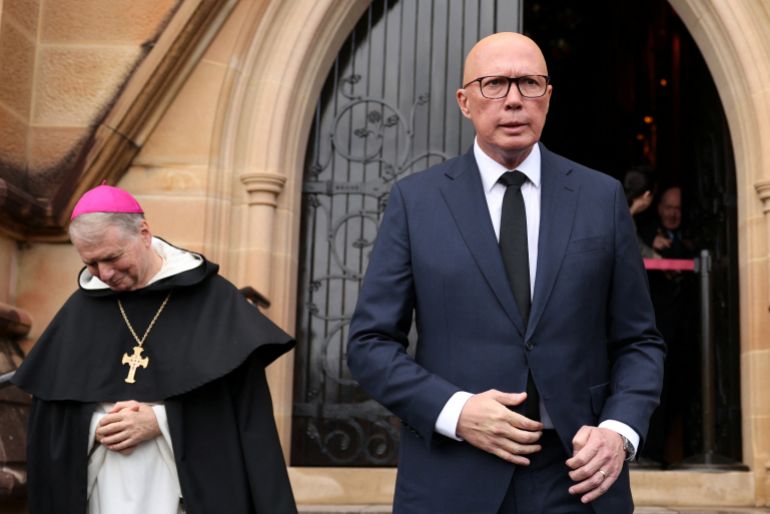
Australians are heading to the polls shortly in parliamentary elections which will decide if Prime Minister Anthony Albanese’s centre-left Labor government will return for a second term. Labor’s main rival is the country’s conservative coalition, led by opposition leader Peter Dutton, which came into the election campaign polling strongly but is now lagging slightly behind Labor. If Albanese does win, it could mean Australia is following in similar footsteps to Canada, where the Liberal party reversed its prospects in recent weeks, amid concerns about the effect of United States President Donald Trump’s policies on Canada’s economy. Amy Remeikis, chief political analyst at the Australia Institute, an independent research centre, told Al Jazeera that polls indicate President Trump is “an increasing concern for Australian voters” and that “Labor’s gamble of holding a later election to allow some of Trump’s policies to start to impact has paid off.” In comparison with Canada, where both major parties tried to distance themselves from Trump, Remeikis notes that Australia’s opposition leader Dutton has courted “favourable comparisons” to Trump for months. Advertisement But, he has been “badly damaged by the ‘Temu Trump’ label” – a reference to the Chinese online shopping website known for selling cheap copies of original brands. The Archbishop of Sydney Anthony Fisher and Liberal Party leader Peter Dutton after attending mass, following the death of Pope Francis, at Saint Mary’s Cathedral in Sydney, Australia, on April 22, 2025 [Hollie Adams/Reuters] War on Gaza and the price of eggs Uncertainty around Trump’s tariffs on Australia has only compounded the concerns of many Australians around the cost of essential items, including housing, food, healthcare and childcare. In the final televised leaders’ debate, a week before the election, both Dutton and Albanese stumbled when asked to guess how much a dozen eggs might cost at a supermarket. Albanese was closer, guessing 7 Australian dollars, nearly two dollars less than the actual price of $8.80, while Dutton guessed $4.20, less than half the actual price. Australian Prime Minister Anthony Albanese during an appearance as a guest on the Sunday Footy Show during the federal election campaign in Sydney, Australia, on April 20, 2025 [Alex Ellinghausen/Pool via Reuters] Cost of living has “trumped everything” leading into the election, says Josie Hess, who comes from the Latrobe Valley, a coal-mining region in Victoria, and who also works for advocacy group Environment Victoria. For a number of Australians, the most important issue on election day will be beyond Australia’s borders, says Nasser Mashni, the president of the Australia Palestine Advocacy Network (APAN). Advertisement Mashni told Al Jazeera that “the genocide that is occurring in Palestine” has seen a “new constituency” emerge in Australia that understands that Israel is “a settler colonialist movement doing exactly what occurred here [in Australia] 238 years ago”. APAN has developed a scorecard of where the major parties stand on Palestine. Of those, only the Greens received a tick from APAN on every issue. The scorecard for Labor was mixed, while the conservative Liberal-National coalition did not meet a single criterion. “We’ve asked for people to make Palestine their number one issue and to find a candidate that best reflects a just and humane position for Palestine,” Mashni said. “Certainly, the easiest candidates to find will be in the Senate, but I am sure there’ll be somebody in every seat where they can vote a little bit better for Palestine, and in some cases, very well for Palestine,” he added. Dozens of minor parties and independents from across the political spectrum are also vying for votes. Remeikis said there is a “late surge to the nationalistic, far-right, One Nation party”, which has been aided by Dutton’s conservative coalition preferencing votes for One Nation, and vice versa, in outer suburban and inner regional seats. Next year marks 30 years since One Nation’s leader Pauline Hanson was first elected to federal office in Australia. But Remeikis says the late surge is unlikely to affect the outcome of the election, with polls suggesting Labor will win with a minority government. The Greens, along with some independents running on pro-climate action platforms, will also be hoping to repeat successes in Australia’s 2022 election, which followed many months of devastating fires and floods. People arrive at a polling centre as early voting begins in Sydney on April 22, 2025 [Mark Baker/AP] Going nuclear With climate change remaining a key concern for many Australians, Dutton, whose party has long delayed taking action on climate, has chosen to focus on campaigning to build Australia’s first-ever nuclear power stations in areas where coal power stations are closing down, such as the Latrobe Valley, in Victoria. Advertisement This week, organisations representing more than 350,000 emergency and health services workers released a letter calling on Dutton to drop his plan to introduce nuclear energy to Australia, saying “Australia’s current emergency services do not have the support or resources to respond to nuclear disasters.” Josie Hess, a Latrobe Valley local who works for Environment Victoria, told Al Jazeera that people there still have questions about the viability of Dutton’s proposal. She says people in the valley “desperately need jobs” but the timeline to build nuclear means that it would do little to help workers now. “We have some people who support nuclear but for the most part, the Latrobe Valley is not a monolith, and there is clear and demonstrable opposition to the proposal,” she said. And while economic issues are a concern, she added, there is also an “intrinsic link between climate security and cost of living and housing”. Melissa Sweet, who runs public health news site Croakey, told Al Jazeera that climate change remains a key issue for Australian health workers heading into the election. “Heatwaves, floods, and bushfires are already driving up demand for emergency care, mental health services, and chronic disease management,” Sweet said. The recent US cuts to “public health, global health and climate action and science generally” under Trump mean it’s “more important than ever” that the next Australian
US man sentenced to 53 years for the murder of a Palestinian American child
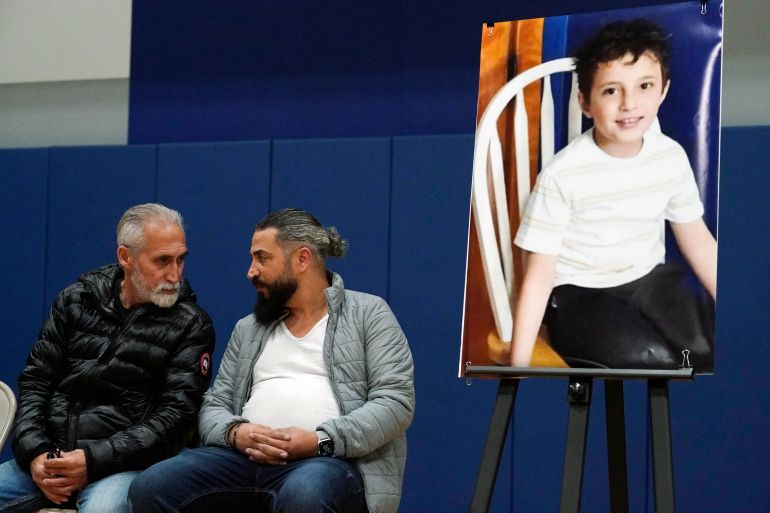
The death of six-year-old Wadee Alfayoumi, a Palestinian American, has shone a light on instances of anti-Arab hate. A United States man has been sentenced to 53 years in prison for the fatal stabbing of a six-year-old Palestinian American boy, after being found guilty of hate crime charges and murder. Judge Amy Bertani-Tomczak announced the sentence on Friday in the case of 73-year-old Illinois landlord Joseph Czuba. On October 14, 2023, just days after the start of Israel’s war in Gaza, Czuba attacked two of his tenants, Hanan Shaheen and her young son Wadee Alfayoumi. Police say Czuba arrived at their door angry about the war and proceeded to force his way inside, strangling Shaheen and holding her down before pulling out a military-style knife. Shaheen suffered more than a dozen stab wounds before escaping to a bathroom to call 911 for help. Alfayoumi, meanwhile, was stabbed 26 times. He did not survive. Czuba’s trial featured audio from Shaheen’s panicked 911 call, as well as testimony from the mother herself. Speaking from the witness stand in English and Arabic, she described Czuba becoming increasingly paranoid and Islamophobic as the war progressed. Advertisement For nearly two years before the attack, the family had rented a pair of bedrooms in Czuba’s house in Plainville, Illinois, just outside of Chicago. But after the war began on October 7, Shaheen recalled Czuba telling her to move out of her lodgings because Muslims were not welcome. Then, during the attack, she once again heard him citing her Muslim faith. “He told me ‘You, as a Muslim, must die,’” said Shaheen. The incident was one of the highest-profile acts of anti-Palestinian, anti-Arab and anti-Muslim violence in the US after the war in Gaza broke out. But advocates say it is part of a trend of anti-Palestinian and Islamophobic hate that has swept the country in recent months. Wadee Alfayoumi’s father, Oday Alfayoume, and his uncle, Mahmoud Yousef, attend a vigil on October 17, 2023 [Nam Y Huh/AP Photo] After the attack, police found Czuba sitting on the ground outside of the home, his hands and body bloody. Czuba pleaded not guilty, and his defence team has sought to vacate his conviction on the grounds that the prosecution played to the jury’s emotions. Some of the images of the crime scene were so graphic that the judge ordered the court’s television screens to be turned away from the audience. Jury members heard Shaheen telling 911 operators in fear, “The landlord is killing me and my baby!” During his opening statements, Michael Fitzgerald, the assistant state’s attorney for Will County, described Alfayoumi’s final moments as full of horror. “He could not escape,” Fitzgerald said. “If it wasn’t enough that this defendant killed that little boy, he left the knife in the little boy’s body.” Advertisement In February, the jury took less than 90 minutes to return a guilty verdict. On Friday, Judge Bertani-Tomczak rejected the defence’s bid to overturn the conviction. In announcing the sentence, she called Czuba’s actions “brutal” and “heinous”. She said a 30-year prison sentence was given for Alfayoumi’s murder, plus another 20 years for the attack on his mother and three years for committing a hate crime. Hela Yousef, second from left, prays for her slain cousin, six-year-old Wadee Alfayoumi, outside the Will County Courthouse on February 28 [Nam Y Huh/AP Photo] Alfayoumi’s great-uncle, Mahmoud Yousef, was the only family member to speak at the sentencing hearing. He said no amount of prison time could ever make up for the loss his family has suffered. He also explained that Alfayoumi had seen Czuba as a grandfather figure, and he questioned what “fake news” about the war in Gaza could have prompted such violence. “Some people are bringing this war to this country,” Yousef said. “We cannot do that. We can’t bring the war here. We cannot bring hatred to this country.” In March, the Council on American-Islamic Relations issued a report saying it had received 8,658 complaints of anti-Muslim and anti-Arab incidents in the last year alone, a 7.6 percent rise. It was the highest tally the group had recorded since it began collecting data in 1996. Adblock test (Why?)