

The last nomads of Nepal

In the dense forests of Girighat in Surkhet district, makeshift tents serve as the temporary shelter for Nepal’s last nomadic tribe, the Raute. As urbanisation sweeps across the country, this small, isolated community clings to its ancient traditions. Yet, their numbers are dwindling rapidly, placing their unique way of life in jeopardy. For generations, the Raute have followed a seasonal migration pattern, descending to the lowlands in winter and retreating to the hills during the summer. Unlike other Indigenous groups, they steadfastly reject agriculture, permanent settlements, and formal education. Their subsistence revolves around hunting monkeys, gathering wild tubers, and bartering handmade wooden goods for essentials like rice, tools, and clothing. The Nepalese government has officially recognised the Raute as an endangered Indigenous group. According to Nepal’s 2021 National Census, their population was recorded at 566. However, the Social Service Centre (SOSEC) Nepal, an organisation working closely with the community, reports that their number has plummeted. Advertisement “Over the past six years, 32 children have been born, but 42 individuals, including newborns, have died,” said Lal Bahadur Khatri, a SOSEC teacher working with the Raute community. “This means their population is declining, and now only 137 individuals remain.” Women hold a central role in the Raute community, managing daily tasks such as cooking, fetching water, and gathering food. However, they have little say in decisions related to healthcare and education. “Moving from one place to another is very hard because a new place means more work,” said Gajali Sahi, a 22-year-old Raute woman. “It is the women’s job to prepare the new settlement and build new houses. Additionally, fetching water and cooking meals are also women’s responsibilities. However, relocating to a new place is the hardest part. Sometimes, I feel that I would have been happier if I were born outside the Raute community, in the outside world. Being a Raute woman is very difficult — we have to carry heavy loads all day. It is truly hard.” “Getting an education would be good for our community, but we are not allowed to study,” Gajali added. “The older generation does not permit us, even though I and other children in the community want to learn. Deepak, Nabin, and our group of younger people want to go to school because we do not feel happy here. We struggle to find warm clothes in the winter.” Khatri explained that he and others have begun providing basic education in secret. “Although parents do not allow their children to study, the children are very eager to learn,” he said. “So, we have been secretly teaching them how to write their names and practise daily hygiene without the elders knowing.” Advertisement To support the Raute’s food and healthcare needs, the Nepalese government provides a monthly social security allowance of 4,000 Nepalese rupees ($29.5) per person. However, many Raute elders remain resistant to any form of change. “Raute children don’t go to school. Raute children are used to eating kandmool [wild roots], and frogs,” said Surya Narayan Sahi, a 49-year-old Raute leader. “The Nepal government has already been asking us to send our children to school.” He remains unwavering in his commitment to preserving the Raute way of life. “If the Rautes live in one place, we will vanish, which will lead to unrest. There will be no existence of the Rautes,” he said. “Similarly, agriculture will finish our existence.” Gajali, however, believes change is inevitable, but it will take time. “I think change will take time — perhaps after the older generation passes away,” she said. “But for now, I don’t know how long it will take. If I were the leader of the community, I would send all the children to school. Unfortunately, I am not.” Adblock test (Why?)
How do you keep going in Gaza when everything tells you to stop?
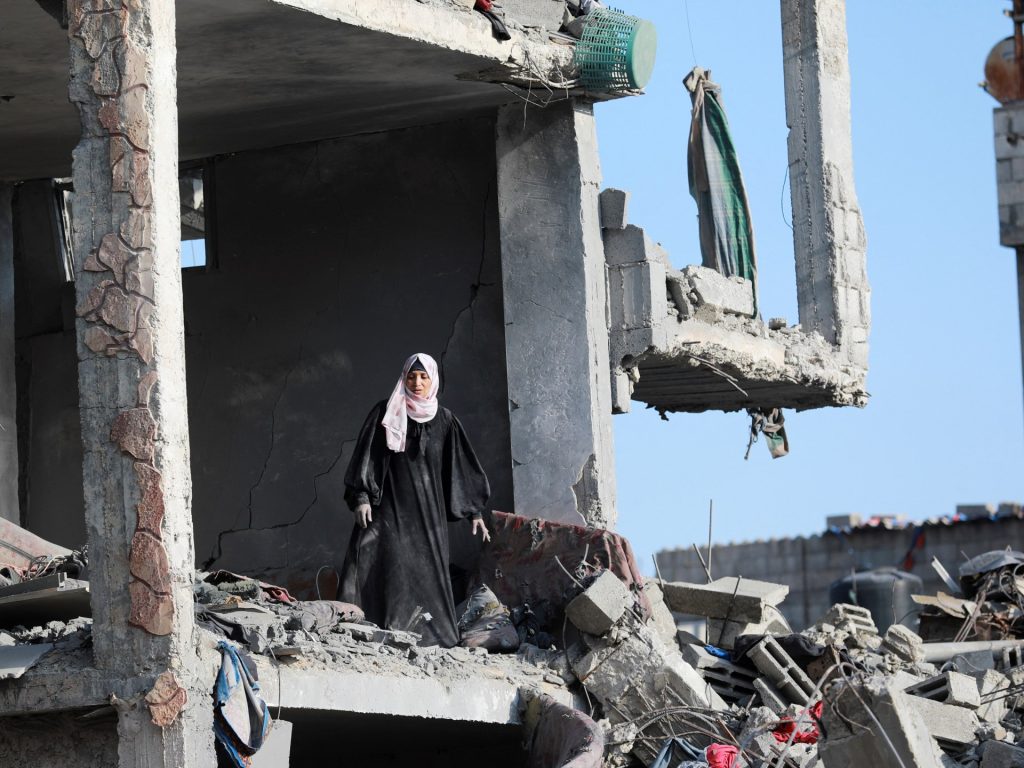
Before the war, my life was simple. Like many young women in Gaza, I carried within me a mixture of ambition and anxiety. My dream was to graduate from the Islamic University with honours and become a writer. My fear was that the constant attacks and instability in Gaza would somehow impede my pursuit of education and a writing career. However, I never imagined that everything I knew – my home, my university, my friends, my daily routine and my health – could vanish, leaving me struggling to keep going. When the war began, we thought it was just another short round of fighting – one of the many escalations we had grown used to in Gaza. But something about this time felt different. The explosions were closer, louder, and lasting longer. We soon realised that this nightmare was not going to end; it was only going to get worse. On December 27, 2023, we received our first “evacuation order”. There was no time to think. We had just begun gathering a few belongings when the sound of bombing grew louder. The upper floors of the building we lived in were being targeted. Advertisement We fled the building in a hurry, carrying only a small bag. My father was pushing my grandmother in her wheelchair, while I held my younger brother’s hand and ran into the street, not knowing where we were going. The neighbourhood looked like a scene from the horrors of the Day of Judgement: people were running, screaming, crying, and carrying what remained of their lives. Night fell, and we found temporary shelter at a relative’s house. Sixteen of us slept in one room, without privacy or comfort. In the morning, we made the difficult decision to take refuge in one of the displacement camps declared a “humanitarian zone”. We owned almost nothing. The weather was bitterly cold, water was scarce, and we had only a few blankets. We washed, cleaned, and cooked using primitive methods. We lit fires and prepared food as if we had gone back to the Stone Age. Amid all of this, we received the news: our home had been bombed. I refused to believe what I had heard. I sat and cried, unable to comprehend the tragedy. My father’s goldsmith workshop was on the ground floor of the building, so when it was destroyed, we did not just lose walls and a roof – we lost everything. The days passed slowly and heavily, wrapped in longing and misery. I lost contact with most of my friends, and I no longer heard the voices that used to fill my days with warmth. I would check in on my closest friend, Rama, whenever I had a brief chance to connect to the internet. She lived in northern Gaza. On January 15, 2024, my friend Rawan sent me a message. It did not reach me immediately. It took days because of the communications blackout. Advertisement The words were simple, they shattered me from the inside: “Rama was martyred.” Rama Waleed Sham’ah, my closest friend at university. I could not believe it. I read the message over and over again, searching for a different ending, a denial. But the truth was silent, harsh, and merciless. I didn’t get to say goodbye. I didn’t hear her last words, I didn’t hold her hand, or tell her “I love you” one last time. I felt as though I was breathing without a soul. While I was still processing that grief, I received even more devastating news: on February 16, 2024, my father’s entire extended family – all his cousins, their wives, and their children – were killed. I saw my father break in a way I had never seen before. His grief was so deep that words could not describe it. Then, death knocked on our door. On June 8, 2024, we had just moved from our tent to a rented apartment, trying to start our lives over, when the Israeli army surrounded the area. I was the first to see the tank slowly moving up the street. I panicked and ran towards my father, shouting. But I didn’t reach him. In that moment, a missile struck the building we were in. All I saw was thick smoke and dust filling the air. I didn’t know if I was alive or not. I tried to say the shahada, and by the grace of God, I managed to do so. Then I started screaming, calling for my father. I heard his voice faintly from a distance, telling me not to go out because the drone was still bombing. I took a few steps, then lost consciousness. All I remember is that they carried me down the building and covered me with a blanket. I was bleeding. I would regain consciousness for a few seconds, then lose it again. Advertisement The ambulance could not reach our street because the tank was at the entrance. My mother, my sister, and I bled for two hours until some young men from the area managed to find a way to get us out. They carried me in a blanket to the ambulance. The paramedics started bandaging my wounds right there in the middle of the street, in front of everyone. All the way, I heard their whispers, saying that I was between life and death. I heard them, but I could not speak. When I reached the hospital, they told me that I had sustained injuries to my head, hands, legs, and back. The pain was unbearable, and my mother’s absence added to my fear. I was rushed in for an emergency surgery. I survived. After leaving the hospital, I had to go back for dressing changes. Each visit was a painful experience. I would choke every time I saw the blood. My father, who accompanied me every time, would try to ease these visits, telling me, “You will be rewarded, my dear, and we will get through all of this.” I fell into a
Have scientists solved the mystery of gold’s origin in the universe?

The origins of heavy elements such as gold have been one of the biggest mysteries of astrophysics. A study has now provided a clue about the precious metal’s cosmic origins. Scientists have found that explosions in highly magnetised neutron stars, called magnetars, could have created gold in the universe. Here is more about the study: What is the latest discovery about the origins of gold? Analysis of archival data from space missions shows that a large amount of heavy metals, including gold, come from giant flares from magnetars, according to a study published in The Astrophysical Journal Letters on April 29. Anirudh Patel, a doctoral student at the Department of Physics at Columbia University in New York, led the study, which used 20-year-old archival telescope data from NASA and European Space Agency telescopes to investigate how heavy elements such as iron and gold were created and distributed throughout the universe. “It’s a pretty fundamental question in terms of the origin of complex matter in the universe,” Patel was quoted as saying in an article on the NASA website. “It’s a fun puzzle that hasn’t actually been solved.” Advertisement The authors estimated that magnetar giant flares could contribute up to 10 percent of the overall abundance of elements in the galaxy that are heavier than iron. Co-authors of the study are affiliated with Columbia University, Charles University in the Czech Republic, Louisiana State University, the Flatiron Institute in New York and Ohio State University. What is a magnetar, and how could gold be formed on it? A magnetar is a type of neutron star that is highly magnetised, which means its magnetic field is extremely powerful. When a massive star explodes, it leaves a very dense, collapsed core behind, which is called a neutron star. Astronomers theorise that the first magnetars were formed after the first stars about 13.6 billion years ago, according to study coauthor Eric Burns, assistant professor and astrophysicist at Louisiana State University in Baton Rouge. The Big Bang created the universe 13.8 billion years ago. On rare occasions, magnetars can release high-energy radiation by undergoing a “starquake”. Like an earthquake, a starquake can fracture the magnetar’s crust. Sometimes, magnetar starquakes bring with them a magnetar giant flare, a rare explosive event that releases gamma rays. The researchers found that magnetars release material during giant flares. However, they do not yet have a physical explanation for this. The researchers speculated about whether magnetar giant flares formed gold through the rapid process of neutrons forging lighter atomic nuclei into heavier ones. An element’s identity is defined by the number of protons it has. However, if an atom acquires an extra neutron, it can undergo nuclear decay, which can turn a neutron into a proton. Advertisement A changed number of protons can change the element’s identity. Neutron stars have an extremely high density of neutrons. If a neutron star is disrupted, singular atoms can quickly capture a number of neutrons and undergo multiple decays. This leads to the formation of much heavier elements like uranium. Before this study, the creation of gold was attributed only to neutron star collisions, or kilonovas. When astronomers observed a neutron star collision in 2017 through telescopes, they found the collision could create heavy elements such as gold, platinum and lead. However, these collisions are believed to have happened relatively later in the history of the universe, in the past several billion years. However, the archival telescopic data, which was previously indecipherable, showed that magnetar giant flares formed much earlier. Hence, the study indicates that the first gold could have been made from magnetar giant flares. What’s next? NASA has an upcoming mission that can follow up on these results. The Compton Spectrometer and Imager (COSI) is a gamma-ray telescope that is expected to launch in 2027. COSI will study energetic phenomena in the Milky Way and beyond, such as magnetar giant flares. According to the NASA website, COSI could identify individual elements created in the giant flares, helping to form a better understanding of the origin of the elements. Adblock test (Why?)
Putin expresses ‘hope’ that nuclear weapons will not be needed in Ukraine
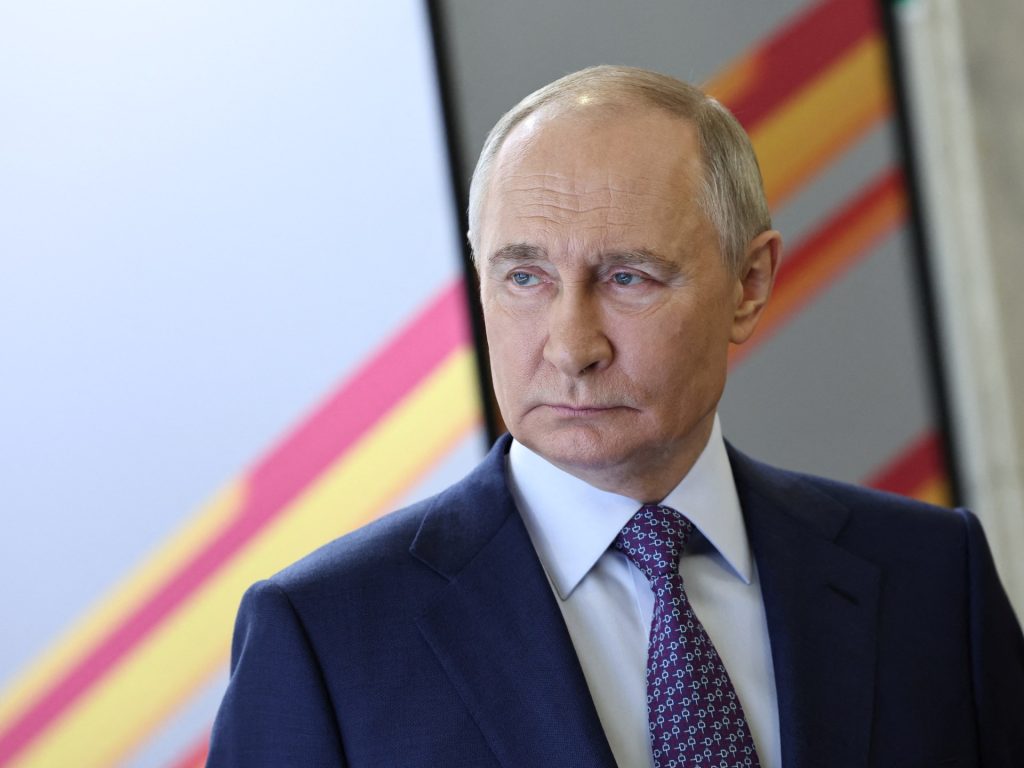
Comments aired ahead of Putin’s three-day ceasefire, as Ukraine’s Zelenskyy says he does ‘not believe’ Russia will stick to pledge. Russian President Vladimir Putin has said that there has so far been no need to use nuclear weapons in Ukraine, expressing “hope” that they will not be required. Putin said his country had enough “strength and means” to bring the three-year war, sparked by Russia’s 2022 invasion of Ukraine, to a “logical conclusion with the outcome Russia requires”. His comments were part of a documentary marking his quarter century in power by state television channel Rossiya 1 that was released on Sunday. Responding to a question from journalist Pavel Zarubin about the Russian response to Ukrainian strikes on Russian territory, Putin said: “There has been no need to use those [nuclear] weapons … and I hope they will not be required.” His comments came ahead of his unilaterally declared three-day ceasefire over May 8-10 to mark the 80th anniversary of the victory of the Soviet Union and its allies over Nazi Germany in World War II, an initiative that he claimed would test Kyiv’s readiness for long-term peace. Advertisement Moscow earlier rejected an unconditional 30-day ceasefire proposed by Kyiv and Washington in March. ‘No faith’ Speaking during a visit to the Czech Republic, Ukrainian President Volodymyr Zelenskyy said that he did “not believe” Russia would adhere to its truce. “This is not the first challenge, nor are these the first promises made by Russia to cease fire,” he said. “Today and all these days they are talking about wanting some kind of partial ceasefire, but you should know, for example, that the number of assaults today is the highest in recent months,” Zelenskyy said, citing a military report showing Russia had carried out more than 200 attacks on Saturday. “So there is no faith [in them],” he said, calling on Kyiv’s allies to increase pressure on Russia at a joint press conference with Czech President Petr Pavel on day one of his two-day visit to the country. Pavel, a former NATO general, said Putin could end the war with “a single decision”, but he had not shown any “willingness” to do so. Continued strikes With the two countries still at odds over competing ceasefire proposals, hostilities persist. Russia fired two ballistic missiles and a total of 165 exploding drones and decoys overnight, the Ukrainian Air Force said. Of those, 69 were intercepted and a further 80 lost, likely having been electronically jammed. Two people were killed by Russian guided bombs Sunday, one each in the and Sumy regions, Ukrainian officials said. A Russian drone attack overnight on the Ukrainian capital, Kyiv, wounded 11 people, Ukraine’s State Emergency Service said Sunday. Advertisement Russia’s Defence Ministry said its air defences shot down 13 Ukrainian drones overnight. The governor of Russia’s Bryansk region said Ukrainian forces struck an electrical equipment factory close to the border with Ukraine, destroying much of the plant but causing no casualties. Adblock test (Why?)
Brazil police arrest two suspects over Lady Gaga gig bomb plot

Police believe attackers targeted LGBTQ fans attending American star’s free concert on Rio’s Copacabana Beach. Brazilian police have arrested two people in connection with an alleged plot to detonate explosives at a Lady Gaga concert in Rio de Janeiro that drew more than two million people. The Civil Police of Rio de Janeiro said on social media on Sunday that it had thwarted a bomb attack that had been planned by the suspects for the free concert, held on the famous Copacabana Beach on Saturday. The police added that an adult “responsible for the plan” had been arrested along with a teenager in an operation codenamed “Fake Monster” – a reference to “Little Monsters”, the star’s pet name for her fans. The suspects, it said, had recruited people online to “carry out attacks using improvised explosives” in the aim of “gaining notoriety on social media”. Police working in coordination with the Justice Ministry carried out raids across Rio de Janeiro state as well as in the states of Sao Paulo, Rio Grande do Sul, and Mato Grosso. Felipe Cury, secretary of the Rio Police, said on Sunday that authorities believed the suspects sought to target Brazil’s LGBTQ community as they had “clearly” stated they were planning an attack “motivated by sexual orientation”. Advertisement Rio Police Chief Luiz Lima said the group behind the plot disseminated hate speech and violent content online “in order to attract more viewers, more participants – most of them teenagers, many of them children”. The show, which Rio City Hall said attracted 2.1 million people, went ahead without disruption even though Brazilian authorities said they had arrested suspects in the hours preceding the event. A spokesperson for Lady Gaga said in a statement that the star and her team had not been aware of safety concerns “prior to and during the show”, only learning about the threat the next morning. The statement added: “Her team worked closely with law enforcement throughout the planning and execution of the concert and all parties were confident in the safety measures in place.” Security was tight at Saturday’s concert, with 5,200 military and police officers deployed to the beach where fans revelled in the pop singer’s classic hits like the song Born This Way, which became an LGBTQ anthem after its 2011 release. The free beach concert stood out at a time of exorbitant ticket prices for live music around the world. Adblock test (Why?)
Starving under Israel’s siege – what is next for the people of Gaza?
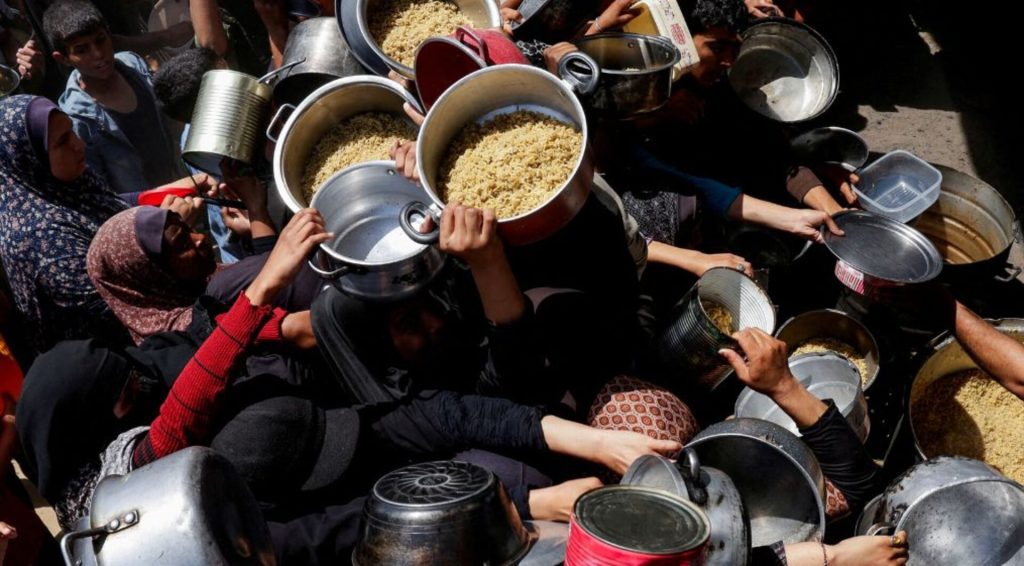
Dozens of people are already dead from starvation as Israel bars trucks with food and aid. Starvation now threatens the people of Gaza due to Israel’s blockade. Food and vital supplies are running out across the Gaza Strip. Yet Israel is calling up 60,000 more reservists to intensify military action. So why is this happening? Presenter: Neave Barker Guests: Olga Cherevko – Spokeswoman for the United Nations Office for the Coordination of Humanitarian Affairs (OCHA) in Gaza City Sami Al-Arian – Professor of public affairs and director of the Center for Islam and Global Affairs at Istanbul Sabahattin Zaim University Neve Gordon – Professor of international law at Queen Mary University of London Adblock test (Why?)
Messi, Inter Miami crush New York Red Bulls in MLS

Lionel Messi scores his first goal in five matches as Miami end their three-game losing streak across all competitions. Lionel Messi was on target as Inter Miami bounced back from their CONCACAF Champions Cup exit, beating the New York Red Bulls 4-1 at Chase Stadium in Florida. Miami had lost their last three games, including a 5-1 aggregate defeat to the Vancouver Whitecaps in the Champions Cup semifinals, but they got a much-needed morale boost with a comfortable Major League Soccer (MLS) home victory on Saturday. Fafa Picault opened the scoring in the ninth minute, powerfully striking the ball into the back of the net after Luis Suarez had flicked on a cross from Marcelo Weigandt. Fullback Weigandt doubled the advantage for Miami in the 30th minute when his diving header was parried by Carlos Coronel, and the Argentinian followed in to scoop the ball home. The goal was initially flagged for offside, but after a VAR review, the referee ruled it should stand. Suarez made it 3-0 nine minutes later, firing home at the second attempt after his initial shot had been blocked, but the Red Bulls pulled a goal back before the break. Advertisement An Omar Valencia corner deep to the back post was looped over Oscar Ustari and into the far corner to give the visitors some hope for the second half. Miami stayed on top, however, and Messi extended their advantage in the 67th minute, playing a one-two with Telasco Segovia and holding off Noah Eile before beating Coronel with a left-foot finish. The goal ended a run of four matches without Messi being on the scoresheet, and the win moved Miami up to fourth place in the Eastern Conference. Elsewhere, former Saint-Etienne midfielder Dylan Chambost opened his account in MLS with the first goal in the Columbus Crew’s 4-2 win over Charlotte. The Crew lead the East on 24 points, two ahead of the Philadelphia Union, who continued their excellent season with a 2-1 win at Montreal with Danish striker Mikael Uhre grabbing an 84th-minute winner. DC United beat the Colorado Rapids 2-1 with goals from Christian Benteke and a volley from Japanese midfielder Hosei Kijima. Lionel Messi (#10), right, scores Inter Miami’s fourth goal during the MLS match against New York Red Bulls at Chase Stadium on May 3, 2025, in Fort Lauderdale, Florida, US [Megan Briggs/Getty Images via AFP] Adblock test (Why?)
Sudan’s paramilitary Rapid Support Forces attack airport in Port Sudan
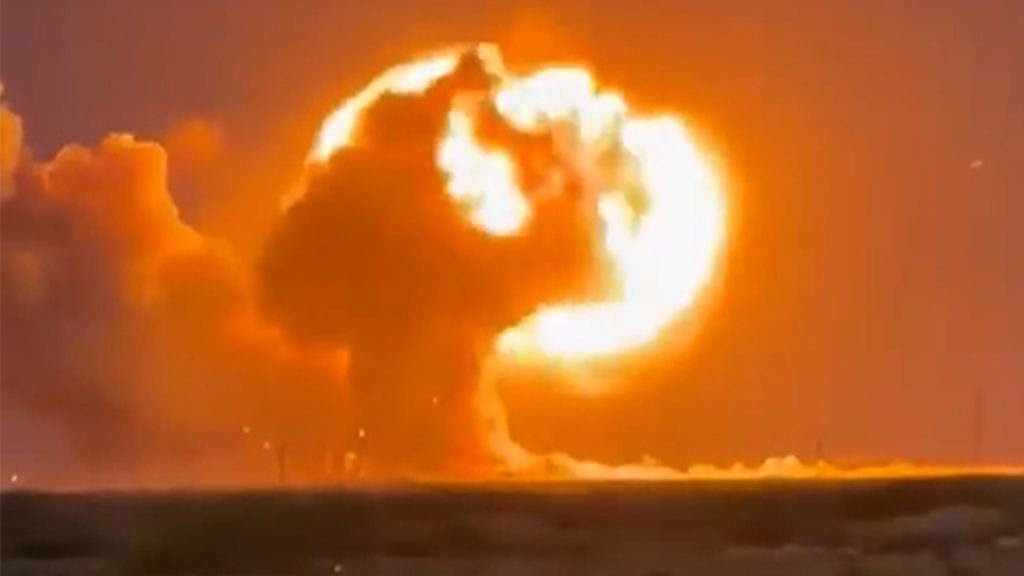
NewsFeed Videos show the moment Sudan’s paramilitary Rapid Support Forces (RSF) carried out a drone attack on an airbase near Port Sudan airport, according to the Sudanese army. Port Sudan has been perceived as the safest place in the war-torn country. Published On 4 May 20254 May 2025 Adblock test (Why?)
Are the Houthis’ opponents in Yemen seeking US support?
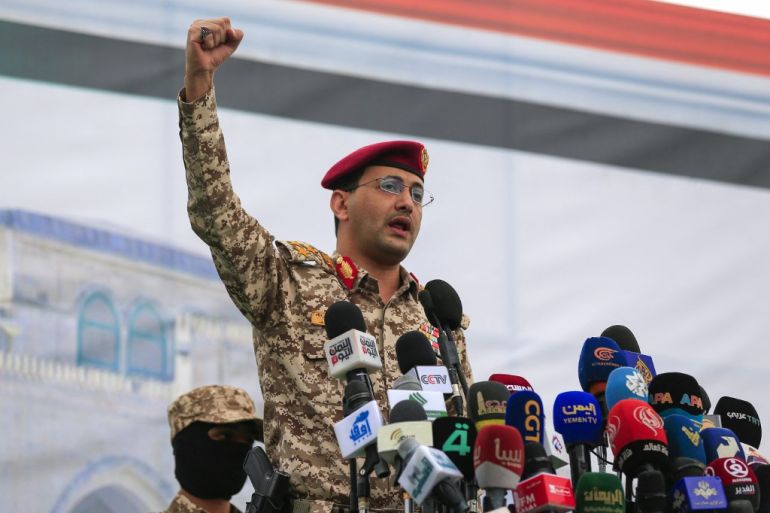
Anti-Houthi factions in Yemen could be vying for US support to attack the movement’s territory, analysts and experts told Al Jazeera, following intensified air strikes on Houthi targets by the United States. The war in Yemen has largely been frozen for the last three years. Still, groups aligned with the Yemeni government have started signalling that they could launch operations against areas controlled by the pro-Iranian Houthis, including the crucial port of Hodeidah. A similar campaign on Hodeidah, a critical entry point for food and goods on the Red Sea coast, seemed imminent in 2018, only to be aborted after intervention from the United Nations and the international community, who feared a humanitarian disaster in Yemen. But experts and analysts expressed doubt that an attack by anti-Houthi groups on their domestic rival would be successful, despite some likening it to the offensive that unseated another Iran ally, former Syrian President Bashar al-Assad, in late 2024. Houthi spokesman Yahya Saree addresses a rally in solidarity with Palestinians and the Gaza Strip and in condemnation of Israel and the US, in the capital Sanaa on May 2, 2025 [Mohammed Huwais/AFP] “Pro-ROYG [Republic of Yemen Government] voices have been asserting that ground operations against the Houthis – in Hodeidah and potentially elsewhere – are imminent,” Hannah Porter, an independent Yemen analyst, told Al Jazeera. Advertisement “My impression so far is that these comments are just meant to garner external support from the US or Saudi [Arabia] for a takeover of Hodeidah.” Vying for US support The Houthis, or Ansar Allah as they are officially known, marched into and took over the Yemeni capital Sanaa in 2014. Soon after, a Saudi Arabian-led coalition intervened on behalf of Yemen’s internationally recognised government to fight the Houthis. Anti-Houthi forces achieved some success in the early years of the war, but the failed Hodeidah campaign seemed to slow their momentum, and the Houthis have largely been on top militarily since then. Saudi Arabia announced in March 2022 that it would stop hostilities in Yemen, and a UN-brokered truce stopped much of the fighting the following month. By then, the Houthis still controlled Sanaa and much of northwest Yemen, while various anti-Houthi groups held the key port city of Aden and much of southern and eastern Yemen. The Yemeni government has undergone major changes in the past few years, with President Abd-Rabbu Mansour Hadi suddenly stepping down in 2022 and handing over power to an eight-member Presidential Leadership Council (PLC), which has, so far, proven ineffective. PLC Prime Minister Ahmed Awad Bin Mubarak resigned on Sunday, claiming to have been blocked from fulfilling his duties, as reports circulated of conflicts between him and President Rashad al-Alimi and accusations of mission creep. The PLC includes members who have previously fought against the Yemeni government. They include Aydarous al-Zubaidi, the head of the separatist Southern Transitional Council (STC), and Tareq Saleh, nephew of former President Ali Abdullah Saleh, a one-time ally of the Houthis. Advertisement But Houthi attacks on what they claim are Israeli-linked ships in the Red Sea, as well as attacks on Israel itself, have led to a bombing campaign against Yemen, and some anti-Houthi forces now see an opening. “We’ve been seeing various anti-Houthi factions lobbying for US support since the start of the Gaza crisis,” Nick Brumfield, a Yemen expert, told Al Jazeera. “Both the Yemeni government and the Southern Transitional Council have competitively sought to present themselves as the solution to the US’s need for a partner on the ground against the Houthis in Yemen.” Plan versus reality The Yemeni government has long emphasised that its ultimate goal is the defeat of the Houthis and an end to the group’s “coup” against the Yemeni state. In early April, President al-Alimi spoke of the importance of national unity “to topple the coup”, adding that the “decisive hour” of the “battle for liberation” was drawing near. Al-Alimi has not given any indication of when that battle against the Houthis would be, but forces under the umbrella of the Yemeni government may see the intensification of US air strikes under President Donald Trump’s administration. The US claims the strikes targeted Houthi leaders and have significantly degraded Houthi capabilities. Houthi authorities say that at least 123 Yemenis have been killed in the strikes since they intensified in mid-March, many of them civilians. Reporting from The Wall Street Journal (WSJ) and Bloomberg has claimed that discussions for an anti-Houthi ground operation, backed by the US, are under way. Advertisement The WSJ specifically mentioned that the United Arab Emirates had raised the plan with the US, but the UAE has denied any involvement, with Assistant Minister for Political Affairs Lana Nusseibeh calling them “wild unsubstantiated stories” on April 17. The UAE officially withdrew its military forces from Yemen in 2019. Houthi supporters chant slogans during a weekly, anti-US and anti-Israel rally in Sanaa, Yemen, Friday, April 18, 2025 [Osamah Abdulrahman/AP] Tareq Saleh has been mentioned in news reports as a likely figure leading any anti-Houthi campaign on the Red Sea coast. But, experts say, there has thus far been no noticeable mobilisation on the ground by anti-Houthi Yemeni armed groups. “The PLC has been speaking about liberating Sanaa and such,” Raiman Al-Hamdani, a Yemen researcher with ARK, an international development company, told Al Jazeera. “As far as I know, there has been little mobilisation towards this end. Whether they can is a very different story, especially with Saudi Arabia and the UAE no longer wanting to engage in war with the Houthis.” After years of fighting, the Saudis and Houthis entered into ceasefire discussions in 2022, leaving anti-Houthi groups – including the Yemeni government – uncertain over their future and the Houthis further entrenched in power. Al Jazeera reached out to the Yemeni government for comment on this story but received no response before publication. Comfortable in the status quo An advance on Sanaa, high up in the Yemeni mountains and closer to the Houthi heartland in Yemen’s far north, would be
Houthis maintain pressure on Israel as US launches more strikes on Yemen
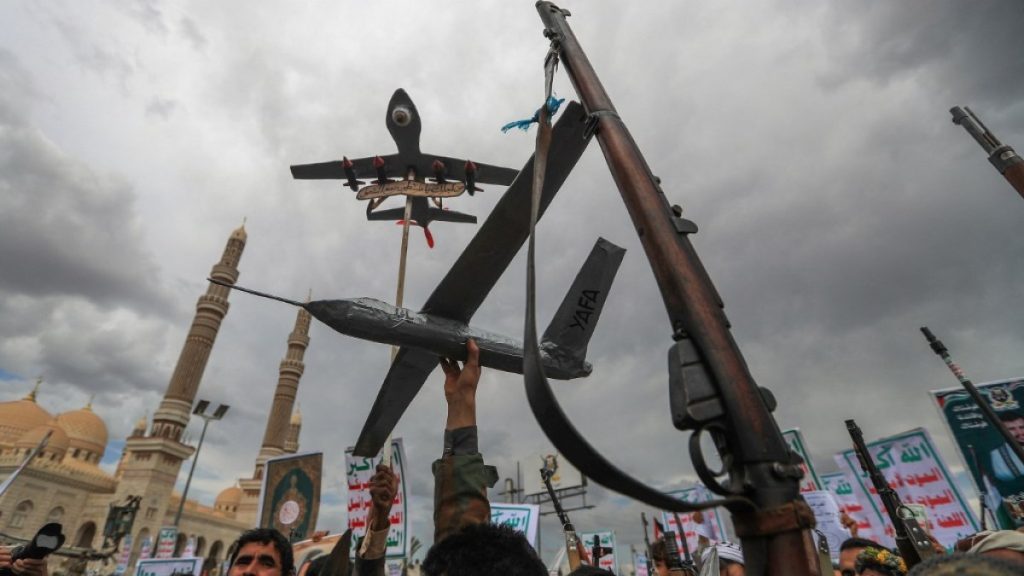
Prime minister of Yemen’s internationally recognised government has resigned amid political turmoil. Israel has intercepted a missile fired from Yemen, the third such attack by Houthi forces in a 24-hour span, as the United States continues daily attacks on the country. The Israeli army confirmed on Saturday it had activated air raid sirens across parts of the country following the missile launch. No injuries or major damage were reported. Houthi spokesperson Yahya Saree claimed responsibility for the attack, calling it a response to Israeli operations in Gaza. The Houthis have increasingly targeted Israel and shipping routes in the Red Sea, stating that their actions are acts of solidarity with Palestinians as Israel continues its assault on Gaza and the occupied West Bank. The Houthis did not carry out attacks during the Gaza ceasefire earlier this year until Israel blocked all aid into the besieged enclave in early March and followed that with a full resumption of the war. In the meantime, Houthi-affiliated Al Masirah TV reported on Saturday that the US launched two air raids on Yemen’s Kamaran Island and as-Salif district in the port city of Hodeidah. Advertisement The new attacks come a day after the same news outlet reported seven US attacks on the Ras Isa oil port in as-Salif district in Hodeidah. Last month, a US strike on the same port killed at least 80 people and wounded 150 in one of the deadliest attacks on the country by US forces. The US has also ramped up its air campaign in Yemen, launching its most extensive military operations in the Middle East since President Donald Trump assumed office in January. US forces claim to have struck Houthi positions, however, there have been numerous civilian casualties. The high civilian toll from US strikes is drawing increasing alarm. The UK-based monitor Airwars reported that between 27 and 55 civilians were killed in March alone. April’s deaths are expected to be higher. Houthi sources say at least 68 African migrants died in a single overnight strike on Monday, with additional casualties reported around the capital. Yemen’s prime minister resigns As the conflict intensifies, political instability is growing within Yemen. Ahmed Awad bin Mubarak, the prime minister of the internationally recognised government, announced his resignation on Saturday, citing persistent challenges, including his inability to reshuffle the cabinet. Government insiders said a power struggle with Presidential Council leader Rashad al-Alimi triggered Mubarak’s departure. Within hours of the announcement, the presidential council named Finance Minister Salem Saleh bin Braik as prime minister, according to the state-run SABA news agency. The council also named bin Mubarak as an adviser to the ruling body, without addressing his claims. Advertisement Mubarak’s political career has been closely linked to the long-running war in Yemen. He rose to prominence after being abducted by Houthi fighters in 2015 while serving as chief of staff to then-president Abd-Rabbu Mansour Hadi. Much of the international community does not recognise the Houthis, also known as Ansar Allah (supporters of God), even though the armed Iran-aligned group controls most parts of Yemen, including the capital, Sanaa, and some of the western and northern areas close to Saudi Arabia. Adblock test (Why?)