

How dangerous is the latest India-Pakistan dispute?
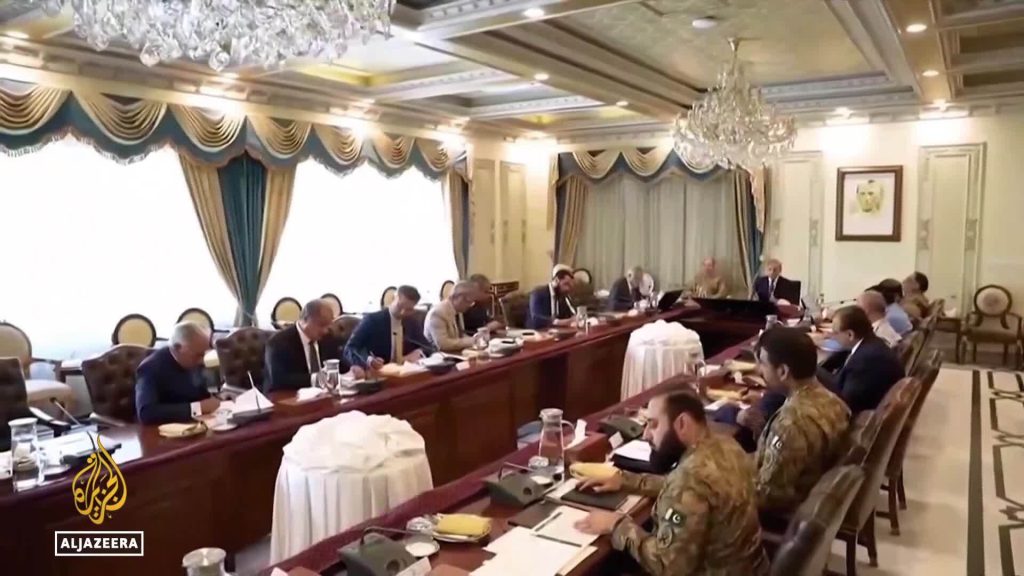
Killing of tourists in Indian-administered Kashmir sparks new crisis. The United Nations has called for calm between India and Pakistan amid soaring tensions after gunmen killed dozens of tourists in Indian-administered Kashmir. Relations between the neighbours have plunged to their lowest level for years as both sides announced a series of diplomatic measures targeting the other. How serious is this crisis? Presenter: Cyril Vanier Guests: Maleeha Lodhi – Columnist for DAWN newspaper Sumantra Bose – Author of, Kashmir at the Crossroads: Inside a 21st-Century Conflict Elizabeth Threlkeld – Senior fellow and director of the South Asia Program at the Stimson Center Adblock test (Why?)
Japan introduces urgent economic measures to ease pain from US tariffs

Package includes support for corporate financing, and subsidies to lower petrol prices and partially cover electricity bills. Japanese Prime Minister Shigeru Ishiba has announced emergency economic measures to alleviate any impact on industries and households affected by the United States’s new tariffs on products from Japan. The package unveiled by Ishiba on Friday includes support for corporate financing as well as subsidies to lower petrol prices by 10 yen ($0.07) a litre (0.26 gallons), and partially cover electricity bills for three months from July, a government document showed. “I have instructed cabinet members to make the utmost efforts to aid firms and households that have been worried about tariff impact,” Ishiba said at a tariff task force meeting. US tariffs could have a significant impact on Japanese industries that support the economy such as automobiles and steel, he said. To help small and mid-sized companies more vulnerable to economic swings, a larger scope of firms will be eligible for low-interest loans extended by government-backed banks. The government will also consider additional measures to boost domestic consumption depending on the impact of US tariffs on Japan’s massive automotive industry. Advertisement Friday’s package could be financed by a reserve fund, eliminating the need to compile an extra budget, said economy minister Ryosei Akazawa. Steep US tariffs US President Donald Trump on April 2 introduced a 25 percent tariff on car and truck imports. He also announced a 24 percent tariff on all Japanese goods, later cutting that to 10 percent for 90 days. Akazawa, who serves as Japan‘s top trade negotiator, will visit Washington next week for a second round of trade talks. On Thursday, the Nikkei business daily reported that Japan is considering increasing soya bean imports from the US as part of negotiations. The uncertainty in Trump’s imposition of tariffs has weighed down on markets around the world, including in Japan. But Tokyo’s Nikkei surged 1.9 percent on Friday after Wall Street’s rally streaks for the third day, driven by hopes for the Fed to cut rates and hopes that Trump was softening his approach on tariffs. Adblock test (Why?)
West Bank conditions “a strategic erosion” of Palestinian life
[unable to retrieve full-text content] Independent UK MP Shockat Adam describes how conditions in the occupied West Bank are dehumanising Palestinians.
Why the Palestinian Authority’s Abbas is under pressure to pick a successor
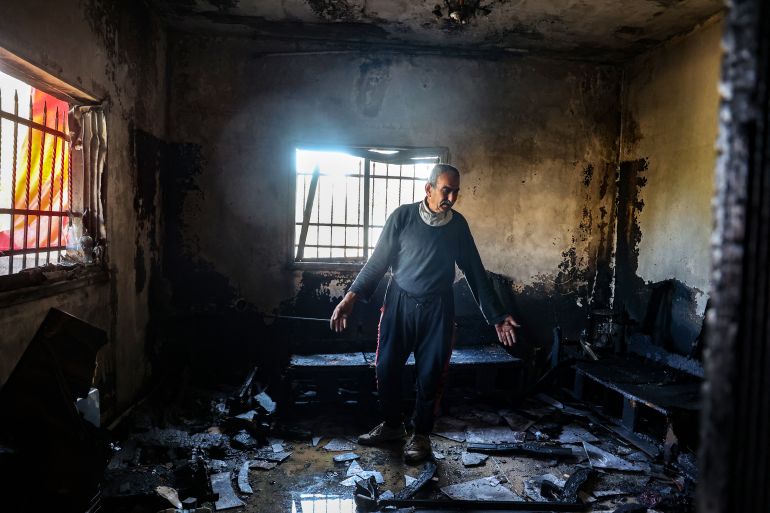
The Palestinian Liberation Organization (PLO), under pressure to appoint a second-in-command to its ageing leader, Mahmoud Abbas, created a vice president position after meeting with senior officials on April 24. Abbas, who is also president of the Palestinian Authority (PA), promised during an emergency Arab summit in early March that the position would be created. Yet it remains unclear who will eventually fill the post. The aim is to prevent a power struggle after Abbas vacates his post – a scenario that Israel could exploit to cause the collapse of the PA, fully annexe the occupied West Bank and ethnically cleanse Gaza, experts told Al Jazeera. Yet Dianna Buttu, a former legal adviser to the PLO, believes creating a vice president post in the PA will not avert a power struggle once Abbas is gone – rather, it could exacerbate conflict. “The more fragmented the PA becomes, the more it will create a power vacuum … and that vacuum will be filled by external actors and mainly by the Americans and Israelis,” she warned. Advertisement Legitimacy crisis Abbas, 89, assumed control of the PLO and PA after Palestinian leader Yasser Arafat died in November 2004 and has ruled without a popular mandate since dissolving parliament in 2007. His Fatah party dominates the PA and PLO. The long-defunct parliament has faded away, and critics have slammed Abbas for seeming to undermine attempts to hold elections that could revive it. In the absence of parliament, the PLO controls the succession, a task Abbas has postponed, including by decreeing last year that Rawhi Fattouh, head of the Palestinian National Council, would become interim president if the position became vacant suddenly until elections are held. “Abbas has put this off out of fear that if he brought anyone forward, then they would be a rival,” said Khaled Elgindy, a visiting scholar at Georgetown University’s Center for Contemporary Arab Studies. The PA was created by the Oslo Peace Accords, signed by Arafat and Israeli Prime Minister Yitzhak Rabin in 1993 and 1995. Tasked with governing the West Bank and Gaza until a Palestinian state was created alongside Israel, the PA lost credibility among Palestinians as Israel’s occupation became more violent and oppressive, and land grabs for Israeli settlements continued. Since Oslo, the population of settlements, illegal under international law, built on Palestinian land has risen from about 200,000 to more than 750,000. In 2007, a violent split with Hamas in Gaza constrained the PA’s authority to the parts of the occupied West Bank that it had some limited control over. A Palestinian man inspects the damage in his house in Huwara, south of Nablus in the occupied West Bank, after a reported attack by Israeli settlers on December 4, 2024 [Zain Jaafar/AFP] The PA did manage to become the de facto Palestinian representative on the international stage, replacing the PLO. Advertisement But at home, Abbas’s popularity slipped as people’s suffering increased and the PA continued its security coordination with Israel, which was outlined in the Oslo Accords. The PA is also seen to have failed to protect Palestinians from Israeli troops and settlers while using its authority to crack down on civil activists and opponents. This has resulted in a situation in which whoever he appoints, “Abbas’s handpicked successor probably won’t win people over”, Elgindy told Al Jazeera. The name suggested most often is Abbas’s close confidant and secretary-general of the PLO Executive Committee, Hussein al-Sheikh. Al-Sheikh also heads the PA’s General Authority for Civil Affairs, which issues the Israeli-approved permits that enable a few Palestinians to navigate the movement restrictions Israel has implemented in the occupied West Bank. Human rights groups and the International Court of Justice – the highest legal body in the world – see Israel’s movement restrictions against Palestinians as apartheid. Sheikh’s long-standing relationship with the Israeli authorities has led critics to accuse him of acting as a liaison for the occupation. “Nobody likes him [among Palestinians],” said Omar Rahman, an expert on Israel-Palestine with the Middle East Council for Global Affairs. “[Al-Sheikh] is tainted by his relationship to Israel and perceptions [that he is embroiled in] massive corruption.” External pressure The pressure on Abbas regarding succession has ebbed and flowed over the years, intensifying over recent months as Arab states push him to appoint a successor to prevent the PA from dissolving into chaos, analysts told Al Jazeera. Advertisement Egypt is particularly eager to ensure succession, according to Rahman. In March, Egypt called and hosted an Arab League summit, during which it unveiled its reconstruction plan for Gaza to counter United States President Donald Trump’s proposal to ethnically cleanse Gaza and turn it into a “Middle East Riviera”. Egypt was mentioned as one of the countries where Palestinians could be “moved to”, an idea it firmly rejected and countered with its reconstruction plan. The proposal included creating a Palestinian technocratic administration, supervised by the PA, to oversee the reconstruction of the devastated enclave without displacing anyone. Secretary-General of the PLO Executive Committee Hussein al-Sheikh meets with foreign ministers in Amman, Jordan, in November 2023 [Jonathan Ernst/Pool photo via AP] The path to PA administration of Gaza is not at all clear, however, as both Hamas and Israel object to it – Hamas because it administers Gaza currently, while Israel has panned the PA as ineffective. Abbas appears to have gone on the offensive, delivering angry broadsides against Hamas during the meetings and blaming the group for allowing the continuation of Israel’s genocide in Gaza by not handing over captives and disarming. However, many Arab states blame Abbas for failing to reconcile his Fatah faction with Hamas, making them eager to see a change of guard in the PA, according to Tahani Mustafa, an expert on Palestinian internal politics with the International Crisis Group Advertisement Since 2007, Fatah and Hamas have signed several agreements to heal their divisions after the fighting that split the Palestinian national movement. “I think there has been a lot of frustration [among Arab states] that
Eubank Jr vs Benn: Fight time, undercard, how to watch or stream, history
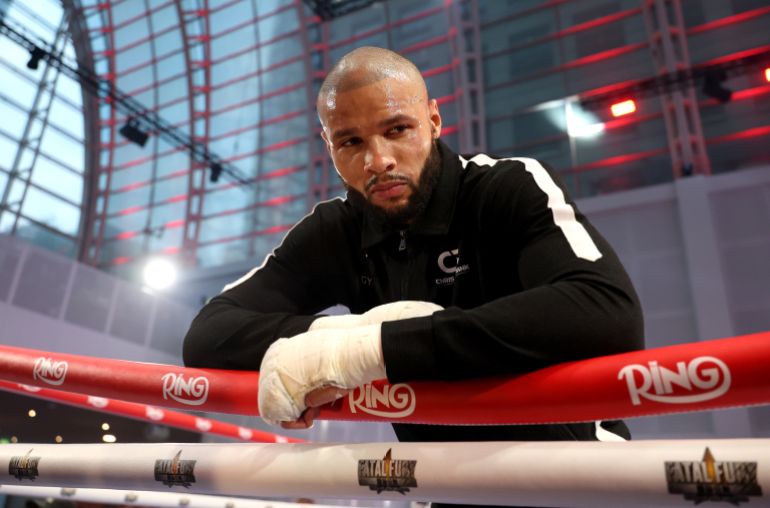
A decades-old boxing rivalry between two families is set for a revival when Conor Benn takes on Chris Eubank Jr in a grudge match that has been over two years in the making. The British fighters will finally meet in the ring after their initial bout in 2022 was cancelled amid controversial circumstances. Here’s everything you need to know about the fight: When is the Eubank Jr vs Benn fight? The fight is on Saturday, April 26 . Where is the Eubank Jr vs Benn fight taking place? The Tottenham Hotspur Stadium in London, United Kingdom, will host the fight. What’s the Eubank Jr vs Benn fight start time? The first fight is expected to begin at 18:00 GMT How can I stream and follow the fight live? Al Jazeera Sport will provide live text updates and photo coverage of the undercard and main fight from 17:45 GMT. The fight will be livestreamed pay-per-view on DAZN. Who is on the undercard? Anthony Yarde vs Lyndon Arthur – light heavyweight Liam Smith vs Aaron McKenna – middleweight Chris Billam-Smith vs Brandon Glanton – cruiserweight Viddal Riley vs Cheavon Clarke – cruiserweight Advertisement What is the fight purse? While organisers have not revealed the figures, the total purse is believed to be $23m with a 60-40 split of the main fight tilted towards Eubank Jr. Who is Chris Eubank Jr? Son of British boxing great and former middleweight boxing champion Chris Eubank, Eubank Jr is a professional boxer from Hove, a southern seaside town in the UK. Since making his professional debut in 2011, the 35-year-old is the International Boxing Organization’s (IBO) reigning middleweight champion and has also previously held the IBO’s super middleweight title and the World Boxing Organization ‘s interim middleweight title. Fighting with an orthodox stance, Eubank Jr is the top-ranked middleweight boxer in the UK and third in the world. Chris Eubank Jr [Richard Pelham/Getty Images] Who is Conor Benn? Benn, too, has boxing flowing through his blood as his father Nigel Benn was a two-weight champion in the 1990s. Based in the East London suburb of Ilford, the 28-year-old turned professional in 2016. While Benn has yet to lose a professional fight, the boxer has faced a fair share of controversy, having failed a doping test in 2022. The then-rising star of British boxing was suspended by the UK’s anti-doping agency for using clomifene, a fertility drug deemed prohibited. His suspension was in November 2024. Conor Benn is set to continue his comeback since his doping suspension was lifted [Andrew Couldridge/Action Images via Reuters] What’s the history of the Eubank vs Benn rivalry? Saturday’s bout is a battle of second-generation contenders, reviving the Benn v Eubank feud in which the rivals’ fathers battled it out in two ferocious contests in the early 1990s. Advertisement The pair’s first gruesome fight took place in November 1990, which Eubank won by total knockout in the ninth round. A much-anticipated rematch was set up three years later and ended in a draw, leading to both men retaining their respective belts. Nearly 22 years on, the progenies were meant to face off until Benn’s doping violation put off the fight, which was titled, ‘Born Rivals’. Despite the history, the fighters insist they have not been urged by their fathers to revive the rivalry. Both senior fighters have been seen making cordial public appearances in recent years. What’s Eubank Jr’s fight record? Bouts: 37 Wins: 34 – by knockout: 25 Losses: 3 – by knockout: 1 What’s Benn’s fight record? Bouts: 23 Wins: 23 – by knockout: 14 Losses: 0 What’s the egg-smashing controversy? Eubank Jr smashed an egg into Benn’s face during a news conference in February. As the fighters faced off on stage, Eubank Jr pulled an egg from his pocket and smashed it against Benn’s face, sparking a brawl as promoter Eddie Hearn and Benn’s father, Nigel, tried to get at Eubank and his team. Eubank Jr, who was fined $129,000 by the British Boxing Board of Control, had already made a reference to two drug tests Benn failed in 2022, which led to a two-year battle with anti-doping authorities. “Apparently, egg contamination was the reason for his two failed drug tests. So I contaminated him with an egg,” Eubank Jr posted on X. He defended his actions two days later at a second media event and said: “Did I cross the line? During this whole process, I think many lines have been crossed.” Advertisement Benn responded on X, saying: “That’s the only shot you’ll land on me … two rounds you are finished.” Eubank Sr labelled his son a “disgrace” for his pre-fight antics. Conor Benn, right, is held back after Chris Eubank Jr, left, threw an egg at him during a news conference on February 25, 2025 [Alex Livesey/Getty Images] Why will both boxers adjust their weights for the fight? Since the bout will be fought at middleweight – 160lbs (71.5kg) – Benn must move up from his welterweight division – 147lbs (66kg). Meanwhile, Eubank Jr fights at middleweight, but since the boxers cannot weigh more than 170lbs (77kg) on fight night, he will have to drop from his 180lbs (81kg). What has Eubank Jr said about the fight? But Eubank Jr has said he will fight with the precision of a “matador” and treat Benn like a “bull” and has no intention of backing down. “This fight isn’t about size or weight, it’s about skill and dedication, it’s about expertise and all of those areas I excel in. I have many years of experience over Conor Benn, and that will be the deciding factor on the night,” he said on Tuesday. “I’m a complete fighter. I’ve been doing this for so long now, I’ve forgotten more things than he even knows, and that will show on the night. “The procedure will be parliamentary, everything will go the way I want it to go, I will be like a matador in the ring, and Conor Benn will
Could a US-banned pesticide be behind mass sterilization?

Approximately 1,500 former banana workers in Costa Rica say a US-made pesticide has left them sterile. Though banned in the United States in the 1970s, the chemical DBCP was still used by US fruit companies in countries with lax regulations. Decades later, those affected are still fighting for justice. Adblock test (Why?)
Pakistan announces retaliatory measures against India after Kashmir attack
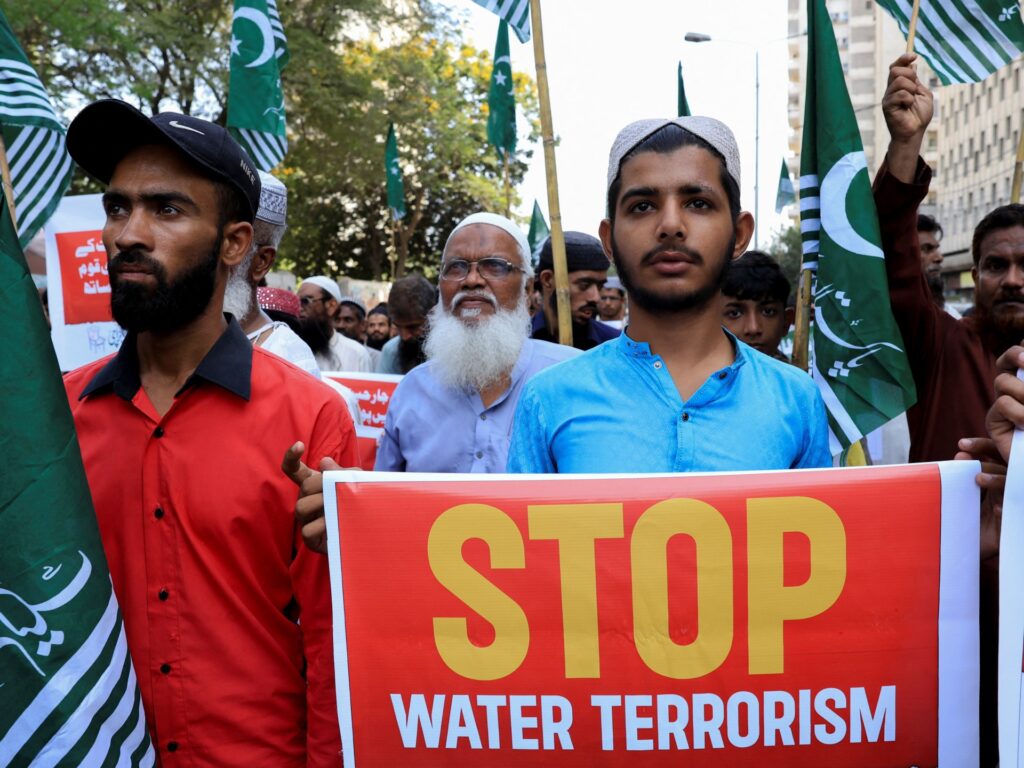
Pakistan has announced a series of retaliatory diplomatic moves against India and demanded evidence to back up the Indian government’s claims that Islamabad was involved in the Kashmir attack. Suspected rebels killed at least 26 people on Tuesday in the picturesque tourist resort of Pahalgam in the deadliest such attack in a quarter-century in Indian-administered Kashmir. A statement issued in the name of The Resistance Front (TRF), which is believed to be an offshoot of the Pakistani-based Lashkar-e-Taiba armed group, claimed responsibility for the attack. India’s Prime Minister Narendra Modi promised in a speech on Thursday to hunt the Pahalgam gunmen to the “ends of the earth”. New Delhi has also suspended India’s participation in a water-sharing agreement and sealed its main land border with Pakistan among other retaliatory measures. On Thursday, Pakistani Prime Minister Shehbaz Sharif also paused a canal irrigation project, a day after India withdrew from the Indus Waters Treaty in a move that has caused concern about Pakistan’s water supplies. Advertisement In a statement released by his office, Sharif said that while Pakistan is concerned about the loss of the tourists’ lives [in Indian-administered Kashmir], “the Committee reviewed the Indian measures announced on 23 April 2025 and termed them unilateral, unjust, politically motivated, extremely irresponsible and devoid of legal merit.” “In the absence of any credible investigation and verifiable evidence, attempts to link the Pahalgam attack with Pakistan are frivolous, devoid of rationality and defeat logic,” the statement added. Pakistan’s Defence Minister Khawaja Asif later told Al Jazeera, “I refute, strongly refute, the allegations levelled by the Indian government,” and added that the country has “no connection” with armed groups operating in Indian-administered Kashmir. Islamabad has also announced the impending closure of the Wagah border with India, but said it will remain open until April 30. All Indian citizens, excluding Sikh pilgrims, were ordered to leave in 48 hours. Pakistan also suspended visas issued to Indians under the SAARC programme, reduced the Indian High Commission staff in Islamabad to 30 and closed its airspace to all Indian aircraft, while all trade activities with India were suspended. Reporting from Haripur in Pakistan, Al Jazeera’s Kamal Hyder said it was a “tit-for-tat response”. “All eyes will be on what India does next, because Modi has been saying that there will be a swift response. He’s meeting his party leaders in India, so that will be important,” he said. Advertisement “But Islamabad has not minced its words, either, by saying that any military response will be met reciprocally from the Pakistani side as well,” he added. ‘Please don’t think that Kashmiris are your enemies’ Pakistan and India both claim Kashmir in its entirety but administer parts of it separately. On Thursday, Police in India-administered Kashmir released sketches and announced a reward for information about three suspects believed to be behind Tuesday’s deadly attack. A reward of 2 million Indian rupees (about $23,000) has been offered for any information leading to their capture. Police say the suspects are members of the group Lashkar-e-Taiba; they have been named as Hashim Musa (alias Sulaiman), Ali Bhai (alias Talha Bhai), and Adil Hussain Thoker. According to police, Musa and Bhai are believed to be Pakistani nationals. Thoker, also known as Adil Guree, is a resident of Kashmir, and investigators have linked him to the attack based on testimony from the wife of one of the victims. A senior police official told Al Jazeera that more than 1,500 people have been detained for questioning in connection with the continuing investigation. The region remains tense with heightened security and unease widespread across the region, two days after the Pahalgam attack. But shops and businesses began reopening following a shutdown observed in protest yesterday. Local trade bodies and political leaders had called for the shutdown as they took to the streets to condemn the deadly assault. Advertisement “Everything looks gloomy. We don’t know what the future holds for this place,” said Mehraj Ahmad Malik, who sells dried fruits in the main city of Srinagar. “Everything was abuzz two days ago, and now there is fear and silence.” Jammu and Kashmir Chief Minister Omar Abdullah has expressed deep sorrow over the recent attack in Pahalgam, acknowledging the loss of “25 guests who came here to enjoy their vacation” and praising a resident who “sacrificed his life to save the people there”. “The people of Kashmir came out and voiced the same thing: that they were not involved and the attack was not for them,” he told India’s ANI news agency. “Please don’t think that Kashmiris are your enemies; we are not guilty of it … We have also suffered for the last 35 years.” Adblock test (Why?)
Kashmir attack: Does India’s Indus Waters Treaty freeze threaten Pakistan?
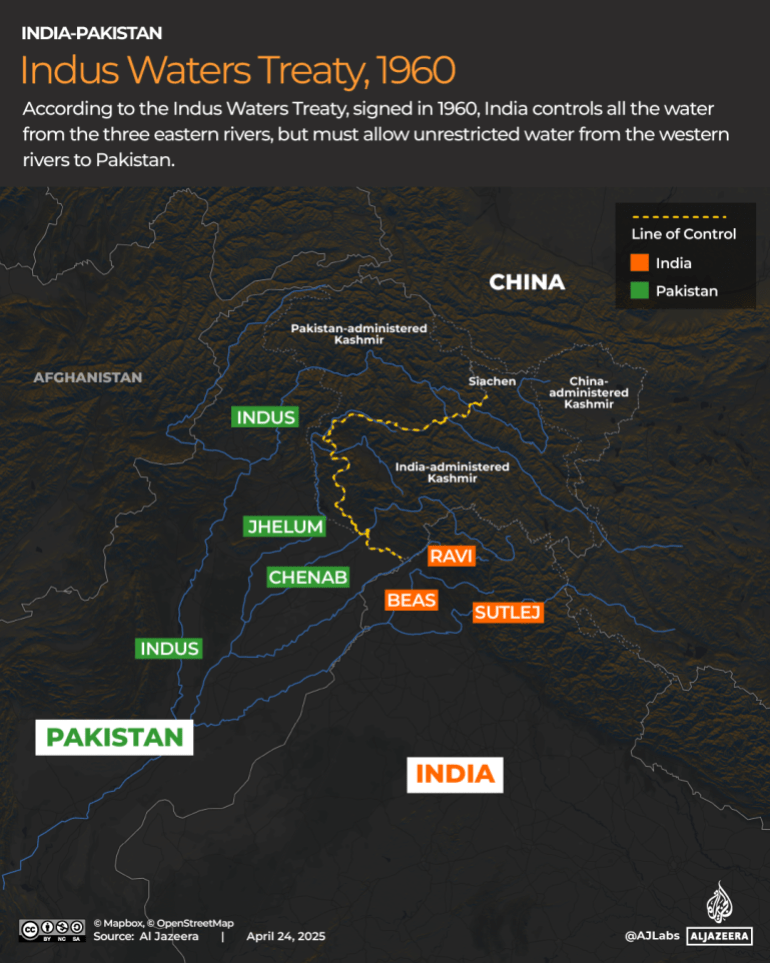
In tit-for-tat moves this week, India and Pakistan have entered a strategic standoff following Tuesday’s attack on tourists in Pahalgam, Indian-administered Kashmir, which resulted in the deaths of at least 26 people. On Wednesday, India downgraded ties with Pakistan, announcing a series of steps, the most important of which is a decision to suspend its participation in the Indus Waters Treaty (IWT), which could seriously restrict Pakistan’s water supplies. India has also closed its main land border with Pakistan and given some Pakistani nationals currently in India a deadline to leave the country. On Thursday, Pakistan retaliated with similar steps against India, and also threatened to suspend its participation in all bilateral agreements between the two, including the 1972 Simla Agreement, a peace accord drawn up following their war the previous year that led to the creation of Bangladesh. Pakistan is particularly angered by the threat to the IWT and has warned India that any disruption to its water supply would be considered “an act of war”, adding that it was prepared to respond, “with full force across the complete spectrum of national power”. Advertisement The IWT, a transboundary water agreement that allows the two countries to share water flowing from the Indus basin, has survived armed conflicts and near-constant tensions between India and Pakistan over the past 65 years. While India came close to suspending the treaty in 2019, it did not go through with it. Why has India taken action against Pakistan? An armed group called The Resistance Front (TRF), which demands independence for Kashmir, has claimed responsibility for Tuesday’s attack in Pahalgam, one of Indian-administered Kashmir’s most popular tourist destinations. Indian authorities have previously claimed that TRF is an offshoot of the Lashkar-e-Taiba, an armed group based in Pakistan. India has long held that Pakistan backs the armed rebellion in Kashmir, a charge Islamabad denies. On Wednesday, India claimed that the Pahalgam attack had “cross-border” linkages, blaming its western neighbour. During a special briefing by the Indian Ministry of External Affairs on Wednesday, Foreign Secretary Vikram Misri said that the Cabinet Committee on Security (CCS) had been called to discuss the attack in which men armed with rifles killed 25 Indian tourists and one Nepalese tourist, all men. “In the briefing to the CCS, the cross-border linkages of the terrorist attack were brought out,” Misri said. Misri added: “The Indus Waters Treaty of 1960 will be held in abeyance with immediate effect until Pakistan credibly and irrevocably abjures its support for cross-border terrorism.” For a treaty to be in abeyance means that it is temporarily suspended or on hold. Advertisement Earlier on Thursday, India’s Prime Minister Narendra Modi said that India would identify, track and punish every “terrorist” and their backers. What is the Indus Waters Treaty? Signed in 1960, the origins of the IWT trace back to August 1947, when British colonial rule over the Indian subcontinent ended and India and Pakistan became two separate sovereign states. India is the upper riparian (located upstream) while Pakistan is the lower riparian, which means India has control over how the river flows. Because both countries rely on the water from the Indus basin’s six rivers for irrigation and agriculture, they signed an agreement called the Standstill Agreement to continue allowing the flow of water across the border. When the Standstill Agreement expired in 1948, India stopped the water flow towards Pakistan from its canals, prompting an urgent need for negotiations on water sharing. Following nine years of negotiations mediated by the World Bank, former Pakistani President Ayub Khan and former Indian PM Jawaharlal Nehru signed the IWT [PDF] in September 1960. The treaty gives India access to the waters of the three eastern rivers: the Ravi, Beas and Sutlej. Pakistan, in turn, gets the waters of the three western rivers: the Indus, Jhelum and Chenab. India can use the western rivers to generate hydroelectric power and for some limited agriculture, but cannot build infrastructure that restricts the flow of water from those rivers into Pakistan or redirects that water. What would the suspension of this treaty mean for Pakistan? It represents a threat from India that it could, if and when it chooses to, restrict the flow of water from the Indus, Jhelum and Chenab into Pakistan. Advertisement It does not mean that India plans to limit that flow immediately. Even if it wanted to, it is unlikely that India could immediately stop the flow of water even though it has suspended its participation from the treaty. This is because India has upstream reservoirs constructed on the western rivers, but their storage capacity cannot hold enough volumes of water to hold back water entirely from Pakistan. It is also high-flow season when ice from glaciers melts between May and September, keeping water levels high. “The western rivers allocated to Pakistan carry very high flows, especially between May and September. India does not currently have the infrastructure in place to store or divert those flows at scale,” Hassaan F Khan, assistant professor of urban and environmental policy and environmental studies at Tufts University in the United States, told Al Jazeera. However, if India were to try to stop – or cut – the water flow, Pakistan might feel the effects in seasons when water levels are lower. Pakistan relies heavily on the water from the western rivers for its agriculture and energy. Pakistan does not have alternative sources of water. Pakistan has a largely agrarian economy, with agriculture contributing 24 percent to the country’s gross domestic product (GDP) and 37.4 percent to employment, according to Pakistan’s most recent economic survey published in 2024. The country’s statistics bureau says that the majority of the population is directly or indirectly dependent on the agriculture sector. According to the World Bank, the country’s current population is about 247.5 million. Advertisement Does India have the power to suspend this treaty? While India has declared abeyance from the treaty, legal experts say that it cannot unilaterally suspend the treaty. “India has used the
Made in America
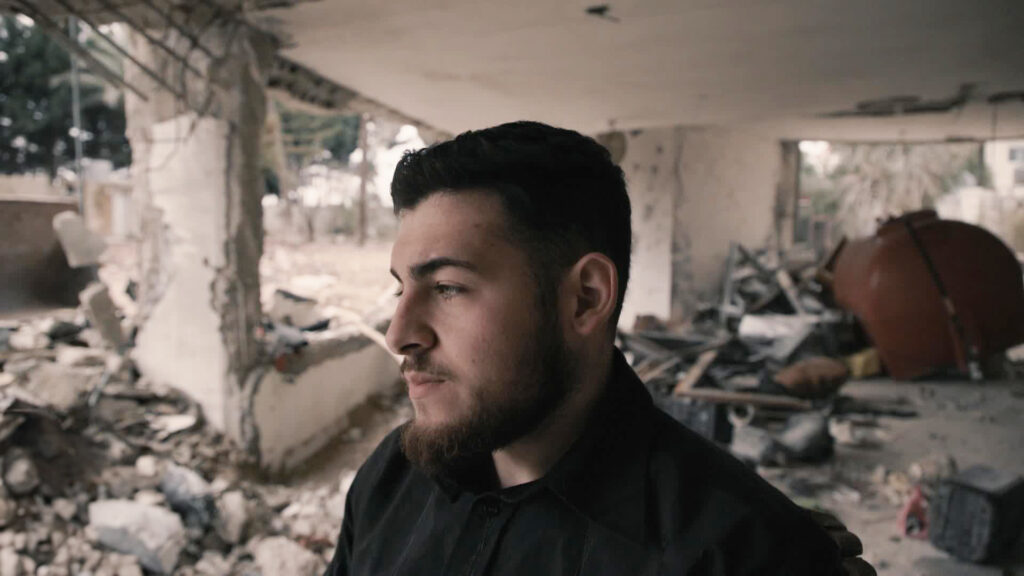
Fault Lines investigates civilian deaths in Lebanon and possible war crimes involving US-made bombs used by Israel. Made in America investigates the devastating impact of air attacks in Lebanon during Israel’s war last year. Israel claimed it was targeting Hezbollah fighters and infrastructure, but more than 4,000 Lebanese people, including women and children, were killed, many inside their homes and residential buildings. On September 23 alone, 558 people were killed — the deadliest day since Lebanon’s civil war — after Israel carried out one of the most intensive air attacks in modern warfare. Among them were a woman and her daughter, killed when their home in southern Lebanon was destroyed — one of several cases the film looks into. With extensive access to victims’ families and collaboration with forensic experts, Fault Lines uncovers evidence of unlawful killings and reveals the central role of US-made weapons in the attacks. The investigation extends to Washington, DC, in pursuit of answers and accountability. Adblock test (Why?)
Al-Shabab battles Somalia’s army for strategic military base
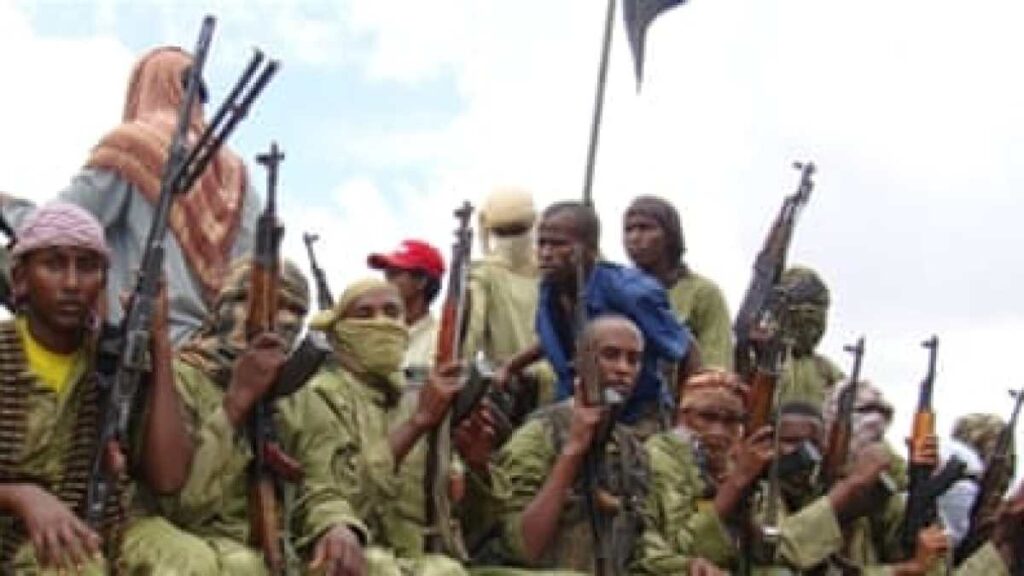
The armed group says it seizes control of Wargaadhi town and its military base, but the Somali army denies the claim. Al-Shabab fighters have battled Somali troops and allied forces for control of a strategic army base in southern Somalia, according to the government and a military official. Capturing the base in Wargaadhi town in the Middle Shabelle region, which houses soldiers, special forces and clan fighters, would enable the al Qaeda-linked group to sever a crucial road between the capital, Mogadishu, 200km (124 miles) to the southwest, and the central Galmudug State as it tries to extend recent gains made in the region. Al-Shabab has been fighting the Somali government for more than 16 years and frequently targets government officials and military personnel. It said in a statement that its fighters had captured the base and Wargaadhi town – a claim the government denied. The Ministry of Information said in a statement that government forces had killed more than 40 people after they tried to attack the base on Thursday morning. However, army officer Hussein Ali told the news agency Reuters that the armed group had taken the town of Wargaadhi after “fierce fighting”. Advertisement “Our forces lost 12 men, mostly [clan fighters]. Around 20 al-Shabab fighters were also killed,” Ali said. “But finally al-Shabab got more reinforcements and managed to capture the town.” He added that Somalia’s military was struggling to send reinforcements because it would need to use routes passing through al-Shabab-held areas. Two soldiers quoted by Reuters said government forces, backed by air strikes, had managed to recapture part of the town by midmorning. It was not possible to independently verify the claims made by either side. Ongoing offensive Last week, al-Shabab claimed to have seized control of nearby Adan Yabal, a town and logistical hub for government forces about 220km (130 miles) north of Mogadishu. However, Captain Hussein Olow, a military officer in Adan Yabaal, denied the report, telling Reuters government troops had pushed the group back. Both attacks are part of an offensive launched by al-Shabab last month. The group briefly captured villages within 50km (30 miles) of Mogadishu, raising fears among the capital’s residents that the city could be targeted. While Somali forces have since recaptured those villages, al-Shabab has continued to advance in the countryside as the future of international security support to Somalia appears increasingly precarious. A new African Union peacekeeping mission, the AU Support and Stabilization Mission in Somalia, replaced a larger force in February, but its funding is uncertain as the United States remains opposed to transitioning to a United Nations financing model. Advertisement Adblock test (Why?)