

Ukraine’s Zelenskyy describes Vatican meeting with Trump as ‘productive’
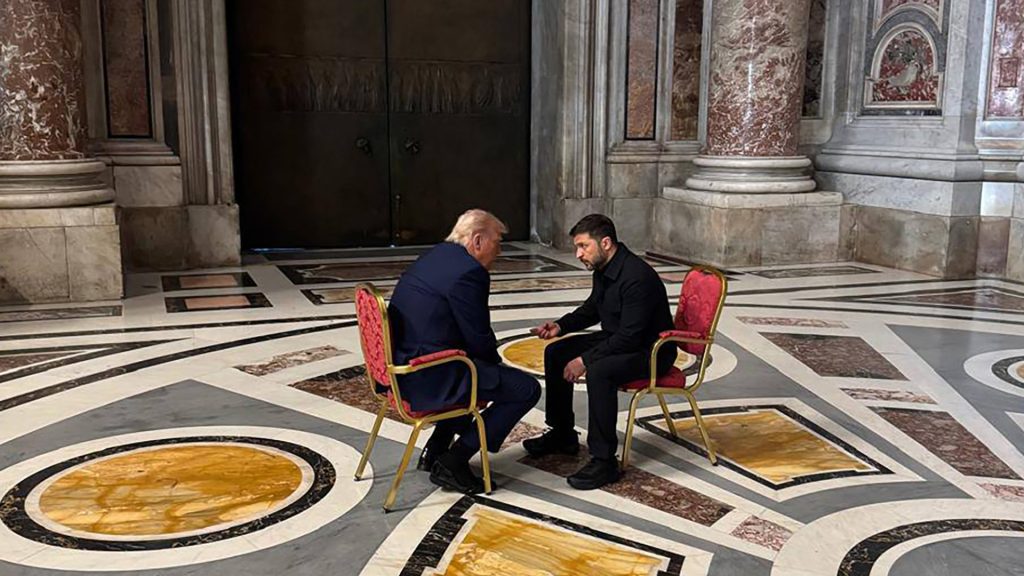
NewsFeed Ukraine’s President Volodymyr Zelenskyy has described his one-on-one encounter with US President Donald Trump at the Vatican, their first meeting since February’s fiery Oval Office exchange, as ‘productive’. They met on the sidelines of Pope Francis’ funeral. Published On 27 Apr 202527 Apr 2025 Adblock test (Why?)
India-Pakistan troops exchange fire as diaspora clashes over Kashmir attack
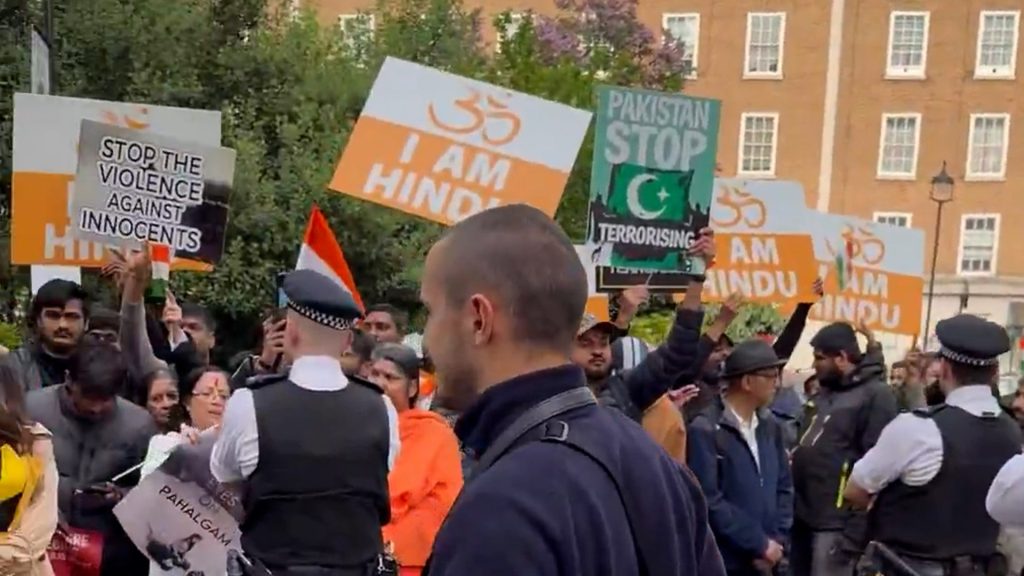
NewsFeed Protests between Indian and Pakistani diaspora communities have erupted in London as tensions soar between both countries in the wake of a deadly attack in Indian-administered Kashmir. India blamed Pakistan for the shooting in Pahalgam which killed 26 tourists, sparking renewed fighting over the disputed region. Published On 27 Apr 202527 Apr 2025 Adblock test (Why?)
What will the next chapter look like for the Roman Catholic Church?
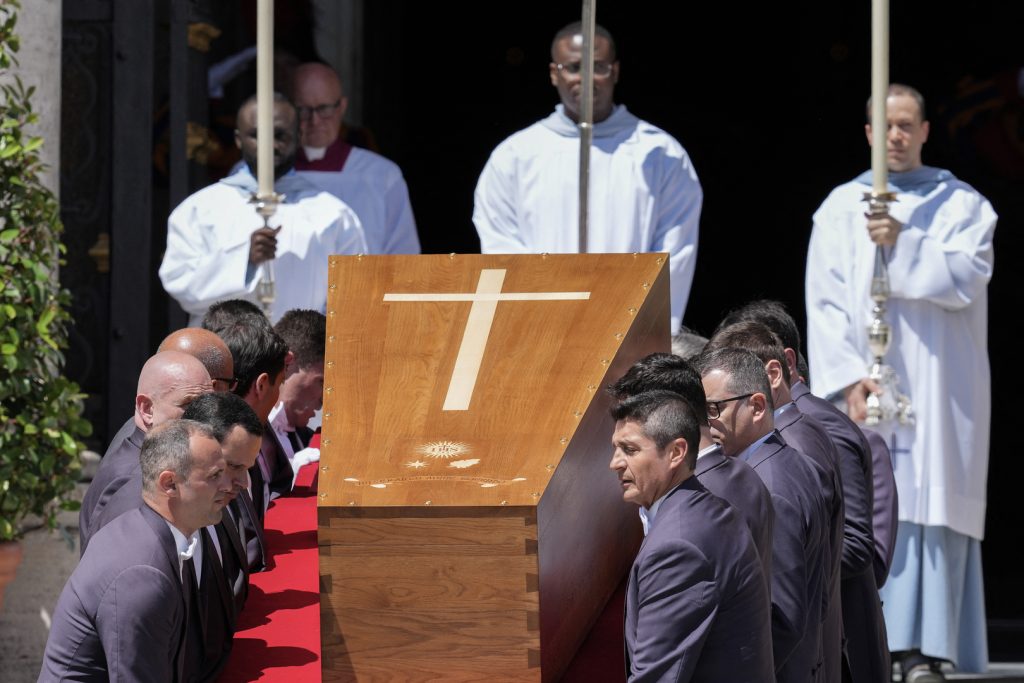
Pope Francis leaves behind a legacy of reform – so how will his successor wield power? With Pope Francis’s funeral, the world’s 1.4 billion Catholics are turning the page on an era of reform and liberalism. The Vatican now faces several questions. Among them, what will its next chapter look like? And how will the next pope wield the power of the Church? Presenter: Imran Khan Guests: Kayode Akintola – Head of Africa region, Catholic Agency for Overseas Development Glenda Miro Antonio – Founder and president of Spring Rain Global, a philanthropy consultancy Marco Politi – Pope biographer and Vatican expert Adblock test (Why?)
Chris Eubank Jr beats Conor Benn on unanimous points decision
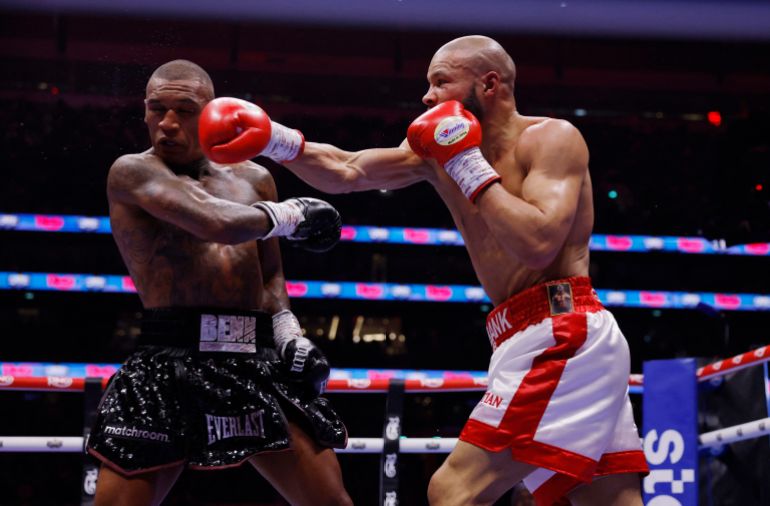
Fierce rivals go the distance in middleweight bout as their famous fathers watch on at Tottenham Hotspur Stadium in London. Chris Eubank Jr dealt fellow Briton Conor Benn a first career defeat after going the distance to win their middleweight grudge match on a unanimous points decision. All three judges scored the fight 116-112 after a pulsating 12-round slugfest, with both fighters coming out hard from the start and going toe-to-toe in front of 65,000 spectators at London’s Tottenham Hotspur Stadium. The fight between the sons of former world champions and archrivals Chris Eubank Sr and Nigel Benn, who met twice in the 1990s, was called off in 2022 when Benn tested positive for trace amounts of fertility drug clomifene. “I knew I was capable of that, and I just needed someone to bring that out of me. I did not expect him to be the guy to do that,” Eubank told DAZN. “The fact our fathers did it before brings out the soul in you. “I did not know he [Benn] had what he had in him. I thought I’d break him early. I didn’t train for a fight like that.” Chris Eubank Jr lands a right hook in his middleweight fight against Conor Benn Action [Andrew Couldridge/Reuters] Both fathers were present, 32 years on from their last clash, and embraced in the ring before the opening bell. Advertisement The fight itself rolled back the years from the scraps that their fathers produced with sheer aggression and energy dominating. “It was close,” Benn said after. “I need to watch it back. I thought I won. Maybe I stayed on the ropes for too long. I enjoyed it, and it was a massive homecoming. “We always knew Chris was a good fighter, and has good fighting talk.” Benn had made a step up in weight to face someone who had been a fierce rival outside the ring. “I believe I can go back down a weight and win a title,” Benn said on reflection. Conor Benn looks dejected alongside his father Nigel Benn after the fight [Richard Pelham/Getty Images] A rematch between the pair is in the contract, and promoter Eddie Hearn was clear that it needs to happen, in his opinion. “I couldn’t split them. I thought Benn was winning the fight and then lost the last two rounds,” Hearn told DAZN. “It is what it is, but I didn’t see Eubank winning that by four rounds. “Benn became the people’s champion. He rose up to fight a middleweight, and he took the kitchen sink. He never stopped trying to win the fight. “It was one of the most dramatic fights I’ve seen. “Those two warriors should respect each other after that.” Adblock test (Why?)
Barcelona edge Real Madrid in extra time to win Copa del Rey

Barcelona defender Jules Kounde struck deep in extra time to decide a gripping Copa del Rey Clasico final in Seville, earning his side a 3-2 win over rivals Real Madrid. The Catalans, aiming for a quadruple this season, won the first major trophy of Hansi Flick’s reign as coach and a record-extending 32nd Spanish cup in dramatic fashion on Saturday. Pedri sent Barcelona ahead at La Cartuja, but two Real Madrid goals in seven second-half minutes, from Kylian Mbappe and Aurelien Tchouameni, pulled the Spanish and European champions level. However, Ferran Torres struck in the 84th minute to take the game to extra time and Kounde drilled home to win it for the LaLiga leaders. Substituted Madrid defender Antonio Rudiger was sent off in the final seconds for appearing to throw an object onto the pitch towards the referee. Madrid, who started with top scorer Mbappe on the bench after an ankle injury, suffered an early setback when left-back Ferland Mendy, playing his first game for six weeks, suffered a thigh injury. Advertisement Carlo Ancelotti sent on Fran Garcia in his place, with the job of shackling Barcelona’s dazzling teenage winger Lamine Yamal. The 17-year-old Spain star, who dyed his hair blond for the game, burst past him with ease as Barca increasingly threatened Thibaut Courtois’s goal. The Catalans, who won the first two Clasicos this season in LaLiga and the Spanish Super Cup, scoring nine goals in the process, controlled the ball. They took the lead after 28 minutes, Pedri placing the ball into the top corner with precision and power from the edge of the box. It was a sensational goal, starting with a smart Pau Cubarsi interception in his own half. Pedri spread the play out to Yamal on the right, who cut inside and held the ball up until the Canary Islander reached the box and had a sight of goal. Madrid had been focused on defending, but Barcelona’s opener brought them out of their shell – and also brought Mbappe off the bench to warm up. Jude Bellingham started and finished a superb move but was offside, and Vinicius Junior would have won a penalty as Inigo Martinez hacked him down, but had also strayed off in the build-up. Barcelona could have doubled their lead, with Dani Olmo’s corner evading several players and bouncing off the far post, with Cubarsi unable to get there as Dani Ceballos held him back. Referee Ricardo de Burgos Bengoetxea was lenient with some heated Madrid tackles, perhaps cowed by Friday’s drama as the Spanish champions seethed at his pre-match comments denouncing attacks on officials by the club’s television channel. Advertisement Madrid sent Mbappe on for Rodrygo Goes at half-time and soon they began to work Barcelona goalkeeper Wojciech Szczesny with Vinicius and Mbappe coming close. Mbappe pulled Madrid level almost on his own in the 70th minute. The striker surged forward and was brought down on the edge of the box by Frenkie de Jong. Mbappe took the free-kick himself and fired a low effort in off the post. Seven minutes later, Madrid took the lead, Tchouameni finding space to head home Arda Guler’s corner past the helpless Szczesny. Barcelona responded when Yamal played a delicious pass over the top for Torres, which drew both Rudiger and Courtois, but the Spaniard got there first and rolled home. Real Madrid’s French forward Kylian Mbappe celebrates scoring an equalising goal in the second half [Josep Lago/AFP] Tensions boil over Controversy unsurprisingly reared its head before the match headed to extra time. Barcelona clamoured for a penalty when Rudiger appeared to bring down Torres, and then were awarded one deep in stoppage time as Raphinha tumbled under pressure from Raul Asencio. However, the referee, called to review the incident by VAR, overturned his decision and booked the Brazilian for diving. In extra time, Barcelona were ascendant and probed for a potential winner. They eventually found it when Kounde intercepted an uncharacteristically loose Luka Modric pass and beat Courtois with a powerful low effort from outside the box, sparking wild celebrations. Rudiger’s dismissal and Madrid’s pre-match histrionics regarding the refereeing team will ensure the repercussions continue, and the teams meet again in LaLiga in May, in a match that could decide the title race. Players of FC Barcelona celebrate after the team’s victory in the Copa del Rey Final match between FC Barcelona and Real Madrid at Estadio de La Cartuja on April 26, 2025, in Seville, Spain [Fran Santiago/Getty Images] Adblock test (Why?)
Have scientists discovered a new colour called ‘olo’?

A team of scientists claims to have discovered a new colour that humans cannot see without the help of technology. The researchers based in the United States said they were able to “experience” the colour, which they named “olo”, by firing laser pulses into their eyes using a device named after the Wizard of Oz. Olo cannot be seen with the naked eye, but the five people who have seen it describe it as being similar to teal. What has the study found? Professors from the University of California, Berkeley and the University of Washington School of Medicine published an article in the journal, Science Advances, on April 18 in which they put forth their discovery of a hue beyond the gamut of human vision. They explained that they had devised a technique called Oz, which can “trick” the human eye into seeing olo. The technique is named after the Wizard of Oz. In the Wonderful Wizard of Oz, published in 1900, Frank Baum wrote about a man who uses tricks to fool the residents of the fictional land of Oz into thinking he’s a wizard. For instance, it is believed that the Emerald City, the capital of Oz, is so bright and vibrant that visitors have to wear special glasses to protect their eyes. The glasses are one of the wizard’s tricks, since they make the city appear greener and grander. Advertisement How do humans perceive colour? The human eye perceives colour via three types of photoreceptor or “cone cells” in the retina. S cones pick up shorter, blue wavelengths of light; M cones detect medium, green wavelengths; and L cones detect longer, red wavelengths. “The signals from these cones are then sent through a complex series of cells in the retina that act to clean up and integrate the signal before passing it down the optic nerve through parts of the brain,” Francis Windram, a research associate at the department of life sciences at Imperial College London, told Al Jazeera. The part of the brain that the visual information is passed to is the visual cortex. A doctor demonstrates a model of the human eye [Shutterstock] How did scientists find the ‘new’ colour? In normal vision, the function of M cones overlaps with the neighbouring S and L cones, so any light that stimulates M cones also activates the other two cones. The M cones don’t function alone. “There’s no wavelength in the world that can stimulate only the M cone,” Ren Ng, a professor of electrical engineering and computer sciences at UC Berkeley, explained in an article published on its website. “I began wondering what it would look like if you could just stimulate all the M cone cells. Would it be like the greenest green you’ve ever seen?” So Ng teamed up with Austin Roorda, one of the creators of the Oz technology and a professor of optometry and vision science at UC Berkeley. Oz, which Roorda described as “a microscope for looking at the retina”, uses tiny microdoses of laser light to target individual photoreceptors in the eye. The equipment, which must be highly stabilised during use, is already being used to study eye disease. Advertisement The work using Oz began in 2018 by James Carl Fong, a doctoral student in electrical engineering and computer sciences at UC Berkeley. Hannah Doyle, another doctoral student at Berkeley, ran the experiments through which human subjects were able to see the new colour, olo. Is olo really a new colour? The shade of olo has always existed, it just falls beyond the spectrum of shades visible to the human eye. There are other such shades that we cannot see. Hence, olo is not a new colour that has come into existence, from a physical or scientific perspective. However, “from a sociolinguistic perspective, if people give new names to colours which previously were indistinguishable thanks to this technology, then maybe! It all depends on how you say it,” Windram said. A palette shows some of the colours humans can normally see [Shutterstock] How many people have seen olo? Five people have seen the “new” colour – four men and one woman. All had normal colour vision. Three of the subjects, including Roorda and Ng, are the co-authors of the research paper while the other two are members of the participating lab at the University of Washington and were unaware of the purpose of the study before they took part. What does olo look like? Those who have seen olo describe it as a teal or green-blue colour – but one they had never seen before. In the article by UC Berkeley, it is described as a “blue-green colour of unparalleled saturation”. “It was like a profoundly saturated teal … the most saturated natural colour was just pale by comparison,” Roorda said. Advertisement “I wasn’t a subject for this paper, but I’ve seen olo since, and it’s very striking. You know you’re looking at something very blue-green,” Doyle said. The researchers said an image of a teal square is the closest colour match to olo. However, this square is not an olo-coloured square. The naked human eye simply cannot see the shade. “We’re not going to see olo on any smartphone displays or any TVs any time soon. And this is very, very far beyond VR headset technology,” Ng said, according to a report in the UK’s Guardian newspaper. What if some colors are invisible not because they’re rare, but because we physically can’t see them? UC Berkeley scientists discovered Olo – a hue that can’t be rendered, only experienced. Olo may never join the Pantone Color System… or will it?https://t.co/sBRGVhw85g pic.twitter.com/rxmbutd7y2 — PANTONE (@pantone) April 23, 2025 Could this technology help people with colour blindness? Berkeley researchers are exploring whether the Oz technology could help people with colour blindness. Windram said success would depend on the cause of colourblindness in individuals. Deuteranomaly, which causes decreased sensitivity to green light, is the most common form of colour blindness. “In
How technocracy has become our reality
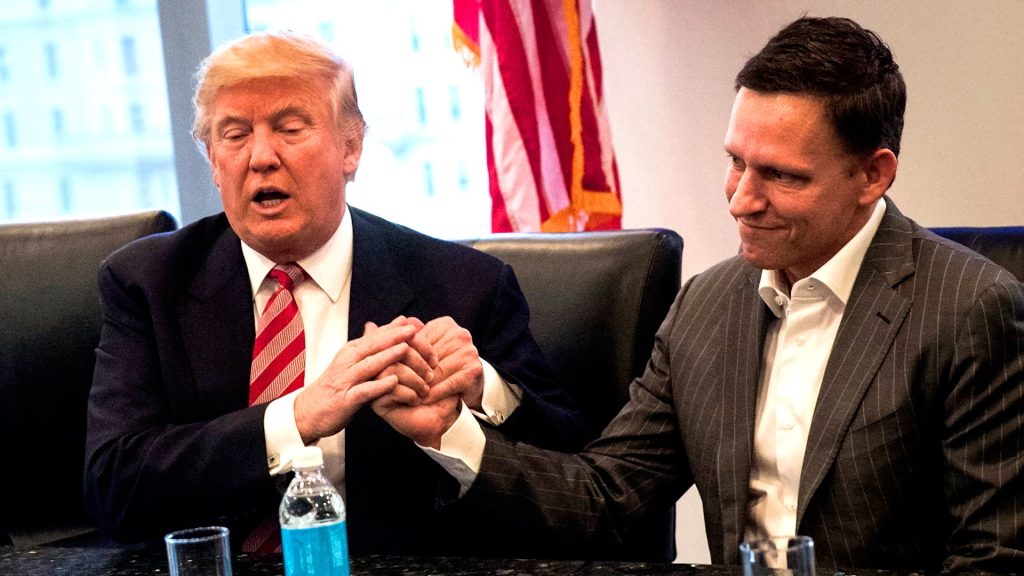
As tech billionaires infiltrate the White House, the question looms, “Who really rules us, the government or Silicon Valley?” This film examines the influence and ideology of technocrats over the last century, and asks whether they pose a threat to democracy. Contributors: Gil Duran – Tech journalistSiva Vaidhyanathan – Professor of Media Studies, University of VirginiaPayal Arora – Digital anthropologistCori Crider – Senior Fellow, Open Markets and the Future of Tech Institute Adblock test (Why?)
Iran, US resume talks in Oman to hammer out deal on nuclear programme
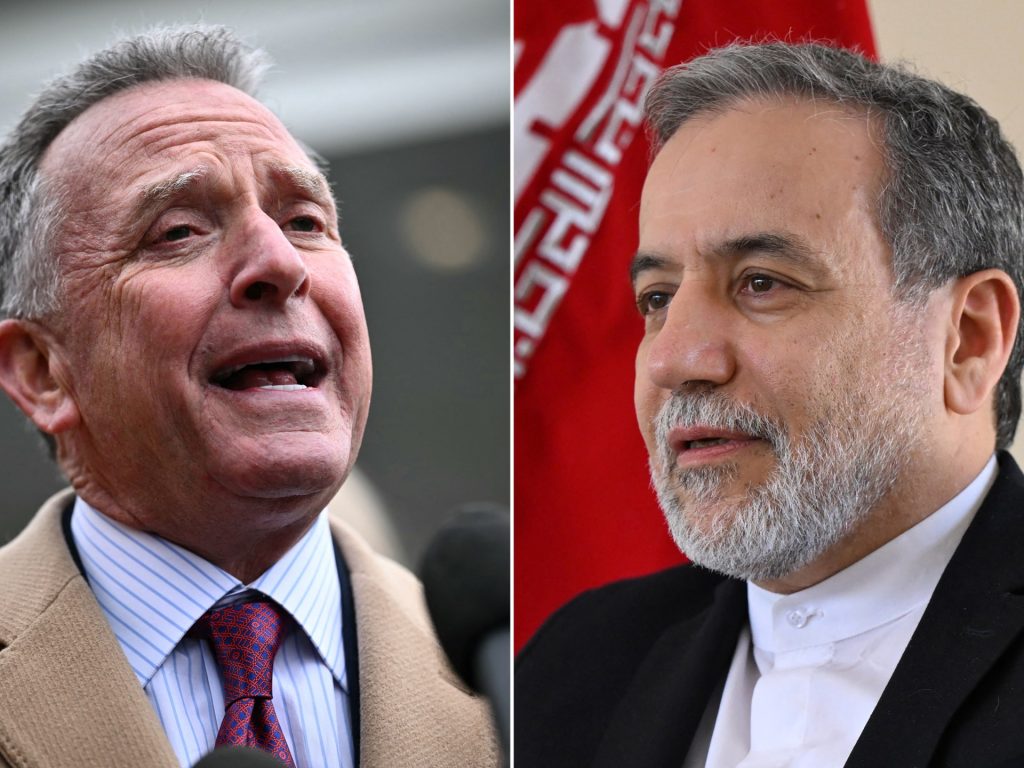
Negotiations expected to centre on uranium enrichment begin in Oman as Trump expresses cautious optimism. Iran and the United States have opened a third round of talks in Oman aimed at curbing Tehran’s nuclear activities, with discussions expected to centre on uranium enrichment. Iranian state television confirmed the negotiations were under way in Muscat on Saturday, though neither Iran’s Foreign Minister Abbas Araghchi nor US envoy Steve Witkoff disclosed any details on the talks they will lead. The talks seek to limit Iran’s nuclear programme in exchange for the lifting of some of the crushing economic sanctions the US has imposed on the Islamic republic for decades. Iran, for its part, has signalled it is eager to get sanctions relief as its economy continues to suffer. US President Donald Trump was confident of clinching a new agreement that would block Iran’s path to a nuclear bomb. Speaking on board Air Force One, en route to Rome for the funeral of Pope Francis, Trump expressed cautious optimism. “The Iran situation is coming out very well,” he said. “We have had a lot of talks with them and I think we are going to have a deal. I would much rather have a deal than the other alternative. That would be good for humanity.” Advertisement But Trump repeated threats stressing that military options remained on the table if diplomacy failed, saying: “There are some people that want to make a different kind of a deal – a much nastier deal – and I don’t want that to happen to Iran if we can avoid it.” Meanwhile, Iranian Foreign Ministry spokesperson told state TV that the country’s defence and missile programmes were not being discussed during the negotiations in Oman. “The question of defence capacities and the country’s missiles is not [on the agenda] and has not been raised in the indirect talks with the United States,” Esmaeil Baghaei said on Saturday. The talks come a week after a second round of negotiations in Rome were described by both sides as constructive. Tensions have remained high since Trump withdrew from the 2015 nuclear agreement in 2018, prompting a series of escalations. Iran has since abandoned all limits on its nuclear programme, and enriches uranium to up to 60 percent purity – near weapons-grade levels of 90 percent. Western countries, including the US, have long accused Iran of seeking to acquire nuclear weapons, an allegation Tehran has consistently denied, insisting that its programme is for peaceful civilian purposes. US Secretary of State Marco Rubio said this week Iran would have to entirely stop enriching uranium under a deal, and import any enriched uranium it needed to fuel its sole functioning atomic energy plant, Bushehr. But Tehran says ending its enrichment programme or surrendering its enriched uranium stockpile are among “Iran’s red lines that could not be compromised” in the talks. Advertisement Adblock test (Why?)
US judge arrested as immigration crackdown escalates
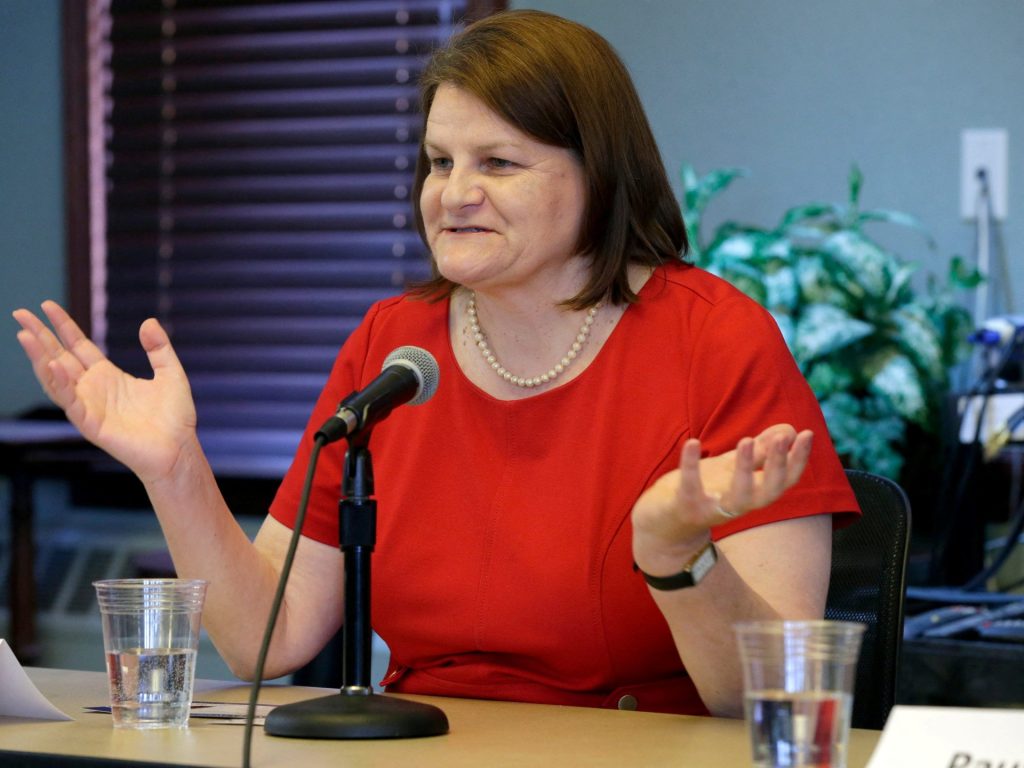
US Justice Department alleges Judge Hannah Dugan refused to turn over a man that immigration agents showed up to arrest. Federal agents have arrested a Wisconsin judge on charges of obstructing immigration agents, escalating tensions between President Donald Trump’s administration and the judiciary. The Federal Bureau of Investigation’s Director Kash Patel said on Friday that the judge was arrested for allegedly helping an undocumented migrant evade federal agents. In a criminal complaint, the US Department of Justice alleged that Hannah Dugan, a Milwaukee County circuit judge, refused to turn over the man after immigration agents showed up to arrest him in her court on April 18, and that she tried to help him evade arrest by allowing him to exit through a jury door. “Thankfully our agents chased down the perp [undocumented migrant] on foot and he’s been in custody since, but the Judge’s obstruction created increased danger to the public,” Patel said. The Justice Department has said that Judge Dugan became “visibly angry” when immigration officials arrived to arrest Flores-Ruiz in her court, and called the effort “absurd”. Advertisement Dugan appeared briefly at a federal court in Milwaukee to face charges of obstructing a proceeding and concealing an individual to prevent arrest, records show. She was released and is scheduled to enter a plea on May 15. A crowd formed outside the court, chanting “free the judge now.” Dugan left the court through a side door following the hearing and was driven away in a black SUV, without comment. Immigration and legal rights advocates have said that subjecting civic spaces, such as courts, to immigration enforcement operations could increase hesitation among people without legal status to take part in activities such as testifying in court about crimes. “No one is above the law,” Attorney General Pam Bondi wrote on social media. The Trump administration has been locked in an escalating confrontation with federal judges, as several have issued rulings that limit its aggressive use of presidential power in immigration and other matters. State courts have played a less significant role in that dispute. After making his announcement on social media, Patel deleted the post, which he had made before the case against Dugan was unsealed in federal court. He later wrote another social media post on the case. “Director Patel’s statement shows that Trump’s FBI is more concerned about weaponising federal law enforcement, punishing people without due process, and intimidating anyone who opposes those policies, than they are with seeking justice,” Milwaukee County Executive David Crowley said in a statement. Advertisement Trump launched a sweeping immigration crackdown after taking office in January, and the Justice Department has directed federal prosecutors to pursue criminal cases against local officials who interfere with the effort. Such resistance was widespread during Trump’s first 2017-2021 term in office. Leon Fresco, an immigration lawyer, told Al Jazeera that arresting a judge in these circumstances was “very rare”. “This is only the second time this has happened,” he said. “It is now going to be a matter of conflict of laws. Does the state judge have a point that ICE was thwarting the ability of the state judge to have criminal court hearings? Or does ICE have a point that the state judge was thwarting ICE’s ability to engage in immigration enforcement?” he said. Adblock test (Why?)
Apple to move assembly of US phones to India in shift away from China
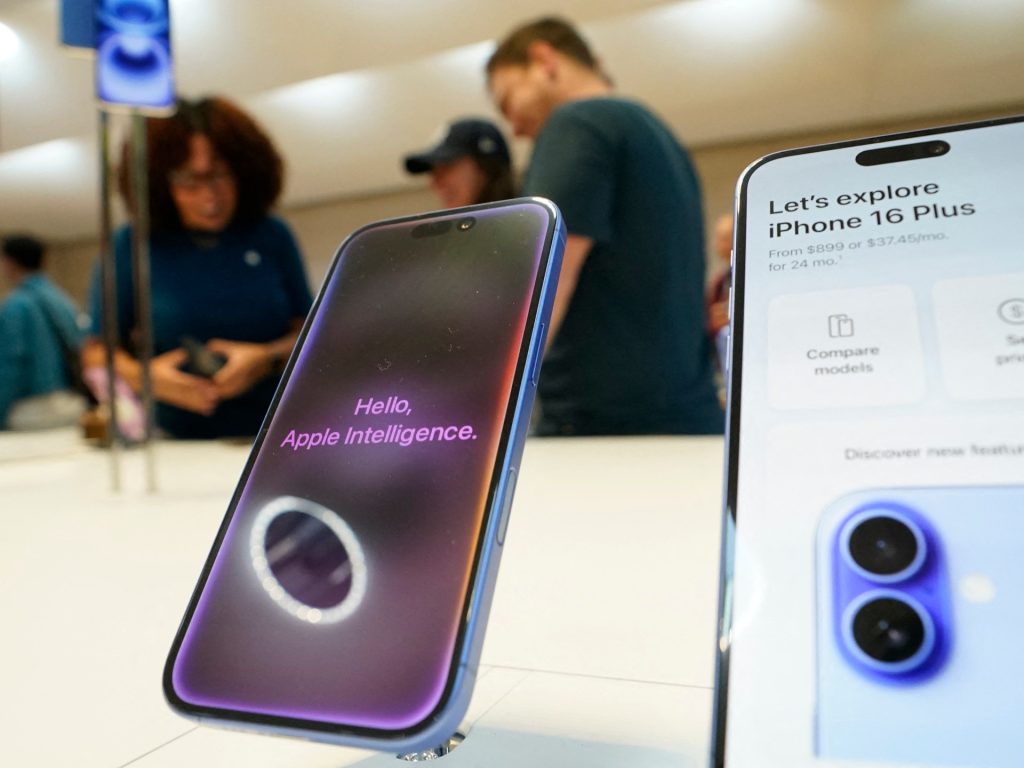
As Apple grapples with United States President Donald Trump’s tariff war with China, it has laid out plans to move to Indian assembly of the majority of iPhones it sells in the US by the end of 2026, a move that would double its current output from the South Asian nation and away from China. The tech giant produces in China 80 percent of the 60 million iPhones sold in the US and this is a key step that would help it mitigate some of the costs it faces amid rising tariffs on China. The Financial Times first reported Apple’s plans on Friday. Apple, a company worth more than $3 trillion, is reportedly engaged in discussions with manufacturers it works with in India, including Foxconn and the Tata Group to execute this plan, according to the news agency Reuters, which cited an unnamed source. The tech giant has already expanded production in India to counter tariffs imposed during the first Trump administration. The Silicon Valley-based tech giant shipped $2bn worth of iPhones in March, accounting for roughly 600 tonnes of cargo from India to the US — a record for both Tata and Foxconn, according to Reuters. Advertisement Indian Prime Minister Narendra Modi has been pushing the country as a hub for global smartphone manufacturing. Earlier this year, the country removed import taxes for some components for mobile phone production – a boost for companies like Apple. “If you’re charging import tax for intermediary goods, then you cannot actually be competitive versus somebody who does not. Their objective is to be as competitive as they can be to become the leading manufacturing hub,” Babak Hafezi, chief executive officer at Hafezi Capital, an international consulting firm, told Al Jazeera. Apple has assembled roughly $22bn worth of iPhones in India during the 12-month period ending March 2025, a 60 percent increase from the year prior, per a Bloomberg report. Even with the growth, only 20 percent of the world’s iPhones are made in India. Roadblocks The shift in production will cost Apple. According to a Reuters report citing an unnamed source, manufacturing iPhones in India is 5-8 percent more expensive than in China. “India will help, but it’s not moving the needle on China’s dependence for Apple. It will take years to make this move, as Apple is caught in the tariff storm,” Dan Ives, analyst at Wedbush Securities, told Al Jazeera. Earlier this week, the tech outlet The Information reported that Chinese authorities have created roadblocks for Apple suppliers to move operations from China to India. They have delayed shipments or blocked equipment shipments without explanation. In some cases, Foxconn had export applications denied and others delayed up to four months. Advertisement “In terms of core iPhone production, it would take years to move a significant piece from China to India,” Ives added, referring to the phone’s components that are made in China and shipped to India to be assembled into the final product. Ives also said Apple’s plans to move assembly for US phones completely to India could cost the company $30bn-$40bn. There are concerns if India’s infrastructure can handle the surge in production, as well. “They have massive amounts of infrastructure problems in terms of traffic and mobility, and all these different variables that make the cost of the production longer, which eventually cost more money for the company,” Hafezi added. “You need secure, continuous, and productive infrastructure to maximise manufacturing as best as you can and be globally competitive,” he continued. Apple’s move comes as the Trump administration has signalled a willingness to ease trade tensions between the US and China, amid concerns about the economic fallout from the tariff war. On Friday, Trump claimed he had spoken to Chinese President Xi Jinping but did not say when the two leaders last talked. In a TIME magazine interview conducted earlier this week, Trump said that his administration has been talking with Beijing to strike a tariff deal. China has denied any trade talks with the US. But trade talks with India are under way. Earlier this week, US Vice President JD Vance met India’s Modi, during which Vance said the two countries made “good progress” amid an expected bilateral trade agreement. Advertisement The news of Apple’s shift to India comes in advance of Apple’s earnings report, which is slated to be released on Thursday. Adblock test (Why?)