

Fires continue to rage at key Iran port as explosion death toll rises to 65
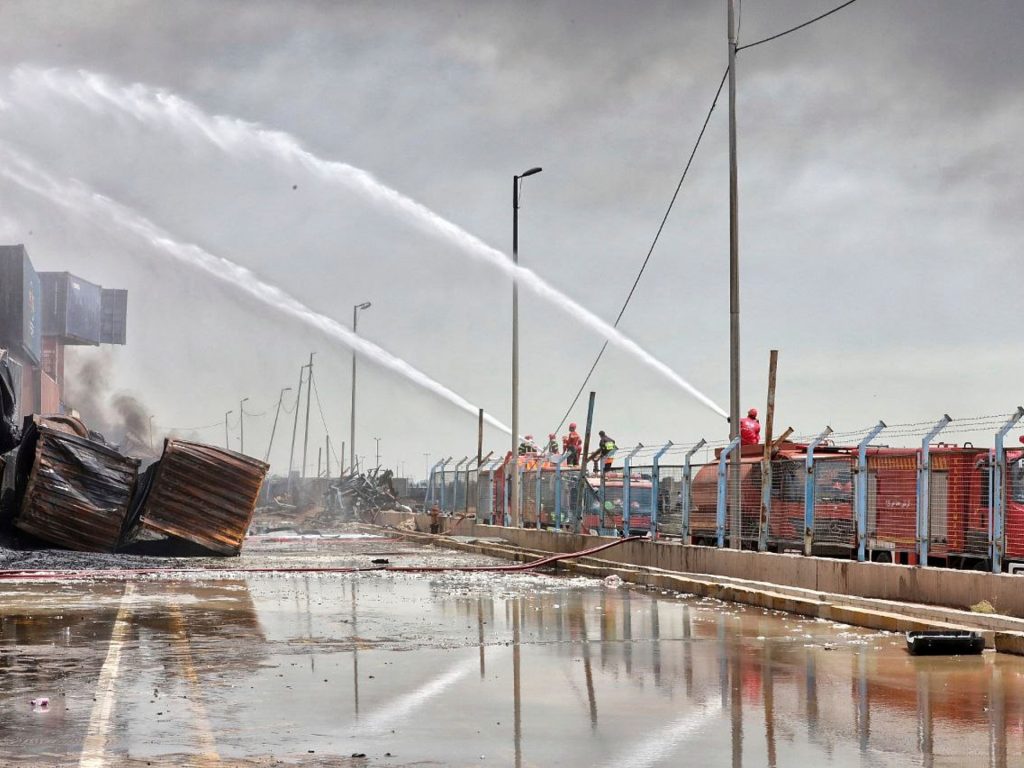
Interior Minister Eskandar Momeni says the ‘culprits have been identified’ and the explosion was caused by ‘negligence’. Firefighters continue to battle raging fires at Iran’s largest commercial port, Bandar Abbas, two days after a massive explosion killed at least 65 people and injured more than 1,000, Iranian state media has reported, as questions linger as to the blast’s cause. Only “120 wounded are still in hospital”, Interior Minister Eskandar Momeni, who is visiting the affected area, told state TV on Monday. The blast took place on Saturday at Shahid Rajaei Port in Iran’s south near the strategic Strait of Hormuz, a waterway through which one-fifth of global oil output passes. Iran’s state TV showed images of firefighters dousing the flames, saying the damage would be assessed after the fire is fully brought under control. Heavy charcoal-black smoke continued to billow over low flames at part of the site, above which a firefighting helicopter flew, pictures from the Iranian Red Crescent showed. What caused the blast? It was not immediately clear what caused the explosion, but the port’s customs office said it likely resulted from a fire that broke out at a depot storing hazardous chemical materials. Advertisement Momeni said on Monday that “culprits have been identified and summoned”, and that the blast was caused by “shortcomings, including noncompliance with safety precautions and negligence”. Iran’s Supreme Leader Ayatollah Ali Khamenei has ordered a thorough investigation into the incident. In the face of external and expert speculation, Iran has denied reports that the blast was caused by a shipment of missile fuel. National day of mourning declared On Sunday, President Masoud Pezeshkian visited hospitals treating the wounded in Bandar Abbas. Since the explosion, authorities have ordered all schools and offices in the area closed and urged residents to avoid going outside “until further notice” and use protective masks when doing so. Authorities declared Monday a national day of mourning, while three days of mourning began on Sunday in Hormozgan province. The explosion took place as Iranian and US delegations met in Oman for high-level talks on Tehran’s nuclear programme, with both sides reporting progress. While Iranian authorities so far appear to be treating the explosion as an accident, it also comes against a backdrop of years of shadow war with regional enemy Israel. Iran has in the past accused Israel of being behind such attacks. According to The Washington Post, Israel launched a cyberattack targeting the Shahid Rajaei Port in 2020. Adblock test (Why?)
Sudan’s RSF accused of ‘war crime’ after 31 people ‘executed’
[unable to retrieve full-text content] At least 31 people, including children, have been ‘executed’ by the paramilitary Rapid Support Forces (RSF).
Trump-China tariff war: Who’s winning so far?
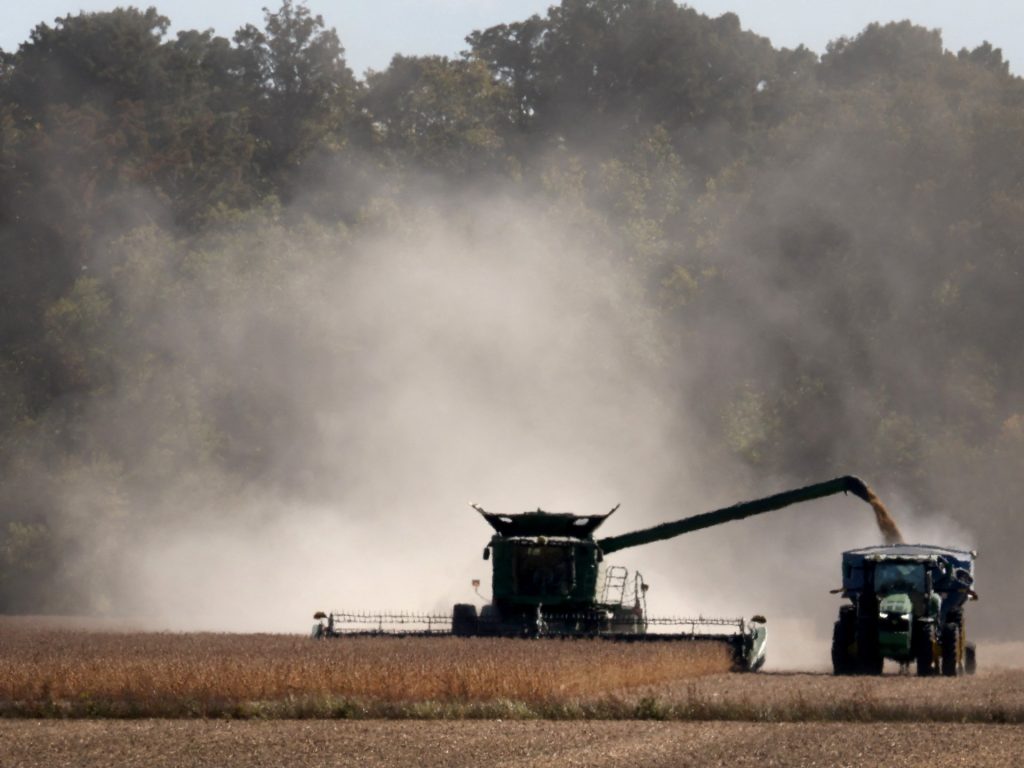
After United States President Donald Trump suspended his “reciprocal tariffs” on major US trading partners on April 9, he ramped them up on China’s goods. US trade levies on most imports from China have climbed to 145 percent. Beijing retaliated with duties of its own, at 125 percent on US goods. Trump has long accused China of exploiting the US on trade, casting his tariffs as necessary to revive domestic manufacturing and reshore jobs back to the US. He also wants to use tariffs to finance tax cuts. Most economists remain sceptical Trump will achieve his aims. For now, the US and China are locked in a high-stakes game of chicken. The world is waiting to see which country will yield and which will stay the course. As Trump nears his first 100 days in office for the second time, here’s where the tariff war with China stands: What’s happening with negotiations? Trump recently played up the possibility of securing a trade deal with China. Last week, the US president said his tariffs on China will “come down substantially” in the near future. Advertisement “We’re going to have a fair deal with China,” Trump told reporters on April 23, stirring hopes of a de-escalation. He also said his administration was “actively” negotiating with the Chinese side without elaborating. On April 24, however, China’s Ministry of Commerce rebuffed president Trump’s remarks, saying there were no talks taking place between the two countries. “Any claims about the progress of China-US economic and trade negotiations are groundless and have no factual basis,” ministry spokesman He Yadong said. While he insisted that Beijing won’t duck any economic blows from Washington, he also said the door was “wide open” for talks. Last week, the Reuters news agency reported that China was evaluating exemptions for select US imports – a list of up to 131 products. Beijing has not made any public statement on the issue. Has the tariff war impacted US exports? Trump introduced his sweeping tariffs on China less than three weeks ago. The fallout for US businesses won’t be fully felt until later this year. Still, the warning signals are already flashing red. Data from the US Department of Agriculture shows that exports of soya beans – the biggest US farm export – fell dramatically for the period April 11-17, the first full week of reporting since Trump’s China tariff announcement. By April 17, net sales of US soya beans dropped by 50 percent compared with the previous week. That was driven by a 67 percent fall in weekly soya bean exports to China, which, until recently, was America’s biggest export destination for the legume. Advertisement According to Piergiuseppe Fortunato, an adjunct professor of economics at the University of Neuchatel in Switzerland, “China’s retaliatory tariffs will hit US farmers hard. Some may go out of business.” He added that all sectors with exposure to China would come under strain. In 2023, the US exported roughly $15bn of oil, gas and coal to China. Losing that market would hit US energy firms. Are imports to the US going to take a hit? Since the start of Trump’s tariff war, cargo shipments have plummeted. According to Linerlytica, a shipping data provider, Chinese freight bookings bound for the US fell by 30 to 60 percent in April. The drastic reduction in shipping from America’s third largest trading partner – after Canada and Mexico – has not yet been felt. In May, however, thousands of companies will need to restock their inventories. According to Bloomberg News, retail giants Walmart and Target told Trump in a meeting last week that shoppers are likely to see empty shelves and higher prices from next month. They also warned that supply shocks could roll out to Christmas. Electronic appliances, such as TV sets and washing machines, made up 46.4 percent of US imports from China in 2022. The US also imports a lot of its clothing and pharmaceutical product ingredients from China. The price of these goods will begin to rise from next month. On April 22, the International Monetary Fund raised its US inflation forecast to 3 percent in 2025, owing to tariffs – a full 1 percentage point higher than in January. The lender also lowered its US economic growth forecast and raised its expectation that the US will tip into recession this year. Advertisement How will China’s economy be affected? Despite growing tensions between the US and China, Washington and Beijing remain major trading partners. According to the Office of the US Trade Representative, the US imported $438.9bn in Chinese goods last year. That amounts to roughly 3 percent of China’s total economic output, which remains heavily reliant on exports. In a report shared with its clients this month, Goldman Sachs said it expects Trump’s tariffs to drag down China’s gross domestic product (GDP) by as much as 2.4 percentage points. For their part, China’s top officials said the country can do without American farm and energy imports and promised to achieve a 5 percent GDP growth target for this year. Zhao Chenxin, vice chairman of the National Development and Reform Commission, said that together with non-US imports, domestic farm and energy production would be enough to satisfy demand. “Even if we do not purchase feed grains and oilseeds from the United States, it will not have much impact on our country’s grain supply,” Zhao said on Monday. He also noted there would be limited impact on China’s energy supplies if companies stopped importing US fossil fuels. In some ways, experts said, China has been preparing for this crisis. Fortunato told Al Jazeera: “The US is one of China’s biggest export markets, so tariffs will slow GDP growth. But Beijing has played this smartly as it began diversifying its imports away from the US during the first Trump trade war” in 2018. He also pointed out that “the US depends on China for up to 60 percent of its critical mineral imports, used in everything from clean energy to military technology. The opposite flow simply isn’t there,
Protests in Paris against Islamophobia after mosque stabbing

NewsFeed Hundreds of demonstrators gathered in Paris to protest against Islamophobia after a Muslim man was stabbed to death at a mosque in southern France. Video has emerged showing the alleged attacker before the crime. French politicians attended the rally, condemning the growing climate of Islamophobia in the country. Published On 28 Apr 202528 Apr 2025 Adblock test (Why?)
Israel bombs southern Beirut as its attacks in Lebanon continue
[unable to retrieve full-text content] Israel has bombed Beirut’s southern suburbs, part of a series of attacks across Lebanon that violate the ceasefire deal
Spain, Portugal and southwestern France hit by massive power outage

The Spanish and Portuguese governments have convened emergency cabinet meetings as the causes of the outage remain unknown. Spain, Portugal and parts of southwestern France have been hit by a widespread power blackout that paralysed public transport, caused large traffic jams, delayed flights, and left residents unable to access cash from ATMs, as utility operators scrambled to restore the grid. The Spanish and Portuguese governments convened emergency cabinet meetings after the outage on Monday, which also briefly affected a part of France bordering northeastern Spain. The head of operations of Spain’s grid operator REE, Eduardo Prieto, told a news conference that restoring power to the Spanish electric grid could take six to 10 hours. Authorities were unable to explain the cause of the outage at least an hour after it occurred, though a possible cyberattack had not been ruled out and investigations were ongoing, officials said. The Spanish government urged residents to stay put to avoid traffic chaos. “The government is working to identify the origin of this incident and dedicating all possible resources to resolve it as quickly as possible,” Prime Minister Pedro Sanchez’s office said. Advertisement The European Commission said it was “in contact” with local authorities “to understand the underlying cause” of the blackout. “The commission will keep monitoring the situation and make sure that there is smooth information exchange amongst all relevant parties,” a spokesperson for the EU’s executive arm said. Outage knocks out subway networks, traffic lights There were traffic jams in Madrid city centre as traffic lights stopped working, Cadena SER radio station reported, as well as people trapped in stalled metro cars and lifts in the Spanish capital. Panicked residents tried in vain to get a signal as the phone lines cut. “There’s no [phone] coverage, I can’t call my family, my parents, nothing: I can’t even go to work,” Carlos Condori told AFP. “People [are] stunned, because this had never happened in Spain.” At Cibeles Square, one of the Spanish capital’s busiest thoroughfares, the blackout of traffic lights unleashed a cacophony of sirens, whistles and car horns as police tried to control the pile-up of traffic. Al Jazeera’s Step Vaessen, reporting from the Spanish city of Valencia, said the outage had seemed a temporary one at first and “everyone carried on doing their normal business”. “But a little later, it turned out to be much larger. ATMs are not working, traffic lights are not working.” The Madrid Open tennis tournament was suspended, forcing 15th seed Grigor Dimitrov and his British opponent Jacob Fearnley off the court as scoreboards went dark and overhead cameras lost power. Advertisement The Portuguese police said traffic lights were affected across the country, the metro was closed in Lisbon and Porto, and trains were not running. Portugal’s utility REN said “all plans for the phased restoration of energy supply are being activated, in coordination with European energy producers and operators”. “REN is in permanent contact with official entities, namely the National Civil Protection Authority. At the same time, the possible causes of this incident are being assessed,” a spokesperson said. In a later statement, REN attributed the outage to a rare atmospheric phenomenon in Spain due to extreme temperature variations in the country’s interior. It added that fully restoring the country’s power grid could take up to a week. In France, grid operator RTE said there was a brief outage, but power had been restored. It was investigating the cause. “An electrical incident is currently affecting Spain and Portugal, the cause of which remains to be determined,” RTE said. “In France, homes were without power for several minutes in the Basque Country. All power has since been restored.” RTE said its teams had been mobilised to assist the Spanish grid operator, and 700MW of Spanish consumption had already been restored via France by RTE. Adblock test (Why?)
Can the US broker a Ukraine ceasefire?

Russia expert Anatol Lieven explores the options facing Ukraine, Russia and the US. The deal offered by the United States is an “unfortunate compromise” that should be accepted by Russia and Ukraine, argues Anatol Lieven, director of the Eurasia programme at the Quincy Institute for Responsible Statecraft. Lieven tells host Steve Clemons that Ukraine’s leaders should acknowledge that the Ukrainian territories occupied by Russia over the past years are lost. He adds that Russia – by accepting a ceasefire on current battle lines – has “given up” on trying to occupy all the territory of Ukraine it had hoped for. Meanwhile, Europe “has nothing serious to offer” to end the fighting, Lieven says. Adblock test (Why?)
Will Bangkok fall out of love with skyscrapers after earthquake rocks city?
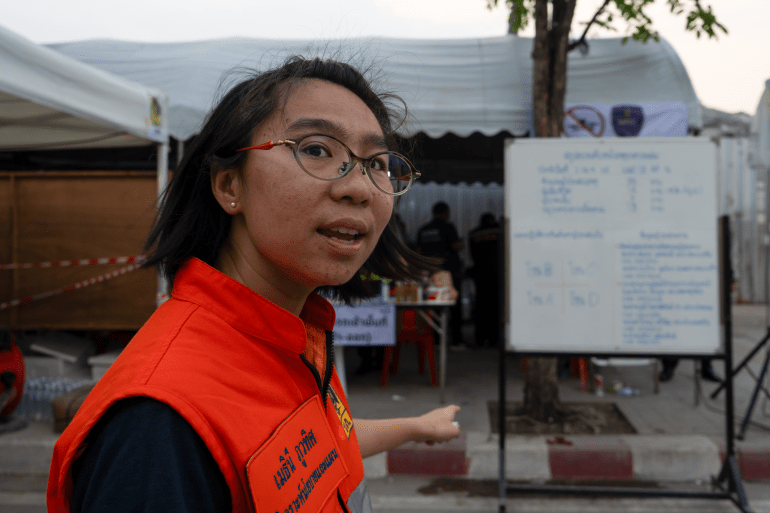
Bangkok, Thailand – In the teeming metropolis that is central Bangkok, Methinee Phoovatis monitored a small computer screen, hoping to find signs of survivors. Surrounding Methinee, other members of Thailand’s Department of Disaster Prevention and Mitigation (DDPM) coordinated the dozens of rescue workers shuttling along a path that led to an enormous mound of debris. The rescue teams worked in shifts, searching for any indications of life under the hill of cement and steel that loomed over them. “We are just hoping for a miracle that some of the people are still alive,” Methinee, a plan and policy analyst in the DDPM, told Al Jazeera. It was four days after a magnitude 7.7 earthquake jolted Bangkok on March 28, and as the hours and days passed, the chances of Methinee and her colleagues finding survivors were increasingly slim. “We are trying our best for the people. Hopefully, they are still alive,” she said, standing next to a whiteboard showing the tally of 73 people that were still missing under the rubble of the unfinished 30-storey building, which was designed to house Thailand’s National Audit Office. Advertisement The earthquake that rocked the Thai capital was particularly shallow, just 10km (6.2 miles) deep, which intensified the shock waves on the earth’s surface. Though situated more than 1,200km (750 miles) from the epicentre in Myanmar where thousands died, the earthquake brought Bangkok to a standstill. Panicked residents of this city of more than 11 million people rushed out into the streets in search of safety as buildings swayed and shuddered. A month on, life in the Thai capital has returned to normal. But the dozens of deaths – most of which were at the site of the collapsed audit office building – and the shock of the events of March 28 have prompted concerns for some in Bangkok about the safety of high-rise living in the world’s 12th tallest city. Methinee Phoovatis, of Thailand’s Department of Disaster Prevention and Mitigation, outside the building collapse site in Bangkok [Jan Camenzind Broomby /Al Jazeera] ‘People were screaming’ A sudden feeling of nausea and the swaying of lamps inside his apartment on the ninth floor of a 41-storey building told Harry Yang he was in danger. “I ran out onto my balcony and everything was shaking,” said the 29-year-old, who has called Bangkok his home since birth. “People were screaming,” he said. Dashing down the fire escape stairs, Yang immediately thought of his ageing father who lives on the 32nd floor in another high-rise building in Bangkok and who has issues with mobility. Although his father, who works as an antique dealer, made it out of the ordeal unscathed, the quake destroyed many of his antiques and left him terrified. Advertisement “My dad is 68 years old, he has leg problems, and he needed to climb down” stairs to reach the ground floor, Yang said. People had good reason to be scared. Video clips on social media showed Bangkok shaking, with debris falling to the ground and water pouring in torrents from skyscraper infinity swimming pools. Lapaphutch Lertsachanant was in her condominium on the 27th floor when the quake struck. “The building was literally moving side to side. I really felt at that moment that the building could be cut in half,” Lapaphutch said. “I really thought that I wouldn’t survive,” she added, recalling her desire to speak to her partner one final time by phone. “I thought I could have my last words with him. He would be with me in my last moments alive.” Although seismic events in the wider Southeast Asia region are common, the scale of the quake that hit Myanmar – where more than 3,700 people were killed – and shook Bangkok took many by surprise. Wang Yu, associate professor in the department of geosciences at the National Taiwan University, said Myanmar lies directly on a tectonic fault line, the Sagaing Fault, and the March 28 quake occurred after a strike-slip fault between the India and Eurasian plates. According to the United States Geological Survey (USGS), a strike-slip refers to a tectonic fault where two plates move horizontally past each other. Since 1900, the USGS reports that six other large earthquakes with a magnitude of 7.0 or more have occurred within 250km (155 miles) of the epicentre in Myanmar of the March 28 quake. Advertisement Bangkok is built on a basin of unstable soil that can increase the effect of these quakes, Wang Yu explained. “When a seismic wave transmits from the outside into the basin, the amplitude of the seismic wave will be enlarged,” he said. But the precise reason why the building in central Bangkok collapsed remains under investigation. No other building in Bangkok suffered such a catastrophic failure, although many sustained structural damage. Officials in Thailand have launched an investigation to assess whether proper building protocols were followed. Cranes work to remove the debris at the site of the building collapse in Bangkok, Thailand [Jan Camenzind Broomby/Al Jazeera] ‘Earthquake Resistant Design’ Thailand first introduced seismic regulations on buildings in 1997. In 2007, new legislation specified that buildings higher than 15 metres (49ft) in high-risk areas like Bangkok must be built to withstand quakes of up to magnitude 7.0. Two years later, in 2009, the Thai Department of Public Works and Town and Country Planning introduced a comprehensive “Standard for Earthquake Resistant Design of Buildings”. Given these building and engineering regulations, questions have been raised over how the almost-constructed building in Bangkok could collapse. “I think we need to find the root cause so at least we can learn some lessons and improve building regulations,” Bangkok Governor Chadchart Sittipunt said shortly after the quake, as local authorities fanned out across Thailand to test buildings and assess whether they were still structurally sound. Advertisement So far, the majority have been deemed to meet safety standards. On April 3, just six days after the earthquake, Bangkok’s Metropolitan Authority declared an end to the “disaster situation” in Bangkok, except for the
Will Vatican City sit-down between Trump and Zelenskyy turn into peace?

The United States president says a deal is ‘very close ‘as he criticises Russia’s leader. Donald Trump promised to end the Ukraine war on day one of his US presidency. Then his special envoy promised to end it within the first 100 days. The second self-imposed deadline is days away, with no deal in sight. But Trump’s first face-to-face meeting with Ukrainian President Volodymyr Zelenskyy since an Oval Office blow-up in February seems to have brought Washington and Kyiv a step closer. So, how close is peace in Ukraine? Presenter: Elizabeth Puranam Guests: Oleksiy Goncharenko – Ukrainian member of parliament and opposition politician Rachel Rizzo – Senior fellow at the Atlantic Council’s Europe Center Alexander Bratersky – an independent journalist focusing on foreign policy Adblock test (Why?)
Assefa sets women’s record in London Marathon; Sawe wins men’s race

Tigst Assefa sets a record time for a women’s-only race while Kenya’s Sabastian Sawe wins his first London Marathon. Ethiopia’s Tigst Assefa shattered the women’s-only world record in winning the 45th London Marathon, while Kenyan Sabastian Sawe made a brilliant tactical decision to demolish a stacked men’s field en route to victory. The 28-year-old Assefa, silver medallist in the event at last year’s Paris Olympics, pulled away from Joyciline Jepkosgei of Kenya over the final couple of kilometres after the two had set a blistering early pace on Sunday morning. She crossed the finish line in 2 hours, 15 minutes and 50 seconds, beating the previous women’s-only record of 2:16:16 set last year in London by Kenyan Peres Jepchirchir, and said the blazing London sun helped, with temperatures approaching 20 degrees Celsius (68 degrees Fahrenheit) by the end of the race. “Last year, I did have some problems with the cold,” said Assefa, who was second in the 2024 London race. “My hamstring tightened up towards the end of the race. This year, the weather suited me really well, and that’s why I’m really pleased with the way the race went. Advertisement “I was second here last year, and to win here this year is very special.” Jepkosgei, 31, crossed second in 2:18:44. The sizzling early pace was too much for reigning Olympic marathon champion and 2024 London winner Sifan Hassan of the Netherlands, who fell back off the leaders around the halfway mark en route to finishing third in 2:19:00. Kenya’s Sabastian Sawe crosses the line to win the men’s race at the 2025 London Marathon on April 27, 2025 [Justin Tallis/AFP] The 29-year-old Sawe, who made a stunning marathon debut by winning in Valencia in December, pulled away from the lead pack when the others reached for bottles to refuel with about 10km to go, on his way to crossing in 2:02:27. “So happy, this is my first time to win a major marathon. I was well prepared for this race, and that’s why it has become easy for me to win,” Sawe said. “It does now give me hope that my marathoning future will be so important to me, and it will be so easy to me.” Jacob Kiplimo of Uganda, who shattered the world half-marathon record in February, was second in his marathon debut in 2:03:37, while last year’s winner, Alexander Mutiso Munyao of Kenya, was third in a photo finish with Abdi Nageeye of the Netherlands, both crossing in 2:04:20. It was a Swiss double in the wheelchair events, with Marcel Hug racing to his sixth London Marathon title in 1:25:25 and Catherine Debrunner winning her third women’s title in four years in 1:34:18, missing her own world record by two seconds. A world record 56,000 runners were expected to participate in the 42.195km race that started at Greenwich Park, snaked along the River Thames before finishing on The Mall. Among them were Britain’s Alex Yee, Olympic gold medallist last year in the triathlon, who was a respectable 14th in his marathon debut, and Eilish McColgan, who set a Scottish record of 2:24:25 to finish eighth in her debut at the distance. Women’s first placed Tigst Assefa of Team Ethiopia, left, and men’s first placed Sabastian Sawe of Kenya pose for a photo with the Chris Brasher Sporting Life Trophy during the medal ceremony after the 2025 TCS London Marathon on April 27, 2025 [Alex Davidson/Getty Images] Adblock test (Why?)