

China-US trade war: Can Trump win?
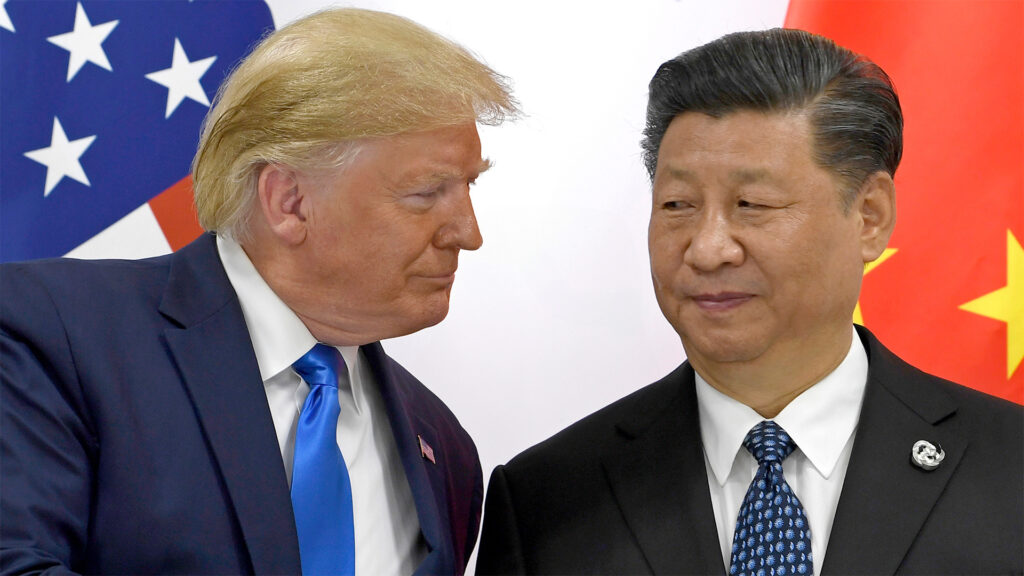
Singaporean geostrategist Kishore Mahbubani argues that China has benefitted from globalisation – but so has the United States. Veteran Singaporean diplomat Kishore Mahbubani argues that it’s “legitimate” for US President Donald Trump to be worrying about the widening gap between rich and poor in the United States, but his idea to force factory jobs back to the US is probably not going to work. Mahbubani tells host Steve Clemons that China will be damaged by the current trade war with the US, but “the Chinese are prepared to accept short-term pain for long-term gain”. The disarray in US policy is “a gift to China,” says Mahbubani. “I don’t see countries walking away from China.” Adblock test (Why?)
Video: Russian attack on bus in Ukraine kills 9 as peace talks falter
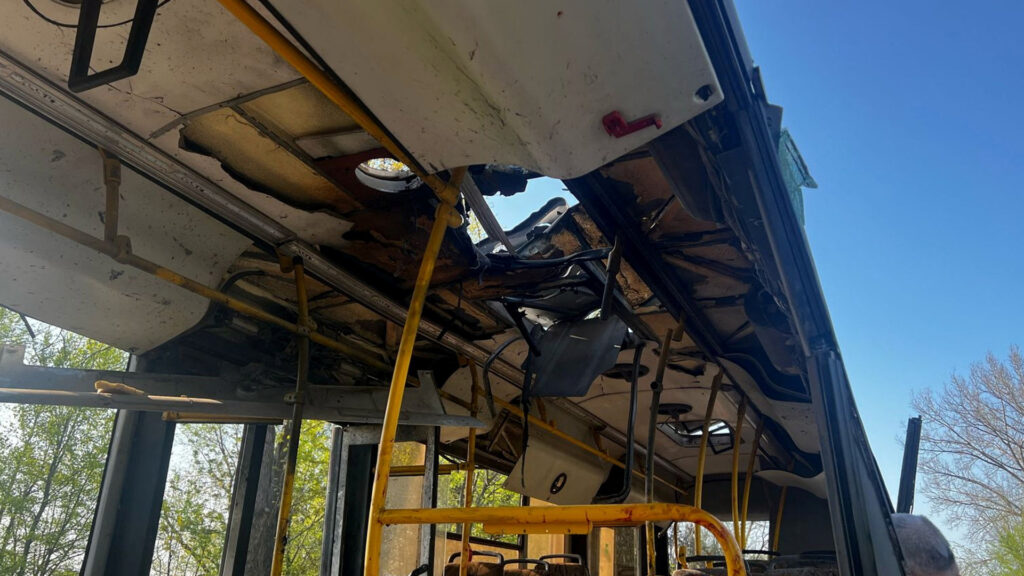
NewsFeed Nine people were killed in a Russian attack on a bus in southern Ukraine. It was one of dozens of drone strikes launched overnight. It comes as Russia-Ukraine peace talks falter and the US threatens to “walk away.” Published On 23 Apr 202523 Apr 2025 Adblock test (Why?)
Videos capture deadly attack in Indian-administered Kashmir
[unable to retrieve full-text content] Shots can be heard on videos that captured the deadly attack on tourists in Indian-administered Kashmir
How Pope Francis redefined the Church’s ties with Africa
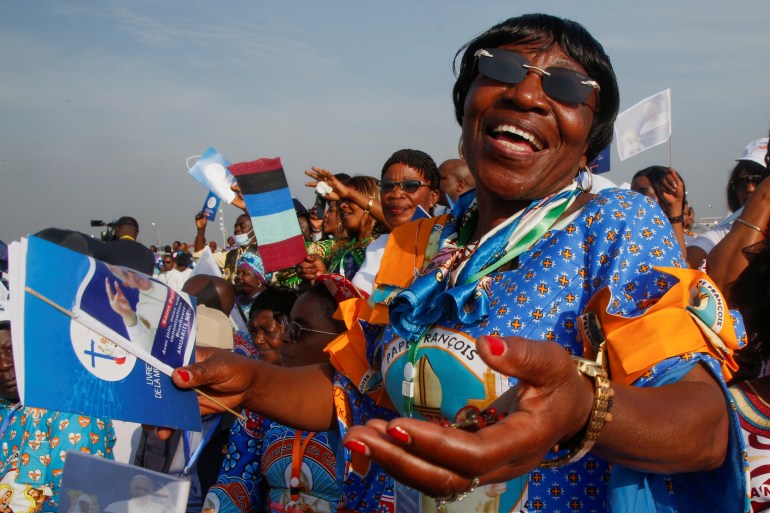
Thousands of miles from the Vatican, the death of Pope Francis is being mourned by millions of Catholics on the African continent. Francis, who was renowned for his liberal embrace of all groups of people and his vocal support for poor and marginalised communities, was a key figure on a continent sometimes referred to as the “future of the Catholic Church”, owing to the vast population of African Catholics: One in five Catholics is African. Throughout his papal leadership, Pope Francis solidified recently established Vatican conventions by visiting 10 African countries, reinforcing engagements made by his predecessors. Before the 1960s, popes hardly left the Vatican. Leaders across Africa, too, are mourning his death. Kenya’s President William Ruto referred to the late pope as someone who “exemplified servant leadership through his humility, his unwavering commitment to inclusivity and justice, and his deep compassion for the poor and the vulnerable”. Here’s how the late Pope Francis prioritised Africa during his tenure: A devotee reacts as residents and the faithful gather at N’Dolo Airport for a mass celebrated by Pope Francis, in Kinshasa, Democratic Republic of the Congo, February 1, 2023 [Luc Gnago/Reuters] Pope Francis’s many trips to Africa Pope Francis made five trips to Africa throughout his papacy, during which he visited 10 countries. Advertisement He opted to visit nations that were in strife and were facing war or low-level conflict. He also focused on those struggling with economic and climatic challenges. The pontiff did not shy away from holding mass in ghettos or kissing the feet of warring leaders in hopes of bringing peace. Those visits modelled those of Pope John Paul II (1980-2005), who visited more than 25 African countries in his 25 years of service, transforming the way the Vatican engaged with the continent. Pope Benedict XVI (2005-2013) visited three African countries over two visits. These are the countries Pope Francis visited and when: 2015: East Africa (Uganda, Kenya, Central African Republic – CAR) The pontiff’s six-day visit to three African countries in November 2015 was replete with colourful welcomes and huge mass events. In Nairobi, the Kenyan capital, the pope is still remembered and revered for holding mass in Kangemi, a low-income neighbourhood. There, he decried what he called “modern forms of colonialism” and pointed out that the country’s urban poor were excluded and underserved. He also criticised wealthy minorities who, he said, hoard resources meant for all. In a colourful welcome to Uganda, the pope enjoyed traditional dances from different ethnic groups. He blessed dozens of children thrust into his popemobile, the open-sided car, as he cruised through throngs of people gathered to catch a peep. He also visited a treatment centre for disabled children and spoke to more than 700 disabled people. A UN peacekeeping soldier patrols a street near Bangui’s Koudoukou mosque, Central African Republic, before the arrival of Pope Francis for a meeting with the Muslim community on November 30, 2015. CAR descended into civil war after rebel groups tried to overthrow then-President Francois Bozize in 2012 [Andrew Medichini/AP] Healing a fractured country Then, in the CAR, the pope did the unprecedented: He ventured into a Muslim neighbourhood amid religious tensions in the country that had lasted for months. Advertisement The PK5 neighbourhood in the capital, Bangui, had been off-limits to Christians before then, but as the pope made his way to a mosque there, crowds of Christians followed him in. People who had lost touch cried as they embraced each other. Pope Francis urged both sides to lay down their arms and called Africa “the continent of hope” in his speeches. The visit would eventually lead to a peace agreement between the warring factions, although true peace would take another five years. 2017-2019 North Africa (Egypt, Morocco) In April 2017, Pope Francis visited Cairo for two days to support the Coptic minority there, the largest Christian community in the Middle East. Coptic Christians have been subject to marginalisation and deadly attacks for years in Egypt. Francis also reached out to Muslim clerics in the country. On his March 2019 trip to Morocco at the invitation of King Mohammed VI, the pope also called for religious tolerance and inclusion. He urged Morocco to respect the rights of refugees and immigrants. Pope Francis steps off the plane as he arrives in Port Louis, Mauritius, from Madagascar, September 9, 2019 [Alessandra Tarantino/AP Photo] 2019 Indian Ocean (Mozambique, Madagascar, and Mauritius) The same year, in September, Pope Francis turned his attention to Southern Africa, particularly countries in the Indian Ocean. In Mozambique and Madagascar, he called for an end to poverty and better protection of the environment in a region where climate change has brought intensifying storms and destructive cyclones. A man holds flags next to the audience as they await the arrival of Pope Francis for a holy mass at the John Garang Mausoleum in Juba, South Sudan on February 5, 2023 [Ben Curtis/AP] 2023: Democratic Republic of the Congo (DRC) and South Sudan Amid ongoing conflict and a humanitarian crisis brought on by armed factions looking to control the country, the pope’s visit to the DRC symbolically called for peace and reconciliation in the troubled central African nation. The DRC, which has the largest number of Catholics in Africa – an estimated 35 million people – was an important one for the pope, who’d had to postpone the trip because of ill health. Congolese showed up in the thousands to welcome him. Advertisement A show of humility for South Sudan In South Sudan, the pope called for continued peace between rivals President Salva Kiir and his deputy, Vice President Riek Machar. The country, Africa’s youngest, has been rocky since it gained independence from Sudan in 2011. Immediately after, and until 2013, a civil war broke out between factions loyal to the two leaders, leading to the deaths of hundreds of thousands and the displacement of millions of South Sudanese. Five years before he set foot in South Sudan, the pope had expressed an unusual
Kremlin critic decried for ‘racist’ rant on minorities fighting for Russia
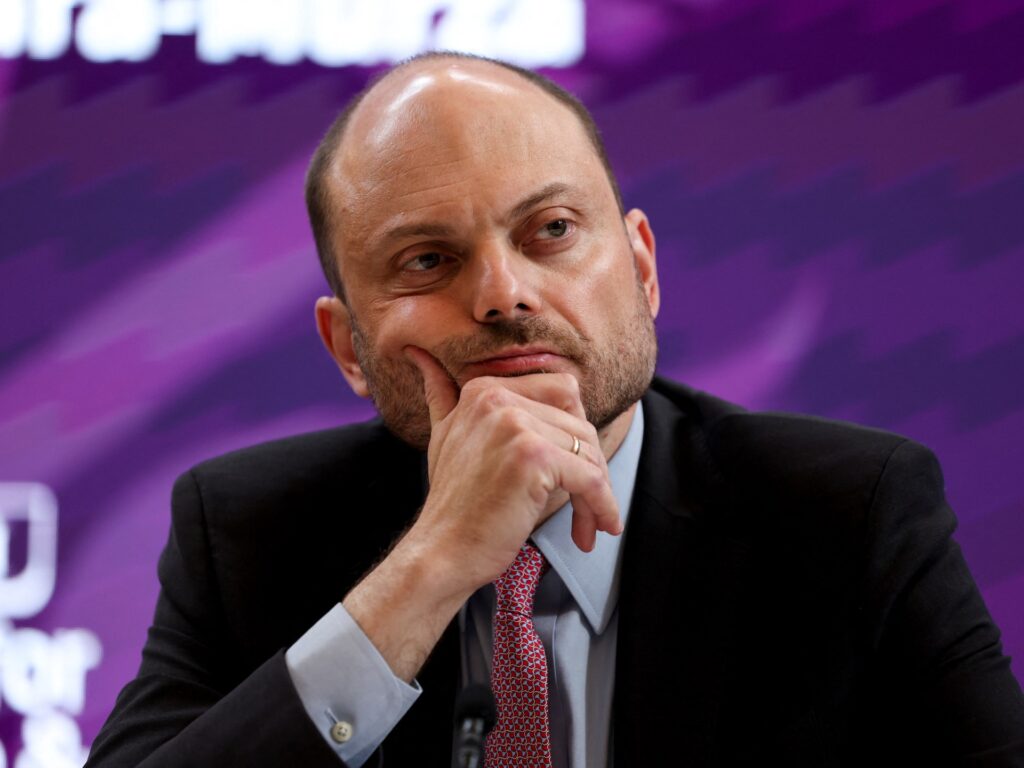
Kyiv, Ukraine – Vladimir Kara-Murza barely survived two suspected poisonings in 2015 and 2017 that he claimed were orchestrated by the Kremlin. The bearded, balding 43-year-old may not be as outspoken as opposition leader Alexey Navalny, who nearly died of similar nerve agent poisoning in 2020. But Kara-Murza, a Cambridge-educated historian, has been instrumental in convincing Western governments to slap personal sanctions on dozens of Russian officials. In 2023, a Moscow court sentenced him to 25 years in jail for “treason” and while behind bars, he won a Pulitzer Prize for his columns for The Washington Post. Released last year as part of a prisoner swap, Kara-Murza settled in Germany and continued his advocacy work against Russian President Vladimir Putin’s government and Moscow’s war in Ukraine. But last week, Kara-Murza’s remarks about the ethnic identity and alleged bloodthirst of Russian servicemen rattled many on both sides of Europe’s hottest armed conflict. “As it turns out, [ethnic] Russians find it psychologically difficult to kill Ukrainians,” Kara-Murza told the French Senate on Thursday while explaining why Russia’s Ministry of Defence enlists ethnic minorities. Advertisement “Because [ethnic Russians and Ukrainians] are the same, we’re similar people, we have an almost similar language, same religion, hundreds and hundreds of years of common history,” said Kara-Murza. Russians and Ukrainians are ethnic Slavs whose statehood dates back to Kyivan Rus, medieval Eastern Europe’s largest state torn apart by Mongols, Poles and Lithuanians. “But to someone who belongs to another culture, it is allegedly easier” to kill Ukrainians, Kara-Murza added. His remarks made observers and Indigenous rights advocates flinch and fume. A former Russian diplomat said “measuring the degree of one’s cruelty by their ethnicity is a dead end.” The Kremlin does not specifically “recruit minorities, they recruit people from the poorest regions, and those are, as a rule, ethnic autonomies”, Boris Bondarev, who quit his Ministry of Foreign Affairs job in protest against Russia’s 2022 full-scale invasion of Ukraine, told Al Jazeera. “Only a dull man could say that in the war’s fourth year in a multiethnic society,” said Indigenous peoples activist Dmitry Berezhkov, of the Itelmen nation on Russia’s Pacific peninsula of Kamchatka. Russian liberal opposition figures, mostly middle-class urbanites, “drown as soon as they tread on the thin ice” of ethnic minority issues, he added. Ethnic Russians constitute more than two-thirds of Russia’s population of 143 million. The rest are minorities – from millions of ethnic Ukrainians and Tatars to smaller Indigenous groups in Siberia and the Arctic that have regional autonomy, albeit mostly nominal. Advertisement Even in regions rich in hydrocarbons, rare earths or diamonds, the minorities live in rural, often inhospitable areas, co-existing and mingling with ethnic Russians. They all rely on Kremlin-funded television networks more than urban dwellers, often have no internet access and see the sign-up bonuses and salaries of servicemen fighting in Ukraine as a ticket out of the dire poverty their families live in. Recruits receive up to $50,000 when they sign up, and earn several thousand dollars a month – a fortune for anyone from those regions irrespective of their ethnic background. “This is colossal money for them, they will never earn it in their lives, no matter whether they are Buryat or Russian,” Bondarev said. In response to a squall of criticism, Kara-Murza wrote on Facebook on Monday that the accusations were mere “lies, manipulations and slander”. To Berezhkov, the comment further tainted Kara-Murza’s image. “In the past, [Kara-Murza’s words] could be seen as a mistake – but now, they are his position,” he said. To another minority rights advocate, Kara-Murza’s diatribe sounded like a “signal for future voters” in the post-war, liberal Russia that exiled Kremlin critics hope to return to. Oyumaa Dongak, who fled Tyva, a Turkic-speaking province that borders China, thinks Kara-Murza and other exiled Russian opposition leaders are “competing” with Putin. “It’s not him, it’s us who defend [ethnic] Russians,” she told Al Jazeera. In 2024, Kara-Murza said Western sanctions imposed on Moscow after the 2022 invasion are “unfair and counterproductive” and hurt Russians at large. He wanted the West to lift wider sanctions and instead target individual officials. Advertisement A Ukrainian observer said Kara-Murza does not want ethnic Russians who can potentially vote for now-exiled opposition leaders to feel collective guilt for the atrocities committed in Ukraine. “People don’t feel guilty. If you club them in the head with moral condemnation every day, people will not admit their guilt but will hate anyone who clubs them,” Kyiv-based analyst Vyacheslav Likhachyov told Al Jazeera. “That’s why the tales about the atrocities of Chechen executioners and Buryat rapists are and will be popular,” he said. Fighters deployed by Chechnya’s pro-Kremlin leader Ramzan Kadyrov were dubbed a “TikTok army” for staged videos of them “storming” Ukrainian strongholds. Their actual role in the war is mostly reduced to guarding occupied areas, terrifying and torturing ethnic Russian servicemen who refuse to fight. But Buryats, Buddhist natives of a scarcely populated and impoverished region near Mongolia, have become notorious in Ukraine in 2022. Human rights groups and Ukrainian officials identified personal details of some Buryat soldiers that tortured, raped and killed civilians in Bucha and other towns north of Kyiv. But as ethnic Buryats are hard to distinguish from other minority servicemen with distinctly Asian features, Ukrainians often label them all “Buryats”, a community activist said. “All Caucasus natives are seen as Chechens, and all Asians are considered Buryats,” Aleksandra Garmazhapova, who helps Buryat men escape mobilisation and flee abroad, told Al Jazeera. Advertisement However, the overwhelming majority of servicemen who committed alleged war crimes in Bucha were reportedly ethnic Russians. Garmazhapova survived because Ukrainian forces started shelling Russian positions, and his captors fled to a basement. “Slavs, Slavs, they were all Slavs,” Viktor, a Bucha resident who was doused with fuel by Russian servicemen who placed bets on how far he would run once they set him on fire, told Al Jazeera in 2022, just days after his ordeal. Adblock test (Why?)
‘He gave us strength’: Gaza Christians remember calls with Pope Francis

Gaza City, Palestine – For 72-year-old Kamal Anton, Pope Francis was a source of comfort and support. Kamal has had to shelter since the start of the war in the same Catholic church compound in Gaza City – the Holy Family Church – that his wife and daughter were shot and killed by an Israeli sniper in. That was in December 2023, two months after the start of Israel’s war. Anton and the more than two million Palestinians in Gaza have often felt abandoned in the 18 months of conflict, in which more than 50,000 Palestinians have been killed, with hope of an end to the war still feeling remote. But the late pope, who died aged 88 in the Vatican City on Monday after a battle with illness, was in constant contact with Gaza’s small Christian community. Before his illness, he held calls every evening with those sheltering at the church, and continued to reach out, on a less regular basis, even after he fell ill. Kamal remembered his most recent call on Saturday, just two days before his death. Pope Francis was greeting the members of the church for Easter. Advertisement “During his call, he prayed for peace and resilience for us in Gaza,” Kamal said. “He never forgot the word ‘peace’ in any of his calls with us throughout the war. His support included all of us – Christians and Muslims alike. He prayed daily for our safety.” Kamal Anton’s wife and daughter were shot and killed by an Israeli sniper in December 2023 [Abdelhakim Abu Riash/Al Jazeera] Palestinian defender A deep sense of grief and sorrow permeates the Holy Family Church, where approximately 550 displaced Palestinian Christians continue to seek shelter. Israel has attacked the church and its neighbouring school several times during the war, including a July 2024 attack in which four people were killed. Another church, St Porphyrios Greek Orthodox Church, has also been bombed. But the Holy Family Church is still a refuge. People gather inside the church every day, piano music accompanies hymns during prayer, and people greet Father Gabriel Romanelli. He’s the parish priest, an Argentinian who came to Gaza to lead the church 15 years ago. After the death of the pope, those in the church have largely dressed in black, the colour of mourning. The loss of the leader of their church was a solemn enough event, but Palestinian Christians know they have also lost one of their greatest defenders – a world leader who has long backed the Palestinian cause, and has earned the anger of Israel on a number of occasions for his defence of Palestinians. In his final public speech delivered on his behalf on Easter, Francis called for peace in Gaza and urged the warring sides to “agree to a ceasefire, release the hostages, and provide aid to a starving people longing for a peaceful future”. Advertisement Father Romanelli told Al Jazeera that the loss of Pope Francis was a tragedy for Christians around the world, and particularly in Gaza. He recalled that Saturday phone call with the pope. “He said he was praying for us, supporting us, and thanked us for our prayers,” Romanelli said. “People at the church waited for his call daily. He would speak to the children and reassure them. He was deeply human and incredibly supportive, especially during the war.” Catastrophe Kamal noted that support from Pope Francis was also material, in the form of aid arriving in Gaza until Israel blocked all entry of goods into Gaza in March, just before it unilaterally broke a ceasefire. “Everyone in Gaza knows how much the Vatican supported us,” Kamal said. “We always shared that aid with our Muslim neighbours too.” Kamal’s fellow Palestinian Christian, 74-year-old Maher Terzi, is also in mourning. Maher, who has been displaced since the first week of the war, had just sat in the mourning hall when he spoke to Al Jazeera. “He gave us strength,” Maher said. “He told us not to be afraid, that he was with us and would never abandon us, no matter what.” “He encouraged us to hold on to our land, and promised to help us rebuild our destroyed homes,” Maher added. “His death is a catastrophe and a shock for us during such a difficult time.” Palestinian Christian Maher Terzi said the death of Pope Francis was a catastrophe for Gaza [Abdelhakim Abu Riash/Al Jazeera] Adblock test (Why?)
US judge blocks Trump’s effort to shutter international news service
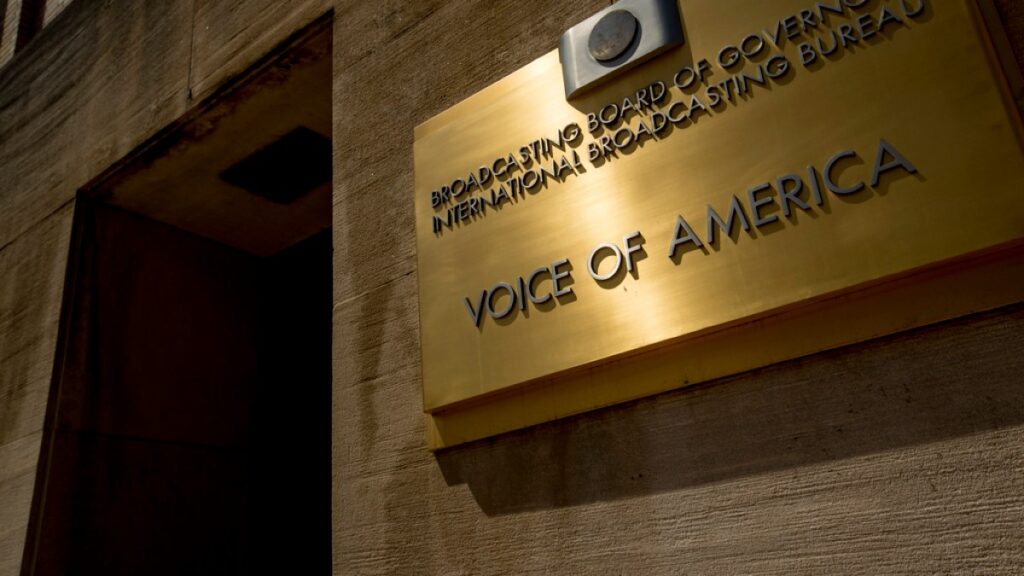
District judge orders administration to restore the capacity of broadcaster shuttered over claims of ‘leftist bias’. A federal judge has stated that US President Donald Trump illegally halted the operation of the Voice of America (VOA), a federally funded international news service created by Congress. In a ruling on Tuesday, US District Judge Royce Lamberth ordered the Trump administration to restore the 83-year-old broadcaster’s capacity to the levels before Trump slashed funding and laid off scores of personnel. In a March court filing stating that all 1,300 employees had been placed on administrative leave, lawyers for VOA said that the broadcaster seeks to report the news “truthfully, impartially, and objectively”, pushing back against claims from the Trump administration that it promotes a “leftist bias” and is insufficiently “pro-American”. Judge Lamberth also ordered the administration to restore the capacity of two other broadcasters also funded by the federal Agency for Global Media, Radio Free Asia and Middle East Broadcasting Networks, while those lawsuits progress. The judge also denied a similar request for two additional networks, Radio Free Europe/Radio Liberty and Open Technology Fund. Advertisement Trump and his allies have wielded federal funds to dismantle programmes and agencies within the government that they dislike and compel greater ideological compliance from media organisations and universities under the premise of combatting what the administration portrays as “left-wing” views. Kari Lake, a close Trump ally, was also placed in charge of the Agency for Global Media. The administration shuttered VOA in March, instituting funding cuts that Lamberth said reflected a “hasty, indiscriminate approach”. A labour union representing workers at the Agency for Global Media celebrated the ruling as a “powerful affirmation of the role that independent journalism plays in advancing democracy and countering disinformation”. VOA was first founded during World War II in an effort by the US government to counter Nazi propaganda and was later used to project pro-US views to countries around the world during the Cold War, a history that has led some to criticise the network as a means of promoting US interests around the world. “That simple mission [delivering impartial news] is a powerful one for those living across the globe without access to a free press and without the ability to otherwise discern what is truly happening,” lawyers for VOA wrote. Many other institutions created during the post-war era to project US political and cultural influence around the world, such as the humanitarian assistance agency USAID, have also come under attack by a Trump administration that sees them as ideological enemies or sources of bureaucratic bloat. Advertisement After largely gutting USAID, tech billionaire and Trump ally Elon Musk said that the international assistance group had been a “viper’s nest of radical left Marxists who hate America”. Adblock test (Why?)
Houthis say group downed US drone in northwest Yemen as US strikes continue
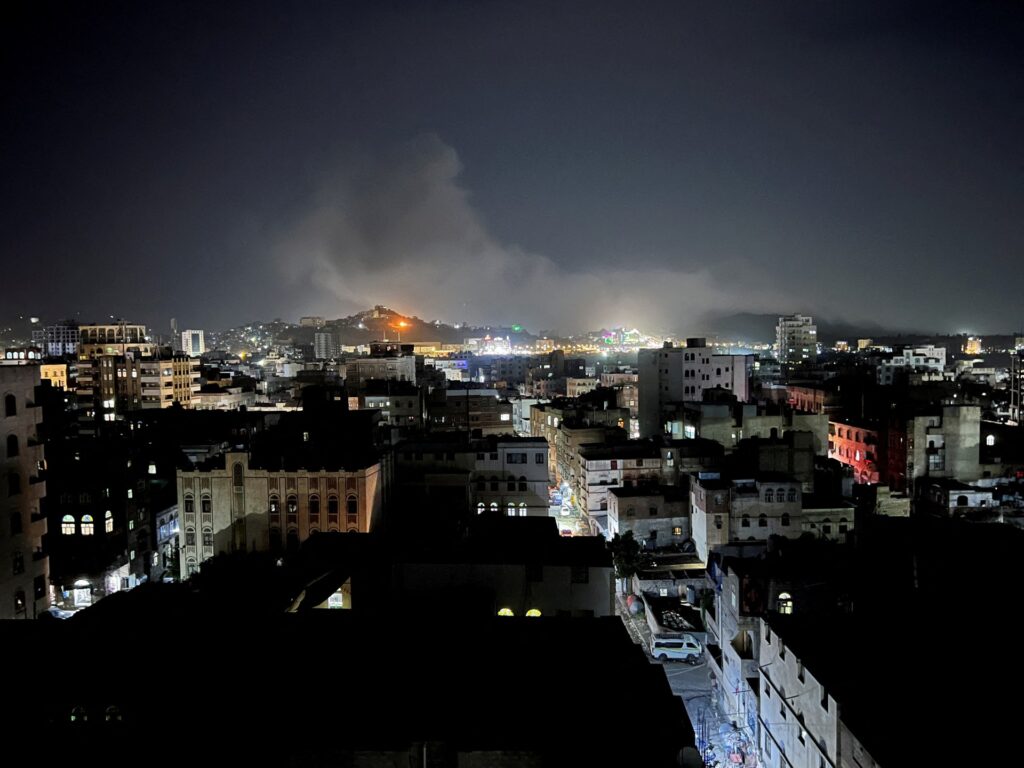
Al Masirah, a Houthi-affiliated outlet, says the US launched a series of strikes on several locations in the country. Yemen’s Houthis have said they shot down a US drone that was carrying out an attack on the northwestern Hajjah governorate whilst the Al Masriah news outlet has reported that United States air strikes targeted at least three areas across the country. In a statement on Tuesday, Houthi spokesman Yahya Saree said the group’s “air defence shot down a hostile American MQ-9 Reaper drone while it was carrying out hostile missions in the airspace of Hajjah Governorate”. Saree claimed that this is the seventh US drone that the group has downed so far this month, and the 22nd since Israel’s genocidal war on Gaza began 18 months ago. Al Masirah, a Houthi-affiliated outlet, said a series of strikes on Tuesday night targeted Kamran Island in the Red Sea, two air strikes hit the Al Salif district in western Yemen, and four air strikes were reported in the Al-Saleem district in the Saada province in the north of the country. The US has been carrying out near-daily, deadly air attacks against what it claims are Houthi targets in Yemen, killing more than 200 people – including women and children – since March. Advertisement The administration of US President Donald Trump has warned that its military campaign will continue until the Yemeni group halts all firings against vessels in the Red Sea, a major conduit for international trade. The Houthis have rejected the US assault, stressing that they are targeting ships in solidarity with Palestinians in Gaza and will stop when Israel ends its punishing war on the enclave. The latest attack comes just days after 12 people were killed in air strikes conducted by the US on Yemen’s capital Sanaa. Last week, the US launched 13 strikes on Hodeidah’s port and airport. It was three days after its deadliest attack to date targeted the Ras Isa port, also in Hodeidah, killing at least 80 people and wounding more than 150 others. Since November 2023, the Houthis have reportedly launched more than 100 attacks on vessels they say are linked to Israel, in response to Israel’s war on Gaza. The group halted attacks on shipping lanes during a two-month ceasefire in Gaza earlier this year. But they pledged to resume strikes after Israel renewed its assault on the besieged enclave last month. Houthi attacks have paralysed shipping through the Suez Canal, a vital waterway through which approximately 12 percent of global shipping traffic normally passes, forcing many companies to resort to costly alternative routes around the Cape of Good Hope in South Africa. Adblock test (Why?)
Halliburton reports reduced North America drilling demand, warns of tariffs

The company warns investors in its earnings report of the impact of tariffs have on the sector. Halliburton has reported a decline in first-quarter profit due to reduced drilling activity in North America, which weakened demand for its oilfield services and equipment. The Houston, Texas-based oil and gas giant warned on Tuesday of a second-quarter earnings impact from tariffs and lower oilfield activity in North America as producers reckon with weak oil prices, sending shares of the oilfield service provider down about 6 percent. The oilfield service sector worries United States President Donald Trump’s tariffs on imported steel and parts will disrupt supply chains and drive up equipment costs, such as drilling rigs and well casings. Halliburton said its first-quarter North American revenue was $2.2bn, down 12 percent from a year earlier. Halliburton is the first of the big three US oilfield services providers (Schlumberger and Baker Hughes are the other two) and is among the first large oil companies to report earnings as US crude prices hover under $64 a barrel. Many companies say they cannot drill profitably if oil prices fall under $65 a barrel, denting demand for equipment and services provided by companies like Halliburton. Advertisement “Many of our customers are in the midst of evaluating their activity scenarios, and plans for 2025 activity reductions could mean higher than normal white space for committed fleets and in some cases the retirement or export of fleets to international markets,” Halliburton Chief Executive Jeff Miller said about expectations in North American markets. White spaces refer to gaps in the calendar when the company does not have work lined up for its equipment. Shares down Halliburton shares were down about 6 percent at $20.62 a share after it forecast a 2-cent- to 3-cent-per-share impact in the second quarter from trade tensions. Second-quarter earnings were estimated to be 63 cents per share, according to LSEG data. Shares had fallen as much as 10 percent on Tuesday and were down 24 percent so far this year. Rival Schlumberger’s shares were down only 11 percent this year. Halliburton’s Q1 international revenue eased 2 percent primarily due to lower drilling and project management activity in Mexico. It forecast year-over-year international revenue to be flat to slightly down. Mexico is proposing new contract models for the oil sector while struggling to pay off billions of dollars of accumulated debt to oil service companies. In the meantime, state company Pemex’s oil output has continued falling this year to 1.62 million barrels per day, compared with 1.76 million barrels per day last year. Halliburton posted a profit of $204m, or 24 cents per share, in the three months that ended on March 31, lower than the $606m, or 68 cents per share, it had posted last year. Advertisement The company also took a $107m severance cost in the first quarter. That came on the heels of a $63m severance charge in the third quarter of 2024 but the company did not provide more details. Excluding a $356m pre-tax charge, which included the severance charge, the company posted earnings of 60 cents, in line with analysts’ estimates. Revenue of $5.42bn beat analysts’ average estimate of $5.28bn. Adblock test (Why?)
Harvey Weinstein’s rape retrial to open with majority-female jury
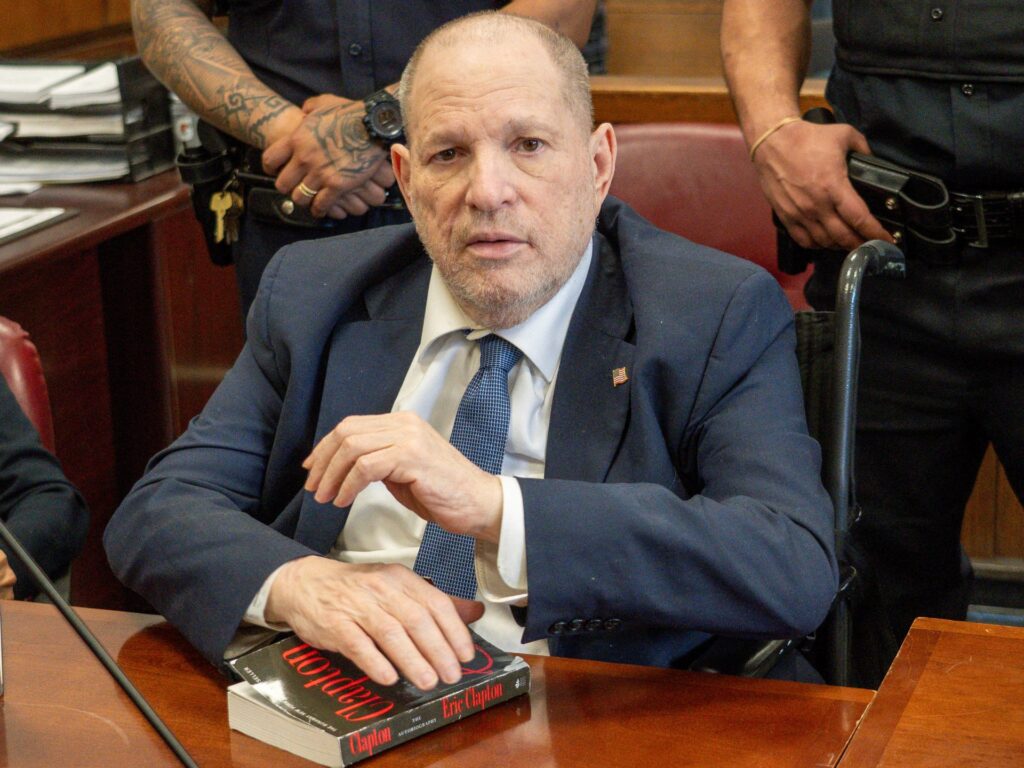
Weinstein’s rape and sexual assault retrial involves accusations from three women, including one who wasn’t part of the original trial. Opening statements are set for Wednesday in New York for disgraced former movie mogul Harvey Weinstein’s rape retrial, this time with a majority-female jury deciding the landmark #MeToo case. Prosecutors and Weinstein’s lawyers finished choosing a sixth and final alternate on Tuesday after a selection process yielded a seven-woman, five-man jury and five alternate jurors on Monday. Alternates step in if a member of the main panel can’t see the trial through. Weinstein was convicted at his first trial in 2020 by a jury of five women and seven men. The verdict marked a pivotal moment for the #MeToo movement against sexual misconduct, fuelled by a series of allegations against the producer of Oscar winners including Pulp Fiction and Shakespeare in Love. In a blow to #MeToo activists, New York’s highest court last year overturned the conviction and 23-year prison sentence after it found that the original trial judge allowed women whose accusations were not part of the charges Weinstein faced to give evidence in court. Advertisement Weinstein’s rape and sexual assault retrial involves accusations from three women: an aspiring actor who said he raped her in 2013 and two women who made separate allegations of forced oral sex in 2006. One of the two wasn’t part of the original trial. In the meantime, Weinstein is also facing a separate 2022 rape conviction in Los Angeles. Weinstein, 73, has pleaded not guilty and denies raping or sexually assaulting anyone. He has insisted that all sexual encounters he was involved in were consensual. The 12 members of the main jury for the New York retrial include a physics researcher, a photographer, a dietitian, a therapist, an investment bank software engineer and a fire safety director. Others have experience in real estate, TV commercials, debt collection, social work and other fields. Those chosen were questioned about their backgrounds, life experiences and various other points that could relate to their ability to be fair and impartial in the highly publicised case. Prosecutor Shannon Lucey sought assurances that prospective jurors could put aside any position or feelings they had about #MeToo. Bombshell allegations against Weinstein erupted in 2017 and led to a flood of allegations against other powerful men as women fought back against sexual violence in what became known as the #MeToo movement. The Hollywood mogul underwent emergency heart surgery after being rushed from prison to a hospital in New York in September. He was later diagnosed with bone marrow cancer and received treatment in prison for chronic myeloid leukaemia. Advertisement Adblock test (Why?)