

Video: Tourists killed in Indian-administered Kashmir attack
[unable to retrieve full-text content] A group of gunmen have killed at least 28 tourists visiting Pahalgam in Indian-administered Kashmir.
Will countries be forced to pick a side in the US-China trade war?
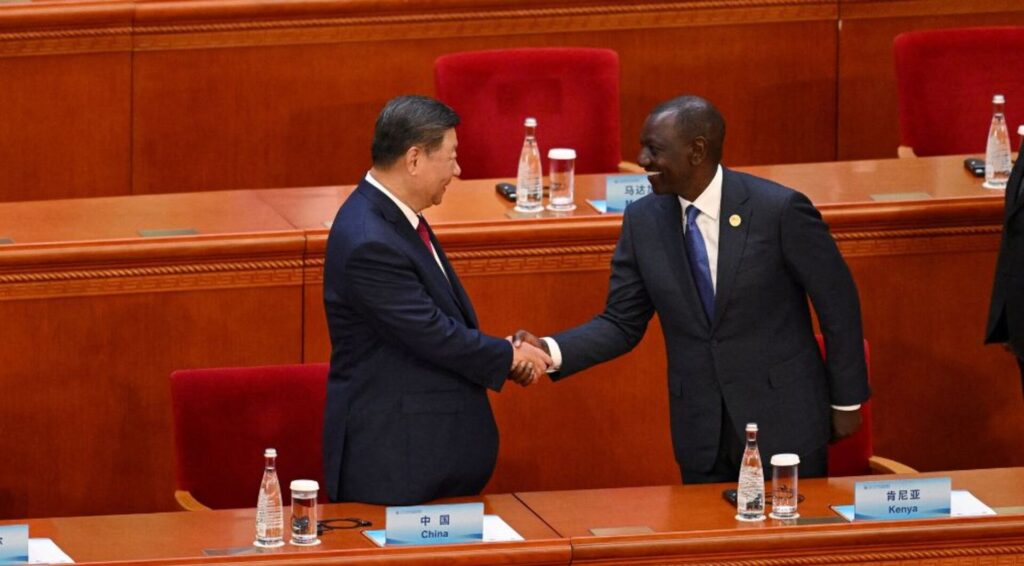
President of Kenya, a special US ally, visits country’s biggest lender China. Kenya’s president is on a five-day state visit to China, its largest lender, while Beijing’s trade war with Washington intensifies. How is it worsening by the day? And what’s the impact on countries like Kenya, which does business with both economic superpowers? Presenter: Folly Bah Thibault Guests: Einar Tangen – Senior fellow at the Taihe Institute Robert Scott – Independent international economist David Omojomolo – Emerging market economist focusing on Africa at Capital Economics Adblock test (Why?)
GE Aerospace CEO calls for tariff-free trade in the aviation sector

Tariffs are estimated to cost GE Aerospace more than $500m this year. GE Aerospace CEO Larry Culp has advocated re-establishing a tariff-free regime for the aerospace industry under the 1979 Agreement on Trade in Civil Aircraft during a meeting with United States President Donald Trump. On Tuesday, in an interview with the news agency Reuters, Culp said the company’s position was “understood” by the administration, adding that the zero-duty regime has helped the US aerospace industry to enjoy a $75bn annual trade surplus. “I have argued that it was good and would be good for the country,” Culp told Reuters. Trump’s trade war has created the biggest uncertainty for the aerospace industry since the COVID-19 pandemic. It has also led to a breakdown in the industry’s decades-old duty-free status, putting aircraft deliveries in limbo. The uncertainty has left some of GE Aerospace’s customers struggling to accurately forecast their business. Meanwhile, one of the company’s prominent suppliers, Howmet Aerospace, has warned that it may halt some shipments if they are impacted by tariffs. Advertisement Culp said the company has not seen any disruption in deliveries from Howmet. The Pittsburgh-based supplier is currently working on the new high-pressure turbine blade for the Leap 1A engine, which GE Aerospace produces in a joint venture with France’s Safran SA. “That ramp has gone very well so far here in 2025,” he said. GE Aerospace has been grappling with supply chain challenges, leading to a drop in engine deliveries over the past year. Last week, Airbus said it was facing challenges with engine deliveries as CFM was “significantly behind the curve”. Culp said the company is “well aligned” with the European planemaker’s needs for this year, but added the tariffs have created supply chain risks. Tariffs’ costs Tariffs are estimated to cost GE Aerospace more than $500m this year. The company is making greater use of foreign trade zones and available trade programmes like duty drawbacks to mitigate the impact. It is also employing cost controls and a tariff surcharge to protect its margins. Culp’s comments come amid pressure on another aerospace giant in recent days. Last week, China asked airlines based there to cancel aircraft orders for planes made by US company Boeing amid the looming trade war. Trade-induced economic uncertainty has taken a toll on travel demand as well. With travel spending softening, there is a growing risk that airlines could start deferring their engine orders. Culp said other carriers would step in if any airline decides to halt its deliveries. “There are plenty of other people who will step up in line and take their place,” he said. Advertisement Adblock test (Why?)
Detained Palestinian activist Mohsen Mahdawi says he’s ‘in good hands’
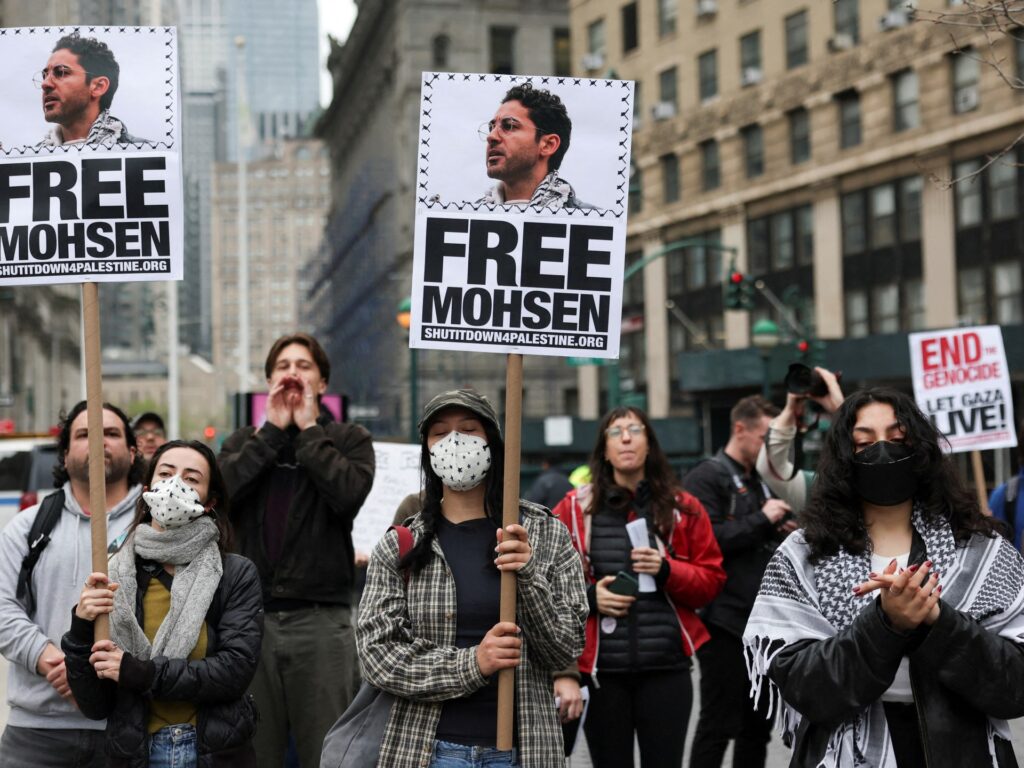
Mahdawi, a Columbia University student now being held at a prison in Vermont in the US, says he has faith in the ‘ability of justice’. A Palestinian man who led peaceful protests against Israel’s genocide in Gaza as a student at Columbia University, and was recently detained during an interview about finalising his US citizenship, has said he’s “in good hands” at the Vermont prison where he is being held. Mohsen Mahdawi, a legal permanent resident of the United States, was arrested on April 14 in Colchester, Vermont. He met on Monday with US Senator Peter Welch of Vermont, a Democrat. US President Donald Trump’s administration has been cracking down on pro-Palestine activities. In the first week of his presidency, Trump pledged to deport students who joined protests against Israel’s war on Gaza that swept US university campuses last year. “I’m staying positive by reassuring myself in the ability of justice and the deep belief of democracy,” Mahdawi said in Welch’s video posted on X. “This is the reason I wanted to become a citizen of this country, because I believe in the principles of this country.” I met with Mohsen Mahdawi today. Listen to his message. pic.twitter.com/MU280oAQ9T — Senator Peter Welch (@SenPeterWelch) April 21, 2025 Advertisement Welch’s office said Mahdawi was being detained at the Northwest State Correctional Facility in St Albans, Vermont. His case is scheduled for a status conference on Wednesday. His lawyers have called for his release. The US Justice Department has not said why he’s being detained. The New York Times reported April 15 that US Secretary of State Marco Rubio wrote a memo that says Mahdawi’s activities could “potentially undermine” the Middle East peace process. Rubio did not provide any evidence of this. Rubio has cited a rarely used statute to justify the deportation of Columbia University graduate student Mahmoud Khalil. It gives the US power to deport those who pose “potentially serious adverse foreign policy consequences for the United States”. Khalil says he is a political prisoner. He also missed the birth of his son after being refused temporary release to attend the birth, his wife Noor Abdalla said on Monday. Abdalla said that she gave birth to the couple’s first child in New York without Khalil present after US Immigration and Customs Enforcement (ICE) made the “purposeful decision” to make her family suffer. An immigration judge ruled April 11 that Khalil can be forced out of the country as a national security risk, after lawyers argued the legality of deporting the activist who participated in pro-Palestinian demonstrations. His lawyers plan to appeal. A US immigration judge in the state of Louisiana ruled last week that Khalil, who was detained last month, can be deported – setting a precedent for the administration to proceed with its efforts to deport dissenting foreign students, despite them being in the country legally and not being charged with any crime. Advertisement Trump has also threatened to halt federal funding for schools, colleges, and universities if they allow what he called “illegal protests”. In other high-profile cases, immigration officers have detained and sought to deport Rumeysa Ozturk, a Tufts University student from Turkiye, and Columbia student Yunseo Chung, who is a US permanent resident originally from South Korea. Adblock test (Why?)
Sacred sparks fly at India’s festival of flames
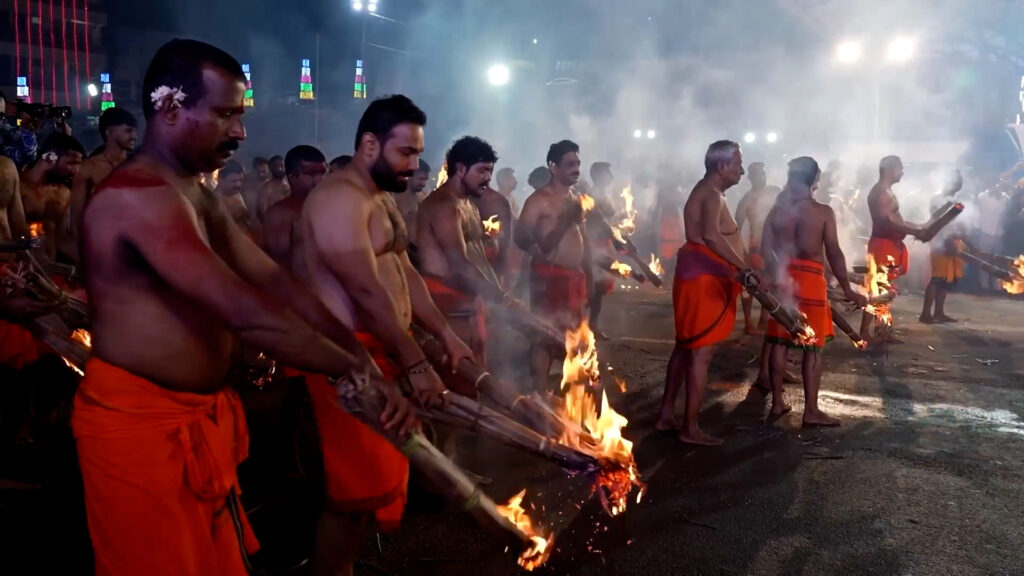
NewsFeed During Agni Keli, a fire-throwing ritual in Mangaluru, India, shirtless men hurl burning palm fronds at each other to honour the Hindu goddess Durga. Devotees risk burns but believe prayer protects them from serious harm. Published On 22 Apr 202522 Apr 2025 Adblock test (Why?)
Netanyahu’s survival tactics tested amid Israel Shin Bet head’s accusations
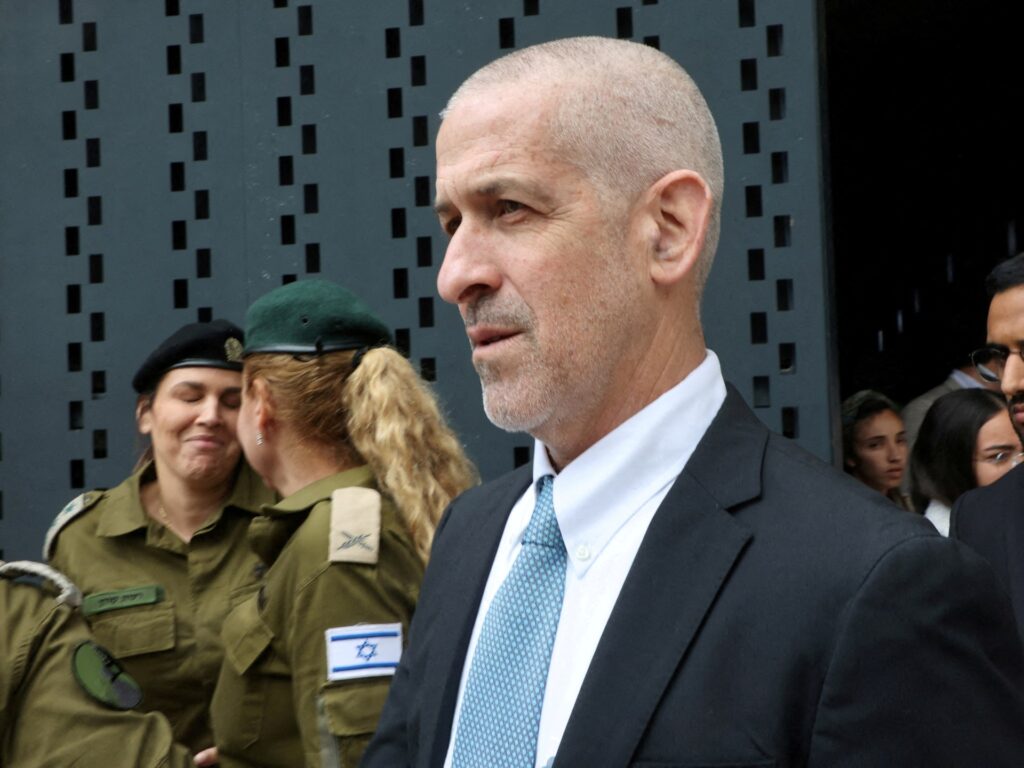
Israeli Prime Minister Benjamin Netanyahu has a knack for survival. The country’s longest serving leader – he has been in power for 18 years over three nonconsecutive periods – has seen off many rivals and outlasted several enemies. The latest fight is with Ronen Bar, the head of Israel’s domestic intelligence agency, the Shin Bet. Netanyahu fired Bar last month due to what he called a breakdown in trust, but the Supreme Court has suspended the dismissal, pending an investigation. In the meantime, there have been protests against Netanyahu – the prime minister is used to those – and now an affidavit filed by Bar on Monday, in which he lobs several accusations against the Israeli leader. They include demands from Netanyahu that Bar place his loyalty to him above that of the Supreme Court’s rulings if the two ever clash and that he spy on Netanyahu’s opponents. It all comes as the Shin Bet investigates financial ties between Netanyahu’s office and Qatar. Scandal after scandal Netanyahu has denied Bar’s claims, calling his affidavit a “false” one that would be “disproved in detail soon”. Advertisement The response follows the Netanyahu playbook when facing opposition – a denial of any accusations made against him, a shifting of the blame and pushing a problem to the future if possible. The legal cases Netanyahu faces – he is on trial for corruption – are a case in point. The prime minister has been able to drag the court process out for years and most recently has used Israel’s war on Gaza to delay his court appearances. “There is scandal fatigue in the Israeli public,” Israeli political analyst Nimrod Flaschenberg told Al Jazeera. Flaschenberg added that Israeli society’s increased polarisation means another scandal will hardly shift where people stand on the divisive Netanyahu. “People who are against Netanyahu and against the government see this as another evidence of the corruption, the deterioration of democratic space and the end of Israeli democracy,” he said. “And people from the pro-Netanyahu camp see this as Bar trying to generate a coup against Netanyahu and his right-wing government.” This polarisation has been aided by the fact the Israeli political opposition is fractured. Opposition figure Benny Gantz was once the challenger to the throne but has been criticised for failing to take strong stances on complicated issues, and there is growing support for him to be replaced as the head of the National Unity political alliance. “Many Israelis think [the current situation is] an emergency but they don’t really have the tools to change it, and there’s no powerful opposition in the parliament that can do anything about it,” said Mairav Zonszein, a senior analyst on Israel with the International Crisis Group. Advertisement Strong coalition The war in Gaza itself is a testament to Netanyahu’s survival skills. Despite being blamed by many Israelis for failing to prevent the October 7, 2023, attacks against Israel, among the deadliest in the country’s history, and unable to free the remaining captives held in Gaza or fully defeat Hamas, Netanyahu remains in power. That is even as the war grows increasingly unpopular in Israel with 100,000 reservists failing to respond to their call-ups, according to the Israeli-Palestinian +972 Magazine. And yet Netanyahu is arguably in a stronger position politically than he was at the start of the war, expanding Israeli-occupied territory in Lebanon and Syria, all while seeing the administration of ally President Donald Trump take power in the United States. Netanyahu’s governing coalition may have lost some figures over time, including former Defence Minister Yoav Gallant, but it has become more solidified by shifting further to the right. “His coalition is very much solid and intact,” Zonszein said. “Throughout the last year and a half, he’s only stabilised his coalition further.” Netanyahu has increasingly leaned on the ultra-Orthodox and far-right parties like those led by two of the most far-right ministers in his government – Itamar Ben-Gvir and Bezalel Smotrich. While analysts said a shift rightwards has upset many Israelis, there seems to be little chance of change at the moment. “It would take a very radical step to actually remove Netanyahu from power,” Zonszein said. Advertisement “It’s like a grinding, deteriorating situation in which more allegations and evidence come to light,” Zonszein said, speaking of the scandals Netanyahu has faced. “But it doesn’t mean it’s going to change anything on the ground.” Little hope A sort of lethargy may have started to set in in some quarters of Israeli society as Netanyahu holds onto power. His coalition has enough seats in parliament to continue, and its members have their own reasons for wanting to avoid it breaking up. That means the only way Netanyahu is likely to be removed from power is through elections – the next of which does not need to happen until October 27, 2026. In theory, the attorney general could determine Netanyahu is unfit to serve, but analysts said that would prove contentious and unlikely to happen. Failing that, the only way Netanyahu might be removed from power would be through elections. A poll this month from Israel’s Channel 12 showed that the right-wing former Prime Minister Naftali Bennett’s new party would win a majority if elections were held today. But that alone is not enough to calm the worries of some people in Israel. “Some Israelis are concerned that there won’t be a free and fair election next year,” Zonszein said. Flaschenberg said he feared the police could be used by Netanyahu and his allies to suppress voting. There are, however, some possible moves for the Israeli public to play. Flaschenberg said public strikes have been effective in the past. In mid-2023, a public strike prevented Netanyahu from firing Gallant although another attempt at a strike in late 2024 failed because of a lack of clear demands. Advertisement And the furore over the attempted firing of Bar is unlikely to change things. For the pressure to manifest into something tangible against Netanyahu, a number of
What’s next for the Catholic Church after Pope Francis?
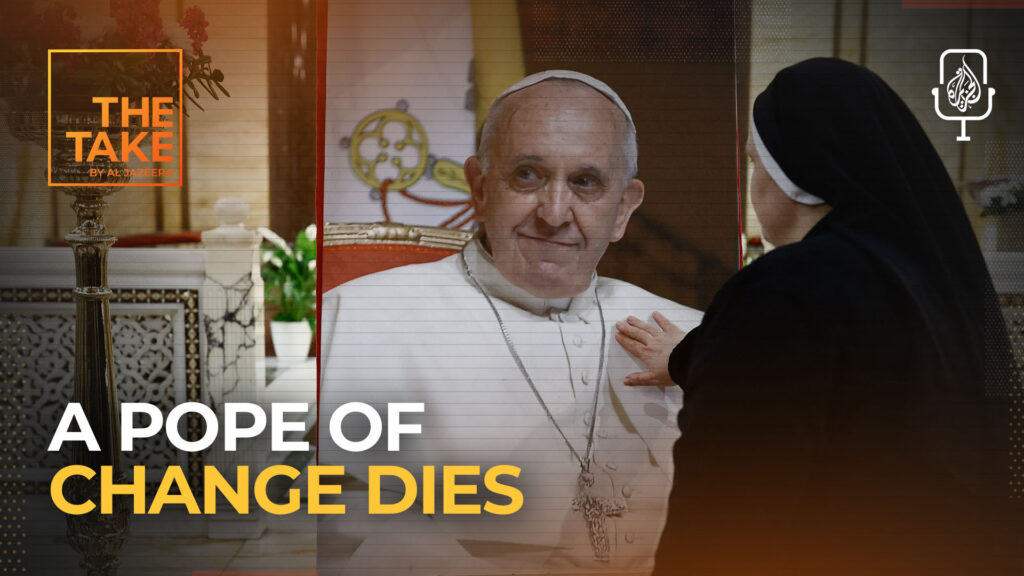
The first Latin American pope has died. We look at his legacy, reforms and what his death means for the Catholic Church. Pope Francis, the first Latin American and Jesuit pontiff, has died at age 88. His papacy broke barriers and redefined the Catholic Church’s global image — but also left tough questions unanswered. We look back on his legacy, the controversies that followed him, and what comes next for the church. Adblock test (Why?)
Trump’s campaign to turn dissent into a deportable offence harms democracy
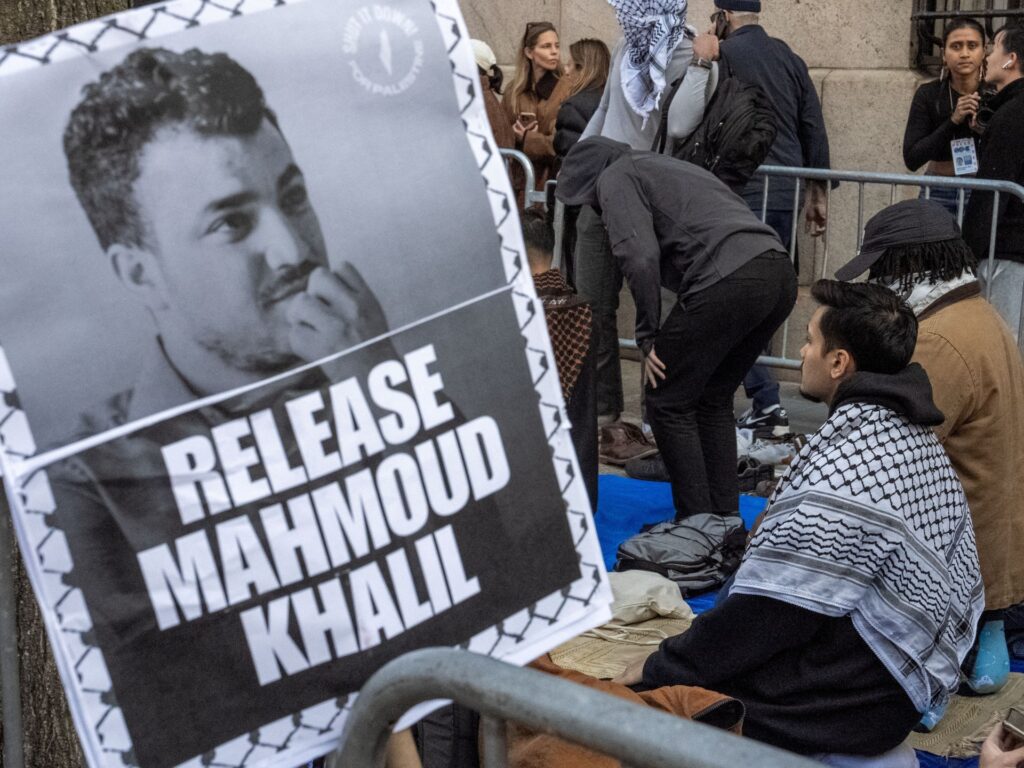
On April 11, an immigration judge in Louisiana ruled that Mahmoud Khalil, a former Columbia University graduate student and lawful United States permanent resident, can be deported. Not for committing a crime. Not for violating immigration rules. But for his political speech – specifically for helping organise a peaceful Gaza solidarity encampment at his university. The government’s case against Khalil is hinged on Section 237(a)(4)(C)(i) of the Immigration and Nationality Act, a Cold War-era provision that permits the deportation of any noncitizen whose presence is deemed a potential threat to US foreign policy. The evidence the government submitted against him was a two-page memo from Secretary of State Marco Rubio, asserting – without proof – that Khalil’s “beliefs and associations” could “adversely affect U.S. foreign policy interests”. Ironically, the document itself admitted that Khalil’s actions were “otherwise lawful”. And yet, it was enough. The mere invocation of “foreign policy” or “national security” now operates like a legal incantation, overriding First Amendment protections, due process and even common sense. Advertisement Khalil’s case is not an outlier. It is the leading edge of a broader strategy to silence dissent in the US – particularly dissent critical of Israeli policies or sympathetic to Palestinian rights – using various legal tools. This use and abuse of the US legal system sets a dangerous precedent that in the long run will harm American democracy. Dozens of international students and scholars – many from Muslim-majority countries or racialised communities – have also been subjected to surveillance, detention and deportation, often without any allegations of criminal wrongdoing. Among them is Badar Khan Suri, a visiting academic at Georgetown University and Indian citizen who was arrested by Immigration and Customs Enforcement (ICE) at his home in Virginia and later transferred to Texas. He remains in detention, facing removal based on his family ties. The father of his American wife used to work as an adviser to the Gaza government. Another example is Rumeysa Ozturk, a Turkish Fulbright scholar and doctoral student at Tufts University who was detained after co-authoring a newspaper opinion piece related to the Boycott, Divestment, Sanctions (BDS) movement. A US immigration judge has since denied her release, labelling her a “flight risk and a danger to the community”. Another recent case is that of Mohsen Mahdawi, a Palestinian green card holder and Columbia student protest leader who was arrested by ICE agents when he went for his US citizenship interview. He now faces deportation to the occupied West Bank, which he said would be “a death sentence”, given that he has lost family and friends to Israeli military violence. Advertisement Then there’s Momodou Taal, a British-Gambian PhD candidate at Cornell University who filed a lawsuit against President Donald Trump’s administration, arguing that executive orders targeting pro-Palestinian activists violated his First and Fifth Amendment rights. Despite suing preemptively and being legally represented, Taal’s efforts were ultimately undermined by jurisdictional manoeuvring and executive pressure. His emergency injunction was denied by a federal judge on March 27, and days later, he self-deported, saying he no longer trusted the courts to protect him even with a favourable ruling. There is also Yunseo Chung, a South Korean-born Columbia student and US permanent resident who narrowly avoided deportation thanks to a preemptive federal court injunction. Alireza Doroudi, an Iranian engineering PhD student at the University of Alabama, was quietly detained with no explanation. Ranjani Srinivasan, an Indian student at Columbia, fled to Canada after ICE agents visited her apartment. The Department of Homeland Security (DHS) later released footage of her departure, labelling her a “terrorist sympathiser”. In this campaign of political persecution, the Trump administration has largely relied on immigration courts, which are not part of the independent federal judiciary under Article III of the US Constitution. They are administrative tribunals housed within the executive branch, specifically, the Department of Justice. Their judges are appointed by the attorney general, lack tenure and are subject to political oversight. The procedural protections available in Article III courts – such as full evidentiary hearings, impartial review and constitutional due process – are substantially weakened in immigration courts. Advertisement While federal courts may scrutinise whether an arrest or deportation violates constitutional protections – like the First Amendment or equal protection – immigration judges are often empowered to rule based on vague assertions of “foreign policy concerns” or “national security interests” with little to no requirement for concrete evidence. This dual-track legal system allows the government to bypass the constitution while maintaining the appearance of legality. There have been numerous calls to reform this system from legal scholars, human rights organisations and even former immigration judges. Proposals have included moving immigration courts out of the Department of Justice and into an independent Article I court structure to ensure judicial impartiality. However, these reforms have consistently failed, largely due to congressional inaction as well as political resistance from successive administrations that have benefitted from the system’s malleability. The executive branch has long viewed immigration courts as a tool of policy enforcement rather than neutral adjudication. While this crackdown has so far focused on noncitizens with legal status, it could soon extend to naturalised Americans. US law allows the revocation of citizenship in cases of fraud, membership in terrorist organisations and other crimes. In his first term, Trump created a dedicated “Denaturalization Section” within the Department of Justice to pursue citizenship revocations. About 700,000 immigrant files were investigated with the aim of bringing 1,600 cases to court. Advertisement Trump has now signalled that he intends to pick up his denaturalisation drive where he left off. If he deploys this legal tool against critical voices, this would mean that even citizenship may no longer offer protection if one’s political views fall out of favour with the government. As the Department of Justice, DHS and ICE have worked together on the campaign against dissent, they have received public support from nonprofit organisations. Groups like Betar and Canary Mission have taken public credit for identifying international students involved in pro-Palestinian
Economic nostalgia is turning into punishment | #AJOPINION
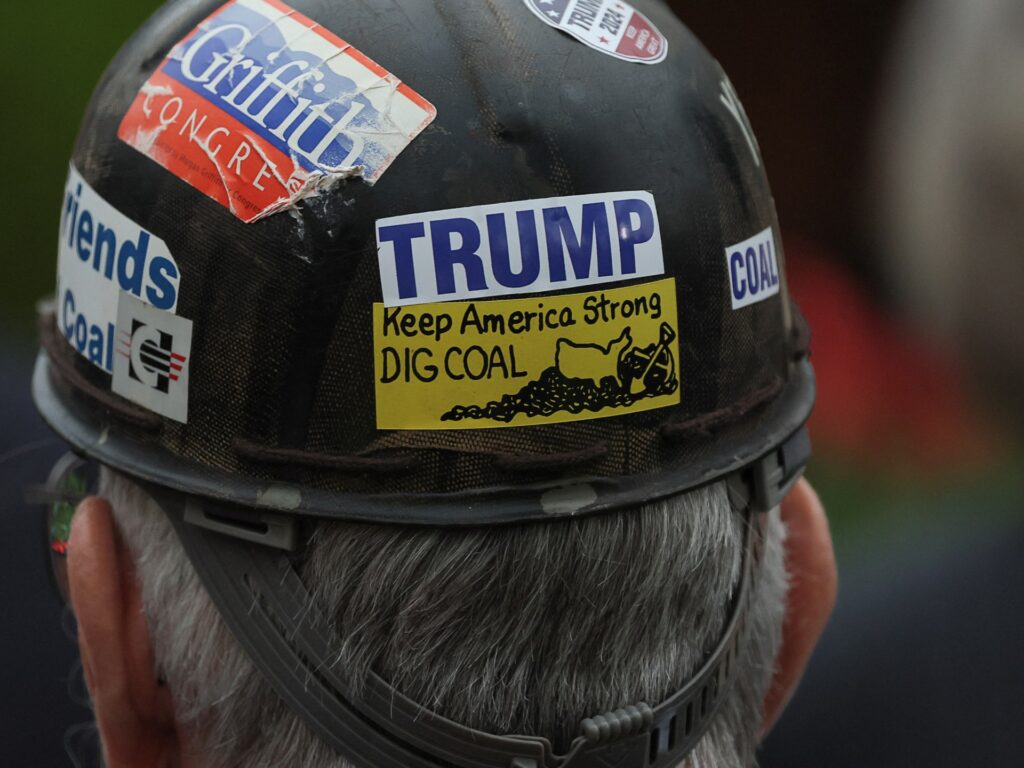
NewsFeed “The idea that America was ‘better before’ is one of our oldest myths.” Rotimi Adeoye says the Trump administration’s nostalgic push to return the US to a past economic era is a recurring theme in American history, one that often comes at the expense of the marginalised. Published On 22 Apr 202522 Apr 2025 Adblock test (Why?)
Gaza’s Christians mourn death of Pope Francis
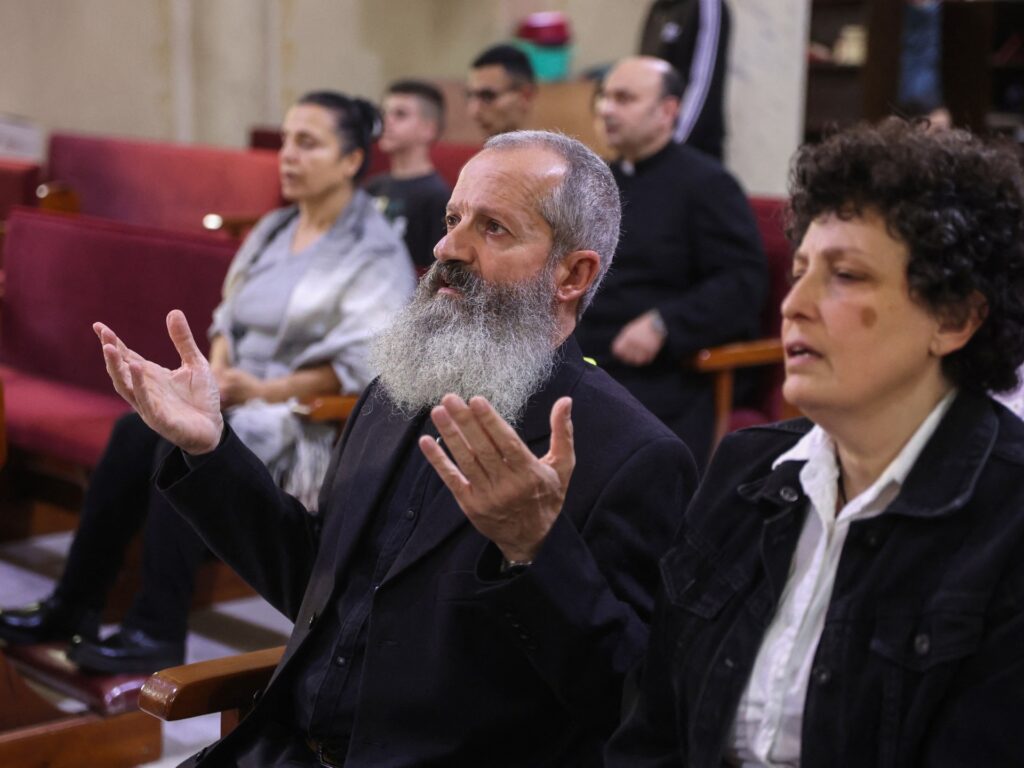
Gaza’s small Christian community is mourning the death of Pope Francis, who had maintained close and consistent video contact with the Palestinian devotees throughout the war that continues to devastate the enclave. Since the outbreak of fighting between Israel and Hamas in October 2023, Francis had regularly called Gaza’s Christians, often several times a week, offering prayers, encouragement and solidarity. “I always waited to hear the words of the Holy Father. I would watch him on television, and through the screens. He gave us hope with his messages and prayers,” said Elias al-Sayegh, 49, from Zeitoun. “We felt we were alive because of his prayers and blessings. Every day, he renewed our hope for an end to the war and the bloodshed. His prayers will remain with us for peace in the land of peace, Palestine.” “I wish I could take part in the prayers at the Church of the Nativity and the Church of the Holy Sepulchre,” he added, referring to ancient churches in Bethlehem in the occupied West Bank and Jerusalem. Advertisement “With the pope’s passing, we in Gaza feel as though a light of love and peace has been extinguished,” said 67-year-old George Ayad from al-Sahaba. “Though the Vatican is far away, his voice always reached our hearts – he never ceased calling for peace and justice. “Amid the pain and suffocating blockade we endured, we clung to his words as a beacon of hope. The pope never forgot Gaza in his prayers – and today, we offer ours for his soul.” Adblock test (Why?)