

US stocks and dollar tumble as Trump renews attacks on Fed Chair Powell
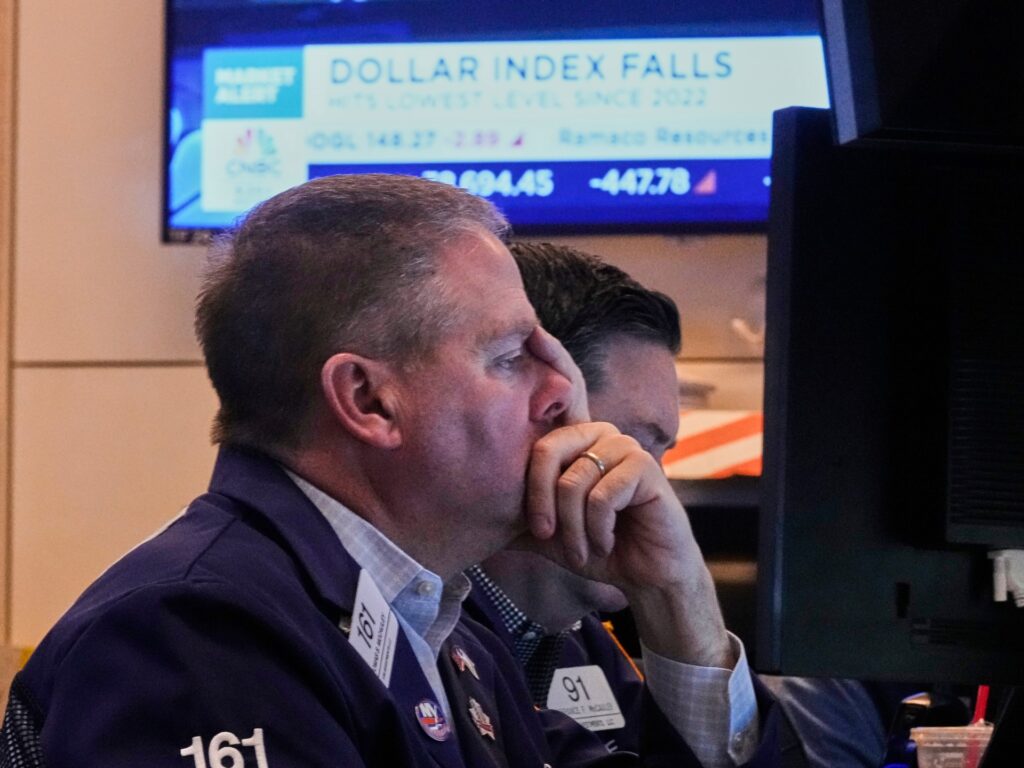
US stocks and the dollar have dropped sharply as United States President Donald Trump’s attacks on the chief of the US central bank shake investors’ confidence in the world’s top economy. The benchmark S&P 500 fell 2.36 percent on Monday, one of the steepest one-day declines of the year. The tech-heavy Nasdaq Composite tumbled 2.55 percent, dragging the index down nearly 18 percent from its position at the start of the year. The dollar fell to a three-year low, at one point weakening to 97.923 against a basket of major currencies. US government bonds also fell as investors sold off the traditional safe-haven assets, with the yield on 10-year Treasury notes rising above 4.4 percent. Asian markets opened broadly lower on Tuesday, with Japan’s Nikkei 225, Hong Kong’s Hang Seng Index and Taiwan’s TAIEX down about 0.8 percent, 0.6 percent and 0.5 percent, respectively, as of 02:00 GMT. The steep losses came as Trump renewed his attacks on US Federal Reserve Chair Jerome Powell, branding the central bank boss a “major loser” and “Mr Too Late” on social media for not moving faster to cut interest rates. Advertisement Trump has repeatedly threatened to replace Powell, saying last week that his termination “cannot come fast enough”. On Friday, Kevin Hassett, Trump’s top economic adviser, said the administration was studying the possibility of removing Powell, whose term runs until May next year. Since announcing its most recent cut to its benchmark interest rate in December, the Federal Reserve’s policy-making committee has expressed caution about lowering rates further in the near term amid concerns that Trump’s sweeping tariffs will stoke inflation. Powell warned in a speech last week that the tariffs could leave the US economy grappling with weak growth, rising unemployment and higher inflation all at once, putting the central bank’s dual goals of maximum employment and stable prices in “tension”. “We know from experience in the United States and many other countries that politicians are tempted to ease monetary policy while they are in office because the initial effects are to increase growth and employment. Only later, perhaps when they have left office, does the higher inflation show up,” Joseph E Gagnon, a senior fellow at Peterson Institute for International Economics, told Al Jazeera. “Markets understand this and are worried that President Trump may try to undo the Fed’s longstanding protection against political interference.” Powell, who was nominated by Trump in 2017 and tapped to serve another four-year term by former US President Joe Biden, has said he would not resign if asked and insisted that he can only be removed for malfeasance. Advertisement Under a US Supreme Court ruling handed down in 1935, the executive branch is prohibited from dismissing the heads of independent federal agencies such as the Federal Reserve except for “cause”. The Trump administration, which has taken aim at numerous established norms, is seeking to overturn the 90-year-old precedent in a Supreme Court case related to its dismissal of the heads of the Merit Systems Protection Board and the National Labor Relations Board. Any move to dismiss Powell would almost certainly send shockwaves through financial markets, given the more than century-old principle that the Federal Reserve should set interest rates free from political considerations. On Monday, Austan Goolsbee, the president and chief executive officer of the Federal Reserve Bank of Chicago, warned that any effort to undermine the independence of the central bank would have negative ramifications for the economy. “When there is interference over the long run, it’s going to mean higher inflation,” Goolsbee said in an interview with CNBC, without commenting directly on Trump’s attacks on Powell. “It’s going to mean worse growth and higher unemployment.” Gagnon said the financial markets were reacting to the “greater probability of presidential interference” with the Federal Reserve. “More generally, investors will be less interested in holding investments in the United States if they believe the Fed will not be independent in the future because that means the US economy will not perform as well in the future as in the past,” he said. Advertisement Adblock test (Why?)
More than 30 killed in latest attack in Sudan’s Darfur region: Monitor
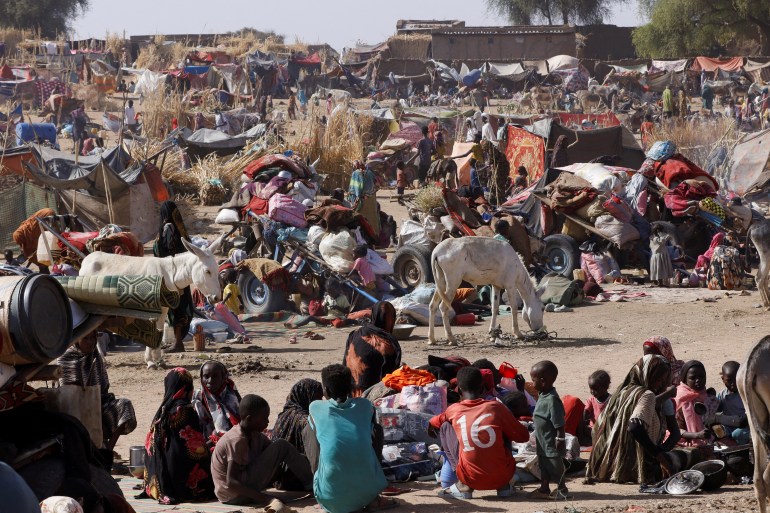
Residential buildings among structures targeted in paramilitary attack on city of el-Fasher, activists say. The paramilitary Rapid Support Forces (RSF) have again attacked el-Fasher city in the western Darfur region of Sudan, killing more than 30 people, an activist group has said. The attack by the RSF and allied militias is the latest deadly offensive on the area, the last stronghold of the Sudanese Armed Forces (SAF) in the war-torn region. The Resistance Committees in el-Fasher said dozens of other people were wounded in the Sunday attack, which involved “heavy artillery shelling”. The RSF renewed the assault on Monday, shelling residential buildings and open markets, according to the activist group, which tracks the war. No new casualties were immediately reported. The RSF did not immediately respond to the claims. For over a year, the RSF has sought to wrest control of el-Fasher, located more than 800km (500 miles) southwest of the capital, Khartoum, from the SAF, launching regular attacks on the city and two major famine-hit camps for displaced people on its outskirts. People displaced following RSF attacks on Zamzam displacement camp shelter in the town of Tawila, North Darfur, Sudan [Reuters] However, observers say attacks have intensified in recent months as the RSF suffered battlefield setbacks in Khartoum and other urban areas in the county’s east and centre. Advertisement El-Fasher is estimated to be home to more than one million people, including hundreds of thousands of those displaced by the fighting. Aid ‘dangerously restricted’ The latest violence comes less than a week after a two-day attack by the RSF and its allied militias on e-Fasher, as well as the nearby Zamzam and Abu Shouk camps for internally displaced people, killed more than 400 people, according to the United Nations. The attack forced up to 400,000 people to flee the Zamzam camp, Sudan’s largest, which has become inaccessible to aid workers, UN spokesman Stephane Dujarric said. On Monday, the UN’s humanitarian chief Tom Fletcher described the situation in the region as “horrifying”. He said he had spoken by phone with both SAF general Abdel Fattah al-Burhan and RSF leader Mohamed Hamdan Dagalo, who committed to giving “full access to get aid in”. International aid agencies have long warned that a full-scale RSF assault on el-Fasher could lead to devastating urban warfare and a new wave of mass displacement. The United Nations Children’s Fund (UNICEF) has described the situation as “hell on earth” for at least 825,000 children trapped in and around el-Fasher. The UN also warned of a catastrophic humanitarian situation. “The humanitarian community in Sudan is facing critical and intensifying operational challenges in North Darfur,” Clementine Nkweta-Salami, the UN’s resident and humanitarian coordinator in Sudan, said on Sunday. She added that “despite repeated appeals, humanitarian access to el-Fasher and surrounding areas remains dangerously restricted”, warning that the lack of access was increasing “the vulnerability of hundreds of thousands of people”. Advertisement Nkweta-Salami called for UN and NGO actors to be granted “immediate and sustained access to these areas to ensure life-saving support can be delivered safely and at scale”. Meanwhile, medical charity Doctors Without Borders (MSF) has called for aid airdrops into the city in the face of access restrictions. Sudan’s brutal civil war began on April 15, 2023, after a tenuous power-sharing agreement between SAF General al-Burhan and RSF leader Dagalo, also known as Hemedti, fell apart. To date, more than 24,000 people have been killed in the fighting, according to the UN, although activists say the number is likely far higher. Millions more have been displaced. Adblock test (Why?)
Russia’s Easter truce marred by accusations of attacks in Ukraine
[unable to retrieve full-text content] Russia resumed its attacks on Ukraine’s cities after a fragile 30-hour Easter truce came to an end.
Pope Francis spoke up for Palestinians until the end
[unable to retrieve full-text content] Pope Francis chose to not remain silent on the suffering of the Palestinian people.
Trump risks leaving behind a legacy of failure in Ukraine
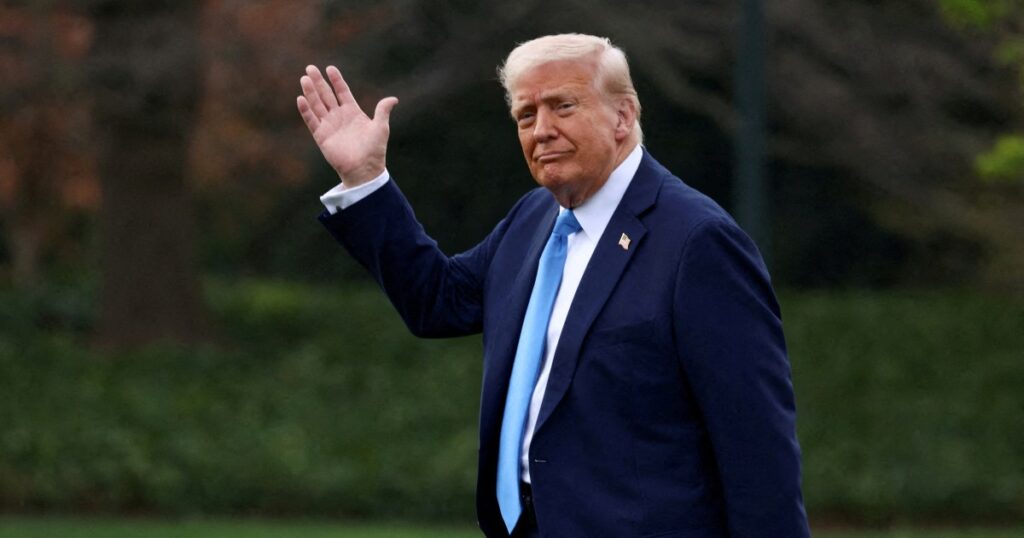
A day before Easter, Russian President Vladimir Putin announced a temporary ceasefire for the Christian holiday. Like other Russian promises, this one was broken too. Ukrainian media reported Russian drone attacks, shelling and firefights across the front lines. Ukrainian civilians were also targeted. This ceasefire that wasn’t came on the tail of another one: a 30-day ceasefire that was supposed to cover energy infrastructure. That was violated at least 30 times, per Ukrainian media reports. Throughout this time, United States President Donald Trump has continued to maintain that peace could be achieved. Even after his own Secretary of State Marco Rubio warned that the US could walk away from its mediator role because of lack of progress, the president still showed optimism that a deal was possible. On Easter Sunday, Trump wrote on Truth Social: “Hopefully Russia and Ukraine will make a deal this week.” A week earlier, Russia struck the Ukrainian city of Sumy with ballistic missiles. The death toll from the attack reached 34 people, including two children, with more than a dozen injured. Even this bloody attack did not sway the US president, who called it “a mistake”. Advertisement It is by now clear that three months into his presidency, Trump is failing dramatically in Ukraine. He must now realise that bold promises are easier made than fulfilled. He has not ended the war in 24 hours and will not do so in 100 days either, as he has promised. Under his leadership, Washington’s mediating drive appears stalled and its strategy unclear. A president who prides himself on deal-making and strength now stands indecisive and ineffective. If this continues, Trump risks failing twice: once as a negotiator and again as an ally. His current approach is not only weakening the role of the US in the world but also emboldening Russia to continue its aggression. Despite the Trump administration’s outreach to the Kremlin, it has received nothing more than empty rhetoric and broken promises for ceasefires. Putin’s stance hasn’t changed: He demands recognition of Russia’s claim to Crimea and four Ukrainian regions the Russian army partially occupies, no NATO membership for Kyiv and a limit on the size of its army. He has also openly called for regime change in the country, demanding elections during the war. Putin feels he’s negotiating from a position of strength and refuses to compromise. Trump currently lacks the leverage to make him reconsider, and so his strategy is to pressure Ukraine into capitulating to Russia. He is making the situation worse with his policies on military aid for Ukraine. After initially halting the transfer of weapons and munitions and intelligence sharing with Ukraine, Trump partially reversed his stance. He allowed military assistance approved by the administration of his predecessor President Joe Biden to resume, but he has refused to consider a new package once the current one comes to an end. Advertisement His administration still has several billion dollars available for drawdown, which could be allocated for further security support to Ukraine, but Trump has not signalled he is willing to approve it. That means Ukraine will soon face a situation in which key munitions stocks run out. Russia knows this, and it is using negotiations with the US to buy time. While it is waiting for the Ukrainian army to run out of vital supplies, Moscow has also initiated a large troop mobilisation. The call-up of 160,000 new conscripts marks a significant escalation. Ukrainian commanders have warned that major offensives could begin within weeks across multiple fronts. Putin’s aim is to use the Trump administration’s self-professed “peace-making” ambitions to his advantage. His strategy is to drag out ceasefire negotiations until US military aid runs out and the Russian army is able to advance far enough into Ukrainian territory to force Kyiv into capitulation. For Ukraine, defeat is not an option. The nation is still standing and will continue fighting because its freedom and independence are at stake. Even if Trump puts more pressure on Kyiv to consider a bad “peace deal” with Russia in which it makes all the concessions Putin wants, no Ukrainian leader would sign it because that would mean political ruin. Europe, for all its hesitations and internal divisions, has little choice now but to become a full-fledged ally of Kyiv. Europeans know Russia would not stop at Ukraine, and the threat is existential for them as well. The Kremlin is already preparing the Russian population through a large-scale propaganda campaign that a “great war” with NATO countries is necessary. Advertisement In the face of this threat, European countries are looking to rearm, and for this, they need time. This means that Ukraine’s war of liberation will continue for years, with or without US involvement. Meanwhile, the US under its current course will sink deeper into domestic crises, consumed by the aftershocks of self-isolation and haunted by costly decisions in a world it no longer leads. This will be what Trump leaves behind: a legacy not of resolution but of retreat. If he does not change course, history will remember him not as a strong leader who brought peace but as a boastful, naive man who made promises he could not fulfil. The views expressed in this article are the author’s own and do not necessarily reflect Al Jazeera’s editorial stance. Adblock test (Why?)
Israeli report on killing of Gaza medics “full of lies” say critics

NewsFeed An Israeli military investigation says “professional failures” and poor night vision led its troops to shoot dead 15 Palestinian rescue workers in Rafah on March 23. The report contradicts weeks of Israeli statements which claimed the medics posed a threat to Israeli troops. Published On 21 Apr 202521 Apr 2025 Adblock test (Why?)
‘A cancer’: UN warns Asia-based cybercrime syndicates expanding worldwide
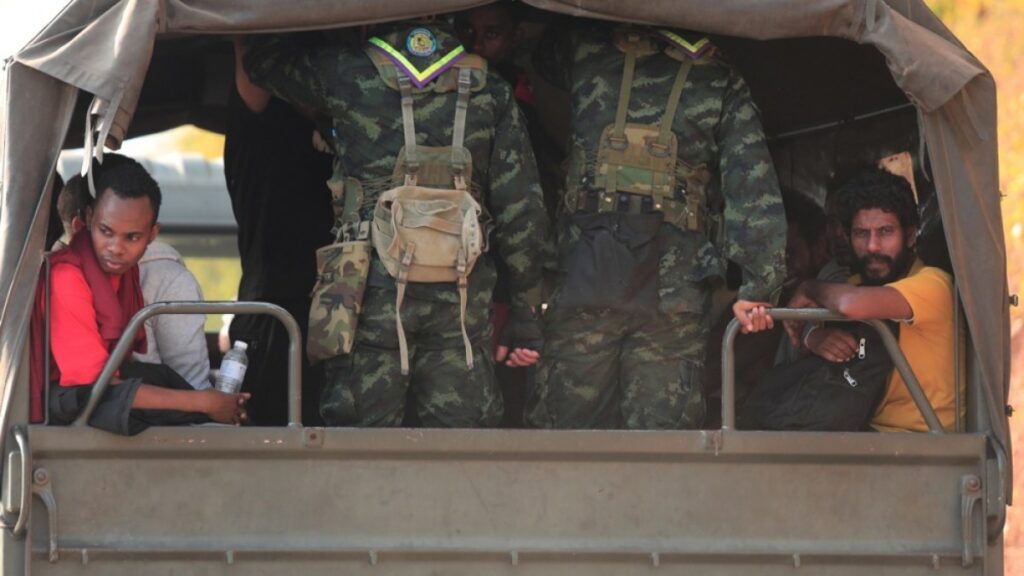
Agency says gangs caused $37bn in losses in Asia as they gain new footholds in Africa, South America, and Middle East. Asian cybercrime syndicates have caused an estimated $37bn in losses in the East and Southeast Asian regions, with the United Nations warning that the reach of the criminal networks is expanding globally. In a report released on Monday, the UN Office on Drugs and Crime (UNODC) detailed how Chinese and Southeast Asian gangs have been raking in tens of billions of dollars annually targeting victims in an array of cybercrimes, including fake investments, cryptocurrency, romance and other scams. The criminal organisation have largely operated out of squalid compounds in the border areas of Myanmar, as well as in so-called “special economic zones” designed to attract foreign investment in Cambodia and Laos. They have relied on often trafficked workers forced to work in squalid compounds. While the report said countries in East and Southeast Asia lost an estimated $37bn to cyber-fraud in 2023, there were “much larger estimated losses” worldwide. The report warned that the networks have been spreading to South America, Africa, the Middle East, Europe, and the Pacific Islands. Advertisement “We are seeing a global expansion of East and Southeast Asian organized crime groups,” said Benedikt Hofmann, UNODC acting regional representative for Southeast Asia and the Pacific. “This reflects both industry growth and a strategy to evade crackdowns in Southeast Asia,” Hofmann said. ‘Spreads like a cancer’ The report said the syndicates have established footholds in African nations, including Zambia, Angola, and Namibia, as well as Pacific island nations, including Fiji and Vanuatu. They have also expanded their money laundering strategies, forging alliances with South American drug cartels, the Italian mafia, and Irish mobsters, according to the report. Cryptocurrency mining – typically referring to the creation of new cryptocurrencies and the validation of transactions – has become a key tool for obscuring illicit funds, according to the report. In one instance, in June 2023, Libyan authorities raided an illegal crypto mining operation in a militia-controlled area, arresting 50 Chinese nationals. Recent crackdowns in Myanmar, backed by China, also freed about 7,000 trafficked workers. However, the UN warned that while enforcement disrupts operations temporarily, the syndicates have proven adept at adapting. “It spreads like a cancer,” said Hofmann. “Authorities treat it in one area, but the roots never disappear, they simply migrate.” New technologies have further complicated the situation, with criminal networks operating self-contained digital ecosystems, using encrypted messaging, payment apps, and cryptocurrencies to evade law enforcement, the report said. Advertisement The UN agency further warned of “potentially irreversible spillover has taken place…leaving criminal groups free to pick, choose, and move … as needed”. It urged countries to collaborate and intensify efforts to disrupt criminal networks’ financing. Adblock test (Why?)
Iran to brief China as it accuses Israel of ‘undermining’ US nuclear talks
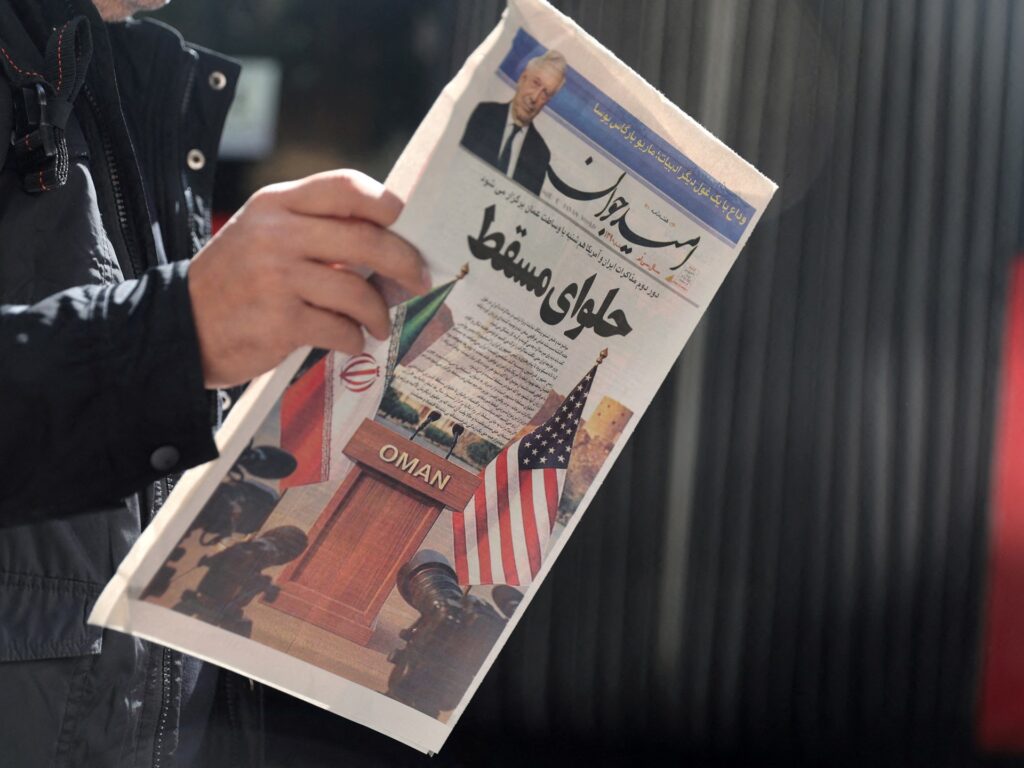
Iran says it will brief China this week in advance of a third round of talks with the United States on its nuclear programme, as Iranian officials separately accused Israel of seeking to “undermine and disrupt the diplomatic process”. Iranian Foreign Minister Abbas Araghchi will visit Beijing on Tuesday to discuss the latest talks with the administration of US President Donald Trump on the country’s nuclear programme, spokesman Esmaeil Baqaei said on Monday. The trip echoes “consultations” Iran held with Russia last week, before the second round of direct US-Iran talks was held over the weekend. A third round of talks between Araghchi and US envoy Steve Witkoff is scheduled to take place in Oman on Saturday. Araghchi has previously said Tehran always closely consults with its allies, Russia and China, over the nuclear issue. “It is natural that we will consult and brief China over the latest developments in Iran-US indirect talks,” Baqaei said. Russia and China, both nuclear-armed powers, were signatories to a now-defunct 2015 deal between Iran, the US and several Western countries intended to defuse tensions around Tehran’s nuclear programme. Advertisement The 2015 deal, known as the Joint Comprehensive Plan of Action (JCPOA), from which Trump withdrew in 2018, saw Tehran curtail its nuclear programme in exchange for sanctions relief. The US and Israel have accused Iran of seeking to use the programme to develop nuclear weapons. Tehran has staunchly denied the claim, saying the programme is for civilian purposes. On Monday, the Chinese Ministry of Foreign Affairs stressed close ties between Beijing and Tehran, but did not confirm the Iranian minister’s planned visit. “China and Iran have maintained exchanges and contacts at all levels and in various fields. With regard to the specific visit mentioned, I have no information to offer at the moment,” Guo Jiakun, spokesperson for the ministry, said. Strengthened alliance Israel’s war in Gaza has seen Iran pull closer to Russia and China. Recent diplomatic moves surrounding the US-Iran talks have further underscored the strengthened ties. Araghchi met his Russian counterpart, Sergey Lavrov, last week, just before his second round of negotiations with Witkoff. On Monday, Russian President Vladimir Putin signed off on a 20-year strategic partnership treaty agreed earlier this year with his Iranian counterpart, Masoud Pezeshkian. Meanwhile, Iran’s already fraught relations with Israel and its “ironclad” ally, the US, have nosedived amid the war. Since taking office, Trump has reinstated a “maximum pressure” sanctions campaign against Tehran, while repeatedly threatening military action if a new nuclear deal is not reached. Advertisement Speaking on Monday, Foreign Ministry spokesman Baqaei accused Israel of trying to disrupt the nascent negotiations to open the way for military action. In comments carried by the AFP news agency, he declared that Israel is behind efforts from a “kind of coalition” to “undermine and disrupt the diplomatic process”. “Alongside it are a series of warmongering currents in the United States and figures from different factions,” the spokesman said. Last week, Prime Minister Benjamin Netanyahu reiterated that Israel would not allow Iran to acquire nuclear weapons. His statement came a day after The New York Times reported that Trump had dissuaded Israel from striking Iran’s nuclear sites in the short term, saying Washington wanted to prioritise diplomatic talks. ‘Consultations must continue’ Baqaei added that “consultations must continue” with countries that were party to the JCPOA. Iran has gradually breached the terms of the treaty since Trump abandoned it, most notably by enriching uranium to levels higher than those laid out in the deal. The International Atomic Energy Agency says Iran has enriched uranium to 60 percent, close to the 90 percent level needed to manufacture weapons. The JCPOA had restricted it to 3.67 percent, the level of enrichment needed for civilian power. Speaking last week, Witkoff sent mixed messages on what level Washington is seeking. He initially said in an interview that Tehran needed to reduce its uranium enrichment to the 3.67 percent limit, but later clarified that the US wants Iran to end its enrichment programme. Advertisement Adblock test (Why?)
‘Father of the poor’: Argentinians mourn compatriot Pope Francis
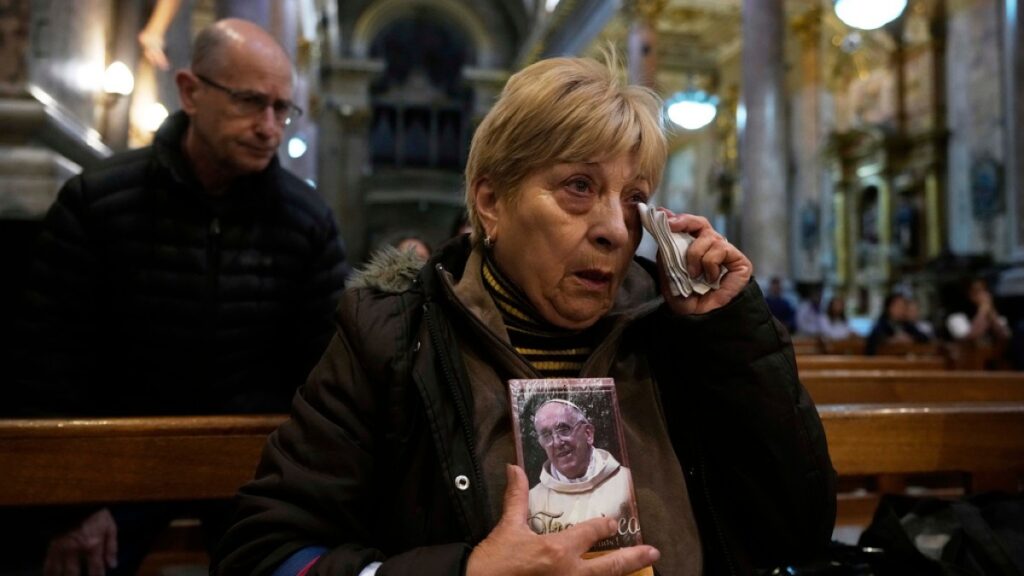
Argentinians are mourning the death of their compatriot Pope Francis, who served as the archbishop of Buenos Aires and was known for working with the poor in the city before ascending to the top of the Roman Catholic Church. The Argentinian government has announced seven days of mourning for Francis, who died on Monday at age 88. “As Argentinians, we are orphaned,” street sweeper Javier Languenari told the AFP news agency outside the Buenos Aires Metropolitan Cathedral early on Monday. “He endured as much as he could.” Born Jorge Mario Bergoglio in 1936 to Italian parents, Francis became the first Latin American pontiff in 2013 after his predecessor Pope Benedict stepped down. As he navigated the church through controversies, Francis emphasised compassion for the less fortunate. “The pope of the poor has left us, the pope of the marginalised,” Jorge Garcia Cuerva, the archbishop of Buenos Aires, said on Monday. “He insisted on building bridges, he insisted that we live in universal brotherhood. The pope was our father, the father of the poor, the father of mercy. The best tribute we Argentinians can pay to Francis is to unite.” Advertisement Argentinian President Javier Melei – who previously clashed with Francis and called him an “imbecile” and “the representative of evil on Earth” – also paid tribute to the late pope. “Despite differences that seem minor today, having been able to know him in his goodness and wisdom was a true honour for me,” Milei wrote on X. “I bid farewell to the Holy Father and stand with all of us today dealing with this sad news.” Melei’s right-wing libertarianism was at odds with Francis’s message of empathy and embrace of social justice causes. Still, Francis phoned Melei to congratulate him after his election victory in 2023, and the Argentinian president visited the pope last year, hailing what he described as their “positive relationship”. On Monday, former Argentinian President Mauricio Macri called the pope a religious figure of “unparalleled stature”. “His life was marked by the teachings he gave through his words, his commitment, and his actions,” Macri wrote in a social media post. “He himself, through his career, is a lesson for everyone.” Reporting from Buenos Aires, Al Jazeera’s Teresa Bo noted that many were unhappy that Francis never visited Argentina while pope, even though he visited other countries on the continent. “He never made it to Argentina, and for many, there was a political message there. He did not want to be used politically,” she said. Bo said Argentinians took pride in Francis when he was first elected pope, but his embrace of progressive causes – including allowing priests to bless same-sex couples – made him a “polarising figure” and angered traditionalists in the church. Advertisement “Even though the most progressive people in this country liked that message against injustice, against inequality, against capitalism, among other things, many others did not like that,” Bo said. Regardless, Bo added, his death will be felt across the country. “For many of the people I have spoken to, he was a man who tried to open up the church, who spoke about inclusiveness and humility, and that’s something many people in this country will remember,” she said. Buenos Aires resident Nicolas Cordoba told the Reuters news agency that the pope’s death will “really leave a mark of pain in people’s hearts”. In a politically divided Argentina, some recalled the late pope’s call for the country to come together. “Francis’s message was always for us to unite, to reach out to those most in need,” Agustin Hartridge, a 41-year-old lawyer, told AFP. “That candle I lit is a tribute to all he taught us.” Adblock test (Why?)
US VP Vance arrives in India for four-day visit as US tariff threat looms
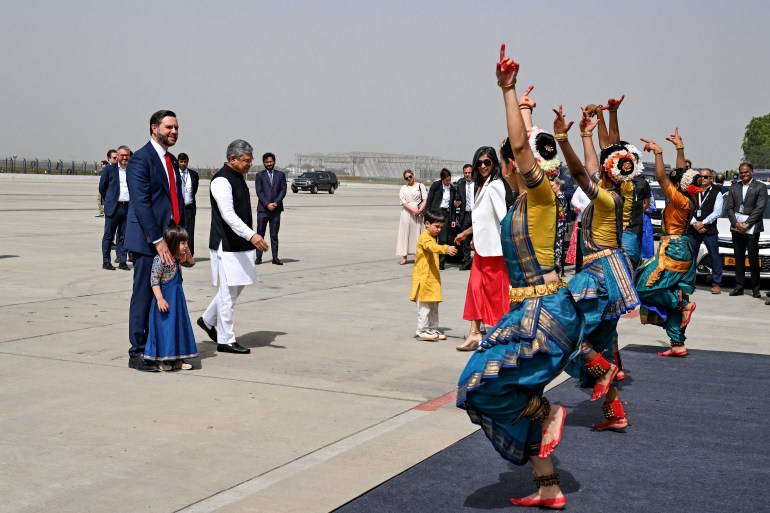
Visit will include talks with PM Modi as New Delhi is seeking to avoid sweeping 26 percent Trump tariffs. United States Vice President JD Vance has arrived in India for a four-day visit as New Delhi looks to avoid US tariffs, negotiate a bilateral trade deal with Washington and strengthen ties with the administration of President Donald Trump. Vance was meeting with Prime Minister Narendra Modi on Monday, the first day of his largely personal visit. He was greeted with a hug by the Indian leader at his residence in New Delhi, photos released by the Indian government showed. Over the visit, the two leaders were expected to hold discussions on bilateral ties outlined in February when Modi met Trump at the White House in Washington, DC. The US is India’s largest trading partner, and the two countries have been holding negotiations aimed at sealing a trade agreement this year. The talks had started before Trump early this month announced sweeping tariffs on all trade partners, including 26 percent levies on India. Trump later paused the country-specific tariffs for 90 days. His administration framed the move as part of a grand negotiating tactic aimed at leveraging better deals with partners like India. Advertisement Under the current plan being discussed, India and the US have set the ambitious target of more than doubling their trade to $500bn by 2030. Dancers wearing traditional attire perform upon Vance’s arrival in New Delhi [Kenny Holston/Reuters] Vance’s first visit to New Delhi since becoming vice president in January also coincides with a rapidly intensifying trade war between Washington and Beijing, which is New Delhi’s main rival in the region. Modi and Vance are expected to “review the progress in bilateral relations” and “exchange views on regional and global developments of mutual interest”, India’s Ministry of External Affairs said. On Monday, ministry spokesperson Randhir Jaiswal said Vance’s visit will “further deepen the India-US comprehensive global strategic partnership”. Countering China Washington has long viewed India as an important strategic ally in combating the rising influence of China in the Asia Pacific region and has sought to strengthen ties in recent years. India is part of the Quadrilateral Security Dialogue with the US, Japan and Australia and is seen as a counterbalance to China’s expansion. Trump is expected to attend a summit of Quad leaders in India later this year. Modi had personally sought to establish a strong working relationship with Trump during the US president’s first term in office from 2017 to 2021. The Indian leader was then among the first leaders to visit the US and hold talks with Trump after he returned to the White House for a second term on January 20. Advertisement During his visit, Modi hailed a “mega partnership” with the US. The two leaders announced plans to expand their defence partnership with India signalling its willingness to comply with several of the Trump administration’s demands, including purchasing more US oil, energy and defence equipment. Modi has also cooperated with Trump’s campaign to deport people living in the US without documentation. India has accepted many of its citizens expelled from the US in the past few months with the prime minister’s office batting away criticism of how some deportees have been treated. Despite the increased coordination, Trump has continued to call India a “tariff abuser” and “tariff king”. Adblock test (Why?)