

Bitter truth: Why has chocolate become so expensive?

Cocoa prices surged almost 300 percent last year, making chocolate bars, Easter eggs and cocoa powder much more expensive this year than last. In the United States, retail chocolate prices were one-fifth higher this Valentine’s Day compared with last year, according to Wells Fargo Bank. The price of a king-size US-sold Reese’s Hearts chocolate bar was 13 percent higher in February 2024 than in the same month the year before. In the United Kingdom, meanwhile, a Twix white chocolate Easter egg rose in price from 5 to 6 pounds ($6.63 to $7.96) at Tesco supermarkets in the run-up to Easter (year-on-year) and was reduced in size from 316g (11oz) to 258g (9oz). In all, the unit price rose by a whopping 47 percent. While the price of cocoa – the key ingredient in chocolate made from roasted raw cacao beans – has fallen back by about 20 percent since its all-time high in December 2024, consumers are still paying record prices for chocolate. The spike in the price of cocoa can be chalked up to several factors. Chief among them is extreme weather, which has hit cocoa producers in West Africa, from where most of the world imports cocoa. Advertisement According to Amber Sawyer, an analyst at the environmental think tank Energy and Climate Intelligence Unit (ECIU), expensive chocolate should not come as a surprise. “Chocolate is just one of the many foods being made more expensive by climate change-driven extreme weather,” she said. “These extremes will keep getting worse.” And so might the prices. A farmer sun-dries cocoa beans at home in Assin Fosu, Ghana, on November 20, 2024 [Francis Kokoroko/Reuters] What has happened to the price of cocoa? Benchmark New York futures contracts, used to exchange cocoa at a specified future date and price, hit a high of $12,565 per metric tonne in December 2024. Last year’s meagre cocoa harvest led to record supply shortfalls, as poor weather and disease devastated crops in Ghana and the Ivory Coast, where two-thirds of the world’s cocoa beans are grown. Crop shortages were also observed in Nigeria and Indonesia, the third- and fourth-largest cocoa producers. In all, there was a 500,000-tonne deficit of cocoa in global markets in 2024, which is continuing to keep prices high. The latest cocoa harvest – which ran from October 2024 to March 2025 – did get off to a bright start, with 33 percent more beans arriving at Ivory Coast ports compared with last year, Commerzbank analyst Carsten Fritsch said in a note to clients. But while the New York cocoa futures price is currently hovering at about $8,350 per tonne – a significant drop from December – concerns are growing that the same dry weather that wrecked last year’s crop will take a similarly devastating toll this year, Fritsch said. The uncertainty is taking a toll on chocolate producers. Swiss chocolate maker Barry Callebaut slashed its annual sales forecasts on April 11 due to what it called “unprecedented volatility” in cocoa prices, sending its shares falling almost 20 percent – its biggest ever one-day drop. Employees of chocolate and cocoa product maker Barry Callebaut prepare chocolates after the company’s annual news conference in Zurich, Switzerland, November 7, 2018 [Arnd Wiegmann/Reuters] What is causing the rise in prices? Advertisement Weather Volatile weather is one major factor. West Africa experienced extreme rainfall in 2023, with total precipitation more than double the 30-year average in some places, while 2024 saw extreme heat and drought. Many climate scientists point to the El Nino weather phenomenon, which produces warmer-than-average sea surface temperatures in the central and eastern tropical Pacific Ocean, as the primary driver for volatile weather patterns. However, they also expect a transition to the La Nina pattern – the cooling of ocean surface temperatures in the central and east-central equatorial Pacific every three to five years – to revive cocoa yields at least temporarily. Indeed, the International Cocoa Organization in February forecast a global cocoa surplus of 142,000 megatonnes for 2024-25, the first surplus in four years. That partly explains the recent fall in price. But according to Felipe Pohlmann Gonzaga, a Switzerland-based commodity trader, the larger picture of “climate change is only going to make supply concerns worse” in the longer term. Scientists at the research group Climate Central published a paper this year showing that climate change compromised cacao trees during the harvest season in Ivory Coast and Ghana. Laws against deforestation Besides changing weather patterns, several other issues are also driving recent price hikes in cocoa. Across West Africa, new deforestation laws have prevented farmers from expanding cocoa plantations, keeping a lid on supply. West Africa is also grappling with an ageing tree stock. “Older trees are not being replaced,” Pohlmann Gonzaga told Al Jazeera. “There has been under-investment in the industry.” Advertisement Disease At the same time, the spread of the cocoa swollen shoot virus (CSSV) has hit harvests. Tropical Research Services, a market research group, recently found that Ivory Coast cocoa production could halve due to the spread of CSSV. An artisanal miner inspects an excavated rock for traces of gold at the Prestea-Huni Valley Municipal District in the Western Region, Ghana, on August 17, 2024 [Francis Kokoroko/Reuters] Illegal gold mining Meanwhile, Ghanaian cocoa farmers are abandoning beans for gold in an illegal mining boom that has hit Ghana’s cocoa production and helped drive up prices. In recent months, investors have been buying up the precious metal to shield themselves from the financial market turmoil unleashed by United States President Donald Trump’s trade tariffs. On April 16, gold reached $3,357 per ounce for the first time. As a result, many farmers are selling their holdings to illegal miners who have decimated swaths of land in pursuit of gold. Ghana is Africa’s leading producer of gold – and the sixth-largest globally. Will cocoa prices continue to rise? “Tariffs have had an impact on the value of commodities, and cocoa is no exception,” says Pohlmann Gonzaga. “At first, you’d think trade levies would
Jailed for fishing: India-Pakistan tensions trap families in debt, poverty

Diu, India – Boxes of sweets are being passed around as cheers and joy surround Rajeshwari Rama’s brick house, insulated with tin sheets, in the Vanakbara village of Diu, a federally-controlled island along the India-Pakistan coastline near Gujarat state in western India. Rama’s relatives and friends are talking at the top of their voices as they celebrate the release of her husband, fisherman Mahesh Rama, from the Landhi jail in neighbouring Pakistan’s largest city of Karachi, in February this year. Among the attendees is Laxmiben Solanki, 36, standing quietly in one corner. She does not taste the sweets. She is only marking her presence there, but remains preoccupied with thoughts of her husband, Premji Solanki. Premji, 40, has also been in Pakistan’s Landhi jail since December 2022, along with several other Indian fishermen. Their crime: crossing a disputed border in the Arabian Sea, which divides the South Asian nuclear powers and sworn enemies, for fishing. A fisherman unloads chunks of ice from his boat at Diu port, India [Tarushi Aswani/Al Jazeera] In February, Pakistan released 22 Indian fishermen who had been imprisoned by Pakistan’s Maritime Security Agency between April 2021 and December 2022, while they were fishing off the coast of Gujarat – also the home state of Indian Prime Minister Narendra Modi. Three of those released are from Diu, 18 from Gujarat, and the remaining one person from the northern Indian state of Uttar Pradesh. Advertisement Though India and Pakistan share a heavily militarised land border, their International Maritime Boundary Line in the Arabian Sea is also largely disputed, especially in a zone called Sir Creek, a 96km (60-mile) tidal estuary that separates India’s Gujarat and Pakistan’s Sindh provinces. It is in this patch that fishermen from both India and Pakistan wander into deeper waters, often without realising they have entered foreign territory. Due to the terrain of the disputed territory, there is no border fencing, with a marshland acting as a natural boundary between the two nations. Several years and rounds of diplomatic talks between India and Pakistan have not been able to resolve the dispute, which has even seen military tensions between them. In 1999, India shot down a Pakistani aircraft carrying 16 naval officers over the alleged violation of Indian airspace near their maritime border. The incident occurred just a month after the two countries fought a war in Kargil, a snowy district in Indian-administered Kashmir. On March 17, India’s Ministry of External Affairs revealed that out of 194 Indian fishermen currently imprisoned in Pakistan, 123 are from Gujarat. According to the Indian government, it has 81 Pakistani fishermen in its custody. Families on both sides say their loved ones have been jailed for a crime they committed “unknowingly” – because they did not know they had ventured inside waters claimed by another country. Trapped in debt Pakistan released Mauji Nathubhai Bamaniya, 55, in February because his osteoporosis had gotten worse. “I still can’t believe that I am sitting in my house, in my country, with my family. My decaying bones brought me back to my homeland,” Bamaniya tells Al Jazeera in Vanakbar village. Advertisement Another fisherman, Ashok Kumar Solanki, is also back at home in Ghoghla village in Diu. He has hearing and speaking impairments and was among the 22 fishermen released on health grounds. Family members of Indian fishermen jailed in Pakistan sit outside a house in Diu [Tarushi Aswani/Al Jazeera] But it is the families of those still imprisoned in Pakistan that find themselves caught in a cycle of recurring debt and debilitating anxiety. In another house, hidden amid palm trees in Vanakbara, Kantaben Chunilal, 60, looks with tired eyes at the dusty path leading to her home. She has been waiting for her son, Jashvant, since December 2022. Jashvant was barely 17 when he was arrested by Pakistani forces. He was the family’s sole breadwinner. Kantaben says she feels too ashamed to ask her relatives for more loans to fill the empty grain jars in her kitchen. She has borrowed nearly 500,000 rupees ($5,855) from several relatives for sustenance. “The government offers us a financial aid of $3 per day. It is not even half of what our men would earn,” she tells Al Jazeera. Out of desperation, Kantaben says she sometimes randomly visits relatives during mealtimes, hoping they will accommodate her as a guest and she may save some money that day. In the same village, Aratiben Chavda married fisherman Alpesh Chavda in 2020. Less than a year later, Alpesh was arrested by Pakistani forces while he was out fishing in the Sir Creek area. Aratiben tells Al Jazeera their 3-year-old son Kriansh, born about four months after Alpesh’s arrest, has never seen his father. “We make him see his father’s photos, so that one day, when Alpesh comes back, my child can recognise him,” she says, sobbing. Advertisement Aratiben’s house is shaded by palm and coconut trees, insulating her and her son from India’s scorching heat. But there is no escaping the poverty that has gripped the household. Selling the refrigerator her parents had given her as a wedding gift supported her for about two months during the winter of 2023. Aratiben and her mother-in-law, Jayaben, also sell vegetables at the local market, making about $5 to $7 on good days. But she says there are too many days in between when they are unable to afford two meals. Fishing boats at Diu’s port, India [Tarushi Aswani/Al Jazeera] Indian activists and fishermen’s unions have been campaigning for the release of all the fishermen imprisoned by Pakistan. Chhaganbhai Bamania, a social worker in Diu, points out that under Pakistani law, fishermen who stray into that country’s waters should not be sentenced for more than six months. “But due to the hostility between India and Pakistan, citizens are caught in a crossfire for no fault of theirs. Their jail time is increased without them knowing or understanding it,” he says, adding that some Indian fishermen end up spending years behind bars. Bamania says
Russia-Ukraine war: List of key events, day 1,152
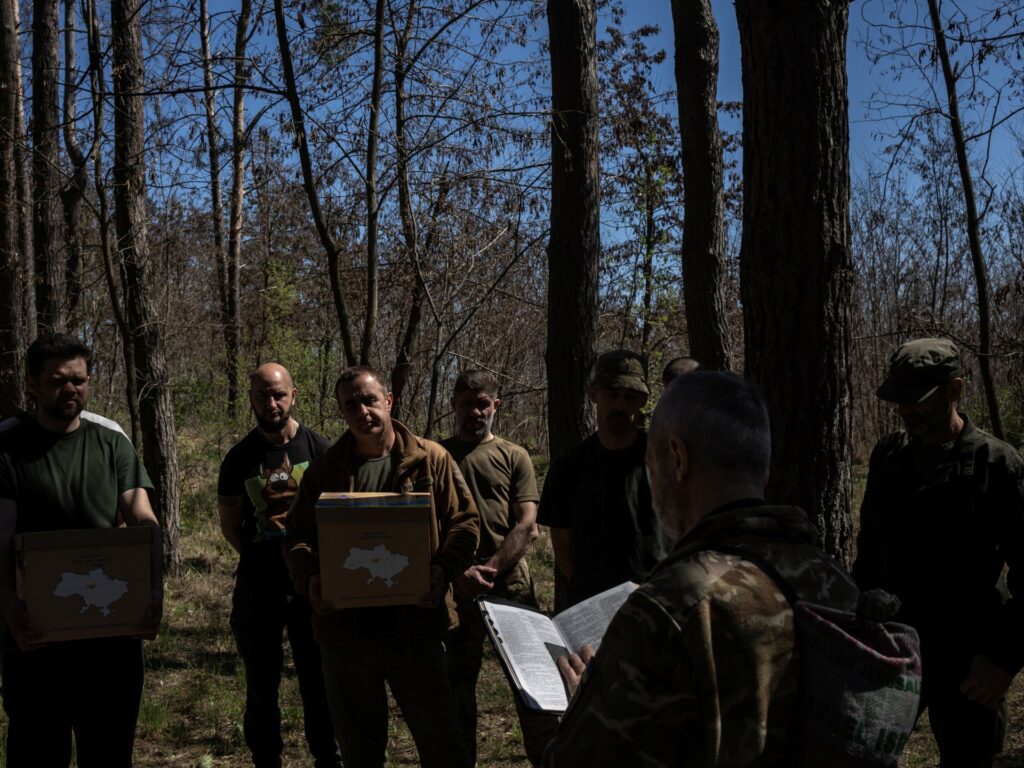
These are the key events on day 1,152 of Russia’s war on Ukraine. Here is where things stand on Monday, 21 April: Fighting At least three blasts were heard in the Russian-controlled Donetsk region in eastern Ukraine amid an Easter ceasefire declared by Moscow, Russian state news agency TASS reported, citing local “operative services.” Ukraine’s forces reported nearly 3,000 violations of Russia’s own ceasefire pledge, Ukrainian President Volodymyr Zelenskyy said, adding that Kyiv’s forces were instructed to mirror the Russian Army’s actions. Russia’s Ministry of Defence said Ukraine had broken the Easter ceasefire declared by the Kremlin more than a thousand times, claiming that Ukrainian forces shot at Russian positions 444 times. The ministry also said Kremlin forces encountered more than 900 Ukrainian drone attacks during this time. The ministry also said Moscow took control of the village of Novomykhailivka, in Ukraine’s Donetsk region, before the Easter ceasefire. Ukraine’s authorities are yet to comment on this claim. Oil and gas Advertisement Ukraine may need to import up to 6.3 billion cubic metres of gas for the 2025-26 winter season due to record low levels of reserves because of war-related damage to some facilities, said Sergiy Makogon, the former head of Kyiv’s gas transit operator. Ceasefire Zelenskyy said the Russian Army made attempts to “advance and inflict losses” on Kyiv’s army overnight despite Russian President Vladimir Putin’s declaration of an Easter ceasefire. “Either Putin does not have full control over his army or the situation in Russia is that they have no intention of making a genuine move towards ending the war,” Zelenskyy said. The United States Department of State said it would welcome the extension of the Easter ceasefire. However, the Kremlin said earlier there was no order for an extension. Zelenskyy proposed suspending drone, cruise missile and rocket attacks on civilian targets for at least 30 days, after Russia revealed there were no orders to extend the ceasefire. Adblock test (Why?)
‘Easter truce’ in Russia’s Ukraine war marked by accusations of violations

Ukraine and Russia have accused each other of breaching an “Easter truce” announced by Russian President Vladimir Putin that Ukraine said was being violated from the moment it started. Putin will not be extending the ceasefire, Kremlin spokesman Dmitry Peskov was quoted as saying by the TASS news agency on Sunday. The ceasefire expires at midnight (21:00 GMT). In a surprise announcement on Saturday, Putin ordered his forces to “stop all military activity” along the front line in the war against Ukraine, citing humanitarian reasons. The 30-hour cessation of hostilities would have been the most significant pause in the fighting throughout the three-year conflict. But just hours after the order was meant to have come into effect, air raid sirens sounded in Kyiv and several other Ukrainian regions, with President Volodymyr Zelenskyy accusing Russia of having maintained its attacks and engaging in a PR stunt. Russia’s Ministry of Defence also alleged on Sunday that Ukraine had broken the truce more than 1,000 times. Advertisement “Across various frontline directions, there have already been 59 cases of Russian shelling and five assaults by Russian units,” Zelenskyy said on social media, citing a report as of 6am (03:00 GMT) from Ukrainian commander-in-chief Oleksandr Syrskii. He said in the six hours up to midnight (21:00 GMT on Saturday), there were “387 instances of shelling and 19 assaults by Russian forces”, with drones “used by Russians 290 times”. “Overall, as of Easter morning, we can state that the Russian army is attempting to create the general impression of a ceasefire, while in some areas still continuing isolated attempts to advance and inflict losses on Ukraine,” Zelenskyy said. “In practice, either Putin does not have full control over his army, or the situation proves that in Russia, they have no intention of making a genuine move toward ending the war, and are only interested in favourable PR coverage,” he added. According to the Kremlin, fighting stopped at 6pm Moscow time (15:00 GMT) on Saturday until Sunday midnight (21:00 GMT) owing to Easter. But as church bells rang out for Easter services on Sunday, residents in Kyiv expressed doubts whether Russia would observe the brief truce. Natalia Malaieva noted that an air raid alert was heard in Kyiv moments after the truce began. “Missiles and drones flew over. There were explosions caused by missiles,” she said. “What kind of a ceasefire is that?” Olha Malashuk added: “He [Putin] probably wants to rearm the troops … That is why no one believes him any more.” Orthodox worshippers attend the Easter service in Saint Michael’s Golden-Domed Cathedral in Kyiv [Sergei Supinsky/AFP] Accusations and counteraccusations In a statement on social media on Sunday, the Russian Defence Ministry said Ukrainian forces had shot at Russian positions 444 times and it had counted more than 900 Ukrainian drone attacks. Advertisement It added that the border regions of Bryansk, Kursk and Belgorod had come under attack. “As a result, there were deaths and injuries among the civilian population as well as damage to civilian objects,” the ministry said. Quoting a source in “operative services”, the Russian state news agency TASS said at least three blasts were heard in the Budennovsky district of Donetsk in eastern Ukraine, which has been under Russia’s control since 2014. The report blamed Ukrainian forces for what it said was an attack carried out during the truce. There was no immediate comment from Ukraine. A Ukrainian military spokesperson confirmed that activities on the front lines with Russia had decreased, but the fighting had not stopped. “It is decreasing, but it hasn’t disappeared,” Viktor Trehubov told national television. “To be honest, we didn’t hold out much hope that this would actually happen,” the military spokesperson for Ukraine’s eastern front said. Reporting from Moscow, Al Jazeera’s Yulia Shapovalova said both sides were accusing each other, but according to analysts, it is almost impossible to stop all the hostilities immediately. But generally, the situation on the battlefield is much calmer, and the number of attacks has decreased. “The Russian reaction to this ceasefire is very positive,” she added. “People hope that it will last, and analysts also say that Russia and Putin are likely in a favourable position right now for a longer truce and peace negotiations, taking into account Russia’s gains on the battlefield and the efforts by the US side as well,” Shapovalova said. Advertisement ‘A pure political step’ Andrei Fedorov, a former Russian deputy foreign minister, called Putin’s announcement “a pure political step” and said it was taken for both domestic and international reasons. “Easter is one of the main holidays for Russia and Putin wants to show that he’s following Russian Orthodox Church tradition,” he told Al Jazeera. “At the same time, it’s a very important test for him if Ukraine will do the same, because now when there will be a new stage of talks on Ukraine, [and] it’s very important for Putin to have real arguments that say, ‘look, Ukraine is not following the agreements. Ukraine is breaking down the ceasefire.’” Putin’s announcement came a day after United States President Donald Trump said Washington will “take a pass” on trying to resolve the Russia-Ukraine war if either Moscow or Kyiv makes it too difficult to end it. Reporting from Washington, DC, Al Jazeera’s Rosalind Jordan said neither side can currently really afford to anger the Trump administration. “Especially now that they are saying very publicly here in Washington that they are ready to walk away, even though President Trump has said repeatedly that he is tired of what he calls the ‘carnage’ in the war between Ukraine and Russia,” she said. But there has been no reaction from the Trump administration this weekend to developments in the Ukraine war. Vladimir Sotnikov, an associate professor of international relations at the Higher School of Economics in Moscow, said he fears Trump has “jumped into” a peace plan that “won’t work in the near future”. Advertisement “Both sides – Ukraine and Russia – are still very far from
Lebanese president says disarming Hezbollah ‘delicate’ as Israel kills two
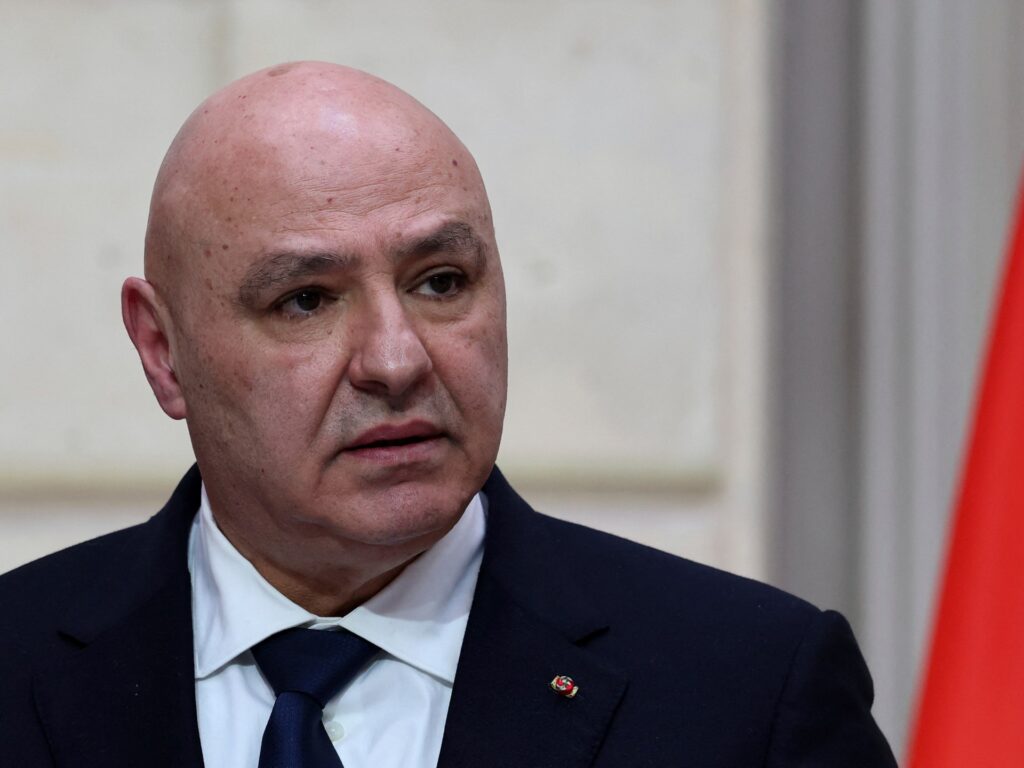
Joseph Aoun makes the comment as the Lebanese army says it foils a rocket attack on Israel. Lebanese President Joseph Aoun says he will not be rushed to disarm Hezbollah under unfavourable circumstances as the Israeli military continues to launch deadly air strikes on the country in violation of a November ceasefire. In comments to reporters after a meeting with a Maronite patriarch to mark Easter on Sunday, the former army chief said he considers disarming the Iran-aligned group a “sensitive, delicate issue” that must be handled with consideration to preserve national peace. “Any controversial domestic issue in Lebanon can only be approached through conciliatory, nonconfrontational dialogue and communication. If not, we will lead Lebanon to ruin,” Aoun said. The Trump administration has been applying sustained pressure on Beirut to push for the disarming of Hezbollah, leading to Aoun announcing last week that he hopes to complete the process by the end of 2025 – the first time a senior official has set any deadline. Aoun’s comments on Sunday came shortly after the Lebanese government praised the army for foiling an imminent attack on Israel, a first since the November ceasefire with Hezbollah, which Israel has violated on numerous occasions. Advertisement The Lebanese army released images of confiscated rockets and launch pads and said it arrested multiple individuals previously involved in rocket attacks on Israel as well. The raid that led to the confiscated munitions was reported to have taken place in the Sidon area of southern Lebanon. The office of Prime Minister Nawaf Sharif urged security forces to “thwart suspicious plots that seek to embroil Lebanon in further wars” and said this work proves that the Lebanese state is moving towards full sovereignty over its territory with its own forces. “The Lebanese state alone is the authority that makes decisions regarding war and peace and is the body authorised to possess weapons,” he said. Hezbollah has not immediately reacted to Sunday’s statements, but its leader Naim Qassem said on Friday that the group “will not let anyone disarm” it, especially as the Israeli military continues to occupy parts of southern Lebanon. Hezbollah was formed in the aftermath of the Israeli invasion of Lebanon in 1982 and grew over the decades to possess substantial political and military power. This included forcing Israel out from its occupation of southern Lebanon in 2000 and fighting Israel to a stalemate in a 2006 war. But the organisation has lost many leaders in Israeli assassinations as well as much military equipment since the start of Israel’s war on Gaza in October 2023 and must withdraw its military forces from southern Lebanon as part of the ceasefire. Israeli air strikes kill two Lebanon’s Ministry of Public Health said on Sunday that two people were killed in two Israeli air raids in southern Lebanon. Advertisement Israeli warplanes fired at least two missiles at a house in Hula, a village in Nabatieh governorate, killing one person, the ministry said. An Israeli drone attack also targeted a vehicle in Kaoutariyet as-Siyad, killing another person, it said. The footage below, which has been verified by Al Jazeera’s Sanad fact-checking agency, shows plumes of smoke rising after Israeli air strikes targeted the heights of the Iqlim al-Tuffah region of southern Lebanon. مراسل الجديد: سلسلة غارات عنيفة من الطيران الحربي إستهدفت أطراف مليتا ومرتفعات إقليم التفاح@farhat_muhamad1 pic.twitter.com/8TMHLdc06q — Al Jadeed News (@ALJADEEDNEWS) April 20, 2025 The Israeli military said one of its strikes on southern Lebanon killed a deputy head of a Hezbollah unit responsible for smuggling weapons and funds to the group, including across the country’s border with Syria. The army added that the targeted man was “extensively involved” in Hezbollah efforts to revitalise after the group took heavy blows during the war. After killing two other people on Saturday, the Israeli army also claimed they were Hezbollah members. Adblock test (Why?)
Syria’s first wheat shipment since al-Assad ouster points to recovery
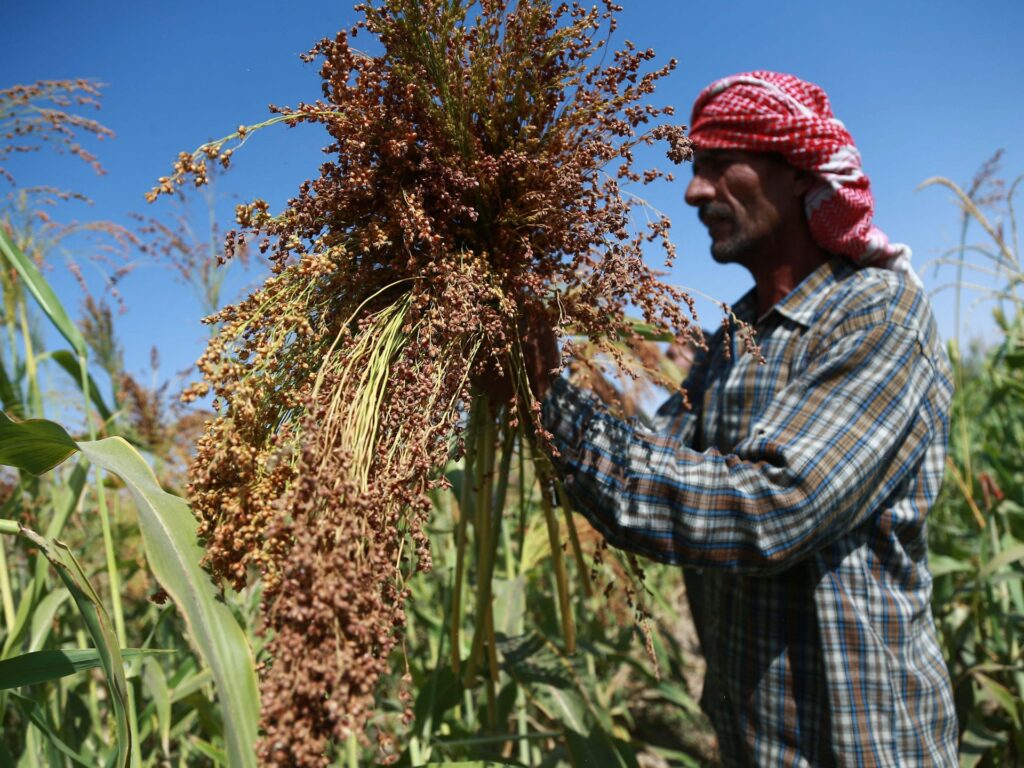
Traders say Syria has largely been relying on overland imports from neighbours this year. A ship carrying wheat has arrived in Syria’s Latakia port, the first such delivery since former President Bashar al-Assad was ousted in December, the government said, as it pushes to boost an economy ravaged by nearly 14 years of ruinous civil war. Traders say Syria has this year been largely relying on overland imports from neighbours. Officials of the new government led by interim President Ahmed al-Sharaa say that while imports of wheat and other basics are not subject to sanctions from the United States or United Nations, challenges in securing financing for trade deals have deterred global suppliers from selling to Syria. The Syrian General Authority for Land and Sea Borders said in a statement that the ship carried 6,600 tonnes of wheat. It did not identify the nationality or destination of the boat, but one regional commodity trader told the Reuters news agency it was from Russia. Russia and Iran were Syria’s primary military and economic backers under al-Assad. They previously provided most of Syria’s wheat and oil products, but stopped after opposition fighters swept through the country in triumph and al-Assad fled to Moscow. Advertisement Syria’s border authority called the shipment “a clear indication of the start of a new phase of economic recovery in the country”, adding that it should pave the way for more arrivals of vital supplies. Al-Sharaa’s government is sharply focused on economic recovery after 14 years of conflict and has also been making efforts to open travel routes to the country. Most international airlines suspended operations to and from Damascus in 2012 amid the Syrian government’s violent crackdown on protests that began in 2011 and the subsequent civil war that drew in multiple outside actors. However, in January 2024, several airlines resumed service at Damascus International Airport following an announcement by the Syrian Civil Aviation Authority that international flights would be accepted. On Saturday, a Syrian passenger flight departed on Sunday for the United Arab Emirates (UAE), marking the resumption of air travel between the two countries. A UN official said on Saturday that Syria’s authorities should also begin the process of economic recovery, without waiting for Western sanctions imposed under al-Assad’s rule to be lifted. “Waiting for sanctions to be lifted leads nowhere,” Abdallah Al Dardari, the regional chief for Arab states at the United Nations Development Programme (UNDP), told the AFP news agency in an interview in Damascus. Al Dardari said this process should include “projects… directly affecting citizens”, the provision of services by civil society, particularly in education, and “the rapid improvement of public services”. Advertisement “People need to feel the improvement quickly … especially in such a difficult period,” he said. “With a clear vision and well-defined priorities, once the sanctions are lifted, funding will flow into Syria.” Some countries, including the US, have said they would wait to see how the new authorities exercise their power and ensure human rights before lifting sanctions, opting instead for targeted and temporary exemptions. Adblock test (Why?)
US attacks on Yemen tell Iran that US is “eyeing confrontation”
[unable to retrieve full-text content] The US is negotiating with Iran over its nuclear program while bombing its allies, says Professor Hassan Ahmadian.
US air strikes pound Yemen
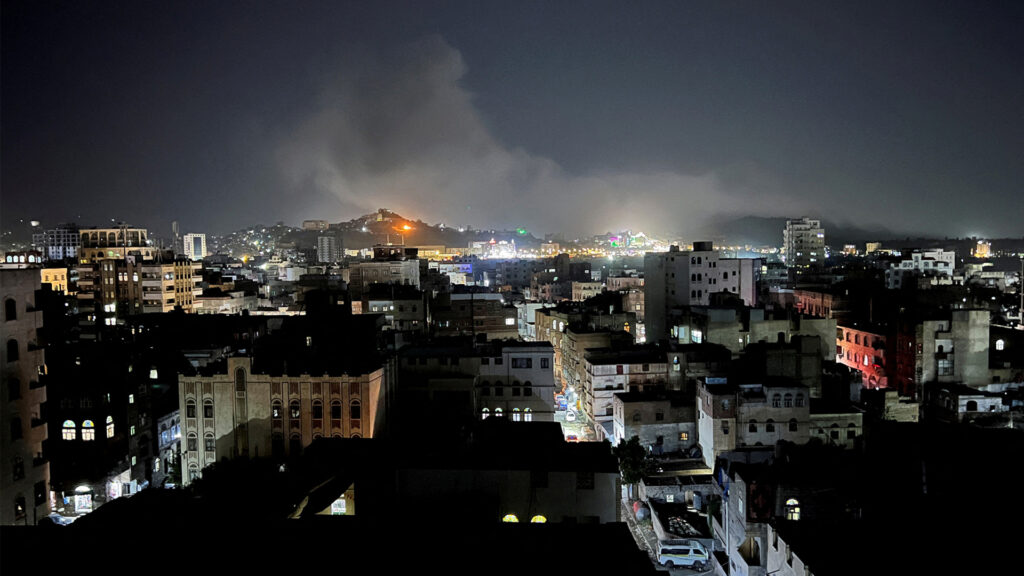
NewsFeed Video shows US air strikes pounding Yemen’s capital, Sanaa, just days after the US bombed Hodeidah’s airport and Ras Isa port, killing at least 80 people. The UN says it’s gravely concerned by the US campaign against the Iran-backed group, which the Trump administration argues is necessary to protect international shipping in the Red Sea. Published On 20 Apr 202520 Apr 2025 Adblock test (Why?)
Thousands gather for centuries-old Holy Fire ceremony in Jerusalem
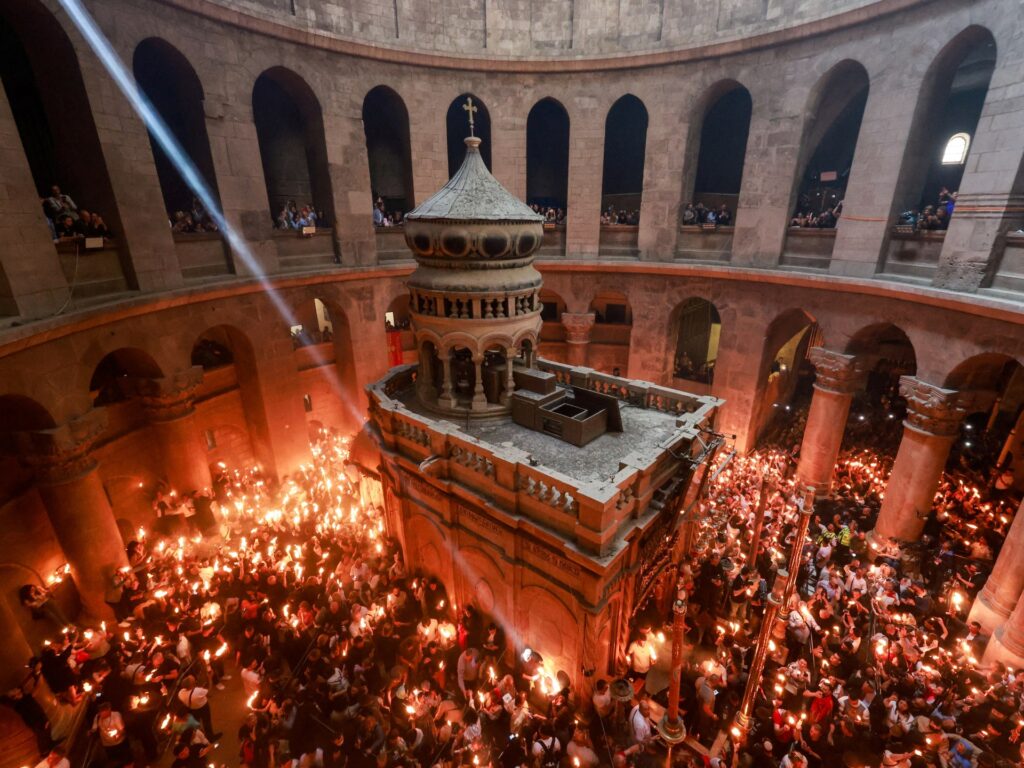
Thousands of Christians gathered in the cavernous Church of the Holy Sepulchre for a centuries-old Holy Fire ceremony. Holding unlit candles, they packed into the sprawling 12th-century basilica built on the site where, according to tradition, Jesus was crucified and buried. In near-total darkness, the Greek patriarch entered the Holy Edicule and emerged with two lit candles. The flame was passed from one candle to the next, the light overcoming the darkness in the rotunda. The flame was later transferred to Orthodox communities in other countries on special flights. Eastern Orthodox Christians believe the light miraculously appears inside the Holy Edicule, built on the traditional site of Jesus’s tomb, while sceptics going back to the Middle Ages have dismissed it as a carnival trick for the masses. Either way, the ceremony, which goes back at least 1,200 years, is a sight to behold. It has also ignited safety concerns. In 1834, a frenzied stampede broke out in the darkened church, and the ruler of the Holy Land at the time barely escaped after his guards drew swords and hacked their way through the crowd, historian Simon Sebag Montefiore recounts in his history of Jerusalem. Some 400 pilgrims died in the melee, most from suffocation or trampling. Advertisement Israeli authorities have sought to limit participants in recent years, citing safety concerns. That has drawn protests from church leaders, who have accused them of upsetting the delicate, unwritten arrangements around Jerusalem’s holy sites known as the status quo. On Saturday, there was a heavy military presence as thousands of worshippers passed through Israeli checkpoints to enter. Some worshippers lamented that the turnout lacked numbers this year because of Israel’s 18-month war on Gaza. “The number of police is higher than the number of pilgrims,” said Adeeb Joude, key holder for the Holy Sepulchre. Israel captured East Jerusalem, including the Old City with major sites sacred to Jews, Christians and Muslims, in the 1967 Middle East War, and annexed it in a move not recognised internationally. The Palestinians want East Jerusalem to be the capital of their future state. The Old City has a long history of tensions between Israelis and Palestinians, among different religious groups that share its hilly confines and even within certain faiths. Perceived infringements on the status quo in the Church of the Holy Sepulchre have led to brawls between monks of different denominations. Israel says it is committed to ensuring freedom of worship for Jews, Christians and Muslims, and has long presented itself as an island of tolerance in the Middle East. In recent years, however, tensions have risen with the local Christian community, most of whom are Palestinian Christians, a population that has dwindled through decades of conflict as many have moved abroad. Advertisement Adblock test (Why?)
Real Madrid vs Athletic Club: LaLiga – Start, team news, squads, Ancelotti

Al Jazeera takes a look at Athletic’s visit to Real Madrid, where the LaLiga defending champions’ season hangs in the balance. Who: Real Madrid vs Athletic ClubWhat: Spanish LaLigaWhere: Santiago Bernabeu, Madrid, SpainWhen: Sunday at 9pm local time (19:00 GMT) Follow Al Jazeera Sport‘s live text and photo commentary stream. Defending champions Real Madrid are in desperate need of all three points as they entertain Athletic Bilbao in LaLiga. The Spanish giants’ defence of their Champions League title ended with a defeat to Arsenal on Wednesday. And with Barcelona moving seven points clear at the top of LaLiga with their 4-3 comeback win against Celta Vigo on Saturday, Los Blancos can ill afford to drop points against a team that are proving tough to topple. What is the latest on Ancelotti’s future? Real coach Carlo Ancelotti has refused to speak about his future with the club after recent reports again linked him with a move to Brazil’s national team. The veteran Italian manager was asked several times by reporters on Saturday at a pre-game news conference if he would leave the Spanish giant this summer, and each time he responded that he didn’t want to speak about it. “At the end of the season, we will speak about this with the club,” he said more than once. Advertisement The 65-year-old is under contract with Madrid through June 2026. What has happened to Real Madrid’s season? Speculation regarding Ancelotti’s career plans once again spiked after Madrid’s exit from the Champions League. Besides the Copa del Rey, Madrid is still in the fight to defend its LaLiga title and will also play in the Club World Cup this summer. FT: #BarçaCelta 4-3 Raphinha leads the REMONTADA for @FCBarcelona! 🔥#LALIGAEASPORTS | #DesenlaceLALIGA pic.twitter.com/85zk1Fshis — LALIGA English (@LaLigaEN) April 19, 2025 What is the link between Brazil and Ancelotti? Brazil have reportedly been after Ancelotti since last year as they seek an elite coach for the 2026 World Cup. The South Americans fired Dorival Junior as coach last month. What is Ancelotti’s record as a manager? Ancelotti is the only coach to have won the Champions League five times — three times with Madrid (2014, 2022, 2024) and twice with AC Milan (2003, 2007). He is also the only coach to have steered teams to domestic league titles in Spain, England, Italy, Germany and France. Who is reportedly lined up to replace Ancelotti? Former Liverpool manager Jurgen Klopp and former Liverpool and Real Madrid midfielder Xabi Alonso are both considered top candidates to replace Ancelotti should he leave Madrid. Klopp, however, is “very happy” in his current post at Red Bull despite rumours linking him to a return to management with Real Madrid, his agent said on Friday. The German became Red Bull’s global head of football in January, taking care of a stable of clubs, including RB Leipzig, the New York Red Bulls and Bragantino in Brazil. Advertisement Alonso, Bayer Leverkusen’s coach, on Friday refused to shut down speculation he could be set for a move to Real Madrid in the summer. “It’s not a good time to discuss the future. We’re at a very important moment in the season,” Alonso said. Leverkusen are six points behind league leaders Bayern Munich with five games remaining. How are Athletic Club fairing in LaLiga? Athletic hold fourth spot in the Spanish top flight with 15 wins from 31 games. No team have lost fewer games than the Bilboa-based club, who have suffered defeat on only four occasions. 📋✅ Our squad for the match! 🆚 @Athletic_en pic.twitter.com/a59FO36sqC — Real Madrid C.F. 🇬🇧🇺🇸 (@realmadriden) April 19, 2025 Real Madrid team news Kylian Mbappe is serving a one-game suspension after his red card against Alaves. Eduardo Camavinga returns from the suspension that ruled him out of the defeat by Arsenal. Ferland Mendy and Andriy Lunin have a chance of returning from knocks, but Eder Militao and Dani Carvajal are out with knee injuries. Athletic Club team news Inaki Williams is likely to remain a sub due to an adductor injury. This match has probably come too soon for Yuri Berchiche to return from a muscular problem. 🗒 𝗦𝗤𝗨𝗔𝗗 𝗟𝗜𝗦𝗧 Ernesto Valverde has called up 2️⃣3️⃣ players for tomorrow’s clash with @realmadriden at the Santiago Bernabéu. ℹ️ Travel details 👉 https://t.co/VXWeD3nQkX#RealMadridAthletic #AthleticClub 🦁 pic.twitter.com/PTUplPO7Aq — Athletic Club (@Athletic_en) April 19, 2025 Adblock test (Why?)