

Canada’s PM Carney plans for stronger defence, broader trade amid US rift
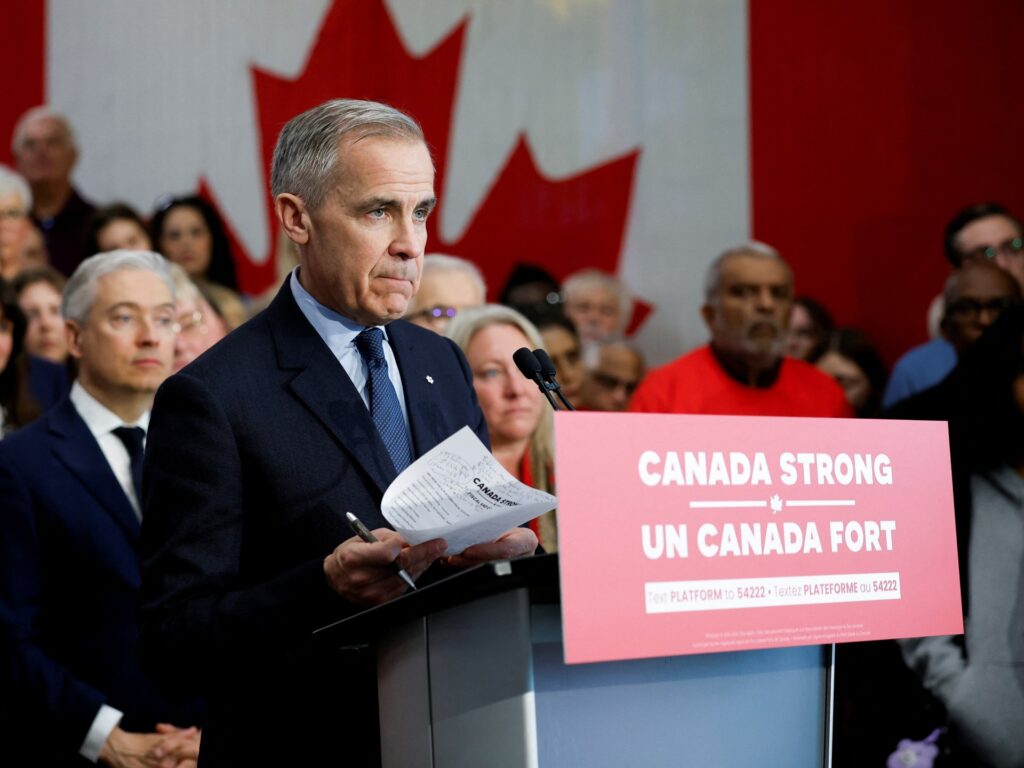
In campaign platform, Carney plans to invest in the military and infrastructure while still cutting spending. Canadian Prime Minister Mark Carney has unveiled plans to cut taxes and beef up defence spending, arguing Canada must project economic strength and defend its “sovereignty” from the United States amid roiled relations with its neighbour. Carney, who became prime minister after Justin Trudeau resigned on March 14, presented his Liberal Party’s campaign plan on Saturday before parliamentary elections on April 28. The vote will determine whether Carney, the former governor of the Bank of Canada and Bank of England, secures a mandate to continue as premier or whether the rival Conservatives, led by Pierre Poilievre, take power. Carney has said he is the best person to stand up to US President Donald Trump, who has opened up a rift in relations with the traditional US ally, imposing heavy tariffs and even threatening to annex Canada as the 51st US state. “President Trump is trying to break us so that America can own us, and that will never happen,” Carney said on Saturday. “Canada is not America, and it never will be, but we need to do more to just recognise that. We need a plan to deal with this new reality.” Advertisement ‘Investing too little’ Carney’s plan includes investing more in infrastructure and defence while cutting income taxes. He also envisions a trade diversification fund to help exporters expand outside the tariff-heavy US market. “We’re in an enormous crisis, so we have to be able to do two things: one, hold down on that wasteful spending, which we will do, but much more than that, we need to be bold and drive investment in the economy and take the amazing opportunities we have,” Carney said. The plan would boost defence spending to exceed a NATO target of 2 percent of gross domestic product by 2030. It includes buying more submarines, drones and icebreakers. Canada will also invest in transatlantic security with “like-minded” European partners, Carney said. Poilievre, too, has called for increased defence spending although he has proposed offsetting it with deep cuts to “wasteful” foreign aid. Carney aims to balance the budget within three years by cutting expenditures in the federal public service, all while safeguarding healthcare and pensions. “The government has been spending too much, and Canada has been investing too little,” he said. Adblock test (Why?)
US attacks Yemen again after at least 80 people killed in Hodeidah

UN chief Antonio Guterres says he is ‘gravely concerned’ about US air strikes this week on Yemen. The United States has carried out 13 air strikes on Hodeidah’s port and airport, the Houthi-affiliated TV channel Al Masirah says, two days after a US air strike targeted the Ras Isa port, also in Hodeidah, killing at least 80 people and wounding more than 150. Al Masirah also reported Saturday that three people were killed and four injured due to a US attack on al-Thawra, Bani Matar, and al-Safiah districts in the capital Sanaa. The Houthis have promised to carry out “more operations” despite the ongoing US attacks. US President Donald Trump’s administration announced a major military offensive against the Houthis a few weeks ago. It said the air strikes are aimed at forcing the Houthis to stop threatening ships sailing on the Red Sea on a route crucial to international trade. Since November 2023, the group has reportedly launched more than 100 attacks on vessels it says are linked to Israel in response to Israel’s war on Gaza and in solidarity with Palestinians. On Friday, Houthi official Mohammed Nasser al-Atifi told Al Masirah that the “American enemy’s crimes” will not deter the Yemeni people from supporting Gaza, but “rather will strengthen their steadfastness and resilience”. Advertisement The Houthis, also known as Ansar Allah or “supporters of God”, are an armed group that controls most parts of Yemen, including Sanaa. The group emerged in the 1990s but rose to prominence in 2014 when it seized Sanaa and forced President Abd-Rabbu Mansour Hadi to flee the country. United Nations Secretary-General Antonio Guterres “is gravely concerned about the airstrikes conducted by the United States over the course of 17 and 18 April in and around Yemen’s port of Ra’s Isa, which reportedly resulted in scores of civilian casualties, including five humanitarian workers injured,” Guterres spokesman Stephane Dujarric said in a statement on Saturday. Guterres expressed fears of damage to the port and “possible oil leaks into the Red Sea”, Dujarric added. The strikes on Ras Isa aimed to cut off supplies and funds for the Houthis, the US military said. It was the deadliest attack of Washington’s 15-month campaign against the Iran-aligned group. About 70 percent of Yemen’s imports and 80 percent of its humanitarian assistance pass through the ports of Ras Isa, Hodeidah and as-Salif. Ras Isa also is the terminus of Yemen’s main oil pipeline, which, along with its port, are “critical and irreplaceable infrastructure” in Yemen, according to the UN Development Programme. Adblock test (Why?)
Over 170 arrested for attacks on Pakistan KFC outlets in Gaza war protests
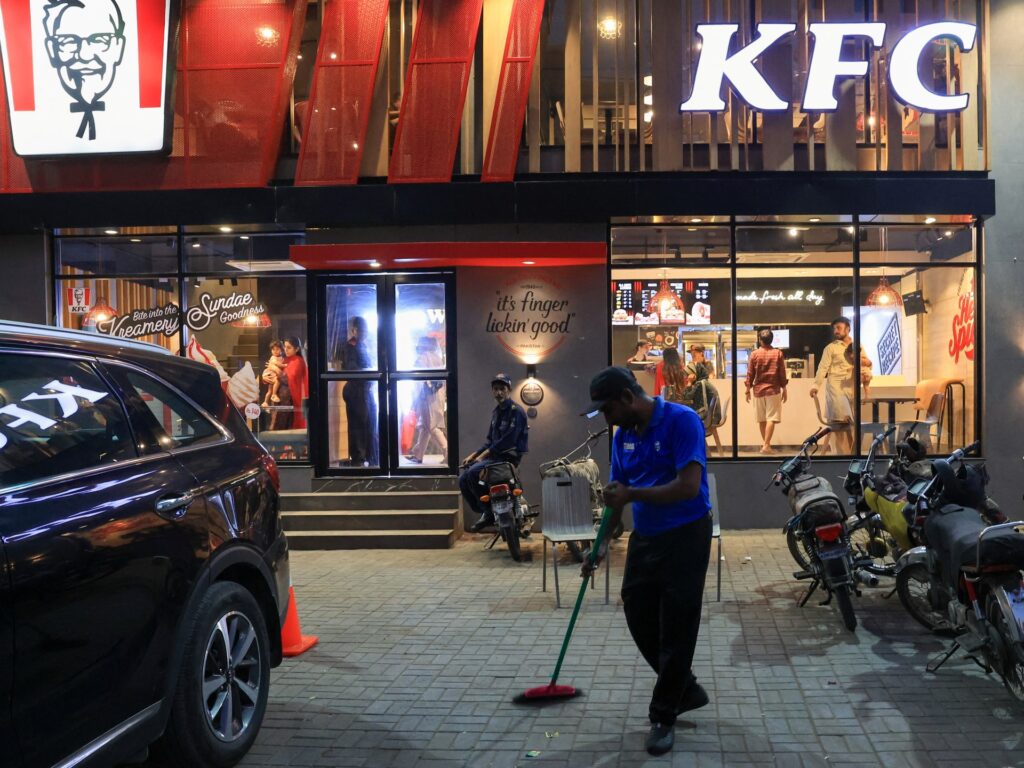
Western brands have been hit by boycotts and other forms of protests in Muslim-majority countries due to the Gaza war. Police have arrested close to 200 people in Pakistan in recent weeks after more than 10 group attacks on outlets of the United States-based fast-food chain KFC, sparked by anti-US sentiment, unconditional US backing for Washington’s close ally Israel and opposition to Israel’s war in Gaza, officials say. The fast-food chain has become a target of protest and boycott calls by Islamist parties since the start of the war in Gaza as they link the brand to US support for Israel. At least 178 people have been arrested, the officials said this week. Police in major cities in Pakistan – including the southern port city of Karachi, the eastern city of Lahore and the capital, Islamabad – confirmed at least 11 incidents in which KFC chicken restaurants were attacked by protesters armed with sticks and vandalised. A police official, who spoke on condition of anonymity, said one KFC employee was shot and killed this week in a store on the outskirts of Lahore by unknown gunmen. The official added there was no protest at the time and police were investigating whether the killing was politically motivated or for some other reason. Advertisement In Lahore, police said they were ramping up security at 27 KFC outlets after two attacks took place and five were prevented. “We are investigating the role of different individuals and groups in these attacks,” Faisal Kamran, a senior Lahore police officer told the Reuters news agency, adding that 11 people, including a member of the Islamist party Tehreek-e-Labbaik Pakistan (TLP), have been arrested in the city. He added the protests were not officially organised by the TLP. TLP spokesman Rehan Mohsin Khan said the group “has urged Muslims to boycott Israeli products, but it has not given any call for protest outside KFC”. “If any other person claiming to be a TLP leader or activist has indulged in such activity, it should be taken as his personal act which has nothing to do with the party’s policy,” Khan said. Western brands have been hit by boycotts and other forms of protests in Pakistan, other Muslim-majority countries and several Western nations over Israel’s military offensive in the Gaza Strip. In February last year, McDonald’s cited boycott campaigns in the Middle East, Indonesia and Malaysia for sales growing just 0.7 percent during the fourth quarter of 2023, compared with 16.5 percent growth in the same quarter the previous year. Unilever – which produces Dove soap, Ben & Jerry’s ice cream and Knorr stock cubes – also said sales in Indonesia in the same quarter had experienced a double-digit decline as a result of “geopolitically focused, consumer-facing campaigns”. Advertisement A KFC restaurant in the Pakistan-administered region of Kashmir was also set on fire in March last year as protesters chanted “Free Palestine.” More than 51,900 people have been killed in Gaza during Israel’s war, which began 18 months ago. At least 1,139 people were killed in Israel during the Hamas-led attacks of October 7, 2023, and more than 200 were taken captive. KFC and its parent company Yum Brands have not yet responded to news of the arrests in Pakistan. Adblock test (Why?)
Russia’s Putin declares unilateral Easter ceasefire in Ukraine conflict
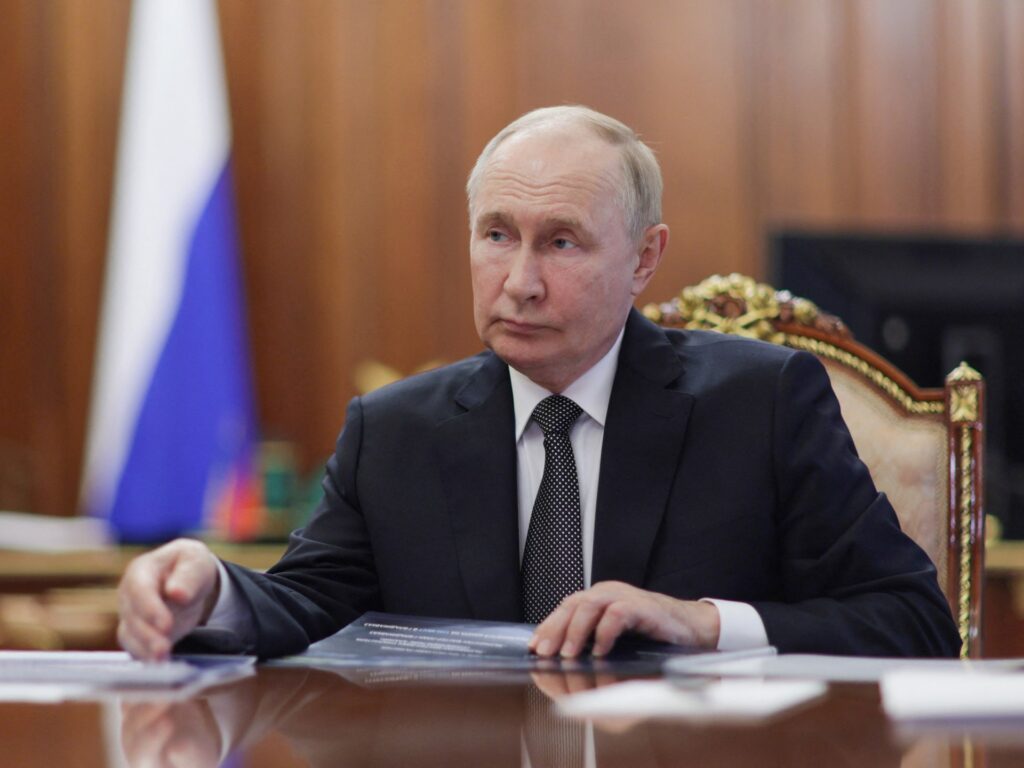
DEVELOPING STORYDEVELOPING STORY, Unilateral cessation of hostilities to begin on Saturday at 6pm local time and runs until midnight on Sunday, the Kremlin says. President Vladimir Putin has announced a unilateral Easter truce in Russia’s war in Ukraine, while President Volodymyr Zelenskyy said shortly after that Ukrainian air defence units were fighting off an attack by Russian drones, adding that showed Moscow’s true attitude to Easter and the lives of people. “Today from 18:00 (15:00 GMT) to midnight Sunday (21:00 GMT Sunday), the Russian side announces an Easter truce,” Putin said in televised comments on Saturday while speaking to Russian chief of staff Valery Gerasimov. Putin said he assumed Ukraine would follow Russia’s example and said Kyiv’s actions during the ceasefire will show its readiness for a peaceful settlement. But the Russian president also told Gerasimov to ready troops to repel any violations of the truce by Ukraine. The Russian Defence Ministry posted on Telegram: “The ceasefire regime is being introduced for humanitarian purposes and will be observed by the Russian Joint Group of Troops [Forces], provided that it is mutually observed by the Kyiv regime.” Advertisement Last month, Putin agreed to halt attacks on energy infrastructure targets in Ukraine for 30 days after a phone call with United States President Donald Trump. However, both sides have told of numerous instances in which attacks have continued. Putin stopped short of accepting a broader US-backed 30-day ceasefire proposal that Ukraine has said it is ready to implement. According to Russian media reports, on Saturday Putin accused Ukraine of violating the truce on attacks on energy infrastructure more than 100 times but highlighted that the situation on the front line has been favourable to Russia so far. He also said that Moscow “has always been ready for negotiations” and welcomed the US, China and other countries’ efforts to ensure a fair settlement on Ukraine. Adblock test (Why?)
US VP Vance discusses thorny issue of migration with Vatican

The Vatican affirmed good relations with the US but noted ‘an exchange of opinions’ on global conflicts and migration. US Vice President JD Vance has met with the Vatican’s top diplomats, discussing the politically fraught issue of migration months after Pope Francis rebuked the new US administration’s hardline immigration stance. Vance, a Catholic convert, held what the Vatican described as “cordial talks” with Secretary of State Cardinal Pietro Parolin – the Holy See’s second highest official after the pope – and Paul Richard Gallagher, the secretary for relations with states. “There was an exchange of opinions on the international situation, especially regarding countries affected by war, political tensions and difficult humanitarian situations, with particular attention to migrants, refugees, and prisoners,” the Vatican said in a statement. The two sides also stressed “the common commitment to protect the right to freedom of religion and conscience”, the Vatican said. In February, Pope Francis angered the White House after writing a letter to US bishops in which he condemned Trump’s plan to deport migrants en masse, describing it as a “major crisis”. Advertisement Trump’s border tsar told Francis to “stick to” religion. Vance had been hoping to meet with the 88-year-old Francis, who is recuperating after battling life-threatening pneumonia and spending nearly 40 days in hospital. The Vatican made no mention of any such meeting with the pontiff, who has resumed some official duties, and Vance’s entourage has not commented on the remainder of his programme in Rome. Last year, Francis also made a rare foray into the US election season to call harsh anti-migrant attitudes “madness” and criticise right-wing US Catholic figures for overly conservative stances. But following Saturday’s meeting, the Vatican did acknowledge the US Catholic Church’s “valuable service to the most vulnerable people”. Adblock test (Why?)
Image of Gaza airstrike survivor wins 2025 World Press Photo of the Year

NewsFeed A poignant image of a nine-year-old amputee from Gaza is the 2025 World Press Photo of the Year. Mahmoud Ajjour lost both arms in an Israeli airstrike. His portrait was taken by Palestinian photographer Samar Abu Elouf for The New York Times. Ajjour spoke with Al Jazeera about rebuilding his life and his dream of returning home. Published On 18 Apr 202518 Apr 2025 Adblock test (Why?)
African athletes find their feet in Vietnam’s marathon running boom

Ho Chi Minh City, Vietnam – Ethiopian runner Tesfaye Tsegaye Keress deftly made his way through nearly 18,000 participants to position himself near the starting line of the Techcombank Ho Chi Minh City International Marathon in December. Keress said his diminutive size – he stands just 1.62 metres (5.3ft) tall and weighs about 50kg (116 pounds) – allowed the 27-year-old to slink easily through the throngs of runners to secure a strategic spot near the front just before the starting pistol was fired, in what was billed as Vietnam’s biggest marathon. Just days earlier, Keress had landed in Ho Chi Minh City – Vietnam’s commercial capital. He was accompanied by fellow Ethiopian runner, Dereje Alemu Miko, who came to compete in the 21km (13-mile) half-marathon at the event where Keress would run the full 42.1km marathon. In a competition consisting primarily of thousands of local Vietnamese runners, the participation of Keress and Miko immediately stirred interest. Local media wanted to know who the competitors from East Africa were. Advertisement As Keress told Al Jazeera, love for the sport of running was not the only reason for their trip to Vietnam. Keress knew that taking first place in the Ho Chi Minh City marathon would earn him a $2,500 cash prize. Winning was important, he said. “I have a wife and two sons, and we live in Sendafa,” Keress said, naming his hometown in Ethiopia’s Oromia region, about 38km (24 miles) northeast of the capital, Addis Ababa. “We run a chicken farm and have two cows for milk. We plan to expand our farm using the money from marathon races,” he said. To win, he would not only have to beat some of Vietnam’s best long-distance runners but also Kenya’s Edwin Kiptoo – a fellow East African who currently dominates Vietnam’s marathon running circuit after winning a string of major races. Finding their feet on Vietnam’s streets Keress might be considered an average runner in his native Ethiopia – a country that has produced some of the world’s most renowned track athletes. His personal best speed to complete a marathon is 2:23:50, which he achieved in 2023 in a marathon in Thailand. Though impressive, that speed would still rule him out of top-tier marathon competitions – the Boston Marathon requires speeds of less than 2 hours 13 minutes for entrants in its professional division. In Vietnam, however, Keress’s speed makes him a championship contender in a country where running has seen a steep rise in popularity. Over the past decade, marathons have boomed in Vietnam – a development partly attributed to the country’s increasingly wealthy middle class seeking ways to keep fit in the country’s burgeoning big cities. There is also a new social side to running in Vietnam’s well-attended marathons, according to reports, which have seen a steep rise in popularity since the mid-2010s. Advertisement Despite a years-long slump during COVID, the popularity of running came back even stronger post-pandemic, with many people focused on keeping healthy. Local news site VnExpress reported in 2023 that a total of 41 full marathon races, with some 264,000 entrants, took place in 27 provinces and cities across Vietnam that year. That was 10 more marathons than were held in Vietnam in 2022. With hundreds of thousands of runners taking part in a plethora of marathons up and down this country of 100 million people, major private sponsors have stepped in with prize money. Vietnam’s many marathons and lucrative prizes of thousands of dollars for winners are now attracting high-performing athletes – like Keress and Kiptoo – from the elite running centres of East Africa. East African athletes have long been a dominant force in competitive running, with world-famous track stars like Kenya’s Eliud Kipchoge – who in 2019 became the first person in recorded history to run a 42-km marathon in less than two hours – and Ethiopian Haile Gebrselassie who is considered one of the greatest long-distance runners in history, having set 27 world records. Sporting scouts have for years flocked to Kenya and Ethiopia, among other East African countries, to identify promising talent. Deals to compete in competitions around the world are often mediated by sport agents, who sponsor a runner and in return may take a cut of their winnings if successful. There is also the opportunity to capitalise on media attention with product and brand deals that race victories accrue for individuals and running teams. Advertisement Such an arrangement brought Keress and Miko to compete in the Ho Chi Minh City marathon and half-marathon in December. They are both managed by a promoter from Thailand who sponsors a team of runners and also operates a company specialising in energy supplements for athletes. Marathon running has also taken off in Thailand, along with a growing market for running gear and other services. And when runners such as Keress and Miko win races, there is a high return for sponsoring brand names and their products and services. Ethiopian runners Dereje Alemu Miko, left, and Tesfaye Tsegaye Keress, right, shop for groceries in Ho Chi Minh City, Vietnam [Danh Nguyen/Al Jazeera] From prize hunter to celebrity athlete in Vietnam When Edwin Kiptoo – who should not be confused with another younger Kenyan runner with the same name but of much greater international acclaim – first arrived in Vietnam in December 2023, he described how he was initially unprepared for the country and its costs. Simply finding accommodation on arrival was challenging for Kiptoo, who arrived with a budget of just 150,000 Vietnamese dong (less than $6), hoping to find a simple place to rest one night before the race. In downtown Ho Chi Minh City, the cheapest room Kiptoo could find was double that price. But good fortune seemed to favour Kiptoo when he was befriended by local runner Le Hoan whom he met at the race station where they went to collect their running bibs the day before the race. Learning of Kiptoo’s struggle to find somewhere cheap to stay, Le Hoan tried to
US judge rules Rumeysa Ozturk must be transferred from Louisiana to Vermont
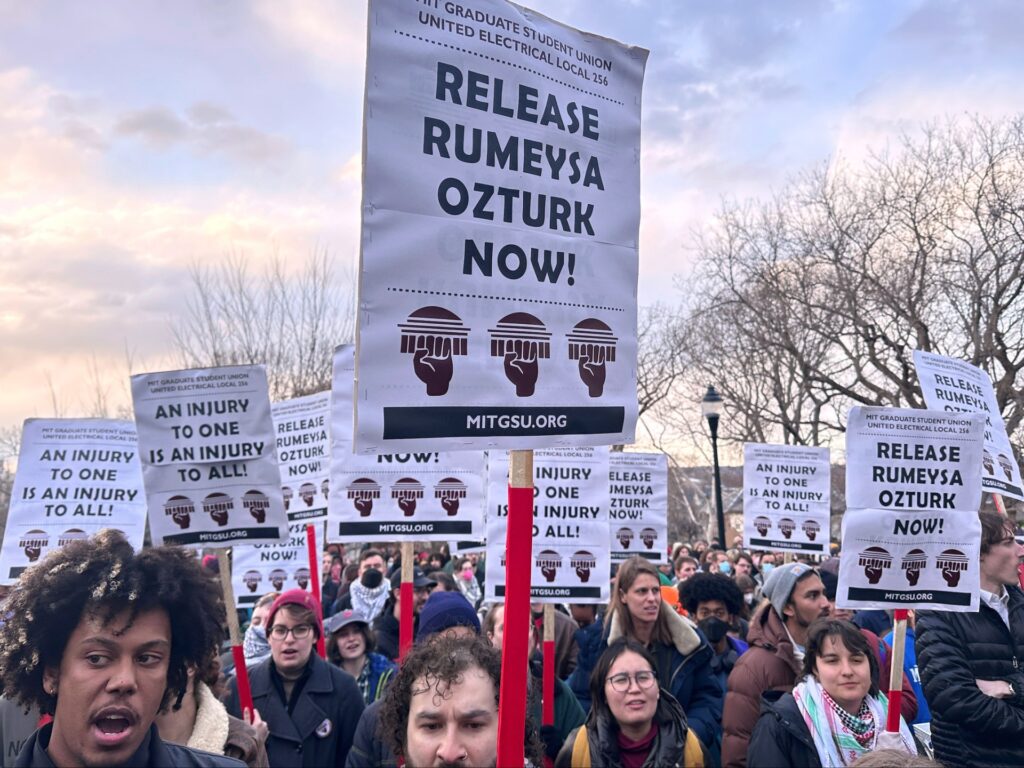
Court says detained pro-Palestine student has shown ‘significant evidence’ violations to her constitutional rights. Washington, DC – A federal judge in the United States has ordered the government to transfer a pro-Palestine Turkish student, Rumeysa Ozturk, to Vermont for the court to assess legal challenges to her detention. In a ruling on Friday, District Court Judge William S Sessions found that Ozturk – who is currently held in Louisiana – has presented “significant evidence” to back the allegations that her detention violated her free speech and due process rights. Ozturk was arrested and had her visa revoked in March. Supporters say she was targeted over an op-ed she co-authored last year, criticising Tufts University for dismissing a student government resolution that called on the school to divest from Israeli companies. For these claims to be assessed, Sessions wrote, Ozturk’s case needs to be heard in court. “The Court concludes that this case will continue in this Court with Ms Ozturk physically present for the remainder of the proceedings,” he wrote. The judge gave the government until May 1 to transfer Ozturk and set a bond hearing on May 9 for her to argue for a temporary release. Advertisement Ozturk was sent to a detention facility in Louisiana, in what critics say is part of a government effort to keep detainees away from their supporters and lawyers – and place them in conservative-leaning legal districts. The Tufts University student was arrested near her home in Massachusetts on March 30. Surveillance footage of the incident shows masked immigration officers, who did not identify themselves as law enforcement, approaching her on the street and grabbing her hands. Critics have described the incident as an abduction. Her student visa has been revoked as part of a massive crackdown by President Donald Trump’s administration on foreign students who have protested or criticised Israel’s war on Gaza. Sessions confirmed that the only identifiable evidence that the US government is using to detain and deport Ozturk is the op-ed. “Her evidence supports her argument that the government’s motivation or purpose for her detention is to punish her for co-authoring an op-ed in a campus newspaper which criticized the Tufts University administration, and to chill the political speech of others,” Sessions said. “The government has so far offered no evidence to support an alternative, lawful motivation or purpose for Ms Ozturk’s detention.” He also stressed that the First Amendment, which protects free speech, “has long extended” to non-citizens living in the US. The case Sessions is overseeing is known as a habeas corpus petition. It challenges Ozturk’s detention, not the broader push to deport her. Advertisement Deportation matters are reviewed through a separate system, where non-citizens bring their cases in front of an immigration judge who works within the executive branch. It is not a separate part of the government, as the independent judiciary is. Advocates say immigration judges often “rubber-stamp” the decisions of the executive branch under which they work. An immigration judge in Louisiana denied Ozturk’s release on bail earlier this week. Immigration cases can be appealed to a board of immigration appeals, an administrative body. As a last resort, immigrants can petition to bring their case in front of a court of appeals that is part of the regular judicial system. The Trump administration has been stressing that the law gives it leeway over immigration issues – and that, in turn, offers the presidency broad powers that supersede concerns about free speech and due process. To authorise the deportations, Secretary of State Marco Rubio has invoked a rarely used provision of the Immigration and Nationality Act that grants him the authority to remove non-citizens whom he deems to “have serious adverse foreign policy consequences” for the US. But part of Friday’s ruling could have sweeping implications for Ozturk and other students facing deportation. Sessions dismissed the notion that detained immigrants can have their constitutional rights ignored because of an administrative process. The judge said the government is arguing that an immigration law “grants practically limitless, unreviewable power to detain individuals for weeks or months, even if the detention is patently unconstitutional”. Advertisement Adblock test (Why?)
Rubio says US to decide within days if Ukraine ceasefire ‘doable’

NewsFeed US Secretary of State Marco Rubio says the US will decide in the coming days whether to continue to push for a peace deal between Russia and Ukraine, or to walk away. The Trump administration had made ending the war a priority, but talks have stalled. Published On 18 Apr 202518 Apr 2025 Adblock test (Why?)
The dangers of falling in love online

We discuss the dangers of falling in love online and how technology is used to deceive and steal from victims. The world of online romance scams is a dark and increasingly prevalent phenomenon, thriving on digital platforms where scammers exploit the search for love. These scams often involve emotional manipulation and blackmail, and can lead to significant financial devastation for victims. Dating apps, social media platforms and websites have become common spaces for people to connect with potential partners, but they also serve as prime hunting grounds for scammers. Presenter: Anelise Borges Guests:Cecilie Fjellhoy – Co-Founder, LovesaidRohan Mer – Scam Prevention Technology ExpertHelmi Korhonen – Romance Scam Recovery Project Adblock test (Why?)