

Pakistan confirms its expulsion of more than 80,000 Afghans since April 1
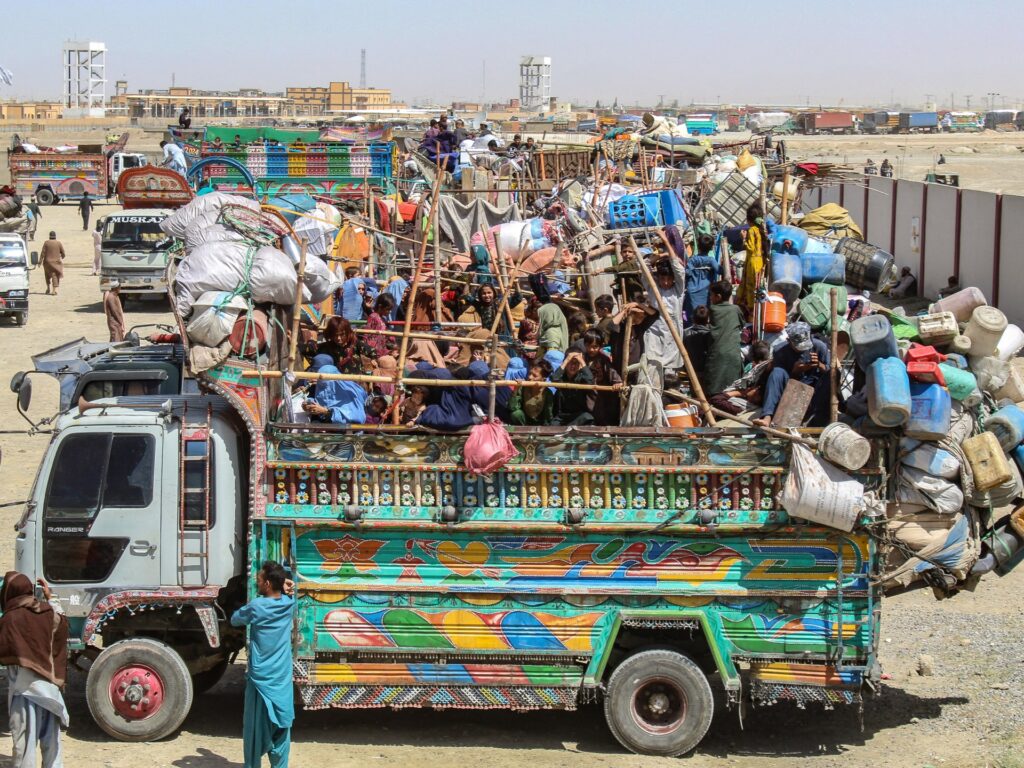
Rights groups have criticised the repatriation drive, warning that mass expulsions risk endangering vulnerable people. Pakistan has confirmed to have repatriated more than 80,000 Afghan nationals since April 1, before an extended April 30 deadline for the country’s largest migrant group in an initiative labelled as “forced deportation” by Afghanistan. Talal Chaudhry, Pakistan’s Interior Ministry adviser, told reporters in Islamabad on Friday that there would be no more extensions to the Illegal Foreigners Repatriation Plan launched in late 2023 for more than three million Afghans. “We have communicated clear instructions to all provinces, if anyone gives a shop, house, or any kind of space to an illegal foreigner, they will be held accountable under the law,” he said. Those lacking valid documents or holding Afghan Citizen Cards had initially been ordered to leave by March 31. That deadline was later extended by a month. On Tuesday, the International Organization for Migration, a UN entity, said Pakistan has expelled nearly 60,000 Afghans since the start of April. “With a new wave of large-scale returns now under way from Pakistan, needs on the ground are rising rapidly – both at the border and in areas of return that are struggling to absorb large numbers of returnees,” Mihyung Park, head of the IOM’s Afghanistan mission, said at the time. Advertisement More than 1.3 million Afghans who hold Proof of Registration cards from the UN refugee agency, UNHCR, have also been told to move outside the capital Islamabad and the neighbouring city of Rawalpindi. On Saturday, Pakistan’s Foreign Minister Ishaq Dar is due to visit Kabul, where he will head a delegation for high-level talks with the Taliban-led government. “The talks will cover the entire gamut of the Pakistan-Afghan relationship, focusing on ways and means to deepen cooperation in all areas of mutual interests, including security, trade, connectivity, and people-to-people ties,” said a statement from Pakistan’s foreign office. ‘We have no desire to leave’ The crackdown threatens to uproot Afghan families that have been in the country for decades. Earlier this month, Akber Khan, who owns a restaurant in the northwest Pakistani city of Peshawar, told The Associated Press news agency: “I have been here for almost 50 years. I got married here, so did my children, and 10 of my family members are buried here. That’s why we have no desire to leave.” At least a third of the Afghans Pakistan wants to expel this year live in the northwest province of Khyber Pakhtunkhwa. “Afghans can never be completely repatriated, especially from Khyber Pakhtunkhwa, as they return using illegal channels or exploiting loopholes in the system despite fencing at the border,” said Abdullah Khan, managing director of the Pakistan Institute for Conflict and Security Studies, to Al Jazeera. ‘Security threat’ Islamabad has frequently linked Afghan refugees to rising security threats and criminal activity within its borders – allegations rejected by Kabul, which has described the campaign as forced deportation and politically motivated. Advertisement Authorities in Pakistan say they have established temporary holding centres across multiple cities to process and accommodate Afghan nationals before their return. Most are being transported to the Torkham border crossing in Khyber Pakhtunkhwa province, the key route into eastern Afghanistan. Human rights groups have criticised the repatriation drive, warning that mass expulsions risk endangering vulnerable people, particularly women and children, who may face insecurity or persecution upon return. Despite these concerns, Pakistani officials maintain that the crackdown targets only those who remain in the country without legal authorisation, insisting the policy is a matter of national security. Adblock test (Why?)
Man kills two with police mother’s gun at Florida State University

Police identify gunman as 20-year-old son of local sheriff’s deputy in attack that also wounded five. The 20-year-old son of a sheriff’s deputy opened fire at Florida State University with his mother’s former service weapon, killing two people and wounding at least six others, investigators said. The attack on Friday occurred at approximately 11:50am Eastern Time (15:50 GMT) outside of the Tallahassee school’s student union. The university swiftly issued an active shooter alert, with Florida State’s alert system announcing that law enforcement had “neutralised the threat” soon after. Florida State University Police Chief Jason Trumbower said that the two people killed, who were not immediately identified, were not students at the school. Five other people were being treated at Tallahassee Memorial Hospital, where the attacker was also being treated after being taken into custody, he said. Evacuees watch law enforcement at Florida State University following a shooting [Alicia Devine/USA TODAY via Reuters] Speaking from the Oval Office, United States President Donald Trump said that he had been “fully briefed.” Advertisement “It’s a horrible thing. It’s horrible that things like this take place,” Trump said. He quickly pivoted to voicing support for gun ownership, saying, “These things are terrible, but the gun doesn’t do the shooting. The people do.” Leon County Sheriff Walter McNeil later identified the suspect as 20-year-old Phoenix Ikner, the son of a sheriff’s deputy within his own department. He said Ikner used his mother’s former service weapon in the attack, adding the attacker had been a longstanding member of the sheriff’s office’s youth advisory council and engaged in a number of training programmes with the office. “We will make sure that we do everything we can to prosecute and make sure that we send a message to folks that this will never be tolerated here in Leon County, and I dare say across the state and across this nation,” McNeil said. Law enforcement officers at Florida State University after a shooting [Alicia Devine/USA TODAY via Reuters] Police said Ikner is believed to be a student at the university, but a motive for the attack was not immediately known. Ikner invoked his right to silence upon being arrested, authorities said. School shootings are relatively common within the US, and Thursday’s shooting was not the first attack at the university. In 2014, three people were shot just outside and inside the entrance of Strozier Library in the middle of the university campus. Officers who arrived within two minutes of the first call shot and killed the gunman, a 31-year-old man. Advertisement Adblock test (Why?)
Ukraine and US sign memorandum on minerals deal, Kyiv says
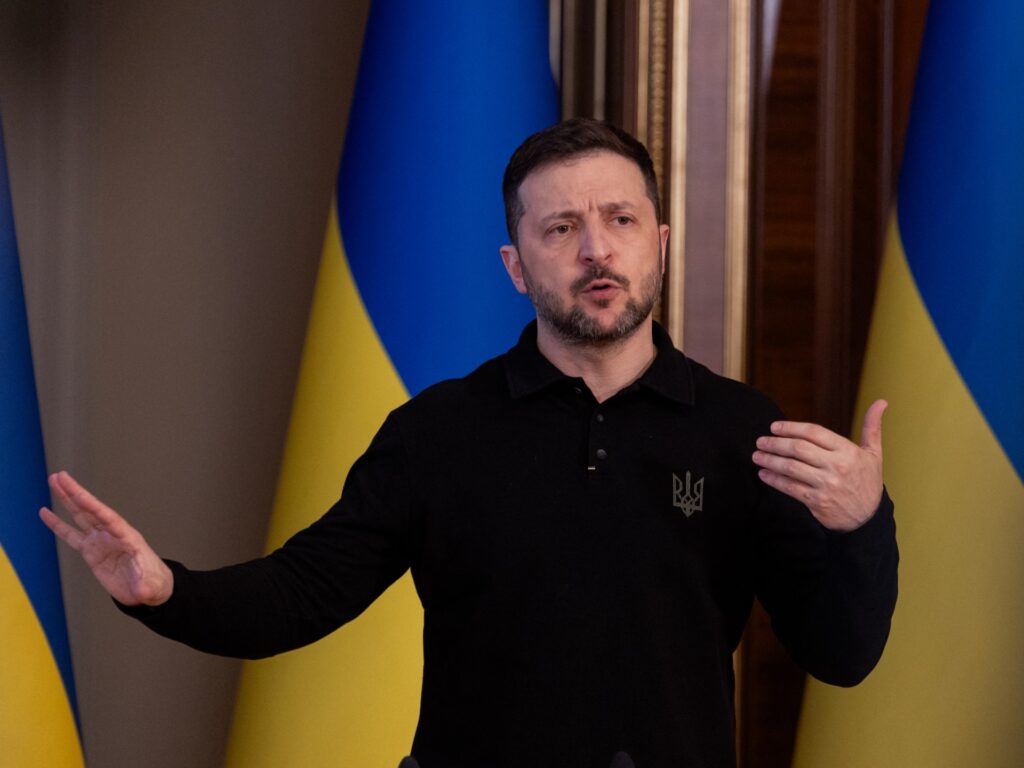
Ukraine offiical Yulia Svyrydenko did not publish details of the memorandum, says work continues towards securing final deal. Ukraine and the United States have signed a memorandum as an initial step towards the clinching of an agreement on developing minerals in the country, Kyiv’s first deputy prime minister and economy minister said. “We are happy to announce the signing, with our American partners, of a Memorandum of Intent, which paves the way for an Economic Partnership Agreement and the establishment of the Investment Fund for the Reconstruction of Ukraine,” Yulia Svyrydenko wrote on the social media platform X. Kyiv and Washington had discussed signing a deal on extracting Ukraine’s strategic minerals in February, but a clash between US President Donald Trump and Ukraine’s President Volodymyr Zelenskyy temporarily derailed work on the agreement. Trump says he wants the deal, designed to give the US royalty payments on profits from Ukrainian mining of resources and rare minerals, as compensation for aid given to Ukraine by his predecessor, Joe Biden. Svyrydenko did not publish details of the memorandum, but said work continued towards securing a final agreement. Advertisement “We hope that the Fund will become an effective tool for attracting investments in the reconstruction of our country, modernisation of infrastructure, support for business, and the creation of new economic opportunities,” she said. “There is a lot to do, but the current pace and significant progress give reason to expect that the document will be very beneficial for both countries.” The Ukrainian delegation travelled to Washington at the end of last week for negotiations after the Trump administration offered a new, more expansive deal. The initial framework agreement that was agreed to has never been signed. “We have a minerals deal, which I guess is going to be signed on Thursday,” Trump told reporters at the White House earlier. Zelenskyy had also said earlier that the two countries could sign a memorandum of intent online. “This is a memorandum of intent. And we have positive, constructive intentions,” Zelenskyy told reporters in Kyiv. He added that the offer to sign the memorandum before the comprehensive deal, which would require ratification in the Ukrainian parliament, had come from the US side. US officials say boosting American business interests in Ukraine will help deter Russia from future aggression in the event of a ceasefire. Kyiv is pushing for concrete military and security guarantees as part of any deal to halt the three-year war. Adblock test (Why?)
Man Utd reach Europa League last four with Maguire’s 121st minute winner
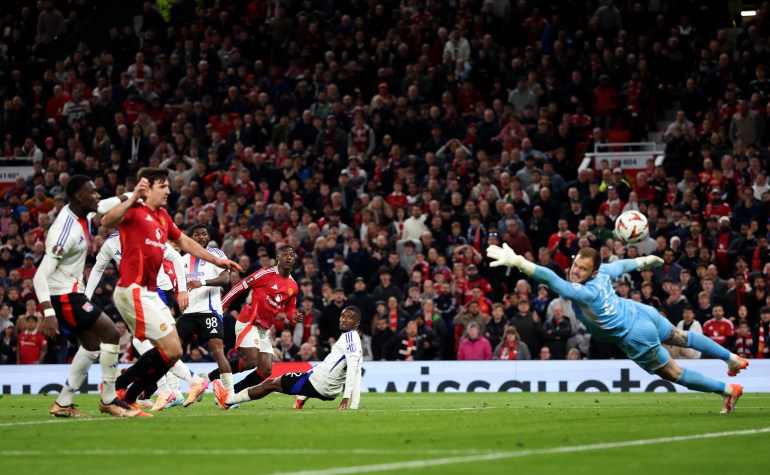
Manchester United score twice in the final minutes of extra time to turn quarterfinal against Lyon at Old Trafford. Harry Maguire scored in the dying seconds of extra time to help Manchester United snatch a place in the Europa League semifinals with a sensational 7-6 aggregate victory over Olympique Lyonnais in their quarterfinal. A thrilling second leg tie was taken into extra time after United threw away a two-goal lead on the night to be pegged back to 2-2 after 90 minutes, with goals from Rayan Cherki and Alexandre Lacazette putting Lyon on the verge of the semifinals at a stunned Old Trafford on Thursday. However, United made their numerical advantage, given to them after Corentin Tolisso’s late red card in normal time, count. Maguire sent Old Trafford into delirium with his 121st-minute header, which sealed a 5-4 victory in the second leg. It was the hosts who took an early lead, Manuel Ugarte slotting home 10 minutes in after a fine team move, before Diogo Dalot added a second just before the break to double the hosts’ lead. As the minutes ticked on, however, the nerves crept in, and two goals in six second-half minutes from Tolisso and Nicolas Tagliafico drew the match and left the tie level in a sensational fashion. Advertisement Tolisso’s late sending off swung the momentum back in United’s favour, but Cherki’s fine strike and Lacazzette’s coolly-taken penalty seemingly settled the exhilarating contest. Fernandes’s spot kick straight down the other end gave the home supporters hope of another dramatic finale, with Maguire having the final say, with United heading through to face Athletic Bilbao in the last four. Kobbie Mainoo of Manchester United scores his team’s fourth goal past Lucas Perri of Olympique Lyonnais during the UEFA Europa League match between Manchester United and Olympique Lyonnais at Old Trafford on April 17, 2025, in Manchester, England [Carl Recine/Getty Images] Tottenham overcome Frankfurt Tottenham also put its domestic problems to one side by sealing a place in the last four. Dominic Solanke’s first-half penalty secured a 1-0 win over Eintracht Frankfurt and a 2-1 aggregate victory. The win keeps alive the Spurs’ hopes of salvaging a desperate campaign that has left them languishing in 15th place in the Premier League. The deep run in the second-tier competition has provided rare moments of optimism – and triumph would not only deliver a first trophy since 2008, but qualification for next year’s Champions League. Athletic Bilbao also advanced to the semifinals after a 2-0 win over the Rangers following a 0-0 draw in the first leg. Lazio vs Bodo/Glimt also went to extra time. Lazio won 2-0 on the night and levelled the tie at 2-2 on aggregate. Spurs needed the assistance of VAR when awarded a penalty for a foul by Frankfurt goalkeeper Kaua Santos on James Maddison. Advertisement Solanke fired down the middle for the decisive goal in the 43rd minute. Oihan Sancet and Nico Williams were on target for Bilbao against the Rangers at San Mames. Adblock test (Why?)
Held without justice: A look inside Israeli prisons

Amid continued Israeli assault on Gaza, Palestinians mark Prisoners’ Day with thousands still in jail. As Israel continues its assault on Gaza and military raids in the occupied West Bank, thousands of Palestinians – including children – remain in Israeli prisons, many without charge. It’s not a new phenomenon, with more than 800,000 Palestinians detained by Israel since the occupation began in 1967. On the 51st Palestinian Prisoners’ Day, we speak to a former prisoner about his experience. Adblock test (Why?)
Saudi defence minister visits Tehran before Iran-US talks
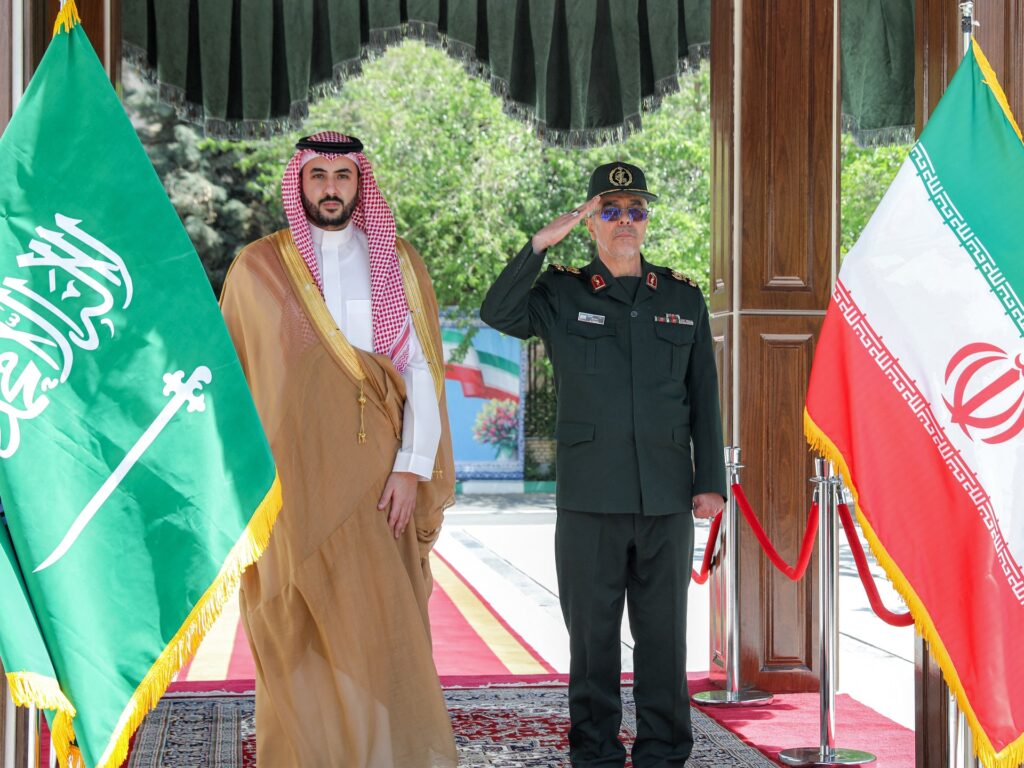
Saudi Arabia’s Defence Minister Prince Khalid bin Salman has met several Iranian officials before a second round of talks between Washington and Tehran over Iran’s nuclear programme. Prince Khalid said he conveyed a message from Saudi Arabia’s King Salman to Iranian Supreme Leader, Ayatollah Ali Khamenei during Thursday’s meeting in Tehran. “We discussed our bilateral relations and topics of mutual interest,” he wrote on X. “Our belief is that the relationship between the Islamic Republic of Iran and Saudi Arabia is beneficial for both countries,” Iranian state media cited Khamenei as saying in the meeting on Thursday. Prince Khalid also met President Masoud Pezeshkian and Iran’s armed forces chief of staff, Mohammad Bagheri. “Ties between the Saudi and Iranian armed forces have been improving since the Beijing agreement,” Bagheri said after the meeting, according to Iranian state media. Saudi Arabia has welcomed Iran’s nuclear talks with the US, saying it supported efforts to resolve regional and international disputes. Advertisement Iran and Saudi Arabia agreed in a 2023 deal brokered by China to re-establish relations after years of hostility that had threatened stability and security in the Gulf region and helped fuel conflicts in the Middle East from Yemen to Syria. ‘Crucial stage’ The Saudi defence minister’s trip coincided with a visit to Iran by the UN nuclear watchdog chief Rafael Grossi, who warned that the US and Iran were running out of time to reach a deal. Iranian and US delegations are set to gather in Rome on Saturday for a second round of Omani-mediated negotiations, a week after the longtime foes held their highest-level talks since US President Donald Trump abandoned a landmark nuclear accord during his first term in 2018. Since re-entering the White House in January, Trump has revived his so-called “maximum pressure” policy imposing punishing economic sanctions against Iran and threatened military action if Tehran does not agree to a deal. “We are in a very crucial stage of these important negotiations. We know we don’t have much time, this is why I am here … to facilitate this process,” Grossi said on Thursday. “We are working hard and we want to succeed,” he told a joint news conference with Iran’s atomic energy agency chief Mohammad Eslami, acknowledging that the effort to secure a deal was “not an easy process”. Asked about US President Donald Trump’s threats to attack Iran, Grossi urged people to “concentrate on our objective.” “Once we get to our objective, all of these things will evaporate because there will be no reason for concern,” he said. Advertisement In March, Trump sent a letter to Iran’s Supreme Leader Ayatollah Ali Khamenei urging talks and warning of possible military action if Iran refused. Khamenei has cautioned that while the talks with the United States had started well, they could yet prove fruitless. “The negotiations may or may not yield results,” he said on Tuesday. Western governments have long accused Iran of seeking to acquire nuclear weapons capability, an ambition Tehran has consistently denied. Since the nuclear deal’s collapse in 2018, Iran has abandoned all limits on its programme, and enriches uranium to up to 60 percent purity, near weapons-grade levels of 90 percent. Surveillance cameras installed by the IAEA have been disrupted, while Iran has barred some of the Vienna-based agency’s most experienced inspectors. But despite the tensions between Iran and the agency, its access has not been entirely revoked. Adblock test (Why?)
Who will win the US-China trade war?
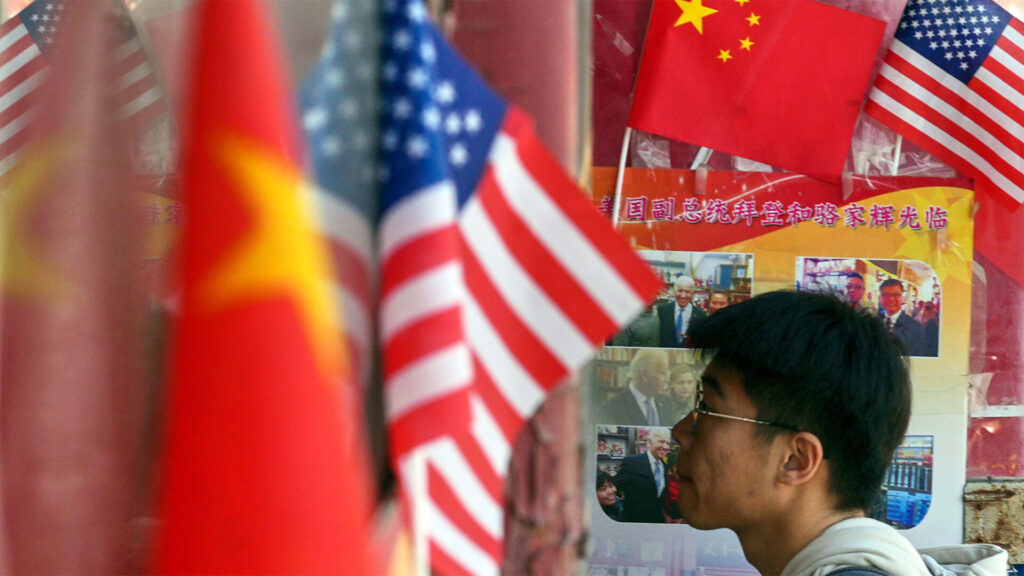
US-China trade war escalates with huge stakes for the economies of both nations and the rest of the world. The US and China are locked in a fast-moving trade war. It’s a game of brinkmanship.Tariffs on both sides are now so high that commerce between them is effectively about to cease.If it escalates into a full economic break, the consequences will hurt both economies and will send shockwaves worldwide.But, if he wants to negotiate, Donald Trump might have to bargain alone.China is seeking to win allies elsewhere, in Europe and Southeast Asia, where many nations also face punitive Trump tariffs. And Trump’s tariffs on Chinese tech products. Plus, a global deal to cut shipping emissions. Adblock test (Why?)
Trans women aren’t legally women: What the UK Supreme Court ruling means
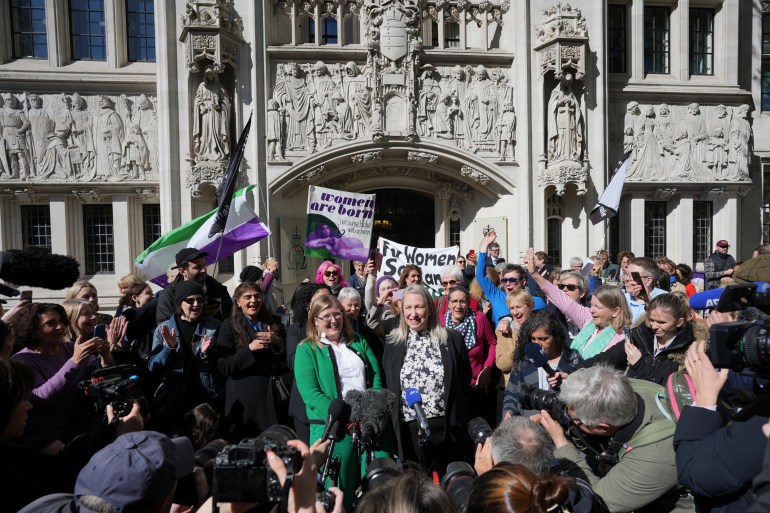
The United Kingdom’s Supreme Court has ruled that the terms “woman” and “sex” refer to a “biological woman and biological sex” under UK equality laws, bringing a long-running court battle between feminist groups and the government of Scotland to an end. Wednesday’s ruling is expected to have far-reaching consequences for policies on whether and how spaces and services reserved for women should be extended to include “trans women” – those born male who have transitioned socially or medically or who identify as women – such as changing rooms, domestic violence shelters and medical services. Although the case originally began in Scotland, the court’s interpretation of the law will be effective across the UK, including in England and Wales. Reactions towards the ruling have been mixed: Feminist advocacy groups involved in the legal case have voiced satisfaction, while trans groups and some members of the Scottish government expressed disappointment and fear about future discrimination. Here’s what we know about the Supreme Court’s ruling and how the case started: Marion Calder and Susan Smith from For Women Scotland celebrate outside the Supreme Court to challenge gender recognition laws, in London, UK, Wednesday, April 16, 2025 [Kin Cheung/AP] What was the case about and how did it start? The legal dispute began in March 2018 when the Scottish Parliament passed an act stating that 50 percent of non-executive members of the boards of Scottish public bodies must be women. Advertisement The act, which is known as Holyrood’s Gender Representation on Public Boards (Scotland) Act 2018, was supposed to ensure better representation for women in public bodies. A sticking point in the policy, however, was the definition of “woman”. The act itself said that “women” included transgender women who held gender recognition certificates (GRCs) – that is, trans women who have legally transitioned and are certified by the government as having changed their gender. A feminist group, For Women Scotland (FWS), challenged the new law and launched a petition against it in 2018. The group argued that the Scottish parliament had wrongfully defined “woman” and that the law had failed to use legal definitions as set out in the UK Equality Act of 2010. That Act prohibits discrimination based on age, disability, gender reassignment, marriage or civil partnership (in cases of employment), pregnancy and maternity, race, religion or belief, sex, and sexual orientation. However, the UK Equality Act 2010 does allow for separate or single-sex services to be provided when this is reasonably necessary, such as for reasons of privacy, decency or preventing trauma. A Scottish court dismissed the first case brought by FWS in 2022, concluding that the Scottish legislation did not necessarily redefine “woman” by including transgender women. The judge ruled that women were “not limited to biological or birth sex”. FWS launched an unsuccessful appeal in 2023. The case was then heard at the Scottish Court of Session several times as the group sought to clarify how to correctly interpret the term “woman” as enshrined in the Equality Act. Advertisement In March 2024, the advocacy group, backed by other feminist organisations and lesbian groups, appealed to the Supreme Court. The group was also supported by Harry Potter author and women’s rights campaigner JK Rowling, who reportedly donated 70,000 pounds ($92,000) to a crowdfunding campaign by FWS. The rainbow flag, bottom right, a symbol of the lesbian, gay, bisexual, and transgender community, flies alongside the UK, left, and the Scottish flags over the UK government’s Scotland Office building, in central London, Friday, March 28, 2014 [Lefteris Pitarakis/AP] What did the Supreme Court decide, and how does the UK law define ‘woman’? On Wednesday, five judges ruled unanimously that the term “woman” in the existing UK Equality Act should be interpreted as only people born biologically female, and that trans women, even those with GRCs, should be excluded from that definition. The ruling further clarified, therefore, that trans women can be excluded from certain single-sex spaces and groups designated for women, such as changing rooms, homeless and domestic violence shelters, swimming areas and medical or counselling services. “Interpreting ‘sex’ as certificated sex would cut across the definitions of ‘man’ and ‘woman’ … and, thus, the protected characteristic of sex, in an incoherent way,” Justice Patrick Hodge said while summarising the case. “It would create heterogeneous groupings.” The court added that the ruling was not a “triumph” of one side over the other, and emphasised that transgender people are still protected from discrimination under UK law. However, some protections, the judges clarified, should only apply to biological females and not transgender women. Transgender rights supporters protest in favour of Scottish gender reform bill outside Downing Street in London, UK, January 17, 2023 [Henry Nicholls/Reuters] What are the broader implications? Until now, trans women with GRCs could be counted as women for the purpose of all-women shortlists for political parties or to fill quotas for women on boards or within organisations. This will no longer be the case. Advertisement In the 20 years since the Gender Recognition Act was passed in the UK, nearly 8,500 GRCs have been issued. The Gender Recognition Panel received 1,397 applications for GRCs in 2023-2024 – a record number. Of those, 1,088 were granted. This was triple the number of applications in 2020-2021, after which the application fee dropped from 140 to 5 pounds ($180 to $7). The ruling provides some clarification on an issue that has proved polarising not only in the UK but also in the United States. Debates have raged in both countries, as well as in other Western nations, on whether certain women’s rights, services or spaces should be extended to trans women. US President Donald Trump is facing legal challenges for signing orders to define sex as only male or female. Trump has also tried to ban transgender people from entering the military and block trans people from participating in sports teams that do not align with their biological sex. It’s unclear how the ruling could affect sport in the UK, but trans women
Trump says Fed Chair Powell’s exit ‘can’t come soon enough’
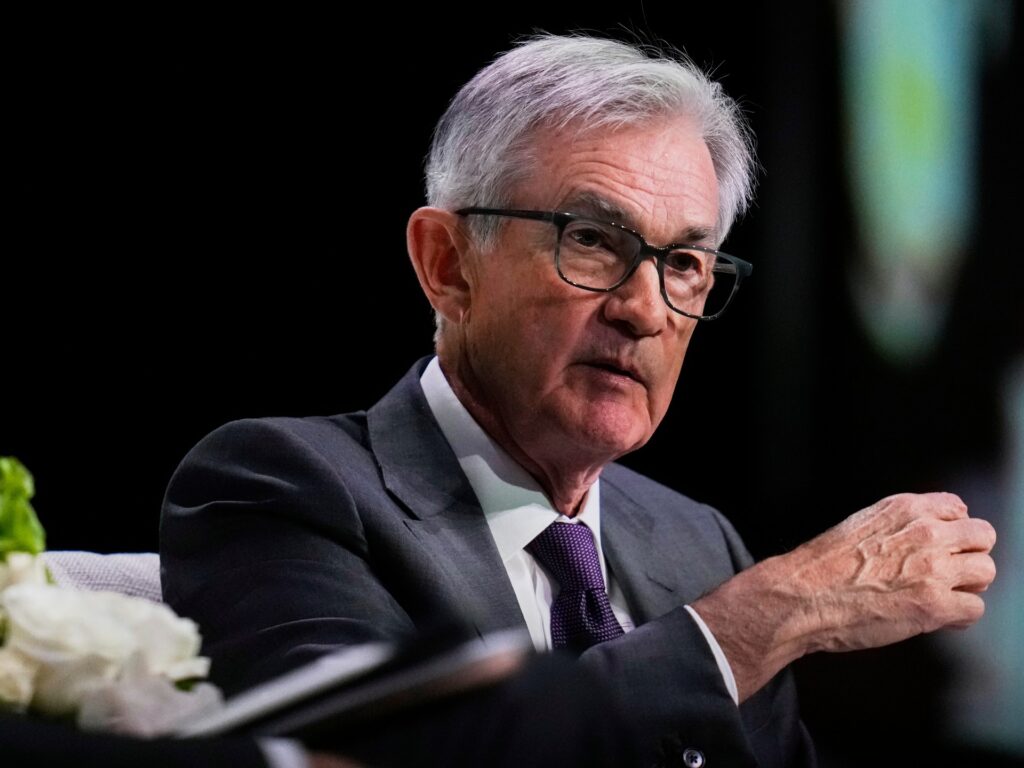
United States President Donald Trump has hinted at firing Federal Reserve chairman Jerome Powell amid the president’s frustration that the central bank will not aggressively cut interest rates. On Thursday, Trump said that Powell’s “termination cannot come fast enough”. Powell’s term does not expire until May 2026. The president does not have the authority to remove Powell from the central bank. Trump’s attacks on Powell come after the Fed chair’s speech at the Economic Club of Chicago on Wednesday. Powell said the Fed would base its decisions solely on what is best for all Americans. “That’s the only thing we’re ever going to do,” Powell said. “We’re never going to be influenced by any political pressure. People can say whatever they want. That’s fine, that’s not a problem. But we will do what we do strictly without consideration of political or any other extraneous factors. “Our independence is a matter of law,” Powell continued. “We’re not removable except for cause. We serve very long terms, seemingly endless terms.” Advertisement The Republican president’s broadside comes a day after Powell signalled that the Fed would keep its key interest rate unchanged, while it seeks “greater clarity” on the effect of policy changes in areas such as immigration, taxation, regulation and tariffs. Powell also reiterated that Trump’s tariffs would likely raise inflation and slow the economy, which could make it harder for the Fed to cut rates anytime soon. The Fed chair suggested that the central bank would focus on fighting inflation in the wake of the tariffs, even if the duties did weaken the economy. Powell’s comments contributed to a drop in stock prices on Wednesday. Trump pushes back Pushing back on Powell, Trump in a social media post said, “Oil prices are down, groceries (even eggs!) are down, and the USA is getting RICH ON TARIFFS.” On the contrary, oil prices have risen 2 percent in the last two weeks. Grocery prices have actually increased under Trump, according to the most recent consumer price index report in April, and egg prices hit record highs last month as per the same report. Last week, the president falsely claimed the US brought in $2bn a day thanks to tariffs – it was $200m a day. Referring to the European Central Bank (ECB), Trump added that Powell “should have lowered Interest Rates, like the ECB, long ago, but he should certainly lower them now. Powell’s termination cannot come fast enough!” The ECB on Thursday lowered its key interest rate from 2.5 percent to 2.25 percent. Powell was initially nominated by Trump in 2017 and was appointed to another four-year term by former President Joe Biden in 2022. At a November news conference, Powell indicated he would not step down if Trump asked him to resign, pointing out that removal or demotion of top Fed officials was “not permitted under the law”. Advertisement Trump’s comments come with the backdrop of a legal case at the Supreme Court that could determine whether presidents can fire the heads of independent agencies such as the Fed. The case stems from Trump’s firings of officials from two independent agencies. The Supreme Court last week let the firings stand while it considers the case. It could issue a broader ruling this summer that would enable the president to fire Fed officials, including the chair. Powell said the Fed is watching the case closely, adding it might not apply to the Fed. Lawyers for the Trump administration have argued that allowing the president to fire the two officials wouldn’t erode the Fed’s independence. “It is difficult to overstate the consequences at this stressed moment of a Court ruling that found that President Trump … does have the authority to dismiss the heads of independent agencies and did not establish a clear carve-out for the Fed,” Krishna Guha, an analyst at investment bank Evercore ISI, wrote on Thursday. “If you liked the tariff debacle in markets, you’d love the loss-of-Fed-independence trade.” Tariff mayhem Powell started Trump’s second term in a relatively secure spot with a low unemployment rate and inflation progressing closer to the Fed’s 2 percent target, conditions that could have spared the US central banker from the president’s vitriol. But Trump’s aggressive and haphazard tariffs have raised the threat of a recession with both higher inflationary pressures and slower growth, a tough spot for Powell, whose mandate is to stabilise prices and maximise employment. With the economy weakening because of Trump’s choices, the president appears to be looking to pin the blame on Powell. Advertisement Trump has unleashed a rash of tariffs that have put the US economy and the Fed in an increasingly perilous spot. On April 2, the president rolled out aggressive tariff hikes based on US trade deficits with other nations, causing a financial market backlash that almost immediately led him to announce a 90-day pause in which most countries would be charged a baseline 10 percent tariff while negotiations go forward. But Trump increased his tariff hikes on China to a rate of 145 percent in addition to his existing tariffs on Canada, Mexico, autos and steel and aluminium. Wall Street banks such as Goldman Sachs have raised their odds that a recession could start. Consumers are increasingly pessimistic in surveys about their job prospects and fearful that inflation would shoot up as the cost of the import taxes get passed along to them. The risk of stagflation – stagnant growth and high inflation – would make it harder for the Fed to respond with the same playbook as recent downturns. The Budget Lab at Yale University estimated that the increased inflationary pressures from the tariffs would be equal to the loss of $4,900 in an average US household. Adblock test (Why?)
Haiti in ‘free fall’ as violence escalates, rights group warns
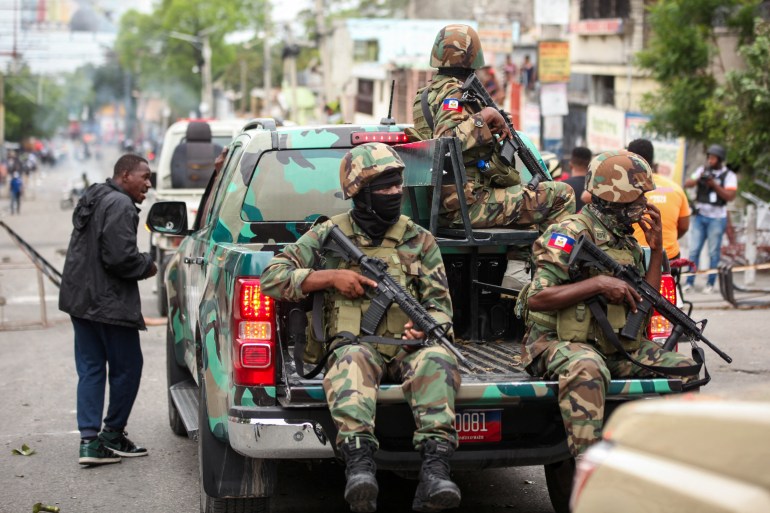
The security situation in Haiti is in “free fall”, Human Rights Watch (HRW) has warned, as armed groups continue to unleash deadly violence in the capital and other areas across the Caribbean nation. In a statement on Thursday, HRW said criminal gangs have escalated their attacks in Port-au-Prince since late last year, and only 10 percent of the city remains under government control. “Haiti’s security situation is in a free fall and Haitians are suffering horrific abuses,” said Nathalye Cotrino, the rights group’s senior Americas researcher. The country has reeled from years of violence as powerful armed groups, often with ties to the country’s political and business leaders, have vied for influence and control of territory. But the situation worsened dramatically after the July 2021 assassination of Haitian President Jovenel Moise, which created a power vacuum. Haitian security forces patrol during a protest against insecurity in Port-au-Prince on April 16, 2025 [Fildor Pq Egeder/Reuters] In 2024, the gangs launched attacks on prisons and other state institutions across Port-au-Prince, fuelling a renewed political crisis. Advertisement The campaign of violence led to the resignation of Haiti’s unelected prime minister, the creation of a transitional presidential council, and the deployment of a United Nations-backed, multinational police mission. That Kenya-led police force – formally known as the Multinational Security Support Mission (MSS) – has failed to take control back from the gangs, however. Observers say the mission has been underfunded and ill-equipped. Recently, so-called “self-defence” groups have formed in response to the armed gangs, leading to more deadly violence. Protests have also broken out in Port-au-Prince against the country’s transitional presidential council, which has been unable to restore security. On April 7, the authorities declared a new, one-month state of emergency amid the violence. “Declaring emergencies without equipping police with necessary resources, like effective armored vehicles, will not solve the insecurity crisis,” the National Human Rights Defense Network, a leading Haitian rights group, said in a recent report. “The absence of state response has turned the police into firefighters—constantly reacting without strategic direction—while towns fall one after another,” the group said. People walk past a burning barricade during a protest against insecurity in Port-au-Prince on April 16, 2025 [Fildor Pq Egeder/Reuters] ‘Why is no one helping us?’ According to UN figures, at least 1,518 people were killed and another 572 were injured between January 1 and March 27 in gang attacks, security force operations, and acts of violence committed by the “self-defence” groups and others. Advertisement Speaking to HRW, an aid worker in Haiti said people “no longer have a safe place” to go. “Women … seeking help have not only lost loved ones, but have also been raped, displaced and left on the streets, starving and struggling to survive. We don’t know how much longer they can endure such suffering,” the aid worker said. “All [victims] ask is for the violence to stop. With no support from the police or government, they feel abandoned. They ask, ‘Why is no one helping us? Why do Haitian lives not matter if we are human too?’” The UN also says more than 1 million Haitians have been displaced by the violence, while half of the country – some 5.5 million people – face acute food insecurity. In early April, Save the Children reported that more than 40,000 children were among those displaced in the first three months of 2025. “Children in Haiti are trapped in a nightmare,” the group’s Haiti country director, Chantal Sylvie Imbeault, said in a statement. “They are living in deadly areas controlled by armed groups, being robbed of a normal childhood, and at constant risk of recruitment—while humanitarian aid struggles to reach them,” she said. “As displacement continues to soar, shelters are becoming completely overcrowded, leaving children vulnerable to disease, exploitation, and sexual violence.” Adblock test (Why?)