

Luisa Gonzalez wants to be Ecuador’s president. Will Correa weigh her down?

Still, even voters who reject Correa’s legacy might be inclined to vote for Gonzalez out of disillusionment with the status quo. President Noboa has faced criticism for human rights abuses and executive overreach during his short term in office. Some even say he has flashed an authoritarian streak, just like Correa. Voting is compulsory in Ecuador, and voters demonstrated their displeasure at the polls in the first round of this year’s presidential race. Null and blank votes made up nearly 9 percent of the total ballots cast — a sign of deep voter dissatisfaction. Political consultant Jacobo Garcia believes this segment of the electorate may lean towards Gonzalez, not because of her campaign, but due to growing frustration with Noboa. “What could tip the balance,” he said, “isn’t support for Gonzalez, but the perception that Noboa’s campaign has lost steam and made critical mistakes.” Some Indigenous leaders who once clashed with Correa are also backing Gonzalez for similar reasons. “The alternative is worse,” Gomez, the Kitu Kara activist, said. “This is about defending our territories and lives from a government that has shown open disregard for Indigenous rights.” In late March, the Confederation of Indigenous Nationalities of Ecuador (CONAIE) — the country’s largest Indigenous organisation — also struck an agreement with Gonzalez. It endorsed her, on the condition that she accepted a 25-point platform that included pledging to repeal Noboa-era decrees that CONAIE felt were anti-Indigenous. “We’re not joining a campaign. We’re demanding action on Indigenous rights, environmental justice, and an end to criminalising defenders,” said Gomez. She emphasised that the decision followed months of internal consultation across Indigenous communities — a strategic choice rooted in resistance, not alignment. “We’ve chosen who we’d rather confront. If she wins, the demands are clear, and the response will be mobilisation.” But Avila, the professor from the University of Cuenca, said such alliances will be key to any government Gonzalez might form if elected. Currently, Ecuador’s fiscal crisis and divided legislature could stall her agenda. “Campaigns are built on hope, but governance requires coalitions,” said Avila. “The real challenge will begin the day after the election.” Adblock test (Why?)
UN agrees deal on shipping emissions despite US threats
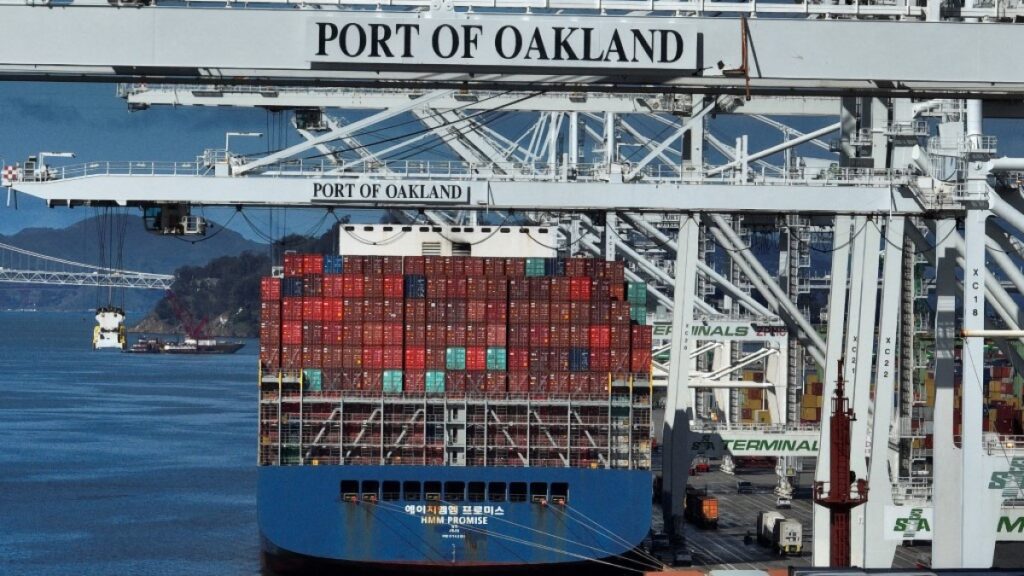
The US pulled out of the climate talks at the International Maritime Organization in London this week. Countries at the United Nations shipping agency have struck a deal on a global fuel emissions standard for the maritime sector, which will impose an emissions fee on ships that breach it and reward vessels burning cleaner fuels. The United States pulled out of the climate talks at the International Maritime Organization (IMO) in London this week, urging other countries to do the same and threatening to impose “reciprocal measures” against any fees charged to US ships. Despite that, other nations have approved the CO2-cutting measures to help meet the IMO’s target to cut net emissions from international shipping by 20 percent by 2030 and eliminate them by 2050. A majority of countries at the IMO voted on Friday to approve a scheme that from 2028 will charge ships a penalty of $380 per metric tonne on every extra tonne of CO2-equivalent they emit above a fixed emissions threshold, plus a penalty of $100 a tonne on emissions above a stricter emissions limit. The deal is expected to generate up to $40bn in fees from 2030, some of which will go towards making expensive zero-emission fuels more affordable. Advertisement The talks have exposed deep rifts between governments over how fast to push the maritime sector to cut its environmental effect. A proposal for a stronger carbon levy on all shipping emissions, backed by climate-vulnerable Pacific countries – which abstained in Friday’s vote – plus the European Union and the UK, was dropped after opposition from several countries, including China, Brazil and Saudi Arabia, delegates told the Reuters news agency. Vanuatu’s climate minister, Ralph Regenvanu, said countries had “failed to support a set of measures that would have gotten the shipping industry onto a 1.5°C pathway”. Industry group the International Chamber of Shipping welcomed the deal, which it said would require a huge scale-up of such fuels. “We are pleased that governments have understood the need to catalyse and support investment in zero emission fuels,” ICS said in a statement. In 2030, the main emissions limit will require ships to cut the emissions intensity of their fuel by 8 percent compared with a 2008 baseline, while the stricter standard will demand a 21 percent reduction. By 2035, the main standard will cut fuel emissions by 30 percent, versus 43 percent for the stricter standard. Ships that reduce emissions to below the stricter limit will be rewarded with credits that they can sell to non-compliant vessels. “This is a groundbreaking moment for the shipping industry, which should signal a turning of the tide on greenhouse gases from global shipping,” Mark Lutes, senior adviser at the NGO World Wildlife Fund for Nature, said in a statement. Advertisement “However, key aspects of this agreement fall short of what is needed and risk blowing the transition off course,” he added. The carbon pricing measure must now be formally adopted at an IMO assembly in October. Adblock test (Why?)
A court upheld the impeachment last week, and removing removed him from off
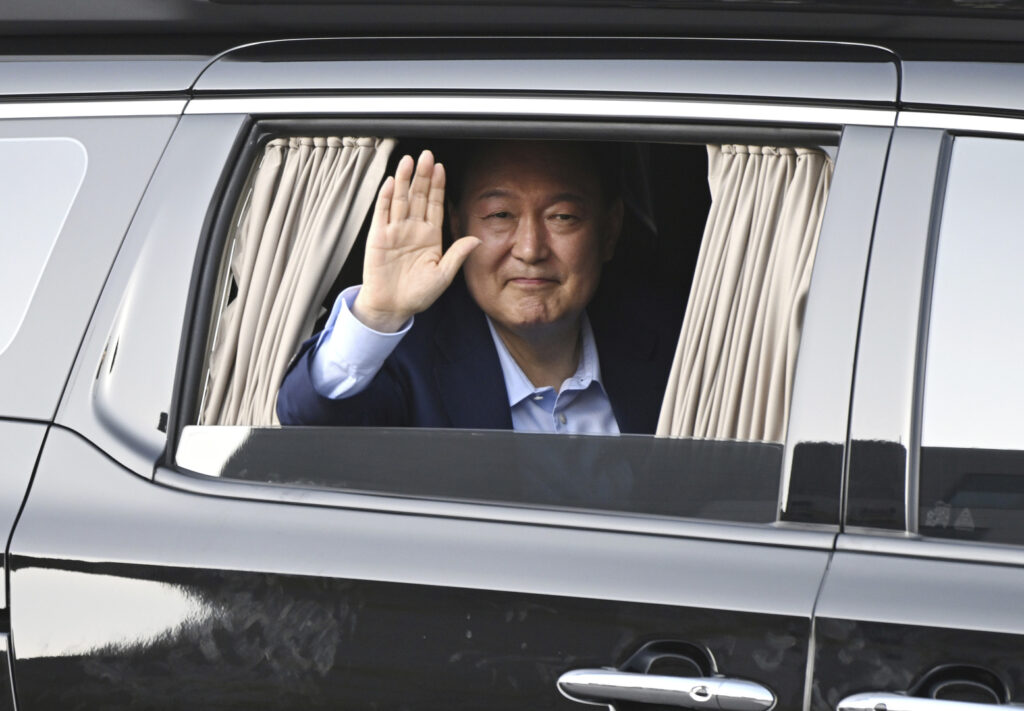
NewsFeed South Korea’s ousted president Yoon Suk-yeol left the presidential residence for the final time on April 11, days after a court upheld his impeachment. Yoon, who greeted throngs of flag-waving supporters, will relocate to his private home in Seoul. Published On 11 Apr 202511 Apr 2025 Adblock test (Why?)
Trump’s tariffs: Short-term damage or long-term ruin?
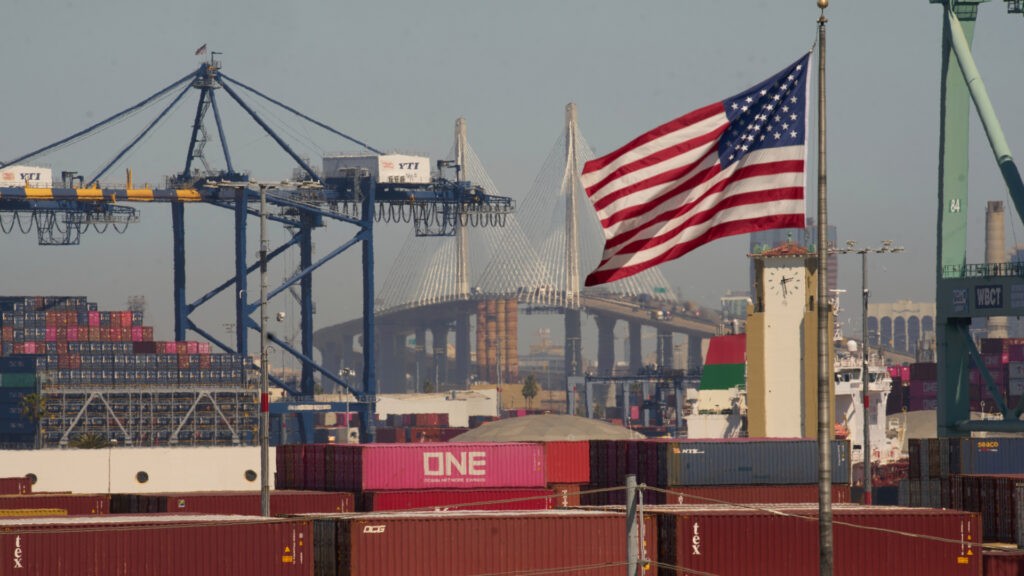
What does Trump aim to achieve by making it costlier for the rest of the world to sell their goods in the US? As the US government imposed tariffs on goods from all other countries, President Donald Trump has asked Americans to “hang tough”. But economists are warning of negative consequences for American households and businesses. Georgetown University professor Michael Strain, who heads economic policy studies at the American Enterprise Institute, tells host Steve Clemons that “the risk of recession is very, very real.” Trump believes that the tariffs will stimulate the US economy and bring jobs back after decades of outsourcing, Strain argues, but the opposite is more likely: costs will rise, manufacturing will decrease, and Trump’s approval rating will go down. Adblock test (Why?)
United States is no longer a safe destination for international students
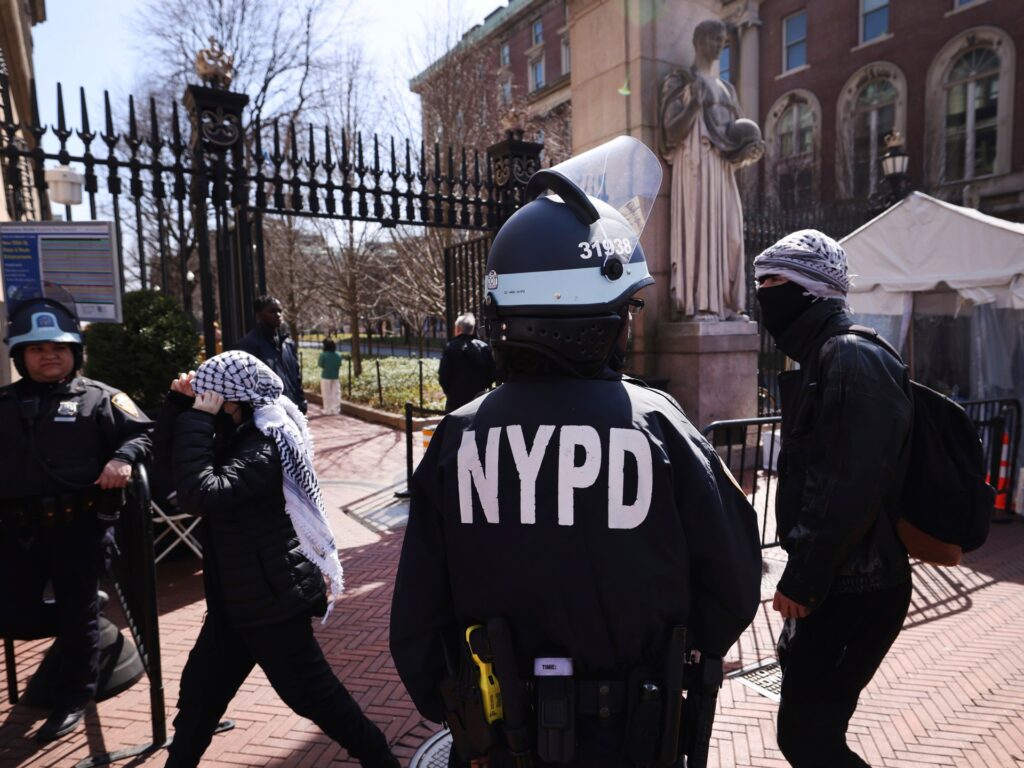
One cannot underestimate the precarity that orders the lives of international students in the United States. I remember making my maiden journey from Kolkata to upstate New York as an international student to pursue an undergraduate degree at a small liberal arts college. This was back in 2003 when the US-led so-called “war on terror” was in full swing. The US had invaded Iraq only a few months before my arrival in New York. Be it the on-campus jingoism inspired by America’s battle against the “Axis of Evil” that left little room for critical assessments of US foreign policy in the classroom, the “random” airport security checks at airports or the near-consistent racism and Islamophobia on the American airwaves – it was soon painfully apparent to me that someone who “looked like me” didn’t belong in the “Land of the Free”. In the years since, things hardly got any better for international students making their way to America. They remained untrustworthy and unwelcome outsiders in the eyes of many Americans, and the sense of precarity surrounding their lives persisted. Advertisement Under Trump 2.0, however, this sense of precarity has reached unprecedented levels. In fact, these days the US appears to be not only unwelcoming, it is a blatantly unsafe destination for international students. Trump has made the lives of international students much more difficult than before. This did not come as a surprise, as he had promised to do just that on the campaign trail, well over a year ago. Besides claiming that universities and various accreditation bodies were dominated by Marxists and radical leftists, he made his particular hatred for Palestine solidarity activists on campus well-known. He declared that, if re-elected, he would revoke the student visas of “radical, anti-American and anti-Semitic foreigners” participating in pro-Palestinian protests on US college campuses as early as October 2023. After his return to the White House, he made targeting pro-Palestine international students and faculty a priority. One of his highest-profile targets was Mahmoud Khalil, a Columbia University graduate. Khalil, who was on the front lines of Columbia’s pro-Palestine protests as a negotiator between the student protesters and university leadership, is a green card holder. However, the Trump administration is pushing to deport him, claiming that he was engaging in pro-Hamas, un-American activities. Khalil was abducted by Immigration and Customs Enforcement (ICE) officers from his home in New York in front of his pregnant American wife in early March, and has been held at a detention facility in Louisiana for over a month. Advertisement In a similar case, Tufts University PhD student and Turkish citizen Rumeysa Ozturk was abducted by masked, plain-clothed officers in Boston. She, too, was transferred to the detention facility in Louisiana. Her crime? Co-authoring an op-ed in Tufts Daily calling for her university to divest from Israel. Indian citizen and Georgetown University postdoctoral scholar Badar Khan Suri has also been targeted for deportation and is faced with an uncertain future at an ICE detention facility in Texas. Suri didn’t even participate in any Palestine solidarity protests. His crime seems to be that he is the son-in-law of a former adviser to the Hamas government in Gaza, Ahmed Yousef. Yousef, however, left the position in the political wing of Hamas more than a decade ago and has called the group’s attack on Israel on October 7, 2023 “a terrible error”. Then there is the case of Cornell University PhD candidate Momodou Taal, a dual citizen of the United Kingdom and Gambia. He participated in Palestine solidarity protests and was called upon by immigration authorities to surrender. After going into hiding for two and half weeks in fear for his personal safety, Taal decided to leave the US. These few high-profile cases are just the tip of the iceberg. The Trump administration has revoked the visas of hundreds of international students for their pro-Palestine activism and social media posts. As of April 10, more than 600 international students in over 100 colleges and universities across the country are believed to have been affected. And there seems to be no end in sight. The Department of Homeland Security has begun screening the social media accounts of non-citizens and says it will deny visas and green cards to all individuals it deems as having participated in pro-Palestine activism or, as the Trump administration deems it, “anti-Semitic activities”. Advertisement America’s leading universities, meanwhile, appear more than willing to capitulate to Trump’s demands, and are throwing their international students to the wolves, to stay on the good books of the administration and keep federal funding. Columbia University, for instance, quickly caved when the Trump administration decided to withhold $400m in federal funding due to the university’s supposed inaction during the Palestine solidarity protests. Despite sitting on an endowment valued at just under $15bn, Columbia’s leadership responded to Trump’s funding threats by overhauling the university’s protest policies and introducing new security measures that would swiftly crack down on any possible return of Palestine solidarity encampments and protests on the campus. The Trump administration also demanded that Columbia’s Middle Eastern, South Asian and African Studies Department be placed on academic receivership for five years. Typically, academic receivership involves internal processes and measures implemented by the university leadership to bring a dysfunctional department or programme “back on track”. Seemingly agreeing to Trump’s demands, the university appointed a new senior vice provost to oversee the department. Harvard University – another institution with a massive endowment – faced similar demands from the Trump administration in return for federal funding. Specifically, its leadership was asked to make “necessary changes” to “address bias, improve viewpoint diversity and end ideological capture” in “programs and departments that fuel antisemitic harassment”. Unlike in the case of Columbia, there was no mention of specific programmes or departments. Advertisement But it would seem that the Harvard leadership knew what Trump meant. Harvard’s interim dean of social sciences David M Cutler dismissed the leadership of the Center for Middle Eastern Studies. He justified his decision by claiming that
Tottenham have leak inside club, says manager Postecoglou

Tottenham manager Ange Postecoglou believes there is a leak inside the north London club affecting his role. Tottenham boss Ange Postecoglou said a leak of information from inside the club is making his job more difficult as the Australian closes in on finding the source of the problem. Injury news has regularly found its way onto social media in advance of Spurs’ games during a troubled second season for Postecoglou. Before Thursday’s 1-1 Europa League quarterfinal, first-leg draw against Eintracht Frankfurt, Wilson Odobert’s absence from the starting lineup was leaked long before the team was officially announced. “There is no doubt we’ve got a leak inside the club,” Postecoglou said on Friday. “Someone continues to leak out information and they have all year. I don’t know why as it just makes our job even more difficult. It doesn’t help us as you don’t want to give the opposition a helping hand. “We’ve narrowed it down. I’ve got a fair idea where it’s coming from. We will deal with it. “It certainly doesn’t help us on game days. It’s sometimes half-truths and sometimes more. You’d like to think that everyone within our camp is working with us rather than against us.” Advertisement Tottenham’s lengthy injury list has played a major role in their disappointing Premier League season. Spurs sit 14th with seven games to play and are on course to miss out on the top 10 for the first time since the 2007/08 campaign. Postecoglou’s future at the club next season appears to solely depend on winning the Europa League and ending a 17-year wait for silverware. With that in mind, he is expected to make changes for Sunday’s trip to Wolves with one eye on the second leg in Frankfurt on Thursday. “We’ll need a big game, a big performance on Sunday, so having some fresh legs will help,” he added. “But also looking into next Thursday, it’s not about resting guys or managing guys, it’s also about having guys ready. It could go to 120 minutes and we’ll need people ready to go, so with a combination of those factors, we’ll make some changes.” Adblock test (Why?)
Trump’s tariffs: A simple illustrated guide to 15 economic terms to know
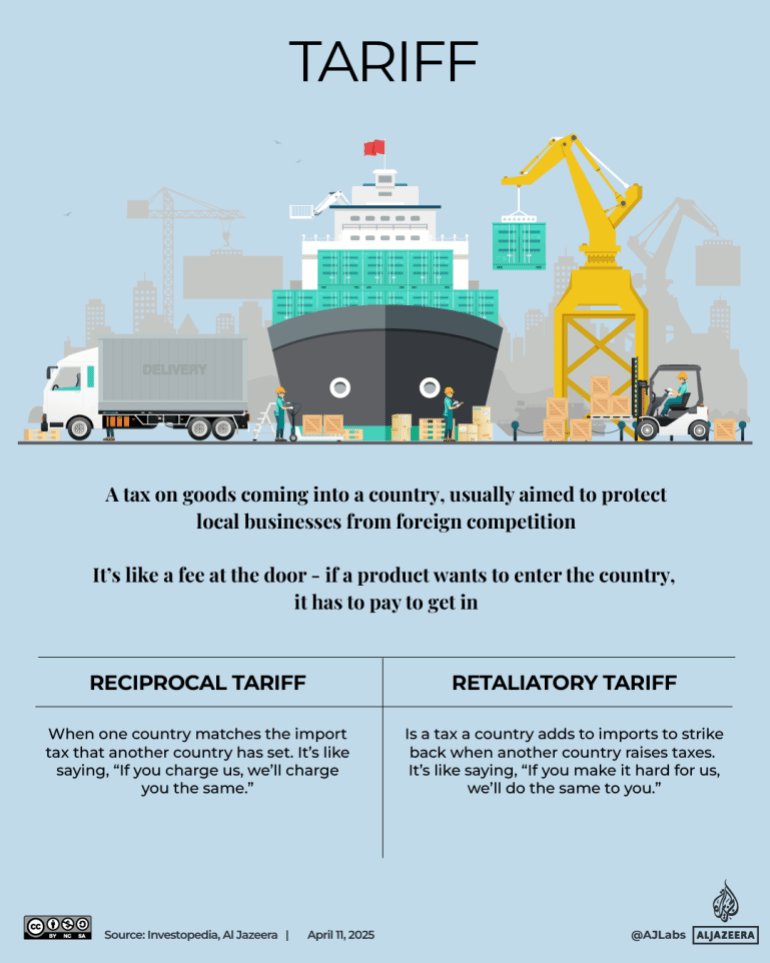
Throughout the past few weeks, United States President Donald Trump has announced a series of tariff policies, with shifting statements that have led to growing concerns about global economic instability. With Trump’s tariffs affecting nearly every country, many terms have been thrown around to describe the potential results. From trade wars to stock market drops, this article explains, in simple terms with illustrations, what these key terms mean, including those that may become more important in the coming months. 1. Tariff Tariffs are simply taxes imposed at the border by one country on the goods of a foreign country. They are usually aimed to protect local businesses from foreign competition. Reciprocal tariffs have come to define Trump’s trade policy of imposing the same tariffs on other countries that those countries impose on US goods. It’s like saying, “If you charge us, we’ll charge you the same.” Retaliatory tariffs are taxes imposed by a country on imported goods from a foreign country to strike back at that country’s imposition of similar taxes. It’s like saying, “If you make it hard for us, we’ll do the same to you.” 2. Trade war A trade war occurs when, for example, two countries dispute trade practices and one country places extra tariffs on goods from another that it believes is engaging in unfair trade practices. The other country retaliates with tariffs and this tit-for-tat continues, thus escalating into a trade war. Advertisement It’s like an economic tug-of-war where both sides keep pulling harder instead of finding a way to agree. A good example is the US-China trade war, which has been in effect since 2018 when the US first placed tariffs on Chinese goods. More recently, the tit-for-tat between Washington and Beijing has seen tariffs on China rise to 145 percent. 3. Trade deficit and surplus A trade deficit occurs when a country buys (imports) more goods than it sells (exports), meaning the demand for foreign goods is greater than the supply of its own products. For example, the US has a trade deficit with China because it buys more goods from China, like electronics and clothing, than it sells to it. A trade surplus is the opposite. This happens when a country sells more goods than it buys. For example, the US has a trade surplus with The Netherlands because it sells more goods, like machinery and agricultural products, to the Netherlands than it buys from it. 4. Subsidies Subsidies are financial support or money given by the government to help local businesses or industries, making their products cheaper or more competitive. For example, following Trump’s 25 percent tariff on all foreign automobiles and auto parts, South Korea announced emergency support for its auto sector by raising electric vehicles subsidies to boost demand. 5. Stock market The stock market is a place where shares of companies and other financial instruments are bought and sold. For example, if you buy Amazon shares, you’re owning part of the company, and the stock’s value can go up or down, meaning you can make or lose money. Advertisement An index is a way to measure how a group of stocks is performing. In the US, three of the biggest indices are: S&P 500 tracks the 500 largest companies in the US. Nasdaq Composite mainly tracks tech stocks such as Amazon and Google. Dow Jones Industrial Average tracks 30 large US companies like Coca-Cola and Walmart. 6. The Fed The Fed (short for the Federal Reserve) is the central bank of the United States. It helps control the country’s money supply, sets interest rates, and tries to keep the economy stable – more on these later. 7. Interest rates Interest rates are the cost of borrowing money, usually expressed as a percentage. For example, when the Fed raises interest rates, borrowing money becomes more expensive, and when it lowers rates, borrowing money becomes cheaper. Interest rates go up when central banks want to slow inflation or cool down an overheating economy. 8. Inflation Inflation measures how quickly the price of things rises over time. This means that money doesn’t buy as much as it used to. For example, if a sandwich cost $2.50 a year ago and now the same sandwich costs $3.00 then the inflation rate for the sandwich is 20 percent. Inflation can occur when demand for a product is higher than supply, or when it costs more to make the product. It can also occur if there’s too much money in the economy, like when a country prints more cash. The Fed tries to keep inflation steady. If prices rise too fast, it can hurt the economy by making goods and services too expensive. The Fed changes interest rates to help keep prices under control. 9. Exchange rate The exchange rate is the value of one country’s money compared to another’s. Advertisement For example, one US dollar will get you about 0.90 euros. Exchange rates are important because they affect the cost of buying and selling goods between countries. A strong currency makes imports cheaper and exports more expensive, while a weak currency makes exports cheaper and imports more expensive. The rates also affect travel, investments and global business. 10. Market trends Market trends are the general direction in which prices or markets are moving over time – going up, down, or staying stable. They help investors and businesses understand what’s happening in the economy. Economists use terms like “bull” and “bear” market to refer to these trends. Bull market – When the economy is doing well, prices go up and people feel confident. Think of a bull pushing up with its horns (prices rising) Bear market – When the economy is doing badly, prices fall and people feel cautious. Think of a bear swiping down with its paws (prices falling). Economists often use a formula based on the S&P 500 to determine if we’re in a bull or bear market, with a 20 percent change from the last high as the key threshold.
Russia-Ukraine war: List of key events, day 1,142
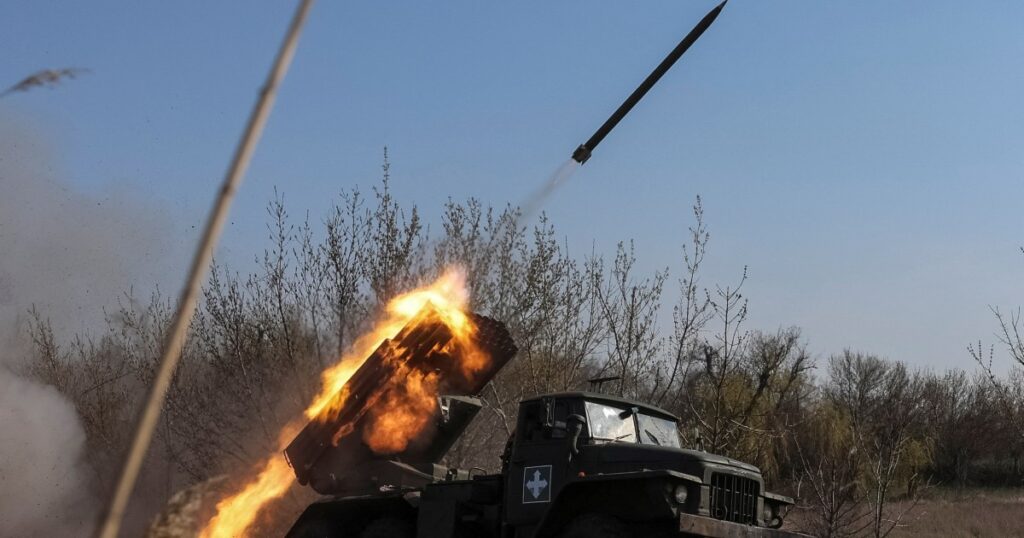
These are the key events on day 1,142 of Russia’s war on Ukraine. Here is where things stand on Friday, April 11: Fighting Russia said its aerial defence systems destroyed 48 Ukrainian drones overnight and into the early morning in the Bryansk, Kursk, Kaluga, Belgorod, Moscow and Oryol regions, as well as the Russian-annexed Crimea. The Russian Ministry of Defence said its forces captured the border village of Zhuravka in Ukraine’s Sumy region. Ukrainian authorities recorded 145 Russian drones in its airspace in overnight attacks, of which 85 were destroyed while 49 were “lost” due to electronic warfare measures, Kyiv’s air force said. At least 13 people were injured by Russian drone attacks in the Ukrainian capital Kyiv and the southern city of Mykolaiv overnight, local authorities said. The drone assaults also damaged nine apartment blocks, dozens of garages and an administrative building. At least one person was killed and three were injured by a Russian missile strike on Ukraine’s Dnipro city. The attack damaged civilian infrastructure and sparked a huge fire, the regional governor, Serhiy Lysak, said. A person was also killed in a separate drone strike on a residential building in the city of Zhytomyr, west of Kyiv, Ukrainian officials said. Footage from a Ukrainian surveillance drone obtained by The Associated Press news agency showed four Ukrainian prisoners being shot dead by soldiers wearing Russian uniform markings. The Kremlin’s shorter version of the video, which was posted by a Russian military blogger, showed the Ukrainian soldiers lying on the ground alive. The video’s caption said the “enemy decided not to be killed and came out with their hands up”. The video did not show their execution. Advertisement Ceasefire Moscow’s Defence Ministry accused Ukraine of carrying out 11 attacks on Russian energy infrastructure over the past 24 hours despite a mutually agreed 30-day moratorium on energy strikes. Politics and Diplomacy Russia released Russian American ballet dancer Ksenia Karelina, who was serving a 12-year prison sentence, in a prisoner exchange with the US, the Reuters news agency reports, citing Karelina’s lawyer. Karelina was found guilty of treason by a Russian court for donating $52 to a US charity aiding Ukraine. She was swapped for Arthur Petrov, a German Russian citizen arrested in 2023. China’s Ministry of Foreign Affairs has called for a “sober” view of its role in the Ukraine crisis after Ukrainian President Volodymyr Zelenskyy said Kyiv’s intelligence had information about 155 Chinese citizens fighting alongside Russian forces against Ukraine. A spokesperson for the ministry also warned against making “irresponsible” remarks about the presence of Chinese fighters in Ukraine. President Zelenskyy accused Russia of working systematically in China to recruit fighters for the war in Ukraine. He also said, “Everything necessary must be done to ensure Russia has no such similar opportunities to prolong and expand the war.” The United States and Russia held talks in Istanbul, Turkiye, on normalising diplomatic relations between the two countries. The talks were led by Russia’s new ambassador to Washington, Alexander Darchiev, and Deputy Assistant Secretary of State Sonata Coulter. Defence ministers from some 30 countries who are part of the “coalition of the willing” met in Brussels to discuss a “reassurance force” for Ukraine in the event of a ceasefire between Kyiv and Moscow. However, key questions about its mission and any support from the US remained unanswered. The US ambassador to Ukraine, Bridget Brink, is stepping down after three years of service, the US Department of State said. Advertisement Adblock test (Why?)
China to ‘reduce’ Hollywood movie releases in response to Trump’s tariffs

China’s National Film Administration says US movies will be less popular after Washington imposed a 145 percent tariff on Chinese imports. China has moved to “moderately reduce” the release of Hollywood films in the Chinese market in the latest front of the growing United States-China trade war. China’s National Film Administration directly linked their decision on Thursday to US tariffs on Chinese products, which US President Donald Trump has raised to a sky-high 145 percent. “The wrong move by the US government to abuse tariffs on China will inevitably further reduce the domestic audience’s favourability towards American films,” the film administration said in its announcement. “We will follow market rules, respect the audience’s choice, and moderately reduce the number of American films imported,” it said. The decision likely came as no surprise to observers, who had predicted that China might target Hollywood as part of its response to surging US tariffs. China accepts 10 films a year from Hollywood, and the Chinese market was once seen as a major source of revenue for the US film industry. Actor Brad Pitt attends a promotional event for the movie Allied in Shanghai, China, in 2016 [File: Reuters] In recent years, though, the popularity of Western movies has waned with Hollywood films accounting for just 5 percent of box office receipts in China, according to Chris Fenton, author of Feeding the Dragon: Inside the Trillion Dollar Dilemma Facing Hollywood, the NBA, and American Business. Advertisement Still, the message sent by China to the US movie industry will be hard to miss, Fenton said, due to the industry’s symbolic cultural power. “Such a high-profile punishment of Hollywood is an all-win motion of strength by Beijing that will surely be noticed by Washington,” Fenton told the Reuters news agency. It is still unclear how the decision will impact much-anticipated releases due later this year, such as Paramount’s Mission Impossible – The Final Reckoning, Warner Brothers’ latest Superman movie, and another version of Marvel’s The Fantastic Four. President Trump, who has been rebuked by many Hollywood celebrities in the past for his policies, told reporters on Thursday he was untroubled by the decision taken in China to target the film industry. “I think I’ve heard of worse things,” he said in response to a query. Adblock test (Why?)
Syria and South Korea establish formal diplomatic relations
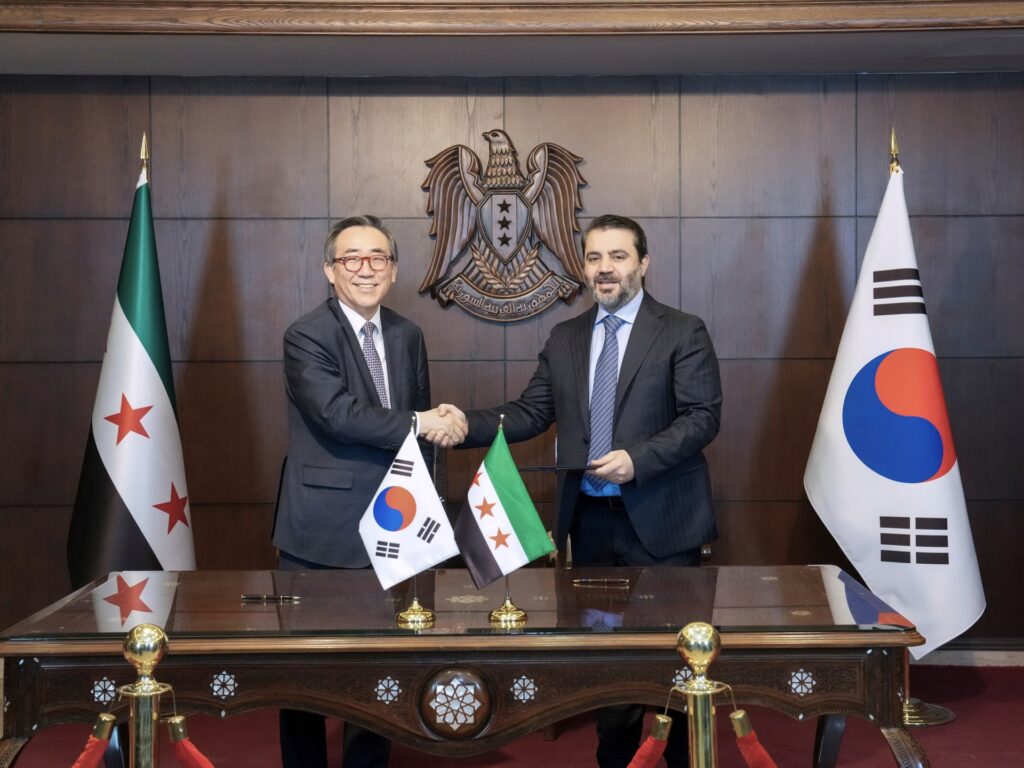
The move is a blow to North Korea, which once counted Damascus as an ally until the fall of President Bashar al-Assad’s regime. South Korea and Syria have formally established diplomatic relations, in another milestone for the transitional government of Syrian President Ahmad al-Sharaa. The move has also dealt a blow to Seoul’s archenemy, North Korea, which once counted Syria as a friend under the regime of now-deposed President Bashar al-Assad. Diplomatic ties were formalised on Thursday in Damascus between South Korean Foreign Minister Cho Tae-yul and Syrian Foreign Minister Asaad al-Shaibani. During the ceremony, Cho said South Korea was ready to help aid Syria’s recovery from its 13-year civil war through business investment and humanitarian assistance. Al-Shaibani said he hoped that Seoul would support the easing of international sanctions that remain on Damascus, according to a readout from South Korea’s Ministry of Foreign Affairs. The establishment of formal ties concludes talks that began in February with approval given by Seoul’s cabinet, according to South Korea’s Yonhap news agency, and comes as both countries are in the middle of major political transitions. Advertisement In December, opposition forces in Syria overthrew President al-Assad, whose family ruled the country for more than 50 years. A transitional government was sworn in on March 30 under the leadership of President al-Sharaa, who previously led anti-Assad forces during Syria’s civil war. The focus of al-Sharaa’s government is on returning stability to Syria, which is still struggling with violent clashes months after the fall of Assad. South Korea’s President Yoon Suk-yeol was formally impeached last week after parliament received support from the country’s Constitutional Court for his removal from office. Yoon set off a political crisis in December when he briefly declared martial law, claiming that “antistate” and North Korean forces had infiltrated the government. South Korea is now headed by an acting president, and voters will choose Yoon’s replacement during a snap election in June. With the addition of Damascus, Seoul now has diplomatic ties with all 191 UN members, including the Holy See in Rome. Last year, Seoul and Cuba, another North Korean ally, established diplomatic ties in a surprise move that ended decades of isolation. Adblock test (Why?)