

Manchester United: Cantona claims Ratcliffe is destroying club
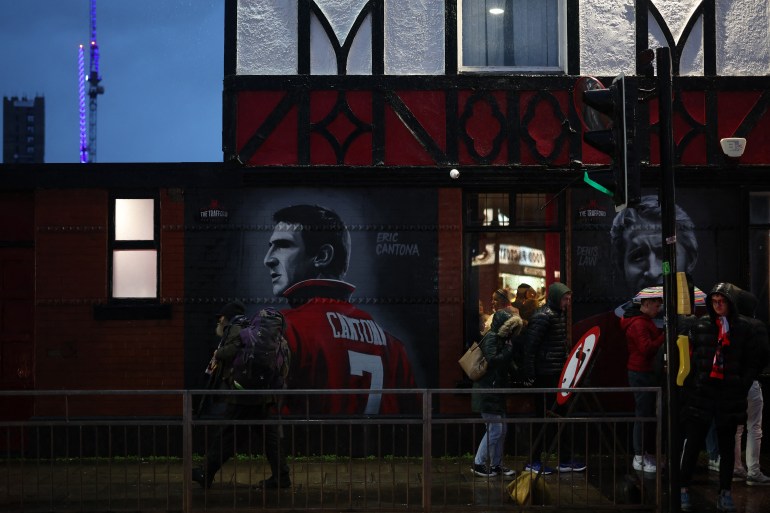
Former Man Utd captain Eric Cantona blasts club ownership at fan event. Former Manchester United star Eric Cantona has accused co-owner Jim Ratcliffe and his lieutenants of destroying the Old Trafford club. British billionaire Ratcliffe has endured a turbulent spell since taking charge of United’s football operations after buying a minority share in February 2024. The INEOS owner has sacked boss Erik ten Hag and replaced him with Ruben Amorim, with little improvement as the team languishes in 13th place in the Premier League. Ratcliffe, a boyhood United fan, has also raised ticket prices and undertook drastic cost-cutting measures, resulting in about 450 lost jobs, while launching a plan to build a new 100,000-capacity stadium. A United legend after helping the club end their long wait to win the English title in 1993, Cantona is not impressed with Ratcliffe’s impact on his former team. “Since Ratcliffe arrived, this team of directors try to destroy everything and they don’t respect anybody,” Cantona told reporters during an event at FC United, the non-league team started by fans in 2005 as a response to the controversial takeover by the Glazer family, who remain the majority shareholders. Advertisement “They even want to change the stadium. The soul of the team and the club is not in the players. All the people around is like a big family. It’s very important to respect these people like you respect your manager and teammates. “Since Ratcliffe arrived, it’s the complete opposite. He doesn’t want Sir Alex Ferguson as an ambassador any more. He is more than a legend and I think we have to find this soul again.” An image of former Manchester United player Eric Cantona is seen outside Old Trafford, Manchester, United Kingdom [Lee Smith/Action Images via Reuters] Former France striker Cantona, who has signed up to become an FC United co-owner, spent five years at United after Alex Ferguson signed him from Leeds, winning four Premier League titles and two FA Cups. The 58-year-old believes leaving Old Trafford would be a big mistake, because the soul of the club is tied to the stadium that has been its home since 1910. “This team of directors, they try to destroy everything. They don’t respect anybody. They even want to change the stadium. The stadium is iconic,” he said. “For me, Arsenal lost their soul when they left Highbury, and I’m sure a lot of fans miss Highbury. I don’t think United can play in another stadium than Old Trafford.” Cantona, who now works as an actor, revealed he offered to help Ratcliffe rebuild a club that has not won the Premier League since Alex Ferguson’s final season in charge in 2013. “Until the end of October this year, I will shoot movies,” he said. “But I said to them, ‘I can put that aside and concentrate and help you to rebuild something’. And they don’t care. “I feel sad to see United in this kind of situation. They decided something else. They have another strategy, another project. “I support United because I really love United, but now, if I was a fan and I had to choose a club, I don’t think I would choose United. Because I don’t feel close to these kind of decisions. Advertisement “I think maybe we are dreamers and the owners are more like an economy and a strategy. I hate this kind of thing. I hate this kind of decision.” Adblock test (Why?)
Turkiye and Israel hold talks to avoid clashes in Syria
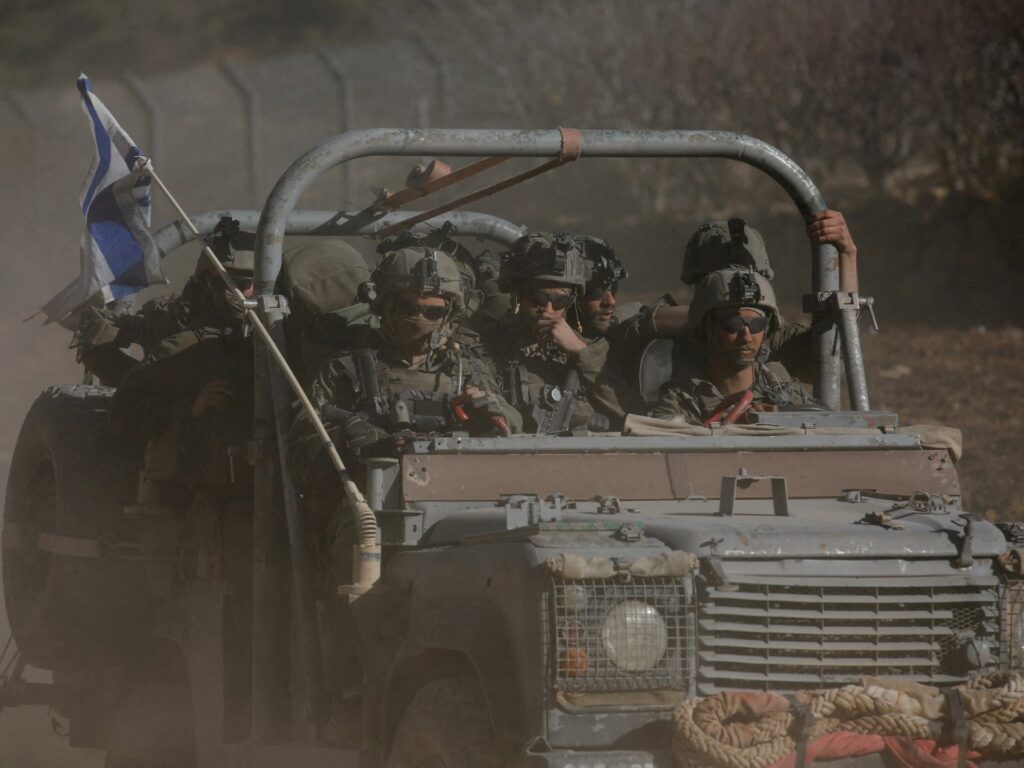
‘Technical talks’ aim to set up communications channel to avoid clashes in the region, Turkish official says. Turkish and Israeli officials have begun talks aimed at easing tensions in Syria, where the militaries of both countries are active, officials from both sides say. Israel has launched hundreds of air strikes in Syria and deployed troops to a United Nations-patrolled buffer zone in the Golan Heights since opposition fighters removed President Bashar al-Assad in December. Turkiye is a key backer of the interim government in Syria, where its support includes operations against the ISIL (ISIS) armed group. Turkish Foreign Minister Hakan Fidan confirmed on Wednesday that technical talks with Israel were under way, emphasising that deconfliction mechanisms were necessary to prevent misunderstandings between the two regional powers’ forces. Israeli Prime Minister Benjamin Netanyahu’s office said in a statement on Thursday that the two sides “agreed to continue the dialogue in order to preserve regional stability”. The talks come as the two sides pursue competing interests in Syria. Turkish sources quoted by the news agency Reuters said the talks in Azerbaijan on Wednesday marked the beginning of efforts to set up a communications channel to avoid potential clashes or misunderstandings over military operations in the region. Advertisement “Efforts will continue to establish this mechanism,” one of the Turkish sources said, without providing details on the scope or timeline of the talks. A Turkish Ministry of National Defence official quoted by The Associated Press news agency said assessments for the establishment of a base for joint Turkish-Syrian training are ongoing, adding that such activities followed international law “without targeting third countries”. Israel has expressed concerns that Syria’s new leadership will pose a threat along its border while Israel also reportedly wants to thwart Turkish influence in Syria. Netanyahu said on Tuesday that Turkish bases in Syria would be a “danger to Israel”. An Israeli political source quoted by Reuters said that during the talks “Israel made it unequivocally clear that any change in the deployment of foreign forces in Syria – and in particular the establishment of Turkish bases in the Palmyra area – is a red line and will be considered a breaking of the rules.” According to the Syrian Observatory for Human Rights, a United Kingdom-based war monitor, Israel’s military carried out more than 500 air attacks on targets in Syria from December 8 to December 31 and has carried out at least 43 attacks so far this year. Syria’s Ministry of Foreign Affairs has accused Israel of waging a campaign against “the stability of the country”. Ties between Israel and Turkiye have deteriorated over Israel’s assault on Gaza. Turkish President Recep Tayyip Erdogan has been an outspoken critic of Israel’s war, which has killed more than 50,000 Palestinians. Advertisement Adblock test (Why?)
Tanzania opposition party leader Tundu Lissu charged with treason
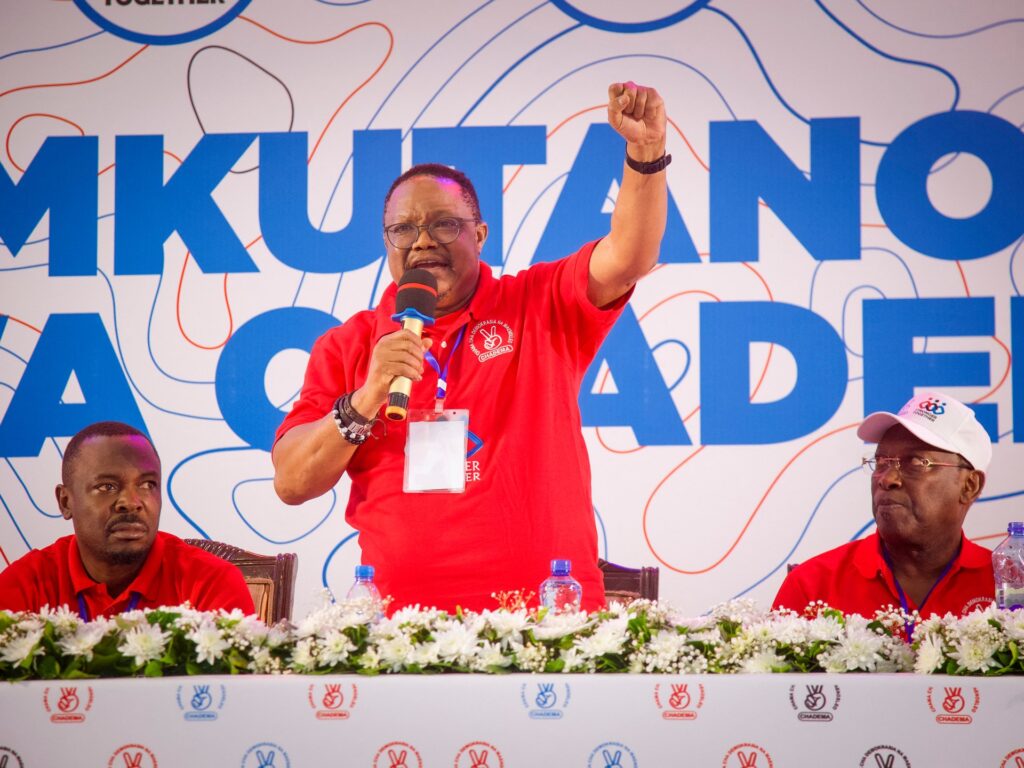
Lissu’s lawyer Rugemeleza Nshala said the charges against his client were politically driven. A court in Tanzania has charged opposition party leader Tundu Lissu with treason after his arrest at a public rally in which he called for electoral reforms. The charges against the chairman of the Chadema party will bring new scrutiny to President Samia Suluhu Hassan’s bid for re-election in October as critics accuse the government of cracking down on the opposition. The opposition leader was forced into a police vehicle late on Wednesday after he had finished addressing a public rally in Mbinga in southern Tanzania. “I came here, we held a peaceful meeting and now I understand the tactics of the police. We are now clear on the situation. I will not enter the vehicle. There is no need for that. We will sleep here. What is the problem?” Lissu asked the police, moments before his supporters were tear-gassed. Lissu on Thursday afternoon arrived at the Kisutu Resident Magistrate’s Court in the commercial capital Dar-es-Salaam, appearing in high spirits and in the company of his lawyers and opposition party politicians. Advertisement He was, however, not allowed to enter a plea on the treason charge. He did plead not guilty to a separate charge of publishing false information and is due back in court on April 24. Lissu’s lawyer Rugemeleza Nshala said the charges against his client were politically driven. “You cannot separate these charges from politics,” Nshala told the Reuters news agency. “He was doing campaigns to educate Chadema supporters, but they have turned it into charges.” According to the charge sheet, Lissu, who survived being shot 16 times in an assassination attempt in 2017, made the comments in question in Dar-es-Salaam on April 3. The charge sheet quoted him as saying: “It is true we say we will prevent the election. We will inspire rebellion. That is the way to get change.” “So we are going to spoil this election. We are going to really disrupt. … We are going to spoil it very badly,” the charge sheet accused him of saying. Hassan won plaudits after coming to power in 2021 for easing repression of political opponents and censorship of the media that proliferated under her predecessor John Magufuli, who died in office. But she has faced mounting criticism from human rights activists over a series of arrests and unexplained abductions and killings of political opponents. Hassan has said the government is committed to respecting human rights, and she ordered an investigation into reported abductions last year. Adblock test (Why?)
Unpacking Israel’s war on international humanitarian law
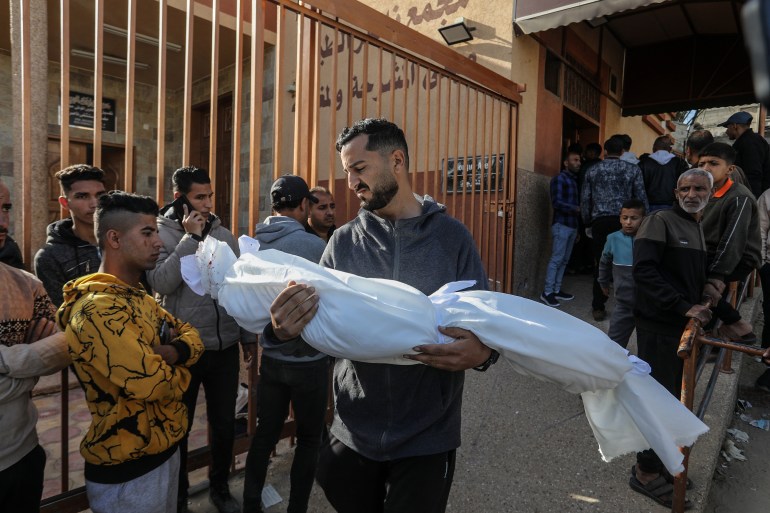
On March 24, Israel struck a car in northern Gaza and killed Al Jazeera correspondent Hossam Shabat. The 23-year-old is one of countless civilians – men, women and children – Israel has killed since launching what legal scholars describe as a “genocidal” war on Gaza. Israel often justifies its killings by claiming that the targets are people sympathetic or affiliated with Hamas or other armed factions. This was the justification given for killing Shabat. Israel also regularly destroys entire neighbourhoods and buildings, killing dozens – often hundreds – at a time, ostensibly to target a single Hamas operative. For years, Israel has tried to justify these practices by employing lawyers to create shadowy quasi-legal concepts in the hope of establishing new, dangerous precedents, according to legal scholars and experts. However, legal scholars told Al Jazeera that neither so-called “targeted killings” nor disproportionate attacks against civilians have any grounding in international law. Advertisement “Is there any semblance of law or legal justification for the war tactics Israel is using in Gaza? The simple answer is no. There isn’t,” said Heidi Matthews, assistant professor of law at York University in Toronto, Canada. Setting precedents On September 28, 2000, Palestinians across the occupied West Bank and Gaza began demonstrating against Israel’s ever-entrenching occupation in what became known as the second Intifada. Israel’s repression of the Intifada quickly prompted Palestinians to mobilise and fight back. Over the next five years, Israel launched what it named “targeted killings”, assassinating unarmed Palestinians. Israel claimed that these targets could pose a threat to Israelis in the future because of their alleged membership in an armed faction. “Israel … strips protection from civilians based on their views or perspectives,” said Noor Kilzi, a researcher with Legal Agenda, a nonprofit in Lebanon that advocates for legal reform and human rights in the Middle East. Relatives of the Palestinians who died as a result of an Israeli attack on a house belonging to the Mikdad family in Khan Younis refugee camp mourn as the dead bodies are taken from Nasser Hospital for burial on the second day of Eid al-Fitr in Khan Younis, Gaza, on March 31, 2025. It was reported that many people, including children, were killed and injured in the attack [Abed Rahim Khatib/ Anadolu Agency] Israel’s concept of targeted killings laid out a blueprint which the United States adapted during its “war on terror”, analysts told Al Jazeera. Advertisement “[In the early 2000s] Israel and the US changed their legal doctrines and implemented that as part of their military dogma,” York University’s Matthews told Al Jazeera. “When it came to distinguishing between civilians and combatants… the US and Israel began to view [anyone as a target] based on their membership to a group,” she added. According to the International Committee of the Red Cross, a person is only a legitimate target if they are directly engaged in armed combat at the time they are killed. This means that suspected membership in an armed group is not a sufficient basis to assassinate someone. Leiber’s legacy? Throughout Israel’s war on Gaza, it has routinely dropped 2,000lb (900kg) bombs in densely populated residential areas, as well as systematically targeted schools, hospitals and displacement shelters. Israeli officials justify these attacks by claiming that Israel is fighting a “just war” against barbarians. As a result, the ostensible goal of destroying Hamas outweighs minimising civilian casualties. This is rooted partly in the philosophy of Francis Leiber, a 19th-century German American military theorist, who was tasked with setting out the “rules of conduct” for Unionist soldiers fighting the Confederates in the US Civil War. He argued that some wars are vital to the moral progress of civilised nations and require a quick victory, which can only be achieved using tactics that will likely cause huge civilian casualties. “Leiber basically said that whatever is militarily necessary to carry out war is legal,” Alonso Gurmendi Dunkelberg, a legal scholar at the London School of Economics, told Al Jazeera. Advertisement This terrifying reasoning is blatantly at odds with international norms and laws, Gurmendi Dunkelberg added. “He believed in killing as many people as you can, so that you finish the job quickly. He believed that was more humane than trying to protect people to the point that the war drags on for say 15 years,” he said. Since the beginning of Israel’s war on Gaza, its spokespeople have made similar arguments. Mark Regev, an adviser to Israeli Prime Minister Benjamin Netanyahu, said the goal was to “get the [war] done quicker” when asked by PBS about why Israel had dropped 6,000 bombs in the first six days of attacks on the besieged enclave. Then spokesperson for the Israeli army, Daniel Hagari, also admitted during the first days of the war that the emphasis in Gaza was on “damage and not accuracy”. Palestinians inspect the site of an Israeli strike on a house, in Deir el-Balah in the central Gaza Strip, on April 8, 2025 [Ramadan Abed/REUTERS] (Reuters) Destroying the system In November 2024, the International Criminal Court (ICC) approved two arrest warrants for Netanyahu and his then-Defence Minister Yoav Gallant – accused of using starvation as a weapon of war and deliberately attacking civilians in Gaza. An earlier ruling by the International Court of Justice found that Palestinians in Gaza faced a real risk of genocide due to Israel’s war practices. The rulings by the ICC and ICJ add weight to the argument that Israel has failed in trying to legally justify its war practices, which likely amount to multiple war crimes, crimes against humanity and even genocide. Advertisement As a result, Israel and its western allies are now trying to sabotage the very institutions that were created to uphold international law and prosecute perpetrators of atrocities, said Nadim Khoury, former director at Human Rights Watch and the founder of the Arab Reform Initiative think tank. “Israel has clearly hit the limit of what they can get away with by using legal arguments. Now, they’re just
Trump-China tariff war: What could the US gain and lose?
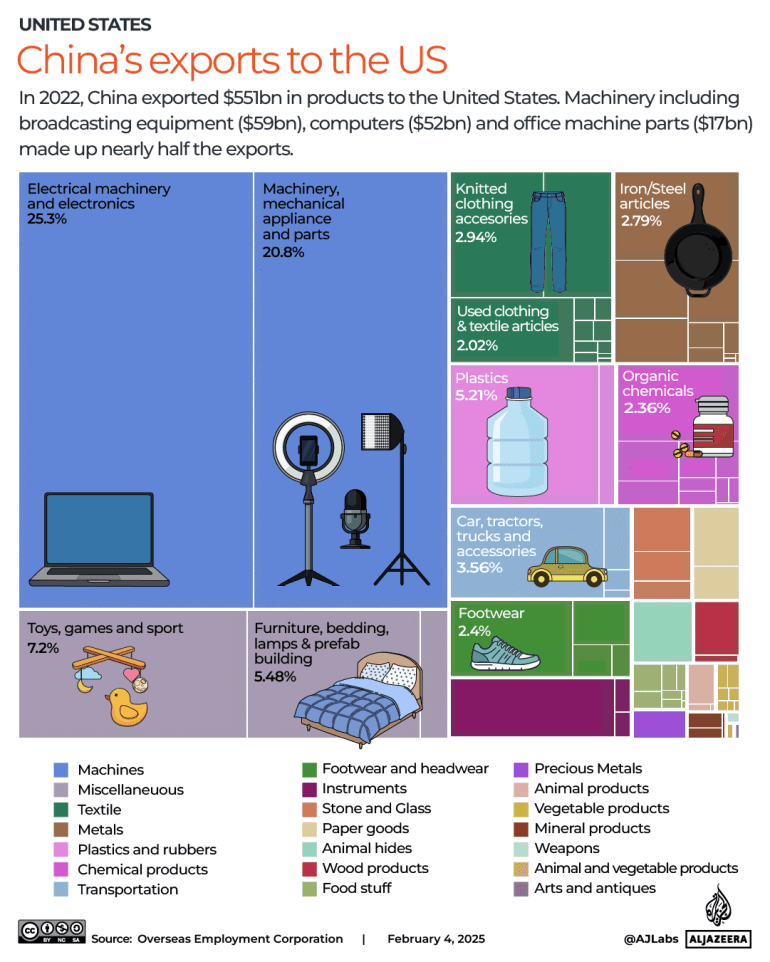
US President Donald Trump’s abrupt decision to implement a 90-day pause on the tariffs he imposed on dozens of countries has sent battered stock markets surging, even as he ratcheted up his trade war with China. Trump’s turnaround on Wednesday, which came just 13 hours after the duties had gone into effect, followed the most intense episode of financial market volatility since the COVID-19 pandemic. Stocks soared following Trump’s announcement of a pause on some tariffs. The S&P 500 jumped 9.5 percent on Wednesday, the index’s biggest single-day leap since 2008. Oil prices, which slid in recent days on fears of a global recession, also rallied on the news. Still, not all of Trump’s tariffs have been lifted. A 10 percent levy on most countries remains in place. Meanwhile, the United States escalated its trade war with China, raising tariffs to a whopping 125 percent – deepening an economic crisis between the world’s two largest economies. What are Trump’s latest moves? On Wednesday, Trump announced a 90-day pause on “reciprocal” tariffs for almost 60 countries and the European Union. The tariffs were customised for each country and corresponded to the size of their trade surplus with the US. Advertisement Imports from those countries will now be subject to a flat tax of 10 percent, which Trump introduced on April 5. China was not included in the pause. Instead, Trump announced that he would raise levies on Chinese goods to 125 percent, from 104 percent. Trump’s decision came after Beijing announced plans to retaliate with an 84 percent duty on American goods on Wednesday. World Trade Organization (WTO) Director-General Ngozi Okonjo-Iweala has said the tensions “pose a significant risk of a sharp contraction in bilateral trade” between the US and China. “Our preliminary projections suggest that merchandise trade between these two economies could decrease by as much as 80 percent,” she said in a statement on April 9. What did Trump actually say? At a White House event celebrating Joey Logano, the NASCAR Cup Series Champion, Trump claimed his method for assigning and adjusting tariffs was based on “more of an instinct than anything else”. “You have to be flexible,” he said. Trump acknowledged that some investors had been “queasy” about the economic turbulence prompted by his tariffs. “I thought that people were jumping a little bit out of line, they were getting yippy, you know.” But he emphasised a positive outlook towards the financial markets. “They [stock prices] change.” He said that markets had rallied to “the biggest day in financial history” after his latest tariff adjustment. “That’s a pretty big change.” He added that countries were now lining up to do business with his administration. “We have many other countries, as you know – many more than 75 – and they all want to come.” He also predicted the US would reap dividends before the end of the year. Advertisement “I did a 90-day pause for the people who didn’t retaliate because I told them, ‘If you retaliate, we’re going to double it.’ And that’s what I did with China, because they did retaliate.” He re-emphasised that his punitive tariff campaign against China would push Beijing to the bargaining table. “A deal could be made with every one of them. A deal’s going to be made with China. A deal’s going to be made with every one of them. And they’ll be fair deals. I just want fair,” Trump said. “They weren’t fair to the United States. They were sucking us dry. And you can’t do that.” What is the state of US-China trade relations? Despite growing tensions between the US and China, Washington and Beijing remain major trade partners. According to data from the Office of the United States Trade Representative, the total goods trade between the US and China stood at an estimated $582.4bn in 2024. US goods exports to China totalled $143.5bn. On the other hand, US goods imports from China totalled $438.9bn. The upshot is that America’s trade deficit with China was $295.4bn last year, marking a 5.8 percent rise ($16.3bn) over 2023. China is the US’s third-largest trade partner, after Mexico and Canada. But the US has been slowly weaning itself off Chinese imports. Chinese goods accounted for 13.3 percent of US imports in 2024, down from a peak of 21.6 percent in 2017. Still, from washing machines and TV sets to clothing, China is one of the top suppliers of goods to the US. The US Department of Commerce calculated that mechanical appliances (mainly low to mid-range technology products) made up 46.4 percent of all US imports from China in 2022. (Al Jazeera) On the flipside, $24.7bn of agricultural products were exported from the US to China in 2024 – mainly in the form of soya beans. Advertisement China is also a large importer of US farming equipment, computer chips and fossil fuels. In what ways could the US benefit? Trump has long maintained that tariffs can reduce America’s trade deficits and bring foreign manufacturing back to the US. He has also said they will pave the way for future tax cuts. In 1979, nearly 20 million Americans made their living from manufacturing. Today, it’s closer to 12.5 million. In the years following World War II, the US was a leading producer of motor vehicles, aircraft and steel. “Since then,” says Vincent Vicard, head of international trade at the economic think tank CEPII, “foreign competition and productivity gains have shrunk the US relative share of manufacturing jobs”. “And while it’s hard to say exactly what Trump wants,” Vicard told Al Jazeera, “part of the tariff plan is about raising revenue for income tax cuts and boosting industry.” He pointed out that “some industries, like cars and steel, could benefit from lower foreign competition. However, they will also face higher prices for intermediate goods [used in their own manufacturing processes].” Vicard said there may be “investment in several industries over the longer term… beyond five years. But the impact of tariffs on consumers in the near term will be
‘Make showers great again’: Why Trump’s fighting bathroom water pressure
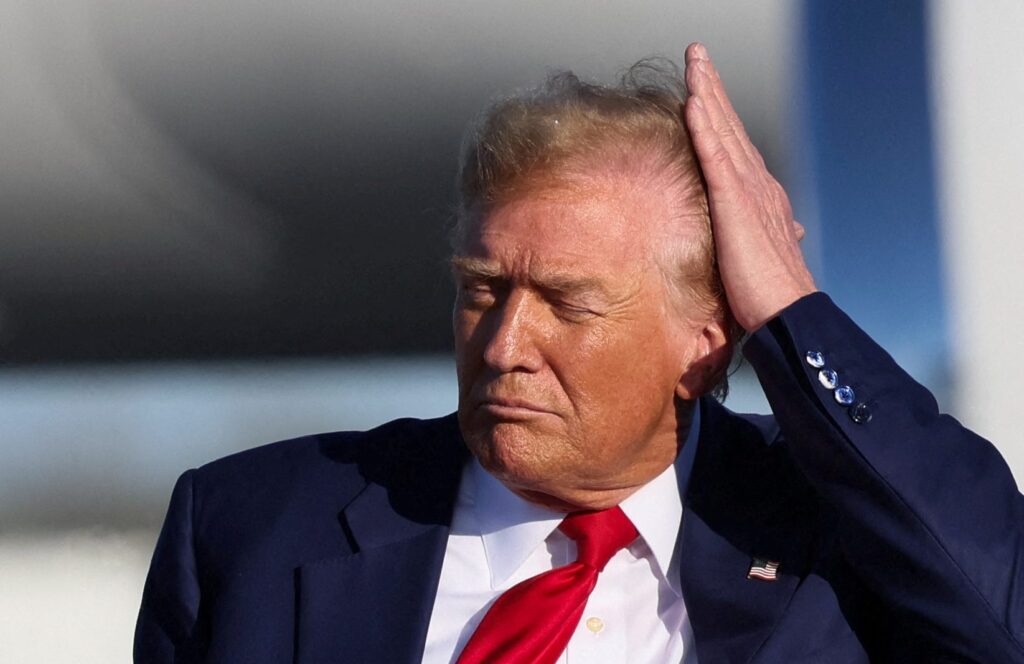
EXPLAINER Trump’s new executive order declares showerheads will not be ‘weak and worthless’ any more. But what about water bills? US President Donald Trump signed an executive order on Wednesday repealing limits to the flow of water from bathroom showers imposed by previous Democratic Presidents Joe Biden and Barack Obama. Biden and Obama introduced these limits to increase efficiency and conserve water. Where their focus was on the environment, Trump’s order aims to “make America’s showers great again,” a White House fact sheet says. Showerheads, it added, will no longer be “weak and worthless”. Trump’s order to free the showerhead from regulations would, he said, help him wash his “beautiful hair”. It came at a time when his back-and-forth tariff policies had washed away billions of dollars from the stock markets, which plunged following his declaration of a trade war on the rest of the world, only to gain back some of its lost territory after Trump’s sudden reprieve on tariffs for most countries. Here is more about Trump’s latest order: What is Trump’s executive order about showerheads? Trump’s order calls on Energy Secretary Chris Wright to reverse the definitions of what constitutes a showerhead usable in the United States, as implemented by Obama and Biden. “The Biden definition was a staggering 13,000 words. The Oxford English Dictionary, by contrast, defines “showerhead” in one short sentence,” the White House fact sheet says. Advertisement Trump wants to go back to a 1992 federal energy law, which sets the standard of water pressure for showers to 2.5 gallons (9.5 liters) per minute. Over the years, new showerhead designs began to include multiple nozzles or spray systems. To ensure water conservation, the Obama administration clarified the rule in 2013 to say that even if a showerhead has multiple nozzles, they collectively should not release more than 2.5 gallons a minute. Trump’s order, in effect, would allow each nozzle to eject up to 2.5 gallons of water a minute. So if a showerhead has four nozzles, it could release up to 10 gallons a minute. “These changes served a radical green agenda that made life worse for everyday Americans,” the White House factsheet says about the Obama-era rule. “Overregulation chokes the American economy, entrenches bureaucrats, and stifles personal freedom.” “In my case, I like to take a nice shower, take care of my beautiful hair,” Trump said while signing the order in the Oval Office. “I have to stand under the shower for 15 minutes until it gets wet. It comes out drip, drip, drip. It’s ridiculous.” Has Trump eased showerhead rules before? During his first administration, Trump reversed the Obama-era rule to allow multiple nozzles on one showerhead to each spray out 2.5 gallons of water per minute individually, increasing the permitted amount of water released by a singular showerhead. This was finalised in December 2020. “So, showerheads — you take a shower, the water doesn’t come out. You want to wash your hands, the water doesn’t come out. So what do you do? You just stand there longer or you take a shower longer? Because my hair — I don’t know about you, but it has to be perfect. Perfect,” Trump said on the campaign trail in 2019. He has complained about low water pressure multiple times since. Advertisement In 2021, the Biden administration reversed Trump’s relaxation of water flow rules. Biden went back to Obama’s 2013 rule to permit an overall 2.5 gallons of water per minute for a showerhead, regardless of the number of nozzles on it. “Biden undid this progress and the shower wars continued,” says the White House factsheet. How could this affect Americans? The average family spends $1,000 every year on water costs, according to a factsheet by the US Environmental Protection Agency (EPA), last updated on March 24. The EPA estimated that households could save more than $380 annually if they retrofitted their homes with WaterSense-labelled fixtures and energy-efficient appliances. A showerhead qualifies for the WaterSense label if it releases no more than two gallons (7.6 liters) per minute. A US government-backed report, published in 2019, issued a warning that climate change and population growth increase the risk of water shortages in many regions of the US. Adblock test (Why?)
Pope Francis meets King Charles, Queen Camilla during Vatican convalescence
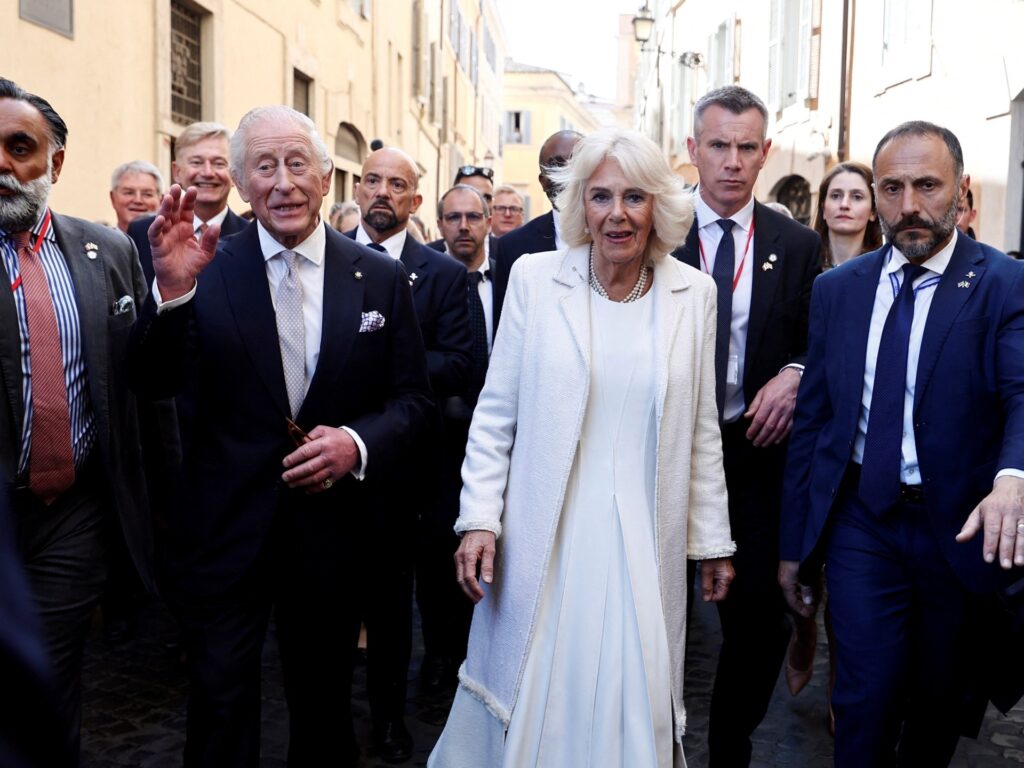
Charles tells Italy’s parliament that peace is ‘never to be taken for granted’ before a surprise visit to Pope Francis. Pope Francis met privately with King Charles III and Queen Camilla at the Vatican during the royal couple’s four-day state visit to Italy and on the occasion of their 20th wedding anniversary, the Vatican has announced. The British royals’ visit on Wednesday was the pope’s first known meeting since his return to the Vatican after five weeks in hospital for life-threatening double pneumonia. Francis had planned to have an audience with Charles, but the official state visit to the Vatican was postponed due to the pope’s health. The pope issued a new invitation for a private audience, but it was subject to his health and only confirmed on Wednesday morning. The mid-afternoon visit lasted about 20 minutes and included a private exchange of gifts. The Vatican statement said the pope wished Charles and Camilla a happy anniversary, and the king and queen in return wished the pope a speedy recovery. Buckingham Palace said “their majesties were delighted the pope was well enough to host them, and to have had the opportunity to share their best wishes in person’”. Advertisement The pope has been convalescing at the Vatican since March 23 and made an appearance to the faithful in St Peter’s Square on Sunday. He was pushed in a wheelchair, wearing nasal tubes for supplemental oxygen, and wished the crowd a good Sunday from the front of the altar before being greeted by participants in the Mass, some of whom leaned to kiss his hands. Charles, meanwhile, was on his first trip abroad this year after being taken to hospital over side effects related to his ongoing cancer treatment. Earlier on Wednesday, Charles became the first British monarch and fourth foreign leader to address a joint session of the Italian parliament. In his speech, he stressed the need for close ties between Italy and the United Kingdom, calling for unity in defence of common values at a time of war in Europe. “Our countries have both stood by Ukraine in her hour of need and welcomed many thousands of Ukrainians requiring shelter,” he said, referring to the Russia-Ukraine war and warning that images of wars were now reverberating again across the continent. “Our younger generations can see in the news every day on their smartphones and tablets that peace is never to be taken for granted.” Charles added that Italian and British armed forces “stand side by side” as part of the NATO alliance, noting the two countries’ joint plans to develop with Japan a new fighter jet. “It will generate thousands of jobs in our countries and speaks volumes about the trust we place in each other,” he said. Advertisement Charles also spoke passionately in his address about threats facing the planet, recalling another speech he gave in Italy 16 years ago and how the “warnings” he made at the time about the urgency of the climate challenge were “depressingly being borne out by events”. Earlier on Wednesday, Charles had a short private meeting with Prime Minister Giorgia Meloni, the leader of Italy’s hard-right government, at the historic Villa Doria Pamphili. The king was then whisked in his Bentley to Rome’s working-class neighbourhood of Testaccio, where its converted slaughterhouses now hold cultural events, to meet with drama students who performed a portion of Shakespeare’s Othello in Italian. A few dozen curious residents milled about outside, but most appeared nonplussed, such as Carlotta, a 70-year-old woman who declined to give her last name. “I don’t give a damn about the king but they’ve spent three days cleaning the neighbourhood, scrubbing the pavements, clearing up dog poo, so he can come every week if he likes,” she told the AFP news agency. Another woman, 66-year-old Ninetta, quipped: “Rome has seen emperors, how impressive is a king? I couldn’t care less.” Adblock test (Why?)
Macron says France could recognise Palestinian state
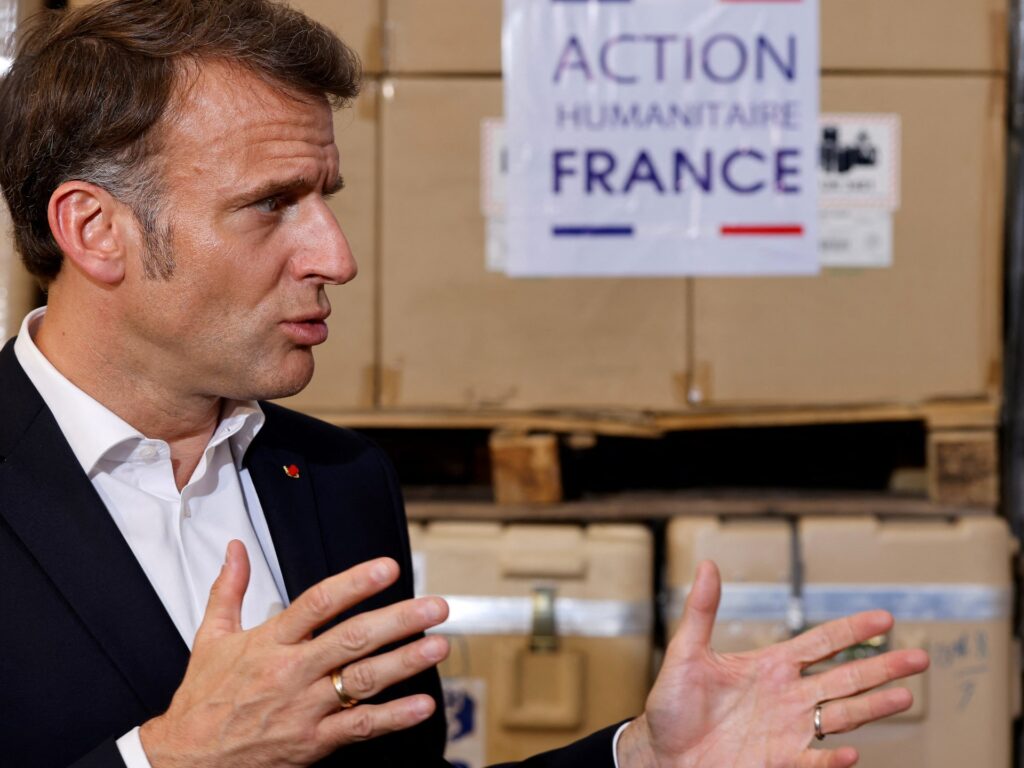
‘We must move towards recognition, and we will do so in the coming months,’ French president says. President Emmanuel Macron says France could recognise a Palestinian state “in the coming months”. Macron told France 5 television on Wednesday that he aimed to finalise the move at a United Nations conference on the Israel-Palestine conflict, which his country will co-chair with Saudi Arabia in June. “We must move towards recognition, and we will do so in the coming months,” Macron said. “I’m not doing it to please anyone. I’ll do it because at some point it will be right,” he said. Palestine’s minister of state for foreign affairs, Varsen Aghabekian Shahin, told the news agency AFP that France’s recognition would be “a step in the right direction in line with safeguarding the rights of the Palestinian people and the two-state solution”. Israeli Foreign Minister Gideon Saar said any “unilateral recognition” of a Palestinian state would be a “boost for Hamas”. “A ‘unilateral recognition’ of a fictional Palestinian state, by any country, in the reality that we all know, will be a prize for terror and a boost for Hamas,” he wrote on X. Advertisement “These kind of actions will not bring peace, security and stability in our region closer – but the opposite: they only push them further away,” he said. Palestine has been recognised as a sovereign state by 146 out of 193 UN members so far, with Armenia, Slovenia, Ireland, Norway, Spain, the Bahamas, Trinidad and Tobago, Jamaica and Barbados joining their ranks last year. However, despite growing international support for Palestinian statehood, several major Western countries like the United States, Australia, the United Kingdom and Germany have withheld recognition. Macron said that he foresaw a “collective dynamic”, enabling some countries in the Middle East to recognise the Israeli state in turn. Countries that do not recognise Israel include Saudi Arabia, Iran, Iraq, Syria and Yemen. Macron said that recognising Palestine as a state would allow France “to be clear in our fight against those who deny Israel’s right to exist, which is the case with Iran, and to commit ourselves to collective security in the region”. France has long championed a two-state solution to the Israel-Palestinian conflict, continuing its policy after the October 7, 2023, attack by Palestinian armed group Hamas on Israel. But formal recognition by Paris of a Palestinian state would mark a major policy switch and could antagonise Israel, which insists such moves by foreign states are premature. On a recent trip to Egypt, Macron held talks with President Abdel Fattah el-Sisi and Jordan’s King Abdullah II, making it clear he was strongly opposed to any displacement or annexation in Gaza and the Israeli-occupied West Bank. Advertisement Adblock test (Why?)
Barcelona hit Dortmund for four in Champions League quarterfinal
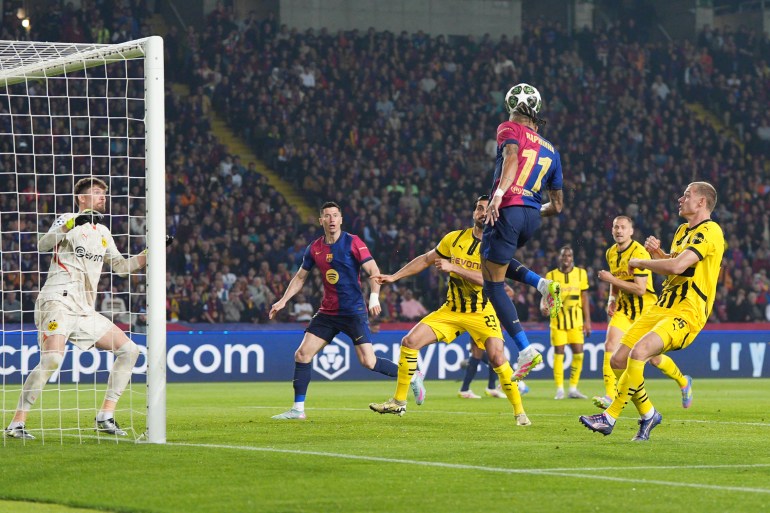
Barcelona set sights on Champions League progress with 4-0 home win in quarterfinal first leg against Borussia Dortmund. Barcelona claimed a commanding 4-0 home win over Borussia Dortmund in the first leg of the Champions League quarterfinals. Robert Lewandowski scored twice and Raphinha recorded a goal and an assist on Wednesday, leaving the Catalan club in a strong position to reach the semifinals for the first time since 2019. Lamine Yamal also scored as Barcelona dealt a hammer blow to the German side’s hopes of advancing. The return match is next Tuesday at Dortmund, who were last year’s runners-up in the final against Barcelona’s fierce rivals, Real Madrid. “We played very well, but we can’t be thinking about the semifinals yet,” Lewandowski said. “We scored four goals at home, but we still have the return leg to play.” Raphinha of Barcelona heads the ball across the goal before his teammate Robert Lewandowski scores his team’s second goal [Pedro Salado/Getty Images] Raphinha added to his Champions League-leading tally by poking the ball into the open net in the 25th minute for his 12th goal in the competition this season. He then helped set up Lewandowski’s first goal of the night in the 48th. Advertisement Lewandowski scored his 11th Champions League goal with a one-timer in the 66th before Yamal closed the scoring in the 77th. The 36-year-old Lewandowski has scored 14 Champions League goals after the age of 35, two more than Cristiano Ronaldo. Lewandowski had scored 17 of his 105 career goals in the Champions League for Dortmund over three seasons, from 2011-14. The Polish striker, who is also the Spanish league’s leading scorer this season with 25 goals, has 40 goals this season. “In my head, I always want to be helping the team with my quality and my goals,” Lewandowski said. “A striker always needs to be thinking about scoring goals, and when the team plays well, it becomes easier for me.” Raphinha of Barcelona scores his team’s first goal [David Ramos/Getty Images] Raphinha has scored in each of Barcelona’s last four Champions League knockout stage matches, with seven goals in that span. He entered the match with 11 goals, one more than Dortmund’s Serhou Guirassy and Bayern Munich’s Harry Kane. Also Wednesday in the quarterfinals, a wonder goal from Khvicha Kvaratskhelia upstaged a brilliant curling shot from teammate Desire Doue as Paris Saint-Germain beat Aston Villa 3-1. Adblock test (Why?)
Rescuers search rubble after Dominican Republic club roof collapse
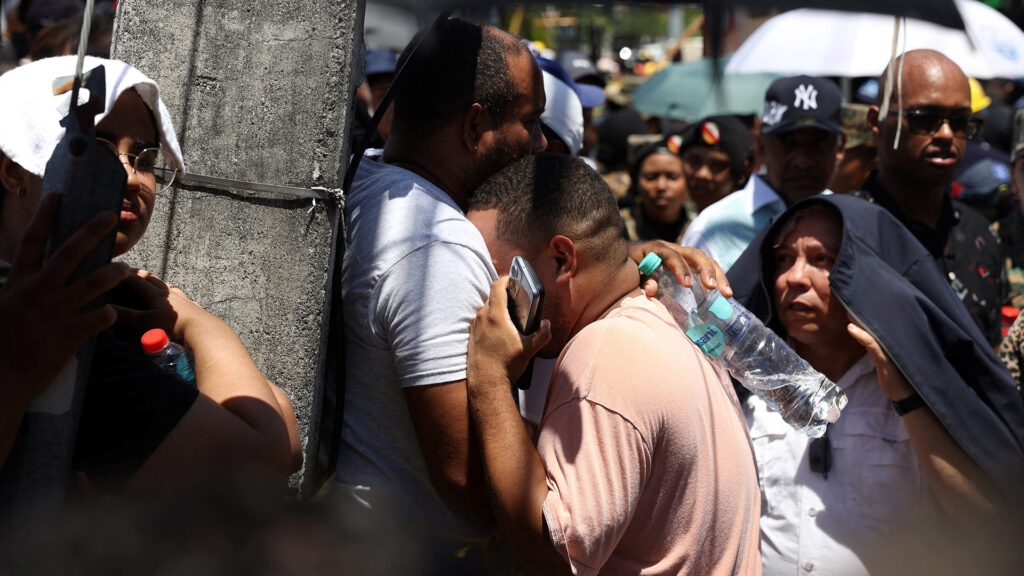
NewsFeed “I know she’s fine, I have faith.” Families waited for rescuers to find their loved ones amongst the rubble after a nightclub roof collapsed in the Dominican Republic on Tuesday, killing more than 100 people. Singer Rubby Perez, who was performing at the time, has been confirmed among the dead. Published On 9 Apr 20259 Apr 2025 Adblock test (Why?)