

Russia-Ukraine war: List of key events, day 1,135
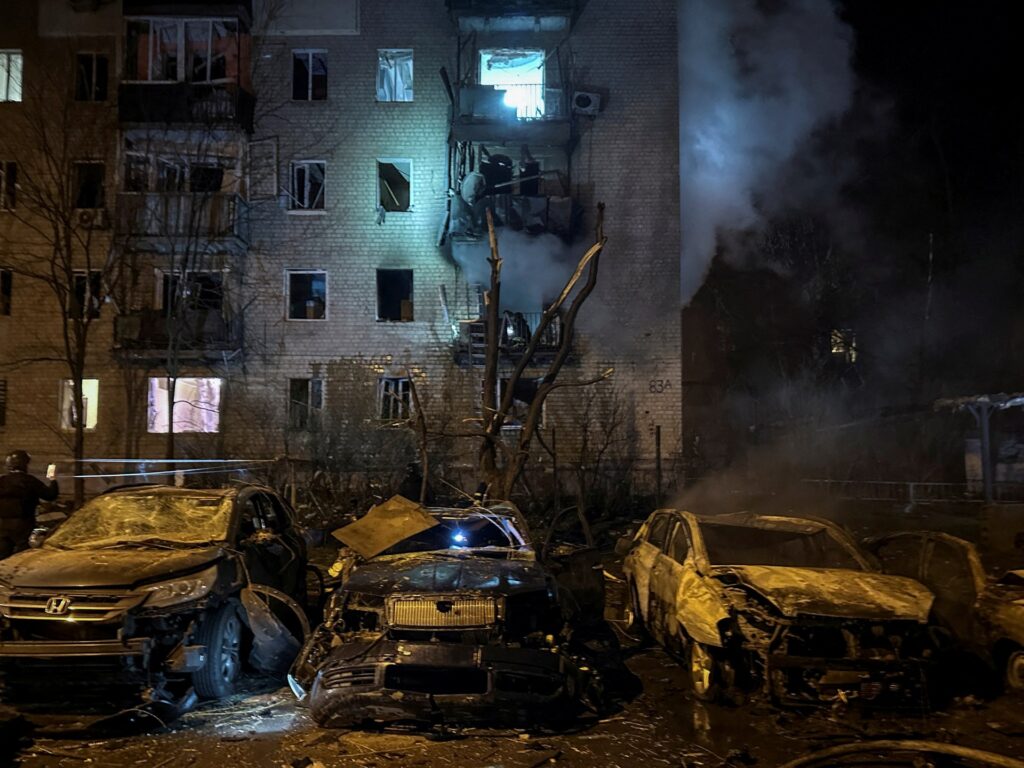
These are the key events on day 1,135 of Russia’s war on Ukraine. These are the key events from Thursday, April 3: Fighting A Russian ballistic missile strike killed at least four people and wounded 17 in the city of Kryvyi Rih, Ukrainian President Volodymyr Zelenskyy’s hometown. The attack also sparked a fire in the city, said Oleksandr Vilkul, the head of Kryvyi Rih’s military administration. Russian drone attacks overnight targeted the Ukrainian regions of Zaporizhia and Kharkiv, killing one person and injuring several others, officials said. Two people were killed and at least 32, including two children, were injured by a Russian drone attack which hit several multistorey apartment blocks in Kharkiv, the region’s governor said. One person was also injured in a separate drone attack on Ruski Tyshky, a village outside Kharkiv. Kyiv’s air force said Russia launched 39 drones towards Ukraine overnight, of which 28 were shot down. According to the air force, seven others failed to reach their targets due to electronic warfare measures. Russian air defence units repelled a drone approaching Moscow, the city’s mayor Sergei Sobyanin said. Russian Ministry of Foreign Affairs spokeswoman Maria Zakharova accused Ukraine of launching more than 30 “provocative” attacks on Russian energy facilities, despite a mutually agreed moratorium on strikes against energy facilities brokered by the United States. According to Russia’s Ministry of Defence, Ukrainian forces attacked Russian energy facilities four times in the past 24 hours. Ukraine’s military denied the accusations, saying its troops were adhering to the ceasefire, but claimed Russia had violated the moratorium “numerous times”. Advertisement The Russian Defence Ministry said its forces took control of two settlements, Vesele and Lobkove, in eastern Ukraine. Reuters news agency reports, citing war bloggers, that Russian troops have intensified their attacks in Russia’s western Kursk region to rout Ukrainian forces, including hundreds of Ukrainian troops holding out in a monastery – which it described as the last major Ukrainian foothold in the Russian territory. US Army General Christopher Cavoli said Ukraine’s army had resolved some of its manpower shortages to fight against Russia but warned that a cut-off of US weapons to Ukraine would be severely harmful to Kyiv’s war efforts. Cavoli also said Russia lost more than 4,000 tanks during its war on Ukraine, describing the scale of the war as “awe-inspiring”. Economy The 10 percent reciprocal tariffs imposed on Ukraine by the United States are “difficult, but not critical”, said Kyiv’s Economy Minister Yulia Svyrydenko. She also said Ukraine had an export volume of $874m to the US last year while Kyiv bought goods worth $3.4bn from the US during this period. Russia remains patient and is not surprised by US President Donald Trump’s threats to impose new tariffs on Russian oil, said Sergei Ryabkov, Moscow’s deputy foreign minister in charge of ties with the US. Ceasefire Ryabov warned that there might not be a peace agreement in the war on Ukraine unless the US recognised the “belligerent” stance of the European Union and Ukraine. President Zelenskyy, during a meeting with community leaders in northern Ukraine’s Chernihiv region, said that maintaining the country’s army size would be a top priority in peace negotiations. Zelenskyy also said that Ukraine would not accept the recognition of Russian-controlled Ukrainian territories as parts of Russia. He suggested finding a compromise to return such territories back to Ukraine over time through diplomatic means. Ukraine’s Foreign Minister Andrii Sybiha informed US Secretary of State Marco Rubio of Russia’s violation of the energy ceasefire brokered by the US. Advertisement Politics and Diplomacy Russian President Vladimir Putin’s investment envoy Kirill Dmitriev accused unidentified forces of trying to sow tension between Russia and the US by “distorting Russia’s position” and said meeting with the US demonstrated a “positive dynamic” between Washington and Russia. Finland’s President Alexander Stubb said France, or the United Kingdom as part of the “coalition of the willing”, should take charge in engaging with Russia as part of Europe’s efforts to support Kyiv. The US has withdrawn from the team of European and US investigators put together under the EU’s judicial body Eurojust to collect evidence of potential Russian war crimes in Ukraine. The move was inspired by a “change in priorities” within the US Department of Justice, Eurojust said. Adblock test (Why?)
Downtown Seoul tense as court rules on President Yoon’s impeachment
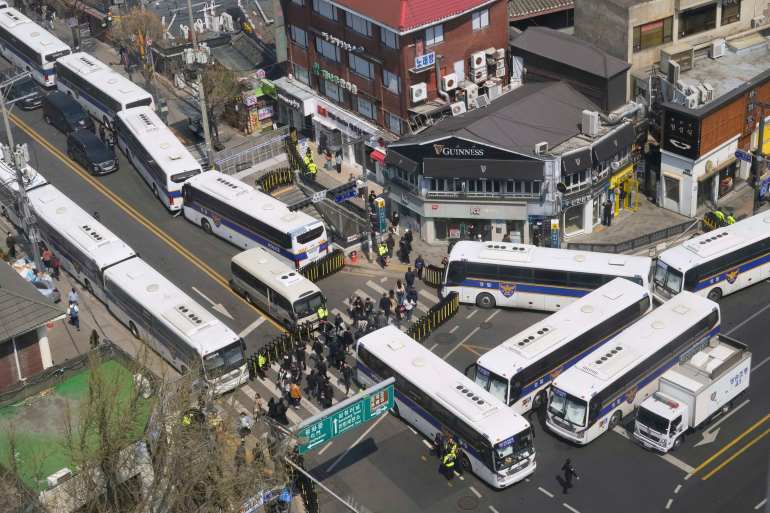
Seoul, South Korea – The catchphrase “8-0” was blasted on loudspeakers and seen on placards in Seoul’s historic centre of Jongno District, where thousands of critics of impeached President Yoon Suk-yeol gathered. The demonstrators on Thursday were calling for Yoon to be impeached, confident that all eight acting justices in the country’s Constitutional Court would decide to uphold an impeachment motion passed by the National Assembly in mid-December after Yoon’s short-lived martial law bid. When the final verdict was announced on Friday, the court ruled unanimously to uphold Yoon’s impeachment and remove him from office for briefly declaring military rule. The decision has set in motion a presidential election, which must be held within 60 days. Nestled between ancient palaces and state-of-the-art museums, the neighbourhood of Anguk, where the court is located – and which translates to “peaceful country” – was fortified by hundreds of police buses on Friday morning. More than 14,000 police officers have been mobilised throughout the city while the Anguk subway station, local businesses and several schools were closed in case of disturbances following the court’s ruling. Police buses are parked to make walls on the road as part of precautions for any eventuality near the Constitutional Court in Seoul, South Korea, on April 3, 2025 [Ahn Young-joon/AP Photo] In front of Gyeongbokgung Palace on Thursday, a student organisation staged what sounded like a celebratory band performance in anticipation of a successful impeachment decision that many hoped would end a four-month-long standoff over Yoon’s future. Advertisement “I completely trust that they will make the right decision,” said Song Hye-jung, who was watching the band from afar on Thursday. “But with so many things that have happened in the last few months, I have the tiniest of uncertainty still.” There have been two acting presidents since Yoon was suspended from office in December, as Prime Minister Han Duck-soo, who was next in line to the presidency, was also impeached by the National Assembly. While Han was reinstated as acting president last month, it had taken a record 38 days for the court to deliver its ruling on Yoon. “By looking at how long it took for the court to make its decision, there might have been one or two dissenting votes. So, it might not turn out to be a perfect eight to zero,” Lim Woon-taek, a sociology professor at Keimyung University and a former member of the Presidential Commission on Policy Planning, told Al Jazeera ahead of the ruling. “The key point in this fiasco was that the whole nation could watch what was happening on the night martial law was declared through live feeds on televisions and their phones. It was clear to see that the president overstepped the limits of his powers,” Lim said. Yoon’s case had centred on whether he broke the law by engaging in five key actions: declaring martial law, writing up a martial law decree, deploying troops to the National Assembly, raiding the National Election Commission and allegedly attempting to arrest politicians. “None of the five reasons are light whatsoever. The actions on December 3 can be seen as an attempt to suspend the constitutional government, freeze all political activities, and replace the National Assembly with a substitute force,” said Chung Tae-ho, a professor at Kyung Hee University specialising in constitutional law. Advertisement As a graduate law student at Seoul National University, Lim Hyeon-chang blamed the prolonged decision in Yoon’s case on the Constitutional Court being too sensitive towards public opinion. “It’s already been four months of protesting for many of our students, so we definitely felt tired from all the wait. But with spring and the new semester starting, there’s hope that this social chaos will go back to normalcy finally,” he said. While pro-impeachment protests gathered in their thousands on Thursday night, pro-Yoon supporters were harder to find. In a small group of fewer than 10 people, Grace Kim held a poster reading, “NO impeachment”. “I’m fully convinced that the court will decide to reinstate Yoon in office. The whole process of suspending and impeaching our president was illegal from the start,” the 63-year-old said. “If the court decides otherwise, we will exercise our right of resistance and fight until truth prevails,” she said. Adblock test (Why?)
Six people dead after alleged dynamite attack in Bolivia gold-mining clash
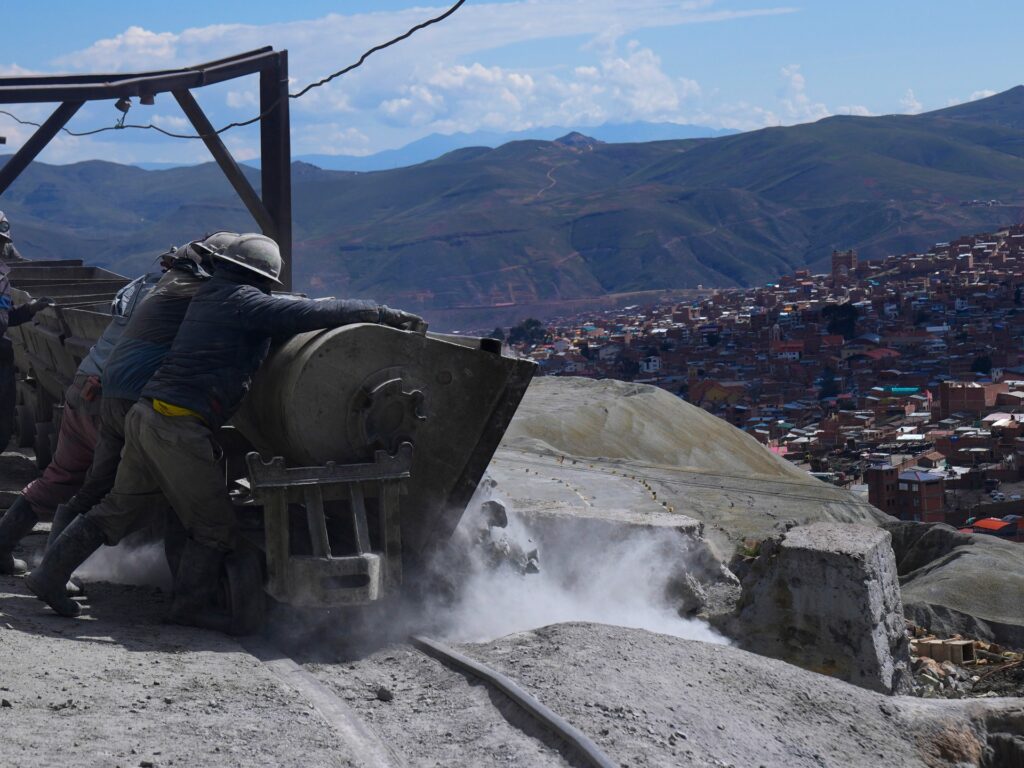
The dynamite attack is thought to be the result of two mining collectives fighting over access to gold deposits. A clash between gold-mining operations in Bolivia has resulted in an explosion that killed six people, according to authorities. Thursday’s blast rocked the Yani mining camp approximately 150 kilometres – or 90 miles – northwest of the country’s administrative capital, La Paz. “There are six dead, and we have reports of missing persons,” said Jhonny Silva, a representative from one of the mining groups involved, the Hijos de Ingenio Mining Cooperative. That mining collective reportedly brawled with another group, known as Senor de Mayo, in a dynamite-laden fight over access to a gold mining area. The explosion left houses damaged and the town of Sorata without power. “They have blown up machinery with dynamite, even a diesel tank,” Silva said of the rival cooperative. Collectives developped in Bolivia as an alternative to state-run and private enterprises. Critics have accused those large companies of providing unstable employment for low-income mining workers, their jobs hinging on market fluctuations. Advertisement The collectives started to crop up in the wake of several economic crises, particularly in 1985, when international mineral prices fell and the state-owned mining company Corporación Minera de Bolivia (COMIBOL) temporarily shuttered. That left tens of thousands of Bolivian miners without jobs. As Bolivia’s mines were privatised, the collectives offered a space for the miners to self-organise. Some would eventually extract tin, silver, gold and zinc to sell to private businesses. Collectives now represent the majority of mining workers, outnumbering their counterparts at COMIBOL and in the private sector. They therefore wield significant political power, despite their relatively modest ability to extract minerals, compared to big companies. Estimates put the number of gold-mining collectives at about 1,600. But critics of the cooperative system warn that there are few safeguards in place for workers, who are exposed to toxic conditions in the extraction process. Opponents also note that – while cooperatives are legal – some of their mining activity is not, and that can lead to environmental destruction and pollution. The informal nature of the work has also led to deadly clashes, both over access to mining sites and the markets in which to sell the metals and raise investments. The fights sometimes involve COMIBOL workers and security forces. The state-run company has become Bolivia’s largest company, propelled in part by favourable policies under former socialist President Evo Morales, who led the country from 2006 to 2019. Advertisement In 2012, for instance, tensions between COMIBOL and the collectives led to road blockages and a deadly dynamite attack in La Paz. Thursday’s dynamite attack between the collectives, however, was simmering for years, according to Silva. Colonel Gunther Agudo, a local police officer, told local media that the dynamite attack “caused an explosion of great magnitude”. “We’re continuing the rescue efforts,” he said. Adblock test (Why?)
South Korea’s Constitutional Court removes President Yoon from office
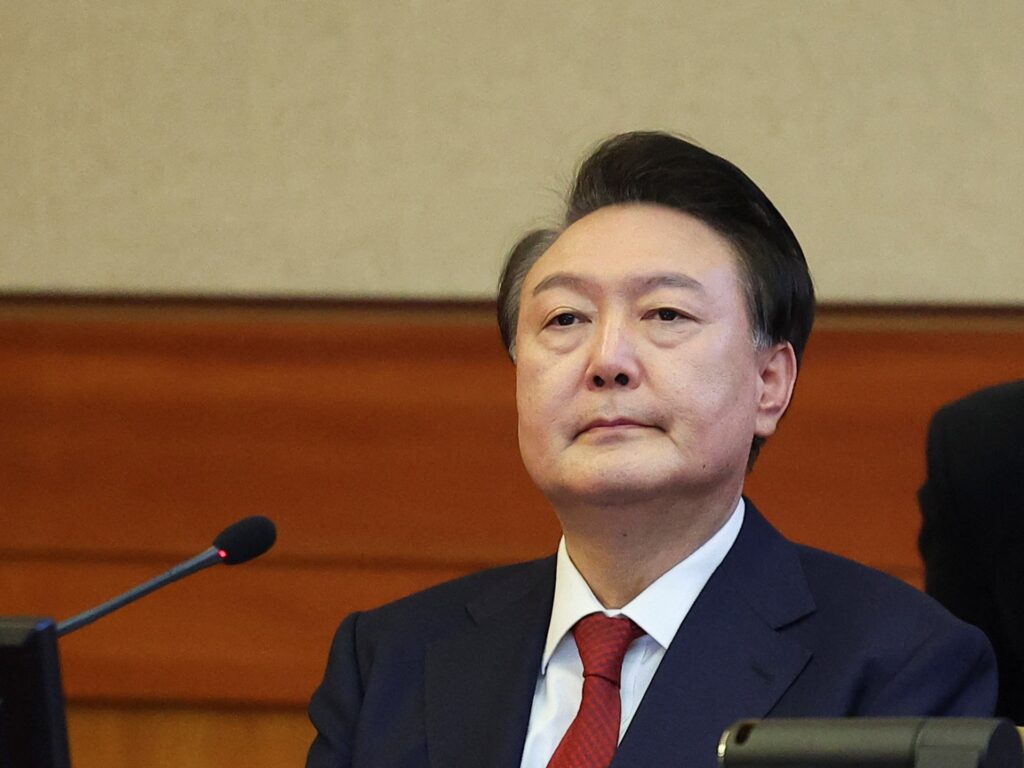
BREAKINGBREAKING, South Korea’s Constitutional Court said that President Yoon Suk-yeol ‘violated’ people’s basic rights by declaring martial law. Seoul, South Korea – The Constitutional Court in South Korea has removed President Yoon Suk-yeol from office after upholding his impeachment by parliament for declaring martial law late last year. The court’s Acting Chief Justice Moon Hyung-bae opened the proceeding on Friday by declaring that there was sufficient reason to impeach President Yoon. “The defendant mobilised military and police forces to dismantle the authority of constitutional institutions and infringed upon the fundamental rights of the people,” the acting chief justice said while reading the court’s decision. “In doing so, he abandoned his constitutional duty to uphold the constitution and gravely betrayed the trust of the Korean people,” the chief justice said. “Such unlawful and unconstitutional conduct constitutes an act that cannot be tolerated under the constitution,” he said. “The negative consequences and ripple effects of these actions are substantial, and the benefit of restoring constitutional order through removal from office outweighs the national costs associated with the dismissal of a sitting president,” he added. Advertisement The Constitutional Court’s decision was unanimous, Hyung-bae said. The ruling on Friday now means that South Korea must hold a presidential election within 60 days. Yoon briefly declared martial law late on the evening of December 3, claiming that antistate and North Korean forces had infiltrated the government. But senior members of the police and military said they were instructed to detain rival politicians and prevent the country’s assembly from voting to lift the president’s surprise imposition of military rule. This is a breaking news story. We will bring you more soon … Adblock test (Why?)
Trump tariffs put unprecedented pressure on business plans, livelihoods
[unable to retrieve full-text content] The only option for many businesses and workers is to wait and see what level of harm Trump’s tariffs will inflict.
Trump: Tariff rollout ‘going very well’ amid market selloff
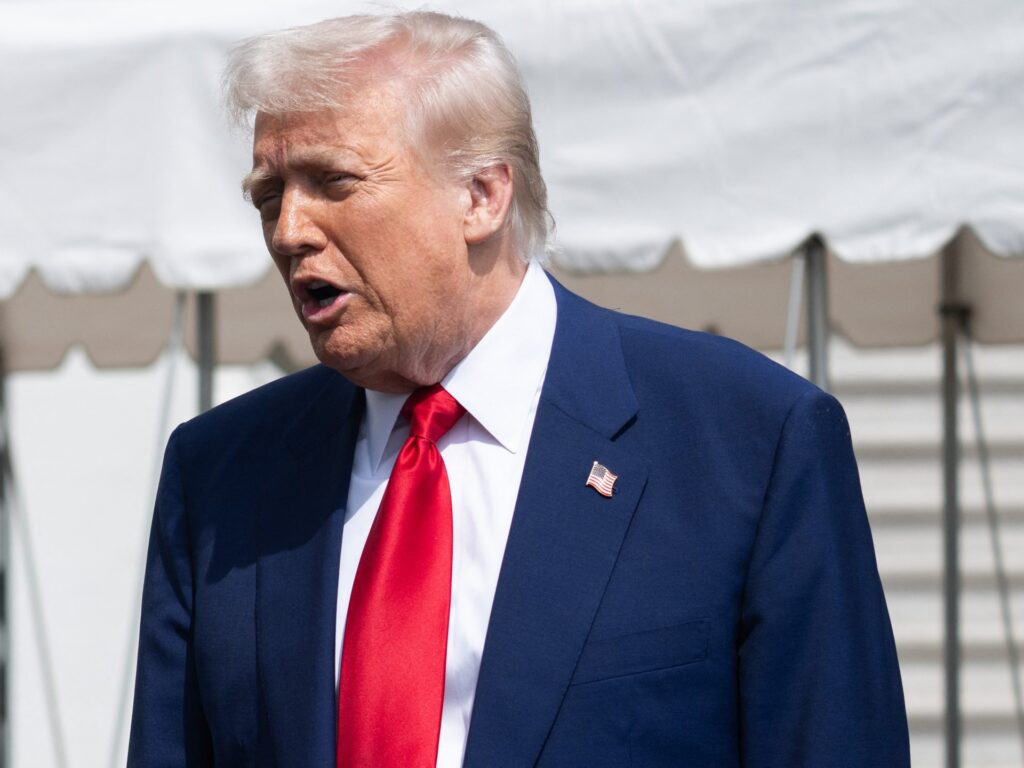
NewsFeed “The country is going to boom.” President Trump says he thinks the rollout of his global tariffs is “going very well.” On a day that financial markets around the world fell, Trump told reporters at the White House that “the markets are going to boom, the country is going to boom.” Published On 3 Apr 20253 Apr 2025 Adblock test (Why?)
At least 16 killed as two refugee boats sink off Turkiye and Greece
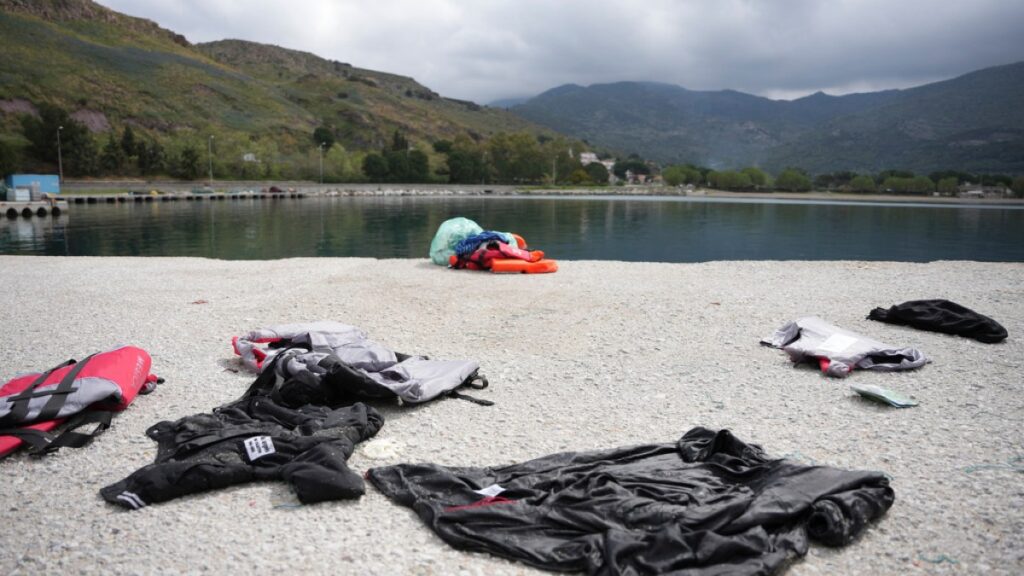
Greek and Turkish coastguards still searching for two missing people from the two unrelated accidents. Two boats carrying refugees sank in the narrow stretch of sea between Turkiye and the Greek island of Lesbos, leaving at least 16 people dead, according to officials from both countries. The accidents on the boats, which together carried about 66 people, occurred several hours apart on Thursday, with authorities on either side unaware of the other nation’s rescue efforts. On the Greek side, the country’s coastguard said that one of its patrol boats came across a small dinghy of about five metres (5.5 yards) in length that was taking on water, and rescued 23 people – 11 minors, eight men and four women – out of a reported total of 31 passengers. Authorities later recovered the bodies of seven people – three women, two boys, one girl and one man – after a search and rescue operation that included helicopters, vessels from the coastguard, and the FRONTEX European border agency. The Greek coastguard said rescuers were still searching on Thursday evening for a young girl who had been reported as missing by survivors. Advertisement One of the survivors, identified only as a 20-year-old man, was arrested on suspicion of being a people smuggler after other passengers allegedly identified him as having piloted the dinghy, the coastguard said. Separately in Turkiye, authorities from the northwestern province of Canakkale said the coastguard received an emergency call for help from a boat early Thursday morning, rescuing 25 people after deploying three boats and a helicopter. The statement said that nine bodies had been recovered and the search for one missing person continued. Turkish media said the survivors were taken to a hospital in Turkiye. Shipwrecks are very common on the short but perilous route between the Turkish coast and the nearby Greek islands of Samos, Rhodes and Lesbos that serve as entry points to the European Union for people fleeing conflict and poverty. The Greek government has cracked down with increased patrols at sea, and many smuggling rings have shifted their operations south, using larger boats to transport people from the northern coast of Africa to southern Greece. Last year, more than 54,000 people used what has become known as the eastern Mediterranean route heading to Greece, and more than 7,700 crossed Greece’s small land border with Turkiye, according to figures from the United Nations. A total of 125 people were reported dead or missing. Adblock test (Why?)
Hungry, scared Darfur civilians fear RSF attack, plead for army help
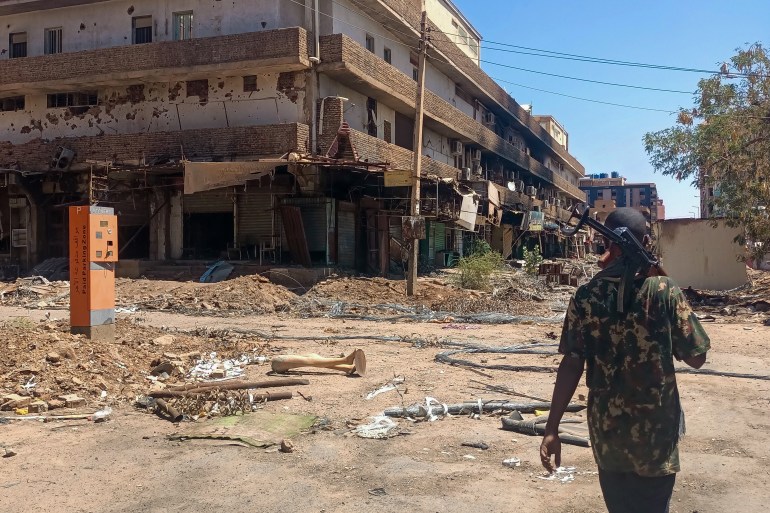
Civilians in Sudan’s North Darfur’s capital, el-Fasher, and surrounding towns are starving. The paramilitary Rapid Support Forces (RSF) have imposed a siege on them for about a year, yet they managed to forestall an invasion thanks to the Joint Forces – an array of local armed factions backed by the army. The besieged civilians are now pleading for help, but some fear the army has neither the political will nor the capability to rescue civilians, say experts, local journalists and civilians. The nearly 500,000 civilians in Zamzam camp – the largest refugee camp in North Darfur – are already suffering from famine, according to the United Nations global hunger monitor, the Integrated Food Security Phase Classification (IPC). Residents in Zamzam told Al Jazeera the army dropped some food aid from its warplanes earlier this week, but said supplies will run out in a few days. “All Sudanese military and security agencies should move towards [North Darfur] to ensure the flow of food, medicine and humanitarian supplies to besieged civilians,” said Mohamed Khamis Doda, the spokesperson for Zamzam camp. Advertisement “There must also be an immediate intervention of [humanitarian organisations],” he added. Abandoning Darfur? Most people in the camp, and in el-Fasher, are from sedentary farming communities, known as “non-Arabs”, while most of the fighters attacking them come from the nomadic or pastoralist “Arab” tribes the RSF typically recruits from. Since April 2023, the RSF has been fighting Sudan’s army in a catastrophic civil war that has triggered the world’s worst humanitarian crisis by most measures. The RSF quickly captured four out of five Darfur states – South, East, West and Central Darfur – in 2023. North Darfur was the holdout. The UN accuses both sides of atrocities but says the RSF has systematically raped women and girls and “disappeared” thousands of civilians. Many of these crimes have been committed in Darfur, an RSF stronghold nearly the size of France. In April 2024, the RSF besieged North Darfur’s capital, el-Fasher, after many local armed factions – part of the Joint Forces – sided with the army, despite having formed in the early 2000s in rebellion against the central government’s marginalisation of their tribes and region. Since the army captured the capital, Khartoum, in March, experts and civilians from Darfur worry that it will neglect the region again by prioritising its control over central and northern Sudan. “At the moment, I’m not sure if the army has the political will and resources to continue to fight [in Darfur],” said Jawhara Kanu, an independent Sudan expert originally from North Darfur. For nearly two years, Sudan has been ravaged by a war between the army and the RSF, which has killed tens of thousands, uprooted 12 million more and created the world’s worst humanitarian crises [File: AFP] Kanu added that over the past two years, there has been a growing number of personalities with large followings inciting hatred on social media against civilians in Darfur, blaming everyone from the region for the RSF’s criminality. Advertisement “They believe the RSF is from Darfur, so let’s just let go of Darfur,” Kanu told Al Jazeera. “I’m afraid that public opinion [in north and central Sudan] might affect the army’s and allied forces’ decision to [fight for Darfur].” Indiscriminate warfare On March 24, the army fired four rockets at a crowded market in North Darfur’s Torra village at sunset, when hundreds of people were gathering to break their fast during the holy month of Ramadan. Local monitors estimate that at least 350 people were killed. “There were so many civilians who were killed and injured. So many of them were women and children,” said Adam Rojal, a spokesperson for displaced people in Darfur. “There was absolutely no justification.” Al Jazeera sent a written inquiry to army spokesperson, Nabil Abdallah, asking why the army hit the crowded market during iftar. He had not replied by the time of publication. A source monitoring the situation in Darfur, who asked to remain anonymous to protect colleagues from reprisals, told Al Jazeera the army’s air strikes are the only deterrent against RSF fighters. Despite the attack on Torra, most civilians in North Darfur fear an RSF invasion more than army air strikes. They believe the group will commit mass killings and rapes and plunder entire cities – as it has done across Sudan – if it conquers el-Fasher and surrounding villages. However, the source warned, the army won’t be able to strike the RSF accurately if the group infiltrates densely populated spaces in North Darfur, such as el-Fasher and Zamzam. Advertisement “I think that strike [on Torra] indicated that even if the RSF gets inside el-Fasher, the army isn’t going to hold back. And what that means for civilians … Well, I think we already have an idea,” the source told Al Jazeera. A deal to surrender? Local monitors say the RSF has stepped up abuses across North Darfur in recent weeks. On April 1, the group killed at least seven people in shelling on Abu Shouk displacement camp, where some 190,000 people live. Ten days earlier, it stormed the town of al-Malha, north of el-Fasher, reportedly killing at least 40 people, destroying homes, and looting and burning down the market, exacerbating hunger in the area. A man stands by as a fire engulfs a livestock market in el-Fasher, the capital of Sudan’s North Darfur state, on September 1, 2023, in the aftermath of a bombardment by the paramilitary Rapid Support Forces [AP] The capture of al-Malha, which is located next to Libya, gives the RSF another vital supply line as they close in on el-Fasher, local monitors told Al Jazeera. On the other hand, they say, the Joint Forces cannot get new weaponry or recruit new fighters due to the siege. On Sunday, Joint Forces leader, Minni Minawi called for “dialogue” during a speech on the occasion of Eid al-Fitr, appearing to contradict an earlier speech by army chief Abdel Fattah al-Burhan, who promised the army would fight on
US allies and adversaries react to Trump’s tariffs
[unable to retrieve full-text content] Trump’s new global tariffs have shocked both allies and adversaries alike.
Gaza faces ‘largest orphan crisis’ in modern history, report says
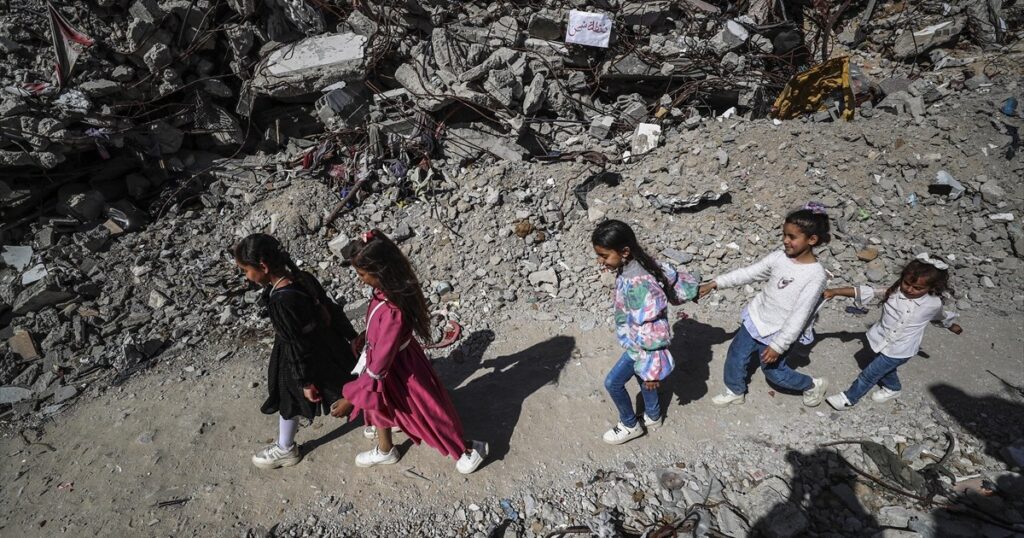
Over 39,000 children have lost one or both parents in Gaza, new report by the Palestinian statistics agency says. Tens of thousands of Palestinian children have lost their parents since the start of Israel’s war on the besieged Gaza Strip, the Palestinian Central Bureau of Statistics says. In a statement on Thursday, the eve of Palestinian Children’s Day, the agency said 39,384 children in Gaza have lost one or both parents after 534 days of Israel’s assault, which has ravaged the tiny enclave and displaced most of its 2.3 million strong population. The bureau said among them are about 17,000 children who have been deprived of both parents since October 2023, when Israel launched its genocidal offensive. “These children are living in tragic conditions, with many forced to take refuge in torn tents or destroyed homes, in a near-total absence of social care and psychological support,” the statement by the bureau said. “The Gaza Strip is suffering from the largest orphan crisis in modern history.” According to the statement, at least 17,954 children have been killed in Israeli attacks in Gaza, including 274 newborn babies and 876 infants below the age of one year. Advertisement “Seventeen children also froze to death in the tents sheltering displaced people, and 52 others died of starvation and systematic malnutrition,” it added. The bureau warned that 60,000 children are at risk of death due to severe levels of malnutrition and looming famine. Since resuming its offensive in Gaza after a fragile ceasefire brought a few weeks of respite, Israel has sealed vital border crossings – prohibiting the entry of much-needed humanitarian aid, including flour, fuel, and medical supplies into the Strip. Even before the last ceasefire came into effect in January, lasting for just about two months, Israeli forces kept the border crossings largely shut, turning away thousands of convoys carrying aid supplies. Gaza’s Government Media Office has decried the move, saying earlier this week the Israeli government is applying a policy of “systematic starvation” by halting the entry of aid and flour for an entire month, forcing bakeries to shut down. Children and minors, those below the age of 18, make up about 43 percent of the combined Palestinian population of 5.5 million in Gaza and the occupied West Bank, the bureau said. Since resuming its deadly campaign on March 18, the Israeli army has killed more than 1,160 Palestinians in Gaza. At least 50,523 Palestinians have been killed since October 2023, most of them women and children, according to Gaza’s Ministry of Health. The report said that since October 7, Israeli forces detained more than 1,055 children, mostly in the West Bank, in what it said was an “unprecedented” escalation against Palestinian children. More than 350 remain held in Israeli prison facilities. Advertisement Adblock test (Why?)