

Condemnation of anime-style images from Israeli military
[unable to retrieve full-text content] The Israeli army faced backlash for joining an online trend of using AI anime-style images to portray its forces.
Trump’s tariffs: Which countries will hit back – and which likely won’t?
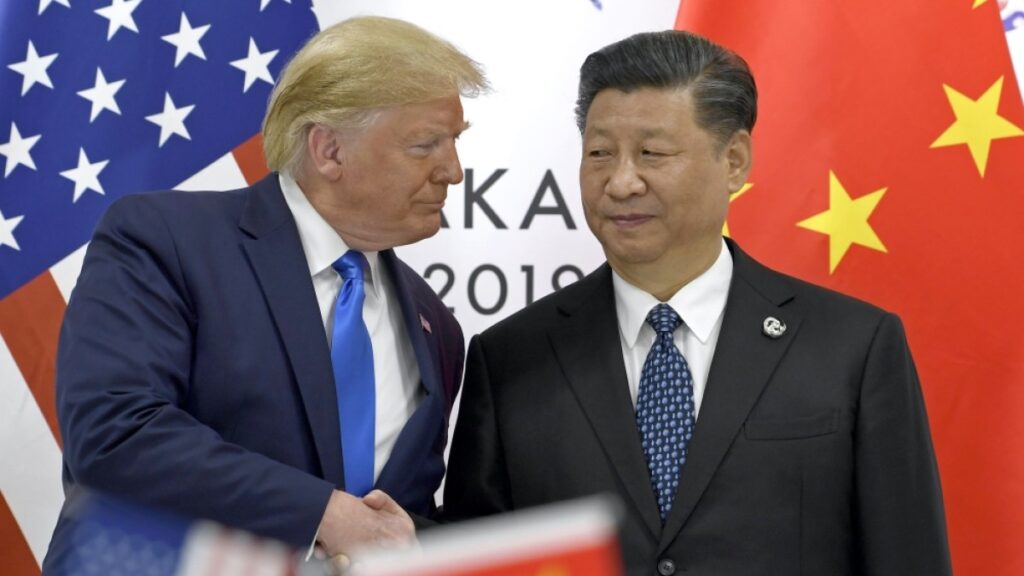
US President Donald Trump has unveiled his long-awaited “reciprocal” tariff plan, in a move that sent financial markets reeling amid growing fears of a global trade war. On Wednesday, Trump announced a 10 percent “minimum baseline tariff” on nearly all imports into the United States. Higher duties on targeted countries will be phased in shortly afterwards. He claimed the new import taxes were designed to reduce trade deficits and bring foreign manufacturing back to US shores. He also said they would pave the way for tax future cuts. As Trump took aim at a global trading system he said “ripped off” the US, his tariffs prompted an immediate backlash, with some of America’s largest trading partners promising countermeasures. What was announced? Invoking the International Emergency Economic Powers Act of 1977, Trump announced a 10 percent tariff on all countries, scheduled to take effect on April 5. Then, he revealed there would be “individualised” tariffs for countries that have large trade surpluses with the US or that impose higher duties on American imports. Those tariffs would come into effect four days later, on April 9. Advertisement Trump explained that his team calculated the “individualised” tariffs by taking half of what he claimed those countries charged the US for its exports. As such, the European Union is headed for 20 percent tariffs, while the United Kingdom has been slapped with a 10 percent levy. China, meanwhile, had been assigned 34 percent – on top of the 20 percent tariffs that Trump had already imposed on Chinese imports since coming into office on January 20. Vietnam will be tariffed at 46 percent, and Thailand 36 percent. Mexico and Canada, the US’s two largest trading partners and its immediate neighbours, were missing from the list but they both already face 25 percent tariffs for all exports to the US that are not covered by the US-Mexico-Canada (USMCA) trade pact. Reciprocal tariffs will not apply to some goods such as copper, semiconductors, energy, and “certain minerals that are not available in the United States”, according to a White House fact sheet. Reciprocal tariffs may also be subject to change. According to the White House document, tariffs may be negotiated with trading partners who “take significant steps to remedy non-reciprocal trade arrangements”. What did Trump say? “For decades, our country has been looted, pillaged, raped and plundered by nations near and far, both friend and foe alike,” Trump told an audience of manufacturing workers, cabinet members and journalists. “Foreign leaders have stolen our jobs. Foreign cheaters have ransacked our factories. And foreign scavengers have torn apart our once-beautiful American dream.” Advertisement But he proclaimed that Wednesday would mark a turning point in US history, marking an end to the “vicious attacks” he said the country had weathered. “April 2, 2025, will forever be remembered as the day American industry was reborn, the day America’s destiny was reclaimed,” Trump said. “We will charge them approximately half of what they are – and have – been charging us. So, the tariffs will be not a full reciprocal,” Trump said. “I could have done that, I guess, but it would’ve been tough for a lot of countries. We didn’t want to do that,” he added. What have target countries said in response? Within minutes of Trump’s announcement, world leaders began denouncing the tariffs as harmful. China’s Ministry of Commerce promised “countermeasures to safeguard its own rights and interests” in response to US “bullying,” it said in a statement. US tariffs on China are now effectively at 54 percent. While Beijing stopped short of saying it would impose retaliatory countermeasures, the statement read “the United States has drawn the so-called ‘reciprocal tariffs’ based on subjective and unilateral assessments, which is inconsistent with international trade rules”. It urged the Trump administration to cancel the tariffs and “properly resolve differences with its trading partners through equal dialogue”. For once, Beijing and Taipei appeared to be on the same page. Taiwan labelled the tariffs “highly unreasonable”. Cabinet spokesperson Michelle Lee said Taipei “deeply regretted” Trump’s announcement of a 32 percent tariff on its exports. Advertisement Australian Prime Minister Anthony Albanese said the tariffs were “not the act of a friend” and “totally unwarranted”. European Commission President Ursula von der Leyen, responding to a new 20 percent tariff on the EU, called the measure a “major blow to the world economy”. “The consequences will be dire for millions of people around the globe,” she said, adding groceries, transport and medicine will cost more. Even Canada, which was exempt from the latest tariffs, chimed in. “During this crisis, we must act with purpose”, Canadian Prime Minister Mark Carney wrote on social media. “My government will fight US tariffs,” he said. Which countries will hit back with their own measures? As reciprocal tariffs won’t kick in until April 9, countries have six days to try to cut a deal with the Trump team. But some may respond with retaliatory tariffs. Canada is one of several US trading partners which has pledged to respond to tariffs with retaliatory measures. Meanwhile, the European Union is “ready for a trade war” with the US and could “attack online services”, French government spokesperson Sophie Primas said. She said the EU was preparing a two-stage rebuttal, with “an initial response”, to be put in place around mid-April, concerning aluminium and steel. Then the EU also will target “all products and services”, with the measures probably ready at the end of April, Primas said, adding this was still being discussed. “China is likely going to release some type of retaliation …,” Nick Marro, a principal economist at the Economist Intelligence Unit told Al Jazeera. Advertisement Which countries will likely prefer diplomacy? Mexico, meanwhile, has demurred. On Wednesday, Mexican President Claudia Sheinbaum said she would avoid pursuing “tit-for-tat” tariffs. Similarly, British Prime Minister Keir Starmer has ruled out immediate retaliation, promising on Thursday to keep a “cool head … in the coming days”. Business Secretary Jonathan Reynolds told the House of Commons on Thursday
Reverse reparations: Zimbabwe’s perfect trap, South Africa’s looming danger
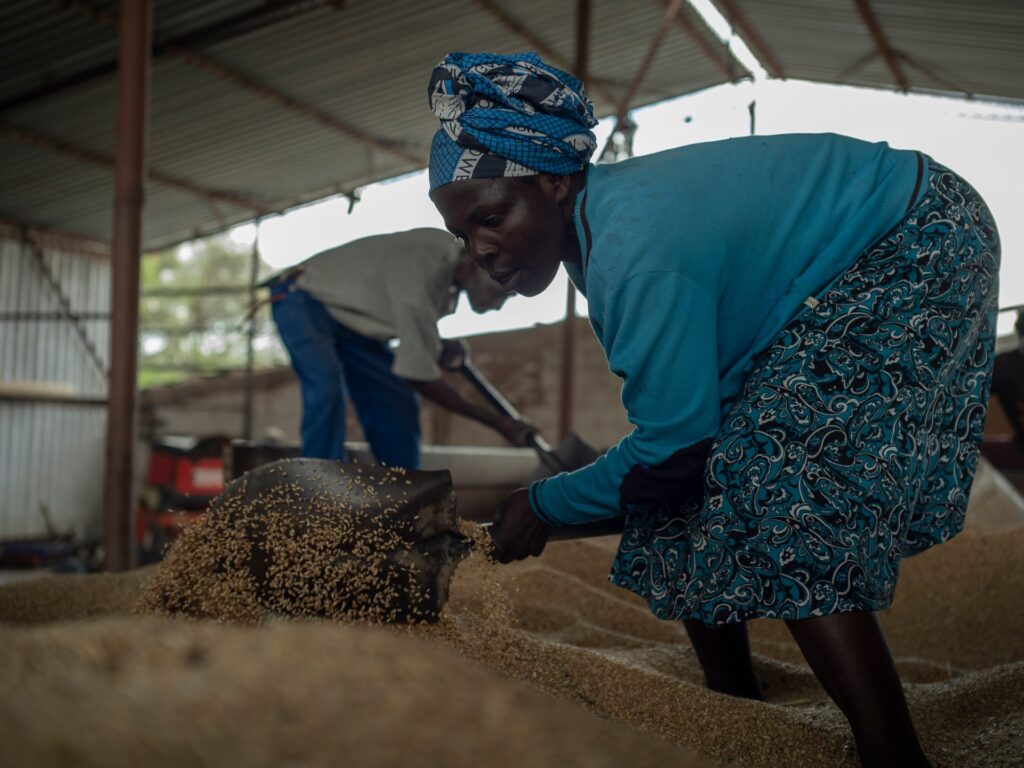
On February 7, the White House cut aid to South Africa, citing a nonexistent threat to white farmers from government land expropriation. To see what might lie beyond Trump’s executive order, South Africa need only look north. Zimbabwe’s economy has been crushed by sanctions imposed after redistributing colonial-era farmland. And despite efforts to placate the development establishment, it appears that Washington prefers the country to dangle, like a corpse in a gibbet, lest other countries start getting ideas of their own. In July 2020, in the teeth of the COVID-19 pandemic, Zimbabwe agreed to pay $3.5bn in compensation to approximately 4,000 white settler landowners for property redistributed during land reforms. This sum, five times the size of Zimbabwe’s May 2020 COVID stimulus plan, was pledged at a time when the United Nations warned the country was “on the brink of man-made starvation”. The deal came after years of pressure, with Zimbabwean officials hoping it would persuade the United States to lift the punitive 2001 Zimbabwe Democracy and Economic Recovery Act (ZDERA) that has blocked the nation’s access to international loans and assistance for two decades. Yet Zimbabwe lacked the funds to pay, and ZDERA remained. Advertisement The conventional narrative portrays Zimbabwe’s land reform as reckless expropriation by the despotic Robert Mugabe, leading to economic collapse. This version rewrites history. During British colonisation, Africans were prohibited from owning land outside “native reserves”. By the mid-20th century, 48,000 white settlers controlled 50 million acres (more than 20 million hectares) of prime farmland, while nearly a million Africans were confined to 20 million acres of largely infertile land – an injustice that fuelled Zimbabwe’s liberation struggle. The 1979 Lancaster House Agreement, which ended white minority rule, restricted land reform to market transactions for a decade, ensuring colonial-era land ownership persisted. Despite this constraint, Zimbabwe made strides in human development in the 1980s. But by the end of the decade, the World Bank and the IMF imposed an economic structural adjustment programme, slashing public spending, removing subsidies, and privatising state enterprises. The result: mass unemployment, degraded services, and deepening poverty. By 2000, facing growing domestic pressure, Mugabe’s government began compulsory land redistribution. The programme had flaws – inadequate support for new farmers and insufficient resources to rebuild agricultural supply chains. Yet, contrary to disaster narratives, thousands of landless Zimbabweans benefitted while a small elite of white settlers lost their privileged status. The international response was swift and punitive. When the US Congress passed ZDERA in December 2001, it was explicitly presented as a response to Zimbabwe’s land reform programme, framing Zimbabwe’s actions as a threat to US foreign policy. The United Kingdom, the European Union, Australia, and Canada followed with their own punitive measures. For two decades, Zimbabwe has been trapped in a cycle of economic isolation, unable to access the loans and investment needed to rebuild. Advertisement The human cost has been staggering. UN human rights experts have repeatedly warned that ZDERA has had an “insidious ripple effect” on Zimbabwe’s economy and the enjoyment of fundamental rights. The Southern African Development Community estimates that Zimbabwe has lost access to more than $100bn in international support since 2001. The 2020 compensation deal is a cruel irony. Zimbabwe, already bankrupt, must now borrow billions to pay former colonial beneficiaries, hoping to escape a punitive law imposed in response to its land reform programme. This creates a perfect trap: a nation forced to finance its subjugation, while its people suffer. The absurdity is underscored by the US’s refusal to support Zimbabwe’s debt restructuring through the African Development Bank. US officials insist that ZDERA is “a law, not a sanction”, but this is a distinction without a difference – whether through formal sanctions or legislation, the goal remains the same: protecting settler property rights over justice for the colonised. This is not just Zimbabwe’s story. The Trump administration recently attacked South Africa’s far more cautious land reform efforts, falsely claiming the government was “seizing land from white farmers”. This rhetoric, amplified by far-right media, ignores that South Africa’s land reform – a constitutionally mandated process – seeks to correct apartheid-era dispossession, where white South Africans, 8 percent of the population, control 72 percent of farmland. Trump’s intervention was never about property rights – it was about preserving a global system that favours former colonisers over the dispossessed. The fight for land justice in Zimbabwe, South Africa, and across the Global South is not just a local struggle – it is a global one. Advertisement As Thomas Sankara, the revolutionary leader of Burkina Faso, once said, debt is “a cleverly managed reconquest of Africa”. Zimbabwe’s plight is a stark reminder of this truth. The international community must reckon with the legacy of colonialism and the systems that continue to enforce it. Until we do, the promise of liberation will remain out of reach for millions. Zimbabwe’s land reform was not perfect, but it was necessary. The tragedy is not the reform itself but the global backlash punishing Zimbabwe for daring to challenge the status quo. It is time to lift the sanctions, cancel the debts, and allow Zimbabwe, South Africa, and other nations to pursue justice on their own terms. Land reform is not a threat – it is a demand for justice, one the world can no longer ignore. The views expressed in this article are the authors’ own and do not necessarily reflect Al Jazeera’s editorial stance. Adblock test (Why?)
Why is Zimbabwe’s President Mnangagwa facing pressure to resign?
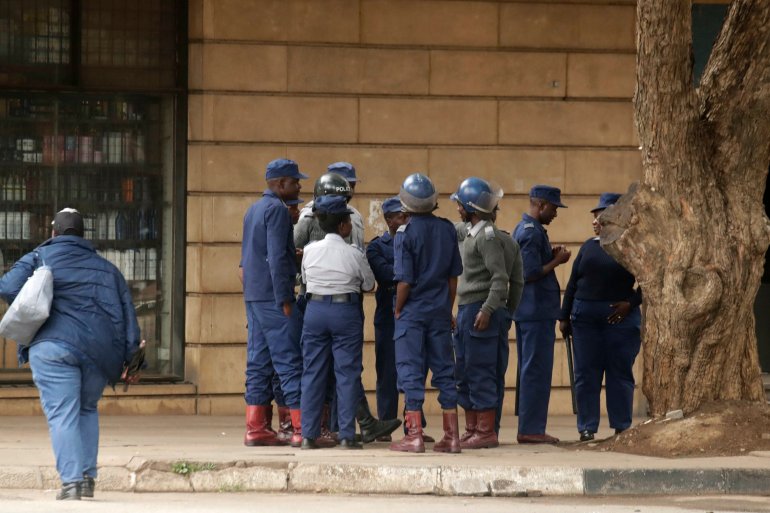
Zimbabwean President Emmerson Mnangagwa is facing what experts say is the biggest threat to his rule yet as a succession battle erupts ahead of general elections scheduled for 2028. Recent manoeuvrings by the president and his supporters to extend his rule to 2030 have led to calls and protests from within his party for the president to step down or be forced to do so. The upheavals have seen the dismissal of top security officials, a move experts say Mnangagwa is taking to avoid being overthrown in a coup. The president has long faced criticism from Zimbabweans, but dissent within his ZANU-PF party is rare, and public calls for demonstrations against him are unprecedented. On Monday, demonstrators took to the streets in protests called by a top ZANU-PF member. Zimbabwe has for decades been mired in political crises that have led to economic stagnation, a dearth of jobs, and general government dysfunction. Hyperinflation over the past two decades has pushed the South African country’s economy to its knees and wiped out the savings of common people. Advertisement “Zimbabweans are tired and need a messiah,” Blessing Vava, director of human rights group Crisis Zimbabwe, told Al Jazeera. Here’s what to know about the latest crisis: Riot police officers gather on a deserted street in downtown Harare, Zimbabwe, on Monday, March 31, 2025, following calls for an antigovernment protest [Aaron Ufumeli/AP Photo] What’s the problem with ZANU-PF? An internal split within the ruling ZANU-PF party, which has held power since Zimbabwe’s independence in 1980, is driving the current crisis. Two main factions are at loggerheads, one supporting a prolonged term for Mnangagwa, 82, and another one supporting the ascendancy of Constantino Chiwenga, his 68-year-old vice president. Mnangagwa came to power in 2017 amid promises of democratic and economic reforms. However, critics say corruption levels have remained high, the opposition has been targeted, and the economy has continued to slide. Can Mnangagwa rule beyond 2028? Zimbabwe’s constitution has a two-term limit for presidents. Mnangagwa is currently in his second elected term, which ends in 2028 when elections are due. However, some members of the ZANU-PF party have been chanting a “2030 agenda” since last year, saying the president should stay in power for a third term to continue his reforms, although that would violate the constitution. At a conference in December, the party officially adopted a motion to extend Mnangagwa’s rule till 2030. That’s subject to the approval of the Senate and a national referendum, but the motion has prompted nationwide debate and controversy. Advertisement Who is Blessed “Bombshell” Geza? Within ZANU-PF, a dissenting faction led by Blessed “Bombshell” Geza, a liberation war veteran and senior party member, has since held conferences to speak out against Mnangagwa. He has accused the government of being corrupt and called on people to protest. In one video published on social media, he regretted supporting the president’s rise to power. “As soon as he [Mnangagwa] had the taste of power, he escalated corruption, forgot the people, and only remembered his family,” Geza said. The politician said Mnangagwa would be forced out and accused him of “surrendering” power to his wife and kids, who he said are powerful behind-the-scene actors in the president’s third term bid. First Lady Auxillia Mnangagwa, alongside her husband and several other government officials, were sanctioned by the United States in March 2024 for alleged involvement in illicit diamond and gold networks. In 2023, an Al Jazeera investigation revealed that Zimbabwean officials were using smuggling gangs to sell the country’s gold to soften the impact of sanctions. However, Geza’s critics point out that he, too, is part of the establishment that has long controlled Zimbabwe. Analyst Takura Zhangazha told Al Jazeera that Geza’s opposition is gaining broader traction only because it comes at a time when the country’s national economy is also struggling – which Zimbabweans blame on the ruling government. Any support that Geza’s calls for Mnangagwa to resign gets is not because people believe he will fight for them, he added. Advertisement “Mr Geza is representative of [the government] in the public eye,” Zhangazha said. “So he does not have an organic or popular authenticity.” ZANU-PF officials, as well as Mnangagwa, have called Geza’s taunts “treasonous”. The politician, who has now reportedly gone into hiding, was ousted from the party on March 7. He is wanted by the police on several charges, including “undermining the authority of the president” and for allegedly inciting public violence. Meanwhile, Mnangagwa has shuffled the country’s national security leadership. General Anselem Sanyatwe, commander of the presidential guard, was fired last week. Earlier, Godwin Matanga, chief of police, and Isaac Moyo, head of the intelligence service, were dismissed. Women walk across a deserted street in downtown Harare, Zimbabwe, on Monday, March 31, 2025, following calls for an antigovernment protest [Aaron Ufumeli/AP Photo] What happened on Monday? Geza had, in recent weeks, called for mass demonstrations this week against President Mnangagwa. By Friday, security officials had poured onto the streets, conducting stop-and-search on vehicles in the capital, Harare. On Monday, some demonstrators gathered at the city’s Robert Mugabe Square, even as social media videos showed armoured tanks rolling down the streets as security was beefed up. Most people, however, chose to stay at home to avoid potential violence. Businesses and offices were completely shut down across the country, as a result, although authorities had urged people to go to work. Vava, of Crisis Zimbabwe, said many Zimbabweans are fed up with ZANU PF’s power struggles, but that they had protested in their way. Advertisement “Zimbabweans feel cheated, and they don’t want to be used again,” Vava said. “But the shutdown was also a success. By choosing to stay at home, what we saw was also Zimbabweans demonstrating, saying that we don’t want to be dragged into your internal battles.” Meanwhile, those who gathered were forcefully dispersed with tear gas. Police also arrested dozens of others. On Tuesday, officials said they had arrested 95 protesters on charges of “public
Russia-Ukraine war: List of key events, day 1,134
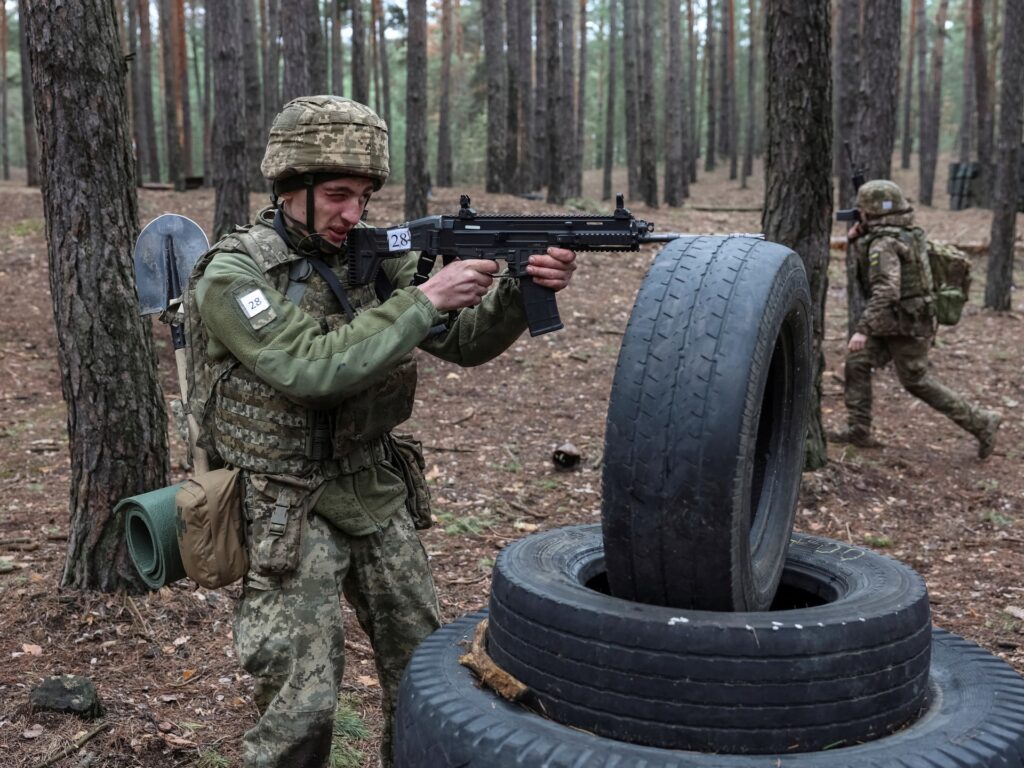
These are the key events on day 1,134 of Russia’s war on Ukraine. These are the key events from Wednesday, April 2: Fighting One person was killed and two others injured in a Russian overnight attack on southeast Ukraine’s Zaporizhia region, Regional Governor Ivan Fedorov said. A Russian ballistic missile strike on Ukraine’s Kryvyi Rih killed at least four people and injured 14 others, including two children, Ukrainian authorities said. An infant, a seven-year-old boy and six others were also injured in a drone attack on Ukraine’s Kharkiv region, said Oleh Syniehubov, the region’s governor. Kharkiv’s Mayor Ihor Terekhov said 15 drone strikes were carried out in the region. At least 60 people were forced to evacuate from their homes in the Russian city of Kursk after falling debris from intercepted Ukrainian drones hit their apartment buildings, acting governor, Alexander Khinshtein, said. Russia’s state news agencies TASS and RIA Novosti report that Russian forces destroyed 93 Ukrainian drones overnight, most of which were destroyed over the Kursk region. The Ukrainian air force said it shot down 41 of 74 Russian drones launched towards Ukraine overnight. Another 20 drones failed to reach their targets due to electronic jamming measures, the air force said. Advertisement Ukrainian President Volodymyr Zelenskyy said nearly 4,000 people were left without electricity after a Russian drone hit a substation in Ukraine’s northeastern Sumy region, and artillery fire damaged a power line in the central Dnipropetrovsk region. Moscow’s Ministry of Defence also accused Kyiv of hitting Russian energy facilities twice in the past 24 hours despite a mutual moratorium on energy strikes brokered by the United States. Germany’s Deutsche Presse-Agentur (DPA) news agency reported that Russia had destroyed one of its own dams in the Belgorod border region using an aerial bomb. The reason for the dam’s destruction was not given. Oil and Gas Russia said it ordered the closure of the Black Sea port terminal handling Kazakhstan’s oil exports and US giants Chevron and Exxon Mobil, after two inspections on moorings for vessels at the terminals. Ceasefire Russia and Ukraine accused each other of breaching the US-brokered moratorium on energy strikes after both countries reported damage to energy facilities due to alleged violations by both sides. Politics and Diplomacy Eleven Ukrainian children were returned to Kyiv from Russia and Russian-occupied Ukraine under the Bring Kids Back UA initiative, President Zelenskyy’s chief of staff, Andriy Yermak, said. The Kremlin said it is “possible” that Russian envoy Kirill Dmitriev will visit the US and said contact with Washington was ongoing. The Reuters news agency reported that Dmitriev is expected in Washington this week for talks with US President Donald Trump’s administration. Advertisement Adblock test (Why?)
Barcelona beat Atletico to set up Real Madrid final in Copa del Rey

Barcelona will face Real Madrid in an El Clasico final in Spain’s Copa del Rey after 5-4 aggregate defeat of Atletico. Barcelona won 1-0 at Atletico Madrid to reach its first Copa del Rey final in four seasons, setting up a “Clasico” against Real Madrid. Ferran Torres scored a first-half winner on Wednesday for the Catalan club, which advanced 5-4 on aggregate after a 4-4 draw in the first leg in Barcelona in February. Madrid eliminated Real Sociedad in extra time on Tuesday, also advancing 5-4 on aggregate. The rivals will meet in the Copa decider for the first time since the 2013-14 season, when Madrid won the title. Barcelona’s Ferran Torres scores the only goal of the second leg [Susana Vera/Reuters] It was yet another disappointing home elimination for Atletico after it lost on penalties to Madrid in the round of 16 of the Champions League last month. Barcelona, the Copa’s most successful club with 31 trophies, had not made it to the final since 2021, when it beat Athletic Bilbao. Madrid, in its second final in three seasons, won its 20th title against Osasuna in 2023. The April 26 final in Seville will mark the third Clasico of the season. Advertisement Barcelona won 4-0 in the Spanish league in October and 5-2 in the Spanish Super Cup final in January. The rivals could also meet in the Champions League this season. Barcelona’s Lamine Yamal in action as Atletico Madrid coach Diego Simeone attempts to increase the pressure [Susana Vera/Reuters] Atletico was trying to make it to the Copa final for the first time since 2013, when it defeated Madrid to win its 10th title. Diego Simeone’s team had rallied with two late goals to draw the first leg in Barcelona after squandering a 2-0 lead. Torres scored in the 27th with a nice touch from inside the area after a perfect through ball by Lamine Yamal. Atletico striker Alexander Sorloth had a goal disallowed for offside in the 69th. Adblock test (Why?)
US judge throws out corruption case against NYC Mayor Eric Adams
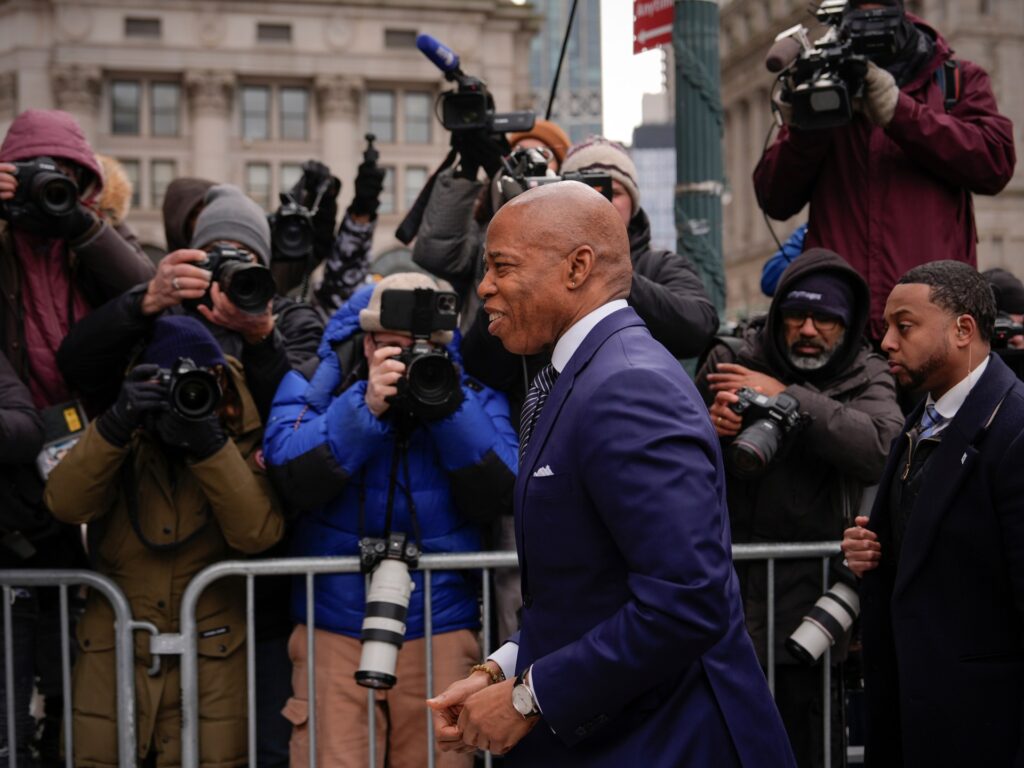
Judge ruled that the case could not be revived, condemning what he described as an apparent quid pro quo arrangement. A United States federal judge has permanently dismissed corruption charges against New York City Mayor Eric Adams, even as he criticised the Trump administration’s argument that the case should be dropped because it was hindering the Democratic politician’s help with an immigration crackdown. The Justice Department’s request in February that the case be dismissed because it was distracting the mayor from helping Republican President Donald Trump step up deportations sent shockwaves through the politics of the most populous US city. It prompted eight federal prosecutors to resign over concerns the administration was violating longstanding norms by allowing political considerations to influence prosecutorial decisions. In a 78-page ruling on Wednesday, US District Judge Dale Ho in Manhattan said he had little choice but to dismiss the indictment because US courts lack the authority to compel prosecutors to pursue charges. The judge ruled that the case could not be revived, condemning what he described as an apparent quid pro quo arrangement. Advertisement “Everything here smacks of a bargain: dismissal of the indictment in exchange for immigration policy concessions,” Ho wrote in his decision. Ho’s decision to dismiss the case “with prejudice” means federal prosecutors cannot refile the charges, removing what legal experts say could have been used as leverage over the mayor’s policy decisions. The mayor had faced allegations of wire fraud, bribery conspiracy and soliciting illegal campaign donations from Turkish sources. “Today, we turn the page,” Adams said in a televised address, calling the case “baseless”. Cooperation with Trump Prosecutors under the Trump administration abruptly sought to drop the case after Adams signalled cooperation with federal immigration enforcement – a reversal for New York, which operates as a sanctuary city, meaning local police and authorities do not assist federal immigration agents in their pursuit of undocumented migrants. In March, Adams signed an order allowing Immigration and Customs Enforcement (ICE) personnel access to the Rikers Island jail complex, a significant policy shift. Critics allege the Trump administration used the prosecution as leverage to secure the mayor’s compliance on immigration. The dismissal prompted several Justice Department lawyers to resign in protest. Ho rejected claims of prosecutorial misconduct but warned against conditioning investigations on political obedience. The argument that probes could be shelved to avoid hindering federal policies was “disturbing”, he said, as it suggested officials might receive “special dispensation” for aligning with White House priorities. Advertisement Adblock test (Why?)
‘A historic moment’: Donald Trump unveils sweeping ‘reciprocal’ tariffs
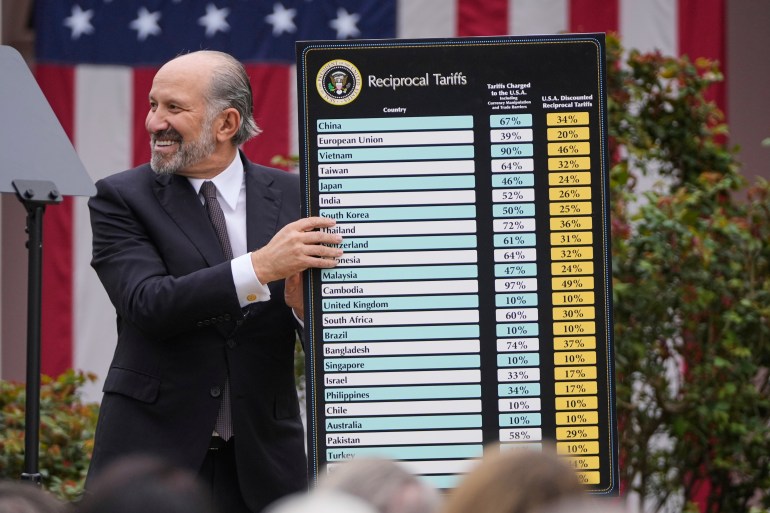
United States President Donald Trump has unveiled his long-anticipated “reciprocal tariffs”, in a move that is expected to rattle global trade relations. On Wednesday, Trump appeared in the White House Rose Garden, where the colonnades had been draped with large US flags, to sign the executive orders authorising the tariffs. He framed the tax hikes as a blow against unfair trade practices, painting a portrait of the US as a country exploited by even its closest allies. “For decades, our country has been looted, pillaged, raped and plundered by nations near and far, both friend and foe alike,” Trump told an audience of manufacturing workers, cabinet members and journalists. “ Foreign leaders have stolen our jobs. Foreign cheaters have ransacked our factories. And foreign scavengers have torn apart our once-beautiful American dream.” But he proclaimed that Wednesday would mark a turning point in US history, marking an end to the “vicious attacks” he said the country had weathered. “ April 2, 2025, will forever be remembered as the day American industry was reborn, the day America’s destiny was reclaimed,” Trump said. Advertisement Invoking the International Emergency Economic Powers Act of 1977, Trump announced a 10-percent tariff on all countries, scheduled to take effect on April 5. Then, he revealed there would be “individualised” tariffs for countries that have the largest trade deficits with the US. Those tariffs would come into effect four days later, on April 9. Trump explained that his team calculated the “individualised” tariffs by taking half of what he claimed those countries had charged the US for its exports. “ We will charge them approximately half of what they are — and have — been charging us. So the tariffs will be not a full reciprocal,” Trump said. “I could have done that, I guess, but it would’ve been tough for a lot of countries. We didn’t want to do that.” Commerce Secretary Howard Lutnick holds a chart as President Donald Trump explains his tariff plan on April 2 [Mark Schiefelbein/AP Photo] He then beckoned Commerce Secretary Howard Lutnick to the Rose Garden podium with a chart that illustrated some of the upcoming tariffs. The graph showed the European Union was headed for 20-percent tariffs. China, meanwhile, had been assigned 34 percent. Vietnam would receive 46 percent, and Thailand 36 percent. Noticeably absent were Mexico and Canada, the US’s two largest trading partners and its immediate neighbours. Those countries, the White House explained, would remain under punitive tariffs, designed to bring them in line with Trump’s policies on border security. All goods not covered under the US-Mexico-Canada free-trade agreement would face a 25-percent tariff, with the exception of energy products. They face 10-percent tariffs instead. Advertisement Wednesday’s announcement, while widely expected, still sent shockwaves across the globe. “Long story short, this is a historic moment,” said Dan Ciuriak, the director of the Canada-based Ciuriak Consulting firm, giving a nod to the isolationist policies of the Trump administration. “I think it will reshape the world. I think we are seeing the possibility of the emergence of something like a ‘Fortress North America’.” He noted that poorer countries in places like Southeast Asia appear to be among the hardest hit by the impending tariffs. “ The developing countries have been hit by very, very high tariffs. And that will have geopolitical ramifications,” Ciuriak said. “These countries are the poorest in the world, and the notion that they have been getting rich on the back of American workers is not very tenable. I don’t think that this is going to play well in the rest of the world. So we will see, I think, tectonic shifts in international relations as a result of that.” A Trump supporter wears a helmet with stickers touting coal mining at the Rose Garden tariff event [Leah Millis/Reuters] Within minutes of Trump’s announcement, the international backlash started to erupt, with world leaders denouncing the sweeping tariffs as unjustified. “The unilateral action that the Trump administration has taken today against every nation in the world does not come as a surprise,” Australian Prime Minister Anthony Albanese said in a news conference. “But let me be clear: They are totally unwarranted.” Advertisement Australia faces 10-percent tariffs from the Trump administration. Like many leaders, Albanese pledged to protect his country’s workers from the repercussions of those taxes. “The administration’s tariffs have no basis in logic, and they go against the basis of our two nations’ partnership. This is not the act of a friend,” he added. Ireland’s Taoiseach Micheal Martin, meanwhile, offered a broad message warning of the damage to both global trade relations and to the US’s own consumers. “I strongly believe that tariffs benefit no one. They’re bad for the world economy. They hurt people. They hurt businesses,” he said. “So I regret deeply the decision of the US administration this evening to levy a tariff of 20 percent on all goods imported from the European Union.” Even Canada, which was exempt from the so-called reciprocal tariffs, chimed in with its outrage over the US’s broader policy of lashing out at longtime trading partners. “During this crisis, we must act with purpose and force,” Canadian Prime Minister Mark Carney wrote on social media. “My government will fight U.S. tariffs, protect Canadian workers and industries, and build the strongest economy in the G7.” Canada is among the countries that have pledged to respond to the Trump administration’s tariffs with retaliatory measures. Other countries, including Mexico, have demurred: Earlier on Wednesday, Mexican President Claudia Sheinbaum said she would avoid pursuing “tit-for-tat” tariffs. Experts say tariffs — a kind of import tax — very often fall on the shoulders of consumers. Advertisement Trump has framed his tariffs as a means of reducing trade deficits and bringing foreign manufacturing back to US shores. He also said he plans to use the tariffs to offset the US debt and pave the way for tax cuts. But critics point out that trade deficits — when the money spent on exports is greater than earnings from
Donald Trump’s ‘Liberation Day’ arrives with promise of tariffs
[unable to retrieve full-text content] Donald Trump’s “Liberation Day” has arrived in the US, with the president preparing to impose massive tariffs
UK PM blasts incoming US tariffs
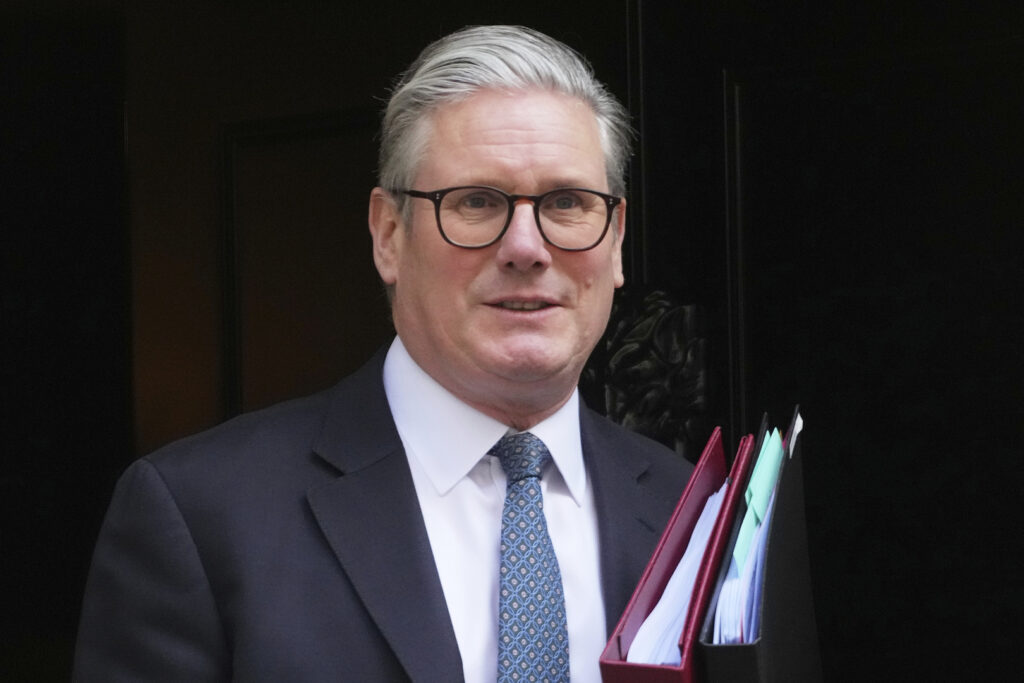
NewsFeed As President Trump’s “Liberation Day” tariffs roll out, some global leaders are pushing back. UK Prime Minister Keir Starmer says Britain will take a “calm, pragmatic” stance on the sweeping measures, warning a trade war is “in nobody’s interests.” Published On 2 Apr 20252 Apr 2025 Adblock test (Why?)