

Danish PM promises to support Greenland against US pressure

Denmark’s Mette Frederiksen says her country remains ‘Greenland’s closest partner’ during a three-day trip to Greenland. Denmark’s prime minister has pledged to support Greenland against US President Donald Trump’s expressions of interest in acquiring the Danish semi-autonomous territory as she landed in Nuuk for talks with its incoming government. Mette Frederiksen began her three-day trip to the vast Arctic island less than a week after a visit to the territory by US Vice President JD Vance drew a frosty reception from authorities in Denmark and Greenland. “The US shall not take over Greenland. Greenland belongs to the Greenlanders,” Frederiksen told reporters in the capital Nuuk on Wednesday. The Danish leader said she wanted to support Greenland “in a very, very difficult situation”. Ahead of her visit, she had said she aimed to strengthen Copenhagen’s ties with the island and emphasised the importance of respectful cooperation at a time of what she described as “great pressure on Greenland”. Greenland’s incoming Prime Minister Jens-Frederik Nielsen, who won last month’s parliamentary election and will form a coalition government, has welcomed Frederiksen’s trip, saying that Denmark remains “Greenland’s closest partner”. Advertisement Frederiksen promised to do what she could to ensure equal rights to Greenlanders and Danes within the Danish realm. “Most of all, we need to discuss the foreign and security policy situation, geopolitics, and how we approach this very, very difficult task together because that is what it is all about now.” Nielsen’s new coalition is expected to formally take office on April 7. In addition to meeting Nielsen, Frederiksen is also expected to meet with the future Naalakkersuisut, the Cabinet, during her visit, which is expected to last through Friday. Greenland is a mineral-rich, strategically critical island that is becoming more accessible because of climate change. Trump has said that the landmass is critical to US security. The country offers the shortest route from North America to Europe, giving the US a strategic upper hand for its military and ballistic missile early-warning system. ‘Respectful’ relationship Relations between Greenland and Denmark have been strained after revelations in recent years of historical mistreatment of Greenlanders under colonial rule. Trump’s interest in controlling Greenland, part of a growing international focus on competition for influence in the Arctic, has prompted Denmark to step up efforts to improve relations with the island. Nielsen told Reuters news agency late on Monday that Greenland would strengthen its ties with Denmark until it could fulfil its ultimate wish to become a sovereign nation. Experts have said that the US’s interest in a takeover has actually reinforced Greenland’s ties with Copenhagen. Advertisement Richard Powell, professor of Arctic studies at the University of Cambridge, told Al Jazeera that while independence was still a “broadly popular long-term goal”, Trump’s interest in the country has “consolidated Greenland’s future within the Kingdom of Denmark, at least for the next couple of decades”. Greenland wishes to establish a “respectful” relationship with the United States, Nielsen said. “Talking about annexation and talking about acquiring Greenland and not respecting the sovereignty is not respectful. So let’s start by being respectful to each other and build up a great partnership on everything,” he said. Frederiksen’s visit is primarily about signalling support at a time of intense scrutiny, said Ulrik Pram Gad, an academic at the Danish Institute for International Studies. “It is important for Denmark to signal to Greenland that Denmark is Greenland’s closest friend and ally – and to the US that it stands behind Greenland,” he said. During his visit to a US military base in northern Greenland last Friday, Vance accused Denmark of not doing a good job of keeping the island safe and suggested the US would better protect the strategically located territory. Frederiksen, who has said it is up to the people of Greenland to decide their own future, called Vance’s description of Denmark “not fair”. Opinion polls show that a majority of Greenland’s 57,000 inhabitants support independence from Denmark, but many oppose seeking independence too quickly, fearing their island could become worse off and expose itself to US interests. Advertisement Adblock test (Why?)
Val Kilmer leaves legacy of film, stage, and poetry
[unable to retrieve full-text content] Val Kilmer has died at the age of 65 from pneumonia, leaving behind a career that reached far beyond action movies.
Who’s winning the race for the Arctic’s resources?
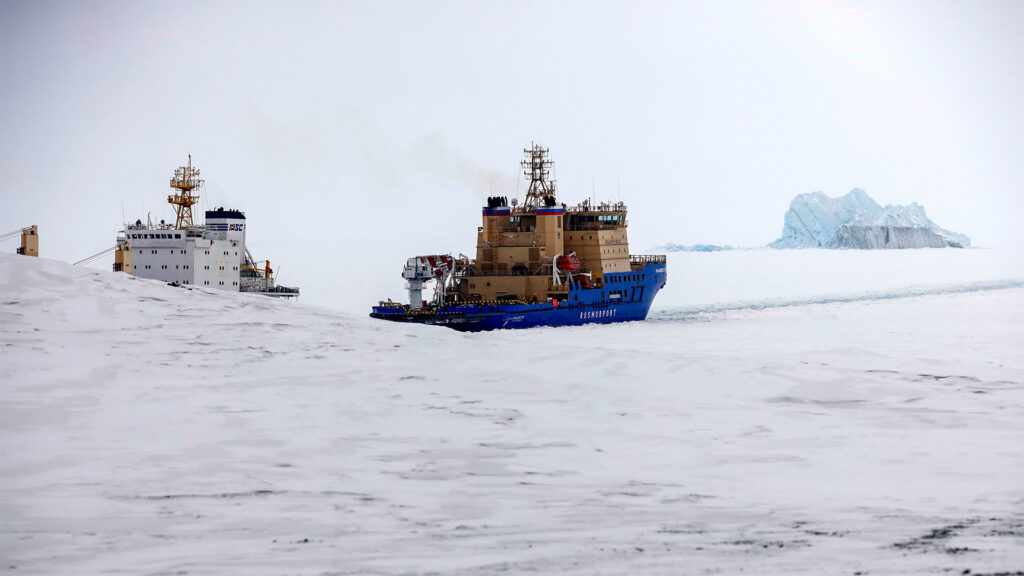
Russia says it is open to economic cooperation with the West in the Arctic. Arctic ice is melting fast, giving way to new and shorter shipping routes. Underneath that ice, there are billions of dollars worth of oil, gas and critical minerals. The scramble to control those resources has begun and Russia is in a prime position to exploit the region. President Vladimir Putin has recently warned of intensifying geopolitical competition there. This, after US President Donald Trump stepped up his threats to annex Greenland. However, Putin says he’s ready to cooperate with the West in economic ventures there that will benefit all sides. Could Europe return to Russian energy? Plus, Trump’s tariffs on car imports. Adblock test (Why?)
Tariff uncertainties have companies in Mexico on their toes
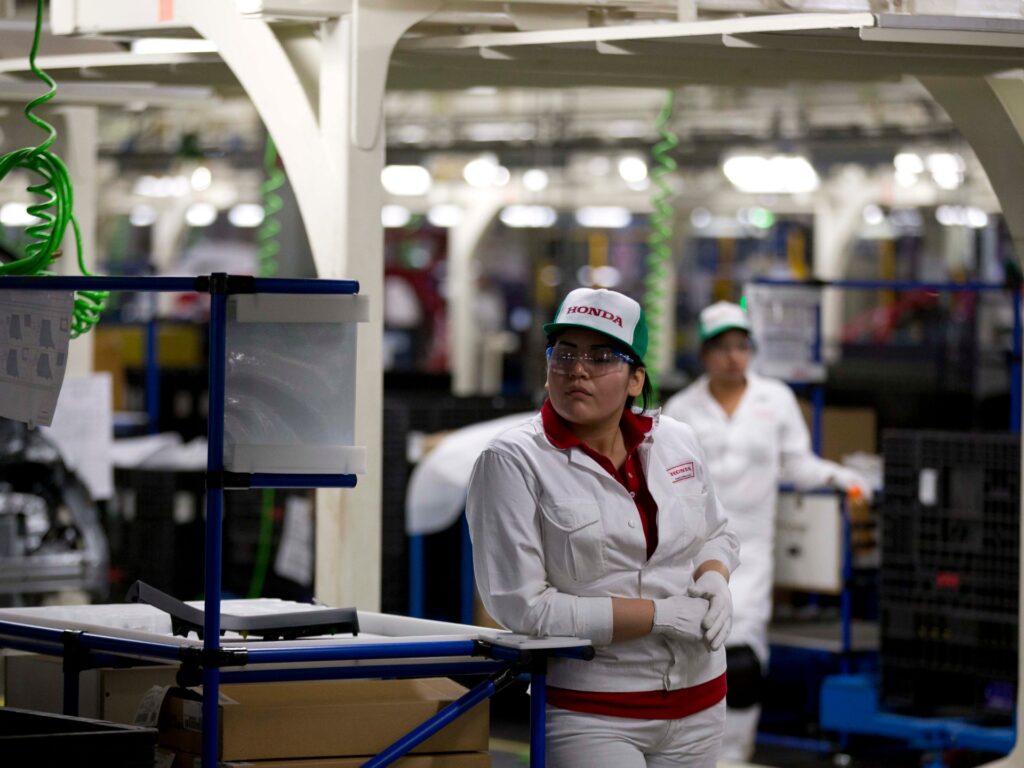
On March 4, the US-Mexico border was at a standstill. The trucks that Thor Salayandia was planning to send across a checkpoint to the United States sat in the lot. The only thing moving was the confusion in the air. Salayandia owns and operates a factory in Juarez, Mexico that makes auto parts and ships truckloads of metal tubes to warehouses in the US state of Texas for assembly. For the past month, his business has been thrown into turbulent waters. “It’s becoming a political game … so for two days there was a considerable reduction in traffic. Even the US officials didn’t know whether to charge the trailers that were crossing,” he said, referring to the tariff threats and counterthreats between the US and Mexico. “There’s so much at play … It’s misinformation, confusion, and uncertainty. There are a lot of unknowns, about how the tariffs will be introduced, how they’ll fit, how they’ll be charged.” US President Donald Trump’s complicated tariff policies have left major industries that do business between Mexico and the US, from cars, to agriculture, to textiles, scrambling to comply with the changing rules and questioning their futures. Advertisement On March 26, Trump announced new 25 percent tariffs on cars and car parts manufactured abroad that will go into effect on April 3. The tariffs will force Salayandia to cut down his workforce, and he is beginning to think about alternate location options for his factory – including a move to Texas, where he would invest in automation and robots in the manufacturing process to avoid the high costs of labour. “Past politicians saw a globalised world in which things were manufactured in lower-cost countries … but now, with the arrival of Trump, who has an alternate economic vision of the world, manufacturers are starting to think about changing the way of producing things,” Salayandia said. On March 4, when his trucks were stuck at the border, a 25 percent tariff was set to go into effect on goods the US imported from Mexico. But as the Mexican business community waited with bated breath to see if President Claudia Sheinbaum could negotiate her way out of the order, Trump announced that goods counted under the USMCA (the United States-Mexico-Canada Agreement, or T-MEC, as the trade pact is known in Spanish) would be exempt from the tariffs until April 2. This would leave over half of imports safe from tariffs for another month. The new rule was not a complete sigh of relief for business leaders in Mexico, who say the atmosphere of uncertainty is ongoing, as they hurry to comply with T-MEC, and worry about policies coming down the pipeline. Mexican politicians have been quick to point out that the Mexican peso has remained fairly stable, between 20 and 21 pesos to the dollar. Advertisement Mexico’s Economy Secretary Marcelo Ebrard said he would work with companies, especially the goliath automotive industry, to fit 90 percent of exports within the guidelines of the T-MEC agreement. But that could take many months to complete. Now, with the new auto-focused tariffs announced last week, all of those efforts may have been in vain. “What we are looking for is preferential treatment for Mexico, in a way that we can protect jobs and economic activity in our country,” Ebrard said in a news conference on March 27. “We have already had six meetings with the [US] commerce secretary… there is no other country that has this level of communication with the United States.” Alternative markets Around 40 percent of car parts used in vehicles sold in the US were manufactured across the border in Mexican cities whose economies rely on auto factories. The Mexican automotive industry generates over $100bn in annual revenue and exports over three million cars, predominantly to the US. Alberto Bustamante, director of Mexico’s National Agency of Automotive Industry Providers, said the tariffs are affecting the automotive industry in varying ways, depending on whether a company exports parts or whole assembled cars. It also involves more philosophical questions, like “What constitutes a car?”. “As the private sector, we don’t have options. If it depended on us, we would have already figured it out, but it doesn’t depend on us, it depends on the government,” Bustamante said. “In the US, five million jobs are at stake if these tariffs go into effect, and in Mexico, one million.” He said that specialty and luxury vehicles with uncommon parts will be those most affected by the current tariffs, as well as those made with steel or aluminium, because Trump has additionally placed a 25 percent tariff on goods made with those metals, which kicked in on March 12. Advertisement Because of how difficult and time-consuming it would be to fit within T-MEC guidelines, affected companies must decide whether paying the 25 percent tax is worth it, or whether they should just shut shop in Mexico and move their businesses elsewhere. Sheinbaum, instead of focusing on the current turbulence, has set her sights on reforming the T-MEC deal to ensure long-term stability for the Mexican economy. But she won’t get that opportunity until 2026, when the agreement is up for review. Should Trump implement the auto industry tariffs on April 3, Mexico will respond with counter-tariffs. In the meantime, Bustamante said that automakers are beginning to rethink their 10-year plans and are considering either abandoning Mexico as a manufacturing hub, or turning their gaze away from the US as their primary market. Cars aren’t the only products whose status sits in purgatory. Other goods, from washing machines to peanuts to medical instruments, also have varying degrees of compliance with the T-MEC trade deal. Avocados – a nearly $3bn industry, and the culinary pride of Mexico – do not always fit into T-MEC, depending on the harvesting and sanitation processes used by specific companies. Mexico sends more than two billion pounds of avocados every year to the US, and the tariffs could push prices up for the popular fruit as
These activists are pushing for an ICC war crimes case against Biden
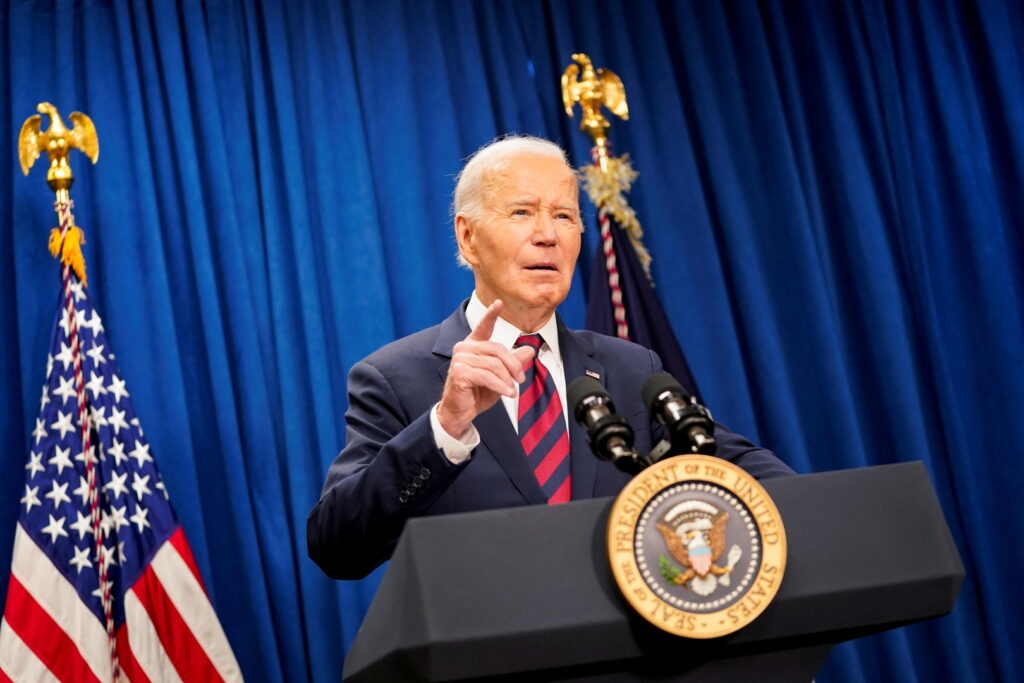
NewsFeed Lawyers from a US activist group are pushing for the International Criminal Court to take up a case against former President Joe Biden and his administration for war crimes against Palestinians. Sarah Leah Whitson says the court won’t survive if it fails to prosecute US officials for atrocities in Gaza. Here’s why. Published On 2 Apr 20252 Apr 2025 Adblock test (Why?)
Conditions worsen for Myanmar earthquake survivors
[unable to retrieve full-text content] Frustration rise among Myanmar’s earthquake survivors as they face shortages of clean water, food, medicine and shelter.
Wrongful deportation of man to El Salvador “threat to everybody”
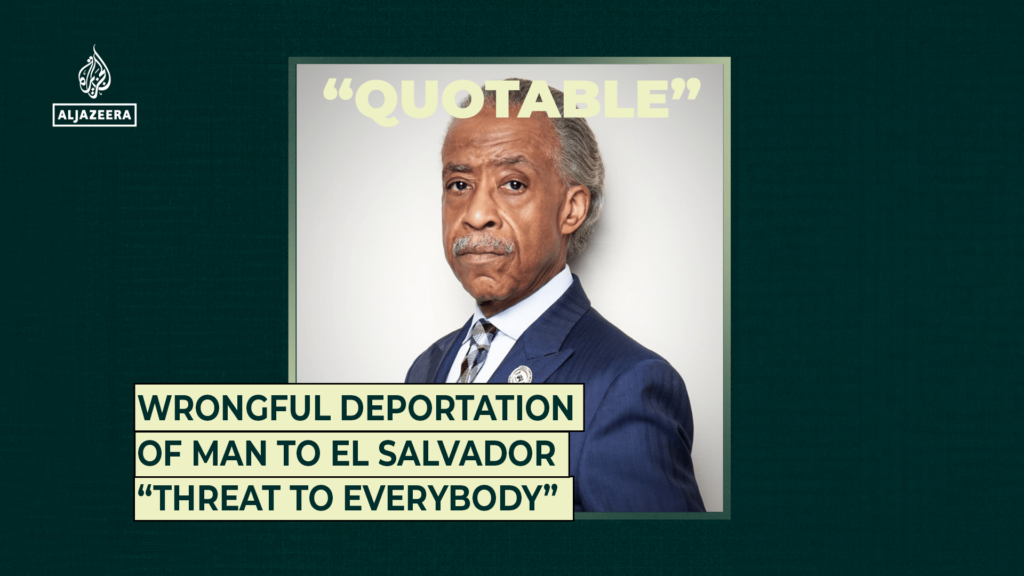
Al Sharpton examines Trump’s wrongful deportation of a Maryland man and asks how this could happen in the US. Al Sharpton, a civil rights & social justice activist, analyses the Trump administration’s wrongful deportation of a Maryland man to El Salvador, and asks how this can happen in the United States. Adblock test (Why?)
US attacks kill 4 in Yemen as second aircraft carrier sent to Middle East

The Houthi Health Ministry says the latest US attack struck a water management building in the Hodeidah region. Four people have been reported killed in attacks by the United States on Yemen’s Hodeidah region, the latest deadly strikes against Houthi forces as the US announced the deployment of a second aircraft carrier and more warplanes to the Middle East. Anees Alasbahi, a spokesman for the Houthi health minister, said three people were confirmed killed in the US attack on Tuesday night but that the death toll was preliminary. “The American attack, which targeted the water management building in the district of al-Mansouriyah in the governorate of Hodeidah with several strikes on Tuesday resulted in three deaths and two injuries, mostly employees,” Alasbahi said. The Houthi-affiliated Al Masirah TV later reported that the death toll had risen to four. Local media reported that the Hajjah region in the northwest and Saada in the north had also been attacked. The US has not confirmed that it carried out the attacks, which came after Al Masirah TV reported multiple US attacks hitting the Saada and Sanaa regions. There were no immediate reports of casualties from the Monday night attacks. Advertisement More than 60 people have been killed in Yemen since Washington launched a military offensive on March 15 against Houthi forces. The Yemeni armed group had threatened to renew attacking Israeli-linked shipping in the Red Sea in response to Israel’s breaking of the ceasefire in Gaza. The Pentagon has also announced that it will increase the number of US aircraft carriers deployed in the Middle East to two, keeping one that is already stationed in the Red Sea and sending another from the Asia Pacific region. The USS Carl Vinson aircraft carrier will join the USS Harry S Truman in the Middle East, the Pentagon said in a statement on Tuesday, adding that the US will also deploy additional military aircraft. “The United States and its partners remain committed to regional security in the CENTCOM (Central Command area of responsibility) and are prepared to respond to any state or non-state actor seeking to broaden or escalate conflict in the region,” the Pentagon said. Houthi forces also claimed late on Tuesday that they had fired a number of cruise missiles and drones at US ships in the Truman aircraft carrier group. It was the third strike against US military vessels in 24 hours, the Houthis said in a statement carried by Al Masirah TV. Though the Pentagon made no mention of specific aircraft being sent to the region, at least four B-2 bombers have relocated to a US-British military base on the Indian Ocean island of Diego Garcia, according to US officials speaking on condition of anonymity with the Reuters news agency. The Diego Garcia base is within striking distance of Yemen and Iran, experts say. Advertisement The US military’s Strategic Command has declined to say how many B-2s have reached Diego Garcia and noted that it does not comment on exercises or operations involving the bombers. The deployment of a second aircraft carrier and B-2 bombers – there are only 20 of the latter in the Air Force’s inventory so they are usually used sparingly – comes after US President Donald Trump said that strikes on Houthi fighters would continue until they are no longer a threat to shipping. Trump has also ramped up rhetoric towards Tehran, threatening on Sunday that “there will be bombing” if Iran does not reach a deal with Washington, on his terms, on Iran’s nuclear programme. Iran’s Supreme Leader Ayatollah Ali Khamenei said on Monday that the US would receive a strong blow if Trump followed through with his threats. The aerospace commander of Iran’s Revolutionary Guard, Amirali Hajizadeh, reminded Washington that it had bases in the Middle East, saying, “They are in a glass house and should not throw stones”. The Tehran Times also reports that Iranian forces have readied missiles “with the capability to strike US-related positions” due to Trump’s threats. Adblock test (Why?)
Russia-Ukraine war: List of key events, day 1,133
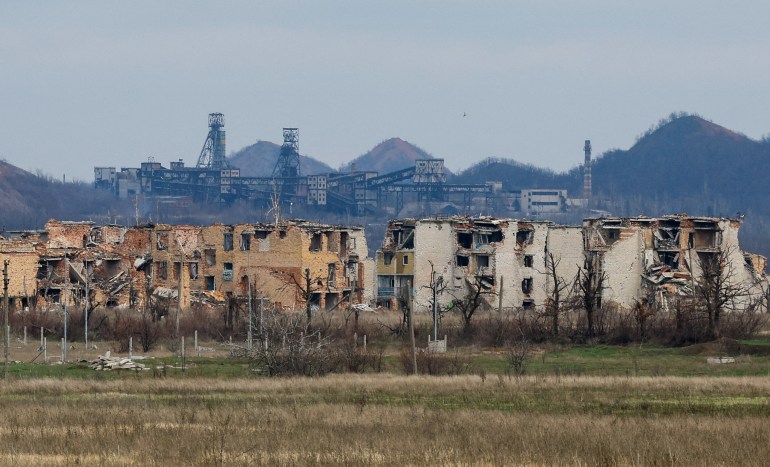
These are the key events on day 1,133 of Russia’s war on Ukraine. These are the key events from Tuesday, April 1: Fighting Ukraine’s Air Force reported that the country had experienced its first night free of attack by Russian drones since December, though Moscow had launched two cruise missiles, which were successfully shot down. It was not immediately known why Russia had not launched drone attacks. More than 10,700 combat drones and decoy drones – which are intended to draw fire from Ukrainian air defences – have been launched by Russia since the start of the year, Ukraine said. The Russian Ministry of Defence said its forces took control of the village of Rozlyv in Ukraine’s eastern Donetsk region. Ukraine’s military said Russian forces had launched five attacks on Rozlyv and the nearby village of Kostiantynopil, but did not acknowledge whether Rozlyv had fallen into Russian hands. The Ukrainian General Staff said late on Monday that three battles were still going on in the area. DeepState, a Ukrainian blog that tracks the 1,000km (600-mile) front line between Russia and Ukraine, reported Russian advances over the past 24 hours near Rozlyv, as well as heavy fighting further east near the contested town of Toretsk. The governor of Ukraine’s Zaporizhia region, Ivan Fedorov, said Russian shelling killed one person in a front-line settlement that he did not identify. Ukrainian officials in the Dnipropetrovsk region said Russian shelling injured three people in the town of Nikopol. The acting governor of Russia’s Rostov region, Yury Slyusar, said Ukrainian drones damaged two high-rise buildings in Taganrog city. He said 85 residents were evacuated from one of the buildings. Russia advanced 240 sq km (93 sq miles) into Ukrainian territory in March, marking a slowdown for four months in a row, according to data from the United States-based Institute for the Study of War (ISW). Moscow’s advances slowed each month since peaking at 725 sq km (279 sq miles) in November 2024, ISW data shows. Russia took nearly 150 sq km (57.9 sq miles) less in March than in February. Despite these slowdowns, the last 12 months have been marked by Russian troops advancing in Ukraine. Ukrainian Foreign Minister Andrii Sybiha told a news conference that tens of thousands of people in southern Ukraine’s Kherson were left without power after Russian strikes damaged a power facility. The abandoned town of Marinka, in a Russian-occupied area of Ukraine’s Donetsk region, on April 1, 2025 [Alexander Ermochenko/Reuters] Ceasefire Advertisement German Minister for Foreign Affairs Annalena Baerbock said that “due to the deadlock” between the US and Russia on forging a ceasefire deal, support by European allies for Ukraine in its war against Moscow was “absolutely crucial”. Russia cannot accept US proposals to end the war in Ukraine in their current form because they do not address problems Moscow regards as having caused the conflict, Russia’s Deputy Foreign Minister Sergei Ryabkov said. He suggested that Moscow and Washington have so far been unable to bridge differences which Russian President Vladimir Putin raised more than two weeks ago when he said US ceasefire proposals needed reworking. Senior officials in the administration of US President Donald Trump discussed in recent days the likelihood that the US will be unable to secure a Ukraine peace deal in the next few months and are drawing up new plans to pressure both Kyiv and Moscow, two US officials familiar with the matter told the Reuters news agency. White House and US State Department officials acknowledge that Putin is actively resisting Washington’s attempts to strike a lasting peace accord and have discussed what, if any, economic or diplomatic punishments could push Russia closer to a deal, the sources said. Ukrainian President Volodymyr Zelenskyy again accused Russia of violating recent ceasefire agreements mediated by the US and called for sanctions on Moscow. Russia’s Defence Ministry likewise accused Ukraine of launching new drone attacks on energy facilities in Russia’s Belgorod region and in the Russian-occupied part of Ukraine’s Zaporizhia region. Half of the US Senate – 25 Republicans and 25 Democrats – joined together to propose sanctions that would be imposed on Russia if it refuses to engage in good-faith negotiations for peace with Ukraine. Advertisement Aid Zelenskyy said he hopes Germany’s presumptive next chancellor, Friedrich Merz, will approve the delivery of Taurus cruise missiles to bolster Ukraine’s defence against Russia. Outgoing Chancellor Olaf Scholz had firmly opposed sending Taurus missiles, citing fears of escalating violence. Zelenskyy said a closed-door meeting with military officials from several partner countries will take place on Friday to further discuss the possible deployment of foreign troops to Ukraine as part of future security guarantees. Ukraine has received another $3.8bn in financial support from the European Union, Kyiv said. Sanctions The value of Russian assets frozen in Switzerland since the start of Moscow’s full-scale invasion of Ukraine has risen by nearly $2bn in the past year to more than $8bn, the Swiss government said. Regional security Polish authorities said they charged a 47-year-old Ukrainian citizen with working for Russian intelligence after he was discovered last month conducting reconnaissance of military facilities in Poland. Sweden, where authorities have warned that the country should prepare for the risk of war, has announced a 100-million krona ($10m) investment to check and renovate its civil defence shelters. Sweden has 64,000 defence bunkers with space overall for about 7 million people. The move comes as Sweden and other European nations have announced plans to step up defence spending in the wake of Russia’s invasion of Ukraine and doubts about Trump’s commitment to NATO. Advertisement Finnish Prime Minister Petteri Orpo said the country plans to withdraw from the international treaty banning antipersonnel mines, the latest signatory moving to ditch the ban over threats from Russia. France said it will deliver several hundred Mistral surface-to-air missiles to Denmark, as French President Emmanuel Macron and Denmark’s King Frederik X pledged a “stronger” Europe. The move comes as Denmark has sought European backing to counter Trump’s threats to take
US Senator Cory Booker makes history with record speech aimed at Trump
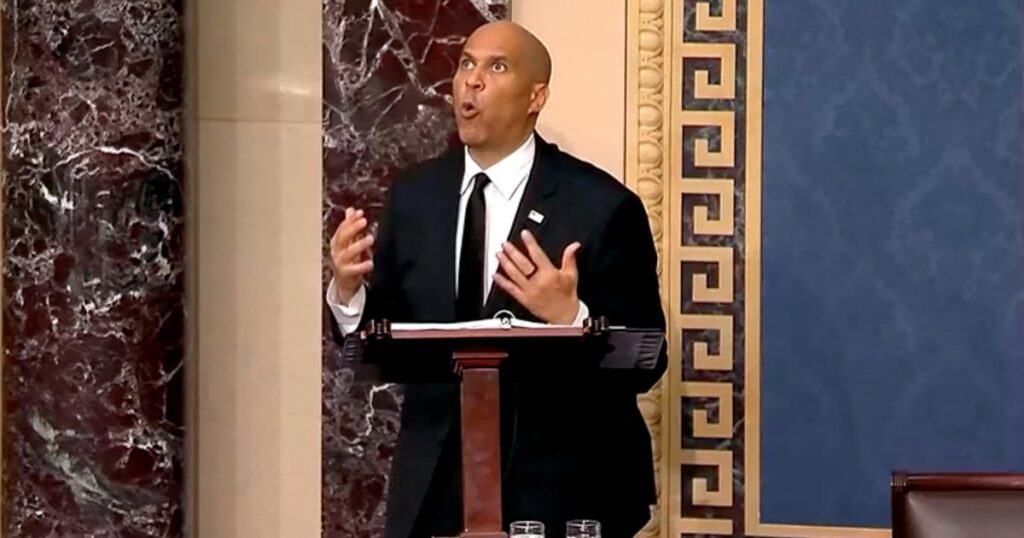
Democrat holds US Senate floor for more than 25 hours, breaking Strom Thurmond’s record for the longest speech. United States Senator Cory Booker has broken the record for the longest speech in US Senate history with a marathon address railing against President Donald Trump. Booker, a Democratic senator for New Jersey, entered the annals of history on Tuesday after holding the Senate floor for more than 25 hours, shattering the previous record set by the late segregationist Senator Strom Thurmond. With only occasional pauses to take questions from fellow senators, Booker held forth for 25 and 4 minutes, 46 minutes longer than Thurmond’s 1957 filibuster against the Civil Rights Act. Booker, who unsuccessfully ran for the Democratic Party presidential nomination in 2020, began his speech on Monday evening by invoking late civil rights activist and Congressman John Lewis’s call for Americans to get in “good trouble, necessary trouble”. “What has happened in the last 71 days is a patent demonstration of a time where John Lewis’s call to everyone has, I think, become more urgent and more pressing,” said Booker, a former mayor of Newark who was first elected to the Senate in 2013. Advertisement “And if I think it is a call for our country. I have to ask myself how am I living these words. So, tonight, I rise with the intention of getting in some ‘good trouble.’ I rise with the intention of disrupting the normal business of the United States Senate for as long as I am physically able. I rise tonight because I believe sincerely that our country is in crisis.” During his speech, Booker accused the Trump administration of “recklessly” attacking institutions and railed against Trump aid Elon Musk’s cuts to the federal bureaucracy, including reductions in staffing at the Social Security Administration. “You don’t insinuate fear among vulnerable communities, you don’t insinuate fear among our elders who deserve our respect and deserve to retire with dignity,” Booker said. A White House spokesperson dismissed Booker’s speech as another attempt to generate an “‘I am Spartacus’ moment”, referring to Booker’s invocation of the 1960 film “Spartacus” during the 2018 confirmation hearings for then-Supreme Court nominee Brett Kavanaugh. “When will he realize he’s not Spartacus — he’s a spoof?” Harrison Fields said in a statement. As he wrapped up his speech on Tuesday evening, Booker returned to Lewis’s history of civil rights activism. “He said he had to do something, he would not normalise a moment like this. He would not just go along with business as usual,” Booker said. Adblock test (Why?)