

Palestinians face hunger as Israeli blockade forces Gaza bakery closures
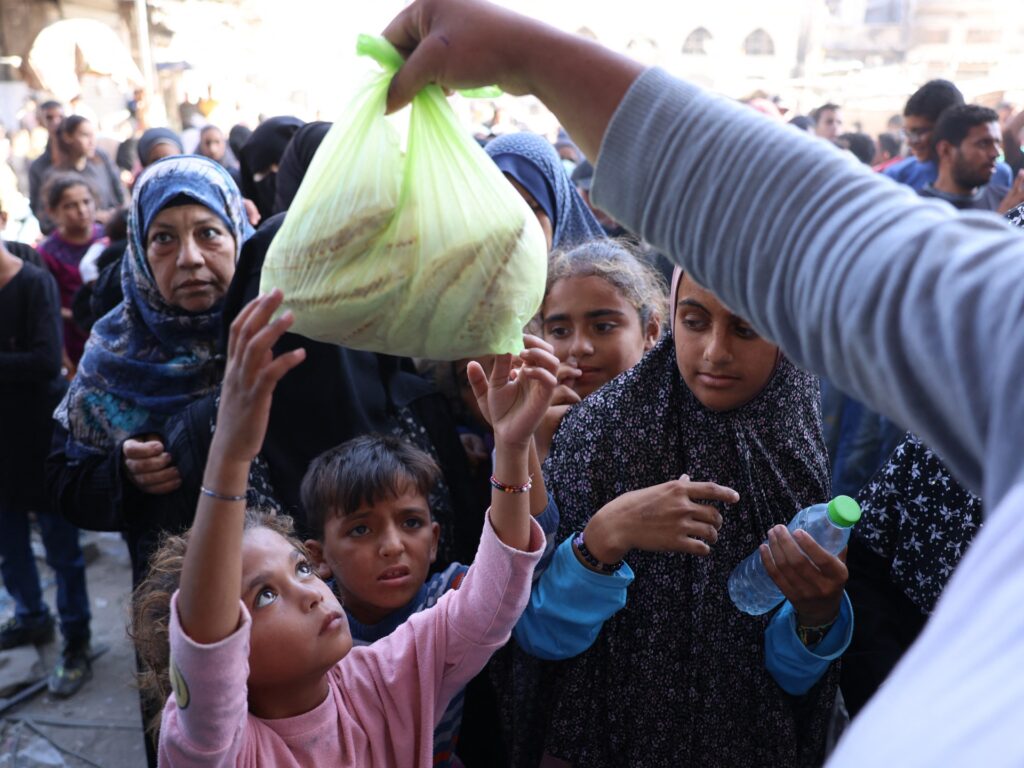
NewsFeed Parents in Gaza are struggling to feed their children as bakeries across the strip close down. An Israeli blockade means there is no flour or fuel for cooking. The World Food Programme warns it will run out of food in two weeks. Published On 1 Apr 20251 Apr 2025 Adblock test (Why?)
World, markets on edge as Trump prepares for ‘Liberation Day’ tariffs
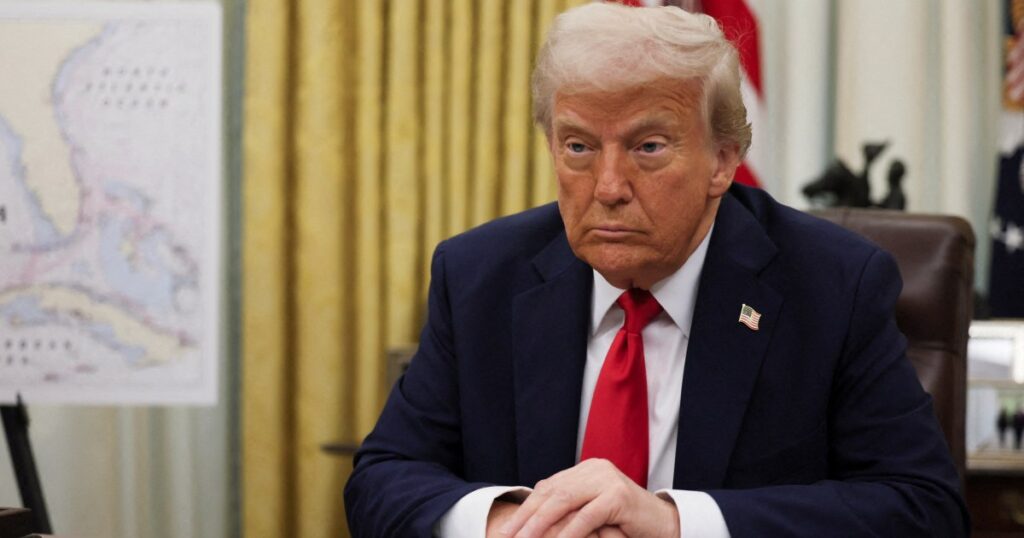
The White House has confirmed that US President Donald Trump will impose new tariffs this week, but it provided no details about the size and scope of the measures that have raised concerns over an intensifying global trade war. Trump kept rivals and allies alike guessing about who would be targeted and by how much, but promised to be “very kind” when announcing tariffs on Wednesday, which he has dubbed “Liberation Day”. In recent weeks, he has made several tariff announcements, then quickly changed tack on them. Global stocks remained volatile ahead of the so-called “reciprocal tariffs“, which Trump says are necessary to combat unfair trade imbalances with countries that target the United States. White House Press Secretary Karoline Leavitt said on Tuesday that Trump’s tariffs will take effect immediately after he unveils them on Wednesday. The Republican leader, an advocate of tariffs for decades, said on Monday night that he had “settled” on a plan, but refused to reveal its specifics. Advertisement Trump only said that the tariffs would be lower than what other countries would be charging the US, adding that “we sort of have a world obligation, perhaps”. “We’re going to be very nice, relatively speaking, we are going to be very kind,” he said. Trump is set to hold a press conference, dubbed “Make America Wealthy Again”, at the White House at 4pm local time (20:00 GMT) on Wednesday. On Tuesday, Trump urged his fellow Republicans in the US Senate to vote against a measure to revoke his tariff policy against Canada, which he tied to a fentanyl “emergency”. “Republicans in the Senate MUST vote to keep the National Emergency in place,” Trump wrote in a post on his private social media platform. Republicans have a majority in the Senate, but Tim Kaine – the Democrat who introduced the proposed legislation – suggested that the bill has a chance of passing. “There’s still a lot of discussions under way and a lot of votes that are still in play,” Kaine told reporters. “Often in the Senate, everything is pretty predictable. This is one where it’s not particularly predictable.” Kaine also pushed back against Trump’s claim that the flow of the drug fentanyl from Canada requires an emergency declaration. According to US government data, only 19.5kg (43 pounds) of fentanyl was seized at the Canadian border last year, compared to 9,933kg (21,900 pounds) at the border with Mexico. Trade war looming Al Jazeera’s Rosiland Jordan, reporting from Washington DC, said the entire global economy could be hit with what experts are calling a potentially huge trade war. Advertisement Jordan noted that Trump has said that he is aiming to restore US manufacturing, which plunged in the age of globalisation, with free trade agreements like the North American Free Trade Agreement (NAFTA) moving many industries to Mexico and Canada. “Eventually, much of that offshore manufacturing went to China, and to Southeast Asia and India,” Jordan added. “Now whether the US is going to go ahead with the 25 percent tariffs that have been promised against Canada, Mexico, and Europe, including the United Kingdom, remains to be seen.” Trump’s strategy risks provoking a chain reaction of retaliation by major trading partners like China, Canada and the European Union. America’s neighbours Canada and Mexico were already gearing up, but grappled with uncertainty. Mexican President Claudia Sheinbaum said on Tuesday that there will be no “eye for an eye” approach as the country braces for new US import tariffs kicking in this week. Canada Prime Minister Mark Carney had promised tariffs against US products that would have “maximum impact in the US” and minimal effects on Canadians. On Tuesday, Carney’s office said he had a call with Sheinbaum to discuss the “importance of building upon the strong trading and investment relationship between [their] two countries”. If enacted, the tariffs would deal a hefty economic blow to both nations, which are both in a free trade agreement with the US, the United States-Mexico-Canada Agreement (USMCA) – an amended version of NAFTA negotiated by Trump himself in 2020. Advertisement The threat of a trade war has caused increasing political ructions, with Canada’s looming general election on April 28 set to be dominated by how to deal with Trump, who has also called for the US to annex Canada, infuriating its northern neighbour. ‘We have the power to push back’ The tensions have gone beyond North America. The EU, which Trump has accused of trying to “scr**” the US, said on Tuesday that it still hoped to negotiate a solution – but that “all instruments are on the table” to retaliate if necessary. “We have the largest single market in the world, we have the strength to negotiate, we have the power to push back,” European Commission President Ursula von der Leyen said on Tuesday. “And the people of Europe should know that together we will always promote and defend our interests and our values, and together we will always stand up for our Europe.” For his part, United Kingdom Prime Minister Keir Starmer spoke with Trump on “productive negotiations” towards a UK-US trade deal. Vietnam said on Tuesday that it would slash duties on a range of goods to head off Trump’s tariffs. The US president’s advisers have pitched imposing a 20 percent global tariff to hit almost all US trading partners, the Wall Street Journal reported, while the White House suggested Monday they might be “country specific”. Trump, who began his second term in office in January, claimed the tariffs will drive the “rebirth” of the US as a manufacturing giant and stop it from being “ripped off”. Advertisement Volatile markets Wall Street was mixed on Tuesday, with the Dow Jones Industrial Average dipping 0.03 percent, and the benchmark S&P 500 and tech-heavy Nasdaq Composite rising 0.38 percent and 0.87 percent, respectively. European and Asian stock markets earlier rose as investors waited nervously for the announcement. Safe-haven gold touched a fresh record high. US stocks on the S&P 500 and Nasdaq
Real Madrid reach Copa del Rey final after ET thriller against Sociedad
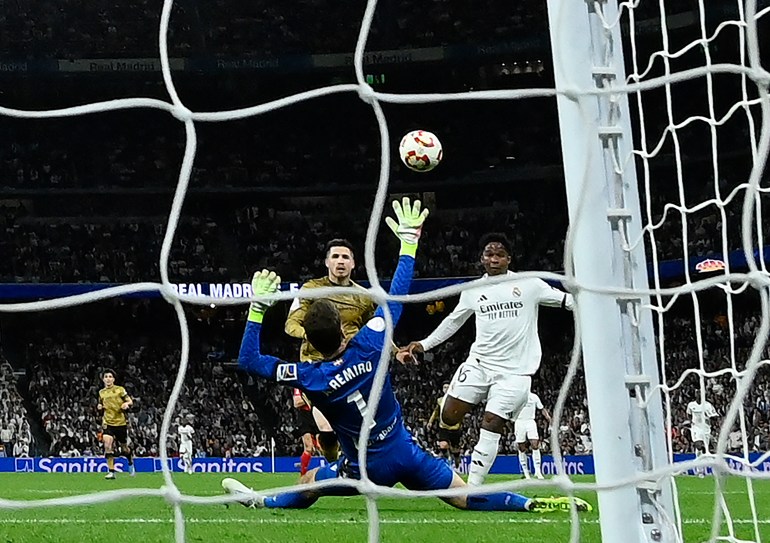
Sociedad take Real to extra time in Madrid but the hosts capitalise on advantage from first leg to reach cup final. Real Madrid edged into the Copa del Rey final with a thrilling 4-4 draw against Real Sociedad after extra time, securing a 5-4 aggregate semifinal victory. Antonio Rudiger decided Tuesday’s pulsating tie with a header in the 115th minute, with Madrid to face Barcelona or Atletico Madrid in the final. Real Sociedad, trailing 1-0 from the first leg, took the lead through Ander Barrenetxea, but Endrick’s fine chip pulled the 20-time winners level. A David Alaba own goal and Mikel Oyarzabal’s deflected effort helped La Real open up a lead on the Spanish champions but Madrid battled back with goals from Jude Bellingham and Aurelien Tchouameni. Real Madrid’s Brazilian forward Endrick, right, scores his team’s first goal in spite of Real Sociedad’s Spanish goalkeeper, Alex Remiro [Oscar del Pozo/AFP] Oyarzabal grabbed his second in stoppage time to force extra time but his side could not hold off Madrid until penalties, with Rudiger’s header the final word. Ancelotti brought Vinicius Junior and Rodrygo Goes back into his starting lineup, leaving Kylian Mbappe on the bench to rest, with Endrick taking his place in an all-Brazilian attack. The 18-year-old wonderkid striker, who netted the only goal in the first leg, was active in the opening phases, sending a dangerous overhead kick narrowly wide of Alex Remiro’s far post. Bellingham also threatened for the hosts but it was Real Sociedad who took the lead. Advertisement Barrenetxea broke in behind Lucas Vazquez to reach Pablo Marin’s flick-on and drilled a low finish home to put the Basques level in the tie. Real Madrid soon found their equaliser. Vinicius played a sensational through ball down the left flank with the outside of his foot, sending Endrick in on goal. The youngster, the top scorer in the Copa del Rey, produced a gorgeous lobbed finish over Romero for his fifth in the competition. Real Sociedad appealed for a penalty before the break when Takefusa Kubo went down in the box after being held by Vinicius, but the referee did not concur. Ancelotti brought on Mbappe for Endrick, looking for a goal to shut the tie down for good. However, it was the visitors who were creating the better chances. Madrid goalkeeper Andriy Lunin made a superb save to deny Martin Zubimendi, and Oyarzabal wastefully fired the rebound wide. Real Madrid’s Austrian defender David Alaba, centre, before his own goal [Oscar del Pozo/AFP] Real Sociedad moved ahead on the night when Alaba deflected Marin’s cross through Lunin’s legs and into his own net after 72 minutes. The Austrian defender, who returned from a long-term injury in January, was also involved in Real Sociedad’s third, deflecting Oyarzabal’s shot past Lunin. It sparked Madrid into action, with Vinicius turning his marker brilliantly, driving forward and crossing for Bellingham to strike in the 82nd minute. Four minutes later, Los Blancos pulled level on the night, with Tchouameni’s header badly fumbled by Remiro into his own net. Advertisement Just when it seemed Real Sociedad were out, they managed to force extra time, with Oyarzabal heading home Sergio Gomez’s free kick in the 93rd minute. Remiro saved well from Bellingham before the end of the regulation 90 minutes, with the pace slower, inevitably, as the game restarted. Real Sociedad’s Jon Olagasti was booked for hacking down Vinicius as he threatened to escape on the left, with the visitors working hard to hold off the European champions. With five minutes remaining Rudiger sent Madrid through to the final with a fine header from Arda Guler’s corner past the helpless Remiro. On Wednesday Atletico Madrid host Barcelona in the second leg of the other semifinal, with the teams level at 4-4 on aggregate. Adblock test (Why?)
What is the Zionist group informing on pro-Palestine students in the US?
[unable to retrieve full-text content] The ultra-Zionist group Betar is taking credit for identifying pro-Palestine students for deportation in the US.
Syria hit with nationwide power outage amid grid failures
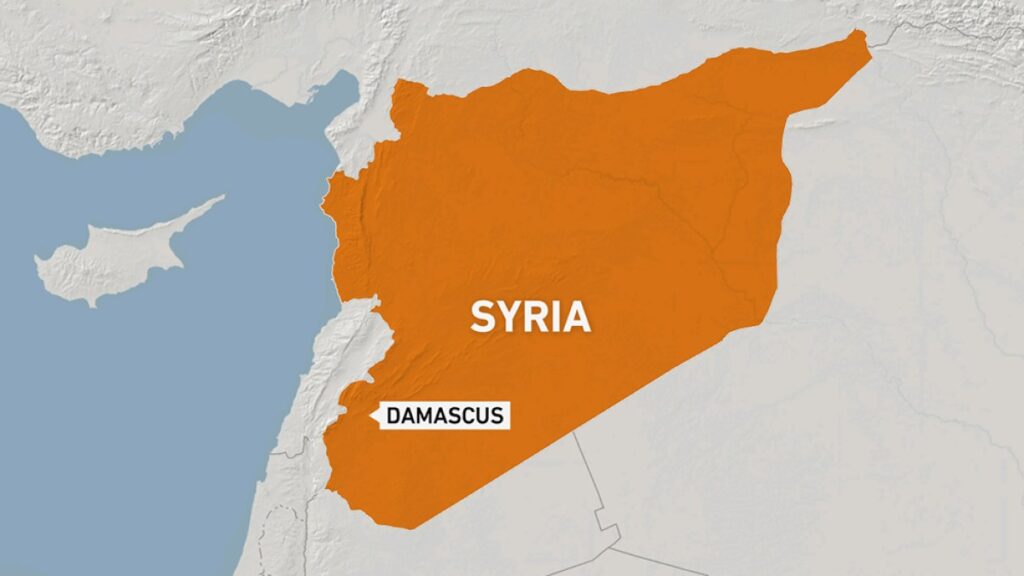
Nationwide blackout strikes Syria due to malfunctions, authorities say, amid deepening economic crisis. Syria has suffered a nationwide power outage due to malfunctions at several points in the national grid, a spokesperson from the Ministry of Energy has said. The spokesperson said technical teams were addressing the issues that struck on Tuesday night. There has been no initial indication that an attack was the cause. The director of the General Establishment for Electricity Transmission and Distribution, engineer Khaled Abu Dai, told the state news agency SANA: “The nationwide power outage in Syria is the result of a technical fault in the electrical system. Efforts are under way to repair the problem and restore power as quickly as possible.” The power returned to the provinces of Homs, Hama and Tartous and will gradually return to the rest of the governorates, SANA quoted the director general later. Syria suffers from severe power shortages, with state-supplied electricity available for only two or three hours a day in most areas. Damage to the grid means that generating or supplying more power is only part of the problem. Advertisement Damascus used to receive the bulk of its oil for power generation from Iran, but supplies have been cut off since Hayat Tahrir al-Sham (HTS) led the ouster of Tehran-allied former Syrian President Bashar al-Assad in December in a lightning offensive. The interim government under President Ahmed al-Sharaa has pledged to quickly ramp up the power supply, partly by importing electricity from Jordan and using floating power barges. Damascus also said it will receive two electricity-generating ships from Turkey and Qatar to boost energy supplies. Millions of Syrians still cannot afford to install solar panels or pay hefty fees for private generator services. Syria’s new authorities have been struggling to fix battered infrastructure after a 14-year conflict decimated much of the country. They have struggled to convince Western nations to lift economic sanctions to make Syria’s economy viable again. The country has also suffered a series of devastating Israeli attacks that caused significant damage to basic infrastructure. Since al-Assad was ousted, Israel has carried out hundreds of air strikes and deployed troops to a United Nations-patrolled buffer zone on the occupied Golan Heights. While al-Assad was in power, Israel also routinely attacked Syria, bombing what it claimed were Iranian and Hezbollah targets. Adblock test (Why?)
US senator’s anti-Trump protest speech stretches through night
[unable to retrieve full-text content] US Senator Cory Booker is protesting on the Senate floor for “as long as he is physically able.”
Germany and Italy arrest more than 30 in Mafia food fraud sweep

German police officer among those held in raids against the ‘Ndrangheta over sales of expensive food and equipment. German and Italian authorities have arrested dozens of suspects, including a policeman, in raids against the ‘Ndrangheta criminal organisation over fraud involving the sale of expensive food and pizza-making equipment. The ‘Ndrangheta is considered Italy’s wealthiest and most powerful Mafia and is also heavily involved in drug trafficking, controlling the bulk of cocaine flowing into Europe. Hundreds of law enforcement officials carried out about 40 searches in four German states and several areas of Italy as part of a five-year investigation that involved cooperation from the international police organisation Interpol. Fourteen suspects, including a 46-year-old police officer accused of supporting the gang, were arrested in western Germany, and 20 were detained in Italy, German police said on Tuesday. They are accused of “an elaborate fraud with high-value food products, such as expensive cheeses and olive oil, as well as kitchen equipment for pizza production”, said Eurojust, the European Union’s judicial agency, which coordinated the raids. Advertisement The suspects are also accused of other crimes, including arson, drug trafficking and tax evasion. The alleged food fraud took place in and around Stuttgart, Germany, and involved suspects posing as representatives of German food companies who then targeted Italian firms, according to German prosecutor Joachim Dittrich. They ordered large quantities of food and equipment in the name of a fake company but did not pay, leading to losses of hundreds of thousands of euros to the suppliers, he said. The suspects then allegedly pressured Italian restaurants in and around the German city to buy the supplies, and the businesses agreed to avoid possible reprisals. Italian prosecutors said the victims were Italians from Calabria, the southern region of the country where the ‘Ndrangheta is based. The arrested police officer is accused of disclosing confidential information to help the suspects. Adblock test (Why?)
Yemen chat leak: What does it tell us about Trump’s administration?

US officials downplay a journalist being included in Yemen attack chats, but it sheds light on workings of the White House. If the sharing of private chats of top United States intelligence officials with a reporter “were a part of an episode of Veep [a satirical US TV series], I wouldn’t have believed it”, former Pentagon official Alex Wagner says. The chats touched on Yemen, Europe, and other foreign and domestic policy concerns. Wagner and military affairs journalist Kevin Baron tell host Steve Clemons that the inadvertent inclusion of the journalist in the Signal group chats indicates a level of “carelessness” that is more insidious than the Trump administration cares to admit. Despite the gravity of the mistake, no one expects any accountability for the officials involved. Adblock test (Why?)
Crete hit hardest among Greek islands battered by storms, flooding
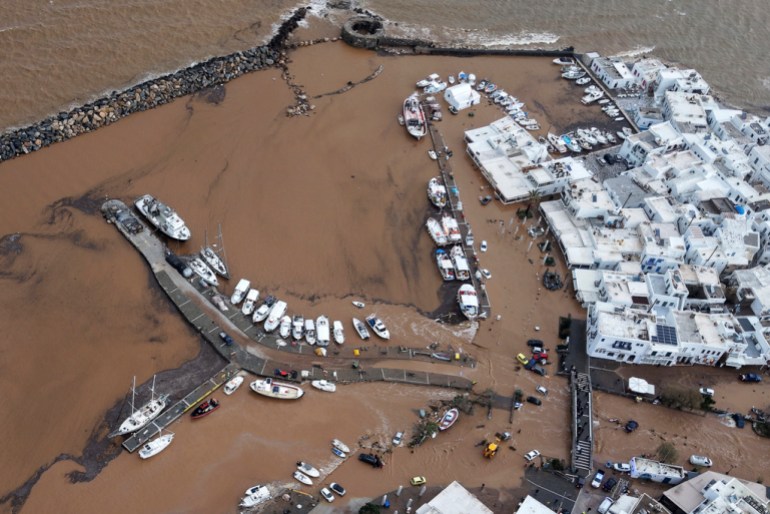
Bad weather also impacts islands in the Cyclades chain in the central Aegean Sea popular with tourists. Ferocious storms have battered islands in Greece for a second day, hurling cars into the sea and flooding homes and businesses with water and mud with Crete experiencing the heaviest rainfall and flooding. Authorities on the islands of Paros and Mykonos in the Aegean Sea worked to clear overturned cars and debris after hailstorms and torrential downpours on Tuesday. Emergency government assistance has been requested by those islands to address road and infrastructure damage. Rescue crews on Crete helped free seven people in vehicles trapped by floodwaters while rockslides and road closures were reported on the island after the bad weather pushed overnight towards the southeast. The highest rainfall in the 24 hours through Tuesday afternoon was recorded near the Cretan port of Chania, according to the National Observatory of Athens. Rhodes faced gale-force winds that toppled trees and damaged vehicles. Schools were preventively shut on Tuesday on the islands of Paros, Mykonos, Rhodes, Kos, Kalymnos, Symi and Tilos. Advertisement The storms primarily impacted islands in the Cyclades chain in the central Aegean, a popular holiday destination known for its beaches and whitewashed houses, and they struck just weeks after a rare earthquake swarm forced thousands of people to flee Santorini and the nearby islands of Ios, Amorgos and Anafi. The storms in Paros sent cars floating into the sea and flooded homes and businesses [Stathis Roussos/AP] Adblock test (Why?)
Russia’s Putin hosts Chinese Foreign Minister Wang for talks in Moscow
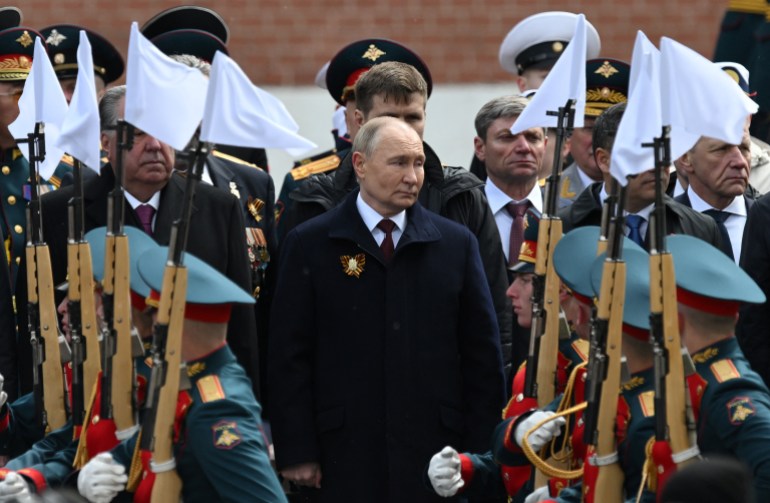
The allies discussed developments of the ongoing war in Ukraine as well as relations between the two countries. China and Russia are “friends forever, never enemies”, Chinese’s Foreign Minister Wang Yi has said in remarks in a visit to Moscow during which he has held talks with Russian President Vladimir Putin and his counterpart Sergey Lavrov. Wang on Tuesday also welcomed signs of normalising ties between Washington and Moscow. “The principle of ‘friends forever, never enemies’ … serves as a solid legal basis for advancing strategic cooperation at a higher level,” Wang told Russia’s RIA state news agency in an interview. Wang is on a three-day visit to Moscow for strategic cooperation talks, a trip overshadowed by uncertainty around talks to secure a ceasefire in Ukraine and US President Donald Trump’s criticism of the Russian and Ukrainian leaders. China and Russia declared a “no limits” strategic partnership days before Putin sent tens of thousands of troops into Ukraine in February 2022. Chinese President Xi Jinping has met Putin more than 40 times over the past decade, and the two leaders have agreed to deepen ties and cooperate on issues such as Taiwan, Ukraine and their mutual rival the United States. Advertisement Wang said China is ready to play a “constructive role” in ending the conflict in Ukraine, but will back Russia to defend its “interests”. At the start of talks with Lavrov, Wang added: “We will work together to make new contributions to the cause of peace and development for humanity.” Putin later expressed to Wang his “satisfaction with the way our relationship is developing” while Wang talked up strengthening ties and said the two countries were pursuing their common global and regional interests. Putin also said Russia was preparing a “good, full programme” for Xi’s symbolic and significant visit to Moscow for the Victory Parade in May – a sacrosanct day that marks the Soviet Union’s defeat of Nazi Germany in World War II. It is the 80th anniversary this year. Vladimir Putin watches honour guards passing by during a flower-laying ceremony at the Tomb of the Unknown Soldier on Victory Day last year [Maxim Blinov/Sputnik via Reuters] Wang said current global conditions obliged big powers to act as stabilising factors, so it was encouraging that Russia and the US had moved to improve relations. His remarks came a day after the Kremlin said that Russia and the US were working on ideas for a possible peace settlement in Ukraine and on building bilateral ties. Since taking office in January, Trump has initially shifted the US to a more conciliatory stance towards Russia, but he expressed anger in recent days at Putin’s questioning of Ukrainian President Volodymyr Zelenskyy’s legitimacy and his discussion of the prospect of a new leadership in Ukraine. Advertisement Wang dismissed the notion that Trump is trying to support Russia in order to set it against China, condemning such ideas as a “relapse of obsolete confrontational and bloc thinking”. Wang said recent Ukraine ceasefire talks had already brought some results and should continue, despite diverging views and the difficult situation on the battlefield. “The step towards peace, although not that big, is constructive – it’s worth building on it,” Wang said. “With peace, it is no pain, no gain. You need to work hard to achieve it.” Xi has been pushing for a greater involvement of China in peace talks since the early days of the war, which marked its third anniversary in February. China presents itself as a neutral party in the conflict and says it is not sending lethal assistance to either side, unlike the US and other Western nations. But it is a close political and economic ally of Russia, and NATO members have branded Beijing a “decisive enabler” of Moscow’s offensive – which it has never condemned. Beijing has proposed on its own, and together with Brazil, general principles to end the conflict, but its ideas have received a tepid reception. Adblock test (Why?)