

Yet another Israeli war crime is buried in the sand as the world looks away
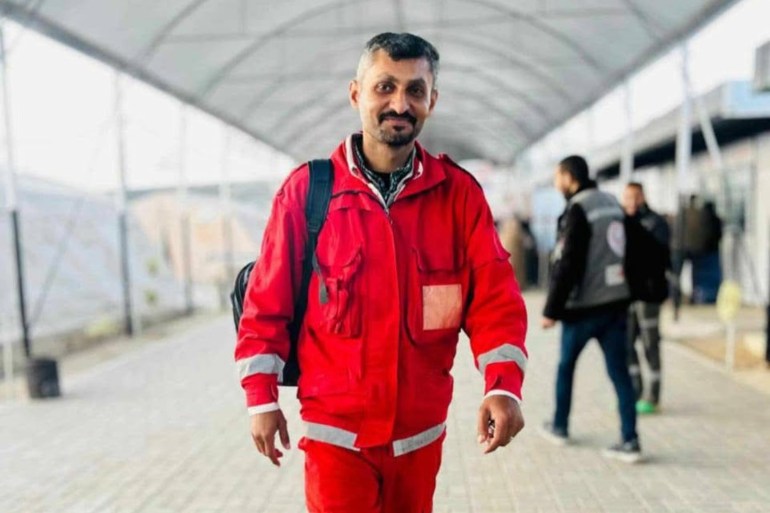
Every day, Mohammad Bahloul gambled with his own life in the hope of saving others. As a medic in the Palestine Red Crescent Society (PRCS), he would step into the unknown each workday, never knowing if he would return to his family. A week before Eid al-Fitr, Mohammad was dispatched to Rafah’s Tal as-Sultan neighbourhood to recover the wounded and dead in the aftermath of Israeli attacks. Shortly after he and a team of medics and first responders arrived on the scene, Israeli ground troops encircled the area and closed off all the roads in and out. As the PRCS lost contact with its team, rumours began to spread across Rafah that those stuck inside would be massacred. During the attempts of rescue teams to reach the area, UN workers witnessed civilians trying to flee being shot dead. On March 29, they were finally able to reach the area where the PRCS teams were attacked. There, the teams discovered the mangled remains of ambulances and UN and Civil Defence vehicles as well as a single body – that of Muhammad’s colleague, Anwar Alatar. Advertisement On March 30, the first day of Eid al-Fitr, they went back and uncovered 14 more bodies buried in the sand in a mass grave. All of them were still dressed in their uniforms and wearing gloves. Among them were Mohammad and his colleagues Mustafa Khafaja, Ezzedine Sha’at, Saleh Moammar, Rifaat Radwan, Ashraf Abu Labda, Mohammad al-Hila, and Raed al-Sharif. The killing of these paramedics is not an isolated incident. Israel has been systematically targeting medical and rescue workers as part of its genocidal war – a war against life itself in Gaza. Only in Gaza, medical uniforms and ambulances do not offer protection, which international law affords. Only in Gaza, medical uniforms and ambulances can mark people as targets for execution. For the seven agonising days in which Mohammad’s fate remained unknown, his father Sobhi Bahloul, a former principal at Bir al-Saba’ High School in Rafah, whom I have known for decades, and his mother Najah, prayed for a miracle to save their son. They imagined that Mohammad had escaped just before the area was sealed, or that he was hiding under the rubble of a house, or perhaps that he was kidnapped by Israeli soldiers but was still alive. As Mahmoud Darwish, the Palestinian national poet, said, Palestinians are suffering from an “incurable malady: hope”. Although the Bahloul family dared to hope, they also carried within them the dread that Mohammad would never be seen again. They knew the stories. In January 2024, the paramedics sent to rescue six-year-old Hind Rajab who lay in a car, injured and bleeding, beside her slain relatives, were also targeted and murdered. Likewise, in December 2023, the medics dispatched to rescue Al Jazeera cameraman Samer Abudaqa, who was bleeding in a street in Khan Younis after being hit by an Israeli drone, were also killed. Advertisement For seven long days, hope battled fear. “May God return you and all your colleagues to us safe and sound,” Sobhi wrote on Facebook above a photo of his selfless son. A photo of Mohammad Bahloul who was killed on March 23 by Israeli soldiers in Rafah [Courtesy of Sobhi Bahloul] The family had already suffered so much during the genocide, having lost many loved ones. Early on, they had to flee from their home in eastern Rafah to al-Mawasi in Khan Younis, searching for an illusion called safety. When the ceasefire was announced, the family marched back to their home in the eastern part of Rafah with thousands of others. They found their home destroyed but did their best to restore two rooms to functionality where they could sleep. During that period the children resumed their education in makeshift tents because so many schools had been destroyed. Just a week before Mohammad disappeared, an air raid flattened the house across the street from the family home, and his father’s car was severely damaged. Once again, the family fled, carrying what little they had left. With each displacement, their possessions dwindled – an unbearable reminder that as belongings shrink, so too does dignity. But Mohammad had no time to help his father pitch another displacement tent. He immediately returned to his duty, working around the clock with his fellow medics in Khan Younis, answering endless calls for help, rushing from one horror to the next. Even during Ramadan, the holiest month of the year, he barely had a moment to break his fast with his family and play with his five children – among them Adam, his three-month-old baby boy. Advertisement The holy month ended with the heartbreaking news of his murder. On Eid, I tried to reach Sobhi, but there was no answer. On his Facebook, I found these painful words: “We mourn our son, Muhammad Sobhi Bahloul, a martyr of duty and humanitarian work. To Allah we belong, and to Him we shall return.” Despite the Israeli army’s attempt to cover up its crime by burying it in the sand, evidence speaks for what happened. A statement released by the Palestinian Ministry of Health on March 30 said the Israeli forces carried out an execution and that some of the victims were handcuffed and had injuries to the head and chest. The chief of the UN humanitarian affairs office in Palestine, Jonathan Whittall, said the paramedics and first responders were killed “one by one”. Israel, of course, used the familiar playbook of denial and obfuscation. It first claimed the paramedics were members of Hamas and Palestinian Islamic Jihad. Then it claimed that its soldiers fired on the ambulances because they were “advancing suspiciously toward” them. Meanwhile, in an act of blatant cynicism, the Israeli government announced it was sending a rescue mission of 22 to Thailand and Myanmar following the deadly earthquake. Ten days earlier, it sent a medical delegation to North Macedonia. From Asia to Europe, it seems acceptable that a country that has massacred more than 1000 health
At least 95 arrested in Zimbabwe after antigovernment protests
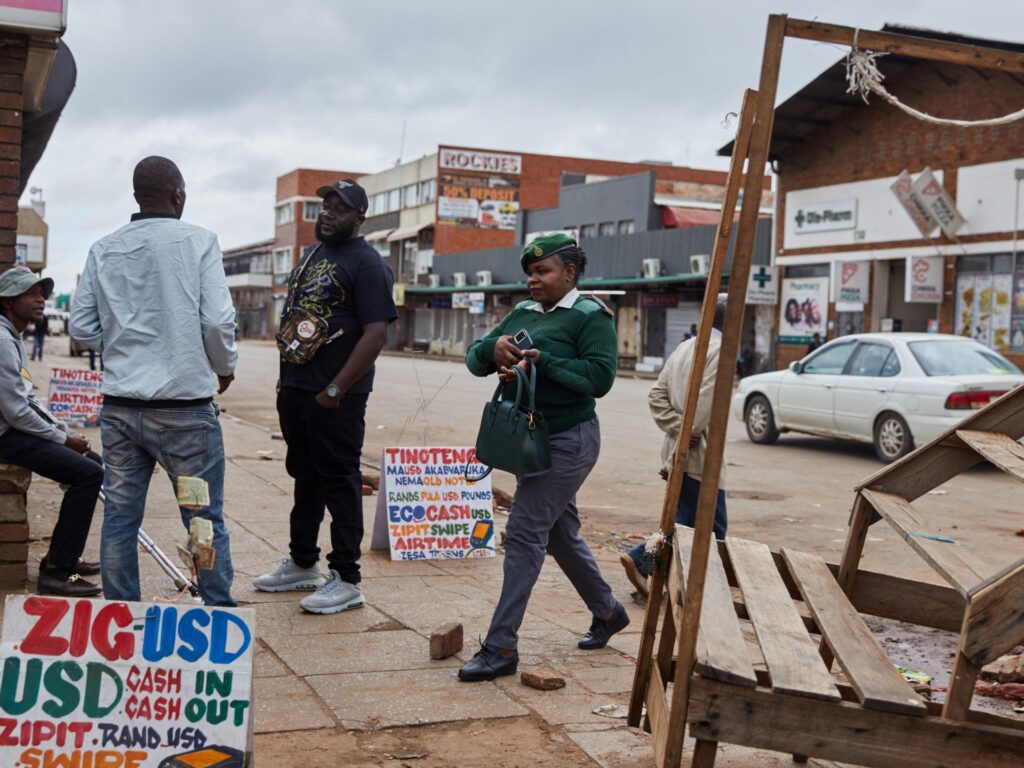
Police say suspects in custody are among 200 people who gathered at Harare’s Freedom Square and threw stones at officers. Zimbabwe police say they have arrested 95 people on charges of promoting public violence for taking part in demonstrations that called for President Emmerson Mnangagwa to leave office. A large police deployment in Harare, Zimbabwe’s capital, and other cities on Monday, largely neutralised a call by war veterans for large protests against plans to extend Mnangagwa’s rule. Zimbabwe’s ruling ZANU-PF party said in January that it wanted to extend Mnangagwa’s term in office by two years until 2030. Eighty-two-year-old Mnangagwa, who first came to power in 2017 after his long-term mentor Robert Mugabe was deposed in a military coup, is serving his final term. Independence war veterans led by Blessed Geza previously supported Mnangagwa but have turned against him, accusing him of seeking to cling to power. ‘Enough is enough’ The men and women in custody appeared before a court on Tuesday. They were among 200 people who had gathered at Harare’s Freedom Square and are accused of throwing stones at police and temporarily barricading a main road, according to a copy of the police charges cited by the AFP news agency. Advertisement They had chanted slogans such as “Enough is enough” and “Mnangagwa must go,” the charges said. These acts violated laws against breaching the peace and participating in a gathering with the intent to promote public violence, they added. Security forces had been out in force on the streets of the capital on Monday, and the demonstrations were limited, but shops, schools and businesses were closed in what many said amounted to a stay-away protest. Geza thanked his followers on social media for heeding his call to protest. He said he would not call for new demonstrations but promised a series of events to send Mnangagwa and his “corrupt cabal” packing. Adblock test (Why?)
Libya: A Voice for Reconciliation
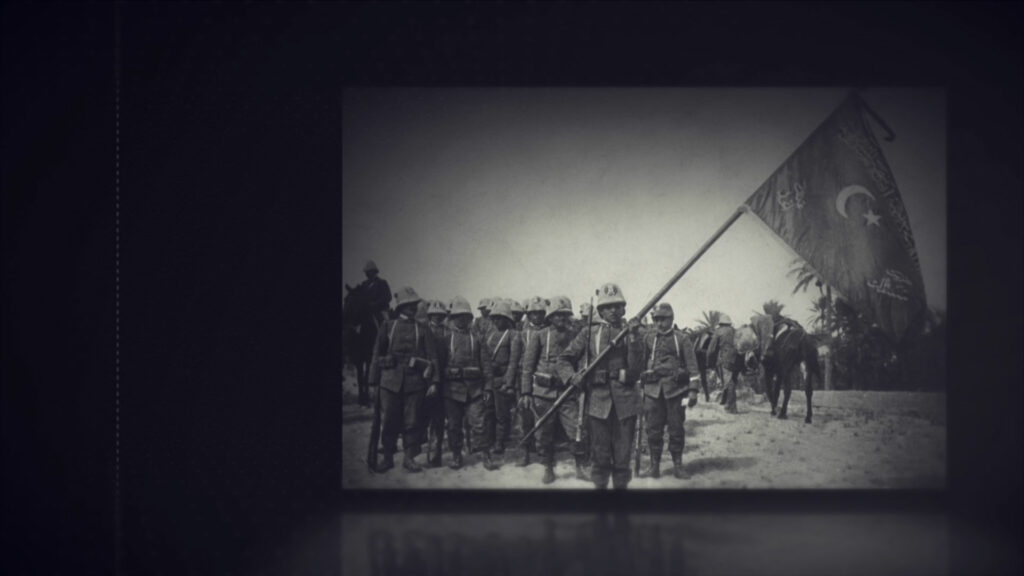
A poet and a composer are inspired by Libyan history to create a modern peace anthem for their divided country. Could Libya solve its political problems by revisiting a decades-old agreement that once brought its warring tribal factions together in national reconciliation? Since the overthrow of Muammar Gaddafi in 2011, the country has been in a constant state of turmoil. Now, poet Ahmed al-Terkawi and composer Hanan al-Ruwaie embark on a creative project together to seek inspiration from Libyan history – specifically the 1946 Harabi Charter – to create a musical work of hope for Libya’s future. But first, they meet writers, historians, today’s tribal elders and descendants of the original charter signatories. This enables them to understand the country’s history and how Emir Idris al-Senussi persuaded warring tribes to set aside their differences and come together in an unusual act of reconciliation. Both of them gather all they need to write and then perform their powerful anthem calling for peace in their war-torn country. Adblock test (Why?)
Le Pen’s conviction in France: Career-ending or fuel for a new far right?
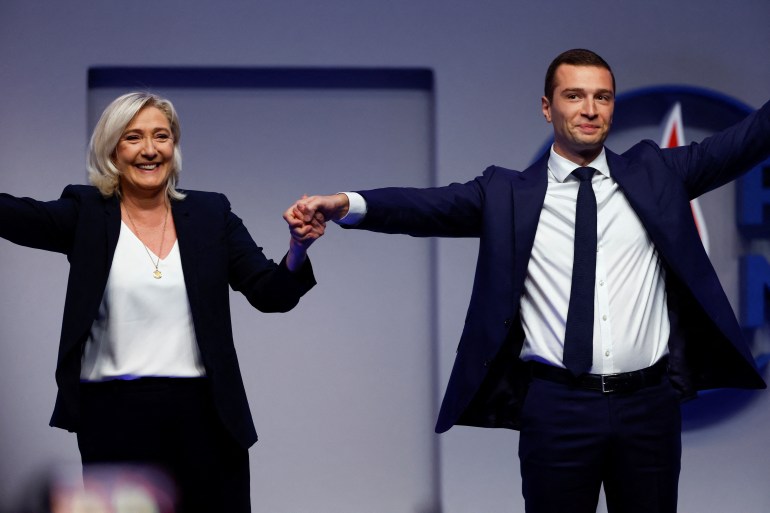
Paris, France – On Sunday, an opinion poll predicted that Marine Le Pen, the longtime leader of the French far right, would secure up to 37 percent of votes in the 2027 presidential election, more than 22 points higher than in 2022 and 10 points ahead of any other candidate. The “page has definitely turned”, said Frederic Dabi, the head of pollster Ifop Opinion. He saw the poll as confirmation that Le Pen’s rebrand had worked. For years, she has sought to normalise the hard right and distance it from the rule of Jean Marie Le Pen, her late father who founded the National Front, a party that lived on the political fringes. But on Monday, Marine Le Pen and her updated National Rally party were dealt a major blow. She was convicted of embezzling European Union funds, disqualifying her from running for public office for five years – effective immediately. Although Le Pen plans to appeal, the verdict prevents her from participating in France’s 2027 presidential election. ‘We’re very surprised in France’ The criminal court ruling in Paris has shocked France. Advertisement While Le Pen’s supporters are decrying the case as a political assault, her opponents are relieved to see the justice system’s independence prevail. “We’re very surprised in France because it’s very rare for a politician to actually be convicted. It’s happened, but it’s still quite rare, especially at this level of notoriety,” Baptiste Colin, a 29-year-old theatre producer from Lyon, told Al Jazeera. In recent years, voting for National Rally, or RN by its French initials, has become more typical across France, and Le Pen could appeal to voters by spinning the trial in her favour. “I hope people understand the conviction. Ultimately, it’s quite simple: It’s a misappropriation of funds,” Colin said. “I think that the judges were quite unbiased. It’s expected that if you dip into the coffers, you will be convicted.” The far right immediately pushed back against the court ruling. Jordan Bardella, Le Pen’s 29-year-old protege, called her provisional sentence “a democratic scandal”. “Le Pen’s line of defence is that it’s a scandal, and it was done on purpose, that it’s a coup d’etat,” Colin said. “It’s going to be a cultural battle between those on the far right who say it’s horrible and everyone else who thinks a conviction is normal.” The verdict could potentially push France into more political chaos if the far right successfully exploits the narrative, analysts said. “There is a risk that she will be seen as a martyr, as in the victim against the system. She and her party will weaponise this trial,” Rim-Sarah Alouane, a French researcher with a PhD in public law, told Al Jazeera. Advertisement Le Pen’s party runs on a platform against globalisation and immigration, pushing for stricter border control and fewer ecological policies. The 56-year-old has vaulted new faces like Bardella, now party president, so that it resonates with younger voters. Bardella, heir apparent? Alouane said given the normalisation of the far right, she fears mainstream media and politicians could hand Le Pen and the RN undeserved space to criticise France’s legal system. “Le Pen is a politician who has just been condemned by the justice system for a serious crime, and she’s already using one of the main news networks to defend herself,” Alouane said, citing Le Pen’s appearance on French TV channel TF1 on Monday evening. “We need to recentre the focus on what is at stake and not give Le Pen leverage to use this whole thing to solidify her position and her party’s in the mainstream.” Following the verdict, Le Pen can run in 2027 only if she appeals and receives a more lenient sentence, but the appeals process is slow in France. “It seems unlikely because it usually takes around two years to take an appeal to court,” Diane de Vignemont, a French journalist focused on politics and history, told Al Jazeera. “But if Le Pen loses her appeal, the RN will still be able to say that the court was corrupt and kept her from running. Then, Bardella will be the chosen one, the heir apparent.” Bardella is considered the RN’s rising star and would likely step up to replace Le Pen as the party’s next presidential candidate if Le Pen’s conviction is upheld. Advertisement “It’s kind of exactly what the party needs,” de Vignemont said. “Bardella has really mastered social media. And he’s young enough that he doesn’t have too many scandals yet.” He has helped the far right to gain a significant portion of young voters in France – in two years, the proportion of 18- to 24-year-olds voting for the RN in the French parliamentary elections doubled. “There’s hype around the RN. Bardella is young and on TikTok, and there is this idea that it is cool to vote for the RN, whereas before it was considered old-fashioned,” Colin noted. Jordan Bardella, then-newly-elected President of the French far-right National Rally (Rassemblement National – RN) party, holds the hand of Marine Le Pen after the results during the National Rally party’s Congress in Paris, France, November 5, 2022 [File: Christian Hartmann/Reuters] Should Le Pen succeed in expediting the case and win her appeal before the presidential election, she will likely feel emboldened to claim the case was a vendetta against her political agenda, observers said. “She’s going to be able to run on a platform of, ‘They tried to get me over a political witch trial, and they failed because I was innocent,’” de Vignemont said. Presiding judge Benedicte de Perthuis has already refuted that idea. “No one is on trial for engaging in politics,” she said in a statement. Colin said he expects the party will suffer because of the verdict. “I think it’s a catastrophe for her and for the party,” he said. “I think Bardella is much less competent than Le Pen. He’s very young, and he’s not used to this. Bardella hasn’t done many debates yet, and those that
Israeli air strike on Beirut raises concerns over shaky ceasefire
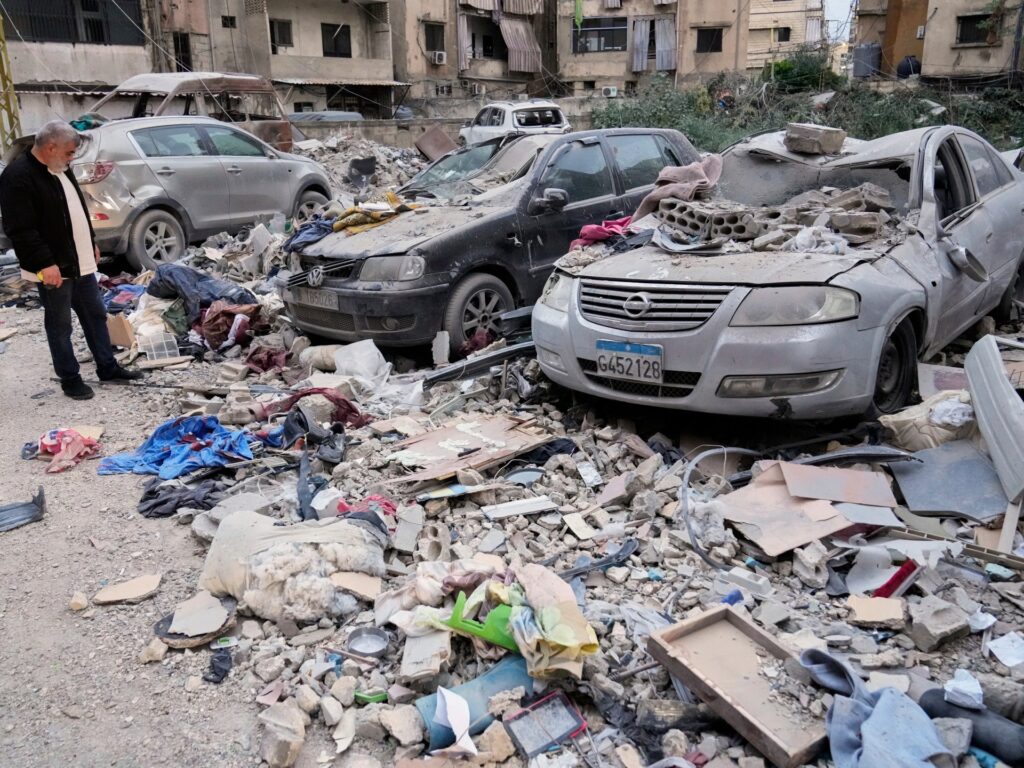
An Israeli air strike on a building in the Lebanese capital Beirut targeting a member of Hezbollah has killed at least four people. The surprise attack came at about 3:30am (00:30 GMT) on Tuesday during the Eid al-Fitr Muslim holiday marking the end of the Ramadan fasting month. The second strike on the city in three days has raised fears that the shaky ceasefire between Israel and the armed Hezbollah group that took effect four months ago could collapse. The Lebanese Ministry of Health said the four people killed included a woman and that seven others were wounded. Israel’s military said in a statement that it had targeted Hassan Bdeir, a member of a Hezbollah unit and Iran’s Quds Force, who was assisting the Palestinian armed group Hamas in planning a “significant and imminent terror attack against Israeli civilians”. The Israeli army did not offer any evidence for the statement. There was no immediate comment from Hezbollah. The strike followed just days after a previous hit on the southern suburb of Dahiyeh, a Hezbollah stronghold. Advertisement Lebanon’s President Joseph Aoun condemned the latest assault, calling it a “dangerous warning” of Israel’s intentions against his country. “Israel’s persistence in its aggression requires more effort from us in addressing Lebanon’s friends around the world and rallying them in support of our right to full sovereignty over our land,” Aoun said in a statement. Lebanese Prime Minister Nawaf Salam also condemned the Israeli strike and said it was a flagrant breach of United Nations Resolution 1701 and the ceasefire arrangement. Salam said he has been closely monitoring the aftermath of the strike in coordination with the ministers of defence and interior. Al Jazeera’s Resul Serdar, reporting from Beirut, said rescue operations were ongoing and added that the latest attack is “extremely worrying” for the Lebanese government, as it comes just three days after Israeli forces bombed Beirut for the first time since the ceasefire deal with Hezbollah in November. The agreement, guaranteed by France and the United States, brought a halt to a yearlong conflict and mandated that Israeli ground troops withdraw from southern Lebanon. It also called for Hezbollah fighters to withdraw from the south, and for Lebanese troops to deploy there. Both sides, however, have accused each other of violations. Adblock test (Why?)
Rescue workers Israel killed found in mass grave in Gaza: What to know
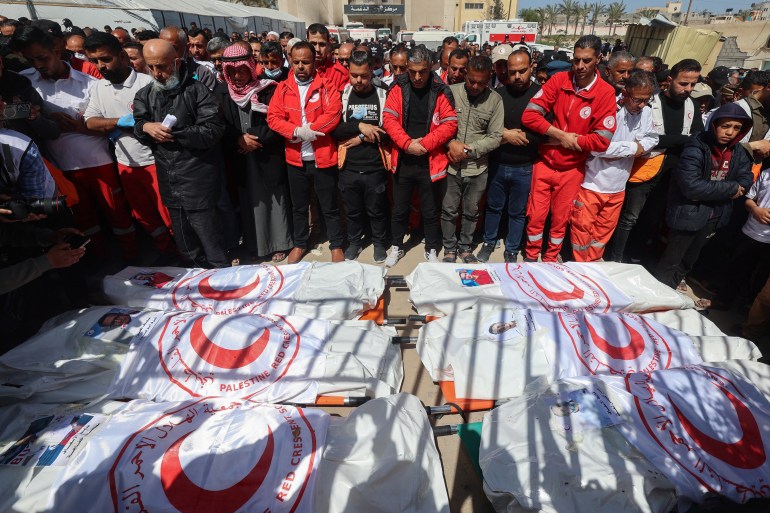
Nine Palestine Red Crescent (PRCS) medics in ambulances, as well as some Civil Defence workers, went to help people in Rafah, Gaza, and disappeared on March 23 after coming under attack from Israeli forces. What followed was a week of Israeli obstruction until international teams were finally able to enter the area where the medics and rescue workers disappeared. They found gruesome proof of direct attacks on the humanitarian workers. One medic remains missing. Here’s everything we know about how Israel killed these first responders in Gaza: What happened to the Red Crescent medics in Gaza? Israeli forces killed them. One ambulance was dispatched to al-Hashaashin, Rafah, to help people injured by Israeli attacks on Sunday, March 23. Israeli soldiers fired on it, injuring the crew. [embedded content] “In the early hours of Sunday, 23 March, our Palestine Red Crescent colleagues were entering the area of al-Hashaashin, Rafah to save lives and came under fire,” Tommaso Della Longa, spokesperson for the International Federation of Red Cross and Red Crescent Societies (IFRC), told Al Jazeera. Advertisement The PRCS then sent a further three ambulances to help the injured people their colleagues were trying to reach, and to rescue their colleagues who had been attacked. All the teams dispatched to support the initial ambulance did so during daylight hours, the Civil Defence confirmed. PRCS “lost contact with their colleagues”, Della Longa said, and began trying to find them. 1/6 First responders should never be a target. Yet today @UNOCHA supported @PalestineRCS and Civil Defense to retrieve colleagues from a mass grave in #Rafah #Gaza that was marked with the emergency light from one of their crushed ambulances. pic.twitter.com/xFYFXWp2c6 — Jonathan Whittall (@_jwhittall) March 30, 2025 Who are the medics Israel killed? There were three ambulance officers – who transport the wounded and offer emergency healthcare at times: Ezzedine Shaath, Mostafa Khafaga and Saleh Muamer. There were also five first responder volunteers: Ashraf Abu Labda, Mohammad Bahloul, Mohammed al-Heila, Raed al-Sharif and Rifatt Radwan. Ambulance officer Assad al-Nassasra is still missing. “We don’t know where he is,” Della Longa said. “The colleagues that were killed and found left behind more than 20 children,” he added. Israel has killed 30 Palestinian Red Crescent volunteers and staff – humanitarian workers protected by international humanitarian law – since October 7. Who else did Israel kill in this incident? The bodies of 14 murdered people were found in a shallow mass grave, according to the PRCS. Advertisement Eight were identified as PRCS medics, five were Civil Defense workers, and one was a UN agency employee. 30 Palestinian staff or volunteers have been killed since October 7 [Eyad BABA / AFP] How were they killed? They were killed “one after another”, then buried in the sand along with their emergency vehicles, the UN said. “The available information indicates that the first team was killed by Israeli forces on 23 March, and that other emergency and aid crews were struck one after another over several hours as they searched for their missing colleagues,” a spokesperson for the United Nations Office for the Coordination of Humanitarian Affairs (OCHA) in Palestine said. “Their bodies were gathered and buried in this mass grave,” OCHA head Jonathan Whittall said from the scene. “We’re digging them out in their uniforms, with their gloves on. They were here to save lives,” he said. “These ambulances have been buried in the sand. There’s a UN vehicle here, …[an] Israeli forces bulldozer has buried them.” What did Israel have to say? The Israeli army’s international spokesperson, Nadav Shoshani, said the medics had not been killed deliberately. Referring to Israeli soldiers firing at clearly marked ambulances and UN vehicles, Shoshani wrote on X, formerly Twitter, that “several uncoordinated vehicles were identified advancing suspiciously toward IDF troops without headlights or emergency signals”, not clarifying what was meant by “uncoordinated vehicle”. Shoshani also claimed without evidence that “terrorists” were hidden amid the rescue workers and that “[Israeli] forces eliminated a Hamas military operative, Mohammad Amin Ibrahim Shubaki, who took part in the October 7 massacre, along with eight other terrorists from Hamas and the Islamic Jihad.” Advertisement None of the names reported as having been recovered from the mass grave match the name Shoshani claimed. Soshani did not explain the fact that one body was recovered with his hands bound, according to the Red Crescent in Gaza, and that Israeli bulldozers had tried to bury the vehicles after the fact. Israeli claims of Hamas launching attacks from medical facilities in Gaza were often “vague” and sometimes “contradicted by publicly available information”, UN human rights chief, Volker Turk, told the United Nations Security Council in January. The IDF did 𝗻𝗼𝘁 randomly attack an ambulance on March 23. Let me walk through what happened step-by-step: 1. Last Sunday, several uncoordinated vehicles were identified advancing suspiciously toward IDF troops without headlights or emergency signals. IDF troops then… https://t.co/VdtyXd8qj5 — LTC Nadav Shoshani (@LTC_Shoshani) March 31, 2025 How were their bodies found? Della Longa said that, for a whole week, the IFRC, PRCS, ICRC and the UN made appeals to Israeli authorities to enter the area to investigate. Israel blocked the requests until finally a mission was able to enter and look for the missing rescue workers. Video from the scene showed searchers digging out several bodies wearing orange emergency vests, some piled on top of each other. One body in a Civil Defence vest was pulled out of the grave only for searchers to realise it was a torso with no legs. What did the ICRC say? IFRC Secretary-General Jagan Chapagain said in a statement: “These dedicated ambulance workers were responding to wounded people… They wore emblems that should have protected them; their ambulances were clearly marked. They should have returned to their families; they did not. “Even in the most complex conflict zones, there are rules [that] could not be clearer – civilians must be protected; humanitarians must be protected. Health services must be protected. Advertisement “Our network is in mourning,
Ashwani Kumar makes record-breaking IPL debut for Mumbai Indians
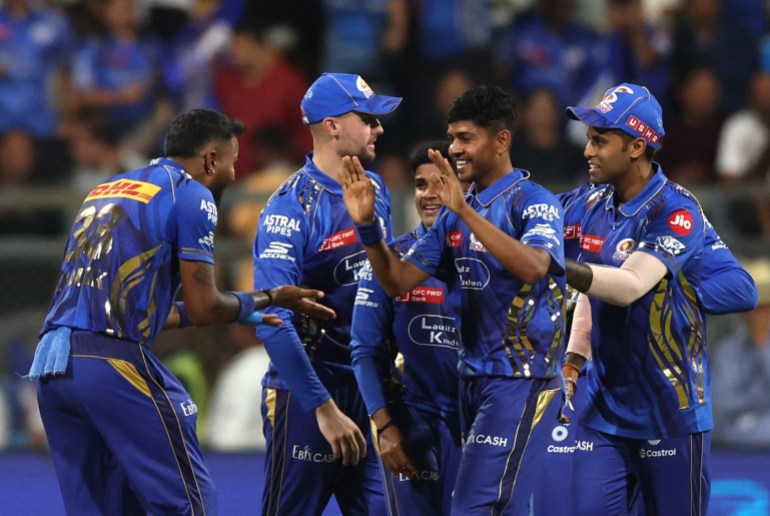
Kumar put on an outstanding bowling display, becoming the first Indian player to take four wickets on IPL debut. A sparkling debut performance by medium pacer Ashwani Kumar, powered up by a single banana, helped Mumbai Indians register their first win of the Indian Premier League (IPL) season, downing Kolkata Knight Riders by eight wickets. Kumar’s stunning but highly unexpected four-wickets-for-24-runs effort, coupled with an overall disciplined bowling performance by the home team, restricted champions Kolkata to a modest total of 116, which Mumbai chased down with more than seven overs to spare on Monday. The 23-year-old took the crucial wickets of Kolkata captain Ajinkya Rahane, Rinku Singh, Manish Pandey and the powerful Andre Russell. “I didn’t have anything for lunch, I just had a banana. There was a little pressure. I wasn’t feeling hungry,” said Kumar. “But still, I played well, so it’s good. “[Captain] Hardik Pandya said that since it’s your debut match, enjoy yourself. Just keep bowling the way you have been,” he added. Pandya said the credit for his bowler’s impressive debut should go to the extensive Mumbai scouting network. Advertisement “We thought Ashwani can come in on this pitch and bowl the way he bowled. It is all the scouts – they picked him,” said Pandya. “They have gone to all the places and picked these young kids. We played a practice game, he had that zip, that late swing, something off the wicket, a different action and he was a leftie.” Following Kumar’s exploits with the ball, South African wicketkeeper-batsman Ryan Rickelton spearheaded Mumbai’s run chase at Wankhede Stadium, scoring a quick 62 off 41 balls in an innings laced with five sixes. T20 specialist Suryakumar Yadav’s quickfire 27 off just nine balls ensured Mumbai sealed the win over Kolkata in their first home IPL match of the year. Mumbai’s Ashwani Kumar, second from right, celebrates with teammates after taking the wicket of Kolkata’s Andre Russell at Wankhede Stadium, Mumbai, on March 31, 2025 [Francis Mascarenhas/Reuters] Adblock test (Why?)
Why is China angry about a plan to sell two ports on the Panama Canal?
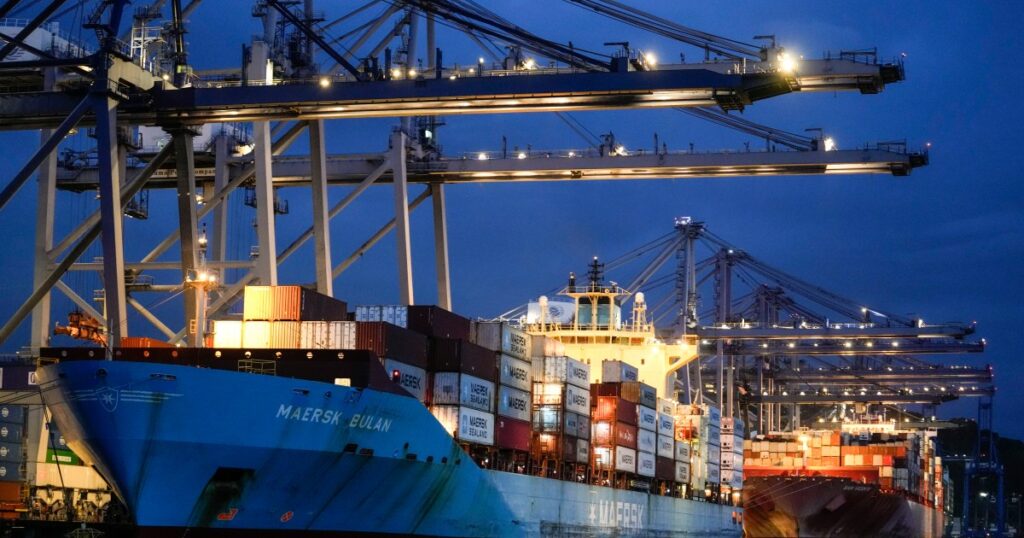
CK Hutchison, one of the largest conglomerates in Hong Kong, earlier this month announced plans to sell its stake in two ports on the Panama Canal to a group of US investors led by BlackRock. The plan, part of a $22.8bn megadeal that would grant the consortium control over more than 40 ports in 23 countries, followed complaints by United States President Donald Trump that the key shipping route was under Chinese control. CK Hutchison shares soared following news of the deal on March 4, but plunged less than two weeks later when Ta Kung Pao, a Chinese state-run newspaper in Hong Kong, accused the company in two op-eds of “spineless grovelling” and cutting a deal “that betrayed and sold out all Chinese people”. With an April 2 deadline to sign the deal looming, CK Hutchison is now in the crosshairs of both Washington and Beijing. Why would China want to stop the deal? Editorials in Ta Kung Pao, which is controlled by Beijing’s liaison office in Hong Kong through a subsidiary, are often read as signals from the upper ranks of the Chinese Communist Party. Advertisement Hong Kong leader John Lee, who was elected as the sole candidate in an election tightly controlled by Beijing, has criticised the CK Hutchison deal, saying it deserves “serious attention”. The Wall Street Journal earlier this month reported that anger over the deal extended all the way to Chinese President Xi Jinping. Citing unnamed sources familiar with the matter, the newspaper said Xi was angered that CK Hutchison had not sought his approval for the deal and that he had hoped to use the Panama Canal ports as a bargaining chip with Trump, who has pledged to “take back” the strategically important waterway. On Friday, China’s market regulator said on its official WeChat account that it would carry out an antitrust investigation “in accordance with the law to protect fair competition in the market and safeguard the public interest”. Following the news, local media, including the Sing Tao Daily and the South China Morning Post, reported that CK Hutchison would not go forward with the deal this week. [embedded content] What is Beijing’s relationship with CK Hutchison? The proposed sale has also highlighted longstanding tensions between Beijing and CK Hutchison and its 96-year-old billionaire founder, Li Ka-shing. Li’s rise from a mainland Chinese-born refugee to Hong Kong real estate tycoon holds an almost mythical status in the Chinese territory, a former British colony, where he built his reputation navigating Western business interests and the Communist Party. Li was known for his close relations with Chinese leaders Deng Xiaoping and Jiang Zemin, who oversaw China’s economic opening between the late 1970s and early 2000s, but his political influence waned following Xi’s rise to the top job in 2012. Advertisement In 2015, Li raised eyebrows when he restructured his business interests and registered them in the Cayman Islands. Around this time, he also began to divest from China. In 2018, Li passed control of his company to his son, Victor, but the tycoon has stayed in the limelight. The following year, Li angered pro-Beijing commentators with his ambivalent comments about Hong Kong’s mass pro-democracy protests at a time when other companies in the city were openly critical of the demonstrations. While analysts have offered differing opinions on whether the Li family tacitly supported calls for democracy in Hong Kong, there is broad agreement that it is less visibly pro-Beijing than many of the city’s other business dynasties. “Compared to other family offices of his generation – such as the Fok and Pao family, who invested in the mainland as early as the 1980s, or the Tung family, who are active in Sino-American relations and Hong Kong governance – Li and his sons position themselves as businesspeople who invest globally and distance themselves from politics,” Wilson Chan, co-founder and director of policy research at Hong Kong’s Pagoda Institute, told Al Jazeera. Can Beijing stop the sale from going ahead? Chan said Beijing is relatively constrained in terms of formal regulatory authority to stop the deal. “In strict legal terms, it will be quite difficult for Beijing and Hong Kong to call off the deal, given the companies and the ports involved are not ‘legally’ located within the jurisdiction of China and Hong Kong,” he said. Advertisement Ronny Tong, a Hong Kong barrister and member of the city’s Executive Council, said the antitrust investigation could be seen as a “deterrent” against CK Hutchison moving forward with the deal. Tong said Chinese regulators typically do not step in to block Hong Kong business deals, but are within their rights to investigate. “If people carry on their business activities contrary to the law, they ought to be investigated to see whether they have fallen afoul of the law,” Tong told Al Jazeera. Experts quoted in the South China Morning Post said that Chinese regulators could claim legal jurisdiction over the deal by arguing that BlackRock’s acquisition of so many ports would give them a monopoly over regional trade routes. Proving that the deal would have an adverse impact on competition, however, could be more difficult, while invoking national security concerns could be challenging as BlackRock is a private company, the experts quoted by the Post said. Martina Fuchs, a business correspondent for the Chinese state-run Xinhua News Agency, said she expects the deal to be delayed or called off as it has become “highly politicised.” “China’s criticism of CK Hutchison’s move to sell the ports business also reflects its strategic interests in the region on the one hand side, and the growing pressure from US President Donald Trump to curb China’s influence as well as worries about national security on the other,” Fuchs told Al Jazeera. “CK Hutchison being thrust into the crosshairs in the midst of the once-again escalating China-US trade war reflects how both powers are battling for control of the strategic waterway,” she said. Advertisement What other pressure can Beijing apply? Even without going through
Russia-Ukraine war: List of key events, day 1,132
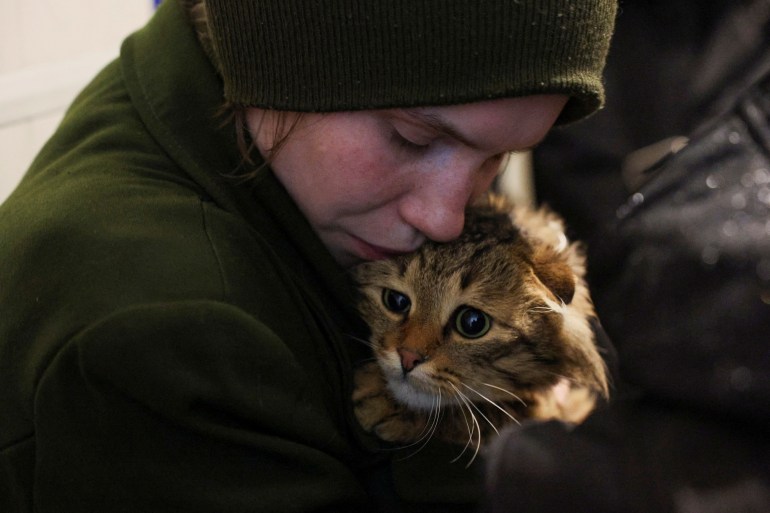
These are the key events on day 1,132 of Russia’s war on Ukraine. These are the key events from Monday, March 31: Fighting Russian forces shelled a front-line settlement in Ukraine’s southeastern Zaporizhia region, killing a 66-year-old woman and wounding five others. The number of people wounded in Russia’s attack on Ukraine’s second-largest city, Kharkiv, has risen to three. Moscow’s Ministry of Defence said Ukraine had attacked energy facilities in Russia’s Bryansk region despite a joint moratorium on striking such infrastructure. Russian President Vladimir Putin ordered 160,000 more Russians to be called up for military service by July 15. Nurse Kateryna, 24, who was evacuated from Ukraine’s eastern front-line city of Kostiantynivka, comforts her cat Abu at a transit centre in the Dnipropetrovsk region, Ukraine March 31, 2025 [Violeta Santos Moura/Reuters] Diplomacy The Kremlin said Russia and the United States were working on ideas for a possible peace settlement in Ukraine and on building bilateral ties despite US President Donald Trump saying he was “p***** off” with Putin. Ukrainian President Volodymyr Zelenskyy called for Russia to be punished for more than 183,000 alleged war crimes documented by Kyiv since Moscow’s full-scale invasion three years ago. The top diplomats from Spain, Germany, France, Italy, the United Kingdom, Poland and the European Union have pledged to redouble their aid to Ukraine and are considering new sanctions on Russia to force it to accept a ceasefire. Chinese Minister of Foreign Affairs Wang Yi, who is in Moscow, said securing peace in Ukraine was “no pain, no gain” and that any ceasefire agreement had to be binding, fair and acceptable for all parties. Wang also welcomed Russia and the US taking the first steps to normalise relations, which he said would be “good for stabilising the balance of power between major powers and inspires optimism in a disappointing international situation”. Moldova has expelled Russian diplomats after accusing embassy staff of helping a convicted pro-Kremlin legislator escape being jailed over illegal political funding. Moscow has denied it sought to interfere in Moldovan politics. US Secretary of State Marco Rubio will travel to Brussels on Wednesday to attend a NATO foreign ministers meeting to discuss security priorities, including defence investment and peace negotiations in Ukraine. Military aid Advertisement Sweden said it would donate 16 billion kronor ($1.6bn) in new military aid to Ukraine, the largest such package from the Nordic country since Russia’s full-scale invasion in 2022. A spokesman for UK Prime Minister Keir Starmer said officials from the United Kingdom, France and Ukraine would meet in the coming days to build on “real momentum” in efforts to boost Kyiv’s security. A Russian Army 2S5 howitzer Giatsint-S fires towards Ukrainian positions in Ukraine [Screenshot from video distributed by Russian Defence Ministry Press Service on Sunday, March 30, 2025, via AP] Adblock test (Why?)
Trump says he’ll be ‘kind’ on tariffs amid rollercoaster for global stocks
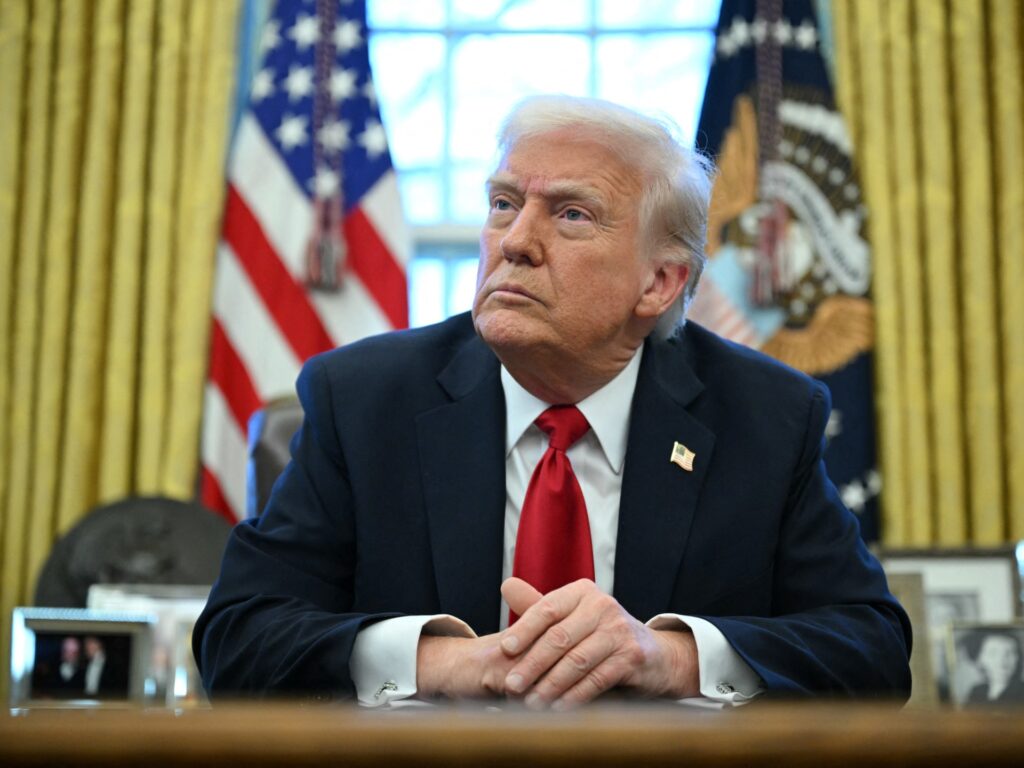
United States President Donald Trump has said his long-awaited reciprocal tariffs will be lower than what other countries charge as uncertainty over his biggest trade announcement yet continues to roil global stocks. Speaking at the White House on Monday, Trump said the tariffs he is preparing to announce on Wednesday will be “nicer” than the trade policies of US trading partners. “We are going to be very nice by comparison to what they were. The numbers will be lower than what they have been charging us, and in some cases, maybe substantially lower,” Trump told reporters at the Oval Office. “Relatively speaking, we’re going to be very kind,” Trump said. Repeating his regular talking point that the US has been taken advantage of by its trading partners, Trump said the measures would bring “tremendous wealth back to our country”. “It’s really, in a sense, a rebirth of our country,” he said. Trump’s remarks came a day after he clarified that the tariffs would apply to “all countries”, pouring cold water on hopes that the measures might only target countries responsible for the bulk of the US trade deficit. Advertisement “Just hours out from his big announcement, Trump and his team continue to give conflicting and inconsistent signals of what to expect,” Deborah Elms, the head of trade policy at the Hinrich Foundation in Singapore, told Al Jazeera. “I am taking this latest statement with a grain of salt,” Elms added. “I still expect that tariffs will be applied to almost everyone. With higher levels for those with higher trade deficits and other Trump complaints.” Trump’s April 2 tariff announcement, which he has dubbed “liberation day”, is just the latest in a flurry of trade salvoes launched by the US president in recent weeks. Many of the measures – including 25 percent tariffs on Canada and Mexico, and a 25 percent duty on all auto imports – are set to go into effect this week. Other tariffs – including a 20 percent duty on all Chinese imports and 25 percent duties on aluminium and steel – have been in place since last month. US stocks had a mixed performance on Monday, after equities in Japan, South Korea, Hong Kong and Australia earlier racked up sharp losses. The benchmark S&P 500, which is down nearly 6 percent from the start of March, rose 0.55 percent. The tech-heavy Nasdaq Composite, which is down more than 8 percent, fell 0.14 percent. Asian markets clawed back some losses on Tuesday morning, with Japan’s Nikkei 225, South Korea’s KOSPI, Australia’s ASX200 and Hong Kong’s Hang Seng up by between 0.41 percent and 0.76 percent as of 1:30 GMT. While Trump has talked up his April 2 tariff announcement for weeks, the scope and specifics of his plans have remained vague. Advertisement Though Trump often expressed his support for blanket tariffs during his election campaign, senior officials in his administration have indicated that specific countries are of particular concern. US Treasury Secretary Scott Bessent said last month that the administration was particularly focused on what he termed the “Dirty 15” – the 15 percent of countries deemed to account for the bulk of trade imbalances while imposing steep tariffs and other non-tariff barriers. While Bessent did not mention any countries by name, the US has some of its biggest trade deficits with China, the European Union, Canada, India, Japan, Vietnam and South Korea. Kevin Hassett, the director of Trump’s National Economic Council, suggested last month that officials were particularly looking at 10 to 15 countries that account for the bulk of the US trade deficit. In an interview with Fox News on Sunday, White House trade adviser Peter Navarro said the tariffs could raise $600bn annually, which would imply a rate of about 20 percent, going by US imports valued at about $3 trillion. In a potential clue as to Trump’s next moves, the Office of the US Trade Representative on Monday released a list of policies and regulations in dozens of countries that it considers barriers to trade. The report outlined tariff rates and non-tariff barriers, such as food safety regulations and green energy rules, for China, the EU, Canada, Argentina, Mexico and the United Arab Emirates, among other trade partners. While Trump has argued that his tariffs will boost manufacturing and create jobs in the US, economists have warned that the measures are likely to upend global supply chains and lead to higher prices for consumers. Advertisement The US president’s trade salvoes have stoked tensions with some of Washington’s closest allies, including Canada, Japan and the EU. On Monday, European Central Bank President Christine Lagarde said in an interview with French radio that Europe should “take greater control of our destiny” and a “step towards independence” in the face of Trump’s trade moves. Adblock test (Why?)