

Trump insists he is ‘not joking’ about seeking a third term as president
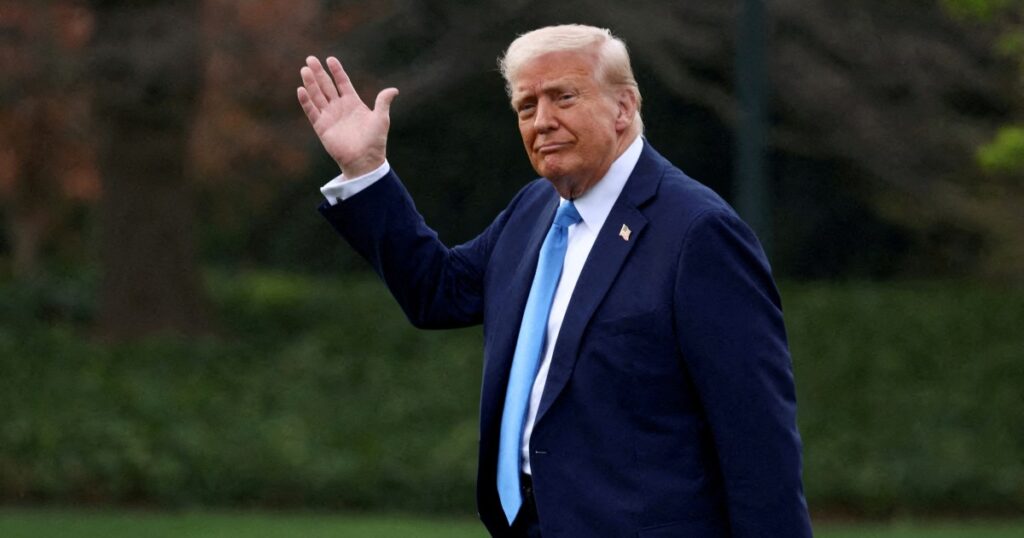
Donald Trump hints at exploring paths to a third term as United States president despite constitutional limits. US President Donald Trump has said he is “not joking” about seeking a third term in office, which is barred by the US Constitution. Speaking in a phone interview with NBC News on Sunday, Trump directly addressed speculation over a potential third term, saying, “No, I’m not joking. I’m not joking,” but added, “It is far too early to think about it.” “There are methods which you could do it, as you know,” he said, without elaborating on potential legal or political avenues. The US Constitution’s 22nd Amendment limits presidents to two four-year terms, whether consecutive or not. The 22nd Amendment says “no person shall be elected to the office of the president more than twice”. Trump was asked in the NBC interview about a scenario where his running mate, Vice President JD Vance, could assume office before stepping aside to allow him to take over. Trump acknowledged the possibility, stating, “That’s one” approach. “But there are others, too,” he added, hinting at alternative strategies without elaborating further. Advertisement ‘We’re working on it’ Overturning this amendment would require a two-thirds majority in both houses of Congress and ratification by three-quarters of the 50 US states. Trump, who began his second, non-consecutive term in January, has repeatedly alluded to extending his time in office. Some of his allies have also floated the idea of keeping him in power beyond 2028, while Trump himself has occasionally teased about the possibility, often in ways that taunt his political opponents. If he were to pursue another term in the 2028 election, Trump, who was the oldest president to be inaugurated in the US in January 2025, would then be 82 years old. The precedent of a two-term limit dates back to 1796, when George Washington voluntarily stepped down after two terms. This tradition remained largely unchallenged for over 140 years until Franklin D Roosevelt won a third term in 1940 amid the Great Depression and World War II. Roosevelt died months into his fourth term in 1945, prompting Congress to formalise term limits with the 22nd Amendment in 1951. Longtime Trump adviser Steve Bannon suggested in a March 19 interview with NewsNation that Trump may seek re-election in 2028. “We’re working on it,” Bannon said, adding that his team was exploring ways to reinterpret the definition of term limits to facilitate a third term. Adblock test (Why?)
Foreign aid rushed to quake-hit Myanmar as more than 1,600 killed
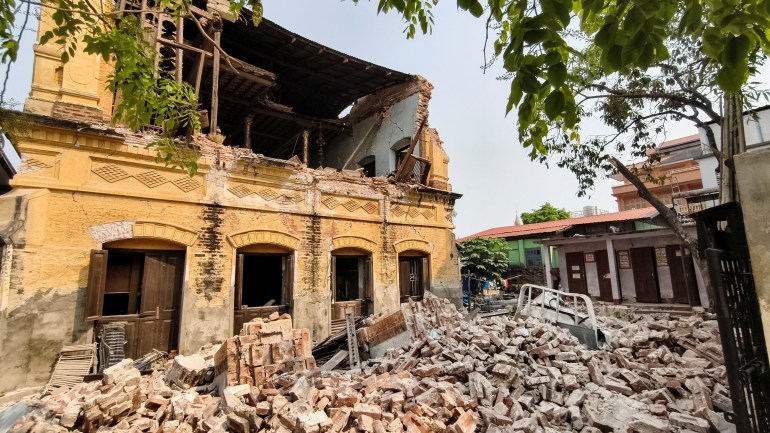
Foreign rescue teams and supplies have arrived in Myanmar to help the impoverished country cope with a magnitude 7.7 earthquake that killed more than 1,600 people and left thousands wounded. The deadly quake, followed by a second magnitude 6.4 tremor, hit midday on Friday with an epicentre near Mandalay, the country’s second-largest city, bringing down dozens of buildings and damaging infrastructure, such as the airport. Myanmar’s neighbours – including India, China, Malaysia, and Singapore – dispatched aircraft and warships carrying relief supplies and rescue teams. Thailand, where at least 17 people died due to the earthquake, also sent aid to Myanmar. A view shows debris next to a damaged building in Mandalay, Myanmar [Reuters] On Sunday, a convoy of 17 Chinese cargo trucks carrying critical shelter and medical supplies was expected to reach Mandalay, after making the arduous journey by road from Yangon. Beijing said it sent more than 135 rescue personnel and experts along with supplies such as medical kits and generators, and pledged about $13.8m in emergency aid. Two Indian C-17 military transport aircraft were able to land late on Saturday at Naypyidaw with a field hospital unit and some 120 personnel, who were then to travel north to Mandalay to establish a 60-bed emergency treatment centre, India’s Ministry of External Affairs said. Advertisement Russia’s Ministry of Emergency Situations said it had flown 120 rescuers and supplies to Yangon, and its Ministry of Health said Moscow has also sent a medical team. (Al Jazeera) The World Health Organization said it was mobilising its logistics hub in Dubai to prepare trauma injury supplies. The global health body said it was coordinating its earthquake response from its Geneva headquarters “because we see this as a huge event” with “clearly a very, very big threat to life and health”. The United States, the European Union and the United Kingdom also sent emergency aid. Meanwhile, an initial report on earthquake relief efforts issued on Saturday by the United Nations Office for the Coordination of Humanitarian Affairs (OCHA) warned that “severe shortage of medical supplies is hampering response efforts.” ‘No aid in sight’ “All military and civilian hospitals, as well as healthcare workers, must work together in a coordinated and efficient manner to ensure effective medical response,” Myanmar’s military leader Min Aung Hlaing said, according to state-run media. But in some of Myanmar’s hardest-hit areas, residents told the Reuters news agency that government assistance was scarce so far, leaving people to fend for themselves. The entire town of Sagaing near the quake’s epicentre was devastated, resident Han Zin said. “What we are seeing here is widespread destruction – many buildings have collapsed into the ground,” he said by phone, adding that much of the town had been without electricity since the disaster and that drinking water was running out. Advertisement “We have received no aid, and there are no rescue workers in sight.” In Mandalay, a rescue worker told Reuters most operations were being conducted by small, self-organised resident groups that lack the required equipment. Meanwhile, a magnitude 5.1 earthquake hit near Mandalay, the US Geological Survey said, with no casualties reported so far. Al Jazeera’s Tony Cheng, reporting from the city, said many people slept outside on Saturday night, fearing even brief aftershocks could collapse already severely damaged buildings. “People are choosing to sleep either on the streets next to their houses or in tent cities, gathered together for comfort.” Adblock test (Why?)
From beats to ballots: What political rap lyrics tell us

What role has hip-hop played in activism? From the 1980s, hip-hop has essentially enabled marginalised voices to break through to the mainstream. The song Girl (Cocaine) That’s Your Life, released by Too Short in 1985, explores the gritty reality of a woman entrenched in street culture, examining her daily struggles, difficult decisions, and the inevitable repercussions of her chosen lifestyle. Since age thirteen what have I seenA lotto of base heads straight coke fiendsSnorting, puffing, that’s the lifeBut it’s all over when you hit that pipe “We [the Black community in America] were getting these first-person narratives from voices that were not in the mainstream. The voices of the unheard were speaking through rap. Instead of rioting they now had a platform to express themselves,” explained Arnold. In 1987, New York hip-hop rap group Public Enemy, known for raising political issues, media manipulation, and systemic racism in their lyrics, released their debut album, Yo! Bum Rush the Show. The group’s subsequent album, It Takes a Nation of Millions to Hold Us Back (1988) established its legacy in both musical achievement and social advocacy. In Compton, California, N.W.A (Niggaz With an Attitude) release of F**k the Police, which featured on its 1988 album Straight Outta Compton, addressed systemic issues of police brutality and racial profiling. F–k the police comin’ straight from the undergroundA Young nigga got it bad ’cause I’m brownAnd not the other colour so police thinkThey have the authority to kill a minority The lyrics prompted widespread outrage among conservatives, culminating in the FBI sending a formal letter of condemnation to N.W.A’s record label regarding the song’s perceived anti-law enforcement message. Even non-political rappers began to incorporate political messages into their songs, said Arnold, demonstrating how deeply political discourse had permeated hip-hop culture. This influence was so pervasive that artists with no explicit ideological stance found themselves engaging with political themes. “There are only a few artists and groups who are political ideologues. Everything else is occasional political commentary,” said Arnold. “In terms of political ideology, you have Public Enemy, Paris, the Coup, maybe Boogie Down Productions, in the late 80s, early 90s. In the early 2000s, you have Dead Prez and Immortal Technique. On top of that, you have Ice Cube developing a political consciousness that’s evident on his first and second solo albums but then fades into the background on subsequent albums.” Which major incidents have inspired political hip-hop lyrics? One was the 1991 acquittal of four White Los Angeles police officers who had been videotaped severely beating Rodney King, a Black man. The verdict led to six-day-long riots in Los Angeles, resulting in more than 60 deaths, 12,000 arrests and almost $1bn in property damage. The incident inspired Ice Cube to write the song We Had to Tear This Mothaf**a Up, which was released on his 1992 album, The Predator: Not guilty, the filthy, devils tried to kill meWhen the news get to the hood the ni**as will beHotter than cayenne pepper, cuss, bustKickin up dust is a must His former N.W.A. rap mate, Dr Dre, also released a response to the LA riots in his 1992 album The Chronic, The Day the Nig**az Took Over: Mi not out for peace and mi not Rodney KingDe gun goes click, mi gun goes bangDem riot in Compton and dem riot in Long BeachDem riot in L.A. ’cause dem no really wanna seeNiggas start to loot and police start to shoot The first line explicitly rejects calls for peace and expresses the frustrations of the Black community. King himself took a more conciliatory tone during a news conference on May 1, 1992, during the riots. Hoping to quell the violence, he famously stated: “Can’t we all just get along?” “Police brutality is a theme. It’s not just one thing, it’s not just: Oh, Rodney King got beat up. All of these people got beat up. They’re still getting beat up. And it didn’t end in 1992,” said Arnold. Another incident which inspired lyrics was the fatal shooting of Trayvon Martin by George Zimmerman, a neighbourhood watch volunteer in Sanford, Florida, in February 2012. The following year, Zimmerman was acquitted. The shooting ignited national outrage, raising intense discussions about racial profiling, gun control legislation, and Florida’s controversial “Stand Your Ground” law. Hip-hop rapper Plies, who co-founded the independent label Big Gates Records, released We Are Trayvon in 2012, promoting the Trayvon Martin Foundation started by Trayvon’s parents with the goal of raising awareness about gun violence. I never thought that wearing no hoodie, could cost you your lifeAnd I never thought you could just kill somebody and go out the same night. (same night)Every dog that you see that bark, don’t mean that he biteAnd everything that’s Black ain’t even, everything that’s pure ain’t white [embedded content] In 2014, 17-year-old Laquan McDonald was fatally shot by Chicago Police Officer Jason Van Dyke. Police dash-cam footage later emerged, revealing that McDonald had been walking away from Van Dyke when the officer fired 16 shots at the teenager. The withholding of this video evidence triggered huge demonstrations and public outcry. Two years after the incident, rapper Vic Mensa released 16 Shots: He never had a chance, and we all know it’s cause he BlackShot ’em sixteen times, how f*cked up is that?Now, the police superintendent wanna double backCops speeding up to the block like a running back Officer Van Dyke was found guilty of second-degree murder and 16 counts of aggravated battery in 2018 but was released in 2022 after serving three years of his sentence. In 2015, Sandra Bland, a 28-year-old African American woman, was pulled over by law enforcement in Prairie View, Texas. What began as a routine traffic stop for failing to signal a lane change quickly spiralled into a confrontation that resulted in her arrest on charges of allegedly assaulting a police officer. Three days later, officials discovered her lifeless body in her cell at Waller County Jail. Although authorities determined she died by suicide through hanging,
‘Eid of Sadness’: Gaza marks festival amid Israeli bombings, lack of food
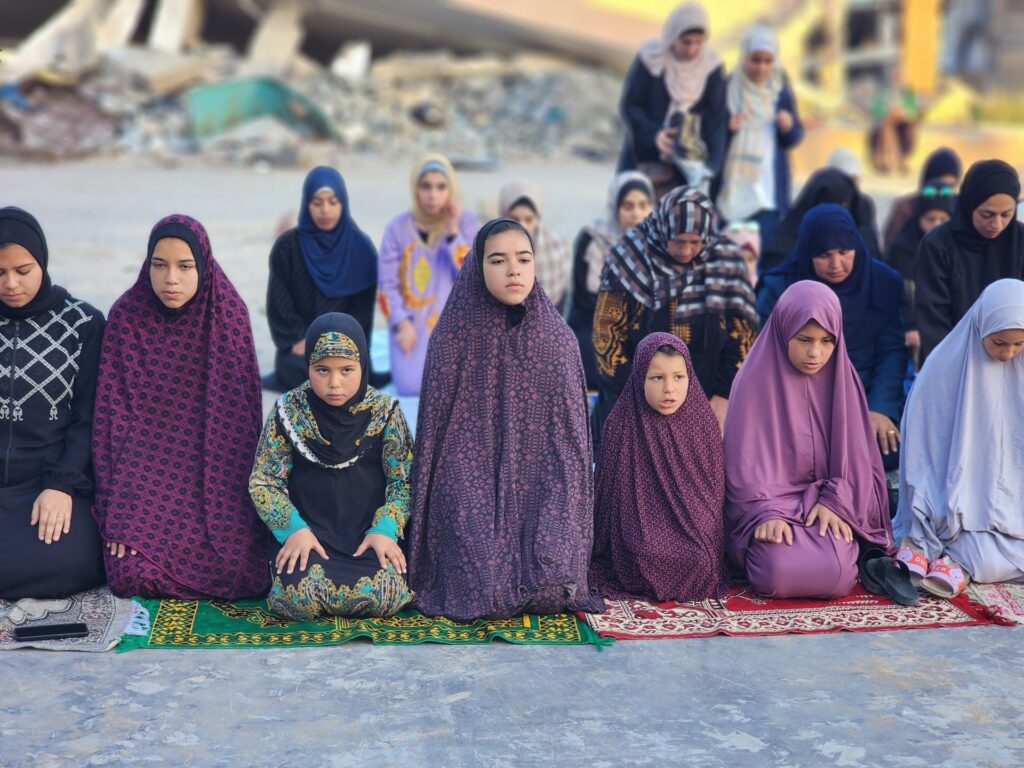
Palestinians in the Gaza Strip had little to celebrate as they marked Eid al-Fitr with rapidly dwindling food supplies and no end in sight to the Israeli bombardment. Many held prayers outside demolished mosques on the day marking the end of the fasting month of Ramadan, as at least 20 Palestinians were killed on Sunday, most of them women and children. The Muslim festival is supposed to be a joyous occasion, when families gather for feasts and buy new clothes for children – but most of Gaza’s two million Palestinians are just trying to survive. “It’s the Eid of Sadness,” Adel al-Shaer said after attending outdoor prayers in the central town of Deir el-Balah. “We lost our loved ones, our children, our lives, and our futures. We lost our students, our schools, and our institutions. We lost everything.” Twenty members of his extended family have been killed in Israeli attacks, including four young nephews just a few days ago, he said as he broke into tears. On March 18, Israel abruptly ended a fragile two-month ceasefire as it resumed its intense bombing campaign and ground operations in Gaza. Israel has since killed hundreds of Palestinian civilians and has allowed no food, fuel or humanitarian aid to enter for four weeks. Advertisement Arab mediators are trying to get the truce back on track, and Hamas said on Saturday it had accepted a new proposal from Egypt and Qatar, the exact details of which were not immediately known. Israel said it had advanced its own proposal in coordination with the United States, which has also been mediating. Israel’s genocide in Gaza has killed more than 50,000 Palestinians, according to the enclave’s Health Ministry. Adblock test (Why?)
Video: Syria forms new transitional government
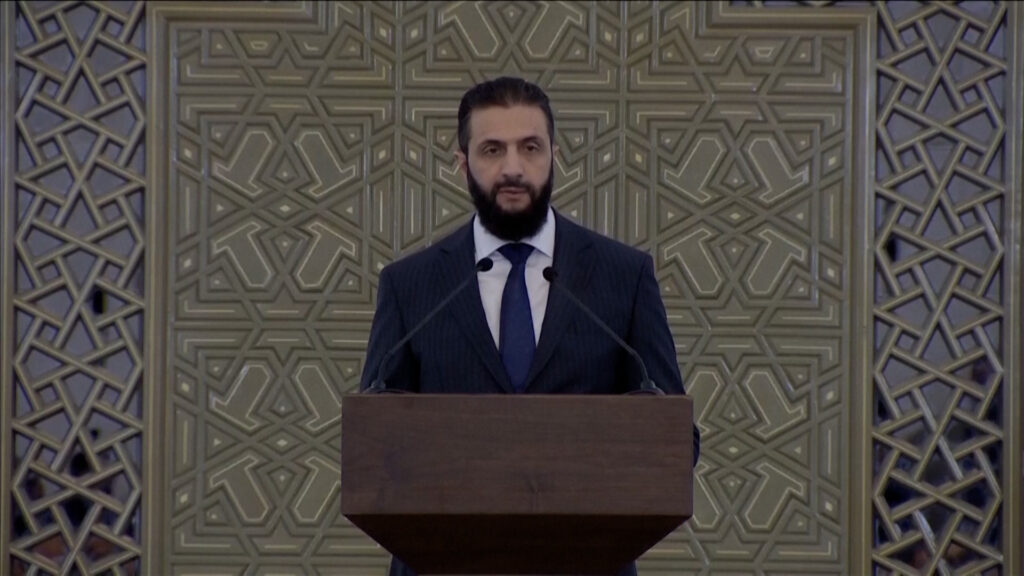
NewsFeed Syria’s interim President Ahmed al-Sharaa has formed a new transitional government tasked with rebuilding state institutions, following the overthrow of Bashar al-Assad in December. The cabinet includes members from Syria’s minority communities, with Alawite, Druze and Christian ministers sworn in. Published On 30 Mar 202530 Mar 2025 Adblock test (Why?)
Moreno defeats Erceg at UFC Mexico City Fight Night

Brandon Moreno defeats Steve Erceg by unanimous decision in their main event flyweight title eliminator bout in Mexico City. Former two-time flyweight champion Brandon Moreno erased a stigma from his last Ultimate Fighting Championship Mexico outing, winning a unanimous decision against Steve Erceg in a flyweight title eliminator bout at the UFC Fight Night main event, sweeping the cards 49-46, 49-46, 49-46 over the former flyweight title challenger in Mexico City. Although Saturday’s fight was closely competitive, Moreno won all but one round – Round 3 – on all three cards as the 31-year-old kept the fight standing and made Erceg come to him throughout the bout. Moreno never came close to securing a finish against his opponent, but he outlanded his adversary 82-67 in total strikes, ensuring the Australian-born Erceg would not spring an upset against the hometown favourite. Post-fight, Moreno called out UFC chief business officer Hunter Campbell regarding guidance for his next fight. Although Moreno did not name a would-be opponent explicitly, he requested to be part of UFC 320, scheduled for September 13 in Guadalajara, Mexico. Advertisement “I think I can move the needle,” Moreno said after the fight. Erceg has dropped three in a row after a rapid UFC start, going back to the drawing board again. “I’ll be back,” Erceg said. In the night’s co-main event, Manuel Torres overwhelmed 12-year UFC veteran Drew Dober to secure a first-round technical knockout, where Dober took at least 16 unanswered shots to the side of the head before the referee stopped the fight. Torres is back in the win column for the first time in more than a year, whereas Dober has lost four of his last five dating to May 2023. In an earlier fight on Saturday, Mexico’s rising UFC bantamweight star Raul Rosas Jr survived a late scare from Vince Morales to fend off a third-round D’arce choke submission and win a unanimous decision 29-28, 29-28, 29-28. Rosas Jr ignited his hometown crowd to earn his fifth win over his last six appearances, using his crisp boxing to frustrate Morales, who had not earned a win in mixed martial arts since last August before being re-signed to the promotion shortly thereafter. Brandon Moreno, right, in action during his fight against Steve Erceg at the Arena CDMX, Mexico City, on March 29, 2025 [Henry Romero/Reuters] Adblock test (Why?)
Japan, US share ‘warrior ethos’ to deter China, says Pentagon’s Hegseth
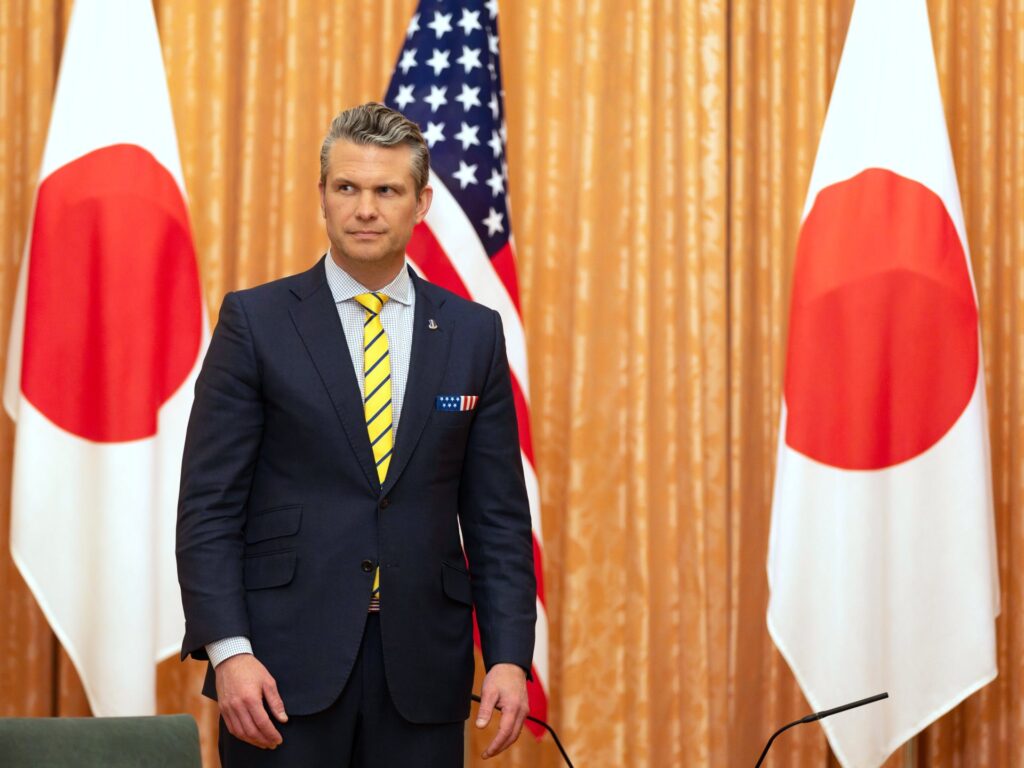
US Defense Secretary Pete Hegseth says Japan is an ‘indispensable partner’ against Beijing in the Asia Pacific. United States Defense Secretary Pete Hegseth says his country and Japan share a “warrior ethos” in tackling Chinese aggression across the Taiwan Strait. In a meeting in Tokyo on Sunday with his Japanese counterpart, Gen Nakatani, Hegseth said Japan was their “indispensable partner in deterring communist Chinese military aggression”. “America is committed to sustaining robust, ready and credible deterrence in the Indo-Pacific, including across the Taiwan Strait,” Hegseth said. In the past few years, China has increased its military presence around Taiwan, including near-daily air incursions, and has not ruled out using force to bring Taiwan under its control. Last year, former President Joe Biden’s administration announced that the US military in Japan would be revamped to increase coordination with Tokyo’s forces in what the two countries described as Beijing being their “greatest strategic challenge”. However, as President Donald Trump has pushed for an “America first” policy, analysts warn that US security commitments in the region could be affected. Advertisement Japan currently hosts 50,000 US military personnel and squadrons of fighter jets stationed mainly in Okinawa on the east of Taiwan. Earlier in March, Trump criticised the US-Japan security alliance and said while the US protects them, they do not protect Washington. “I actually ask, who makes these deals?” he said. Military spending Hegseth blamed the Biden administration for creating a “vacuum, a perception that America was not strong and wasn’t prepared to deter conflicts from starting”. He said Washington would “build an alliance so robust that both the reality and the perception of deterrence is real and ongoing, so that the Communist Chinese don’t take the aggressive actions that some have contemplated they will”. Alongside Hegseth’s visit, there are expectations that Trump will push the US allies in Asia to increase military spending and improve their defence capabilities. Hegseth and Nakatani agreed to accelerate a plan to jointly produce beyond-visual-range air-to-air AMRAAM missiles and to consider collaborating on the production of SM-6 surface-to-air defence missiles to help ease a shortage of munitions, Nakatani said. Hegseth said Washington was “confident Japan will make the correct determination of what capabilities are needed inside our alliance to make sure we are standing shoulder to shoulder”. However, the push to increase spending comes at the same time that Tokyo is reeling from Trump’s decision to impose a 25 percent tariff on auto imports that will take effect on April 3. Advertisement Adblock test (Why?)
Elon Musk protesters gather at Tesla showrooms
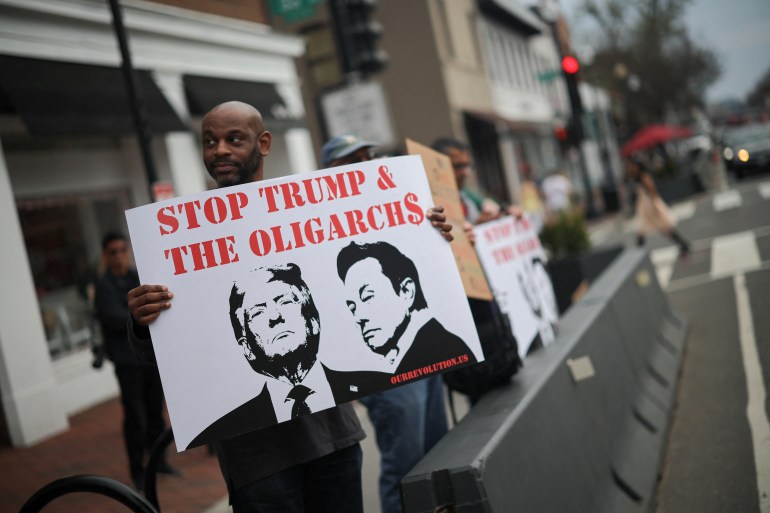
The protesters are trying to escalate a movement targeting Tesla dealerships and vehicles in opposition to Musk. Crowds protesting billionaire Elon Musk’s purge of the US government under President Donald Trump have been congregating outside Tesla dealerships throughout the US, and in some cities in Europe, in the latest attempt to put a dent in the enormous fortune of the world’s richest man. The protesters are trying to escalate a movement targeting Tesla dealerships and vehicles in opposition to Musk’s role as the head of the newly created Department of Government Efficiency, or DOGE, where he’s gained access to sensitive data and shut down entire agencies as he attempts to slash government spending. Most of Musk’s estimated $340bn fortune consists of the stock he holds in the electric vehicle company that he continues to run while also working alongside Trump. Tesla Takedown has been organised by a group that includes disillusioned owners of the carmaker’s vehicles, celebrities such as actor John Cusack, and at least one Democratic Party lawmaker, Representative Jasmine Crockett from Dallas. Earlier protests were somewhat sporadic. Advertisement But Saturday’s demonstrations mark the first attempt to surround all 277 of the carmaker’s showrooms and service centres in the US in hopes of deepening a recent decline in the company’s sales. In front of the New York store in Manhattan, between 500 and 1,000 people gathered, demanding Musk’s resignation from government. The protesters were gathered at the call of environmentalists from Planet Over Profit, who believe that “stopping Musk will save lives and protect our democracy.” For Amy Neifeld, a 70-year-old American psychologist who had not taken to the streets since the anti-Vietnam War protests in the 1970s, Elon Musk is leading the United States towards “fascism”. “I’m Jewish and I grew up with a deep awareness of what fascism is. And it’s only gotten worse since the election” of Donald Trump, she told the AFP news agency. “We have to do something very quickly, because he’s moving very quickly,” Neifeld added. A demonstrator holds a sign featuring images of Tesla CEO Elon Musk and US President Donald Trump, during a rally against Elon Musk during a protest outside a Tesla dealership in the Georgetown neighbourhood of Washington, DC, US [Carlos Barria/Reuters] In London, about two dozen protesters held signs lambasting Musk outside a Tesla dealership as passing cars and trucks tooted horns in support. One of the signs displayed at the London protest showed a photo of Musk next to an image of Adolf Hitler making the Nazi salute — a gesture that Musk has been accused of reprising shortly after Trump’s January 20 inauguration. Advertisement A person in a tyrannosaurus rex costume held another sign with a picture of Musk’s straight-arm gesture that said, “You thought the Nazis were extinct. Don’t buy a Swasticar.” “We just want to get loud, make noise, make people aware of the problems that we’re facing,” Cam Whitten, an American who showed up at the London protest told The Associated Press. Some people opposed to Musk have gone beyond protests and set Tesla vehicles on fire and committed other acts of vandalism that US Attorney General Pam Bondi has decried as “domestic terrorism”. Musk indicated he was dumbfounded by the attacks during a March 20 company meeting and said the vandals should “stop acting psycho”. Crockett and other Tesla Takedown supporters have been stressing the importance of Saturday’s protests to remain peaceful. But police were investigating a fire that destroyed seven Tesla vehicles in northwestern Germany early Saturday morning. It was not immediately clear if the blaze, which was extinguished by firefighters, was related to the Tesla Takedown protests. Meanwhile, a growing number of consumers who bought Tesla vehicles before Musk allied himself with Trump have been looking to sell or trade in their cars, while others have slapped on bumper stickers seeking to distance themselves from the billionaire’s efforts to prune or shut down government agencies. But Musk did not appear concerned about an extended slump in sales of new Tesla cars in his March 20 address to employees. He reassured the workers that the company’s Model Y, which is undergoing a refresh, would remain “the best-selling car on Earth again this year.” Adblock test (Why?)
US woman released by Taliban in Afghanistan: Former US envoy
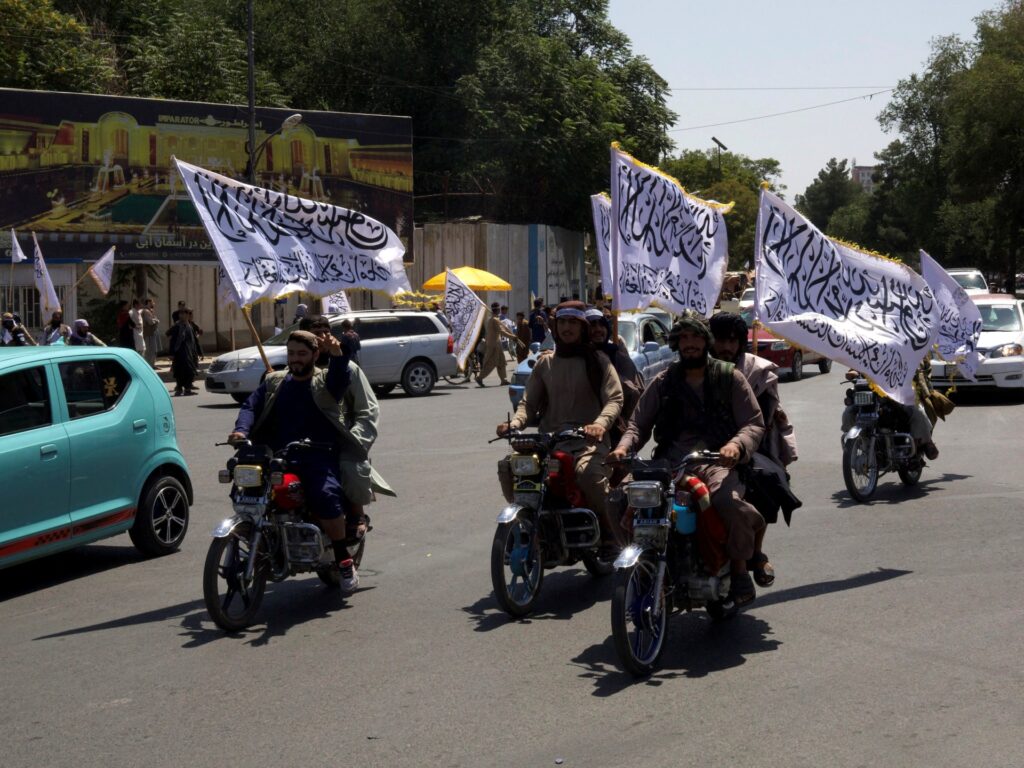
American citizen Faye Hall has been released by the Taliban after she was detained earlier this year. An American woman has been freed by the Taliban in Afghanistan after she, two Britons and their Afghan translator were detained earlier this year, Washington’s former envoy to Kabul, Zalmay Khalilzad, has said. She is the fourth US citizen released by the Taliban since January, as part of agreements brokered by Qatar. “American citizen Faye Hall, just released by the Taliban, is now in the care of our friends, the Qataris in Kabul, and will soon be on her way home,” Khalilzad, who has been part of a US delegation working on Taliban captive releases, wrote on X on Saturday. American citizen Faye Hall, just released by the Taliban, is now in the care of our friends, the Qataris in Kabul, and will soon be on her way home. Thank you, #Qatar, for your ongoing and steadfast partnership. #USA #Afghanistan pic.twitter.com/cMSBuaq7qR — Zalmay Khalilzad (@realZalmayMK) March 29, 2025 Hall’s release comes just days after George Glezmann, an American detained in Afghanistan for more than two years, was released by the Taliban earlier this month, and arrived in the United States, where he reunited with his wife and was greeted by a welcoming party that included his former cellmate. Advertisement The Taliban called Glezmann’s release a “goodwill gesture” reflecting its willingness to engage with the United States “on the basis of mutual respect and interests”. The Taliban has previously described the release of US detainees as part of its global “normalisation” effort. The group remains an international pariah since its lightning takeover of Afghanistan in August 2021: No country has officially recognised the Taliban government, although several countries continue to operate diplomatic facilities in the country. Afghanistan’s takeover came as the Joe Biden administration oversaw a withdrawal outlined by the first administration of US President Donald Trump. The Republican leader negotiated with the Taliban in 2020 to end the war in Afghanistan, and he agreed to a 14-month deadline to withdraw US troops and allied forces. The agreement was controversial for leaving out the Western-backed Afghan government, which was toppled amid the US’s chaotic exit from the country in 2021. The Trump administration is yet to articulate a clear policy for how it will approach dealings with the Taliban government during the president’s second term. Trump has been a regular critic of how the Biden administration oversaw the withdrawal from Afghanistan. A bomb attack at Kabul’s airport in the final days of the chaotic withdrawal killed at least 170 Afghan civilians seeking to flee the country, as well as 13 US soldiers. Adblock test (Why?)
Month of giving: Syrians in Ethiopia keep Ramadan iftar tradition alive
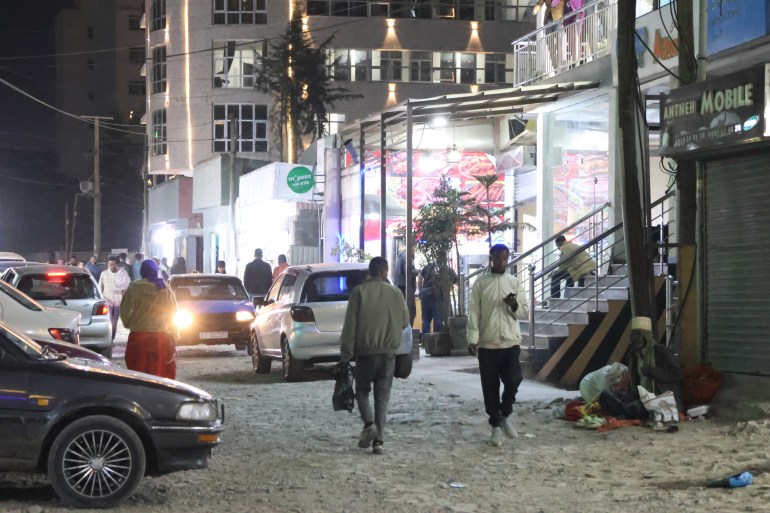
Addis Ababa, Ethiopia – Images of old Damascus and Aleppo adorn the walls of a modest restaurant tucked into Bole Michael, a working-class neighbourhood near Addis Ababa’s international airport. Chatter in Arabic and Amharic fills the air, mingling with the sizzling of a grill roasting a giant shawarma skewer and oil crackling around crunchy kebeiba (bulgur and ground meat balls). In the kitchen, Syrian chef Ahmed Ibrahim and his two assistants prepare for the evening rush. As the sun begins its descent, they carefully fill small bowls with hummus and dates for guests in the restaurant and pack takeaway meals for those who stop by seeking a free meal. In the spirit of the Muslim holy month of Ramadan, Ibrahim says he is happy to give back. “When I first came to Ethiopia in 2020, I didn’t have a penny to my name. I worked in restaurants until I could open my own. I married an Ethiopian woman, and now, I’m a father of two daughters,” Ibrahim tells Al Jazeera. “This country has become a home to me.” Advertisement More than 5.5 million Syrians have fled their homeland since 2011, when war broke out after the government cracked down on a popular uprising. Most Syrians who left sought refuge in neighbouring countries like Lebanon, Turkiye, and Egypt. Bole Michael has become a hub for Syrians in Addis Ababa [Samuel Getachew/Al Jazeera] But some ventured further, to countries like Ethiopia, where fewer than 1,500 Syrians reportedly live. Al Jazeera approached Ethiopia’s Immigration and Citizenship Services for an official estimate, but the agency declined to respond. According to local media, many Syrians remain unregistered and live in limbo. Despite these challenges, Bole Michael has become known as a Syrian neighbourhood. More Syrian refugees have found their way there, carving out a familiar rhythm. Its streets, largely unpaved and strewn with pebbles and dust, have long been home to Somali, Sudanese and Yemeni refugees – some of the more than one million refugees living in Ethiopia. In recent years, Syrian businesses have started adding their accents and flavours to the bustling area. Ibrahim’s restaurant, named Syria, is one such business. The 34-year-old arrived in Ethiopia five years ago after a three-year stay in Sudan was cut short by political unrest there. Opening the restaurant, he says, was a way to recreate a slice of home in exile, a place where he could serve the dishes of his homeland to those who would appreciate them. During Ramadan, that mission takes on even greater meaning: giving. Salem Berhanu, a regular at Syrian restaurants in Bole Michael, enjoys dinner with Syrian friends [Samuel Getachew/Al Jazeera] “It would’ve been great if I could host a free iftar for everyone in need, like the ones I grew up seeing in Syria,” says Ibrahim, referring to a centuries-old tradition across the Middle East, where banquets are set up on the streets to offer free food to passersby breaking their Ramadan fast at sunset. Advertisement “But that would be difficult here, since poverty is widespread and we’re just a small business,” he adds. “Instead, during Ramadan, we try not to turn anyone away,” he says, explaining that the restaurant serves free meals to those in need during the holy month. “It’s about community and helping however you can,” he says. Nearly a quarter of Ethiopia’s 124 million people live below the poverty line. A taste of generosity from home As the adhan echoes from a nearby mosque, signalling the end of the fast, Ibrahim begins welcoming diners. Among them is Zeynab Mohammed, a Syrian mother of four who arrived in Ethiopia last year after fleeing Khartoum amid Sudan’s continuing civil war. Since settling in Addis Ababa, she has tried to make a living selling homemade perfume on the streets. Closing her eyes briefly in prayer, she digs into a fragrant chicken shawarma wrap with fries. About 30 percent of Ethiopians are Muslim. Here, thousands gather for the end of Ramadan last year in Addis Ababa’s Meskel Square [Tiksa Negeri/Al Jazeera] “Life here isn’t easy,” Zeynab says quietly. “But moments like this remind me of home. The generosity, the shared meals – it’s something we carried with us from Syria, and it’s still alive here.” Sitting next to her is Salem Berhanu, an Ethiopian friend and familiar face in the neighbourhood. Berhanu often joins newcomers at local eateries, occasionally paying for their food when he can. He is well-known among local children who gather around him, chatting in Amharic. Advertisement Berhanu says he enjoys seeing Syrians in Ethiopia. “It’s beautiful, especially during Ramadan, because it gives us a chance to meet new people and have meaningful conversations,” he says. While many Syrians say they’ve felt welcome in Ethiopia, the challenges remain immense. At a nearby table, another Syrian refugee, Aisha Abdul, recalls her early years in the country. She arrived in Addis Ababa after a perilous bus journey from Sudan, during which she hid from fighters who sometimes attacked convoys. Three years ago, she and other worshippers at a local mosque in Bole Michael were invited to an iftar hosted by Ethiopian Prime Minister Abiy Ahmed – a moment that, for her, felt like a lifeline after years of displacement. Now, she sells scented charcoal alongside other Syrian refugees, often at traffic stops and crowded gathering spots. The mustachioed air dancer tells passers-by that Syrian delicacies can be found in this small, unassuming spot [Sawra Tafari/Al Jazeera] On an average day, she says, she makes about $5, though on good days, she earns more with the help of her children. “Ethiopia is a very welcoming country, and the people are wonderful. But it can also feel like a dead end,” she says. “There’s no assistance, and finding a job is difficult, so many of us end up doing humiliating work just to survive.” Gratitude in a new land In Bethel, a calmer, more affluent neighbourhood on Addis Ababa’s western outskirts, an inflated air dancer bearing a trademark thick mustache and red