

Huge Istanbul protests over Imamoglu’s arrest and imprisonment in Turkiye
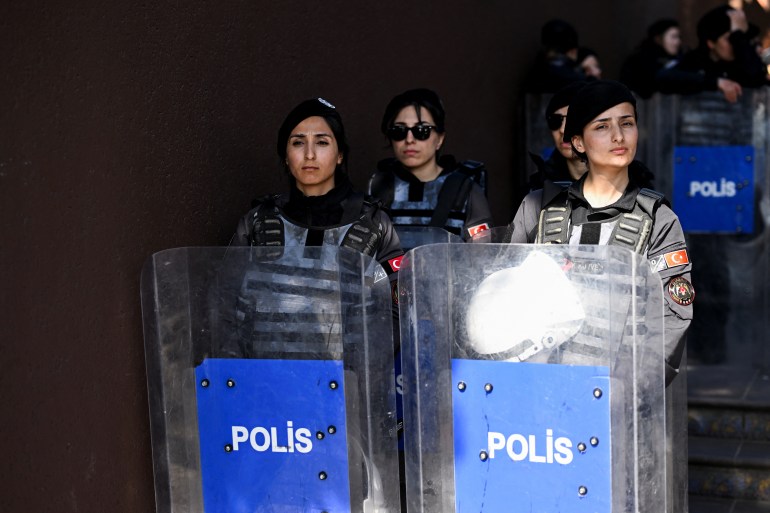
CHP leader calls for former mayor’s release, denounces arrests of protesters in growing clashes over Turkish democracy. Hundreds of thousands of protesters in Turkiye’s Istanbul have taken to the streets again, rallying against the government’s decision to imprison the city’s popular mayor. The mass demonstration on Saturday was the latest in a wave of nationwide protests that have gripped parts of the country since the arrest of Ekrem Imamoglu on March 19. The now ex-mayor, considered a key rival to President Recep Tayyip Erdogan, was detained on corruption and terrorism charges. The terrorism charge was initially dismissed by the court. A letter from Imamoglu was read out at the rally to loud cheers from the crowd. “I have no fear, you are behind me and by my side. I have no fear because the nation is united. The nation is united against the oppressor,” the letter said. “They can put me in jail and try me as much as they want, the nation has shown that it will crush all traps and plots”, it added. The government rejects accusations from critics that the move against Imamoglu was politically motivated, insisting that the judiciary is independent and free of political interference. Advertisement This week, Erdogan denounced the rallies. “Those who spread terror in the streets and want to set fire to this country have nowhere to go. The path they have taken is a dead end,” he said. Those demonstrating in Istanbul’s streets on Saturday had an opposing view: “We must speak out against injustice and unlawfulness. I am 25 and have only known one government – I want to see change,” a protester told Al Jazeera. “A state is strong only when it’s fair, but I am not hopeful. The judiciary is not independent,” said another one. Police stand guard during a rally to protest against the arrest of Istanbul Mayor Ekrem Imamoglu as part of a corruption investigation, in Istanbul, Turkiye [Dylan Martinez/Reuters] Imamoglu’s detention, and later formal arrest over the corruption charges on March 23, prompted nationwide protests despite assembly bans, police crackdowns, and legal prosecution by authorities. “They’ve detained hundreds of our children, thousands of our youths … arrested hundreds of them,” said Ozgur Ozel, the leader of the Republican People’s Party (CHP) that organised the protest. “They only had one goal in mind: to intimidate them, terrify them, make sure they never go out again.” Nearly 1,900 people have been detained since March 19, and pro-government media reported Friday that public prosecutors had requested up to three years imprisonment for 74 of them. “For many people here, this is not just about but about democracy, especially for students. Attending the rallies is a way for them to show resilience and protect their freedoms for their future,” said Al Jazeera’s Sinem Koseoglu, reporting from the protest. Ozgur Ozel, leader of Turkiye’s main opposition Republican People’s Party (CHP) attends a rally to protest against the arrest of Istanbul Mayor Ekrem Imamoglu as part of a corruption investigation, in Istanbul, Turkiye [Umit Bektas/Reuters] Police kept their distance at Saturday’s rally with no new arrests reported. Ozel called for the immediate release of Imamoglu, as well as for other political prisoners, including Selahattin Demirtas, a former presidential candidate and founder of the pro-Kurdish Peoples’ Equality and Democracy Party, or DEM. Advertisement “In Turkiye, we envision presidential candidates will not be imprisoned,” added Ozel. Last Sunday, hours after he had been formally arrested, Imamoglu won a symbolic primary to be the CHP‘s candidate in a presidential election currently scheduled for 2028, but which is likely to take place earlier. Ozel noted they would begin collecting signatures for Imamoglu’s release and also to demand an early election. Other speakers at Saturday’s rally included Dilek Imamoglu, the imprisoned mayor’s wife, as well as Ankara Mayor Masur Yavas, another high-profile CHP figure. Adblock test (Why?)
Tufts University student can’t be deported to Turkiye without court order
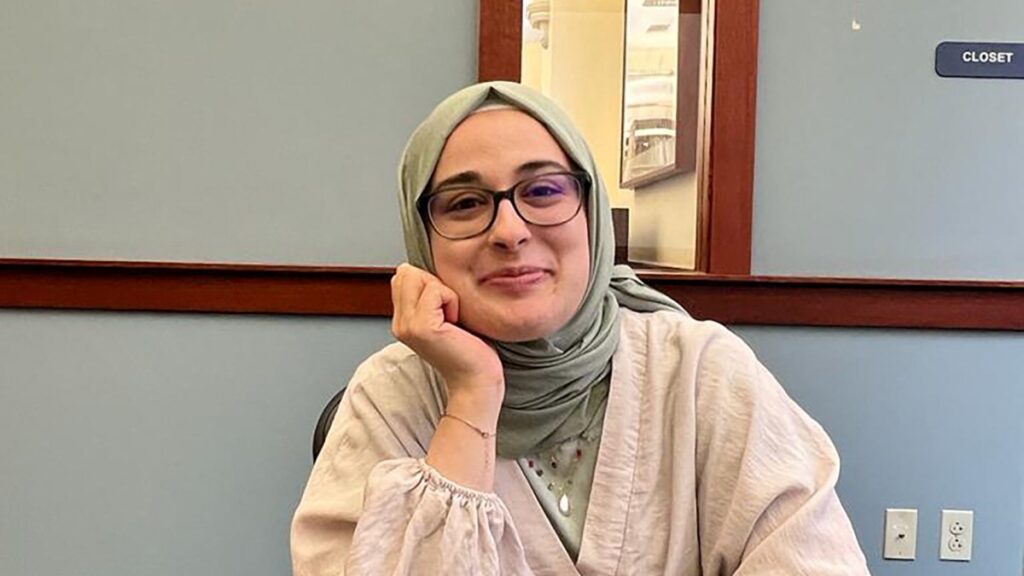
Pro-Palestine student Rumeysa Ozturk was arrested on Tuesday by US immigration authorities in Massachusetts. A federal judge in Massachusetts has temporarily barred the deportation of a Turkish doctoral student at Tufts University, who voiced support for Palestinians in Israel’s war in Gaza and was detained by US immigration officials. Rumeysa Ozturk, 30, was forcibly taken into custody by masked federal agents in broad daylight near her Massachusetts home on Tuesday. Immigration officials also revoked her visa. On Friday, US District Court Judge Denise Casper gave the government until Tuesday evening to respond to an updated complaint filed by Ozturk’s lawyers. “To allow the Court’s resolution of its jurisdiction to decide the petition, Ozturk shall not be removed from the United States until further order of this court,” the judge wrote. Ozturk’s arrest came a year after she co-authored an opinion piece in Tufts’ student newspaper criticising the university’s response to calls by students to divest from companies with ties to Israel and to “acknowledge the Palestinian genocide”. Friends have said Ozturk was not otherwise closely involved in pro-Palestine protests against Israel. Advertisement A lawyer soon after sued to secure her release, and on Friday, the American Civil Liberties Union joined her legal defence team, filing a revised lawsuit saying her detention violates her rights to free speech and due process. On Saturday, Oncu Keceli, a spokesperson for Turkiye’s Ministry of Foreign Affairs, said that efforts to secure Ozturk’s release continued, adding consular and legal support was being provided by Turkish diplomatic missions in the US. “Our Houston Consul General visited our citizen in the center where she is being held in Louisiana on March 28. Our citizen’s requests and demands have been forwarded to local authorities and her lawyer,” Keceli said in a post on X. US President Donald Trump has pledged to deport foreign pro-Palestinian protesters and has accused them, without providing evidence, of supporting Hamas, being anti-Semitic and posing foreign policy hurdles. Protesters, including some Jewish groups, say the Trump administration conflates their criticism of Israel’s assault on Gaza and their advocacy for Palestinian rights with anti-Semitism and support for Hamas. Several students and protesters have had their visas revoked by the Trump administration, which says it may have revoked more than 300 visas. Adblock test (Why?)
How stable is Lebanon’s peace – after Israel attack on Beirut?
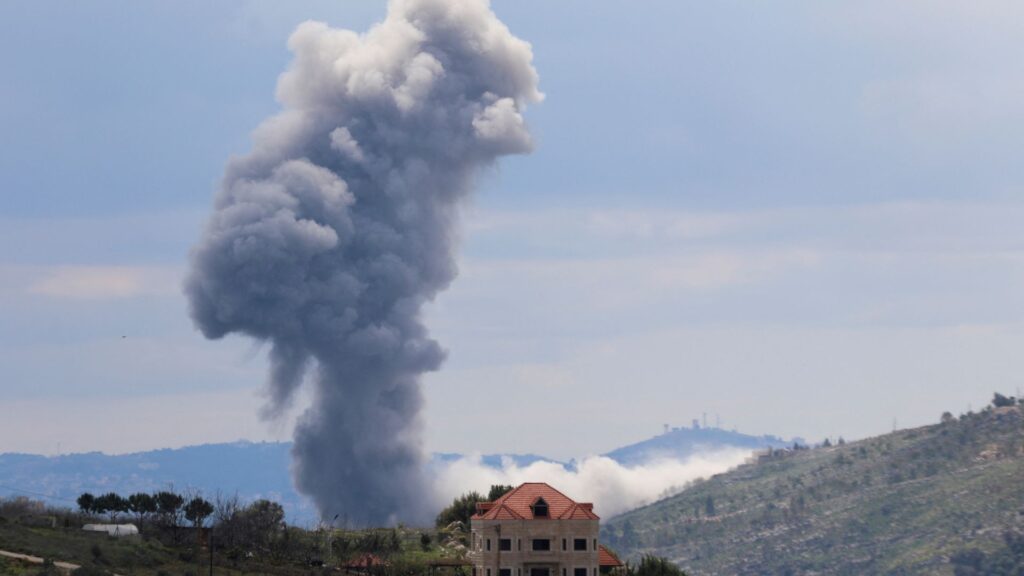
Country on edge after Israeli PM Benjamin Netanyahu warns of more possible attacks. Israel bombs the southern suburbs of Beirut – the first air strike on the Lebanese capital since November’s ceasefire. Hours earlier, rockets were fired at Israel from southern Lebanon. After numerous ceasefire breaches by Israel in four months, how serious is this one? Presenter: Cyril Vanier Guests: Ali Rizk – Security affairs analyst. Lorenzo Kamel – Associate professor of international history at the University of Turin. Sami Nader – Director at the Levant Institute for Strategic Affairs. Adblock test (Why?)
A Reel War: Israeli filmmaker’s search for stolen Palestinian films

An Israeli filmmaker uncovers seized PLO archives, raising questions about Palestinian heritage and identity. Was Palestinian history carefully recorded by the earliest 20th-century filmmakers as a way of preserving their heritage? Or were they, as some Israelis claim, simply disorganised amateurs operating on basic equipment in a primitive society? In this documentary, Israeli researcher and filmmaker Karnit Mandel uncovers previously unseen footage of Palestinian life and history in a box of old VHS tapes. The cassettes are a small sample from a huge archive seized from the PLO during Israel’s 1982 invasion of Lebanon. Mandel tries to retrieve it from the Israeli army but comes up against overwhelming obstacles and bureaucracy. She hears a range of contrasting views, from Palestinians who describe a well-developed film industry in the 1930s to dismissive Israeli historians who say Palestinian cinema never existed at all. In the end, Mandel is forced to abandon her search – but it highlights the continuing struggle for narrative control over Israel’s occupation of Palestinian territory. Adblock test (Why?)
Hundreds of Muslims feared dead in Myanmar earthquake, mosques destroyed
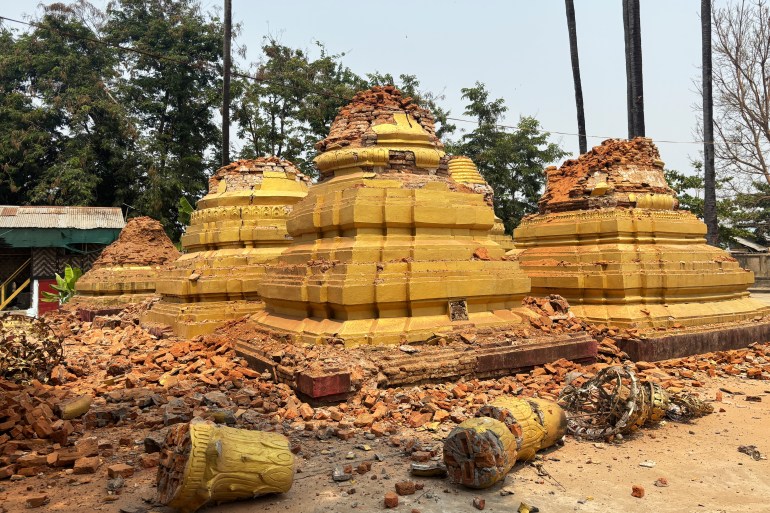
Hundreds of Muslim worshippers are feared to be among the more than 1,600 people who died in a powerful earthquake which struck central Myanmar when they had gathered at mosques for prayers during Ramadan. According to the shadow National Unity Government, more than 50 mosques across the country also sustained damage when the magnitude 7.7 earthquake struck on Friday. Htet Min Oo was performing ritual ablutions before Ramadan prayers at a mosque next to his house in Mandalay. His home collapsed along with part of the mosque, trapping half his body with the rubble of a wall that buried two of his aunts. Residents raced to pull them out, he said, but only one survived. The 25-year-old told the Reuters news agency, that his two uncles and his grandmother were also trapped under piles of concrete. With no heavy equipment available, he tried desperately to clear the rubble with his hands but could not shift it. “I don’t know if they are still alive under the debris. After so long, I don’t think there’s any hope,” he said on Friday. Advertisement “There’s too much rubble and no rescue teams have come for us,” he added, his voice shaking as he broke into tears. A 39-year-old resident of the Mandalay region described harrowing scenes as he tried to save a man trapped under the debris of a collapsed mosque in Sule Kone village but had to flee because of strong aftershocks. “I had to leave him behind … I went in a second time to try to save him,” he told Reuters, declining to be identified. “I retrieved four people with my own hands. But unfortunately, three were already dead, and one died in my arms.” The resident said 10 people had been killed there, and they were among 23 who died at three mosques that were destroyed in the village. Government restrictions had prevented them from being upgraded, he said. Damaged pagodas are seen after an earthquake in Naypyitaw, Myanmar [File: Aung Shine Oo/AP] Muslims are a minority in predominantly Buddhist Myanmar and have been repressed and marginalised by successive governments, while ultranationalist groups have in recent years incited violence. The Rohingya, a large Muslim minority, have been among the most persecuted groups by the Myanmar authorities, suffering mass deaths and expulsion. Myanmar authorities have for decades also made it difficult for Muslims to obtain permission to repair or build mosques, according to a 2017 report by the US Department of State, which said historic mosques have deteriorated because routine maintenance was denied. One man, Julian Kyle, appealed on social media for heavy equipment to lift concrete pillars after the quake destroyed another Mandalay mosque. Advertisement “Underneath the rubble, my family members and others were crushed and lost their lives,” he posted. “We desperately want to recover their bodies.” A resident from the town of Taungnoo, about 370km (230 miles) away, said he was praying when one side of the Kandaw mosque caved in on two rows of men seated before him. “I saw so many people carried out from the mosque, some of them died right before my eyes,” he said. “It was truly heartbreaking.” Citing a local newspaper, Al Jazeera’s Sanad agency said that the collapse of mosques on Friday also increased fears of more buildings falling, especially older ones that are more than 150 years old and have not received the necessary permits for renewal, according to government regulations. Buddhist buildings were also badly hit by the earthquake, with 670 monasteries and 290 pagodas damaged, according to the military government. It did not mention any mosques in its damage report. So far, the quake has also destroyed other buildings, bridges and roads across swaths of Myanmar. But many believe the true scale of the disaster has yet to emerge due to patchy communications in remote areas. Harry Roberts, a Bangkok-based volunteer, said the situation in Myanmar was likely to be “very complex” and “really serious” considering the government’s rare appeal for international help. “That request must trickle down to immigration and customs, so nongovernmental organisations like ourselves can get the immediate aid in there,” Roberts said. Advertisement “At this stage, it’s largely about gathering information and assessing the accessibility into the country.” Adblock test (Why?)
Skygazers marvel at Saturday’s partial solar eclipse

Partial eclipse dazzled Europe, Africa, and Newfoundland, offering a glimpse of the celestial alignment. Skygazers in some parts of the world have been enthralled catching the Moon passing between the Sun and the Earth, making a partial solar eclipse. Saturday’s eclipse was visible throughout Europe, including Greenland, the far northwest of Africa and Newfoundland, weather permitting. Clouds meant some were unable to see up to one-fifth of the Sun obscured by the Moon. During a solar eclipse, the Moon stands between the Earth and the Sun. And since the three are not completely aligned, when the Moon passes through the other two, it obscures only part of the Sun. The next partial solar eclipse in Europe is due to fall on August 12, 2026, with more than 80 percent of the Sun set to be covered. A seagull passes a partial solar eclipse above Greenland’s capital Nuuk, Greenland [Leonhard Foeger/Reuters] A composite image of 7 separate photographs taken with a single fixed camera shows the partial solar eclipse seen from Castillo del Romeral, on the island of Gran Canaria, Spain [Borja Suarez/Reuters] However, the next total eclipse – which occurs when the Moon completely blocks out the sun – in the region will not occur until 2081. During a total solar eclipse, the Moon passes directly between the sun and the Earth, completely blocking the sun’s light on one side, and casting a shadow on a small area of Earth on its other side. Authorities warned residents Saturday to avoid looking directly at the sun without protection, especially through binoculars or a telescope. Those seeking a glimpse of the eclipse were advised to wear special protective glasses. Adblock test (Why?)
Sudan’s army claims latest major victory, taking Omdurman’s key market
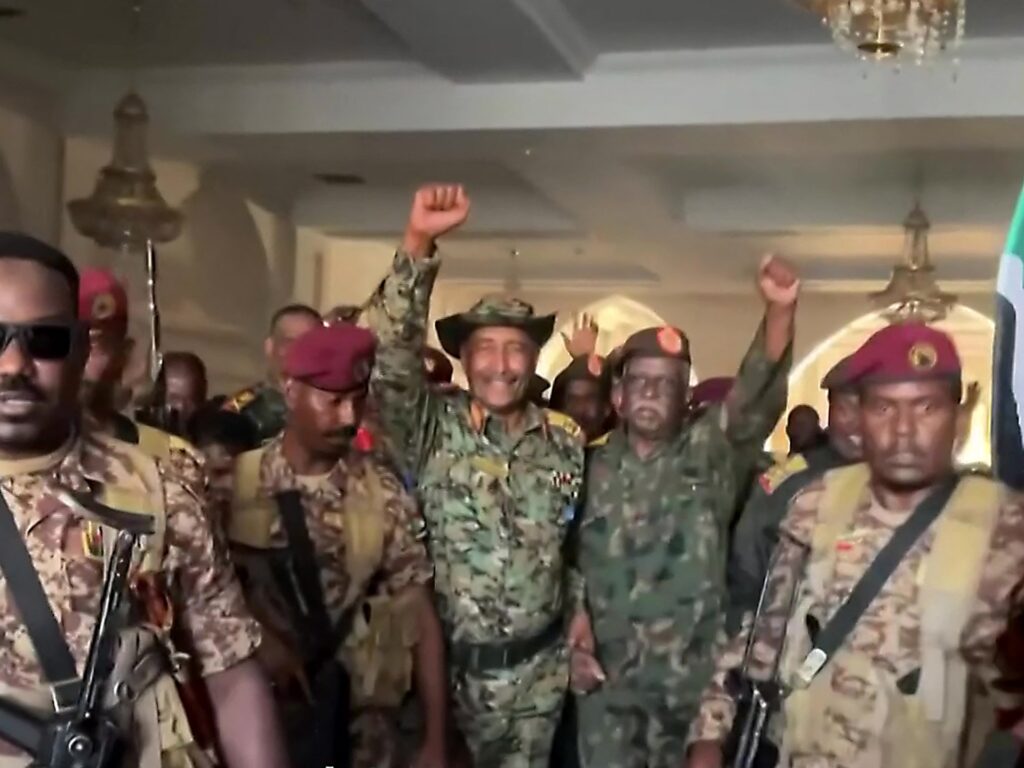
Army claims control of Souq Libya, a pivotal commercial hub in Omdurman, solidifying gains in Khartoum’s twin city. The Sudanese army has said it seized control of a key market in Omdurman, Khartoum’s twin city, building on a series of recent successes in its offensive against the Rapid Support Forces (RSF). The announcement on Saturday comes days after it also took control of most parts of the capital in a potentially pivotal victory in the devastating two-year war that has caused the world’s largest humanitarian crisis. The army said in a statement that its forces were now in control of the market in western Omdurman, Souq Libya, having seized weapons and equipment left behind by the RSF when they fled. Souq Libya is one of the largest and most important commercial hubs in Sudan. The army already controlled most of Omdurman, home to two big military bases. It appears intent on securing control over the entire capital area, which is made up of the three cities of Khartoum, Omdurman and Bahri, divided by branches of the River Nile. The RSF has not commented on the army’s advance in Omdurman, where the paramilitary forces still hold some territory. Advertisement The army senses that the recapture of Khartoum, which had been under RSF control for most of the war, will mark a shift in battlefield momentum that could spread to other areas. Still, the conflict seems far from over as the warring sides remain in control of large swaths of land each while remaining engaged in fierce clashes. Fighting is continuing in the huge Darfur region to the west of Sudan, the Kordofan region in central and southern parts of the country, and Gezira state, a strategic agricultural hub located south of the capital. Neither side has managed to strike a knockout blow to the other, and there is no sign of a political settlement or peace process in the near future, while each side continues to enjoy the support of its regional backers. In the meantime, the Sudanese army has accused the United Arab Emirates of backing the RSF, a charge found credible by UN experts and US lawmakers. On Friday, the International Court of Justice (ICJ) said it would hear a case filed by Sudan demanding emergency measures against the UAE for violating obligations under the Genocide Convention by giving direct support to the RSF and implicating it in genocidal acts allegedly perpetrated by the paramilitary group against the Masalit people of Darfur. The Gulf state has repeatedly denied the accusations, calling the ICJ case “nothing more than a cynical publicity stunt“. In January, the United States accused the RSF of committing genocide in Darfur. The war in Sudan erupted amid a power struggle between the army and RSF before a planned transition to civilian rule. It uprooted more than 12 million Sudanese from their homes, and left about half of the 50 million population suffering acute hunger. Advertisement Overall deaths are hard to estimate, but a study published last year said the toll may have reached 61,000 in Khartoum state alone in the first 14 months of the conflict. In another development, Al Jazeera Arabic reports that the army evacuated hundreds of freed civilian and military prisoners held by the RSF in several detention centres in Jebel Awliya, south of Khartoum, to the city of Al-Qatana in White Nile State. Sudanese army commander Major General Mohamed Saleh Abu Halima said that the RSF detained approximately 4,700 prisoners under appalling conditions, where they suffered from malnutrition and a lack of healthcare, leading to the deaths of several of them in detention. Adblock test (Why?)
Eid Mubarak 2025: Hear greetings in different languages
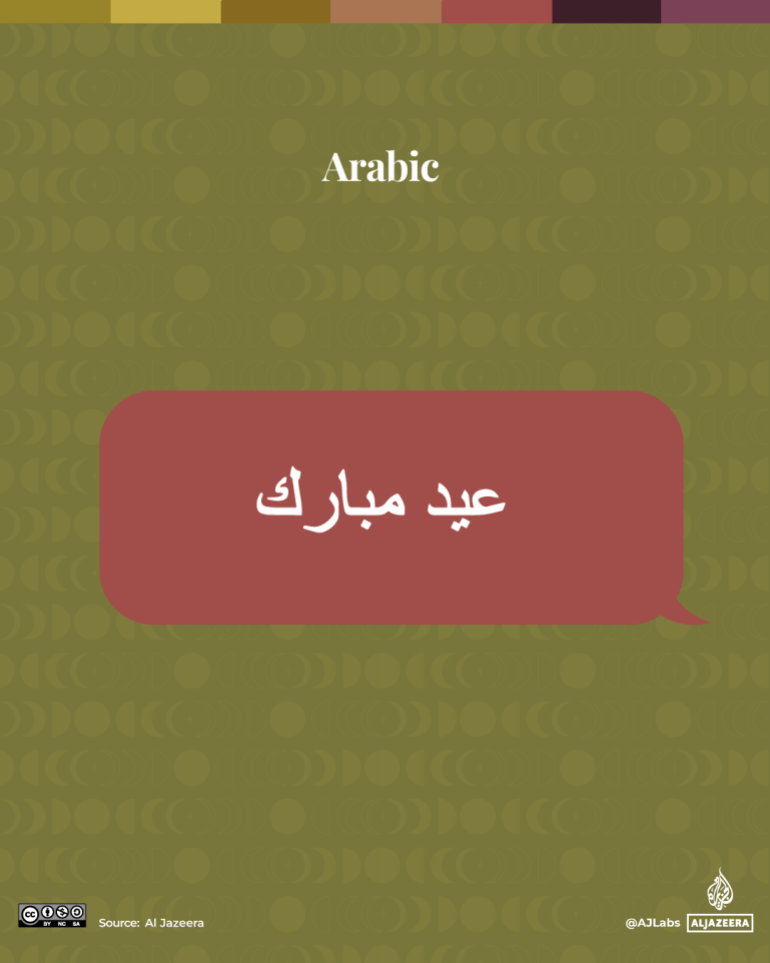
Eid begins on Sunday, March 30 in Saudi Arabia. Here’s how to wish a blessed Eid in different languages. With the sighting of the new moon in Saudi Arabia and neighbouring countries, the first day of Eid will be celebrated on Sunday, March 30. Other countries follow their own moon sightings, and those that began fasting on March 2 will announce tomorrow night whether Eid will fall on Monday, March 31. BREAKING NEWS: Eid Al Fitr 1446/2025 is tomorrow: Sunday, 30 March 2025 The Crescent for the month of Shawwal 1446 was SEEN in Saudi Arabia today subsequently tomorrow is the beginning of the month of Shawwal 1446 pic.twitter.com/6om5sAl38D — Inside the Haramain (@insharifain) March 29, 2025 Eid al-Fitr, the “festival of breaking the fast”, is celebrated at the end of the fasting month of Ramadan by Muslims worldwide. There are about 1.9 billion Muslims worldwide, approximately 25 percent of the world’s population. Indonesia has the world’s highest Muslim population, with some 240 million Muslims living in the country. Pakistan is second with about 225 million Muslims, followed by India (211 million), Bangladesh (155 million), and Nigeria (111 million). Advertisement Traditionally, Eid is celebrated for three days as an official holiday in Muslim-majority countries. However, the number of holiday days varies by country. Muslims begin Eid celebrations by attending a prayer service shortly after dawn, followed by a short sermon. The day is spent visiting relatives and neighbours, accepting sweets and extending Eid greetings as they move around from house to house. The most popular greeting is “Eid mubarak” (Blessed Eid) or “Eid sa’id” (Happy Eid). Eid greetings also vary depending on the country and language. The video and graphics below show Eid greetings in 13 different languages. (Al Jazeera) (Al Jazeera) (Al Jazeera) (Al Jazeera) (Al Jazeera) (Al Jazeera) (Al Jazeera) (Al Jazeera) (Al Jazeera) (Al Jazeera) (Al Jazeera) (Al Jazeera) (Al Jazeera) Adblock test (Why?)
Turkiye protests: Iconic scenes and divided coverage
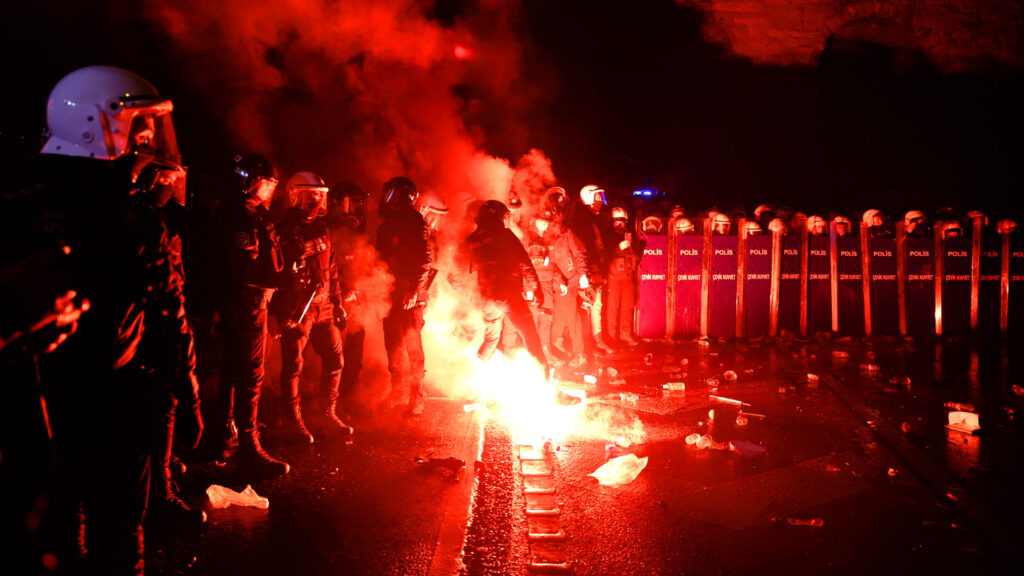
We unpack the Turkiye protests with voices from both sides of a split political and media landscape. Turkiye is witnessing its largest protests in more than a decade. Millions have taken to the streets after the arrest of Istanbul’s mayor, Ekrem Imamoglu – who is seen as the biggest challenge to President Recep Tayyip Erdogan’s presidency. Nearly 2,000 people have been detained so far, including journalists. But despite myriad official efforts to suppress news coverage, protesters keep pouring onto the streets. Contributors:Mehmet Celik – Editorial Coordinator, Daily SabahOnur Erim – Political Adviser and President, Dragoman StrategiesEce Temelkuran – Author and JournalistAmberin Zaman – Chief Correspondent, Al-Monitor On our radar: Israel this week killed another two journalists in Gaza – Al Jazeera Mubaser’s Hossam Shabat and Mohammed Mansour from the newspaper Palestine Today. The death toll of Palestinian media workers since October 7 now stands at more than 230. Tariq Nafi reports. One year into Javier Milei’s presidency, Argentina is reeling from his radical economic policies and his escalating war on the press. Milei has targeted journalists, shut down the state news agency, and bypassed traditional media in favour of online platforms. Advertisement As his government tightens its grip on information, Argentina’s media landscape is shifting. We hear from two journalists on opposite ends of the political spectrum about what Milei’s crackdown means for press freedom in Argentina. Featuring:Marcelo Longobardi – JournalistJulia Mengolini – Founder and presenter, Futurock Adblock test (Why?)
Russia-Ukraine war: List of key events, day 1,129
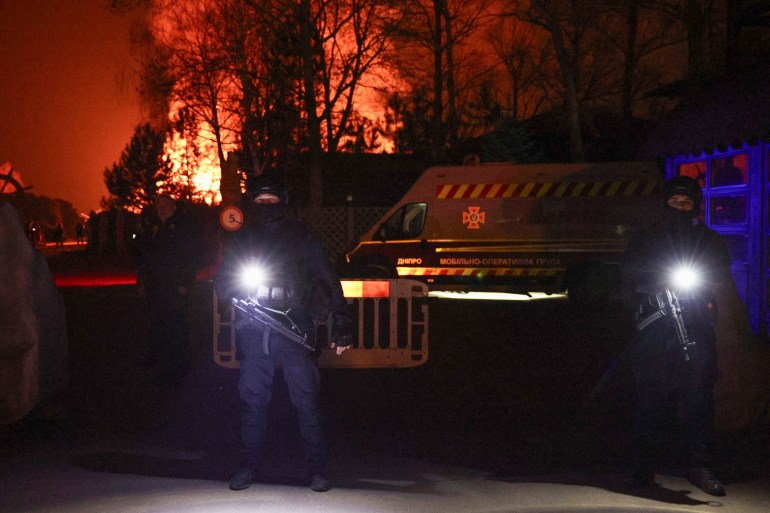
These are the key developments on day 1,129 of Russia’s war on Ukraine. Here is the situation on Saturday, March 29, 2025: Fighting Four people were killed in a Russian drone attack on Friday in the Ukrainian city of Dnipro. The regional governor said 19 people were injured and a large fire broke out in a hotel and restaurant complex that consumed a high-rise apartment building and 10 homes. Ukraine’s military said its air force had struck a border post in Russia’s Bryansk region, destroying infrastructure it said was used for drone launches. The General Staff of the Ukrainian Armed Forces said in a statement that the attack was in response to “dozens of daily strikes by attack drones”. Ukrainian troops have staged an incursion into Russia’s Belgorod region, according to Russian military bloggers. Kyiv and Moscow have not confirmed it but Ukrainian President Volodymyr Zelenskyy told reporters on Friday that his military had taken “certain steps” in Russia outside the Kursk region in an effort to ease pressure on Ukrainian troops. The Russian Ministry of Defence said on Friday its forces had recaptured the village of Hoholivka, one of a handful of villages still held by Ukraine of about 100 seized last August. Ukraine’s General Staff said it had stopped 18 Russian assaults in Kursk over the past day. Ukraine’s military said it shot down 89 of 163 Russian drones launched overnight with 51 failing to reach their targets due to technical issues. The Russian Defence Ministry claimed to have shot down 19 Ukrainian drones that tried to strike an oil refinery in Saratov. Ukrainian police cordon off access to the site of a fire in a restaurant caused by a Russian drone strike, amid Russia’s attack on Ukraine, in Dnipro, Ukraine, on March 28, 2025 [Violeta Santos Moura/Reuters] Ceasefire Volodymyr Kohut, governor of Ukraine’s Poltava region, has accused Russia of damaging warehouses owned by Ukraine’s state gas producer, Naftogaz, in the central region in violation of a United States-brokered ceasefire on energy infrastructure. The Russian Defence Ministry hit back with its own claims, accusing the Ukrainian military of striking a gas measuring station in the Kursk region’s Sudzha city with US-made HIMARS rockets and a second strike in Bryansk that caused a power outage. United Nations High Commissioner for Human Rights Volker Turk called for an end to the “horrific suffering” caused by attacks on civilians in Ukraine and said that a ceasefire in Ukraine “would be very welcome”. Turk said “limited ceasefires that protect shipping lanes and infrastructure are a welcome step forward” but a proper end to the war was needed. In a televised address on Friday, Russian President Vladimir Putin suggested that Ukraine should be temporarily placed under external governance to allow for democratic elections to take place. Putin suggested that Zelenskyy did not have legitimacy as the Ukrainian president and suggested Ukraine could change any negotiated peace at any time. Responding to Putin’s statements during a briefing with journalists on Friday, Zelenskyy said the comments offer a “reason not to end the war”, adding that Putin is “afraid of negotiations with Ukraine” and that he is “afraid of negotiations with me personally”. UN Secretary-General Antonio Guterres immediately rejected Putin’s suggestion that Ukraine be placed into a form of administration, saying Ukraine’s government is legitimate and must be respected. Russian President Vladimir Putin chairs a meeting with members of Russia’s Security Council via a videolink in Moscow, Russia, on March 28, 2025 [Vyacheslav Prokofyev/Pool via Reuters] Politics and Diplomacy Advertisement Putin’s comments on Ukraine follow the conclusion of a summit hosted by French President Emmanuel Macron that considered plans to deploy troops to Ukraine. Macron said “several” other nations are willing to join a peacekeeping force alongside France and Britain. Speaking to reporters on Friday, Zelenskyy confirmed Ukraine had received the draft of a new minerals deal from the US, saying it was an “entirely different” document than what had been proposed previously. Neither he nor his vice president would discuss the draft, saying it would first need to be reviewed and discussed. The Ukrainian president confirmed Ukraine was formalising agreements on European military aid and intelligence sharing before the next summit at the US’s Ramstein airbase in Germany. Adblock test (Why?)