

Nepal appoint former Australian international Law as new coach
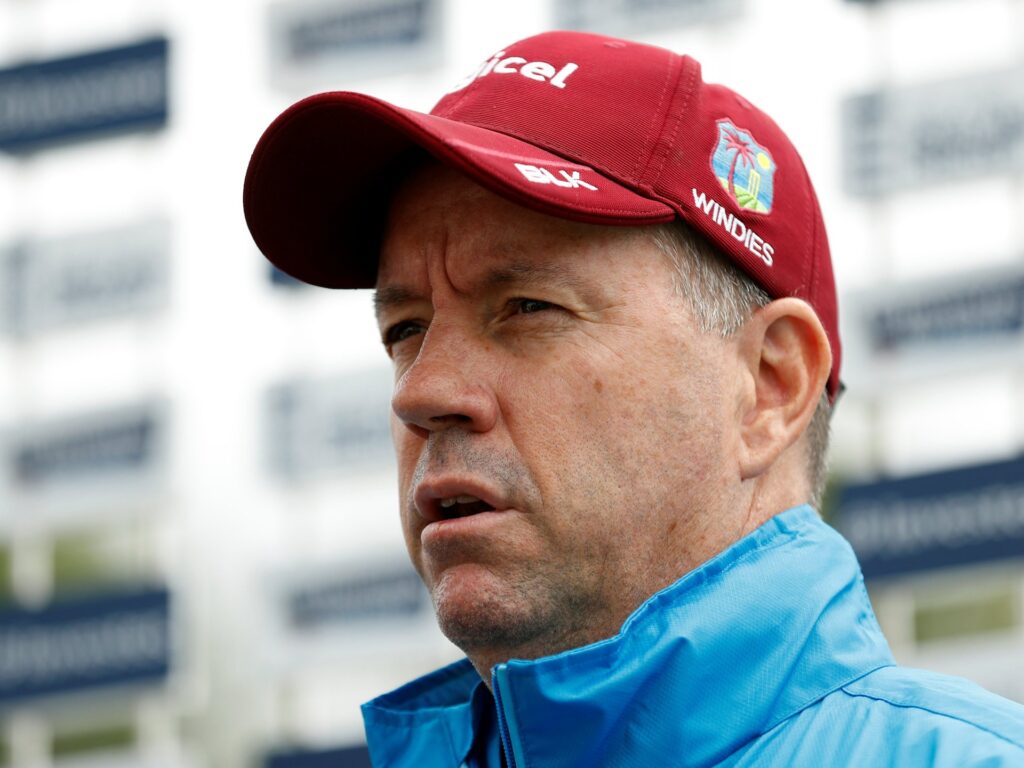
The former West Indies, Sri Lanka and Bangladesh coach guided United States to the 2024 T20 World Cup Super 8s. Former Australia batter Stuart Law has been named coach of the Nepal men’s team on a two-year contract. The 56-year-old replaces Monty Desai, whose two-year stint with the South Asian side ended after the Cricket Association of Nepal (CAN) decided not to renew his contract. Law, a 1996 Cricket World Cup runner-up with Australia, last coached the United States, guiding them to the Super 8 of the Twenty20 World Cup last year on home soil in their inaugural World Cup appearance. The former right-handed batter left the role after just six months in charge, despite leading the United States to one of the greatest upsets in World Cup history with their win against Pakistan. Law, who appeared in 54 one-day internationals and one Test for Australia, has also had spells with the West Indies, Sri Lanka, Bangladesh and Afghanistan. Nepal face Scotland and the Netherlands in World Cup League 2 in June as part of the qualifiers for the 2027 Cricket World Cup, which will be staged in South Africa, Zimbabwe and Namibia. Advertisement They will then enter the qualification for the 2026 T20 World Cup in October, having finished bottom of their group – with only one point – at the 2024 edition. Away from his time with Australia, Law spent much of his playing career in England with Essex and Lancashire and was head coach role at Middlesex prior to his appointment with the United States. Adblock test (Why?)
Four Afghan girl guitarists escaped the Taliban. Will they be forced back?
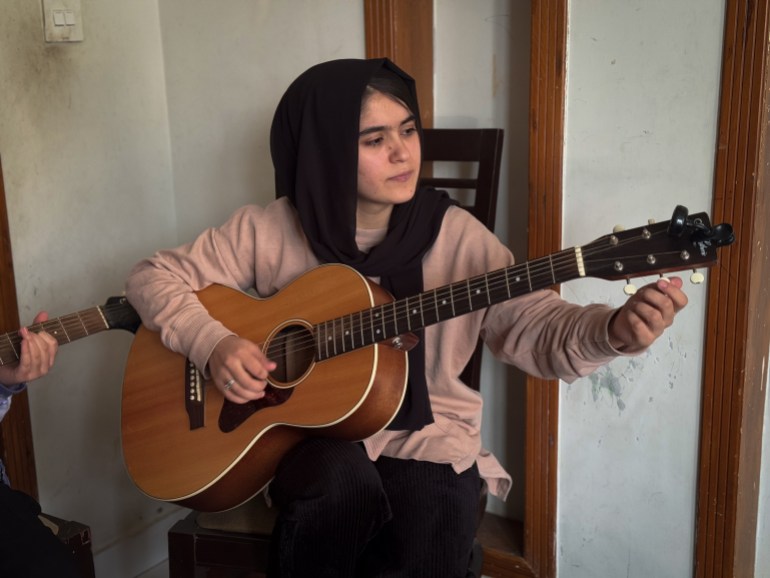
Islamabad, Pakistan – On a pleasant February afternoon in Pakistan’s capital, Islamabad, the sound of strumming guitars fills a small bedroom in a two-storey home that houses tenants from neighbouring Afghanistan. A flight of slippery marble stairs leads to the room on the first floor, where the bright rays of the sun enter through the window and bounce off the musical instruments, which belong to four young guitarists. These guitarists – 18-year-old Yasemin aka Jellybean, 16-year-old Zakia, 14-year-old Shukriya, and seven-year-old Uzra – are Afghan refugees who, with their families, fled the country after the Taliban returned to power in August 2021. Yasemin and Uzra are sisters, as are Zakiya and Shukriya. This is where Yasemin and Uzra are now living with their family. The bedroom is where the girls spend hours at a stretch practicing and jamming from Saturday to Thursday. Friday is their weekly day off. On the day Al Jazeera visits, the girls are busy tuning their guitars. They tease one another as they strum squeaky, off-key chords in between. Advertisement Dressed in a grey sweatshirt, her head covered with a black scarf, Yasemin is the group’s lead guitarist and a fan of Blues legend BB King and Pink Floyd’s David Gilmour. “I really want to see and produce music with him,” says Yasemin on her dream to meet Gilmour, before crooning a track by King. As she tunes her sturdy wooden guitar with her dependable red pick, Yasemin turns towards her bandmates and guides them in adjusting theirs. Yasemin – aka Jellybean – sets the strings of her guitar before playing a tune at her home in Islamabad, Pakistan on February 14, 2025 [Rabia Mushtaq/Al Jazeera] The girls learned to play the guitar at Miraculous Love Kids, a music school for children in Kabul set up in 2016 by Lanny Cordola, a rock musician from California. The girls, whose first language is Dari, also learned to speak basic English from Cordola in Kabul, where they attended regular school as well. Their world was turned upside down when the Taliban re-took power on August 15, 2021, after 20 years. The girls were afraid to step outside their homes following a spate of restrictions imposed on women. Cordola, who left Kabul for Islamabad the day the Taliban returned to power, began hatching plans to pluck his students and their families out of Afghanistan so the girls could continue to pursue their music dreams. After months of lobbying donors for funding and negotiating with agents who promised to help the families escape, Cordola finally managed to get seven of his students out, to Islamabad, in April 2022. Even as he continued to teach them there, Cordola worked towards eventually resettling them and their families in the United States, which had announced a programme to take in Afghan allies and refugees who wanted to flee Taliban rule. Advertisement Three of the seven girls were relocated to the US over the past few months. Yasemin, Zakia, Shukriya and Uzra – and their families – were supposed to fly on February 5. “It felt like we had everything in place. They [the US government] did all their medical tests, vetting, screening and interviews. We had the date,” says Cordola. Then Donald Trump took office. Almost immediately, Trump issued a series of executive orders, including one that suspended all refugee programmes for 90 days. “Now, it is all new again,” Cordola says, adding that the “devastating” move has postponed the relocation plans “indefinitely”. But things would get even worse. On March 7, the Pakistani government announced its own plans to deport all Afghan nationals, even those with proper documentation, back to their country by June 30. For those Afghan refugees hoping to relocate to a Western country – like Yasemin, Zakia, Shukriya and Uzra – the deadline to leave Pakistan is even more imminent: Islamabad has said it will begin deporting them on April 1. Yasemin (left), Shukriya, Lanny Cordola, Uzra and Zakia (right) smile for a photograph in Islamabad, Pakistan on February 14, 2025 [Rabia Mushtaq/Al Jazeera] ‘Girl with a guitar’ To gather at Yasemin and Uzra’s house for practice, Cordola picks Zakia and Shukirya up in a van from their home a few blocks away. “We practise for about three to four hours,” says Cordola. In a floral lilac dress and a white headscarf, Zakia’s slender fingers hit the chords on her guitar, which bears her initial, Z. She taps her feet to match the rhythm – Chris Martin of Coldplay is her favourite musician. Advertisement Her younger sister, Shukriya, sporting a double braid with two strands of hair resting on her rosy cheeks, is fond of American musician Dave Matthews, but also has a soft spot for South Korean band BTS and its singer, RM. “RM is my favourite. I like his dancing and rapping… it’s beautiful,” says Shukriya, as her teacher, Cordola, shakes his head in disbelief – and gentle disapproval. Uzra, Yasemin’s younger sister, wears a lime-coloured sport watch on her left wrist, a sequinned teddy bear sweatshirt and black, patterned trousers, as she grips her smaller guitar. She struggles to climb on to the chair, then breaks into soft, husky vocals. “She is a normal seven-year-old in a lot of ways. But when she is in the studio, she is very, very focused. I can’t joke with her when she is in there,” says Cordola about his youngest student. Then Cordola joins them in the jam session, strumming his black guitar. The girls nod in tandem and break into “Girl with a Guitar”, their own original, instrumental song. Practice ends at 1pm, and the girls go about the rest of their day – having lunch, praying, helping their mothers with chores and spending time with their families. Uzra, Yasemin says, is friends with the neighbours’ child, and always finds ways to step out of the house to play with her. Almost on cue, the little guitarist dashes out of the room. A custom guitar pick featuring the
Four policemen, two suspected rebels killed in India-administered Kashmir
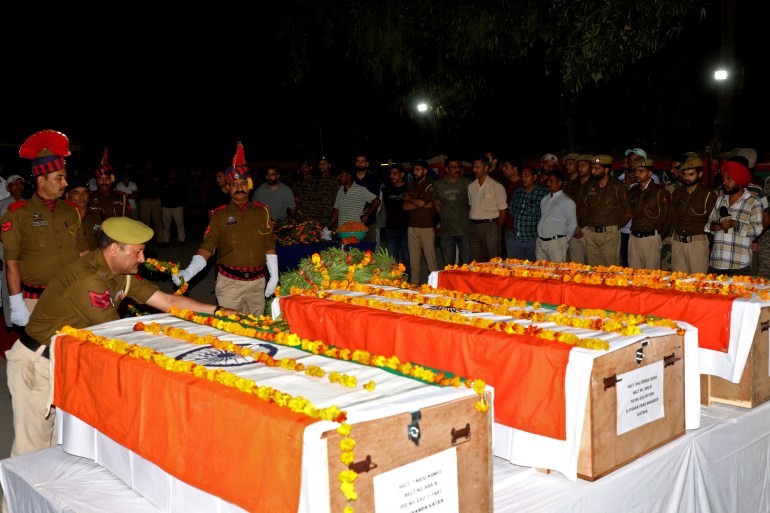
The deaths came in a gun battle in the forested area of the southern Jammu region. At least four police officers and two suspected rebels have been killed during a gun battle in the India-administered territory of Jammu and Kashmir. The Indian army’s Rising Star Corps said on social media on Saturday morning that “relentless operations” had led to the “elimination of two terrorists” – a term usually referring to rebels opposed to Indian rule in Kashmir. “We have recovered bodies of three policemen and have also spotted the body of another cop and two militants lying in the forest,” the official, who did not want to be named because he was not authorised to speak to the media, told the Reuters news agency. Arms and ammunition, including two grenades, a bulletproof jacket, empty shells and some magazines of assault rifles were also recovered from the area, the official said. For decades, rebel groups have fought security officials in the region, resulting in a death toll in the thousands. But in recent years, violence has tapered off. Still, according to government data, at least 14 security personnel were killed in such fighting in the first half of 2024, and at least 30 were killed in 2023. Advertisement Latest clashes The latest bout of fighting in the region began on Thursday in the forested area near the city of Kathua in the southern region of Jammu, near India’s border with Pakistan, after a police foot patrol was ambushed while searching for fighters, police chief Nalin Prabhat told reporters on Friday night. The police chief accused the rebels, who were believed to have escaped a cordon by security forces four days earlier, of being from Pakistan, without elaborating. “We will not sleep till we stop such activities of our neighbour,” Prabhat said, referring to Pakistan. Police officers place wreaths on coffins containing the bodies of their colleagues during a wreath-laying ceremony in the Kathua district of Jammu and Kashmir, on March 28, 2025 [Reuters] The Muslim-majority Kashmir has been at the core of more than 70 years of hostility between India and Pakistan, with both countries claiming complete control over the region. But India regularly accuses Pakistan of pushing fighters across the heavily militarised unofficial border in Kashmir to attack Indian security forces. However, Pakistan denies the allegations, saying it only supports Kashmir’s fight for self-determination. Rebel groups have also been fighting for decades to demand either independence for Kashmir or to merge with Pakistan. But since 2019, the region has bubbled in anger after New Delhi ended Kashmir’s semi-autonomy and curbed dissent, civil liberties and media freedoms while at the same time increasing counterinsurgency operations. Advertisement In November last year, Indian Prime Minister Narendra Modi backed the decision to revoke Jammu and Kashmir’s partial autonomy after the territory’s newly elected lawmakers sought restoration. “Only the constitution of Babasaheb Ambedkar will operate in Kashmir … No power in the world can restore Article 370 (partial autonomy) in Kashmir,” Modi said, referring to one of the founding fathers of the Indian constitution. Adblock test (Why?)
US wants to make Philippines “a proxy” in US-China confrontation
[unable to retrieve full-text content] Victor Gao says Pete Hegseth is trying to stir up a confrontation between China and the US, using the Philippines.
Israel bombs Beirut for first time since ceasefire
[unable to retrieve full-text content] The Israeli military destroyed a building in a residential area of southern Beirut on Friday.
How the ‘war on terror’ paved the way for student deportations in the US
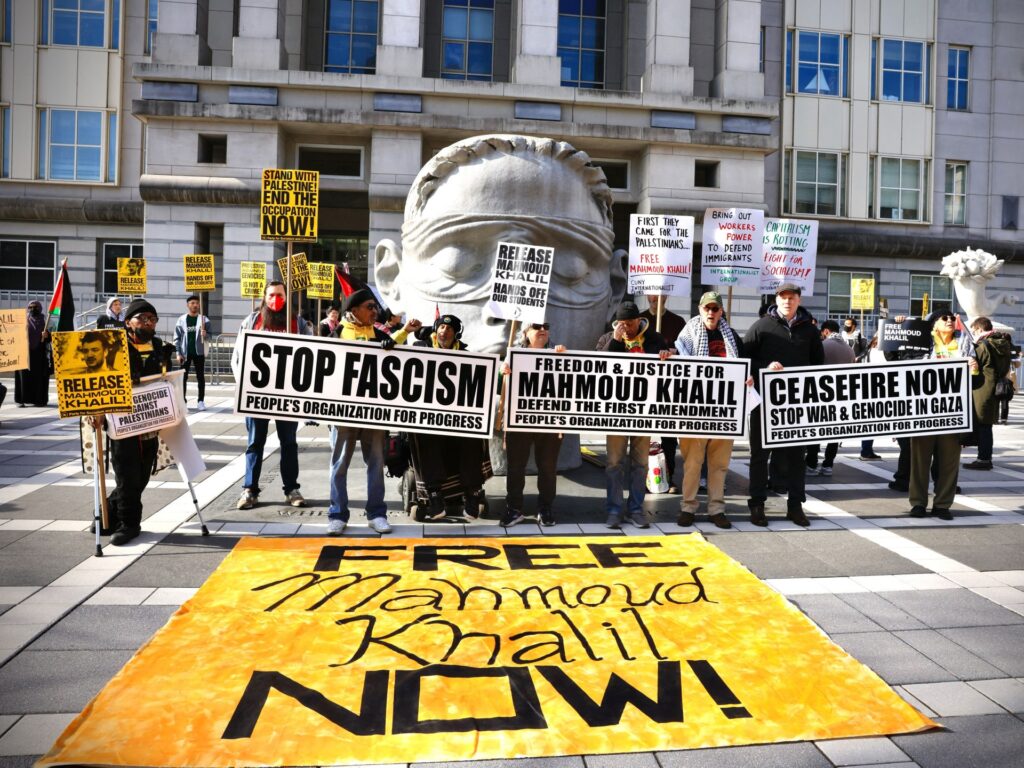
When Asad Dandia received a message from a young man named Shamiur Rahman in March 2012, he had no reason to suspect that he was under the watchful eye of state surveillance. Rahman simply seemed interested in deepening his relationship with Islam and getting involved in charity work. As a Muslim community organiser in New York City, Dandia was happy to help. The young man quickly became a regular at meetings, social events and efforts to help low-income members of the community. Rahman even spent a night in Dandia’s family home. But nearly seven months later, Rahman made a confession over social media: He was an undercover informant for the New York City Police Department (NYPD). Dandia ultimately joined a class-action lawsuit, alleging the city of New York singled out Muslim communities for surveillance as part of the wider “war on terror” in the United States. Four years later, the city settled, agreeing to protections against undue investigations into political and religious activities. Advertisement But Dandia sees an echo of his experience in the present-day arrests of pro-Palestinian student protesters from abroad. He is among the activists and experts who have observed an escalation of the patterns and practices that became core features of the “war on terror” — from unwarranted surveillance to the broad use of executive power. “What I endured was very similar to what we’re seeing students endure today,” Dandia said. He noted that a lawyer who represented him is now working on the case of Mahmoud Khalil, a Columbia University student and permanent resident facing deportation for his pro-Palestine activism. The administration of President Donald Trump has accused Khalil of supporting terrorism, though it has yet to charge him with a crime or release evidence to substantiate the claim. Dandia said that the belief that Muslim, Arab and immigrant communities are inherently suspect is the common thread between their experiences. “Even if what Trump is attempting now is unprecedented, it’s drawing from longstanding traditions and policies.” From neighbours to enemies Scholars and analysts say that one of the throughlines is the pairing of harsher immigration enforcement with rhetoric focused on national security. The “war on terror” largely began after the attacks on September 11, 2001, one of which targeted New York City. In the days that followed, the administration of former President George W Bush began detaining scores of immigrants — nearly all of them from Muslim, Arab and South Asian communities — over alleged ties to terrorism. Advertisement The American Immigration Council, a Washington-based nonprofit, estimates that 1,200 people were arrested in the initial sweep. Many were ultimately deported. But the immigration raids did not result in a single conviction on terrorism-related charges. A 2004 report by the American Civil Liberties Union (ACLU) noted that the government nevertheless advertised the deportations as “linked to the September 11 investigation”. “Almost immediately after 9/11, Muslim communities were treated not as fellow New Yorkers who were living through the trauma of an attack on their city, but as potential accessories, witnesses, or perpetrators of a follow-on attack,” said Spencer Ackerman, a reporter who covered the war on terror and is the author of the book Reign of Terror. The ACLU report says that some of those detained were held in solitary confinement and only allowed to leave their cells with shackles on their hands and legs. Some were kept in detention long after the government cleared them of any wrongdoing. Fear in ‘the homeland’ Nikhil Singh, a history professor at New York University, believes that period of heightened fear caused the US to look inward for enemies, among its own communities. “The argument that the US was fighting these non-state groups who didn’t have borders started to imply that the fight against those enemies could take place anywhere, including in what the Bush administration started to call ‘the homeland’,” said Singh. He pointed out that those post-September 11 detentions exercised a broad view of executive power, in order to justify a lack of due process for alleged terror suspects. Advertisement “A lot of what’s happening now can be traced back to this moment, where this argument became normalised that the executive is responsible for keeping the country safe and, for that reason, needs to be able to suspend basic rights and ignore constitutional restraints.” Art Eisenberg, executive counsel at the New York branch of the ACLU, explained that the history of targeting immigrant communities for national security concerns stretches beyond the “war on terror”. “The origins of policing and surveillance and undercover work targeting immigrant groups goes all the way back to the beginning of the 20th century. The New York City police intelligence bureau used to be called the Red Squad, but earlier it had been called ‘the Italian squad’,” said Eisenberg. Over time, those operations morphed to target new sources of potential dissent: communists, civil rights activists and the Black Panthers, among others. But he added that the “war on terror” marked an escalation of that targeting. And those types of actions can have lasting effects on communities. The ACLU notes that, in the years after the September 11 attacks, more than one-third of Pakistanis in a Brooklyn neighbourhood known as “Little Pakistan” were deported or chose to leave the area. Later, in 2012, when it was revealed that authorities had been spying on Dandia’s organisation, donations started to dry up, and the mosque where they held meetings told them to meet outside instead. No one had been charged with a crime. But the chilling effect of the surveillance caused the organisation to eventually close its doors, according to Dandia. Advertisement “People always ask this question: If you’re not doing anything wrong, why should you worry?” said Dandia. “But it’s the government that is deciding what is right and wrong.” Escalating attacks Under the Trump administration, critics say vague allegations of terrorism continue to be seized upon as a pretext to silence dissent. In a statement about Khalil’s arrest, the Department of Homeland Security claimed
Judge blocks Trump effort to shutter Consumer Financial Protection Bureau
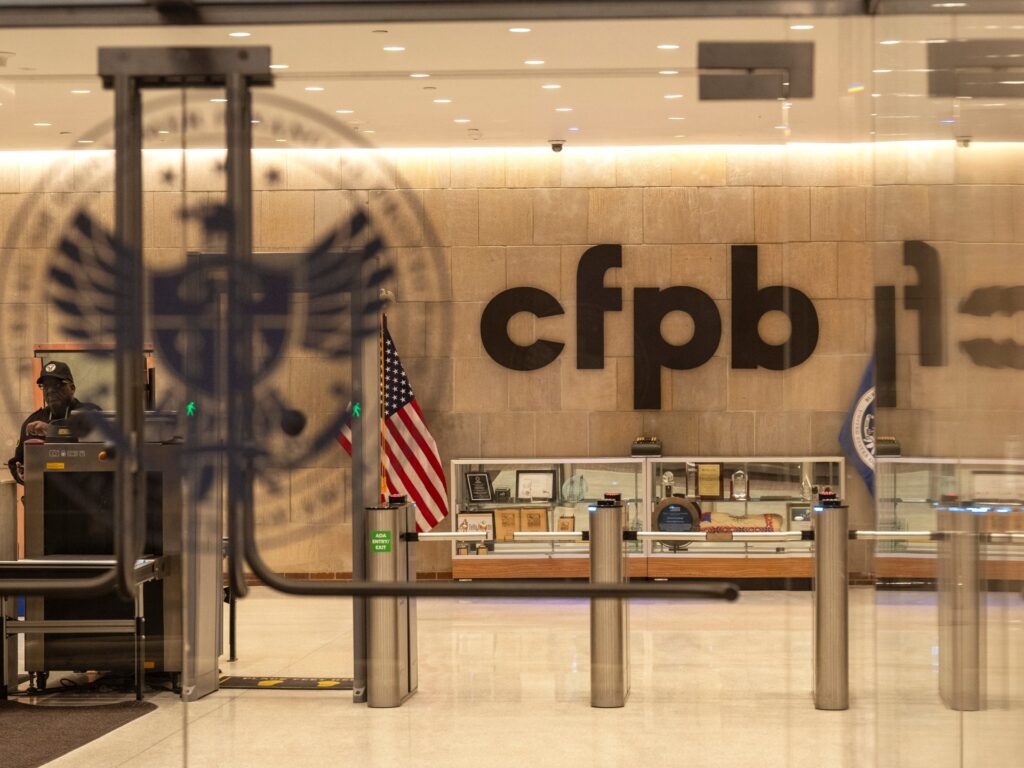
A federal judge has ordered a halt to attempts under President Donald Trump to dismantle the Consumer Financial Protection Bureau (CFPB), an independent government agency charged with investigating and preventing financial malpractice. On Friday, US District Judge Amy Berman Jackson granted a request from employees, advocates and union representatives to issue a preliminary injunction, preventing the bureau from being shuttered while court proceedings continue. “The Court cannot look away or the CFPB will be dissolved and dismantled completely in approximately thirty days, well before this lawsuit has come to its conclusion,” the judge wrote in her order. She agreed with the plaintiffs that there was a risk of immediate, irreparable harm, given the speed with which the Trump administration’s efforts have unfolded. “If the defendants are not enjoined, they will eliminate the agency before the Court has the opportunity to decide whether the law permits them to do it,” Berman Jackson wrote. Advertisement The ruling was the latest in the myriad court decisions facing the Trump administration’s campaign to streamline the federal government, often through large-scale staffing cuts and the elimination of entire agencies and departments. Earlier in the day, Secretary of State Marco Rubio even announced he had informed Congress of plans to absorb the US Agency for International Development (USAID) into the State Department, putting its independent functions under executive control. But critics have questioned whether such manoeuvres are legal. They argue that agencies like USAID and the CFPB were created as independent organisations under Congress and that the president has overstepped his constitutional bounds by overriding those congressional decisions. The CFPB, in particular, has long been a target of conservative ire. Established in 2011, the bureau was founded in response to the financial crisis of 2007 that was spurred on by predatory lending practices. As an independent agency, the CFPB served as a watchdog, collecting research, monitoring financial markets and fielding complaints from ordinary consumers facing illegal or deceptive actions from their banks or financial service providers. As of December 2024, the bureau had claimed credit for returning $21bn to consumers through debt relief, reductions or monetary compensation stemming from its enforcement activities. But many Republicans and financial industry leaders have chafed at its enforcement and regulatory activities, accusing the bureau of hampering businesses. Advertisement On January 31, shortly after the start of his second term as president, Trump moved to fire the bureau’s director, Rohit Chopra, and replace him with an ally. By February 8, the bureau had been ordered to cease all investigations, including pending ones, and stop any enforcement activity fundamentally halting its functions. The next day, its headquarters was closed. The bureau also started to see the same widespread layoffs facing other federal agencies. Judge Berman Jackson opened her 112-page decision with quotes from some of the CFPB’s critics within the Trump administration. “The CFPB has been a woke and weaponised agency against disfavoured industries and individuals for a long time. This must end,” said Russell Vought, the director of the Office of Management and Budget under Trump. Another critic quoted in Berman Jackson’s order was Trump adviser and billionaire businessman Elon Musk, who called to “delete” the bureau. “CFPB RIP,” he wrote succinctly on February 7, as his Department of Government Efficiency (DOGE) led the dismantling of the organisation. Musk has been accused of having a conflict of interest with the CFPB, as he expands the financial services available on his social media platform X. Judge Berman Jackson emphasised she did not take her decision lightly in the opening lines of her ruling. “The motion for preliminary injunction to be decided boils down to one question: should the Court take action to preserve the Consumer Financial Protection Bureau now before the case concerning its fate has been resolved?” Berman Jackson wrote. “That is an extraordinary step.” Advertisement Still, she indicated that the injunction was necessary: “The Court’s oversight is the only thing holding the defendants back.” Among the plaintiffs were the National Treasury Employees Union and the National Association for the Advancement of Colored People (NAACP), a prominent civil rights organisation. But there was also an individual named in the complaint: Reverend Eva Steege, an 83-year-old Lutheran pastor who sought the CFPB’s help for student loans she incurred while at seminary. While investigating Steege’s case, the CFBP found she not only qualified for loan forgiveness but also for $15,000 returned in overpayments. Steege is in hospice care at the time, according to the complaint. “It was her hope to resolve the debt and spare her family that burden after she died,” Judge Berman Jackson wrote in her ruling. But the sudden shutdown of the CFPB’s services left Steege in a lurch, without a resolution to her case or a refund of her overpayment. “Steege’s fear of leaving her surviving family members saddled with her student loan debt came to pass on March 15, when she died,” the judge explained. Berman Jackson said the case raised questions about the separation of powers under the US Constitution and whether the president had encroached upon “legislative authority”. “The evidence reveals that: the defendants were in fact engaged in a concerted, expedited effort to shut the agency down entirely when the motion for injunctive relief was filed,” she wrote. “While the President is free to propose legislation to Congress to accomplish this aim, the defendants are not free to eliminate an agency created by statute on their own, and certainly not before the Court has had an opportunity to rule on the merits of the plaintiffs’ challenge.” Advertisement She also highlighted what she called a “disingenuous” arguments from the Trump administration’s lawyers. “The Court is left with little confidence that the defense can be trusted to tell the truth about anything,” the judge wrote. Adblock test (Why?)
Myanmar-Thailand earthquake death toll passes 700
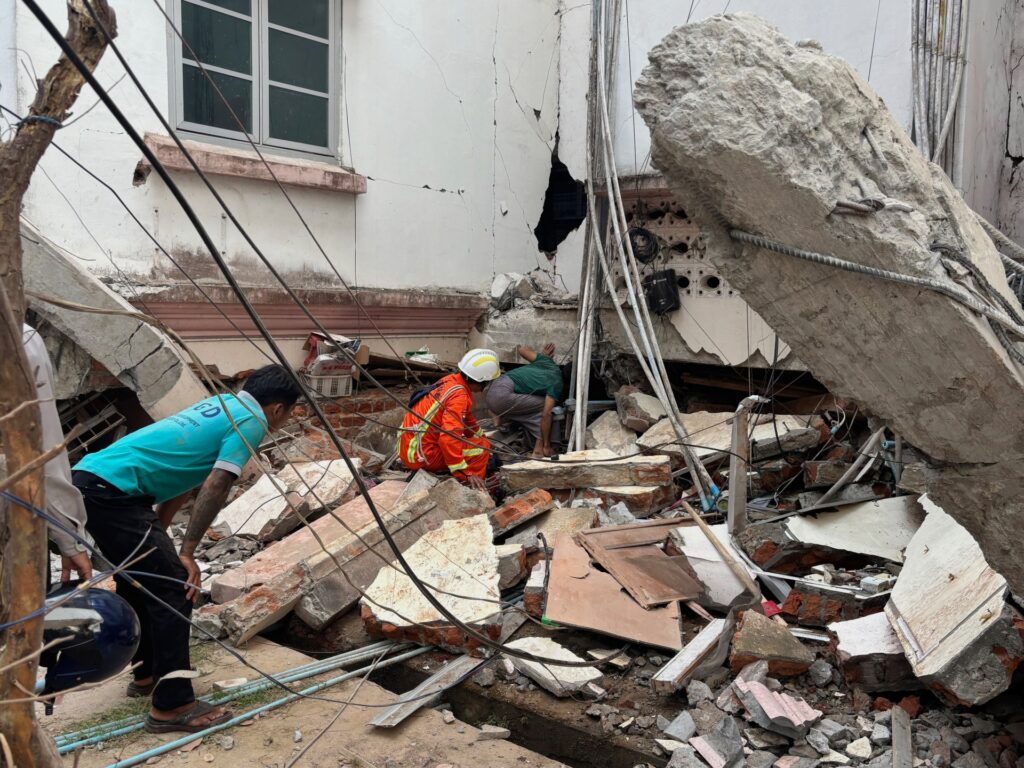
BREAKINGBREAKING, Myanmar’s military rulers say at least 694 people killed following earthquake that also killed 10 people in Thailand’s capital, Bangkok. The death toll from a huge earthquake that hit Myanmar and Thailand has passed 700, as rescuers dug through the rubble of collapsed buildings in a desperate search for survivors. At least 694 people were killed and nearly 1,700 injured in Myanmar’s Mandalay region – the country’s second-largest city and close to the epicentre of the quake – the country’s military government said in a statement on Saturday. In the Thai capital Bangkok – located 1,000km (620 miles) from the epicentre in Myanmar – about 10 more deaths have been confirmed. “Infrastructure such as roads, bridges, and buildings were affected, leading to casualties and injuries among civilians. Search and rescue operations are currently being carried out in the affected areas,” Myanmar’s military said in the statement, which raised the death toll sharply from a previously reported 144 deaths. The shallow 7.7-magnitude quake struck northwest of the city of Sagaing in central Myanmar in the early afternoon on Friday, followed minutes later by a 6.7-magnitude aftershock. Advertisement The quake destroyed buildings, downed bridges, and buckled roads across swathes of Myanmar, and due to patchy communications in remote areas many believe the true scale of the disaster has yet to emerge. Rescuers in Bangkok laboured through the night on Friday searching for workers trapped when a 30-storey skyscraper under construction collapsed, reduced in seconds to a pile of rubble and twisted metal by the force of the shaking. Bangkok Governor Chadchart Sittipunt said that around 10 people had been confirmed killed across the city, most in the skyscraper collapse. But up to 100 workers were still unaccounted for at the building site, close to the Chatuchak weekend market that is a magnet for tourists. “We are doing our best with the resources we have because every life matters,” Chadchart told reporters at the scene. “Our priority is acting as quickly as possible to save them all,” the governor said. Bangkok city authorities said they will deploy more than 100 engineers to inspect buildings for safety across the city after receiving more than 2,000 reports of damage. Adblock test (Why?)
Donald Trump speaks with Canada’s Mark Carney amid trade tensions
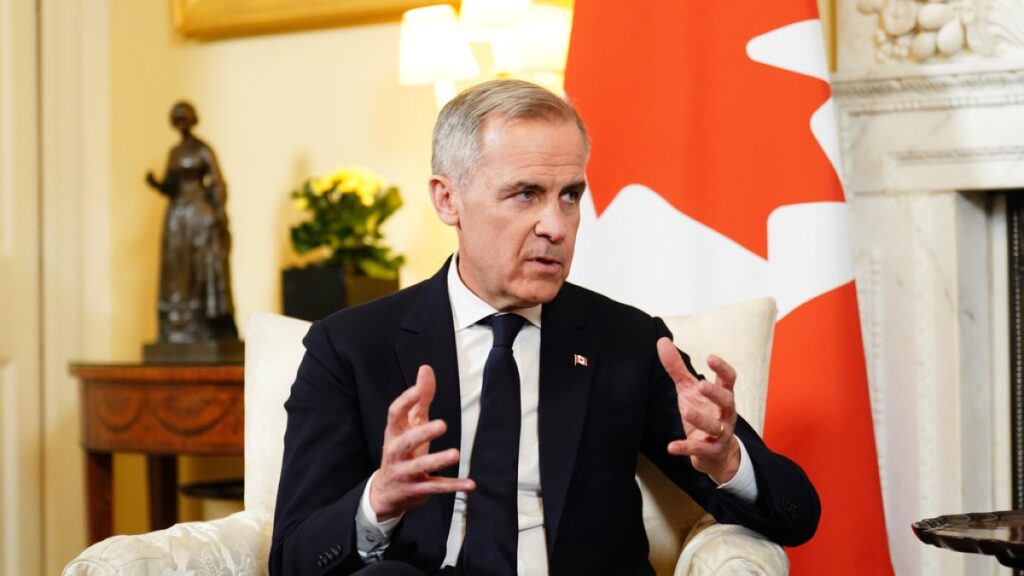
US president says he and the Canadian PM ‘agree on many things’ and will meet after Canada’s elections next month. President Donald Trump says he has had an “extremely productive call” with Canadian Prime Minister Mark Carney amid a spike in tensions and an escalating trade war between the United States and its northern neighbour. In a social media post describing the call on Friday, the US president sounded conciliatory towards Canada. Notably, Trump referred to the Canadian leader by his correct title as prime minister after months of calling Carney’s predecessor Justin Trudeau “governor”. “I just finished speaking with Prime Minister Mark Carney, of Canada,” Trump wrote. “It was an extremely productive call, we agree on many things, and will be meeting immediately after Canada’s upcoming Election to work on elements of Politics, Business, and all other factors, that will end up being great for both the United States of America and Canada.” While the statement lacked specifics, it marked a change in tone from Trump’s threats and hostile rhetoric towards Canada, which included repeated calls for the US to annex the country and make it its 51st state. Advertisement Friday’s talks were the first between the two leaders since Carney succeeded Trudeau two weeks ago. The call came less than 24 hours after Carney forcefully rebuked Trump for increasing tariffs on Canadian goods. The US president had announced 25-percent levies on foreign cars, starting on Wednesday. “I reject any attempts to weaken Canada, to wear us down, to break us, so that America can own us. That will never happen,” Carney said on Thursday. He also suggested that US-Canada ties have undergone a dramatic transformation because of Trump. “The old relationship we had with the United States – based on deepening integration of our economies and tight security and military cooperation – is over,” the Canadian prime minister told reporters. Still, Carney said he was looking forward to speaking to Trump to resolve the issues between the two countries. The Canadian prime minister has visited the United Kingdom and France after taking office. He has not yet gone to the US – traditionally Ottawa’s closest ally and trade partner. On Thursday, he stressed the need for Canada to “pivot” its trade relationships away from the US. Earlier this week, Trump warned Ottawa and the European Union against teaming up against Washington, threatening “far larger” tariffs against both. Canada is to hold a general election on April 28. Carney’s Liberal Party has surged in the polls over the past few weeks in part because of the change in its leadership after Trudeau’s resignation as well as the standoff with the US. Advertisement Adblock test (Why?)
Is South Sudan heading to another civil war?
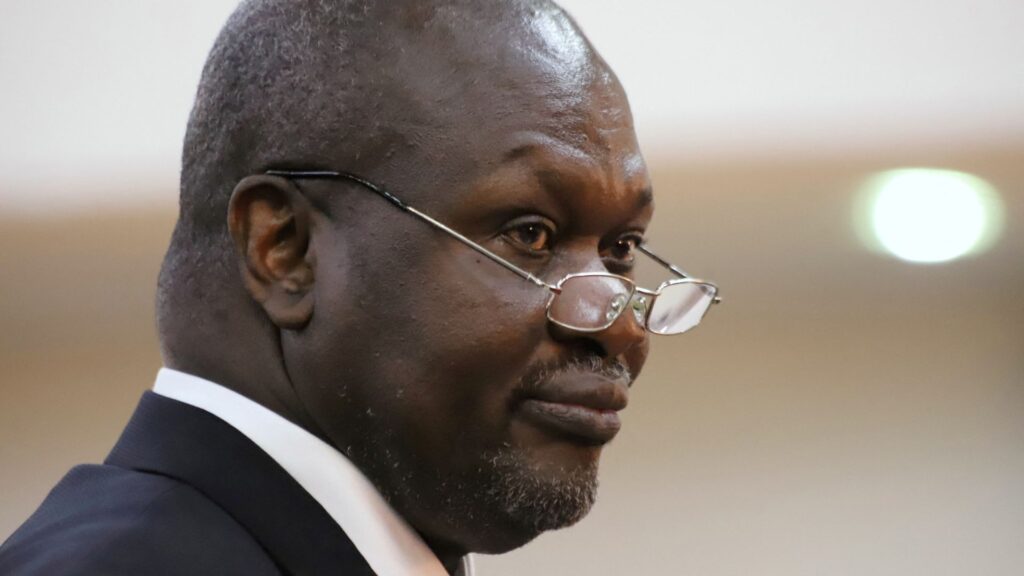
South Sudan is on the brink of another civil war, the United Nations has warned, after weeks of escalating violence and rising tensions between Vice President Riek Machar and President Salva Kiir. After Machar was placed under house arrest this week, his party said the 2018 peace deal that ended years of fighting had collapsed. Can the rival parties overcome political mistrust? Presenter: Cyril Vanier Guests: Patrick Oyet – journalist in South Sudan Daniel Akech – senior analyst for South Sudan at the International Crisis Group Abdullahi Halakhe – Horn of Africa security analyst and a senior advocate at Refugees International Adblock test (Why?)