

Mbappe, Vinicius among four Real Madrid players being investigated by UEFA

European football’s governing body is investigating four Real Madrid players for ‘indecent conduct’ after Atletico game. Four Real Madrid players including Kylian Mbappe and Vinicius Junior are being investigated by UEFA for alleged “indecent conduct” during the Champions League game at Atletico Madrid. UEFA, European football’s governing body, said on Thursday it appointed a disciplinary inspector to study the unspecified allegations at the round of 16 game on March 12. The case also involves Antonio Rudiger and Dani Ceballos. Video clips circulating on social media showed Mbappe grabbing his crotch during celebrations on the field for Madrid winning a penalty shootout. Any ban imposed would force a player to miss Madrid’s game at Arsenal on April 8 in the first leg of the quarterfinals. Madrid advanced to the quarterfinals after the shootout against Atletico. Rudiger scored the decisive spot kick and led teammates in an exuberant dancing run around Atletico’s home field. In a similar case prosecuted by UEFA at the European Championship last year, Madrid player Jude Bellingham was given a one-game ban suspended for a probationary period of one year. Advertisement Bellingham scored a stoppage-time goal for England to level a round of 16 game against Slovakia when he gestured his hand towards his crotch. England went on to win 2-1 in extra time. UEFA disciplinary judges found Bellingham guilty of “violating the basic rules of decent conduct” and fined him $32,400. Adblock test (Why?)
Who’s winning the global race for critical minerals?

US President Donald Trump has invoked wartime powers to boost production of critical minerals. Critical minerals are crucial to clean energy technologies and defence manufacturing. Their demand is growing fast, and so is competition among leading economies for rare earths. But it is China that dominates supply chains. The United States is scrambling to reduce its reliance on Beijing for critical minerals. From potential deals with Ukraine and the Democratic Republic of the Congo, to tariff threats against Canada and Greenland. Washington is accused of using economic coercion to get its hands on the elements. The US also wants to ramp up production at home. Also, could President Prabowo Subianto’s plans help grow Indonesia’s economy? Plus, Myanmar’s scam hubs. Adblock test (Why?)
Six people dead after tourist submarine sinks off Egypt’s coast
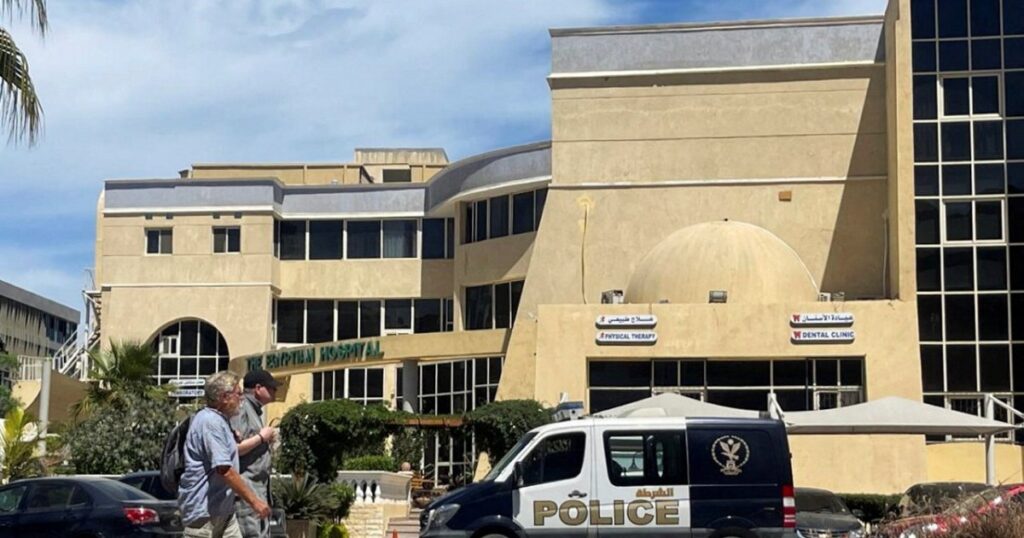
Local authorities say 39 rescued after vessel carrying tourists sunk off Hurghada’s tourist promenade area. At least six people have been killed after a tourist submarine sank off the popular Egyptian Red Sea destination of Hurghada, according to local authorities. Egypt’s Red Sea governorate confirmed that six Russians died and that 39 foreign tourists were rescued after the submarine sank off a beach in the tourist promenade area on Thursday. It said there were no missing people in the wake of the rescue effort. The submarine was carrying 45 tourists and five Egyptian crewmembers when it sank, Red Sea governor Amr Hanafi said in a statement, adding that rescue teams were quickly sent. Russia’s consulate in Hurghada confirmed the submarine, named “Sindbad”, was carrying “45 tourists” in addition to crew when it “crashed 1 kilometre from the shore” at about 10am local time (08:00 GMT). “Most of those on board were rescued and taken to their hotels and hospitals in Hurghada,” the consulate said. It was not immediately clear what caused the submarine to sink, with weather conditions on Thursday reportedly clear with optimum visibility underwater. Advertisement Egypt’s Akhbar Al-Youm newspaper said investigations into the cause of the incident were under way. The submarine was equipped with large portholes to let passengers see the Red Sea’s spectacular corals and marine life, and able to dive to a depth of 25 metres (82 feet), according to Sindbad Submarines’s website. Located about 460 kilometres (280 miles) southeast of the Egyptian capital Cairo, Hurghada is a major destination for visitors to Egypt, many of whom are Russian. The area has been the site of several deadly accidents in recent years. In November, a dive boat capsized off the coast of Marsa Alam, south of Hurghada, leaving four dead and seven missing. Last June, two dozen French tourists were safely evacuated before their boat sank after storm damage. In 2023, three British tourists died after a fire broke out on their yacht, engulfing their vessel in flames. A United Nations report ranked Egypt first in Africa for tourism revenues in 2024 at $14.1bn, more than twice what it earns in Suez Canal revenues. Adblock test (Why?)
France’s Macron says not all European countries agree on force for Ukraine
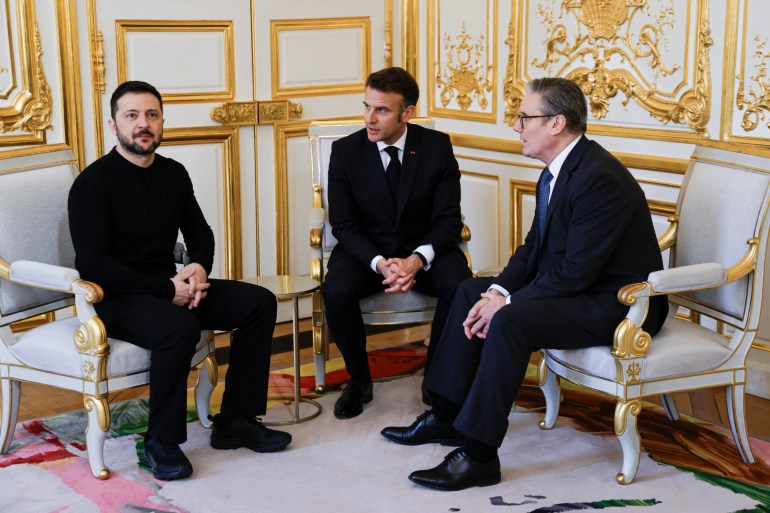
French President Emmanuel Macron says there was no unanimity regarding proposed deployment of troops in Ukraine after a potential ceasefire. Ukraine’s allies from across Europe did not all agree on the proposed deployment of troops in the country to back up an eventual peace deal with Russia and only some want to take part, French President Emmanuel Macron has said. “It is not unanimous,” he said after wrapping up a summit on strengthening Kyiv’s hand and its military as it pushes for a ceasefire with Moscow. “We do not need unanimity to achieve it.” Macron said France and the United Kingdom, which are driving the initiative, would forge ahead with a “reassurance force” with several countries. Macron hosted the leaders of nearly 30 countries and NATO and European Union chiefs in Paris on Thursday. The summit comes at a crucial juncture in the more than three-year war, with intensifying diplomatic efforts to broker ceasefires amid pressure from US President Donald Trump to end the fighting. Among those who attended were British Prime Minister Keir Starmer and Italy’s Giorgia Meloni, as well as the NATO secretary-general and the Turkish vice president. Advertisement ‘Reassurance force’ Macron said the members of the “reassurance force” were not destined to be peacekeepers, deployed on the front line or any kind of substitute for the Ukrainian army. He emphasised that not all of Ukraine’s European allies would be represented in the force, with some states not “having the capacity” and some reluctant due to the “political context”. The Franco-British delegation would begin talks over where such a force could be deployed. It would have the “character of deterrence against any potential Russian aggression”, he said. Macron said that the summit agreed that he and Starmer would together “co-pilot” Europe’s “coalition of action for stable and durable peace”. The UK-France delegation would also discuss the shape of “tomorrow’s Ukraine army”, Macron said, emphasising the importance of a “strong Ukrainian army, well-equipped for the day after”. Zelenskyy, Macron and Starmer speak at the trilateral meeting on the sidelines of a summit for ‘coalition of the willing’ at the Elysee Palace, in Paris, on March 27, 2025 [Ludovic Marin/Pool/AFP] Macron committed to a further 2 billion euros ($2.16bn) in French military support on Wednesday, including missiles, warplanes and air defence equipment. Zelenskyy said other partners could announce aid packages on Thursday. The meeting comes days after the US said it signed separate agreements with Moscow and Kyiv for a ceasefire in the Black Sea, but Russia presented conditions. They included a demand that sanctions be lifted on Russian state agricultural lender Rosselkhozbank and that it be reconnected to the international payment system SWIFT. Advertisement The European Union, which ejected Rosselkhozbank from SWIFT, said on Wednesday it can be reinstated only when Russia withdraws its troops from Ukraine. The summit format aims to forge a role for Europe in any talks on ending the conflict. While the US was not present, French officials say the outcome of the gathering will be shared with the US administration. Macron spoke with Trump before the meeting, the French presidency said. Adblock test (Why?)
US immigration officials detain Turkish student over pro-Palestine views
[unable to retrieve full-text content] Video shows masked and plain-clothed US federal agents detaining a Turkish PhD student from Tufts University.
Who are the students Trump wants to deport?
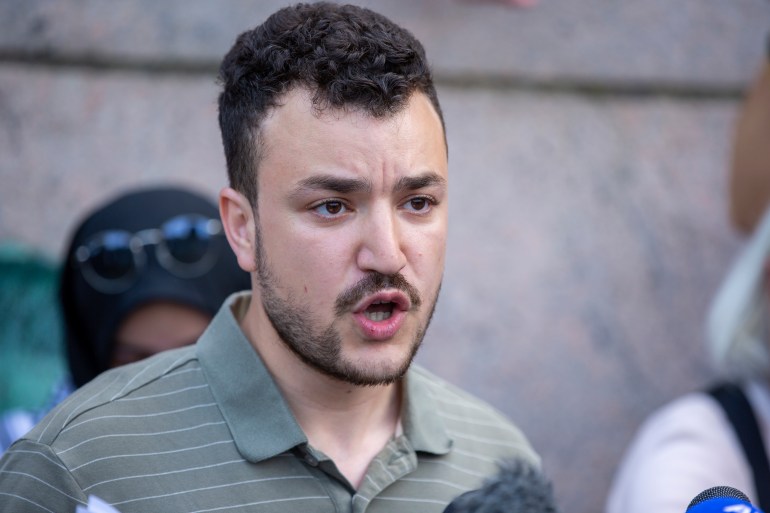
On Tuesday, US authorities detained and revoked the student visa of Tufts University student, Rumeysa Ozturk, a Turkish national who had voiced her support for Palestinians affected by the Gaza war. Ozturk’s arrest is the latest instance of President Donald Trump’s administration acting against international college students over their support for Palestinians during the Gaza solidarity encampments that erupted across university campuses last year. Students who protested for Palestine are having their legal visas and residence status revoked and are being arrested and detained. Here is more about the US university students who have been detained so far: Why does Trump want to deport US students? The Trump administration alleges that the students who participated in pro-Palestine protests spread anti-Semitism and pro-Hamas sentiment on campus — a claim students, lawyers and activists have all rebutted. Jewish activists and groups have been at the forefront of many of the most prominent protests in the US against the Gaza war. Advertisement On January 29, Trump signed an executive order titled “Additional Measures to Combat Anti-Semitism”, in which he ordered the head of each executive department or agency to submit a report within 60 days on all criminal and civil authorities and actions available for fighting anti-Semitism. The White House published a fact sheet a day after this order. In the fact sheet, Trump said: “To all the resident aliens who joined in the pro-jihadist protests, we put you on notice: come 2025, we will find you, and we will deport you. I will also quickly cancel the student visas of all Hamas sympathizers on college campuses, which have been infested with radicalism like never before.” His administration has since targeted multiple international students and scholars in the US. Rumeysa Ozturk Security camera footage from Tuesday evening shows six individuals in plainclothes taking Ozturk into custody near her apartment in Somerville, Massachusetts. Some of these officers were partially covering their faces. Ozturk had headed out alone to meet her friends for Iftar, the evening meal to break her Ramadan fast. The 30-year-old is a Turkish national and a Fulbright Scholar in Tufts’ doctoral programme for Child Study and Human Development. She has been in the US on a valid student visa. On March 26, 2024, Ozturk co-wrote an opinion piece for her university’s student news website, the Tufts Daily, with four other students. In this piece, the authors criticised the institute’s President Sunil Kumar, who sent an email dismissing resolutions passed by the Tufts Community Union Senate, which called for the university to divest from companies linked to Israel and “acknowledge the Palestinian genocide”. Advertisement Ozturk’s lawyer, Mahsa Khanbabai, filed a petition in Boston federal court late on Tuesday, arguing that Ozturk had been unlawfully detained. As a result, US District Judge Indira Talwani ordered US Immigration and Customs Enforcement (ICE) not to move Ozturk out of Massachusetts without 48 hours notice. Despite this, Ozturk was moved to Louisiana by Wednesday night, according to her lawyer. US Department of Homeland Security (DHS) spokesperson Tricia McLaughlin wrote in an X post on Wednesday: “DHS + ICE investigations found Ozturk engaged in activities in support of Hamas, a foreign terrorist organization that relishes the killing of Americans.” McLaughlin did not specify what these activities were. “A visa is a privilege not a right. Glorifying and supporting terrorists who kill Americans is grounds for visa issuance to be terminated. This is commonsense security,” McLaughlin wrote. “We are unaware of her whereabouts and have not been able to contact her. No charges have been filed against Rumeysa to date that we are aware of,” Khanbabai said in a statement. Tufts University President Sunil Kumar said in a written statement that the university was not informed before this arrest. “From what we have been told subsequently, the student’s visa status has been terminated, and we seek to confirm whether that information is true,” Kumar said. The video of Ozturk’s arrest was captured on 32-year-old software engineer Michael Mathis’s security camera. “It looked like a kidnapping,” he said, according to a report by AP. “They approach her and start grabbing her with their faces covered. They’re covering their faces. They’re in unmarked vehicles.” Advertisement On Wednesday, hundreds of people gathered in Somerville to protest the arrest of Ozturk, demanding her release. Standing with thousands of Somerville residents to denounce the sickening, unlawful abduction of Tufts graduate student Rumeysa Ozturk by masked federal agents last night. We need to bring Rumeysa home and organize a coordinated defense of our immigrant neighbors and our rights. pic.twitter.com/LSGLLlraIi — Mike Connolly (@MikeConnollyMA) March 27, 2025 Mahmoud Khalil On March 8, ICE agents arrested Mahmoud Khalil, a recent Columbia University graduate who was the lead negotiator for Columbia University Apartheid Divest (CUAD) during the campus protests last year. He was taken from his university-owned New York City apartment while his wife, Noor Abdalla, who is eight months pregnant, recorded the arrest on her phone. This marked the first publicly known student deportation effort of its kind under the Trump administration. McLaughlin alleged Khalil “led activities aligned to Hamas, a designated terrorist organization,” but no evidence for this was provided. Abdalla said that the agents did not show a warrant while making the arrest. Khalil was transferred to an ICE processing facility in Jena, Louisiana. At the time of arrest, Khalil was a permanent resident with a green card. When the ICE agents were told that Khalil had a green card, they said that this would be revoked. US Secretary of State Marco Rubio posted the link to a news article about Khalil’s arrest, captioning it “We will be revoking the visas and/or green cards of Hamas supporters in America so they can be deported.” Advertisement On March 10, Trump posted on his Truth Social platform: “Following my previously signed Executive Orders, ICE proudly apprehended and detained Mahmoud Khalil, a Radical Foreign Pro-Hamas Student on the campus of Columbia University.” Trump added that Khalil’s arrest was the first of many. “We will find, apprehend, and
South Sudan opposition says vice president’s arrest ends peace deal
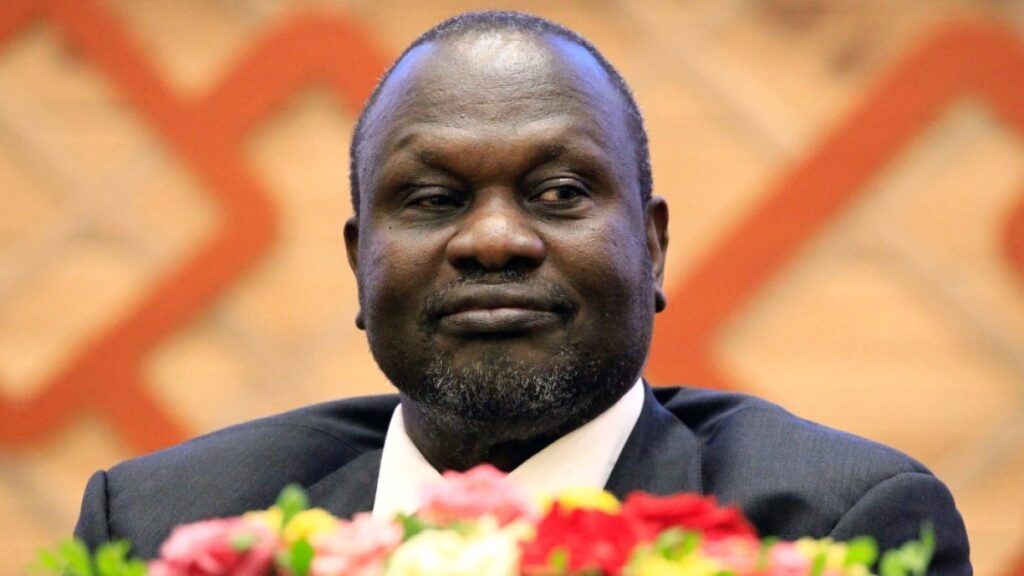
A power-sharing deal between Kiir and Machar is unravelling, threatening a return to South Sudan’s blood civil war. South Sudan’s opposition has said that the overnight arrest of First Vice President Riek Machar, longtime rival to President Salva Kiir, has invalidated their 2018 peace deal and risked plunging the country back into war. A convoy of 20 heavily armed vehicles entered Machar’s residence in the capital, Juba, late on Wednesday and arrested him, according to a statement issued by a member of his party – a dramatic escalation of a conflict that has been building for weeks in the world’s youngest country. Al Jazeera’s Malcolm Webb, reporting from Nairobi, said that “military vehicles came to his [Riek Machar’s] residence in the night and forcibly disarmed all of his guards. They removed all of the phones and the laptops from the property, arrested the guards and took them away to an unknown location, leaving only Machar at the residence.” Webb said that “the area has been cut off by soldiers. In other parts of the city, life is continuing as normal. This comes off the back of weeks of escalating violence which IO [the Sudan People’s Liberation Army In Opposition, or SPLM/IO] describes as a series of attacks by President Kiir’s forces, in breach of the peace deal.” Advertisement Peace and stability at risk A power-sharing deal between Kiir and Machar has been gradually unravelling, threatening a return of the civil war that killed around 400,000 people between 2013 and 2018. “The prospect for peace and stability in South Sudan has now been put into serious jeopardy,” said Oyet Nathaniel Pierino, deputy chairman of Machar’s party. There was widespread international condemnation, including from the United Nations Mission in South Sudan (UNMISS), warning that the reported arrest left the country “on the brink of relapsing into widespread conflict”. The US Department of State on Thursday called on Kiir to “reverse this action and prevent further escalation” in a post on X. Analysts say that Kiir, 73, has been seeking to ensure his succession and sideline Machar for months through cabinet reshuffles. Daniel Akech, a senior analyst on South Sudan for International Crisis Group, told Al Jazeera that “the agreement of 2018 was centred on two key issues. One was to create a constitution acceptable to all parties. The other one, which was really the key, was power sharing. And part of the power sharing was about military power sharing between the opposing sides.” Akech said that “the president had fired a governor in February who was supposed to be on the opposition led by Machar. He also recently fired the governor in Upper Nile – who was supposed to be with the opposition.” “So, this is clearly a power grab,” he said. “As we speak, this process is no longer binary,” Akech said. “We are talking about the president and vice president as though they are the only two actors, but there are plenty within the opposition who are opposed to the government. So, if this escalates to violence, this could be very decentralised with multiple actors, making it difficult to put the fire out.” Advertisement Adblock test (Why?)
Israeli military kills Hamas spokesman as Gaza assault continues
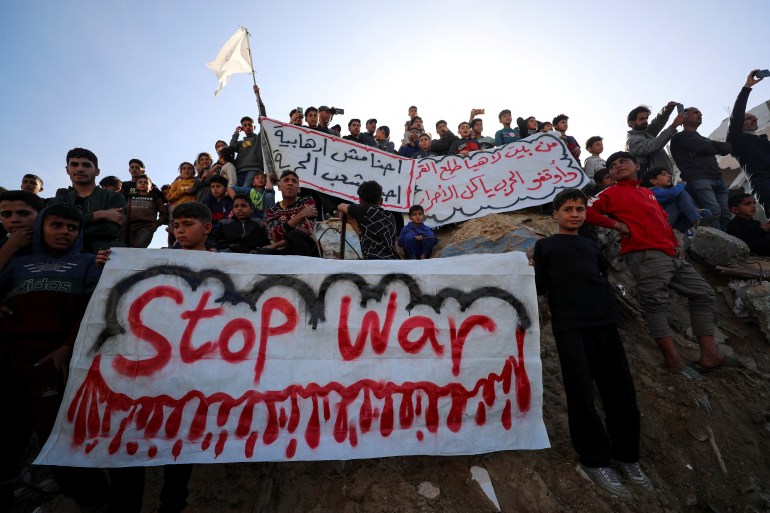
Hamas spokesperson Abdel-Latif al-Qanoua was killed when Israeli fighters jets bombed his tent shelter in northern Gaza. A Hamas spokesperson has been killed by an Israeli air strike in northern Gaza, news outlets have confirmed, as Israel’s army continues its renewed assault on the besieged enclave. Hamas spokesperson Abdel-Latif al-Qanoua was killed when Israeli fighter jets bombed his tent shelter in the northern city of Jabalia in the early hours of Thursday morning, according to Al-Aqsa television and the Shehab News Agency. Several more people were wounded in the strike, including children, according to Hind Khoudary, an Al Jazeera correspondent in Gaza. Khoudary said the attack was one of several carried out by the Israeli military across the Strip over recent hours, including a strike on a home in the as-Saftawi area of Gaza City, which killed six members of the same family. On March 18, Israel abruptly ended a fragile two-month ceasefire as it resumed its intense bombing campaign and ground operations in Gaza. Israel has since killed hundreds of Palestinian civilians in an attempt to pressure Hamas into freeing the remaining captives held in the war-torn enclave. Advertisement Several senior Hamas officials have also been killed over the past week. On Sunday, an Israeli air strike on the Nasser Hospital in Khan Younis in southern Gaza killed five people, including Ismail Barhoum, the head of finances and institutions within Hamas’s political office. That same day, Israeli fighter jets also bombed tents housing displaced Palestinians in Khan Younis. Salah al-Bardaweel, a prominent Hamas political leader and member of the Palestinian Legislative Council, was killed in that attack alongside his wife. Both men were part of Hamas’s political office – a 20-member decision-making body, 11 of whom have been killed since the start of the war in late 2023, according to the Reuters news agency. Palestinian protesters demanding an end to Israel’s war on the enclave gather in Beit Lahiya in northern Gaza where they also chanted anti-Hamas slogans, on March 26, 2025 [Reuters) Hamas still holds 59 of the roughly 250 captives the group took during the October 7, 2023, attack on southern Israel. At least 1,139 people were killed in Israel during the Hamas assault while the Israeli military has now killed at least 50,183 Palestinians and wounded 113,828 others since launching its ground and air assault on the Palestinian enclave. About 830 people have been killed since Israel resumed attacks 10 days ago, according to statistics from Gaza’s Ministry of Health, with women and children making up more than half of the casualties. The United Nations’ humanitarian agency (OCHA) also announced on Tuesday that 142,000 Palestinians have been forcibly displaced by the Israeli military since March 18, exacerbating an already dire humanitarian situation caused by Israel’s ongoing restrictions on aid entering Gaza. Advertisement The rising death toll in Gaza comes amid weeks of slow-moving and fractious ceasefire negotiations between Israel and Hamas. Mediators – the United States, Qatar and Egypt – have failed to secure an extension to the first stage of the three-phase agreement, which expired on March 1. Hamas has accused Israel of intentionally jeopardising truce discussions, aimed at bringing about a permanent end to fighting. Israeli Prime Minister Benjamin Netanyahu has claimed he ordered Israeli forces to renew attacks on Gaza after Hamas rejected proposals to secure an extension. On Wednesday, Netanyahu repeated threats that Israel would seize territory in Gaza if Hamas failed to release the remaining captives. Adblock test (Why?)
North Korea’s Kim Jong Un oversees tests of new AI-equipped suicide drones
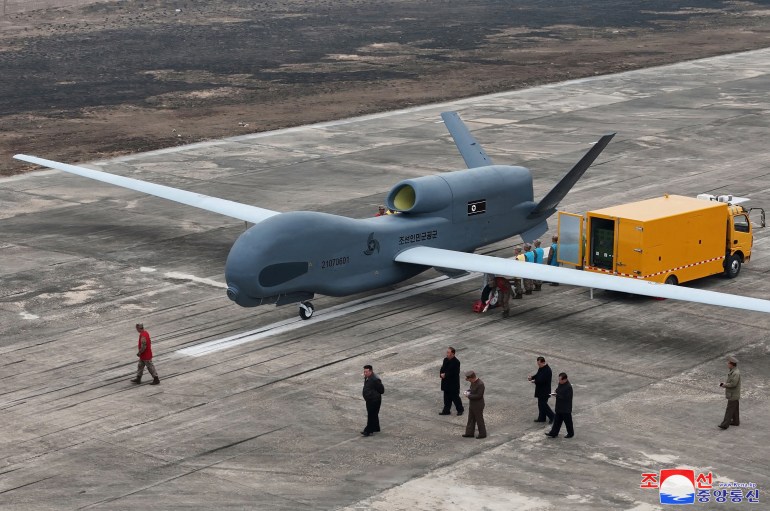
North Korea’s leader oversaw tests of his country’s latest military innovations involving the use of artificial intelligence. North Korean leader Kim Jong Un has personally supervised his country’s testing of new AI-equipped suicide and reconnaissance drones and called for unmanned aircraft and artificial intelligence to be prioritised in military modernisation plans. State-run Korean Central News Agency (KCNA) said on Thursday that Kim oversaw the testing of “various kinds of reconnaissance and suicide drones” produced by North Korea’s Unmanned Aerial Technology Complex. The new North Korean drones are capable of “tracking and monitoring different strategic targets and enemy troop activities on the ground and the sea”, while the attack drones will “be used for various tactical attack missions”, KCNA said, noting that both drone systems have been equipped with “new artificial intelligence”. Kim agreed to expand the production capacity of “unmanned equipment and artificial intelligence” and emphasised the importance of creating a long-term plan for North Korea to promote “the rapid development” of “intelligent drones”, which is “the trend of modern warfare”. Advertisement Pictures from the tests, which took place on Tuesday and Wednesday, were said to show attack drones successfully striking ground targets, including military vehicles. In this undated photo released on March 27, 2025, North Korean leader Kim Jong Un inspects a newly developed unmanned reconnaissance aircraft at an undisclosed location in North Korea [KCNA via KNS/AFP] Kim was pictured walking with aides near a newly developed unmanned aerial reconnaissance aircraft, which appeared to be larger than a fighter jet, and was seen boarding an airborne early warning and control (AEW) aircraft, according to pictures released by KCNA. The photos mark the first time such an aircraft was unveiled by the North, which was equipped with a radar dome on the fuselage, similar to the Boeing-manufactured Peace Eye operated by the South Korean air force. North Korea’s efforts to create an early warning aircraft were previously reported by analysts who had used commercial satellite imagery to discover Pyongyang was converting a Russian-made Il-76 cargo aircraft into an early-warning role. The London-based International Institute for Strategic Studies (IISS) said in a report last year that an AEW aircraft would help augment North Korea’s existing land-based radar systems, though just one aircraft would not be enough. North Korean leader Kim Jong Un boards an early warning and reconnaissance aircraft in this photo released by North Korea’s KCNA on March 27, 2025 [Handout/KCNA via Reuters] During his visit to the test site, Kim was also briefed on intelligence-gathering capabilities as well as electronic jamming and attack systems newly developed by the country’s electronic warfare group, KCNA said. Advertisement The government of South Korea and analysts have repeatedly warned about the potential transfer of sensitive Russian military technology to North Korea in return for Kim’s provision of thousands of North Korean troops and weapons to support Russia’s war with Ukraine. Seoul’s military said on Thursday that North Korea has so far this year supplied Russia with an additional 3,000 troops as well as missiles and other ammunition. “It is estimated that an additional 3,000 troops were sent between January and February as reinforcements,” South Korea’s Joint Chiefs of Staff (JCS) said, adding that of the initial 11,000 North Korean soldiers dispatched to Russia in 2024, 4,000 are believed to have been killed or wounded. “In addition to manpower, North Korea continues to supply missiles, artillery equipment, and ammunition,” according to a report by the JCS. “So far, it is assessed that North Korea has provided a significant quantity of short-range ballistic missiles [SRBMs], as well as about 220 units of 170mm self-propelled guns and 240mm multiple rocket launchers,” it said. The JCS also warned that “these numbers could increase depending on the situation on the battlefield”. Adblock test (Why?)
Trump reiterates US must ‘have’ Greenland ahead of JD Vance visit

US president said ‘we have to convince them’, as he claimed taking control of Greenland was essential for US national security. United States President Donald Trump has re-asserted his desire for Washington to take control of Greenland, in advance of a controversial planned visit to the Danish autonomous territory by Vice President JD Vance. “We need Greenland for international safety and security. We need it. We have to have it,” Trump said in an interview on Wednesday. “I hate to put it that way, but we’re going to have to have it,” he said. Since returning to the White House in January, President Trump has repeatedly insisted he wants to take control of Greenland for national security purposes. Trump has refused to rule out the use of military force to bring the Arctic territory under Washington’s control, despite it being ruled by NATO-ally Denmark for six centuries. “We have to have that land because it’s not possible to properly defend a large section of this Earth, not just the United States, without it,” Trump said. “It’s an island that from a defensive posture, and even offensive posture, is something we need, especially with the world the way it is, and we’re going to have to have it,” he said. Advertisement Located between North America and Europe, Greenland is of geo-strategic importance at a time of rising US, Chinese and Russian interest in the Arctic. The territory also holds massive untapped mineral and oil reserves – though exploration is currently banned – that could significantly shift the dynamics of global trade. Asked by the interviewer if he thought Greenlanders were eager to join the US, Trump said he did not know, but “we have to convince them”. Greenland has repeatedly declared its stated goal of eventual independence from Denmark. Earlier this month, the centre-right opposition Demokraatit party – which is described as pro-business and in favour of a slow approach to independence – won parliamentary elections in the territory. In light of the Trump administration’s increasingly assertive overtures, 85 percent of the semi-autonomous Arctic territory’s population has also expressed their opposition to coming under Washington’s rule. Trump’s latest incendiary remarks come as Vice President Vance is set to accompany his wife, Usha, on a visit to Greenland this Friday. An initial itinerary, which included a visit to a dogsled race, caused anger among Greenlandic officials and the general public. Vance, his wife and other Trump administration officials will now visit a US military base in Greenland instead. The territory’s acting head of government, Mute Egede, had labelled the uninvited trip a “provocation” and “foreign interference” in its affairs. Posting on Facebook, the outgoing Greenlandic government said it had not “extended any invitations for any visits, neither private nor official”. Advertisement Denmark’s Prime Minister Mette Frederiksen also accused the US of exerting “unacceptable pressure” on Greenland and Denmark through the trip. “It is pressure that we will resist,” she told Danish media on Tuesday. “This is clearly not a visit that is about what Greenland needs or wants.” Responding to the backlash, the White House later announced that the Vances will now visit the US-run Pituffik Space Base in Greenland in lieu of the dogsled race, where an anti-US demonstration was reportedly planned. Danish Foreign Minister Lars Lokke Rasmussen welcomed the decision to limit the visit to the US base. “I think it’s very positive that the Americans have cancelled their visit among Greenlandic society. They will only visit their own base, Pituffik, and we have nothing against that,” he said. Danish Defence Minister Troels Lund Poulsen said visiting the military base was a “much wiser decision” than interfering in “what is happening in Greenlandic politics”. Adblock test (Why?)