

US stock market tumbles again as Trump threatens tariffs on wine

Benchmark S&P 500 falls 1.39 percent, dragging index more than 10 percent below its February peak. The United States’ stock market has taken another tumble following US President Donald Trump’s threat to impose steep tariffs on wine and other alcoholic products from the European Union. The benchmark S&P 500 fell 1.39 percent on Thursday, dragging the index into a correction – Wall Street lingo for a decline of 10 percent or more from the peak. Corrections are not unusual in the US stock market, which has consistently recovered from losses over its history, though they can be unsettling for investors in the shortterm. The S&P 500 last entered correction territory in October 2023, when the index slid 10.3 percent from its peak that July. The Dow Jones Industrial Average and tech-heavy Nasdaq Composite also recorded sharp declines, falling 1.30 percent and 1.96 percent, respectively. The latest losses mean that US stocks have lost more than $5 trillion in market value since their February peak. Trump’s back-and-forth announcements on trade have unnerved markets, with investors struggling to gauge whether his tariffs are here to stay or are a bargaining tactic to extract concessions. Advertisement “The main difference between the trade war under Trump 1.0 and Trump 2.0 is duration,” the Kobeissi Letter, a financial newsletter founded by Adam Kobeissi, said on X. “In his first term, Trump’s tariffs were taken to be more of a posturing tactic. This time around, markets are pricing in tariffs for longer on more trade partners. This is a material change.” In his latest trade salvo on Thursday, Trump threatened to slap a 200 percent tariff on wine, champagne and other alcoholic products from the EU. Trump’s threat came after the bloc announced plans to impose a 50 percent tariff on US bourbon whiskey from April 1 in response to US duties on steel and aluminium that went into effect on Wednesday. On Tuesday, Trump backed off from a threat to impose a 50 percent tariff on Canadian aluminium and steel after the province of Ontario agreed to temporarily suspend a surcharge on electricity exports. Trump and his aides have played down the stock market turmoil as a transition period for the economy. “I think this country is going to boom. But as I said, I can do it the easy way or the hard way,” Trump told reporters on Tuesday. “The hard way to do it is exactly what I am doing, but the results are going to be 20 times greater.” Adblock test (Why?)
Russia-Ukraine war: List of key events, day 1,114
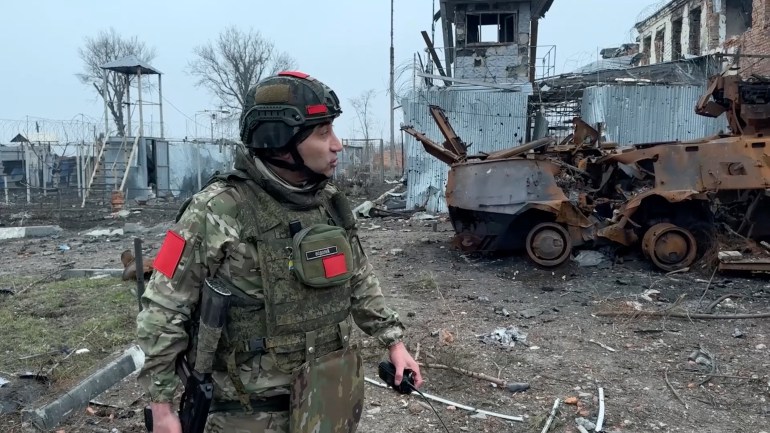
These are the key developments on day 1,114 of Russia’s war on Ukraine. Here is the situation on Friday, March 14: Fighting Russian President Vladimir Putin said his forces have trapped the remaining Ukrainian soldiers still in the country’s western Kursk region, where Kyiv’s troops have clung on for more than seven months in one of the key battles of the war after making a daring cross-border incursion. Putin told a news conference that the situation in Kursk was “completely under our control, and the group that invaded our territory is in isolation”. Ukraine’s military leadership has denied their forces are being encircled but said the remaining troops in the Kursk region are adopting better defensive positions. According to the Russian military, Ukraine now holds less than 200 square kilometres (77sq miles) in Kursk, down from 1,300sq km (500sq miles) at the peak of the incursion. Maps published by Deep State, an authoritative Ukrainian source that charts the front lines of the war, show a dramatic shrinking of Ukrainian-held territory in the past week but little change in the past 24 hours. Ukraine’s general staff said that five Russian attacks in Kursk have been repelled and clashes were continuing in four locations. A Russian war correspondent reported heavy Ukrainian artillery fire on Kursk’s Sudzha town, which Russia recaptured on Wednesday. Combat is reported to be ongoing on the periphery of Sudzha as some Ukrainian soldiers try to fight their way out of Kursk and back into the neighbouring Sumy region of Ukraine, The Associated Press (AP) news agency said. Video clips from Sudzha, published by Russian media and military bloggers, showed scenes of devastation from the seven months of fighting, with burned-out vehicles, roofless buildings and mountains of rubble. A Russian soldier walks along a ruined street in the Malaya Loknya settlement, which was recently retaken from Ukrainian forces by Russia’s military in the Kursk region, Russia [Handout/Russian Defence Ministry via Reuters] Ukrainian soldiers and commanders fear that Russia’s air superiority will enable them to wipe out the logistics routes vital to sustaining the soldiers who are still in Kursk, the AP reports. To retreat from Kursk, Ukrainian soldiers must walk dozens of kilometres to get back into Ukraine while avoiding Russian forces. Advertisement Ceasefire President Putin said he agrees in principle with a United States proposal for a 30-day ceasefire in Ukraine, but cautioned that terms are yet to be worked out. “The idea itself is correct, and we certainly support it,” Putin told a news conference in Moscow. “But there are issues that we need to discuss, and I think that we need to talk about it with our American colleagues and partners and, perhaps, have a call with President Trump and discuss it with him.” Putin said Russian forces were moving forward along the entire front line and that the ceasefire would have to ensure that Ukraine did not seek to use it simply to regroup. “How can we and how will we be guaranteed that nothing like this will happen? How will control [of the ceasefire] be organised?” Putin said. “These are all serious questions.” US President Donald Trump said there were “good signals” coming out of Russia and offered guarded optimism about Putin’s statement. Trump said Putin had “put out a very promising statement, but it wasn’t complete”. Ukrainian President Volodymyr Zelenskyy characterised Putin’s response to the ceasefire plan as “manipulative”, saying “at this moment he is, in fact, preparing to reject it”. Zelenskyy said in his evening video message to the nation that Putin did not dare to tell Trump openly that he wants the war to continue. Right now, we have all heard from Russia Putin’s highly predictable and manipulative words in response to the idea of a ceasefire on the front lines—at this moment he is, in fact, preparing to reject it. Of course, Putin is afraid to tell President Trump directly that he wants… pic.twitter.com/SWbYwMGA46 — Volodymyr Zelenskyy / Володимир Зеленський (@ZelenskyyUa) March 13, 2025 The Ukrainian president’s chief of staff, Andriy Yermak, said his country would not agree to a frozen conflict with Russia, where a ceasefire is not properly resolved and where fighting rumbles on with occasional eruptions. David Lammy, the United Kingdom’s foreign secretary, said it would be “wrong” for Putin to place conditions on a ceasefire, and a pause in fighting would be a “first step” to allow talks to start on “a full settlement” to end the war. Trump’s envoy Steve Witkoff arrived in Moscow to discuss the ceasefire plan. Top Kremlin aide, Yuri Ushakov, said Witkoff would meet Putin when the president “gives the signal”, Russian news agencies reported. Advertisement Belarusian President Alexander Lukashenko said Europe and Ukraine will be “done for” if Russia comes to an agreement with the US on a ceasefire. Lukashenko said Moscow and Washington would hold Europe’s fate “in their hands”. Polish Foreign Minister Radoslaw Sikorski said, “If Russia rejects this test and fails, it will be clear who wants war and who wants peace.” Saudi Arabia’s Crown Prince Mohammed bin Salman told Putin in a phone call that his kingdom remains committed to facilitating dialogue and supporting a political resolution to the Ukraine crisis, the Saudi state news agency reported. Military The US is poised to resume shipments to Ukraine of long-range bombs known as Ground-Launched Small Diameter Bombs (GLSDB) after they were upgraded in order to better counter Russian electronic jamming techniques, two people familiar with the weapon told the Reuters news agency. The munitions will arrive amid reports that Ukraine’s supply of similarly-ranged Army Tactical Missile Systems (ATACMS) has been depleted. Sweden announced a new military aid package worth 3 billion Swedish krona ($294m) to strengthen Ukraine’s artillery capabilities, the Turkish news agency Anadolu reports. Jack Teixeira, the Air National Guard member who caused an international uproar when he leaked highly classified US documents about the war in Ukraine, used his court-martial hearing to describe himself as a “proud patriot” who was only “exposing and correcting
Greenland PM calls for ‘tougher rejection’ of Trump’s plan to take island
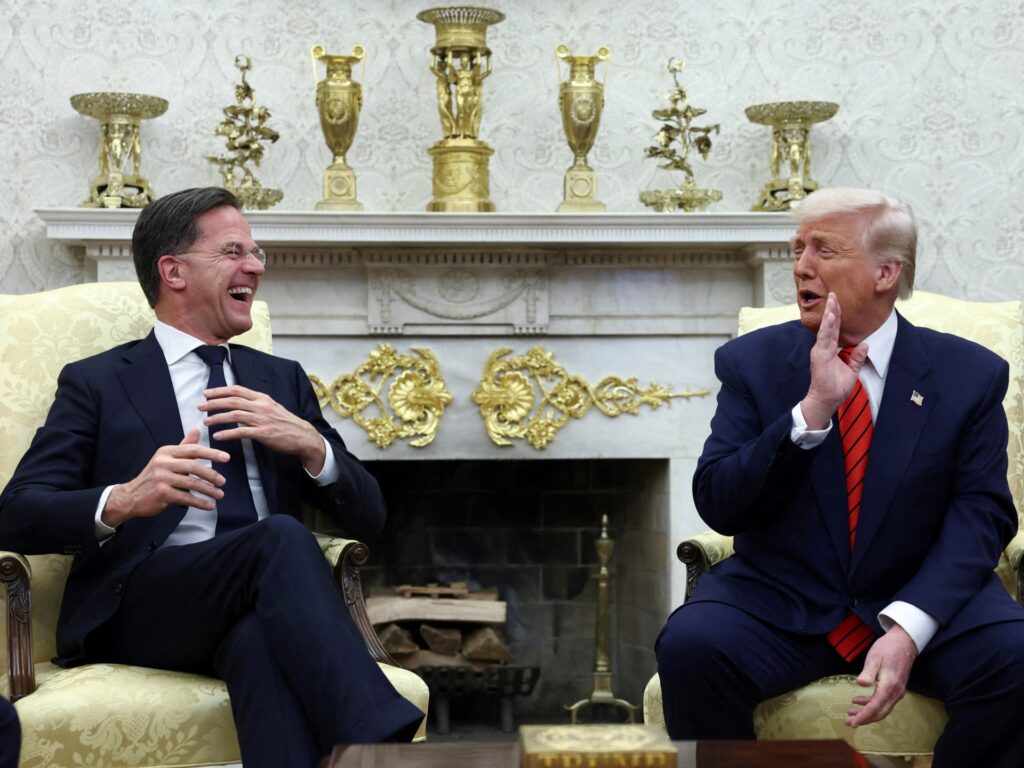
Outgoing Prime Minister Mute Egede says ‘disrespect’ for Greenland must stop as US president again says he wants Arctic island. Greenland’s outgoing Prime Minister Mute Egede has called for a stronger rejection by local politicians of United States President Donald Trump’s promise to take over the strategically-located island, warning that “enough is enough”. “This time we need to toughen our rejection of Trump. People cannot continue to disrespect us,” Egede wrote on Facebook after Trump reiterated on Thursday his desire to annex the autonomous Danish territory. “The American president has once again evoked the idea of annexing us. I absolutely cannot accept that,” he wrote. “I have therefore asked the administration to summon the party heads as soon as possible,” said Egede, who continues to lead Greenland while awaiting the formation of a new government following his party’s defeat in elections on Tuesday. Speaking earlier at the White House alongside NATO Secretary-General Mark Rutte, Trump doubled down on his wish to annex Greenland – an island of 57,000 people – saying: “I think it will happen.” “You know, Mark, we need that for international security, not just security – international – we have a lot of our favourite players cruising around the coast, and we have to be careful,” Trump told Rutte as they sat side-by-side in the White House Oval Office for talks. Advertisement Rutte responded by saying he would leave the question of Greenland’s future to others, adding, “I don’t want to drag NATO” into the debate. The NATO chief said it should be a topic for countries in the “high north” because the Chinese and Russians are using water routes in the Arctic region. But Trump persisted, saying Denmark was refusing to discuss the topic of Greenland and that he might send more US troops to bolster the US military bases on the island. In his first stint as US president from 2017-21, Trump raised the idea of buying Greenland – a semi-autonomous Danish territory – an idea flatly rejected by Denmark and Greenland. “We’ve been dealing with Denmark, we’ve been dealing with Greenland, and we have to do it,” Trump continued. “We really need it for national security. I think that’s why NATO might have to get involved in a way because we really need Greenland for national security. It’s very important,” Trump said. Trump then moved on to undermine Denmark’s claim to the island. “You know, Denmark’s very far away, and really has nothing to do. What happens, a boat landed there 200 years ago or something? And they say they have rights to it. I don’t know if that’s true. I don’t think it is,” he said. Rutte refused to comment on the issue when asked by a reporter in the White House. NATO and Denmark’s embassy in Washington did not immediately respond to a request for comment. Danish politician Rasmus Jarlov took to social media after the Trump meeting with Rutte, saying that Denmark did “not appreciate” the head of NATO “joking with Trump about Greenland like this”. Advertisement “It would mean war between two NATO countries,” Jarlov said. “Greenland has just voted against immediate independence from Denmark and does not want to be American ever,” he said. We do not appreciate the Secr. Gen. of NATO joking with Trump about Greenland like this. It would mean war between two NATO countries. Greenland has just voted against immediate independence from Denmark and does not want to be American ever.pic.twitter.com/eh7enEHoA8 — Rasmus Jarlov (@RasmusJarlov) March 13, 2025 Since returning to office, Trump has made the annexation of Greenland a major talking point, and his comments on Thursday suggest he might want NATO involved in his attempt to take over the territory. Greenland’s strategic location and rich mineral resources could benefit the US. It is located along the shortest route from Europe to North America and is vital for the US’s ballistic missile warning system. According to polls, most Greenlanders support independence from Denmark and reject annexation by the US. Adblock test (Why?)
What is happening with talks between Israel, the US and Hamas?
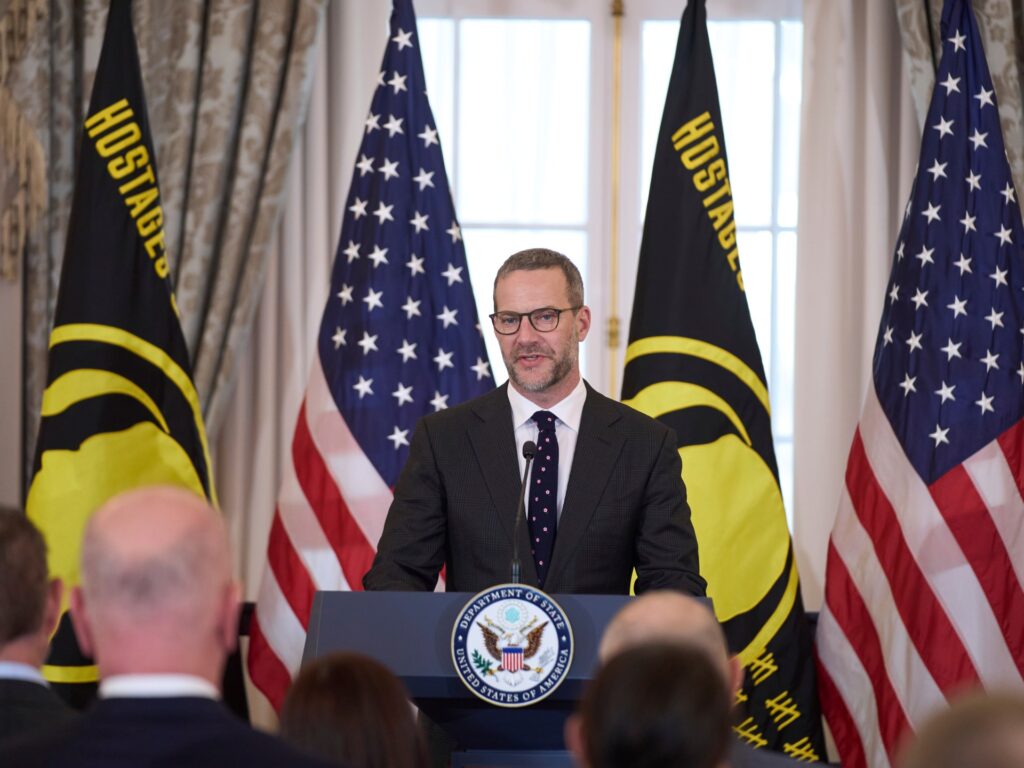
An Israeli negotiating team has reportedly extended its stay in the Qatari capital Doha, a day after the US envoy to the Middle East Steve Witkoff was in town to try and find a path forward between Israel and Hamas. The deal reportedly on the cards is an extension of the ceasefire for up to 60 days in exchange for between five and 10 living Israeli captives held in Gaza. While Hamas has previously rejected a similar deal, they may be more amenable after direct meetings between US hostage envoy Adam Boehler and top Hamas officials in recent weeks. Boehler had said that the meetings went well and suggested a deal was on the cards for a potential long-term ceasefire, prompting a backlash from Israel and pro-Israeli US politicians. There are even reports that Boehler has been taken off the Israel-Gaza file, but those reports may be premature. Let’s take a closer look. What is the deal currently being negotiated? A deal between Israel and Hamas had already been reached, which included three phases and was eventually to lead to a permanent ceasefire. The first phase involved a limited swap of Israeli captives and Palestinian prisoners, as well as a temporary ceasefire and Israel allowing an increased amount of humanitarian aid into Gaza. The details of the second phase were still to be negotiated, but the previous US administration of President Joe Biden made it clear that the first phase would continue until the second phase could be agreed upon. Advertisement Israel has ignored that, and while it has not restarted an all-out war on Gaza, it has threatened to do so, and blocked the entry of all humanitarian aid, as well as electricity. At the start of March Israeli Prime Minister Benjamin Netanyahu introduced a new proposal, which he said had come from Witkoff – although the US envoy never publicly took ownership of it. Netanyahu’s office said the deal would see the ceasefire extended for six weeks and half of the captives in Gaza – dead and alive – released on the first day of the extension. While that was initially rejected by Hamas, the current deal being negotiated in Doha appears to be similar, although critics still say that Netanyahu has no desire to end the war permanently, as he fears his government will collapse if he does so. What about Boehler’s negotiations? While Boehler’s remit only extended to the five Israeli-American captives, four of whom are believed dead, it seems that the direct talks held the possibility of not just securing a lasting ceasefire, but potentially the release of all captives held by Hamas. Speaking to both Israeli and US media last Sunday, Boehler indicated that he had used the opportunity to engage with Hamas directly, gaining a commitment to maintaining a ceasefire of between five and 10 years, laying down its arms and relinquishing control of the Gaza Strip. Boehler made clear that he had not coordinated with Israel before holding talks with Hamas, and added in an interview that the US was “not an agent of Israel” and had its own “specific interests at play”. Advertisement How has Israel reacted to news of the direct talks? Not well. Israel’s far-right Finance Minister Bezalel Smotrich told Israel’s Army Radio that unspecified Israeli officials had “made it clear to him [Boehler] that he cannot speak on our behalf, and if he wishes to negotiate on behalf of the United States, then good luck to him”. Ron Dermer, Israel’s strategic affairs minister and a close confidante of Netanyahu, was reported to have repeatedly “lashed out” at Boehler the night before news of the talks became public. The former head of the Israeli security service, the Shin Bet and current agriculture minister, Avi Dichter, also criticised the US initiative, telling Israeli radio the direct US-Hamas talks undermined Israeli negotiations. “It’s very dangerous when you undertake moves without knowing and without coordinating with the Israeli side,” Dichter said. The Israeli campaign against Boehler continued in the press, with a Times of Israel editorial picking apart Boehler’s comments, branding the envoy “complacent, confused and dangerously naive”. Has Trump abandoned Boehler? When news of the US-Hamas talks emerged at the start of the month, White House press secretary Karoline Leavitt said that Trump backed them because they were “the right thing for the American people”. But following Boehler’s comments to the press last Sunday, Israeli news reports emerged saying that the hostage envoy did not represent the White House’s position, and that Witkoff would continue to take the lead on negotiations. Advertisement Then, US Secretary of State Marco Rubio, whose most important portfolios in Ukraine and the Middle East appear to have been taken by Witkoff, said on Monday that the talks were a “one-off situation” that had failed. Reports on Thursday alternated between claims that said that Boehler would not be dealing with Israel and Gaza any more, and others that said he would continue to support Witkoff. A report from Jewish Insider included quotes from several anonymous Republican senators berating Boehler, with one suggesting he had “lost all trust”. Does that matter? Until Trump himself speaks, it is hard to gauge what his true position on the matter is. It may be the case that he simply hasn’t decided yet. But either way, the fact that the senators quoted did not want their names published may show that they are still hedging their bets and avoid being seen as second-guessing Trump. The talks with Hamas, even if the US does not repeat them, are a sign that the Trump administration is taking the lead on Gaza, and is dragging Israel and Netanyahu along with them. Israel is entirely reliant upon the US for both military and diplomatic support. Moreover, in light of Trump’s unexpected shrugging off of traditional US alliances, such as those with Canada and Europe, many within Israel are worried that Trump’s support for their war on Gaza may prove equally fickle. Responding to news of
Jewish activists protest at Trump Tower in support of Mahmoud Khalil
NewsFeed Dozens of activists, including a Hollywood actress occupied Trump Tower in New York City to protest the arrest of Mahmoud Khalil. The Trump administration is threatening to deport Khalil who took a leading role in pro-Palestine protests at Columbia University. Published On 13 Mar 202513 Mar 2025 Adblock test (Why?)
Arrests at Trump Tower as Mahmoud Khalil demonstrations continue
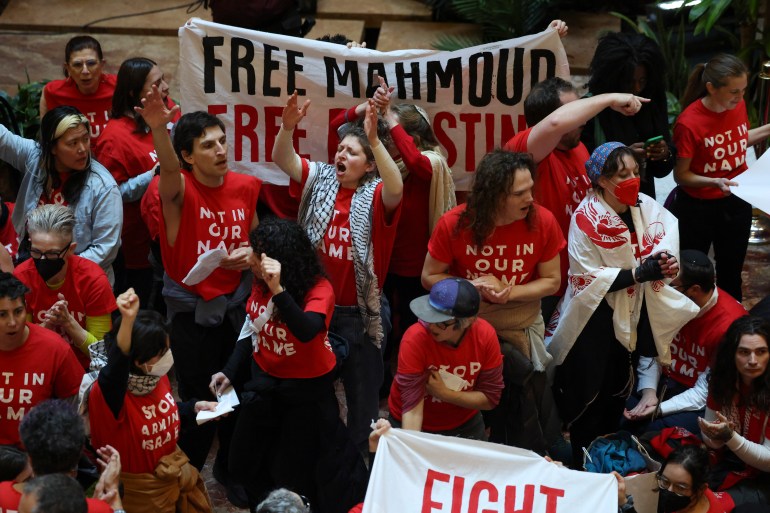
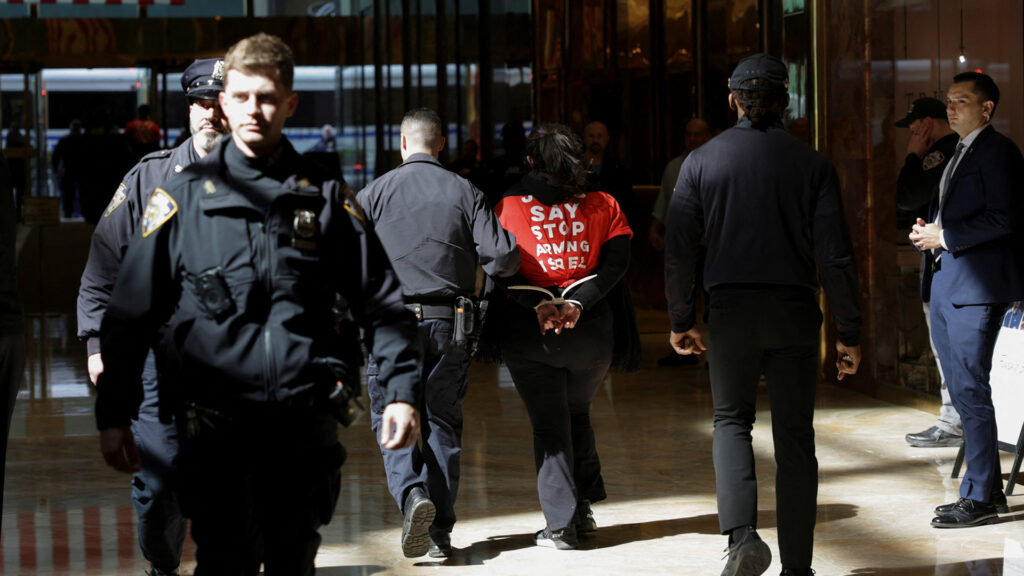
Demonstrators have flooded the lobby of Trump Tower in New York City, in a show of solidarity with student protest leader Mahmoud Khalil, a permanent resident of the United States. Thursday’s protest is the latest in a string of demonstrations after immigration authorities arrested Khalil on Saturday evening. The administration of President Donald Trump has said it intends to deport Khalil, who is Palestinian and married to a US citizen, over his role in pro-Palestine protests at Columbia University. Khalil’s lawyers and supporters, however, believe the Trump administration is wilfully conflating criticism of Israel’s war in Gaza with support for “terrorism”. The arrest has been roundly condemned by civil liberty groups, who have called Khalil a “political prisoner”. The leaders of Thursday’s demonstration said they chose Trump Tower to send a message to the president. The high-rise houses both the Trump Organization and Trump’s personal New York residence. “As Jews, we are taking over the Trump Tower to register our mass refusal,” Jewish Voice for Peace, which organised the protest, wrote in a post on the social media platform X. Advertisement “We will not stand by as this fascist regime attempts to criminalise Palestinians and all those calling for an end to the Israeli government’s US-funded genocide of the Palestinian people. And we will never stop fighting for a free Palestine.” Demonstrators from the group Jewish Voice for Peace wear red shirts emblazoned with the slogan ‘Not in our name’ as they protest in Trump Tower in New York City [Yuki Iwamura/AP Photo] Among the protesters was actress Deborah Winger, who told The Associated Press news agency she was “standing up for my rights”. “I’m standing up for Mahmoud Khalil, who has been abducted illegally and taken to an undisclosed location,” she added. “Does that sound like America to you?” Reporting from New York, Al Jazeera’s Kristen Saloomey said there were several “dramatic moments” as police arrested 98 of the protesters while clearing the lobby. “The demonstrators basically went in nonchalantly, dressed as normal tourists,” Saloomey said. “Then they took off their jackets, wearing red T-shirts that represented their cause. On behalf of Mahmoud Khalil, they said, ‘Not in our name’.” “Ninety-eight of them who were dragged out in handcuffs are being processed and charged with misdemeanour crimes.” New York Police officers arrest a demonstrator from the group Jewish Voice for Peace at Trump Tower in New York City [Yuki Iwamura/AP Photo] Detention continues While a federal judge has blocked Khalil from being removed from the US, pending a legal challenge, he remains in detention in Louisiana. Advertisement His lawyers have requested he be moved to New York for the proceedings and to be closer to his wife, who is eight months pregnant. Speaking during a court hearing yesterday, Khalil’s lawyer Ramzi Kassem said he was “identified, targeted, detained and is being processed for deportation on account of his advocacy for Palestinian rights”. For its part, the Trump administration has remained defiant in its efforts to expel Khalil. White House spokesperson Karoline Leavitt has told reporters Khalil was subject to removal under a law that allows for the deportation of green-card holders deemed by the US secretary of state to be “adversarial to the foreign policy and national security interests” of the country. She repeated the claim that Khalil supported “terrorists”, without offering any evidence. Trump, meanwhile, has said Khalil’s arrest is the “first of many to come”. Police officers detain protesters during a rally at Trump Tower in New York City [Jeenah Moon/Reuters] In a separate court proceeding on Thursday, eight Columbia students – including Khalil – were named as plaintiffs in a petition seeking to bar the university from complying with an order to share student disciplinary records with the government. The House Committee on Education and Labor has sought records for students involved in pro-Palestine protests, as part of its attempts to crack down on anti-Semitism on campus. The students said the congressional committee’s request violated the First Amendment and their privacy rights under the Family Educational Rights and Privacy Act, a US law that governs how universities handle student information. “Entities like the university feel pressure to cooperate with the government in its efforts to chill and punish protected speech,” the lawsuit stated. Advertisement Adblock test (Why?)
Satellite photos show Gaza darkened by Israeli power restrictions
[unable to retrieve full-text content] Satellite photos from NASA show the widespread impact of Israel’s electricity and fuel cutoffs to Gaza.
Qatar begins supplying natural gas to Syria through Jordan
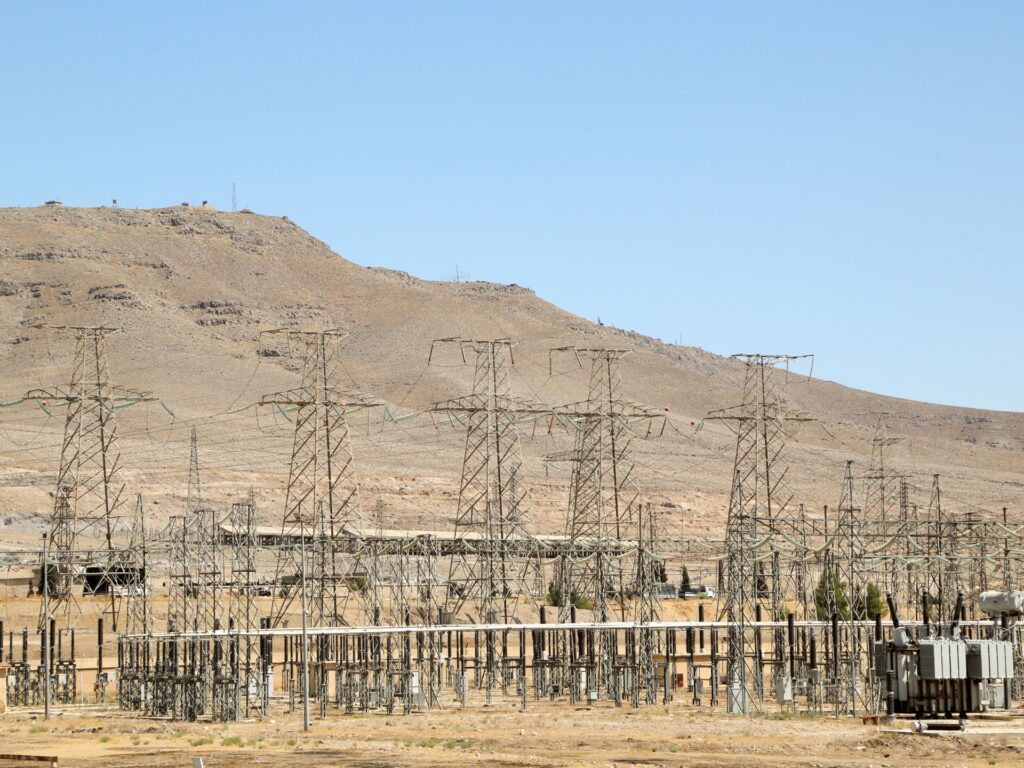
Qatar will provide 400 megawatts of electricity daily to Syria, where authorities have struggled with power generation. Qatar has begun providing natural gas to Syria through Jordan to tackle the country’s electricity shortage and power cuts, state news agency QNA has reported. In a statement issued on Thursday, Qatar said the initiative comes as part of a deal signed with Jordan and in collaboration with the United Nations Development Programme. According to the agreement, Qatar will provide natural gas supplies “generating power from 400 megawatts of electricity daily and gradually increase production at the Deir Ali power plant in Syria”. The electricity will be distributed to several Syrian cities, including the capital Damascus, Rif Dimashq, As Suwayda, Daraa, Al Qunaitra, Homs, Hama, Tartous, Latakia, Aleppo, and Deir ez-Zur, it added. “This initiative represents a pivotal step towards meeting the Syrian people’s energy needs and reflects a shared commitment among all parties to work together for the benefit of the region,” said Fahad Hamad Hassan Al-Sulaiti, who heads the Qatar Fund for Development, according to QNA. Advertisement Syrian’s interim authorities have struggled to provide electricity to civilians since they removed former President Bashar al-Assad in December, with much of the country’s infrastructure battered by more than 13 years of civil war. Damascus previously received much of the oil used for power generation from Iran, but supplies were cut after al-Assad’s removal. Adblock test (Why?)
‘Many will die’: UN aid chief warns of fallout as humanitarian relief cut
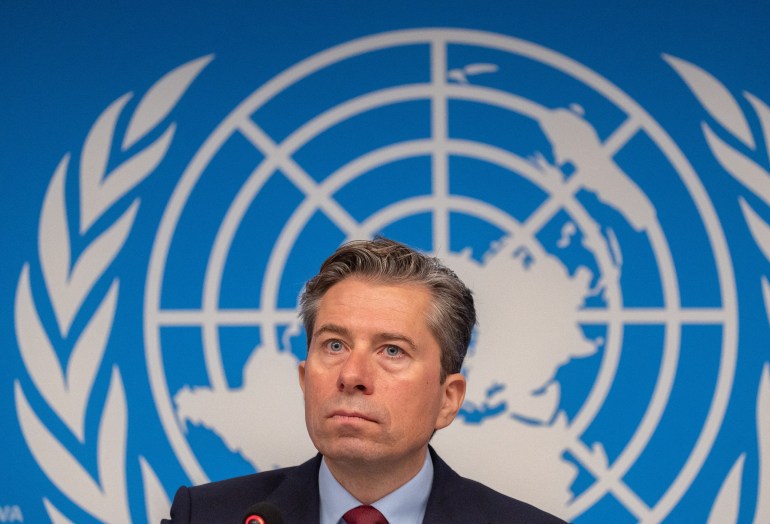
Cuts to humanitarian relief could mean less help for people in Gaza, Sudan, Syria, Ukraine and more countries, UN aid chief said. Tom Fletcher, the head of the United Nations office for humanitarian affairs, has told reporters that with 300 million people in need of assistance, recent cuts to humanitarian aid funds are causing a “seismic shock” globally. “Many will die because that aid is drying up,” Fletcher, the UN’s under-secretary-general for humanitarian affairs and emergency relief coordinator, said at a news briefing at the UN headquarters in New York on Wednesday. “Across the humanitarian community, programmes are being stopped right now,” Fletcher said. “Staff are being let go right now. I think 10 percent of NGO colleagues were laid off in the course of February,” he said, referring to people working for nongovernment aid organisations. Fletcher also spoke specifically of his recent visit last month to Gaza, saying “supplies are clearly running out very, very fast” amid Israel’s renewed blockade on all food, medicine, fuel and other goods entering the strip. “The fact that we’re not getting fuel in means that incubators are being switched off, so this is real already, and will quickly become a humanitarian crisis again,” he said. Advertisement Describing his visit to Gaza last month, Fletcher said one of the “first shocking things I saw driving in is the dogs going through the rubble”. “I don’t think anything can prepare you for that,” he said, referring to the spectacle of stray dogs in Gaza looking for dead bodies of people trapped beneath bombed-out buildings. Tom Fletcher, the UN under-secretary-general for humanitarian affairs and emergency relief coordinator, attends a news conference in Geneva, Switzerland, December 3, 2024 [Denis Balibouse/Reuters] A ‘humanitarian superpower’ Fletcher’s news conference came just days after United States Secretary of State Marco Rubio announced that the US had concluded it would be cancelling 83 percent of US Agency for International Development (USAID) programmes worldwide. While the US cuts to aid have been the most drastic, Fletcher pointed out other countries have also been slashing their relief budgets. “It’s not just the American government. I’m spending a lot more of my time than I’d expected in other donor capitals trying to shore up the case for what we do,” he said. “What I can say is that over years, over decades now, the US has been a humanitarian superpower and that US funding has saved hundreds of millions of lives,” he added. Fletcher, a former British ambassador to Lebanon, did not elaborate on which countries had cut aid specifically, but at the end of February, the United Kingdom announced it was cutting its aid spending to increase spending on its military. UK Prime Minister Keir Starmer said the government would “fully fund our increased investment in defence” by reducing aid spending from 0.5 percent of gross national income to 0.3 percent in 2027. According to The Guardian newspaper, the UK cuts amount to some six billion pounds ($7.7bn). Advertisement The change from aid to defence would see the UK spending 13.4 billion pounds ($17bn) more on the military every year from 2027, Starmer said. Several other countries have also cut back on aid spending, including the Netherlands’ right-wing government, which announced in November last year it would cut its foreign aid budget by about one billion euros ( $1.09bn) over a five-year period. Fletcher said the UN humanitarian agency’s response to its reduced funding prospects will be to focus on “utterly essential life-saving work, in the areas of direst need”, including Gaza. But several organisations are warning repercussions could be more widely felt. The World Health Organization last week warned US cuts could set back efforts to treat the world’s “deadliest infectious disease”, tuberculosis. Ebola surveillance work in Africa is also under threat as NGOs that used to be funded through USAID have been forced to stop their work. Health experts and aid organisations have also warned that US funding cuts to HIV/AIDS programmes in many African countries could lead to hundreds of thousands of deaths on the continent. Adblock test (Why?)
US public souring on Trump’s handling of economy, polls show
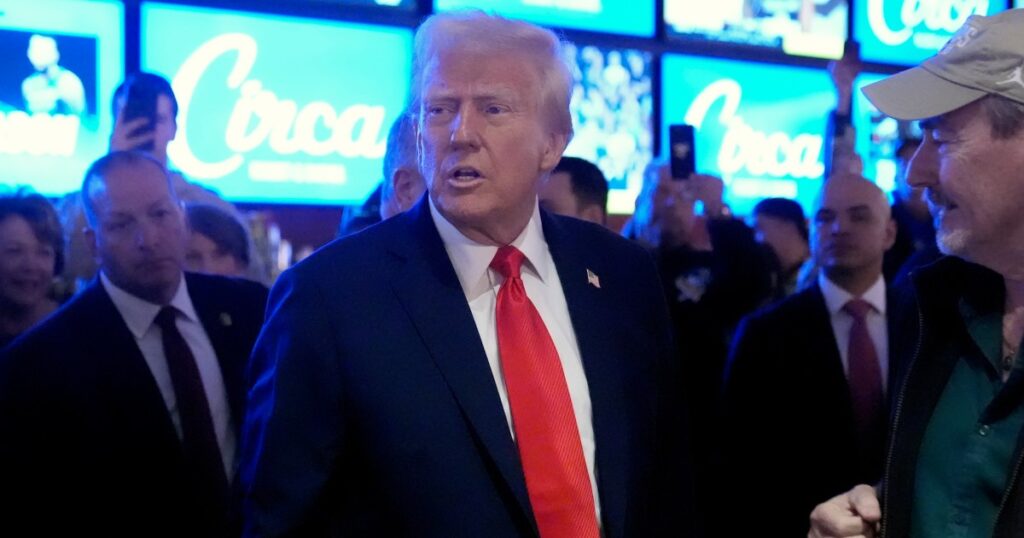
Majority of Americans disapprove of Trump’s economic management amid stock market turmoil, polls show. United States President Donald Trump’s handling of the economy is facing growing pushback from Americans amid wild swings in the stock market and growing fears of a recession, new polling shows. In a CNN/SSRS poll released on Wednesday, 56 percent of respondents said they disapproved of Trump’s economic management – higher than at any point during his first term in office. The poll had better news for Trump on his other signature issue of immigration, with 51 percent of respondents expressing support for his strict enforcement policies. A Reuters/Ipsos poll also released on Wednesday found that 57 percent of Americans believe Trump’s economic policies have been too “erratic”. Trump’s overall approval rating in the CNN and Reuters polls was 45 percent and 44 percent, respectively. The results come as Trump’s back-and-forth announcements on tariffs have roiled markets and stoked tensions with trading partners, including key US allies. The benchmark S&P 500 has lost more than $3 trillion since its February peak as investors struggle to make sense of the US president’s “America First” economic agenda. Advertisement On Wednesday, the Trump administration imposed 25 percent tariffs on all steel and aluminium imports, prompting retaliatory duties from Canada and the European Union. The latest tariffs came after Trump a day earlier threatened Canada with a 50 percent duty on steel and aluminium before reversing course after the province of Ontario agreed to suspend a surcharge on electricity exports to some US states. Trump, who earlier this week declined to rule out the possibility of a recession this year, and his aides have played down the stock market turmoil as a temporary blip on the road to a stronger economy. “I think this country is going to boom. But as I said, I can do it the easy way or the hard way,” Trump told reporters on Tuesday. “The hard way to do it is exactly what I am doing, but the results are going to be 20 times greater.” Adblock test (Why?)