

Oscar Piastri signs new F1 contract with McLaren

The Australian driver commits his long-term future to McLaren after signing a multiyear contract extension beyond 2026. Formula One champions McLaren have secured Oscar Piastri for the long term after announcing a multiyear contract extension ahead of the 23-year-old driver’s home Australian Grand Prix. The news, released on Wednesday, followed similar extensions for chief executive Zak Brown, team principal Andrea Stella, Piastri’s teammate Lando Norris and senior staff. Norris, the overall runner-up last season to Red Bull’s four-time world champion Max Verstappen, signed his extension in January 2024. A race winner in Hungary and Azerbaijan last season as McLaren took their first constructors’ title since 1998, Piastri made his F1 debut with the British-based team in 2023 and already had a contract that ran until the end of 2026. The terms of his new contract extension beyond 2026 were not disclosed. “Not only is he an incredibly talented driver, but his work ethic and cultural fit within the team made it a no-brainer to extend his time in papaya (McLaren’s colours),” said Brown in a statement. “We’ve got the best driver line-up on the grid, and in the past two seasons, we’ve seen how much of an asset to the team Oscar is both on and off track. Advertisement “He was absolutely fundamental in adding to our legacy with the 2024 Constructors’ Championship last season, so we’re all excited to see what we can do in the years to come as we continue to fight for World Championships together.” First practice for Sunday’s season opener at Albert Park is on Friday. Piastri, who turns 24 next month and hopes to be fighting for the title this year, said it was great to be part of McLaren’s long-term future. “The team had the belief in me when we signed in 2022, and the journey we’ve gone on over the past two seasons to help return McLaren to the very top of the sport has been incredible,” he said. “There are so many talented and special people working at (the factory) who have helped me to become a Formula One race winner very early in my career. “Therefore, I’m very proud to be continuing to represent this legendary team for many years to come.” Oscar Piastri of Australia driving the (81) McLaren MCL39 Mercedes drives during the first day of F1 testing at the Bahrain International Circuit on February 26, 2025 in Bahrain [Clive Mason/Getty Images] Adblock test (Why?)
US’s Rubio hails Syria deal with Kurds, calls for non-sectarian governance
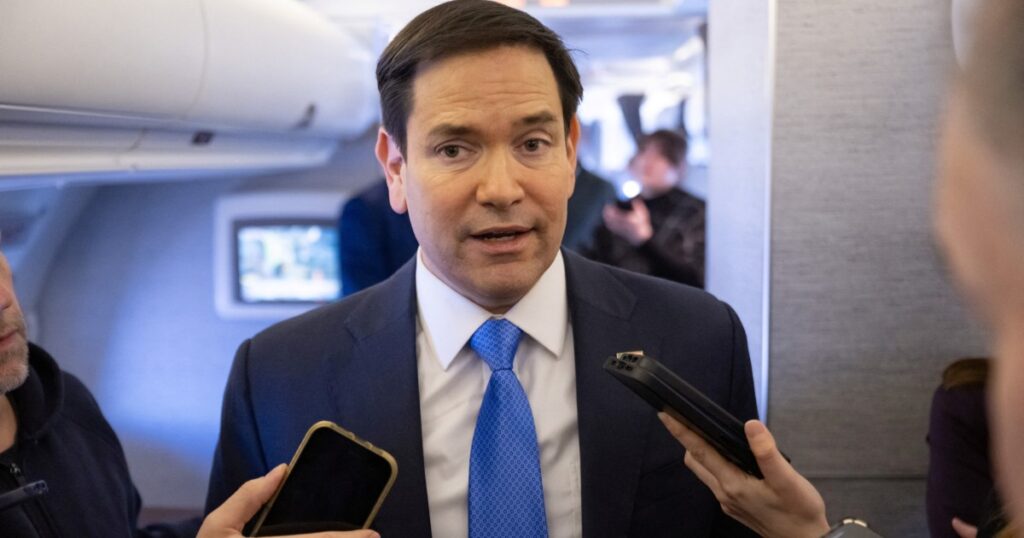
Top US diplomat endorses agreement to integrate Kurdish-led Syrian Democratic Forces into state institutions. The United States has welcomed Syria’s agreement to integrate the Kurdish-led Syrian Democratic Forces (SDF) into state institutions. Washington’s endorsement comes after the Syrian presidency and the US-backed SDF announced a deal granting the Syrian central government full control of a semi-autonomous region that has been administered by the Kurdish-led alliance since 2015. “The United States reaffirms its support for a political transition that demonstrates credible, non-sectarian governance as the best path to avoid further conflict,” US Secretary of State Marco Rubio said in a statement on Tuesday. “We will continue to watch the decisions made by the interim authorities, noting with concern the recent deadly violence against minorities.” On Monday, Syrian interim President Ahmed al-Sharaa and SDF commander Mazloum Abdi said they had struck a deal to merge “all civil and military institutions in northeastern Syria” into the national administration, including an airport and oil and gas fields. Advertisement The agreement has been viewed as one of the most significant political developments in the country since the fall of longtime President Bashar al-Assad at the hands of Syrian opposition forces led by al-Sharaa in December. The accord comes at a critical juncture for Damascus as it grapples with the fallout of a wave of violence that erupted last week in the heartland of the Alawite minority. The deal includes a ceasefire in all of Syria, SDF support in combating pro-Assad fighters, and an affirmation that the Kurdish people are integral to Syria and have a right to citizenship and guaranteed constitutional rights. While discussions about integrating the SDF into the Syrian state had been ongoing since the fall of al-Assad, efforts to reach an agreement were hampered by perceptions that the group was less committed to opposing the deposed regime than other opposition forces. The US partnered with the SDF in its fight against the ISIL (ISIS) armed group, whose so-called caliphate in Syria was overthrown in 2019. Washington’s support for the SDF has placed a strain on its relations with Turkiye, which views the group as an extension of the Kurdish nationalist Kurdistan Workers’ Party, which Ankara considers a “terrorist” organisation. Adblock test (Why?)
Iran, Russia, China conduct joint naval drills in Gulf of Oman
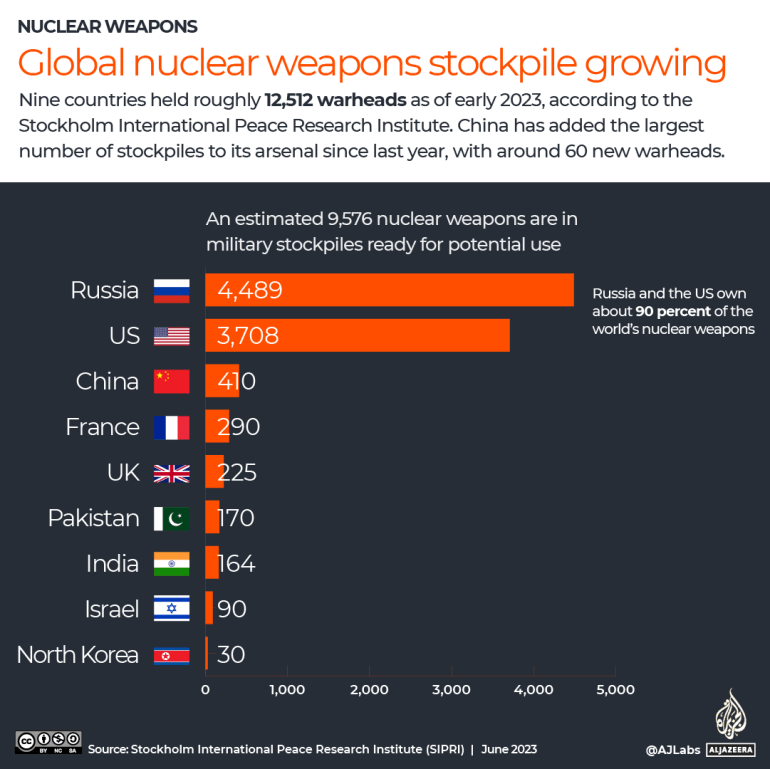
The exercises are aimed at strengthening cooperation between the three countries, and get under way as Iran accuses the US of ‘bullying’. Iran, Russia and China have begun joint naval drills in the Gulf of Oman, marking the fifth year the three countries have conducted military drills together. China’s CGTN news said that the Marine Security Belt 2025 exercises began near the Iranian port of Chabahar on Tuesday and were aimed at strengthening “cooperation among the naval forces of the participating countries”. The naval drills will involve “striking maritime targets, damage control, and joint search and rescue operations”, according to CGTN. “Over the course of two days, the ships’ crews conducted daytime and nighttime fire from large-calibre machine guns and small arms at targets simulating unmanned boats and unmanned aerial vehicles of a mock enemy,” Russia’s Interfax news agency reported, citing a statement from the Russian Ministry of Defence. Iran’s Press TV said naval groups from Azerbaijan, South Africa, Oman, Kazakhstan, Pakistan, Qatar, Iraq, the United Arab Emirates and Sri Lanka were also observing the drills. Advertisement Although China and Russia do not typically patrol waters in the Middle East, the region’s waterways have become increasingly militarised in recent years. The Chinese, Iranian, and Russian navies kicked off a joint exercise near the Iranian port of Chabahar. Codenamed “Security Belt-2025”, the exercise will include drills on striking maritime targets, damage control, and joint search and rescue operations. It aims to strengthen… pic.twitter.com/YqoHwhOeor — CGTN Europe (@CGTNEurope) March 11, 2025 In late 2023, Yemen’s Houthis began attacking ships linked to Israel in the Red Sea, in what they say is an act of solidarity with Palestinians in Gaza. The Houthis paused their attacks after a ceasefire between Hamas and Israel began in January but have threatened to resume military operations if Israel does not lift its renewed siege of Gaza, in which it has been blocking food, medicine and other essential supplies from entering the war-torn territory for 10 days. The United States and other Western countries have also increased their presence in the Red Sea, with a 10-nation force announced in December 2023 to counter Houthi attacks. The US Navy also has a fleet based in Bahrain. Iran nuclear programme This year’s naval drills come as US President Donald Trump said he had sent a letter to the Iranian leadership seeking to revive talks on a nuclear deal, years after Trump withdrew the US from a previous deal during his first term in office. “There are two ways Iran can be handled: militarily, or you make a deal,” Trump told Fox Business last week. Advertisement Iran’s Supreme Leader Ayatollah Ali Khamenei has accused Washington of seeking to impose even greater restrictions on Iran than in previous negotiations. “Some bully governments insist on negotiations,” he said, according to state media. “But their negotiations are not aimed at solving issues, but to dominate and impose their own expectations.” “For them, negotiation is a means to introduce new demands. The issue is not just about nuclear matters, they raise new expectations that Iran will certainly not accept,” Khamenei said. Trump unilaterally withdrew from the 2015 Iran nuclear deal in 2018 and re-imposed sanctions on Tehran. Despite complying with the nuclear agreement for more than a year after the US withdrawal, Iran gradually reduced its commitments, citing the failure of the deal’s remaining signatories to protect its interests. Unlike Israel, which is thought to have some 90 nuclear warheads, Iran is not thought to have developed any of its own nuclear weapons. Adblock test (Why?)
Portugal’s government loses confidence vote, setting stage for new election
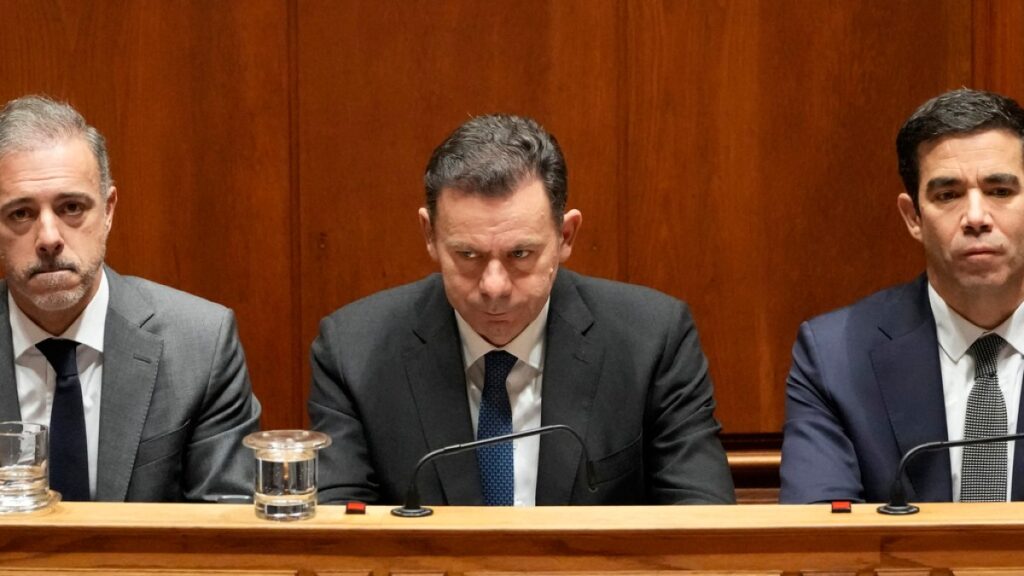
Portugal’s centre-right government has lost a confidence vote in parliament, potentially pushing the European Union (EU) country towards its third general election in three years. The government “tried everything right up to the last minute to avoid snap elections”, Portugal’s centre-right prime minister, Luis Montenegro, told reporters after the vote on Tuesday evening. Lawmakers voted 142-88, with zero abstentions, against the motion of confidence that Montenegro presented after the opposition questioned the integrity of his dealings related to a consultancy firm he founded. Portuguese media reported allegations that the firm, which is now run by Montenegro’s sons, had contracts with several private companies that rely on government contracts. Montenegro, who had already survived two censure votes, denies any wrongdoing. “The insinuation that I mixed my business and political activity is completely abusive, and even insulting. A repeated falsehood does not become the truth, but it contaminates the political environment… this is what populism feeds on,” he told parliament before the vote. Advertisement Pedro Nuno Santos, the leader of the Socialist Party, the country’s largest opposition party, described the government’s conduct as “shameful”, saying it resorted to “manoeuvres, games, tricks” to survive. Montenegro became prime minister after socialist Antonio Costa resigned in November 2023 under the shadow of a corruption probe. Costa, who denies accusations of influence peddling levelled against him, was elected head of the EU’s European Council in June 2024. Montenegro’s administration will now assume a caretaker role. Following the vote, it is now up to Portugal’s president, Marcelo Rebelo de Sousa, whether to call a parliamentary election after he consults the main political parties on Wednesday and his advisory Council of State on Thursday. De Sousa has said a new ballot could be held in mid-May. Minority governments and rising far-right Montenegro’s centre-right Democratic Alliance (AD) coalition won elections in March 2024, but held just 80 seats in the country’s 230-seat legislature. The Socialist Party, who had previously held government, won 78 seats. By contrast, Portugal’s hard-right Chega party gained 50 seats, more than four times the 12 seats it held previously. At the time, Montenegro ruled out working with Chega, saying “no means no” to forming a government with the party, which has gained votes campaigning on an anti-immigration platform. Political scientist Adelino Maltez of Lisbon University said opinion polls showed very little change in voter preferences from the March 2024 election. The AD and the Socialists are neck-and-neck in most surveys. Advertisement “The problem is that the new election will not be conclusive… The AD and the Socialists are tied. It is a situation that will be difficult for them to navigate,” Maltez said. A centrist pact between Montenegro’s Social Democrats and the Socialists was the only solution, despite the differences in their policy proposals, he said. The two main rivals only had such an accord in parliament once, between 1983 and 1985. “If they don’t do it, it will be more of the same instability,” Maltez said. Tuesday’s no-confidence vote points to the worst spell of political instability since Portugal adopted a democratic system more than 50 years ago in the wake of the 1974 Carnation Revolution, which ended a four-decade dictatorship. An early election is all but inevitable now but voters are already showing election fatigue and disillusionment with politicians. “This seems like a joke, no one understands why there’s a new election so soon. Politicians blame each other, but all of them are being irresponsible,” said Joao Brito, a 70-year-old retired civil servant in downtown Lisbon. Adblock test (Why?)
Police say surfer ‘taken by shark’ in Western Australia
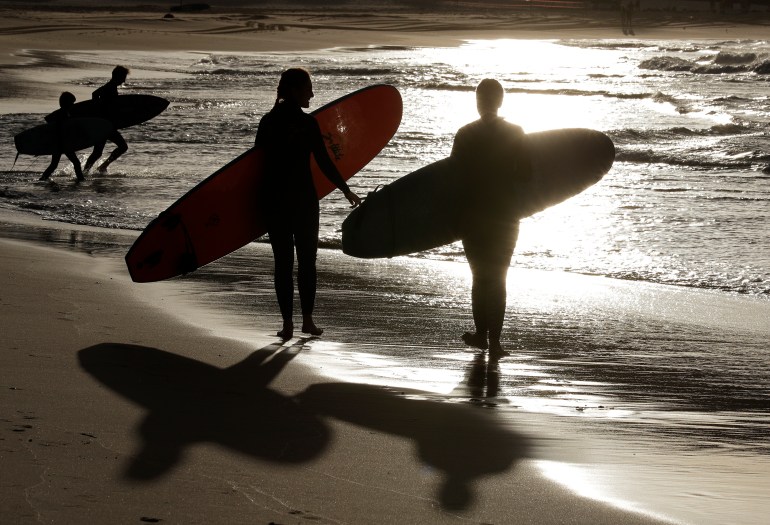
Search for missing surfer now a recovery operation after evidence of bite marks found on surf board. Australian police have confirmed that a surfer who went missing was “taken by a shark” after search and rescue teams recovered a surfboard scarred with “bite marks” from the area of the attack. The victim – identified by Australian media as 37-year-old Steven Payne – was mauled by a shark while surfing at Wharton beach in a remote area of Western Australia, police said late on Tuesday. It marks Australia’s fourth reported fatal shark attack in recent months. “I can confirm that our search is a recovery, not a rescue,” Western Australia Police Force Senior Sergeant Christopher Taylor said, noting that the surfer’s body has not been recovered. “A surfboard with evidence of bite marks was recovered from the water,” Western Australia Police said in a separate statement on Tuesday. According to media reports, a shark was spotted just moments before the attack in the water off Wharton beach and screams were heard coming from the area where the man was surfing at about midday. Australia’s 7News network said the victim was in chest-deep water about 50 metres (164 feet) from the shore with two other surfers when he was attacked. Police said the other surfers were unable to do anything to help. Advertisement In February, a shark killed a 17-year-old girl swimming off an eastern Australian island, while a 28-year-old surfer was fatally bitten in South Australia a month earlier. On December 28, a shark fatally bit a 40-year-old man in the neck as he was spearfishing off Queensland. Surfers walk along a beach in Sydney, Australia, in April 2020 [Rick Rycroft/AP Photo] Adblock test (Why?)
US Education Department to halve staff as Trump pushes for elimination
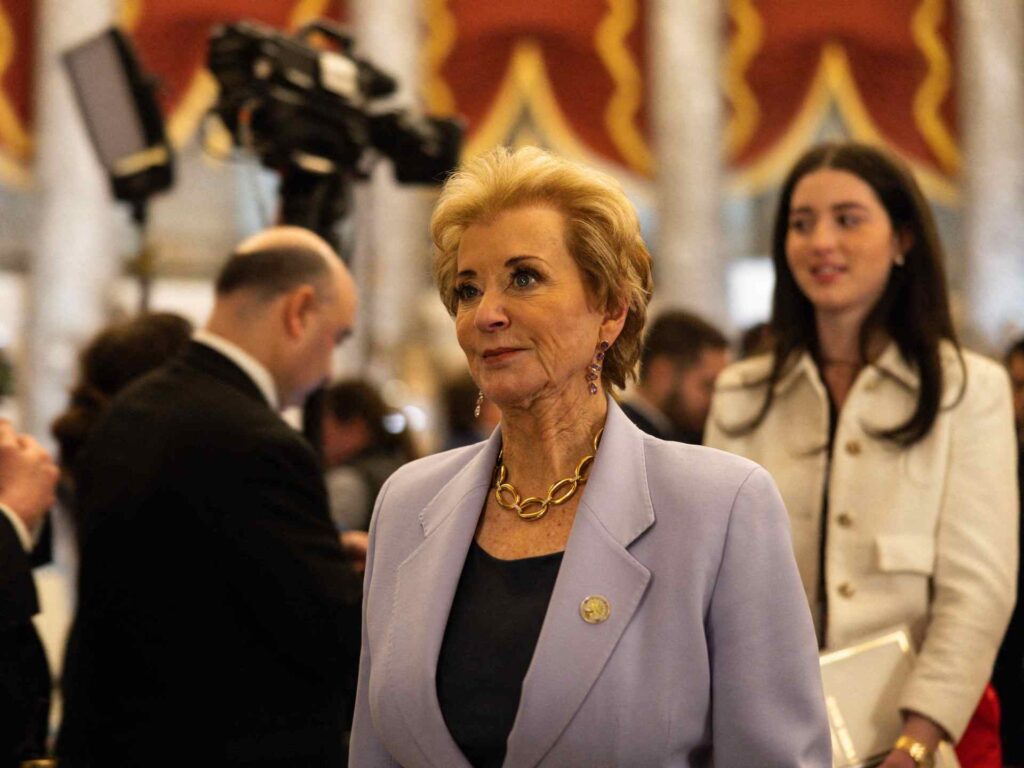
US Secretary of Education Linda McMahon says administration will work with the US Congress to abolish department. The United States Department of Education has announced it will lay off almost half of its employees as President Donald Trump moves to fulfil his campaign promise to dismantle the agency. The department said on Tuesday that it would reduce the size of its workforce to roughly 2,183 employees by placing staff on administrative leave from March 21. It said it would continue to provide “all statutory programs” falling under its purview, including student loans and funding for special needs students. The cuts follow similar rounds of firings undertaken as part of the Department of Government Efficiency’s drive to radically streamline the federal bureaucracy. “Today’s reduction in force reflects the Department of Education’s commitment to efficiency, accountability, and ensuring that resources are directed where they matter most: to students, parents, and teachers,” Secretary of Education Linda McMahon said in a statement. “I appreciate the work of the dedicated public servants and their contributions to the Department. This is a significant step toward restoring the greatness of the United States education system.” Advertisement In an interview with Fox News later on Tuesday, McMahon, the former CEO of World Wrestling Entertainment, confirmed that the layoffs were a step towards abolishing the department. “Actually, it is because that was the president’s mandate,” she said. “His directive to me clearly is to shut down the Department of Education, which we know we will have to work with Congress to get that accomplished.” McMahon said that the cuts took aim at “bureaucratic bloat” and that the department’s “outward facing programs”, such as grants, would be preserved. Trump campaigned on abolishing the Department of Education, which he claimed had been infiltrated by “radicals, zealots and Marxists”, and passing responsibility for education to individual states and local school districts. In an exchange with reporters last month, the US president said that he had told McMahon that he wanted her to “put herself out of a job”. Education in the US is already mostly provided by states and local communities, with the federal government only providing about 8 percent of the total funding for elementary and secondary schooling. ‘Wrecking ball’ Established in 1979 by the US Congress and former President Jimmy Carter, the department’s primary functions include providing financial aid to schools, overseeing student loan programmes, and enforcing civil rights protections. Republicans have railed against the department since its inception, arguing that education policy should be handled at the state and local level. Advertisement Former US President Ronald Reagan repeatedly called for the dismantling of the department but ultimately failed to win the backing of Congress before leaving office in 1989. The National Education Association, the largest teachers union in the US, condemned the Trump administration’s move, accusing it of taking a “wrecking ball” to the futures of some 50 million students. “The real victims will be our most vulnerable students,” National Education Association President Becky Pringle said in a statement. “Gutting the Department of Education will send class sizes soaring, cut job training programs, make higher education more expensive and out of reach for middle-class families, take away special education services for students with disabilities, and gut student civil rights protections.” Adblock test (Why?)
Ukraine ready to accept 30-day US-brokered ceasefire plan
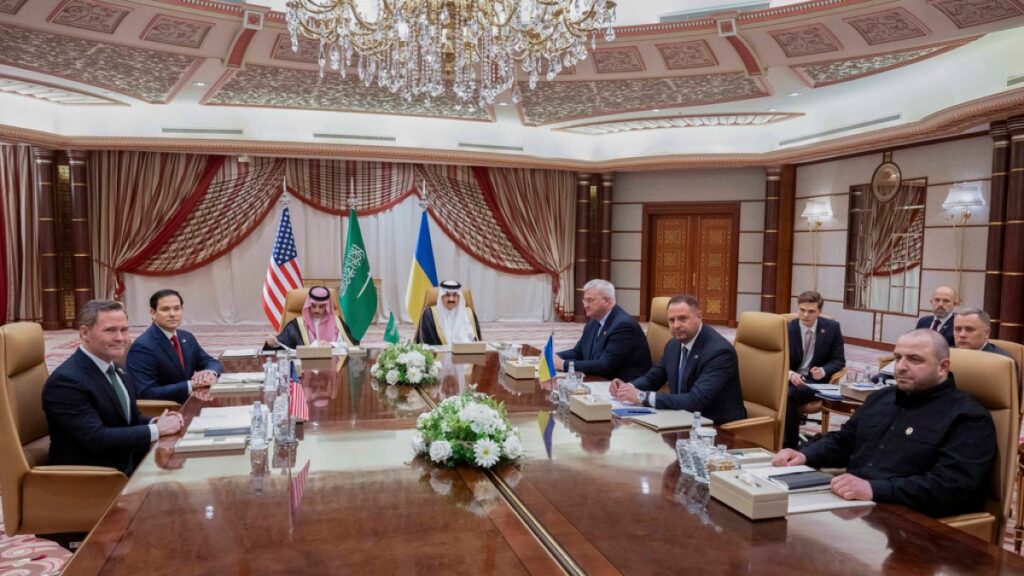
The United States has agreed to resume military aid and intelligence sharing with Ukraine after Kyiv expressed “readiness” to accept a 30-day ceasefire in its conflict with Russia. The two countries issued a joint statement after officials met on Tuesday in Saudi Arabia, saying that Ukraine was open to the US proposal “to enact an immediate, interim 30-day ceasefire which can be extended by mutual agreement of the parties”. Ukrainian President Volodymyr Zelenskyy said on Telegram that the ceasefire proposal would “establish a complete ceasefire for 30 days, not only regarding missiles, drones and bombs, not only in the Black Sea, but also along the entire front line”. US President Donald Trump said he hoped Russia would agree to the ceasefire plan, signalling that the US will hold a meeting with Russia later on Tuesday or Wednesday. Following the progress made in talks, the US said that it would “immediately lift the pause on intelligence sharing and resume security assistance” to Kyiv, which it had suspended last week, effectively hobbling Ukraine’s ability to track Russian troop movements, shield against missile strikes and carry out attacks. Advertisement The suspension came after a blow-up last month between Trump and Zelenskyy, who had travelled to Washington to discuss a rare earth minerals deal, which would see the US gain access to the lucrative resources in Ukraine. The joint statement indicated that the deal was back on the table, with the two countries set to “conclude as soon as possible a comprehensive agreement for developing Ukraine’s critical mineral resources to expand Ukraine’s economy and guarantee Ukraine’s long-term prosperity and security”. Reporting from Washington, DC, Al Jazeera’s Alan Fisher noted that the joint statement did not include any mention of the explicit security guarantees that Zelenskyy had been seeking during his contentious meeting with Trump at the Oval Office. “But those [security guarantees] appear to be missing at the moment. Perhaps that’s something that can be discussed, although we know that Donald Trump is really, really against that idea of explicit security guarantees for Ukraine,” he said. ‘Yes or no’ US Secretary of State Marco Rubio said the ball was now in Russia’s court. “We’re going to tell them this is what’s on the table. Ukraine is ready to stop shooting and start talking. And now it’ll be up to them to say yes or no,” he said. “If they say no, then we’ll unfortunately know what the impediment is to peace here.” US National Security Advisor Mike Waltz added: “The Ukrainian delegation today made something very clear: that they share President Trump’s vision for peace.” Advertisement Waltz said negotiators “got into substantive details on how this war is going to permanently end”, including long-term security guarantees. Zelenskyy said on Telegram that Ukraine was “ready for peace” and that it now fell to the US to “convince” Russia. “Ukraine is ready for peace. Russia must show its readiness to end the war or continue the war. It is time for the full truth,” he said. Russia launched a full-scale invasion of Ukraine three years ago and now holds around a fifth of Ukraine’s territory, including Crimea, which it annexed in 2014. Russian President Vladimir Putin has said he is open to discussing a peace deal. But he has ruled out territorial concessions, saying Ukraine must withdraw fully from four Ukrainian regions claimed and partly controlled by Russia. The talks in Saudi Arabia started only hours after Ukraine launched its biggest drone attack on Moscow and the surrounding region, claiming that it had struck an oil refinery near the Russian capital and a facility in Russia’s Oryol region. The attack, in which 337 drones were downed over Russia, killed at least three employees of a meat warehouse and caused a short shutdown at Moscow’s four airports, Russian officials said. Adblock test (Why?)
‘Entire families’ killed in Syria fighting, UN says
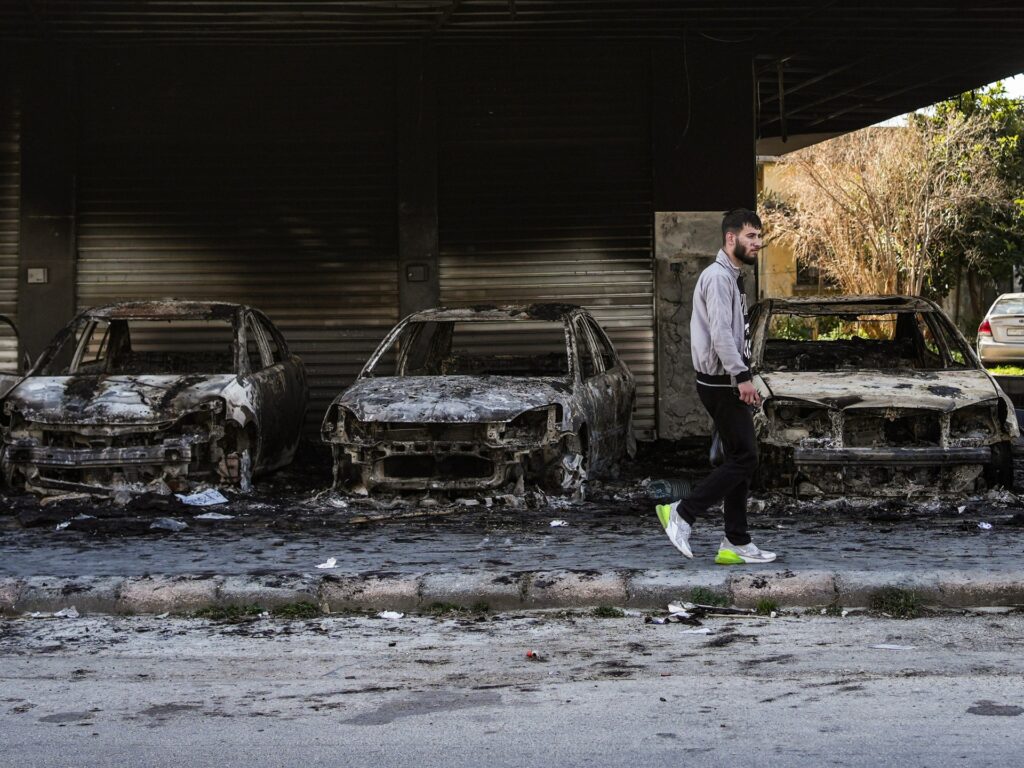
Hundreds reported killed in violence in Syria’s coastal region, which is heavily populated by Alawites. Entire families including women and children have been killed in Syria’s coastal region as part of recent a series of sectarian killings by rival groups, the UN human rights office said. The wave of violence broke out last Thursday, when armed groups loyal to deposed former President Bashar al-Assad ambushed security forces in the province of Latakia, killing at least 16 members of the security forces, according to the Ministry of Defence. The attacks escalated into sectarian violence, with pro-government forces rampaging through coastal provinces heavily populated by Alawites, as well as the nearby provinces of Hama and Homs, killing people, sometimes entire families, on streets, in homes, on rooftops. Of the roughly 1,000 civilians killed, nearly 200 were in Baniyas, according to the UK-based Syrian Observatory for Human Rights, a war monitor. Al Jazeera was not able to independently verify the death toll. “In a number of extremely disturbing instances, entire families – including women, children and individuals hors de combat – were killed, with predominantly Alawite cities and villages targeted in particular,” UN human rights office spokesperson Thameen Al-Kheetan said on Tuesday. Advertisement He said initial reports indicated that the perpetrators, who have not been identified, were both members of armed groups supporting Syria’s interim authorities and those associated with the former government. “They appear to have been carried out on a sectarian basis, in Tartous, Latakia and Hama governorates – reportedly by unidentified armed individuals, members of armed groups allegedly supporting the caretaker authorities’ security forces, and by elements associated with the former government.” On Sunday, the country’s new presidency led by interim President Ahmed al-Sharaa announced the formation of a fact-finding committee to “investigate the violations against civilians and identify those responsible for them”. It said it would present its findings within 30 days and that those found to be responsible for violations would be referred to the judiciary. “The new Syria is determined to enshrine justice and the rule of law, protect the rights and freedoms of its citizens, prevent unlawful revenge and guarantee that there is no impunity,” Yasser al-Farhan, the spokesperson of the new fact-finding committee, told a news conference in Damascus on Tuesday. Farhan added that the committee was working on “gathering and reviewing evidence” related to the wave of violence. When al-Assad fell last December, Syrian analysts feared there would be revenge attacks against the Alawite community – the second-largest religious group in Syria after Sunni Muslims. So far, the UN human rights office has documented the killing of 111 civilians and expects the toll to be significantly higher, Al-Kheetan said. Of those, 90 were men; 18 were women; and three were children, he added. Advertisement “Many of the cases documented were of summary executions. They appear to have been carried out on a sectarian basis,” Al-Kheetan told reporters. In some cases, men were shot dead in front of their families, he said, citing testimonies from survivors. Human Rights Watch on Tuesday also called on Syria’s new authorities to ensure accountability for the mass killings. “Syria’s new leaders promised to break with the horrors of the past, but grave abuses on a staggering scale are being reported against predominantly Alawite Syrians in the coastal region and elsewhere in Syria,” HRW’s Deputy Regional Director Adam Coogle said in a statement. “Government action to protect civilians and prosecute perpetrators of indiscriminate shootings, summary executions, and other grave crimes must be swift and unequivocal,” he added. Adblock test (Why?)
How will Mark Carney deal with Donald Trump?
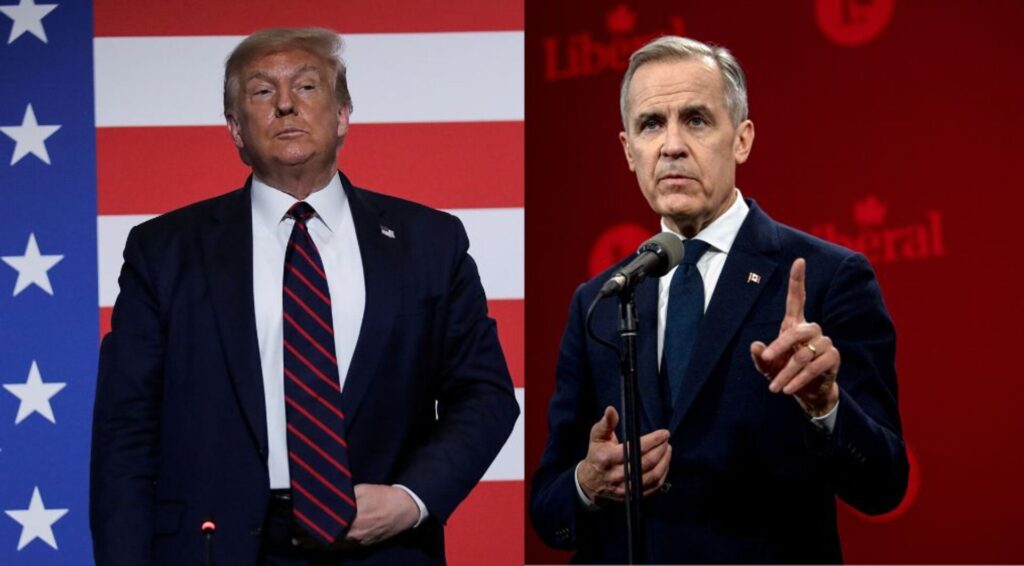
Sharp words for the US president from Canada’s incoming prime minister. Canada’s incoming prime minister, Mark Carney, says he will confront the challenge his country is facing from the United States. US President Donald Trump has imposed tariffs on an array of goods coming from Canada. Carney has promised to push back with trade taxes of his own, and is seeking to unite Canadians against this challenge from the United States. With elections on the horizon in Canada, how will this play out politically? And can Canada’s close relationship with the US survive this turmoil? Presenter: James Bays Guests: Jen Hassum – Executive director of the Broadbent Institute, a progressive think tank Amy Koch – Republican strategist who served as majority leader of the Minnesota Senate John Kirton – Professor emeritus of political science at the University of Toronto Adblock test (Why?)
FACT CHECK: TRUMP CHANGES COURSE ON UKRAINE
[unable to retrieve full-text content] In this Fact Check, Al Jazeera’s @khalidmajzoubofficial examines claims made by Donald Trump about the war in Ukraine