

Deadly Pakistan train hijack: What happened, and what’s next?
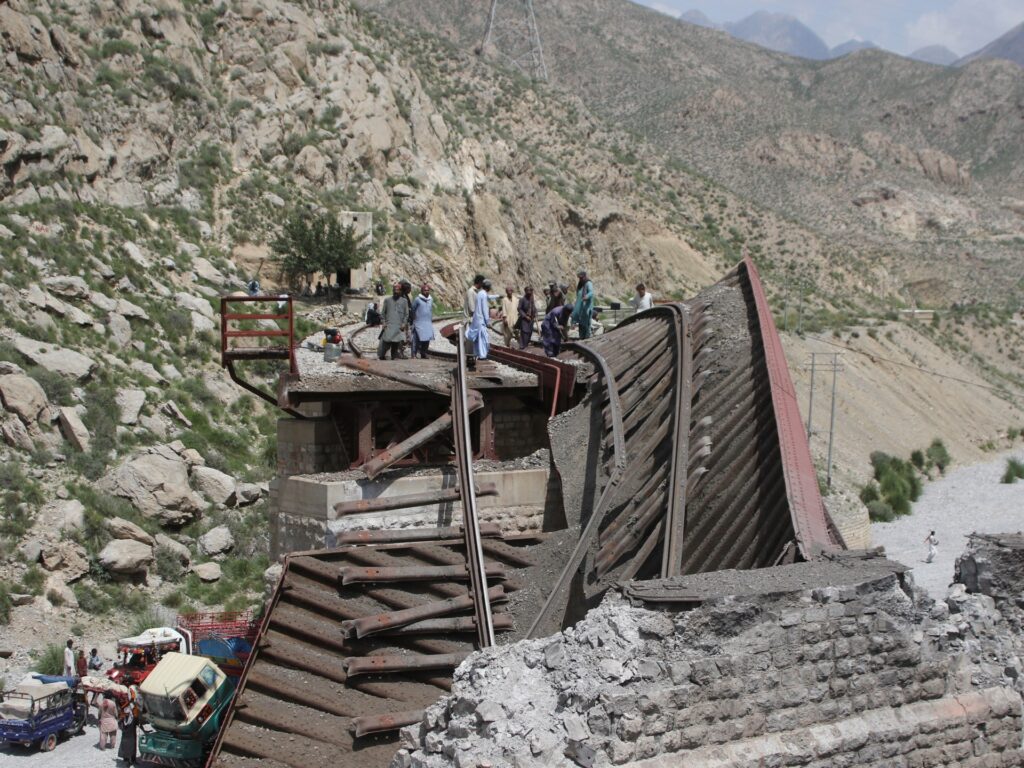
Islamabad, Pakistan – Pakistan’s security forces are locked in what they describe as a “complex operation” against a group of separatists who attacked a train earlier on Tuesday. The train was traveling from Quetta, the provincial capital of the southwestern province of Balochistan, to Peshawar, the capital of the northwestern Khyber Pakhtunkhwa province. Fighters belonging to the Baloch Liberation Army (BLA), a separatist group seeking Balochistan’s secession from Pakistan, claimed responsibility for the attack. They targeted the Jaffar Express as the train was passing through a series of tunnels near Sibi city, about 160km (100 miles) from Quetta. While security sources have said that their military operation was under way, authorities also confirmed that a group of passengers safely made their way to a smaller station near the site of the attack. Rana Farrukh, a Pakistan Railways official in Quetta, said that nearly 70 passengers, including women, children, and the elderly, reached the Panir railway station, approximately 6km (4 miles) from the attack site. Advertisement “They completed the journey on foot, following the railway track,” Farrukh told Al Jazeera, without providing further details about the passengers. The train was passing the Bolan Pass area, which is a rugged, mountainous region, when it was attacked. Here is what we know so far about the attack, the current situation and what is the background behind the decades-long conflict between separatist groups and the Pakistani state in Balochistan. What happened to the Jaffar Express? The train was carrying more than 400 passengers, including many women and children, as well as dozens of security personnel. It departed from Quetta at 9am (04:00 GMT) on Tuesday morning, embarking on a journey of more than 1,600km (994 miles) through Punjab to reach its final destination in Peshawar. The trip takes roughly 30 hours, with stops at around 30 stations across the country. Railway officials said the attack occurred around 1pm (08:00 GMT) as the train passed through the Bolan Pass. The area is home to several tunnels, originally constructed during British colonial rule. Who claimed responsibility, and how has the government responded? The BLA, which has carried out numerous attacks in the province over the past several years, claimed responsibility for the assault. In a statement, the group claimed they had killed at least six military personnel and blown up the railway track, forcing the train to a halt. The BLA warned that any military operation in response would have “severe consequences”. The attackers claimed that passengers on the train were hostages now — though dozens of passengers later reached Panir. Advertisement The Pakistani military has not so far issued any official statement regarding the claims, and it did not respond to queries from Al Jazeera. Shahid Rind, a provincial government spokesperson, said authorities had imposed an emergency in hospitals in Sibi, the nearest city, in essence placing all medical professionals there on alert to attend to any victims of the attack. Government officials also strongly condemned the attack. Interior Minister Mohsin Naqvi also expressed prayers for the recovery of the injured. “The beasts who fire on innocent passengers do not deserve any concessions,” Naqvi’s statement read. What do we know about casualties, and how is the government responding? Hospitals in Quetta and Sibi are on high alert, but no injured passengers had been brought there until late on Tuesday night. Railway officials said mobile connectivity in the remote, rugged terrain is virtually nonexistent, making it difficult to get timely updates. Security sources claim the attackers are using some women and children as human shields, preventing an all-out offensive against them. Authorities have also warned of an online disinformation campaign aimed at spreading panic. Why has there been a surge in attacks in Balochistan? Balochistan is Pakistan’s largest province by area but the least developed, with a population of 15 million people. Despite being rich in minerals and natural resources, including copper and gas, the province has long been the site of conflict between the local population and the government. Advertisement Baloch separatists, who demand independence from Pakistan, accuse the state of abducting and persecuting those who speak out against it. The China-Pakistan Economic Corridor (CPEC), a $62bn mega-development project launched a decade ago, has added another layer of complexity to the conflict. The BLA has carried out numerous attacks on Chinese interests, including at Gwadar Port, the flagship project of CPEC. Several Chinese citizens have been killed in these attacks. In recent months, Balochistan has witnessed a dramatic surge in violence. Last month, at least 18 soldiers were killed in a BLA attack in Kalat city. Earlier in March, a female suicide bomber detonated herself, also in Kalat, killing a law enforcement officer. The Jaffar Express has also been targeted multiple times. Last year, BLA fighters blew up a section of the track, halting the train service for two months. In November, a suicide bombing at Quetta’s railway station targeted the train just before departure, killing at least 30 people, including security personnel. How has the BLA enhanced its capabilities? Analysts believe the BLA’s growing strength reflects the state’s failure to counter BLA fighters and its reliance on outdated strategies. Malik Siraj Akbar, a Balochistan specialist based in Washington, DC, said the BLA has evolved from carrying out small-scale attacks, such as targeting individuals or sabotaging pipelines, to large-scale operations. “The group now undertakes major attacks, like the recent assault on a passenger train. This shift reflects both its increasing audacity and its confidence that the government lacks the capability to contain them, let alone pursue them effectively after such high-profile acts of terrorism,” Akbar told Al Jazeera. Advertisement Rafiullah Kakar, a political analyst specialising in Balochistan affairs, said the BLA has strengthened its command structure, giving field militants more direct control over operations. “Additionally, access to advanced weaponry, some of which was left behind by US forces in Afghanistan, has enhanced the group’s firepower, making their attacks more lethal and sophisticated,” Kakar told Al Jazeera. Why has the state failed to curb the
UK police arrest man over oil tanker and cargo ship collision in North Sea

One sailor presumed dead after crash, unidentified man detained on suspicion of ‘manslaughter’. Police in the United Kingdom have arrested a man “on suspicion of gross negligence manslaughter” after a collision in the North Sea between a cargo vessel and a tanker. Humberside Police said on Tuesday that the 59-year-old was detained in connection with the previous day’s crash between Portuguese cargo ship Solong and the US-flagged Stena Immaculate oil tanker that caused an explosion and set the vessels ablaze. The man, who was not named by police, has not been charged. Junior transport minister Mike Kane said in Parliament that a crew member from the Solong was presumed dead and that it was “unlikely” the drifting cargo ship would stay afloat. The remaining 36 crew members from the two vessels were brought safely ashore in the port of Grimsby, about 150 miles (240 kilometres) north of London, with no major injuries. Authorities and operators of the vessels have yet to offer an explanation of how the crash happened, or why multiple safety systems on board modern vessels failed to prevent the crash. Advertisement Detective Chief Superintendent Craig Nicholson said in a statement that Humberside Police were playing a lead role in the “investigation of any potential criminal offences which arise from the collision”. “Extensive work has already been carried out, and we are working closely with our partners to understand what happened, and to provide support to all of those affected,” he said. Earlier on Tuesday, a spokesperson for British Prime Minister Keir Starmer had said there did not appear to be any suggestion of “foul play”. Environmental damage Greenpeace UK expressed “serious concerns” on Tuesday about environmental damage from the collision, which had occured “close to environmentally sensitive areas”. The Stena Immaculate was operating as part of the US government’s Tanker Security Program, a group of commercial vessels that can be contracted to carry fuel for the military when needed. Its operator, US-based maritime management firm Crowley, said that it was carrying 220,000 barrels of Jet-A1 fuel in 16 tanks, at least one of which was ruptured. It is feared the jet fuel cargo could pollute the sea, harming large colonies of protected seabirds in the area, including puffins and gannets and the fish on which they feed. There had been fears that the Solong was carrying sodium cyanide, but shipping company Ernst Russ, which manages the vessel, said that was not the case. Four empty containers on board that “previously contained the hazardous chemical” will “continue to be monitored,” it added. Advertisement The UK coast guard agency said on Tuesday that the Solong was “still alight”, while the fire on board the Stena Immaculate had “greatly diminished”. It said the Solong was drifting south, away from the tanker, and a half-mile (about one kilometre) exclusion zone had been put in place around both ships. Adblock test (Why?)
Ukrainian drone barrage hits Russia as peace talks begin
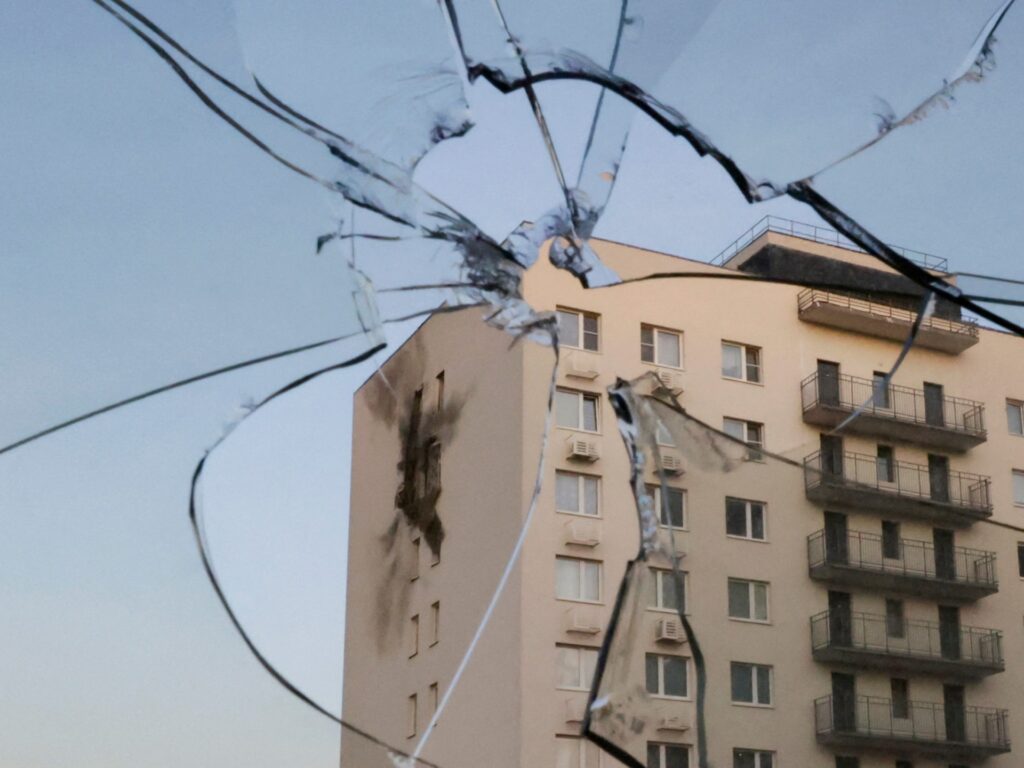
NewsFeed The Ukrainian military launched its largest drone barrage to date against Russia as talks got underway with US officials in Saudi Arabia. Moscow said Kyiv’s strikes on civilian targets undermine the effort to settle the war, despite its own history of hitting civilian infrastructure. Published On 11 Mar 202511 Mar 2025 Adblock test (Why?)
Syrian president launches probe into deadly fighting
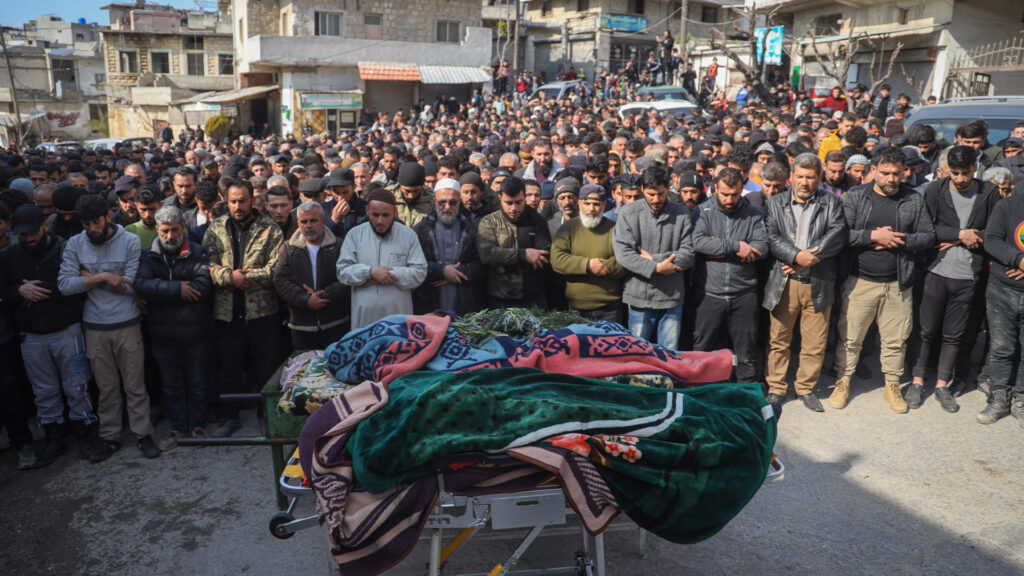
NewsFeed Syria’s president has promised an investigation into days of recent violence that led to the deaths of hundreds of people including civilians, after gun battles between pro-Assad fighters and Syrian security forces. Here’s what we know. Published On 11 Mar 202511 Mar 2025 Adblock test (Why?)
Israeli forces kill several people in the occupied West Bank

Tens of thousands of Palestinians have fled their homes since Israel’s West Bank operation began. Israeli forces have killed at least four Palestinians, including a 60-year-old woman, in the occupied West Bank, the Palestinian Authority (PA) says. Police special forces fought a gun battle on Tuesday with armed Palestinians barricaded in a house in Jenin, killing two and wounding another man, the Israeli military said in a statement. In another incident on Tuesday, a man who opened fire on Israeli soldiers was killed, it said. The PA said soldiers firing from a checkpoint also killed a 60-year-old woman. There was no immediate comment from the Israeli military. The previous evening, a Palestinian man was killed when his motorcycle was hit by an Israeli army vehicle, the PA said. Another man who was wanted over previous incidents was killed by Palestinian security forces, the PA said in a separate statement. It said the man was accused of opening fire on the headquarters of the security forces in Jenin. The latest incidents bring the number of Palestinians killed since January when Israeli forces launched a major operation involving thousands of soldiers in cities and refugee camps in the northern West Bank to more than 30 people. Advertisement Tens of thousands of Palestinians have fled their homes since the operation began at the start of a ceasefire in Gaza. Israeli troops have swept through refugee camps in Jenin and nearby cities, demolishing houses and infrastructure, including roads and water pipes. Countries including France and Germany and international groups including the United Nations have expressed alarm at the scale of Israel’s operation in the West Bank and called for restraint. Israel has repeatedly said the operation is aimed at hitting armed groups, including Hamas and the Palestinian Islamic Jihad, which have created strongholds in the crowded refugee camps built to house Palestinians displaced when Israel was created and their descendants. The Israeli army said in a statement on Tuesday that its troops arrested 35 people in the West Bank overnight and added that weapons were confiscated during the operations. It said one detained suspect led soldiers to an area where he had planted an explosive device, without specifying the location, and said the device has been neutralised. In the southern West Bank, Israeli settlers stormed the village of Haribat al-Nabi in Masafer Yatta, south of Hebron, attacking residents and their property, the Palestinian news agency Wafa reported. Settlers armed with clubs and batons attacked the village under the protection of the Israeli army. Mutab Rashid, a resident, was beaten, while Ali Sabah Rashid and his wife were sprayed with pepper gas, Wafa reported. Israeli soldiers arrested another resident identified by Wafa as Ahmad Abdul Mohsen Rashid. Advertisement Adblock test (Why?)
Even as US slashes jobs, ‘it is the calm before the storm’, economists warn
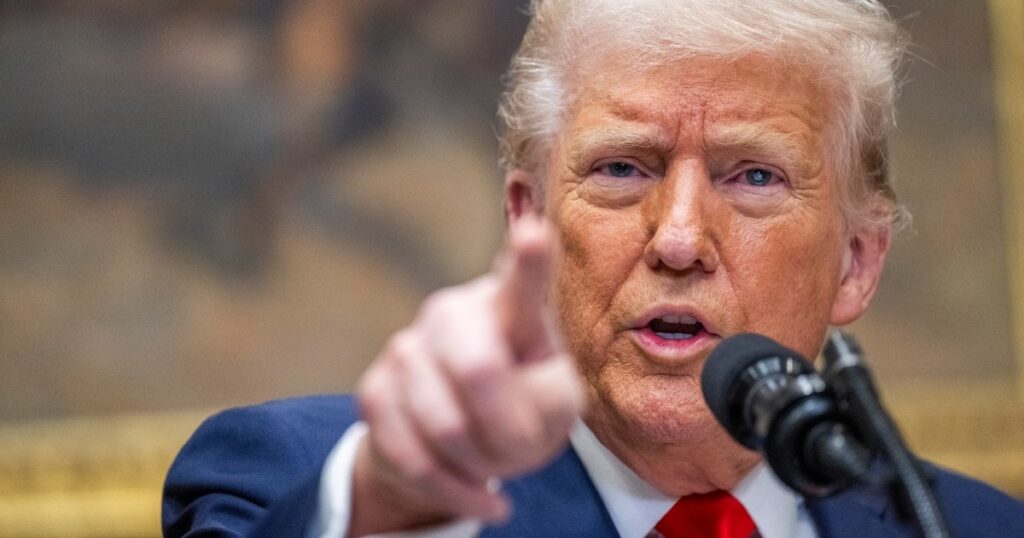
The first major set of economic reports last week reflect the state of the United States economy during President Donald Trump’s first full month in office. The data reveal a spike in layoffs and slower hiring growth across both the public and private sectors, with looming cuts suggesting larger economic woes in the months ahead. The US economy added 151,000 jobs, according to the Labor Department report, which came out on Friday – well short of economist expectations showing a stall in economic growth. Approximately 7.1 million Americans are currently receiving unemployment benefits compared with 6.5 million this time last year. “I think the real risk here is that if Trump doesn’t reverse course on what he’s doing, it could be his last boring report, which I think would be really damaging to the economy. If you look under the hood, I think we are starting to see pretty foreboding cracks,” Elizabeth Pancotti, the managing director of policy and advocacy at the economic think tank Groundwork Collective, told Al Jazeera. Advertisement The White House painted an alternative picture. “In one month under President Trump, the American economy is soaring back to greatness after the economic calamity left by Joe Biden,” White House Press Secretary Karoline Leavitt said in a statement. Former President Biden, however, was lauded as leading the best economic recovery in the world following the global economic downturn amid the COVID-19 pandemic. Mark Zandi, the chief economist at Moody’s Analytics, said that last week’s numbers are probably the best we will get in a while amid looming layoffs and tariff fears. “This is the calm before the storm, before we start to see the fallout in the job market from the trade war and the DOGE cuts, and other economic policies from Trump,” Zandi told Al Jazeera. DOGE is the newly created Department of Government Efficiency, which is led by ardent Trump supporter, billionaire Elon Musk. Those concerns, coming on the back of comments that Trump made over the weekend declining to rule out an impending US recession, reverberated through the stock market on Monday when the S&P 500 lost 155.21 points, or 2.69 percent, to end the day at 5,614.99 points. This is the first time it finished below its 200-day moving average – a closely watched support level – since November 2023. The Nasdaq Composite Index lost 726.01 points, or 3.99 percent, to 17,470.21 – its biggest single-day decline since September 2022, according to CNN. The Dow Jones Industrial Average also fell 890.63 points, or 2.08 percent, to 41,911.09. Advertisement Cuts on the horizon There are key indicators that point to this getting worse in the months to come. The index which shows how many people took on part-time work including because they were unable to find full-time work or have had their hours reduced, increased by 460,000 from the month prior, to 4.9 million people. “This is the shortest honeymoon period we’ve ever seen if you are 50 days on the job. He inherited on paper a pretty stable, pretty solid economy and it is already deteriorating after 50 days. I don’t think that that’s ever happened,” Pancotti added. Since Trump took office, DOGE has cut almost 33,000 people across the federal government, according to Layoff.fyi, which tracks federal government and tech sector layoffs. Because of ongoing court cases, the official count from the Labor Department is 10,000 jobs. The layoffs include employees at the US Agency for International Development (USAID), the National Park Service, the National Institutes of Health, the National Oceanic and Atmospheric Administration (NOAA) and the Department of Energy, among many other government agencies. The number of public sector cuts is expected to increase as many of the recent DOGE cuts came after the end of the Bureau of Labor Statistics (a division of the Labor Department) reporting period for the month closed. Earlier this month, the Trump Administration announced its plans to cut 80,000 employees from the Department of Veteran Affairs. The president has also called for the dissolution of the Department of Education, even though that can only be done by an act of Congress. Advertisement The global investment firm Apollo forecasts that when considering federal contractors on top of full-time employees, the federal workforce cuts could account for close to 1 million jobs lost. In last week’s jobs report from the Labor Department, the biggest gains were in the healthcare sector, which added 52,000 jobs. However, looming healthcare cuts could make those gains very short-lived. “If we’re looking at massive Medicaid cuts – we’re already seeing [National Institutes of Health] NIH and health research cuts – Medicare cuts are on the table. All of those really could threaten the sector that is driving a lot of those job gains,” Pancotti continued. The downstream effect has already hit the private sector, which relies on federal funds. A private sector worker in Texas, who spoke to Al Jazeera under the condition of anonymity, said that the company they worked with had clients who were largely dependent on federal funds because of which business had dried up. “We went from having a very busy-looking Q1 of 2025 to having absolutely nothing on the books within about a week of the inauguration,” the source told Al Jazeera. “Now that I am having to not spend any money whatsoever and do nothing but look for jobs, I’m not spending money in the economy. I’m not doing things like making improvements to my house. I would have paid contractors to do that. I’m within a couple of months of paying off the last of my student loans and now those are going to be paused until I find something new. Now, I have to worry if I can make the necessary trip to take my cat to the vet,” the source added. Advertisement According to data from the Commerce Department, US consumers have cut back on spending for the first time in nearly two years. Others are worried about how they’re going to get
Diego Maradona’s medical staff go on trial for negligent homicide
[unable to retrieve full-text content] Medical staff that treated Diego Maradona have gone on trial in Argentina over what prosecutors say was negligence.
UK crossbow killer Kyle Clifford sentenced to life for triple murder

Clifford is sentenced to life in prison for three ‘brutal and cowardly’ murders of Carol Hunt, 61, Louise Hunt, 25, and Hannah Hunt, 28. A former British soldier who used a crossbow and a knife to murder three women at their family home north of London has been sentenced to a whole-life order, meaning that he would never be released from prison. Kyle Clifford, 26, was imprisoned for life for each of the three “brutal and cowardly” murders of Carol Hunt, 61, the wife of BBC sports commentator John Hunt, and their two daughters Louise Hunt, 25, and Hannah Hunt, 28. He was convicted of three counts of murder, one of false imprisonment and two counts of possession of offensive weapons. He was also found guilty of raping Louise Hunt, his ex-partner, during the “carefully planned” attack on the family. Justice Joel Bennathan handed down the sentence in Clifford’s absence on Tuesday after he refused to attend the hearing at Cambridge Crown Court in east England. “The evidence I have heard shows you to be a jealous man soaked in self-pity – a man who holds women in utter contempt,” Bennathan said. Prosecutors said Clifford planned the murders for days after becoming enraged when an increasingly concerned Louise ended their 18-month relationship. Advertisement During the case, the jury was shown evidence that Clifford gained access to the family home in the quiet residential neighborhood of Bushey, northeast of the capital, by deceiving Carol Hunt on the pretext he was returning Louise’s belongings, before brutally stabbing her to death. Clifford “lay in wait” for an hour for Louise to enter the house, before restraining, raping and murdering her with a crossbow. He then fatally shot Hannah Hunt when she returned to the property after work. Following the murders, police launched a manhunt for the suspect before he was found injured the following day in a cemetery in Enfield, north London. Clifford had shot himself in the chest with the crossbow. He remains in a wheelchair, having been paralysed from the chest downwards. Ahead of the sentencing, John Hunt said he had wanted to deliver his victim impact statement “eye to eye with Kyle”. “When I challenged myself about how you were able to deceive us all, I simply say that you are a psychopath who, for the duration of your time together with Louise, was able to disguise yourself as an ordinary human being,” John Hunt told the court. “I hope women round the world will take Louise’s bravery as a shining beacon for their lives,” he said. Adblock test (Why?)
Trump says imposing 50-percent tariffs on Canadian steel, aluminium
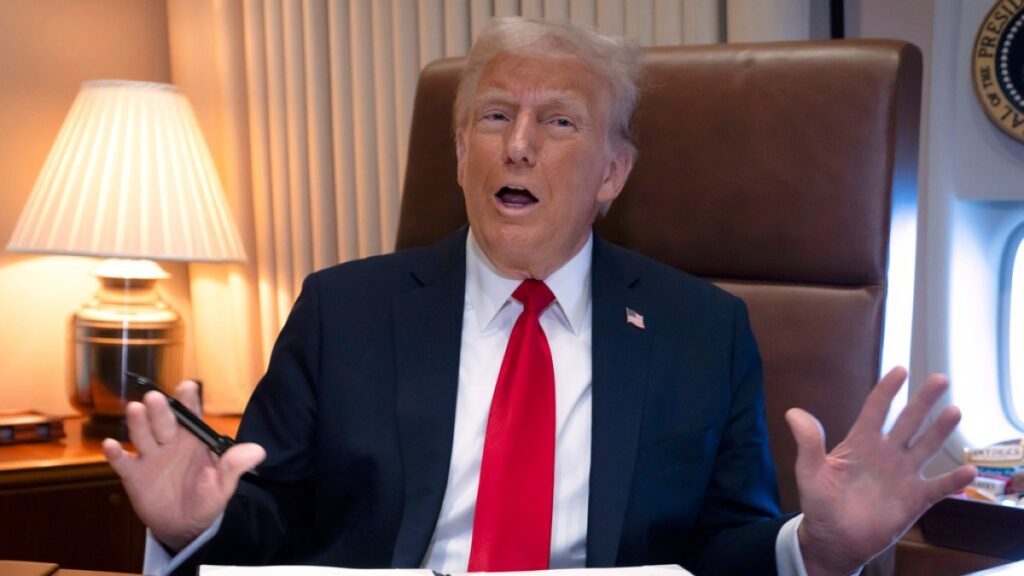
US President Donald Trump has announced he will double planned tariffs on Canadian steel and aluminium imports to 50 percent, escalating a trade war with the United States’s northern neighbour. In a social media post on Tuesday morning, Trump said the increased tariffs come in response to a decision by the province of Ontario to put a 25-percent surcharge on electricity exports to some US states. He said the increased tariffs on steel and aluminium would come into effect on Wednesday. “The only thing that makes sense is for Canada to become our cherished Fifty First State. This would make all Tariffs, and everything else, totally disappear,” Trump wrote on Truth Social. US-Canada relations have plummeted amid Trump’s push to impose steep tariffs on a range of Canadian goods and his repeated threats to annex the country. The US president has said the tariffs – some of which came into effect last week – are part of an effort to balance the countries’ trade relationship. However, the Canadian government has rejected the measures as “unjustified” and unveiled retaliatory levies. Advertisement On Monday, Ontario Premier Doug Ford announced that his government would impose a 25-percent surcharge on electricity exports to the US states of Michigan, Minnesota and New York. Ford – who has taken a strong line against Trump’s economic policies – told reporters that Ontario electricity powers 1.5 million American homes and businesses in those US states. The surcharge, the premier said, would cost families and businesses as much as $276,000 (400,000 Canadian dollars) per day. “Let me be clear, I will not hesitate to increase this charge. If necessary, if the United States escalates, I will not hesitate to shut the electricity off completely,” Ford said. The US stock market plunged this week amid the uncertainty around Trump’s economic and trade policies. Canada and the US are major trading partners, with the US importing $412.7bn from its northern neighbour in 2024, according to the Office of the US Trade Representative. American exports to Canada that same year totalled $349.4bn. Canada tops the list of foreign suppliers of both steel and aluminium to the US, with imports of $19.5bn last year, according to data from S&P Global. “While steel represents a significant portion of total US imports, the country depends far more on Canadian aluminum to meet domestic demand,” the Canadian Chamber of Commerce said in a recent factsheet. It said US tariffs on steel and aluminium could lead to job losses in Canada, while retaliatory measures by the Canadian government could raise prices for consumers. Advertisement Despite concerns that a prolonged trade war with Canada could raise prices for Americans and hurt the US economy, the Trump administration has defended its tariff policy as necessary to close a trade deficit between the two countries. In his Truth Social post on Tuesday, Trump warned Canada that if it did not drop its tariffs on US goods, his administration would increase planned reciprocal levies set to take effect in early April. That “will, essentially, permanently shut down the automobile manufacturing business in Canada”, Trump said. “Those cars can easily be made in the USA! Also, Canada pays very little for National Security, relying on the United States for military protection. We are subsidizing Canada to the tune of more than 200 Billion Dollars a year. WHY??? This cannot continue.” Larry Summers, a veteran economist and former US Treasury secretary, slammed the increased tariffs as Trump’s “worst trade policy yet”. “Increasing the price of key inputs for the US manufacturing industries–who employ 10 million people–is what a US adversary would do,” Summers wrote on X. “It is a self-inflicted wound to the US economy that we cannot afford, at a moment when recession risks are rising.” The Canadian government did not immediately comment on Trump’s announcement. Prime Minister Justin Trudeau is expected to formally step down in the coming days to allow the new leader of his governing Liberal Party, Mark Carney, to step in as the country’s next prime minister. Advertisement Carney has promised to take on Trump and deepen Canada’s relationships with other trading partners. “We didn’t ask for this fight, but Canadians are always ready when someone else drops the gloves,” he said during his Liberal leadership victory speech on Sunday. “So the Americans, they should make no mistake – in trade, as in hockey, Canada will win.” Adblock test (Why?)
Protesters denounce arrest of Palestinian student activist Mahmoud Khalil
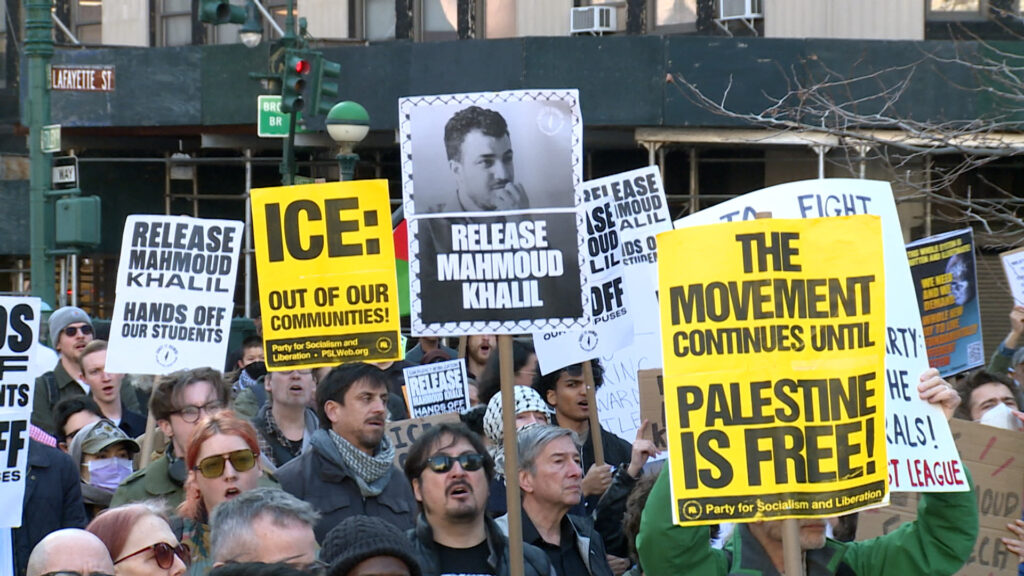
NewsFeed Protesters in the US have marched to demand the release of Palestinian student activist Mahmoud Khalil after immigration forces detained him on Saturday over his role in the pro-Palestine demonstrations at Columbia University. Published On 11 Mar 202511 Mar 2025 Adblock test (Why?)