

Germany rebuffs ‘dictated peace’ for Ukraine at Munich security summit
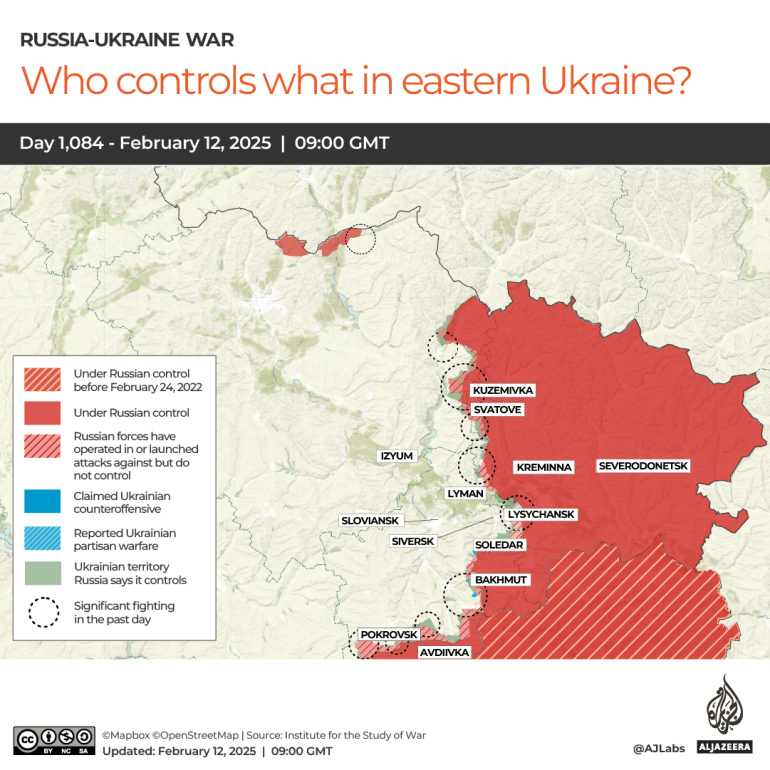
German Chancellor Olaf Scholz launched a strong defence of Ukraine saying a peace deal to end the three-year Russian invasion cannot be imposed on Kyiv. “There will only be peace if Ukraine’s sovereignty is secured,” he said on the second day of the Munich Security Conference on Saturday. “A dictated peace will therefore never find our support,” added Scholz, in a rebuke to United States President Donald Trump who recently held discussions with Russian President Vladimir Putin on Ukraine, without the participation of the Ukrainians. The German leader, who faces a tough election at home next week, said Berlin will not accept “any solution” of the protracted conflict that only leads to a “decoupling” of European and US security. “Only one person would benefit from this: President Putin,” he said. His comments came as European leaders have been trying to make sense of a tough new line from the new US administration on Ukraine’s future. Earlier this week, Trump announced he had held a phone call with Putin, during which the two leaders agreed to meet soon to negotiate a peace deal in Ukraine. Advertisement The American president and his top security and diplomatic officials also hinted that in order for the war to end Ukraine must accept most of Russia’s demands – including Kyiv giving up its Crimean territory taken by Moscow and abandoning its bid to join the NATO alliance. Trump later assured Ukrainian President Volodymyr Zelenskyy that he, too, would have a seat at the table for peace talks. Armed forces of Europe Zelenskyy said on Saturday it would be “dangerous” if Trump met Putin before meeting him, and that Ukraine would never accept any peace deals reached behind its back or without Kyiv’s involvement, in an implicit message to the US president as he strives to end the war with Russia. Zelenskyy also said he would only agree to meet in person with Putin after a common plan is negotiated with Trump. “A few days ago, President Trump told me about his conversation with Putin. Not once did he mention that America needs Europe at the table. That says a lot.” On Saturday, Scholz said that to ensure Russia would not attack again if peace is reached, Kyiv’s backers “first of all” needed to build up Ukraine’s armed forces in the future. “There will be a responsibility in the post-war times for Europe and for the United States and for the international partners and friends of Ukraine to make this happen,” he said. Ramping up his desire for a more muscular and mighty Europe, Zelenskyy said Ukraine’s three-year fight against an invading Russian army proved a foundation exists for the creation of a European army that has long been discussed among some continental leaders. Advertisement “I really believe that time has come. The armed forces of Europe must be created,” said Zelenskyy. ‘No cooperation’ with far right Meanwhile, Scholz rejected foreign interference in German elections after US Vice President JD Vance attacked how governments in Europe seek to counter bids for political influence by far-right groups such as Germany’s Alternative for Germany AfD. Germany “will not accept outsiders intervening in our democracy, in our elections. That is not appropriate – especially not among friends and allies,” he said after Vance’s criticism. “We are absolutely clear that the extreme right should stay outside the political decision-making process and there would be no cooperation with them,” Scholz later told reporters. “Never again fascism, never again racism, never again aggressive war. That is why an overwhelming majority in our country opposes anyone who glorifies or justifies criminal National Socialism,” Scholz said, referring to the ideology of Adolf Hitler’s 1933-45 Nazi regime. France’s Foreign Minister Jean-Noel Barrot also defended European policies after Vance’s speech. “Freedom of expression is guaranteed in Europe,” Barrot said on X, after Vance alleged it was “in retreat”. “Nobody is obliged to adopt our model, but nobody can impose theirs on us.” On Friday, Vance launched a broadside against Europe and Germany in particular, accusing both of limiting free speech by excluding parties that voice strong concerns over immigration, including the far-right AfD. Vance later met AfD leader Alice Weidel. Advertisement Scholz’s centre-left Social Democrats are currently third in the polls at about 15 percent before next week’s vote, behind AfD’s expected second-place finish at 20 percent and the conservative CDU/CSU bloc’s estimated 30 percent. US Vice President JD Vance at the Munich Security Conference on Friday [Tobias Schwarz/AFP] Adblock test (Why?)
Jannik Sinner banned from tennis for three months in doping case
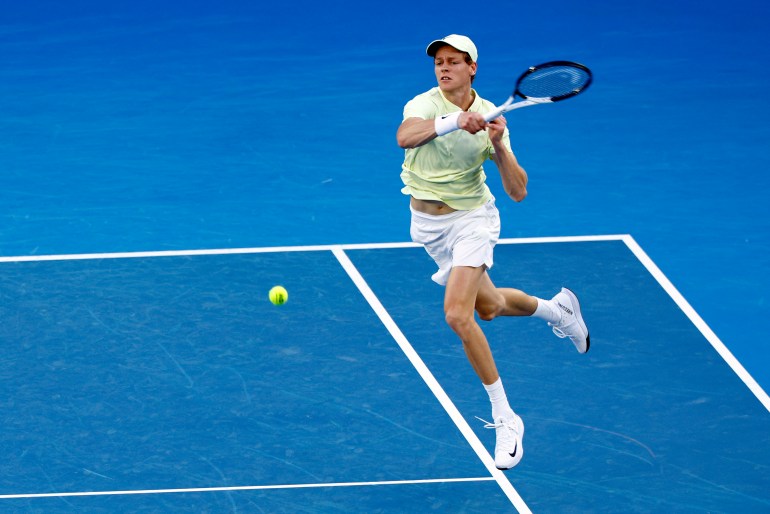
The world number one reached a settlement with the World Anti-Doping Agency after two positive drug tests in 2024. Jannik Sinner’s long doping saga came to an end after he agreed to a three-month ban from tennis, the world number one admitting “partial responsibility” for team mistakes which led to him twice testing positive for traces of clostebol in March last year. The February 9 to May 4 suspension means Sinner will be free to play in the French Open, the second Grand Slam of the season, which begins on May 25 at Roland Garros. In a statement on Saturday, Sinner said the World Anti-Doping Agency (WADA) accepted that he “had no intent and did not derive any competitive advantage from the two positive tests” of the banned substance. The 2025 Australian Open champion has always said clostebol entered his system when his physiotherapist used a spray containing it to treat a cut before providing a massage and sports therapy. “This case had been hanging over me now for nearly a year and the process still had a long time to run with a decision maybe only at the end of the year,” Sinner said. “I have always accepted that I am responsible for my team and realise WADA’s strict rules are an important protection for the sport I love. On that basis I have accepted WADA’s offer to resolve these proceedings on the basis of a three-month sanction.” Advertisement WADA said separately that “Sinner did not intend to cheat” but that he would serve his suspension as he is responsible for the actions of his entourage. Sport’s global doping watchdog confirmed it was withdrawing its appeal to the Court of Arbitration for Sport (CAS), which was due to hear the case in April. The agreement between Sinner and WADA also means that Sinner will be able to play in front of his home fans at the Rome Open which kicks off just after the end of his suspension and is the last big clay-court tournament before Roland Garros. Saturday’s announcement brings to an end a controversy which has followed Sinner everywhere just as he rose to become the top player in men’s tennis and a multiple Grand Slam winner. The 23-year-old was facing a potential ban of two years after WADA appealed to CAS against his initial exoneration by the International Tennis Integrity Agency (ITIA), announced in August. Italy’s Jannik Sinner in action during the Australian Open final against Germany’s Alexander Zverev on January 26, 2025 [Kim Kyung-Hoon/Reuters] Adblock test (Why?)
Sudan army retakes more of capital Khartoum from RSF
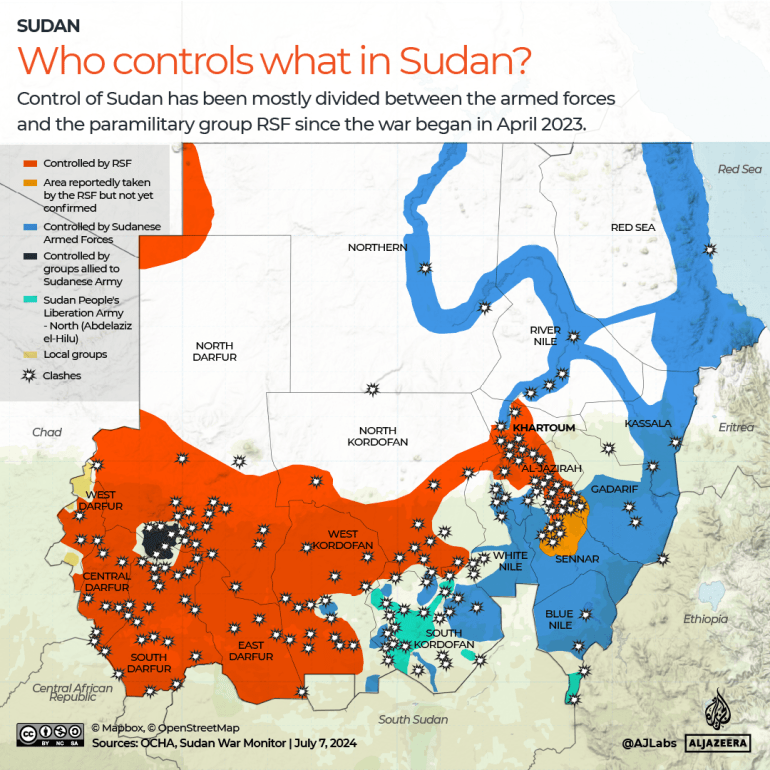
Sudanese military makes gains in the capital as paramilitaries retain key positions. Sudan’s military captured a major bridge connecting the east of the capital Khartoum to the south, days after it reclaimed control of its northern part from the Rapid Support Forces (RSF). As the conflict in Sudan nears the two-year mark, the army has in recent weeks won back large swaths of the capital and its surrounding areas from the paramilitary group. RSF still controls some key positions, including the central market, the presidential palace, and some of the southern and western residential districts. It also holds parts of the central region of Kordofan, most of the western region of Darfur, and is besieging the army and its allies in the city of el-Fashir, the capital of north Darfur. Residents and medics on Friday said the RSF attacked the famine-stricken Zamzam displacement camp, south of el-Fashir, as the group attempted to tighten its grip on the Darfur stronghold. An estimated 11.4 million civilians have been forced from their homes since the conflict began in April 2023. Three million are refugees in neighbouring countries, while more than eight million are internally displaced. Advertisement “Sudan’s regional neighbours say they want the conflict to end,” Al Jazeera’s Mohamed Vall said, reporting from Sudan’s Sennar. “Peace efforts were made in Jeddah, Cairo, Addis Ababa, Geneva and elsewhere. But all have so far failed. “Both the RSF and the army say they’re ready to talk but with caveats and conditions unacceptable to the other side. Both still believe they can achieve total victory on the battlefield.” ‘Tremendous destruction and bloodshed’ Speaking on Friday at a high-level humanitarian conference in the Ethiopian capital, Addis Ababa, UN Secretary-General Antonio Guterres described the situation in Sudan as a catastrophe on a “staggering scale and brutality”. “It is a crisis that demands sustained and urgent attention,” he told participants, stressing the need to stop the movement of arms and ammunition into the country. “This flow is enabling the continuation of tremendous civilian destruction and bloodshed,” Guterres added. Nearly 25 million people are suffering from “acute” levels of hunger, according to UN figures, and delivering aid requires a ceasefire to be put in place. Guterres called on world leaders to use their influence for peace and boost humanitarian aid efforts ahead of the holy month of Ramadan. “We must do more – and do more now – to help the people of Sudan out of this nightmare.” Adblock test (Why?)
Champions Trophy: Pakistan lose to New Zealand in warm-up series decider
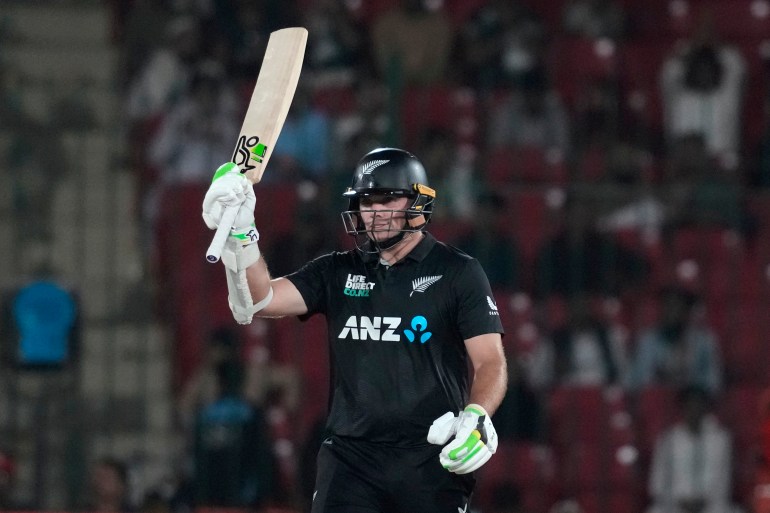
New Zealand gears up for Champions Trophy by beating Pakistan in tri-nation series final. New Zealand has rounded off a perfect preparation for the Champions Trophy by thumping Pakistan by five wickets in a tri-nation series final. Five days before the teams meet again to open the Champions Trophy, host Pakistan was dismissed for 242, and New Zealand cruised to 243-5 in the 46th over on Friday. Fast bowler Will O’Rourke staked his claim for Wednesday’s opener with 4-43, and captain Mitchell Santner returned his best-ever economical one-day international figures of 2-20. None of the Pakistan batters got a half-century while Daryl Mitchell (57) and Tom Latham (56) led New Zealand to a third successive win in the tournament, clinched by Pakistan’s 16th wide delivery. New Zealand’s Tom Latham celebrates after scoring fifty [Fareed Khan/AP] The Black Caps had beaten both Pakistan and South Africa in group games in Lahore. “Different guys stepping up at different times is good, but it means nothing till we play that first game at the Champions Trophy,” Santner said. The teams will return to the same ground on Wednesday. “It [the pitch] was a bit slower than what we thought it would be,” Santner said. “We just wanted to put in a good spot and build pressure. If we take wickets up front, it makes the job easier in the middle.” Left-hander Latham, who came into the final without a run in both games at Lahore, could have been dismissed on 15 and 27. Advertisement However, he was dropped both times, and Pakistan didn’t go for an LBW video referral when replays suggested leg spinner Abrar Ahmed could have overturned the on-field umpire’s decision. Latham stretched his luck when he successfully reviewed an on-field out ruling for caught behind off Shaheen Shah Afridi. He reached his half-century off 60 balls. Latham and Mitchell put on 87 runs off 88 balls, dominating the spinners with sweep shots, before both fell late in the run chase. “He [Latham] is pretty relieved as well,” Santner said of Latham’s 64-ball knock. “We know how good he is, and it was just a matter of time. It was nice for different guys to fire as well.” Pakistan’s Naseem Shah, left, celebrates with teammates after taking the wicket of New Zealand’s Devon Conway [Fareed Khan/AP] Devon Conway (48) played another meaningful knock after being inserted as an opener while Rachin Ravindra was rested after a head knock in the field during the first game against Pakistan. Conway laid the foundation in a 71-run partnership with Kane Williamson (34), who missed out on his third successive half-century. Conway top-edged Naseem Shah (2-43), which brought Latham to the crease to join Mitchell. New Zealand perfectly read the tacky pitch after losing the coin toss and pinned down Pakistan with pacers hitting tight lengths early and Santner drying out the runs in the middle overs. Babar Azam became the joint fastest batter to reach 6,000 ODI runs with Hashim Amla of South Africa but perished soon after the achievement in his 123rd innings. Advertisement O’Rourke struck in his second over when Fakhar Zaman (10) struggled to gauge the two-paced pitch and chipped an easy catch to square leg, and Saud Shakeel (eight) was clean-bowled by off-spinner Michael Bracewell in his first over inside the batting powerplay. Babar looked to shape up well for a big innings and struck cover-driven boundaries until he offered a tame return catch to Nathan Smith on 29. Babar threw down his bat in dismay as Pakistan’s most accomplished white-ball batter totalled 62 runs in three innings. Pakistan’s Khushdil Shah, left, in action during the tri-series ODI cricket final match [Fareed Khan/AP] Captain Mohammad Rizwan (46) and Salman Ali Agha (45) tried to revive the innings with an 88-run stand but couldn’t score at the pace they managed in the epic run chase against South Africa on Monday. O’Rourke clean-bowled Rizwan with a scrambled seam in his return spell, and Salman reverse-swept Bracewell to short third man, where Jacob Duffy caught the ball over his shoulders. “We wanted to bat first because we thought in the second half the pitch would be tough,” Rizwan said. “Credit goes to their bowlers. I tried to build a partnership with Agha, but they were not giving us the [loose] balls.” Tayyab Tahir (38 off 33 balls) tried to up the scoring rate after Rizwan and Salman fell within five overs, but he was caught at mid-wicket, and Santner chipped in with two wickets in one over to finish with impressive figures. All-rounder Faheem Ashraf, playing his first ODI since 2023, was dropped twice before O’Rourke bagged him and finished Pakistan’s below-par effort with the bat by claiming the last two wickets. Advertisement Adblock test (Why?)
Ukraine’s Zelenskyy calls for united US-Europe support against Russia
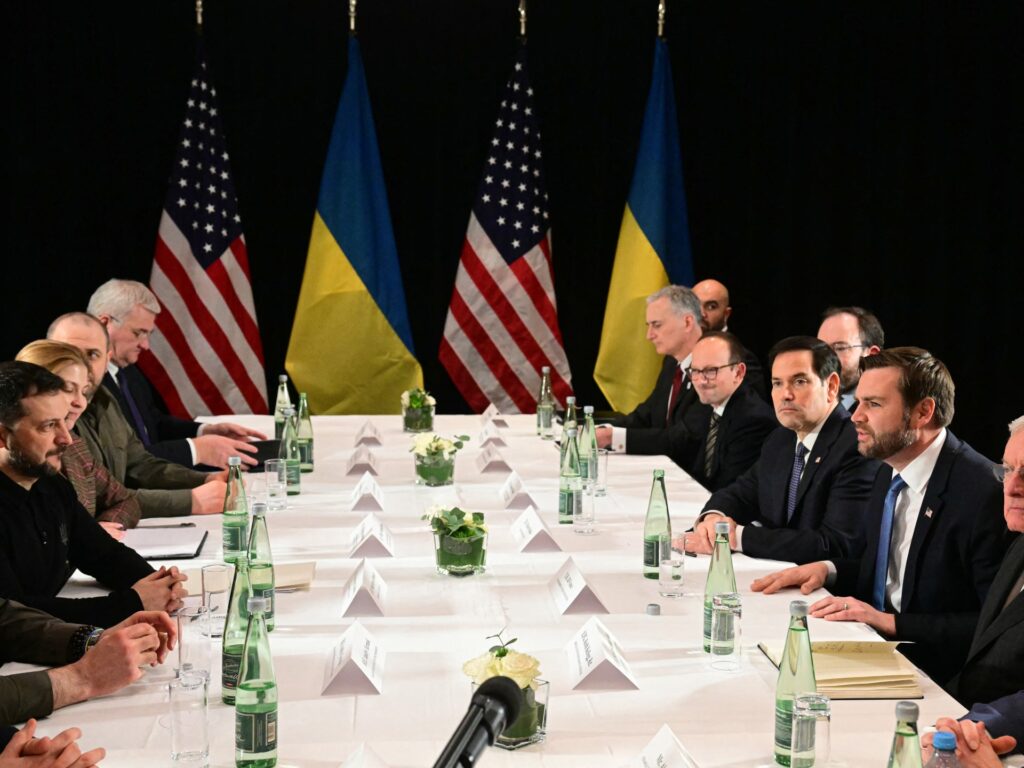
Ukraine’s president meets leaders at Munich Security Conference amid a push to end Russia-Ukraine war. Ukrainian President Volodymyr Zelenskyy has called for the United States and Europe to band together to support Ukraine in its war against Russia. Speaking on Friday at the Munich Security Conference, Zelenskyy also said the US, including former President Joe Biden’s administration, never saw Ukraine as a NATO member. Ukraine will need “security guarantees” before any talks with Russia, he said, as US President Donald Trump presses both countries to find a quick end to the three-year war. Shortly before sitting down with US Vice President JD Vance, Zelenskyy said he would only agree to meet in person with Russian President Vladimir Putin after a common plan is negotiated with US President Donald Trump. The roughly 40-minute meeting between Vance and Zelenskyy produced no major announcements detailing the way out of the deadliest war in Europe since World War II. “We want peace very much,” Zelenskyy said. “But we need real security guarantees.” Vance, for his part, said the Trump administration is committed to finding a lasting peace between Ukraine and Russia. Advertisement Earlier this week, Trump upended years of steadfast US support for Ukraine with a phone call with Putin, after which Trump said the two leaders would likely meet soon to negotiate a peace deal. In Munich on Friday, some world leaders – including conservative party leader Friedrich Merz, who is seen as the likely next chancellor of Germany – sided with the Trump administration. “There was also agreement that the path to a lasting peace can only succeed in the closest coordination between America and Europe,” Merz said on the sideline of the conference. But there were more widespread concerns among other leaders at the summit. “There is concern that there may be a deal that Washington wants to do with Putin effectively excluding not just the Europeans but the Ukrainians too,” Al Jazeera’s diplomatic editor James Bays said from Munich. But there was a stern warning from Yulia Navalnaya, the widow of Russian dissident Alexey Navalny, who died in a Russian penal colony: ”Even if you decided to negotiate with Putin, just remember he will lie.” German Foreign Minister Annalena Baerbock also expressed concerns about the Trump administration’s proposal to reinstate Russia in the Group of Seven (G7) leading economies. “As G7 partners, we have repeatedly made it clear over the last three years following this brutal Russian full-scale invasion: There can be no normal cooperation with Russia,” Baerbock said. Just hours before Vance and Zelenskyy met, a Russian drone armed with a warhead struck the protective shell of the Chornobyl Nuclear Power Plant in the Kyiv region, site of the world’s worst nuclear accident in 1986. Advertisement Zelenskyy and the UN atomic agency confirmed that radiation levels remained unchanged. Zelenskyy later told reporters in Munich that the attack was a “very clear greeting from Putin and the Russian Federation to the security conference”. Adblock test (Why?)
Osasuna vs Real Madrid: LaLiga – preview, team news, kickoff time
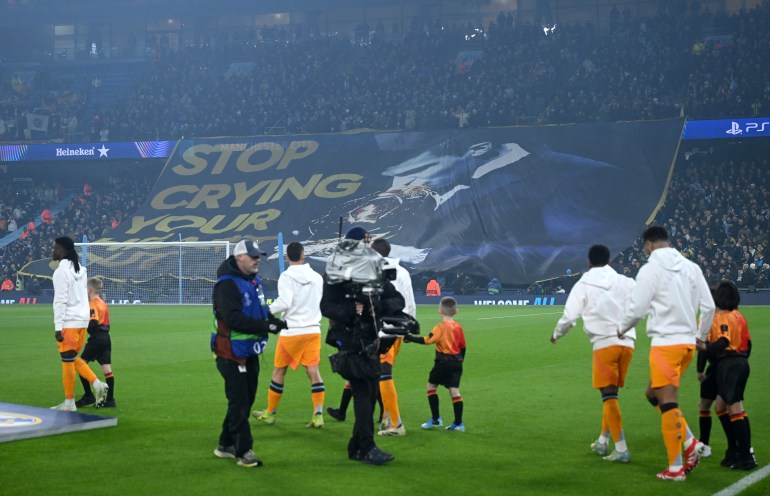
Who: Osasuna vs Real MadridWhat: Spanish LaLigaWhere: El Sadar Stadium, Pamplona, SpainWhen: Saturday at 9pm (20:00 GMT)Follow Al Jazeera sport’s live text and photo commentary stream of the match. Defending champions Real Madrid have the chance to extend their lead at the top of LaLiga to four points, even if only for a couple of hours, when they travel to Osasuna. Second-placed Atletico Madrid, who drew 1-1 at Real in the sides’ last outing, are in action later on Saturday when they entertain Celta Vigo. Barcelona, who finished second in the league phase of the Champions League, are third in the Spanish top flight – two points behind the leaders. The Catalan club travel to high-flying Rayo Vallecano on Monday. Along with the home draw with Atletico, Real lost their previous league match in a shock defeat at Espanyol, adding to the pressure heading into the next fixture as LaLiga tightens at the top. The form book is not completely against Carlo Ancelotti’s Real, however, as his team have won their last two cup matches, including their 3-2 win at Manchester City in their Champions League playoff first-leg tie. Advertisement What did Ancelotti say about two winless LaLiga matches? “We are well motivated, and it’s an opportunity to keep the lead, which is our goal,” the Madrid manager told reporters on Friday. “It’s going to be a difficult game, obviously, but we did well in the last game, and I think we have to confirm it. “It’s a game where we have to repeat all the good things we have done in the game against City. “The quality of this team is never in doubt – this is the way forward. “This is where the season really starts.” 📊 DRAMA at the top and bottom of the #LALIGAEASPORTS standings! pic.twitter.com/42bDakX6Il — LALIGA English (@LaLigaEN) February 13, 2025 Did Ancelotti offer any news on Vinicius Junior’s future at Real Madrid? Ancelotti said he is tired of answering questions about speculation linking forward Vinicius Jr with a move to Saudi Arabia and instead he wanted to focus on how well the player was performing. Vinicius is believed to be close to signing a new contract with Real, but a rumoured move to Saudi Arabia was once again the main focus at the news conference before Saturday’s LaLiga game away to Osasuna. “So many questions. Am I tired of this topic? Yes. Am I worried? No. Do I see him happy? Yes,” Ancelotti said. “We are happy with him. There is nothing more to add than what I have added a week or two weeks ago. We don’t talk about this topic here. He doesn’t talk about it either. “I see him as the same old Vinicius with a lot of desire to do things right. He has done it very well in the last game.” Real Madrid’s players emerge from the tunnel at Man City to see a tifo that reads, ‘Stop crying your heart out,’ with a picture of Rodri kissing the Ballon d’Or trophy, which he won over Real’s Vinicius Junior [Michael Regan/Getty Images] Did the Rodri banner at Man City upset Vinicius? That last game for Real was a 3-2 away win over City on Tuesday when Vinicius was named player of the match. Advertisement The Brazilian had been the target of a banner showing City midfielder Rodri with the Ballon d’Or trophy with the caption “Stop crying your heart out” in reference to the Real forward saying he believed he should have won the award. “I see him very motivated, especially because of what he has done in the game against City, where he had a lot of pressure, and he has endured this pressure very well, making a difference in the game,” Ancelotti said. “Whether he has received an offer or not, I can tell you what I see here, a happy player who wants to do things well and make history with this club.” What are Osasuna’s chances against Real? With Real embroiled in a battle for European survival, Osasuna are hoping to capitalise when the LaLiga leaders arrive at El Sadar. Los Blancos host Premier League champions Man City in the second leg of their Champions League playoff on Wednesday. Osasuna, 2023 Copa del Rey runners-up, are ninth in the league but often rise to the occasion when Spain’s biggest sides arrive in Pamplona. In September, they romped to a 4-2 victory over Barcelona, inflicting what was the Catalans’ first league defeat of the season. Croatian striker Ante Budimir netted twice and with 12 goals trails only Barcelona duo Robert Lewandowski and Raphinha and Madrid’s Kylian Mbappe in the standings. In January, Budimir became Osasuna’s record overseas goal scorer and has netted 62 for the club since first arriving on loan in the 2020-2021 season from Mallorca before signing permanently. Ante Budimir made his move to Osasuna from Mallorca permanent in 2021 [Vincent West/Reuters] Budimir, 33, netted a brace against Real Sociedad at the beginning of this month to earn his team an impressive victory at El Sadar that ended a nine-game winless run in LaLiga. Advertisement “[Budimir] is making history. He’s doing his thing, and he keeps doing it. He’s not going to stop,” Osasuna coach Vicente Moreno said. “He works hard every day and can go in [good or bad] runs of form, but he’s a player who has earned his place, and for us, it’s great he’s putting them away.” The preceding negative streak was started by a 4-0 defeat by Real Madrid at the Santiago Bernabeu, which Osasuna will try to avenge on Saturday. 10 – Only Ousmane Dembélé (15) has scored more goals in all competitions than Kylian Mbappé (10) in 2025 among players in Europe’s top five leagues. On.#MCIRMA #UCL pic.twitter.com/bw2SF50Sy6 — OptaJose (@OptaJose) February 11, 2025 Osasuna team news Osasuna will be missing suspended key centre back Flavien Boyomo, who scored their late equaliser on Monday at Mallorca. Real Madrid team news Madrid have a raft of
Liverpool vs Wolves – Premier League preview: Slot, team news, kickoff time
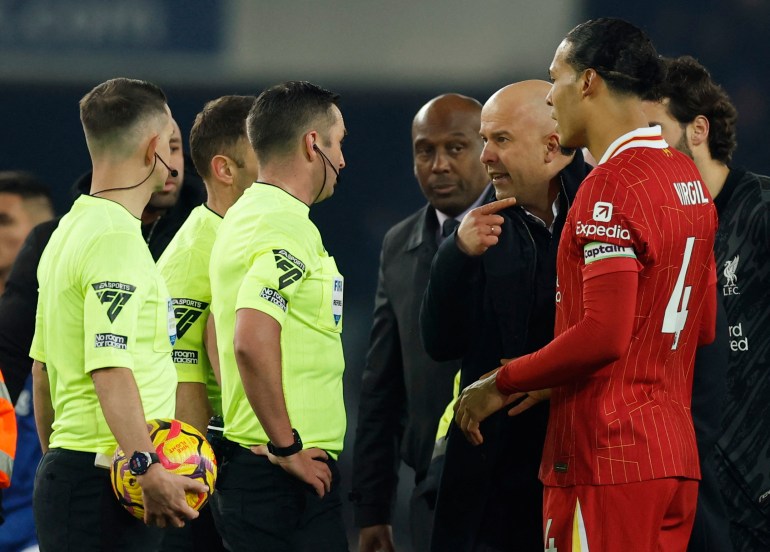
Liverpool manager Arne Slot speaks for the first time following his sending off in the Merseyside derby at Everton. Who: Liverpool vs Wolverhampton WanderersWhat: English Premier LeagueWhere: Anfield, Liverpool, United KingdomWhen: Sunday, February 14 at 2pm (14:00 GMT)Follow Al Jazeera sport’s live text and photo commentary stream of the match. Liverpool manager Arne Slot said emotions got the better of him when he was asked what led to his sending off following Wednesday’s chaotic finish to their 2-2 Premier League draw at Everton. Referee Michael Oliver showed Slot a red card after the manager shook his hand, following James Tarkowski’s stoppage-time equaliser for Everton at Goodison Park. A heated scuffle had also broken out between the two teams following Tarkowski’s goal that led to Everton’s Abdoulaye Doucoure and Liverpool’s Curtis Jones being sent off shortly before Slot’s red card. “The extra time that was five minutes and ended up being eight, happens a lot. And the emotions got the better of me,” Slot told reporters on Friday. “If I look back at it, I would love to do it differently.” Liverpool manager Arne Slot remonstrates with referee Michael Oliver before being sent off [Jason Cairnduff/Reuters] The manager, who is now suspended for Sunday’s visit of Wolverhampton Wanders, refused to divulge if he had said something to the referee that led to the red card. Advertisement “That is (an) ongoing process now and I think I have to respect that, so I can’t go into details,” he said. Everton are 15th in the table and edging clear of the relegation battle but Slot said the derby had felt like an even contest. “A draw would have been, maybe, a fair result. But with us leading after 97 minutes, it felt as if we were quite close to winning the game, so it felt like we dropped two points,” he added. Tempers had already flared between players at the end of the Premier League match before Slot’s red card [File: Carl Recine/Getty Images] How is the Premier League title race affected? Liverpool, who are unbeaten in the league since September, are seven points clear of Arsenal at the top of the Premier League. The Reds will face a difficult fight to the finish line in the title race, Slot said before Sunday’s match. “The second half of the season is always more difficult than the first for many reasons. Some teams bring in new players, some teams are playing longer together,” he said. “Some teams bring in new managers, like Everton… and the one at Wolves has made them better as well.” Liverpool begin a busy period with late heartbreak against their Merseyside rivals 💔 pic.twitter.com/mlIgQ0GQGt — Premier League (@premierleague) February 13, 2025 How have Wolverhampton Wanderers fared this season? Wolves are 17th in the table and just two points above the drop zone. They ended a four-match losing streak in the league when they beat Aston Villa earlier this month. The Midlands-based club have also won five of their 10 matches in all competitions since new manager Vitor Pereira took over in December. Liverpool team news With injuries already ruling out defender Joe Gomez and midfielder Tyler Morton, Liverpool may also be without Dutch forward Cody Gakpo this weekend, Slot said. Advertisement “Cody is a bit of a doubt. I had to take him off due to an injury because he got a knock. Let’s see how he is today,” he said. “So it is going to be a challenge again on Sunday but that is normal on the last part of the season in the best league of the world.” Wolves are yet to update their latest team news. Adblock test (Why?)
Israeli raids cause widespread destruction in the West Bank
[unable to retrieve full-text content] Israel’s weeks-long raid on the occupied West Bank has displaced thousands of Palestinians and caused destruction.
Why Ukraine’s mineral deposits could be key to ending the war with Russia
NewsFeed Ukraine has handed a draft deal to the US that would give Washington access to precious minerals as payback for support in the war with Russia. Are billions of dollars in minerals the key to peace? Soraya Lennie breaks it down. Published On 14 Feb 202514 Feb 2025 Adblock test (Why?)
Zelenskyy wants plan to ‘stop Russia’ before US peace talks
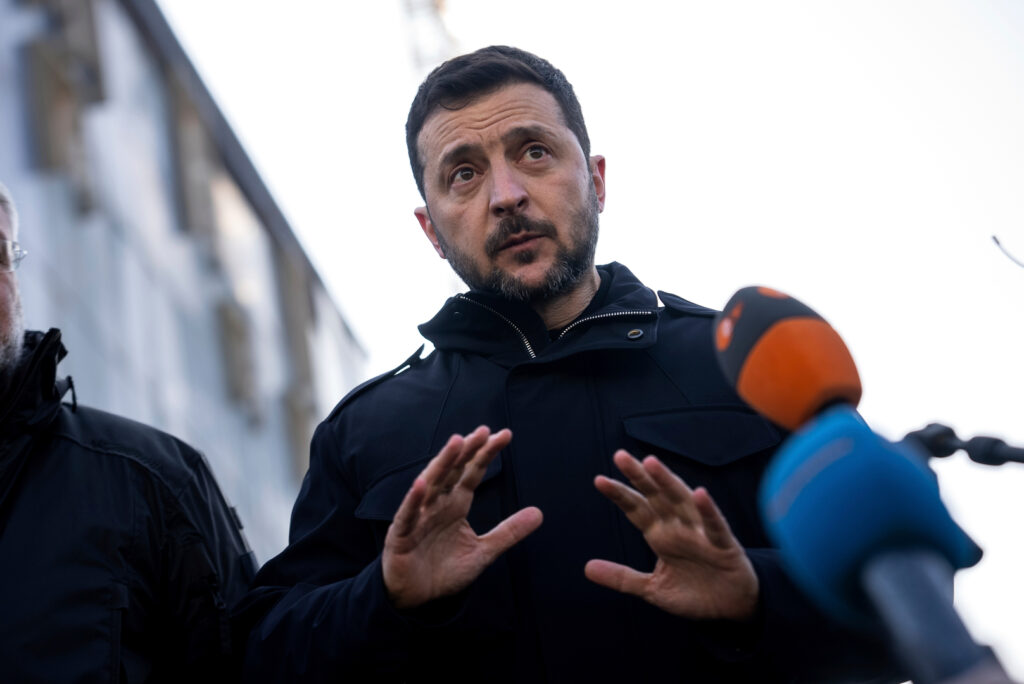
Ukrainian president says it was ‘not very pleasant’ that Trump called Putin before speaking to him. Ukrainian President Volodymyr Zelenskyy says the United States should agree on a joint plan to stop Russia’s war before starting peace talks with the Kremlin. After a 90-minute phone call with Russian President Vladimir Putin on Wednesday, US President Donald Trump said he expected to meet the Russian leader in Saudi Arabia for talks to end the war – sparking fears Kyiv would be frozen out. On Thursday, Zelenskyy told reporters in Ukraine that it was “not very pleasant” that Trump had called Putin before speaking to him, adding that the US president had said he wanted to speak to both leaders together. The Ukrainian leader, who is to meet US Vice President JD Vance in Munich on Friday, said he wanted to hammer out a “plan to stop Putin” with the US before any truce talks happen. “We, as a sovereign country, simply will not be able to accept any agreements without us,” Zelenskyy added. Kremlin spokesman Dmitry Peskov said on Thursday that Ukraine would participate “one way or another” in any talks to end the war but the separate US-Russian talks are on track, Russian state news agency TASS reported. Advertisement ‘Any quick fix is a dirty deal’ At a NATO meeting in Brussels on Thursday, Ukraine’s defence minister assured his country’s backers that Kyiv would keep standing strong against Russia. European officials have also taken a tough line in public towards Trump’s peace overture, saying any peace agreement would be impossible to implement unless they and the Ukrainians are included in negotiating it. In a blunt address to reporters at the NATO talks, European Union foreign policy chief Kaja Kallas insisted that no deal “behind our backs” could work as she accused Washington of “appeasement” towards Russia. “We shouldn’t take anything off the table before the negotiations have even started because it plays to Russia’s court and it is what they want,” she said. “Any quick fix is a dirty deal. It will simply not work.” Antonio Costa, who heads the European Council representing the EU’s 27 nations, warned that “peace cannot be a simple ceasefire”. “Russia must no longer be a threat to Ukraine, to Europe, to international security,” Costa said. US Defense Secretary Pete Hegseth, who was also at the NATO meeting in Brussels, denied that Trump’s plan is a betrayal of Kyiv’s three-year war effort against Russia. “There is no betrayal there. There is a recognition that the whole world and the United States is invested and interested in peace,” the Pentagon chief said. “Make no mistake, President Trump will not allow anyone to turn Uncle Sam into ‘Uncle Sucker’,” he said and added that Europe should be primarily responsible for defence on the European continent. Advertisement Hegseth also rejected the idea that Washington’s new administration was undermining NATO or European security. “NATO is a great alliance, the most successful defence alliance in history, but to endure for the future, our partners must do far more for Europe’s defence. We must make NATO great again,” he said. Adblock test (Why?)