

US says 5,000 soldiers deployed along Mexico border, could increase further
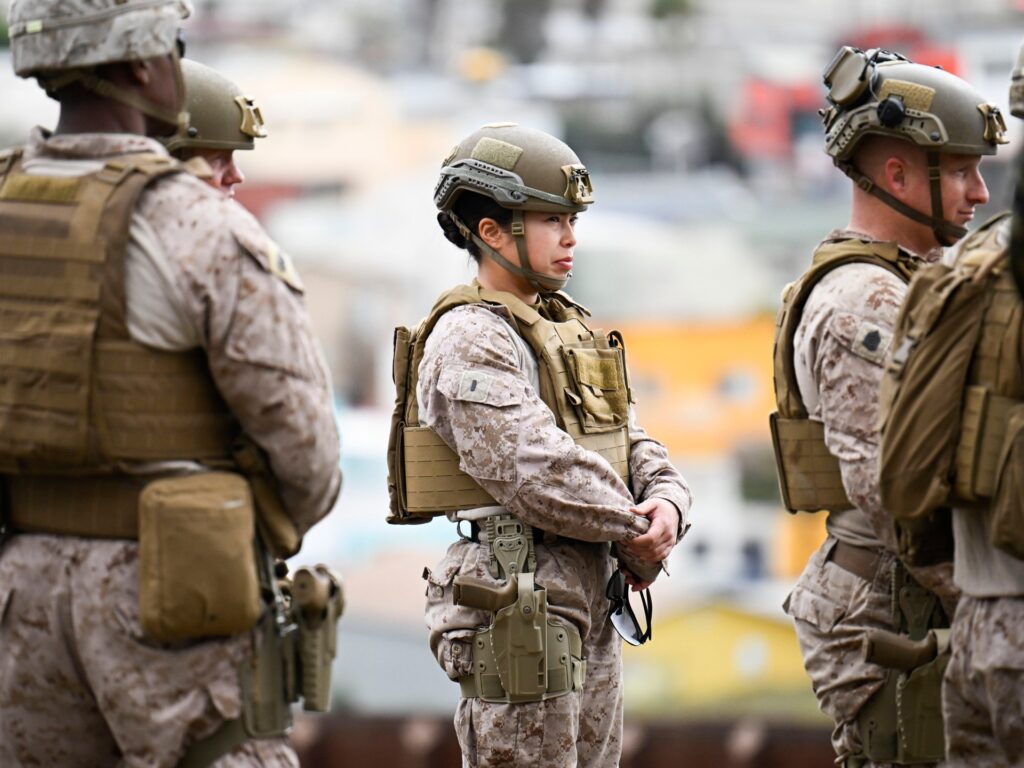
A United States general has announced there are currently about 5,000 active-duty soldiers along the country’s southern border with Mexico, as part of President Donald Trump’s overall push to crack down on immigration. General Gregory Guillot, the head of US Northern Command, told lawmakers on Thursday he expects that number could increase further. He also revealed that the military has heightened its activities in the domain of cross-border intelligence, surveillance and reconnaissance (ISR). Drug cartels were the primary target. “We have also increased some uniquely military capabilities that will get after … the cartels, which are driving the illegal migration,” said Guillot. “That is primarily through airborne ISR to get more information on those and figure out how we can counter their actions.” The presence of thousands of US soldiers along the border with Mexico fulfils a campaign pledge made by President Donald Trump to declare a “national emergency” at the southern US border. On January 20, the first day of his second term, Trump signed an executive order that directed military leaders to send “as many units or members of the Armed Forces” as needed to the border, to obtain “complete operational control” of the area. Advertisement He also called on the US secretary of transportation to waive restrictions on “unmanned aerial systems” within eight kilometres (five miles) of the border. During his time as a politician, Trump has leaned into nativist rhetoric that frames undocumented immigration as an “invasion” and the people involved as “criminals”. Shutting the border to irregular crossings has been a cornerstone of his campaign for re-election, as has launching a “mass deportation” campaign. Trump has also exerted pressure on his country’s neighbours to restrict undocumented immigration, including through the use of tariffs. In November, before taking office, Trump announced he planned to impose 25-percent tariffs on all goods from Canada and Mexico, the country’s two largest trading partners, in order to force them to halt trafficking of drugs and people across their shared borders with the US. After being sworn in, Trump followed through with his promise, announcing the tariffs would take effect in early February. But both Canada and Mexico negotiated deals with Trump to postpone the tariffs in exchange for concessions. Mexican President Claudia Sheinbaum, for instance, sent 10,000 members of her country’s National Guard to the border with the US in the name of combating drug trafficking and irregular migration. The US and Mexico have long collaborated on efforts to crack down on migration, which critics say often comes at the expense of human rights. After all, not all irregular migration is illegal. US and international law protects the rights of asylum seekers to flee across borders to escape persecution. Advertisement Critics have also grown alarmed at the potential for US military action against Mexico’s cartels. During the first hours of his second term, Trump signed another executive order designating the cartels as “foreign terrorist organisations”, calling them an “unacceptable national security risk to the United States”. In the days afterwards, Trump’s “border czar” Tom Homan told ABC News that there could be clashes between the increased surge of US troops and the cartels. “Do I expect violence to escalate? Absolutely, because the cartels are making record amounts of money,” Homan said. Other Republican officials, including Florida Governor Ron DeSantis, have also voiced support for military strikes on Mexican cartels. But the Mexican government has viewed that rhetoric with great alarm, and it maintains any such strike would represent a severe violation of its country’s sovereignty. Nevertheless, Mexican President Claudia Sheinbaum did not express alarm over US military surveillance flights, as they were currently taking place over US soil. She addressed the topic in a morning news conference on Thursday, before Guillot offered his testimony in the US. “This is not the first time that there have been flights of this type, it’s not out of nowhere,” Sheinbaum said. “Will we ask for an explanation? Yes, but as part of our coordination with them.” Meanwhile, when asked by US lawmakers if he would require the presence of an aircraft carrier strike group near Mexico, Guillot said that he would need “significant increased maritime presence in cooperation with the Coast Guard”. Advertisement Adblock test (Why?)
Trump launches reciprocal tariffs amid concerns of economic turmoil
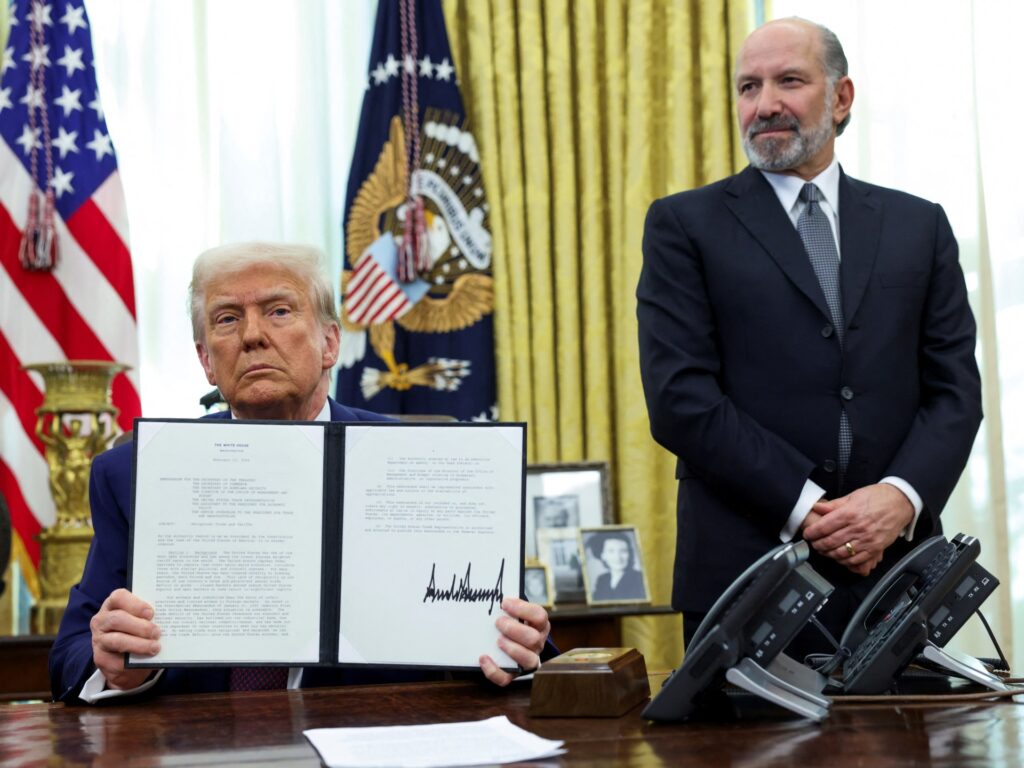
United States President Donald Trump has signed a plan rolling out increased import duties for every trading partner that taxes US imports, stating that he was doing so to bring a sense of “fairness” to commerce. Sitting in the Oval Office on Thursday, Trump described the tariffs as reciprocal, meaning that the US would automatically raise its own import taxes to match existing levels in other countries. “On trade I have decided for purposes of fairness that I will charge a reciprocal tariff, meaning whatever countries charge the United States of America, we will charge them. No more, no less,” he said. “In almost all cases, they’re charging us vastly more than we charge them,” he added. “But those days are over.” While experts have raised concerns that Trump’s tariffs could set off a global trade war that would cause surging prices, Trump has long viewed trade as a matter of winners and losers — and he has argued that the US has been “very unfairly” treated by its allies abroad. His heavy reliance on tariffs has also been seen as a departure from the longstanding bipartisan consensus on expanding free trade agreements with other countries. Advertisement Thursday’s tariffs are not expected to start immediately because it would require different tax hikes be set according to rates in different countries, a process that could take weeks. Also on Thursday, he threatened the 10-country bloc known as BRICS — named for its founding members Brazil, Russia, India and China — with a “100-percent tariff at least” if the group proceeded with hypothetical plans to set up a common currency. No such currency is in the works although BRICS leaders have floated the possibility in the past. Still, Trump lashed out at the prospect in a question-and-answer session with reporters, accusing BRICS leaders of wanting “to play games with the dollar”. “If any trading gets through, it’ll be 100-percent tariff at least,” Trump said. The US president has frequently used tariffs as a means of coercing other countries to act in line with his priorities. That includes proposed tariffs against Mexico and Canada, two of the US’s largest and closest trading partners. In November, shortly after his re-election, Trump announced he planned to impose 25-percent tariffs on both countries to force them to tighten security along the US border. Economists and politicians alike warned of the crippling effects those tariffs could have on the economies of all countries involved. “I want to speak directly to Americans,” Canadian Prime Minister Justin Trudeau said on February 1. “Tariffs against Canada will put your jobs at risk, potentially shutting down American auto assembly plants and other manufacturing facilities. They will raise costs for you, including food at the grocery stores and gas at the pump.” Advertisement Shortly after that statement, both Mexico and Canada struck deals with the Trump team to delay the tariffs until March, in exchange for concessions like an increase in the number of Mexican national guard forces at the southern US border. Still, Trudeau and other critics have called the prospect of tariffs a violation of the free trade agreements they struck, including the United States-Mexico-Canada Agreement, which was negotiated during Trump’s first term. Also during Trump’s first term, Congress voted to extend permanent normal trade relations with China. That decision, and free trade agreements in general, have been criticised by politicians like Senator Bernie Sanders, who argue those policies made it easier for companies to relocate factories to countries with lower wages and reduces unionisation rights and environmental protections. While Trump has also been critical of free trade deals, he has declined to pursue typically left-wing priorities such as the promotion of collective bargaining rights for workers. Tariffs can also be used to shield domestic sectors from foreign competition, but economists said that strategy is more typical of countries working to get domestic industries off the ground. They also warned that after several decades of economic integration between allies, the sudden imposition of steep tariffs could lead to serious economic turmoil as well as rising prices for consumers. Trump campaigned on lowering the cost of living, and he has since warned there may be some “pain” for consumers as a result of the tariffs. Advertisement Adblock test (Why?)
Ukraine presses on in Kursk; Denmark warns Russia could wage war in Europe
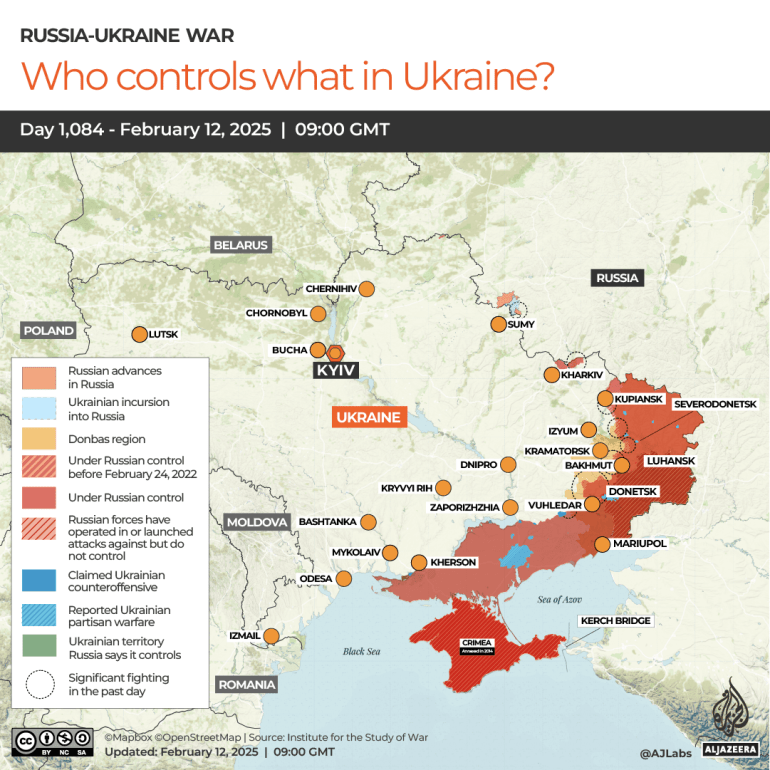
Ukraine has advanced 5km (3 miles) deeper into Russian territory during the past week, as Russia again reportedly deployed North Korean forces against it. But as Kyiv’s forces inched ahead, United States Defense Secretary Pete Hegseth told a NATO meeting on Wednesday that it was “unrealistic” to expect a return to Ukraine’s pre-2014 borders and ruled out NATO membership for the war-torn nation – a major blow to Ukraine’s post-war ambitions. Amid tensions between NATO allies, with several European members at odds with Washington’s perspective, the Danish Defence Intelligence Service (DDIS) released a report on Tuesday warning that Russia could launch a war with “one or more European NATO countries if it perceives NATO as militarily weakened or politically divided”. “Since 2022, Russia has been undertaking a major reconstruction and reform of its military forces in parallel with its war effort in Ukraine,” the report said. “During 2024, this effort has changed its nature from a reconstruction to an intensified military buildup with the goal of being able to wage an equal fight against NATO forces. Advertisement “The economic and material support from China and the support from North Korea and Iran with troops and weapons systems, respectively, are increasingly contributing to freeing up resources for Russia’s rearmament against NATO.” Ukraine’s intensified push On February 6, Ukrainian forces launched a new offensive with two mechanised battalions from the town of Makhnovka, which they control. Geolocated footage showed they had moved along the 38K-028 highway to form a salient towards the southeast, capturing the settlements of Kolmakov and Fanaseyevka. Ukrainian forces advanced somewhat further along that highway on Friday, holding positions close to Cherkasskaya Konopelka, said Russian reporters. They said a second Ukrainian offensive launched from Dimitriukov was successfully checked. Ukraine had launched another surprise offensive in Kursk on January 5. Two surprise offensives in as many months suggest the importance Ukraine places on the Kursk operation, as well as Russia’s inability to anticipate Ukrainian actions, according to observers. (Al Jazeera) Moscow’s forces have been unable to dislodge Ukraine from Russian territory since August 6 last year, when Ukraine counter-invaded in a surprise move not even its allies knew about, as an active defence against Russia’s full-scale invasion of Ukraine in February 2022. On the six-month anniversary of the operation, Ukraine’s Special Operations Forces (SSO) revealed that preparations had begun two months before the counter-invasion. Advertisement “When Russia in June 2024 continued to carry out loud air strikes on the Sumy region, small special forces groups entered the enemy rear in the Kursk region,” the SSO posted on its Telegram channel. “The destruction of Russian air defence systems and ammunition depots did not leave the enemy the opportunity to react quickly. Point strikes on strategic objects and enemy logistics made it impossible to quickly transfer reinforcements,” it said. The SSO also said its special operations forces liaised with local resistance fighters opposed to Russian President Vladimir Putin, to set up ambushes and carry out sabotage. Ukrainian President Volodymyr Zelenskyy has said Ukraine’s push into Kursk has diverted 60,000 of Russia’s most capable personnel from the Ukrainian front to defend Russian turf. Manpower shortages Last December, Russia deployed North Korean soldiers to help secure its territory, but those forces were said to have disappeared from the battlefield in mid-January after losing as much as a third of their number in dead and wounded, according to estimates. Zelenskyy said on Friday that they were returning after recuperation, and a Ukrainian unit published video purporting to show them in active combat on Saturday. (Al Jazeera) Both sides have faced manpower shortages. Last May, Ukraine passed a conscription law obliging Ukrainian men aged 25-27 to enlist. The move was thought enough to raise a quarter of a million new soldiers, but Kyiv has struggled as some avoid the draft. Ukraine has had to spend 50,000 of those new recruits bringing existing brigades back up to strength rather than building a dozen new brigades as planned. Zelenskyy said he would now offer inducements for 18-24 year-olds to sign up to fight as well. Advertisement Russia’s situation is also difficult. Unlike Zelenskyy, Putin has not enlisted through general mobilisation, possibly fearing the political consequences. Zelenskyy said on February 4 that Russia has lost 300,000 to 350,000 soldiers since the full-scale invasion, with another 600,000 to 700,000 wounded. The figures are the highest yet given by Ukraine, whose Ministry of Defence estimates more than 850,000 Russian dead and wounded. Oleksandr Syrskii, Ukrainian commander-in-chief, said last month that 434,000 of those casualties were incurred in 2024 alone, suggesting that the war is becoming deadlier and less sustainable for Russia. (Al Jazeera) Russian-North Korean military cooperation deepens North Korea has apparently been helping Russia with migrant labour as well as soldiery. South Korea’s National Intelligence Service (NIS) revealed on Sunday that 13,221 North Koreans entered the Russian Federation last year, 12 times the number that emigrated in 2023. Those workers were separate from the 11,000 troops North Korea reportedly dispatched to Russia beginning in August. About half of the workers entered on student visas, the NIS said. The Institute for the Study of War, a Washington-based think tank, suggested this was a way of bypassing a UN Security Council Resolution barring any country from receiving North Korean labourers. North Korea is sanctioned for its nuclear weapons programme, and the UN is concerned that a diaspora could reinforce the economy with remittances. Putin has reportedly grown increasingly reliant on his North Korean ally for ammunition as well. Advertisement Andriy Kovalenko, the head of the Ukraine Center for Countering Disinformation, said last December that 60 percent of the artillery ordnance used by Russia now comes from North Korean factories. (Al Jazeera) Japanese news network NHK quoted unnamed sources on Saturday saying Russia would co-develop drones with North Korea in order to increase the size of its arsenal. “The sources say the accord on drone development is in return for North Korea’s deployment of soldiers,” said NHK. Russia may also be assisting
Australia, China trade barbs over midair encounter above South China Sea
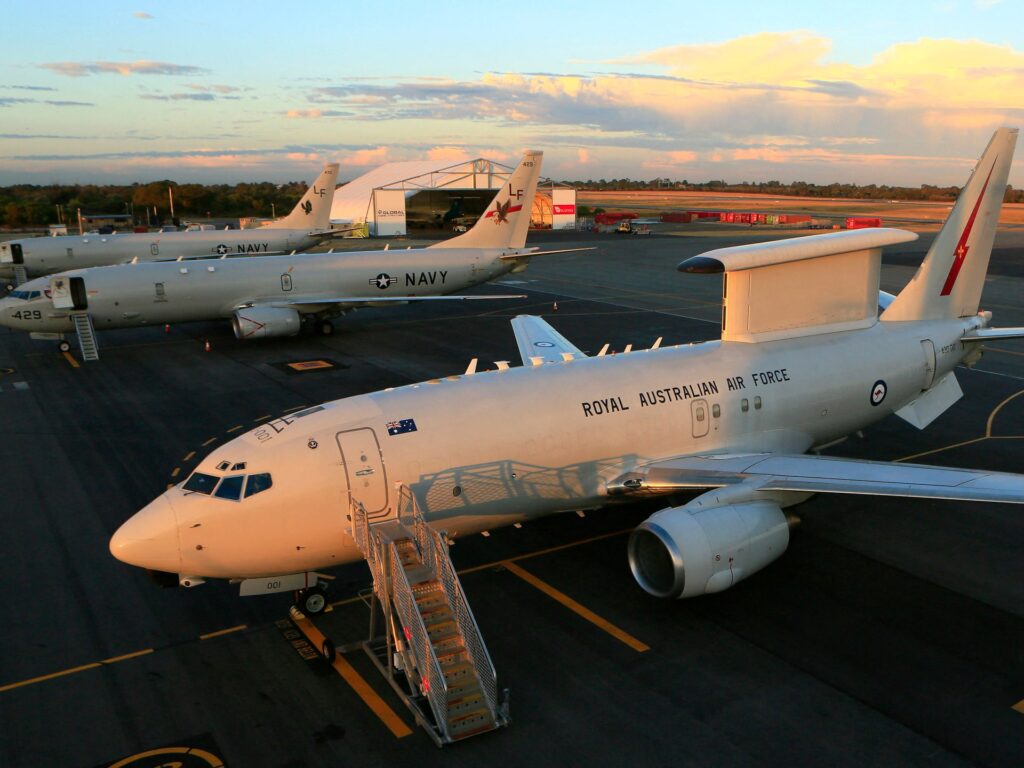
Canberra says Chinese jet dropped flares nears its air force plane as China accuses Australia of airspace intrusion. Australia has accused China of “unsafe” military manoeuvre after a Chinese fighter jet dropped flares near an Australian air force plane patrolling the South China Sea, drawing a quick pushback from Beijing. The Australian Defence Force said on Thursday that its plane was flying a “routine” surveillance patrol over the contested waters on February 11 when the Chinese aircraft Shenyang J-16 approached. It added that the jet “released flares in close proximity” to the Australian Poseidon surveillance plane, describing the incident as “an unsafe and unprofessional manoeuvre that posed a risk to the aircraft and personnel”. Australian Defence Minister Richard Marles said the flares passed within 30 metres (100 feet) of the aircraft, which typically carried about nine people. No one was injured but Marles said the move posed the “potential for significant damage”. He told Sky News that officials had voiced their displeasure with their Chinese counterparts in Canberra and Beijing. The Australian government “expressed its concerns” to China over the incident. Advertisement ‘Violation of Chinese sovereignty’ Beijing swiftly hit back, accusing the Australian plane of “violating Chinese sovereignty and endangering Chinese national security”. Chinese Foreign Ministry spokesman Guo Jiakun said that “without Chinese permission, the Australian military aircraft deliberately intruded into the airspace around China’s Xisha Islands,” Beijing’s name for the Paracel Islands. The Paracel group of islands is also claimed by Vietnam and Taiwan. “China’s measures to expel the aircraft were legitimate, legal, professional and restrained,” Guo said. He added that Beijing had “lodged solemn representations” with Canberra to demand an end to “infringements and provocations”. China claims almost all of the South China Sea, despite an international ruling in 2016 concluding this has no legal basis. The midair incident is the latest in a string of episodes between China and Australia in the increasingly contested airspace and shipping lanes of Asia. It also coincided with the arrival of three Chinese navy vessels in waters northeast of Australia’s mainland. Australia’s Defence Department officials said a Chinese frigate and a cruiser had been spotted near Australia’s “maritime approaches” with a supply tanker in tow. Marles said it appeared to be unrelated to the aircraft incident but the Australian navy had sent its own frigate to shadow their voyage. “Australia respects the rights of all states to exercise freedom of navigation and overflight in accordance with international law, just as we expect others to respect Australia’s right to do the same,” the Department of Defence said. Advertisement Adblock test (Why?)
Several injured after car drives into crowd in Germany’s Munich
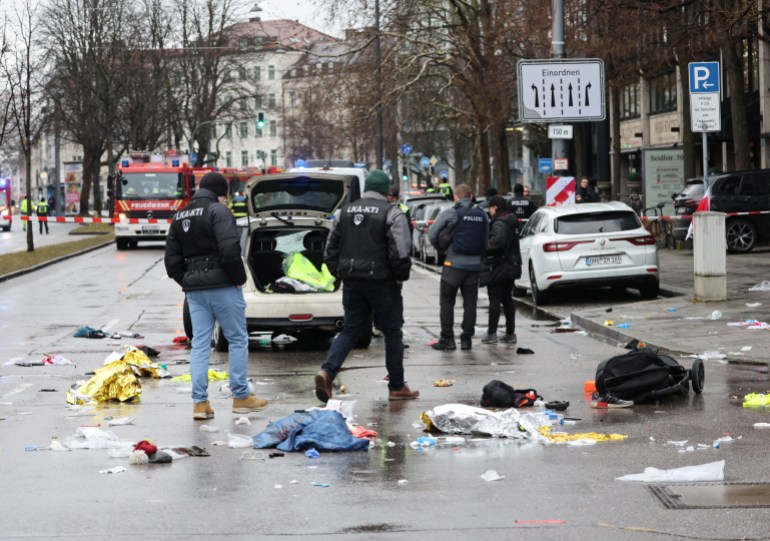
At least 20 injured, some of them seriously, after a car drove into a group of people in Munich, authorities said. At least 20 people have been injured, some of them seriously, after a car drove into a group of people in the German city of Munich, authorities said. Authorities didn’t provide details about the incident near downtown Munich which took place around 10:30am on Thursday, including whether the people were hit deliberately. Police said on social platform X that the driver was “secured” at the scene and no longer poses any danger. A damaged Mini Cooper could be seen at the scene. The fire service said at least 20 people were injured, some of them seriously, German news agency DPA reported. Mayor Dieter Reiter said he was “deeply shocked” by the incident. He said that children were among those injured. A demonstration by the service workers’ union ver.di was taking place at the time of the incident. It was not immediately clear whether demonstrators were among the injured. The incident comes a day before the three-day Munich Security Conference, an annual gathering of international foreign and security policy officials, opens on Friday. Police personnel walk past a car which drove into a crowd in Munich [Wolfgang Rattay/Reuters] Adblock test (Why?)
Kamal Adwan’s detained director alleges torture by Israeli authorities
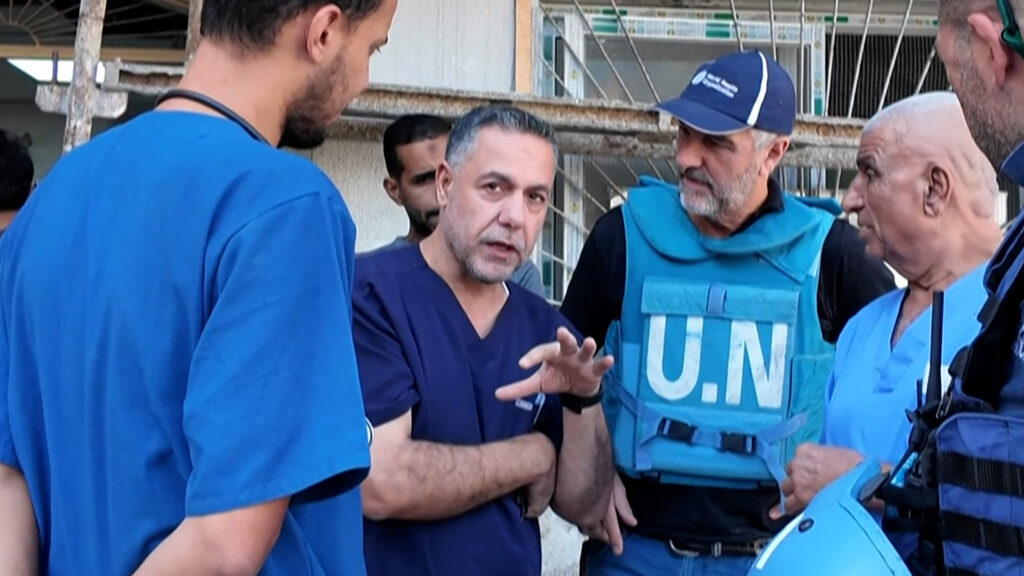
NewsFeed Lawyers representing Kamal Adwan Hospital’s Dr. Hussam Abu Safia had their first contact with the director since he was detained by Israeli forces last year. He told them he was tortured with electric shocks and is being denied needed medication. Published On 12 Feb 202512 Feb 2025 Adblock test (Why?)
French troops to exit Senegal by end of 2025
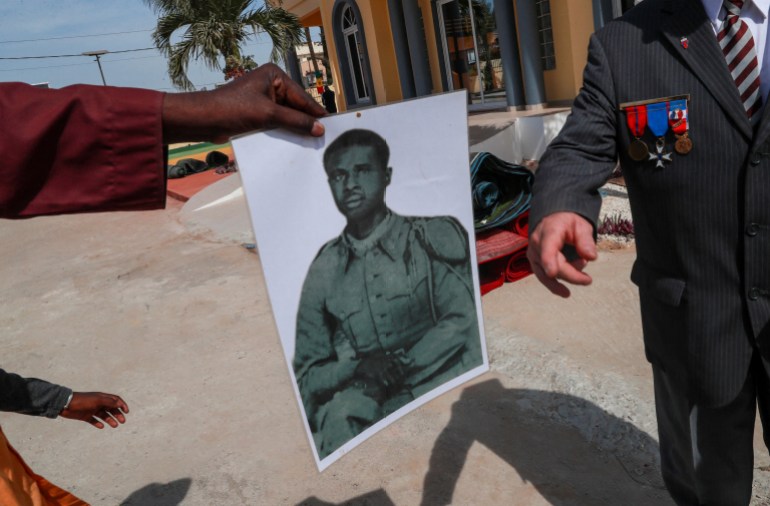
Senegal distances itself from colonial past, following trend sweeping across West and Central Africa since 2022. France and Senegal are setting terms for a withdrawal of all French soldiers stationed in the West African country by the end of this year. The two countries said in a statement on Wednesday that they are establishing a joint commission that would oversee the “departure of French elements” from the country and “a restitution of [military] bases” by year’s end. The foreign ministries of both countries said they intend to work on “a new defence and security partnership” that would take into account “strategic priorities of all parties”. In November, Senegalese President Bassirou Diomaye Faye announced that French army bases were “incompatible” with the country’s sovereignty and its 350 soldiers should leave. The move came just before Senegal marked the 80th anniversary of mass killings of West African soldiers by colonial forces in 1944. The soldiers of the Tirailleurs Senegalais unit, who fought in France’s war against Nazi Germany, had been protesting delays in salaries and poor living conditions when colonial soldiers fired on them. This photograph shows a victim of the Thiaroye massacre, in which French soldiers in Senegal gunned down African soldiers who had fought on its side in World War II after they demanded fair pay and treatment [File: Amira Karaoud/Reuters] French President Emmanuel Macron admitted in a letter to Faye last year that France had committed a “massacre”. Advertisement Senegal’s rejection of its colonial past continues a trend across West and Central Africa, where nations are downgrading ties with France. At the end of January, France completed its troop withdrawal from Chad while Ivory Coast had earlier announced the withdrawal of French forces. The tone was very different from Mali, Burkina Faso and Niger, whose military governments collectively ejected about 4,300 French soldiers from their countries in 2022. In all three countries, France had refused to back the coups that brought them to power. Adblock test (Why?)
Hamas delegation in Egypt as mediators push to maintain Gaza ceasefire
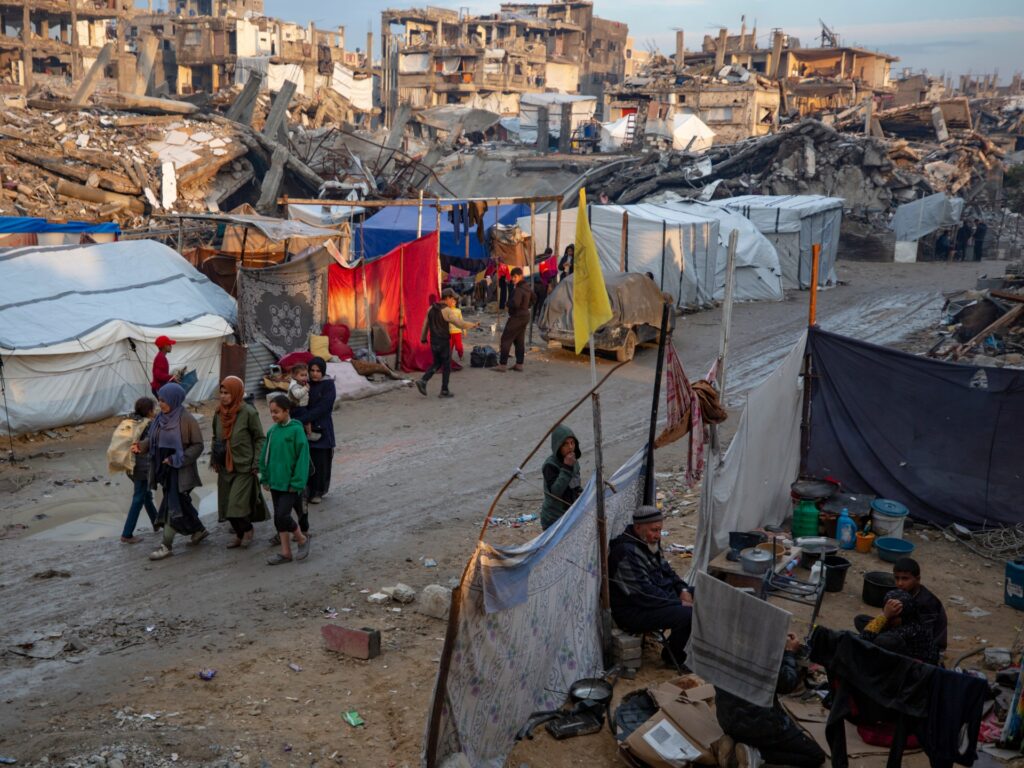
A Hamas delegation has arrived in Cairo to discuss the implementation of the Gaza ceasefire agreement with mediators, according to a statement by the Palestinian group. The fragile agreement reached last month between Hamas and Israel appeared strained on Wednesday, with Hamas saying it would not bow down to threats from Israel and the United States of renewed fighting and the mass displacement of Palestinians. Egyptian and Qatari mediators were working to salvage the deal, according to Egypt’s state-run Al-Qahera News TV, which is close to the country’s security agencies. Hamas has warned it will delay the next release of Israeli captives scheduled for Saturday, saying Israel has violated the truce by firing on people in Gaza and not allowing the agreed-upon number of tents, shelters and other vital aid to enter the territory. “The occupation must implement the terms of the ceasefire agreement until the prisoners are released. The occupation is required to abide by the agreed humanitarian protocol,” Hamas spokesperson Hazem Qassem said in a statement on Wednesday. Advertisement Since the ceasefire went into effect on January 19, Israeli fire has killed at least 92 Palestinians and wounded more than 800 others, said Munir al-Bursh, director general of the Health Ministry on Tuesday. In the latest violence, a 44-year-old man was killed and another was wounded in an Israeli strike in the southern city of Rafah. The Israeli military has said it only fires on people who approach its forces or enter certain areas in violation of the truce. Threat of resumed fighting For his part, Israeli Prime Minister Benjamin Netanyahu, with the support of President Donald Trump, has warned that Israel would resume fighting if the captives are not released on Saturday. Trump has threatened that “all hell” will break out if Hamas does not release the remaining Israeli captives held in Gaza by Saturday. Israeli Defence Minister Israel Katz echoed the phrase in a post on X on Wednesday, saying that if Hamas does not release the Israeli captives by Saturday, “the gates of hell will open on them, just as the US president promised.” “The new Gaza war will be different in intensity from the one before the ceasefire – and will not end without the defeat of Hamas and the release of all the hostages,” he wrote. Reporting from Amman, Jordan, Al Jazeera’s Hamdah Salhut said that the Israeli army has been discussing a plan for a renewed offensive. “However, some sources speaking to Israeli Army Radio said any military action to rescue the captives from Gaza would be ‘nearly impossible’ as Hamas is still very much active,” Salhut said. Advertisement The International Committee on the Red Cross also weighed in on Wednesday, warning that “any reversal” in the agreement “risks plunging people back into the misery and despair that defined the last 16 months”. To date, at least 48,222 Palestinians have been confirmed killed throughout Israel’s war in Gaza. At least 1,139 people were killed in the Hamas-led attacks on southern Israel on October 7, 2023, with more than 200 taken captive. The enclave remains on the brink of humanitarian catastrophe, with the vast majority of its residents displaced and its infrastructure destroyed throughout the war. ‘Palestinians cannot be transferred’ In his post on Wednesday, Israeli Defence Minister Katz also pointed to Trump’s plan for the US to “take over” and permanently displace the people of Gaza. He said a renewed Israeli offensive “will also allow the realisation of US President Trump’s vision for Gaza”. Trump has promised to heap pressure on both Jordan and Egypt to accept forcibly displaced Palestinians. Both countries have refused. On Wednesday, Egyptian President Abdel Fattah el-Sisi and Jordan’s King Abdullah II spoke by phone, stressing the importance of the immediate start of Gaza’s reconstruction “without the transfer of Palestinian people from their land”, according to a statement from the Egyptian presidency. The leaders also “showed their keenness” to work with Trump to achieve “permanent peace” in the region through the establishment of an independent Palestinian state, the statement said. Advertisement That came a day after Abdullah met Trump at the White House. Speaking to Al Jazeera on Wednesday, Jordan’s Foreign Minister Ayman Safadi again said that the kingdom will not budge in its opposition to Trump’s proposal. “There are fixed and steadfast Jordanian positions that will not change … the Palestinians cannot be transferred to Egypt, Jordan, or any Arab state,” Safadi said. The Palestinian Authority and Arab nations have all been united in their opposition to Trump’s plan. On Wednesday, Hamas called for mass demonstrations across the world “against the plans of displacement and forced deportation”. Adblock test (Why?)
Jordanian foreign minister rejects Trump’s Gaza displacement plan
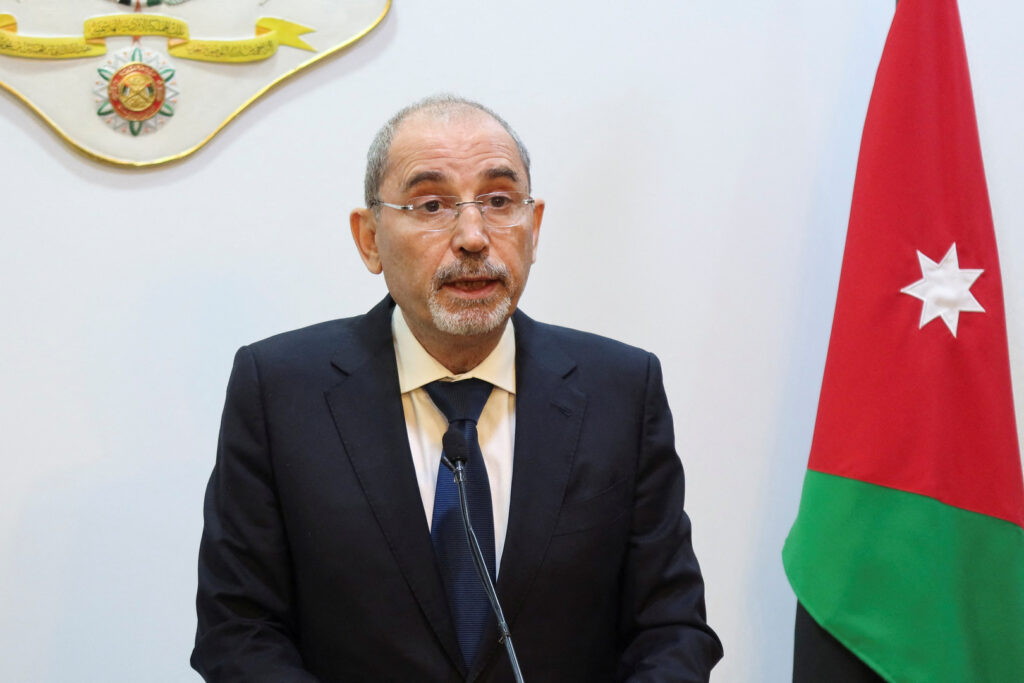
NewsFeed Jordan’s foreign minister told Al Jazeera his country rejects the US president’s plan to take over Gaza and move Palestinians to neighbouring countries like Jordan and Egypt, after Donald Trump discussed the issue with the King of Jordan at the White House. Published On 12 Feb 202512 Feb 2025 Adblock test (Why?)
Children in Haiti falling prey to gruesome gang violence, Amnesty warns
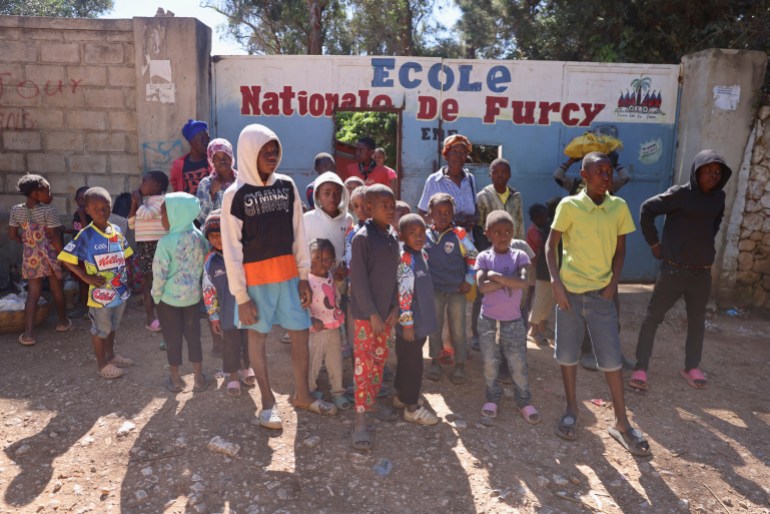
Report estimates that more than a million children live in areas controlled by or under the influence of armed gangs. Gangs in Haiti are recruiting children and targeting them with violence and sexual assault, Amnesty International said in a report detailing the effects of the long-running civil unrest ravaging the Caribbean nation. A report published on Wednesday estimates that more than one million children live in areas controlled by or under the influence of armed gangs in Haiti, and condemned offences committed against young people as “human rights abuses”. Haiti has no president or parliament and is ruled by a transitional body, which is struggling to manage extreme violence linked to criminal gangs, poverty and other challenges. More than 5,600 people were killed in Haiti last year as a result of gang violence, about a thousand more than in 2023, according to the United Nations. Amnesty’s report echoes concerns voiced by the UN Children’s Fund, UNICEF, in November. The group reported then that gang recruitment of children in the country has risen by 70 percent, and that between 30 to 50 percent of gang members in Haiti are children. Advertisement The new report highlights 14 Haitian children recruited by gangs to spy on rival groups and police, as well as to carry out work such as making deliveries or repairing vehicles. One of the children interviewed said he was constantly pressured by a gang to fight alongside it. “They killed people in front of me and asked me to burn their bodies. But I don’t have the heart for that,” the unidentified boy was quoted as saying. If children refuse to follow a gang’s orders, they or their families would be killed, according to the report, which relied on interviews and research conducted from May to October 2024. Haitian girls are frequent victims of abductions, rape and other sexual assaults during gang attacks, Amnesty said. Haiti has no president or parliament and is ruled by a transitional body, which is struggling to manage extreme violence linked to criminal gangs, poverty and other challenges [Ralph Tedy Erol/Reuters] The violence also has led to injury and death. One girl, 14, recounted how a ricocheting bullet pierced her lip in September 2024. Three months before that, her 17-year-old brother died from a stray bullet. “I lost a huge presence in my life. Since then, I don’t know how to be happy,” the girl said. Amnesty also identified attacks on schools and hospitals, as well as the blocking of humanitarian aid, as examples of “grave violations” suffered by children. Adblock test (Why?)