

Nathan Thrall confronts Israel’s occupation

Centre Stage Pulitzer Prize winning author Nathan Thrall joins Centre Stage to talk about how his experiences, working and living in Israel, Gaza, the occupied West Bank and Jerusalem, drove him to write, A Day in the Life of Abed Salama. Witnessing first hand the discrimination and subjugation of Palestinians, Thrall tells Al Jazeera presenter Tom McRae about Israel’s decades-long system of apartheid and why he still has hope for the future. Published On 12 Feb 202512 Feb 2025 Adblock test (Why?)
US trade partners criticise Trump for 25-percent steel, aluminium tariffs
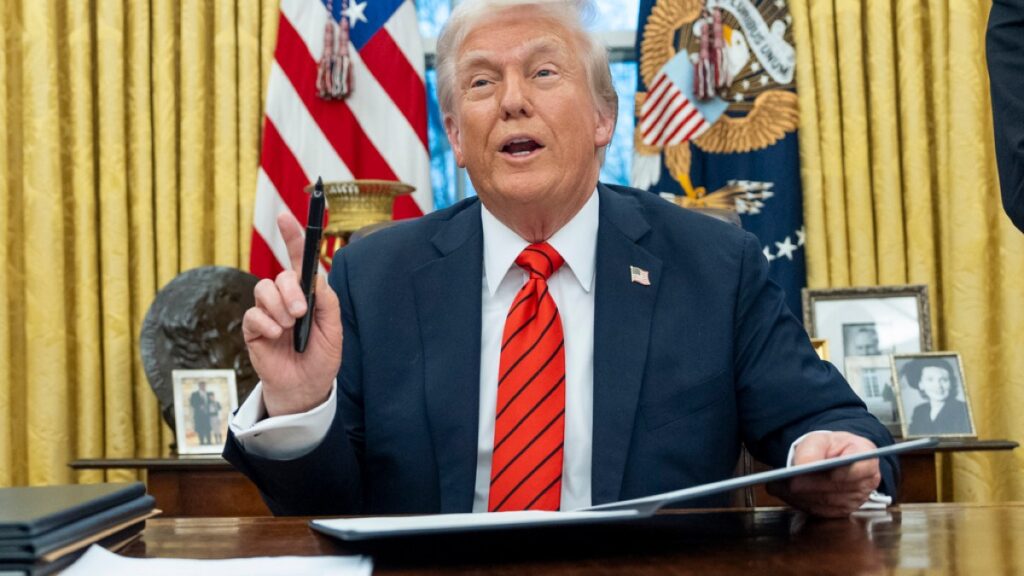
Allies like Canada called the tariffs ‘unacceptable’, arguing they weaken economic integration and hurt economies. Several of the United States’ main trading partners have condemned President Donald Trump’s decision to hike tariff rates on all steel and aluminium imports starting next month. Leaders from Mexico, Canada and the European Union on Tuesday described the move as reckless and counterproductive, warning that they would respond with their own measures in kind. “I deeply regret the US decision to impose tariffs on European steel and aluminum exports,” Ursula von der Leyen, the president of the European Commission, reaffirmed in a social media post. “The EU will act to safeguard its economic interests.” The EU had already called the tariffs “unjustified” and warned they will “trigger firm and proportionate countermeasures”. The reactions come a day after Trump signed an executive order announcing the 25-percent tariffs as a “means of reducing imports” and “encouraging investment and expansion of production by domestic steel producers”. Trump also framed the issue as a question of national security. Advertisement “It’s 25 percent without exceptions or exemptions,” Trump told reporters. “That’s all countries, no matter where it comes from. All countries.” The tariffs will take effect on March 12 and impact millions of tonnes of imports from countries such as Canada, Brazil, Mexico and South Korea that had previously entered the US largely free of import duties. For much of his political career, Trump has railed against the effects of free trade, portraying agreements with foreign countries as “bad deals” that take advantage of the US. “We were being pummelled by both friend and foe alike,” Trump said as he signed the orders on Monday. “It’s time for our great industries to come back to America.” But his announcement has sparked anxieties about the potential economic fallout that could come with escalating measures and countermeasures between the US and its key trading partners. Mexican Economy Minister Marcelo Ebrard said the new tariffs were “not justified” while Canadian Prime Minister Justin Trudeau called them “unacceptable”. Trudeau added that he would work with the Trump administration to highlight the “negative impacts” of the tariffs. Canada provides nearly 80 percent of US aluminium imports. “We are the US’s closest ally. Our economies are integrated. Canadian steel and aluminum are used in a number of key US industries, whether it is defence, shipbuilding, manufacturing, energy, automotive,” Trudeau said on Tuesday. “Together we make North America more competitive.” Advertisement But the prime minister added that, if forced, Canada would respond to the tariffs with retaliation. “If it comes to that, our response, of course, will be firm and clear. We will stand up for Canadian workers. We will stand up for Canadian industries.” In Brazil, the industry lobby group Aco Brasil also said it was “surprised” by Trump’s tariffs, arguing the tax hikes would benefit neither country. Criticism of free-trade agreements in the US, from both the right and the left, is not new. For years, labour groups and environmental activists have argued that free-trade deals allow businesses to exert downward pressure on the wages of domestic workers, relocate jobs overseas, and loosen restrictions on environmental and labour protections. But experts have said that, after decades of economic integration, tariffs could upend supply chains and impose heightened costs on businesses and consumers. “Small businesses run on very small margins. And so a 25-percent increase in any product is going to hurt,” Sandra Payne, an owner of Denver Concrete Vibrator, which imports steel and other raw materials, told The Associated Press news agency. “And we can’t just raise our prices every time the cost goes up for us, so we are losing a lot of money.” Adblock test (Why?)
Palestinian father reunites with his lost baby after a year of war
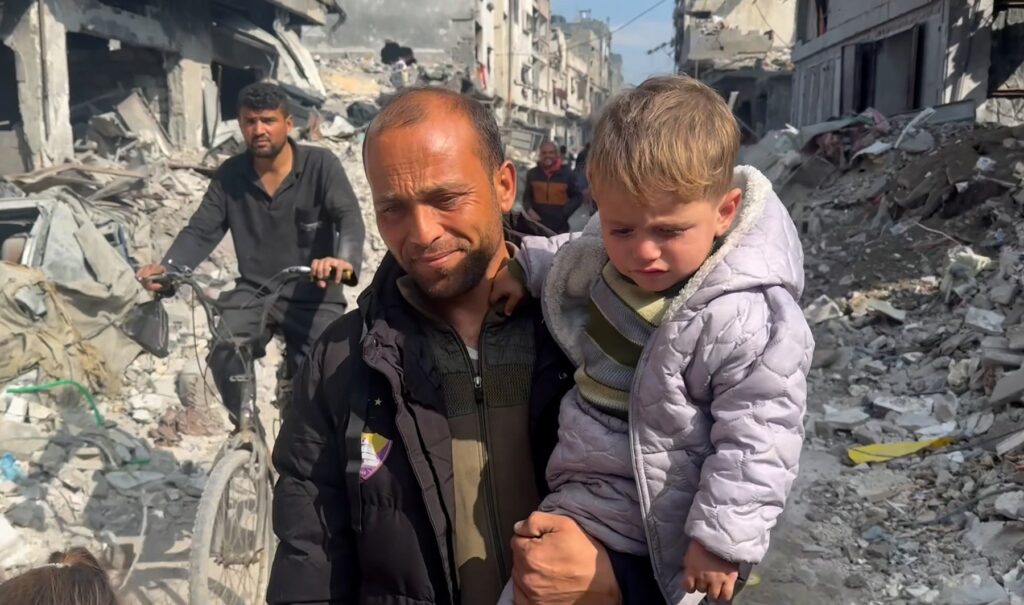
NewsFeed “I had no idea if he was alive or if he was martyred.” A father was able to reunite with his lost son after a Palestinian family took him in, raised him for over a year, and ensured his survival throughout Israel’s war on Gaza. Published On 11 Feb 202511 Feb 2025 Adblock test (Why?)
Starbucks sued by US state of Missouri for using DEI policies
Missouri accused Starbucks of tying executive pay to the company’s achieving racial and gender-based hiring quotas. The US state of Missouri has sued Starbucks, accusing the coffee chain of using a commitment to diversity, equity and inclusion as a pretext to systematically discriminate based on race, gender and sexual orientation. In a complaint filed in St Louis federal court on Tuesday, Missouri accused Starbucks of tying executive pay to the company’s achieving racial and gender-based hiring quotas. It also accused Starbucks of singling out preferred groups for additional training and job advancement prospects, and employing a quota system to ensure its own board of directors had a variety of racial and ethnic backgrounds. “All of this is unlawful,” and violates federal and state civil rights laws, according to the complaint from Missouri Attorney General Andrew Bailey. Bailey, a Republican, also contended that Missouri consumers pay higher prices and wait longer for services at Starbucks than if the Seattle-based chain employed the most qualified workers. “We disagree with the attorney general and these allegations are inaccurate,” Starbucks said in a statement. “We are deeply committed to creating opportunity for every single one of our partners [employees]. Our programs and benefits are open to everyone and lawful.” Advertisement United States President Donald Trump, also a Republican, has tried to shut down policies promoting diversity, equity and inclusion inside and outside the federal government, and some companies have ended or curtailed their own programmes. For example, the Wall Street bank Goldman Sachs on Tuesday canceled a policy to take companies public only if they had two diverse board members, generally defined as people from underrepresented demographics. Last week, meanwhile, Google scrapped diversity-based hiring targets, while Amazon.com removed a reference to inclusion and diversity from its annual report. Diversity policies Tuesday’s lawsuit challenged Starbucks policies adopted since 2020, after the murder of George Floyd, a Black man, by a Minneapolis police officer triggered unrest nationwide and led many companies to rethink employment practices. Missouri said Starbucks’ alleged endorsement of quotas “should come as no surprise,” citing new Chief Executive Brian Niccol’s support of environmental, social and governance goals while leading the Chipotle burrito chain. Starbucks employs about 211,000 people in the US and 361,000 people worldwide. In August 2023, a federal judge in Spokane, Washington dismissed a shareholder lawsuit challenging Starbucks’ diversity policies, saying the case addressed public policy questions best decided by lawmakers and companies, not courts. Missouri’s lawsuit seeks to force Starbucks to end alleged discrimination based on race, gender and national origin; rehire and rescind discipline against employees affected by discrimination, and pay unspecified damages. Advertisement The case is Missouri ex rel Bailey v Starbucks Corp, US District Court, Eastern District of Missouri, No. 25-00165. Adblock test (Why?)
Corruption derailing climate fight, watchdog warns
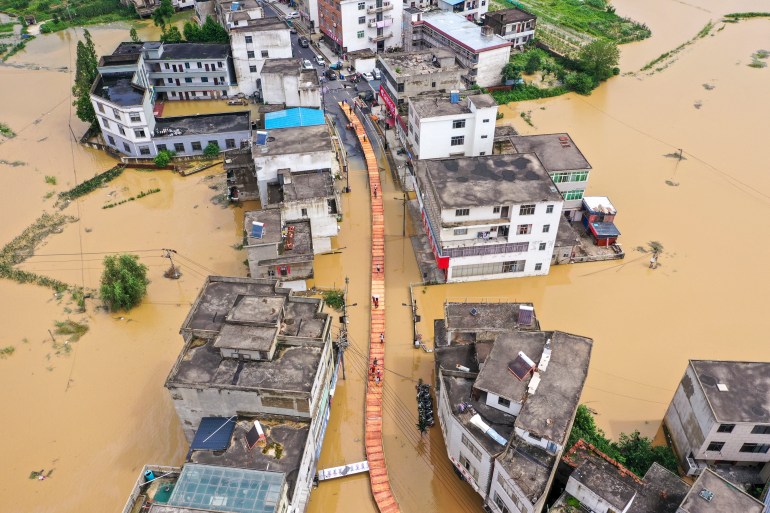
Transparency International says corruption holds back global cooperation on climate change policy. Corruption threatens to “derail” global cooperation to tackle climate change, according to graft watchdog Transparency International (TI). The watchdog’s Corruption Perceptions Index (CPI) for 2024, published on Tuesday, reported that many nations crucial to climate diplomacy have seen their scores decline. Overall, the CPI found that global corruption remained “alarmingly high” last year. More than two-thirds of the 180 countries ranked had scores below 50 out of 100. The global average was unchanged from 2023 at 43. While 32 countries have made significant progress against corruption since 2012, 148 countries have stagnated or declined over the same period, TI noted, adding that the results underscore ‘the urgent need for concrete action against corruption”. ‘Devastating’ TI noted the “devastating” effect of global corruption on the fight against climate change. “Amidst record-breaking global heating and extreme weather events, corruption is exacerbating the climate crisis,” the report read. Advertisement The watchdog warned of the effects of corruption on climate-vulnerable countries and key international climate conferences. Countries, including hosts of high-profile events like United Nations climate summits, are seeing declining CPI scores, it said. Brazil, for example, the host of this year’s UN COP30 climate talks, received a score of 34, its lowest-ever rating. Wealthier countries which also lead climate talks like the United States, received a score of 65. The report also highlighted the growing risk to billions of dollars of life-saving climate finance, often in countries that need it the most. South Africa, Vietnam and Indonesia exemplify how corruption is derailing climate initiatives, it read. The countries most exposed to climate change were among those with the lowest scores, including South Sudan, Somalia and Venezuela. “Corrupt forces not only shape but often dictate policies and dismantle checks and balances,” Transparency International CEO Maira Martini said in a statement. “We must urgently root out corruption before it fully derails meaningful climate action.” Weather-related disasters have seen calls for more action on climate change, but Transparency International says corruption is a major obstacle [AFP] The report said the one solution to tackle corruption and make sure funds are used efficiently, would be to have better “metrics and frameworks for climate transparency and accountability”. The watchdog also said that enhancing anticorruption bodies would help deter environmental crimes and reduce impunity. Advertisement The international watchdog’s CPI ranks 180 countries according to levels of public-sector corruption and is calculated using independent data sources. A score of zero is considered “highly corrupt”; a score of 100 “very clean”. Adblock test (Why?)
‘Tug of war’: Chagos Islands deal tearing families apart in Mauritius
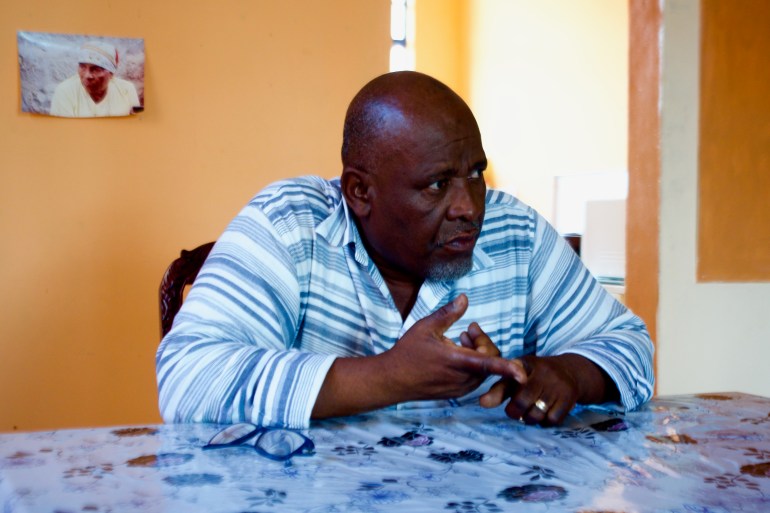
Slam poet Geraldine Baptiste pulls no punches when telling the story of her “Granpapa”, one of the 1,500-plus people ripped from a peaceful existence on the Chagos Islands by the British to make way for a United States military base, most shipped “kouma zanimo” (meaning “like animals” in her native Creole) to a hellish fate more than 1,000 miles (1,610km) across the Indian Ocean in Mauritius. Belting out her poems in the Port Louis suburbs, the 26-year-old relates her grandfather’s memories of fishing in the crystalline waters of Peros Banhos atoll and feasting by firelight on “seraz pwason” (fish curry) and “kalou” moonshine, contrasting happy times with the horrors of his violent expulsion in the early 1970s and the decades of impoverished exile that followed – many did not survive. “Pena okenn antidot; Pou geri sa blesir; Ki ankor pe soupire,” she says – there is no cure for those wounds, still weeping more than half a century on. That line hits especially hard right now, as Mauritius prepares to assume sovereignty over the 60-island Chagos archipelago after vanquishing the United Kingdom in a landmark decolonisation case at the International Court of Justice (ICJ) six years ago. The nation is on a knife edge as it awaits the final nod from the US, which wants cast-iron guarantees on the security of one of its most valuable bases on the atoll of Diego Garcia. Advertisement Mauritius has been intent on reclaiming Chagos for decades, having been strong-armed by the UK into selling the jointly administered colonial territory for 3 million pounds in exchange for its independence in 1968. The ICJ victory is further sweetened by the promise of billions of pounds that the UK will reportedly pay in rent and back rent for Diego Garcia under a lease arrangement spanning 99 years. In a bid to heal past wounds, Mauritius will manage a trust fund for Chagossians, allowing them to resettle on two of the Chagos Islands – Salomon and Peros Banhos. But the islanders, some with roots on the territory stretching back to the 18th century, were locked out of the interstate talks. And, as Baptiste describes it, local families have been torn apart by rows over whether they should accept Mauritian sovereignty over their homeland. “It’s like being in a tug of war between two sides that are killing each other,” says Baptiste. “We’re already a tiny community. It makes me so sad.” Sidelined Karen Walter, deputy editor-in-chief of Mauritius’s L’Express newspaper, has followed the twists and turns of the bilateral negotiations in recent years, noting that the views of the estimated 10,000 Chagossians now scattered across the UK, Mauritius and the Seychelles “have not counted for much”. The sidelining of Chagossians was apparent during last year’s election, held 10 days after the UK and Mauritius announced they had reached a political agreement on the transfer. Former Prime Minister Pravind Jugnauth hit the campaign trail running, trumpeting “billions of rupees” in annual rent for Diego Garcia and opportunities to build hotels on the archipelago – but many noted he made no mention of Chagossians. Advertisement Jugnauth has since been replaced by Navin Ramgoolam, who condemned his predecessor’s draft deal with the UK as a “sellout”. Last Tuesday, Ramgoolam told the Mauritian parliament that his new team had renegotiated an “inflation-proof” draft, featuring an undisclosed “front-loaded” payment. Crucially for Mauritius, the new terms appear to give it veto powers over future extensions of the 99-year lease arrangement for Diego Garcia. Ramgoolam said he was “confident” everything would be finalised “in the coming weeks”. Though with US President Donald Trump yet to weigh in, as hawkish right-wingers whip up a transatlantic panic about Mauritius opening the door to Chinese spies (even if “Little India”, as Mauritius is sometimes called because of its large Indian-origin population, is far closer to New Delhi than it has ever been to Beijing), the deal still hangs in the balance. Ramgoolam kick-started the legal drive for sovereignty after WikiLeaks published a US diplomatic cable in 2010, exposing a British scheme to establish a marine-protected zone in Chagos that was aimed at greenwashing the ban on Indigenous islanders – or “Man Fridays”, as they were called by one official – returning home. From then on, the two causes of Mauritian sovereignty over Chagos and the Chagossian struggle for justice were twinned. The country’s eventual victory at the ICJ may have been predicated on the UK’s botched decolonisation of Mauritius, but Chagossians provided the knockout emotional punch. Peros Banhos native Liseby Elyse testified over a videolink, telling the stunned court how she had been crammed onto the eviction ship while four months pregnant and had lost her baby on arrival in Mauritius, swinging international opinion in favour of Mauritius. Advertisement Mauritian lawyer Robin Mardemootoo, who has long represented the community, says Mauritius owes its victory at the ICJ to Chagossians. Having “surfed the waves” of the Chagossian struggle, Mauritius now has “a golden opportunity” to do things the right way and should insist they have a place at the table, he says. Apart from anything else, Chagossians are best placed to hold the UK and US feet to the fire, particularly when it comes to proper reparations for the wrongs committed by both countries and the costs of the planned resettlement programme, a mammoth project involving the construction of infrastructure, institutions and housing on islands untouched for half a century. Mauritius does not have the means, says Mardemootoo. “If Mauritius is not smart about this, it is going to inherit a bunch of islands with no means to rehabilitate them. And this is going to drag on and come back and haunt them,” he says. Time running out Olivier Bancoult, leader of the Chagos Refugees Group (CRG), solicited Mardemootoo’s help in his long battle to win a right of return in the English courts. He secured a landmark victory at the High Court in London in 2000, but the ruling was overturned with new legislation four years
Luka Doncic makes LA Lakers debut with win against Utah Jazz
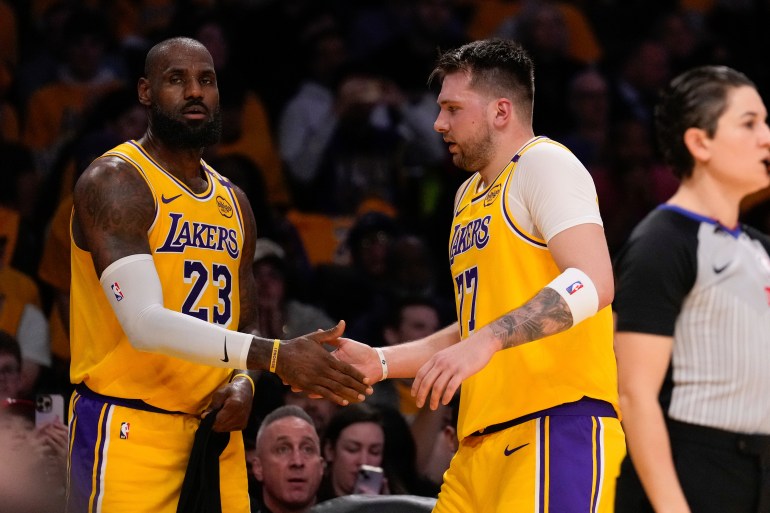
Five-time All-NBA guard Luka Doncic begins Los Angeles Lakers career just over a week after his blockbuster trade from Dallas Mavericks. Luka Doncic produced 14 points, five rebounds and four assists in his Los Angeles Lakers debut and LeBron James added 24 points, seven rebounds and eight assists as the newly formed star duo led the way to a 132-113 victory over the visiting Utah Jazz. Austin Reaves logged 22 points and nine rebounds and Rui Hachimura added 21 points as the Lakers extended their winning streak to six games while coming out on top for the 10th time in the past 11 games. Jordan Goodwin scored 17 points in his second game with Los Angeles on Monday. Doncic, acquired from the Dallas Mavericks in a blockbuster deal on February 2, played for the first time since Christmas Day, having recovered from a left calf strain. The Slovenian guard was on the court for 24 minutes and shot 5 of 14 from the floor, including 1 of 7 from 3-point range. Lauri Markkanen and John Collins each scored 17 points and Jordan Clarkson added 16 as the Jazz saw their road losing streak reach nine games. Johnny Juzang scored 14 points as Utah lost its third consecutive game overall and fell for the 12th time in its last 14 contests. Advertisement Collins, who had 11 rebounds, joined Isaiah Collier, who amassed 13 points and 10 assists, each posted a double-double for Utah. Doncic had one turnover and one missed shot just over two minutes into the game before making his first basket in a Lakers uniform on a 3-pointer with 8:05 remaining in the opening quarter. The Lakers led 37-25 after one period and were well in control by half-time, going into the locker room up 72-47. Reaves had 15 points before the break, James added 13 and Doncic had 11. The Lakers shot 60 percent over the opening two quarters, while the Jazz were at 40 percent. Los Angeles opened the fourth quarter with a 100-75 lead and cruised to their third victory in three tries against Utah. The teams face each other for the final time this season on Wednesday in Salt Lake City. The Lakers’ only reason for concern came early in the fourth quarter when James went to the locker room briefly due to abdominal discomfort. He returned to the bench with just over eight minutes remaining but remained out for the rest of the game. Los Angeles Lakers guard Luka Doncic, right, celebrates with teammate forward LeBron James during the first half of an NBA basketball game, February 10, 2025, in Los Angeles [Mark J Terrill/AP] Adblock test (Why?)
Hamas suspends release of Israeli captives over ceasefire violations
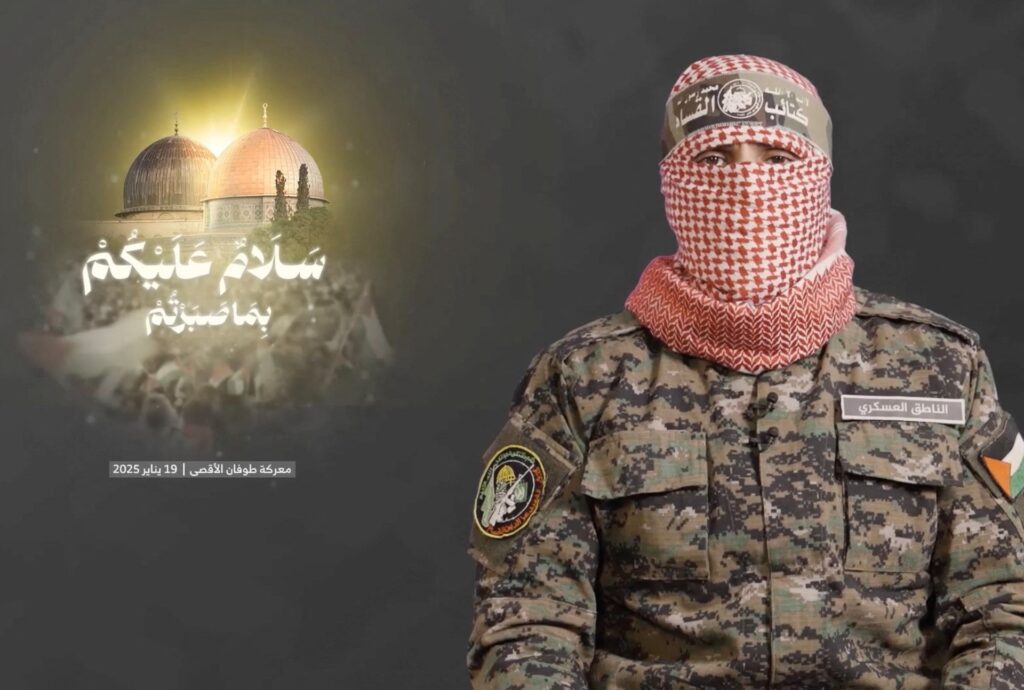
Hamas will delay the release of more Israeli captives planned for Saturday “until further notice”, due to Israeli violations of the ceasefire in Gaza, the Palestinian group has. Abu Obeida, the spokesperson of Hamas’s armed wing – the Qassam Brigades, said in a statement on Monday that the captives will “remain in place until the occupying entity complies with past obligations and compensates retroactively”. Israel and Hamas are in the middle of a six-week ceasefire during which Hamas is releasing dozens of the captives taken during its October 7, 2023, attack in exchange for nearly 2,000 Palestinian prisoners. Abu Obeida said Israel had violated multiple parts of the truce brokered between the two sides. “Over the past three weeks, the resistance leadership monitored the enemy’s violations and their non-compliance with the terms of the agreement,” he said. “These violations include delaying the return of displaced persons to northern Gaza, targeting them with shelling and gunfire in various areas of the Gaza Strip, and failing to allow the entry of relief materials in all forms as agreed upon. Meanwhile, the resistance has fulfilled all its obligations.” Advertisement The Qassam Brigades spokesperson reaffirmed the group’s “commitment to the terms of the agreement as long as the occupation adheres to them”. Israel’s Defence Minister Israel Katz swiftly responded to the Hamas move, saying that the decision was in “complete violation of the ceasefire agreement”. “I have instructed [the military] to prepare at the highest level of alert for any possible scenario in Gaza,” Katz said. The two sides have carried out five swaps since the truce went into effect last month, freeing 21 Israelis and more than 730 Palestinians. The next exchange was scheduled for Saturday, releasing three Israeli captives in exchange for hundreds of Palestinian prisoners. Several Palestinian civilians have been shot and killed by Israeli forces as they returned to their homes. Meanwhile, the number of wounded Palestinian patients who were evacuated out of the Strip, as well as the humanitarian aid trucks that have entered Gaza, were fewer than what had been promised in the ceasefire agreement. The Qassam Brigades announcement also comes in light of the latest statements made by US President Donald Trump, who has raised concerns about the sustainability of the ceasefire deal. Trump has repeatedly called for ethnically cleansing Gaza, saying that the United States would take “ownership” of the territory. The first stage of the deal expires on March 1. The second phase, would would see the release of all captives and a permanent ceasefire, has not been finalised. The third part of the agreement is supposed an usher in a multiyear plan to reconstruct the territory. Advertisement Palestinian activist and politician Mustafa Barghouti said Israel has violated the agreement in three ways: Obstructing temporary housing and humanitarian aid, shooting at people in Gaza and backing Trump’s plan to ethnically cleanse Gaza. “More than that, now Netanyahu is threatening to go back to the war, and he’s declaring that he will never stop the war,” Barghouti told Al Jazeera. “So what do they want – to get back all Israeli prisoners and then continue the massacres in Gaza? This is exactly the message that Palestinians were getting.” Netanyahu reiterated last week that he is committed to fulfilling the aims of the war, including destroying Hamas’s military and governing capabilities. Before Abu Obeida’s statement on Monday, Senior Hamas official Basem Naim told Al Jazeera that Israel has not been fulfilling its obligations under the agreement. “In the last three weeks after signing the deal we have been in very serious talks and negotiations with the mediators — the Egyptians, the Qataris, and the United States — about the daily violations by the Israelis of the deal,” Naim said. He noted 25 Palestinians had been killed and dozens wounded by Israeli forces after the ceasefire went into effect. Adblock test (Why?)
Guatemala bus crash kills more than 50 people
[unable to retrieve full-text content] A bus in Guatemala City fell from a highway and plunging into a polluted ravine, killing more than 50 people.
Hamas accuses Netanyahu of ‘intentionally sabotaging’ ceasefire
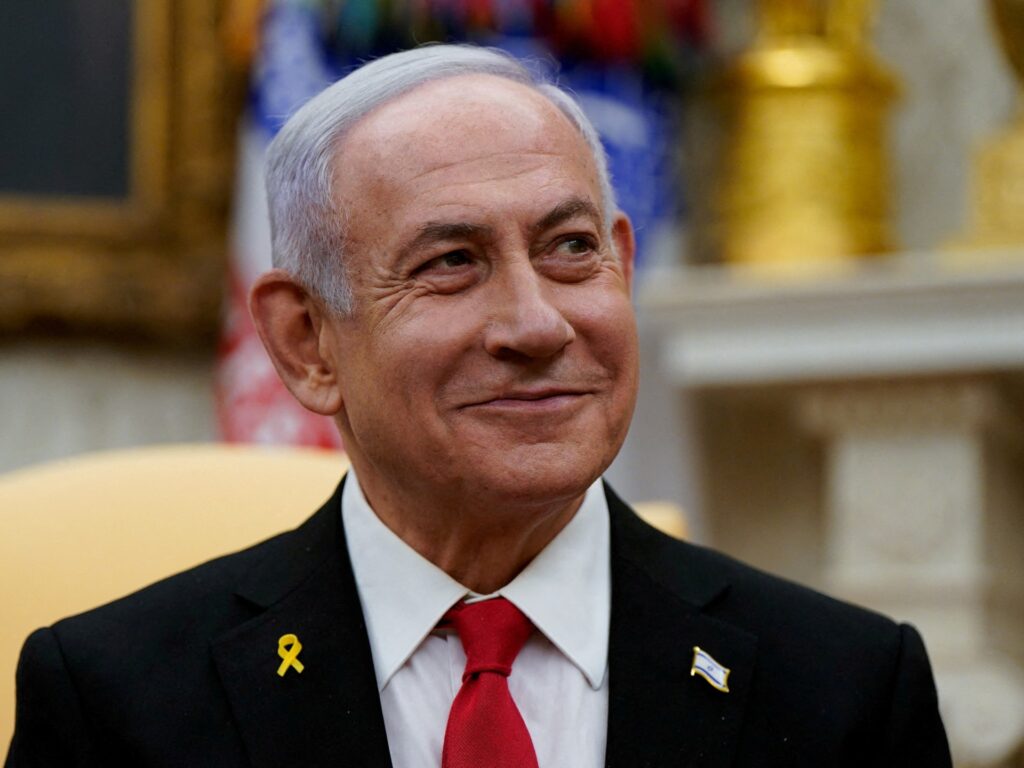
NewsFeed Hamas official Basem Naim told Al Jazeera that Israeli Prime Minister Benjamin Netanyahu is “intentionally sabotaging” the ceasefire deal, continuing to block aid, kill Palestinians, and delay negotiations on phase two. Published On 10 Feb 202510 Feb 2025 Adblock test (Why?)