

‘Our lifeline’: Kashmiris fear losing orchards, land to mega Modi projects
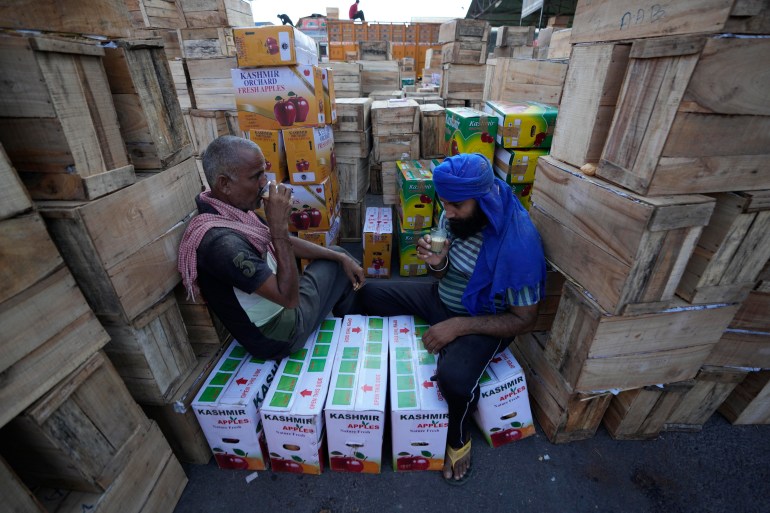
Srinagar, Indian-administered Kashmir – Malik Haroon crouches on the ground covered with white frost on an early winter morning in Dafferpora village in Indian-administered Kashmir’s Pulwama district. He traces his fingers on the bark of an almond tree – of which there are hundreds around – to check for signs of fungal disease. “It’s fine,” he says, beaming. With the scenic snow-clad Pir Panjal mountains in the backdrop, Haroon’s 1.25 acres (0.5 hectares) of orchard land, fed by the Rumshi Nallah River in southern Pulwama, are plush with groves that yield nearly 30 tonnes of apples, pears, plums and almonds every year. Labourers drink tea sitting on boxes of apples at a market in Jammu, Indian-administered Kashmir [File: Channi Anand/AP] However, the Indian government’s decision to construct an engineering college at the site in Pulwama – which includes almost all of Malik’s land – threatens to strip him and thousands of other cultivators in Kashmir of land, the source of economic livelihood for about 4 million people in the region. Advertisement “I earn $11,000 on average, annually, on account of their harvest,” Haroon, 27, tells Al Jazeera. The income has helped his family of four sidestep widespread economic instability and an unemployment crisis in Indian-administered Kashmir since 2019, when Indian Prime Minister Narendra Modi’s Hindu majoritarian government scrapped Article 370 of the Indian Constitution, which granted a special status to the Muslim-majority region. That status allowed the disputed region – also claimed by Pakistan – to make its own laws in all matters except finance, defence, foreign affairs and communications. The law protected the Indigenous rights of the region’s residents by barring outsiders from taking up government jobs or buying property there. Apart from stripping the region of its special status, the Modi government also carved it into two federally governed union territories – Jammu and Kashmir, and Ladakh. Since then, the government has announced dozens of infrastructure projects, claiming they will bring economic prosperity to the region and connect its people to the rest of India. But residents and critics fear the slew of projects are aimed at tightening New Delhi’s control over the region, changing its demography by settling in outsiders and boosting access to areas along India’s tense borders with its archrivals China and Pakistan. One of the projects that has triggered considerable anguish among residents in Pulwama is the establishment of a National Institute of Technology (NIT). The NITs are a government-run nationwide chain of engineering colleges, among the country’s most reputable tech schools. A whopping 600 acres (243 hectares) of land are being acquired for the college, according to a government notification issued on December 24, most of it prime agricultural and horticultural land and grazing grounds residents depend on for livelihoods. Advertisement “The proposed land transfer affects as many as 10 villages in Pulwama,” says Haroon.”This land is our lifeline.” He says that most people in these villages have no economic pursuits other than horticulture. “Some rear sheep for a living but even then, it is these grounds where the livestock come to graze,” he says. New railway lines It is not just a college the government has planned for the region. Since 2019, New Delhi has authorised a series of mega projects – roads, tunnels, railway lines and residential complexes – which critics say could destroy not just prime agricultural land and livelihoods, but also the Himalayan region’s fragile topography. Kashmiris accuse the government of sidelining them while making decisions about their lands – without consent or proper compensation. Ghulam Muhammad Tantray, 65, owns 1.25 acres (0.5 hectares) of orchard land at Dirhama, a small cluster of 150 homes amid a vast swath of green fields covered with thousands of apple trees in the Anantnag district. “The orchard fetches me about $13,000 every year,” Tantray says. But he fears losing his property after Indian railway officials arrived in Dirhama to conduct what they called a “survey” of lands in the area a year ago. “We had no idea what was coming until the Railway Ministry revealed that it had commissioned a final location survey to add five new railway tracks to the region. We panicked like anything. It’s like losing something very dear to you. We have groomed this land and these trees like our children,” Tantray tells Al Jazeera. The Vande Bharat Express train arrives at Srinagar railway station [File: Dar Yasin/AP] The valley area of Indian-administered Kashmir has long had just one railway line connecting the southern hill town of Banihal with the Baramulla district in the north. Advertisement But the government plans to add five more lines crisscrossing the valley, for which hundreds of acres of land will be acquired, thereby eliminating flourishing apple orchards and other plantations key to the region. The upgrade is part of the government’s ambitious project to link Kashmir with the rest of the country through an all-weather train track, making travel easy and affordable for millions of Indians who visit the region for tourism or religious pilgrimage. One of the five new railway lines will cross Dirhama, where a railway station will also be built. “At least 80 of 150 homes in Dirhama will lose their key sources of income after the completion of the railway project,” says Tantray. “As for me, of the 1.25 acres [0.5 hectares] that I own, 1 acre [0.4 hectares] will be used up for the new railway station. What will that leave me with?” Tantray says the villagers have held several protests, demanding the railway station be relocated and reasoning with government officials that they “never asked for it”. “The land is our family inheritance. It has ensured our livelihood for generations,” Tantray tells Al Jazeera. “In the face of a rising unemployment crisis, this land is the only option my three sons will have in case they are not able to get jobs.” Another resident, speaking on condition of anonymity, says: “Locals in Kashmir do not know how these projects will benefit them.” Al Jazeera reached out to
Sylvia Wynter: Beyond man

DigiDocs Sylvia Wynter was a radical philosopher from the Caribbean who explored modern history from the perspective of slavery, the Middle passage and plantation economics. In this animated documentary short, Wynter calls on us to rethink the very notion of what it is to be human. A film by Marcela Pizarro, Stefania Sottile and Pomona Pictures. Voices: scholar, Dr. Sophia Azeb and Greta Mendez, dancer. This film is part of a series, Race Historicised: Epistemologies of Colour, that delves into the archives of Black intellectual thought, to showcase the work of towering figures who have contributed to the anti-racist struggle, in both theory and action. Published On 10 Feb 202510 Feb 2025 Adblock test (Why?)
Protester with Palestinian flag interrupts Lamar’s Super Bowl show
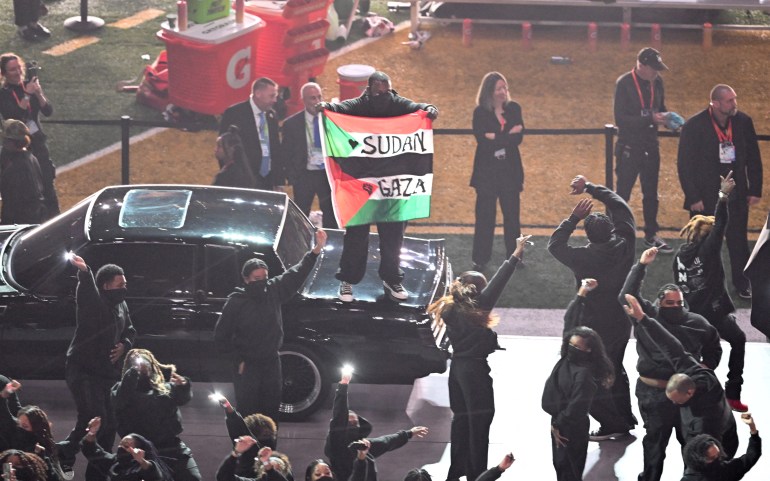
Demonstrator detained after unfurling flag with the words ‘Gaza’ and ‘Sudan’ at Super Bowl LIX in New Orleans. A protester carrying a Palestinian flag has been detained after interrupting rapper Kendrick Lamar’s half-time show at the NFL Super Bowl LIX in New Orleans, the United States. The man jumped onto a car that headline act Lamar had used during his performance at Caesars Superdome on Sunday. The New Orleans Police Department said in a statement quoted by the Associated Press that it was “working to determine applicable charges in this incident.” The game, which ended with a 42-20 win for the Philadelphia Eagles against the Kansas City Chiefs, continued as scheduled after the protester was escorted from the field immediately after the incident. The demonstrator, holding a Palestinian flag with the words “Gaza” and “Sudan” written across it, jumped from the car and ran in circles on the field after being spotted by security staff. The solitary protester holds a Palestinian flag with the words ‘Gaza’ and ‘Sudan’ as rapper Kendrick Lamar performs nearby [Chandan Khanna/AFP] The protester, believed to be a production cast member, was dressed in clothing similar to that of the numerous dancers and flag bearers who were part of Lamar’s much-anticipated performance. Advertisement Donald Trump was in attendance at the game, the first time a sitting US president attended the Super Bowl, and was flanked in the stand by his daughter Ivanka and NFL commissioner Roger Goodell. Trump left the stadium slightly before the end of the game but was in attendance for the half-time show. US President Donald Trump and Ivanka Trump with NFL commissioner Roger Goodell before the game [Mike Segar/Reuters] Actor Samuel L Jackson, famed for his roles in Pulp Fiction and Star Wars, was also on stage with Lamar and fellow recording artist SZA when the protest took place. The production continued without interruption and the television broadcast quickly cut away from the protester, who was only briefly glimpsed in the background. Spectators were able to record the moment, which was then shared widely on social media. Security escorts out a protester holding a Palestinian flag at Caesars Superdome in New Orleans, Louisiana [Chandan Khanna/AFP] Adblock test (Why?)
Libya finds two mass graves with bodies of nearly 50 migrants, refugees
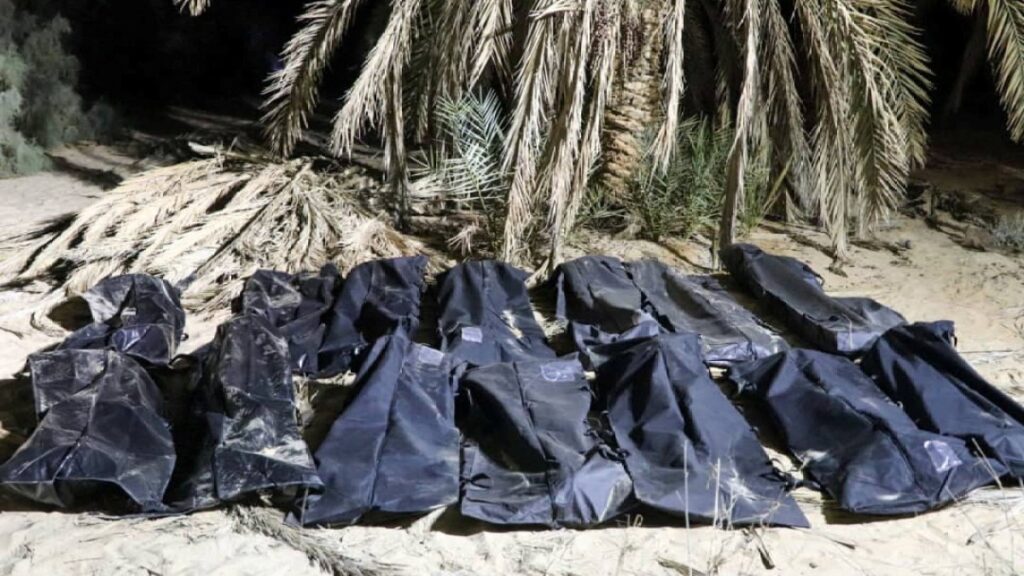
Rights groups and UN agencies have documented systematic abuse against migrants, refugees in Libya including torture, rape and extortion. Libya authorities have uncovered nearly 50 bodies from two mass graves in the country’s southeastern desert, in the latest tragedy involving people seeking to reach Europe through the North African country. The security directorate said in a statement on Sunday that one mass grave found on Friday in a farm in the southeastern city of Kufra contained 19 bodies. The remains were taken for autopsy. Mohamed al-Fadeil, head of the security chamber in Kufra, said a second mass grave with at least 30 bodies was also found in the city after authorities raided a migrant detention centre. He added that according to survivor accounts, nearly 70 people were buried in that site and authorities were still searching the area. Al-Abreen, a charity that helps migrants and refugees in eastern and southern Libya, said that some of the people found in the mass graves had been shot and killed before they were buried. Mass graves containing the bodies of asylum seekers have previously been discovered in Libya, the main transit point for migrants from Africa and the Middle East trying to make it to Europe. Advertisement Last year, authorities unearthed the bodies of at least 65 migrants in the Shuayrif region, south of the capital Tripoli. Human traffickers have benefited from more than a decade of instability, smuggling migrants and refugees across the country’s borders with six nations, including Chad, Niger, Sudan, Egypt, Algeria and Tunisia. Rights groups and United Nations agencies have for years documented systematic abuse of asylum seekers in Libya including forced labour, beatings, rapes and torture. The abuse often accompanies efforts to extort money from families before they are allowed to leave Libya on traffickers’ boats. Those who are intercepted and returned to Libya are held in government-run detention centres where they suffer from abuse, including torture, rape and extortion, according to rights groups and UN experts. The country plunged into chaos following a NATO-backed uprising that toppled and killed Libyan leader Muammar Gaddafi in 2011. The oil-rich nation has been ruled for most of the past decade by rival governments in eastern and western Libya, each backed by an array of fighter groups and foreign governments. Adblock test (Why?)
Saudi Arabia slams Netanyahu’s suggestion it should host Palestinian state
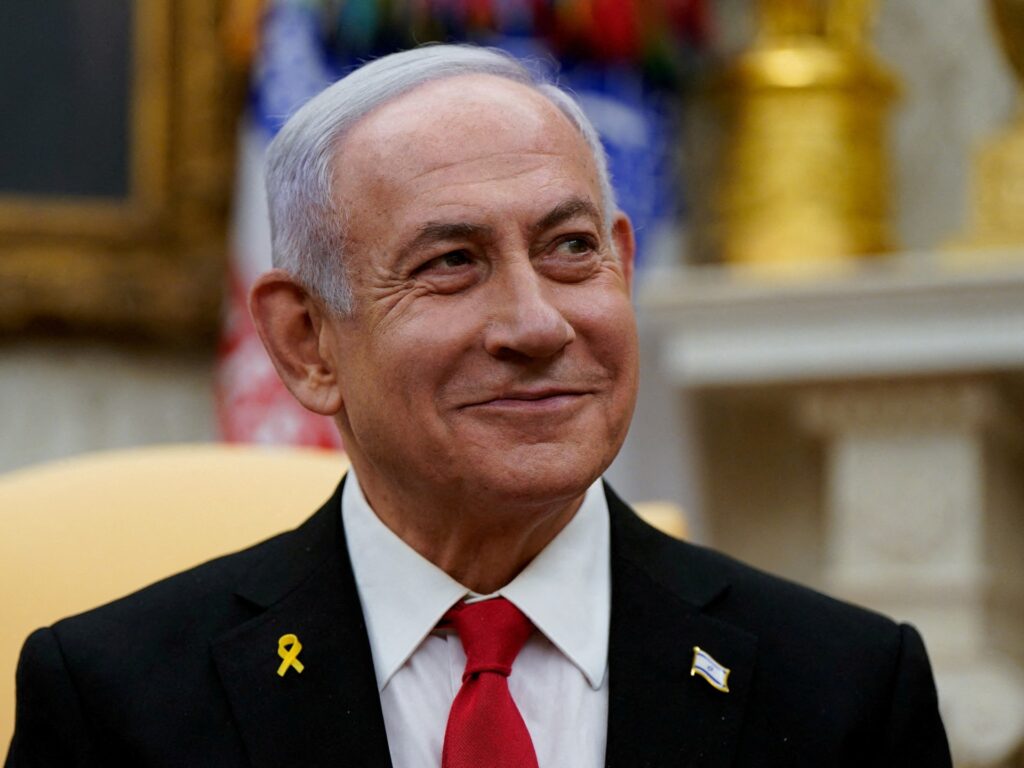
The kingdom reiterated that ‘the Palestinian people have a right to their land’ and cannot be ‘expelled’. Saudi Arabia has condemned Israeli Prime Minister Benjamin Netanyahu’s suggestion that the kingdom’s land be used to establish a Palestinian state. In a statement on Sunday, the Saudi Foreign Ministry accused Netanyahu of attempting to “divert attention” from Israel’s ongoing “crimes” in Gaza, including “ethnic cleansing”. “The kingdom affirms that the Palestinian people have a right to their land, and they are not intruders or immigrants to it who can be expelled whenever the brutal Israeli occupation wishes,” said the Foreign Ministry. #Statement | The Kingdom of Saudi Arabia appreciates the condemnation, disapproval and total rejection announced by the brotherly countries towards what Benjamin Netanyahu stated regarding the displacement of the Palestinian people from their land and the Kingdom values the… pic.twitter.com/ebj2sVHx4w — Foreign Ministry 🇸🇦 (@KSAmofaEN) February 9, 2025 On Thursday, Netanyahu responded to an interviewer on Israel’s Channel 14 who misspoke by saying “Saudi state” instead of “Palestinian state”. Advertisement “The Saudis can create a Palestinian state in Saudi Arabia; they have a lot of land over there,” Netanyahu said. The interviewer replied that it was an idea worth exploring. The exchange drew angry reactions from Arab states, including Qatar, Jordan, Egypt, the United Arab Emirates, Kuwait and Iraq, as well as the six-nation Gulf Cooperation Council (GCC). “These dangerous and irresponsible statements confirm the approach of the Israeli occupation forces in their disrespect for international and UN laws and treaties and the sovereignty of states,” said GCC Secretary-General Jasem Mohamed Albudaiwi. The Saudi Foreign Ministry thanked the “brotherly countries” for denouncing Netanyahu’s remarks. Discussions of the fate of Palestinians in Gaza had already been upended by an earlier shock proposal from United States President Donald Trump for the US to “take over” and “own” Gaza, resettling Palestinians elsewhere in a move that would amount to ethnic cleansing. That suggestion, amid a fragile ceasefire between Israel and Hamas in Gaza, has also been roundly condemned by Arab leaders. Trump has also said Saudi Arabia would not require the formation of a Palestinian state as a precondition to normalise ties with Israel, a claim Riyadh has repeatedly denied. Israel’s war on Gaza has killed at least 61,700 Palestinians including about 18,000 children, and wrecked much of the enclave’s infrastructure. More than 14,000 more people are missing and are presumed to be dead. The Hamas-led attack on Israel on October 7 that sparked the war killed 1,139 people and seized more than 250 captives, dozens of whom are still believed to be in the enclave. Advertisement Adblock test (Why?)
Here’s how Israel is repeatedly violating the Lebanon ceasefire
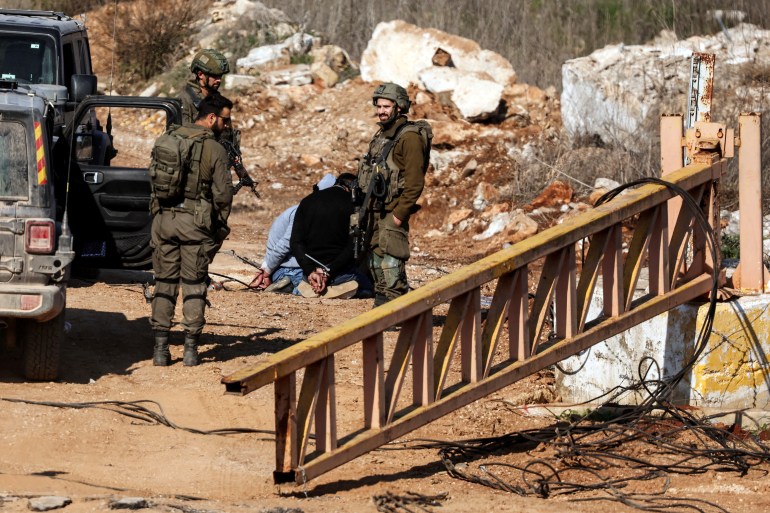
Under the initial terms of the agreement that brought about a ceasefire between Israel and the Lebanese group Hezbollah in November, the former was to withdraw its forces from southern Lebanon by January 26. That date came and went, but Israel has refused to pull back its military, and the deadline has instead been pushed to February 18. Israel has also continued to sporadically bomb areas in Lebanon – to mass denunciations from the latter – claiming that it is targeting Hezbollah for violations of the ceasefire. The Israeli presence in southern Lebanon means that thousands of people still cannot return to their homes in border villages, with Israeli troops shooting at people who get too close. The conflict between Israel and Hezbollah – a Shia group that is the strongest military force in Lebanon – began on October 8, as the Lebanese group launched strikes in solidarity with the Palestinian group Hamas in Gaza, which was coming under Israeli attack. Israel intensified its attacks on Lebanon in September and killed Hezbollah leader Hassan Nasrallah on September 27. Advertisement Israel has killed around 4,000 people across Lebanon since October 2023. Why is Israel still occupying southern Lebanon? How is this a “ceasefire”? And what exactly is Israel’s end game? Here’s all you need to know. The date for Israel’s withdrawal from Lebanon was extended from January 26 to February 18 [Ronen Zvulun/Reuters] Did the ‘ceasefire’ stop the war? While Hezbollah has stopped its attacks, Israel has not. Israel’s bombing is nowhere near the same intensity as it was before the ceasefire began on November 27, and nightly bombing of Beirut’s southern suburbs has stopped. However, Israel is still carrying out attacks on occasion, some of which are north of the Litani River – which Hezbollah is required to move its forces north of, as per the ceasefire agreement. The Armed Conflict Location & Event Data Project (ACLED), a data collection group, has recorded 330 air strike and shelling incidents carried out by Israel between November 27 and January 10, as well as 260 property destruction events. What about Hezbollah? Israel claims Hezbollah has also failed to meet the terms of the ceasefire. Israel’s Defence Minister Israel Katz said Hezbollah has not withdrawn north of the Litani River, which lies in southern Lebanon. “If this condition is not met, there will be no agreement and Israel will be forced to act on its own to ensure the safe return of residents of the north to their homes,” Katz said in January. Hezbollah’s Secretary General Naim Qassem said in a speech in late January that Hezbollah had adhered to the ceasefire agreement but didn’t say specifically whether or not his group had completely withdrawn from the south. Advertisement ACLED has recorded one attack carried out by Hezbollah since the ceasefire began. “Hezbollah has largely refrained from violence – there have been no direct attacks on Israeli soil since the ceasefire took effect, aside from a single attack on December 2 against the Israeli Rwayset Al Alam site in the occupied territories that we code as Syria,” ACLED’s Ameneh Mehvar told Al Jazeera. Qassem said the group would remain patient despite the repeated attacks against it. Israeli tanks are still in Lebanese villages, blocking some residents from returning home [Avi Ohayon/Reuters] What has the international reaction been? Lebanon has filed a complaint with the United Nations against Israel for its ceasefire violations. France’s President Emmanuel Macron urged Israel to meet the first ceasefire deadline to withdraw its troops, to little effect. France and the United States were the agreement’s original brokers. Hezbollah leader Naim Qassem has said the group abided by the terms of the ceasefire, while Israel claims Hezbollah is violating the agreement [Mohamed Azakir/Reuters] Is there any recourse for violations? According to diplomatic sources, the US – a strong ally of Israel – gave assurances that the deal would be adhered to. But there was no other recourse – and no suggested penalties – should the ceasefire be violated. Israel has yet to be held accountable for repeated ceasefire violations or extending the ceasefire period until February 18. What happens if Israel refuses to leave Lebanon? It’s unclear. Advertisement Hezbollah’s Qassem said in a speech in January that his group’s patience might run out with Israel’s violations. But in a more recent speech, he seemed to lay the responsibility to oppose Israel on the Lebanese state. “The Lebanese state is fully responsible for following up, pressuring and trying to prevent as much as it can, through sponsors and international pressure, this violation and this Israeli aggression,” Qassem said in a televised address last week. The Lebanese army is supposed to move into southern Lebanon as part of the ceasefire agreement. Any Hezbollah response will be limited by the weakened position it finds itself in. The fall of the regime of President Bashar al-Assad in Syria cut off Hezbollah’s land route to receive weapons from its primary backer, Iran. Its military capabilities also took a heavy beating during the two-month escalation from September until November, during which Israel invaded Lebanon. And it has lost most of its upper military leadership. For these reasons, Hezbollah appears reluctant to take any action that will give Israel a reason to intensify its attacks. Adblock test (Why?)
Iran ready to negotiate with US but not under Trump’s ‘maximum pressure’
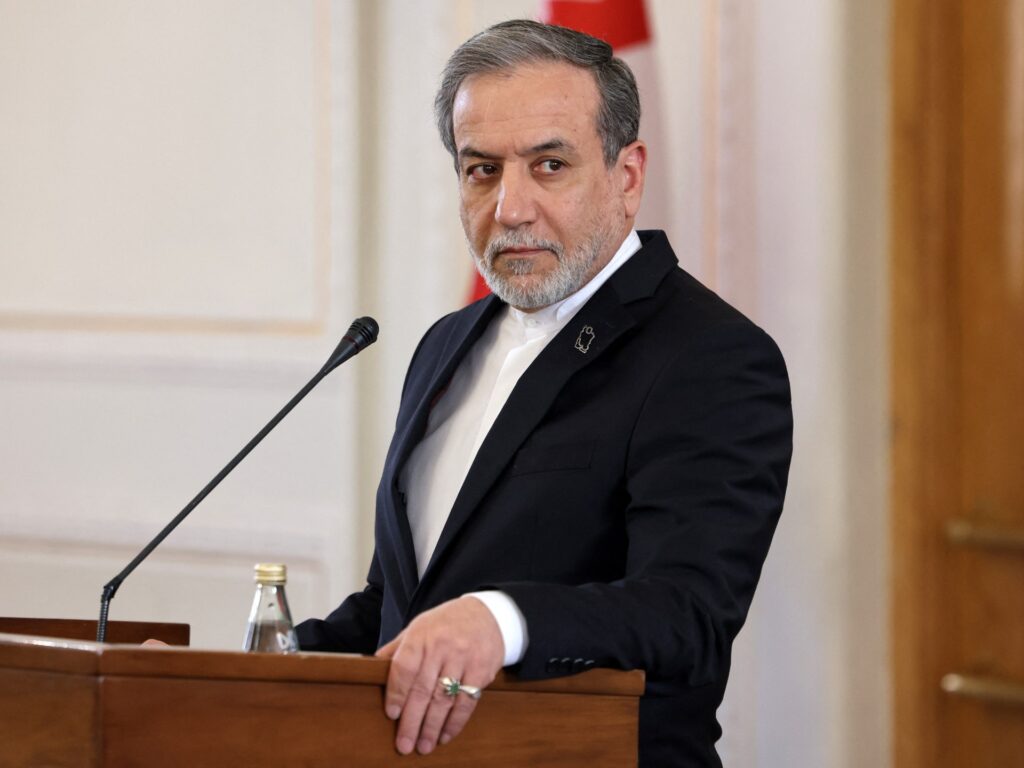
‘Maximum pressure’ policy pushed by US ‘would not be a negotiation but a form of surrender’, Iranian FM says. Iran has said it is ready to negotiate with the United States but not under the “maximum pressure” strategy by Donald Trump. Iran’s Foreign Minister Abbas Araghchi said in a statement on Saturday that “the lifting of sanctions requires negotiations, but not within the framework of a ‘maximum pressure’ policy, because it would not be a negotiation but a form of surrender”. Araghchi’s statement came after Iran’s Supreme Leader Ayatollah Ali Khamenei urged the government not to negotiate with the US, calling such an approach “reckless”. Khamenei, who has the final say on all strategic decisions in Iran, referred to Iran’s previous experience negotiating with Washington. In 2015, Iran struck a landmark deal with the US, France, Germany, United Kingdom, China and Russia to regulate its nuclear programme in return for the easing of international sanctions. However, during his first term in 2018, Trump unilaterally withdrew the US from the agreement and reinstated heavy sanctions on Tehran, despite European opposition. Advertisement Trump on Wednesday called for a “verified nuclear peace agreement” with Iran, adding that it “cannot have a nuclear weapon”. Iran insists its nuclear programme is solely for peaceful purposes and denies any intention to develop atomic weapons. The US president, however, reinstated on Tuesday his “maximum pressure” policy, with Washington on Thursday announcing financial sanctions on entities and individuals accused of shipping hundreds of millions of dollars worth of Iranian crude oil to China. Aragchi said on Saturday that “Iran does not want to negotiate with a country that is simultaneously imposing new sanctions”. Adblock test (Why?)
Real Madrid rescued by Mbappe after Alvarez penalty for Atletico

Real striker Kylian Mbappe’s second-half equaliser cancels out Julian Alvarez’s penalty for Atletico in Madrid derby. Kylian Mbappe scored in his first derby against Atletico Madrid as Real Madrid fought back for a 1-1 draw and kept its slim lead in the Spanish league. Julian Alvarez put Atletico ahead from the penalty spot in the 35th minute at Estadio Santiago Bernabeu on Sunday. The kick was awarded after the referee was called to review a challenge by Aurelien Tchouameni on Samuel Lino. Mbappe equalised in the 50th minute for the hosts, who have stayed one point ahead of second-placed Atletico in the standings, after latching onto a blocked effort by Jude Bellingham to slot home. Bellingham hit the crossbar with a header as Madrid searched for a second goal, while Atletico goalkeeper Jan Olbak made saves to deny Rodrygo, Vinícius Júnior and Mbappe to split the points in the Spanish capital. “We knew how to hang in there and had our chances,” Alvarez said. “We are in the fight and will stay in it right to the end.” Julian Alvarez of Atletico Madrid scores his team’s first goal from the penalty spot [Angel Martinez/Getty Images] Atletico, who spent big last summer to acquire Alvarez and other reinforcements, are trying to add to league titles in 2021 and 2014 under coach Diego Simeone. Advertisement They arrived in fine form, having won 19 of their previous 21 games in all competitions, and they showed why they have the best defence in Europe’s top five leagues with 15 goals conceded in 23 games. On Saturday, despite losing defensive stalwart Robin Le Normand to suspension, Simeone’s side was once again rock-solid at the back, frustrating Real’s stellar attack who were unable to create a single shot on target in the first half. Real coach Carlo Ancelotti was quick to accept that it was a game of two halves: “We controlled the second half well. We scored and had chances. We played a very good second half. First half was different. We were very slow and not aggressive enough. “The penalty affected the team. After the penalty, and before, we were playing very slow. We didn’t take advantage of the field. In the second half, we opened the field and made it wider, and took advantage of that. We created lots of problems in the second half,” he said. A spate of injuries left Madrid coach Carlo Ancelotti relying on a makeshift backline of Lucas Vázquez, regular midfielder Tchouameni, youth player Raul Asencio, and Fran García. It was the reckless stretch of his boot by Tchouameni that ended up tripping Lino but it still required VAR to intervene for the kick to be awarded. Former Manchester City striker Alvarez gently stroked his penalty down the middle as Thibaut Courtois dived to his left. Antoine Griezmann showed again his great value to Atletico with precision passing even under duress. The French midfielder twice placed perfectly weighted balls that left Alvarez and Lino in a good position to get off shots inside the area, but clumsy touches by both ruined the opportunities. Kylian Mbappe of Real Madrid scores his team’s equalising goal [Angel Martinez/Getty Images] Rodrygo sparked the Madrid comeback just after halftime when he dribbled past Javi Galan and Lino on the right side and slipped a ball to Bellingham in the heart of the box. Advertisement Bellingham’s scuffed shot hit a defender and fell to Mbappe, who had missed the first Atletico derby of the season – a 1-1 draw in September – because of injury, to rifle home for his first goal against Real’s cross-city rivals. Madrid poured forward searching for a second goal with Atletico rattled. Vinicius dribbled down the left side and scooped the ball for Bellingham, who smashed a header off the woodwork. Simeone changed both his fullbacks with Reinildo and Nahuel Molina in the 63rd, but Oblak still had to come to Atletico’s rescue on three occasions. “In the first half, we played very well,” Simeone said. “In the second half, they scored right away, then hit the bar. It was very intense. “After 20 minutes in the second half, we also had our opportunities … Julian [Alvarez] slipped on one, [Marcos] Llorente a couple of times. At the end, it was a draw, [but] both teams thought they could win the game.” Barcelona, in third place, are now five points behind Madrid ahead of their trip to Sevilla on Sunday. Adblock test (Why?)
Israeli air strike kills six in eastern Lebanon amid fragile ceasefire
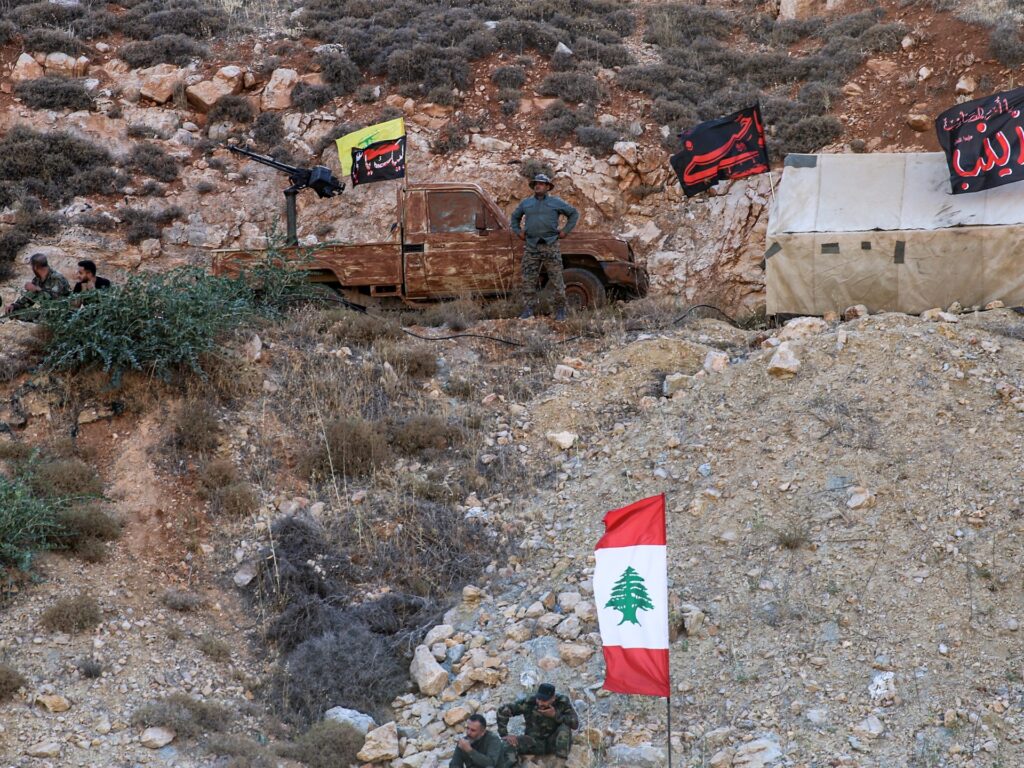
Israeli drone attack targets the Shaara area in eastern Bekaa region. An Israeli air raid has killed six people and wounded two in eastern Lebanon amid a fragile ceasefire between Israel and Hezbollah. Lebanon’s National News Agency reported that a drone targeted the Shaara area, near the town of Jennata, in the eastern Bekaa region on Saturday. The Israeli army issued a statement saying the targets were what it claimed to be Hezbollah operatives “within a site for the production and storage of strategic weapons”. “Activities within the site are considered a blatant violation of the understandings between Israel and Lebanon,” it said, referring to the ceasefire agreement signed on November 27 that brought to a halt the conflict between the Israeli army and Hezbollah. Since the deal came into effect, Israel has continued military action against what it says are Hezbollah sites. While the agreement called for a 60-day implementation period ending on January 26, Israel delayed the withdrawal of its troops from southern Lebanon, claiming the agreement had not been fully enforced by Lebanon. Advertisement Under the terms of the truce, the Lebanese army is to deploy alongside United Nations peacekeepers in the south, taking the place of Hezbollah forces. Israel has also launched a wave of attacks in the eastern Bekaa Valley, also typically considered a Hezbollah stronghold. On January 31, at least two people were killed as the Israeli army claimed to have struck multiple Hezbollah targets near the border with Syria. Hezbollah official Ibrahim Moussawi condemned the air raids at the time, calling them “a very dangerous violation and a blatant and explicit aggression”, calling on Lebanon to halt Israel’s continued attacks. Adblock test (Why?)
Super bowl halftime show: What to expect from Kendrick Lamar’s performance

The Super Bowl halftime show has always been a major part of the annual NFL event and is the United States’ most-watched musical performance of the year. Here is a look at Sunday’s halftime show during the match between Philadelphia Eagles and Kansas City Chiefs in New Orleans, Louisiana. Who is performing at the Super Bowl halftime show 2025? Kendrick Lamar will perform the halftime show. He has won 22 Grammy Awards throughout his career, including five this year for his song, “Not Like Us”, which bagged the prestigious Song of the Year and Record of the Year awards on Sunday. Lamar is the first solo rapper to headline the halftime show. The 37-year-old also performed at Super Bowl 2022, alongside Dr Dre, Snoop Dogg, Eminem, and Mary J Blige. It was the first halftime show to be entirely centred on hip-hop music. Lamar, who started out freestyling and battle rapping at school, released his debut studio album, Section.80, in 2011. Over the next three years, the album sold 130,000 copies in the US. Advertisement Lamar has released five more studio albums, along with other records, selling more than 17.9 million album-equivalent units worldwide. He has achieved five number-one singles in the US. What can we expect from Kendrick Lamar’s performance? In a news conference hosted by Apple Music, Lemer said he is staying true to his storytelling roots during his halftime performance. “Storytelling. I think I’ve always been very open about storytelling through all my catalog and my history of music. And I’ve always had a passion about bringing that on whatever stage I’m on.” Singer-songwriter SZA will join Lamar as a special guest. The event will be directed by Hamish Hamilton, who has directed the halftime show since 2010. But few other details about the performance were revealed, bowing to a tradition in which headliners keep their plans secret. Time to shine. #SBLIX https://t.co/KaJDfUCs8n — Super Bowl (@SuperBowl) February 3, 2025 Apple Music, the music, audio, and video streaming service of Apple Inc, sponsors this year’s halftime performance. The company took over sponsorship in 2023, when Rihanna performed, replacing Pepsi which had been sponsor since 2013. Where can I watch the Super Bowl halftime show? The Super Bowl is scheduled to kick off at 6:30 pm ET (23:30 GMT), on Sunday, February 9, with the halftime show expected to begin between 8-8:30pm (01:00-01:30 GMT). The event will be broadcast live on FOX, FOX Deportes and streamed on Tubi. Advertisement A history of the Super Bowl halftime show Initially, the show mainly featured college marching bands, before progressing to drill teams and performance ensembles, but it all changed in 1991 when boy band New Kids on the Block were the headline act. The rest of the Nineties had artists such as Michael Jackson, Diana Ross, Stevie Wonder and Gloria Estefan perform. At the turn of the century, a number of different acts performed together. In 2000, Phil Collins, Christina Aguilera, Enrique Iglesias and Toni Braxton appeared and the following year brought Aerosmith and NSYNC together. The musical groups Aerosmith, front, and *NSYNC pose for a group photo after a Super Bowl Halftime Show [File: Chris O’Meara/AP] U2 replaced Janet Jackson in 2002, and the band performed a tribute to the victims of the 9/11 attacks. Jackson would get her chance in 2004, where her performance created controversy due to an infamous “wardrobe malfunction”. The incident led to a change for the next few years, with just one artist or group performing, mainly mainstream rock acts such as Paul McCartney, the Rolling Stones, Prince and Bruce Springsteen. In 2011, contemporary artists made a return, with the previous format of a headline act and a number of guests. Since then, Madonna, Beyonce, Bruno Mars, Katy Perry, Lady Gaga, Dr Dre and Eminem have all performed at the show, which guarantees them huge exposure and a significant increase in album sales and digital downloads. Madonna performs with Cee-Lo at halftime at Super Bowl XLVI on Sunday, February 5, 2012 [Gregory Payan/AP] Adblock test (Why?)