

Lebanon names new government after two-year caretaker cabinet
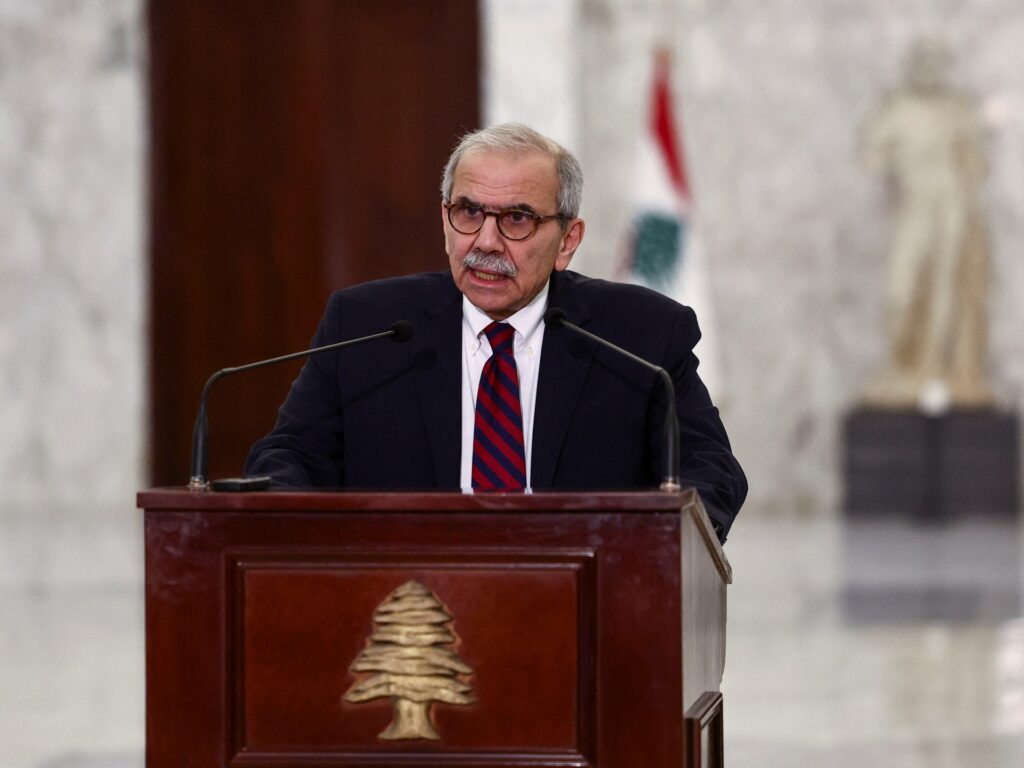
PM Salam has formed a new government as Hezbollah appears increasingly sidelined. Lebanon’s President Joseph Aoun has announced the formation of a new government after more than two years of an interim cabinet amid political wrangling and a major economic collapse. The presidency said on Saturday it accepted the resignation of the caretaker government and appointed Prime Minister Nawaf Salam‘s new cabinet of 24 ministers, the country’s first full-fledged government since 2022. The cabinet is now charged with drafting a policy statement – a broad outline of the upcoming government’s approach and priorities – and will then need a vote of confidence from Lebanon’s parliament to be fully empowered. Salam, a diplomat and former president of the International Court of Justice (ICJ), promised to reform Lebanon’s judiciary, implement economic reforms and bring about stability. Speaking to reporters at the presidential palace, he said Lebanon would implement UN resolution 1701, which ended a previous war between Hezbollah and Israel in 2006 and calls for the withdrawal of Hezbollah and other non-state armed actors from the area south of the Litani River, on the border with Israel. Advertisement Lebanon’s new government marks a shift away from leaders that are close to Hezbollah, as Beirut hopes to access reconstruction funds and investments after last year’s devastating war with Israel and to recover from a debilitating economic crisis that has gripped the country since 2019. Though Hezbollah did not endorse Salam as prime minister, the Lebanese group did engage in negotiations with him over the Shia Muslim seats in government, as per Lebanon’s sectarian power-sharing system. Former army chief Aoun – also a candidate not endorsed by Hezbollah and key allies – was elected president in early January, ending that position’s vacuum. The announcement comes after US Deputy Middle East Envoy Morgan Ortagus on Friday demanded that Hezbollah be excluded from Lebanon’s government, saying that Washington had made its continued presence in the cabinet a “red line”. The US Embassy to Lebanon issued a statement on Saturday saying it welcomed the new government and hoped it would implement reforms and rebuild state institutions. The United Nations special coordinator for Lebanon, Jeanine Hennis-Plasschaert, welcomed the announcement saying the end of the political impasse “heralds a new and brighter chapter for Lebanon”. Adblock test (Why?)
Sudan army claims major advances against RSF in greater Khartoum
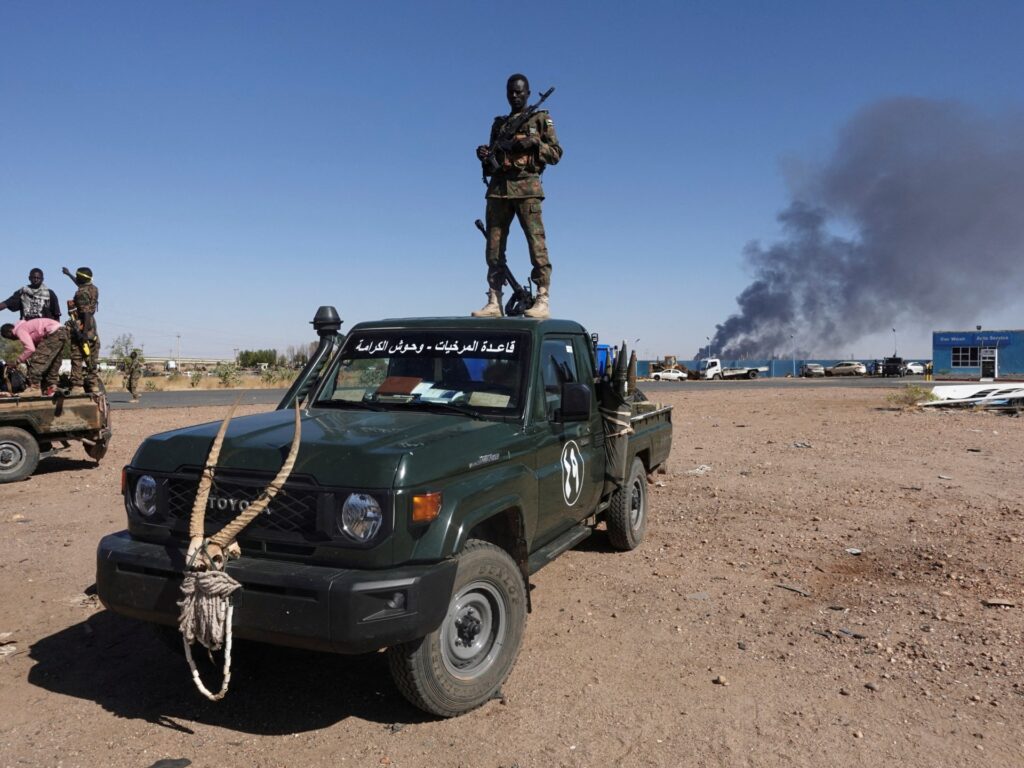
Development marks one of army’s most significant advances since war broke out between army chief al-Burhan and RSF. Sudan’s military says it has regained control of nearly all of Khartoum North as it intensified its offensive aimed at reclaiming full control of the capital from the paramilitary Rapid Support Forces (RSF). The army, at war with the RSF since April 2023, has in recent weeks won back large swaths of the capital and its surrounding areas from the paramilitaries. On Saturday, the military said it had recaptured Kafouri, a key district in Khartoum North, after pushing the RSF to the outskirts of the city which is also known as Bahri. The district, one of greater Khartoum’s wealthiest, had been a key base for the paramilitary group, housing properties linked to senior RSF leaders, including Abdel Rahim Daglo, the brother and deputy of RSF commander Mohamed Hamdan Daglo. On Friday, the Sudanese army announced it regained control of Abu Quta in northwestern Gezira State from RSF. In a statement, military spokesperson Nabil Abdullah said army forces and their allies on Friday pushed out “remnants of the Daglo terrorist militias” from Kafouri and other areas 15km (nine miles) to the east in Sharq El Nil. Advertisement On Thursday, a military source told the AFP news agency that the army was advancing towards the centre of Khartoum, while witnesses reported clashes there and explosions in the south of the capital. With the new advances, the army has secured all cities and towns in Gezira State, except for Giad in the north and surrounding villages located 50km (31 miles) north of Khartoum. The developments mark one of the army’s most significant advances since the war broke out between army chief Abdel Fattah al-Burhan and his former ally Daglo’s RSF, which quickly seized much of Khartoum and other strategic areas. Fears of reprisals However, as fighting rages on in the capital, Amnesty International raised concerns on Friday about potential reprisals in areas recently recaptured by the army. The rights group cited reports of the circulation of lists targeting activists, human rights defenders, and medical and humanitarian workers, accused of being “partners of the RSF”. In South Belt, a neighbourhood in Khartoum, the RSF on Saturday detained two members of a local volunteering rescue group at gunpoint from Bashair Hospital – the last partially functioning facility in the area, the group said in a statement. On Thursday, the RSF had also reportedly detained the manager of Bashair Hospital, as well as the head of a soup kitchen and a volunteer, according to local rescuers. Last week, the UN human rights office documented at least 18 civilian deaths in Khartoum North since the army began its advance there in late January. Advertisement Following the army’s takeover of Gezira state capital Wad Madani last month, mass executions against civilians were reported. Human rights groups have accused the army and allied militias of extrajudicial killings, kidnappings, and physical and psychological torture, particularly targeting communities suspected of RSF ties. The army and RSF have been fighting a war since mid-April 2023 that has killed more than 20,000 people and displaced 14 million, according to the UN and local authorities. Adblock test (Why?)
Seeking re-election, President Daniel Noboa centres Ecuador’s crime wave

Noboa has continued to weather controversy about the limits of his authority through the end of his latest campaign. Ecuador’s constitution requires that public officials take a leave of absence to run for re-election. But Noboa instead signed two executive decrees to avoid transferring power to his vice president, Veronica Abad, with whom he is feuding. Just this week, the Constitutional Court of Ecuador declared both unconstitutional. After the ruling, the Confederation of Indigenous Nationalities of Ecuador (CONAIE), a powerful Indigenous rights coalition, blasted Noboa for treating the presidency like “a private hacienda”. “No authoritarian manoeuvre can hide the truth: Noboa’s government is riddled with irregularities, abuses and contempt for democracy,” CONAIE wrote in a statement. “We have never trusted this government,” the acting president of CONAIE, Zenaida Yasacama, told Al Jazeera. “As a woman, his treatment of his vice president has hurt me.” Zenaida Yasacama, the acting president of CONAIE, an Indigenous organisation, expressed concern about Daniel Noboa’s government [Mie Hoejris Dahl/Al Jazeera] Still, Noboa has campaigned for a second, full term on the basis that he will declare war against “the old politics” of Ecuador. On advertisements, Noboa stands in a white T-shirt against a purple background, next to slogans for “one single round” — an appeal to voters to make Sunday’s victory so massive, no run-off election is needed. It’s a pointedly informal look, one designed to appeal to Ecuador’s younger generations. Garcia Nice explained that young voters are particularly fond of Noboa. Some even carry cardboard cut-outs of the leader. In a country where the average voting age is 28 and 16-year-old teenagers are eligible to vote, that demographic could provide a significant advantage at the polls. Yet, Noboa’s charisma as a young leader will only take him so far, Hurtado warned. If he succeeds in winning a full four-year term this year, he will no longer enjoy the benefit of the doubt that comes with being a relative newcomer to politics. “If he doesn’t resolve the country’s big challenges, his popularity will decline,” Hurtado said. Adblock test (Why?)
What does Trump’s ethnic cleansing proposal mean for ceasefire deal?
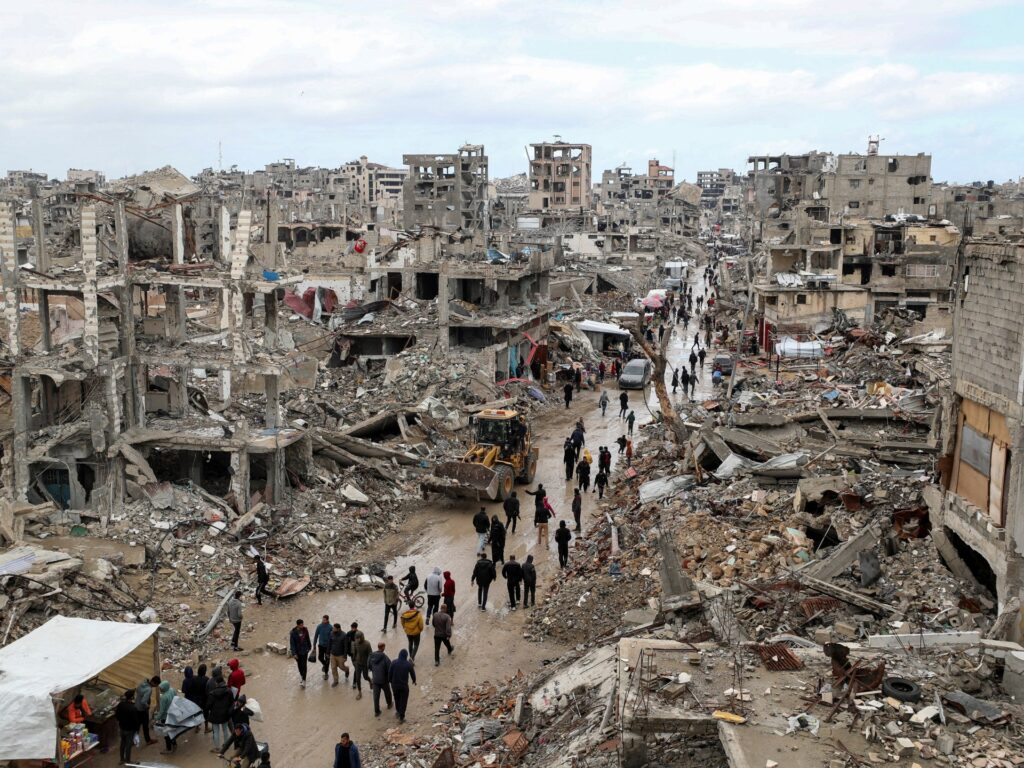
Washington, DC – Donald Trump has been claiming credit for the ceasefire deal that halted the war in Gaza, but the United States president’s proposal to forcibly displace the Palestinians in the territory risks torpedoing the agreement, experts say. Trump repeatedly called this week for Gaza to be depopulated — a push that rights groups say would amount to ethnic cleansing — and for the US to “take over” the Palestinian territory. Leaders across the world have warned that uprooting Palestinians from Gaza would destabilise the entire Middle East. More immediately, Trump’s comments could derail the push towards an enduring end to the fighting in the territory. “President Trump’s completely outrageous and outlandish calls for the ethnic cleansing of more than two million Palestinian people from Gaza severely undermines the chances for the continuation of the ceasefire,” said Josh Ruebner, a lecturer at Georgetown University’s Justice and Peace programme. “Of course, the ethnic cleansing of Palestinians was not in any ceasefire agreement, and by Trump putting that option on the table, he stands to wreck the very fragile process.” Advertisement The ceasefire came into effect on January 19, a day before Trump took office for a second term. But the US president has argued that his negotiating efforts, led by Middle East envoy Steve Witkoff, were instrumental to sealing the deal. Trump invoked the ceasefire in his inaugural address as he pledged to leave a legacy as a “peacemaker and unifier”. ‘We had nothing to do with it’ Days later, Trump suggested emptying Gaza of its inhabitants. Initially, it was easy to dismiss the comments as one of his off-the-cuff, hyperbolic pronouncements. But then he repeated them again and again. On Tuesday, he read prepared remarks that fleshed out his proposal while speaking alongside Israeli Prime Minister Benjamin Netanyahu at the White House. “The US will take over the Gaza Strip, and we will do a job with it, too. We’ll own it,” Trump said. Despite Trump’s comments, the ceasefire has continued to hold. The guns remain silent, and Hamas is set to release three more Israeli captives in the coming days in exchange for 183 Palestinians held by Israel. However, the US president’s proposal raises questions about the later stages of the truce deal, which include discussions about the future of Gaza. The first phase — which will see the release of 33 Israeli captives, a surge of humanitarian assistance to Gaza and partial Israeli withdrawal from the territory — is set to expire on March 1. The second stage is supposed to see a complete pullout of Israeli forces from Gaza, a permanent ceasefire and the release of all remaining captives held by Hamas. And the third stage includes a five-year reconstruction plan for Gaza. Advertisement Trump’s push for the people of Gaza to leave the territory altogether appears to be in direct contradiction with the spirit of the agreement. And there are signs that the US administration is no longer committed to all parts of the deal it has been bragging about brokering. On Tuesday, Trump’s envoy Witkoff suggested that Washington will push to complete the first two stages to free all Israeli captives. But he seemed to renege on the third stage — rebuilding Gaza — saying that it “can’t go the way that agreement talks about, which is a five-year programme”. Witkoff distanced the Trump team from the deal altogether, saying that it wasn’t “wonderful” from the start. “We had nothing to do with it,” he said. ‘It’s gone’ US officials have tried to walk back — or at least tone down — Trump’s comments, with White House spokeswoman Karoline Leavitt saying that people in Gaza would be “temporarily relocated”. Secretary of State Marco Rubio also said that the displacement of Palestinians in Gaza would be in the “interim”, and residents would be able to “move back in” after reconstruction. But the president has been reiterating almost daily this week that his plan is to permanently remove the Palestinians in Gaza and claim the territory for the US. Khalil Jahshan, the executive director of the Arab Center Washington DC, said Trump’s proposal spells doom for the ceasefire. “What we have heard from the White House this week, in my humble judgement, killed the ceasefire agreement totally. It’s gone,” Jahshan told Al Jazeera. Advertisement “It deprived the ceasefire agreement of its intended purpose: a solution for the day-after for Gaza and the people of Gaza. If the people of Gaza are going to be transferred ethnically to places from Indonesia to Albania to whatever, then what’s the purpose of proceeding?” Trump himself has suggested that the war may restart soon. “The strikes could start tomorrow,” Trump said on Tuesday. “There’s not a lot left to strike.” Since October 2023, Israel’s US-backed offensive in Gaza has killed nearly 62,000 Palestinians, including thousands of missing people who are presumed dead. But why did Trump emphatically claim credit for a ceasefire he did not intend on upholding? “Donald Trump isn’t interested in the ceasefire for the wellbeing of Palestinians,” said Khaled Elgindy, a Middle East analyst. “He’s interested in the headline of the ceasefire. He wants the credit. He wants to say, ‘I won. I’m the guy who did it.’ He doesn’t actually care if it’s implemented or if it falls apart or if it ends in ethnic cleansing.” Netanyahu’s war goals Elgindy said completing the second stage of the deal — a permanent ceasefire and Israeli troop withdrawal — will be vital for thwarting the ethnic cleansing plan. “There’s no question that the ceasefire, on its face, is totally incompatible with a plan to ethnically cleanse Gaza,” Elgindy told Al Jazeera. “This is why I think phase two is so critical. If we can get an agreement on phase two, and phase two is implemented, then I think the risk of actual ethnic cleansing is greatly diminished.” Advertisement Elgindy added that it doesn’t help the ceasefire that Trump “is talking crazy” about the future of Gaza, but
Trump freezes aid to South Africa amid spat over land expropriation law
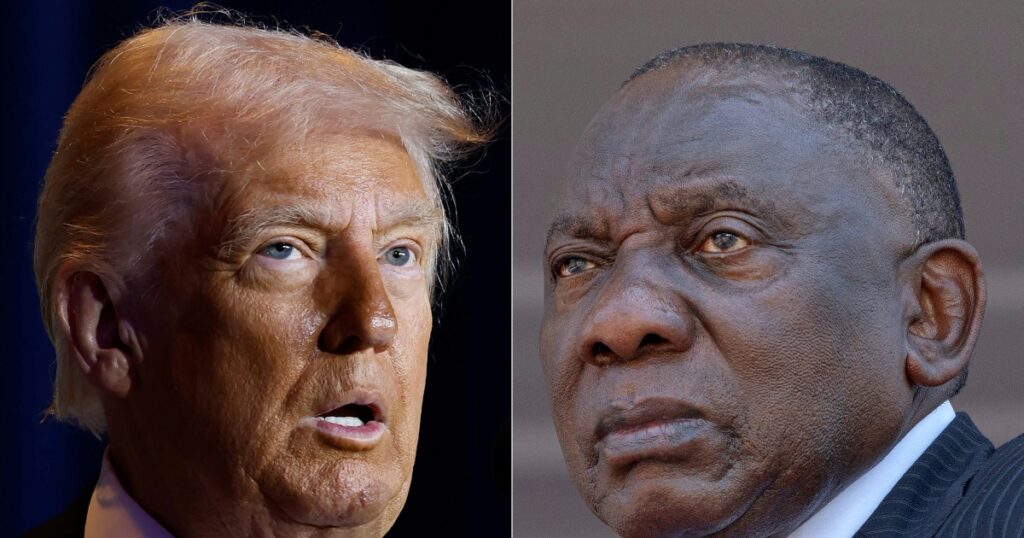
United States President Donald Trump has frozen aid to South Africa in an escalation of a rift between his administration and Pretoria over a controversial land expropriation law aimed at tackling inequality stemming from apartheid. In an executive order signed on Friday, Trump said the law showed a “shocking disregard” for citizens’ rights and would allow the government to seize land from ethnic minority Afrikaners without compensation. The passage of the Expropriation Act, signed last month by South African President Cyril Ramaphosa, followed “countless” policies designed to dismantle equal opportunity, as well as “hateful rhetoric” and government actions that have driven violence against “racially disfavored” landowners, Trump said in his order. South Africa has also taken “aggressive positions” towards the US and its allies, including accusing Israel of genocide at the International Court of Justice (ICJ) and boosting relations with Iran, Trump said in the order. “The United States cannot support the government of South Africa’s commission of rights violations in its country or its undermining United States foreign policy, which poses national security threats to our Nation, our allies, our African partners, and our interests,” the US president said in the order. Advertisement Trump’s order also said his administration would promote the resettlement of Afrikaners “escaping government-sponsored race-based discrimination”. Trump and Ramaphosa have been engaged in an escalating war of words over the law since Sunday, when the US president accused his counterpart’s administration of “confiscating land” and mistreating “certain classes of people”. On Wednesday, US Secretary of State Marco Rubio said he would skip the upcoming Group of 20 (G20) talks in Johannesburg in response to the legislation and other “very bad things” happening in the country. Ramaphosa has insisted the law is not a “confiscation instrument” but part of a “constitutionally mandated legal process”, and argued that it will ensure public access to land in an “equitable and just manner”. In an address to parliament on Thursday that appeared to take aim at Trump, Ramaphosa said that his country would stand united amid a rise in the “pursuit of narrow interests” and “the decline of common cause”. “We will not be deterred. We are a resilient people. We will not be bullied,” he said. Under the expropriation law, the government may seize land without compensation where it is deemed to be “just and equitable and in the public interest”, such as in cases where it is not being used, and after efforts to reach an agreement with the owner have failed. Ramaphosa and his African National Congress have said the legislation is necessary to alleviate huge disparities in land ownership stemming from colonial settlement and the subsequent institution of racial segregation and white-minority rule. Advertisement The government has yet to expropriate any land under the law. The Democratic Alliance (DA), South Africa’s largest opposition party and a member of the ANC-led national unity government, has strongly criticised the law, casting it as a threat to property rights and much-needed foreign investment. The DA, which draws most of its support from white, Indian and multiracial South Africans, has also expressed concern about Trump’s threats and denied suggestions that the law allows land to be seized “arbitrarily”. Land ownership is a heated issue in South Africa due to the legacy of apartheid, which lasted from 1948 until 1994. Although Black South Africans make up more than 80 percent of the population, they own just 4 percent of privately owned farmland, according to a government audit conducted in 2017. White South Africans, who make up about 7 percent of the population and are divided between Afrikaans-speaking descendants of Dutch settlers and English-speaking descendants of British colonialists, hold about three-quarters of the land. Trump’s campaign against South Africa comes as his administration is clamping down on foreign assistance more broadly, including by effectively dismantling the US Agency for International Development (USAID). Washington allocated about $440m in assistance to South Africa in 2023, according to the most recent US government data. Adblock test (Why?)
“Dehumanisation of Palestinians is so normalised,” Poet Mohammed El Kurd
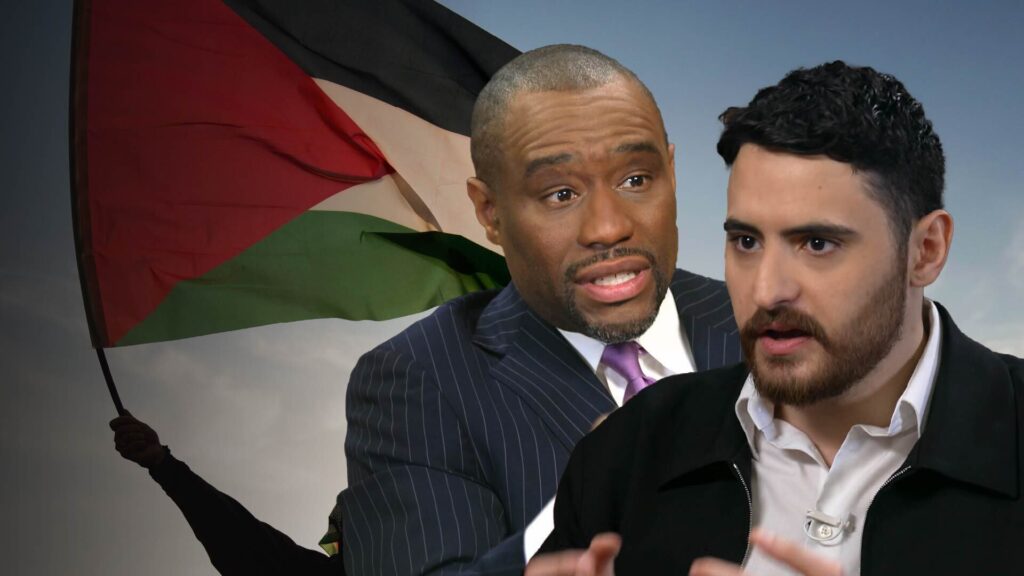
Marc Lamont Hill discusses the dehumanisation of Palestinians with author and poet Mohammed El-Kurd. “Death is so quotidian that journalists report it as though they’re reporting the weather” wrote Palestinian poet and author Mohammed El-Kurd amid Israel’s war on Gaza. And with a ceasefire in place, the fate of Palestinians remains uncertain. So what role does the Western gaze play in perpetuating a narrative that dehumanizes Palestinians and how does it shape our understanding of their struggle for justice and liberation? This week on UpFront, Marc Lamont Hill discusses with author and poet Mohammed El-Kurd the resistance and dehumanisation of Palestinians. Adblock test (Why?)
Israeli army demolishes homes in Jenin, continues raids across West Bank
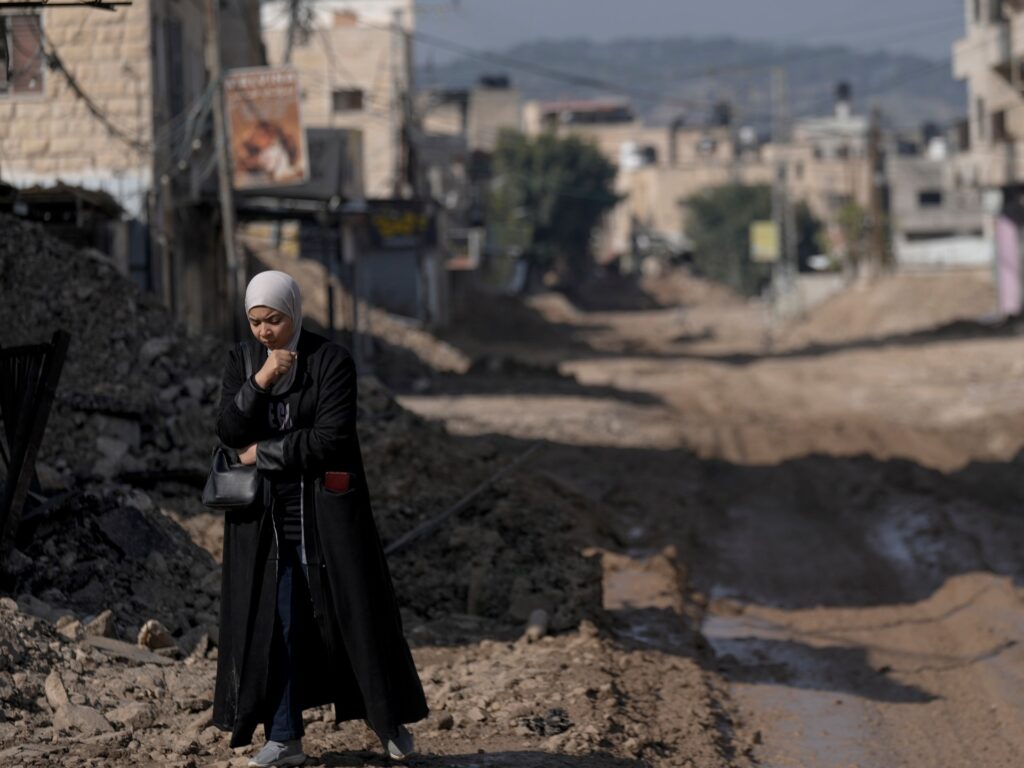
Israeli forces demolish houses in Jenin refugee camp, local sources report, as assault continues for third week. The Israeli army has demolished several Palestinian homes in the Jenin refugee camp as it continues the deadly raids across the occupied West Bank that it launched on January 21. Explosions echoed throughout the camp overnight as Israeli forces demolished the civilian homes, Wafa, the official Palestinian news agency, reported on Friday. Witnesses said Israeli forces reinforced their presence around the camp and conducted intensive drone surveillance. The army also continues to besiege Jenin Governmental Hospital, having bulldozed the main entrance and the main road leading to it earlier in its raids. Earlier this week, it carried out the demolition of residential blocks in Jenin for the first time since 2002, as reported by Jenin Governor Kamal Abu al-Rub. The Israeli military offensive, which launched two days after a ceasefire was agreed in Gaza, has targeted Jenin city, its refugee camp and surrounding towns, killing 25 Palestinians, according to the Palestinian Ministry of Health. Advertisement Nearly 90 percent of the camp’s population has been forcibly displaced with many seeking refuge in 39 villages and towns across Jenin governorate. Israeli forces also stormed several areas in the Ramallah governorate and assaulted and detained two Palestinians in the Old City of Hebron as they were distributing bread. In Beita, south of Nablus, Israeli forces assaulted ambulance crews during a raid, wounding a paramedic, according to the Palestine Red Crescent Society. Israeli soldiers fired stun grenades directly at the ambulance, damaging the vehicle as it was responding to an emergency, it said. Military assault on Tulkarem For the 12th consecutive day, Israeli forces also continued their wide-scale military assault on Tulkarem city and its refugee camp in the western West Bank, causing extensive damage to infrastructure and civilian property. Over the past few days, the Israeli army has arrested dozens of Palestinians, forced hundreds of families to flee their homes and killed four Palestinians, including a child and a journalist. Israeli forces have also turned Palestinian homes in Tulkarem and its camp into military outposts after evicting their residents. Witnesses told Turkiye’s Anadolu news agency that the Israeli army carried out mass arrests in eastern Tulkarem city. Wafa reported that the Israeli army continues to besiege Thabet Thabet Governmental Hospital. It is also occupying the adjacent al-Adawiya commercial complex, having converted it into a military base and surveillance post. Advertisement Tulkarem Governor Abdullah Kamil confirmed in a statement that 85 percent of the camp’s population had been displaced due to the Israeli military assault. Offensive in Tubas In the northern West Bank for the sixth consecutive day, the Israeli army continued its offensive in Tammun and the Far’a refugee camp in Tubas governorate. Israeli forces have been conducting house-to-house searches in Tammun under the cover of air strikes with drone attacks targeting various locations in the town. While no casualties have been reported, residents are suffering from a severe shortage of supplies and a near-total power outage. The Israeli army has also made many arrests and conducted interrogations of Palestinians in the area. In the Far’a camp, sources reported that Israeli forces targeted infrastructure, cutting off electricity and water supplies to most residents. Adblock test (Why?)
Man City name Ballon d’Or winner Rodri in squad for Champions League run in
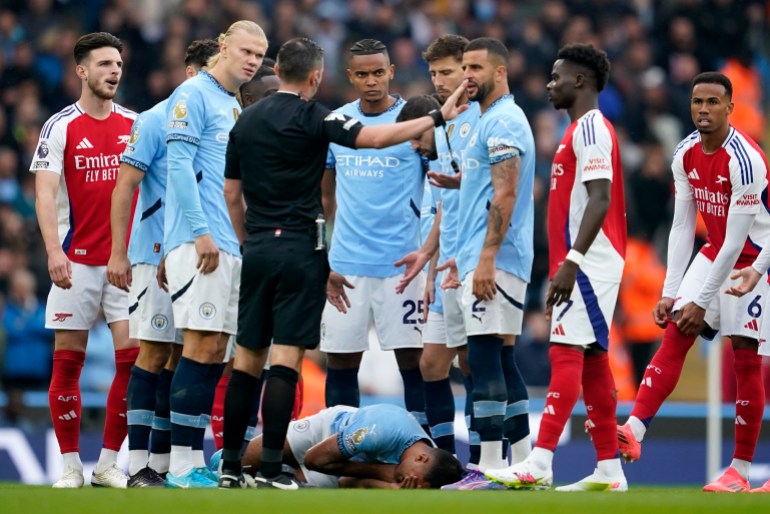
Manchester City include Rodri in their Champions League squad as hopes rise of return from injury this season. Manchester City showed faith in Rodri’s potential return to action this season by registering the injured Ballon d’Or winner in its Champions League squad for the knockout phase. UEFA set a midnight Thursday deadline to submit updated squad lists for European competitions. With a limit of three new signings in the midseason transfer window allowed, City left teenage defender Vitor Reis – who joined from Palmeiras last month – out of their squad for the knockout stages of Europe’s premier club competition was revealed on Friday. It was initially feared that Rodri’s season was over, but the Spanish international has set a target of about April – “six to seven months” after tearing the ACL in his right knee against Arsenal on September 22 – to return to play. The Champions League quarterfinals start April 8. The English champions have a daunting task to stay in the competition until then without star midfielder Rodri, who scored the winning goal in the 2023 final against Inter Milan. Manchester City’s Rodri lays on the pitch after a collision during the English Premier League match at Arsenal [Dave Thompson/AP] City face Real Madrid in a two-leg knockout playoff, next Tuesday and on February 19. The winner will play either Atletico Madrid or Bayer Leverkusen in the round of 16. Advertisement Speaking to reporters on Friday in advance of City’s FA Cup clash at Leyton Orient on Saturday, City manager Pep Guardiola said: “After the game [at Orient] we will come back early to Manchester and after we have time to start to talk [about Real Madrid]. “Of course I have an eye to Madrid but Leyton Orient deserve my attention; always it has been like that. Otherwise we would not get the amount of semi-finals and finals of the FA Cup that we had in the last five, six years.” New signings who are also included in coach Pep Guardiola’s squad for the Champions League are midfielder Nico Gonzalez — who can stand in for Rodri — forward Omar Marmoush, and defender Abdukodir Khusanov. Guardiola said that 23-year-old Gonzalez, who signed on transfer deadline day on Monday, is “really important”. The former Barcelona and Bayern Munich manager added: “It’s a position where we were weak after the absence from Rodri. “I know him from the Barcelona academy and his father was working here. I’m really pleased from the effort of the club to bring him here for the next years.” Adblock test (Why?)
US judge delays Trump buyout offer meant to thin out public servants
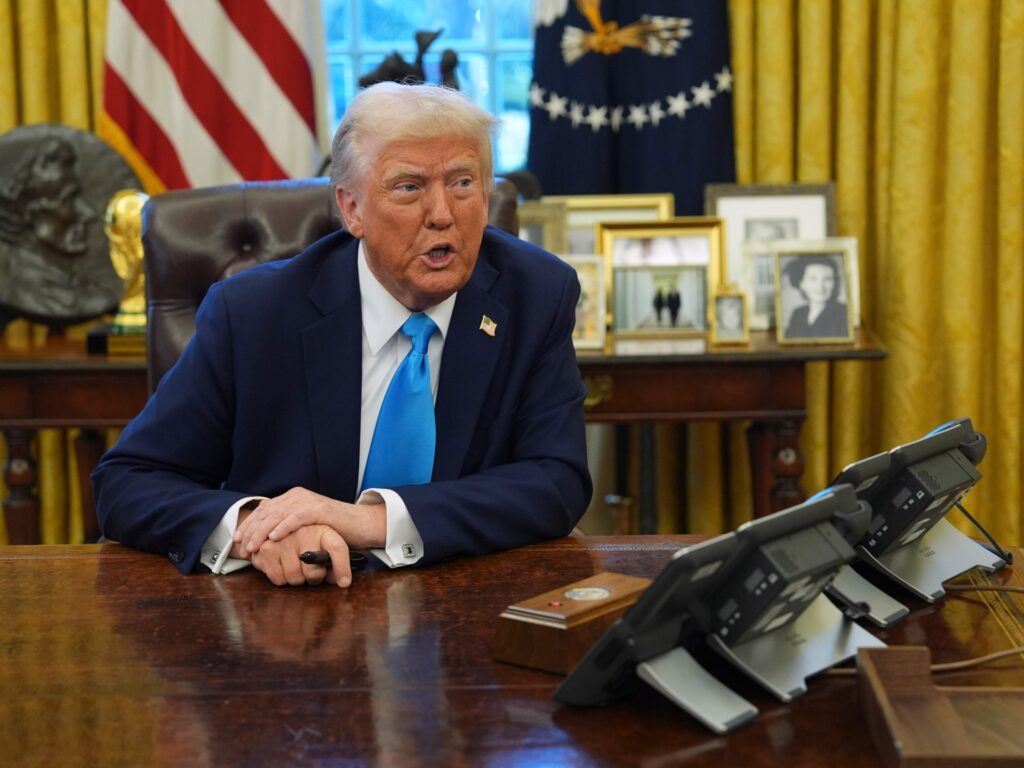
A United States judge has temporarily blocked a buyout package offered to federal workers as an incentive to resign from their jobs, part of a larger push under President Donald Trump to whittle down the scale of government. On Thursday, US District Judge George O’Toole suspended the administration’s deadline to accept the buyout, which was set for 11:59pm Eastern Time (03:59 GMT, Friday). O’Toole explained the additional time was needed for his court to consider arguments against the measure, brought by unions representing nearly 800,000 government employees. The federal court in Massachusetts will hear full arguments in the case starting on Monday. “It’s a glimmer of hope that the courts might help us and block the whole resignation programme,” one employee at the General Services Administration, which manages federal properties, told the Reuters news agency under condition of anonymity. During his campaign, Trump and allies, such as Elon Musk, the world’s richest man, pledged to purge the federal government of workers and public employees that could pose an obstacle to their agenda. Advertisement On January 20, shortly after being sworn in for a second term, Trump told an arena of supporters he planned to rid the government of “Biden bureaucrats”, a reference to his predecessor, Joe Biden. “Most of those bureaucrats are being fired. They’re gone. Should be all of them, but some sneak through,” he said. But critics point out that career civil servants are nonpartisan employees – and they are essential to the smooth running of the government, even during transitions of power. The buyout offer, which promises to pay workers their salaries through October if they agree to quit, has been challenged in court by labour unions, including the American Federation of Government Employees (AFGE). The Trump administration has warned that people who do not accept the offer could later lose their jobs anyway. US news outlets have reported that the Department of Education, which Trump has indicated he wants to abolish, told staffers the government could terminate their paycheques at any time. “We encourage federal workers in this city to accept the very generous offer,” White House Press Secretary Karoline Levitt said on Thursday. She offered some pointed remarks to remote workers who were reticent about Trump’s mandate that they return to the office, too. “They don’t want to come into the office,” Leavitt said. “If they want to rip the American people off, then they’re welcome to take this buyout, and we’ll find highly qualified people.” Leavitt said about 40,000 federal workers had accepted the offer, accounting for about 2 percent of the government’s civilian workforce. Advertisement Not only has Trump questioned the political allegiance of federal workers, but he has also denounced the large workforce as evidence of government bloat. The federal government is the largest employer in the US, with more than two million workers spanning the military, education and more. Many federal workers say that the blitz campaign meant to thin out their ranks has left them feeling uncertain about the future. “In the halls, most people are stopping to ask one another what their decision will be, with many people saying they are scared because we are caught between two bad choices and very little time to make the decision,” a Department of the Treasury executive, who spoke on condition of anonymity, told Reuters. Adblock test (Why?)
Torres hat-trick leads Barcelona Copa del Rey rout at Valencia

Ferran Torres scores three of Barcelona’s first four goals in a 5-0 Copa del Rey quarterfinal win at Valencia. Ferran Torres fired a 30-minute hat-trick as Barcelona booked their place in the Copa del Rey semifinals with a 5-0 win at Valencia. The Barca forward opened the scoring in the third minute at Estadio de Mestalla on Thursday, as he burst through the home side’s offside trap to slot home a first-time finish. His second was a tap-in after Lamine Yamal struck the post. By the time the hat-trick was sealed, with a flick from Raphinha on the edge of the box and a drilled effort into the bottom corner, Barca had already put themselves out of sight with another breach of the Valencia backline by Fermin Lopez. Yamal, who had a quiet first half, was far livelier in the second and sealed the win in the 59th minute with a deflected effort, which wrong-footed the keeper. The Spanish international had already struck the post with a trademark curling effort after cutting inside onto his left foot. Ferran Torres of Barcelona scores his team’s fourth goal to complete his hat-trick [David Ramos/Getty Images] Barca, who opened their league season with a 2-1 win on the same ground, thumped Valencia 7-1 at home in the reverse fixture on January 26. Hansi Flick’s side, who are third in LaLiga, also hit seven at Valladolid in August. Advertisement Another mauling was on the cards for Carlos Corberan’s beleaguered side, who sit second bottom of the Spanish league – four points from safety with only four wins in 22 matches. Torres’s second strike had initially been disallowed for offside, only for VAR to intervene and overrule the referee’s assistant. The pause for the decision was about as much respite as the home side were to enjoy in a half of ruthless and relentless running from Barca. The ease with which they either sliced through the Valencia defence, as for the second and fourth goals, or broke clean through, as with the first and third, will be as great a concern for Corberan as it is a delight for Flick. Lamine Yamal of Barcelona scores his team’s fifth goal in a far quieter second half [David Ramos/Getty Images] To the relief of the home support, who were making their way to the exits as early as Barca’s third goal, the second half was a more sedate affair as the away side took their foot off the gas. Lopez’s hat-trick is the fastest for Barcelona since Samuel Eto’o registered three goals in the opening 28 minutes of a LaLiga match against Almeria in 2008. The record 31-time winners of the competition have not reached the semifinals since being eliminated by Real Madrid in 2022-2023, while they last won the competition in 2020-21, having been defeated by Valencia in the final two seasons before. Real Sociedad earlier booked their place in the last four with a 2-0 home win against Osasuna thanks to first-half strikes from Barrenetxea and Brais Mendez. Advertisement Real Madrid and Atletico Madrid, who meet in a first versus second league derby at Santiago Bernabeu on Saturday, booked their places in the semifinals with victories over Lagunes and Getafe, respectively, earlier in the week. Adblock test (Why?)