

Trans women, girls barred from female sport under NCAA rule change
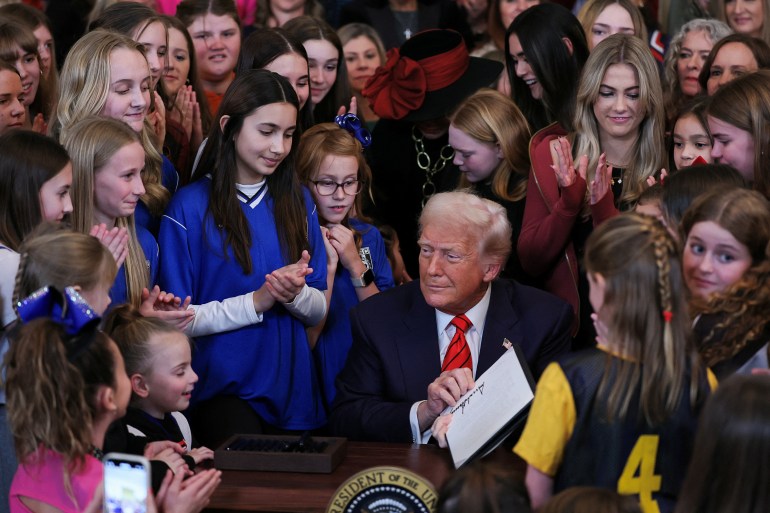
Transgender girls and women will no longer compete in female events at most college sporting events in the United States after a governing body’s decision to bar athletes who were born male. The National Collegiate Athletic Association, the main governing body for college sport in the US, said on Thursday that it would limit competition in girls’ and women’s sport to female-born athletes only. The NCAA’s announcement comes after US President Donald Trump signed an executive order the previous day to deny funding to educational institutes that allow trans girls and women to compete in female sport. “The NCAA is an organization made up of 1,100 colleges and universities in all 50 states that collectively enroll more than 530,000 student-athletes. We strongly believe that clear, consistent, and uniform eligibility standards would best serve today’s student-athletes instead of a patchwork of conflicting state laws and court decisions,” NCAA president, Charlie Baker, said in a statement. “To that end, President Trump’s order provides a clear, national standard.” Advertisement Baker said the change reflected the body’s commitment to “protect, support and enhance the mental and physical health of student-athletes”. “This national standard brings much-needed clarity as we modernise college sports for today’s student-athletes,” he said. The NCAA is by far the largest governing body for college sport in the US, with more than 500,000 student-athletes competing in its events each year. Other major umbrella organisations, such as the National Association of Intercollegiate Athletics (NAIA) and the National Junior College Athletic Association (NJCAA), oversee competitions with fewer than 100,000 annual competitors. US President Donald Trump holds a signed executive order banning transgender girls and women from participating in women’s sports in the East Room at the White House in Washington, DC, the United States, on February 5, 2025 [Leah Millis/Reuters] Trans women’s participation in sport has become a political lightning rod in the US, with advocates of LGBTQ rights calling for greater inclusion of trans athletes and critics arguing that their participation is unfair to girls and women. Opinion polls have pointed to growing public opposition to trans women competing against female-born athletes amid high-profile controversies involving the participation of athletes, such as college swimmer Lia Thomas. Thomas, who was born male and began hormone-replacement therapy in her late teens, won the NCAA Division I national championship in 2022 before being barred from women’s events by World Aquatics. Advertisement In a New York Times/Ipsos poll published last month, 79 percent of Americans said that trans women should not be allowed to participate in female sports, up from 62 percent in 2021. Riley Gaines, a former college swimmer who has joined a lawsuit against the NCAA over its decision to allow Thomas to compete in female events, welcomed the sporting body’s announcement. “I can’t even begin to tell you how vindicating it feels knowing no girl will ever have to experience what my teammates and I did,” Gaines said on X. Trump, who has signed four executive orders directed at trans people, repeatedly criticised efforts to further LGBTQ inclusion in sport and other areas of life during his election campaign. During a signing ceremony for his executive order on women’s sport on Wednesday, Trump said his administration would not “stand by and watch men beat and batter female athletes”. LGBTQ advocacy organisations widely condemned Trump’s order as discriminatory and not based on facts. “We’ve known this day was likely to occur for a long time, as this administration continues to pursue simple solutions to complex issues, often resulting in animus towards the most marginalized communities in our country,” Athlete Ally, which champions the inclusion of LGBTQ people in sport, said in a statement on Wednesday. “Despite this executive order, we will continue to choose love, acceptance and curiosity with anyone interested in creating a future of sports where everyone belongs.” Adblock test (Why?)
Indian deportees recall traumatic conditions on military flight from US
[unable to retrieve full-text content] At least 104 Indian citizens were deported from the US and sent to India in shackles aboard a US Air Force plane.
Thousands in Gaza struggle in tents amid cold, stormy weather
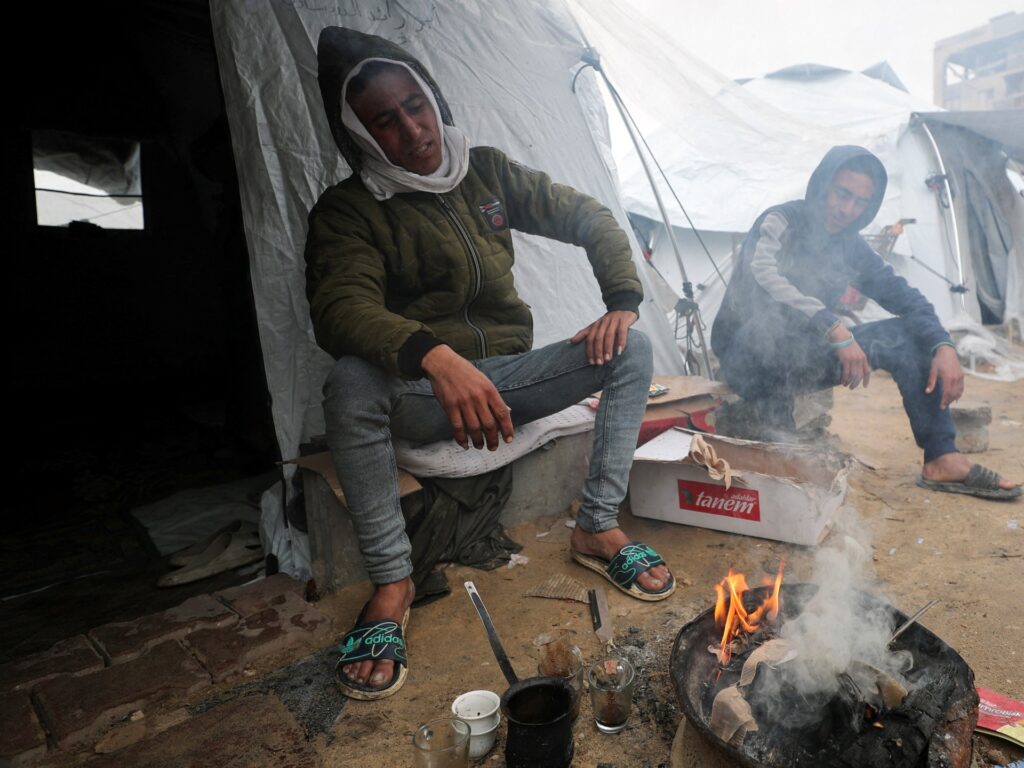
Strong winds, rain and winter are adding to the suffering of thousands of Palestinians in Gaza, with thousands of families living in worn-out tents after their homes were destroyed in Israel’s bombardment of the coastal enclave. Hundreds of thousands of Palestinians have returned to northern Gaza since a ceasefire came into effect last month, pausing Israel’s 15-month assault on the territory. But most people found their homes destroyed or heavily damaged. Families have since struggled to find shelter amid mounds of debris and destruction across the besieged enclave. A spokesperson for the Gaza City municipality told Al Jazeera that the city did not have enough resources to help the displaced amid the storm, adding that sewage and rainwater entered hundreds of tents and shelters. Speaking to Al Jazeera from a makeshift encampment in the courtyard of a school in Gaza City, Mahmoud Riyad Khalil al-Fayoumi said he has been living in a tent alongside three other families. “The blankets are very wet,” said al-Fayoumi, explaining that he sent his two-month-old baby and his brother, who has a spinal cord injury, to stay with other people due to the harsh weather conditions. Advertisement “We don’t know what to do. We don’t know where to go. This is our situation here.” Reporting from Gaza City, Al Jazeera’s Hani Mahmoud said heavy rain and wind had forced many Palestinians to leave a makeshift encampment in the western part of the city. Basic supplies such as warm clothing also are not widely available, worsening the situation. “People right now here are not only lacking shelter, but also the very essential supplies that provide them some warmth and protection from these terrible weather conditions,” Mahmoud said. In its latest update on Wednesday, the United Nations humanitarian affairs office (OCHA) said with more than 500,000 people returning to the Gaza and North Gaza governorates, “the need for food, water, tents and shelter materials in that area remains critical”. Despite increased deliveries of humanitarian aid since the ceasefire took hold on January 19, shelter assistance has been limited. Earlier this week, the Gaza Government Media Office accused Israel of restricting the flow of aid and shelters into the territory. “Securing shelters has become an urgent humanitarian need that cannot be delayed. It is the most pressing need at this moment,” it said in a statement earlier this week. Tess Ingram, a communications manager at UNICEF, the UN’s child rights agency, said Palestinians in Gaza are ill-equipped to withstand the cold weather because they have lost so much during the war. The situation is particularly dangerous for children, Ingram told Al Jazeera from Gaza City. Advertisement “For kids in these conditions, it’s not only frightening to be outside, exposed and in the cold, but it’s also very dangerous for their wellbeing,” she said. “We’ve had a number of children in Gaza die of hypothermia and it’s clear here when you meet with families that they don’t have what they need to protect them from that cold. Families are lacking warm clothes for their children. There’s many children without shoes.” Displaced Palestinians also continue to face harsh conditions in other parts of Gaza, as well. “The tent flew away and the people were in disarray,” Saqer Abdelal told Al Jazeera from Deir el-Balah in the central part of the enclave. “We’re now transporting our belongings to a man who agreed to host us until the winter ends.” “This is more difficult to us than displacement,” said Anwar Hellis, another Palestinian in Deir el-Balah. “We woke up at night and found our tents destroyed due to the wind. Our clothes and food were filled with sand.” In southern Gaza, the Rafah municipality has called for 40,000 additional tents and emergency shelter units for residents. The city is still hosting thousands of displaced people whose homes have been destroyed in other areas. The municipality also said it does not have enough heavy machinery, which is hindering the reopening of roads and the clearing of rubble. Adblock test (Why?)
Could Trump’s tariffs upend the world’s economic order?
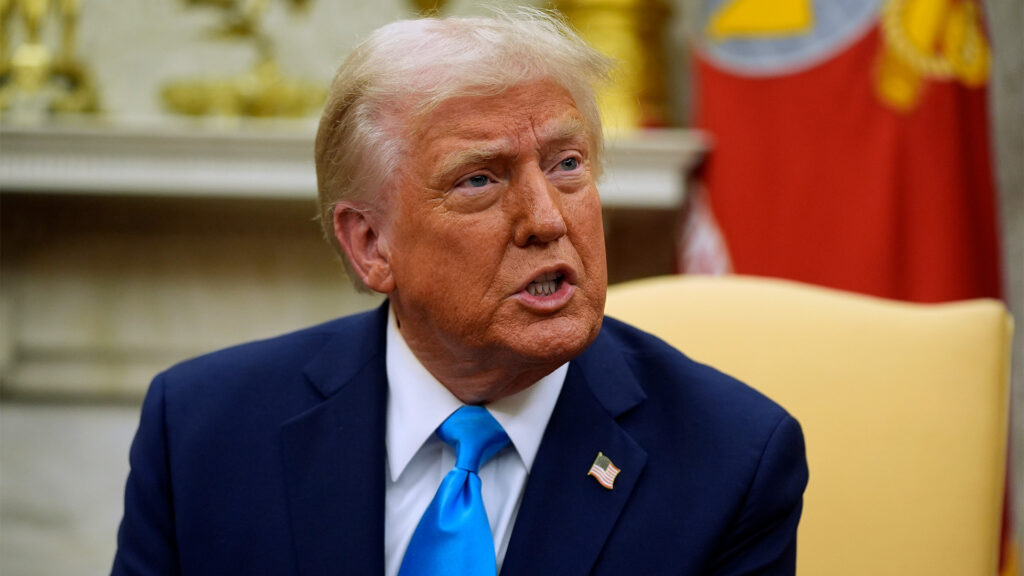
US President Donald Trump’s tariffs against Mexico and Canada are on hold for now, but the trade dispute with China rumbles on. United States President Donald Trump has delayed imposing tariffs on his closest trading allies for a month after Canada and Mexico gave him guarantees on border security and fentanyl trafficking. Trump’s supporters say his strategy to leverage the US economy to force concessions from other nations has notched a win. China has hit back against Trump’s additional tariffs with its own measures due to take effect on Monday. That could give the world’s two largest economies some time to step back from an escalating trade dispute. India bets on its middle class to revive the economy. Plus, is China winning the AI race? Adblock test (Why?)
Palestinians react with fury, resignation to Trump’s Gaza displacement plan
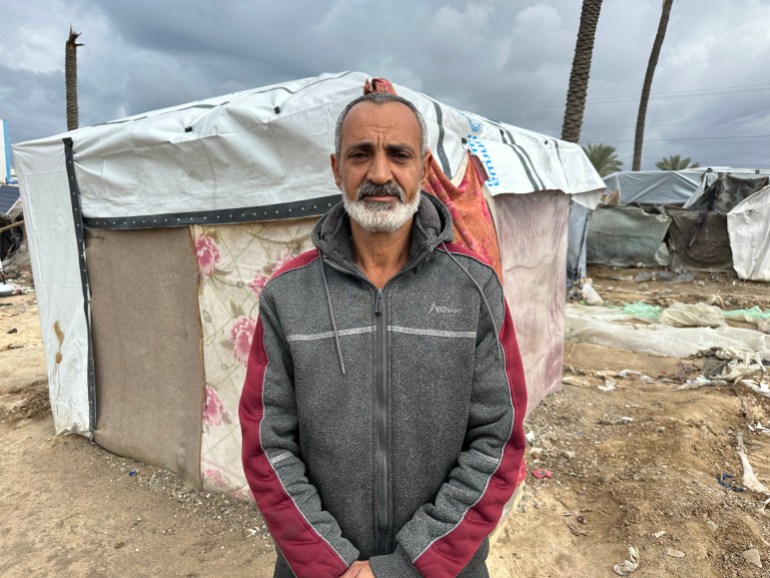
Deir el-Balah, Gaza Strip, Palestine – Wasayef Abed woke up on Wednesday to murmurs among her fellow displaced Palestinians in central Gaza’s Deir el-Balah. The discussion was centred on United States President Donald Trump and his announcement that the US would “take over” Gaza. In Trump’s comments, made as he stood next to Israeli Prime Minister Benjamin Netanyahu – the man responsible for the decision to devastate Gaza in Israel’s war – the US president even said that Palestinians should move from the enclave permanently. Some of his officials, including Secretary of State Marco Rubio, suggested on Wednesday that any departure would be temporary, although Trump’s language evoked both 19th-century colonialism and the spectre of ethnic cleansing. The 36-year-old Wasayef’s reaction is one of indifference. “I didn’t pay much attention,” she said as she made her way to check on her rain-soaked tent. “I don’t even own a mobile phone or any means of following the news,” she added indifferently, her tired face betraying her exhaustion. Advertisement “What I do know is that my mother and I will never leave Gaza, no matter what happens. All we are waiting for now is a way to return to our destroyed home in the north.” Wasayef sees Trump’s statements as a form of pressure – on both the Palestinian people and armed groups in Gaza, including Hamas. “I can tell you that people here will never accept forced displacement,” she said. They can endure internal displacement, but forcing them out of their country, as Trump suggests, will never work.” Imad al-Qassas [Atia Darwish/Al Jazeera] ‘It will never happen’ Imad al-Qassas, a 60-year-old father of six, has been displaced from eastern Deir el-Balah to its centre, where he now lives in a tent after his home was destroyed. His response to Trump’s statements was clear: “That’s impossible.” “No matter how much destruction, devastation and killing we’ve endured during this war, this will never happen,” he added. “Where would we even go?” he asked. “Even if the border crossings were opened and voluntary migration was offered, I would never leave, no matter how difficult my situation is.” Imad believes that no matter the temptations of resettlement – whether houses, compensation, or host countries – a person’s ultimate refuge is their homeland. “I lived in Sudan for four years and in Libya for six years in the 1990s. I was born in the United Arab Emirates. But in the end, I returned home,” he said firmly. “No matter what calamities befall us in Gaza, this is our homeland, and we hold it sacred.” “Life outside Gaza, even under normal circumstances, is not as easy for all people around the world. Residency permits, renewals, documents – there’s always a distinction between refugees and residents,” he explained. “Now imagine our situation: displaced, rejected and forced out of Gaza. We would undoubtedly be humiliated and treated in the worst way possible.” “I would rather die where I stand. Even if they cut me and my children into pieces, I will not leave.” Advertisement Tears streamed down Imad’s face as he questioned what the world wants from Palestinians in Gaza. “We are an educated and cultured people. We have the right to live on our land and see it rebuilt. We have merchants, doctors, journalists, engineers – we have lives. Why are we being forced to leave?” Like many displaced Palestinians, Imad sees Trump’s remarks as part of “a broader effort to pressure the population”, especially amid discussions on prisoner exchanges and reconstruction efforts. “I am willing to wait 100 years for the reconstruction if I have to. I will never leave, no matter what.” At the same time, Imad still blamed Hamas, the Palestinian Authority, and neighbouring countries for failing to end the war at any cost. “This was all planned long ago. The US and Israel have been plotting this for years. All parties should have shut this plan down from the start because it’s the people who are paying the price.” Iman and Khaled Maqbel [Atia Darwish/Al Jazeera] ‘We no longer care’ Unlike Imad, Khaled Maqbel, 63, and his wife Iman, 52, showed no reaction when asked about Trump’s statements. “God willing, he will be taken away,” 52-year-old Iman Maqbel muttered, turning her face away. “Since two of my daughters and two of my grandchildren were killed in an Israeli air strike during the war, I have stopped caring about anything,” she added, tears welling in her eyes. Iman fled from the as-Saftawi neighbourhood in northern Gaza to Deir el-Balah with her husband, 63-year-old Khaled, and their remaining children a year ago, enduring displacement five times since then. Advertisement “We have no energy left to process anything – Trump or his statements,” said Khaled. “The people of Gaza are drowning in grief, sickness and hardship after the war. They don’t even have the capacity to think about what comes next.” The couple strongly rejected Trump’s displacement plan. “We already regret leaving the north, even though we were forced out at gunpoint. Do they really think we’ll obey Trump now?” Iman recalled how, during the war, many displaced people around her spoke of leaving Gaza if given the chance. “But that was only out of sheer desperation,” she said. “Despite everything, people in Gaza are still clinging to life on this land, even as the entire world fights against us for reasons we can’t understand,” she adds. “Even if they offered me mansions, millions, and luxurious homes, I wouldn’t leave Gaza – nor would my sons.” When asked about the timing of Trump’s statements, Khaled erupted in anger. “Timing? What timing? We are barely waking up from this war!” he said. “People are still pulling their loved ones’ bodies from the rubble. They are still cleaning their homes of debris, searching for any sign of life.” “This world has lost all sense of humanity.” Mahmoud Abu Ouda [Atia Darwish/Al Jazeera] ‘I will leave the first chance I get’ In contrast, 23-year-old Mahmoud Abu Ouda, who runs a
Guatemala agrees to increase number of US deportation flights it accepts
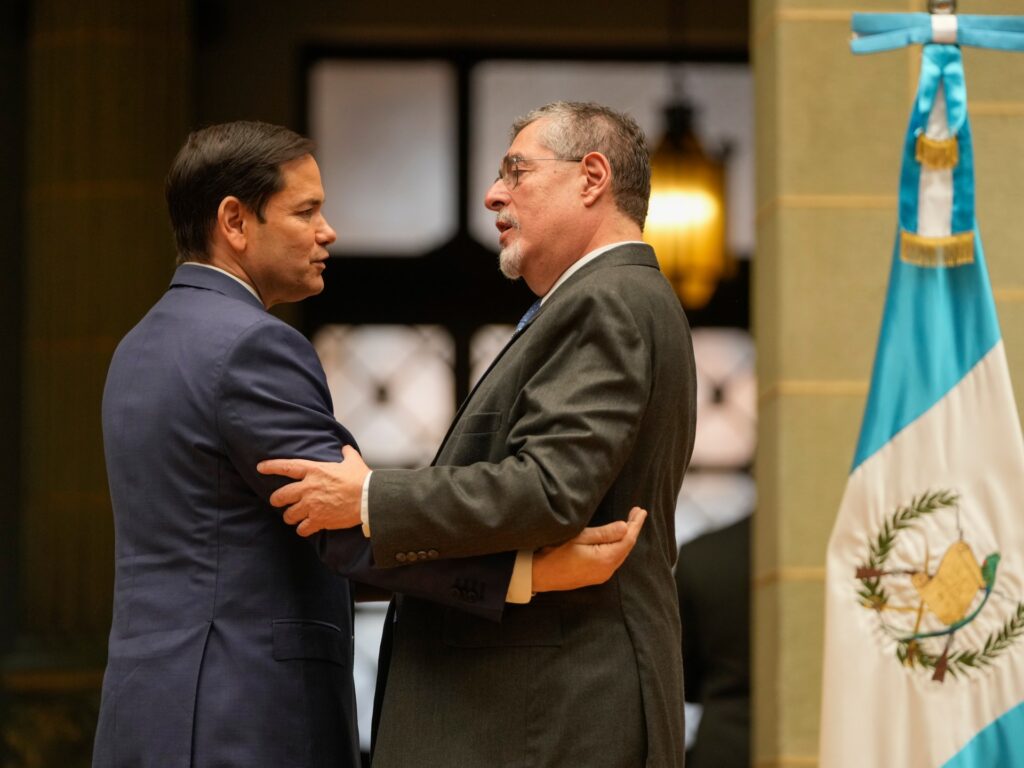
In 2024, roughly 66,000 people were deported from the US to Guatemala. Under Trump, that number is expected to rise. The Central American country of Guatemala has agreed to ramp up the number of deportation flights it receives from the United States, after a visit from Secretary of State Marco Rubio. At a news conference on Wednesday, Guatemalan President Bernardo Arevalo also announced that his country would accept non-citizens sent from the US. “We have agreed to increase by 40 percent the number of flights of deportees both of our nationality as well as deportees from other nationalities,” said Arevalo, who appeared jointly with Rubio. This is not the first time Guatemala has accepted deportation flights from the US: It did so under the previous administration of US President Joe Biden as well. But Trump, the current president, has campaigned heavily on stamping out irregular migration to the US, and since taking office on January 20, he has pressured countries around the region to join his efforts. A Guatemalan official, speaking under condition of anonymity, told the news agency Reuters that, under Biden, the Central American country received about 14 deportation flights per day. Advertisement It is unclear how much that might increase under Trump. But Reuters noted that the nearly 66,000 Guatemalans deported from the US in fiscal year 2024 was more than any single year during Trump’s first term, from 2017 to 2021. Rubio visited Guatemala as part of his first trip as the US’s top diplomat. He has been travelling the region to curry support for Trump’s anti-immigration push, passing through Panama, El Salvador and Costa Rica before reaching Guatemala. He is set to travel to the Dominican Republic next. But while in Guatemala, he praised Arevalo for accepting non-citizens into Guatemala’s borders. Prior to taking office, the Trump transition team had grappled with where to place non-citizens detained as part of immigration raids. Certain countries, like Venezuela and Cuba, have refused to participate in US deportation flights. In December, for instance, news reports emerged that Trump planned to approach Caribbean countries, including the Bahamas, Grenada and Turks and Caicos, to accept migrants from other countries. But the leadership of the island nations refused. “The Bahamas simply does not have the resources to accommodate such a request,” Bahamian Prime Minister Philip Davis said at the time. On Wednesday, Rubio indicated the US would offer financial support to Guatemala so it could return non-citizens to their home countries. He also praised Arevalo, saying the deportation-flight deal was “very important for us in terms of the migratory situation we’re facing”. Advertisement “His willingness to accept not just nationals but those from other nationalities as they seek to ultimately return to their own homelands is also important, and we’ve pledged our support with those efforts,” Rubio said. President Arevalo, for his part, indicated that the question of accepting migrants with criminal records was not discussed. A day before, the president of El Salvador, Nayib Bukele, offered to jail any violent offenders the US sends his way — whether they be migrants or US citizens. However, even officials in the Trump administration have expressed scepticism about the legality of that offer. Rubio publicly thanked Bukele for his offer but acknowledged the legal barriers. “We have a Constitution,” he said of the US. Nevertheless, the US on Tuesday began sending undocumented immigrants to its military base in Guantanamo Bay, Cuba, the site of a detention centre criticised for alleged human rights abuses. An estimated 11 million undocumented people live in the US as of 2022, many serving vital roles in their communities. Adblock test (Why?)
Trump signs order to bar trans women and girls from female sports
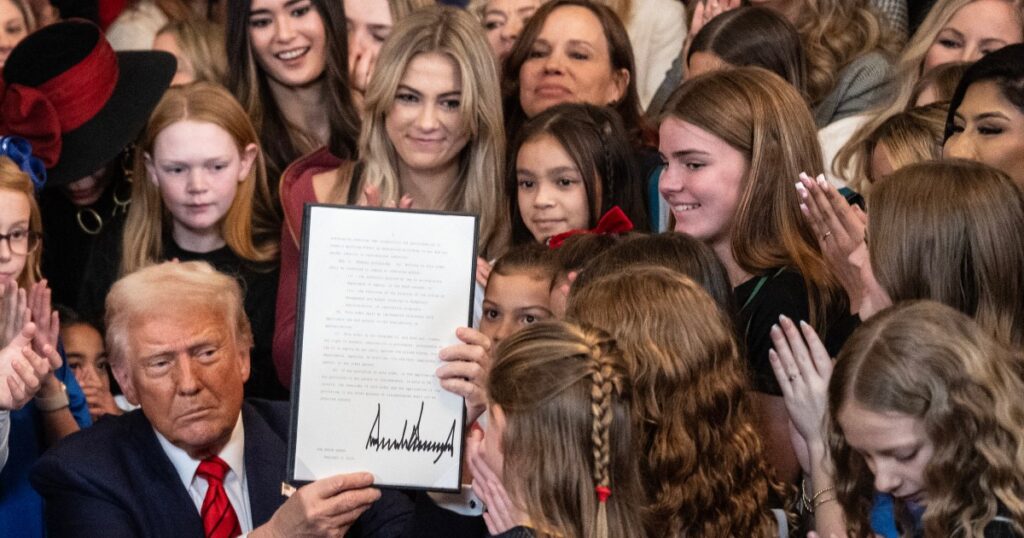
United States President Donald Trump has signed an executive order to bar transgender athletes from competing in girls’ and women’s sports. Under the order signed on Wednesday, federal government funding will be denied to educational institutes that allow trans girls and women to participate in female sports and use female locker rooms. The order also directs government agencies to promote sex-based female sports categories at international organisations and convene representatives of major athletic organisations and governing bodies to promote “policies that are fair and safe, in the best interests of female athletes”. “We are putting every school receiving taxpayer dollars on notice: If you let men take over women’s sports teams or invade your locker rooms, you will be investigated for violations of Title IX and risk your federal funding,” Trump said, referring to a 1972 law that bars sex discrimination in education. Declaring an end to “the war on women’s sport”, Trump said his administration would not “stand by and watch men beat and batter female athletes”. Advertisement “We’re just not going to let it happen, and it’s going to end, and it’s ending right now and no nobody is going to be able to do a damn thing about it because when I speak, we speak with authority.” Trump also said he would push the International Olympic Committee, which has left the issue of trans people’s participation in sport to international governing bodies, to explicitly endorse sex-based participation before the 2028 Summer Olympics in Los Angeles. “We want them to change everything having to do with the Olympics and having to do with this absolutely ridiculous subject,” the US president said. Trans women’s participation in sport has been a lightning rod in the US culture wars in recent years, though the number of athletes involved is small. National Collegiate Athletics Association (NCAA) president, Charlie Baker, told a US Senate panel in December that he knew of fewer than 10 trans people competing among the 520,000 athletes at colleges nationwide. Opinion polls have suggested growing public opposition to trans women competing amid high-profile controversies involving athletes, such as college swimmer Lia Thomas, who won the NCAA Division I national championship in 2022 before being barred from women’s events by World Aquatics. In a 2023 Gallup poll, 69 percent of Americans said trans athletes should only be allowed to compete on sports teams that align with their sex, a seven-point rise compared with 2021. Baker, NCAA president, welcomed Trump’s order for setting a “clear, national standard”. Advertisement “We strongly believe that clear, consistent, and uniform eligibility standards would best serve today’s student-athletes instead of a patchwork of conflicting state laws and court decisions,” Baker said in a statement. “The NCAA Board of Governors is reviewing the executive order and will take necessary steps to align NCAA policy in the coming days, subject to further guidance from the administration,” he added. “The Association will continue to help foster welcoming environments on campuses for all student-athletes.” Athlete Ally, an LGBTQ advocacy group, said it was saddened that trans youth would “no longer be able to know the joy of playing sports as their full and authentic selves.” “We’ve known this day was likely to occur for a long time, as this administration continues to pursue simple solutions to complex issues, often resulting in animus towards the most marginalized communities in our country,” the group said in a statement. “Despite this executive order, we will continue to choose love, acceptance and curiosity with anyone interested in creating a future of sports where everyone belongs. We will continue to work with sporting bodies to expand access to the life-saving power of sports whenever and wherever possible.” GLADD, one of the biggest LGBTQ rights organisations in the US, condemned Trump’s order as “inaccurate and incoherent”. “All women and girls, including transgender women and girls, should be welcome to play sports if they want, make decisions about their own bodies, be hired for jobs they are qualified for, and be free from lawless attacks by extremists in elected office,” the group said in a statement. Advertisement “Anti-LGBTQ politicians with a record of abusing and silencing women and stripping their health care have zero credibility in any conversation about protecting women and girls.” Trump has signed four executive orders directed at trans people since his January 20 inauguration, including a proclamation to only recognise two sexes, a ban on trans people from serving openly in the military, and an order defunding gender transitions for people under age 19. Adblock test (Why?)
Palestinians in Gaza react to Trump’s takeover plan
[unable to retrieve full-text content] We asked Palestinians in Gaza for their response to US President Donald Trump’s controversial plan.
Trump announces plan for US takeover of Gaza
[unable to retrieve full-text content] President Donald Trump says he wants the US to ‘take over’ and ‘own’ Gaza to redevelop the territory.
Sweden school shooting: What we know about the victims and attacker
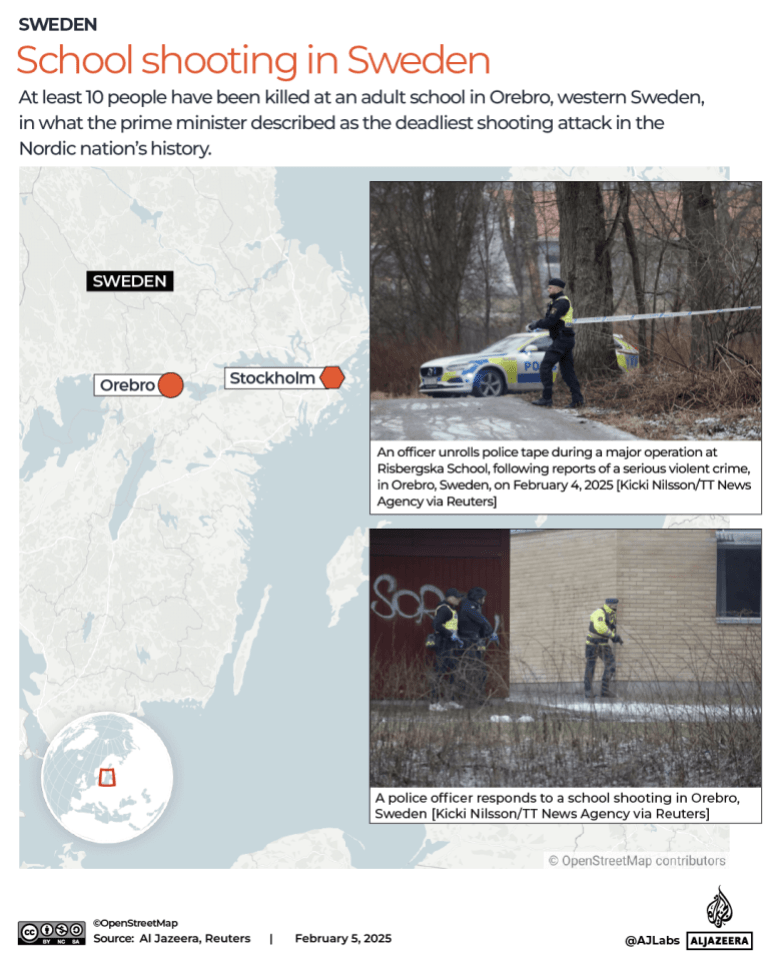
A shooting on Tuesday at an adult education campus in central Sweden killed at least 11 people, including the attacker, the police said on Wednesday. Here is what we know so far: What happened and when? A shooting took place in an adult school in the city of Orebro at 12:33pm local time (11:33 GMT) on Tuesday and the police initially reported that five people were killed. Shots were fired in quick succession, witnesses say and videos show. Teachers inside the school said that when they heard the gunshots, they fled classrooms or barricaded themselves inside. Maria Pegado, 54, a teacher at the school, told Reuters: “I took all my 15 students out into the hallway and we started running. Then I heard two shots but we made it out. We were close to the school entrance. I saw people dragging injured out, first one, then another. I realised it was very serious.” Where was the shooting? The shooting took place at Campus Risbergska in Orebro city, 200km (124 miles) west of the Swedish capital Stockholm. (Al Jazeera) What is Risbergska School for adults? The school is for people over 20 years of age who were unable to complete their formal education or who did not receive the grades they needed for higher education. Schools such as Risbergska are known as “Komvux” in Swedish. Advertisement The school caters for about 2,000 students and also offers vocational training and Swedish language classes. What do we know about the attacker? Swedish police say the suspected attacker – a man – was dead when they found him. Orebro police chief Roberto Eid Forest told a news conference on Wednesday that “there is a lot to indicate that” the suspect had turned the gun on himself. The police said the motive for the shooting is as yet unclear and under investigation, but they believe he was acting alone. The attacker was unknown to police before the shooting, and the police said they did not find links between him and any gangs or groups. It is unclear if this means that any link to terrorism has been ruled out. Swedish public service television company Sveriges Television (SVT) said, without citing sources, that the man lived in Orebro and had a hunting licence. The broadcaster added that he was using a hunting weapon. Swedish daily tabloid Aftonbladet reported that the man was 35 years old. The outlet reported that relatives said he was a recluse who had withdrawn from family and friends. What do we know about the victims? Authorities confirmed on Wednesday that 11 people, including the attacker, were killed. Authorities have not confirmed the number of people injured yet, and the police have warned that the death toll could rise, according to SVT. The police told the Wednesday news conference that six people had been taken to the local university hospital, five of whom had gunshot wounds. Two people remain in intensive care. Advertisement “We do not have a complete picture at this time regarding the number of injured,” police spokesperson Fredrik Svedemyr was quoted by Anadolu news agency as saying. “Since we also do not have any information about the injury situation for those being treated in hospital, there is unfortunately a risk that the number will not stop at 11,” said Svedemyr. What are the reactions? Sweden’s King Carl XVI Gustaf said in a statement on Tuesday that he had received the news of the shooting with “sadness and dismay”. All flags of government buildings and royal palaces were flying at half-staff on Wednesday. This was announced in media releases from the government, royal family and parliament speaker. Swedish Prime Minister Ulf Kristersson wrote on X on Tuesday: “It is a very painful day for all of Sweden. Being locked in a classroom, fearing for your life, is a nightmare that no one should have to experience.” European Commission President Ursula von der Leyen wrote in an X post: “Such violence and terror have no place in our societies – least of all in schools. In this dark hour, we stand with the people of Sweden.” What happened today in Örebro is truly horrifying. Such violence and terror have no place in our societies—least of all in schools. In this dark hour, we stand with the people of Sweden. Our thoughts are with the victims, and we wish them strength and a swift recovery. https://t.co/Z8XaHDfZBy — Ursula von der Leyen (@vonderleyen) February 4, 2025 16-year-old Linn, a pupil who attends school near the site of the shooting told AFP: “I was standing there, watching what was happening, and I was just around here when I saw some bodies lying on the ground. I don’t know if they were dead or injured.” Liv Demir, 36, whose son attends a school nearby, and also takes gym classes at Campus Risbergska, told AFP: “I became numb, speechless. I didn’t really know where to go.” Advertisement How rare are shootings in Sweden? Shootings in Sweden used to be rare. PM Kristersson told reporters that the attack was “the worst mass shooting in Swedish history”. However, Sweden has seen a rise in shootings and bombings associated with gang violence. There were 296 shootings in Sweden in 2024, which resulted in the deaths of 44 people and injuries to 66 people, police data shows. The record for the highest number of shootings was in 2022 when 391 shootings took place across Sweden. Some 62 people died and 107 were injured during that year. There have also been some recent incidents of violence at schools in Sweden. In March 2022, a student, 18, stabbed and killed two teachers in Sweden’s city of Malmo. In October 2015, a man stabbed a teacher and student to death in a school with a high number of immigrants in the industrial city of Trollhattan. The man, identified by Swedish media as 21-year-old Anton Lundin Pettersson, was reported to have far-right sympathies and was shot dead by police. Adblock test (Why?)