

Donald Trump announces US aims to ‘take over’ Gaza during Netanyahu’s visit
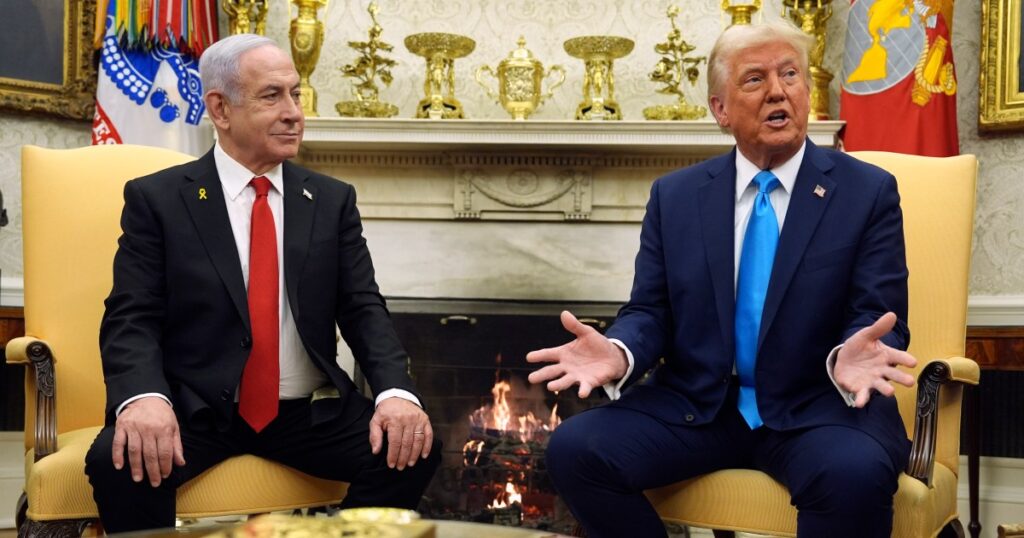
United States President Donald Trump has welcomed Israeli Prime Minister Benjamin Netanyahu to the White House, marking the first visit of a foreign leader during his second term. But Tuesday’s meeting was steeped in controversy as Trump repeatedly weighed in on the future of war-torn Gaza — and whether Palestinians should return to live in the enclave. “Gaza is a guarantee that they’re going to end up dying. The same thing is going to happen again,” Trump said. “It’s happened over and over again. And it’s going to happen again.” “So I hope we can do something where they wouldn’t want to go back. Who would want to go back? They’ve experienced nothing but death and destruction.” Trump also suggested that the US aims to “take over” a depopulated Gaza, shaping its landscape for years to come. “ I do see a long-term ownership position, and I see it bringing great stability to that part of the Middle East and maybe the entire Middle East,” Trump said. “This was not a decision made lightly. Everybody I’ve spoken to loves the idea of the United States owning that piece of land, developing and creating thousands of jobs.” Advertisement A fragile ceasefire recently paused hostilities in Gaza where, for the past 15 months, Israel has led a devastating military campaign that has killed an estimated 61,700 Palestinians. United Nations experts and human rights advocates have compared the military campaign with a genocide. But the US remains a firm ally of Israel – and of Netanyahu’s government. In remarks after his bilateral meeting with Netanyahu, Trump returned to a vision he had outlined earlier in the day, in which Palestinians would be settled “permanently” in “a beautiful area” outside of Gaza. Such comments have spurred fears that Trump would support the ethnic cleansing of Gaza, and nearby countries like Egypt and Jordan have repeatedly rejected the prospect of absorbing Gaza’s population. “I think Jordan and Egypt – they say they’re not going to accept, but I say they will. But I think other countries will accept also,” Trump said. A close ally Tuesday’s bilateral meeting was set against a period of regional turmoil in the Middle East. Recent ceasefires have slowed hostilities in Lebanon and Gaza. A new government has risen in Syria. And there are growing tensions between Iran and Israel. Before arriving in the US on Sunday, Netanyahu underscored the symbolism of being the first foreign head of state to visit Trump since the president’s second inauguration on January 20. “I think it’s a testimony to the strength of the Israeli-American alliance,” Netanyahu said in a statement. The two countries indicated that a range of topics would be on the table for discussion, including the ceasefire agreements, the future of Gaza and efforts to normalise relations between Israel and its Arab neighbours. Advertisement In the lead-up to Tuesday’s meeting, Trump also signed a series of executive orders and directives, some of which pertained to goals he shares with Netanyahu. One announced the return of his “maximum pressure” campaign against Iran. Another saw the US withdraw from the United Nations Human Rights Council and UNRWA, the relief agency for Palestinian refugees. Netanyahu’s government has accused UNRWA of involvement in the attack on southern Israel on October 7, 2023, without offering proof to substantiate the claim. The Israeli leader’s visit was greeted by protesters calling for a “free, free, free Palestine”. Some activists denounced his invitation to the White House as an honour bestowed on a “war criminal”: In November, the International Criminal Court in The Hague issued an arrest warrant for Netanyahu on charges of crimes against humanity and war crimes. Still, Trump reaffirmed his commitment to Netanyahu at Tuesday’s news conference. “The bonds of friendship and affection between the American and Israeli people have endured for generations, and they are absolutely unbreakable,” Trump said. Netanyahu responded with praise of his own: “You are the greatest friend Israel has ever had in the White House.” Ceasefire in Gaza The tenuous ceasefire in Gaza was a central part of the two leaders’ latest meeting. Trump has repeatedly taken credit for the ceasefire deal, which came into effect on January 19, the day before he took office. He blamed the foreign policy of his predecessor Joe Biden for allowing the war in Gaza to begin in the first place. Advertisement “Nobody did anything for four years except in the negative,” Trump said at one point, referring to Biden’s term in office. “Unfortunately, the weakness and incompetence of those past four years [caused] the grave damage around the globe.” Still, Trump has cast doubt on the strength of the ceasefire and whether it would last. “The strikes could start tomorrow,” Trump said on Tuesday. “There’s not a lot left to strike.” The initial 42-day truce, which will see the release of 33 Israeli captives and nearly 2,000 Palestinian prisoners, expires on March 1. On Tuesday, a spokesperson for the Palestinian group Hamas said that negotiations for a second phase of the ceasefire have begun. If agreed to, that phase would see the full withdrawal of Israeli troops from Gaza and the freeing of all captives. But Trump lashed out at the group in his remarks, praising Israel’s efforts to cut off resources to Gaza. “We starved Hamas and Iran’s other terrorist proxies, and we starved them like they had never seen before. Resources and support disappeared for them,” Trump said. US to ‘take over’ Gaza? The president also renewed his call for a mass displacement of Palestinians in Gaza, despite human rights experts warning that it would amount to ethnic cleansing. “ It’s been an unlucky place for a long time,” Trump said of Gaza. “ And it should not go through a process of rebuilding and occupation by the same people that have really stood there and fought for it and lived there and died there and lived a miserable existence there.” Advertisement He added that Palestinians would “love to leave” if given an alternative. “They
Trump says US will ‘own’ Gaza in redevelopment plan

United States President Donald Trump has said the US will “take over” and “own” Gaza after resettling Palestinians elsewhere under a redevelopment plan that could see the enclave become “the Riviera of the Middle East”. In a shock announcement upending decades of US policy toward the Israeli-Palestinian conflict, Trump said on Tuesday that his administration would spearhead an economic development plan in the enclave that would “supply unlimited numbers of jobs and housing for the people of the area.” “The US will take over the Gaza Strip and we will do a job with it, too. We’ll own it,” Trump said at the White on Tuesday after talks with Israeli Prime Minister Benjamin Netanyahu, adding that Washington would be responsible for clearing destroyed buildings and dismantling “dangerous unexploded bombs and other weapons.” Trump said he envisioned the US taking a “long-term ownership position” over the enclave. “This was not a decision made lightly. Everybody I’ve spoken to loves the idea of the United States owning that piece of land, developing and creating thousands of jobs with something that will be magnificent,” he said. Advertisement Trump expressed his hope that displaced Palestinians in Gaza would “go to other countries of interest with humanitarian hearts”, though he suggested Palestinians would also continue leaving there. The US president said Gaza could become home to the “world’s people”. “I think you will make that into an international, unbelievable place. I think the potential in the Gaza Strip is unbelievable. And I think the entire world – representatives from all over the world will be now – Palestinians also, Palestinians will live there,” he said. “Many people will live there.” “The U.S. will take over the Gaza Strip, and we will do a job with it, too.” –President Donald J. Trump pic.twitter.com/aCqLl9Gwwn — President Donald J. Trump (@POTUS) February 5, 2025 Asked if US soldiers could be sent to Gaza to maintain security, Trump said it was a possibility. “As far as Gaza is concerned, we’ll do what is necessary. If it’s necessary, we’ll do that,” he said. Netanyahu, who praised Trump as the “greatest friend” Israel has ever had, said the US president’s plan was worth “paying attention to” and could “change history”. Trump’s proposals drew swift condemnation from Palestinian activists. “He’s essentially saying that, officially US policy now is the destruction of Palestinian society, the scattering of Palestinians to neighboring countries, and on top of that for US to come and own Palestinian territory indefinitely,” political analysts Omar Baddar told Al Jazeera. “I don’t know what planet we are living on where these statements are coming out of the president of the United States.” Advertisement Abed Ayoub, executive director at the American-Arab Anti-Discrimination Committee (ADC), described Trump’s proposal as “terrifying” and “insane.” “It would go against all norms and international law. This isn’t something that would be permitted to happen,” Ayoub told Al Jazeera. “But at this point, you’ve got to ask yourself if you look at the past year and a half: how much does the international community, including Israel, really care about international law and norms?” Ahmed Fouad Alkhatib, a Palestinian-American who is a resident senior fellow at the Atlantic Council, said that Gaza was not a “real estate development project for the United States government to own or take over.” “Gaza belongs to the Palestinian people. Distracting from the need to initiate political transformation to ensure that Hamas doesn’t remain in control is unnecessary and harmful,” Alkhatib said on X. Democratic lawmakers also cast doubt on Trump’s proposal. “I have news for you – we aren’t taking over Gaza. But the media and the chattering class will focus on it for a few days and Trump will have succeeded in distracting everyone from the real story – the billionaires seizing government to steal from regular people,” Chris Murphy, a Democratic Senator for Connecticut, said on X. Trump’s extraordinary proposal is all but certain to roil the next round negotiations to extend the fragile ceasefire between Israel and Hamas. Trump has repeatedly taken credit for the ceasefire deal, which came into effect on January 19, the day before he took office. Advertisement He blamed the foreign policy of his predecessor Joe Biden for allowing the war in Gaza to begin in the first place. “Nobody did anything for four years except in the negative,” Trump said at one point during his news conference, referring to Biden’s term in office. “Unfortunately, the weakness and incompetence of those past four years [caused] the grave damage around the globe.” Still, Trump has cast doubt on the strength of the ceasefire and whether it would last. “The strikes could start tomorrow,” Trump said on Tuesday. “There’s not a lot left to strike.” The initial 42-day truce, which will see the release of 33 Israeli captives and nearly 2,000 Palestinian prisoners, expires on March 1. On Tuesday, a spokesperson for the Palestinian group Hamas said that negotiations for a second phase of the ceasefire had begun. If agreed to, that phase would see the full withdrawal of Israeli troops from Gaza and the freeing of all captives. But Trump lashed out at the group in his remarks, praising Israel’s efforts to cut off resources to Gaza. Adblock test (Why?)
Trump doubles down on US “ownership” of Gaza
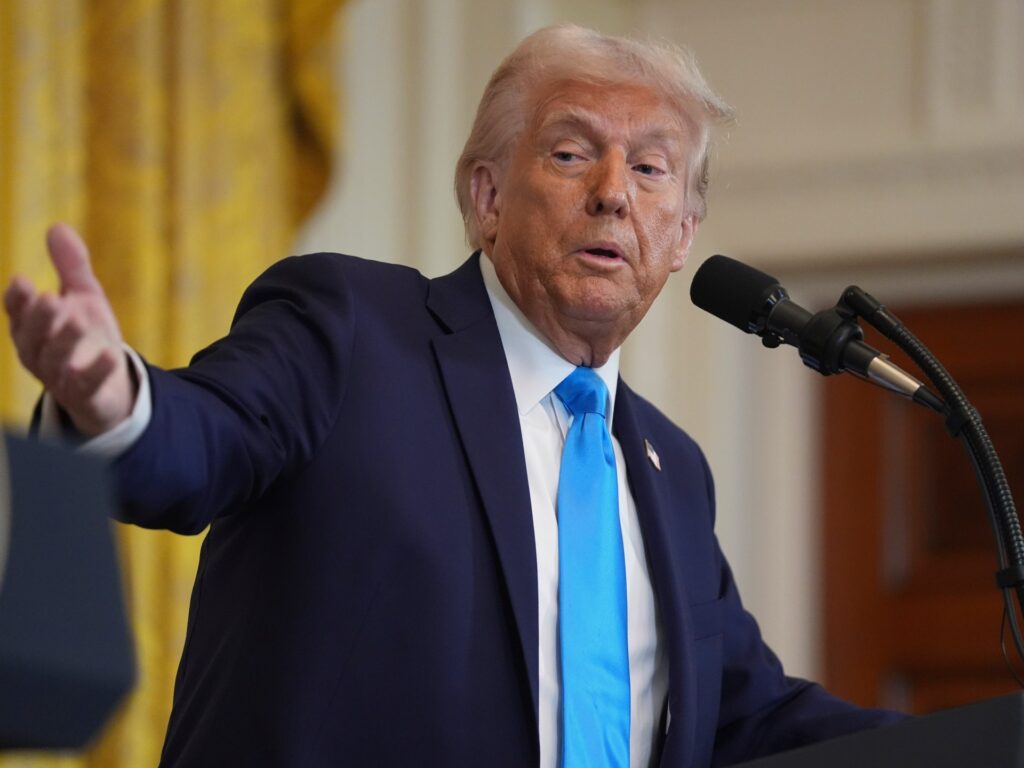
NewsFeed In a press conference with Israeli Prime Minister Benjamin Netanyahu, US President Donald Trump doubled down on remarks about the United States owning and redeveloping Gaza. “It’s something that could change history,” Netanyahu added. Published On 5 Feb 20255 Feb 2025 Adblock test (Why?)
Hidden Strength: South Sudan | Africa’s New Directions

Informal sector business owners and vendors are the backbone of South Sudan’s economy. South Sudan is the world’s youngest nation. Despite its rich cultural diversity and natural resources, the country faces immense challenges, including economic instability and governance issues exacerbated by continuing conflicts. The informal sector, a lifeline for many South Sudanese, plays a critical role in sustaining the nation’s fragile economy. Hidden Strength unveils the stories of resilience within the informal economy of Juba. Through expert interviews and local business owners, the film demonstrates how honest livelihoods can be forged even in the face of seemingly insurmountable challenges. Adblock test (Why?)
Thousands of displaced Sudanese return to Gezira state, post-RSF

NewsFeed Thousands of people are returning home to Wad Madani in Sudan for the first time since the Sudanese army regained control of the Gezira state capital in January. But many are finding their homes looted and damaged after a year under RSF control. Published On 4 Feb 20254 Feb 2025 Adblock test (Why?)
Is this the death of the English major?

We’re examining the global decline in demand for English degrees as students increasingly turn to STEM fields, fearing an English degree won’t lead to high-paying jobs. Is an English degree simply about analysing rhyme schemes and bragging about reading Ulysses? We speak with students and recruitment managers to uncover the causes and effects of this academic trend. Do employers prioritise communication skills, or do they value technical expertise more? And does avoiding the humanities at university really guarantee a high-paying job? Adblock test (Why?)
Gaza authorities plead for tents, accuse Israel of obstructing aid
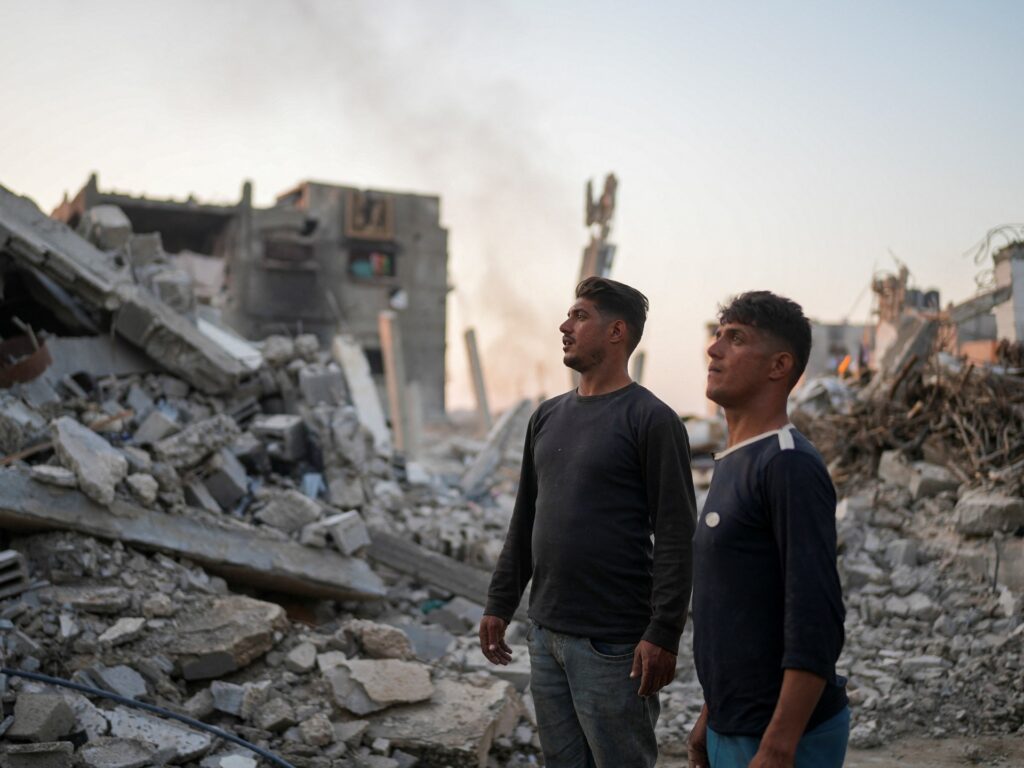
Government Media Office says securing temporary shelters is the ‘most pressing’ humanitarian need in Gaza. Local authorities in the Gaza Strip have called on donors and aid groups to prioritise sending tents and temporary shelters to help house people whose homes have been destroyed by Israel. The Gaza Government Media Office said on Monday that thousands of Palestinian families across the enclave are sleeping out in the open amid the frigid temperatures. “Securing shelters has become an urgent humanitarian need that cannot be delayed. It is the most pressing need at this moment,” the office said in a statement. It urged the Jordan Hashemite Charity Organisation, which has been helping coordinate aid to Palestinians, to include tents alongside food and other humanitarian supplies in the coming assistance shipments. Hundreds of thousands of Palestinians have returned to the north of the territory after the truce reached between Israel and Hamas last month. But many found that their homes have been turned to rubble as Israel levelled entire neighbourhoods in Gaza City and northern towns like Jabalia and Beit Hanoon. Advertisement The Government Media Office later accused Israel of restricting the flow of aid and shelters to the territory in violation of the ceasefire deal that went into effect on January 19. It said the agreement stipulates that 60,000 trailers and 200,000 tents must enter Gaza to help house Palestinians rendered homeless by Israeli bombing. According to the office, the deal also requires Israel to allow equipment to help clear the rubble to reach Gaza. “But the Israeli occupation is putting obstacles and delaying the execution of the agreement, escalating the humanitarian crisis and the suffering of civilians in the Gaza Strip,” it said. “This will have dangerous and unprecedented implications.” Later on Tuesday, World Food Programme official Antoine Renard said there had been a surge in aid to Gaza but suggested that some Israeli restrictions remained, including on items deemed to be “dual use” for civilian and military purposes. “This is a reminder to you that many of the items that are dual use need also to enter into Gaza like medical and also tents,” Renard was quoted as saying by the Reuters news agency. United States President Donald Trump has been calling for displacing the entire population of Gaza, citing the widespread destruction in the territory. Trump’s proposal, which critics say would amount to ethnic cleansing, has been forcefully rejected by Arab states. The US president is set to host Israeli Prime Minister Benjamin Netanyahu at the White House on Tuesday. The meeting would come amid concerns over the durability of the ceasefire. Advertisement The initial 42-day truce, which will see the release of 33 Israeli captives and nearly 2,000 Palestinian prisoners, expires on March 1. The second stage, which would see the full withdrawal of Israeli troops from Gaza and the freeing of all captives, has not been finalised. On Monday, Trump – who has repeatedly taken credit for helping broker the deal – said he has “no assurances” that the fighting will not resume. “I’ve seen people brutalised. Nobody has ever seen anything like it. No, I have no guarantees that the peace is going to hold,” he told reporters at the White House. Ofer Cassif, a member of the Israeli parliament and a vocal critic of Israel’s abuses against Palestinians, said it was “terrifying” that talks over the second stage have not begun. “I’ve been saying since day one that Netanyahu and the thugs around him in the coalition and the government are not really interested in a ceasefire or saving the Israeli hostages – let alone saving the lives of thousands of Palestinians,” he told Al Jazeera from West Jerusalem. Israel has killed nearly 62,000 Palestinians, including thousands who are missing and presumed dead, during the war that started in October 2023. Adblock test (Why?)
‘We will not stand idly’: Rights groups file suit against Trump asylum ban

Washington, DC – Several immigrant rights groups in the United States, as well as the American Civil Liberties Union (ACLU), have filed a lawsuit challenging President Donald Trump’s ban on asylum claims. The case is the latest attempt to oppose Trump’s hardline immigration policies, which have targeted people already inside of the country as well as those seeking safety from abroad. Like other lawsuits ongoing against the Trump administration, Monday’s complaint contends that the president overstepped his constitutional authority and violated existing law. Currently, it is legal for asylum seekers to cross into the US if they are fleeing persecution. “This is an unprecedented power grab that will put countless lives in danger,” Lee Gallant, the deputy director of the ACLU’s Immigrants’ Rights Project, said in a statement. “No president has the authority to unilaterally override the protections Congress has afforded those fleeing danger.” The complaint cites domestic legislation and international treaty obligations that require the US government to allow individuals to apply for asylum. That includes the Immigration and Nationality Act (INA). Advertisement “Via the Immigration and Nationality Act, Congress has created a comprehensive statutory system allowing noncitizens fleeing persecution or torture to seek protection in the United States,” the lawsuit reads. “Under the Proclamation, the government is doing just what Congress by statute decreed that the United States must not do. It is returning asylum seekers — not just single adults, but families too — to countries where they face persecution or torture.” A day-one proclamation Monday’s complaint takes direct aim at one of the proclamations Trump signed on the first day of his second term. Shortly after his inauguration on January 20, Trump unveiled a document entitled, “Guaranteeing the States Protection Against Invasion”. In it, he declared that undocumented immigrants “are restricted from invoking provisions of the INA that would permit their continued presence in the United States”. The Republican leader cited risks to “national security” as well as the possibility of “communicable disease” as his rationale. He also argued that the southern border of the US had been “overwhelmed” with entries. “I therefore direct that entry into the United States of such aliens be suspended until I issue a finding that the invasion at the southern border has ceased,” Trump wrote. The Republican leader had long campaigned on a hardline approach to immigration, including the idea of sealing the border to asylum seekers. His 2024 re-election bid was defined by the same firebrand rhetoric, including nativist assertions that the US was being overrun by a migrant “invasion”. Advertisement Trump repeatedly blamed undocumented people for the country’s woes, from violent crime to unemployment. A backlash But groups like the ACLU have sought to push back against Trump’s policies, using the court system to question their legal merits. In Monday’s case, the lawsuit argues that Trump’s proclamation not only contradicts US law but also its obligations under international treaties. The US, for example, ratified the 1967 Protocol relating to the Status of Refugees, a treaty that establishes protections for refugees. In a statement on Monday, Jennifer Babaie, the director of advocacy and legal services at the Las Americas Immigrant Advocacy Center in Texas, said the lawsuit shows that she and others “will not stand idly by as our immigration laws are manipulated”. “Regardless of any person’s individual beliefs on immigration, any government attempt to blatantly violate our laws is a serious issue impacting all communities across the country,” Babaie said. The Texas-based group is one of four named plaintiffs in the lawsuit, along with the Texas Civil Rights Project, the Refugee and Immigrant Center for Education and Legal Service (RAICES) and the Florence Immigrant and Refugee Rights Project. Wave of legal challenges But the immigration actions Trump has taken in the first weeks of his second term extend beyond seeking asylum. Even in the first hours of his presidency, Trump signed several executive actions designed to limit immigration and expel undocumented people already in the US. Advertisement Trump increased immigration enforcement activities, surged troops to the US border, suspended the US refugee programme for 90 days, and cancelled an online application used by asylum seekers to schedule US immigration appointments. Some asylum seekers had been waiting for months for the appointments they booked on the app, known as CBP One. The app’s removal nullified their scheduled meetings, leaving them in limbo. In the aftermath, rights groups launched a legal challenge questioning the dissolution of CBP One. Other legal challenges seek to oppose Trump’s expansion of “expedited removal” processes, which would quickly expel undocumented individuals from the country. And others have sought to overturn a stop-work order that halted funding for legal services for immigrants being held in detention. Meanwhile, advocacy groups and various state governments have lodged at least five lawsuits against Trump’s executive order seeking to end birthright citizenship in the US. A federal judge in January quickly blocked Trump’s order, calling it “blatantly unconstitutional”. Adblock test (Why?)
Petro vs Trump: The diplomatic standoff that could shape Colombia’s future
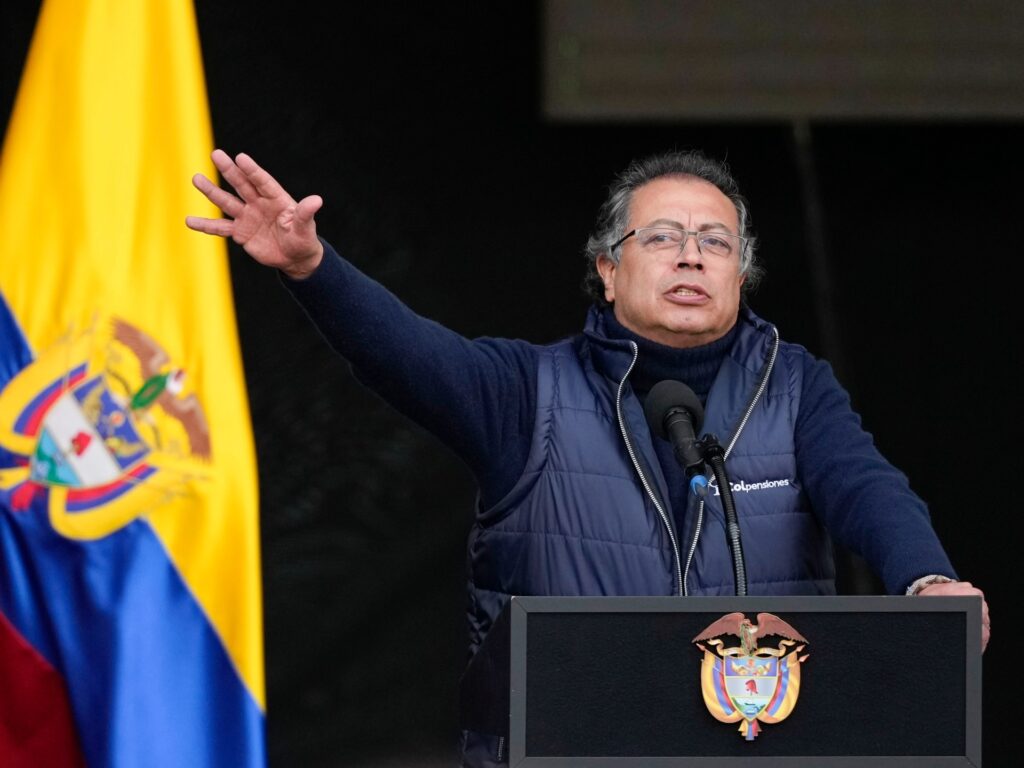
This is not the first time the Petro administration has found itself in troubled waters, though. His presidency has been punctuated by high-profile political crises, both domestically and internationally. For example, his outreach to Venezuela and Cuba as mediators in Colombia’s peace process has fuelled scepticism among more conservative sectors. Meanwhile, his ambitious domestic agenda, including sweeping reforms to healthcare, pension and labour, has struggled to gain traction amid legislative roadblocks and opposition resistance. His government has also faced recurring instability through a series of cabinet changes and internal disputes. Corruption allegations surrounding Petro’s son and the financing of his 2022 presidential campaign have further eroded confidence. Nevertheless, for some of Petro’s supporters, his recent clash with Trump symbolised his defiant stance against US pressure and his commitment to protecting Colombian dignity. His base — comprised of progressive voters, human rights advocates and sectors disillusioned with Washington’s interventionist approach — sees resistance to Trump’s hardline policies as an assertion of national sovereignty. “I thought that what he did was good,” said Robinson Duarte, an economist who voted for Petro in 2022. “It hasn’t distanced me from him. I support him.” Trump’s threat of tariffs and sanctions, though averted for now, has raised concerns about potential economic repercussions. This could hurt Petro-aligned candidates in 2026, especially if economic anxieties persist. Yet, experts say Petro’s resilience in political crises should not be underestimated. His ability to turn moments of confrontation into populist rallying points has been a defining feature of his career. If he manages to frame the Trump spat as a stand against foreign aggression, he could strengthen his coalition ahead of the 2026 election. “He has also managed to position himself as a person with the capacity to tell [the US] that this is an autonomous country, we have dignity and we have to understand each other within the framework of international law,” Duarte said. “Just because it’s Trump or the most influential person in the world, we are not going to bow down to the US’s way of doing politics.” Adblock test (Why?)
As Germany braces for election, backing the far-right AfD no longer a taboo

Berlin, Germany – For Susanne, a nursery teacher in Berlin, there is no contest. She has decided to cast her vote for the hard-right populist party, the Alternative for Deutschland (AfD), or Alternative for Germany, on February 23 in the country’s snap federal elections. The election follows the collapse of Chancellor Olaf Scholz’s three-party government in November. The ruling coalition, known as the traffic light alliance, consisted of Scholz’s centre-left Social Democratic Party (SPD), the Greens, and the pro-business Free Democratic Party (FDP). Falling out of favour with the Christian Democratic Union (CDU) for its pro-vaccine position since the COVID-19 pandemic, Susanne, in her 50s who requested Al Jazeera withhold her surname, said the AfD is the “only party doing something different on the issues that determine our everyday lives”. Eva Mueller, a 50-year-old mother of two who works as a careers coach in the German capital, also plans to back the AfD. “I live in a part of Berlin where around 80 percent of the population has a migration background, and I have no problem with it,” she said. Advertisement “But the migration policy is not effective and the way the AfD is presented, as completely hating foreigners and wanting to expel them all, is just not the case. What is the case is that they are worried about integration not being possible if there is an excess.” Several AfD party chapters have been officially labelled as “right-wing extremists” by intelligence authorities since its inception in 2013. But last week in Germany’s parliament, the Bundestag, a taboo was broken. CDU leader Friedrich Merz – tipped to become Germany’s new chancellor – proposed a motion on tougher migration rules, known as the five-point plan, that passed with the backing of the AfD. While the draft law was ultimately rejected by the Bundestag on January 31, Merz’s decision to break ranks and work with the AfD cut through a longstanding firewall created by the country’s main political parties that blocked cooperation with the far right. Amid widespread public and political condemnation, the move drew thousands of protesters to the CDU headquarters in Berlin. Former Chancellor Angela Merkel and Scholz accused Merz of committing an “unforgivable mistake”. Meanwhile, Germany is still reeling from two deadly attacks within a matter of weeks of each other – most recently on January 22 in Bavaria when seven people were killed by men who had sought asylum in the country. Voter dissatisfaction with mainstream political parties for the war in Ukraine and the rising cost of living, analysts say, is also high. Advertisement ‘The party could attract more voters’ Recent polls indicate the AfD is likely to secure second place in the election, with 21 percent of the vote – 10 points behind the CDU and its sister party, the Christian Social Union (CSU). Analysts say the AfD – once considered a political outlier – is set for the biggest electoral gains in its 12-year history. Oliviero Angeli, a political scientist at the Technical University in Dresden, tells Al Jazeera that the recent tensions in parliament will likely boost the far right in terms of the party’s legitimacy and visibility. “What is remarkable at the moment is the firewall that was built over the last years against the AfD is now starting to break down. It was already breaking down on communal and regional levels, but last week shows that it’s now breaking down on a national level,” Angeli said. “Until recently, voting for the AfD could be considered a wasted vote because you could expect other parties not to cooperate with them. But now, people’s views may change and the party could attract more voters.” Further adding to the AfD’s perceived strength, tech billionaire Elon Musk – recently appointed by United States President Donald Trump to lead his administration’s Department of Government Efficiency – has waded heavily into the election with a series of interventions. He hosted a livestreamed interview on the X platform he owns with AfD chief Alice Wiedel. On January 25, he appeared via videolink at a party meeting; two days before Holocaust Remembrance Day, he told the delegates to move past Nazi-era guilt. Advertisement “It’s good to be proud of German culture, German values, and not to lose that in some sort of multiculturalism that dilutes everything,” he told a cheering crowd. But Jakub Guhl, a senior manager within the Digital Research Unit at the Institute for Strategic Dialogue in London, told Al Jazeera that he is not convinced of Musk’s influence. He acknowledged though, a “completely unprecedented dynamic” as a leading social media platform with powers to shape public discourse is “clearly throwing its weight behind one political party, and one that’s particularly controversial”. ‘Remigration’ Earlier in its election campaign, the AfD touted a “remigration” policy – a nationalist term used to describe sending people to their home nations. Other key parts of its manifesto, announced last month to a crowd of more than 600 delegates in the AfD stronghold state of Saxony, included the reintroduction of the Deutsche Mark as Germany’s national currency, a rejection of green transition policies, and education reforms linked to gender studies programmes. Analysts said while the party is unlikely to win, its position on heated subjects such as migration will politically shake Europe’s largest economy – possibly leading to turbulence across the continent. “They have an increasing influence on public opinion, and as we have seen last week, on politics, with other political parties moving more to the right,” says Angeli. “You won’t necessarily be considered an outlier any more, certainly in parts of the east, if you are between 18 to 24 years old and vote AfD,” added Guhl. “It’s also doing quite well among working-class voters who are concerned about the economy, and people who think we’re spending too much money on people coming in externally, and support for a war in Ukraine that they are likely to have been against in the first place.” Advertisement Back in Berlin, AfD supporter