

China’s DeepSeek causes rout among AI-linked stocks

Wall Street’s superstars are tumbling as a competitor from China threatens to upend the artificial-intelligence frenzy that has created a spending bonanza. The S&P 500 was down 1.7 percent in midday trading on Monday and heading for its worst day in more than a month. Big Tech stocks took some of the heaviest losses with Nvidia down 14.4 percent, and they dragged the Nasdaq composite down 2.8 percent. Stocks outside AI-related industries held up much better, though, and the Dow Jones Industrial Average was down just 54 points, or 0.1 percent, as of 11:05 am in New York (16:05 GMT). The Dow, whose companies have much less of an emphasis on tech than the S&P 500 and Nasdaq, had briefly been on track for a small gain earlier in the morning. The shock to financial markets came from China, where a company called DeepSeek said it had developed a large language model that can compete with United States giants at a fraction of the cost. DeepSeek’s app had already hit the top of Apple’s App Store chart by Monday morning, and analysts said such a feat would be particularly impressive given how the US government has restricted Chinese access to top AI chips. Advertisement Marc Andreessen, a Silicon Valley venture capitalist, said in a post on X on Sunday that DeepSeek’s R1 model was AI’s “Sputnik moment”, referencing the Soviet Union’s launch of a satellite that marked the start of the space race with the US in the late 1950s. “DeepSeek R1 is one of the most amazing and impressive breakthroughs I’ve ever seen — and as open source, a profound gift to the world,” he said in a separate post. Scepticism, though, remains about how much DeepSeek’s announcement will ultimately shake the AI supply chain from the chipmakers making semiconductors to the utilities hoping to electrify vast data centres gobbling up computing power. “It remains to be seen if DeepSeek found a way to work around these chip restrictions rules and what chips they ultimately used as there will be many sceptics around this issue, given the information is coming from China,” according to Dan Ives, an analyst with Wedbush Securities. DeepSeek’s announcement nevertheless rocked stock markets worldwide. In Amsterdam, Dutch chip supplier ASML slid 6.6 percent. In Tokyo, Japan’s Softbank Group Corp lost 8.3 percent to pull closer to where it was before leaping on an announcement trumpeted by the White House that it was joining a partnership to invest up to $500bn in AI infrastructure. And on Wall Street, shares of Constellation Energy sank 19 percent. The company has said it would restart the shuttered Three Mile Island nuclear power plant to supply power for data centres for Microsoft. Advertisement All the worries sent investors towards bonds, which can be safer investments than any stock. ‘Magnificent seven’ It’s a sharp turnaround for the one-time AI winners, whose stocks had soared in recent years on hopes that all the investment pouring in would remake the global economy and deliver gargantuan profits along the way. Before Monday’s drop, Nvidia’s stock, for instance, had soared from less than $20 to more than $140 in less than two years. Other Big Tech companies had also joined in the frenzy, and their stock prices had benefitted too. It was just on Friday that Meta Platforms CEO Mark Zuckerberg was saying he expected to invest up to $65bn this year while talking up a datacentre Meta is building in Louisiana that is so large it would cover a significant part of Manhattan. A small group of such companies has become so dominant that they’ve come to be known as the “Magnificent Seven”. These companies — Alphabet, Amazon, Apple, Meta Platforms, Microsoft, Nvidia and Tesla — alone accounted for more than half of the S&P 500’s total return last year, according to S&P Dow Jones Indices. Their immense sizes in turn have also given them huge sway over the S&P 500 and other indexes that give more weight to bigger companies. It shows the risk of betting too much on just a few winning stocks, something that market experts call “concentration risk”. That “can feel good when those few names or ideas are on the ascent, but it is even more dangerous when disruptions take place”, said Brian Jacobsen, chief economist at Annex Wealth Management. Advertisement Still, he suggested not overreacting to Monday’s sharp swings. “It is possible that the news out of China could be overstated, and then we could see a reversal of the recent market moves,” Jacobsen said. “It is also possible that the news is true, but then that would present new investment opportunities.” Adblock test (Why?)
Palestinians condemn Trump’s proposal to ‘clean out’ Gaza
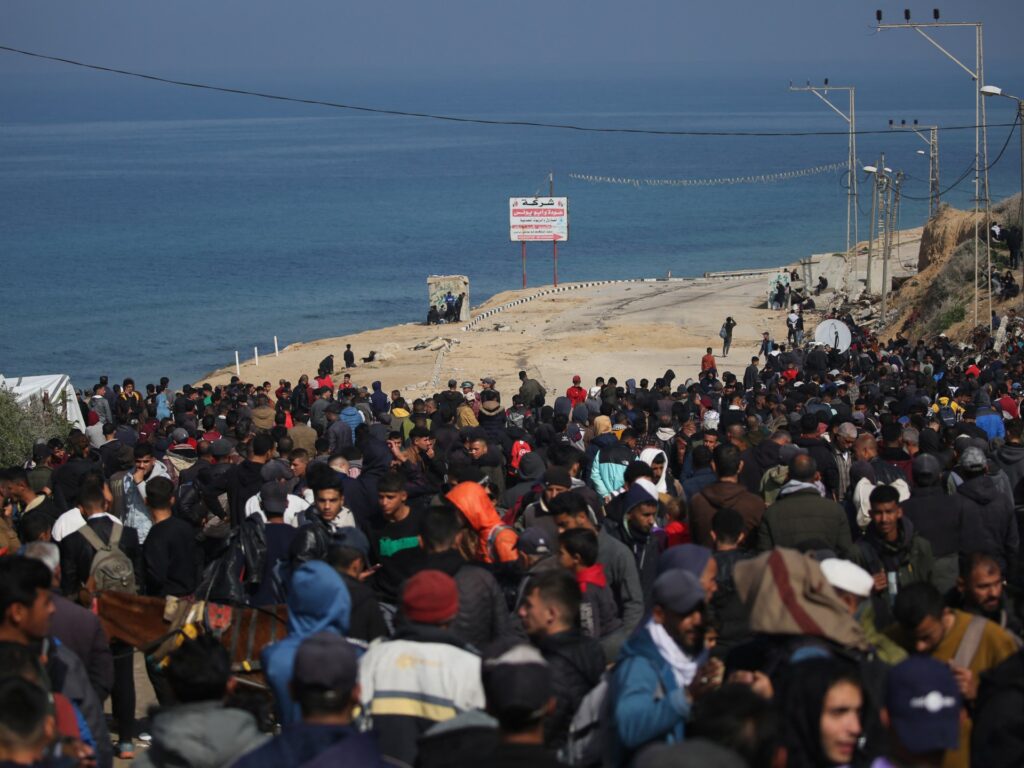
Palestinians have roundly condemned United States President Donald Trump’s proposal for them to be displaced from the Gaza Strip and sent to Egypt and Jordan – a suggestion that has raised concerns of ethnic cleansing. Trump on Saturday told reporters that it was time to “clean out” the besieged Gaza Strip, urging the leaders of Jordan and Egypt to take in Palestinians from Gaza, either temporarily or permanently. The proposal was roundly rejected by Palestinians on Sunday, with the Ramallah-based Palestinian Authority (PA) saying the proposal would violate its “red lines”, while Gaza residents insisted they would remain in the coastal enclave. “It’s impossible for people to accept this,” Palestinian citizen Nafiz Halawa told Al Jazeera from Nuseirat in central Gaza. “The weak might leave because of the suffering they have endured, but the idea of us leaving our country … it’s absolutely impossible.” Elham al-Shabli also rejected the idea. “If we wanted to leave, we would have done that a long time ago. The genocidal war they are waging will achieve nothing against the Palestinians and we will remain despite what happens,” she said. Advertisement The PA said in a statement that the plan “constitutes a blatant violation of the red lines we have consistently warned against”. “We emphasise that the Palestinian people will never abandon their land or their holy sites, and we will not allow the repetition of the catastrophes (Nakba) of 1948 and 1967. Our people will remain steadfast and will not leave their homeland,” it said. It urged Trump to sustain the Gaza ceasefire agreement, ensure full withdrawal of Israeli forces, establish the PA as the governing body in the enclave, and advance efforts towards the creation of a sovereign Palestinian state. Hamas, the Palestinian group that governs Gaza, said the US administration must abandon such proposals that align with Israeli “schemes” and conflict with the rights of the Palestinian people, who have already been resisting “the most heinous acts of genocide” and displacement since Israel launched its war on Gaza in October 2023. The Palestinian Islamic Jihad (PIJ), which has been fighting alongside Hamas in Gaza for over 15 months, called Trump’s comments an encouragement of “war crimes”. Jordan’s Foreign Minister Ayman Safadi said the country’s “rejection of displacement is fixed and unchangeable” and that Amman will look forward to working with the Trump administration in advancing efforts toward recognition of a sovereign Palestinian state. Trump’s comments also appeared to catch senior Republican Senator Lindsey Graham, who said during an interview with US outlet CNN that he does not view the idea “as being overly practical” and believes that Arab countries in the region would reject it. Advertisement Israel prevents return to northern Gaza Trump’s comments come a week after a truce deal between Israel and Hamas in Gaza took effect, with two rounds of captives-for-prisoners exchanges completed. But thousands of Palestinians waited at roadblocks on Sunday to return to their homes in northern Gaza as Israel refused to open crossing points after it accused Hamas of breaching the ceasefire agreement. Israel said it would open the crossing points after Israeli civilian captive Arbel Yehud, who is held by the PIJ in Gaza, is released. It says that under the truce deal, civilian captives were to be freed before soldiers. The PIJ told Al Jazeera on Sunday that Yehud will be released before Saturday in exchange for 30 Palestinian prisoners. PIJ Deputy Secretary-General Mohammed al-Hindi also said his group is “waiting for a practical response” from the mediators on how Palestinians will be allowed to go back to their homes in north Gaza. Al Jazeera’s Hani Mahmoud, reporting from a crossing point on Gaza’s al-Rasheed Street, said there were “no tents” to provide shelter for the displaced people. “There is no place for them here; there are no tents. Most people are staying here because they dismantled their tents, as they thought after the four Israeli captives were released, they would be able to cross into the northern part of the Strip, as agreed,” he said. “But it looks like they’ll have to sleep here again tonight.” Adblock test (Why?)
What can keep the Gaza ceasefire deal on track?
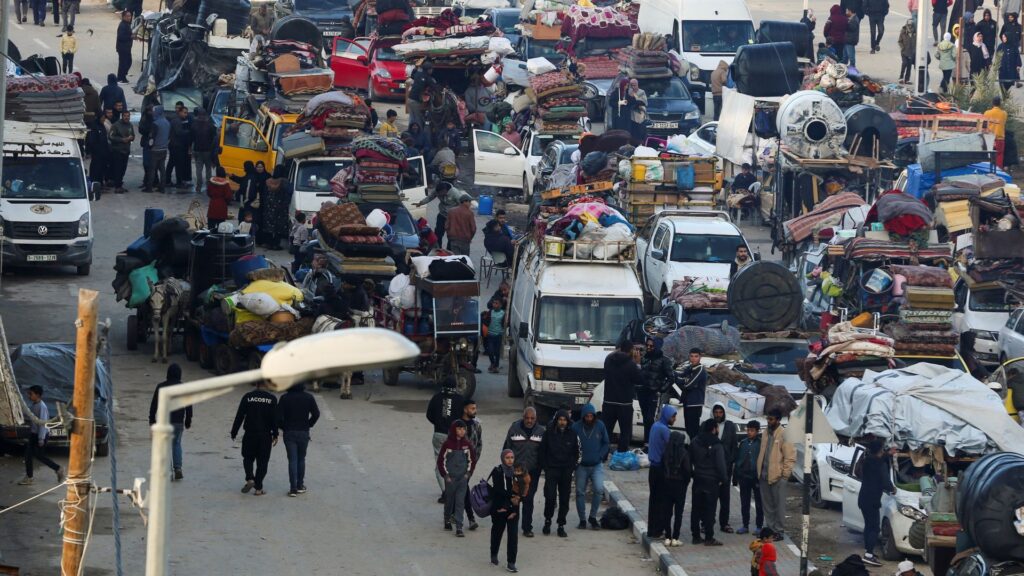
Israeli army blocks northern Gaza crossing points after prisoner-captive exchanges. Rare scenes of joy among Palestinians and Israelis after 15 months of genocide in Gaza. Prisoners are exchanged for captives – but Israeli soldiers stop Palestinians from returning to northern Gaza. What lies ahead? Presenter: Adrian Finighan Guests: Diana Buttu – Palestinian lawyer Ori Goldberg – Israeli political commentator Tahani Mustafa – senior analyst on Palestine at the International Crisis Group Adblock test (Why?)
CIA says ‘more likely’ COVID-19 escaped from a lab
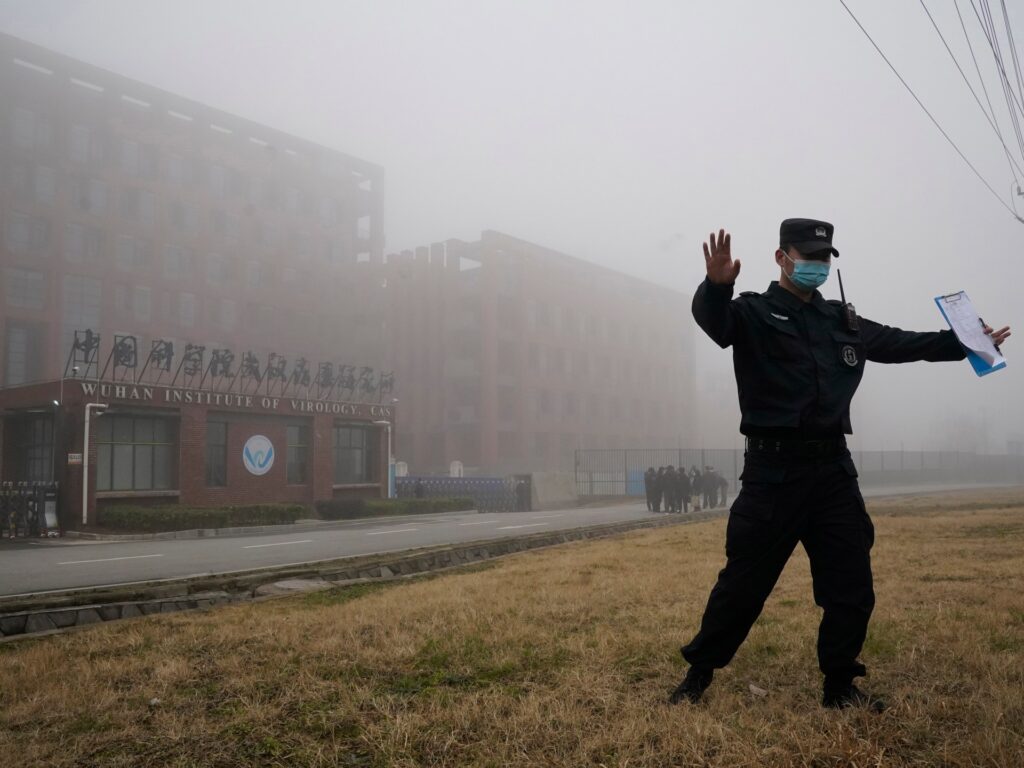
The intelligence agency says it has ‘low confidence’ in the assessment and will continue to evaluate credible information. The CIA has announced that it believes the COVID-19 pandemic “more likely” originated from a laboratory leak than a natural event. The CIA’s “low confidence” assessment comes after John Ratcliffe was on Thursday sworn in as director of the top intelligence agency under United States President Donald Trump. The “CIA continues to assess that both research-related and natural origin scenarios of the COVID-19 pandemic remain plausible”, a spokesperson said on Saturday. “We have low confidence in this judgement and will continue to evaluate any available credible new intelligence reporting or open-source information that could change CIA’s assessment.” US media reported that the assessment had been ordered under the administration of former US President Joe Biden and was completed before Ratcliffe took up his post. The assessment was also based on existing intelligence, not new information, according to the reports. Following the CIA’s announcement, three US agencies, including the FBI and the Department of Energy, have now publicly backed the theory that COVID-19 most likely escaped from a lab in Wuhan, China. Advertisement China’s embassy in Washington, DC, rejected the CIA assessment, which it said “concocts misleading conclusions, throws dirty water on China, and engages in framing”. “It is still an old routine of political manipulation of tracing the source and has no credibility. The source of the virus is a complex scientific issue, and scientists and experts should find the answer through rigorous and meticulous scientific research, rather than being judged by politicians,” embassy spokesperson Liu Pengyu said. “We firmly oppose the politicization and stigmatization of the source of the virus, and once again call on everyone to respect science and stay away from conspiracy theories.” Liu added that China “has always adhered to the spirit of science, openness and transparency” and pointed to a 2021 World Health Organization-China joint study that concluded a lab leak was “extremely unlikely”. Four other US intelligence agencies and the National Intelligence Council have stated that they believe the virus most likely emerged via natural transmission. In an interview with Breitbart News on Friday, Ratcliffe had said that COVID’s origins would be a “day-one” priority. “I’ve been on record as you know in saying I think our intelligence, our science, and our common sense all really dictates that the origins of COVID was a leak at the Wuhan Institute of Virology. But the CIA has not made that assessment or at least not made that assessment publicly,” Ratcliffe, who served as director of national intelligence during Trump’s first term, told the outlet. Advertisement “So I’m going to focus on that and look at the intelligence and make sure that the public is aware that the agency is going to get off the sidelines.” Adblock test (Why?)
Israel-Hezbollah ceasefire: Why is Israel still in southern Lebanon?
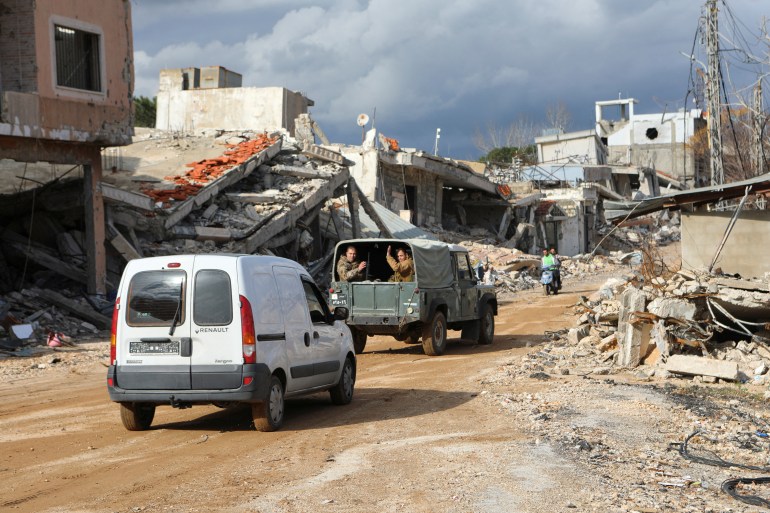
On the day Israeli forces were due to withdraw under a ceasefire deal, Lebanese health officials reported that the Israeli army killed at least 15 people in the south. At least 83 people were also wounded as the Israeli army opened fire when people tried to return to their homes, Lebanon’s Ministry of Public Health said in a statement on Sunday. The killings appear to be another violation of the ceasefire agreement between Israel and Hezbollah and mark the latest in a series of violent attacks that have occurred since it began in November. The ceasefire brought a reduction in the number of daily attacks on Lebanon’s south, Bekaa Valley, and Beirut’s southern suburbs. However, Israeli forces have remained in south Lebanon to conduct demolishing operations in border villages. Here’s a look at the situation in southern Lebanon on the last day of the ceasefire. Lebanese army members gesture as they drive through a damaged site at the Lebanese village of Khiam, near the border with Israel, southern Lebanon, January 23, 2025 [Karamallah Daher/Reuters] What are the terms of the Israel-Hezbollah ceasefire? Under the terms of the Israel-Hezbollah ceasefire, Hezbollah agreed to pull back above the Litani River, which runs across south Lebanon, and Israel was supposed to pull all troops out of Lebanese territory over the 60-day period. Advertisement Once the Israeli military was out, United Nations Interim Force in Lebanon (UNIFIL) were to enter, followed by the Lebanese Armed Forces (LAF). Furthermore, the LAF is supposed to ensure that they are the only Lebanese armed presence in south Lebanon. However, Israeli forces were still in the south on Sunday with both sides firing off blame as to why the terms of the ceasefire have not been followed. Israel’s Prime Minister Benjamin Netanyahu had said in recent days that the Israelis would hold on to certain points in Lebanon’s southeast. Lebanese women hold portraits of slain Hezbollah leader Hassan Nasrallah in Aita al-Shaab [Bilal Hussein/AP] When did the ceasefire expire? Israeli forces were required to withdraw from Lebanon as the ceasefire expired at 02:00 GMT on Sunday. Why is Israel refusing to withdraw from southern Lebanon? A UN source told Al Jazeera on Friday that, while Israeli forces had withdrawn from large parts of the western and central areas of southern Lebanon, field data suggested they were preparing to retain points in the east. Netanyahu blamed Lebanon for the delay, saying Hezbollah has not pulled back sufficiently from the border region. Lebanon denies the claim and has urged Israel to respect the deadline. Israel also justified this by saying the LAF has not been quick enough in deploying to the entirety of the south. The LAF denied those claims, saying they are fully prepared to deploy. UNIFIL, who has previously reported Israeli violations, has called on both sides to obey the terms of the ceasefire. Advertisement The Israeli Yedioth Ahronoth newspaper reported on Friday that Israel was asking US President Donald Trump’s new administration to extend the deadline, claiming the Lebanese army has deployed too slowly to the south and allowed Hezbollah to regroup. How many times has Israel violated the ceasefire agreement since November 27? According to investigations by media organizations and think tanks, Israel has violated the ceasefire agreement hundreds of times. Al Jazeera’s Sanad agency monitored the region and noticed that Israel did not withdraw troops during the period but used the truce to reinforce military positions seized during previous combat operations. Sanad verified more than 30 videos and images of documented ground incursions and aerial attacks by Israel inside Lebanon during the ceasefire. There have been at least 660 incidents, according to Anadolu Agency, while the Washington Institute for Near East Policy, a pro-Israel DC think tank, said Israel has committed at least 800 airspace violations since November 27. The Israeli military also entered new areas it had been unable to penetrate before the ceasefire agreement and demolished numerous civilian homes. Sanad found that 4.5 square km (1.74 square miles) of land, primarily along frontline villages, were subject to demolishing and bulldozing by Israeli forces. At least 90 people in Lebanon were killed by the Israeli military between the ceasefire and early December, according to Lebanon’s Health Ministry. An Israeli soldier sits on top of a tank as it stands by near the Israel-Lebanon border in northern Israel, January 18, 2025 [Avi Ohayon/Reuters] What has Lebanon’s government said? The country’s leaders have called for Israel to respect the terms of the agreement and for citizens to trust in the Lebanese Army. Advertisement Lebanese President Joseph Aoun, who is himself from southern Lebanon, sent a message to the residents of the area urging them to trust the army and to remain calm. “Lebanon’s sovereignty and territorial unity are non-negotiable, and I am following this issue at the highest levels to ensure your rights and dignity,” he said in a statement. These sentiments were echoed by Lebanon’s Prime Minister Nawaf Salam, who said he has full confidence in the LAF to protect Lebanon’s sovereignty and return residents to the south. Parliament Speaker Nabih Berri, also from southern Lebanon, called on the international community to pressure Israel to withdraw from occupied Lebanese territory. Hezbollah has not put out a public statement, but Hassan Fadlallah, a parliamentarian linked to the group, appeared on local television station Al-Jadeed to praise people pushing into their southern villages. Hezbollah has so far not presented a military response. Due to the cutting of its supply lines in Syria with the fall of the al-Assad regime, “Hezbollah’s military capabilities and regional influence have been diminished, leaving it more vulnerable to Israeli demands,” Imad Salamey, a political scientist at the Lebanese American University in Beirut, said. Lebanese Prime Minister-designate Nawaf Salam shakes hands with Lebanese President Joseph Aoun at the presidential palace in Baabda [Reuters] What has been the international reaction? On January 25, French President Emmanuel Macron spoke to his Lebanese counterpart, Joseph Aoun, and stressed the need for Israel to abide by the ceasefire
Tens of thousands of Greeks seek justice for victims of Tempe train crash
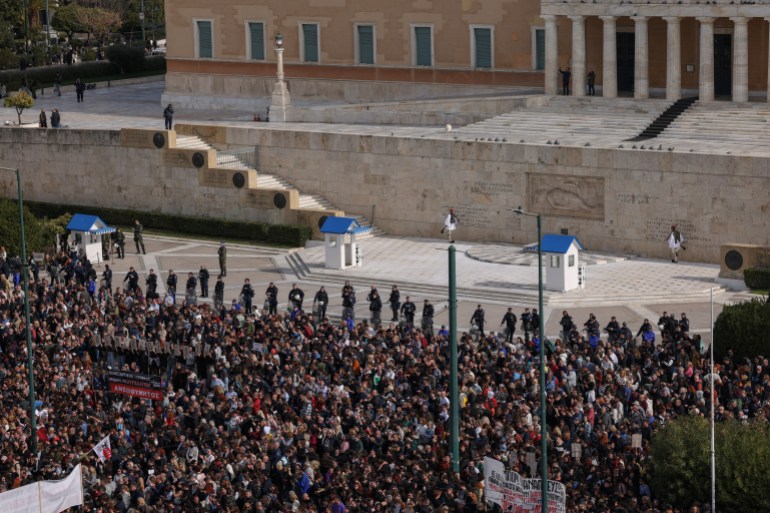
Fifty-seven people were killed when a freight train and a passenger train packed with students collided in February 2023. Tens of thousands of protesters have rallied outside Greece’s parliament in Athens to demand justice for the victims of the country’s worst railway disaster nearly two years ago. Sunday’s demonstration, one of the biggest to be held in the capital in recent years, came days after after local media released an audio recording suggesting that some of the 57 victims might have survived the collision but died in a fire of yet unknown origin that burned for more than an hour following the crash. Protests were also held in dozens of other cities in Greece and abroad, with participants rallying under the “I have no oxygen” slogan, which echoed a woman’s last words in a call to emergency services. Attendees in Athens held banners reading “We won’t forget” while chants of “Murderers, murderers” reverberated around Syntagma Square. A judicial investigation is still in progress over the collision of a freight train and a passenger train packed with students near Tempe, outside the city of Larissa, just before midnight on February 28, 2023. Advertisement The crash, on a line linking Athens with Greece’s second-largest city Thessaloniki, triggered angry protests across the country, where it was seen as the result of widespread neglect of the railways after a decade-long financial crisis. Two years later, the cause of death of many of the victims has not been determined as their families have accused authorities of trying to cover up evidence. “Many thanks to all the Greeks, wherever they are, for their support,” Maria Karystianou – a representative of the association of families of Tempe victims, who lost her 20-year-old daughter in the disaster – told reporters. “Our voice says one thing: no crime will go unpunished, ever again,” she said. “Let the crime at Tempe be the beginning and justice is served, as it should be, because that’s what the entire society wants.” Protesters outside the parliament building, shouting slogans [Stelios Misinas/Reuters] Fire’s cause unclear Ilias Papangelis, who lost his 18-year-old daughter in the crash, told the crowd in Athens: “Two years after the tragedy, no one has been punished, no one is in prison.” According to a report by experts hired by families, the crash led to a huge fireball. It is unclear what caused it. A growing number of experts have ruled out assumptions that electricity cables or oils used in the passenger train caused the fire, raising questions over the freight train’s cargo. The centre-right government, which was re-elected after the crash, has denied the accusations. Its proposal of former parliament speaker Constantine Tassoulas for the Greek presidency last week further angered the relatives, who say that under his watch parliament failed to investigate any political responsibility. Advertisement “We don’t know what caused the explosion, what the [freight] train was carrying,” said Nikos Plakias, who lost his two daughters and a niece in the accident. “We will always have questions … and if we need to reach the European courts, we will,” he added. Brief clashes broke out between riot police and a number of protesters after the largely peaceful demonstration in Athens, with police officers firing tear gas to disperse some in the crowd. Riot police fire tear gas during clashes with a group of protesters in Athens [Alkis Konstantinidis/Reuters] Adblock test (Why?)
Now, it is time to grieve in Gaza
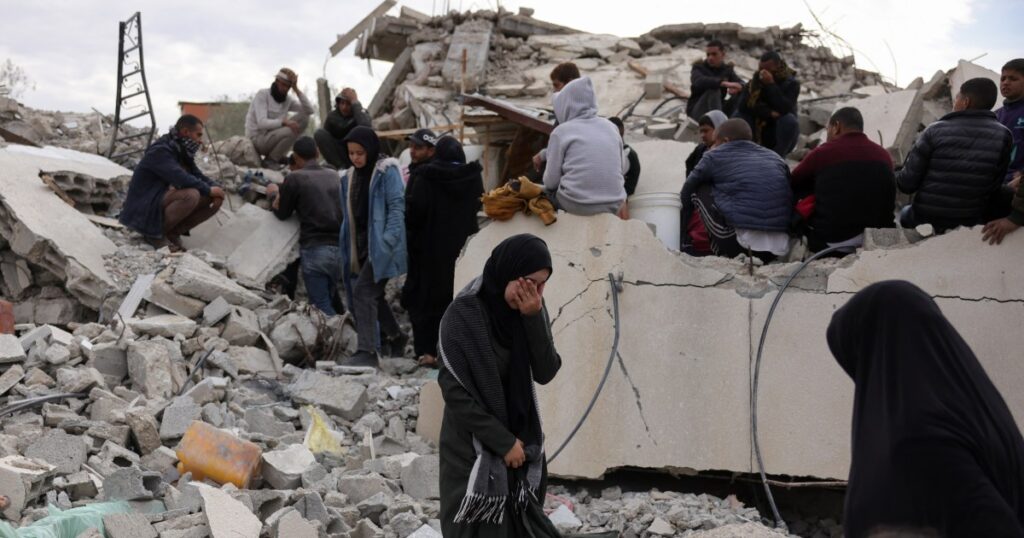
It’s been a week since a ceasefire was declared in Gaza. For the first time in 15 months, the relentless sound of explosions has been replaced by silence. But this silence is not peace. It is a silence that screams loss, devastation, and grief – a pause in the destruction, not its end. It feels like standing amid the ashes of a home, searching for something, anything, that survived. The images coming out of Gaza are haunting. Children with hollow eyes stand in the rubble of what was once their home. Parents hold onto the remains of toys, photographs, and clothing – fragments of a life that no longer exists. Every face tells a story of trauma and survival, of lives interrupted and torn apart. I can barely bring myself to look, but I force myself to because turning away feels like abandoning them. They deserve to be seen. When I called my mother after the ceasefire was announced, the first thing she said to me was, “Now we can grieve.” Those words pierced through me like a blade. For months, there was no space for grief. The fear of imminent death consumed every waking moment, leaving no room for mourning. How do you grieve for what you have lost when you are fighting to survive? But now, as the bombs stop falling, the grief comes rushing in like a flood, overwhelming and unrelenting. Advertisement More than 47,000 people – men, women, and children – are dead. Forty-seven thousand souls extinguished, their lives stolen in unimaginable ways. More than 100,000 are injured, many maimed for life. Behind these numbers are faces, dreams, and families who will never be whole again. The scale of loss is so vast it feels impossible to grasp, but in Gaza, grief is never abstract. It is personal, it is raw, and it is everywhere. People in Gaza grieve loved ones, and they also grieve their homes. The loss of a home is more than the loss of a physical structure. A friend of mine in Gaza, who also lost his home, told me, “A home is like a child of yours. It takes years to build, and you care for it, always wanting it to look its best.” In Gaza, people often build their homes brick by brick, sometimes with their own hands. Losing your home means the loss of safety, of comfort, of a place where love is shared and memories are made. A home is not just bricks and mortar; it is where life unfolds. To lose it is to lose a piece of yourself, and in Gaza, countless families have lost that piece over and over again. My parents’ home, the house that sheltered my childhood memories, is gone. Burned to the ground, it is now a heap of ash and twisted metal. Six of my siblings’ homes have also been destroyed, their lives uprooted and scattered like the debris of their walls. What remains are stories we tell ourselves to survive – stories of resilience, of endurance, of hope, perhaps. But even those feel fragile now. Advertisement For those of us outside Gaza, the grief is compounded by guilt. Guilt for not being there, for not enduring the same terror as our loved ones, for living a life of relative safety while they suffer. It is an unbearable tension—wanting to be strong for them but feeling utterly helpless. I try to hold onto the idea that my voice, my words, can make a difference, but even that feels inadequate against the magnitude of their pain. My family’s story of loss is just one of tens of thousands. Entire neighbourhoods have been wiped out, communities turned to dust. The scale of destruction is beyond comprehension. Schools, hospitals, mosques, and homes – all are reduced to rubble. Gaza has been stripped of its infrastructure, its economy shattered, its people traumatised. And yet, somehow, they endure. The resilience of the Palestinian people is both inspiring and heartbreaking. Inspiring because they continue to survive, to rebuild, to dream of a better future despite the odds. Heartbreaking because no one should have to be this resilient. No one should have to endure this level of suffering just to exist. But even as we feel relief now, we know that any ceasefire is temporary, by default. How can it be anything else when the root cause of this devastation – the occupation – remains? As long as Gaza is blockaded, as long as Palestinians are denied their freedom and dignity, as long as their land is occupied, and as long as Israel is supported by the West to act with impunity, the cycle of violence will continue. Advertisement Ceasefires are not solutions; they are merely interruptions, pauses, a momentary reprieve in a cycle of violence that has defined Gaza’s reality for far too long. Without addressing the underlying injustice, they are doomed to fail, leaving Gaza trapped in an endless loop of destruction and despair. True peace requires more than an end to the bombing. It requires an end to the blockade, to the occupation, to the systemic oppression that has made life in Gaza unbearable. The international community cannot look away now that the bombs have stopped falling. They must hold Israel accountable for its actions. The work of rebuilding Gaza is important, but the work of addressing the root causes of this conflict is more urgent. It requires political courage, moral clarity, and an unwavering commitment to justice. Anything less is a betrayal of the people of Gaza. For my family, the road ahead is long. They will rebuild, as they always do. They will find a way to create a new sense of home amid the ruins. But the scars of this genocide will never fade. My mother’s words – “Now we can grieve” – will echo in my mind forever, a reminder of the immense human cost of this conflict. As I write this, I am overwhelmed by a mix of emotions:
Could the war between Russia and Ukraine end soon?
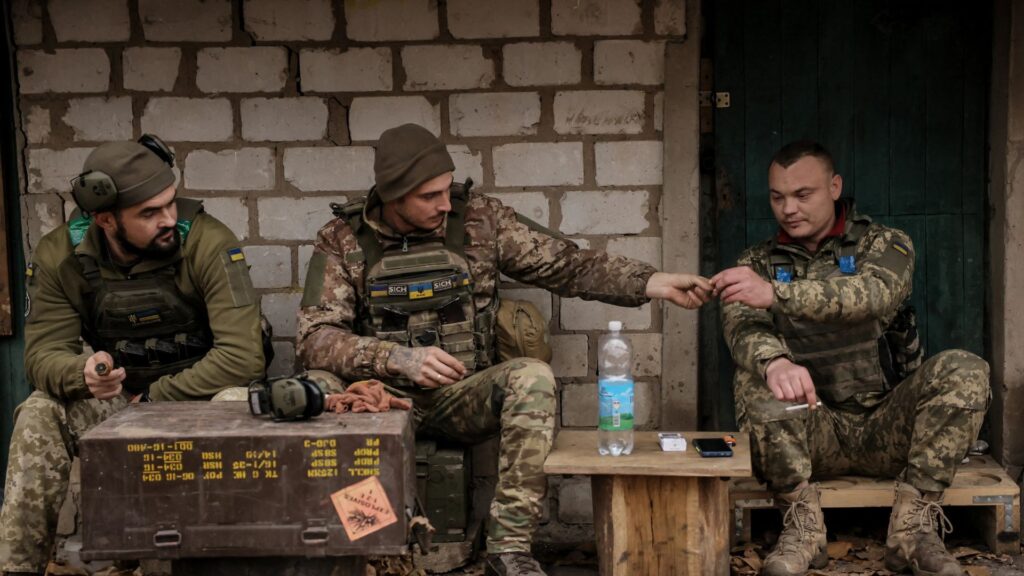
US President Donald Trump ramps up diplomatic pressure to end the war. Russia and Ukraine are still attacking each other’s territory – with no sign of a letup on the battlefield. But the return of Donald Trump as US president is creating new pressure on both sides to end the war. Is that likely? Presenter: Nick Clark Guests:Leonid Ragozin – Independent journalist Michael Bociurkiw – Senior fellow at the Atlantic Council’s Eurasia Center Steven Erlanger – Chief diplomatic correspondent for Europe at The New York Times Adblock test (Why?)
Israel and Hamas complete second swap of captives, prisoners
[unable to retrieve full-text content] Israel and Hamas completed their second swap, exchanging 200 Palestinian prisoners for four female Israeli soldiers.
At least 12 peacekeepers killed in eastern DR Congo fighting
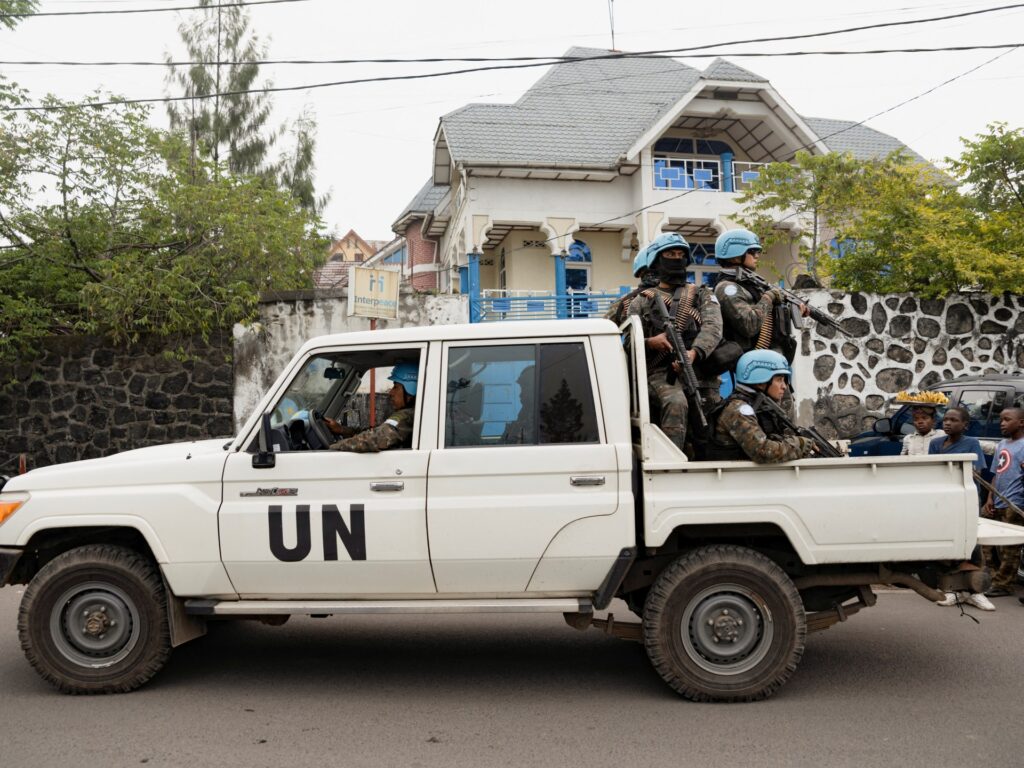
Nine South African and three Malawian peacekeeping soldiers have been killed by M23 rebels, authorities say. At least 12 peacekeepers, including two from the UN peacekeeping force MONUSCO, have been killed in fighting in eastern Democratic Republic of Congo (DRC), authorities said. Congolese troops and peacekeepers have been battling in recent days to stop an advance by M23 rebels on the city of Goma, the capital of North Kivu province. The three-year M23 rebellion in Democratic Republic of Congo’s mineral-rich east has intensified in January with rebels seizing control of more territory, prompting the UN to warn of the risk of a broader regional war. As of Friday, nine South African soldiers had been killed in the clashes with M23 rebels, the South African armed forces said in a statement on Saturday. Two South Africans deployed with the UN peacekeeping mission and seven others in the Southern African regional bloc’s force in DRC were killed over two days of fierce fighting, it said. “The members put up a brave fight to prevent the rebels from proceeding to Goma as was their intention,” it said, adding that the M23 had been pushed back. Advertisement An UN official, speaking to The Associated Press news agency, confirmed the death of two UN soldiers. The peacekeepers were killed on Friday, the UN official told the agency on condition of anonymity. Malawi’s military spokesman confirmed that three of its peacekeepers deployed with the SADC mission had been killed in fighting with M23 rebels. “We confirm the loss of three of our courageous soldiers who were part of the SADC Mission in the DRC,” spokesperson Emmanuel Mlelemba said, referring to the South African Development Community’s SAMIDRC mission. “These soldiers fell in the line of duty during an encounter with the M23 rebel group operating in eastern DRC. As the situation remains volatile, further details will be shared later,” he added. M23, or the March 23 Movement, is an armed group composed of ethnic Tutsis who broke away from the Congolese army more than 10 years ago. Since its resurgence in 2022, M23 has continued to gain ground in eastern DRC. The DRC and the United Nations accuse Rwanda of supporting M23 with troops and weapons – something Rwanda denies. UN to relocate nonessential staff M23 has made significant territorial gains in recent weeks, encircling the eastern city of Goma, which is home to about two million people and a regional hub for security and humanitarian efforts. The UN said that it would temporarily relocate nonessential staff from Goma, such as administrative staff. “Essential personnel remain on the ground, sustaining critical operations such as food distribution, medical assistance, shelter, and protection for vulnerable communities,” the UN statement read. Advertisement M23 is one of about 100 armed groups that have been vying for a foothold in mineral-rich eastern DRC, along the border with Rwanda, in a decades-long conflict that has created one of the world’s largest humanitarian crises. Since 1998, approximately six million people have been killed while roughly seven million have been displaced internally. More than 237,000 people have been displaced by the fighting in eastern Congo since the beginning of this year, the United Nations refugee agency said in a report on Monday. On Thursday, M23 took control of the town of Sake, which is only 27km (16 miles) west of Goma and one of the last main routes into the provincial capital still under government control, according to UN Secretary-General Antonio Guterres. Adblock test (Why?)