

Deadly drone attack targets hospital in Sudan’s Darfur
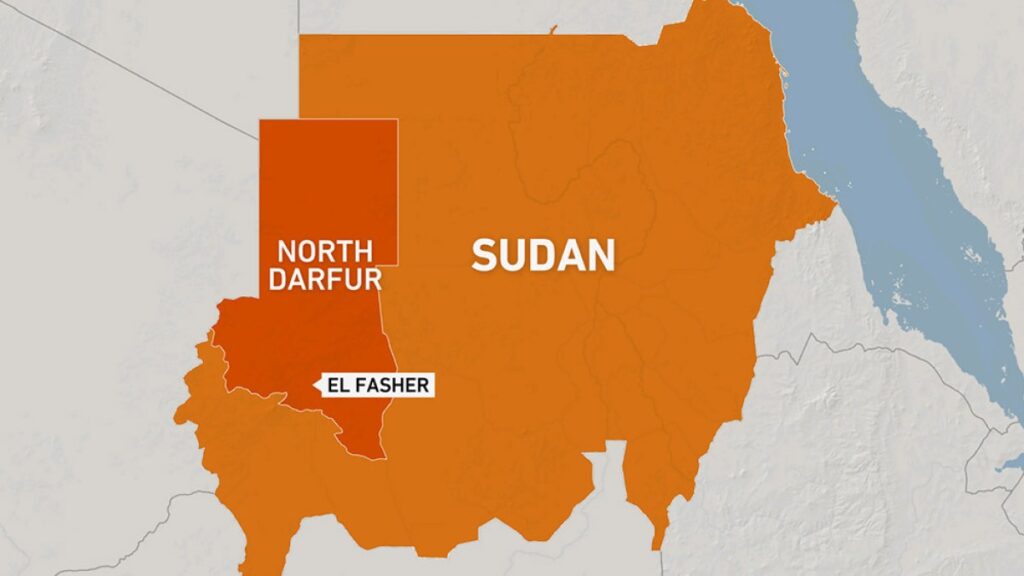
Attacks on healthcare facilities rampant in besieged el-Fasher, where army-aligned militias are pushing back RSF fighters. Dozens of patients have been killed in a drone attack on one of the last functioning hospitals in el-Fasher in Sudan’s Darfur region. While it was not immediately clear who targeted the Saudi Hospital on Friday, medical sources quoted by AFP news agency said the same building was hit by a Rapid Support Forces (RSF) drone “a few weeks ago”. Friday’s attack killed at least 30 patients in the emergency department, the report added. Regional governor Mini Minawi posted graphic images of bloodied bodies on his X account on Saturday, saying that the attack “exterminated” more than 70 patients, including women and children. The Sudanese army has been at war with the paramilitary RSF, who have seized nearly the entire vast western region of Darfur, since April 2023. The RSF has besieged el-Fasher, the state capital of North Darfur, since May, but army-aligned armed groups have repeatedly pushed its fighters back, preventing them from claiming the city. Attacks on healthcare facilities have been rampant in el-Fasher, where medical charity Doctors Without Borders said this month the Saudi Hospital was “the only public hospital with surgical capacity still standing”. Advertisement Across the country, up to 80 percent of healthcare facilities have been forced out of service, according to official figures. The war, which broke out after disputes on the integration of the two forces, has killed tens of thousands of people, driven millions from their homes and plunged half of the population into hunger. In the area around el-Fasher, famine has already taken hold in three displacement camps – Zamzam, Abu Shouk and Al-Salam – and is expected to expand to five more areas including the city itself by May, according to a UN-backed assessment. The attack on the hospital in el-Fasher occurred as the Sudanese army claimed to have broken an RSF siege of its headquarters in Khartoum, in place since the war broke out. In a statement, the army said troops in Bahri [Khartoum North] and Omdurman had “merged with our forces stationed at the General Command of the Armed Forces”. Sudan’s capital, Khartoum, comprises three main cities – Khartoum, Omdurman, and Bahri – separated by the Nile River and collectively referred to as the triangular capital. The army added that it had “expelled” the RSF from the strategically important al-Jili oil refinery north of the capital, the country’s largest. The RSF said in a statement that it rejected the Sudanese army’s claims as “propaganda” designed to boost morale, and accused it of spreading falsehoods through doctored videos. Adblock test (Why?)
Exploring the ethics behind ‘true crime’

Today on The Stream: We examine the global obsession with ‘true crime’ and whether it hurts or helps communities. “True crime” is one of the most consumed genres from podcasts to television series. When depicting real crimes and real victims, questions have been raised about the ethics of this type of content. We examine the psychology behind its popularity and tackle some concerns held by people close to the stories. Presenter: Anelise Borges Guests: Amanda Vicary – Illinois Wesleyan UniversityTerra Newell – Survivor, podcast host and media coachCelene Beth Olsen – Podcast host, producer and filmmakerBill Thomas – Mind Over Murder podcast producer and co-host Adblock test (Why?)
Ceasefire in Gaza while the West Bank burns
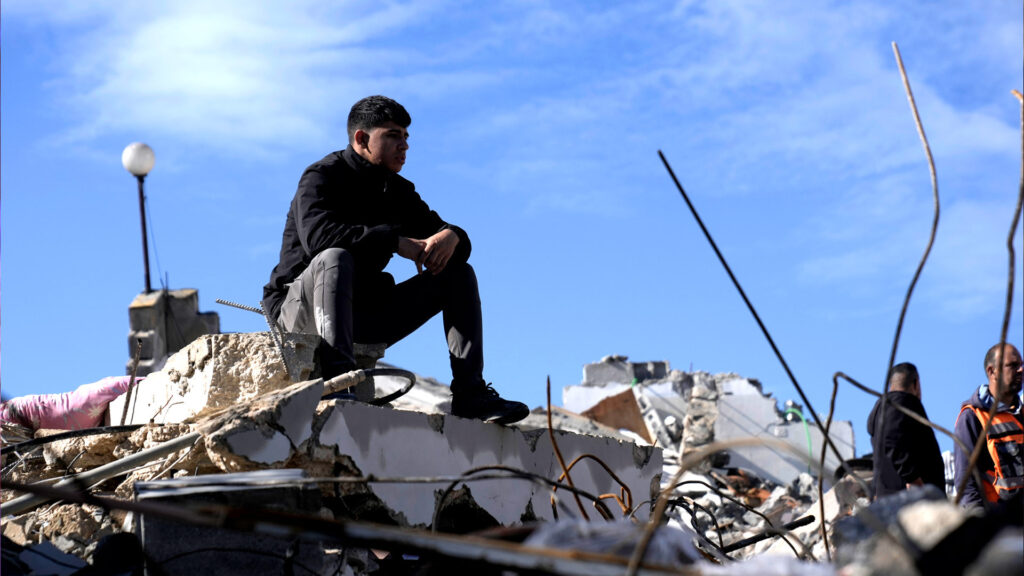
With a ceasefire in force in Gaza, the Israeli army and settlers have intensified their attacks against Palestinians in the West Bank. Amid the exchange of captives, images showing legions of Hamas reinforcements puncture the narratives in Israeli media. Contributors:Dalal Iriqat – Associate professor, Arab American University PalestineDaniel Levy – President, US/Middle East ProjectTahani Mustafa – Senior Palestine analyst, Crisis GroupSarah Leah Whitson – Executive director, DAWN On our radar A video surfaced this week showing a Hamas commander alive in northern Gaza, despite Israeli media having widely reported his “killing” 8 months ago. Tariq Nafi reports. The Pervasiveness of Hindutva Pop In India, Hindu nationalism, or “Hindutva”, has spread onto a variety of media platforms. Meenakshi Ravi explores its musical subgenre, Hindutva pop, and speaks to one of its biggest names. Featuring:Kanhiya Mittal – MusicianKunal Purohit – Author, The Secretive World of Hindutva Pop StarsSamriddhi Sakunia – Journalist and current affairs Instagrammer Advertisement Adblock test (Why?)
US President Trump threatens to abolish FEMA during tour of North Carolina

United States President Donald Trump has attacked the Federal Emergency Management Agency, known as FEMA, threatening to dismantle the organisation altogether. In a visit to hurricane-ravaged North Carolina on Friday, Trump announced he would sign an executive order “to begin the process of fundamentally reforming and overhauling FEMA — or maybe getting rid of FEMA”. In place of the agency, the Republican suggested shifting the burden of disaster management to states. “ When there’s a problem with the state, I think that that problem should be taken care of by the state,” Trump said during Friday’s news conference. “That’s what we have states for. They take care of problems. And a governor can handle something very quickly, you know?” Trump was hazy about the timeline for his proposed changes to FEMA, despite repeated questions from reporters. But Friday’s remarks continue a track record of attacks on the agency, as well as his predecessor, former Democratic President Joe Biden, in the wake of Hurricane Helene. Advertisement On September 26, the powerful Category-4 storm struck the Big Bend region of Florida. But even after it made landfall, it continued to plough north, wreaking destruction on parts of Georgia, North Carolina and Tennessee. A total of more than 200 people were killed, as the hurricane brought record rainfall, flooding and tornadoes, leaving places like Asheville, North Carolina, flattened. North Carolina was one of seven key swing states in the 2024 election that Trump eventually won. As he campaigned in the days and weeks after the disaster, Trump spread misinformation about the Biden-led disaster response, including that federal relief workers had refused to serve Republican residents — a false assertion. FEMA later reported that threats had been made to its staff, hampering a door-to-door wellness check operation in western North Carolina. And then-President Biden denounced the misinformation as “un-American”. “Former President Trump has led this onslaught of lies,” he said in October. But Trump has continued to hammer home his assertions that the disaster response in North Carolina was inadequate at best, including with a reference in his inaugural speech on Monday. On Friday, he once again launched into criticisms of both FEMA and Biden, blaming them both for the slow pace of recovery. “ FEMA is been a very big disappointment. And they cost a tremendous amount of money. It’s very bureaucratic. And it’s very slow,” Trump said at one point. At another, he lashed out at his Democratic predecessor: “Biden did a bad job. Some residents don’t have hot water, drinking water or anything else. Many of them don’t have quarters. They don’t have anything.” Advertisement He also teased his trip later in the day to southern California, where wildfires continue to destroy areas in and around Los Angeles, amid unseasonably dry conditions. He emphasised that he would place conditions on disaster aid to the Democrat-led state, including that California implements a voter-identification law. While Trump has said such measures are necessary to prevent voter fraud — a favourite talking point — critics argue they can raise barriers for US citizens who might be eligible to vote but cannot afford or access ID cards. On the roadside, as Trump’s motorcade passed through western North Carolina, a small group of demonstrators had gathered to protest the president’s repeal of climate-change policies. They pointed out that the climate crisis is credited with exacerbating extreme weather events, like hurricanes and fires. Adblock test (Why?)
‘Fear is the point’: Immigrant rights groups brace for fight against Trump
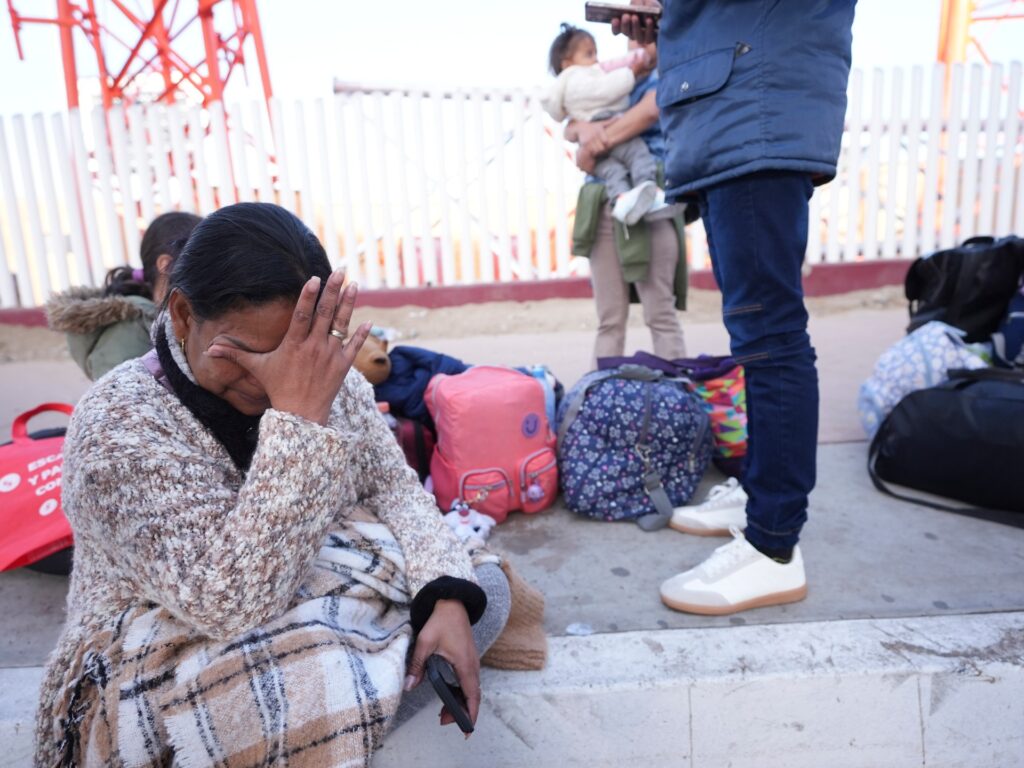
Washington, DC – Immigrant rights groups have said they are digging in their heels and preparing for a protracted fight as the blueprint for United States President Donald Trump’s vast immigration crackdown takes shape. In a series of rapid-fire orders during his first week in office, Trump has sought to overhaul nearly every aspect of US immigration. He rescinded guidance limiting where immigration raids can take place, cancelled asylum claims at the southern border and grounded refugees already approved for entry into the US, as part of a wider suspension of the US refugee programme. Though widespread arrests have yet to materialise, immigration rights advocates on Friday said Trump has already caused mayhem for those seeking refuge in the US and sent a chill among immigrant communities already in the country. “Costly, cruel and chaotic are the words that characterise the wave of extreme policies that the Trump administration has unleashed in its efforts to purge immigrants from our country,” Vanessa Cardenas, the executive director of the advocacy group America’s Voice, said during a call with reporters. Advertisement “The chaos and fear is the point.” ‘Unprecedented powers’ After a campaign defined by dehumanising rhetoric about migrants and asylum seekers, Trump took his second oath of office on Monday, pledging immediate changes to the US immigration system. His administration has already issued over a dozen executive orders and policy changes establishing hardline policies. On Friday’s call with reporters, Nayna Gupta, the policy director for the American Immigration Council, said Trump’s actions reveal ambitions beyond his stated desire to arrest immigrants with criminal records. “What Trump’s orders make clear is that they are outlining immediate actions to hurt all immigrants: the 13 million undocumented people with years of life in the US, people with lawful protections, asylum seekers, those with non-immigrant visas already in our country, and those seeking to immigrate here legally,” she said. She said many of the administration’s early actions “invoke unprecedented powers”. Several have already been challenged in court, with more legal action expected. The policy changes have been vast. For undocumented immigrants already in the US, Trump is poised to increase deportations through expedited removals and increased cooperation with local law enforcement. His Department of Homeland Security (DHS) also removed a decade-old policy prohibiting immigration arrests at “sensitive” locations including schools, hospitals and churches. His Department of Justice, meanwhile, has ordered federal prosecutors to investigate local officials who obstruct immigration enforcement. Advertisement On Friday, US media reported Trump’s DHS has also given its agents power to remove individuals legally admitted into the country under former President Joe Biden’s humanitarian parole programme. Nationals from four countries — Cuba, Haiti, Nicaragua and Venezuela — would be affected. Meanwhile, those seeking safety at the US’s southern border face new obstacles under Trump. As one of his first moves in office, Trump declared a national emergency at the border and deployed troops there. The president also suspended asylum processing and cancelled the Customs and Border Protection agency’s CBP One app, used to schedule asylum appointments. An estimated 270,000 individuals who had used CBP One saw their meetings annulled this week, despite waiting for weeks, if not months, for their appointments in Mexico. Trump’s administration has also grounded refugees who have undergone lengthy security vetting and pre-approval for relocation, ahead of a 90-day suspension of the United States Refugee Admissions Program (USRAP), set to begin on Monday. ‘Utter propaganda’ While Trump had undertaken similar efforts during his first term from 2017, Gupta of the American Immigration Council said the first days of Trump’s second term have revealed an “even more premeditated and thought-out blueprint for how to upend the US immigration system”. Gupta added that Trump and his advisers “clearly have an understanding of where there are openings” in current US law to test the limits of the issue. Advertisement Many community advocates say they are bracing for the “mass deportation” campaign Trump officials have promised in media interviews in the coming days. One raid in Newark, New Jersey, has already attracted nationwide attention. On Friday, Newark Mayor Ras Baraka announced that Immigration and Customs Enforcement (ICE) agents had entered a local business without a warrant one day prior. He accused them of detaining both undocumented individuals and US citizens and called the incident an “egregious act” in “plain violation” of the US Constitution. “I was appalled, upset, angry that this would happen here in this state, in this country,” Baraka said. The raid appears to be a departure from the policies of the Biden administration, which had placed a moratorium on workplace immigration enforcement. In its last official update on Thursday, ICE said it had made 538 arrests during the first four days of the Trump administration. The agency averaged about 310 arrests a day in 2024 under the Biden administration. White House spokesperson Karoline Leavitt also posted on social media that “deportation flights have begun”, with photos showing a line of people boarding a military aircraft. Critics, however, noted that deportation flights were weekly occurrences under the Biden administration, with the only change under Trump being the use of military planes. In a response on the social media platform X, Aaron Reichlin-Melnick, a senior fellow at the American Immigration Council, called the post “utter propaganda”. Another immigration activist, Thomas Cartwright, called it “theater of the absurd”. Advertisement Prolonged fight While advocates continue to monitor how Trump’s early orders will be carried out, the battle over their legality has already begun in the courts. An early victory came on Thursday, when a federal judge deemed Trump’s order to end birthright citizenship unconstitutional, blocking its implementation. Legal challenges have also been filed against Trump’s move to expand expedited removals and his cancellation of appointments scheduled via the CBP One app. Speaking to reporters on Friday, Karen Tumlin, the director of the Justice Action Center, predicted further challenges in the days ahead. She explained that Trump’s military deployment to the southern border, the policy change on “sensitive” locations, and his order to end
US suspends new funds for aid programmes, excepting Israel and Egypt
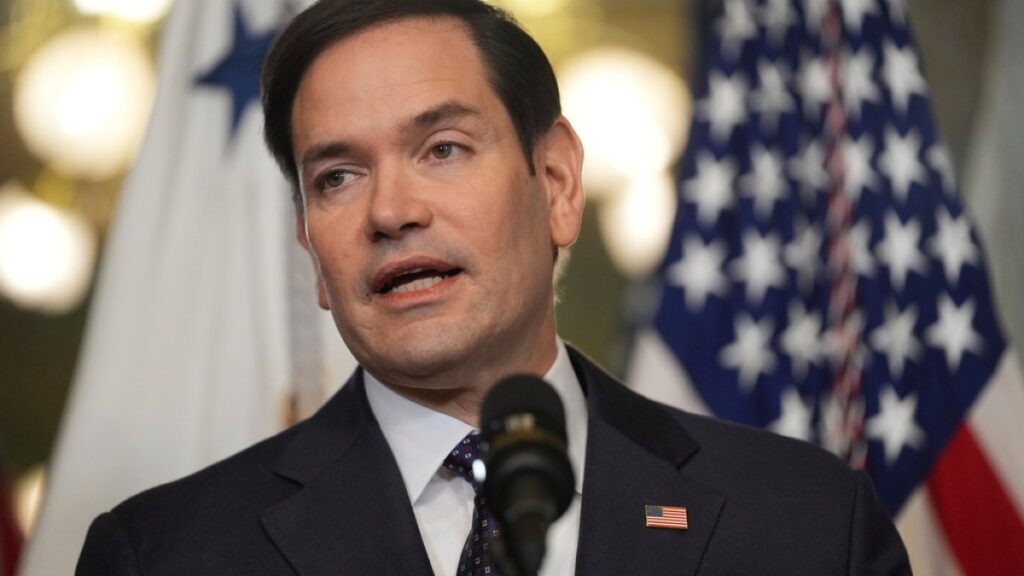
Trump administration freezes new funding for anti-HIV programme and other health services, excepts key food programmes. The administration of United States President Donald Trump has announced a freeze on almost all new funding for foreign assistance programmes, with exceptions for allies Israel and Egypt. The order from the US State Department on Friday also includes exceptions for emergency food programmes, but not health programmes that supporters say provide vital, life-saving services. In an accompanying memo, newly confirmed Secretary of State Marco Rubio directed senior officials to “ensure that, to the maximum extent permitted by law, no new obligations shall be made for foreign assistance”. Humanitarian organisations immediately expressed alarm at the directive, voicing fears that it could contribute to global instability and loss of life. “By suspending foreign development assistance, the Trump administration is threatening the lives and futures of communities in crisis, and abandoning the United States’ long-held bipartisan approach to foreign assistance which supports people based on need, regardless of politics,” Abby Maxman, head of Oxfam America, said in a statement. Advertisement The temporary freeze is slated to last for a period of at least three months. In the first 85 days, Rubio is expected to make “decisions whether to continue, modify, or terminate programs”, according to the memo. Among the health programmes expected to experience a funding freeze is the President’s Emergency Plan for AIDS Relief, also known as PEPFAR. Established in 2003 under the administration of George W Bush, PEPFAR enjoyed broad bipartisan support for two decades, until Congress missed a deadline to renew its funding in 2023. Its funding got a one-year extension through March 2025, but that is set to expire within the three-month window. Experts estimate that PEPFAR has helped save as many as 25 million lives since it was first started. Left untouched by the freeze is aid for Israel and Egypt, two of the largest recipients of US military assistance. Both countries have faced scrutiny over their human rights records and calls to leverage US aid in exchange for substantial reforms. Friday’s memo made special mention of waivers for “foreign military financing for Israel and Egypt and administrative expenses, including salaries, necessary to administer foreign military financing”. There was no indication of a similar exemption for Ukraine, which largely relies on US weapons assistance in its fight to repel a Russian full-scale invasion launched in February 2022. The US spent more than $60bn in foreign assistance in 2023, more than any other country overall. Advertisement But that sum accounts for about 1 percent of US government spending. In the aftermath of Friday’s memo, some aid projects around the world received work-stop orders. “This is lunacy,” said Jeremy Konyndyk, a former official for the US Agency for International Development (USAID). He shared with the Reuters news agency his outrage. “This will kill people. I mean, if implemented as written in that cable … a lot of people will die.” Adblock test (Why?)
Canada’s Liberal leadership race: Who’s running to replace Justin Trudeau?
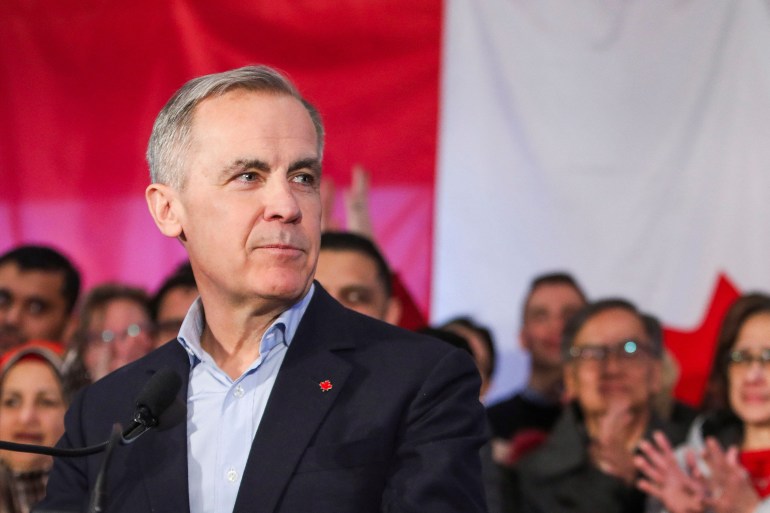
Montreal, Canada – The race to replace Justin Trudeau as leader of Canada’s ruling Liberal Party – and as the country’s prime minister – is well under way, with seven candidates throwing their names into contention. The leadership hopefuls had until Thursday evening to meet a deadline to formally submit their candidacies before the party picks its new chief on March 9. Canadian media outlets reported that it could take a few days to determine who will officially be in the running. The Liberals are hoping that a new leader will bolster their chances ahead of this year’s federal election. Polls show they are currently on track to lose by a wide margin to the opposition Conservative Party: A recent Abacus Data survey had the Conservatives with 46 percent support compared with 20 percent for the Liberals. It is unclear which candidate would give the Liberals the best shot at the polls. But the vote could be called as soon as Canadian lawmakers go back to the House of Commons on March 24, as opposition legislators have pledged to try to topple the Liberal government at the earliest opportunity. The election must be held by October 20. Advertisement Semra Sevi, a political science professor at the University of Toronto, said the race for the Liberal Party leadership has three credible candidates: economist Mark Carney and two former Trudeau cabinet ministers, Chrystia Freeland and Karina Gould. “However, Carney and Freeland are the clear frontrunners,” Sevi told Al Jazeera. Here, Al Jazeera looks at the candidates vying to lead the Liberal Party, where they stand on key issues, and whether they will be able to help the party make up ground ahead of the next election. Mark Carney, former Bank of Canada governor Carney announced his leadership bid at a rally in Edmonton, Alberta, on January 16 [Amber Bracken/Reuters] Carney, 59, has tried to portray himself as a political outsider, putting distance between himself and the widely unpopular Trudeau. The economist previously served as governor of the Bank of Canada and the Bank of England, and he acted as an economic adviser to Trudeau’s government. He currently holds a role at the United Nations as a special envoy on climate action and finance. “Too many are falling behind. Too many young people can’t afford a home. Too many people can’t find a doctor,” he said during a rally to announce his Liberal leadership bid in Edmonton, the capital of Canada’s oil-rich province of Alberta, on January 16. According to Sevi, Carney’s experience as a former central banker gives him “substantial credibility on economic issues”, which have been a major concern for Canadians amid rising costs and a housing crisis. Advertisement “He can position himself as an expert in managing inflation, housing affordability and financial insecurity,” she told Al Jazeera. Yet on the flip side, Carney’s “lack of direct political experience could make him seem out of touch with grassroots concerns”, Sevi said. “His technocratic background may not translate easily into the kind of leadership voters expect during tough times.” Justin didn’t ruin Canada alone. Carbon Tax Carney & Chrystia were right by his side as he doubled housing costs and hiked the tax on gas, heat & groceries. The next Liberal leader will be Just Like Justin: https://t.co/phXSjPB24c pic.twitter.com/Nj08tDsiFY — Pierre Poilievre (@PierrePoilievre) January 20, 2025 The decision to launch his campaign from his home province of Alberta – where residents typically vote for right-wing parties – was also noted by experts. “The new Liberal leader will need to focus on regaining support in western Canada, particularly in Alberta,” Sevi explained. In that vein, Carney has said he is open to alternatives to an unpopular federal programme that placed a price on carbon emissions. The climate policy, introduced under Trudeau, is a top target of attacks from right-wing politicians, including Conservative Party leader Pierre Poilievre, who is hoping to make it a central election issue. With Trudeau leaving, it has become an early point of contention in the Liberal leadership race, as well. Poilievre, a populist politician who has been in Parliament since the early 2000s, has used the nickname “Carbon Tax Carney” to blast the economist for his past support of the policy. Advertisement “It’s clear that Carbon Tax Carney and the Liberals will say anything to try and hold power. But they cannot be trusted. Carbon Tax Carney is just like Justin,” the Conservatives said in a recent statement. Despite those attacks, Carney has racked up endorsements from top Liberal ministers, including Foreign Minister Melanie Joly, Environment Minister Steven Guilbeault and Minister of Emergency Preparedness Harjit Sajjan. It’s time to build.https://t.co/dsz02q6qZA pic.twitter.com/vvYHC7dKnJ — Mark Carney (@MarkJCarney) January 23, 2025 The backing of ministers from the French-speaking province of Quebec – where the Liberals typically draw a key segment of their support – may also prove critical for Carney, according to Jim Bickerton, a political science professor at St Francis Xavier University in Nova Scotia. “It’s always important that the Liberal leader have a strong support base in Quebec,” Bickerton told Al Jazeera. In a new campaign video released on Thursday, Carney also hit back at Poilievre, comparing him to United States President Donald Trump, who has embraced anti-immigrant policies and regularly attacks the media and his perceived critics. “You can’t stand up to Trump when you’re working from his playbook,” Carney says in the video. “Pierre Poilievre has been a politician his entire life, and in all that time, he hasn’t fixed a thing. He just complains, misleads and blames everything on someone else.” Chrystia Freeland, ex-deputy prime minister and finance minister Freeland holds a campaign event in Toronto on January 19 [Cole Burston/Reuters] Freeland has been a key member of Trudeau’s inner circle since she was first elected to represent a Toronto electoral district – known as a riding – in 2015, the year the Liberals swept into power. Advertisement Since then, she has held various high-profile government portfolios, including as deputy prime minister and finance minister. But
Ruined Gaza mosque hosts first Friday prayers since ceasefire
[unable to retrieve full-text content] Worshippers gathered in a ruined Gaza mosque for their first Friday prayers since the Israel-Hamas ceasefire deal.
Afghanistan: The price of peace
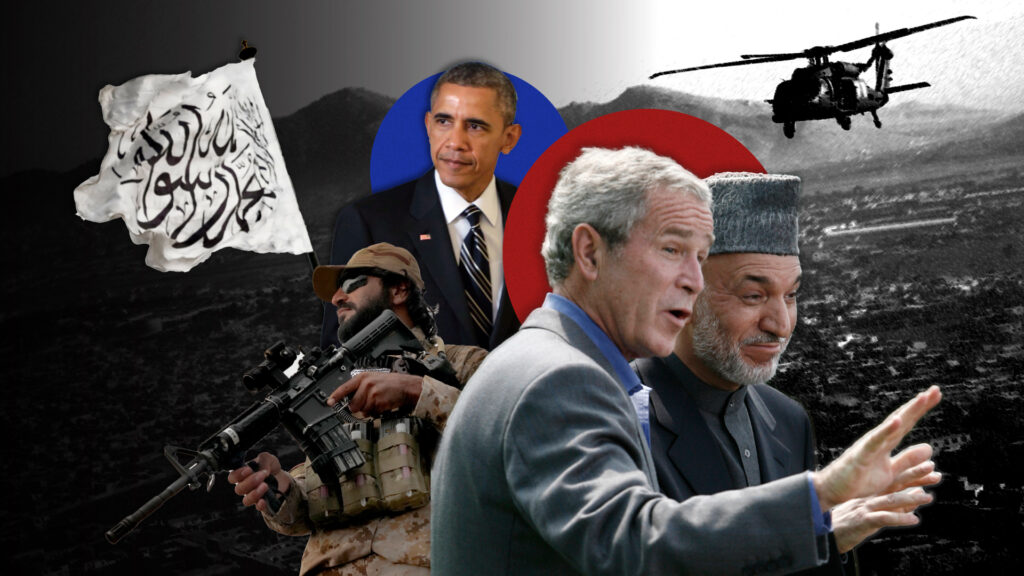
The disastrous 20-year US mission in Afghanistan which ended in failure, the limits of power and long-term scars of war. The United States’ Afghan war – more than two decades of conflict, trillions of dollars spent, tens of thousands of civilian and military lives lost and the Taliban ultimately reclaiming power. What was this US intervention all about, was it worth it and could it ever realistically succeed? This documentary investigates how, despite spending more than $2.3 trillion and two decades in Afghanistan from 2001 to 2021, the US failed to achieve its objectives of building a stable Afghan state and military capable of resisting the Taliban. We hear from Taliban officials, American military personnel, Afghan civilians, key political figures and experts, with different perspectives on the war goals, strategies and ultimate failure. The film examines the human toll of the occupation, cultural and political missteps and the enduring challenges facing Afghanistan after the return of the Taliban. It also reflects on the broader themes of imperialism, nation-building and the enduring struggle for sovereignty. Advertisement Adblock test (Why?)
Thousands flock to smell plant that reeks of dead rat, rotting rubbish

Huge crowds queued in Sydney to catch a whiff of the flower that smells like ‘hot rubbish’ She may smell like rotting flesh but “Putricia”, the internet-famous corpse flower, has been the centre of attention at the Botanic Gardens of Sydney over the last two days. The rare plant – scientific name amorphophallus titanum, but also known as “Titan Arum” or “bunga bangkai” in Indonesia where it grows wild – began to bloom on Thursday, giving off an odour described as having the aromatic profile of “dead rat”. With 11 corpse flowers in the collection, staff at the gardens traditionally give each a nickname and this time they settled on “Putricia” – a combination of “putrid” and “Patricia”. Putricia the corpse flower prior to blooming at Sydney’s Royal Botanic Gardens [Handout / Sydney’s Royal Botanic Gardens] Putricia has also become something of an influencer over the last 18 days, as thousands monitored a livestream created by the institution to document her growth from a mere bud to a 1.6-metre-tall flower in real time. With more than 1.5 million views and a very active Discord community, John Siemon, director of horticulture and living collections at the gardens, says staff have been “shell shocked” by Putricia’s sudden popularity. Siemon said at least 20,000 excited onlookers have since passed through the doors to catch a whiff of Putricia over the last week. Advertisement Sydney Botanic Gardens chief scientist Professor Brett Summerell said Putricia had taken time to ramp up production of her unique perfume but was at her height on Thursday evening when the smell could be detected from 20 metres away, outside her pavilion. “It’s a little bit of a build-up,” he said. “Over a period of time, as the flower starts to unfurl, it starts to generate heat and that heat starts to generate chemical reactions. “What the plant is trying to do is produce maximum amounts of that smell so it attracts insects, flies and beetles from all across the jungle so they can come and pollinate it.” The oversize flower features fluted crimson petals and can measure more than a metre (3 ft) across with a pointed centre stalk that can top 3 metres (10 ft). The flower’s disgusting smell and reddish-purple structure is designed to lure pollinators so it can reproduce. The plant typically does not bloom more than once every few years and lasts only about a day. A specimen has not bloomed in Sydney since 2010, making Putricia the fifth corpse flower to bloom at the gardens. Staff at Sydney’s Royal Botanic Gardens up close and personal while in the process of propagating “Putricia” the corpse flower [Handout / Royal Botanic Gardens Sydney] After about 48 hours, the yellow stalk at the centre of the corpse flower collapses and it will be a minimum of three to five years before the plant can bloom again. Sydney resident Rebecca McGee-Collett, who waited 90 minutes to see the flower on Thursday evening, said the flower was beautiful but the smell was “like hot garbage”. Advertisement The plant is native to the Indonesian island of Sumatra and is listed as endangered due to habitat loss and poaching, with 300-500 specimens of Titan Arum thought to be left in the wild. Adblock test (Why?)