

Drug marketplace founder Ross Ulbricht speaks out after Trump pardon
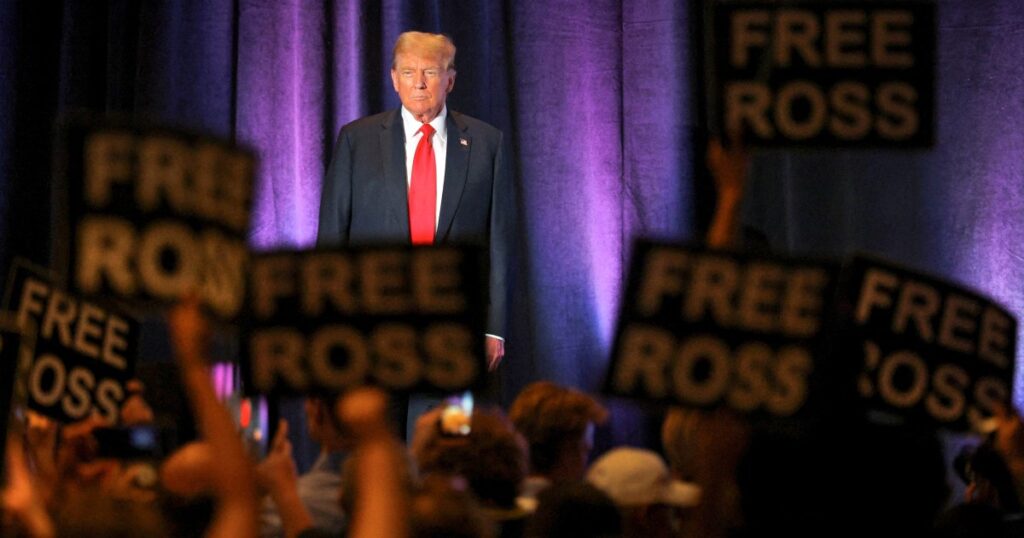
Silk Road founder thanks US president for ‘amazing blessing’ in video message after his release from prison. Ross Ulbricht, the dark-web marketplace founder pardoned by United States President Donald Trump, has spoken about his release from prison for the first time. Ulbricht, 40, was sentenced to two life sentences, plus 40 years, in 2015 for running Silk Road, an illicit online market that US prosecutors said facilitated $183m in drug sales using Bitcoin. Trump on Tuesday issued Ulbricht a full and unconditional pardon, fulfilling a campaign promise to libertarians and cryptocurrency enthusiasts who had lobbied for his release. In a video message posted on X on Friday, Ulbricht expressed his gratitude to Trump for granting him clemency. “I was doing life without parole, and I was locked up for more than 11 years but he let me out. I’m a free man now. So let it be known that Donald Trump is a man of his word,” he said. “Thank you so much, President Trump, for giving me this amazing blessing. I am so, so grateful to have my life back, to have my future back, to have a second chance.” Ulbricht said he planned to spend time with his family but would have more to say in the future. Advertisement “This is a victory and it’s your victory, too. And this is an important moment for everybody, everywhere who loves freedom and who cares about second chances,” he said. “It feels amazing to be free, to say the least. It’s overwhelming.” pic.twitter.com/pbqRh9spnk — Ross Ulbricht (@RealRossU) January 24, 2025 Ulbricht’s case had been held up as an example of government overreach by libertarians and crypto supporters, who argued that he had been unfairly prosecuted for transactions made by other people and that his punishment did not fit the crime. Ulbricht’s lawyers also argued that although he had created the site, he handed off control to others after just a few months and had been lured back as a fall guy just as authorities were closing in. Announcing his pardon, Trump branded Ulbricht’s punishment “ridiculous” and said those responsible for his prosecution were some of the “same lunatics who were involved in the modern-day weaponisation of government against me”. US prosecutors cast Ulbricht as a criminal mastermind driven by a desire for money and power, and alleged that drugs sold on his site had caused the deaths of six people. Prosecutors also alleged that Ulbricht had solicited the murders of people he viewed as threats to his operation, though he was not convicted of any such crime and no evidence was presented that anyone had actually been killed. While some Republicans known for espousing libertarian views hailed Trump’s pardon, the move drew condemnation from a number of Democratic legislators. Advertisement “Pardoning drug trafficking kingpins is a slap in the face to the families who’ve lost loved ones to his crimes,” Democratic Senator Catherine Cortez Masto said in a post on X. “Donald Trump should have to explain to them how any of this makes America safer. It’s an outrage.” Adblock test (Why?)
ICC lawyer seeks arrest of Taliban leaders over persecution of women
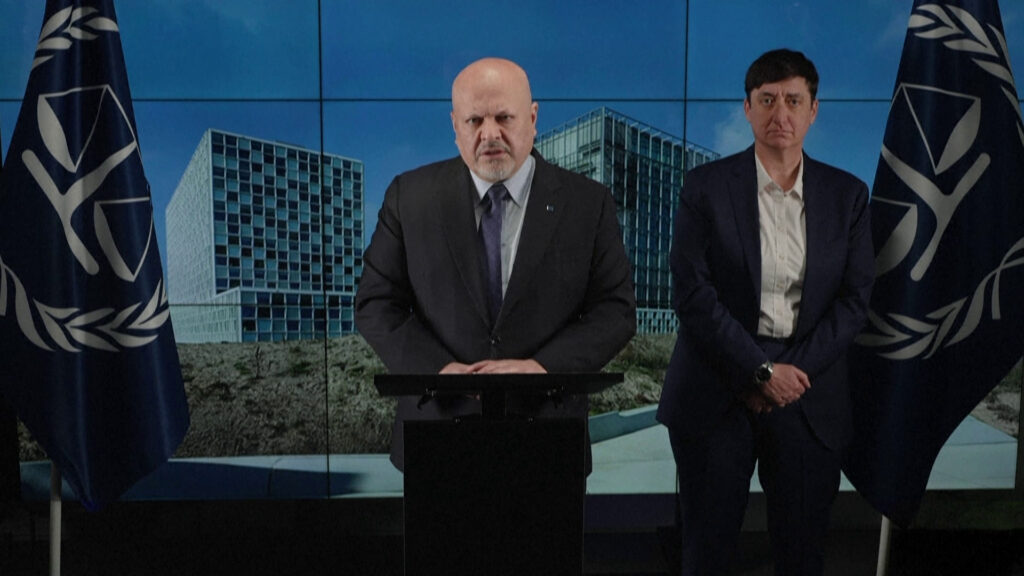
NewsFeed The International Criminal Court’s chief prosecutor announced he is seeking arrest warrants for the Taliban’s spiritual leader Haibatullah Akhundzada and its chief justice, accusing them of persecuting women in Afghanistan. Published On 24 Jan 202524 Jan 2025 Adblock test (Why?)
Trump pulls security protections for Mike Pompeo, John Bolton
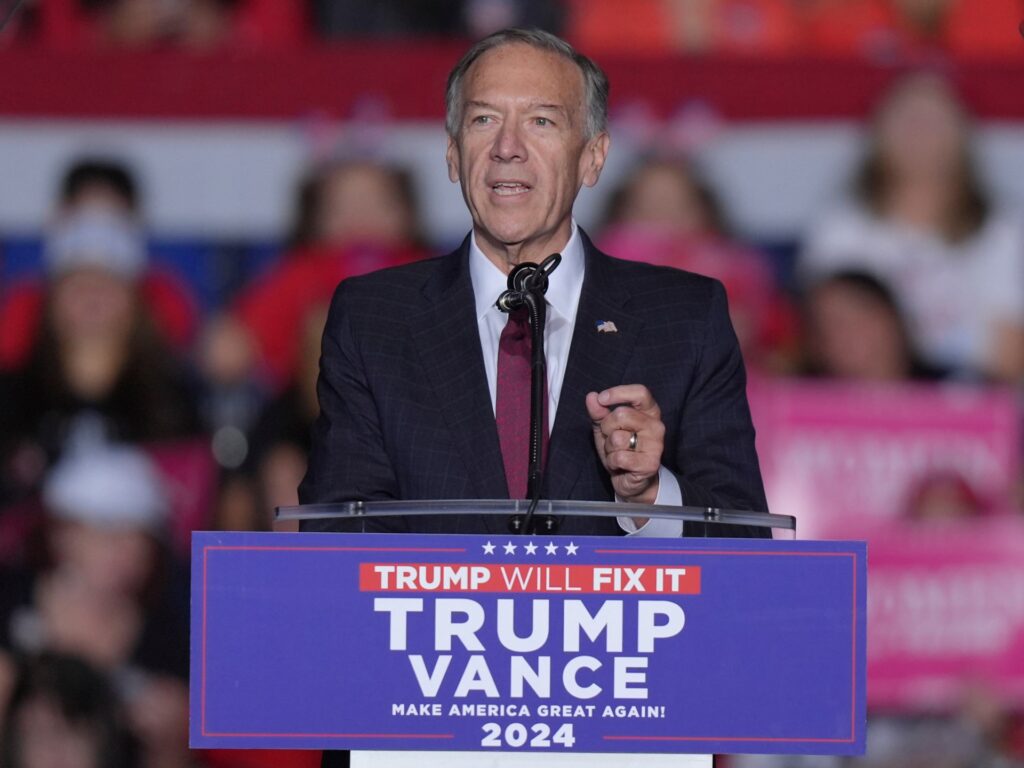
Hawkish foreign policy advisers from Trump’s first term as president have faced alleged assassination threats from Iran. United States President Donald Trump has cancelled security protections for Mike Pompeo, Brian Hook and John Bolton, hawkish foreign policy advisers who served during his first term in office. The New York Times broke the story on Thursday about Trump revoking protection for Pompeo, the former director of the Central Intelligence Agency (CIA). According to anonymous sources familiar with the matter, Trump’s order took effect on Wednesday at 11pm Eastern Time (04:00 GMT, Thursday), stripping both Pompeo and Hook, a former top aide, of their security details. That follows an earlier report that Trump did the same for Bolton, his former national security adviser. Bolton confirmed the news to CNN with a statement on Tuesday: “I am disappointed but not surprised.” Trump has since defended that decision, calling Bolton a “very dumb person”. “We’re not going to have security on people for the rest of their lives. Why should we?” Trump said. But critics point out that Bolton, Pompeo and Hook have all faced alleged assassination threats from Iran. Advertisement The three leaders had taken a hardline stance against Iran throughout their foreign policy careers. Some analysts have speculated whether Trump’s decision to revoke their security details could be a form of retribution for perceived disloyalty. One official from the administration of former President Joe Biden confirmed to The Associated Press, on condition of anonymity, that Trump’s team was well aware of the threats to the three men. That person called Trump’s decision “highly irresponsible”. Bolton had irked Trump with his public criticism after being ejected as national security adviser in 2019. He had served under previous Republican presidents including George W Bush and Ronald Reagan. In his memoir, Bolton wrote harshly of Trump’s leadership. “A mountain of facts demonstrates that Trump is unfit to be president,” Bolton said. Pompeo, meanwhile, has been less vocal in his criticisms, but he briefly flirted with a possible run in the 2024 presidential election, before low polling numbers sank his hopes. He went on to campaign on Trump’s behalf in 2024. During Trump’s first term, from 2017 to 2021, Pompeo and Hook were architects of the US’s stance of “maximum pressure” towards Iran. That period was marked by the US withdrawing from a detail to limit Iran’s pursuit of nuclear weapons in exchange for relief from devastating US sanctions. It is unclear whether Trump will pursue a similar strategy during his second term. But some experts have speculated that members of Trump’s inner circle have become more critical of the interventionist, assertive stance advocated by figures like Bolton and Pompeo. Advertisement Trump had said that Pompeo would play no role in his administration. This week, he also announced on social media that Hook had been fired from his presidentially appointed position at the Wilson Center, a think tank. Dozens of former intelligence officials who had signed a letter in 2020 saying that the Hunter Biden laptop scandal had signs of a “Russian information operation” also had their security clearances revoked in recent days. Adblock test (Why?)
Sudan’s army accused of ethnic killings after recapturing strategic city

On January 15, army leader Abdel Fattah al-Burhan announced a probe into the alleged abuses committed by his forces in Gezira state. The Sudanese army also released a statement addressing the allegations of reprisal killings in Gezira. “The Armed Forces condemn the individual violations that recently took place in some areas in Gezira state following the cleansing [of the RSF] of Wad Madani,” the statement read. “At the same time, the army affirms its strict adherence to international law and its keenness to hold accountable anyone involved in any violations that affect anyone in the Kanabi area,” the statement added. Sudan’s army chief Abdel Fattah al-Burhan visits casualties receiving treatment at a hospital in the southeastern Gadarif state on April 10, 2024 [File: AFP] Dalia Abdelmonem, a Sudanese political commentator and former journalist, told Al Jazeera the army’s statement ticked all the boxes in terms of promising to bring about accountability for the abuses in Wad Madani. Yet, it must behave better for the sake of securing international support to defeat the RSF. “This is a perfect opportunity for the army to show it is a bonified army and it will only target the RSF [moving forward] and not civilians and that it will no longer abuse, torture or commit summary executions, said Abdelmonem. “It has to say, ‘We will put a stop to all of that,’” she told Al Jazeera. Since the war, the RSF has demonstrated little ability to govern territories under its control, with fighters often looting, kidnapping for ransom and generating chaos, according to a recent report by International Crisis Group, a think tank based in Brussels, Belgium. Many Sudanese, therefore, view the RSF as an existential threat to the state despite their acute concerns and traditional opposition towards the army, which stems from its poor human rights record and refusal to fully surrender power to a civilian authority after al-Bashir was toppled by a popular uprising in 2019. While the army has regained popularity during the war, Baldo is not optimistic that an investigation will lead to accountability for atrocities committed in Wad Madani since human rights violations are a systemic issue in the army. He referenced the beheading in February and said the army promised to investigate that incident, but nobody was held accountable. “If [I see] the commanders who oversaw the killings [of civilians] in the Kanabi held to account, then I will believe [an investigation] happened. I’ll believe it if I see the results,” he told Al Jazeera. Adblock test (Why?)
After stabbings, China’s social media firms face scrutiny over hate speech
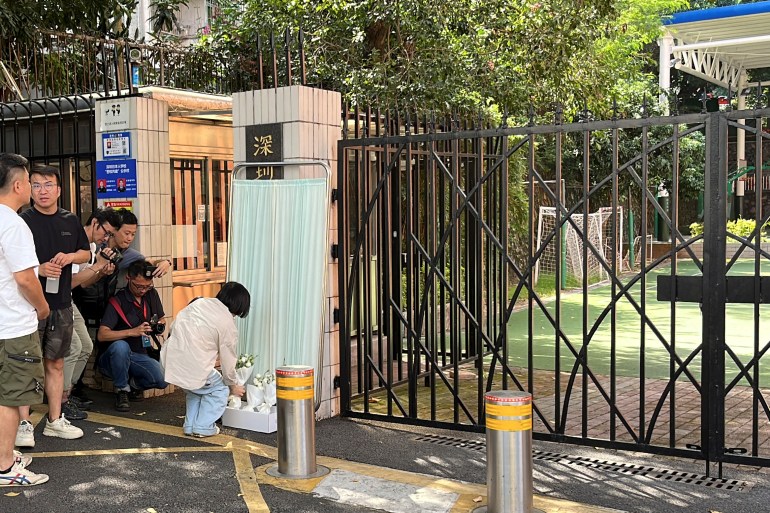
Taichung, Taiwan – For one user on the Chinese social media platform, Weibo, the problem was Americans. “British people make me anxious too, but I hate Americans,” read the user’s comment. For another, it was Japanese. “I really hope the Japanese die,” the user repeated 25 times in a post. Xenophobic and hyper-nationalistic comments are easy to come by on Chinese social media platforms, even after some of the country’s biggest tech firms last year pledged to crack down on hate speech following a series of knife attacks on Japanese and American nationals in the country. Since the summer, there have been at least four stabbings of foreign nationals in China, including an incident in September in which a 10-year-old Japanese schoolboy was killed in Shenzhen. The attack, which took place on the anniversary of a false flag event orchestrated by Japanese military personnel to justify the invasion of Manchuria, prompted the Japanese government to demand an explanation from its Chinese counterpart as well as assurances that it would do more to protect Japanese nationals. Advertisement Following the incident, some Japanese companies offered to repatriate their staff and their families home. A woman lays flowers outside Shenzhen Japanese School in Shenzhen, Guangdong province, China on September 19, 2024 [David Kirton/Reuters] Months earlier, a knife attack that injured four American college instructors in Jilin placed United States-China relations under strain, with US Ambassador R. Nicholas Burns accusing Chinese authorities of not being forthcoming with information about the incident, including the motive of the assailant. Beijing, while expressing regret over the attacks and condolences to the families of the victims, has insisted the spate of stabbings were isolated incidents. “Similar cases could happen in any country,” Lin Jian, a spokesperson for China’s Ministry of Foreign Affairs, told a regular media briefing after the attack in Shenzhen. While China’s Foreign Ministry and the Chinese embassy in Tokyo did not respond to requests for comment, a spokesperson for the Chinese embassy in Washington, DC said Chinese law “clearly prohibits the use of the internet to spread extremism, ethnic hatred, discrimination, violence and other information”. “The Chinese government has always opposed any form of discrimination and hate speech, and calls on all sectors of society to jointly maintain the order and security of cyberspace,” the spokesperson told Al Jazeera. While violence against foreigners in China is rare, the apparent rise in attacks in 2024 and the prevalence of hate speech online has prompted concern within the country, said Wang Zichen, a former Chinese state media journalist and the founder of the newsletter Pekingnology. “It has set into motion domestic discussions about this kind of speech and how to restrain it,” Wang told Al Jazeera. Advertisement Despite pledges by Chinese tech companies to crack down on hate speech against foreigners, policing such content is far from straightforward, according to Andrew Devine, a PhD student at Tulane University in the US who specialises in the authoritarian politics of China. “Especially since the [tech] companies have incentives to not control hate speech,” Devine told Al Jazeera. While the algorithms used by Chinese social media platforms to distribute content have been shared with the Chinese government, they have not been disclosed to the public, making it difficult to know the exact mechanism by which hate speech proliferates online. Elena Yi-Ching Ho, an independent research analyst focusing on propaganda and social media in China, said the algorithms used by Chinese social media platforms are most likely not dissimilar to those used by platforms outside the country. “They want to maximize engagement between users on their platforms, and they want users to stay on their platform for as long as possible,” Ho told Al Jazeera. In the hunt for users’ attention, it can be lucrative for Chinese influencers and vloggers to seek out controversy with hyper-nationalistic content, Ho said. In today’s China, a perceived lack of patriotism can draw public ire. Last year, Chinese water bottle company Nongfu Spring had its bottles removed from stores en masse after social media users claimed that a company logo depicted Mount Fuji in Japan. Online condemnation spread to the company’s owner, Zhong Shanshan, who had his loyalty to China questioned, a charge amplified by the fact that his son holds American citizenship. Advertisement In 2023, a rock and eggs were thrown at two Japanese schools in Qingdao and Suzhou after Tokyo decided to release treated radioactive wastewater from the stricken Fukushima nuclear plant into the sea. Wang said the proliferation of negative commentary about foreigners on Chinese social media has been partly a result of growing hostility between China and some other countries. “Chinese relations with some countries have deteriorated quite significantly in recent years,” Wang said. China and Japan have sparred over a number of historical and territorial disputes, including the status of the Diaoyu/Senkaku Islands in the East China Sea. The Diaoyu/Senkaku Islands pictured in September 2012 [Reuters/Kyodo] The US and China have also seen relations plummet in recent years amid disputes over topics ranging from trade and the origins of the COVID-19 pandemic to Beijing’s claims of ownership over self-ruled Taiwan. But hate speech towards foreigners predates some of these recent clashes, according to Ho. “And Japan and Japanese have been particular targets of it,” she said. Some Chinese bloggers and social media users have traced the roots of negative sentiment towards Japanese people to what they term “hate education” about Japan, including its imperial-era abuses in China. Wang said Japan’s actions during World War II deeply affected China’s national psyche. “Japan launched invasions in the Second World War where as many as tens of millions of Chinese people died, and that remains on a lot of Chinese people’s minds today,” he said. Advertisement “For some people, there is a feeling that the Japanese haven’t done enough to atone for that.” Still, some Chinese citizens argue that Japan’s atrocities should not be used to justify hateful sentiment towards Japanese people today. “I think we need to change the way we are dealing with
Palestinians clean up the rubble of their destroyed homes
[unable to retrieve full-text content] Palestinians returning to their destroyed homes in Gaza have begun to clean up the rubble.
What’s going on in the occupied West Bank, and why now?
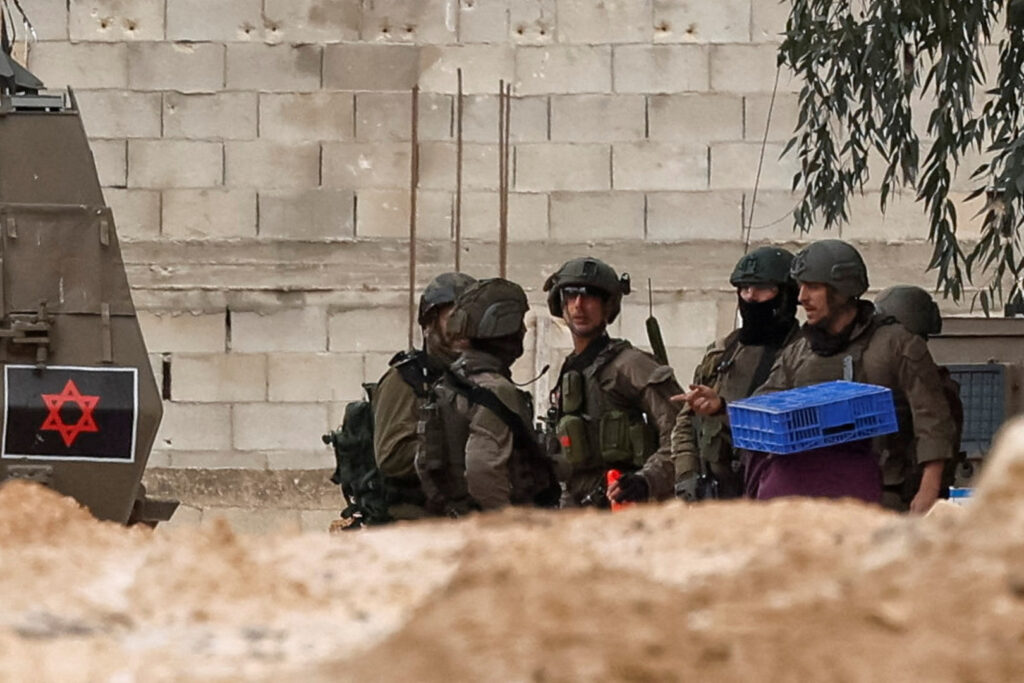
NewsFeed Almost as soon as Israeli leaders agreed to the Gaza ceasefire, they launched another assault in the occupied West Bank. Residents fear the occupied territory is being ‘Gazafied’ as part of a strategy towards annexation. Soraya Lennie explains. Published On 23 Jan 202523 Jan 2025 Adblock test (Why?)
As Trump turns to fossil fuels, Europe sprints ahead with renewables
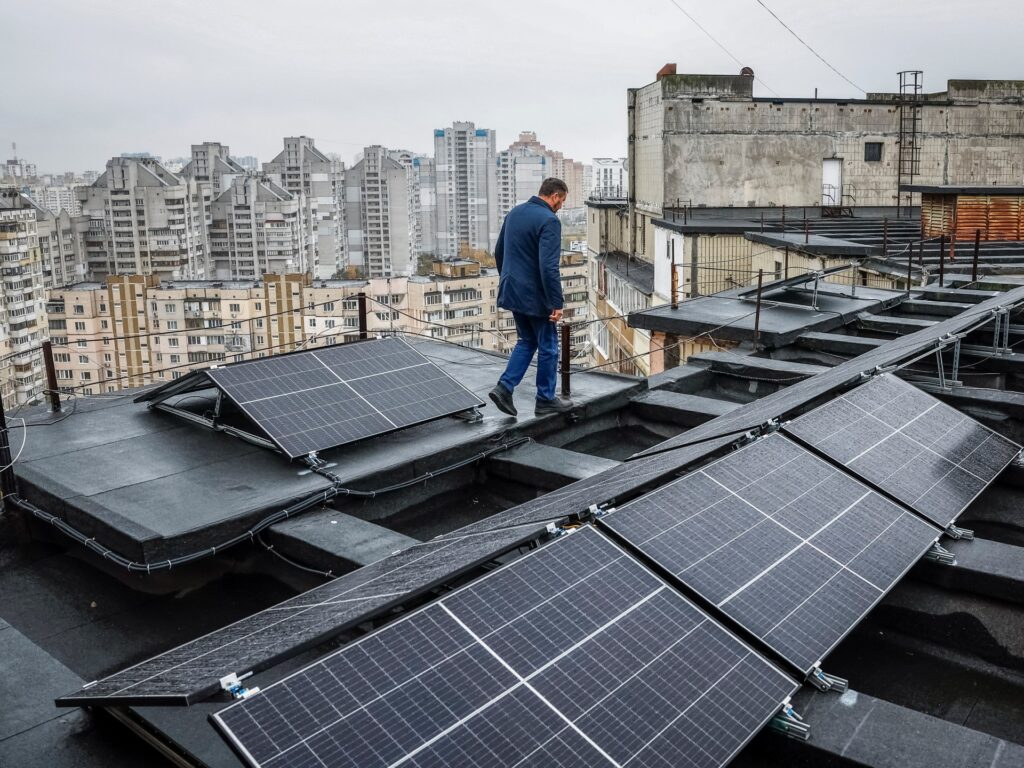
Clean energy sources provided a record 47 percent of European electricity last year, powering ahead of fossil fuels. A new report from Ember, a London-based think tank, found that solar power achieved record growth to give Europe 11 percent of its electricity and overtook coal for the first time. Solar and wind power together surpassed gas, which has declined for the past five years. These are important milestones towards achieving a European goal of reducing greenhouse gas emissions by 55 percent relative to 1990 levels by 2030. Europe’s power sector emissions have now fallen to less than half their 2007 levels, Ember found. This has happened because politicians of all stripes backed renewables, the report said. “Many national and European elections bred concerns that the transition to clean energy would lose support. On the contrary, progress continued at pace,” said the report. Some of that shared political impetus is economic. Since 2019, solar and wind power have saved Europeans 59 billion euros ($61bn) in fossil fuel imports, Ember found, most of it gas. Advertisement During those five years, fossil fuels’ share of the power sector fell to 29 percent, while renewables grew. ‘US risks being left behind in the clean industrial revolution’ Europe has few resources of oil and gas and currently spends about half a trillion dollars a year importing fossil fuels. Its main hope for energy autonomy is in developing renewables. In contrast, the United States is the world’s largest oil producer and exporter of liquefied natural gas (LPG), and President Donald Trump wants to increase LPG production further. On Monday, his first day in office, he declared a national energy emergency that would fast-track drilling and pipeline construction permits. He also signed an executive order temporarily freezing all US onshore and offshore wind farms. Those policies signal differences between the US and Europe on energy. “The US is diverging from global trends on wind power,” said Dave Jones, insights director at Ember. “Major economies are embracing wind as a source of cheap, clean electricity. “The US risks being left behind in the clean industrial revolution.” The US produced just 10 percent of its electricity from wind energy last year, compared to 17 percent in Europe and 29 percent in the UK, Ember found. On January 7, Trump said leasing areas of ocean for wind farms destroyed their value because it put them out of reach of oil and gas producers. Hours before he signed the executive orders, during his inauguration, Trump said, “America will be a manufacturing nation once again, and we have something that no other manufacturing nation will ever have: the largest amount of oil and gas of any country on Earth.” Advertisement Kostis Stambolis, the head of the Athens-based Institute of Energy for Southeast Europe (IENE), told Al Jazeera, “The US is currently autonomous in oil and gas, producing 20mn barrels of oil-equivalent a day. “Trump wants to make it an export powerhouse in both.” The US is not the only country increasing energy supply. Several other nations, including Australia, Qatar and Mauritania, have announced new gas liquefaction trains, which will increase supply and lower prices. “We believe there’s going to be an LNG glut globally from 2026 to 2030, and that will lead to fierce competition and a fall in prices,” said Stambolis. “That will cover Europe’s needs more cheaply. What effect it will have on the development of renewables is very difficult to say.” Ember believes Europe will continue to invest in autonomy. “The EU is striding closer towards a clean energy future powered by homegrown wind and solar,” wrote Beatrice Petrovich, who co-authored the report. “This new energy system will reduce the bloc’s vulnerability to fossil price shocks, tackle the climate crisis and deliver affordable energy.” ‘Replacing fossil fuels in transport is harder’ Not every energy analyst is confident Europe will succeed. “Renewables in electricity are the ‘easy’ part of the transition, especially at a time of high fossil fuel prices. Replacing fossil fuels in transport is harder, and in the heat sector still harder,” Professor Jonathan Stern, who leads the Oxford Institute of Energy Studies, a think tank, told Al Jazeera. Advertisement Apart from Europe’s ambition to be the first climate-neutral continent by 2050, two things, in particular, have spurred its transformation. The COVID-19 pandemic in 2020 led to the creation of a fund designed to pull Europe out of recession. The Recovery and Resilience Fund, as it was called, fertilised 1.8 trillion euros ($1.87 trillion) in investments, a third of them in green energy. Russia’s full-scale invasion of Ukraine in 2022 further accelerated Europe’s flight from fossil fuels as Russia cut pipeline gas flows to the continent in an apparent effort to blackmail Europe into stopping military assistance to Kyiv. Previous Ember reports have found that Europe’s solar and wind energy sectors grew at record rates of 5 percent in 2022 and again in 2023. Meanwhile, Europe switched to buying liquefied natural gas (LNG) from other producers, such as the US, Australia and Qatar. Russia has got in on the act, investing in liquefaction and shipping its gas in LNG carriers to disguise its origin as Russian. Stern warned that these transformations in the gas market have given renewables a boost that may be temporary. “Gas prices have been extremely high in 2024 because of the transition from Russian gas to LNG where we are in a tight global market. This hugely benefitted renewables,” he said. Adblock test (Why?)
Musk clashes with OpenAI’s Altman over $500bn Stargate
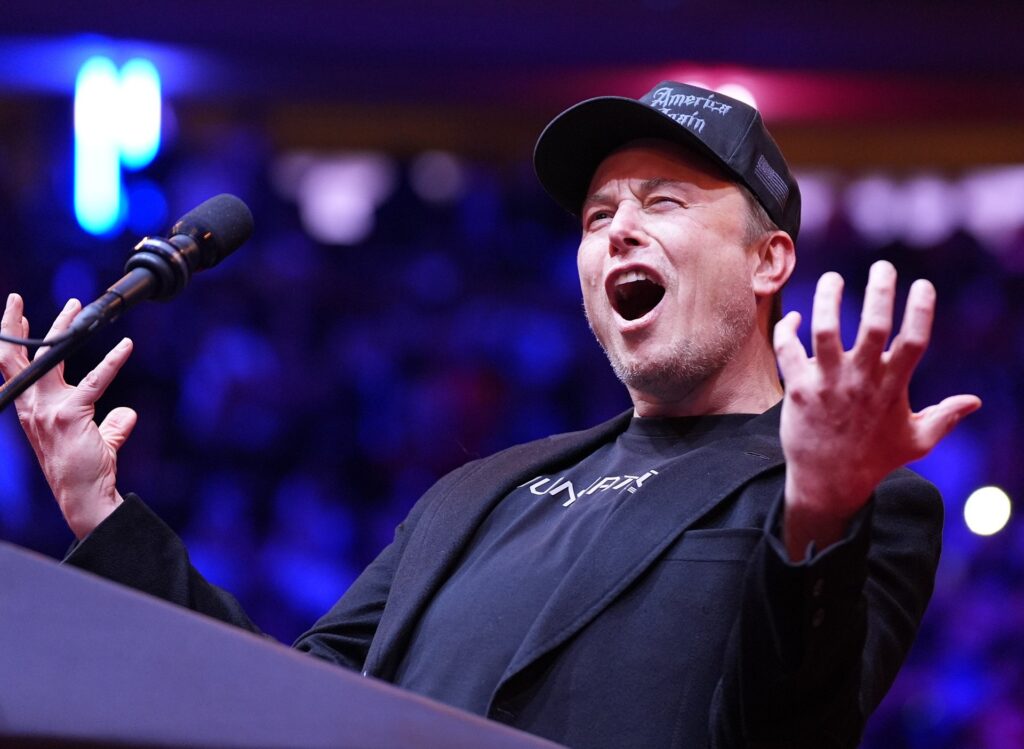
Elon Musk is clashing with OpenAI CEO Sam Altman over the Stargate artificial intelligence (AI) infrastructure project touted by President Donald Trump, the latest in a feud between the two tech billionaires that started on OpenAI’s board and is now testing Musk’s influence with the new president. Trump on Tuesday had talked up a joint venture investing up to $500bn through a new partnership formed by OpenAI, the maker of ChatGPT, alongside Oracle and SoftBank. The new entity, Stargate, is already starting to build out data centres and the electricity generation needed for the further development of fast-evolving AI technology. Trump declared it “a resounding declaration of confidence in America’s potential” under his new administration, with an initial private investment of $100bn that could reach five times that sum. But Musk, a close Trump adviser who helped bankroll his campaign and now leads a government cost-cutting initiative, questioned the value of the investment hours later. “They don’t actually have the money,” Musk wrote on his social media platform X. “SoftBank has well under $10B secured. I have that on good authority.” Advertisement Altman responded Wednesday by saying Musk was “wrong, as you surely know” and inviting Musk to come visit the first site in Texas that is already under construction. “[T]his is great for the country. i realize what is great for the country isn’t always what’s optimal for your companies, but in your new role i hope you’ll mostly put [America] first,” Altman wrote, using a US flag emoji to represent America. Behind the feud The public clash over Stargate is part of a years-long dispute between Musk and Altman that began with a boardroom rivalry over who should run OpenAI, which both men helped found. Musk, an early OpenAI investor and board member, sued the artificial intelligence company last year, alleging it had betrayed its founding aims as a nonprofit research lab benefitting the public good rather than pursuing profits. Musk has since escalated the dispute, adding new claims and asking for a court order that would stop OpenAI’s plans to convert itself into a for-profit business more fully. A hearing is set for early February in a California federal court. The world’s richest man, whose companies include Tesla, SpaceX and X, last year started his own rival AI company, xAI, that is building its own big data centre in Memphis, Tennessee. Musk says it faces unfair competition from OpenAI and its close business partner Microsoft, which has supplied the huge computing resources needed to build AI systems, such as ChatGPT. When did Stargate start? Tech news outlet The Information first reported on an OpenAI data centre project called Stargate in March 2024, indicating that it had been in the works long before Trump announced it. Advertisement Another company – Crusoe Energy Systems – announced in July it was building a large and “specially designed AI data center” outside Abilene, Texas, at a site run by energy technology company Lancium. Crusoe and Lancium said in a joint statement at the time that the project was “supported by a multibillion-dollar investment” but didn’t disclose its backers. AI technology requires huge amounts of electricity to build and operate, and both companies said the project would be powered with renewable sources such as from nearby solar farms, in a way that, according to Lancium CEO Michael McNamara, would “deliver the maximum amount of green energy at the lowest possible cost”. Crusoe said it would own and develop the facility. It is not clear how and when that project became the first phase of the Stargate investment revealed by Trump. Oracle co-founder Larry Ellison said Tuesday that the Abilene project is the first of about 10 data centre buildings currently being built, and that number could expand to 20. Where is Microsoft? Missing from Trump’s news conference Tuesday was Microsoft, which has long supported OpenAI with billions of dollars in investments and enabling its data centres to be used to build the models behind ChatGPT and other generative AI tools. Microsoft said this week it is also investing in the Stargate project but put out a statement noting that its OpenAI partnership will “evolve” in a way that enables OpenAI “to build additional capacity, primarily for research and training of models”. Advertisement Asked about Musk’s comments about the Stargate deal Wednesday during a CNBC interview at the World Economic Forum in Davos, Switzerland, Microsoft CEO Satya Nadella pivoted to his company’s own $80bn plan to build out its global AI infrastructure, of which $50bn is being spent in the US. “Look, all I know is I’m good for my $80bn,” said Nadella, laughing. Adblock test (Why?)
New US wildfire rips through mountain area north of Los Angeles
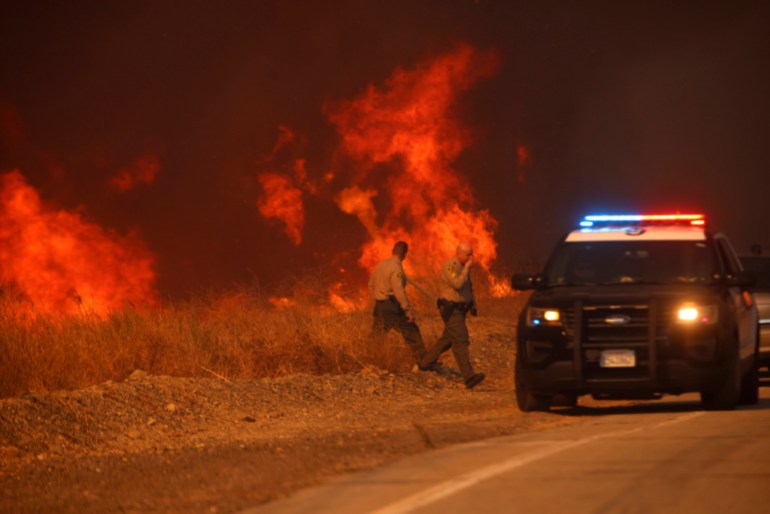
Firefighting aircraft and ground crews are battling fast-moving wildfire in the Castaic Lake area north of Los Angeles. A fast-moving wildfire broke out in the mountains north of Los Angeles and ripped through an estimated 21 square kilometres (8.1 square miles) of trees and brush leading to thousands of evacuation orders for local residents and sending an enormous plume of dark smoke into the sky. Firefighters said on Wednesday the Hughes Fire in the Castaic Lake area of Los Angeles County – located about 80km (50 miles) north of the city of Los Angeles – prompted evacuation orders to local residents amid the “immediate threat to life” due to the blaze. An estimated 18,600 people live in the local community where ferocious flames devoured trees and brush on the hillsides around Castaic Lake. Robert Jensen of the Los Angeles County Sheriff’s Department urged everyone in the fire-affected area to leave immediately and not suffer the same fate as some in the devastating fires that hit the Los Angeles area of Eaton and Palisades, as well as other areas, that killed 28 people and left thousands homeless. “We’ve seen the devastation caused by people failing to follow those orders in the Palisades and Eaton fires,” Jensen said. Advertisement “I don’t want to see that here in our community as well. If you’ve been issued an evacuation order, please get out,” he said. County Sheriff officers return to their vehicle after monitoring flames caused by the Hughes Fire along a roadside in Castaic, California, on January 22, 2025 [Ethan Swope/AP Photo] US television news showed police driving around the Castaic area urging people to leave as crews on the ground and in water-dropping aircraft fought to prevent the wind-driven fire from moving southward towards more populated foothill communities. The blaze was fanned by strong, dry Santa Ana winds that raced through the area, pushing a vast pall of smoke and embers ahead of the flames. Firefighting crews from the Los Angeles County Fire Department and Angeles National Forest were also attacking the blaze from the ground. It was not immediately known what sparked the fire, but it occurred during red flag fire conditions when meteorologists say strong winds and low humidity create conditions ripe for rapid fire spread. The University of California San Diego shared dramatic video of the start of the Hughes Fire and its rapid development on its ALERTCalifornia online platform, showing a huge cloud of smoke developing quickly as the fire spreads across hillsides. The start and rapid growth of the #HughesFire in Los Angeles County seen from ALERTCalifornia’s Whitaker Ridge camera. Check conditions live on multiple cameras at https://t.co/Azu4PbZNY7 and look to @Angeles_NF and @LACOFD for updates. pic.twitter.com/JyKOpyY2jx — ALERTCalifornia (@ALERTCalifornia) January 22, 2025 Advertisement US President Donald Trump, who criticised the response to earlier wildfires in the Los Angeles area during his inaugural address on Monday, said he will travel to the city on Friday. As the new fire raged in Castaic, the Eaton and Palisades fires – that have also ravaged Los Angeles – have been brought under greater control, the California Department of Forestry and Fire Protection (Cal Fire) said. The Eaton Fire, which has burned through 5,674 hectares (14,021 acres) east of Los Angeles, is now 91 percent contained, while the larger Palisades Fire, which has consumed 9,489 hectares (23,448 acres) on the west side of Los Angeles, is almost 70 percent contained, authorities said. Since the Eaton and Palisades fires broke out on January 7, they have killed 28 people and damaged or destroyed nearly 16,000 structures, Cal Fire said. At one point, during the height of the fires, 180,000 people were under evacuation orders, according to Los Angeles County officials. Private forecaster AccuWeather projects damage and economic losses from the fires around Los Angeles at more than $250bn. A firefighting helicopter drops water on the Hughes Fire in Castaic in Los Angeles, California, on January 22, 2025 [Robyn Beck/AFP] Adblock test (Why?)