

US military sends troops to Mexico border amid Trump immigration crackdown
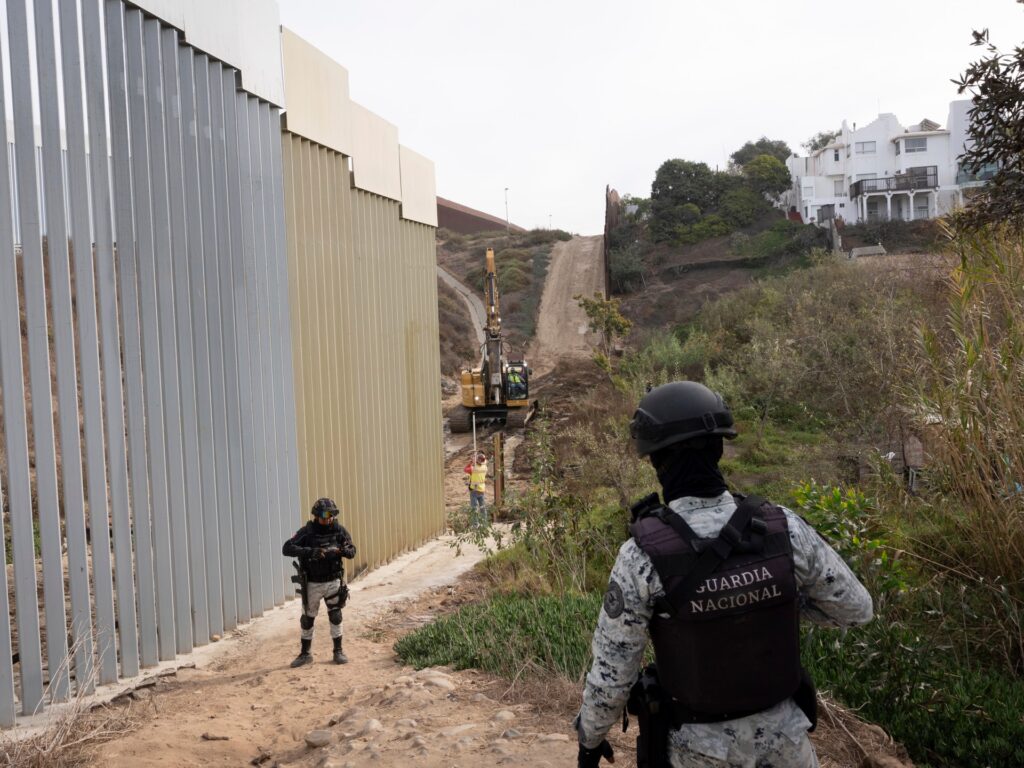
The deployment is part of Trump’s executive action to declare a ‘national emergency’ at the US’s southern border. The United States military has started to send 1,500 active-duty troops to the country’s southern border with Mexico, as part of President Donald Trump’s long-promised crackdown on immigration. The White House confirmed the troop movement on Wednesday, though the full details of the order have yet to be released. Officials told US media that the service members involved included 500 marines. They are not expected to conduct law enforcement duties as part of their role at the border. The troop deployment was widely expected, as immigration had been a hallmark of Trump’s campaign for a second term. Shortly after he was sworn in on Monday, the Republican leader signed an executive order declaring a “national emergency” at the border, repeating some of the heated rhetoric he had delivered on the campaign trail. “America’s sovereignty is under attack,” the executive order said. “This invasion has caused widespread chaos and suffering in our country over the last 4 years.” The order included provisions for the deployment of armed forces “to support the activities of the Secretary of Homeland Security in obtaining complete operational control of the southern border”. Advertisement It also called for additional physical barriers to be erected, as well as the use of unmanned aerial surveillance. Trump’s communications team quickly hailed Wednesday’s troop deployment as a fulfilment of his election-season promise. “This is something President Trump campaigned on,” said Karoline Leavitt, the White House press secretary. “The American people have been waiting for such a time as this – for our Department of Defense to actually implement homeland security seriously.” An estimated 2,500 US National Guard members and reserve troops are already at the border. In addition, US Customs and Border Protection employs more than 45,000 people. As of fiscal year 2023, 19,104 of those employees served as border patrol agents to secure the areas between official ports of entry. Immigration advocates, however, fear an increased military presence at the border could discourage legitimate asylum claims or lead to the use of military tactics on civilians. But Trump has argued that a military response is needed given the rates of irregular entry into the US. He has also regularly conflated immigration with increased crime, something not borne out by statistics. Studies have repeatedly shown that undocumented people in the US commit crimes at a much lower rate than US-born citizens, including violent crimes. Still, Trump has used examples like that of Laken Riley, a 22-year-old nursing student, to advance his proposals. In February 2024, Riley was killed while jogging at the University of Georgia, and an undocumented Venezuelan man was ultimately found guilty of her murder. Advertisement On Wednesday, the House of Representatives passed the Laken Riley Act, named in her honour. It requires Immigration and Customs Enforcement (ICE) to detain any undocumented person arrested or charged with a crime like theft or robbery. Having already passed the Senate, the bill now proceeds to Trump’s desk, where he is expected to sign it. It will be the first major legislation of his administration. But human rights advocates warn the bill could violate defendants’ due process, as those subject to the law need only be accused, not convicted, of a crime. Adblock test (Why?)
Panama and China push back against Trump’s canal threats

Panama’s president insists canal ‘was not a gift’ from the US; China declares it does not interfere. Panama and China have pushed back against United States President Donald Trump’s controversial claims regarding the Panama Canal. The Panama Canal “was not a gift” from the US, Panama’s President Jose Raul Mulino said on Wednesday in response to Trump’s threat to seize control of the strategic waterway. Beijing, meanwhile, rejected the US president’s assertion that it is effectively in control of the canal. “We reject in its entirety everything that Mr Trump has said,” Mulino said during a panel at the World Economic Forum in Davos, Switzerland. “First because it is false and second because the Panama Canal belongs to Panama and will continue to belong to Panama. The Panama Canal was not a concession or a gift from the United States.” Trump has previously refused to rule out military action to take control of the canal, which the US opened in 1914 to provide a trade route linking its east and west coasts but handed to Panama in 1999. During his inauguration on Monday, the US president repeated his complaint that China was effectively “operating” the canal, which was “foolishly given to Panama,” thanks to a growing presence around the waterway, Advertisement “We didn’t give it to China, we gave it to Panama. And we’re taking it back,” Trump declared. ‘Never interfered’ Panama City on Tuesday made a formal complaint to the United Nations, referring to an article of the UN Charter precluding any member from “the threat or use of force” against the territorial integrity or political independence of another. In a letter to UN Secretary-General Antonio Guterres, it requested that the UN Security Council – on which the US has a veto – take up the matter. On Wednesday, a spokesperson for the Ministry of Foreign Affairs in Beijing said, “China does not participate in the management and operation of the canal and has never interfered in the affairs of the canal.” Mulino has previously denied that any nation interferes with the Panama Canal, saying that it operates on a principle of neutrality. However, Panama has announced that it now plans an audit of the canal and the Panama Ports Company, a subsidiary of Hong Kong-based conglomerate CK Hutchison Holdings that operates the ports of Balboa and Cristobal on either end of the canal. As well as outlining his determination to seize the Panama Canal, Trump has also provoked a mixture of worry and mirth with threats to use military or economic power to force Denmark to sell Greenland to the US, and plans to change the name of the Gulf of Mexico to the “Gulf of America”. Adblock test (Why?)
Why is ‘anti-Semitism watchdog’ ADL defending Elon Musk’s ‘Nazi salute’?
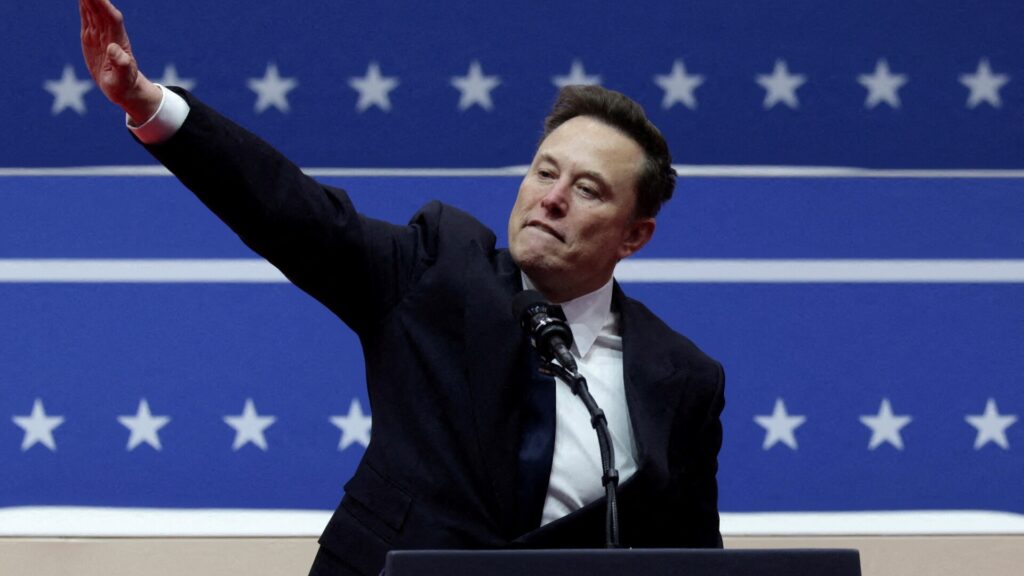
NewsFeed A group that says it fights anti-Semitism rushed to defend Elon Musk over his apparent Nazi salutes at Trump’s inauguration. The ADL is now accused of going soft on bigots, as long as they support Israel. Soraya Lennie explains. Published On 22 Jan 202522 Jan 2025 Adblock test (Why?)
Israel’s top general resigns over Oct 7 failures

NewsFeed Israel’s army chief Herzi Halevi has resigned over security and intelligence ‘failures’ of the Hamas attack on Israel on October 7 2023, leading to opposition calls for Prime Minister Benjamin Netanyahu to do the same. Published On 22 Jan 202522 Jan 2025 Adblock test (Why?)
Israel’s scorched earth campaign leaves Gaza in ruins
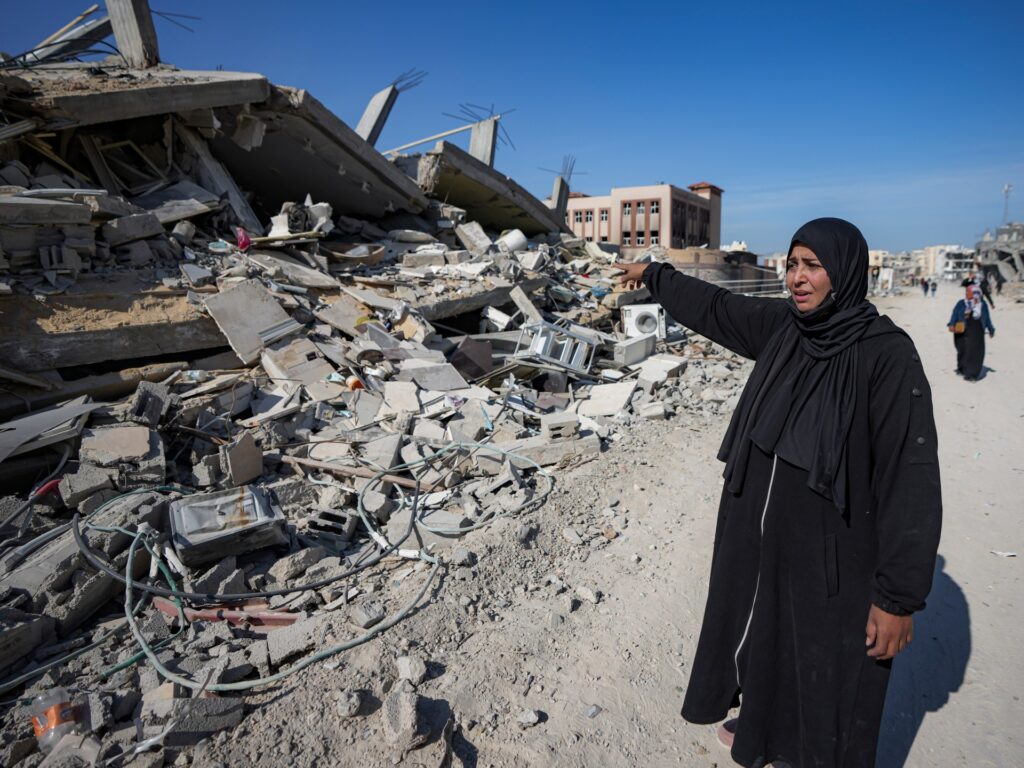
Palestinians in Gaza are confronting an apocalyptic landscape of devastation following the ceasefire that paused more than 15 months of Israel’s attacks on the besieged enclave. Across Gaza, where built-up refugee camps are interspersed between cities, mounds of rubble are stretching as far as the eye can see. Critics say Israel has waged a campaign of scorched earth to destroy the fabric of life in Gaza, accusations that are being considered in two global courts, including the crime of genocide. International rights groups said the vast destruction was part of a broader pattern of extermination and genocide directed at Palestinians in Gaza, a charge Israel denies. The groups dispute Israel’s stance that the destruction was a result of military activity. A United Nations assessment from satellite imagery showed more than 60,000 structures across Gaza had been destroyed and more than 20,000 severely damaged in the war as of December 1, 2024. Israel also carved out a buffer zone about one kilometre inside Gaza from its fence, as well as within the Netzarim Corridor that bisects north Gaza from the south, and along the Philadelphi Corridor, a stretch of land along Gaza’s border with Egypt. Advertisement Vast swaths in these areas were levelled. Adblock test (Why?)
As gold prices surge, Ghana faces ‘looming crisis’ over illegal mining
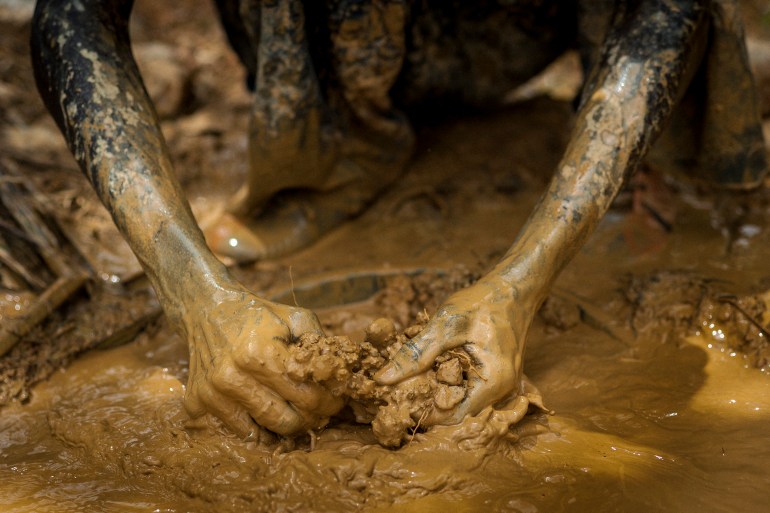
When activist Oliver Barker Vormawor saw reports in September that Ghana’s water agency would not be able to supply some parts of the country with water due to extreme contamination of main rivers from small-scale mining activities, he knew he had to do something. Later that month, Vormawor and dozens of other concerned Ghanaians took to the streets in the capital city, Accra, to protest against what they said was President Nana Akufo-Addo’s inaction to stop a “looming environmental catastrophe”. They were determined to put the matter on the ballot ahead of the hotly contested December general elections. But rather than get a reaction to their demands, Vormawor and several of his comrades were arrested and imprisoned for weeks on charges of illegal assembly. Now, although Akufo-Addo’s New Patriotic Party (NPP) was voted out, activists like Vormawor say they have just as little faith in the new president, John Mahama, and his ability to keep the mounting pollution of Ghana’s rivers and soil in check. Advertisement “There isn’t any roadmap yet from Mahama on how to tackle the problem,” Vormawor, who once served at the United Nations as a legal officer, told Al Jazeera. “It’s really difficult to say that his government will be more aggressive on this because even as the opposition party, they were very tentative and uncomfortable taking up the issue,” he added, referring to Mahama’s National Democratic Congress (NDC). Formerly called the “Gold Coast”, the West African nation is bending under pressure from widespread, incessant small-scale mining of the shiny metal. Much of that artisanal activity falls under what locals call “galamsey”, or in full “gather them and sell”. The term once referred to illegal mining, carried out by mostly untrained young men and women, but now more loosely encompasses licensed small-scale operations that mine unsustainably. A galamseyer, an illegal gold panner, clears mud and sand by hand as he works on a gold field in Kibi, eastern Ghana [File: Cristina Aldehuela/AFP] Officials allegedly complicit in galamsey Galamsey has been in practice for many years, but prices of gold that rose globally to an all-time high (close to $3,000 per gram) in late 2024 caused a corresponding surge in illegal mining across Ghana, and in effect, more intense devastation of water bodies. Small-scale miners use lots of water by digging up soil around riverbeds in forested areas and washing it off to reveal gold ore. They use toxic chemicals such as mercury and cyanide to separate the gold from the ore, and those chemicals flow into rivers that hundreds of communities depend on for drinking and domestic use. Some people say they earn about $70 to $100 a day. By 2017, more than 60 percent of the country’s water bodies were already polluted by mercury and other heavy metals, turning once-clear rivers a murky brown, according to the country’s Water Resources Commission. The chemicals, which can damage lungs, are affecting thousands of acres of farmlands. Ghana’s Cocoa Board (COCOBOD) said it lost 2 percent of the total cocoa cultivation area to mining. Some farmers allege that galamsey operators buy off their land or intimidate them into selling. “This is a problem that has been going on for decades now, but it’s a problem that’s escalating fast and this has created a sense among Ghanaians that we are running out of time to protect our country and our people,” Ewurabena Yanyi-Akofur, country director of the nongovernmental organisation WaterAid, told Al Jazeera. Advertisement “While illegal gold mining was happening mainly in the south of the country, our research shows that it’s now endemic in the north. The presence of mercury and other toxins in water is leading to skin diseases and other health crises,” she added. Protesters chant slogans and carry placards during a demonstration demanding government action on illegal gold mining, in Accra on October 3, 2024 [Nipah Dennis/AFP] In a 2024 report, WaterAid warned that Ghana might have to import water by 2030 in a business-as-usual scenario as drinking water sources shrink. Activists are particularly angry at LI 2462, an Akufo-Addo-era law that passed in November 2022, which allowed for mining concessions to be allocated in the country’s biodiversity hotspots, including protected forests. A previous policy limited mining in forests and protected reserves to about 2 percent of their total area. Many activists at the time denounced the law and called attention to the fact that the country lost the equivalent of 30,000 football fields to deforestation for logging, agriculture, and illegal mining of gold and other minerals like bauxite that year. However, the government pushed ahead with the law and proceeded to approve mining licences – for exploration, industrial operations, and small-scale mining, at an unprecedented rate. Where officials gave out an estimated 90 licences between 1988 and early 2017, at least 2,000 more were given out between September 2017 and January 2025, according to data from the Ghana Mining Repository. That period falls under Akufo-Addo’s tenure. Most licences were for small-scale mines, and key reserves like the Nkrabia Forest Reserve, west of Accra, and the Boin Tano Reserve, located in the country’s Western Region, were among those allocated. Advertisement Anger against the Akufo-Addo government intensified after it surfaced that some of the companies newly licensed under LI 2462 belonged to high-placed politicians and members of Akufo-Addo’s NNP party and that some of those people were also running illegal mines. People in Ghana are protesting illegal gold mining, which has poisoned over 60% of the country’s bodies of water. If illegal mining continues at the current rate, experts say the entire country may be importing water by 2030. pic.twitter.com/EOIQB7Oh3w — AJ+ (@ajplus) October 25, 2024 In April 2023, an explosive report by former Environment Minister Kwabena Frimpong-Boateng to Akufo-Addo leaked to the public. In it, Frimpong-Boateng accused “many party officials … their friends, personal assistants, agents, relatives” of engaging in illegal mining. He accused, among others, Gabby Asare Otchere-Darko, an influential businessman and relative of Akufo-Addo, of interfering in the arrest of mining companies
Rescuers in Indonesia search for survivors after landslide kills 19 in Java
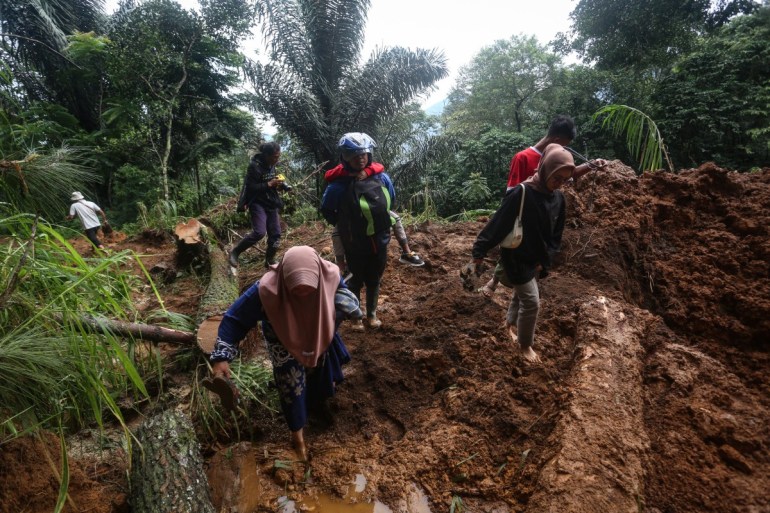
Heavy rains in Pekalongan cause a devastating landslide, blocking a main road and burying houses. Rescuers in Indonesia continue to search for survivors after a landslide in the country’s Central Java province killed at least 19 people. Torrential rain in Pekalongan caused a landslide on Tuesday on a main road connecting the city with a tourist area, the Dieng plateau. Footage on local media showed the affected road and houses buried and rice fields covered by mud, rubble and rocks. Rescuers were forced to walk about four kilometres (2.5 miles) to get to the site because the road was inaccessible. An excavator had been deployed to clear the mudslide while heavy rain and fog hindered rescue efforts. “The joint search and rescue team managed to find and evacuate two bodies … on Wednesday morning. The number of fatalities recorded as of this afternoon is 19 people,” said Abdul Muhari, a spokesman for the National Disaster Mitigation Agency (BNPB). “The two bodies found this morning were part of the list of people reported missing in the tragic event.” People walk through the site of a landslide triggered by heavy rain two days ago in Mudal village, near Pekalongan [Devi Rahman / AFP] Search and rescue agency Basarnas said on Wednesday that 13 people were also injured. Advertisement Heavy machinery was deployed to clear road access for search teams and about 200 rescue personnel have been sent to help the rescue effort, local official Mohammad Yulian Akbar said. “The focus is to search for the victims,” he said, adding that the local government had declared an emergency in the district for two weeks. Images shared by the disaster agency showed rescuers carrying victims in body bags with bamboo stretchers under thick fog from the site. The agency warned residents that rain was expected in the next few days which could cause more landslides and flash floods. Rescuers search for the victims of flash floods which triggered the landslide [BNPB via AP] Indonesia is prone to landslides during the rainy season, typically between November and April, but some disasters caused by adverse weather have taken place outside that season in recent years. In December, 10 people were killed in flash floods that hit hilly villages on the country’s main island of Java. Adblock test (Why?)
Controversial Raphinha winner seals nine-goal thriller for Barca at Benfica

Benfica are denied a penalty in the build-up to an injury-time winner for Barcelona in the Champions League. Raphinha struck a dramatic winner in stoppage time as Barcelona came from behind to beat Benfica 5-4 in a wild match and virtually ensure direct qualification to the Champions League last 16. The home side believed they should have had a penalty in the build-up to the late strike by Barca after Leandro Barreiro appeared to be shoved in the back by Ferran Torres in the box. VAR looked at the appeal, delaying the celebrations for what would be the winning goal, but elected not to ask the referee to take a second look at his decision. Benfica were leading 4-2 with under 15 minutes remaining in the game on Tuesday but Barcelona mounted a stunning late comeback to stay three points behind leaders Liverpool. Vangelis Pavlidis hit a first-half hat-trick for the hosts, in part thanks to two big errors by Barcelona goalkeeper Wojciech Szczesny. However, a Robert Lewandowski double from the penalty spot, an Eric Garcia’s header and a brace for Raphinha helped Barcelona claim a stunning late triumph in Lisbon. Barcelona’s Raphinha scores their fifth goal [Rodrigo Antunes/Reuters] Benfica opened the scoring in the second minute, when Pavlidis escaped Pau Cubarsi and fired home from Alvaro Carreras’s low cross. Advertisement Barcelona responded swiftly with Lewandowski scoring from the penalty spot after Alejandro Balde was brought down by Benfica defender Tomas Araujo. The hosts nosed back ahead through a stroke of luck, when Szczesny raced out of his goal to try and cut out a through-ball, but crashed into Balde. Greece international Pavlidis gleefully collected the loose ball and rolled his second into the empty net. Barcelona’s Wojciech Szczesny fouls Benfica’s Kerem Akturkoglu to concede a penalty [Rodrigo Antunes/Reuters] Barcelona, who lured Szczesny out of retirement to replace the injured Marc-Andre ter Stegen in October, soon fell further behind. Pavlidis completed his half-hour hat-trick with a penalty after another Szczesny mistake, with the goalkeeper flying in to try and dispossess Kerem Akturkoglu, but bringing him down. Lamine Yamal and Raphinha missed good chances before the break as Barcelona pushed forward. Benfica goalkeeper Anatoliy Trubin saved from Jules Kounde, who should have scored, and Lewandowski could not turn home from Pedri’s dangerous ball across the face of goal. Raphinha pulled one back for Barcelona in bizarre fashion as a clearance by Trubin struck his head on the edge of the area and flew back into the net. However, Benfica soon struck again, with Ronald Araujo nudging past Szczesny into his own net as he tried to cut out a cross. Barcelona’s Lamine Yamal looks dejected after Benfica’s Vangelis Pavlidis scores the home side’s first goal [Pedro Nunes/Reuters] Barcelona kept pushing and Lewandowski converted another penalty after Nicolas Otamendi brought down Yamal. The Catalan giants, who last won the Champions League in 2015, pulled level when substitute Garcia headed home from Pedri’s inviting cross. Szczesny saved former Real Madrid star Angel Di Maria’s low shot before Raphinha’s dramatic winner. Advertisement With Benfica appealing for a penalty, Barcelona sprang a quick breakaway and the Brazilian winger slotted home to end a blockbuster clash. Benfica’s Nicolas Otamendi awaits with teammates as VAR checks their penalty claims in injury time [Pedro Nunes/Reuters] Adblock test (Why?)
Trump administration removes four-star Coast Guard leader in firing spree
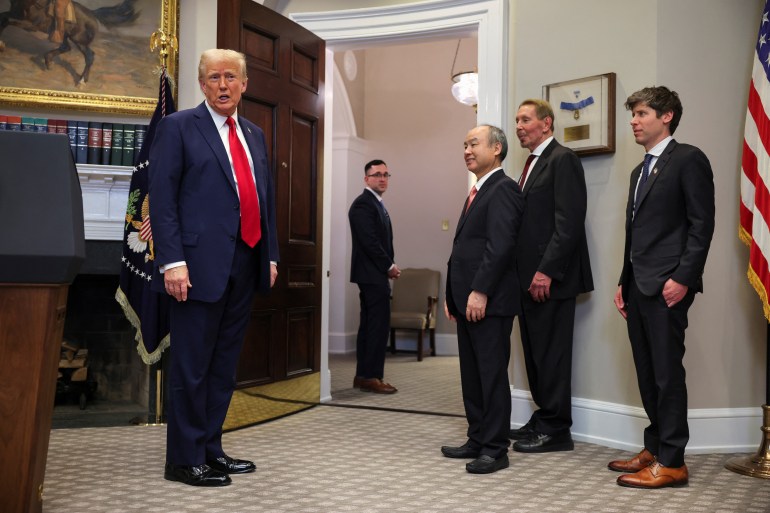
Linda Fagan, the first woman to lead a branch of the US Armed Forces, was among those removed by Trump on his first day. The head of the United States Coast Guard has been removed from her position, as newly inaugurated President Donald Trump follows through with his pledges to fire top officials. On Tuesday, US media published reports that four-star Admiral Linda Fagan had been ousted, less than 24 hours after Trump had taken office. She was part of a wave of dismissals as Trump sought to swiftly reshape the executive branch, brandishing the catchphrase carried over from his time as a reality TV star: “You’re fired.” Fox News was the first to report Fagan’s removal. In 2022, Fagan became the first uniformed woman to lead a branch of the US Armed Forces. According to a statement sent to Coast Guard units and obtained by The New York Times, the incoming administration found Fagan unfit for several reasons. “She was terminated because of leadership deficiencies, operational failures and inability to advance the strategic objectives of the U.S. Coast Guard,” the statement said. It also alleged that Fagan had pursued an “excessive focus” on diversity, equity and inclusion policies, known by the acronym DEI. Advertisement Trump has pledged to dismantle DEI programmes within the federal government, calling them “illegal and immoral”. On Monday night, shortly after he was sworn in, Trump issued an executive action to that effect, calling on federal agencies to “terminate” DEI initiatives. “The public release of these plans demonstrated immense public waste and shameful discrimination,” he wrote. US President Donald Trump speaks next to Oracle co-founder Larry Ellison, SoftBank CEO Masayoshi Son and OpenAI CEO Sam Altman at the White House on January 21 [Carlos Barria/Reuters] Fagan was one of several officials in Trump’s crosshairs on his first and second day in office. Late on Monday night, Trump also posted a message on his platform Truth Social teasing widespread firings. “My Presidential Personnel Office is actively in the process of identifying and removing over a thousand Presidential Appointees from the previous Administration, who are not aligned with our vision to Make America Great Again,” he wrote. The post identified four people to whom Trump offered the following message: “YOU’RE FIRED.” They included General Mark Milley, a former Trump appointee-turned-critic who told the journalist Bob Woodward that the Republican leader was “fascist to the core”. Another individual identified in the post was Spanish American chef Jose Andres, the founder of World Central Kitchen, a nonprofit that provides meals in disaster zones. Andres had served on the President’s Council on Sports, Fitness and Nutrition under Trump’s predecessor, Democrat Joe Biden, and Biden awarded him the Presidential Medal of Freedom earlier this month for his humanitarian work. Advertisement The chef clapped back at Trump’s “YOU’RE FIRED” post with a social media missive of his own on Tuesday. “I submitted my resignation last week…my 2 year term was already up,” Andres wrote, the sentence punctuated by laughing and shrugging emojis. “May God give you the wisdom, Mr. President, to put politics and name calling aside…and instead lift up the everyday people working to bring America together.” Adblock test (Why?)
Trump rescinds guidance protecting ‘sensitive areas’ from immigration raids
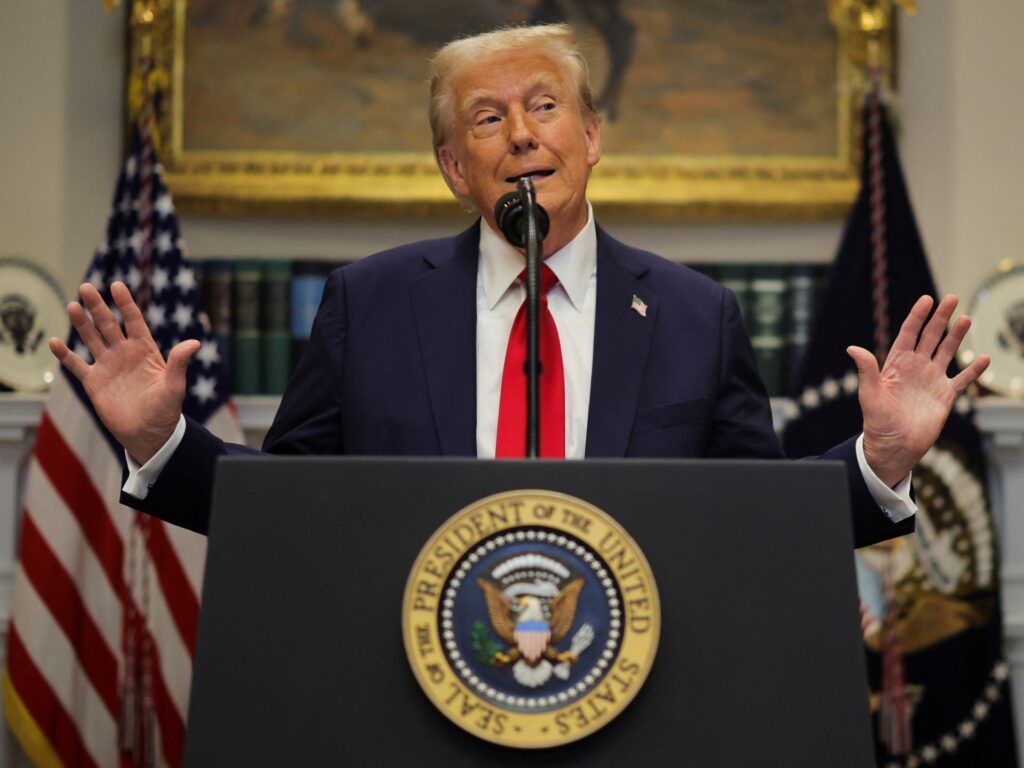
For more than a decade, US immigration agencies like ICE and CBP have avoided raids on places that provide vital services, like hospitals. The administration of newly inaugurated United States President Donald Trump has revoked longstanding protections barring immigration raids on schools, hospitals, churches and other “sensitive areas”. The announcement on Tuesday arrives as part of Trump’s attempts to fulfil a campaign-trail pledge to launch a campaign of “mass deportation”. According to government estimates, as many as 11 million undocumented people live in the United States, many of them cornerstones in their families and communities. For more than a decade, federal agencies have issued guidance against carrying out immigration enforcement efforts in places like schools and medical centres, on the basis that such raids might discourage people from seeking necessary services. Immigration and Customs Enforcement (ICE) implemented its policy in 2011. Customs and Border Protection (CBP) followed suit in 2013. But in Tuesday’s statement, the Trump administration accused that guidance of serving to “thwart law enforcement” efforts. Advertisement It framed the new directive, repealing the protections, as a form of empowerment for immigration agencies. “Criminals will no longer be able to hide in America’s schools and churches to avoid arrest,” the statement said. “The Trump Administration will not tie the hands of our brave law enforcement, and instead trusts them to use common sense.” Trump has long conflated irregular migration with criminality. On the campaign trail last year, he repeatedly raised examples like that of Laken Riley, a 22-year-old student who was allegedly murdered by an undocumented person. He has also used dehumanising language to refer to migrants and asylum seekers. “The Democrats say, ‘Please don’t call them animals. They’re humans.’ I said, ‘No, they’re not humans. They’re not humans. They’re animals,’” he said in April, while referring to the Riley case. Studies, however, have repeatedly shown that undocumented immigrants commit far fewer crimes than native-born US citizens. Human rights groups have warned that Tuesday’s decision could force undocumented people, including children, into precarious situations, cut off from vital services. “This action could have devastating consequences for immigrant families and their children, including U.S. citizen children, deterring them from receiving medical attention, seeking out disaster relief, attending school, and carrying out everyday activities,” the Center for Law and Social Policy said in a statement. Adblock test (Why?)