

Video: What Gaza doctors are saying about the ceasefire
[unable to retrieve full-text content] The ceasefire in Gaza has brought respite for doctors after 15 months of relentless work helping casualties of war.
Can Trump really take over the Panama Canal, rename the Gulf of Mexico?
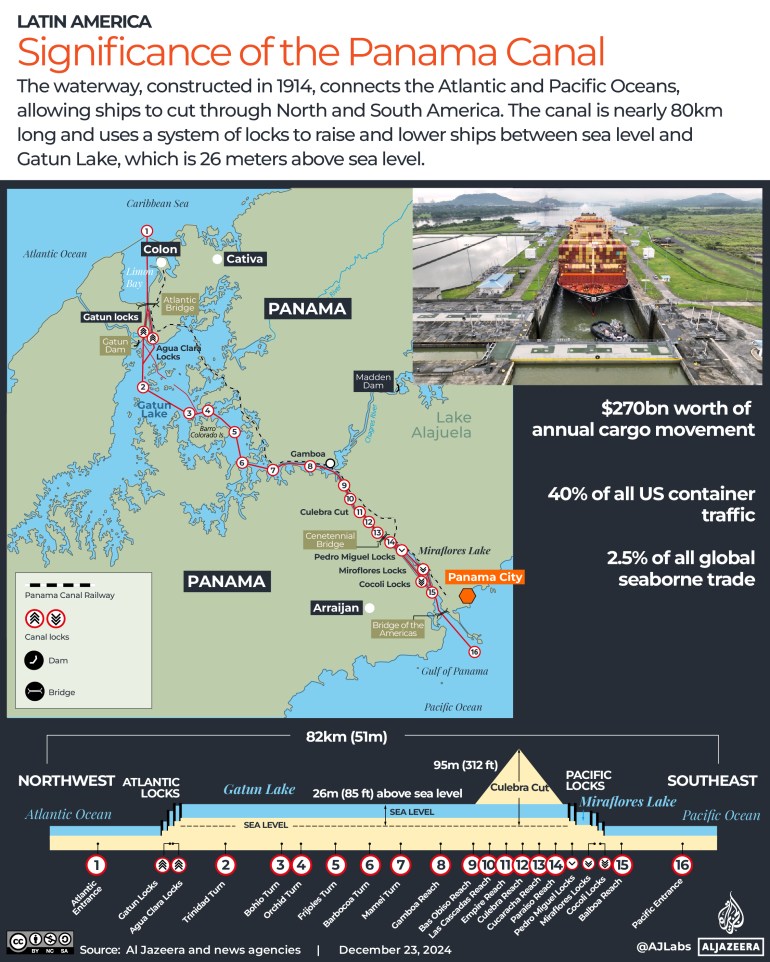
As United States President Donald Trump was sworn in for his second term on Monday, he repeated his wishes to acquire the Panama Canal and rename the Gulf of Mexico in his inaugural speech. Trump has spoken about the canal and the Gulf of Mexico previously. On Monday, he signalled he was serious about moving ahead with both those ideas – and soon. But as powerful as the US president is, can Trump really take over the Panama Canal and rename the Gulf of Mexico? And what would that involve? ‘Manifest Destiny’: What did Trump say during his inauguration? During his inaugural address, Trump voiced dreams of American territorial expansion. While unfurling plans of space exploration, he invoked the 19th-century expansionist doctrine of “Manifest Destiny” which decrees that the US is destined to expand territorially. “We are going to be changing the name of the Gulf of Mexico to the Gulf of America,” he said, his ambitious tone punctuated with pauses to contain his excitement. Former Secretary of State Hillary Clinton, who Trump defeated in the 2016 election to first come to power, burst out laughing in the audience behind him as he finished the sentence. Advertisement Trump lauded former US presidents including Republican William McKinley, who was president from 1897 to 1901. He also acknowledged former President Theodore Roosevelt Jr, the Republican who held office from 1901 to 1909. He issued an executive order for Alaskan Mount Denali to be renamed Mount McKinley after the former president. The mountain’s name was changed from McKinley to Denali by former Democrat President Barack Obama in 2015, reflecting the name that the Indigenous Alaskan people and residents have been using for the mountain. To Roosevelt, he attributed the construction of the Panama Canal, a man-made waterway on the Panama Isthmus, linking the Pacific Ocean and the Atlantic Ocean. The canal was built mostly by the US between 1904 and 1914, under Roosevelt’s supervision. Trump said the canal had “foolishly been given to the country of Panama” by the US. He added: “We have been treated very badly from this foolish gift that should have never been made, and Panama’s promise to us has been broken. “Above all, China is operating the Panama Canal. And we didn’t give it to China. We gave it to Panama, and we’re taking it back.” Trump has had a contentious history with Panama. In 2018, Trump had to surrender his name from the Trump International Hotel and Tower in Panama after a dispute with the majority hotel owner. On Monday, Panama President Jose Raul Mulino rejected the claims Trump made in his inaugural address. “On behalf of the Republic of Panama and its people, I must reject in a comprehensive manner the words outlined by President Donald Trump regarding Panama and its canal, in his inaugural speech,” he said in a statement translated by news agencies. “There is no presence of any nation in the world that interferes with our administration.” Advertisement Who owns the Panama Canal? The government of Panama owns the 82km (51 mile) canal. Panama was handed ownership of the canal on December 31, 1999, under a 1977 treaty signed by former US President Jimmy Carter and former Panamanian leader Omar Torrijos. Under the treaty, the US government relinquished control of the canal by the year 2000. The treaty grants the US the authority to maintain and operate the canal. Ships from any country can traverse the canal. The treaty does not have a clause allowing the US to take over ownership of the canal. The treaty decrees that the fees to transit the canal must be “just, reasonable, equitable, and consistent with international law”. “The purpose of our deal and the spirit of our treaty has been totally violated. American ships are being severely overcharged and not treated fairly in any way, shape, or form. And that includes the United States Navy,” Trump said during the inaugural address. In 2023, the Panama Canal was affected by drought conditions in Central America. Traffic traversing through the waterway has reduced by 29 percent in the past fiscal year. Between October 2023 and September 2024, 9,944 vessels traversed the canal, compared with 14,080 in the year prior. Panama President Mulino said that the tariffs which have hiked the fee for the canal “are not set on a whim” in late December 2024, after Trump had first talked about acquiring the canal. China does not own the canal. Although, CK Hutchison, a Hong Kong-based corporation, has run two of the canal’s ports, located on the Caribbean and Pacific entrances, since 1997. In his December statement, Mulino also said that China does not own the Panama Canal, and “every square metre of the Panama Canal and the surrounding area belongs to Panama and will continue belonging [to Panama]”. Advertisement Can Trump take the Panama Canal? An article published by Washington, DC-headquartered think tank Atlantic Council on Monday said one way Trump could “take back” the canal is by increasing US investment in it, and by investing in the businesses that directly and indirectly operate the canal. Trump has not specified how he would go about taking the canal, but he has not ruled out the possible use of military or economic force for territorial expansion. He has also talked about wanting to acquire Greenland and Canada since he has been voted in. The canal accounts for an estimated 2.5 percent of global sea trade and 40 percent of all US container traffic. If Trump takes the Panama Canal, “that would be a breach of the UN Charter, the governing document that has framed international relations since the second world war,” according to Al Jazeera’s James Bays. This is because the canal is part of Panama, a sovereign country. How many people died building the Panama Canal? During his inauguration, Trump said the US “lost 38,000 lives in the building of the Panama Canal”. In an August 2023 interview, Trump told conservative host Tucker Carlson, “So we built a
Full speech: Donald Trump’s second inauguration address
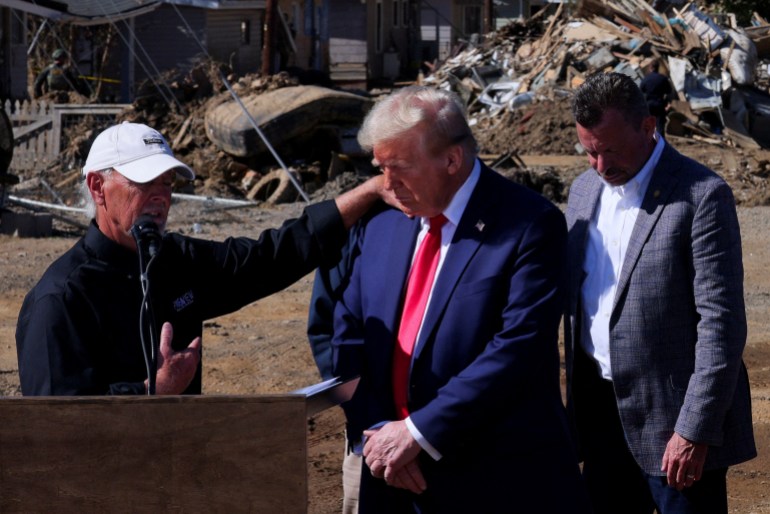
In his inaugural address, President Donald Trump promised a “golden age” for the United States, casting himself as a uniter. But for a speech that heralded a bright future, it often echoed the past. Much of Trump’s rhetoric mirrored his words eight years ago, when he was first sworn in as president and spoke about a country with a failing economy and cities torn apart by crime. Trump said he had the mandate to carry out his vision for the country after winning the popular vote in an improbable political comeback that culminated in his taking the oath of office in the very building his supporters stormed four years ago in a failed attempt to overturn his 2020 election loss. “From this moment on, America’s decline is over,” Trump said, speaking in the US Capitol Rotunda. “Our golden age has just begun.” Read his full inauguration speech below: ‘Stronger, greater, and far more exceptional’ Thank you. Thank you very much, everybody. Wow. Thank you very, very much. Vice President Vance, Speaker Johnson, Senator Thune, Chief Justice Roberts, justices of the Supreme Court of the United States, President Clinton, President Bush, President Obama, President Biden, Vice President Harris, and my fellow citizens, the golden age of America begins right now. Advertisement From this day forward, our country will flourish and be respected again all over the world. We will be the envy of every nation, and we will not allow ourselves to be taken advantage of any longer. During every single day of the Trump administration, I will, very simply, put America first. Our sovereignty will be reclaimed. Our safety will be restored. The scales of justice will be rebalanced. The vicious, violent, and unfair weaponisation of the Justice Department and our government will end. And our top priority will be to create a nation that is proud, prosperous, and free. America will soon be greater, stronger, and far more exceptional than ever before. Current government ‘refuses to defend Americans’ I return to the presidency confident and optimistic that we are at the start of a thrilling new era of national success. A tide of change is sweeping the country, sunlight is pouring over the entire world, and America has the chance to seize this opportunity like never before. But first, we must be honest about the challenges we face. While they are plentiful, they will be annihilated by this great momentum that the world is now witnessing in the United States of America. As we gather today, our government confronts a crisis of trust. For many years, a radical and corrupt establishment has extracted power and wealth from our citizens while the pillars of our society lay broken and seemingly in complete disrepair. We now have a government that cannot manage even a simple crisis at home while, at the same time, stumbling into a continuing catalogue of catastrophic events abroad. Advertisement It fails to protect our magnificent, law-abiding American citizens but provides sanctuary and protection for dangerous criminals, many from prisons and mental institutions, that have illegally entered our country from all over the world. We have a government that has given unlimited funding to the defence of foreign borders but refuses to defend American borders or, more importantly, its own people. Our country can no longer deliver basic services in times of emergency, as recently shown by the wonderful people of North Carolina — who have been treated so badly — and other states who are still suffering from a hurricane that took place many months ago or, more recently, Los Angeles, where we are watching fires still tragically burn from weeks ago without even a token of defence. They’re raging through the houses and communities, even affecting some of the wealthiest and most powerful individuals in our country — some of whom are sitting here right now. They don’t have a home any longer. That’s interesting. But we can’t let this happen. Everyone is unable to do anything about it. That’s going to change. Trump prays with businessman Mike Stewart in Asheville on his visit to a site damaged by Hurricane Helene in North Carolina, October 21, 2024 [Brian Snyder/Reuters] We have a public health system that does not deliver in times of disaster, yet more money is spent on it than any country anywhere in the world. And we have an education system that teaches our children to be ashamed of themselves — in many cases, to hate our country despite the love that we try so desperately to provide to them. All of this will change starting today, and it will change very quickly. Advertisement End of ‘America’s decline’ My recent election is a mandate to completely and totally reverse a horrible betrayal and all of these many betrayals that have taken place and to give the people back their faith, their wealth, their democracy, and, indeed, their freedom. From this moment on, America’s decline is over. Our liberties and our nation’s glorious destiny will no longer be denied. And we will immediately restore the integrity, competency, and loyalty of America’s government. Over the past eight years, I have been tested and challenged more than any president in our 250-year history, and I’ve learned a lot along the way. The journey to reclaim our republic has not been an easy one — that, I can tell you. Those who wish to stop our cause have tried to take my freedom and, indeed, to take my life. Just a few months ago, in a beautiful Pennsylvania field, an assassin’s bullet ripped through my ear. But I felt then and believe even more so now that my life was saved for a reason. I was saved by God to make America great again. (Applause.) Thank you. Thank you. Thank you very much. That is why each day under our administration of American patriots, we will be working to meet every crisis with dignity and power and strength. We will move with purpose and speed to bring back hope, prosperity,
Palestinians find dozens of bodies under rubble in Gaza
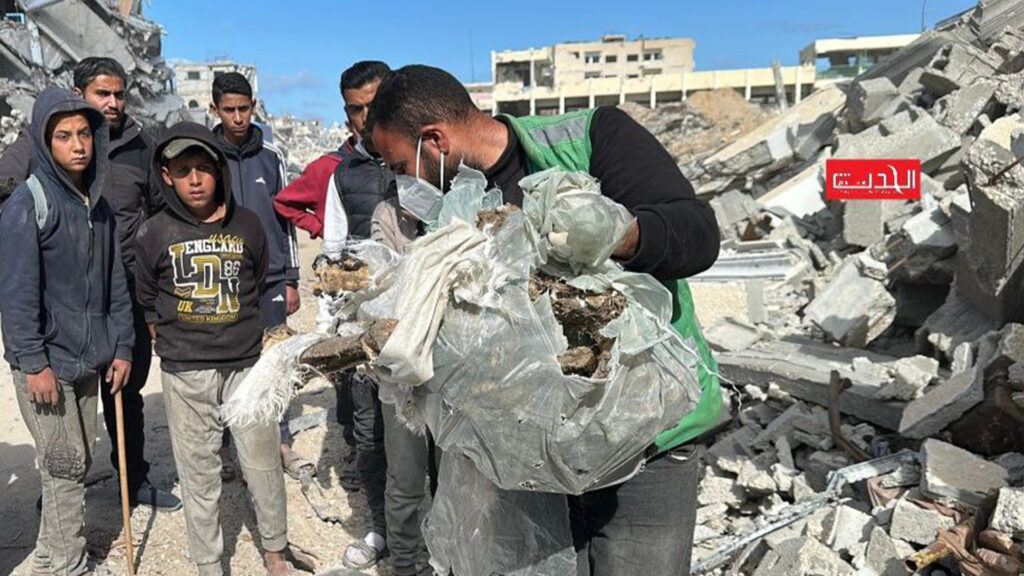
NewsFeed Some Palestinians have found the remains of their loved ones after the ceasefire came into effect while others are desperately searching for any sign of their family members. An estimated 10,000 bodies are believed to be buried under the debris covering Gaza after the devastating 15-month war. Published On 20 Jan 202520 Jan 2025 Adblock test (Why?)
Trump gives preview of next four years as president
[unable to retrieve full-text content] It is only Donald Trump’s first day back in office as US president, but he has given a clear preview of what to expect.
Supporters swarm US capital as Donald Trump sworn in for second term
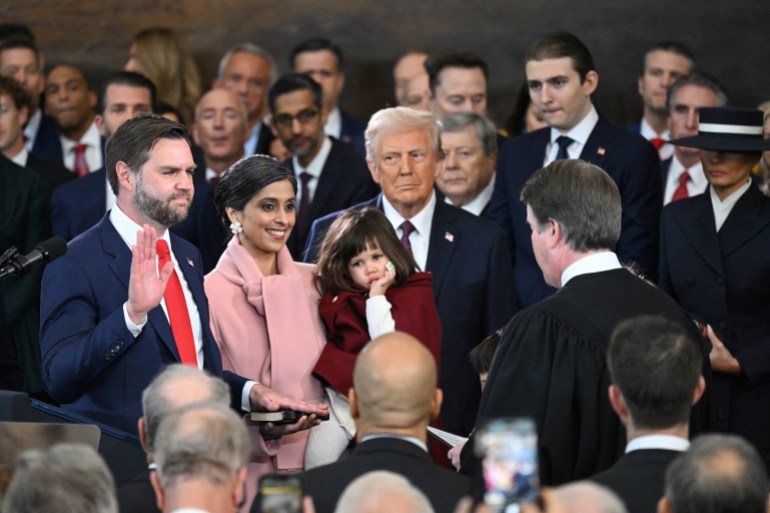
Washington, DC – United States President Donald Trump has been sworn in for a second term at an indoor ceremony at the Capitol, where he was shielded against the wintry gusts of a polar vortex. But his inauguration still saw supporters descend on Washington, DC, to celebrate. On Monday, in his second inaugural address, Trump pledged that his legacy would be that of a “peacemaker and unifier”. But in the same remarks, the US president outlined some of his most divisive policy proposals, including a harsh crackdown on irregular immigration and “taking back” the Panama Canal. “Above all, my message to Americans today is that it is time for us to once again act with courage, vigour and vitality of history’s greatest civilisation,” Trump said. “So as we liberate our nation, we will lead it to new heights of victory and success.” Trump’s Democratic detractors have long accused him of being a threat to US democracy – if not an outright fascist. However, there were few protesters in Washington on Monday to reject Trump’s return to the White House, marking a stark contrast with the large demonstrations before, during and after his first inauguration. Advertisement Protesters may have been deterred by the indoor inauguration or the freezing cold. Others may have felt apathy or a sense of acceptance towards Trump’s return to the White House. JD Vance is sworn in as the US vice president in the US Capitol Rotunda in Washington, DC, on January 20 [Saul Loeb/Reuters] The weather, however, did not keep away the US president’s supporters, who showed up in their Make America Great Again (MAGA) gear and queued over several city blocks to get inside the Capital One Arena. Trump’s last-minute decision on Friday to move his inauguration indoors left many unable to watch it in person. But the arena was set up as an alternative, with a live broadcast of the event. Plus, Trump promised to make a personal appearance afterwards. Still, thousands of his supporters were left angling for a spot in the 20,000-seat arena, which boasted less space than the outdoor National Mall park. ‘Respected again’ Although Trump has filled his cabinet with foreign policy hawks, several of his supporters stressed his pledge to advance global peace. David Marks, who drove from Orlando, Florida, to attend the inauguration events, praised Trump for using “common sense” instead of relying on bureaucracy in his governing style. Marks rode a bike featuring a banner with the flags of Israel and Palestine and a peace sign. “He understands it’s in our interests to have world peace,” he said of Trump. Marks was not able to make it to the arena, where the inauguration ceremony and the president’s speech were broadcast on jumbo screens. Trump supporters wait for entry at Capital One Arena in Washington, DC [Ali Harb/Al Jazeera] Thousands of others were left outside in the Arctic cold, even after waiting for hours to enter the building. Many watched the inauguration on their phones instead as they waited in the slow-moving line. Advertisement Trump’s inaugural address was marked by jabs at outgoing President Joe Biden and pledges to aggressively enact his hardline campaign promises. “The golden age of America begins right now,” Trump said, invoking an oft-repeated phrase from his presidential campaign. “From this day forward, our country will flourish and be respected again all over the world. We will be the envy of every nation, and we will not allow ourselves to be taken advantage of any longer.” ‘World peace’ Those hoping to get a seat in the Capital One Arena began lining up before dawn, despite temperatures that hovered at -6 degrees Celsius (21 degrees Fahrenheit). Johnny Estrada, a 28-year-old police officer from New Mexico, said he and his friends made a last-minute decision to fly in for the inauguration. He admitted some disappointment about the venue change. “Unfortunately, it was changed a bit on us, but we’re here,” said Estrada, who wore a red Trump hat with a tuft of fake orange hair poking out. Johnny Estrada, a 28-year old Trump supporter, waits in line in Washington, DC [Joe Stepansky/Al Jazeera] “The next four years are looking really good. As far as today, I’m just happy to be here.” He added that he most identified with Trump’s “America First” pledge. “Personally, I don’t like how we give money to these other countries for their wars. I’m an Army veteran, and the money should be going to our country.” Chicago resident Shay White also did not make it to the arena, but he played down any dismay in the crowd over the circumstances. Advertisement “We’re Americans no matter where we are,” White said. “There’s so much good energy over here.” His face featured a smear of fake blood, in reference to the blood splatter that stained Trump’s cheek after he survived an assassination attempt in July. White explained that he was confident Trump would help end conflicts globally. Chicago resident Shay White holds a US flag in Washington, DC [Ali Harb/Al Jazeera] “I think we’re going to have less issues with war. Already, a few days ago what did Gaza announce? Gaza announced a ceasefire,” White told Al Jazeera. Trump sent his Middle East envoy, Steve Witkoff, to the region earlier this month to help finalise the ceasefire deal, alongside Biden’s representatives. Several Israeli media outlets reported that Trump’s team pressured Israel’s Prime Minister Benjamin Netanyahu to approve the agreement that was announced last week. ‘Felon coming in with access to nuclear weapons’ While supporters in and around the arena viewed Trump as a strong man who would fight for peace, the president’s critics feared a different outcome for the next four years. At the Metropolitan AME Church just blocks from the White House, Reverend Al Sharpton’s National Action Network held a rally in honour of Martin Luther King, Jr. Many attendees found irony in the fact that Trump’s inauguration took place on the national holiday named for the Black civil rights leader. “We
China executes two men for committing deadly ‘revenge on society crimes’
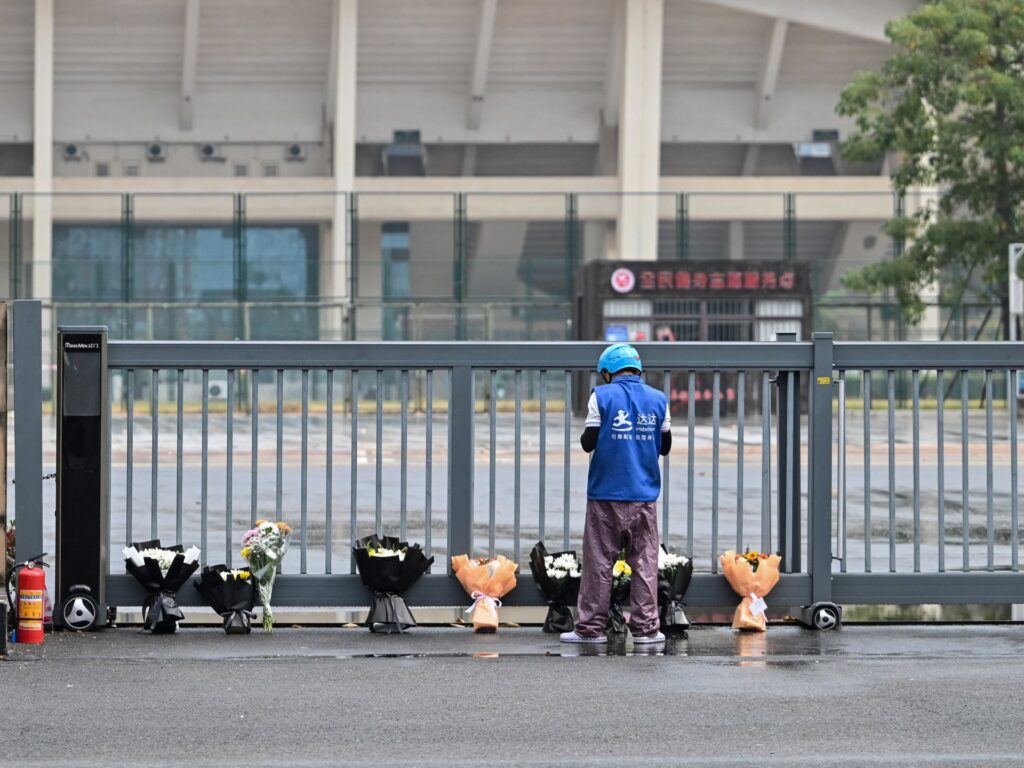
Fan Weiqu had rammed his car into a crowd, killing 35 people, while 21-year-old Xu Jiajin killed eight people and injured 17 in a stabbing attack. China has executed two men who committed deadly attacks that killed dozens in November, raising concerns about a surge in what are called “revenge on society crimes”, state media reported. Fan Weiqu, 62, who rammed his car into a crowd outside a sports stadium in the southern city of Zhuhai, killing at least 35 people, was executed on Monday. The attack was the country’s deadliest in more than a decade, according to authorities. Police said Fan was upset over his divorce settlement. Also in November, 21-year-old Xu Jiajin killed eight people and injured 17 in a stabbing attack at his vocational school in the eastern city of Wuxi. Police said Wu had failed his examinations and could not graduate, and was dissatisfied about his pay at an internship. He was also executed on Monday, according to state broadcaster CCTV. Chinese President Xi Jinping urged local governments to take measures to prevent such attacks, known as “revenge on society crimes”. The two men’s death sentences were issued by the intermediate people’s courts in the cities of Zhuhai and Wuxi, respectively, in December, and approved by the Supreme People’s Court, according to state media. Advertisement Violent crimes are rarer in China than in many Western countries, but the country has seen a rise in recent years. Stabbings and car attacks have challenged the governing Communist Party’s reputation for strict public security and crime prevention. They also carried a shock factor that led some to question perceived social ills such as frustration with a slowing economy, high unemployment and diminishing social mobility. China classifies death penalty statistics as a state secret, but some rights groups believe the country executes thousands every year. Executions are traditionally carried out by gunshot, though lethal injections have also been introduced in recent years. Adblock test (Why?)
How does Trump’s age at inauguration compare to other presidents?
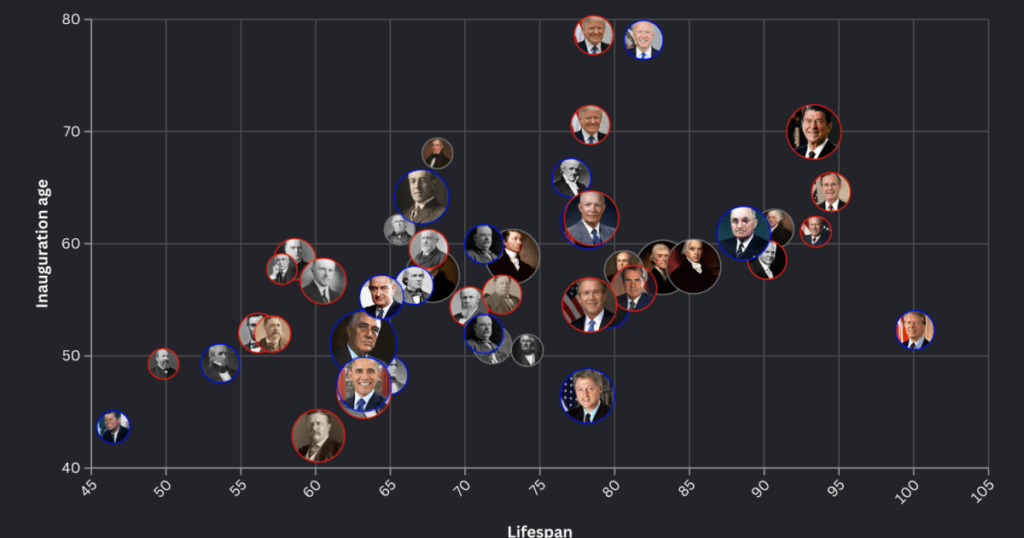
EXPLAINER At 78 years and 7 months, Donald Trump will become the oldest president in US history on inauguration day. Donald Trump is set to be sworn in as the 47th president of the United States on Monday. The 78-year-old will commence his second term as president, becoming the oldest individual to ever assume the office. He will be five months older than Joe Biden, who previously held the record for the oldest president on Inauguration Day in 2021. In the following explainer, Al Jazeera visualises the ages of all US presidents on Inauguration Day, along with their lifespans and years in office. The oldest and youngest US presidents Donald J Trump was born in Queens, New York on June 14, 1946, less than a year after the end of World War II. In 2017, at the age of 70, Trump was sworn in as the 45th president of the United States, making him the oldest president to be inaugurated, surpassing Ronald Reagan, who was just about to turn 70 on Inauguration Day in 1981. The average age of US presidents at their inauguration is 57, a figure that spans from George Washington, the first president, who was 57 in 1789, to the present day. Advertisement The youngest US president at the time of his inauguration was Theodore Roosevelt, who became president at the age of 42 after the assassination of William McKinley in 1901. The US presidents who lived the longest The longest-living US president was Jimmy Carter, who died on December 29, 2024 at the age of 100. He lived 43 years after serving one term as president from 1977 to 1981 – longer than any other president. Out of the 41 presidents who have died, six lived to be over 90, five lived between 80 and 90, and the average age of death was 72. John F Kennedy, the 35th president, lived the shortest of all US presidents. He was assassinated in 1963 at the age of 46. Longest-serving US presidents Prior to 1951, there was no formal limit to how many terms a US president could serve. The two-term limit was officially established by the 22nd Amendment, ratified on February 27, 1951, largely in response to Franklin D Roosevelt four terms in office. Roosevelt, the longest-serving US president, served from 1933 to 1945, completing more than 12 years in office before his death at the age of 63 during his fourth term. Most US presidents have served one term rather than two. Of the 46 presidencies, only 15 presidents have served two or more terms. The shortest-serving president was William Henry Harrison who died on April 4, 1841, just one month into his term. Adblock test (Why?)
Aerial photos show scale of Israeli destruction in Gaza
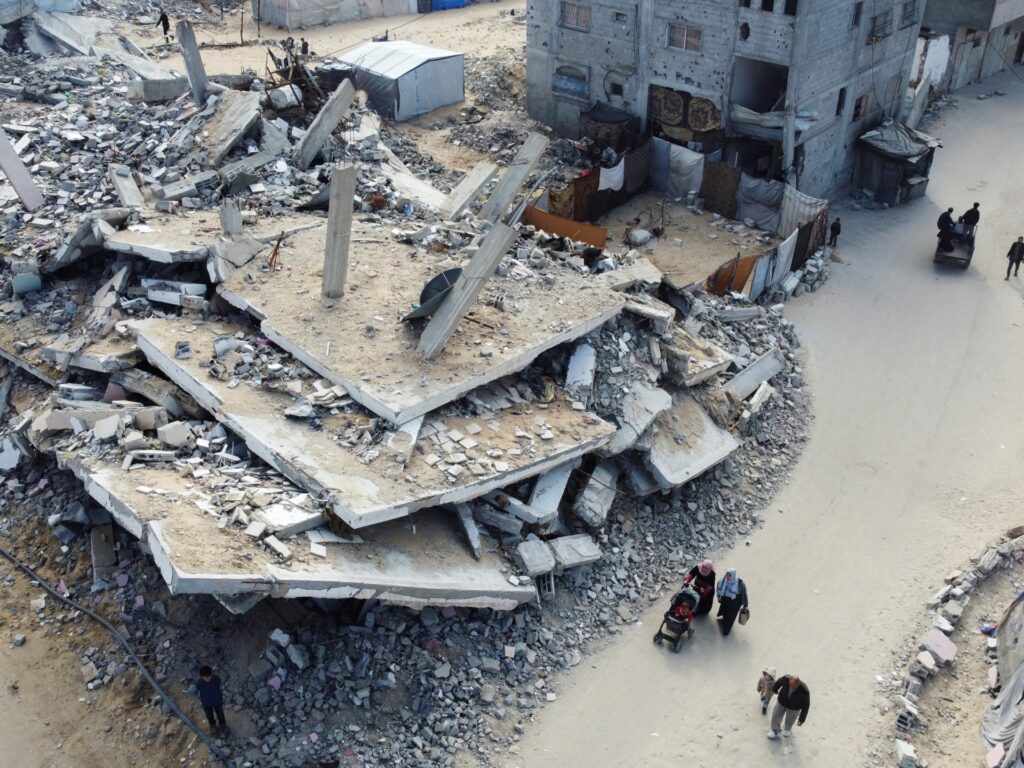
Much of the Gaza Strip is destroyed after more than 15 months of relentless Israeli bombings, leaving hundreds of thousands of Palestinians with nowhere to live. About 90 percent of Gaza’s 2.3 million residents were forcibly displaced during the genocide – many of them multiple times. With a ceasefire now in effect, many are returning to their homes, but more than a year of Israeli bombardment has left most houses in ruins and completely uninhabitable. “The halting of the bloodshed is an indescribable feeling. I thank God that I survived this war safely. However, when we returned to our homes, we found nothing but ruin and destruction. I cannot describe the scene in words. I don’t know what to say,” Jomaa Shadi, a displaced Palestinian, told Al Jazeera. “I built this house piece by piece, and when I returned to it, I didn’t find it as I knew it. I don’t see my home, I only see destruction.” Adblock test (Why?)
‘Today the guns in Gaza have gone silent’, says President Biden
[unable to retrieve full-text content] US President Joe Biden has spoken about the Gaza ceasefire deal hours after it took effect.