

Who is Nawaf Salam, Lebanon’s PM-designate amid political shift?
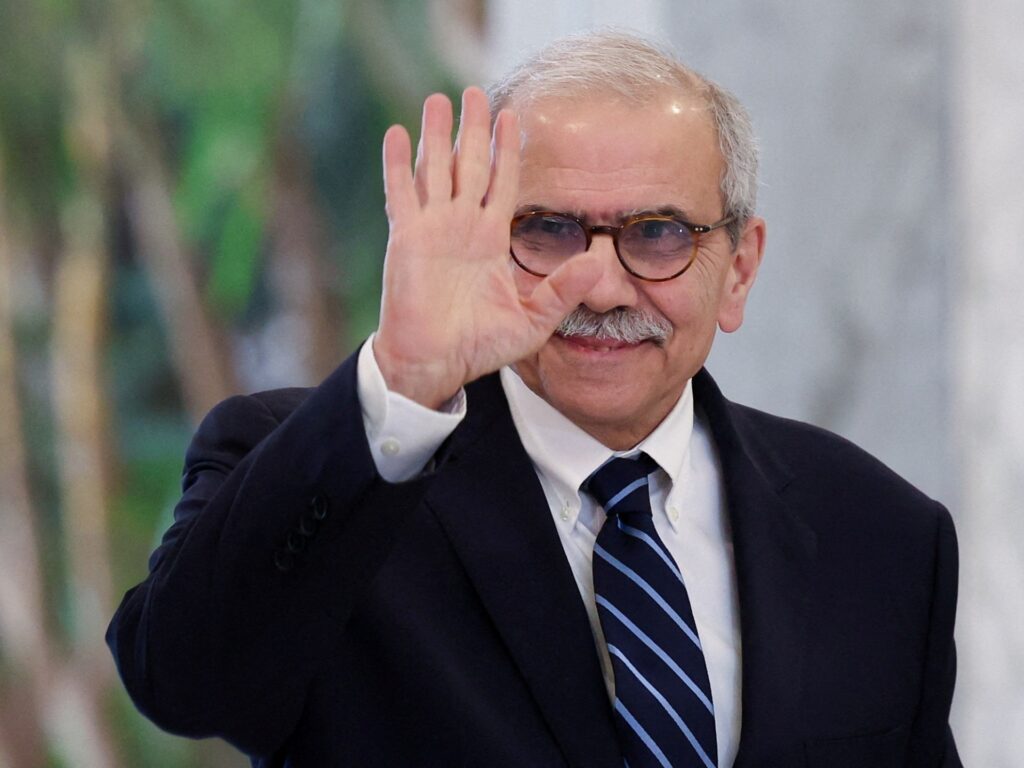
Beirut, Lebanon – The appointment of Nawaf Salam, the president of the International Court of Justice (ICJ), as prime minister of Lebanon has many Lebanese feeling optimistic. His success in securing enough votes in parliament on Monday caps off a rapid period of political change after Joseph Aoun was elected president last week, filling a position that had been vacant since 2022. Aoun designated Salam to form a government on Monday, and he could serve as prime minister at the very least until Lebanon’s next parliamentary elections in 2026. His victory is seen as a boon for the pro-reform movement, having come after Salam’s failure to secure enough votes in 2022, losing the premiership to the man he is now replacing, Najib Mikati. The reform movement, which took to the streets in mass protests that began on October 17, 2019, sees Salam as a man who can speak for them. While he is a member of a prominent Beiruti family, he has not held political office domestically and has instead reached prominent positions abroad. Advertisement “He represents the aspirations of the October 17 movement,” Dalal Mawad, a Lebanese journalist and author, told Al Jazeera. “This is a man who has a very clear political vision and beliefs.” Salam made his priorities clear in his first speech as prime minister-designate on Tuesday. “We have wasted many opportunities to build the state,” he said. “Enough wasted opportunities.” Experience abroad Born in Beirut in 1953, Salam started his career as an academic and lecturer at universities, including the American University of Beirut (AUB), the Sorbonne in Paris and Harvard University in the United States. He served from 2007 to 2017 as Lebanon’s ambassador to the United Nations, where he would “craft foreign policy when Lebanon had none”, said Mawad, who interned for Salam during his UN tenure. A lawyer and a judge, Salam joined the ICJ in 2018, and in 2024, he was made its president. He presided over South Africa’s ongoing case that accuses Israel of committing genocide in Gaza and ruled that Israel’s occupation of Palestinian territory is unlawful. He also worked on UN resolutions, including 1701, which is the basis for the current ceasefire between Israel and Lebanon. Friends and former colleagues of Salam described him as humble, an intellectual and someone intimately familiar with the inner workings – and flaws – of the Lebanese political system. Karim Emile Bitar, a political analyst who knows Salam, described the prime minister-designate as a staunch believer in the rights of the Palestinian people, Lebanon’s Arab identity, Lebanese national unity and “a new social contract on the basis of democratic citizenship rather than confessionalism”. Advertisement Confessionalism is a reference to the country’s political system, which divides positions of power by religious sect. Salam, as a Sunni Muslim, is eligible for the office of prime minister but not of president, which is reserved for Maronite Christians. “He is truly a man of integrity,” Hilal Khashan, a political scientist who worked with Salam at AUB, told Al Jazeera. “He understands the Lebanese political system needs to be reformed, and for him, the issues of accountability and transparency and responsibility mean a great deal.” Multiple people interviewed said Salam’s government programme would likely focus on reforming the political system, ensuring accountability for crimes in Lebanon – including the August 4, 2020, Beirut port explosion and the banking crisis – and defending the independence of Lebanon’s judiciary. “He’s always been in reform, change and progressive movements, and I hope he will be successful in transforming all that into a political platform,” Ziad Majed, a political scientist, told Al Jazeera. A change? Salam may come from a family that includes two former prime ministers, but he is largely seen as a technocrat. While other technocrats have been appointed to Lebanese government positions in the past, experts said regional events – including the ceasefire between the Shia militia Hezbollah and Israel, the weakening of Iran and the fall of Bashar al-Assad‘s regime in Syria – have changed the political realities in Lebanon. Iran’s and al-Assad’s influence in the country has waned, and support from Western and Gulf states, which had long tempered their relations and support for Lebanon due to Hezbollah’s powerful role in the country, seems to be on the ascendancy. Advertisement The very ascension of Salam and Aoun to their new roles is seen as evidence of the weakening of Hezbollah, which had wanted figures regarded as more supportive of the group to assume those positions. Salam and Aoun may choose to take advantage of Hezbollah’s weakness after the group lost most of its leadership in the war against Israel, including its longtime head Hassan Nasrallah. In his speech on Tuesday, Salam said his hands were “extended to everyone”, including Hezbollah, after members of the group reacted negatively to the new prime minister’s nomination. It is unclear whether Hezbollah and its allies will allow Salam to make the reforms he feels are necessary for Lebanon or will push back against decisions they may feel weaken Lebanon’s resolve against Israel or bring it into a pro-West regional camp. For now, Salam believes he is in a position to implement his desired national agenda. “He was very keen on having these conditions because he wouldn’t take this job if it was set up for him to fail,” Mawad said. “He knows Lebanon like no one else.” Adblock test (Why?)
Rescuers recover 36 bodies and 82 survivors from South African gold mine
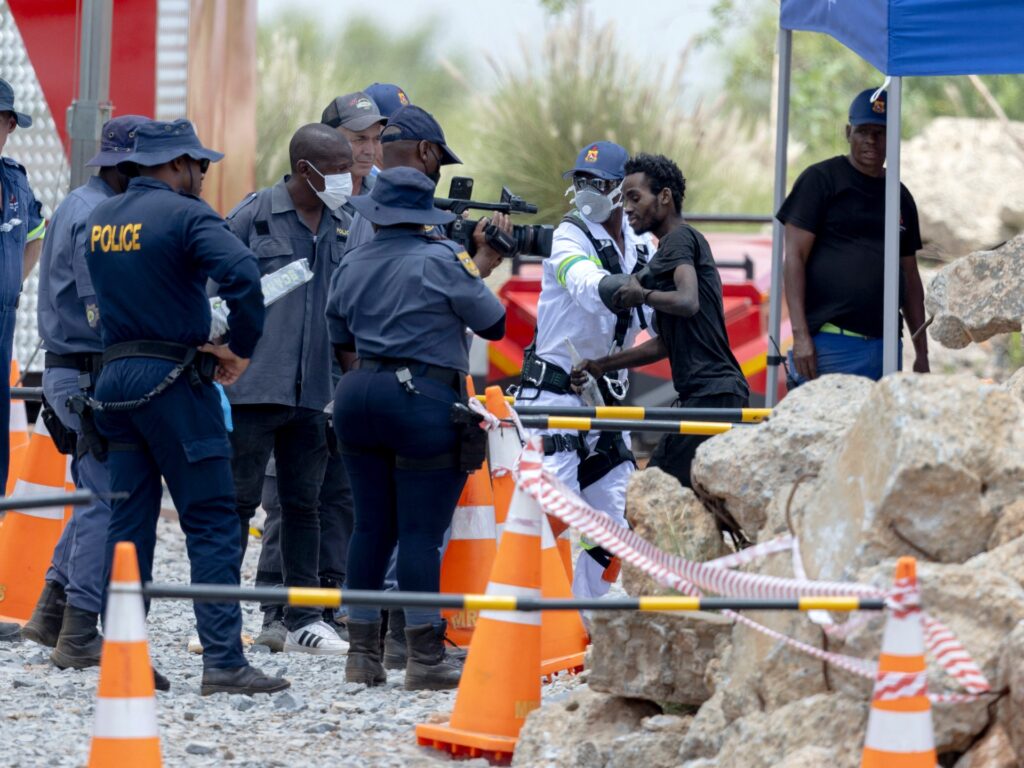
Hundreds more survivors and dozens more bodies still underground, according to a miners rights group. South African rescuers have pulled 36 bodies and 82 survivors from a gold mine in two days of operations, police say, adding that the survivors would face illegal mining and immigration charges. After nine bodies were recovered on Monday, 27 more were brought out from deep underground on Tuesday, police Brigadier Athlenda Mathe said in a statement. Police began laying siege to the mine about 150km (90 miles) southwest of Johannesburg in the town of Stilfontein in August and cut off food and water for months to force the miners to the surface to arrest them as part of a crackdown on illegal mining. Hundreds more survivors and dozens more bodies are still underground, according to a miners rights group that issued footage on Monday showing corpses and skeletal survivors in the mine. Rescue operations, which involve the use of a metal cage to recover survivors and bodies from a mine shaft more than 2km (1.2 miles) underground, will continue for days. Police said they would provide a daily update on numbers. Advertisement Typically, illegal mining takes place in mines that have been abandoned by companies because they are no longer commercially viable on a large scale. Unlicensed miners, often immigrants from other African countries, go in to extract whatever is left. ‘A war on the economy’ The South African government has said the siege of the Stilfontein mine is necessary to fight illegal mining, which Mining Minister Gwede Mantashe described as “a war on the economy”. He estimated that the illicit precious metals trade was worth 60 billion rand ($3.17bn) last year. Minister in the Presidency Khumbudzo Ntshavheni said in November: “We are not sending help to criminals. We are going to smoke them out.” But a court ruled in December that volunteers should be allowed to send down supplies to the trapped men, and another edict last week ordered the state to launch a rescue operation, which began on Monday. “All 82 that have been arrested are facing illegal mining, trespassing and contravention of the Immigration Act charges,” police said in a statement, referring to all those pulled out alive on Monday and Tuesday. The statement added that two of them would face additional charges of being in possession of gold. The government crackdown, part of an operation called “Vala Umgodi” or “Close the Hole” in the isiZulu language, has drawn criticism from human rights organisations and local residents. Adblock test (Why?)
TikTok says reports of potential sale to Elon Musk are ‘pure fiction’
Video-sharing platform dismisses reports that the Chinese government is considering its sale to Tesla and SpaceX CEO. TikTok has dismissed as “pure fiction” reports claiming that the Chinese government is considering allowing the sale of the platform to Elon Musk so it can continue operating in the United States. Bloomberg News and The Wall Street Journal reported on Tuesday that Chinese officials have discussed allowing the sale to the Tesla and SpaceX CEO to avoid a ban scheduled to take effect on Sunday unless China-based owner ByteDance sells off TikTok’s US operations. While Beijing officials would “strongly prefer” that TikTok remains under the control of Beijing-based ByteDance, senior Chinese officials have begun to debate “contingency plans”, Bloomberg said. Beijing has not communicated its contingency plans to ByteDance, The Wall Street Journal reported citing unnamed people familiar with the discussions. The Bloomberg report, which also cited unnamed people familiar with the matter, said one scenario being discussed would involve TikTok being combined into Musk’s social media platform X. Bloomberg said it was not clear how Musk, the world’s richest person with an estimated net worth of more than $400bn, would carry out the transaction or if he would need to sell some of his other assets to complete any sale. Advertisement Responding to the reports on Tuesday, a TikTok spokesperson told Al Jazeera: “We cannot be expected to comment on pure fiction.” The US Supreme Court is considering the constitutionality of the looming ban after TikTok filed a legal challenge against the related Protecting Americans from Foreign Adversary Controlled Applications Act. During oral arguments on Friday, the court appeared to be inclined towards upholding the ban, with a majority of judges seeming unconvinced by TikTok’s argument that forcing a sale would be a violation of the First Amendment of the US Constitution, which upholds free speech. Outgoing President Joe Biden signed the TikTok bill in April amid bipartisan concerns about alleged national security risks. Democratic and Republican lawmakers have expressed concern that the platform could be used to hoover up Americans’ personal data and manipulate the public discourse. President-elect Donald Trump, who is set to be inaugurated on January 20, pledged to “save” the platform during his presidential campaign, a reversal from his attempt to ban the app during his first term in office. Adblock test (Why?)
Firefighter village sprouts on Malibu beach

A huge village has sprung up on the golden sands of a beach in Malibu, housing thousands of firefighters. Firefighters from all over North America eat, sleep and recuperate on Zuma Beach when they aren’t battling the wildfires across Los Angeles. About 5,000 first responders mingle among the trailers and tents. The camp comes to life before dawn, as thousands line up for breakfast. The standards of dozens of firefighting battalions mark the presence of crews from across California and the western United States, as well as a contingent of newly arrived Mexicans. Breakfast is the most important meal of the day for many, a chance to load up on calories before their shift. The food is prepared by a team of inmates from California’s prisons, brought in to help in one of the biggest disaster responses the state has ever seen. Correctional Officer Terry Cook, who supervises inmates at the base, said he occasionally sees a familiar face among the regular firefighters, someone who got themselves back on the straight and narrow after serving their sentence. Advertisement “I’ve run into inmates that were at my camp two years ago, and I see them in line here, and I shake their hands, and I say ‘congratulations,’” he said. Two huge fires in Los Angeles have scorched 40,000 acres (16,000 hectares) since erupting in fierce winds last Tuesday. At least 24 people have died in the blazes, which have destroyed more than 12,000 structures and forced 92,000 people from their homes, including the well-to-do Pacific Palisades, just a few miles from the firefighters’ camp. After breakfast, teams prepare their vehicles and arm themselves with snacks, sandwiches, drinks and sweets. With the threat of dangerous winds across a swath of the region, some units are charged with pouncing on new outbreaks, while others are tasked with tamping down the original blaze. Orders in hand, each team sets off, fanning out along streets into Pacific Palisades, or up into the untamed brush of Topanga Canyon. For some, it is their first time in the field as part of this firefighting effort; for others, it is one more day in an already long week. As he readies to climb into Mandeville Canyon, Jake Dean says he has never seen a fire as destructive as this in his 26 years as a firefighter. “After the first day, many people that I’ve known for a long time in base camp barely recognised me,” he said. “My phone didn’t recognise me to turn on, I was so tired and dirty.” But with huge air operations eating into the fire on all fronts, Dean can feel the work paying dividends. “Today will be not so bad,” he said. “We’ll pace ourselves and drink lots of water and be ready for a long haul of work here and the next fire.” Advertisement Adblock test (Why?)
Sierra Leone declares emergency over mpox outbreak

The West African country has confirmed two cases of mpox in recent days. Sierra Leone has declared a public health emergency after two cases of mpox were reported. The West African country’s health minister announced the move on Monday after the second case of the deadly viral disease was confirmed. “The confirmation of two cases of mpox in the country has prompted immediate action as mandated by the Public Health Act,” Health Minister Austin Demby told reporters in the capital, Freetown. “On behalf of the government of Sierra Leone, I am declaring a public health emergency.” Last week, Sierra Leone reported its first confirmed case of mpox since the African Union’s health watchdog declared a public health emergency over the growing mpox outbreak on the continent last year. A second case was confirmed after a 21-year-old man showed symptoms on January 6, the National Public Health Agency said on social media. Neither case had known recent contact with infected animals or other sick individuals, the Ministry of Health and Sanitation said. Only the first case involved recent travel, limited to the airport town of Lungi in the northern Port Loko District between December 26 and January 6. Both patients are receiving treatment at a hospital in Freetown. Advertisement The public health emergency “allows us to act immediately to mobilise the resources needed to contain the disease, prevent further spread and provide care to those affected”, the minister said. Demby also announced increased border surveillance and testing, as well as the launch of a national awareness campaign. He added that Sierra Leone’s medical system was ready to respond to cases, pointing to experience gained during the Ebola and COVID-19 outbreaks. “We urge all citizens to remain calm, stay informed and report any suspected cases promptly to healthcare authorities,” Demby said. Mpox is caused by a virus from the same family as smallpox, manifesting in a high fever and skin lesions, called vesicles. Also known as monkeypox, it was first identified by scientists in 1958 when outbreaks of a “pox-like” disease in monkeys occurred. Until recently, most human cases were seen in people in Central and West Africa who had close contact with infected animals. In 2022, the virus was confirmed for the first time to spread via sex, as outbreaks were triggered in more than 70 countries across the world that had not reported mpox previously. The Democratic Republic of the Congo (DRC) has borne the brunt of the epidemic, with a vast majority of the roughly 43,000 suspected cases and 1,000 deaths in Africa this year. A decade ago, Sierra Leone was the epicentre of the Ebola outbreak that ravaged West Africa in an epidemic killing some 4,000 people, including nearly 7 percent of the country’s health workers, between 2014 and 2016. Advertisement Adblock test (Why?)
US says Gaza truce deal ‘possible’ this week as Israel ramps up attacks
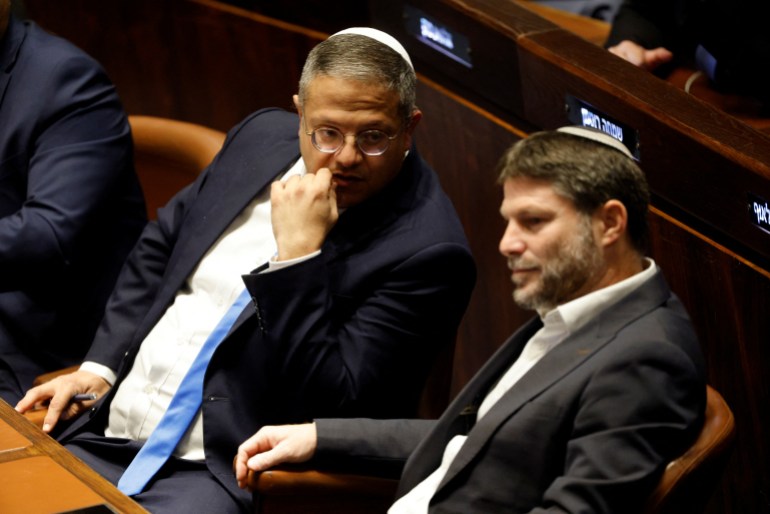
The United States says it sees the potential for a Gaza ceasefire to be reached as early as this week as the Israeli military continues to hammer the enclave to deadly effect. White House National Security Adviser Jake Sullivan said during a news conference on Monday that while a deal may be possible within days, it is not guaranteed. “We are now at a pivotal point in the negotiations for a hostage deal and ceasefire in Gaza,” Sullivan said, adding the Biden had recently spoken with Israeli Primie Minister Benjamin Netanyahu and Qatari Emir Sheikh Tamim bin Hamad Al Thani about the negotiations. The outgoing US president will also soon speak to Egyptian President Abdel Fattah el-Sisi, he said. “We are close to a deal, and it can get done this week. I’m not making a promise or a prediction, but it is there for the taking, and we are able to work to make it happen,” Sullivan said. Ceasefire talks mediated by the US along with Qatar and Egypt are ongoing at advanced stages in Doha, where top Israeli negotiators like the heads of the Mossad and Shin Bet intelligence agencies are expected to stay for another day. Advertisement Hamas also said the talks have made some progress over some of the contentious issues that have been discussed many times over 15 months of a war that has killed more than 46,500 Palestinians in Gaza. “The negotiation over some core issues made progress, and we are working to conclude what remains soon,” an official with the Palestinian group told the Reuters news agency on condition of anonymity. Officials said a final draft of the agreement, which includes an exchange of captives in Gaza for Palestinian prisoners held by Israel, was presented to all sides after the latest discussions in the Qatari capital yielded results. Netanyahu and Biden held a phone call on Sunday, discussing the latest developments, with Biden again saying the time for an agreement is now. US President-elect Donald Trump and his top officials have been repeatedly threatening that there will be “hell to pay” if the captives are not released or there is no agreement by the time Trump takes office on January 20. “It’s very clear that President Trump threatening Hamas and making it clear that there is going to be hell to pay is part of the reason why we’ve made progress on getting some hostages out,” Vice President-elect JD Vance said. Right-wing Knesset members and coalition leaders Itamar Ben-Gvir, left, and Bezalel Smotrich attend a special session of the Israeli parliament [File: Amir Cohen/Reuters] Netanyahu is also facing internal pressure from far-right members of his governing coalition, who have been threatening to leave if a deal is reached – even though Netanyahu has stressed that Israel will hold military control over Gaza regardless of any deal. Advertisement Finance Minister Bezalel Smotrich, who leads one of the hardline ultranationalist religious parties in the country’s ruling coalition, said the fact that a deal is taking shape in Qatar is a “catastrophe for national security”. Angry family members of Israelis held captive in Gaza entered a committee room in the Israeli parliament on Monday to accuse Smotrich of abandoning their loved ones and saying “conditions are ripe for a deal”. Israel intensifies attacks amid talks The Israeli military has been launching relentless waves of heavy air attacks and artillery shelling across the Gaza Strip as talks of a potential agreement have heated up. Medical sources told Al Jazeera on Monday that at least 45 Palestinians were killed in the past day as a result of Israeli attacks across the enclave. Many attacks were focused on Gaza City in the northern part of Gaza, where more than 100 days of an Israeli siege has left at least 5,000 people killed or missing, according to local authorities. The siege has also destroyed hospitals and other critical infrastructure, displaced thousands of people and seen many Palestinians taken prisoner by the Israeli military. Reporting from Deir el-Balah in central Gaza on Monday, Al Jazeera’s Hani Mahmoud said many drone attacks have taken place since the early hours of the morning. “These are happening in areas where the vast majority of displaced people have taken shelter, areas that are densely populated,” he said. The Israeli military said five of its soldiers were killed in fighting in northern Gaza on Monday, while eight others were wounded. The deaths bring the Israeli military’s losses in its war on Gaza to 408 since October 27, 2023. Advertisement Yossi Beilin, a former Israeli justice minister who initiated the Oslo peace accords in the early 1990s, told Al Jazeera a ceasefire between Israel and Hamas is “long overdue”. “This is the main issue: How many [captives and prisoners] will be released? Once they agree on it and the [timing] of the release, then it is possible to have an agreement,” he said. The humanitarian situation remains dire in Gaza as the Israeli military continues to block most aid from getting in and starving the population, roughly half of which is made up of children. Adblock test (Why?)
Biden administration proposes new rules to tighten grip on AI chip flows

The outgoing administration of United States President Joe Biden is proposing a new framework for the export of advanced computer chips used to develop artificial intelligence, an attempt to balance national security concerns about the technology with the economic interests of producers and other countries. But the framework proposed Monday also raised concerns of chip industry executives who said the rules would limit access to existing chips used for video games and restrict in 120 countries the chips used for data centres and AI products. Mexico, Portugal, Israel and Switzerland are among the nations that could have limited access. Commerce Secretary Gina Raimondo said on a call with reporters previewing the framework that it’s “critical” to preserve America’s leadership in AI and the development of AI-related computer chips. Fast-evolving AI technology enables computers to produce novels, make scientific research breakthroughs, automate driving and foster a range of other transformations that could reshape economies and warfare. Advertisement “As AI becomes more powerful, the risks to our national security become even more intense,” Raimondo said. The framework “is designed to safeguard the most advanced AI technology and ensure that it stays out of the hands of our foreign adversaries but also enabling the broad diffusion and sharing of the benefits with partner countries.” White House National Security Adviser Jake Sullivan stressed that the framework would ensure that the most cutting-edge aspects of AI would be developed within the US and with its closest allies instead of possibly being offshored like the battery and renewable energy sectors. A tech industry group, the Information Technology Industry Council, warned Raimondo in a letter last week that a hastily implemented new rule from the Democratic administration could fragment global supply chains and put US companies at a disadvantage. Another group, the Semiconductor Industry Association (SIA), said Monday that it was disappointed the policy was being “rushed out the door” before a presidential transition. President-elect Donald Trump is to take office on January 20. “The new rule risks causing unintended and lasting damage to America’s economy and global competitiveness in semiconductors and AI by ceding strategic markets to our competitors,” SIA President and CEO John Neuffer said. One industry executive who is familiar with the framework and insisted on anonymity to discuss it said the proposed restrictions would limit access to chips already used for video games despite claims made otherwise by the government. The executive said it would also limit which companies could build data centres abroad. Advertisement ‘Control technology worldwide’ Because the framework includes a 120-day comment period, Trump’s incoming Republican administration could ultimately determine the rules for foreign sales of advanced computer chips. This sets up a scenario in which Trump will have to balance US economic interests with the need to keep the country and its allies safe. Government officials said they felt the need to act quickly in hopes of preserving what is perceived to be a six- to 18-month US advantage on AI over rivals such as China, a head start that could easily erode if competitors are able to stockpile the chips and make further gains. Ned Finkle, vice president of external affairs at the chipmaker Nvidia, said in a statement that the prior Trump administration had helped create the foundation for AI’s development and the proposed framework would hurt innovation without achieving the stated national security goals. “While cloaked in the guise of an ‘anti-China’ measure, these rules would do nothing to enhance US security,” he said. “The new rules would control technology worldwide, including technology that is already widely available in mainstream gaming PCs and consumer hardware.” Under the framework, roughly 20 key allies and partners would face no restrictions on accessing chips, but other countries would face caps on the chips they could import, according to a fact sheet provided by the White House. The allies without restrictions include Australia, Belgium, Canada, Denmark, Finland, France, Germany, Ireland, Italy, Japan, the Netherlands, New Zealand, Norway, South Korea, Spain, Sweden, Taiwan and the United Kingdom. Advertisement Users outside of these close allies could buy up to 50,000 graphics-processing units per country. There would also be government-to-government deals that could bump up the cap to 100,000 if their renewable energy and technological security goals are aligned with the US. Institutions in certain countries could also apply for a legal status that would let them buy up to 320,000 advanced graphics-processing units over two years. Still, there would be limits as to how much AI computational capacity could be placed abroad by companies and other institutions. Also, computer chip orders equivalent to 1,700 advanced graphics-processing units would not need a licence to import or count against the national chip cap. The exception for the 1,700 graphics-processing units would likely help meet the orders for universities and medical institutions as opposed to data centres. The new rules are not expected to hinder the AI-driven data centre expansion plans of leading cloud computing providers such as Amazon, Google and Microsoft because of exemptions for trusted companies seeking large clusters of advanced AI chips. China’s Ministry of Commerce said in response to the proposed rules that China will take necessary measures to safeguard its “legitimate rights and interests”. Adblock test (Why?)
Will the West move fast enough to lift al-Assad-era sanctions on Syria?
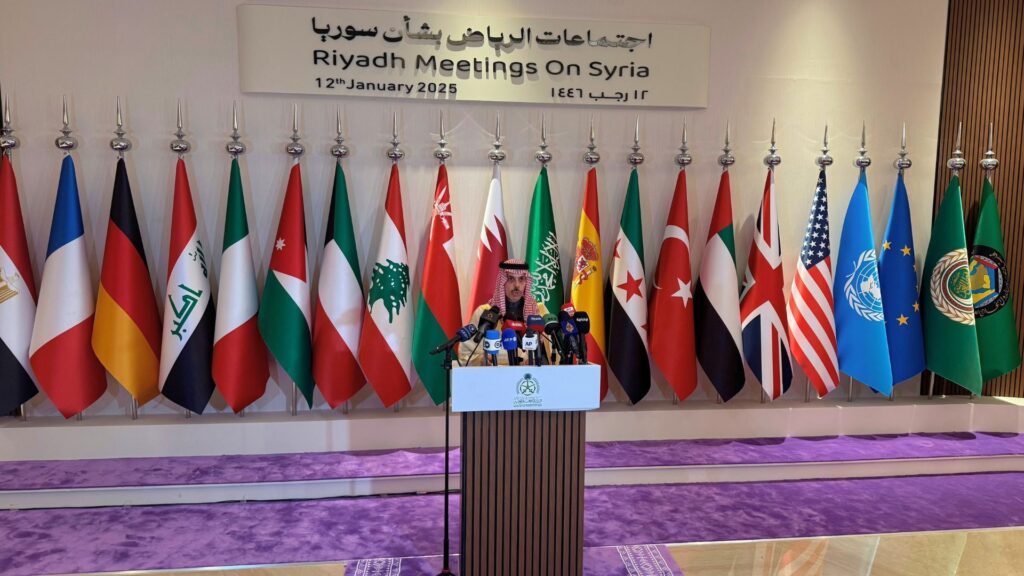
Damascus launches a diplomatic outreach to push for an end to restrictions. The United Nations says seven out of 10 Syrians require humanitarian assistance after 13 years of war. And an estimated $500bn is needed to rebuild their country. Syria’s new administration has engaged in diplomacy in the past two weeks to persuade Western powers to rapidly lift sanctions imposed during the rule of Bashar al-Assad. But those governments want to see progress towards inclusive and democratic governance in Syria. Concerns are growing that the euphoria following the fall of al-Assad may give way to frustration and violence if the process is delayed. Will the West be prepared to lift sanctions – and fast? And can Syria’s new rulers make the changes needed to win the confidence of world powers? Presenter: Neave Barker Guests: Ammar Kahf – executive director of the Omran Center for Strategic Studies Hind Kabawat – director of interfaith peacebuilding at the Carter School for Peace and Conflict Resolution at George Mason University Fadi Dayoub – executive director of Local Development and Small Projects Support, a Syrian NGO Advertisement Adblock test (Why?)
Russia-Ukraine war: List of key events, day 1,054
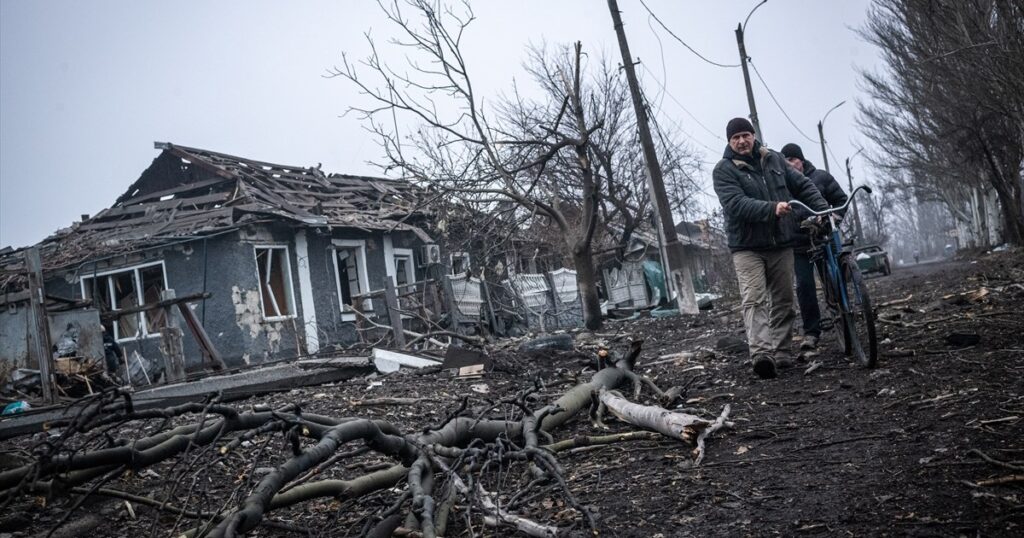
Here is the situation on Monday, January 13: Fighting The Russian Ministry of Defence said its soldiers had captured the Ukrainian village of Yantarne in the eastern Donetsk region and the village of Kalinove in the northeastern Kharkiv region. Russian shelling damaged electrical equipment in southern Ukraine’s Kherson region, leaving about 23,000 homes without power, according to the local military administration. “The Russian military shelled social infrastructure and residential areas of the region’s settlements, in particular, damaging 2 multistorey buildings and 8 private houses,” Kherson’s governor, Oleksandr Prokudin, said on Telegram. Russia’s Defence Ministry also said that its forces launched 139 missile, drone and artillery attacks on Ukrainian military targets within 24 hours. Ukrainian President Volodymyr Zelenskyy said he was ready to hand over captured North Korean soldiers to Pyongyang in exchange for the return of Ukrainian prisoners of War held by Russia. Politics and Diplomacy Advertisement Sweden announced it would send three warships and an ASC 890 surveillance aircraft to the Baltic Sea in the latest response to allegations an oil tanker from Russia’s so-called “shadow fleet” was involved in sabotaging undersea power and telecommunications cables. Serbian President Aleksandar Vucic has offered to host a meeting between Russian President Vladimir Putin and United States President-elect Donald Trump, according to the Serbian Broadcasting Corporation. Trump’s pick for national security adviser, Mike Waltz, told US news network ABC that “preparations are under way” for a meeting between Trump and Putin. Hungary’s Minister of Foreign Affairs Peter Szijjarto said his country would hold talks with regional allies to work out its response to new US sanctions on Russian oil and gas, which raise “severe challenges for central Europe”. Environment An emergency task force arrived in Russia’s southern Krasnodar region, more than a month after two storm-stricken Russian oil tankers caused an an oil spill in the Kerch Strait, which separates Krasnodar from the Ukrainian Crimean Peninsula, which Russia occupied and annexed in 2014. Adblock test (Why?)
UK’s Starmer touts plan to ‘turbocharge’ living standards with AI

British Prime Minister says AI has the potential to ‘transform the lives of working people’. British Prime Minister Keir Starmer is set to unveil a 50-point plan to turn the United Kingdom into a “world leader” in artificial intelligence (AI) and deliver a “decade of national renewal”. The AI Opportunities Action Plan, set to be outlined in a speech by Starmer on Monday, will create dedicated AI growth zones to “turbocharge growth” and “boost living standards”, the Department for Science, Innovation and Technology and the Prime Minister’s Office said in a joint statement on Sunday. The growth zones, the first of which will be established in Culham, Oxfordshire, will have faster planning approvals for data centres and better access to the energy grid, the statement said. The blueprint, which adopts all 50 recommendations made by venture capitalist Matt Clifford in a report commissioned by the Labour Party government last year, also proposes a 20-fold increase in state-owned AI computing capacity as well as the establishment of a National Data Library and a dedicated AI Energy Council. Advertisement “Artificial Intelligence will drive incredible change in our country. From teachers personalising lessons, to supporting small businesses with their record-keeping, to speeding up planning applications, it has the potential to transform the lives of working people,” Starmer said. “But the AI industry needs a government that is on their side, one that won’t sit back and let opportunities slip through its fingers. And in a world of fierce competition, we cannot stand by.” Starmer’s announcement comes as his Labour government is haemorrhaging support after just six months in office amid sluggish economic conditions. The UK economy recorded 0 percent growth during the third quarter of 2024, raising fears the country could be headed for its second recession in the span of a year. Starmer’s government has estimated that AI could be worth 47 billion pounds ($57m) in economic gains each year over a decade, based on an analysis by the International Monetary Fund that found the technology could boost productivity by as much as 1.5 percentage points a year. The UK ranks third in AI prowess globally, after China and the United States, according to the 2023 Global AI Vibrancy Ranking compiled by Stanford University. “Our plan will make Britain the world leader. It will give the industry the foundation it needs and will turbocharge the Plan for Change,” Starmer said, referring to six milestones he has set out for his government, including raised living standards for households and reduced hospital waiting lists. Advertisement “That means more jobs and investment in the UK, more money in people’s pockets, and transformed public services. That’s the change this government is delivering.” Adblock test (Why?)