

Meta, Amazon nix diversity, inclusion programmes ahead of Trump term

Conservative groups have denounced the programmes and threatened to sue companies over them. Facebook owner Meta Platforms and Amazon are winding down diversity programmes ahead of Republican Donald Trump’s return to the United States presidency, amid growing conservative opposition to such initiatives. Some of the US’s biggest businesses have been scaling back their diversity initiatives, years after pushing for more inclusive policies in the wake of protests that followed the police killings of George Floyd and other Black Americans in 2020. Meta is ending its diversity, equity, and inclusion (DEI) programmes, including those for hiring, training and picking suppliers, it said in an internal memo to employees on Friday – the latest in a series of actions cheered by conservatives. In less than two weeks, Meta has scrapped its US fact-checking programme, elevated prominent Republican Joel Kaplan to be its chief global affairs officer and elected Dana White, CEO of Ultimate Fighting Championship (UFC) and close friend of Trump, to its board. Amazon, in a December memo to employees seen by Reuters on Friday, said it was “winding down outdated programs and materials” related to representation and inclusion, aiming to complete the process by the end of 2024. Advertisement ‘Signaling a shift’ Conservative groups have denounced the programmes and threatened to sue companies over them, emboldened by a US Supreme Court ruling in 2023 that struck down affirmative action in university admissions decisions. Just this week, Elon Musk and other Trump allies blamed DEI programmes for hindering the response to raging wildfires in Los Angeles, without evidence. “The legal and policy landscape surrounding diversity, equity and inclusion efforts in the United States is changing,” Janelle Gale, vice president of human resources at Meta, said in the memo, which was seen by Reuters and originally reported by Axios. Gale cited recent Supreme Court decisions “signaling a shift” in how US courts will approach DEI programmes going forward. “The term ‘DEI’ has also become charged, in part because it is understood by some as a practice that suggests preferential treatment of some groups over others,” she wrote. In practice, this means Meta will no longer have a team focused on diversity and inclusion, and the company said it will instead “focus on how to apply fair and consistent practices that mitigate bias for all, no matter your background.” The company will also end its “diverse slate approach” to hiring, a strategy that incorporates candidates from a diverse pool to be considered for every open position. One employee comment on Gale’s memo called it “upsetting to read”. Other companies that have ended DEI programmes recently include McDonald’s, automaker Ford, Walmart and farm equipment maker, John Deere. Advertisement Adblock test (Why?)
Myanmar’s rebels liberate territory – administrating it is the next battle
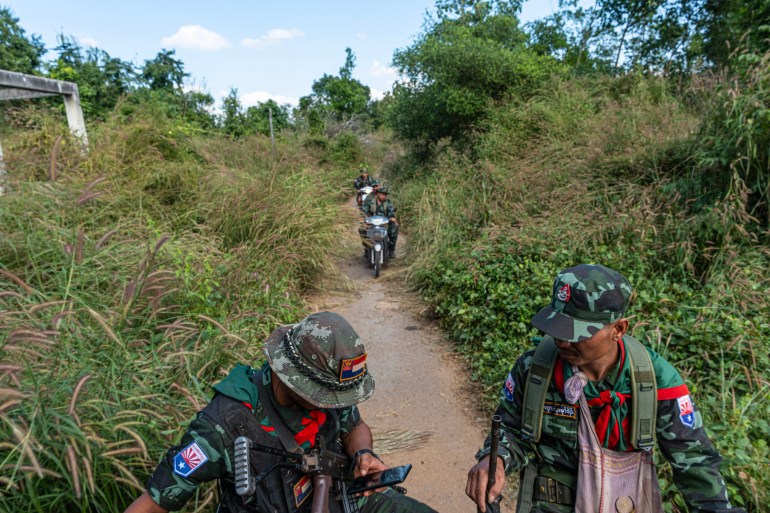
Karen State, Myanmar – Thaw Hti was a tiny speck amid a march of hundreds of thousands that snaked its way through the streets of Yangon in 2021, demanding a return to democracy after the Myanmar military seized power. “We had signboards and they had guns,” she said, recounting with bitterness the events of March 2021. In the intervening four years, much has changed for Thaw Hti and her generation in Myanmar. After the military slaughtered hundreds in bloody crackdowns on those pro-democracy protests, young people fled to territory controlled by ethnic armed groups in Myanmar’s border regions with Thailand, India and China. Thaw Hti went, too. Ethnically part Karen, her choice was obvious. She sought refuge with the Karen National Union – Myanmar’s oldest ethnic armed group, which has been fighting for political autonomy for the Karen people since the 1940s in Myanmar’s eastern Karen State, also known as Kayin State. Speaking during an interview with Al Jazeera in Karen State recently, Thaw Hti told how she was so furious at the military for seizing power that she wanted to become a rebel soldier. Advertisement All new arrivals in KNU territory had to undergo a survival course, which included weapons training, marching long distances in rugged terrain and basic self-defence. Firing a gun, Thaw Hti remembers, gave her a feeling of strength after powerlessly watching the military massacre her fellow protesters. Now, her face crinkles into a huge smile when she says: “I love guns”. But, being short and slight, she struggled to complete even the basic survival course and knew that she would not pass the KNU’s real military training. “I came here to join the revolution but as a woman, there are more barriers,” she said. “Mentally I want to do it but physically I can’t.” Lessons in oppression With a background in education and the ability to speak Karen, Thaw Hti and her husband instead opened a school accredited by the KNU where they teach more than 100 children who have been displaced by conflict. The school is concealed in the forest in eastern Myanmar because of the military’s tendency to launch air strikes on the Karen’s parallel public services – including schools and hospitals. The bombing aims to destroy the emerging administrative structures that lend legitimacy to Karen autonomy. Unlike schools under the military regime’s control, Thaw Hti explained that her school teaches children in the Karen language and teaches a Karen-centred version of Myanmar history that includes the decades of oppression the Karen faced, which is often left out of official narratives. The Karen have fought for their autonomy for decades, but as newer, pro-democracy forces team up with ethnic armed groups, the Karen’s long-simmering conflict with Myanmar’s military – a majority, ethnic Bamar force – has exploded in intensity. Advertisement Particularly in the last year, the military has lost huge swaths of territory in the borderlands – including nearly all of Rakhine State in the west and northern Shan State in the east – as well as large chunks of Kachin State in the north, and also more of Karen State. But as fighters take more and more territory, they are faced with a new challenge: administering it. Parallel administration Seized from the military in March, Kyaikdon in Karen State has been spared the devastating air strikes that have plagued other large towns won by resistance forces. During Al Jazeera’s recent visit to Kyaikdon, the town’s restaurants were filled with civilians and Karen troops eating Burmese curry. Shops were open and selling household goods and traditional Karen fabrics, while the main road was backed up with traffic. Soe Khant, the town’s 33-year-old KNU-appointed administrator, said he had big plans for the liberated territory. “I would like to finish public works, get electricity and water running and clean up the plastic and the overgrown areas,” said Soe Khant, who was officially appointed interim administrator, with an election planned after one year. He agrees with eventually being popularly elected, rather than appointed. “If it’s what the people want, I will take the position. If they choose somebody else, I will pass it on,” he told Al Jazeera. KNLA troops on patrol in November, 2024 at a military base seized from the Myanmar military in the Thin Gan Nyi Naung area of Karen State [Andrew Nachemson/Al Jazeera] Soe Khant said the military regime “totally neglected the people of this town”. Advertisement Growing up in Kyaikdon, Soe Khant told how he would hike to the top of a hill near the town with a friend. From there they would sketch the cluster of buildings around the dusty main road, the winding river that nourishes the farms, and the nearby mountain range that forms the border with Thailand. When he got older, he turned to photography, making a living from wedding shoots. But when the COVID-19 pandemic hit Myanmar in 2020, he answered another calling, launching a social welfare organisation. After the military coup, the situation worsened further. “The healthcare system broke down, so my friends and I volunteered to help take care of people,” he said. While Soe Khant is relatively new to the business of running a parallel administration, the KNU has been doing this for decades – albeit usually in smaller, rural pockets of territory. ‘Going so fast, but we don’t go very far’ Kawkareik township’s secretary Mya Aye served as a village tract leader for 12 years before being elected to his current role, the third most senior in the township. He told Al Jazeera how years of war and a lack of human resources had hampered the local economy and undermined the KNU’s ability to provide public services. “There are no factories, no industry, you can’t work here to support your family,” he said, explaining that because of the conflict and hardships, young people would move to live in nearby Thailand. But the military regime’s cruelty is often its own worst enemy. It has inspired more fervent resistance and driven human resources
Guantanamo at 23: What’s next for the ‘lawless’ detention facility?
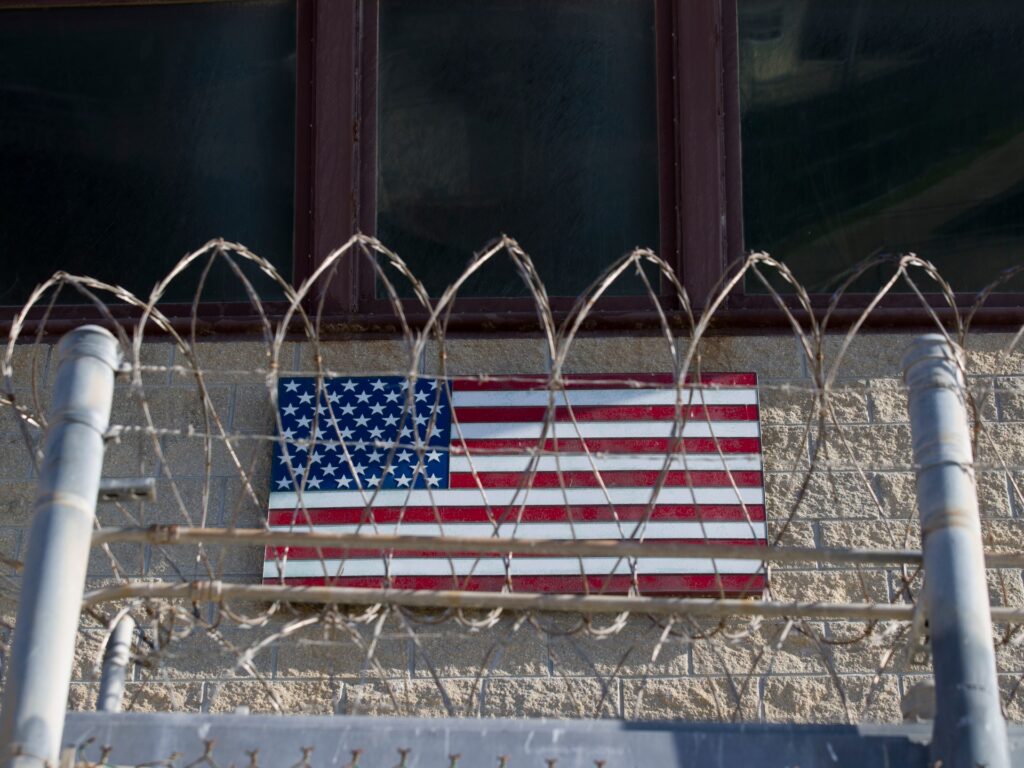
Washington, DC – The detention facility at Guantanamo Bay, Cuba, turns 23 on Saturday. For Mansoor Adayfi, a former inmate at the prison, the anniversary marks 23 years of “injustice, lawlessness, abuse of power, torture and indefinite detention”. Only 15 prisoners remain at the United States military prison, known as Gitmo, which once held about 800 Muslim men — a dwindling number that gives advocates hope that the facility will eventually be shut down, turning the page on the dark chapter of history it represents. But Adayfi, who now serves as a coordinator for the Guantanamo Project at the advocacy group CAGE International, says truly closing down Gitmo means delivering justice to its current and former detainees. “The United States must acknowledge its wrongdoing, must issue a formal, official apology to the victims, to the survivors,” Adayfi told Al Jazeera. “There must be reparation, compensation and accountability.” Guantanamo opened in 2002 to house prisoners from the so-called “war on terror”, a reaction to the attacks on September 11, 2001, in the US. Advertisement Detainees were arrested in countries across the world on suspicions of ties to al-Qaeda and other groups. Many endured horrific torture at secret detention facilities, known as black sites, before being transferred to Guantanamo. At Gitmo, detainees had few legal rights. Even those cleared for release through Guantanamo’s alternative justice system, known as military commissions, remained imprisoned for years with no recourse to challenge their detention. And so, the prison has become synonymous with the US government’s worst abuses in the post-9/11 era. In recent weeks, the administration of outgoing President Joe Biden has accelerated the transfer of inmates out of Guantanamo, ahead of the end of his term on January 20. On Monday, the US government freed 11 Yemeni detainees and resettled them in Oman. Last month, two inmates were transferred to Tunisia and Kenya. ‘Insane’ Daphne Eviatar, director of the Security with Human Rights (SWHR) programme at Amnesty International USA, said closing down the facility is possible. She said the remaining detainees could be transferred to other countries or to the US, where they would go through the American justice system. Congress imposed a ban in 2015 on transferring Gitmo prisoners to US soil. But Eviatar believes the White House can work with lawmakers to lift the prohibition, especially with so few prisoners left at the facility. “It’s a symbol of lawlessness, of Islamophobia,” Eviatar said of Guantanamo. “It’s a complete violation of human rights. For the United States, which has detained so many people for so long without rights, without charge or trial, it is just horrific. And the fact that it’s ongoing today, 23 years later, is insane.” Advertisement Barack Obama made closing down the prison one of his top promises when he was running for president in 2008, but after taking office, his plans faced strong Republican opposition. Towards the end of his second term, Obama expressed regret over failing to shut down the facility early in his presidency. Of the 15 remaining Gitmo inmates, three are eligible for release, according to the Pentagon. Three others can go in front of Guantanamo’s Periodic Review Board, which assesses whether detainees are safe to transfer. “We’re still hopeful that President Biden can transfer more detainees out before he leaves office,” Eviatar told Al Jazeera. While President-elect Donald Trump has previously pledged to keep the prison open, Eviatar said he may view the facility as inefficient. Plea deals But the Friends Committee on National Legislation (FCNL), a Quaker social justice advocacy group, underscored the urgency for Biden to act before Trump takes office. “With President-elect Trump strongly opposed to closing Guantanamo, the need to President Biden to shut the prison down is more urgent than ever,” Devra Baxter, a programme assistant for militarism and human rights at FCNL, said in a statement. “Closing Guantanamo will only happen through the transfer of the final three men who have yet to be charged with a crime and finalizing plea deals with those who have.” However, rather than completing plea deals for the inmates, Secretary of Defense Lloyd Austin has sought to nix agreements for three 9/11 suspects, which had been reached with military prosecutors to spare the prisoners the death penalties, in exchange for guilty pleas. Advertisement Now courts are assessing the validity of the agreements and Austin’s veto against them. Eviatar said Austin’s push to scuttle the plea deals amounts to political interference. “It’s a very strange situation. I don’t understand why the Biden administration, which says it wanted to close Guantanamo, would then have the secretary of defence come in and stop the plea agreements. It makes no sense.” CAGE’s Adayfi said the debacle over the plea agreements shows that there is no functioning justice system at Guantanamo. “It’s a big joke,” he said. “There’s no justice in Guantanamo. There’s no law. There is absolutely nothing. It’s it is one of the biggest human rights violations in the 21st century.” Adayfi added that the US can have its ideals about freedom, democracy and human rights or Guantanamo, but not both. “I believe they have Guantanamo,” he said. Adblock test (Why?)
Liverpool wary of Accrington’s ‘Champions League final’ in FA Cup
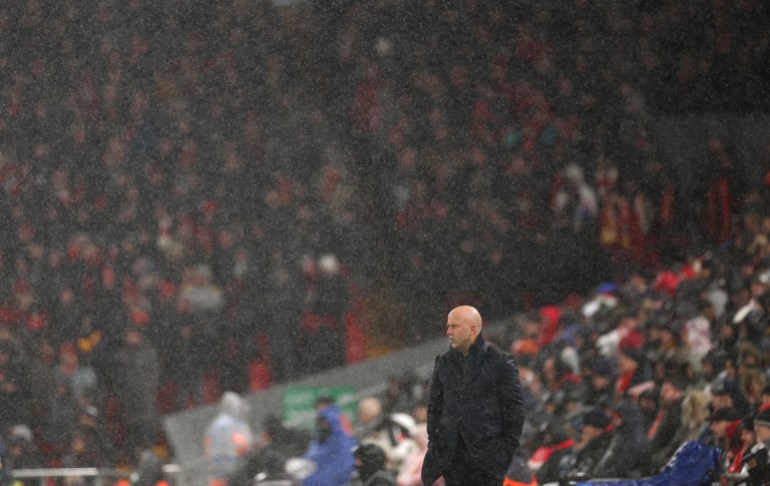
Double-chasing Liverpool will not underestimate Accrington Stanley in the FA Cup on Saturday, according to Arne Slot. Liverpool head coach Arne Slot is prepared for a revved-up Accrington Stanley when the teams meet in the third round of the FA Cup at Anfield on Saturday. Slot suffered only his second defeat as manager of the Reds in the club’s last match when they were beaten 1-0 at Tottenham Hotspur in the first leg of their League Cup semifinal. FA Cup opponents Stanley sit 19th in English football’s fourth tier, while Slot’s Liverpool are top of the Premier League and Champions League standings. “Every team against us is a special occasion for every team but especially a lower league team, so they will be all up for it. They have lived this game for weeks probably… so we need to bring the best out of ourselves,” Slot told reporters on Friday. “If we go to the Champions League final, everyone is hyped up and that is for them tomorrow, it will feel like the Champions League final and we have to be aware of that. “First half-hour is most difficult, they will be very intense and we have to be ready for them playing the best games of their lives. That is what we have to do too.” Arne Slot suffered only his second defeat as Liverpool manager in the club’s last match against Tottenham Hotspur in the League Cup [Carl Recine/Getty Images] Liverpool have been boosted by the return to training of midfielder Dominik Szoboszlai after he recovered from illness. The 24-year-old Hungary captain had missed their 2-2 home draw against rivals Manchester United and the defeat by Tottenham. Advertisement Centreback Jarell Quansah, 21, is also available for selection. “Every game is an opportunity for them to have a chance to play and this one as well,” Slot said. “Dom trained with the under-21s yesterday. Jarell, like I said, he was a bit ill last week, as a result of that I had to take him off the game (against Tottenham) but I am expecting him to be available for tomorrow.” Trent Alexander-Arnold, left, endured a chastening game for Liverpool in the draw with Manchester United [Alex Livesey – Danehouse/Getty Images] Slot continued his defence of vice-captain Trent Alexander-Arnold, who was criticised by pundits for his performance against United. The 26-year-old England right back, linked with a move to Spanish giants Real Madrid, put on a much-improved display against Tottenham on Wednesday after coming on as a substitute in the second half. “Trent has had one difficult game for us and maybe a few that were OK to good. Mainly he has had great games when he played for us this season,” the Dutchman said. “I know there is a lot of focus on him at the moment, but I would also like to highlight the focus on how well he did when he came on in the last half-hour (Tottenham) and how our fans reacted to him, that is what pleased me even more during that game.” Who’s lifting this at the end of the season? 🏆#EmiratesFACup pic.twitter.com/5XRitRVyBX — Emirates FA Cup (@EmiratesFACup) January 9, 2025 Stanley, who are based in Lancashire, are perhaps best known among English football fans for a Milk Marketing Board television commercial in the 1980s which gently mocked the team’s obscurity. Advertisement “I do know about the milk advert,” Slot said when asked about what he knows about the relationship between Liverpool and Stanley. “Immediately after the game (was drawn) there was a clip of a player that was so happy that he was going to play at Anfield. So these kinds of things I know. “I know people from this area also play for that club. There’s quite a lot actually that I already know and, of course, I know a lot about the team.” Adblock test (Why?)
Union Berlin appeals court ruling over Bochum goalkeeper hit by lighter
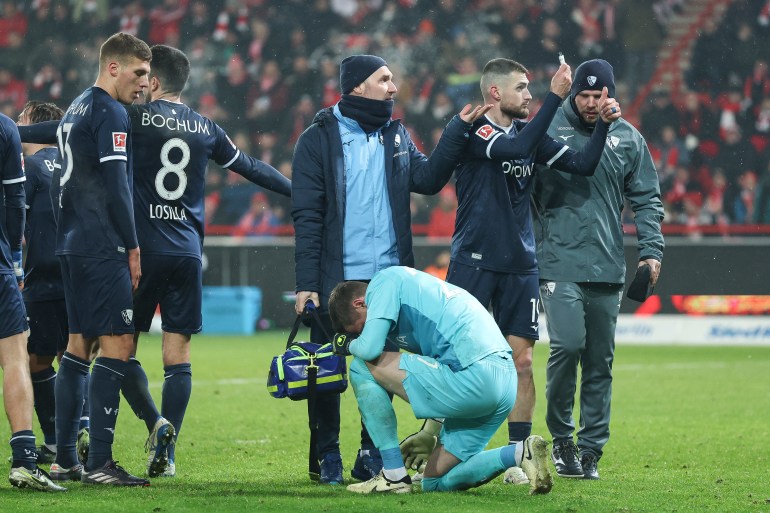
Union Berlin appeal decision to award match to Bochum after their keeper was struck by a cigarette lighter in December. Union Berlin is appealing a decision by the German football federation’s sports court to award Bochum a 2-0 victory after Bochum’s goalkeeper was struck with a cigarette lighter during their Bundesliga match in December. “It’s bad enough that people repeatedly throw objects onto stages, into indoor areas or onto the pitch at concerts or sporting events. Unfortunately, there’s nothing that any event organiser can do to prevent it,” Union president Dirk Zingler said late on Thursday. Earlier, the sports court had awarded Bochum a victory over Union instead of the 1-1 draw that the teams played out on December 14. That game was nearly over when Bochum goalkeeper Patrick Drewes was struck by the object thrown from the crowd in added time. Referee Martin Petersen suspended the game and led both teams off the field after Drewes sat down and received medical treatment. The firelighter was held up by a Bochum player to the Union fans following the incident [Maja Hitij/Getty Images] Bochum did not want to restart the game, but it resumed nearly half an hour later, with striker Philipp Hofmann replacing Drewes for the remaining three minutes. Both teams agreed not to try and score – which was also an issue for the court. Advertisement “Such agreements contradict the basic principles of sporting competition,” court chairman Stephan Oberholz said. Oberholz added that Union were responsible for “a weakening of the Bochum team” as the item had been thrown by a Union supporter. Zingler feels otherwise. “The actual unsportsmanlike scandal took place on the pitch and in court today,” Zingler said, suggesting Bochum had made more of the incident than warranted. “Whether there is an impairment or weakening for one side, whether the game is abandoned or continued, must always be the sole decision of the referee,” Zingler said. “If the beneficiary party can declare themselves as weakened, we no longer need impartial referees and the door is open to fraud or even dirty tricks. The disadvantaged parties will never be able to prove the opposite.” Patrick Drewes, centre, had to be helped from the field [Maja Hitij/Getty Images] Adblock test (Why?)
Lakurawa, the new armed group wreaking havoc on the Nigeria-Niger border
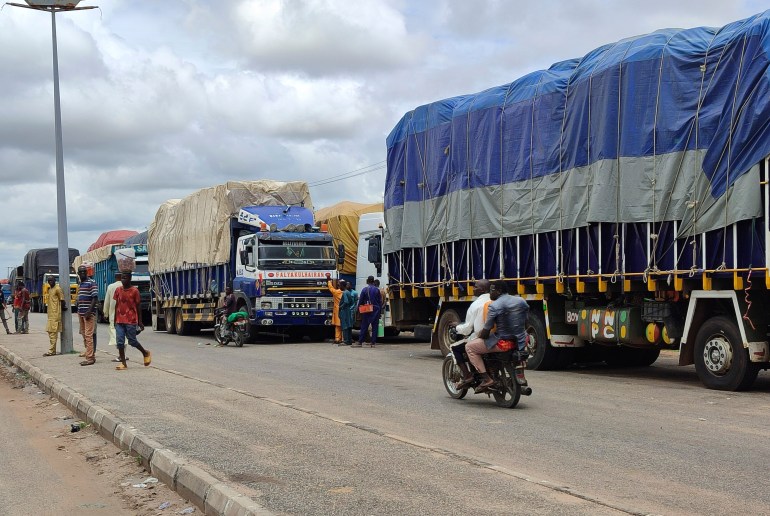
A new armed group called Lakurawa is attacking villages in remote corners of northwestern Nigeria and across the border in Niger, posing new threats to two countries that already suffer from protracted conflict involving several other groups, including Boko Haram. In November, the Nigerian army acknowledged for the first time the existence of Lakurawa and said its members were operating from headquarters in the country’s Sokoto and Kebbi states. Attacks by the group have killed dozens of people, and at least nine suspected members are known and have been declared wanted by the Nigerian army. The northern region is one of the hottest beds of violence in Nigeria, with its states experiencing a toxic mix of armed attacks, kidnappings and banditry in recent years. The Nigerian army has also been grappling with a long-running battle with the Boko Haram armed group in the northeast for more than a decade. Strained relations between Nigeria and Niger, stemming from Niger’s coup d’etat in July 2023, have also affected joint military operations and given the Lakurawa group more room to expand, officials say. Advertisement Here’s what to know about the group: Who is Lakurawa? According to Nigerian army officials, Lakurawa fighters are believed to originally be from troubled Mali, a Sahelian country that’s currently under fire from a swarm of transnational armed groups seeking territory to govern. Groups like Jama’at Nusrat al-Islam wal-Muslimin (JNIM) and ISIL affiliate in the Greater Sahara are some of the armed groups destabilising Mali. Officials in Nigeria say Lakurawa members are affiliated with the Malian groups but have for years settled in communities along the Nigeria-Niger border, marrying local women and recruiting youth. Researchers tracing the origin of the group, however, note that its members have not just begun operating. Originally, Lakurawa members were herdsmen who would carry rifles for protection. They formed an organised armed group after local leaders in rural communities of Gudu and Tangaza, in Nigeria’s Sokoto State, invited them to help tackle armed bandits who were then raiding communities for money and cattle, and who helped prompt a kidnapping crisis in Nigeria. Trucks with goods are seen at the border between Nigeria and Niger. Members of Lakurawa have reportedly settled in border communities [File: Mohammad Babangida/AP] Remote communities in the country are often ungoverned due to the inadequacies of the country’s local and state governments, allowing crime to thrive. The local leaders in Sokoto wanted Lakurawa fighters to battle the bandits and protect the communities. Advertisement Lakurawa members were able to dislodge the bandit threat between 2016 and 2017 and were paid for their work. However, the group’s members soon turned on communities, too. They fell out with one of the local leaders who had invited them and murdered him. Most Lakurawa fighters are believed to be between 18 and 50 and speak Fulfulde, Hausa, and Arabic, according to the think tank, Nigerian Institute of International Affairs. Fulfulde is primarily spoken by the Fulani group whose members are spread across West Africa. The Nigerian military said it had identified some of the group’s leaders: Abu Khadijah, Abdulrahaman (Idi), Dadi Gumba, Muhammed Abu, Usman Shehu, Abu Yusuf, Musa Walia, Ibrahim Suyaka, Ba Sulhu, and Idris Taklakse. What do they want? In its announcement in November, the Nigerian military said Lakurawa’s motivation or ideology is unknown. However, researchers who’ve spoken to communities affected by the violence say the group promotes its own version of Islam and wants to seek a caliphate. In areas they govern, the group is believed to have imposed its own version of Islamic law. What have they done? Members of Lakurawa have been attacking villages in Nigeria and Niger. They are believed to hold territory in several villages, where they also impose taxes on cattle. As a tactic to attract more followers and gain local support, the group is said to be distributing money, farm tools, fertiliser, seeds, and water pumping machines to needy locals. Some estimates put monetary compensation for new recruits at 1 million naira ($645), and about 10,000 naira ($6) for local informants. Advertisement Villagers who don’t cooperate with the group’s leadership face threats and attacks. Lakurawa-related violence has left dozens dead. In one of the latest attacks on November 9, the group’s raid on the Mera community in Nigeria’s Kebbi State left 15 people dead. How is Nigeria responding? Tensions between Nigeria and Niger have hindered a joint and integrated response to Lakurawa and given the group some leeway. Niger’s military seized power in July 2023, but Nigeria, the current leader of the Economic Community of West African States (ECOWAS) regional bloc, has taken a hard line with the military, asking for it to return the country to civilian rule and free detained former President Mohamed Bazoum. Before Niger’s 2023 coup, both countries’ armies maintained joint border patrol operations. That action is believed to have helped disperse the group in 2020. However, amid the tensions that followed the coup, joint operations between the two countries were disrupted. Authorities in Nigeria say that was about the same time the group’s members re-grouped and began attacking communities again, taking advantage of the security vacuum as relations broke down further. Joint border patrols have since resumed. In late 2024, Nigeria launched operations against the group. The military has conducted air strikes on targets believed to be Lakurawa members in the northern states affected, and ground assaults on the group’s camps. Nigeria’s military acknowledged in December that it mistakenly killed 10 civilians after an air strike on the group’s munition hideout in the villages of Gidan Bisa and Gidan Runtuwa, Sokoto State, caused secondary explosions. The villages were a high concentration for the group, an army spokesperson said. Advertisement What about Niger? Niger’s government has not revealed whether it has conducted special operations targeting the group, and it’s unclear what parts of Niger are affected. In an interview with local reporters in December, military leader General Abdourahamane Tchiani blamed the group’s emergence on Nigeria and said Abuja and France were sponsoring
Real Madrid defeats Mallorca to set up Supercopa final against Barcelona

European and LaLiga champions Real Madrid crush Mallorca 3-0 and will now play archrival Barcelona in the Spanish Super Cup final on Sunday. Jude Bellingham and Rodrygo struck to earn Real Madrid a 3-0 win over Mallorca and set up a Spanish Super Cup final clash with rivals Barcelona. Madrid have the chance to earn revenge for their heavy Clasico defeat in LaLiga in October after Bellingham’s clinical second-half strike sent them on their way to victory on Thursday in Saudi Arabia. Backed heavily by fans in Jeddah, Madrid never looked like letting the advantage slip and a stoppage-time own goal by Martin Valjent secured their win, with Rodrygo adding a late third from close range. Madrid coach, Carlo Ancelotti, was full of praise for the way his side claimed control of the match as an attacking force in the second half. “When those up front activate, anything can happen,” he said of his front three attackers and Bellingham. “The four [forwards] are very dangerous. That’s quite evident. Everyone can see it, the quality they have.” Real Madrid made the early running against last season’s Copa del Rey runners-up, with Lucas Vazquez and Rodrygo Goes coming close in the opening stages. Advertisement Kylian Mbappe appealed for a penalty after going down under pressure from Dani Rodriguez, but it would have been soft. Kylian Mbappe has endured a difficult start at Real Madrid after joining from Paris Saint-Germain at the end of last season [Yasser Bakhsh/Getty Images] Jagoba Arrasate’s Mallorca found their footing and did well to restrict the Spanish and European champions to no further clear chances in the first half. Madrid lost Aurelien Tchouameni early in the second half after he hurt his head in a challenge with Cyle Larin, although he appeared frustrated to be withdrawn. Madrid broke the deadlock in the 63rd minute through Bellingham after the post, and Mallorca goalkeeper Dominik Greif kept Rodrygo and Mbappe at bay. A blistering Madrid move bore fruit when Rodrygo’s header from Vinicius Junior’s cross hit the upright and Mbappe’s effort was parried by the scrambling Greif. Bellingham was in the right place at the right time to carefully slot home the rebound past defenders on the goal line, continuing a stunning run of individual form. Jude Bellingham, right, was a stand-out performer as Real Madrid lifted the domestic and European double last season [Pedro Nunes/Reuters] The England international has eight goals for Madrid in his last 10 games across all competitions. “Jude is a phenomenal player. He helps us win games all the time, with goals, assists or just his work,” Bellingham’s fellow midfielder Tchouameni remarked afterwards, adding that he was unharmed by the head collision that saw him withdrawn from the game. Advertisement Mallorca struggled to find a way back in and ended up contributing to Madrid’s second goal when Valjent stretched to cut out a pass but slid the ball into his own goal. Rodrygo wrapped up the win late on to set up a repeat of last season’s final, won by Super Cup holders Madrid. Madrid must wait on the availability of Luka Modric for Sunday’s final after the midfielder fell ill and missed Thursday’s match. “Our player Luka Modric is out of the game against Mallorca because of a viral illness,” said the Spanish champions in a statement only hours before the semifinal. Croatian midfielder Modric, 39, became Madrid’s oldest goalscorer when he netted last week against Valencia in LaLiga. Adblock test (Why?)
US House votes to advance bill to sanction ICC over Israel arrest warrants
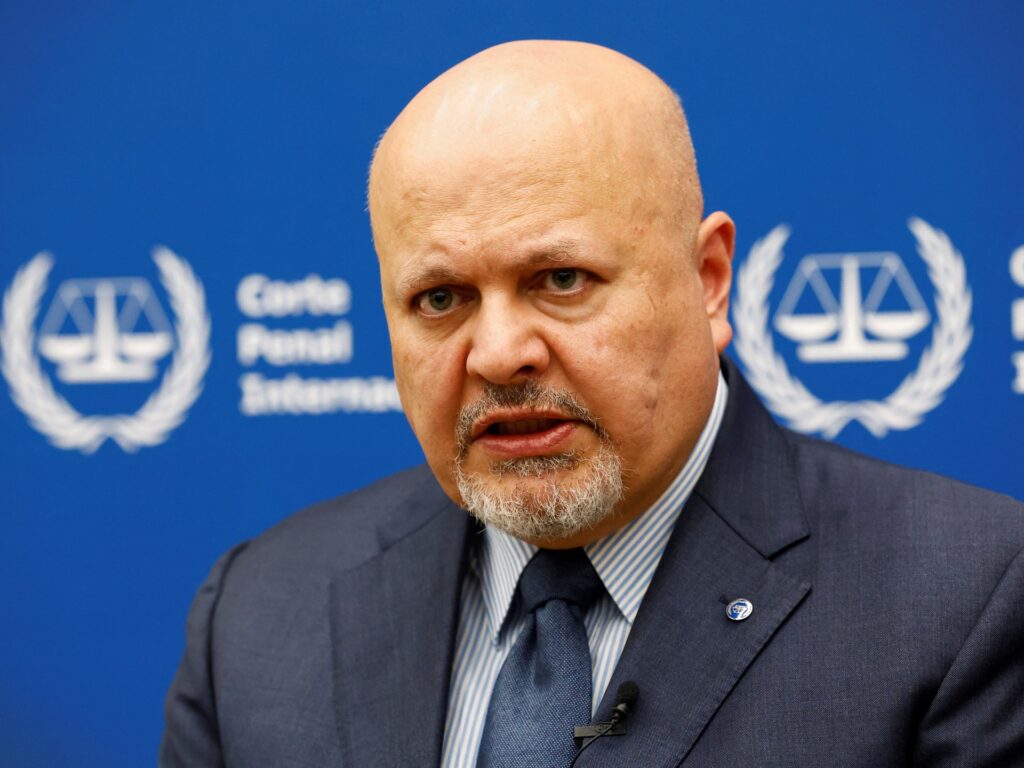
The United States House of Representatives has voted in favour of a bill to sanction the International Criminal Court (ICC) in retaliation for its arrest warrants against Israeli Prime Minister Benjamin Netanyahu and the country’s former Defence Minister Yoav Gallant. Legislators in the lower chamber of the US Congress passed the “Illegitimate Court Counteraction Act” by an overwhelming margin, 243 to 140, on Thursday in a signal of strong support for Israel. Forty-five Democrats joined 198 Republicans in backing the bill. No Republicans voted against it. The bill now heads to the Senate, where a Republican majority was sworn in earlier this month. The legislation proposes sanctions for any foreigner who helps the ICC in its attempts to investigate, detain or prosecute a US citizen or citizen of an allied country that does not recognise the authority of the court. Neither the US nor Israel are parties to the Rome Statute, which established the ICC. The sanctions would include the freezing of property assets, as well as the denial of visas to any foreigners who materially or financially contribute to the court’s efforts. Advertisement “America is passing this law because a kangaroo court is seeking to arrest the prime minister of our great ally, Israel,” Representative Brian Mast, the Republican chairman of the House Foreign Affairs Committee, said in a speech before Thursday’s vote. The vote, one of the first since the new Congress was seated last week, underscored strong support among President-elect Donald Trump’s fellow Republicans for Israel’s government, despite its ongoing war in Gaza. That conflict has killed more than 46,000 Palestinians since it began in October 2023, many of them women and children. United Nations experts have denounced Israel’s methods in Gaza as “consistent with the characteristics of genocide”. That prompted ICC prosecutors last May to issue the arrest warrants against Netanyahu and Gallant. In response, US legislators threatened retaliation against the ICC. In a letter sent to outgoing US President Joe Biden in May, dozens of human rights groups urged him to reject calls for punitive action. “Acting on these calls would do grave harm to the interests of all victims globally and to the US government’s ability to champion human rights and the cause of justice,” the groups wrote at the time. This week, another group of human rights organisations issued another letter ahead of Thursday’s vote, denouncing the House bill as an attack on an “independent judicial institution”. Sanctioning the court, they wrote, will “jeopardize the ability of desperate victims across all the court’s investigations to access justice, weaken the credibility of sanction tools in other contexts, and place the United States at odds with its closest allies”. Advertisement The letter warned that imposing “asset freezes and entry restrictions” on ICC allies would bring the US “the stigma of siding with impunity over justice”. Nevertheless, the US Senate, under Majority Leader John Thune, has promised swift consideration of the act so Trump can sign it into law after he takes office on January 20. In 2020, during his first term in office, Trump sanctioned senior ICC leaders over the court’s investigations of US crimes in Afghanistan and Israeli crimes in occupied Palestinian territory. President Biden later lifted those sanctions. The ICC, based in The Hague, is a permanent court that can prosecute individuals for war crimes, crimes against humanity, genocide and the crime of aggression. The State of Palestine has been a member since 2015, and the court first announced an investigation of crimes committed there by both Israeli and Hamas officials in 2019. Though Israel is not party to the ICC, the court has jurisdiction over crimes committed on a member state’s territory, regardless of the nationality of those committing them. The US has supported the court at times, for instance, when the ICC’s top prosecutor sought an arrest warrant for Russian President Vladimir Putin over alleged war crimes in Ukraine. Russia, like Israel and the US, is not a member of the court. Karim Khan, the prosecutor who issued the arrest warrant against Netanyahu and Gallant, has said that his decision is in line with the court’s approach in all its cases, and he indicated that the warrants could prevent ongoing crimes. Advertisement Adblock test (Why?)
Historians say Jimmy Carter’s human rights legacy includes grim failures
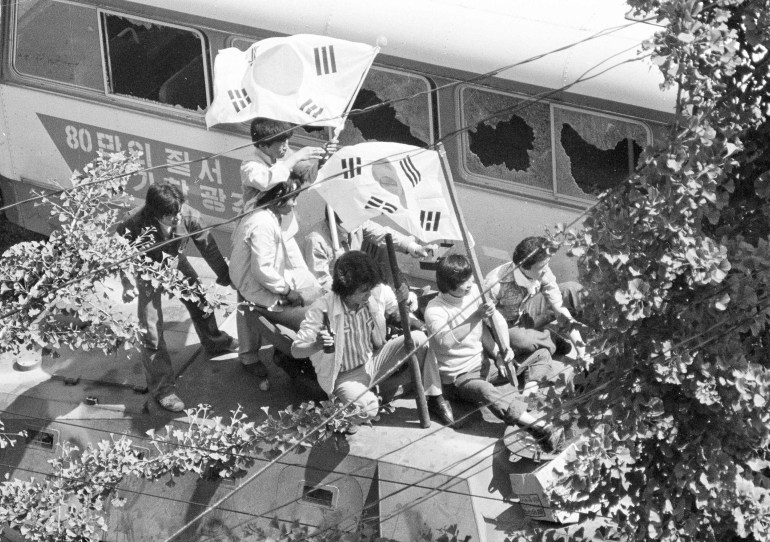
In South Korea, as well, historians say that Carter adopted the messaging of a military government facing human rights criticism. In May 1980, a student-led pro-democracy uprising in the South Korean city of Gwangju was met with a brutal crackdown. In a single day, 60 people were killed and hundreds injured. Journalist Timothy Shorrock, who has been reporting on US-South Korea relations for decades, said that the Carter administration was wary of losing a useful Cold War ally and, therefore, threw its weight behind the military government. He explained the US supported the South Korean leadership by freeing up military resources that allowed troops to put down the uprising. “Knowing that [military leader General Chun Doo-hwan’s] forces had murdered 60 people the day before, they still believed this uprising was a national security threat to the United States,” Shorrock said of the Carter officials. Antigovernment protesters carrying South Korean flags sit behind a city bus, used as a barricade in Gwangju on May 27, 1980 [AP Photo] He added that when a US aircraft carrier was sent to the region, some protesters convinced of US rhetoric on democracy and human rights believed that the US was coming to intervene on their behalf. Instead, the carrier had been deployed to bolster the US military presence so that South Korean troops at the demilitarised zone with North Korea could be reassigned to put down the uprising. Shorrock says that contingency plans even included the possible use of US forces if the unrest in Gwangju spread further. While there is no universally accepted death toll for the uprising, the official government figure is that more than 160 people perished. Some academic sources put the death toll at more than 1,000. Asked by a reporter if his actions had been at odds with his professed commitment to human rights, Carter said that there was “no incompatibility”. He asserted that the US was helping South Korea maintain its national security against a threat of “communist subversion”, mirroring the rhetoric of the country’s military leadership. It was the kind of rhetoric that South Korean leaders had long used to justify repressive and antidemocratic measures. When South Korean President Yoon Suk-yeol declared martial law in December 2024 in the name of combating “antistate forces”, many drew parallels to the traumatic events of Gwangju. “What he was saying at the time was what General Chun Doo-hwan was saying, characterising this as a communist uprising, which it was not,” said Shorrock. “He never apologised for that.” Adblock test (Why?)
South Africa’s sports minister joins calls for Afghanistan cricket boycott
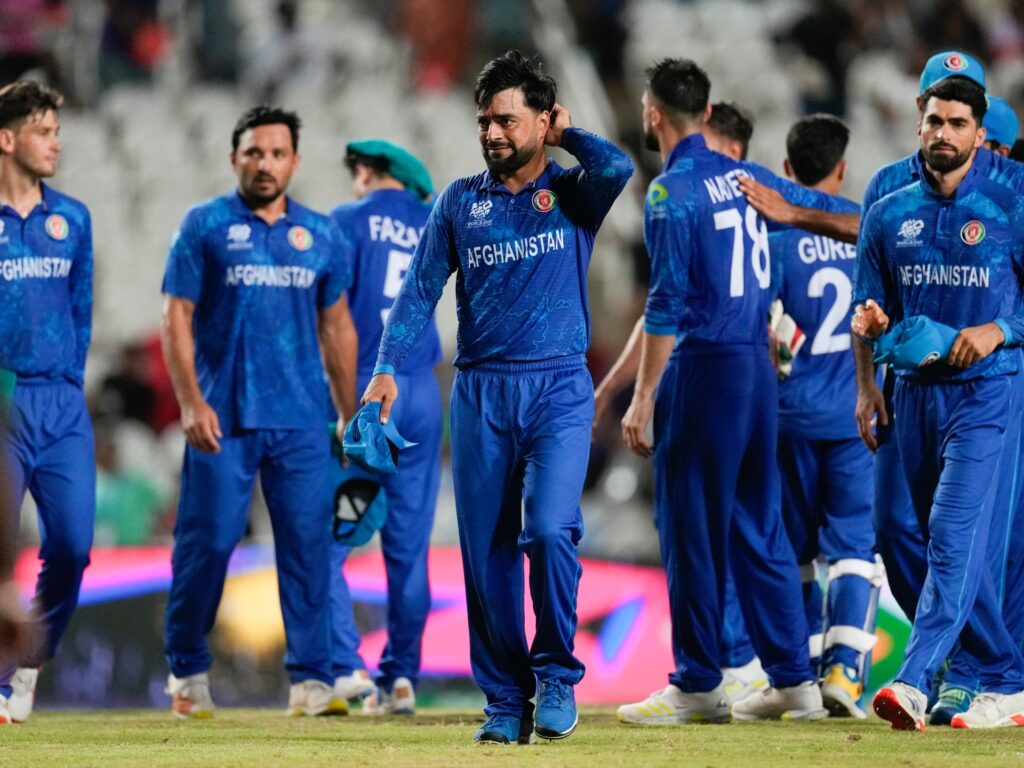
McKenzie urges his country’s cricket governing body not to honour the Champions Trophy fixture against Afghanistan on February 21. South Africa’s Sports Minister Gayton McKenzie has given his support to calls for a boycott of Afghanistan at the ICC Champions Trophy in Pakistan, adding his voice to those of British politicians who have called on England not to play the South Asian nation at the tournament next month. “Cricket South Africa, the federations of other countries and the ICC (International Cricket Council) will have to think carefully about the message the sport of cricket wishes to send the world, and especially the women in sports,” he said in a statement on Thursday. “It is not for me as the sports minister to make the final decision on whether South Africa should honour cricketing fixtures against Afghanistan. If it was my decision, then it certainly would not happen.” England and South Africa share the same group with Afghanistan in the one-day international (ODI) competition and are under pressure to boycott the fixtures in response to the Taliban government’s crackdown on women’s rights since returning to power in August 2021. Advertisement South Africa are scheduled to open their Champions Trophy schedule against Afghanistan in Karachi on February 21 but McKenzie urged his country’s cricket governing body not to honour the fixture. “As a man who comes from a race that was not allowed equal access to sporting opportunities during Apartheid, it would be hypocritical and immoral to look the other way today when the same is being done towards women anywhere in the world,” he added. More than 160 British politicians have signed a cross-party letter to the England and Wales Cricket Board, calling for a boycott of England’s fixture against Afghanistan in Lahore on February 26. ECB chief executive Richard Gould responded by calling for a uniform approach from all member nations towards Afghanistan’s participation in international cricket. Australia are the other team scheduled to take on Afghanistan, in Lahore on February 28. Cricket Australia indefinitely postponed a bilateral men’s Twenty 20 series against Afghanistan last March citing “deteriorating human rights for women and girls in the country under Taliban rule” but they did play them at the World Cup in India in late 2023 and at the T20 World Cup last June. Cricket Australia chairman Mike Baird last month said he was “very proud of the position we’ve taken” after they were accused of hypocrisy. “We’ve taken a position, and we’re proudly standing up where we think we should,” he said. Adblock test (Why?)