

Scenes of destruction from Los Angeles wildfires
[unable to retrieve full-text content] A drive along streets in the US state of California shows the kind of destruction left by several wildfires.
How big are the California wildfires – and why did they spread so fast?
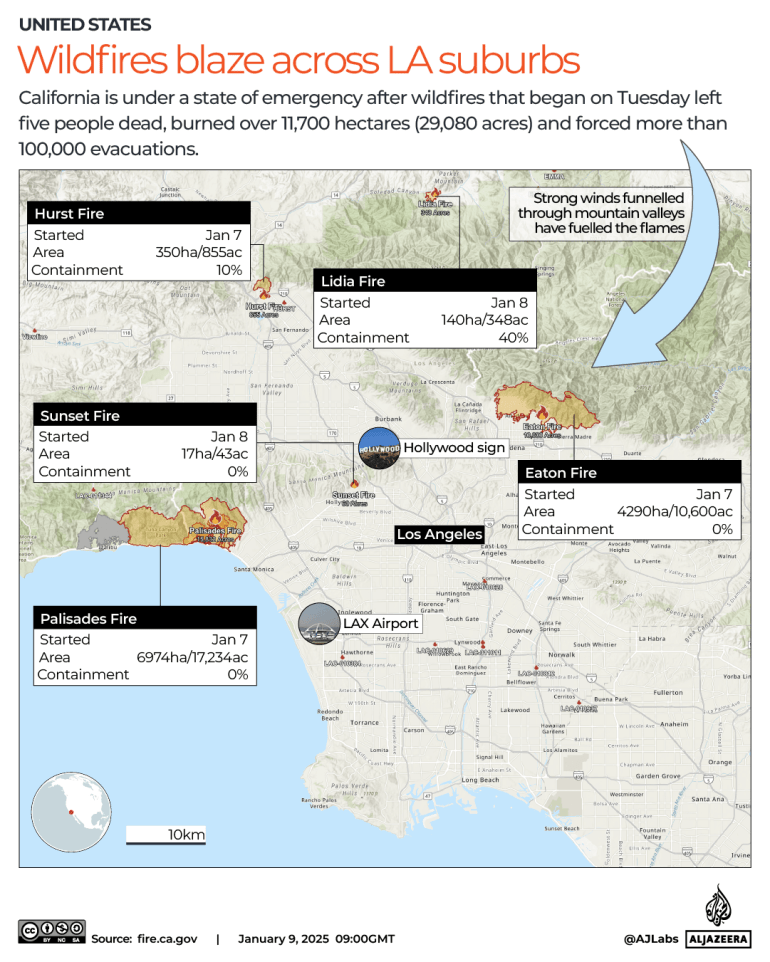
At least five people have been killed and thousands of homes have been gutted in wildfires that have ravaged multiple parts of Los Angeles in California – the most populous state of the United States. More than 130,000 residents in different neighbourhoods of Los Angeles city have been ordered to evacuate as the fires, which erupted on Tuesday, continue to rapidly spread, fuelled by high winds. So how big are the fires at present, and how did they begin? What started the California wildfires? The first fire started in the Pacific Palisades neighbourhood of Los Angeles at 10:30am (18:30GMT) on Tuesday, according to California Department of Forestry and Fire Protection (Cal Fire). Investigators are still trying to find out the exact trigger for the worst firestorm in recent memory, but a combination of factors might have created conditions optimal for a fire. California generally experiences wildfires during June and July, and they can run until October, but the blaze has defied the calendar this year, erupting in January – the coldest of the winter months. Advertisement Southern California, the site of the fires, has been experiencing drought conditions and had not seen significant rainfall for months. Last year less than four percent of California was affected by drought compared with nearly 60 percent this year, according to the US drought monitor. Climate change has contributed to an increase in the frequency, season length and burned area of wildfires, according to a report by the US Environmental Protection Agency (EPA). So, dry conditions aided by Santa Ana winds – dry and hot winds common in the area – most likely caused the wildfires. The dry desert air moves from the interior of the region towards the coast and offshore. It contributes to wildfires because it significantly reduces humidity in the environment due to its dry nature. This causes vegetation to become very dehydrated and susceptible to fire. Under these circumstances, any spark can start a fire, be it from a cigarette butt, vehicle or power line. Gusts up to 100mph (160km/h) were recorded at higher elevations on Tuesday night, according to AccuWeather meteorologist Danielle Ehresman. Besides dry vegetation, Los Angeles has other flammable materials such as low-hanging power cables and wooden telephone polls. Santa Ana winds have been associated with extreme wildfires in California in the past, including the Woolsey fire in November 2018, which killed three people and razed 1,600 structures. Experts, however, warn that weather conditions are dire this year. “We really haven’t seen a season as dry as this one following a season as wet as the previous one – all of that extra abundant growth of grass and vegetation followed immediately by a wind event of this magnitude while it’s still so incredibly dry,” Daniel Swain, a climate scientist at University of California, Los Angeles, said on a livestream on Monday. Advertisement How big are the California wildfires? Rapid spread The fire started in Palisades located on the Pacific Ocean, and from there the blaze spread rapidly to other neighbourhoods. The second fire broke out in Eaton at about 6pm (02:00 GMT) on Tuesday. A third fire also broke out the same day in Sylmar, in the San Fernando Valley northwest of Los Angeles, called the Hurst fire. Five more fires broke out in California on Wednesday: the Lidia, Sunset and Woodley fires in Los Angeles; the Olivas fire in Ventura and the Tyler fire in Riverside. (Al Jazeera) Amount of land burned According to Cal Fire, here is the current status of the major fires as of Wednesday night: Palisades: At least 6,970 hectares (17,234 acres) Eaton: At least 4,290 hectares (10,600 acres) Hurst: At least 346 hectares (855 acres) Lidia: At least 140 hectares (348 acres) Sunset: At least 17 hectares (43 acres) The Woodley fire burned 30 acres (12 hectares) of land while the Olivas and Tyler fires both burned 11 acres (4.5 hectares) each. Here is a comparison of aerial images of the Pacific Coast highway before and after the Palisades fire. And here is Altadena before and after the Eaton fire. Containment The containment percentage of a fire refers to the perimeter or containment line established around the fire by firefighters to prevent it from spreading further. A containment line can be any physical barrier around the fire, such as a shallow trench dug into dirt. The fires in California are barely contained, which means there is no prevention from them spreading further. The Palisades, Eaton and Sunset fires are all zero percent contained, while the Hurst fire is 10 percent contained and the Lidia fire is 40 percent contained. Advertisement The Woodley, Olivas and Tyler fires are 100 percent contained, according to Cal Fire. The first major US wildfire of 2025 is burning across multiple fronts in Los Angeles city and county, covering an area nearly twice the size of Manhattan [Al Jazeera] What has the government’s response been? The scale of the fires has gotten out of hand, according to the local firefighting department. California Governor Gavin Newsom said in an X post on Wednesday night that 7,500 firefighting personnel are currently on the ground. US President Joe Biden cancelled an upcoming Italy trip to focus on the federal response to the fire, the White House said. Biden posted on his X account that his team has provided 5 air tankers and 10 firefighting helicopters. However, the strong winds have hindered aerial rescue efforts. Los Angeles County Fire Chief Anthony Marrone told a news conference that firefighters from six other states including Nevada were being rushed to California. Additionally, 250 engine companies with 1,000 personnel were being moved from Northern California to Southern California. But resources are running thin. Water shortages in the Palisades have dried out some fire hydrants. Janisse Quinones, the chief executive of the Los Angeles Department of Water and Power, told a media conference that Pacific Palisades depends on three tanks containing about a million gallons (3.78 million litres) each. Quinones added that the demand
Clashes in Mozambique as main opposition leader Mondlane returns from exile
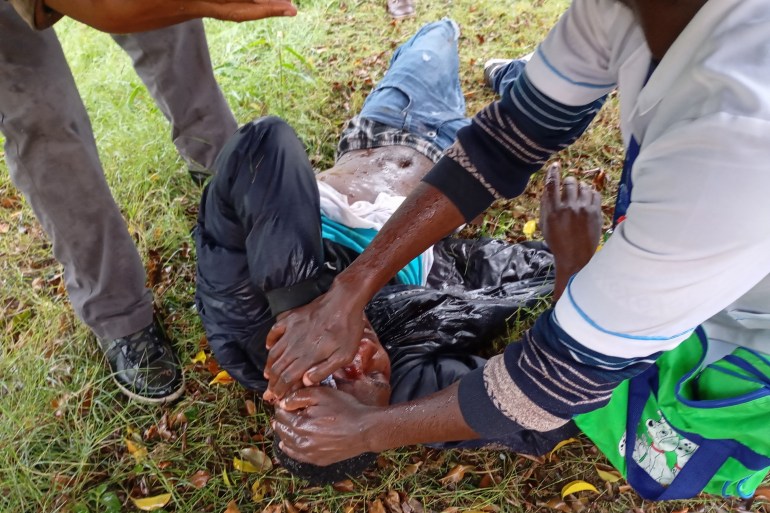
Injuries reported as police fire tear gas and live ammunition as Venancio Mondlane lands in Maputo after disputed election. Police have fired live ammunition and tear gas to prevent supporters of Mozambique’s main opposition leader Venancio Mondlane from reaching the airport to greet him following his return from self-imposed exile. Live images from capital Maputo broadcast by Al Jazeera on Thursday showed police chasing down protesters, some of whom responded by throwing rocks, as they attempted to breach the main highway leading to the city’s Mavalane International Airport. Al Jazeera’s Fahmida Miller, reporting from the site of the clashes in Maputo, said some of Mondlane’s supporters were injured in the clashes. “Police have been pushing back at protesters, firing tear gas. We also heard live ammunition being used,” she said. “The protesters are trying to reach the airport to greet Mondlane, and they can’t. So they are increasingly agitated. There has been a back and forth between the police and protesters.” The number of injuries could not be immediately determined. Mondlane’s supporters tend to a man allegedly shot in the head by police at a checkpoint near the Maputo international airport on Thursday [Amilton Neves/AFP] Mondlane, who was met by a large group of journalists after exiting the airport building, claims the October 9 election was rigged in favour of the candidate of the ruling Frelimo party, Daniel Chapo, who is due to be sworn in on January 15. Advertisement Mondlane went into hiding more than two months ago fearing for his life after two senior members of his party were killed in their car by unknown gunmen in the aftermath of the election, which also killed dozens of others. “I am here in the flesh to say that if you want to negotiate … I am here,” Mondlane told reporters outside the airport. The election dispute unleashed waves of violence that have left about 300 people dead, including protesters killed in a police crackdown, according to a tally by a local rights group. Authorities say police officers have also been killed and there has been looting and vandalism. A decision by Mozambique’s top court, the Constitutional Council, to validate the election results triggered more demonstrations. There were fears that Mondlane could be arrested on his return, including on charges related to the weeks of protests by his supporters, many of them young Mozambicans desperate for change after 50 years under the ruling Frelimo. Frelimo, which has ruled Mozambique since the end of the war against Portuguese colonial rule in 1975, denies opposition accusations of electoral fraud. Western observers have said this year’s election was not free and fair. Al Jazeera’s Miller said the government is blaming Mondlane for “inciting” the unrest across the country in recent weeks. “They also said that he should pay for the damages caused in Mozambique during that time. The question now is, how will the government now respond?” Mondlane’s supporters say his return from a two-month exile gives people hope. “We young people are here fighting for our tomorrow,” said Fatima Pinto, 20, who trained as a general medical technician. Advertisement Adblock test (Why?)
‘For Ethiopia’s heritage’: Family fights to reclaim war hero’s stolen medal

Amaha Kassa’s grandfather was the last remaining commander who bravely rallied troops and fought back when the Italians invaded and briefly colonised Ethiopia in 1935. Four decades earlier, the Italians initially attempted to annex the country but were soundly defeated. This time though, the story would be different. Armed with rifles and spears, the Ethiopians were no match for the new machineguns the Italians carried, and the aircraft that sprayed deadly chemicals from the sky. Although Kassa’s grandfather, Ras (Prince) Desta Damtew, fought long and hard, he was eventually caught and executed in 1937. Tens of thousands more Ethiopians would be killed during the seven-year occupation, including civilians and Red Cross aid workers – a memory still raw for many in the country. Imperial Order of the Star of Ethiopia [Courtesy of La Galerie Numismatique] So it was with shock and anger that Kassa and his siblings discovered in November that a gold medal Damtew owned was set to be auctioned by an art gallery in Switzerland. The piece was going for between 60,000 and 90,000 euros ($61,800 and $92,700). Its description or provenance stated blatantly that the medal came from the estate of an Italian soldier who “was present at the capture of the prince”, and painted details of Damtew’s killing. “They were not in any way attempting to hide the provenance of this item, and were even using the personal circumstances of his death and execution as a selling point,” Kassa, who runs African Communities Together, a New York-based activist organisation, told Al Jazeera. Advertisement “I just can’t imagine that this would be a Nazi-era object and that something like this would happen. There’s a way that people have not come to think of African issues as being worthy of respect,” he said. The case has kickstarted an international quest for the medal to be returned. It also shines a light on a pressing, ongoing conversation across Africa, as governments and individuals from Kenya to Cameroon push for the return of thousands of antiquities looted by colonising Western powers. In Ethiopia, hoards of artefacts were looted, first by the British, and later, by the Italians. Although the 1947 Paris Peace Treaty required that Italy return all of the art and religious objects stolen during its brief occupation, and pay $25m in reparations within 18 months, that treaty has not fully been enforced. “The Vatican Library has more than 300 Ethiopian manuscripts, most of which were looted during the occupation,” Alula Pankhurst, the country director of Oxford University’s Young Lives Ethiopia project, told Al Jazeera. While some items have been returned, Italy has continued to hold on to hundreds of other items like crowns, royal regalia, and paintings, said the veteran professor of Ethiopian studies. Members of the Ethiopian Patriotic Association, whose purpose is to honour resistance fighters in Italian East Africa during the second world war, parade at an event to commemorate Arbegnoch Qen, or Ethiopian Patriots’ Victory Day, in the capital, Addis Ababa, on Thursday, May 5, 2022. The event marks the anniversary of when Emperor Haile Selassie returned to Addis Ababa in 1941, ending the five-year Italian occupation of the city during the war [AP Photo] Symbol of African resistance Ras Desta Damtew was executed by the Italian army in February 1937, at age 44. His was a long life of service to the then-Ethiopian Empire. His father died commanding soldiers in the iconic Battle of Adwa in 1896 when Ethiopian forces humiliated Italian invaders in their initial attempt at conquest. It was the first time an invading European power lost to an African force. Advertisement Damtew too fought for various monarchs. He helped Emperor Haile Selassie attain the throne and later married Leult (Princess) Tenagnework, the emperor’s eldest child. “I didn’t grow up with personal memories of him, but I certainly heard a lot about him,” Kassa said, sharing that his mother, Princess Seble – one of the couple’s eight children – was only a child when Damtew died. “He was this kind of legend. There’s a tremendous sense of pride in the sacrifices that he made, but then there’s also a sort of sadness to it as well.” In old newspaper articles, Damtew is described as stoic, handsome and intelligent, with a mastery of French. Grainy black and white photos show him in full royal regalia: heavily decorated mid-length robes and shiny leather shoes. In one, a star-shaped brooch is pinned on his right chest – likely the Imperial Order of the Star of Ethiopia – a medal of pure gold that signified a rare military honour conferred for service to the crown, and the artefact at the centre of the current uproar. As a special ambassador of Ethiopia, the prince visited the United States in July 1933 decked in flowing robes and bearing gifts including lion manes and photos of the emperor. He was feted by President Franklin Roosevelt in Washington. Two years later in October 1935, the Italians, under fascist leader Benito Mussolini, invaded and seized Addis Ababa. From left to right standing: Princess Tsehai; the Crown Prince of Ethiopia, Asfaw Wossen; the Ethiopian princess – wife of Ras Desta; Ras Desta, son-in-law of the emperor, married to the eldest daughter; the crown princess; Princess Thahai; Prince Makonnen; (seated in front) the emperor and empress with the two children of Ras Desta and the eldest daughter of the Emperor Haile Selassie, shown on August 20, 1935 [File: AP Photo] With their “deadly rain” of sulfur and machineguns, the 100,000-plus Italian army decimated Ethiopia’s defences, even though the local forces outnumbered the invaders eight to one. To clamp down on a budding civilian resistance, the Italians massacred people in their thousands, while also pillaging Ethiopia’s cultural objects. At least 100,000 Ethiopians were killed by the end of the occupation in 1941. Advertisement Damtew’s battalion spent two years holding the fort even as Emperor Selassie fled into exile. By the time the prince was caught, he had been wounded in the fighting. Some accounts
19 killed in assault on Chad presidential complex
[unable to retrieve full-text content] At least 19 people have been killed in Chad where security forces said they had prevented an attack by armed fighters.
US Fed officials expected slower rate cuts in 2025, say December minutes
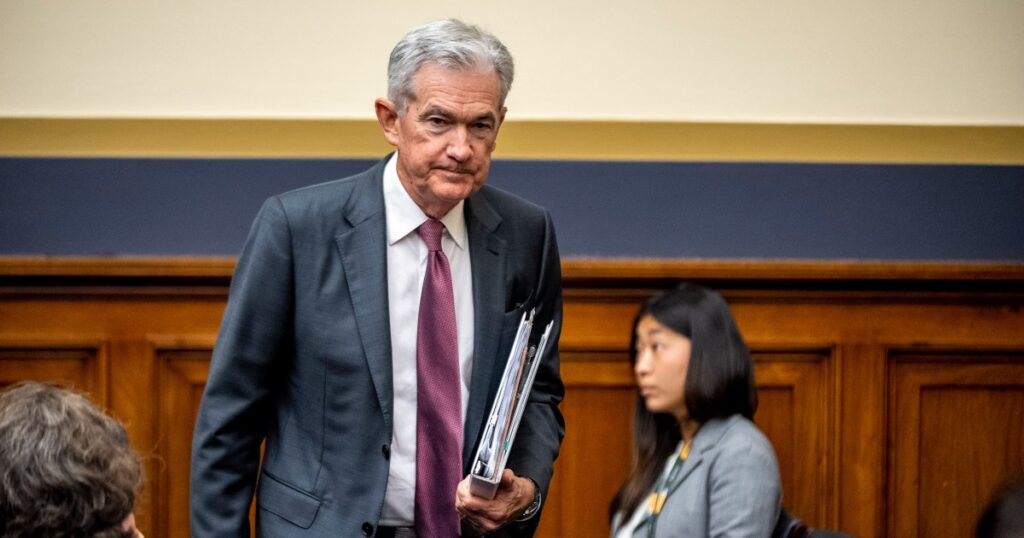
Minutes of the December meeting show a division on decision to cut rates and the 0.25 percent cut was a ‘close call’. United States Federal Reserve officials at their meeting December 17-18 expected to dial back the pace of interest rate cuts this year in the face of persistently elevated inflation and the threat of widespread tariffs and other potential policy changes. Minutes from the meeting, released on Wednesday after the typical three-week lag, also showed clear division among the Fed’s 19 policymakers. Some expressed support for keeping the central bank’s key rate unchanged, the minutes said. And a majority of the officials said the decision to cut rates was a close call. Ultimately, the Fed chose to cut its key rate by a quarter-point to about 4.3 percent. One official, Cleveland Fed President Beth Hammack, dissented in favour of keeping rates unchanged. Still, there was widespread agreement that after reducing rates for three straight meetings, it was time to undertake a more deliberate approach to their key rate. Fewer rate cuts will likely mean that borrowing costs for consumers and businesses – including for homes, cars and credit cards – will remain elevated this year. Advertisement Policymakers said the Fed “was at or near the point at which it would be appropriate to slow the pace of policy easing”, the minutes said. In projections released after the meeting, Fed officials said they expect just two cuts next year, down from an earlier projection of four. Trump tariffs The minutes also showed that “almost all” Fed policymakers see a greater risk than before that inflation could stay higher than they expect, in part because inflation has lingered in several recent readings and because of “the likely effects of potential changes in trade and immigration policy”. The Fed’s staff economists considered the economy’s future path particularly uncertain at the December meeting, in part because of incoming President-elect Donald Trump’s administration’s “potential changes to trade, immigration, fiscal, and regulatory policies”, which the staff said are difficult to assess in terms of how they will impact the economy. As a result, they included several different scenarios for the economy’s future path in their presentation to policymakers. The staff projected that inflation this year would be about the same as in 2024 because they expected Trump’s proposed tariffs would keep inflation elevated. Stock markets plummeted after the Fed officials reduced their outlook for rate cuts last month. Fed Chair Jerome Powell said at a news conference after the meeting that the decision to reduce rates had been a “close call”. Powell also said that recent signs of stubborn inflation have caused many Fed officials to pare back their expectations for rate cuts. According to the Fed’s preferred measure, inflation ticked up to 2.4 percent in November, compared with a year ago, above the Fed’s 2 percent target. Excluding the volatile food and energy categories, it was 2.8 percent. Advertisement In addition, some officials have started to consider the potential impact of Trump’s proposals, such as widespread tariffs, on the economy and inflation next year, the minutes said. Economists at Goldman Sachs, for example, have estimated that Trump’s tariff proposals could push inflation up by nearly a half-percentage point later this year. Earlier Wednesday, Fed governor Christopher Waller said that he still supported rate reductions this year, partly because he expects inflation to steadily head down to the Fed target. He also said he did not expect tariffs would worsen inflation and wouldn’t change his preference for lowering borrowing costs. In a question-and-answer session, Waller also said that he didn’t think Trump would ultimately impose the universal tariffs he promised in the campaign. Adblock test (Why?)
As Trump talks up trade war with China, fears rise for rare earths supply

Taipei, Taiwan – As United States President-elect Donald Trump gears up for a second trade war with China once he takes office on January 20, the rare earth minerals essential to the production of electronics, vehicles and weapons are one resource expected to be caught up in the fray. While rare earths are plentiful across the earth’s surface – despite what their name suggests – China controls about 70 percent of their production and 90 percent of processing, according to estimates by the US Geological Survey and the International Energy Agency. The 17 elements, which include scandium, promethium and yttrium, are used to make everything from smartphones, semiconductors, and EV batteries, to F-35 fighter jets, drones, wind turbines, radar systems and nuclear reactors. The vulnerability of rare earth supply chains has been a growing concern for governments worldwide in an era of heightened geopolitical tensions. Last month, China banned exports of gallium, germanium and antimony to the US after the administration of President Joe Biden announced its latest curbs on the sale of advanced chips and machinery to the country. Advertisement The move was widely viewed as symbolic as the US has other sources of gallium and germanium. But it nonetheless marked an escalation in Beijing’s use of rare earths as a tool for geopolitical advantage after declaring rare earths property of the state in October and banning the export of technologies used for extracting and separating the materials late last year. It also recalled the Chinese government’s decision in 2010 to briefly ban exports of such minerals to Japan amid a maritime border dispute between the sides. US President-elect Donald Trump speaks during a news conference at Mar-a-Lago in Palm Beach, Florida, the United States, on January 7, 2025 [Evan Vucci/AP] With Trump pledging to impose a swath of new trade restrictions on China – ranging from a 10 percent tariff on Chinese goods over Beijing’s failure to curb fentanyl exports, to a 60 percent tariff for unfair trade practices – Beijing could further restrict rare earths to respond in kind. Even if the Chinese government did not retaliate with export bans, Trump’s tariffs would potentially make the minerals much more expensive to obtain. “Looking ahead 12–18 months, the global geopolitical landscape is rife with wildcards that could in an instant materially impact the outlook for supply chains and the economies they serve,” Ryan Castilloux, a rare earths expert at Canada-based research and advisory firm Adamas Intelligence, told Al Jazeera. Washington is particularly concerned about rare earths such as neodymium, praseodymium, dysprosium, and terbium, Castilloux said, which are used to make powerful neodymium magnets – also known as NdFeB magnets. Advertisement Rare earths and finished products such as rare-earth magnets, which are multiple times stronger than standard magnets, are considered a “vulnerability for US manufacturers and the defence industry” because the US and its allies have yet to develop an alternative source than China, Castilloux said, although projects to produce the minerals are under way elsewhere, including three US states and Estonia. Washington has made the establishment of a “sustainable mine-to-magnet supply chain” a top priority. In March, Danielle Miller, acting deputy assistant secretary of defence for industrial base resilience, said efforts to build such a pipeline capable of supporting all US defence requirements by 2027 were “on track”. Despite plentiful reserves of rare earths in numerous countries, from Angola and Australia to Brazil, Canada and South Africa, expanding the supply chain beyond China is a challenging undertaking. China has been able to maintain dominance of the industry thanks to its economies of scale, government subsidies, and its accumulation of massive stockpiles that have allowed it to undercut competitors with “irrationally low prices”, said Neha Mukherjee, a senior analyst for critical minerals at Benchmark Mineral Intelligence. Samples of rare earth minerals on display at the Mountain Pass Rare Earth facility in Mountain Pass, California, the United States, on June 29, 2015 [David Becker/Reuters] Rare earths are by-products of mining other minerals such as iron ore, and they are not produced in predictable quantities. As a result, quantities and therefore prices of different rare earths can vary greatly among the 17 minerals. Advertisement Mukherjee said China is focused on keeping rare earth prices stable to support its domestic EV industry, even if doing so comes at the expense of the mining sector. China’s near-monopoly and unbeatable prices have historically made operating rare earth mines and processing facilities an unattractive proposition for many investors. “They’re discouraging anyone from becoming a competitor. It just doesn’t make viable economics to develop a mine when you can buy the semi-processed materials at a competitive rate,” Mike Walden, senior director of TechCet, a consulting firm specialising in electronics supply chains, told Al Jazeera. The timeline is also long, taking 10-20 years from exploration to construction, Walden added. A watershed moment for US efforts to secure rare earth supplies was the reopening of the Mountain Pass Mine in California’s Mojave Desert – first discovered in the 1870s – by MP Materials in 2018. The company has since opened a magnet factory in Texas. Other rare earth-related facilities outside China include a mine in Yellowknife, Canada, a magnet recycler in the US state of Texas, and a rare earth magnet factory in the US state of South Carolina, with more projects in development across North America. Since 2022, the US Department of Defence and the Department of Energy have awarded more than $440m to rare earth companies, with additional tax credits provided by the Inflation Reduction Act. Such projects could help the US weather the storm if China cut off exports of rare earths, although the country could still struggle to achieve total self-reliance, said Walden. Advertisement “The key point here is there are operational facilities in North America. Is it enough to necessarily support all North American demand? The answer to that is no. Is it enough to support the strategic demand of North America? The answer to that appears to be yes,” he said,
Barcelona defeat Athletic without Olmo to reach Spanish Super Cup final

Barcelona reach the final of the Spanish Super Cup with a 2-0 win against Athletic Bilbao in Saudi Arabia. Young starlets Gavi and Lamine Yamal fired Barcelona, without Dani Olmo after his licence to play was revoked, into the Spanish Super Cup final with a 2-0 win against Athletic Bilbao. Spanish playmaker Olmo was cleared to play again on a temporary basis before the game on Wednesday, but the decision came too late for him or Pau Victor, in the same position, to feature against Copa del Rey winners Athletic. Gavi put Barcelona ahead from close range after 17 minutes and teenage winger Yamal netted the second early after the break. Spanish and European champions Real Madrid face cup runners-up Mallorca on Thursday in the second semifinal. “We don’t care [who we face in the final]. It will be hard and we want to win it, which is the important thing, and go back home with the trophy,” Yamal told Movistar after the game. Barcelona’s Gavi forces home the opening goal [Pedro Nunes/Reuters] Barcelona, who qualified as LaLiga runners-up, started brightly and Raphinha volleyed over from a fine Jules Kounde cross and forced Unai Simon into a good save with a free-kick. Advertisement It was no surprise when the Catalans broke the deadlock with Alejandro Balde cutting the ball back for Gavi, playing in Olmo’s attacking midfield role, to turn home. The 20-year-old pointed at an imaginary watch in his celebration, a nod to Olmo, who regularly produces the same gesture after scoring. At the other end, Inaki Williams dallied on the ball too long as Athletic’s best attacking move of the first half broke down. Yamal, 17, should have added Barcelona’s second after Raphinha’s shot was saved but miscued an attempted lob. Wojciech Szczesny, on his second start in goal for Barcelona, made a good save to keep Inaki Williams at bay before the break. Barcelona doubled their lead early in the second half when Gavi slipped in Yamal who finished with aplomb. “Athletic are a very physical team that make you run a lot. We suffered above all towards the end, but we were able to play well, and we’re very happy,” Yamal added. Barcelona’s Lamine Yamal celebrates scoring their second goal [Pedro Nunes/Reuters] Veteran Polish forward Robert Lewandowski spurned a fine chance to add the third, firing off-target when well-placed. Athletic coach Ernesto Valverde, who was sacked as Barcelona boss after a defeat at the same stadium in 2020, brought on Nico Williams to try and turn the game around. The Spain international, heavily linked with Barcelona in the summer, was not fit enough to start, but made a positive impact from the bench. The winger set up Oscar de Marcos to strike, but the Athletic defender had strayed just offside and the goal was ruled out. Advertisement Inaki Williams also had a goal ruled out for offside after Frenkie de Jong’s poor back-pass took a slight deflection off Alvaro Djalo on its way to the Ghana international. Barcelona secured their victory and await their opponents in Sunday’s final, in which Olmo will be allowed to feature. Adblock test (Why?)
Strong winds drive wildfires across Los Angeles
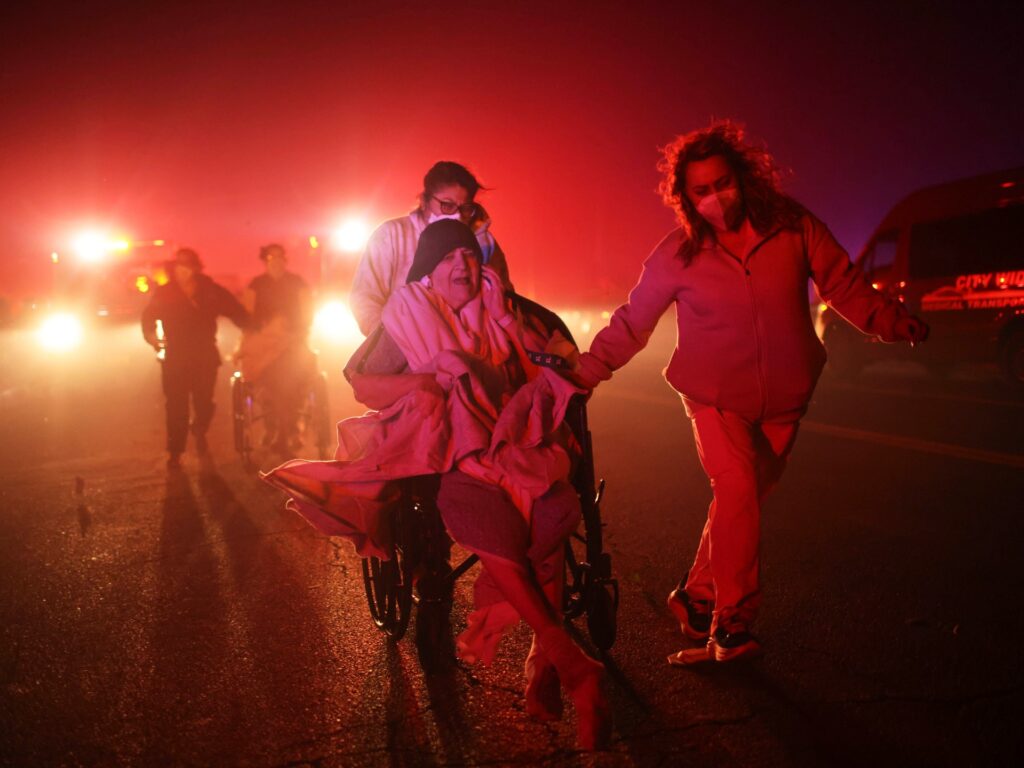
California firefighters have battled wind-whipped wildfires that have torn across the Los Angeles area, destroying homes and clogging roadways as tens of thousands fled, straining resources as officials prepared for the situation to worsen. The blaze that broke out on Tuesday evening in the foothills northeast of Los Angeles spread so rapidly that staff at a senior living centre had to push dozens of residents in wheelchairs and hospital beds down the street to a car park. The residents waited in their bedclothes as embers fell around them until ambulances, buses and even construction vans arrived to take them to safety. A blaze that started hours earlier ripped through the city’s Pacific Palisades neighbourhood, a hillside area along the coast dotted with celebrity residences and memorialised by the Beach Boys in their 1960s hit “Surfin’ USA”. In the frantic haste to get to safety, roadways became impassable, as scores of people abandoned their vehicles and fled on foot, some toting suitcases. Advertisement Traffic jams prevented emergency vehicles from getting through. A bulldozer was then brought in to push abandoned cars to the side and create a path. Video along the Pacific Coast Highway showed widespread destruction of homes and businesses along the famed roadway. A third wildfire started at about 10:30pm (06:30 GMT, Wednesday) and quickly prompted evacuations in Sylmar, the northernmost neighbourhood in Los Angeles. The causes of all three fires were under investigation. Flames were being pushed by winds topping 60mph (about 100km/h) in some places. The wind speeds were projected to increase overnight, producing isolated gusts that could top 100mph (160km/h) in mountains and foothills — including in areas that have not seen substantial rain in months. The situation prompted the Los Angeles Fire Department to take the rare step of putting out a plea for off-duty firefighters to help. It was too windy for firefighting aircraft to fly, further hampering the fight. Officials did not give an estimate of structures damaged or destroyed in the Pacific Palisades wildfire, but they said about 30,000 residents were under evacuation orders and more than 13,000 structures were under threat. Governor Gavin Newsom visited the scene and said many homes had burned. By evening, the flames had spread into neighbouring Malibu and several people there were being treated for burn injuries. A firefighter had a serious head injury and was taken to a hospital, according to Los Angeles Fire Department Captain Erik Scott. Advertisement As of Tuesday evening, nearly 167,000 people were without power in Los Angeles County, according to the tracking website PowerOutage.us. Recent dry winds, including the notorious Santa Anas, have contributed to warmer-than-average temperatures in southern California, where there has been very little rain this season. Southern California has not seen more than 0.1 inches (2.5mm) of rain since early May. Adblock test (Why?)
Can Syria’s new leaders fix the broken economy?
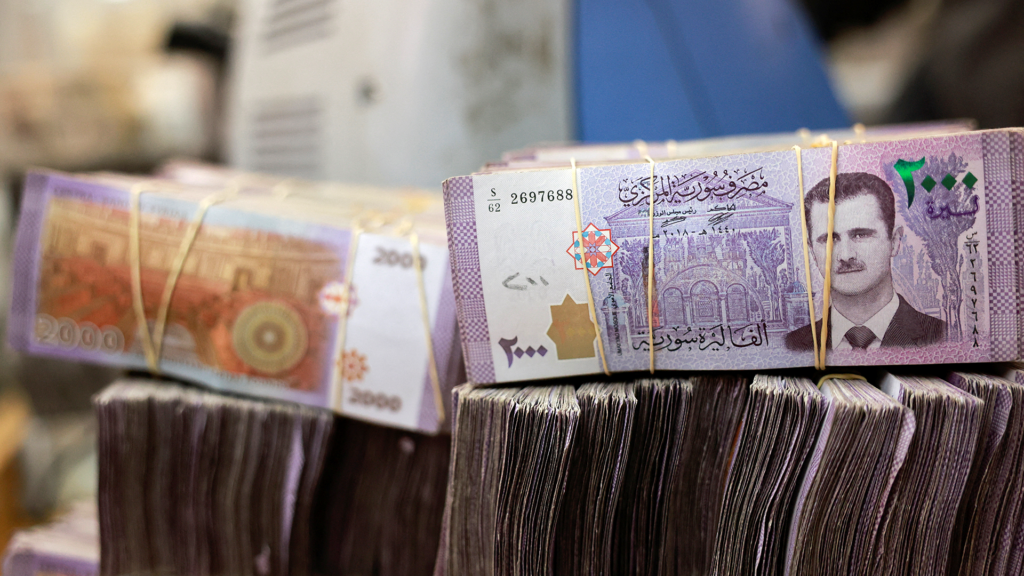
After almost 14 years of civil war, Syria’s economy is in ruins. After almost 14 years of civil war, Syria’s economy has been decimated. Most of its oil and gas wells, roads, electricity grids, farmland and infrastructure are damaged. Crippling the economy even further is a wide range of Western sanctions imposed on the nation and on Hayat Tahrir al-Sham, the main group that overthrew Bashar al-Assad and is now leading Syria’s transition. The new administration says lifting those sanctions is vital to help rebuild the country. But will they be removed? Plus, Ukraine has halted Russia’s gas flows to Europe. And sales of foreign smartphones have dropped by almost half in China. Adblock test (Why?)