

A Year of Censorship: Social Media Crackdown

We look at how censorship on the internet has increased and ask what freedom of expression means online. With some governments banning apps like TikTok and social media platforms suspending and banning accounts with pro-Palestinian views, it’s been a challenging year for free speech on the internet. We look at what tech companies and institutions around the world have done to censor both content and users expressing their opinions. Adblock test (Why?)
Sde Teiman: Israel’s notorious detention facility
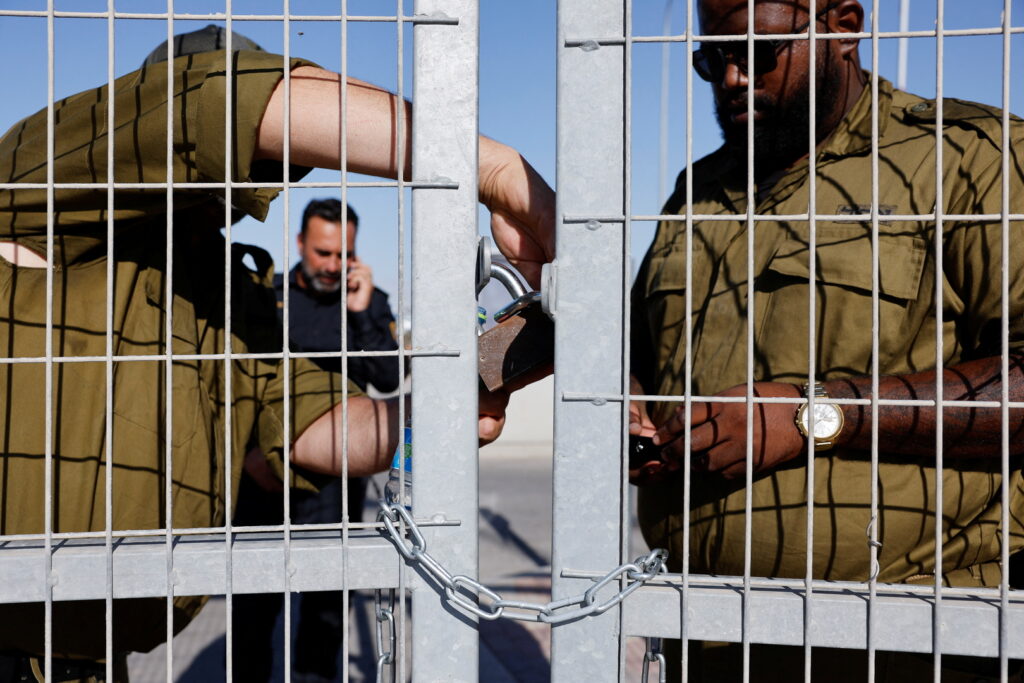
NewsFeed Gaza doctor Hussam Abu Safia from Kamal Adwan Hospital is believed to be detained at Israel’s infamous Sde Teiman military base that doubles as a prison for Palestinians. Here’s why the facility is so controversial. Published On 31 Dec 202431 Dec 2024 Adblock test (Why?)
Trinidad and Tobago announces state of emergency to combat gang violence
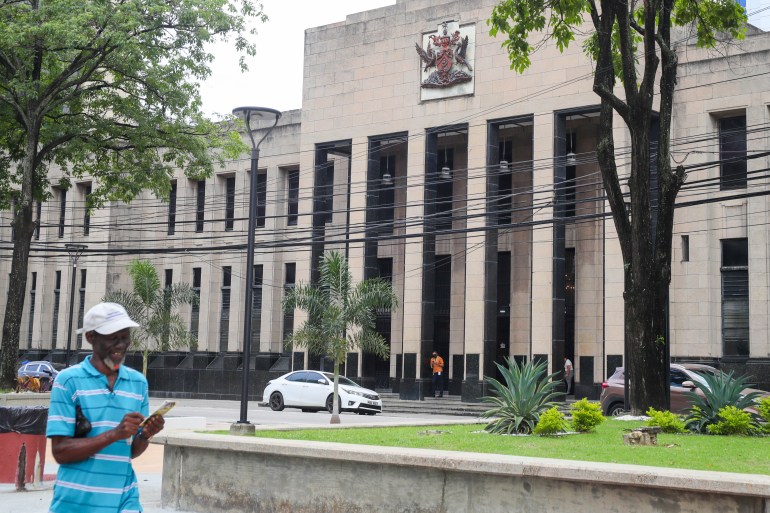
The Caribbean republic of Trinidad and Tobago has announced a state of emergency in response to a spike in gang violence over the weekend. The declaration grants police additional powers as they seek to tamp down on reprisal killings and other gang-related activity. “The declaration and calling of a public state of emergency is something that is not taken lightly,” said acting Attorney General Stuart Young at a news conference on Monday. He explained that information from the Trinidad and Tobago police service “dictated and mandated the necessity of this extreme action that we took this morning”. The state of emergency empowers the country’s police to arrest people “on suspicion of involvement in illegal activities”. It will also allow law enforcement to “search and enter both public and private premises” and suspend bail. A government statement specified that no curfew would be imposed, and the freedom to meet publicly or demonstrate in marches would not be impeded. The government of Trinidad and Tobago linked the state of emergency to gang violence on its islands [File: Ash Allen/AP Photo] Young indicated that an uptick in violence over the weekend in the capital, Port of Spain, helped prompt the emergency announcement in the early hours of Monday. Advertisement “You will recall that on Saturday, just after 3 o’clock in the afternoon outside the Besson Street police station, there was a shooting with the use of a high-calibre automatic weapon,” Young explained. Local media described the shooting as an ambush. A suspected gang leader, Calvin Lee, had arrived at the police station to sign the bail book, but as he and his entourage left, The Daily Express reported that gunmen emerged from a nearby van and began to fire. One person was killed. Lee himself managed to flee. But Young explained that the shooting led to reprisal killings between local gangs. Within 24 hours, he said, six people were fired upon in Laventille, a suburb of Port of Spain. Five of them were killed. Young said further reprisal attacks are still anticipated. “There can be expected heightened reprisal activities by the criminal elements in and around certain places in Trinidad and Tobago that immediately warranted and took us out of what we can consider the norm,” he explained. He declined to name specific locations where gang activity may be concentrated. “But I can say, throughout Trinidad and possibly Tobago, [criminal gangs] are likely to immediately increase their brazen acts of violence in reprisal shootings on a scale so extensive that it threatens persons and will endanger public safety.” Young added that the decision to invoke a state of emergency was in part a result of the high-calibre weapons being used in the attacks, which elevated the possibility of bystander deaths. Advertisement He noted the involvement of AK-47 and AR-15 guns. “Over the last month or so, and in fact building up to this, the government has been concerned about the use of high-powered, illegal firearms — high-calibre firearms including automatic weapons that unfortunately are a scourge throughout the whole Caribbean region,” Young said. Caribbean countries do not manufacture firearms themselves, and many of the guns used in gang violence have been illegally imported. One source in particular stands out: the United States. It is the largest weapons exporter in the world. In March, the Stockholm International Peace Research Institute found that the US was the source of approximately 42 percent of global arms exports. A 2017 analysis from the Small Arms Survey also found that the US had the largest number of private guns per capita, with US civilians holding 40 percent of the world’s firearms. Guns from the US have been connected to crimes across the Caribbean, from Haiti and Jamaica to Trinidad and Tobago. The US has collaborated with 13 Caribbean countries to help disrupt the illegal firearms trade. Between 2018 and 2022, an estimated 7,399 firearms collected from crimes in the region have been sent to the US for origin tracing. In October, the US Government Accountability Office published a report with its findings. Of all the firearms retrieved and traced during that four-year period, a total of 5,399 — or 73 percent — originated from the US. A couple hundred more had ambiguous origins. Advertisement The proliferation of illegal firearms has been linked to increased violence in the Caribbean. Trinidad and Tobago, for example, has been struggling with a record homicide rate. In December alone, there were 61 homicides, according to the government. The country tallied 623 homicides total so far for 2024. “Gangs accounted for 263 of them,” MP Fitzgerald Hinds, the minister of national security, said during Monday’s news conference. “So as a result, we consider that this declaration of a public emergency is to confront the criminals and to allow law enforcement easier access than ordinary to them, in light of the crises they have presented to this country.” Adblock test (Why?)
South Korean court issues arrest warrant for Yoon over martial law decree
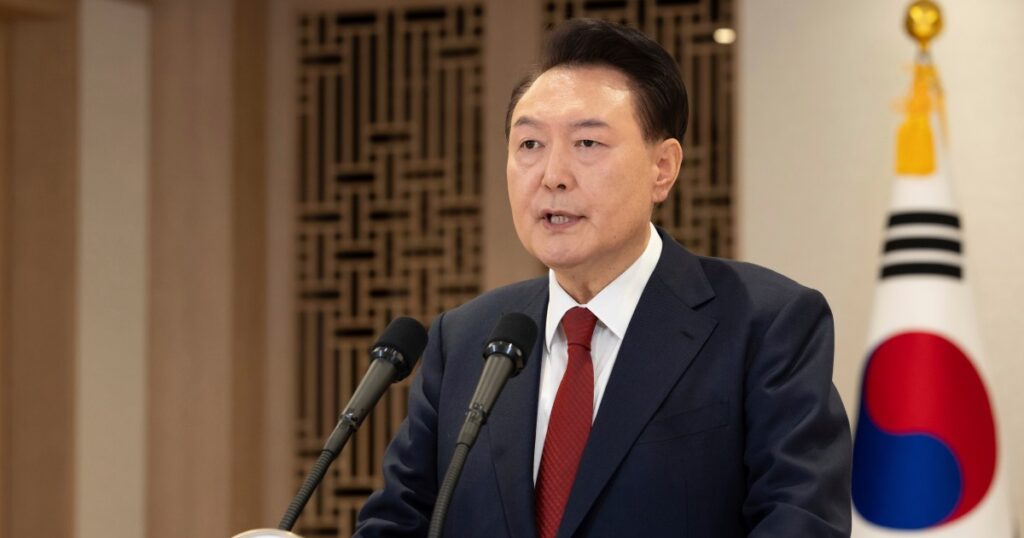
BREAKINGBREAKING, Court’s issuance of warrant marks first time South Korean authorities have sought to detain a sitting president. A South Korean court has issued an arrest warrant for impeached President Yoon Suk-yeol over his short-lived declaration of martial law in a historic first. Seoul Western District Court on Tuesday approved the warrant following an earlier request by the Joint Investigation Headquarters, which is investigating the embattled South Korean leader for insurrection and abuse of power. “The arrest warrant and search warrant for President Yoon Suk Yeol, requested by the Joint Investigation Headquarters, were issued this morning,” the Joint Investigation Headquarters said in a statement. The move marks the first time authorities have sought to detain a sitting South Korean president. It is unclear when authorities might attempt to take Yoon into custody. Yoon’s security detail has previously blocked investigators from executing a number of search warrants at the presidential office compound and the president’s official residence. South Korean media have speculated that Yoon is unlikely to be arrested imminently as authorities will probably seek to coordinate with the presidential security service. Advertisement Yoon faces possible life imprisonment, or even the death penalty, over his brief imposition of martial law on December 3, which has plunged the East Asian nation into its biggest political crisis in decades. Yun Gap-geun, a lawyer for Yoon, said in a statement that the warrant was “illegal and invalid”, arguing that the CIO does not have authority to investigate the president. Kwon Sung-dong, the floor leader of Yoon’s People’s Power Party, also criticised the court’s decision to issue a warrant, describing it as “inappropriate”. Yoon has been suspended from his duties since December 14, when the National Assembly voted for his impeachment in a 204-85 vote. In a deepening of the country’s leadership crisis, the opposition-controlled legislature on Friday voted to also impeach acting president Han Duck-soo, passing presidential authority to Deputy Prime Minister and Finance Minister Choi Sang-mok. The Democratic Party and several minor opposition parties voted to impeach Han over his refusal to immediately appoint three justices to fill vacancies on the Constitutional Court, which is deliberating whether to uphold Yoon’s impeachment. The court has up to six months to make its decision, after which Yoon will either be removed from office or restored to the presidency. Adblock test (Why?)
China blamed by US for Treasury Department hack
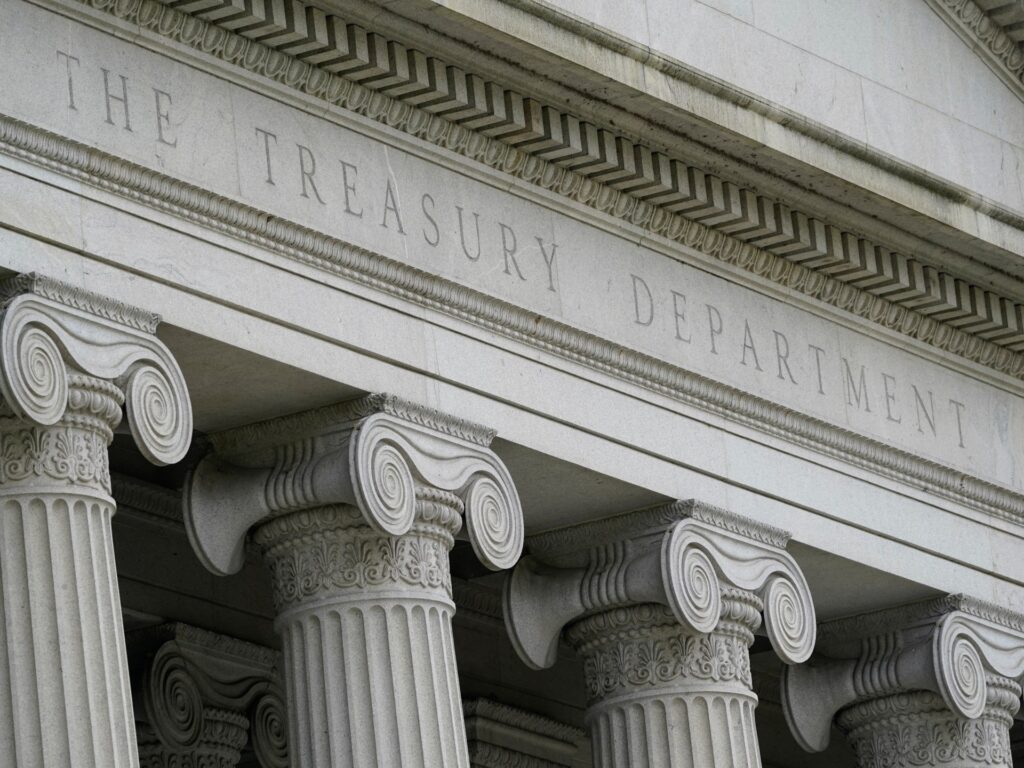
Unclassified documents were stolen after a hack earlier this month, according to a letter sent by Treasury to Congress. Chinese state-sponsored hackers were able to steal unclassified documents from United States Treasury workstations earlier this month, the US Treasury Department has said. The department said on Monday that the hackers were able to compromise a third-party cybersecurity service provider and gain access to the documents in what it described as a “major incident”. “[The hackers] gained access to a key used by the vendor to secure a cloud-based service used to remotely provide technical support for Treasury Departmental Offices (DO) end users,” a letter sent by the US Treasury Department to Congress said. “With access to the stolen key, the threat actor was able to override the service’s security, remotely access certain Treasury DO user workstations, and access certain unclassified documents maintained by those users.” A statement from the Treasury said that the department “takes very seriously all threats against our systems, and the data it holds”. The Treasury Department was alerted to the hack by the cybersecurity provider, BeyondTrust on December 8. The department says it is working with the US Cybersecurity and Infrastructure Security Agency (CISA) and the FBI to assess the impact of the hack. Advertisement “The compromised BeyondTrust service has been taken offline and there is no evidence indicating the threat actor has continued access to Treasury systems or information,” a spokesperson for the Treasury Department told AFP. The letter to the leadership of the US Senate Banking Committee directly accused China, saying that the incident had been “attributed to a China state-sponsored Advanced Persistent Threat (APT) actor”. An APT is a cyberattack where the hacker can maintain undetected and unauthorised access to a target for a period of time. The Treasury Department said that more information would be released in a supplemental report at a later date. The report of the hack comes less than a month ahead of the inauguration of US President-elect Donald Trump. Trump has threatened China with a trade war and tariffs, saying that Beijing had not done enough to stop the flow of the opioid fentanyl to the US. Both Trump’s Republicans and the Democrats have warned against Chinese threats against the US, particularly in the realm of cybersecurity. In September, the US Justice Department said that it had stopped a cyberattack network run by Chinese-backed hackers that had affected 200,000 devices worldwide. And earlier in December, the US sanctioned a Chinese cybersecurity firm and a researcher over a 2020 attack that attempted to exploit a computer software vulnerability in company firewalls. China has denied any involvement in the attacks and says that it opposes all forms of cyberattacks. Advertisement Adblock test (Why?)
The end of fear in Syria
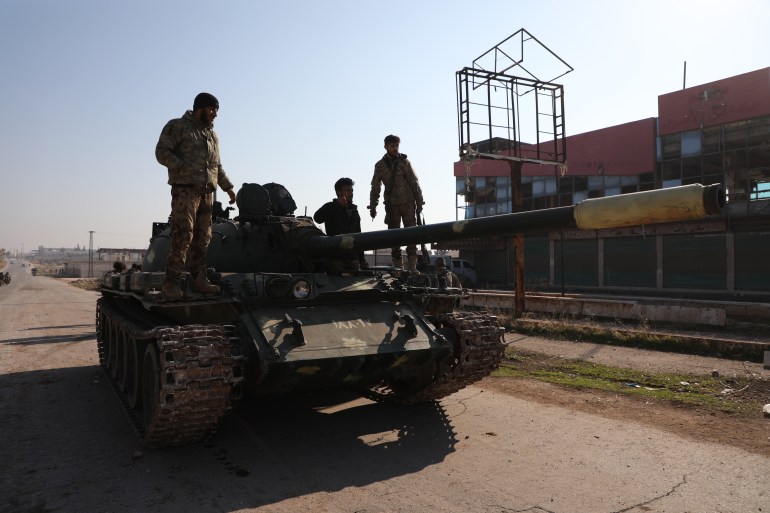
Damascus and Aleppo, Syria – Until the fall of the al-Assad regime, the word “dollar” was forbidden in public. Instead, people used anything green – my favourite substitute was “molokhiyeh”, the green leaf eaten in a stew in Arab countries. This was a story I heard many times from Syrians when reporting from Aleppo and Damascus in the days following the regime’s overthrow. Under the former regime, the walls had ears and anyone could be listening on a street corner or the other end of the phone line. The wrong phrase or word – “dollar”, for example – could land you in one of al-Assad’s notorious prisons. Now, with the House of al-Assad in exile, a sudden freedom burst through that had not been possible in the last five and a half decades of dynastic family rule. Syrians I met understood how fragile and fleeting such freedom of expression could be – many telling me a few days of experiencing it were enough to never want to go back. “Before, you would get your rights through connections and bribery,” Yamen Sheikh Mukhaneq, 21, said, standing outside the Umayyad Mosque in Damascus on the first Friday prayer after the regime’s collapse. Advertisement A smile beaming on his face as worshippers pushed past us, the law student added: “Now, God willing, because of this liberation, I have hope.” Fighters on a tank in Aleppo [Ali Haj Suleiman/Al Jazeera] While I’ve reported on Syria a lot since I started in 2011, and spoken to many Syrians in Lebanon, Jordan, Turkiye, Egypt, the United States, France and elsewhere, I’d never reported from Syria itself. Walking under pomegranate and lemon trees in the streets of Old Damascus and peering into abandoned courtyards brought to life, so many stories I’d heard from Syrians of what had been taken away from them in exile sprang to my mind. It was surreal, something I could never have imagined even two weeks earlier. I began to imagine an alternative reality where my wife and I would take day trips to Damascus from Beirut to visit friends or marvel at the historic neighbourhoods, or even drive through Syria to Iraq, Jordan or Turkiye. No more one-man rule Syria is free and open, and in this renewed nation, there is much hope. Fighters I interviewed in Aleppo, who had been exiled as children and returned as liberators, expressed unbridled joy at being able to stand once again at the footsteps of the city’s historic Citadel. But with new freedom, there are concerns and pitfalls. After all, any Syrian in the country who is less than 60 years old will not know what life is like under anything other than a repressive, autocratic authority. On Friday, December 20, I pushed through the packed crowd at the Citadel of Aleppo with Yousef Ahmad, a professor of accounting at Aleppo University. Advertisement Ahmad was buoyant that the old regime had fallen but wary of repeating old mistakes. The most important thing, he told me, is not to place any individual above the country. An image of Syria’s Bashar al-Assad is damaged by bullet holes [Ammar Awad/Reuters] The cult of personality around the al-Assads must never be replicated with a new leadership, he said. Until now, the new administration’s Commander-in-Chief Ahmed al-Sharaa’s image has been limited to an occasional car with his likeness in its rear window. The poisonous cult of personality is a central part of the al-Assad legacy, as is the brutal police state which disappeared thousands, led to millions of displaced, and deeply policed any expression, including the word “dollar”. While US dollars (and Turkish lira) are now being accepted in establishments around the country, there are still concerns that free expression and other hard-won rights will be lost. In Saadallah al-Jabri Square, in Aleppo’s city centre, families pushed strollers between street vendors selling the green, white and black flags of Syria. Many were euphoric, speaking of the need for a democratic Syria that represented all its sects and ethnic groups. ‘I tell you, Syria will be fine’ One older couple had come to the square with their adult son to check out the atmosphere. They told me they were happy to be rid of the regime. “For 13 years, he sat on his chair and didn’t do anything,” they told me. Still, as Christians, they worry about their vulnerability as minorities. Because of that, they didn’t want to share with me their names or have my colleague, Ali Haj Suleiman, take their photos. Advertisement Until now, the new administration run by Hayat Tahrir al-Sham’s Ahmed al-Sharaa, formerly known as Abu Mohammed al-Julani, had made only positive moves, they told me. “We want to get rid of the idea of sectarianism that was planted 15 years ago,” their son, a hairdresser, said. At a bar in the city, people joked about armed fighters shooting up their establishment. A few people, dressed conservatively, had come around to ask if the bar served alcohol, the owner said, adding that he was never sure if they were coming for a drink or for less amicable reasons. Father Hanna Jallouf lived under HTS in Idlib [Ali Haj Suleiman/Al Jazeera] Father Hanna Jallouf, the Apostolic Vicar of Aleppo and the Roman Catholic Church’s leading religious figure in Syria, is also concerned. I found Jallouf’s history interesting in that he lived under HTS in Idlib and had even been kidnapped by Jabhat al-Nusra in 2014 for five days. Jabhat al-Nusra was al-Qaeda’s branch in Syria but broke with it in 2016 and reformulated itself as Hayat Tahrir al-Sham. Jallouf said he understands the fear in his followers and other minorities but that he had received assurances that Christian religious symbols would not be touched. He also has personal experience with Ahmed al-Sharaa, having lived in Idlib while al-Sharaa led the administration there, and has also met with the HTS leader. “The man was first of all honest and wants what is best for his country,” Jallouf said.
As Pakistan, Afghanistan attack each other, what’s next for neighbours?
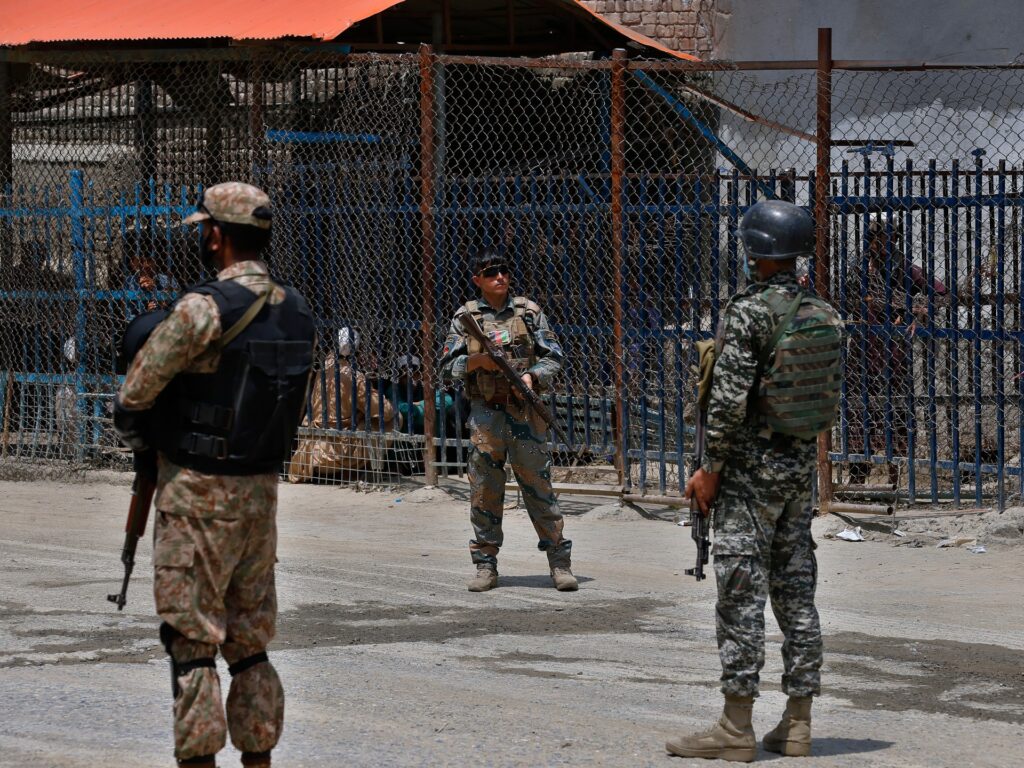
Islamabad, Pakistan – A sharp escalation in hostilities between Pakistan and Afghanistan over the past week has resulted in the death of at least one member of the Pakistani security forces and dozens of civilians in Afghanistan. This latest round of cross-border fighting stems from what Pakistan insisted was its response to regular attacks by the armed group Tehreek-e-Taliban Pakistan (TTP), which Islamabad said has found sanctuary across the border in Afghanistan. The most recent TTP attack, on December 21, led to the deaths of at least 16 Pakistani soldiers. Pakistani military sources confirmed to Al Jazeera that on Tuesday, Pakistan launched air strikes in Afghanistan’s Paktia province, which borders Pakistan’s tribal district of South Waziristan. Pakistani jets reportedly targeted hideouts where TTP fighters had sought refuge. However, Afghanistan’s Taliban government, in power since August 2021, accused Pakistan of killing at least 46 civilians, including women and children, in the air strikes. Advertisement In response, the Afghan government promised “retaliation”. On Saturday, Afghan Taliban forces claimed to have targeted “several points” near the Durand Line, the contested border between the two nations. However, as the guns quiet down on both sides, a familiar question has arisen: What is next for these two neighbours, entangled in a decades-long, fraught and fragile relationship? Cooperation and conflict For decades, Pakistan was considered a patron of the Afghan Taliban, who first came to power in 1996. Pakistan was believed to wield significant influence over the group, providing it with shelter, funding and diplomatic backing. After the United States-led invasion of Afghanistan after the 9/11 attacks, many Afghan Taliban leaders sought refuge in Pakistan. Amid American drone strikes in Pakistan’s border regions, the TTP, often called the Pakistan Taliban, emerged. Despite sharing ideological ties with the Afghan Taliban, the TTP launched a violent campaign against the Pakistani state. The Pakistani military has conducted several operations to eliminate the TTP, pushing many of its leaders into Afghanistan. When the Afghan Taliban regained control of Kabul in 2021, Pakistan hoped to leverage its historic ties to curb TTP activity. However, a surge in attacks within Pakistan since then suggests these efforts have failed. A former Pakistani ambassador and special representative to Afghanistan, Asif Durrani, believes the Afghan Taliban face significant challenges in managing the TTP and other groups, such as the ISIL (ISIS) affiliate in Khorasan Province. Advertisement “The Afghan Taliban must decide whether to support the TTP or prioritise their relationship with Pakistan,” Durrani told Al Jazeera. “They often reject assistance to tackle these groups while boasting about their ability to handle them independently.” Journalist and analyst Sami Yousafzai, who has extensively reported on the region, said that keeping the conflict at a simmer suits both governments, even if discourse on social media appears to indicate that a major escalation is right around the corner. “I don’t think either side wants to worsen the situation. However, the Pakistani military faced pressure – both public and internal – following repeated TTP attacks and needed to demonstrate retaliatory action, even if it didn’t significantly weaken the TTP,” Yousafzai told Al Jazeera. This is not the first time Pakistan has targeted alleged TTP hideouts in Afghanistan. Similar air strikes occurred in March but did not provoke a direct response from Afghanistan’s government. However, the latest tit-for-tat has evoked comparisons with what transpired between Pakistan and Iran in January when the two countries bombed each other’s border areas. Manzar Zaidi, a Lahore-based researcher on conflict in the region, said neither side can afford to escalate this conflict into anything bigger. “Compared to the exchange of strikes with Iran earlier this year, Pakistan has much higher stakes with Afghanistan, and air strikes last week can be seen as sending a message rather than a serious attempt at escalation,” Zaidi told Al Jazeera. Advertisement “As we saw with the Iranian strikes, these led to dialogue between the two countries, and there is a chance that the two countries could get on the negotiating table,” he added. Failing diplomacy? The latest air strikes occurred while Mohammad Sadiq, Pakistan’s special representative to Afghanistan, was in Kabul meeting with senior Afghan officials. Both nations have engaged in high-level diplomatic meetings over the past two years, including visits by Pakistan’s defence minister and chief of its intelligence agency, Inter-Services Intelligence (ISI), in February last year. Three months, acting Afghan Minister for Foreign Affairs Amir Khan Muttaqi made a trip to Islamabad, where he also held talks with General Asim Munir, the Pakistani army chief. Despite these efforts, violence within Pakistan has continued unabated. According to Pakistan’s Ministry of Interior, more than 1,500 violent incidents in the first 10 months of this year killed at least 924 people, including 570 law enforcement personnel and 351 civilians. The Pakistan Institute for Conflict and Security Studies reported 856 attacks in 2024, surpassing the 645 incidents recorded in 2023. Durrani said the Afghan Taliban needs to understand the consequences of strained relations with Pakistan. “They must recognise that they are no longer ‘freedom fighters’ but a government with significant responsibilities toward their people and neighbours. No country will tolerate Afghan soil being used against them,” he said. Zaidi echoed this sentiment, noting that the Afghan Taliban’s aspirations for international legitimacy could prevent further escalation. Advertisement “Afghanistan also seeks stronger ties with China, Pakistan’s key ally, which incentivises them to de-escalate,” Zaidi said. However, Yousafzai cautioned that Pakistan also needs to act more responsibly as a democratic and nuclear-armed state. “There may be frustration in Pakistan’s strategic circles. After decades of supporting the Afghan Taliban, they haven’t received the outcomes they anticipated,” Yousafzai said. “Missiles and air strikes will not resolve this conflict – something that should have been learnt during the US’s so-called war on rerror.” The one plausible path for reconciliation, according to Yousafzai, is for Pakistan to stop “pursuing their doctrine of strategic depth” in Afghanistan. Historically, the Pakistani military has sought to maintain influence in Afghanistan, providing patronage to armed groups to hold leverage against India, its
‘Global silence and abandonment’ as Gaza’s Kamal Adwan Hospital destroyed
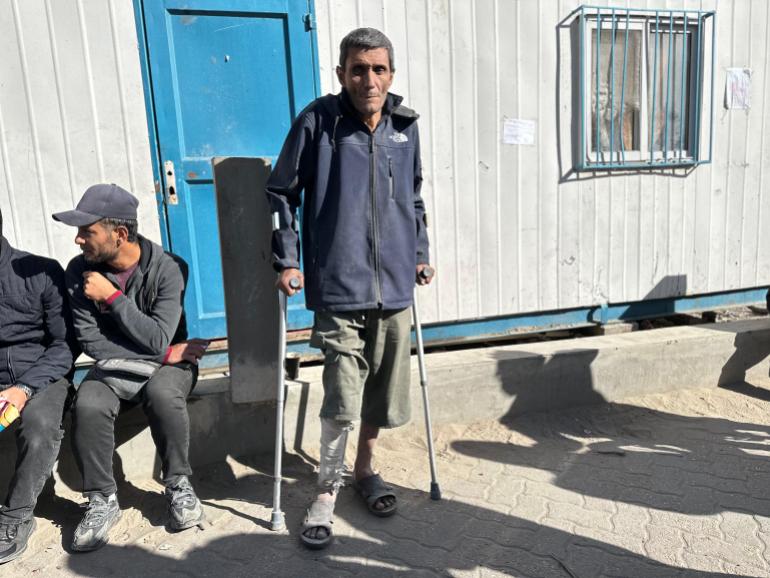
The sound of tanks rumbling through the streets outside of Kamal Adwan Hospital woke everyone up, they were already on edge after enduring months of direct Israeli attacks. Then came the loudspeakers ordering everyone to evacuate – the sick, the wounded, medical staff, and displaced people seeking shelter – early on Friday morning. It was clear that the medical complex in northern Gaza’s Beit Lahiya was about to face an Israeli raid, like so many had before it as Israel seemed to systematically destroy all healthcare in Gaza. It didn’t matter that, according to the World Health Organization, the hospital was the last major health facility operational in northern Gaza, an area that has been suffocatingly besieged and decimated by Israel in its ongoing war. Nor that it was a refuge for hundreds of Palestinians whose homes had been destroyed by Israel and had nowhere else to go. Numbers written on their chests At about 6am, patient Izzat al-Aswad heard Israeli forces summoning Dr Hussam Abu Safia, the hospital director, over their loudspeakers. Advertisement Dr Abu Safia came back and told people in the hospital they had been ordered to evacuate. Abu Safia himself, who was a rare voice exposing what Israel was doing to the hospital, was taken by Israel, which has refused to release him despite calls to do so from the UN, humanitarian NGOs and international health organisations. A little later, al-Aswad said Israeli soldiers demanded that all the men strip down to their underwear to be allowed to leave. Shivering, frightened, many of them injured, the men were ordered to walk to a checkpoint the Israelis had set up about two hours away, al-Aswad recounted by phone. At the checkpoint, they gave their full names and had their photographs taken. Then a number was scrawled on their chest and neck by a soldier, indicating they had been searched. Some of the men were taken for interrogation. “They beat me and the men around me,” al-Aswad said. “They hit the injured people like me directly on our injuries.” Izzat al-Aswad was beaten badly by Israeli soldiers who had made him strip down to his underwear [Abdelhakim Abu Riash/Al Jazeera] Shorouq al-Rantisi, 30, a nurse in Kamal Adwan’s laboratory department, was among the women taken from the hospital. The women were told to walk to the same checkpoint, which was in a school, and then waited for hours in the cold. “We could hear the men being beaten and tortured. It was unbearable.” Then the searches started. “The soldiers were dragging the women by the head towards the search area,” al-Rantisi said. “[They] shouted at us, demanding we remove our headscarves. Those who refused were beaten badly.” Advertisement “The first girl called for searching was told to strip. When she refused, a soldier beat her and forced her to lift her clothes. “A soldier dragged me by the head and then another soldier ordered me to lift the top of my clothes, then the bottom, and checked my ID,” she said. Shrouq al-Rantisi, a laboratory nurse at the hospital, was dragged by the head to be interrogated by Israeli soldiers [Abdelhakim Abu Riash/Al Jazeera] Abandoned patients Al-Rantisi said the women were eventually taken, left at a roundabout, and told they could not go back to Beit Lahiya. “How could we leave and abandon the patients? None of us ever thought of leaving until we were forced to,” she said on the phone. Israel assaulted the hospital for many weeks before the raid. “The hospital and its courtyard were bombed relentlessly, day and night, as if it was normal,” al-Aswad said. “Quadcopters fired at anyone moving in the courtyard … they targeted generators and water tanks, while medical staff were struggling to care for patients.” The night before the raid was “terrifying”, al-Aswad added, with Israeli attacks all around, including on the “al-Safeer” building. “Witnesses say about 50 people were in there, including nurses from the hospital. No one could rescue them or retrieve their bodies, they’re still there,” he recounted. Al-Aswad and the men who were not taken for interrogation were released after a full day of abuse and humiliation. “The soldiers ordered us to go west of Gaza City and never come back,” he said. “We walked through destruction and rubble, freezing, until people came to meet us near Gaza City, offering help and blankets.” Fadi al-Atawneh was injured, so he stayed behind in the hospital hoping for help that never came [Abdelhakim Abu Riash/Al Jazeera] ‘Betrayed’ and ‘abandoned’ Israel’s raid merely compounded “the global silence and abandonment” Palestinians in Gaza have been faced with throughout more than a year of relentless Israeli attacks that killed more than 45,000 people, al-Rantisi said. Advertisement “Over 60 days of relentless shelling – quadcopters, artillery, and targeted strikes on generators,” she said. “Dr Hussam’s pleas went unanswered until the hospital was stormed and emptied. How does the world allow this to happen?” “I feel we were all betrayed,” Fadi al-Atawneh, 32, said bitterly on the phone. “I was wounded, so I stayed in the hospital, hoping that the World Health Organization would evacuate or protect us, but it never happened,” al-Atawneh said. “I am deeply saddened by what happened to us and the fate of Dr Abu Safia. We’re left alone in the face of this aggression.” Adblock test (Why?)
Tributes pour in after US President Jimmy Carter dies at 100
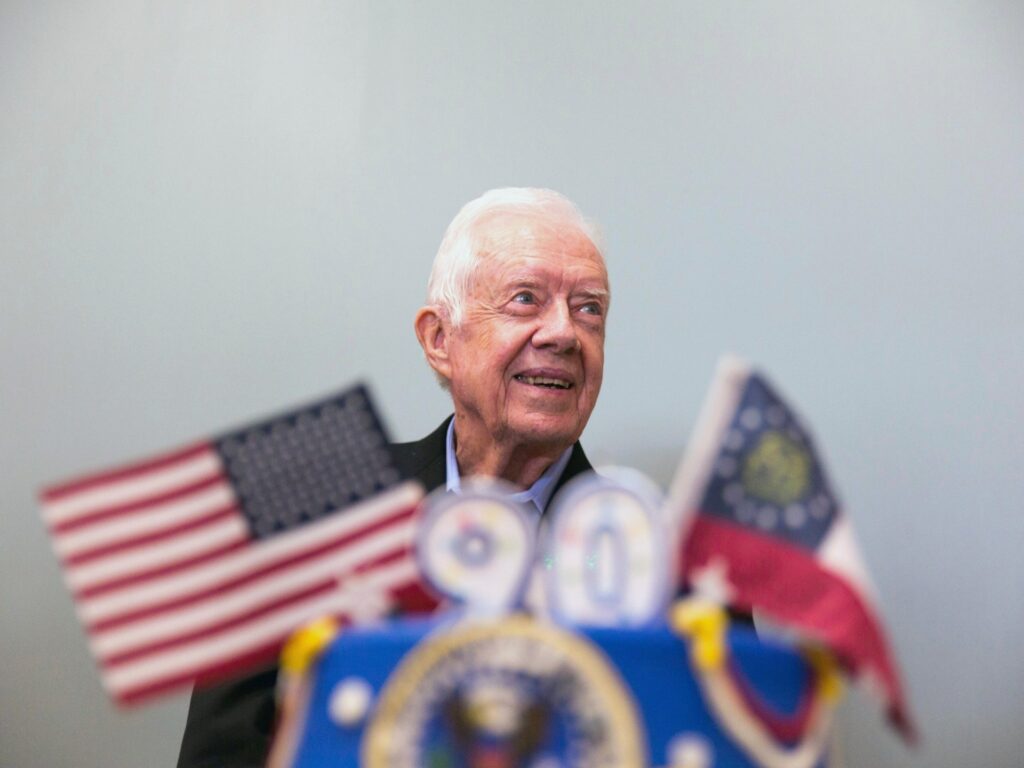
Jimmy Carter, the oldest living president of the United States, has died at the age of 100. Carter, who was president between 1977 and 1981, died on Sunday at his home in Plains, Georgia, according to the Carter Center. “Our founder, former US President Jimmy Carter, passed away this afternoon in Plains, Georgia,” the organisation, which Carter founded a year after leaving the White House, said in a post on X. The death was first reported by the Atlanta Journal-Constitution. No cause of death was immediately given, although Carter had spent almost two years under hospice care at his home after being treated for a form of skin cancer. He celebrated his 100th birthday at his home in October. Rosalynn Carter, Jimmy Carter’s wife of 76 years, died in November 2023. Our founder, former U.S. President Jimmy Carter, passed away this afternoon in Plains, Georgia. pic.twitter.com/aqYmcE9tXi — The Carter Center (@CarterCenter) December 29, 2024 Despite serving only one term, the former peanut farmer from Georgia cast a long shadow during his post-presidential career. This included winning the Nobel Prize for Peace in 2002 for The Carter Center’s work in fighting the Guinea worm disease in Africa and tracking elections across the world. Advertisement He also continued to volunteer with the Habitat for Humanity home-building organisation late into his life, burnishing a reputation for community service and humility that earned him plaudits from across the political aisle. In a statement, US President Joe Biden called Carter “an extraordinary leader, statesman and humanitarian”. “With his compassion and moral clarity, he worked to eradicate disease, forge peace, advance civil rights and human rights, promote free and fair elections, house the homeless, and always advocate for the least among us,” Biden said. “He saved, lifted, and changed the lives of people all across the globe”. In a separate statement, former US President Bill Clinton said Carter “worked tirelessly for a better world”. President-elect Donald Trump wrote on his Truth Social platform that “we all owe [Carter] a debt of gratitude”. Members of Congress from both political parties praised Carter. In a post on X, Democratic Congressman Chris Van Hollen wrote that Carter “represented the best of our country”. “His decades of distinguished service to America and humanity leave a towering legacy of good works,” he wrote. Republican Marsha Blackburn posted: “After his service as 39th President, Jimmy Carter spent his time helping others. He partnered with Habitat for Humanity for decades, even volunteering to build homes in Nashville [Tennessee] at age 95.” Tumultuous presidency Carter entered the 1976 presidential race as a moderate Southern Democrat with little national name recognition. Nevertheless, he saw an unexpected surge amid anger over US involvement in the Vietnam war and the scandal-ridden presidency of Richard Nixon. Advertisement But Cold War pressures and economic woes at home burdened his presidency, which was further marred after 52 Americans were taken hostage at the US Embassy in Tehran in 1979. Republican challenger Ronald Reagan went on to handily defeat Carter in the 1980 election. Still, Carter oversaw some major diplomatic victories while in office, including helping to forge a deal between then-Egyptian President Anwar Sadat and Israeli Prime Minister Menachem Begin, which restored diplomatic and economic ties between the two countries, in 1978. The Camp David Accords were reached on the condition that Israel return the Sinai Peninsula to Egypt. While that agreement did not solve the Palestinian issue, Carter went on to be an outspoken advocate for Palestinian rights. In 2006, he published the book Palestine: Peace Not Apartheid, using a label that major rights groups Human Rights Watch and Amnesty International would not adopt for more than a decade. In a post on X on Sunday, author Assal Rad described Carter as “one of the only US presidents who spoke honestly about Palestine”. Human Rights Watch said Carter “set a powerful example for world leaders to make human rights a priority, and he continued to fight for human rights after he left office”. Adblock test (Why?)
Jimmy Carter: Nobel-winning humanitarian and ex-US president dies aged 100
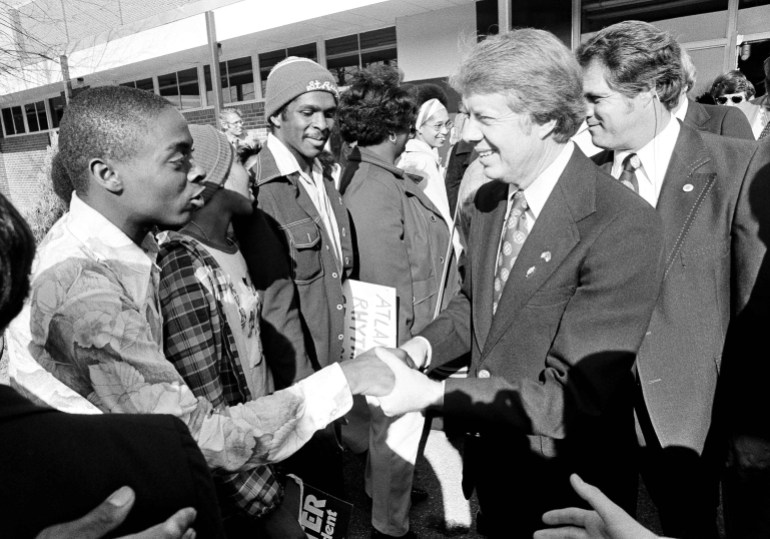
Among the maize, yam and peanut farms of Savelugu-Nanton, a remote district of northern Ghana, the legacy of Jimmy Carter is less complicated than it is back in the former US president’s homeland. Thanks to the work of his charity, The Carter Center, locals are nowadays spared the misery of Guinea worm disease – a parasite that breeds in the human belly and emerges through the skin before laying larvae in stagnant pools to await the next victim. Carter’s work in fighting the bug and tracking votes in poor countries won him a Nobel Prize for Peace in 2002. It followed a presidency that achieved a landmark Middle East peace deal, but was hamstrung by economic woes and the Iranian hostage crisis. He died on Sunday, aged 100, the Carter Center announced. He had entered hospice care in February 2023, electing to stay home after a series of short hospital stays. The former president had been diagnosed with cancer in 2015 but had responded well to treatment. At 100, he was the longest-lived president of the United States. Advertisement During six decades of politics, aid work and diplomacy, Carter “was committed to ideals like human rights, peace, and improving human life”, Steven Hochman, research director at The Carter Center, told Al Jazeera. “He didn’t just want talk, he wanted action,” Hochman said. “Whether this was through monitoring elections in Latin America or witnessing the terrible suffering from Guinea worm disease in Asia and Africa, and working to eradicate it.” [embedded content] Southern peanuts Carter grew up on the red clay soil of rural Georgia during the Great Depression. He sold boiled peanuts on the streets of Plains, his hometown, and ploughed the land with his family. His father James “Earl” Carter, was a peanut farmer and warehouseman; his mother, Lillian, was a nurse. He married Rosalynn Smith, a family friend, in 1946. The couple celebrated their 76th wedding anniversary in July 2022, a year before the former first lady died in November 2023. After a seven-year US navy career, Carter returned to his home state of Georgia, where he garnered national attention as a Democrat state governor for his prudent management, winning a spot on the cover of Time magazine as a symbol of the “New South”. Running for the presidency, Carter styled himself as an outsider to Washington politics, which were stained by the Watergate scandal and the Vietnam War. His “Peanut Brigade”, a group of friends from Georgia, crisscrossed the US and trumpeted their candidate as a straight-talking man of principle. Then-Democratic presidential candidate Jimmy Carter campaigns in Massachusetts in 1976 [File: Jeff Taylor/The Associated Press] “Carter’s election in 1976 promised to redeem the nation from the sins of Vietnam and Watergate,” Randall Balmer, a historian and author, told Al Jazeera. “He aspired to restore faith in government, but betrayal during the Lyndon Johnson and Richard Nixon years had already given way to cynicism.” Advertisement In the White House, Carter’s trademark candour did not always translate into political victories. Many of his progressive social and economic plans hit logjams in Congress; an inability to translate ideals into legislative reality sapped his popularity. The United States was mired in the stagflation woes of low economic growth, unemployment and high inflation, brought about by an energy crisis from the early 1970s. Carter’s solution, tackling US dependence on foreign oil via taxes and green energy, was quashed in the Senate. Better abroad Carter fared better overseas. He struck treaties that saw the Panama Canal brought under local control; established full diplomatic relations with China; and brokered a deal to limit nuclear weapons with Soviet leader Leonid Brezhnev. His masterwork was bringing Egyptian President Anwar Sadat and Israeli Prime Minister Menachem Begin to his presidential retreat in Camp David, Maryland, in 1978, and hammering out a peace deal between the foes over 13 tense days. “He had credibility as a peace negotiator because he listened to both sides. He could think on his feet; and speak on his feet,” said Hochman. “He was a skilled negotiator who came up with ideas for overcoming conflict and tried them out. He took chances, even if that meant he might fail.” Egyptian President Anwar Sadat, left, US President Jimmy Carter, centre, and Israeli Prime Minister Menachem meet for the first time at Camp David in 1978 [The Associated Press] The Camp David Accords led to full diplomatic and economic relations between the neighbours, on condition that Israel return the Sinai Peninsula to Egypt. They did not solve the Palestinian issue, but they have spared the region a repeat of the multi-state Arab-Israeli wars of 1948 and 1967. Advertisement “When Carter was considering the summit, and even after he announced it, just about every foreign-policy guru, Henry Kissinger included, counselled against it,” Gerald Rafshoon, the White House communications director under Carter, told Al Jazeera. “The wise men warned that a head of state should never go into a negotiation without knowing the outcome in advance. Carter rejected that advice – and did more to further the security of Israel than any US president before or since.” Middle East tumult The Middle East offered Carter a diplomatic win, but it also brought his downfall. In 1979, Iranian students stormed the US embassy in Tehran and took 52 Americans hostage – sparking a 444-day crisis that did not end until Carter had been kicked out of the White House. Carter’s efforts to secure the release of captives via the government of Ayatollah Ruhollah Khomeini were a political liability that was spotlighted nightly on US television news. A botched US rescue mission in April 1980 epitomised Carter’s misfortunes. Later that year, Americans gave the Republican presidential candidate, Ronald Reagan, a former actor and governor of California, a landslide victory over Carter. Carter’s talk of a US “crisis of spirit” and national “malaise” may have been true, but it was no vote-winner. Former President Jimmy Carter and former first lady Rosalynn Carter pose for a photo with President Joe