

South Korean police raid airport, Jeju Air offices after deadly crash
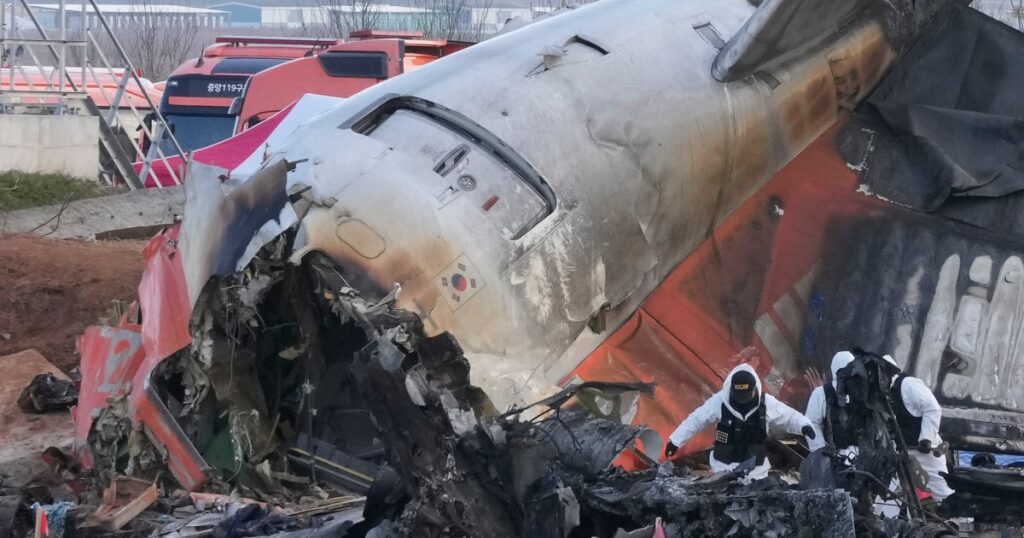
Police searches come as aviation authorities are probing the cause of the deadliest air disaster on South Korean soil. Police in South Korea have raided Muan international airport, the offices of Jeju Air and a regional aviation body amid investigations into the deadliest-ever air disaster on South Korean soil. The Jeonnam Provincial Police Agency carried out the “search and seizure operation” at the three locations on Thursday morning, officials said. The raids come as aviation authorities, including officials from the United States, are probing the cause of the deadly crash of Jeju Air Flight 2216 on Sunday, which killed 179 of 181 people on board. South Korean authorities said on Wednesday that they extracted the initial data from one of the Boeing 737-800’s two black boxes, with the other to be sent to the US for analysis due to damage it suffered in the crash. South Korean officials have launched an inspection of all Boeing 737-800 aircraft in operation as well as a wider probe of the country’s entire airline operations. South Korean acting president, Choi Sang-mok, said on Thursday that immediate action must be taken if the inspections revealed any problems with the aircraft model. Advertisement “As there’s great public concern about the same aircraft model involved in the accident, the transport ministry and relevant organisations must conduct a thorough inspection of operation maintenance, education, and training,” Choi said. Aviation experts have raised a series of possible causes and contributing factors in the disaster, including a collision with birds, mechanical failure, and the presence of a hardened embankment less than 300 metres (328 yards) from the end of the runway. The Boeing 737-800 belly-landed on the runway, without its landing gear deployed, shortly after the pilot reported a bird strike to air traffic control, before skidding into a concrete embankment and exploding into flames. The crash was the deadliest accident involving a South Korean airline since a Korean Air Boeing 747 crashed into a Guam hillside in 1997, killing 228 people. Adblock test (Why?)
Russia-Ukraine war: List of key events, day 1,043
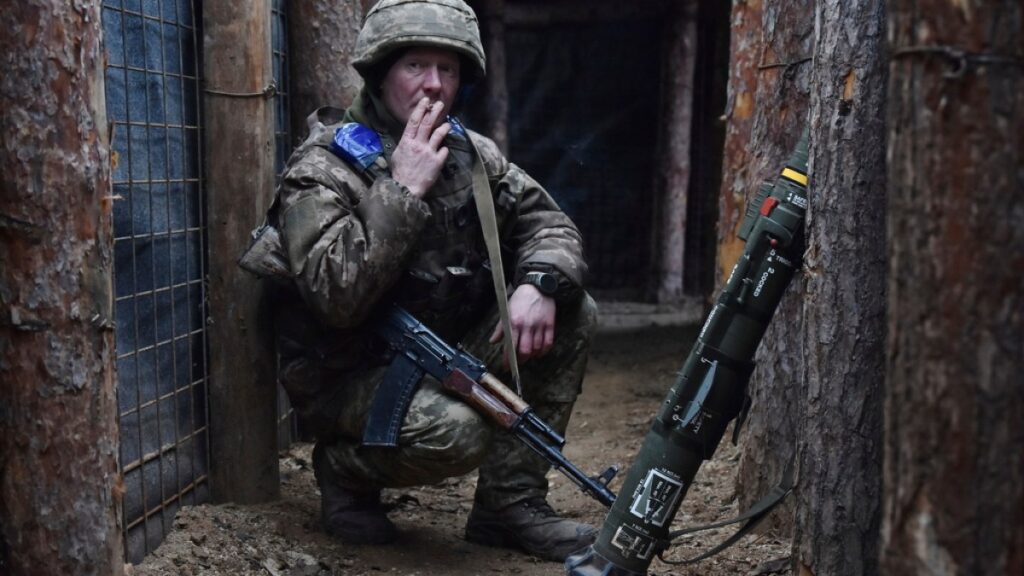
Here are the key developments on the 1,043rd day of Russia’s invasion of Ukraine. Here is the situation on Thursday, January 2: Fighting Russia launched an early morning New Year’s Day drone strike on the Ukrainian capital Kyiv that killed two people, wounded at least six others and damaged buildings in two districts. Two floors of a residential building in central Kyiv were partially destroyed in the strike, according to the State Emergency Service. Ukraine’s President Volodymyr Zelenskyy said that as the New Year started, all Moscow could think about was hurting Ukraine: “Even on New Year’s Eve, Russia was only concerned about how to hurt Ukraine.” The Ukrainian military said it shot down 63 out of 111 drones launched by Russia overnight on Wednesday, while 46 had been downed by electronic jamming. According to local authorities, several residential buildings in Ukraine’s southern city of Zaporizhzhia caught fire overnight following attacks and one woman was rescued. Ukraine’s Commander-in-chief Oleksandr Syrskii visited Ukrainian forces in the Russian border region of Kursk and said that the Russian army had lost more than 34,000 soldiers, either dead or wounded, in their attempts to drive Ukrainian soldiers out of Russian territory. Over the previous five months, approximately 700 Russian prisoners of war have been captured, which Ukraine could exchange for its own people held in Russian captivity, Syrskii said. Advertisement Economy The transit of Russian gas through Ukraine to Europe has been suspended, Russian and Ukrainian authorities said. Russia’s Gazprom said it had no legal or technical means to pump gas through Ukraine after Kyiv allowed a contract for gas transit to expire. President Zelenskyy said the decision to halt the transit of Russian gas through Ukraine was “one of Moscow’s biggest defeats”. Ukrainian Energy Minister Herman Halushchenko called the halt to the transit a “historic event” and was a decision taken “in the interest of national security”. Poland also hailed the end of Russian gas transit via Ukraine with Polish Foreign Minister Radoslaw Sikorski saying the cutoff marked “a new victory after NATO enlargement to Finland and Sweden”. Putin spent billions building Nordstream to circumvent Ukraine and blackmail Eastern Europe with the threat of cutting off gas supplies. Today Ukraine cut off his ability to export gas direct to the EU.Another victory after the enlargement of NATO by Finland and Sweden. — Radek Sikorski (@radeksikorski) January 1, 2025 Russia’s Gazprom has suspended gas supplies to Slovakia following the end of a transit deal to carry gas through Ukraine. Slovak gas importer SPP said it had prepared for such a situation and would supply all its customers through alternative routes, mainly by pipelines from Germany and Hungary, but it would face additional costs in transit fees. The Slovak government castigated Ukraine’s decision, with the country’s pro-Russian Prime Minister Robert Fico threatening in turn to stop electricity supplies from Slovakia to Ukraine. The severing of the gas flow was felt immediately in the breakaway Moldovan region of Transdniestria, which was forced to cut heating and hot water supplies to households. The mainly Russian-speaking territory of about 450,000 people split from Moldova in the early 1990s as the Soviet Union collapsed and still has about 1,500 troops stationed there. Russian President Vladimir Putin has ordered his government and the country’s biggest bank, Sberbank, to build cooperation with China in artificial intelligence. Putin’s instructions were published on the Kremlin’s website, three weeks after he announced that Russia would team up with BRICS partners and other countries to develop AI. Advertisement Adblock test (Why?)
Israel attacks Gaza ‘humanitarian zone’, killing at least 11, wounding 15
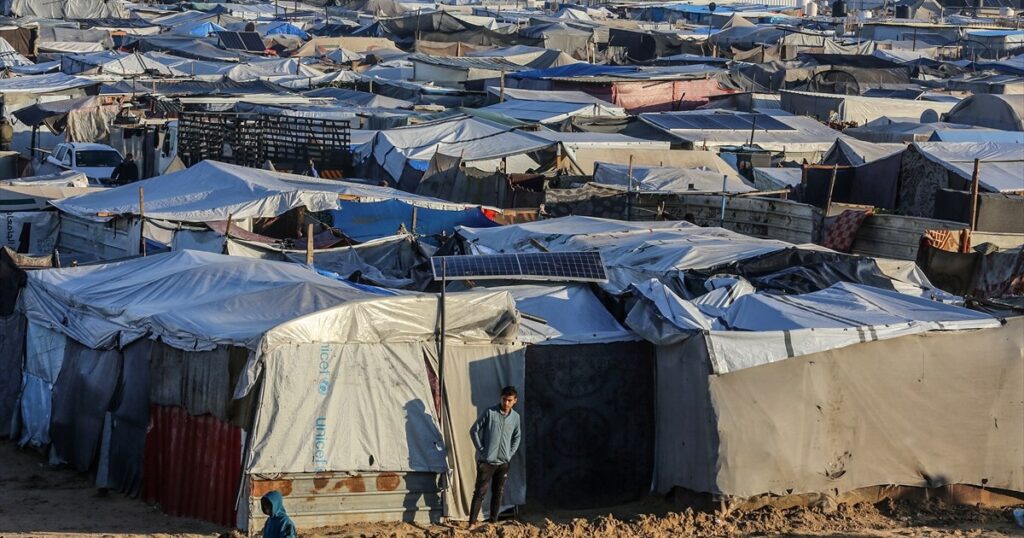
Women, children among dead as Israel’s military again attacks civilians sheltering in so-called humanitarian safe zone. At least 11 Palestinians, including women and children, have been killed in an Israeli air strike on makeshift tents housing displaced people in a designated humanitarian safe zone in southern Gaza, local medics and news organisations report. The predawn attack on Thursday in the al-Mawasi area – which Israel’s military declared a “safe zone” early on in its war on Gaza – is reported to have resulted in the killing of three children and two women among the 11 who died. A video clip from the aftermath of the attack showed people searching for survivors among burning tents, scattered debris, and washing lines where residents of the camp for displaced people had hung clothes to dry. The Reuters news agency reports that 15 people were also wounded in the attack, though there were no details on their condition. Israel’s military did not comment on its latest attack on the humanitarian area, which has been targeted relentlessly by Israeli warplanes, drones and artillery, including the most recent attack on December 22, which killed eight people, including two children. Advertisement Days earlier, Israeli tanks advanced on al-Mawasi from the southern city of Rafah, forcing dozens of families to flee northward fearing imminent attack. At least 20 people were killed and others wounded in an Israeli missile strike on tents in al-Mawasi on December 3, in what Israel’s military said was the targeting of a Hamas official. On New Year’s Day, Israeli attacks across Gaza killed at least 26 people with four children and a woman reported to be among those slain. Ten people were also missing among the rubble of buildings destroyed in the attack. Fifteen people, all reported to be civilians, were killed in one strike on a home where displaced people had taken shelter in Jabalia in northern Gaza, a spokesman for the Palestinian Civil Defence in Gaza said. Israeli forces gave no warning for the attack on al-Mawasi early on Thursday morning but had earlier issued orders for all residents in northern Gaza’s Jabalia refugee camp to flee three areas that it said were designated for an attack. The warning for residents to flee from Jabalia to Gaza City was described as a “pre- anaesthesia before the attack” by the Israeli military’s Arabic language spokesman, Avichay Adraee. “Once again, terrorist organisations are launching rockets from your area, which has been warned many times in the past,” he said in a post on social media.</p >< p>Despite large parts of northern Gaza, including Jabalia, suffering almost three months of siege by Israeli forces, two United States-based defence think tanks said this week that Palestinian fighters had launched a coordinated, “multi-wave attack” on Israeli forces in Jabalia – one that was larger than most other Palestinian military operations across Gaza in recent months. Advertisement The death toll from the first two days of 2025 adds to the 45,553 Palestinians, at least, who have been killed in Israeli attacks on Gaza since launching a punishing war on the territory in the aftermath of the October 7, 2023, attack by Hamas on southern Israel. Adblock test (Why?)
‘We are waging an existential war’: M23’s Bertrand Bisimwa on DRC conflict
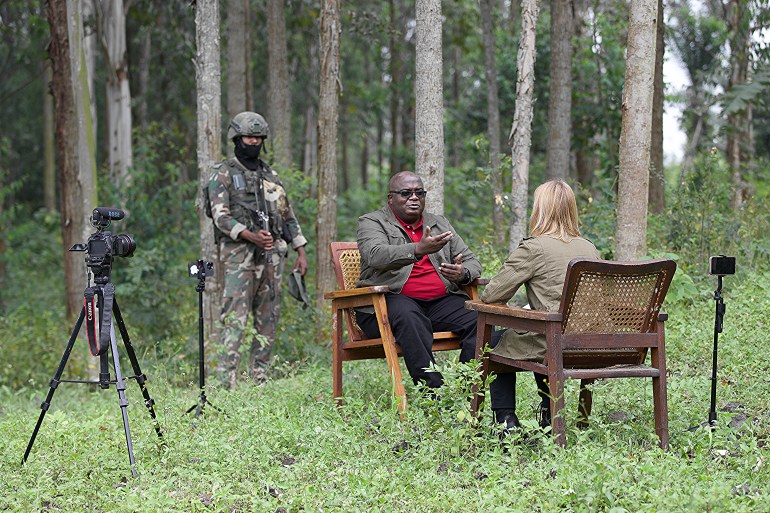
For three years, the eastern Democratic Republic of the Congo (DRC) has been embroiled in an armed conflict between the army and the M23 rebel group that has killed hundreds of people and displaced nearly two million. M23 was first formed after a mutiny within the Congolese national army (FARDC) in 2012. Though the initial rebellion was crushed, the group took up arms against the army and allied “Wazalendo” self-defence groups again in 2022, and has since seized swaths of territory in North Kivu province. M23 says it is defending the interests of minority Congolese Tutsis, many of whom say they suffer discrimination and exclusion in DRC for their ethnic links to Rwanda’s Tutsi community. Kinshasa sees M23 as the greatest security threat it currently faces, with regional tensions escalating as bodies including the United Nations accuse Rwanda of supporting M23 with troops and weapons, fuelling the rebellion – something Rwanda denies. Despite attempts at ceasefires and negotiations – including the 2022 Nairobi peace process and recent mediation efforts by Angola – fighting has continued. In Lubero, M23 advanced several dozen kilometres in just a few days in December. Advertisement Bertrand Bisimwa, the head of the political wing of M23, maintains that the group is fighting a “defensive” war. He spoke to Bojana Coulibaly, a researcher specialising in peace and security in Africa’s Great Lakes region, about the war in eastern DRC and hopes that dialogue will prevail. Bisimwa speaking to Bojana Coulibaly [Teddy Mazina/Al Jazeera] Bojana Coulibaly: Can you tell us what M23’s demands are? Bertrand Bisimwa: Our demands boil down to a struggle for survival. We are waging an existential war because the Congolese government is subjecting part of its population to death. And this didn’t start today. It has been going on for decades, where people are forced to seek refuge, fearing death, avoiding being killed. There is hate speech and there is also a kind of radicalisation that is taking shape. A part of the citizens, namely the Tutsi, serve as scapegoats for the Congolese government to distract the people from its governance failures. So, we told ourselves that we must not sit idly by and watch our citizens being killed in this way. This is why we are currently waging a defensive war to protect these citizens. So that they do not continue to be put to death. They are not second-class citizens. The state must take care of them and not consider them as stateless, or who are not Congolese. They are full-fledged Congolese citizens, like all other Congolese. Coulibaly: Recently, there’s been intense fighting between government forces and M23 in Great North Kivu, in the Lubero territory. Could you explain what happened? Bisimwa: In March, the mediator in the crisis between Rwanda and the DRC, Angola’s President [Joao] Lourenco, had invited us to Luanda to convey the message from the African Union which was to sign a ceasefire. We signed the ceasefire, but Kinshasa refused to sign it. Later, Kinshasa simply continued the war against us, and we started again – we continued to defend ourselves. On December 15, a meeting was scheduled between the Congolese government and the Rwandan government, which also had just signed their ceasefire, although the Rwandan government or the Rwandan military are not on Congolese soil and are not fighting. Advertisement The Congolese government wanted to have a victory on the ground before the 15th. They put pressure on us, with the aim of obtaining a victory that would put them in a comfortable position in order to put Rwanda in front of a fait accompli – that either they sign what Kinshasa wanted, or they would practically derail the Luanda meeting. That was the government’s objective. This is how they put pressure on us: they gathered more than 22,000 men assembled around 15 regiments, supported by the FDLR [Democratic Forces for the Liberation of Rwanda, an armed rebel group] – the former genocidaires of the 1994 genocide against the Tutsi in Rwanda – supported by the Wazalendo and they use them against us. We understood the manoeuvres, so we prepared sufficiently to defend ourselves. This is what led to this escalation of violence, because for us, it was essential to thwart this military offensive on their part, and we succeeded in doing so. We learned that they continue to prepare to reignite the war, and if they do reignite it, we will continue to defend ourselves to prevent them from continuing down that path, because we believe that for peace, it is necessary to thwart the path of war. An M23 soldier on patrol in the Democratic Republic of the Congo [Teddy Mazina/Al Jazeera] Coulibaly: The United Nations says M23’s advance towards the Great North Kivu as well as the increase in control of areas are a desire for expansion and conquest of territory. How do you respond? Bisimwa: Since we started our war, we are reacting to the offensive from the government that attacks us every day. And each time, we say it: if they continue to attack us, we will silence the weapons everywhere they shoot at us. Advertisement The logic of war dictates that when you have supremacy over the other, you take the space from which they were shooting at you. And we fight for that. When we fight against the government, those who attack us, we are obliged to silence the weapons from the space where they shoot. And that is what allows us to stop the war. So, we cannot be shot at and just defend ourselves without taking the weapons from the opponent. That would be illogical, it would mean continuing to submit ourselves to death and to submit to death the people that are in our area. You will see that every time we gain the upper hand over the opponent and take the space from which they were shooting at us, we stop there, and we wait. If they launch the same offensive again, at that moment
Truck ramming attack kills at least 10 people in New Orleans

NewsFeed An armed man in a truck has ploughed through a crowd in the US city of New Orleans, killing at least 10 people. The driver then got out of his vehicle and opened fire, according to city officials. Published On 1 Jan 20251 Jan 2025 Adblock test (Why?)
Russian gas flow to Europe via Ukraine stopped: Who does it hurt?
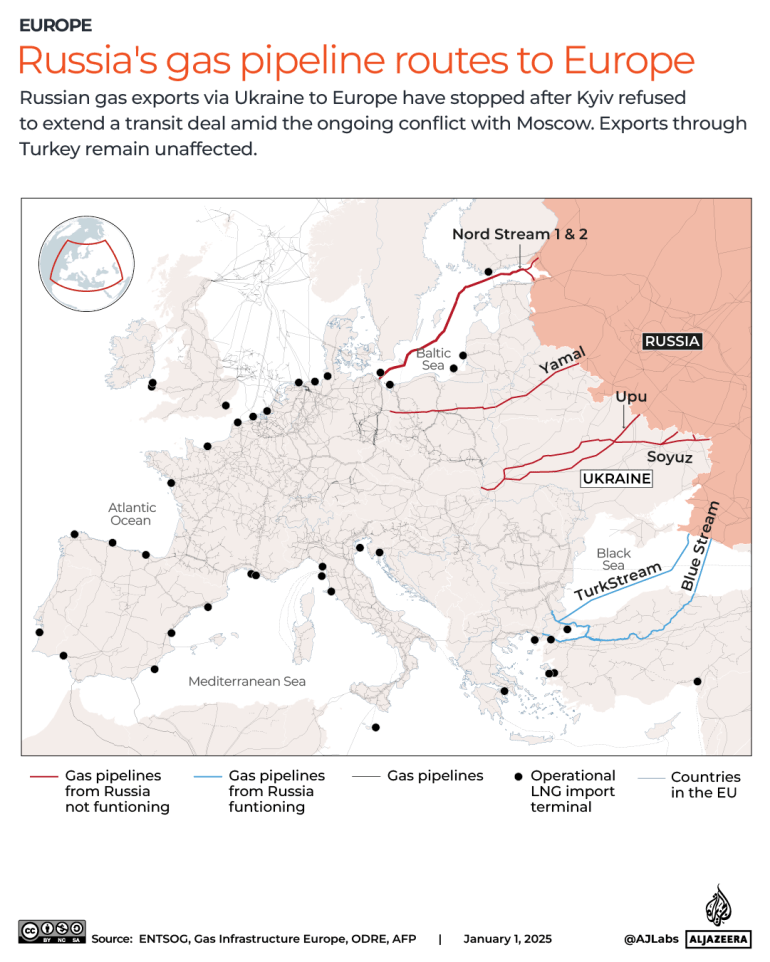
The flow of Russian gas to several European countries was halted on New Year’s Day after Ukraine refused to renegotiate a transit deal amid war with Moscow. Ukraine’s unwillingness to renew the five-year-old transit agreement aims to rob Russia of revenue that Moscow can use to fund its war, but the move will likely create an energy crisis in Eastern Europe, with Transnistria – a breakaway Moldovan region – cutting heat and hot water supplies to households. “It brings to a final end what was once Russia’s dominance of the EU energy market,” Al Jazeera’s Jonah Hull, reporting from Ukraine’s capital Kyiv, said. Before the invasion of Ukraine in 2022, Russia supplied some 35 percent of Europe’s pipeline natural gas exports. With the shutdown of Russia’s oldest gas route to Europe, functional for more than 40 years, Russia’s share has dwindled to less than 10 percent. Another gas pipeline passing through Turkiye still supplies gas to countries such as Hungary. So, how will turning off the taps during the height of the winter season affect countries, particularly in Eastern Europe and what could happen next? Advertisement Why did Russian gas flow to Europe via Ukraine halted? Russian energy giant Gazprom said on Wednesday that gas supplies to Europe had been halted at 8am local time (05:00 GMT) after Ukraine’s state-owned oil and gas company Naftogaz refused to renew its latest five-year transit deal. On Wednesday, Ukraine’s Energy Minister German Galushchenko said in a statement, “We stopped the transit of Russian gas. This is an historic event. Russia is losing its markets, it will suffer financial losses. Europe has already made the decision to abandon Russian gas.” The latest contract was first signed in 2020 under which Ukraine was paid transport fees. But Ukrainian President Volodymyr Zelenskyy had warned that Kyiv would not renew the transit agreement amid the continuing war. How much gas was Russia exporting to Europe? Many European countries began to reduce their reliance on Russian gas after Moscow’s invasion of Ukraine in February 2022. At its peak, Moscow’s share of European gas imports stood at 35 percent, but has fallen to about 8 percent. The European Union received less than 14 billion cubic metres (bcm) of gas from Russia through Ukraine as of December 1, down from 65bcm per year when the contract began in 2020. (Al Jazeera) The gas is sent through the Soviet-era Urengoy-Pomary-Uzhgorod pipeline from Siberia through Sudzha, a town in Russia’s Kursk region which is now under the Ukrainian military’s control. The gas moves via Ukraine into Slovakia. There, the pipeline splits into branches which take the supply to the Czech Republic and Austria. Advertisement The transit deal was bringing financial returns for both Russia and Ukraine. Ukrainian media quoted Serhii Makohon, former head of the Ukrainian GTS Operator, estimating that Russia made a significantly higher amount of money from the transit deal than Ukraine. Makohon estimated that Russia was earning $5bn a year, a number also reported by the Reuters news agency. On the other hand, Ukraine was receiving an annual $800m “but most of this money is spent on transit itself. [Ukraine’s] treasury receives $100-200m in taxes and dividends,” Makohon was quoted by Ukrainska Pravda. Bloomberg estimated Russia’s earnings from the deal to be even higher, at $6.5bn annually. Will there be an electricity shortage? Who will be affected by this? Austria, Slovakia and Moldova were relying on the transit route for their power supply. Austria was receiving most of its gas from Russia through Ukraine, while Slovakia was obtaining around 3bcm through the route annually, amounting to approximately two-thirds of its demand. Austrian energy regulator E-Control has said that it is prepared for a switch in supply and should not face disruptions. Slovak Prime Minister Robert Fico said on Wednesday that the halt in supply will cost the Eastern European nation hundreds of millions of dollars in transit revenue and a higher fee for the import of other gas. Fico asserted that this would result in the rise of gas prices across Europe. The Slovak economy ministry said that the country will have to bear the cost worth 177 million euros ($184m) for receiving gas through alternative routes. Advertisement Possibly the most vulnerable is Moldova. Russia sent about 2bcm of gas via Ukraine to Moldova’s pro-Russia breakaway region Transnistria annually since 2022. Transnistria, which borders Ukraine, would then sell electricity, generated using Russian gas, to government-controlled parts of Moldova. Moldova has already declared a state of emergency over the impending gas shortage. Moldova’s President Maia Sandu has blamed Gazprom for not considering an alternative route, and has said this winter in Moldova would be “harsh” without Russian gas. However, Moldovan Prime Minister Dorin Recean has said that Moldova has diversified sources of gas supply. On Wednesday, Transnistria, home to 450,000 people, cut off heating and hot water supplies to households. Ukraine itself does not use Russian transit gas, according to the European Commission, which added that the bloc had prepared for the cut-off. Has Russian gas flow to Europe completely stopped? The pipeline passing through Ukraine was one of the last functional routes used to export Russian gas. Other pipelines were shut in the wake of the 2022 Ukraine war, including the Yamal-Europe pipeline through Belarus and the Nord Stream pipeline under the Baltic Sea which sent gas to Germany. Russia still uses the TurkStream pipeline on the bed of the Black Sea to export gas. The pipeline has two lines, one feeds the domestic market in Turkiye, while the other supplies central European customers including Hungary and Serbia. However, the TurkStream has limited annual capacity, amounting to 31.5bcm for both lines combined. Advertisement What are alternative options for Europe? Europe has been trying to reduce its reliance on Russian gas, as it bought liquefied natural gas (LNG) from Qatar and the US, alongside piped gas supply from Norway. “The European gas infrastructure is flexible enough to provide gas of non-Russian origin to Central and Eastern Europe via alternative routes.
In India’s east, farmers risk jail to grow lucrative cannabis crop
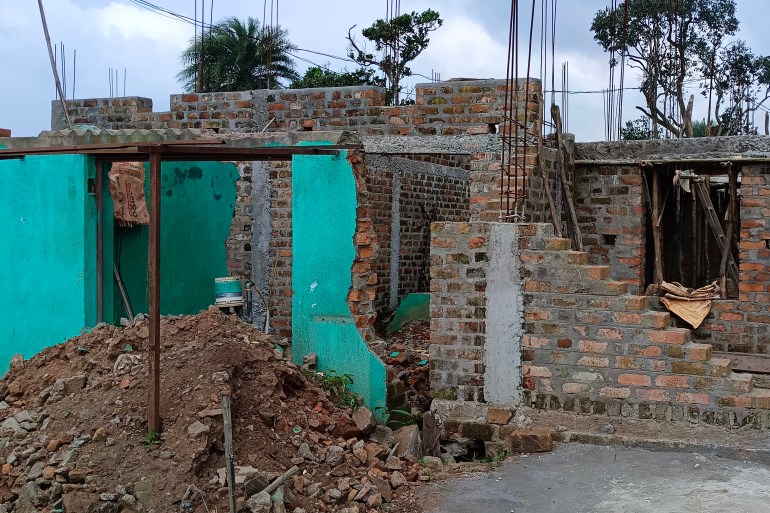
Odisha, India – Ajay Rout is an Indigenous farmer in a remote village in a southern district of India’s Odisha state. The village is surrounded by forest and hills with the nearest market 10km (6.2 miles) away. The 34-year-old grows sweetcorn and vegetables on his 0.2 hectares (0.5 acres) for both his family to eat and to sell at the market. Rout said this income is a pittance, so he has taken up growing cannabis, a banned drug, for a better income. He has about 1,000 cannabis plants located deep in the hills, which require a trek of at least two hours each way to get to because the path is full of boulders and rocks, making it almost impossible for him to ride his bicycle or motorcycle. The cultivation of cannabis – also known as hemp, marijuana, weed and ganja – is legal for medicinal use in only several states, including Uttarakhand, Gujarat, Madhya Pradesh, Uttar Pradesh and Jammu. Odisha is not one of them. India had no legislation on narcotic substances until November 1985 when it brought in a law including a ban on the use of cannabis. Advertisement The Narcotic Drugs and Psychotropic Substances Act, 1985, makes it illegal for a person to cultivate, possess, sell, buy and consume narcotic and psychotropic substances and doing so can lead to severe fines and imprisonment of up to 20 years. Risky but profitable Rout, who has been in this business for the past eight years, served three months in prison in 2017 and has been out on bail ever since. The income from the business, huge for him, overcomes the fear of being involved in it. Brick houses are replacing mud houses in tribal areas in Odisha state [Gurvinder Singh/Al Jazeera] “We live in a hilly terrain where traditional farming has a very limited scope. I hardly earn 30,000 rupees [$357] a year by growing vegetables and sweetcorn whereas I can easily make 500,000 rupees [$5,962] in just five to six months in cannabis cultivation,” he told Al Jazeera after being assured that his real name would not be disclosed. Rout said he and other cannabis growers generally choose remote locations in the hills for their plantations to protect themselves from police raids. “We are lucky to live amidst hills as cops don’t raid here as the path is too difficult to trek and reach the plantation area,” he said. The planting season starts at the end of July. Typically, it takes five months for the flowers to grow, which are then plucked, dried under the sun, packed and sold to traders. An 8- to 10ft-tall (2.4- to 3-metre-tall) plant produces 1kg (2.2lb) of cannabis at a cost of about 500 to 600 rupees ($5.8 to $7) per kilogramme. Farmers sell that to traders for 1,000 to 1,500 rupees ($12 to $18) per kilogramme. Advertisement “But all the trees do not give similar production and most of them bear no flowers at all. Excessive rains are harmful for the crop,” said Deepankar Nayak, 37, a farmer. Change in lifestyle Cannabis cultivation, even though banned in Odisha, is a highly lucrative business for the farmers and has brought them overnight riches. Subhankar Das, 38, who lives in the same village as Rout, told Al Jazeera that he recently changed the flooring in his house from concrete to marble tiles with the income from the illegal trade. He has also bought three motorcycles. His children are enrolled in local language schools, but he is planning to shift them to English language schools, which are a lot more expensive. “I can even buy four-wheelers and can build a palatial house, but we have to refrain from such activities as it would bring us on the radar of cops who are always on alert to nab us and destroy our fields,” Das added. “Still, some among us have purchased four-wheelers.” NK Nandi, founder of SACAL, a nonprofit working in weed-growing districts, said he has witnessed the change in the lifestyle of the farmers. “We started work in 2000 in the districts where cannabis is grown and the locals, mostly tribal, hardly had two-wheelers and lived in mud houses. The marriages were simple and as per their tribal traditions. But everything has undergone a sea change in the past eight to 10 years,” Nandi said. “Each tribal family has not only purchased two to three motorcycles but has also built concrete houses. They carry out marriage ceremonies like they are done in other parts of the country and spend lavishly and invite several guests. The decline of rebel insurgent activities in these areas along with better transport connectivity has also helped traders to reach them,” helping expand the market for this banned product, he said. Advertisement Police raids Cannabis cultivation is currently active in six districts of Odisha state: Koraput, Malkangiri, Rayagada, Gajapati, Boudh and Kandhamal, all of which have mountainous and hilly terrain. Police with seized cannabis [Courtesy of Odisha Police] Senior state police officials told Al Jazeera they are putting in their best effort to stop the illegal trade and have seized about 600 tonnes of cannabis in the three years until 2023, goods worth $200m, and have also arrested 8,500 drug traffickers. Of that drug haul, police got their largest one-time catch last year when they seized 185,400kg (408,737lb) of cannabis worth about $55m. The police have also destroyed about 28,000 hectares (70,000 acres) of cannabis plantations in Odisha from 2021 to 2023, the highest for cannabis in the country, JN Pankaj, a former inspector general of the Special Task Force of the Odisha Police, told Al Jazeera. In the first seven months of 2024, his team seized 102,200kg (225,312lb) of cannabis worth about $30m, he said. “We use drones and even satellite images to track the planting areas and destroy them. The challenge for us is not the hilly terrains but the use of landmine explosives in these areas,” which have traditionally been hideouts for rebel groups, Pankaj said, adding:
Panama commemorates canal handover despite Trump’s call for US control
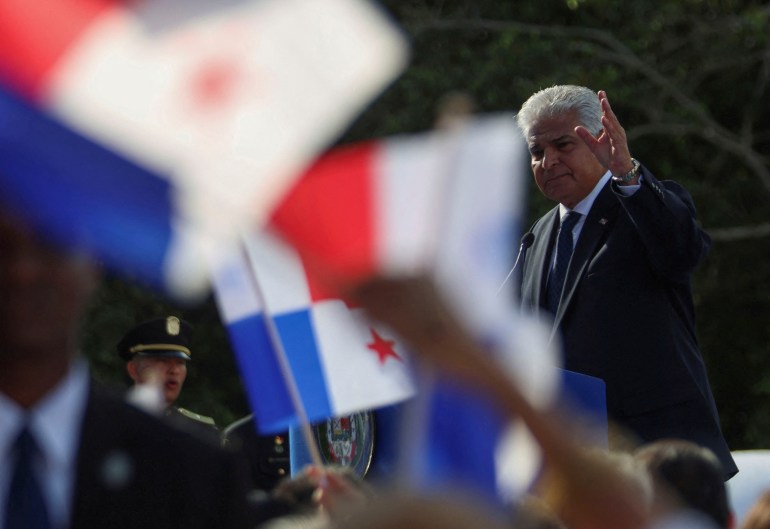
Top political leaders in Panama have held a ceremony to mark the 25th anniversary of the return of the Panama Canal after decades of United States control. But the celebration took place under a pall, as US President-elect Donald Trump continued calls for his country to reassert dominance over the pivotal waterway, which connects the Pacific Ocean to the Caribbean Sea. Panamanian President Jose Raul Mulino, a right-leaning leader like Trump, was among the speakers at Tuesday’s main ceremony in the capital Panama City. He reassured spectators that the Panama Canal would remain in his country’s possession, dismissing Trump’s remarks without mentioning the US leader by name. “There are no hands involved in the canal other than Panama’s,” Mulino said. “Rest assured, it will be in our hands forever.” But Trump has increasingly pushed for US governance over the canal as part of his broader expansionist rhetoric. President Jose Raul Mulino attends a ceremony to celebrate the 25th anniversary of the US ceding control of the Panama Canal in 1999 [Aris Martinez/Reuters] Earlier this month, Trump teased that Canada should become the 51st US state, and he repeated his desire to buy Greenland, an idea he floated during his first term in office. Advertisement But as Trump prepares for a second term on January 20, he has alarmed some observers with threats to potentially wrest the Panama Canal back from Panama’s control. On December 21, in a post on his online platform Truth Social, Trump accused Panamanian officials of exacting “exorbitant prices” for passage in the canal. The canal allows cargo ships to pass from the Pacific to the Atlantic Ocean without having to navigate all the way around South America, a perilous route that stretches thousands of kilometres. But the canal has seen increased traffic in recent decades. It has also suffered a severe drought that stymied travel through its system of locks: water chambers that lift boats up and down when the surrounding land is not level. In his posts, however, Trump indicated that Panama was violating a 1977 agreement that established conditions for the canal to shift from the US to Panamanian hands. “This complete ‘rip-off’ of our Country will immediately stop,” Trump wrote in the first of two lengthy posts. In the second, he continued with a warning. “If the principles, both moral and legal, of this magnanimous gesture of giving are not followed, then we will demand that the Panama Canal be returned to us, in full, and without question,” he wrote. “To the Officials of Panama, please be guided accordingly.” Institutional security officers stand during a ceremony to celebrate the 25th anniversary of the return of the Panama Canal on December 31 [Aris Martinez/Reuters] A history of control Building the canal through the isthmus of Panama had long been an ambition of Western colonial powers. Advertisement In the late 1800s, for instance, the US made overtures to construct the canal in Panama — part of Colombia at the time — but the South American country refused the deal. When Panama later declared independence, the US quickly supported its secession. The US was the first country to recognise Panama as its own state. In return for US support, Panama granted the North American country the right to build the canal and oversee the land surrounding it. That area became known as the Panama Canal Zone. But critics saw the agreement as a violation of Panama’s sovereignty. Ultimately, in 1977, then-US President Jimmy Carter signed two treaties to engineer the return of the canal and its surrounding lands. That transfer took effect on December 31, 1999, exactly 25 years ago. Carter died on Sunday, just shy of the anniversary. Mulino paid tribute to the late US president on Tuesday by holding a moment of silence. In his speech, Mulino described feeling a “mix of happiness for this 25th anniversary” and “sadness” over Carter’s death. A man on December 31 holds up a newspaper published decades earlier on January 1, 2000, announcing the transfer of the canal to the government of Panama [Aris Martinez/Reuters] Remembering ‘martyrs’ Tuesday’s celebrations also acknowledged the protesters who died advocating for the canal’s return to Panamanian control. Among the honoured were the more than 20 participants killed in a student protest on January 9, 1964. That day, known in Panama as the Martyrs Day, saw students try to raise a Panamanian flag alongside a US one at a high school in the canal zone. Violence erupted, resulting in the deaths of the protesters as well as four US soldiers. Advertisement In recent days, Trump has accused Panama of violating the terms of the canal’s return, by allegedly allowing Chinese soldiers to operate the shipping route. But Panama’s officials have denied that China has any influence over the canal. Jorge Luis Quijano, who served as the canal’s administrator from 2014 to 2019, was quoted in The Associated Press as saying that Trump has no legal basis for his claims to the canal. “There’s no clause of any kind in the neutrality agreement that allows for the taking back of the canal,” Quijano said. Adblock test (Why?)
Indonesia’s Apple and Google bans frustrate country’s tech fans

Medan, Indonesia – Winston, a medical doctor who lives and works in the capital of North Sumatra Province, is a self-proclaimed Apple fan. Currently the proud owner of an iPhone 15, Winson had been looking forward to upgrading to the latest model, the iPhone 16, released in September. Winston, however, has reluctantly given up on the idea since the Indonesian government banned sales of the iPhone 16 and the Google Pixel in late October, citing the tech giants’ failure to comply with the country’s Tingkat Komponen Dalam Negeri, or TKDN, policy, which requires phones to source at least 40 percent of their parts locally. “Indonesian regulations about iPhones hit me once, and once was enough,” Winston, who like many Indonesians goes by one name, told Al Jazeera. While Winston could buy an iPhone overseas to bring back home – a relatively common practice that is legal as long as the phone is not resold – he has been burned by Indonesian regulations before. “I bought the iPhone 11 in Singapore back in 2019 because it was much cheaper than in Indonesia, about $250 cheaper in fact. A round-trip ticket to Singapore at that time was only $120. You could fly to Singapore and back to Indonesia on the same day, so it was more cost-effective,” he said. Advertisement Winston used the phone without problems for about a year, until the Indonesian government in 2022 issued a regulation mandating that all phones be registered. Despite registering his phone as required, the device suddenly lost signal one day and would not reconnect to the network, even with a different SIM card, he said. “I went to a licensed Apple products reseller in Medan because I thought there was a problem with the phone, but they just said, ‘There is nothing we can do or suggest,’” he said. Saddled with an unusable iPhone, Winston, who has had no problems with his current iPhone 15, which he bought through a licensed reseller, sold the device at a loss at a secondhand store during a subsequent visit to Singapore. The New Pixel 9, 9 Pro and 9 Pro XL phones at Google’s Bay View campus in Mountain View, California on August 13, 2024 [Josh Edelson/AFP] Indonesia, the fourth-most populous country with some 280 million people, is one of the world’s largest smartphone markets. The archipelago was home to some 190 million smartphone users in 2022, according to market research firm Newzoo. According to data from the Ministry of Industry, the country imported about 22,000 Google Pixel phones and 9,000 iPhone 16s in 2024, before authorities announced the bans. Smartphone shipments to Indonesia were dominated by devices made by China’s Xiaomi, Oppo and Vivo, and South Korea’s Samsung. Abdul Soleh, a lawyer in Medan, said the prohibitively expensive price of the iPhone 16 for many Indonesians might explain why there had not been more vocal opposition to the ban. Advertisement “It is a real shame, because iPhones are very popular and have a high user satisfaction rate in Indonesia,” Soleh told Al Jazeera. “It would be better if the iPhone 16 could be sold in Indonesia because there are quite a lot of enthusiasts here.” Khairul Mahalli, the head of the Chamber of Commerce in North Sumatra, said that while Indonesia’s TKDN policy is aimed at supporting local industry, it could have unintended consequences. “As a member of the World Trade Organization (WTO) with a trade industry that works between countries, it is fine to protect our industries, but we also need to have checks and balances in place,” Mahalli told Al Jazeera. “One of the issues for the future could be that, if Indonesia blocks the sales of certain products, other countries could do the same and no longer accept the sales of Indonesian products on the international market.” Mahalli said it was the job of the government to find ways to minimise harm to local industries that are less drastic than outright bans on foreign products. “We don’t need to completely ban foreign sales, as Indonesia’s market is large enough to accommodate foreign products due to its large population of over 270 million people,” he said. “We need to look at whether local production can keep up with consumer demand.” Rio Priambodo, the head of the legal and complaints department at the non-profit Indonesia Consumers Organization, said consumers should think twice about purchasing the latest iPhone model, especially through illegal resellers in the country. Advertisement “The Consumers Organization recommends that consumers don’t just try to buy the iPhone 16 by any means possible if it has been banned by the government,” Priambodo told Al Jazeera. “If purchases are made illegally, this will eliminate the dimension of consumer protection that all customers should have.” In a bid to break the impasse, Apple has pledged to dramatically ramp up its investment in the country in exchange for lifting the ban. In November, the California-based tech giant offered to invest $100m in the country over two years, a 10-fold increase from an earlier pledge to pour $10m into the construction of an accessories and components factory in Bandung, West Java. Apple CEO Tim Cook, centre, walks with Indonesia’s Minister of Industry Agus Gumiwang Kartasasmita, right, and Minister of Communication and Information Technology Budi Arie Setiadi, left, after a meeting with President Joko Widodo in Jakarta, Indonesia on April 17, 2024 [Achmad Ibrahim/AP] Despite the offer, the Ministry of Industry appeared unmoved. “From the government’s perspective, of course, we want this investment to be larger,” spokesperson Febri Hendri Antoni Arif said at the time. On November 25, Jakarta formally rejected the offer, with Industry Minister Agus Gumiwang Kartasasmita saying it did not meet Indonesia’s “principles of fairness”. He said that Apple had invested more significant amounts in neighbouring countries such as Thailand and Vietnam, including $15bn for manufacturing facilities in the latter. Advertisement “Based on the technocratic assessment, the investment amount has not met the figure that we consider fair,” he said. “We want Apple to return
Gaza hospitals on ‘brink of total collapse’ from Israel attacks: UN
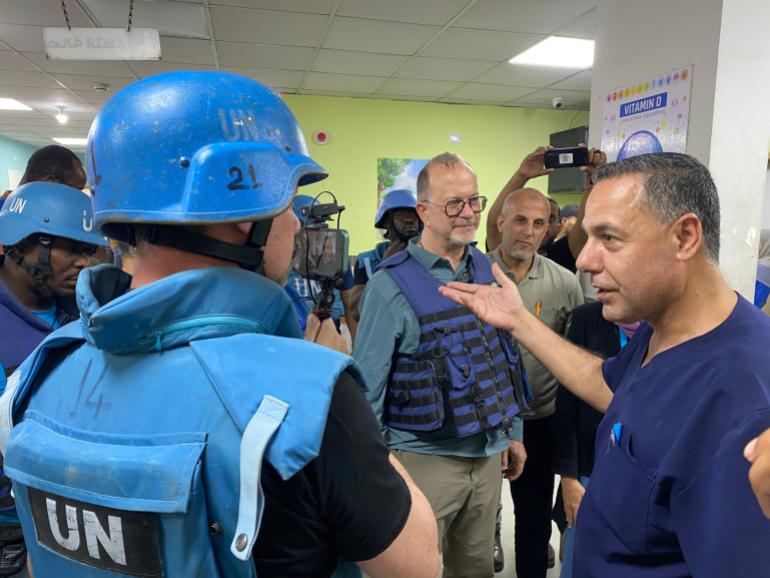
A UN report says Israel’s claims that Gaza hospitals are being used for military purposes by Palestinian armed groups are “vague” amid continuing Israeli attacks on health facilities protected under international law. The report – released on Tuesday by the UN human rights office – said Israeli strikes targeting hospitals and their surroundings in the Gaza Strip have pushed the territory’s healthcare system “to the brink of total collapse with catastrophic effect on Palestinians’ access to health and medical care”. The 23-page report looked at the period from October 7, 2023, to June 30, 2024. During this time there were at least 136 attacks on 27 hospitals and 12 other medical facilities, inflicting significant casualties among doctors, nurses, medics, and other civilians while causing significant damage to, if not the complete destruction of, civilian infrastructure. A UN delegation visits Kamal Adwan Hospital in Beit Lahiya in September [Hassan Zaanin/Anadolu] ‘A death trap’ The report highlighted that international humanitarian law explicitly protects medical personnel and hospitals as long as they do not engage in or are not used to commit acts harmful to the enemy outside their humanitarian function. “Insufficient information has so far been made publicly available to substantiate these allegations, which have remained vague and broad, and in some cases appear contradicted by publicly available information,” the UN report said. The deliberate destruction of healthcare facilities “may amount to a form of collective punishment, which would also constitute a war crime”, it added. Advertisement “The one sanctuary where Palestinians should have felt safe in fact became a death trap,” UN High Commissioner for Human Rights Volker Turk said. “The protection of hospitals during warfare is paramount and must be respected by all sides at all times.” Israel has in recent days escalated attacks on the besieged Kamal Adwan Hospital in northern Gaza, detaining its director. The World Health Organization said the Kamal Adwan Hospital’s remaining 15 critical patients, 50 caregivers, and 20 health workers were transferred on Friday to the nearby Indonesian Hospital, which it described as “destroyed and non-functional”. Hamas dismissed Israel’s assertion its members operated from the hospital throughout the 15-month Gaza war, saying no fighters had been there. Former Israeli diplomat Alon Pinkas told Al Jazeera even if his country did provide evidence to back up claims that Hamas used medical facilities for military operations, it would not justify attacking hospitals. “There is a discrepancy between the big headlines … and the failure to come up with the evidence to support this,” he said. While the Israeli military said more than 250 Hamas fighters were arrested at Kamal Adwan Hospital in northern Gaza, Pinkas noted even if that is true, it still “does not justify rendering the hospital inoperative”. Transparent investigation The report called for credible, independent investigations into the health facility attacks, emphasising the “limitations” of Israel’s justice system in addressing the actions of its armed forces. Advertisement “It is essential that there be independent, thorough and transparent investigations of all of these incidents, and full accountability for all violations of international humanitarian and human rights law which have taken place,” said Turk. He also urged that “all medical workers arbitrarily detained must be immediately released”. “It must also be a priority for Israel, as the occupying power, to ensure and facilitate access to adequate healthcare for the Palestinian population,” Turk said. Israel’s war on Gaza has killed more than 45,500 people in the besieged territory, mostly civilians, according to the Health Ministry. Adblock test (Why?)