

The US soldiers returning to Vietnam in search of mass graves
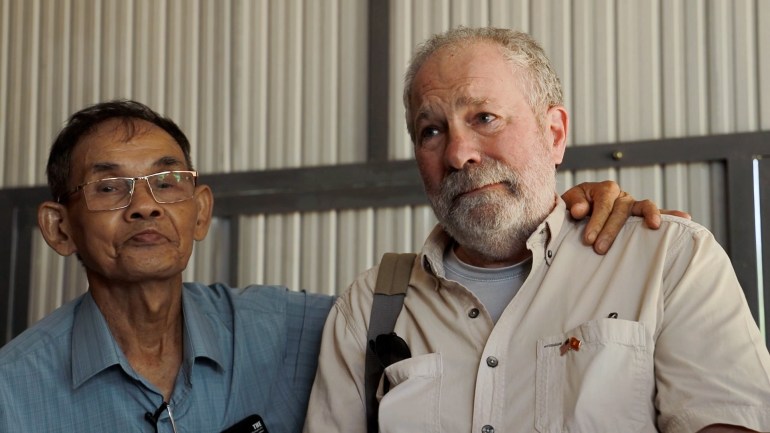
It is August 2022, and four Americans – all men in their 70s – disembark at a small airport outside Quy Nhon, a city of about half a million located on the south-central coast of Vietnam and the capital of the Binh Dinh province. With its lush landscapes and stunning tropical beaches, it is hard to accept that the region was the setting of fierce fighting during the Vietnam War, which ended 50 years ago this coming April. The Americans exit the airport and are met by Major Dang Ha Thuy – a uniformed Vietnamese man, also elderly – who greets them warmly. Half a century ago, they would have exchanged gunfire; today, they exchange handshakes and smiles. They have been drawn together by a shared mission. Thuy has spent 20 years searching for the missing remains of his North Vietnamese comrades lost in battle, and the Americans have come to help. Not only might these veterans know where some of the bodies can be found, but they are the ones who buried them. The five board a shuttle along with a film crew from VTV4 – a Vietnamese television network facilitating and documenting the trip – which carries them all to Xuan Son Hill, a remote point in the Kim Son Valley. Fifty years ago, it was the site of a brutal battle at the United States Army’s Firebase Bird – and until recently, it was the location of a mass grave containing the remains of 60 people. Major Thuy consoles a tearful Steve Hassett [Screen capture from the documentary Fragment of Memory] The battle at Firebase Bird By 1966, Vietnam’s civil war had been raging for more than a decade, and US involvement had grown from a smattering of military advisers and special forces to a sprawling army of 400,000. While the violence would not peak for another two years, the casualty rate was already rising fast. Hundreds of US personnel were killed every month, and the Vietnamese losses were much worse. Before ending in 1975, about 58,000 Americans, 350,000 Laotians and Cambodians, and between 1-3 million Vietnamese were killed in the war. On Christmas of 1966, a declared truce would suspend the carnage for 30 hours. For American soldiers holed up at Firebase Bird – a small helicopter landing zone and staging base – it was a much-needed opportunity for rest amid the “search and destroy” mission that had them slogging through the jungles of Binh Dinh in search of the North Vietnamese Army (NVA) and guerrilla forces. But when the truce expired in the early morning hours of December 27, the NVA attacked. “We were totally surprised,” reported Spencer Matteson half a century later in Fragments of Memory, a 2023 VTV4-produced documentary about the battle and search for its resulting mass graves. Matteson only survived the initial onslaught due to a last-minute bunker switch – the soldier who took his place was killed instantly by a direct mortar strike. As the rounds rained down, he said, “It was the loudest thing I’ve ever heard in my life. I’ve never been able to hear right since.” Advertisement It did not take long for the attacking forces to overwhelm the hill and base, and soon, the American defenders only had their last remaining heavy gun. From this, they fired a last-ditch weapon called a “beehive”, which scattered a barrage of small projectiles in every direction and finally broke the attack. After the firing died down, the smoke cleared and the sun rose, 27 Americans had been killed and 67 had been wounded. Exact figures for Vietnamese casualties are less certain, but official records number the dead at 267. “The battlefield was covered with dead bodies,” said a tearful Matteson in the documentary. “It’s just horrible beyond belief.” When I later spoke with Matteson, he went into greater detail about the hours following the battle. “They dug a big pit with a small bulldozer”, he explained, “and then we were put on details to drag the enemy dead over there. I was on one of those details too. The aftermath of the thing was almost even worse than the battle itself. When the sun came up it was like a nightmare. It was like waking up inside a Hieronymus Bosch painting. It was really grim. I remember very clearly. The whole thing was etched in my mind”. “Soldiers had dragged a lot of the dead NVA to a central point in the LZ [landing zone],” recalls survivor Steve Hassett. “And at that point, I began taking photographs.” These photos would come into play some 50 years later. “It was like your worst nightmare,” said Matteson. “It didn’t look real, but it was. And for an 18-year-old kid to see stuff like that, it’s not good psychologically. It’s never left me.” Advertisement Though Matteson and Hassett soon returned home, the war raged for another six years. After it ended, life moved on. The jungle reclaimed the site cleared for Firebase Bird. And the Vietnamese families of those killed attacking it were left to wonder about the remains of their lost loved ones. Decades passed. Photo taken after the massacre at US Army Firebase Bird on December 27, 1966. An 18-year-old Steve Hassett shot the scene with a Kodak Instamatic he says he barely knew how to use [Courtesy of Steve Hassett] A stolen statue comes full-circle For Matteson, like so many veterans and civilians touched by the war, life in its wake was not easy. Post-Traumatic Stress Disorder (PTSD) resulted in alcohol and drug abuse, which in turn ruined his marriage. Then, in 1991, Matteson got sober and began attending reunions with other veterans. Around that time, he found among his things a long-forgotten memento picked up during the war: a small Buddhist statue stolen from a pagoda. “That statue was the start of everything,” Le Hoang Linh, the filmmaker behind Fragments of Memory, told Al Jazeera. It set in motion a chain of events that would eventually reveal
Al Jazeera in Palestine: A timeline of coverage against all odds
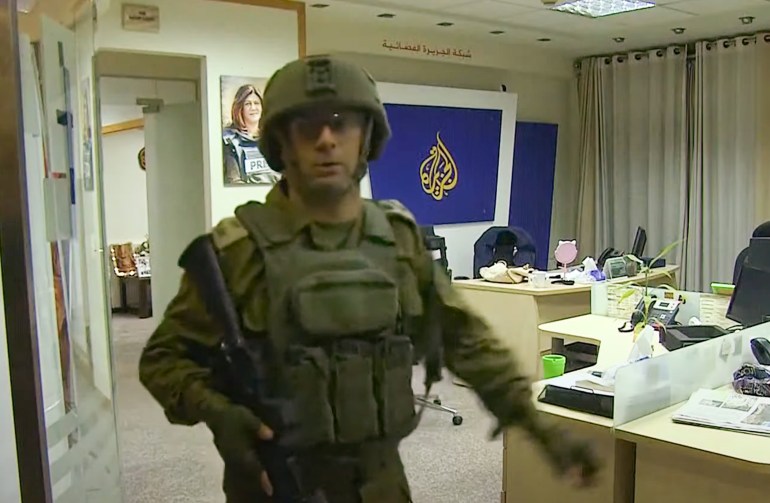
EXPLAINER The network has continued to report on the plight of Palestinians, despite intimidation. Al Jazeera Media Network has strongly condemned the Palestinian Authority (PA) ban on its operations in the occupied West Bank this week, calling it an action that “aligns with Israeli occupation practises”. Since its launch in 1996, Al Jazeera’s reporters have covered the Middle East, from the Arab Spring to Israeli settler violence in the West Bank and the brutal war on Gaza, even when other news organisations pulled their journalists out. From the start, Al Jazeera has faced attempts to silence its reporting through arrests, imprisonment and attacks on its journalists. And since Israel’s genocidal war on Gaza began in October 2023, the channel has faced even more attempts to stifle its reporting on Palestine. Al Jazeera’s determination to provide round-the-clock, firsthand reporting on the horrors in Gaza and the deadly raids in the occupied West Bank has come at a high cost, with at least six Al Jazeera journalists killed in the Palestinian territory since 2022. The PA’s decision to ban Al Jazeera mirrors Israel’s announcement last year that the channel would be banned in Israel and then its closure of the bureau in Ramallah. Advertisement Here’s a breakdown of how Al Jazeera has been targeted by both the PA and Israel: Israeli soldiers raid and order the closure of the Al Jazeera office in Ramallah, September 22, 2024 [Screengrab/Al Jazeera] When did Al Jazeera start reporting from the West Bank and Gaza? Al Jazeera has been reporting in Palestine since 2000, marking Al Jazeera Arabic’s first attempt to launch a foreign bureau. There are Al Jazeera bureaus in Ramallah and occupied East Jerusalem in the West Bank, although both have now been suspended by the Israeli government or the PA. In 2021, Israeli forces bombed the Gaza bureau. How many times has the PA shut Al Jazeera down? The PA controls parts of the occupied West Bank and has suspended Al Jazeera’s operations there three times: In March 2001, the PA, led at the time by President Yasser Arafat, invaded Al Jazeera’s Ramallah offices and prevented staff from accessing the building. No official reasons were provided. However, bureau chief Walid Al-Omari said at the time that a security official had called the bureau and accused the network of airing footage “offensive” to Arafat, demanding that it be removed. On July 15, 2009, PA security officials stormed Al Jazeera’s Ramallah offices and banned its 35 employees from broadcasting. Officials alleged the network had broadcast “false information” because late Palestinian politician Farouk Kaddoumi, in an interview, accused PA President Mahmoud Abbas of involvement in an Israeli plot to kill Arafat. The office was allowed to reopen four days later following an outcry from journalists’ rights groups. Advertisement In December 2024, Fatah, the Palestinian party that dominates the PA, banned Al Jazeera from reporting from the governorates of Jenin, Qalqilya and Tubas in the occupied West Bank, citing its coverage of clashes between the Palestinian security forces and Palestinian armed groups. Since mid-December, PA security forces have cracked down on the armed groups in what analysts say is an attempt to endear the PA to the Israelis and the United States. The crackdown has led to the killing of several civilians as well as the West Bank journalist Shatha Sabbagh, 22. On January 2, 2025, the PA suspended all Al Jazeera broadcasts from the West Bank and placed restrictions on anyone working for the network. How many times has Israel shut Al Jazeera down? Israeli authorities have repeatedly attempted to muzzle Al Jazeera. Prime Minister Benjamin Netanyahu has long accused the network’s coverage of “inciting violence”. The network refutes these claims as “arbitrary and hostile”. In July 2017, Netanyahu threatened to close Al Jazeera’s Jerusalem office in a Facebook post because the network covered a fallout between Palestinians and Israeli authorities over Al-Aqsa Mosque. In May 2021, Israel bombed Al Jazeera’s Gaza office. Israeli forces gave Al Jazeera and other media organisations in the same building just one hour to evacuate the tower. In May 2024, Al Jazeera’s occupied East Jerusalem bureau was raided and closed after the Israeli parliament passed a law allowing the government to suspend the operations of foreign media that pose a “threat”, for 45 days at a time. The ban, including a ban on Al Jazeera’s website in Israel, has been renewed multiple times and remains in place. Al Jazeera now reports from Amman, Jordan. In September 2024, heavily armed and masked Israeli security forces raided Al Jazeera’s office in Ramallah at 3am and shuttered its operations as the bureau was broadcasting live. Israeli officials alleged that the network supported “terrorism” and ordered operations to be closed for 45 days. Al Jazeera staff were forced to stand on the street and were threatened with a laser weapon during the raid. Solidarity gathering at Al Jazeera for journalists killed in Gaza [Al Jazeera] How many Al Jazeera journalists have been killed or injured in the West Bank and Gaza? At least six Al Jazeera journalists have been killed by Israeli authorities in the West Bank and Gaza while on duty. In most cases, the journalists were wearing marked press vests or were in clearly marked cars. Advertisement Shireen Abu Akleh: Veteran journalist Abu Akleh was shot and killed by a bullet to the head on May 11, 2022, while reporting on an Israeli raid on Jenin, in the occupied West Bank. Despite the fact she was wearing a helmet and a vest clearly marked with “Press”, the bullet from an Israeli sniper penetrated just below her helmet. Israeli forces at first tried to blame “crossfire” from Palestinian fighters but were forced to backtrack when ample video evidence proved no Palestinian fighters were nearby. No action has been taken against the sniper. Israeli forces attacked her funeral procession attended by thousands of Palestinians paying their respects – at one point causing her coffin to slip and nearly hit the ground. Samer Abudaqa:
Panama reports sharp drop in irregular migration through Darien Gap
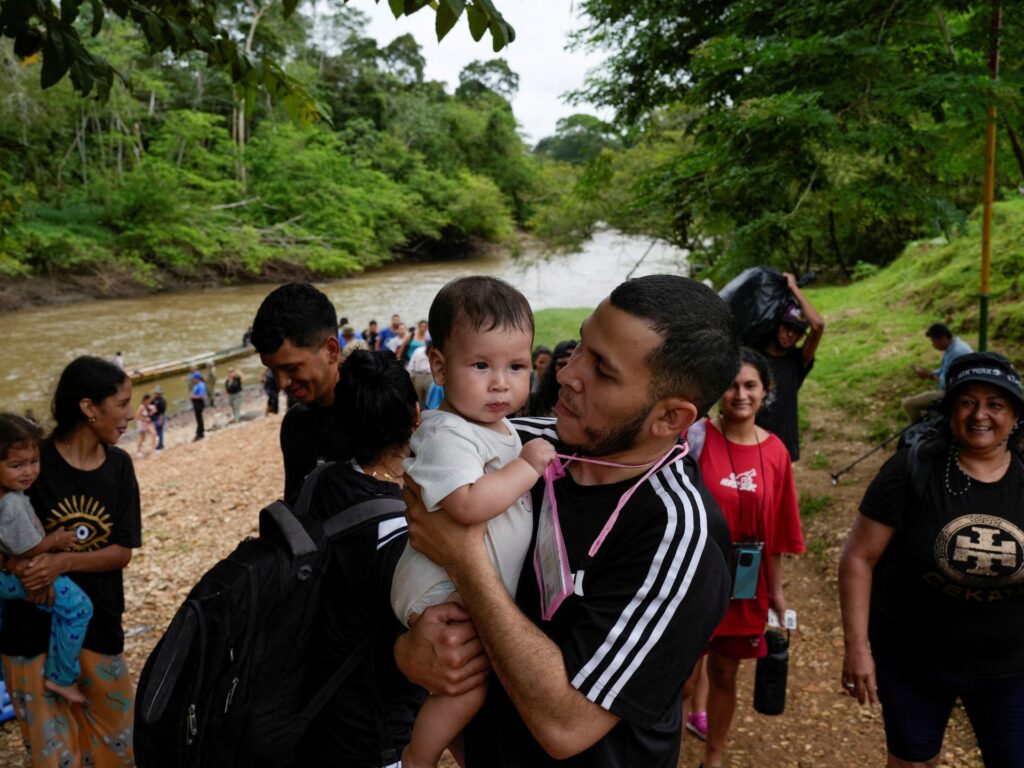
The number of migrants and asylum seekers traversing the Darien Gap — the treacherous strip of jungle connecting South and North America — has fallen by nearly 41 percent in the last year. On Thursday, Panama’s right-wing President Jose Raul Mulino announced the decline, touting it as a success for the country’s efforts to limit irregular migration. “We have achieved a 41 percent reduction in the flow of migrants crossing the Darien jungle,” Raul Mulino told Panama’s Congress in a speech. “We work every day to ensure that illegal migration does not reach [Panama City] or the rest of the country.” Panama faced pressure to crack down on irregular migration in recent years, as the number of migrants and asylum seekers travelling north hit record highs. In fiscal year 2023, the United States reported 2.48 million “encounters” with migrants and asylum seekers at its southern border with Mexico. That was a new high-water mark for the US, and it led to a political backlash, with immigration featuring prominently in the country’s general elections in 2024. Advertisement For instance, President-elect Donald Trump — the victor in the 2024 presidential race — has pledged to pursue a “mass deportation” campaign upon taking office on January 20. Likewise, in Panama, 2023 broke records for migrants and asylum seekers navigating the Darien Gap. An estimated 520,085 people passed through the perilous jungle, known for its steep terrain, swift rivers and criminal networks. But in 2024, Panama’s immigration authorities saw a steep drop in the number of people risking their lives in the jungle. Some 302,203 crossed the Darien Gap last year. The US has similarly seen falling numbers at its southern border. In the fiscal year 2024, US Customs and Border Protection documented 2.14 million irregular “encounters” with migrants and asylum seekers, down 14 percent. November alone saw the lowest monthly total of irregular border crossings in the four years of US President Joe Biden’s term. But the US has attempted to clamp down on irregular migration in recent months. Last year, Biden implemented stiff measures limiting asylum access to those who cross the US-Mexico border outside official channels. Penalties included a five-year ban from the US and possible criminal prosecution. Biden also threatened to suspend asylum petitions altogether if the average daily number of irregular border crossings reached 2,500 per day. Critics warned these measures could violate international and US humanitarian law, by limiting the ability of asylum seekers to urgently flee persecution. Advertisement But supporters of the new policies argued they were necessary to rein in irregular migration. The US has also pushed its allies in South and Central America to limit irregular migration northwards. Panama and the US, for instance, signed an agreement in July to “close the passage of illegal migrants” through the Darien Gap, with the US offering to fund deportation flights and other logistics. Approximately 1,548 migrants and asylum seekers have since been repatriated on US-backed deportation flights from Panama. The US also established “Safe Mobility Offices” in countries like Costa Rica, Guatemala and Colombia in an effort to dissuade would-be migrants and asylum seekers from making the dangerous trek to the border. Mulino revealed in December that at least 55 migrants and asylum seekers had died while navigating the Darien Gap in 2024, and an estimated 180 children were abandoned. Given the inhospitable nature of the terrain, some bodies are never reported or found. Critics point out that efforts to stamp out irregular migration often overlook the fundamental issues that spur migrants and asylum seekers to make life-threatening trips in the first place. This past year, for instance, an estimated 69 percent of the migrants and asylum seekers documented in the Darien Gap were from Venezuela. There, human rights experts warn of government abuses, particularly in the wake of a contested presidential race that saw 2,000 arrested and 23 killed in post-election protests. Advertisement Venezuela has also suffered from economic turmoil that has put access to basic supplies like food and medicine out of reach for many residents. Some 7.7 million people have fled the country. Adblock test (Why?)
British minister says Musk ‘misinformed’ on UK child grooming scandals
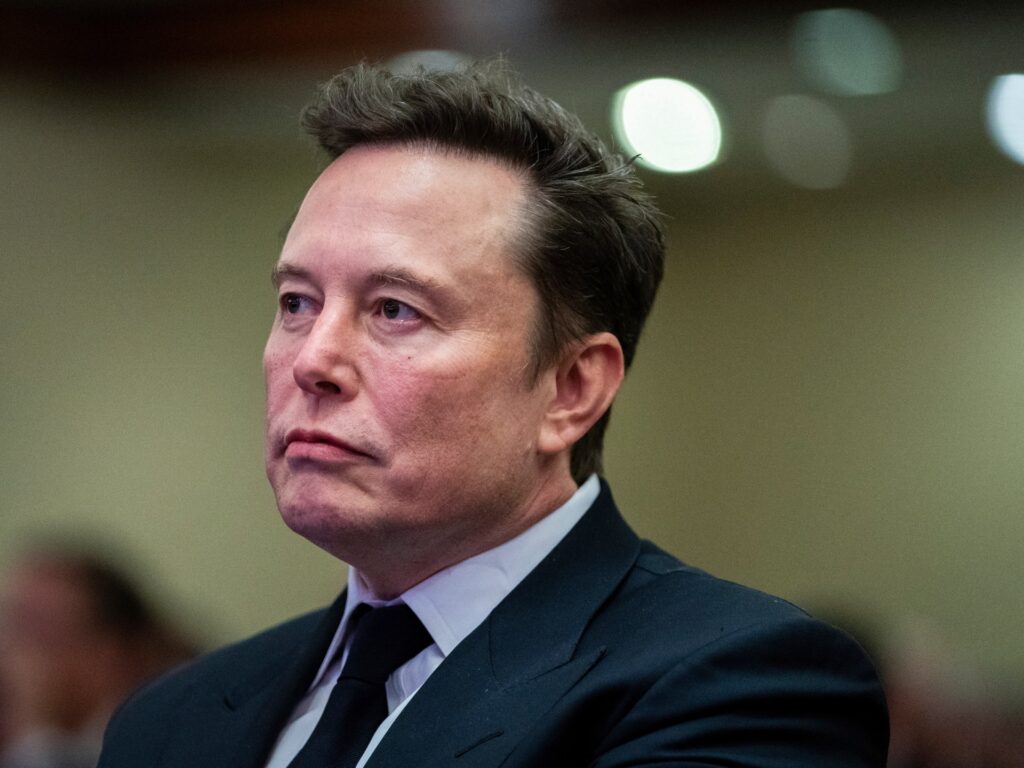
British Health Secretary Wes Streeting says Musk’s views are ‘misjudged and certainly misinformed’. A senior British politician has rejected Elon Musk’s criticism of the government’s handling of historic child grooming scandals. The US technology billionaire on Thursday accused Prime Minister Keir Starmer of failing to bring “rape gangs” to justice when he was director of public prosecutions more than a decade ago. In a flurry of posts on X, the social media platform he owns, Musk also suggested that safeguarding minister Jess Phillips “deserves to be in prison” for refusing a request for a national public inquiry into the Oldham scandal. On Friday, British Health Secretary Wes Streeting said Musk’s views were “misjudged and certainly misinformed”. He urged Musk, a close confidant of US President-elect Donald Trump, to work with the government on tackling the issue of child sexual exploitation. “So if he wants to work with us and roll his sleeves up, we’d welcome that,” he added. The widespread abuse of girls, which emerged more than a decade ago in several English towns and cities, including Rochdale, Rotherham and Oldham, has long stirred controversy. Advertisement A 2022 report into safeguarding measures in Oldham between 2011 and 2014 found that children were failed by local agencies, but that there was no cover-up despite “legitimate concerns” that the far right would capitalise on “the high-profile convictions of predominantly Pakistani offenders across the country”. Streeting told ITV News that the government took child sexual exploitation “incredibly seriously” and that it was supportive of an inquiry into the Oldham scandal, but that it should be led locally. Musk appears to be taking a keen interest in the United Kingdom’s political scene since the left-of-centre Labour Party won a landslide election victory in July 2024, bringing an end to 14 years of Conservative rule. He has retweeted criticism of Starmer and the hashtag TwoTierKeir – shorthand for an unsubstantiated claim that the UK has “two-tier policing”, with far-right protesters treated more harshly than pro-Palestinian or Black Lives Matter demonstrators. Musk has also compared British attempts to weed out online misinformation to the Soviet Union, while during summer anti-immigrant violence across the UK, he tweeted that “civil war is inevitable”. On Friday, he also backed calls for a UK general election, barely six months after the last one. “The people of Britain do not want this government at all. New elections,” he wrote on his X platform. Musk also recently expressed his support for Stephen Yaxley-Lennon, the founder of the far-right English Defence League, who is better known as Tommy Robinson and who is serving an 18-month jail term for contempt of court. Advertisement Adblock test (Why?)
South Korean authorities halt bid to arrest Yoon after hours-long standoff
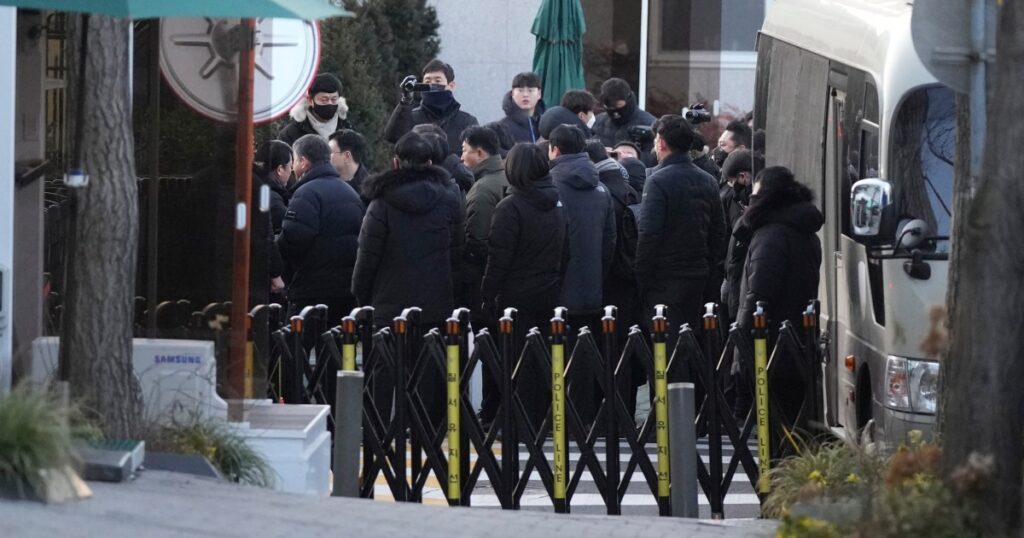
South Korean authorities have suspended an attempt to arrest impeached President Yoon Suk-yeol after an hours-long standoff with his security team. The Corruption Investigation Office for High-ranking Officials (CIO) said on Friday that it had decided to halt its bid to detain Yoon over his short-lived declaration of martial law after the Presidential Security Service (PSS) blocked its investigators from entering his residence. “Regarding the execution of the arrest warrant today, it was determined that the execution was effectively impossible due to the ongoing standoff. Concern for the safety of personnel on-site led to the decision to halt the execution,” the CIO said in a statement. Investigators arrived at Yoon’s compound early on Friday morning to detain the embattled leader as part of an investigation into alleged insurrection and abuse of power related to his brief imposition of martial law on December 3, which plunged the East Asian nation into its deepest political crisis in decades. Advertisement But PSS chief Park Jong-joon denied investigators entry to Yoon’s residence, citing restrictions on access to locations potentially linked to military secrets, the state-funded Yonhap News Agency reported. Speculation about when and how authorities would take Yoon into custody has swirled since a Seoul court earlier this week granted prosecutors’ request for an arrest warrant. Yoon’s security detail previously blocked investigators from executing several search warrants directed at the president. If arrested, the conservative leader would be the first sitting president to be detained in South Korean history. Before the CIO’s announcement, Yoon Kap-keun, a lawyer for Yoon, had reiterated that investigators were acting outside their authority and the law. Seok Dong-hyeon, another member of Yoon’s legal team, said it was unlikely that authorities would be able to take the president into custody on Friday. The liberal opposition Democratic Party had called on Acting President Choi Sang-mok to order the presidential security service to stand down, with lawmaker Jo Seung-lae saying it was the interim leader’s responsibility to prevent “further chaos”. “Do not drag the upright staff of the Presidential Security Service and other public officials into the depths of crime,” Jo said. The arrest warrant is viable until January 6, and gives investigators only 48 hours to hold Yoon after he is arrested. Investigators must then decide whether to request a detention warrant or release him. Advertisement In a defiant New Year’s message to supporters gathered outside his residence, Yoon pledged to “fight until the end to protect this country together with you”. Yoon has defended his brief martial law decree as legal and necessary, citing the need to “eradicate pro-North Korea forces” and investigate unsubstantiated claims of election fraud. Braving freezing temperatures, thousands of Yoon’s supporters have rallied outside his compound in recent days to demand an end to the investigation and the reversal of his impeachment. “President Yoon Suk-yeol will be protected by the people” and “Illegal warrant is invalid”, protesters chanted on Thursday. Authorities have deployed about 2,700 police and 135 police buses in the area to prevent violence between pro and anti-Yoon protesters, Yonhap reported. If found guilty of insurrection, one of the few crimes for which a sitting president does not enjoy immunity from prosecution, Yoon faces severe penalties, including life imprisonment and the death penalty. Yoon, who served as the nation’s top prosecutor before entering politics, has been suspended from his duties since December 14, when the National Assembly voted 204-85 for his impeachment. Choi, the finance minister and deputy prime minister, has served as acting president since December 27, when the legislature voted to impeach Yoon’s initial successor, Han Duck-soo, over his refusal to immediately fill three vacancies on the Constitutional Court, which is deliberating whether to uphold Yoon’s impeachment or restore his presidential authority. Advertisement The court has up to six months to make its ruling, with at least six justices on the nine-member bench needed to uphold Yoon’s impeachment and remove him from office. Adblock test (Why?)
Russia-Ukraine war: List of key events, day 1,044
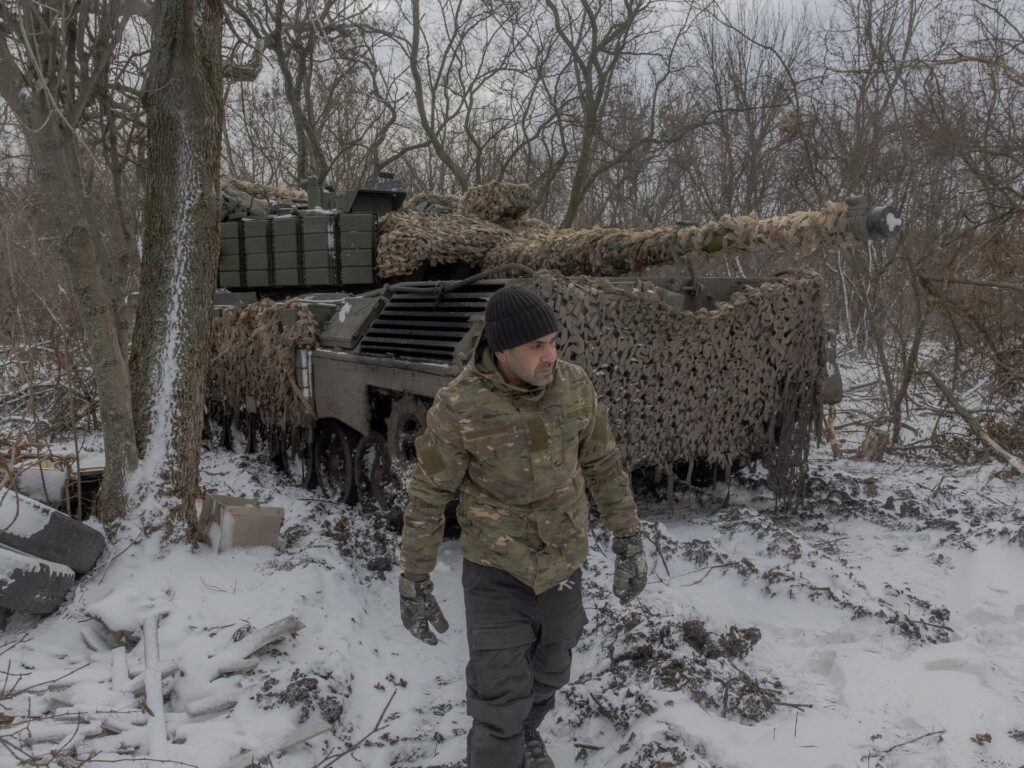
Here are the key developments on the 1,044th day of Russia’s invasion of Ukraine. Here is the situation on Friday, January 3: Fighting The Ukrainian military said it carried out a high-precision strike on a Russian command post in Maryino, in Russia’s Kursk region, where Ukrainian forces hold chunks of territory after a major cross-border incursion. Russia’s military said air defence units had downed four Ukrainian missiles in the Kursk region, and Kursk’s regional governor said strikes had damaged a high-rise apartment and other buildings. Ukraine’s military released a video on social media of what it said was damage to a Russian base in Ivanovskoye, next to Maryino, in the Kursk region. Russia’s Ministry of Defence said its air defences had downed a series of drones late on Thursday targeting regions near the Ukrainian border, including two in the Belgorod region, two in the Bryansk region and one in the Kursk region. The governor of Russia’s Oryol region said four drones had been downed in the area. Moscow also said that Russian troops had downed a Ukrainian Su-27 fighter jet, 97 drones and six United States-supplied HIMARS rocket launchers. Ukraine said its forces shot down 47 of 72 Russian drones targeting the country overnight, and another 24 drones were lost – due to electronic jamming. Ukraine has opened a criminal probe into desertion and “abuse of power” after hundreds of soldiers were reported to have fled an army unit partly trained by France. The 155th Mechanised Brigade, dubbed “Anne of Kyiv”, was one of several military groupings formed last year as Ukraine sought to boost preparations for possible new Russian offensives. A Ukrainian court has sentenced a man to 15 years in prison for passing information to Moscow that could have helped it target missile strikes. Advertisement Politics Ukraine President Volodymyr Zelenskyy said that US President-elect Donald Trump could be decisive in the outcome of the war with Russia. “He can be decisive in this war. He is capable of stopping [Russian President Vladimir] Putin or, to put it more fairly, help us stop Putin. He is able to do this,” Zelenskyy said in an interview. Economy Gas supplies in Europe remain stable, with the exception of Moldova, the European Union said after Russian gas transit via Ukraine stopped. The cut-off of Russian gas supplies to Moldova’s breakaway Transdniestria region has forced the closure of all industrial companies except food producers, Sergei Obolonik, first deputy prime minister of the region, told a local news channel. A Russian tanker accident in the Black Sea last month resulted in 2,400 tonnes of oil being spilled and not 3,000 tonnes as initially assumed, authorities in Moscow said. The accident happened in mid-December when two Russian tankers crashed in a storm in the Kerch Strait. Ukraine intends to increase exports as the country enters its fourth year of war with Russia in 2025, Zelenskyy said. The country had already succeeded in boosting exports by 15 percent in 2024, he said. Regional tension Angered by Ukraine’s stoppage of Russian gas, Slovak Prime Minister Robert Fico said he would consider the possibility of reducing support for Ukrainians in Slovakia and repeated the threat of stopping electricity deliveries to its larger neighbour. The Lithuanian government said that the recent failure of the Estlink 2 undersea cable, which has been blamed on a Russian vessel, does not affect the planned synchronisation of the Baltic states’ electricity grid with Western Europe. Finland’s national power grid operator said it had asked a Helsinki court to seize the Eagle S oil tanker in a bid to secure the company’s claim for damages related to the severing of the undersea Estlink 2 electricity interconnector. The cable between Finland and Estonia was damaged on December 25 along with four telecoms lines. Advertisement Adblock test (Why?)
Syria’s ‘Princesses of Freedom’

Khijou comes back into the living room with her laptop. “Here he is,” she says. The picture of her son, Samir, is grim. In it, he’s still alive but his limbs are skeletal. He is starving from al-Assad’s siege over Moadhamiyet al-Sham in 2013. Samir’s ribs jut out from his skin, his bony elbow bent painfully. Three days later, Syrian officers allegedly kidnapped him after Khijou sent him for medical evacuation with a United Nations convoy. He never came back. “They took him to the Air Force Intelligence branch, that’s what we were told at the time,” she recalls. Samir would be 32 years old today, Khijou says – if, by some slim chance, he managed to survive all those years of prison. Other than that, “we don’t know anything”, she says. Perhaps he went to some other prison, she figures, maybe Sednaya. She is calm and composed at this possibility, a civilian journalist simply pointing out another injustice around her, the years of heartbreak seemingly calcified into the fact of Samir’s likely death. The chance that he’s still among the survivors becomes slimmer by the day. Today, Khijou shares his picture and name on social media in the hopes that someone, somewhere, might have information. Khijou al-Khateeb’s son Samir, then 21, who she photographed in 2013, just three days before his disappearance during the siege of Moadhamiyet al-Sham [Raghed Waked/Al Jazeera] Khijou’s other son, Muhammad, who shares a name with his 22-year-old cousin, is also gone. He fled to Germany a year ago through Europe’s forests, the thought of al-Assad’s fall a distant dream. Khijou supported him in taking the journey, fearing he, too, might get arrested at a regime checkpoint someday and never return. He’s now stuck in a refugee camp, unable to work or study. In Khijou’s profile picture on WhatsApp, pictures of the two young men are copy-pasted together side by side, looking so similar – Samir’s clean-shaven portrait from before 2013 next to Muhammad’s more up-to-date beard and moustache, posing in front of a wintry skyline in Germany. It’s not clear yet what justice might look like for families like the al-Khateebs. Legal justice for Syrian prison survivors has been limited. In 2022, a German court in Koblenz convicted Anwar Raslan, former head of investigations at the notorious General Intelligence Directorate’s Branch 251 in Damascus, of crimes against humanity. He was sentenced to life in prison. That case was successful because Germany has implemented “universal jurisdiction”, meaning the country’s legal system can prosecute crimes against humanity and other serious cases no matter where the crimes happened. “So that is still an option, of course, if any perpetrators are found in a country that implements universal jurisdiction,” explains international criminal lawyer Nadine Kheshen. Inside Syria, things might be different. As of now, it’s been less than a month since the fall of the al-Assad regime, so it isn’t yet clear how the justice system could play out for prison victims and their families. “It’s still not clear how the judicial and legal system will look, at least in the transitional period,” says Obai Kurd Ali, a Syrian lawyer and specialist in international human rights law at the Tahrir Institute for Middle East Policy. “People are still trying to understand the new system.” Most important, for survivors like the al-Khateeb sisters and others, is documenting what happened to them in the hopes of future accountability, Kurd Ali says. The sisters say they are willing to speak to lawyers and hope to someday “file a lawsuit” over what happened to them in prison. Khijou says she simply isn’t ready to forgive the people who imprisoned her and her family. “As female detainees, as mothers of detainees, as wives of detainees, we have no forgiveness,” she says, matter-of-factly. Behind her is the laptop with images of her son Samir’s starved, skeletal body. His absence still stings. Khijou’s husband, named Muhammad, now suffers severe depression. “It’s been two years now that he hasn’t been able to leave the house. He sits with us at home, but quiet. Silent. He doesn’t speak,” Khijou says. The elder Muhammad is with us, apparently, in the house, as we drink our sweet tea. But he remains hidden somewhere in the freezing apartment, beyond a series of closed doors, past Mayyasa’s ring light for her makeup videos, and Khijou’s industrial sewing machine. For now, the family have their quiet anger. Adblock test (Why?)
Syria FM in Saudi Arabia on first foreign visit for new government
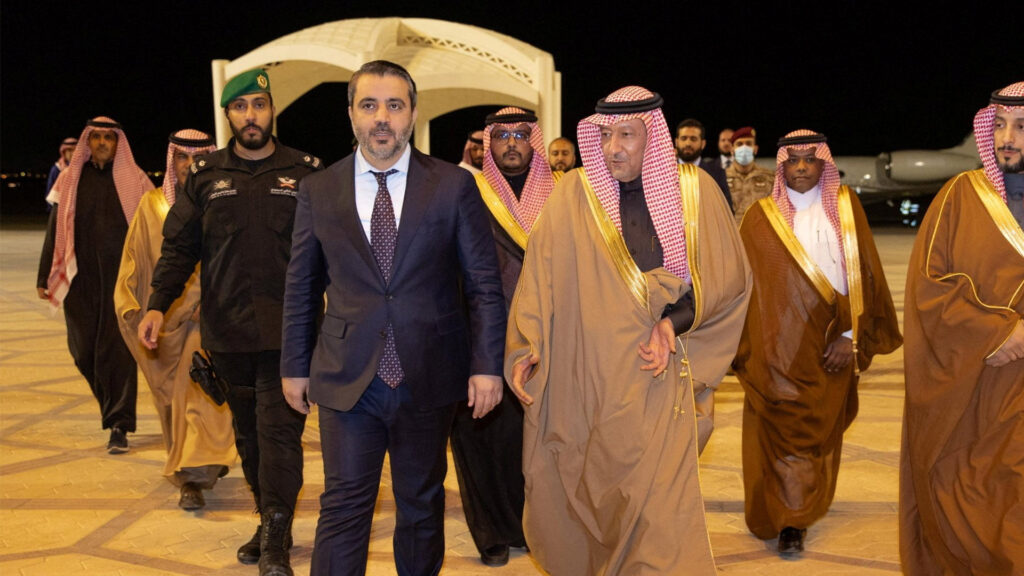
NewsFeed Syria’s top diplomat arrived in Saudi Arabia on Wednesday in the first foreign visit for Syria’s new government, less than a month after the fall of Bashar al-Assad. Published On 2 Jan 20252 Jan 2025 Adblock test (Why?)
Musk calls for jailed UK far-right activist Tommy Robinson to be released
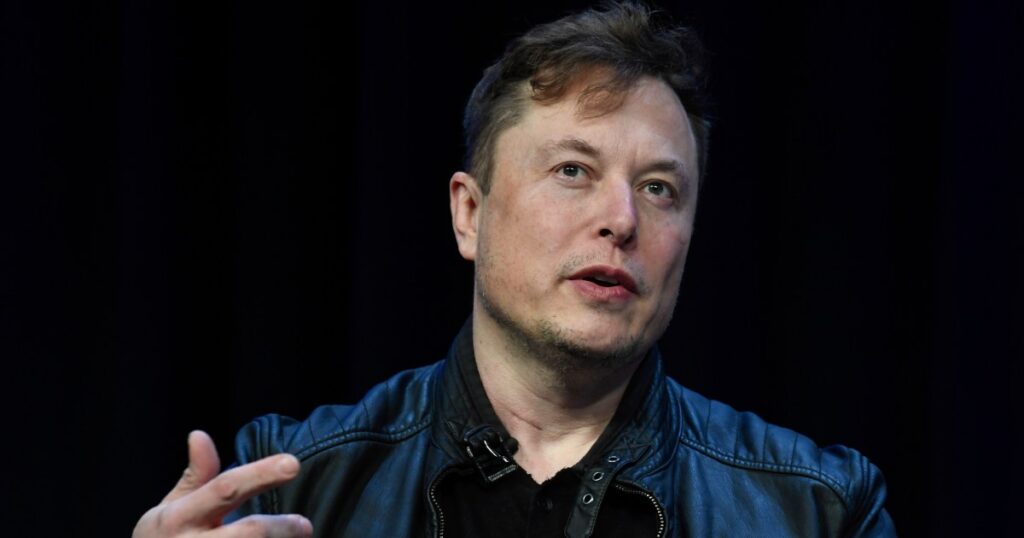
US technology billionaire says Tommy Robinson, who is serving in 18-month prison sentence, ‘should be freed’. Elon Musk has called for the jailed British far-right activist Tommy Robinson to be released and criticised UK Prime Minister Sir Kier Starmer for his response to grooming scandals when he served as the country’s chief prosecutor more than a decade ago. In a flurry of posts on social media on Thursday, the US technology billionaire said that Robinson, who founded the far-right English Defence League and whose real name is Stephen Yaxley-Lennon, “should be freed”. “Why is Tommy Robinson in a solitary confinement prison for telling the truth?” Musk wrote on X, the social media platform he owns, on Thursday. “He should be freed and those who covered up this travesty should take his place in that cell,” he wrote. Robinson, a one-time football hooligan with a string of UK criminal convictions, is serving an 18-month jail term after he admitted contempt of court in a long-running libel case involving a Syrian refugee. Musk also posted several messages about the grooming scandals which took place over decades in a number of English towns and cities including Rochdale, Rotherham and Oldham until they were uncovered more than a decade ago. Advertisement Musk shared various other accounts’ claims around the scandals and criticised Starmer’s response to the scandal. “In the UK, serious crimes such as rape require the Crown Prosecution Service’s approval for the police to charge suspects. Who was the head of the CPS when rape gangs were allowed to exploit young girls without facing justice? Keir Starmer, 2008-2013,” he posted, criticising the current British prime minister. Starmer was the head of the CPS in that period and he began a prosecution of a grooming gang in Rochdale during his final year in the role, shortly after the scandal emerged. None of the probes into the scandals singled Starmer out for blame or found that he tried to block prosecutions. In 2012, Starmer blamed the justice system’s flawed approach to sexual exploitation and ordered a comprehensive restructuring of the CPS’s responses to it. Musk’s tweets on Robinson have garnered support from far-right figures, including Dutch politician Geert Wilders, as well as some right-wing YouTube channels who also called for his release. The US tech billionaire’s latest intervention in UK politics comes after his recent declaration of support for Germany’s far-right AfD party, where he claimed that AfD is the only party which can “save” Germany as the country heads towards snap elections next month. The German government has accused him of interfering in the vote. Musk has also openly backed other far-right figures in Europe including Nigel Farage of the UK’s Reform party and Italy’s right-wing Prime Minister Giorgia Meloni. Advertisement Musk was also a prominent funder and supporter of US President-elect Donald Trump’s campaign. Last month, Trump refuted claims that he had “ceded the presidency” to Musk. Adblock test (Why?)
‘Crime against journalism’: Gaza Journalists decry PA’s Al Jazeera ban
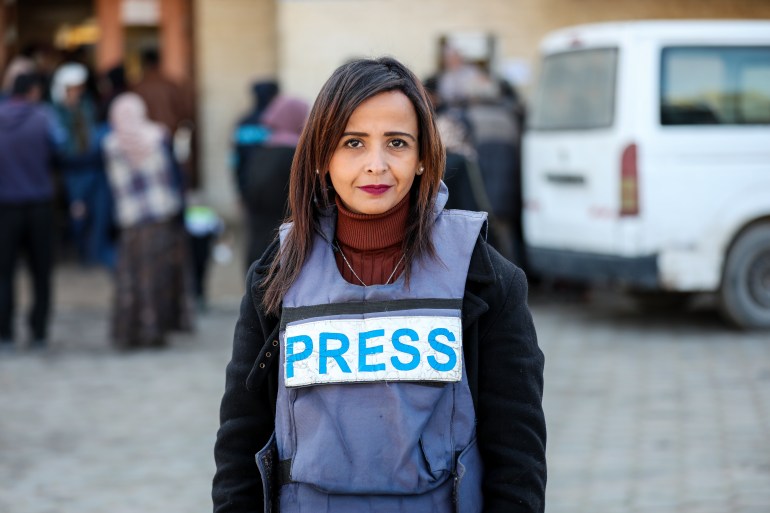
Deir el-Balah, Gaza – Journalists gathered at Gaza’s Al-Aqsa Martyrs’ Hospital expressed outrage and confusion about the Palestinian Authority’s (PA) decision to shut down Al Jazeera’s office in the occupied West Bank. “Shutting down a major outlet like Al Jazeera is a crime against journalism,” said freelance journalist Ikhlas al-Qarnawi. “Al Jazeera coverage has documented Israeli crimes against Palestinians, especially during the ongoing genocide,” the 28-year-old journalist told Al Jazeera at the hospital, the most reliable internet connection in the Strip to file stories from. On Wednesday, the PA temporarily suspended Al Jazeera in the occupied West Bank for what they described as broadcasting “inciting material and reports that were deceiving and stirring strife” in the country. The decision came after Fatah, the Palestinian faction which dominates the PA, banned Al Jazeera from reporting from the governorates of Jenin, Tubas and Qalqilya in the occupied West Bank, citing its coverage of clashes between the Palestinian security forces and Palestinian armed groups in the area. Advertisement Al Jazeera criticised the PA ban, saying the move is “in line with the [Israeli] occupation’s actions against its staff”. ‘Obscuring the truth’ Since the beginning of the war, about 150 journalists have been working from the journalists’ tents at Al-Aqsa Martyrs’ Hospital, for 20 local, international and Arab media outlets. Journalists, including those from Al Jazeera, have been forced to work from hospitals after their headquarters and media offices were destroyed. Wafa Hajjaj believes the PA’s move against Al Jazeera ‘worsens the situation’ [Abdelhakim Abu Riash/Al Jazeera] Al-Aqsa TV correspondent Mohammed Issa said from the hospital that the PA’s ban contradicts international laws that guarantee journalistic freedom and could further endanger journalists. “The PA’s decision obscures the truth and undermines the Palestinian narrative, especially a leading network like Al Jazeera,” Issa said, adding that the ban reinforces Israel’s narrative that “justifies the targeting of Palestinian journalists”. “All media workers in Gaza reject this decision that silences the largest Arab and global outlet during critical times in years.” Wafaa Hajjaj, an independent journalist working with TRT and Sahat, said the ban made her both “sad” and “disappointed”. “At a time when Israel is deliberately targeting and killing … journalists in Gaza, with our Jazeera colleagues at the forefront, with no international or institutional protection, the PA’s move in the West Bank comes to worsen the situation,” Hajjaj said as she and her team walked into the hospital to interview the wounded. Advertisement Israel has killed at least 217 journalists and media workers in Gaza since the beginning of its war on Gaza on October 7, 2023. Four of them were Al Jazeera journalists: Samer Abudaqa, Hamza al-Dahdouh, Ismail al-Ghoul and Ahmed al-Louh. ‘Trust Al Jazeera will persist’ Although frustrated, Hajjaj told Al Jazeera that she is hopeful the PA will drop its ban “as soon as possible”. “I trust Al Jazeera will persist despite all sanctions, as it has for years.” Yousef Hassouna, a photojournalist with 22 years of experience, also criticised the shutting of Al Jazeera along with “any other media outlet” targeted by such bans. “This is a violation against all of us Palestinian journalists,” he said, adding that Al Jazeera is “an essential platform” covering Israel’s war on Gaza. “Now more than ever, we Palestinian journalists need international support and protection, not limitations or restrictions,” Hassouna said. Freelance journalist said the closure of Al Jazeera is a ‘crime against journalism’ Ikhlas al-Qirnawi [Abdelhakim Abu Riash/Al Jazeera] ‘Critical mistakes’ Ismail al-Thawabtah, spokesperson for the government media bureau in Gaza, said the Palestinian Authority had committed two serious mistakes over the past few weeks. “The first: the attack on Jenin and the resulting military confrontation with our honourable Palestinian people and the resistance forces, and the second: the closure of the Al Jazeera office,” he said, adding that the move represents “serious violations of freedom of the press”. Advertisement Al-Thawabtah said both incidents required the PA to conduct a comprehensive review of policies and positions in line with supreme national interests and respect for the rights of our Palestinian people and their basic freedoms. As for the journalists gathered at Al-Aqsa Martyrs’ Hospital, they were united in their call to end the ban. “We as journalists are completely against it. I hope that action will be taken to stop this decision immediately.” said the freelance journalist al-Qarnawi, adding that the ban hurts more than just journalists. “Our Palestinian people are the biggest losers.” Adblock test (Why?)