

Russia-Ukraine war: List of key events, day 1,038
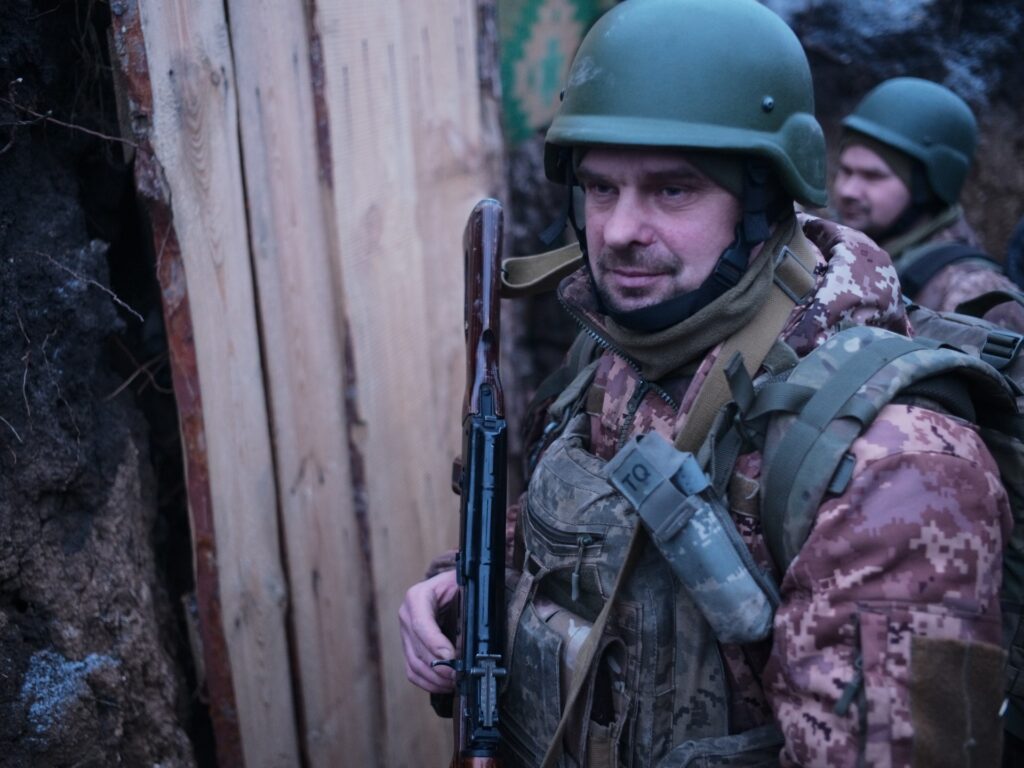
Here are the key developments on the 1,038th day of Russia’s invasion of Ukraine. Here is the situation on Saturday, December 28: Fighting: Russia’s Federal Security Service (FSB) said on Saturday it had foiled a plot by Ukrainian intelligence services to kill a high-ranking Russian officer and a war blogger, the Interfax news agency reported. Ukrainian forces have killed or wounded more than 1,000 North Korean soldiers Russia has sent to fight them, according to Ukraine and South Korea. “Their losses are significant, very significant. We see that neither the Russian military nor their North Korean overseers have any interest in ensuring the survival of these North Koreans,” Ukrainian President Volodymyr Zelenskyy said in his nightly address on Friday. United States National Security Council spokesperson John Kirby, meanwhile, said a “human wave” of North Korean troops was being sent to their deaths in “hopeless” attacks by generals who saw them as expendable. Russia’s Ministry of Defence said on Friday that its forces had taken control of two eastern Ukrainian villages, Ivanivka in the Donetsk region and Zahryzove in the Kharkiv region, the RIA state news agency reported. RIA also cited the ministry as claiming it had downed four British-made Storm Shadow missiles in the past week. A North Korean soldier, who was fighting for Russia, has died in Ukrainian captivity due to severe wounds, according to South Korea’s spy agency. Ukrainian air defence shot down 13 out of 24 Russian drones launched in an overnight attack, the air force said on Friday. The air force said the other 11 Russian drones were “lost” without causing damage. Advertisement Deals and diplomacy: The administration of US President Joe Biden pledged to approve fresh military aid to Ukraine, including air defence systems. Kirby said the US security assistance package was expected to be announced “in the next couple of days”. “If someone wants to organise peace talks in Slovakia, we will be ready and hospitable,” said Slovak Prime Minister Robert Fico in a post on Facebook late on Friday. His remarks come after Russian President Vladimir Putin said on Thursday that he was open to a Slovakian proposal to host peace talks with Ukraine. Ukraine received its first batch of liquefied natural gas from the US, a deal that Kyiv says is key to boost Ukrainian and European energy security as a major gas transit deal with Russia ends. “Dtek, Ukraine’s largest private energy company, has today taken delivery of its first cargo of liquefied natural gas (LNG) from the United States,” the company said on Friday. Dissent: A Russian court sentenced Eduard Sharlot, 26, a singer who burned his passport in protest against Russia’s Ukraine war, to five and a half years in prison, according to Russian news agencies. Sharlot was found guilty of “publicly insulting” the religious feelings of believers and “rehabilitating Nazism” by a court in the Volga city of Samara in a case over videos he published online, the state news agency RIA Novosti reported. Adblock test (Why?)
Leaving X: The right move or a leap into the unknown?

Recent decisions by major news outlets like The Guardian and La Vanguardia and more niche publications such as Sex Tech Guide to leave X put under the spotlight a new dilemma experienced by global media: Should they stay on a popular platform that has become a primary source of fake news and hate speech to maintain relevance, or should they leave to uphold ethical responsibilities? Once the go-to place for any and all global discourse, X (formerly Twitter) has seen its reputation turn to rubbish under South African multibillionaire and self-declared free-speech absolutist Elon Musk. The ethical decline of X has gained momentum in the run-up to the 2024 US presidential election, as Musk made his political alignment with Donald Trump and his Make America Great Again movement clear, turning the platform into a megaphone for hate, racism and xenophobia. As neo-Nazi, white-nationalist accounts started to gain prominence, and racist pile-ons, doxxing and other abuse became a daily occurrence on the platform, several media outlets – but also millions of everyday users – made the decision to leave X for good. For them, leaving X clearly represented a moral stand against racism and hate, and the misappropriation of a platform that was once accepted widely as the global public square. But is media organisations migrating to alternatives, like Bluesky, a genuine solution, or does it risk creating new problems, such as ideological bubbles, financial losses, and diminished influence? Advertisement For many, remaining on X feels like tacit approval of the direction the platform took under Musk. For some news outlets, especially those whose corporate identity of progressive values take pride in their journalistic ethics, perceived association with the controversy-ridden platform of a far-right Trump surrogate is obviously unacceptable. However, X’s vast audience – still unrivalled by any other similar social media platform – remains an undeniable asset. The platform’s global reach and its ability to amplify messages cannot be ignored. Leaving it entirely may mean severing ties with a massive, global audience still relying on the platform for news, potentially leaving a vacuum that would be happily filled by less credible voices – or outright fake news machines. For those outlets fleeing X, Bluesky has emerged as an attractive alternative. A decentralised platform, it offers an environment where hate speech and misinformation are less prevalent. Its structure promises healthier, more values-aligned discourse. The point of Bluesky is not that it is free of disinformation, hate speech and fake news, but that its operation naturally reduces the reach of such content instead of promoting it – and that it offers additional tools to users to better control the information and content they consume. But Bluesky is not without flaws. Its user base is much smaller and its geographical reach much more moderate than X. Meanwhile, its design, critics say, risks creating ideological echo chambers: If Bluesky becomes a refuge primarily for liberal-leaning users and journalists, it could perpetuate the same insular dynamics critics say plague other alternative platforms. Advertisement The argument, however, falls apart when one considers the alternative X offers to Bluesky’s supposed ideological bubbles: social media that is open to all ideologies, but is driven by hate. As journalist and professor Marcelo Soares wrote, X “is not a public square, it’s a shopping centre. There are no debates in a shopping centre.” Unlike X, which thrives on conflict to drive engagement, Bluesky lets users take control of their experience, and select what goes on their own feeds without algorithmic manipulation. If someone chooses a bubble, it’s a personal choice, not a structural imposition. Meanwhile, X’s so-called alternative to bubbles replaces connection with hostility, turning the platform into a battlefield rather than a space for dialogue. There are other arguments against a collective move by media from X to Bluesky. As journalist Sophia Smith Galer observed on LinkedIn, Bluesky is a platform designed to cater to journalists rather than their audiences. It recalls an earlier era when journalists dominated Twitter’s ecosystem, engaging primarily with one another. This dynamic, while comfortable for those in the media, might not translate to meaningful audience engagement in a world where users are moving towards video-driven platforms like TikTok, YouTube, and Instagram. So opening up an account on Bluesky, where they could interact with like-minded colleagues directly, without facing much abuse from neo-Nazis and conspiracy theorists, would undoubtedly be a positive for journalists. Yet, does it offer a clear alternative to X for the organisations that want and need to share their content with wider and ever more diverse audiences? X, tragically, remains the only platform where media outlets can reach a vast – if not the best-behaved and receptive – global audience. Advertisement Leaving X also has practical, monetary implications for media organisations. Musk’s platform is still a major advertising revenue generator. X’s vast reach and user base make it a critical platform for driving traffic to news sites and attracting advertisers. Abandoning it risks shrinking audience engagement, which could affect revenue streams. Bluesky, Threads, and other alternative platforms are still in their infancy. Their smaller audiences and limited advertising opportunities make them less viable for organisations that rely on scale to sustain their operations. Media outlets must navigate this trade-off carefully: prioritising ethics while finding ways to maintain financial viability. Luckily for ethically concerned but cash-poor media outlets – and the entire humanity – Musk’s behaviour on X, and on the global political stage, is driving a lot of people away from X. Many of these people are finding refuge on Bluesky, meaning one day this new platform may actually become as profitable and useful as X for media organisations. Once the migration out of X is complete, and everyone who has an objection to the passing of disinformation, propaganda and hate as “news” has left the platform, serious media organisations would have no reason to remain there either. The exodus from X represents more than just a shift in social media strategy — it’s a reflection of the broader challenges facing journalism
What are the implications of the latest Israeli attacks on Yemen?
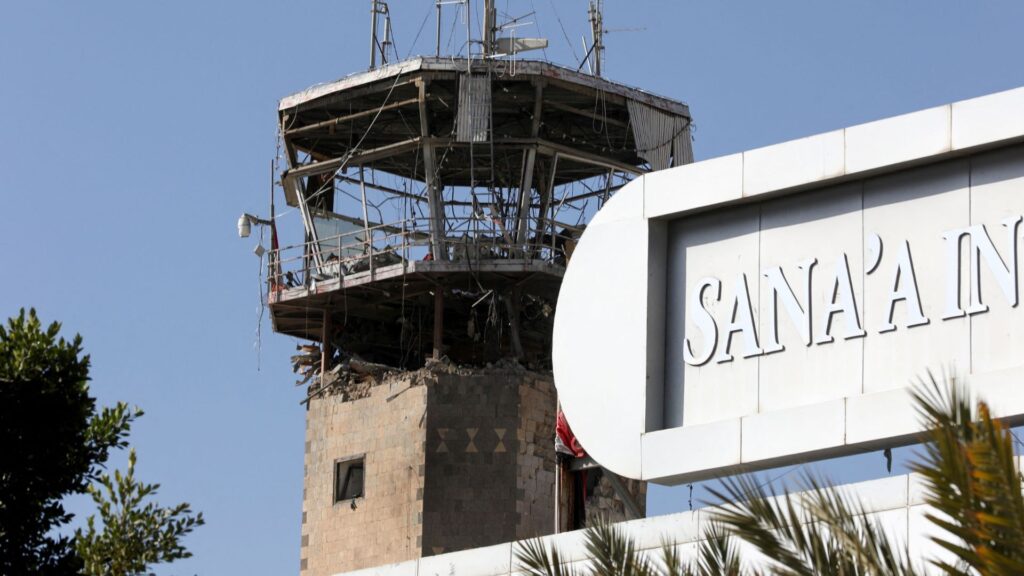
More targets bombed in Yemen; another missile fired at Tel Aviv. Israel bombed Yemen yet again, hitting the main airport and port city. Israeli Prime Minister Benjamin Netanyahu warned there is more to come. In response, another Houthi missile was fired at Tel Aviv. So, how dangerous are these escalating hostilities? Presenter: James Bays Guests: Mustapha Noman – Former Yemeni deputy foreign minister Yossi Beilin – Former Israeli cabinet minister Elijah Magnier – Military and political analyst and Middle East specialist Hussain al-Bukhaiti – Pro-Houthi journalist and political commentator Adblock test (Why?)
NASA probe makes history with closest-ever approach to the Sun
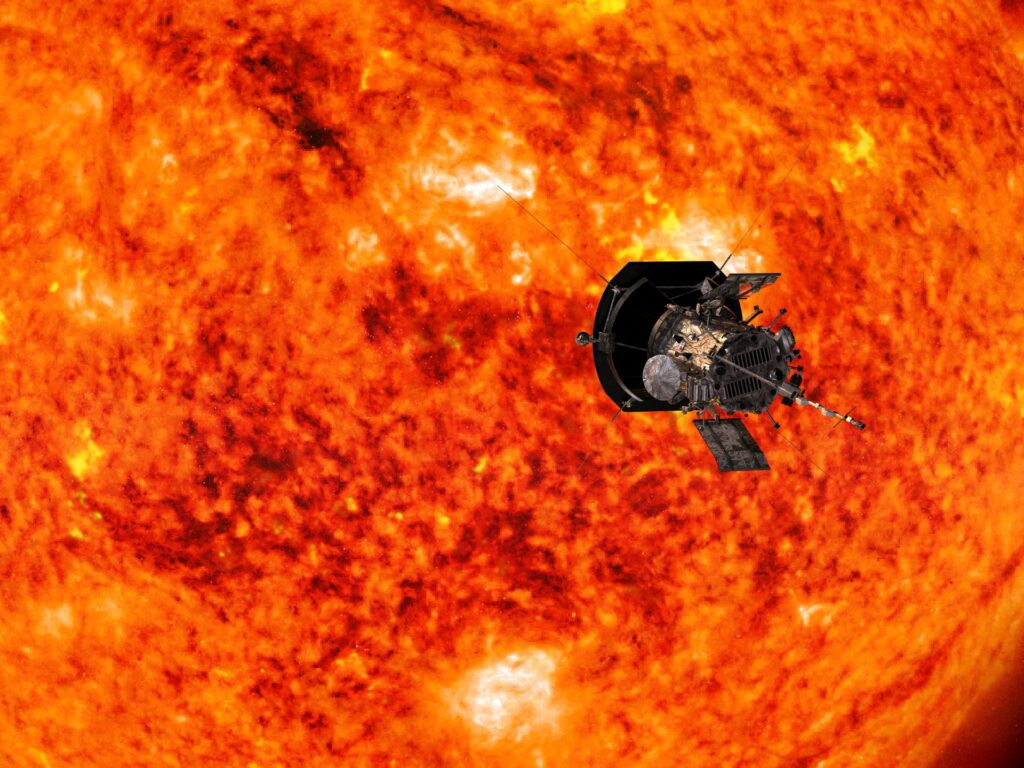
Parker Solar Probe is operating normally after passing just 6.1 million kilometres above the Sun’s surface, NASA says. The United States space agency has confirmed its Parker Solar Probe is safe after making the closest approach to the Sun ever recorded by a human-made object. The probe passed just 6.1 million kilometres (3.8 million miles) above the Sun’s surface on December 24, the National Aeronautics and Space Administration (NASA) said early on Friday. It flew into the Sun’s outer atmosphere — known as the corona — “at a blazing 430,000 miles per hour [692km/h] — faster than any human-made object has ever moved”, the agency reported. NASA said its team had received a beacon signal late on Thursday, confirming that the probe had made its approach successfully and was operating normally. “Flying this close to the Sun is a historic moment in humanity’s first mission to a star,” Nicky Fox, head of the Science Mission Directorate at NASA headquarters in Washington, DC, said in a statement. Parker Solar Probe has made history. After seven days of silence, Parker has resumed communication with Earth, confirming it’s healthy after soaring just 3.8 million miles from the solar surface — the closest a human-made object has ever been to a star.https://t.co/YgLBDsRlGy pic.twitter.com/UMCNq0BzhA — NASA Sun & Space (@NASASun) December 27, 2024 Advertisement Scientists are hoping that the probe, which was launched in 2018, will help them learn more about Earth’s closest star. “By studying the Sun up close, we can better understand its impacts throughout our solar system, including on the technology we use daily on Earth and in space, as well as learn about the workings of stars across the universe to aid in our search for habitable worlds beyond our home planet,” Fox said. The craft is equipped with a shield that protects it from extreme heat in the Sun’s corona and can withstand temperatures as high as 1,400 degrees Celsius (2,600 degrees Fahrenheit), NASA has explained. With its close brush complete, the Parker Solar Probe is expected to circle the Sun at this distance through at least September. The craft is expected to send detailed telemetry data about its status on January 1, NASA said. Amitabha Ghosh, a NASA scientist, said experts still do not know so much about the Sun despite its monumental importance for life on Earth. “If the Sun was to stop shining even for a day, all life on Earth would be destroyed. We are so very dependent on the Sun and yet we know so very little,” Ghosh told Al Jazeera. He said the information that may be gleaned from the Parker Solar Probe could answer a series of important questions, including how the Sun heats up, how it transmits that heat, and what makes up what’s known as solar wind. “These are very important scientific questions to understand,” Ghosh said. Parker Solar Probe has phoned home! After passing just 3.8 million miles from the solar surface on Dec. 24 — the closest solar flyby in history — we have received Parker Solar Probe’s beacon tone confirming the spacecraft is safe. https://t.co/zbWT7iDVtP — NASA Sun & Space (@NASASun) December 27, 2024 Advertisement Adblock test (Why?)
What climate records were broken in 2024?
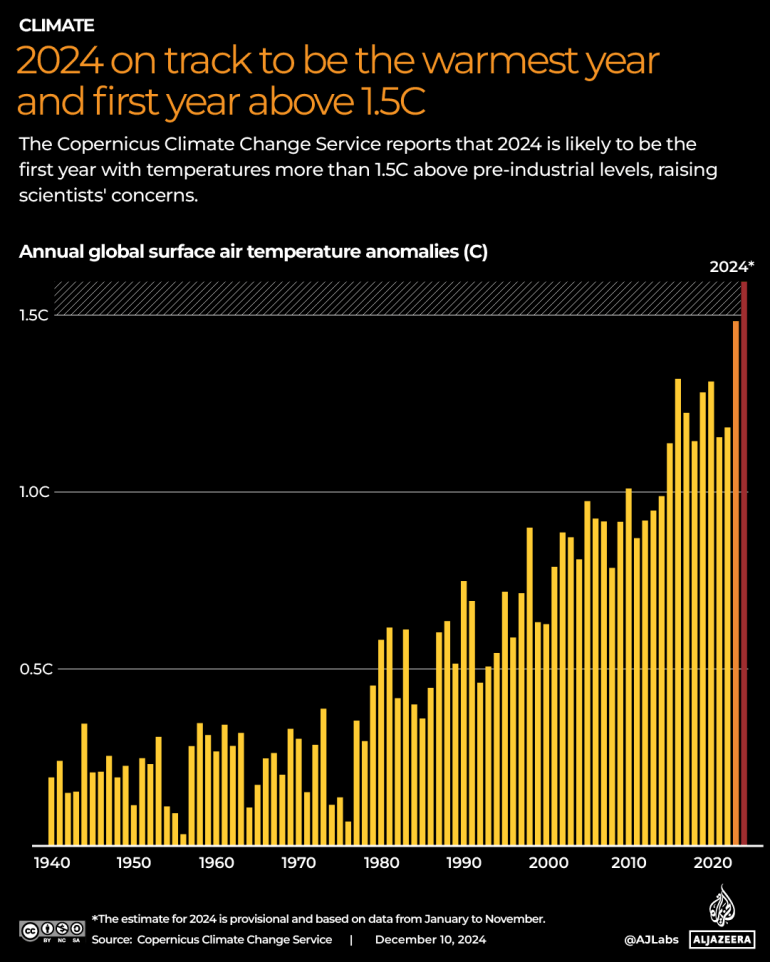
This year, 2024, is set to become the hottest on record, surpassing the previous high in 2023, according to the European Union’s Copernicus Climate Change Service (C3S). For the first time, average global temperatures will exceed 1.5C (2.7F) above pre-industrial levels from 1850-1900, the upper limit set by the Paris Agreement. The agreement aimed to have countries work towards reducing global greenhouse gas emissions, with a goal of limiting the global average surface temperature increase to 1.5C above pre-industrial levels and striving to keep it well below 2C. “This does not mean that the Paris Agreement has been breached, but it does mean ambitious climate action is more urgent than ever,” said Samantha Burgess, deputy director of C3S. Rising temperatures have already triggered extreme weather events across the globe in 2024, including deadly floods in Nigeria and Europe, devastating wildfires in South America, early heatwaves and catastrophic hurricanes in the United States. Left to right: Floods in Nigeria [AFP], wildfires in Brazil [AP], the aftermath of a hurricane in Barbados [AP] JANUARY The year began with a fiery start as the world experienced the warmest January on record, with an average surface air temperature of 13.14˚C. This is 0.12˚C above the previous temperature record for the warmest January, which was set in 2020. January 2024 marked the eighth consecutive month in a row that was the warmest on record for the respective month of the year – a streak that began in June 2023 and ended in June 2024. (Al Jazeera) FEBRUARY In February, the Northern Hemisphere concluded its warmest winter on record, while ocean temperatures soared to unprecedented levels. The average global sea surface temperature reached 21.09C (69.8F), surpassing the previous record of 20.98C (69.77F) set in August 2023. (Al Jazeera) While this increase is partly attributed to the El Nino climate pattern, which causes unusually warm waters in the eastern Pacific, its reach is broader. “What is more surprising is that sea surface temperatures are at record levels in regions far from El Nino’s centre, such as the tropical Atlantic and Indian Ocean,” noted Richard Allan, a climate scientist at the University of Reading, emphasising the profound impact of rising greenhouse gas emissions on global warming. JUNE As sea temperatures increase, evaporation speeds up, transferring more heat from the oceans to the air. When storms move over warm oceans, they absorb more water vapour and heat. This leads to stronger winds, heavier rainfall and greater flooding when the storms reach land. This was seen when the Atlantic entered its hurricane season in June. Hurricane Beryl, the season’s first hurricane, was the earliest Category 5 on record in the Atlantic, according to the United Nations’ World Meteorological Organization. Category 5 hurricanes cause catastrophic damage with winds of 157mph (252km/h) or higher. Beryl formed in the Atlantic Ocean on June 28 and rapidly intensified into a major hurricane. Between June 29 and the morning of June 30, its winds surged by 65 miles per hour, reaching “extremely dangerous” Category 4 status. Adblock test (Why?)
Unlikely political ‘Thor’ emerges from South Korea’s martial law crisis

Seoul – South Korea’s National Assembly Speaker Woo Won-shik has emerged as an unlikely symbol of leadership during the country’s ongoing political turmoil, triggered by President Yoon Suk-yeol’s brief declaration of martial law on December 3. Despite holding South Korea’s second-highest office after the presidency, the assembly’s speaker has historically had a low-profile role, operating behind the scenes of political life. Unlike the Speaker of the United States House of Representatives, who drives Washington’s legislative agenda as the leader of the majority party, South Korea’s parliamentary speaker is required by law to renounce party affiliation upon election to maintain neutrality. The majority of speakers also retire after their term. But Woo’s decisive yet measured actions throughout the recent crisis appear to have upended the traditional view of the speaker and their role. “Seeing someone like him step up and act decisively in such a critical moment was refreshing,” Yoo Junghoon, a lawyer and political columnist, told Al Jazeera. Advertisement “It allowed voters – both young and old – to realise that such capable politicians still exist,” Yoo said. South Korean youth even gave Woo the nickname “National Assembly Thor” — a nod to his gavel of office and the Marvel superhero’s wielding of his mighty hammer. A recent Gallup Korea poll showed that 56 percent of respondents expressed trust in Woo, an unusual figure in a country where trust in the National Assembly has fallen to just 20.6 percent, according to an OECD survey 2024. Student protester to ‘Thor’ of constitutional procedure As a young student activist, Woo was imprisoned for three years after protesting against the military dictatorship that expanded martial law in 1980, following the assassination of President Park Chung-hee in 1979. The crackdown culminated in the deadly Gwangju Uprising of May 1980. After President Yoon declared martial law on the night of December 3, the 67-year-old Woo scaled the National Assembly fence after police barricaded the entrance to try and prevent lawmakers from entering and holding a vote to overturn the president’s order. “I knew we had the constitutional authority to lift martial law,” Woo recalled later in a news conference. “I didn’t hesitate. I had to get inside the assembly, no matter what,” he said. National Assembly Speaker Woo Won-shik during a news conference at the National Assembly in Seoul, South Korea, on December 19, 2024 [Kim Hong-Ji/Reuters] Even as South Korean special forces soldiers advanced on the assembly building, Woo insisted on following the correct legislative procedures despite mounting pressure from anxious politicians urging him to speed up the process by possibly cutting a few corners. Advertisement “In moments like this, following the correct procedure without error is even more vital,” Woo told his worried colleagues in the surrounding assembly chamber. At one point, troops came dangerously close to entering the main chamber where lawmakers were voting, prompting a tense standoff with assembly staff. The crucial vote proceeded, with all of the 190 lawmakers present – of the 300-seat Assembly – voting in favour of repealing martial law. A military helicopter flies around the National Assembly in Seoul after South Korean President Yoon Suk-yeol declared martial law on December 3, 2024 [Yonhap via Reuters] “There were many reactions on social media questioning why [Woo] was so fixated on following legislative procedures,” Yoo, the political columnist said. “But now, even those opposing impeachment [against President Yoon] can’t find fault with the process he upheld,” Yoo said. Bong Young-shik, a research fellow at Yonsei University’s Institute for North Korean Studies, attributed the peaceful resolution of the chaotic situation, without civilian casualties, to Woo’s emphasis on adhering diligently to constitutional procedures. “In such an unexpected and grave situation, both conservatives and progressives found Woo trustworthy,” Bong said. “We saw that this approach worked exactly as intended,” he said. ‘South Korea is strong. Its people are resilient’ Woo also adhered to strict constitutional procedures during the first, failed impeachment vote against President Yoon, on December 7, for declaring martial law and plunging the country into crisis. Advertisement With Yoon’s governing party boycotting the vote to block the impeachment attempt, Woo kept the legislative session open for hours, an unusual move, urging politicians to return and fulfil their constitutional duty to cast a vote. Two governing party lawmakers did return to the chamber to cast their ballots. Woo only closed the session at about 9:20pm, explaining that he could no longer let the protesters, who had gathered outside the assembly in freezing weather to demand Yoon’s impeachment, wait indefinitely for a result. After the successful, second impeachment vote held a week later, Woo called for a return to normalcy in all aspects of life in South Korea and for the public to move forward together. “I hope your year-end is a bit happier,” Woo said at the time, encouraging South Koreans to resume Christmas holiday celebrations and gatherings, mindful of the toll the turmoil had taken on struggling small businesses at a key time of year. “His words conveyed meaning instantly,” said Yoo, the political columnist. Woo has acknowledged his rising public profile and newfound popularity, but with rare humility. “I heard young people call me the ‘National Assembly Thor’. I find it amusing,” he said during a recent news conference. He attributed the newfound public attention on the speaker’s role in politics not to himself personally, but to the collective efforts of the assembly’s lawmakers, staff, as well as engaged citizens. Asked about his own future ambitions, including a potential presidential bid, Woo dismissed the idea. Advertisement Instead, he emphasised the need for constitutional reform to address the recurring instability that has plagued South Korea’s presidencies since its transition to democracy in 1987. People celebrate after the South Korean parliament passed a second impeachment motion against President Yoon Suk-yeol over his martial law decree, on December 14, 2024 [Kim Hong-Ji/Reuters] “Our current constitution, drafted in 1987, is outdated,” he said, adding that it needed “reforms that reflect the societal changes of the past four decades”. Woo also had
South Korea’s acting president faces impeachment vote as currency plunges
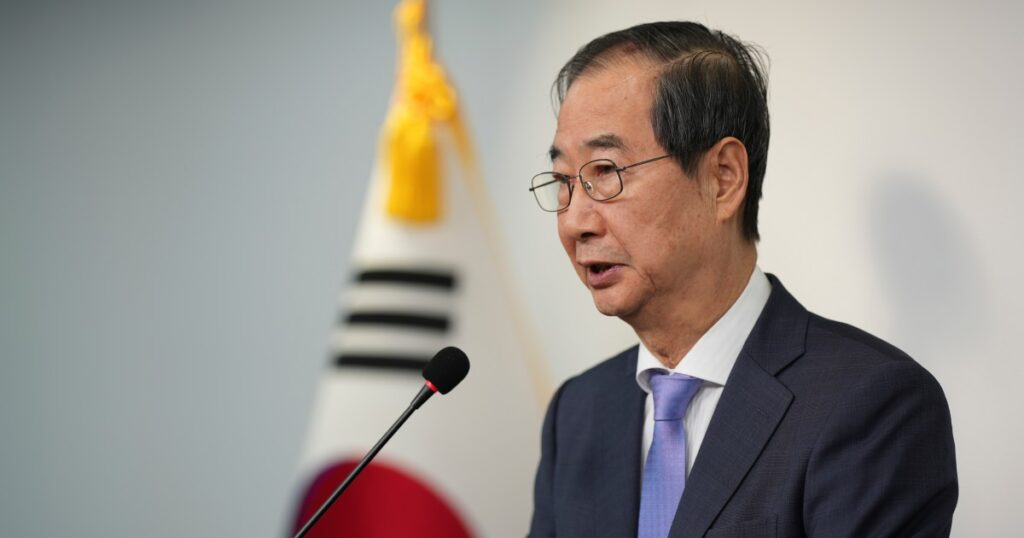
Main opposition Democratic Party’s bid to suspend acting leader Han Duck-soo plunges country into further uncertainty. South Korea’s legislature is set to vote on the impeachment of its acting president as ongoing turmoil in Asia’s fourth-largest economy sent the won plunging to levels not seen since the 2007-2009 global financial crisis. The main opposition Democratic Party (DP) is pushing to impeach Han Duck-soo, the prime minister, in a vote at the National Assembly on Friday after accusing the acting president of being complicit in an attempted insurrection by suspended President Yoon Suk-yeol. The DP, which holds 170 seats in the 300-member legislature, submitted the impeachment motion on Thursday after Han refused to fill three judicial vacancies on the court set to adjudicate Yoon’s impeachment trial following his short-lived declaration of martial law. Han’s People Power Party (PPP) has argued that only the elected president has the authority to appoint justices to the Constitutional Court. At least six judges on the court must uphold Yoon’s impeachment to remove him from office. The court currently only has six justices following the retirement of three judges earlier this year, meaning that the bench would have to deliver a unanimous ruling to strip Yoon of the presidency. Advertisement The court is set to hold its first hearing on Yoon’s impeachment on Friday and could take up to six months to deliver its ruling. Yoon, who has defended his martial law declaration as legal and aimed at tackling “anti-state forces”, is also under criminal investigation on suspicion of insurrection and abuse of power. The bid to impeach Han, less than two weeks after he took up his role following Yoon’s impeachment, plunges South Korea into further political uncertainty as the country is still reeling from Yoon’s martial law decree on December 4. While a two-thirds majority of the National Assembly is required to impeach a sitting president, there is no consensus on whether the same threshold applies to an acting leader. The PPP has argued that two-thirds of lawmakers must approve Han’s impeachment. DP contends that he can be suspended if 151 lawmakers back impeachment since the constitution provides for the removal of Cabinet members by a simple majority vote. With the DP, minor opposition parties and independents holding 192 seats, at least eight PPP lawmakers would need to cross the aisle to reach the two-thirds threshold. If Han is impeached, Deputy Prime Minister and Finance Minister Choi Sang-mok will assume presidential duties. Choi on Friday warned that impeaching Han would deal a serious blow to the country’s economic standing and urged the opposition to reconsider its bid. “The economy and the people’s livelihoods are walking on thin ice under a national state of emergency, and it cannot cope with any greater political uncertainty that will result from another acting president assuming the acting presidency,” Choi said. Advertisement The South Korean won fell sharply against the US dollar on Friday, falling below 1,480 won for the first time since March 2009. Adblock test (Why?)
Record number of migrants died in attempt to reach Spain this year
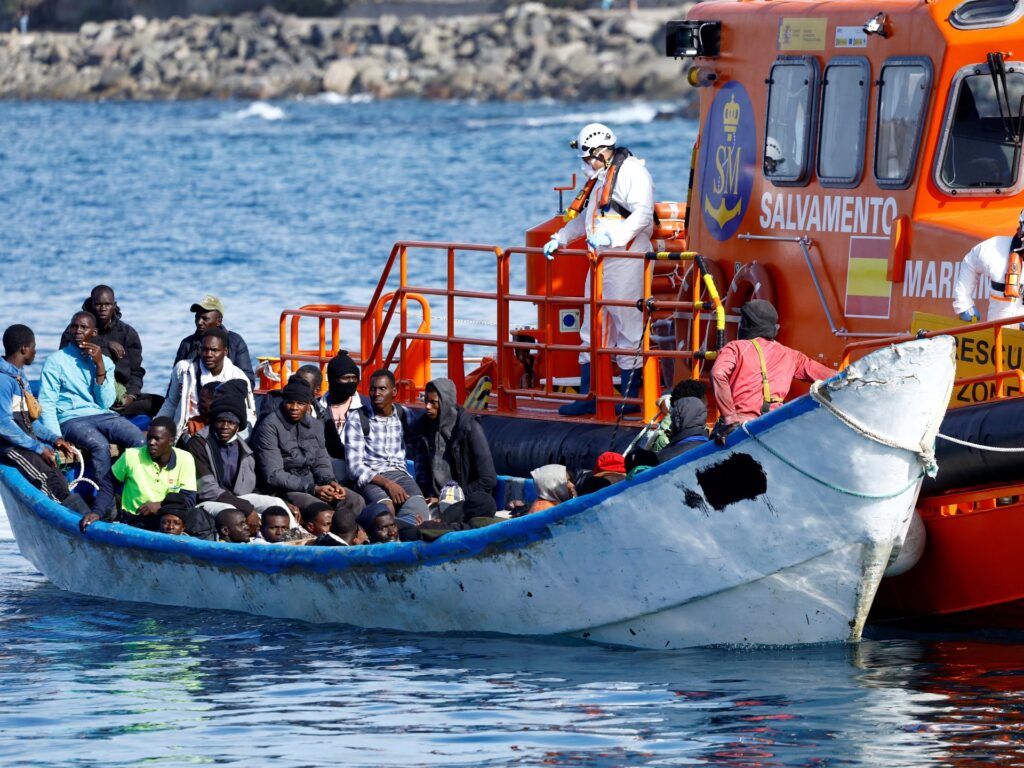
More than 10,000 migrants perished – an average of 30 a day – in 2024 while trying to reach Spain, NGO says in new report. More than 10,000 migrants died while trying to reach Spain by sea this year, a report released by a Spanish migration rights group has revealed, the most since it began keeping a tally in 2007. On average, that means 30 migrants died every day this year attempting to reach the country by boat, the NGO Caminando Fronteras (Walking Borders) said on Thursday. Overall deaths rose by 58 percent compared with last year, the report added. Tens of thousands of migrants left West Africa in 2024 for the Canary Islands, a Spanish archipelago close to the African coast that has increasingly been used as a stepping stone to continental Europe. Caminando Fronteras said most of the 10,457 deaths recorded up until December 15 took place along that crossing, the so-called Atlantic route – considered one of the world’s most dangerous. The organisation compiles its figures from families of migrants and official statistics of those rescued. It included 1,538 children and 421 women among the dead. April and May were the deadliest months, the report said. Advertisement It blamed the use of flimsy boats and increasingly dangerous routes as well as the insufficient capacity of maritime rescue services for the surge in deaths. “These figures are evidence of a profound failure of rescue and protection systems. More than 10,400 people dead or missing in a single year is an unacceptable tragedy,” the group’s founder, Helena Maleno, said in a statement. The victims were from 28 nations, mostly in Africa, but also from Iraq and Pakistan. Many migrants, including women, also experience “violence, discrimination, racism, deportations and sexual violence, being forced to survive in extreme conditions” before departing, the report said. Caminando Fronteras also noted a “sharp increase” in 2024 in boats leaving from Mauritania, which it said became the main departure point en route to the Canary Islands. Seven migrant boats landed in the archipelago on Wednesday, Christmas Day, Spain’s maritime rescue service said on social media site X. In February, Spain pledged 210 million euros ($218m) in aid to Mauritania to help it crack down on human smugglers and prevent boats from taking off. At their closest point, the Canaries lie 100km (62 miles) off the coast of North Africa. The shortest route is between the coastal town of Tarfaya in southern Morocco and the island of Fuerteventura in the Canaries. But the Atlantic route to the Canary Islands is particularly dangerous because of strong currents. Along with Italy and Greece, Spain is one of the three main European gateways for migrant arrivals. Advertisement Spain’s Ministry of Interior says more than 57,700 migrants reached Spain by boat until December 15 this year, a roughly 12 percent increase from the same period last year. The majority of them came through the Atlantic route. Adblock test (Why?)
Sudan’s war came to represent the worst of humanity
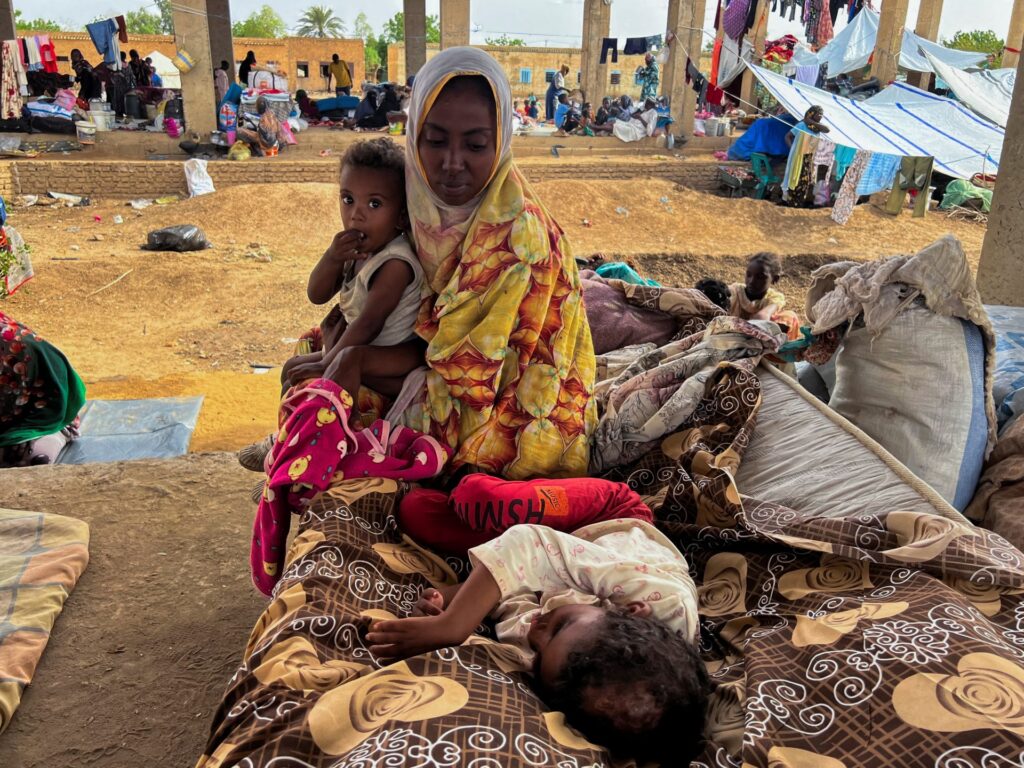
In Sudan, 20 months of armed conflict between the paramilitary Rapid Support Forces (RSF) and the Sudanese army (SAF) have killed at least 20,000 people and left some 25 million – half of the country’s population – suffering from severe hunger and in urgent need of humanitarian aid. Meanwhile, 14 million Sudanese have been displaced, with about 3.1 million seeking refuge outside the country, mainly in Chad, South Sudan, Uganda, and Egypt. As is often the case, children are bearing the brunt of this brutal war. According to medical organisation Doctors Without Borders, known by its French initials MSF, approximately one in six of those treated at the Bashair Teaching Hospital in South Khartoum for war-related injuries, such as gunshot, shrapnel and blast wounds, between January and September 2024 were aged 15 or below. The medical team revealed that they recently treated an 18-month-old baby, Riyad, who was hit by a stray bullet while napping in his family’s home. They said they managed to stabilise him but were unable to remove the bullet from his chest. Amid ongoing conflict and limited access to medical care, the future of Riyad, like thousands of other war-wounded, traumatised and orphaned children across the country, remains uncertain. Advertisement Sexual violence is also rife in Sudan’s conflict. Forces commanded by both the RSF and the SAF have committed rape and other acts of sexual and gender-based violence, revealed the UN Independent International Fact-Finding Mission for the Sudan in its report published in October. The report accused both sides of using rape as a weapon of war but said the RSF was behind the “large majority” of documented cases and was responsible for “sexual violence on a large scale”, including “gang rapes and abducting and detaining victims in conditions that amount to sexual slavery”. Amid ongoing conflict, survivors of rape and other sexual violence struggle to access medical treatment, essential medication, and psychological support services. Many are left wounded, traumatised, and homeless. With war crimes and other atrocities committed against men, women and even children on a daily basis with impunity, Sudan’s conflict has come to represent the worst of humanity. As the people of Sudan prepare to begin another year hungry, wounded and scared, the international community, and especially the African organisations allegedly committed to ensuring peace and stability in the region, have a responsibility to take meaningful action – including direct intervention. So far, efforts to put an end to the suffering of the Sudanese by mediating between the warring parties have all been fruitless. Peace initiatives led by the African Union (AU), the Intergovernmental Authority on Development (IGAD), the United States, Egypt and Switzerland have all failed to secure a sustainable ceasefire, a comprehensive peace agreement or meaningful protections for the civilian population. Advertisement In May 2023, just one month into the conflict, the two warring sides appeared to have reached a pivotal agreement in Saudi Arabia. They signed the Jeddah Declaration of Commitment to Protect the Civilians of Sudan, agreeing to “distinguish at all times between civilians and combatants and between civilian objects and military targets”. As part of the agreement they also pledged to “refrain from any attack that may be expected to cause incidental civilian harm” and to “protect all public and private facilities, such as hospitals and water and electricity installations”. The agreement was supposed to result in at least a weeklong ceasefire, but in the end could not stop atrocities against civilians, let alone the relentless fighting between SAF and RSF, even for 48 hours. Since this US- and Saudi Arabia-led initiative failed some 19 months ago, no peace initiative has come anywhere near putting an end to the carnage in Sudan. In August, talks convened by the US in Switzerland to end the war achieved some progress on aid access, but once again failed to secure a ceasefire. Efforts to bring the warring sides to the negotiating table and appeals to their humanity to demand an end to the attacks on civilians are clearly not working. More needs to be done. In its harrowing report, based on testimonies from the ground, the UN fact-finding mission made clear what the country needs: An international peacekeeping force to be deployed to protect civilians. “Given the failure of the warring parties to spare civilians, it is imperative that an independent and impartial force with a mandate to safeguard civilians be deployed without delay,” the UN mission’s lead, Chande Othman, said in September. Advertisement Regrettably, the Sudanese government rejected the call, just as it rejected IGAD’s similar call for the deployment of a regional peacekeeping force back in July 2023. The military government in Khartoum – which has been in office since seizing power from a civilian-led transitional authority in an October 2021 coup – frames any potential external intervention, including peacekeeping missions solely focused on the protection of the civilian population, as a violation of the country’s sovereignty. If the Sudanese government was able to provide protection to civilians, its rejection of outside intervention would be understandable. But it is obvious – after 20 months of devastating war fought with no regard for international humanitarian law – that no party in this war is capable of, or sufficiently concerned about, providing safety, security and dignity to Sudan’s beleaguered civilian population. Without the deployment of a regional peacekeeping mission backed by the international community – a mission committed to and clearly tasked with putting an immediate end to the relentless attacks on civilians – the suffering of the Sudanese civilians will not come to an end in the foreseeable future. Today, the global community, and especially the AU, faces a simple choice: Remain passive while the death toll in Sudan continues to rise, or take meaningful and decisive measures – even if it upsets the Sudanese government – to address the crisis. The regional body would lose any legitimacy if it chooses to watch idly as innocent lives are lost to senseless violence in a war without end. Advertisement As
India’s former PM Manmohan Singh dies aged 92
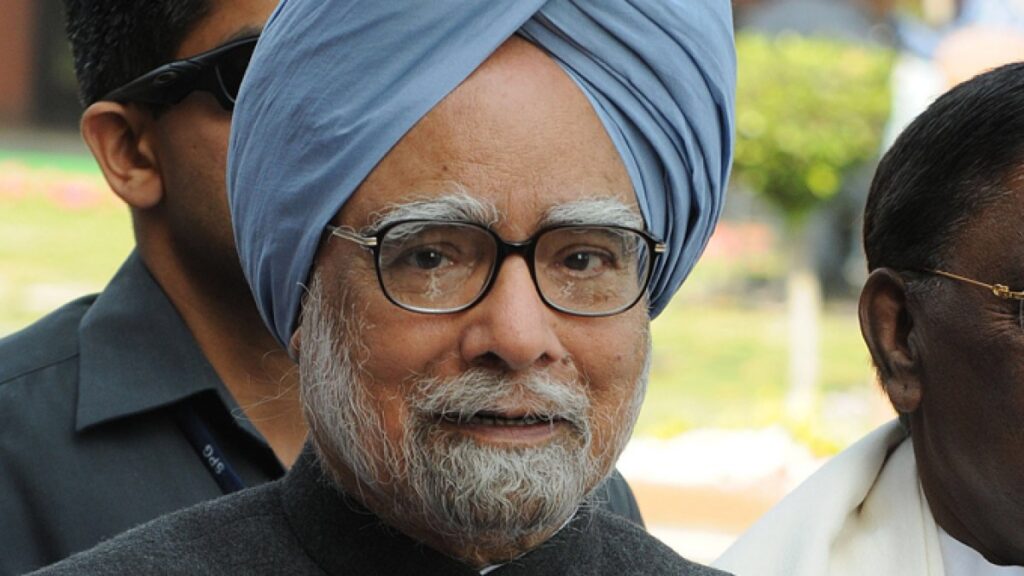
Former Indian Prime Minister Manmohan Singh, who governed the South Asian country for two terms and liberalised its economy in an earlier stint as finance minister, has died. He was 92. Singh, an economist-turned-politician who also served as the governor of the Central Bank of India, was ailing and admitted to the All India Institute of Medical Sciences in New Delhi late on Thursday. His health deteriorated due to “sudden loss of consciousness at home”, the hospital said in a statement. He was “being treated for age-related medical conditions”, the statement added. With profound grief, we inform the demise of the former Prime Minister of India, Dr Manmohan Singh, aged 92. He was being treated for age-related medical conditions and had a sudden loss of consciousness at home on 26 December 2024. Resuscitative measures were started immediately… pic.twitter.com/ZX9NakKo7Y — ANI (@ANI) December 26, 2024 A mild-mannered technocrat, Singh became one of India’s longest serving prime ministers, holding the office from 2004 to 2014 and earning a reputation as a man of great personal integrity. Advertisement Singh adopted a low profile after relinquishing the post of prime minister. He is survived by his wife and three daughters. Prime Minister Narendra Modi, who succeeded Singh in 2014, called him one of India’s “most distinguished leaders” who rose from humble origins and left “a strong imprint on our economic policy over the years”. “As our Prime Minister, he made extensive efforts to improve people’s lives,” Modi said in a post on X. He called Singh’s interventions in parliament as a lawmaker “insightful” and said “his wisdom and humility were always visible”. India mourns the loss of one of its most distinguished leaders, Dr. Manmohan Singh Ji. Rising from humble origins, he rose to become a respected economist. He served in various government positions as well, including as Finance Minister, leaving a strong imprint on our economic… pic.twitter.com/clW00Yv6oP — Narendra Modi (@narendramodi) December 26, 2024 Born in 1932 into a poor family in a part of British-ruled India now in Pakistan, Singh studied by candlelight to win a place at Cambridge University before heading to Oxford, earning a doctorate with a thesis on the role of exports and free trade in India’s economy. He became a respected economist, then India’s Central Bank governor and a government adviser but had no apparent plans for a political career when he was suddenly tapped to become finance minister in 1991. During that tenure to 1996, Singh was the architect of reforms that saved India’s economy from a severe balance of payments crisis and promoted deregulation and other measures that opened an insular country to the world. Manmohan Singh Ji led India with immense wisdom and integrity. His humility and deep understanding of economics inspired the nation. My heartfelt condolences to Mrs. Kaur and the family. I have lost a mentor and guide. Millions of us who admired him will remember him with the… pic.twitter.com/bYT5o1ZN2R — Rahul Gandhi (@RahulGandhi) December 26, 2024 Advertisement Singh’s ascension to prime minister in 2004 was even more unexpected. He was asked to take on the job by Sonia Gandhi after she led the centre-left Indian National Congress party to a surprise victory. Italian by birth, she feared her ancestry would be used by Hindu-nationalist opponents to attack the government if she were to lead the country. Riding an unprecedented period of economic growth, Singh’s government shared the spoils of the country’s new-found wealth, introducing welfare schemes such as a jobs programme for the rural poor. In 2008, his government also clinched a landmark deal that permitted peaceful trade in nuclear energy with the United States for the first time in three decades, paving the way for strong relations between New Delhi and Washington. However, his efforts to further open up the Indian economy were frequently frustrated by political wrangling within his own party and demands made by coalition partners. In 2012, his government was tipped into a minority after the Congress party’s biggest ally quit their coalition in protest at the entry of foreign supermarkets. Two years later, Congress was decisively swept aside by Modi’s Bharatiya Janata Party. At a news conference months before he left office, Singh insisted he had done the best he could for the country. “I honestly believe that history will be kinder to me than the contemporary media or, for that matter, the opposition parties in parliament,” he said. Adblock test (Why?)