

Japan Airlines hit by cyber attack, delaying some flights

JAL says it has suspended ticket sales for all services on Thursday following incident. Japan Airlines (JAL) has reported being hit with a cyber attack, causing delays to some flights. The airline has been experiencing “malfunctions in systems communicating with external systems” since shortly before 7:30am local time (23:30 GMT, Wednesday), JAL said on Thursday. JAL temporarily isolated a router that was causing the disruption shortly before 9am and is currently “checking the status of the system recovery”, the Tokyo-based airline said. “We have identified the scope of the impact and are currently checking the status of the system recovery,” JAL said. The airline added that there were delays to both domestic and international flights and that it had suspended ticket sales for all services scheduled for Thursday. More than a dozen flights were delayed at several Japanese airports, but there were no mass cancellations, public broadcaster NHK reported. All Nippon Airways, JAL’s main rival, said that it had not been affected by any cyber incidents and that services were operating as normal. Advertisement American Airlines briefly grounded all flights on Christmas Eve after experiencing a technical glitch involving its network hardware. Adblock test (Why?)
Russia-Ukraine war: List of key events, day 1,036
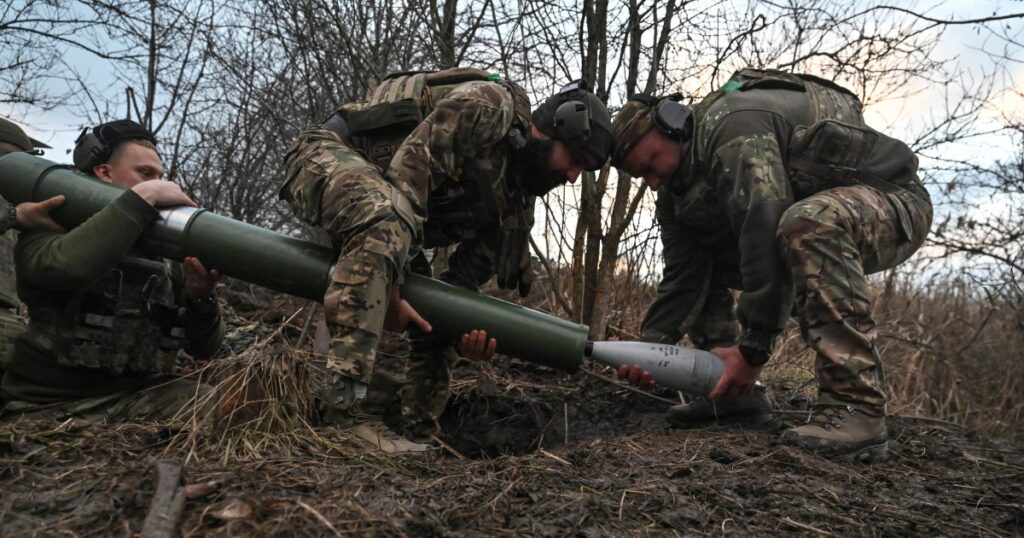
Here are the key developments on the 1,036th day of Russia’s invasion of Ukraine. Here is the situation on Thursday, December 26: Fighting: Russian and Ukrainian forces have once again engaged in fierce battles around the strategically important city of Pokrovsk in eastern Ukraine. Ukraine’s General Staff said that 35 Russian attacks were reported around the city on Wednesday. “Three Russian armies are concentrated here against us,” Ukraine’s regional commander Viktor Trehubov was quoted as saying. Russia launched a huge Christmas Day attack on Ukraine with cruise and ballistic missiles, as well as drones. The Russian attack wounded at least six people in the northeastern city of Kharkiv and killed one in the region of Dnipropetrovsk, the governors there said. Ukrainian President Volodymyr Zelenskyy denounced the “inhumane” attack from Russia, which included more than 170 missiles and drones, some of which knocked out power in several regions of the country. United States President Joe Biden said the “outrageous attack was designed to cut off the Ukrainian people’s access to heat and electricity during winter and to jeopardise the safety of its grid”. United Kingdom Prime Minister Keir Starmer condemned Russia’s strikes on Ukraine’s energy grid, saying there was “no respite even at Christmas”. Russia meanwhile said five people were killed by Ukrainian missile strikes and from a falling drone in the border region of Kursk and North Ossetia in the Caucasus. Russia’s Ministry of Foreign Affairs confirmed that Australia had contacted Moscow about the possible capture by the Russian army of an Australian citizen fighting with Ukrainian forces and that it was looking into the matter. Advertisement Military aid: Biden said that he had asked the US Department of Defense to continue its surge of weapons deliveries to Ukraine, after condemning Russia’s Christmas Day attack on Ukraine. Diplomacy: Pope Francis called for “arms to be silenced” around the world in his Christmas address, appealing for peace in the Middle East, Ukraine and Sudan as he denounced the “extremely grave” humanitarian situation in Gaza. Russian opposition politician Ilya Yashin, who was released in a prisoner swap by Moscow in August, has been placed on Russia’s “wanted” list, according to an Interior Ministry database seen by the AFP news agency. Yashin, 41, was sentenced to eight and a half years in prison at the end of 2022 for denouncing “the murder of civilians” in the Ukrainian city of Bucha. Regional security: Russia’s Foreign Ministry accused NATO of trying to turn Moldova into a logistical centre to supply the Ukrainian army and of seeking to bring the Western alliance’s military infrastructure closer to Russia. Arto Pahkin, the head of operations of the Finnish electricity grid, told the country’s public broadcaster Yle that “the possibility of sabotage cannot be ruled out” after an undersea power cable linking Finland and Estonia broke down. It is the latest in a series of incidents involving telecom cables and energy pipelines in the Baltic Sea. A “terrorist act” sank the Russian cargo ship that went down in international waters in the Mediterranean this week, the Russian state-owned company that owns the vessel said. The Oboronlogistika company said it “thinks a targeted terrorist attack was committed on December 23, 2024, against the Ursa Major”, without indicating who may have been behind the act or why. The Azerbaijan Airlines passenger jet that crashed near the city of Aktau in Kazakhstan, killing 38 people, was earlier diverting from an area of Russia that Moscow has recently defended against Ukrainian drone attacks. Authorities in two Russian regions adjacent to Chechnya, Ingushetia and North Ossetia, reported drone strikes on Wednesday morning. Advertisement Adblock test (Why?)
Why did an Azerbaijan Airline plane crash in Kazakhstan? What we know
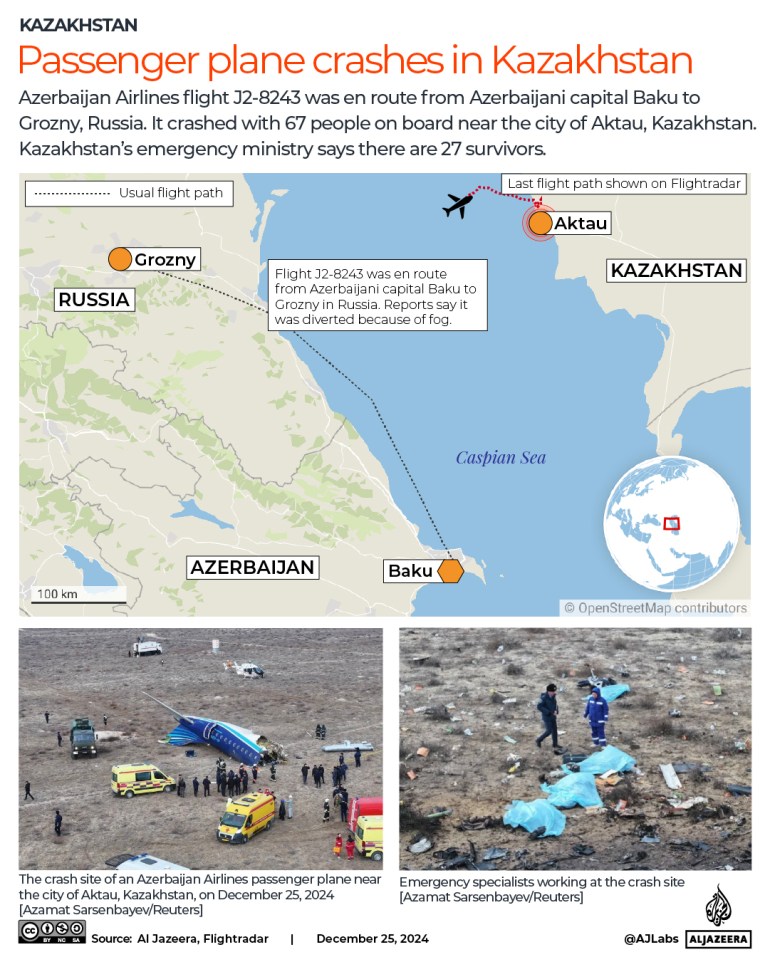
Azerbaijan is marking a day of mourning after a local airline’s passenger plane crashed off the coast of the Caspian Sea. Authorities across Azerbaijan, Kazakhstan and Russia are investigating the emergency landing on Wednesday morning that killed at least 38 people. Here’s what we know about the crash. Where did the passenger plane crash? The plane crashed about 3km (1.8 miles) from the city of Aktau in Kazakhstan, on the eastern shore of the Caspian Sea. It was en route from Azerbaijan’s capital Baku to Grozny, capital of the Chechnya region in southern Russia. (Al Jazeera) Who was on board? The Embraer 190 aircraft, flight number J2-8243, carried 62 passengers and five crew members. According to Kazakh officials, the people on board were citizens of four different countries: 42 Azerbaijani citizens 16 Russian citizens 6 Kazakh citizens 3 Kyrgyz citizens How many of them survived? There are 32 survivors, including two children, who have been hospitalised, with many in critical condition. Many were pulled out from the wreckage, while some, according to first responders and video footage, dragged themselves out, bloodied. Advertisement Kazakhstan’s Deputy Prime Minister Kanat Bozumbayev announced that 38 people had been killed. Russian news agency Interfax quoted emergency workers at the scene as saying that both pilots, according to a preliminary assessment, died in the crash. Why did the plane crash? The crash was reportedly due to an “emergency situation” onboard after a bird strike, Russia’s aviation watchdog said on Telegram. The plane had to divert from its original route because of heavy fog in Grozny, its intended destination, and make an emergency landing. Commercial aviation-tracking websites recorded the flight travelling north along its scheduled route on the west coast before it disappeared. It later reappeared on the east coast, circling near Aktau airport before ultimately crashing. “According to preliminary reports, the plane requested landing at an alternative airport before the accident … due to heavy fog in Grozny,” Al Jazeera’s Yulia Shapovalova reported from Moscow. Azerbaijani President Ilham Aliyev said in a statement that “according to the information provided to me, the AZAL airline plane, flying on the Baku-Grozny route, changed its course due to worsening weather conditions and began heading toward Aktau airport, where the crash occurred during landing”. The nearest Russian airport, Makhachkala, was closed earlier in the day due to drone activity. Strong GPS jamming in the region, which has been linked to past incidents, may have further complicated navigation and contributed to the crash, according to an online post by FlightRadar24. Advertisement Aliyev acknowledged that there were multiple theories over what might have caused the crash, but cautioned against speculation. “There are videos of the plane crash available in the media and on social networks, and everyone can watch them. However, the reasons for the crash are not yet known to us,” the Azerbaijani president said. “There are various theories, but I believe it is premature to discuss them.” What is the latest on the ground? Emergency services have been actively responding to the situation. Firefighters extinguished the blaze caused by the crash, while 150 emergency workers and medical teams, including specialist doctors flown in from Astana, are treating the injured. Azerbaijan Airlines said it is suspending all its flights between Baku and Grozny, as well as Baku and Makhachkala until the investigation is concluded. The airline has also set up a hotline for family members of the passengers and posted all their names on its social media pages. Aliyev also signed a decree declaring December 26 a day of mourning in the country. The Azerbaijani president, who was flying to Russia for a summit at the time, said he was informed of the crash while he was in midair. “I immediately gave instructions for the plane to return to Baku,” Aliyev said in a statement issued by his office. Kazakhstan emergency specialists work at the crash site of the Azerbaijan Airlines passenger jet near the western Kazakh city of Aktau [Handout/ Kazakhstan’s Emergency Situations Ministry via AFP] What investigations are taking place? Kazakh, Azerbaijani and Russian authorities said they were investigating the crash. Advertisement “An investigative team, led by the deputy prosecutor general of Azerbaijan, has been dispatched to Kazakhstan and is working at the crash site,” the Prosecutor General’s Office in Azerbaijan said in a statement. Azerbaijan’s state news agency, Azertac, said that the team dispatched to Aktau for an “on-site investigation” also included Azerbaijan’s emergency situations minister and the vice president of Azerbaijan Airlines. Azertac said that the plane’s black box – a flight recorder that investigators use to determine the causes of aviation accidents – had been found. Aliyev, in his statement, said that a “criminal case has been launched” and that the Azerbaijani public would be “regularly informed” about progress in the investigation. Kazakhstan has formed a government commission to examine the cause of the disaster and ensure that the families of the dead and injured were getting the help they needed. The investigations are focusing on potential technical problems and the closure of nearby airspace. Embraer, the Brazilian manufacturer of the aircraft, has expressed its willingness to assist with the inquiries. Adblock test (Why?)
Is Russia planning a ‘false flag’ attack on Moldova?
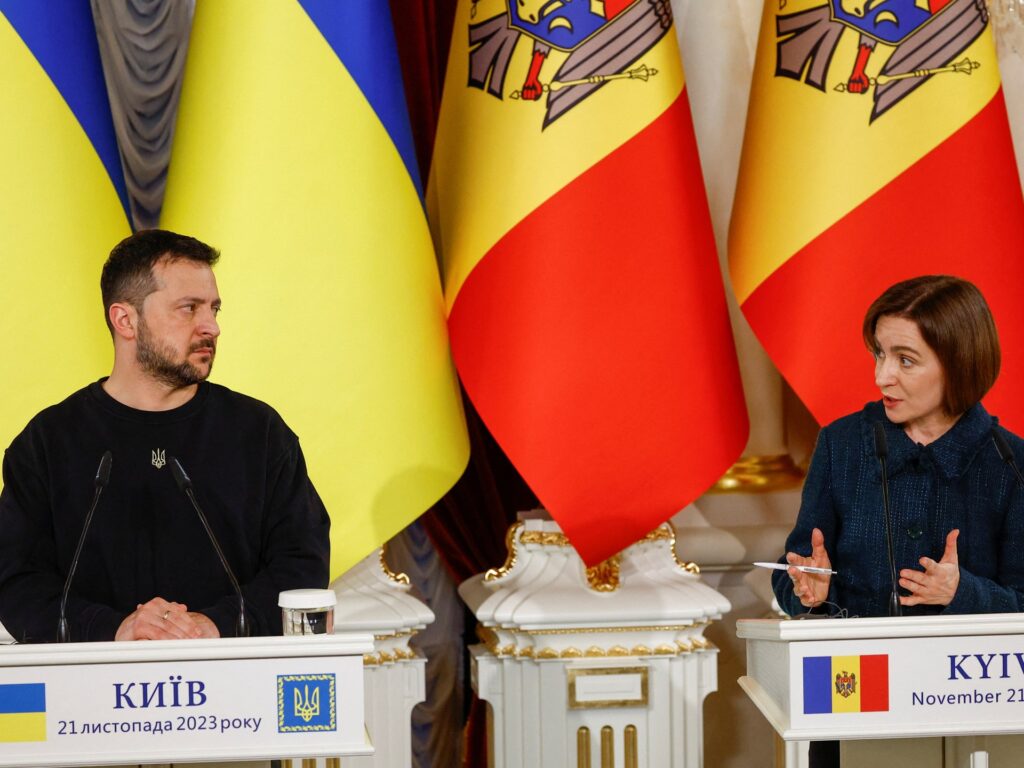
Russia has accused Moldova of plotting a military operation in Transnistria, a Russian-backed secessionist region, setting off concerns among some analysts that Moscow might be a “false flag” attack in Moldova. Russian intelligence said earlier this week that Moldova’s President Maia Sandu was planning a military operation in Transnistria, which borders Ukraine. Sandu was sworn in for her second term as president on Tuesday. On Wednesday, Russia’s Ministry of Foreign Affairs claimed that NATO was turning Moldova into a weapons hub for Ukraine, an accusation that is only likely to further fuel fears that Moscow might be seeking a justification for potential action against its smaller neighbour. Here is more about what is going on with Russia and Moldova — and what to expect. What has Russia alleged? On Monday, Russia’s Foreign Intelligence Service said that Moldova’s Sandu was planning a military operation in Transnistria. Russian intelligence speculated that the military operation could escalate into war. Advertisement Sandu’s chief of staff, Adrian Balutel, refuted the claims, insisting that the country had no such plans to militarily enter Transnistria, even though it claims the territory as a part of Moldova. Then, on Wednesday, Russia added a new allegation — that the US-led NATO had transferred a large number of weapons to Moldova in recent months. Maria Zakharova, the Russian foreign ministry spokesperson, said that Moscow believed these weapons were ultimately intended for Ukraine. She cited Sandu’s pro-Western leanings to bolster her claims. In recent months, Russian President Vladimir Putin has increasingly suggested that not just Ukraine, but other countries that help it in its war against Moscow could potentially be treated by the Kremlin as enemies that it might attack. What are the ‘false flag’ concerns? Since Russia launched its full-scale invasion of Ukraine in February 2022, Sandu has raised the alarm that Moldova could be Moscow’s next target, urging Western leaders to address Moldova’s concerns. When Sandu was sworn in for her second term this week in the capital Chisinau, she said, “We managed to open the door wide to the European Union.” Moldova has been a candidate country for the EU since June 2022, waiting for Brussels to formally accept its request to join the group. The Kremlin’s latest accusations, say analysts from the Washington, DC, based Institute for the Study of War, could be part of a larger plan to disrupt Moldova’s accession into the European Union (EU), by destabilising it. The Kremlin, the ISW cautioned in a report, could also be setting conditions “for a false flag operation in Transnistria”. Advertisement What is Transnistria? Transnistria is a Russia-allied breakaway region of Moldova, sandwiched between part of the Dniester River in Moldova, and Ukraine. Romania lies to its West. The region broke away from Moldova in 1990. In September 2006, it passed a referendum reasserting its independence and calling for a union with Russia. This referendum was not recognised by Moldova. In February 2022, leaders of Transnistria issued an appeal to Russia for protection. The appeal came days after the Ukraine war broke out, and was similar to appeals made to Russia by pro-Moscow leaders in parts of Ukraine, which Russia used as justification to take over Crimea in 2014, and large chunks of the Luhansk and Donetsk provinces in 2022. Internationally, Transnistria is recognised as belonging to Moldova, but Europe views the region as occupied by Russia since 2022. Transnistria hosts Russian troops, as well as a major Russian weapons storage facility, the Cobasna ammunition depot. Presently, 1,500 Russian soldiers are stationed within the breakaway Moldovan region, according to a report published by Harvard International Review in October. What are other ways Russia is pressuring Moldova? Political: Moldova voted in a presidential election last month amid claims of Russia meddling. However, the pro-Western Sandu won 55.33 percent of the vote, defeating former prosecutor general Alexandr Stoianoglo, who had the backing of the Russia-leaning Socialist Party. In a report published earlier this year, London-based think tank Chatham House said that research by the think tank “suggests that Moscow is also targeting the Moldovan public information space with toxic disinformation”. Advertisement Moldova’s national security service has also alleged that pro-Russian oligarchs in Moldova have paid millions of euros to stage antigovernment protests and commit election fraud. These include former Moldovan parliamentarian Ilan Shor, who was convicted in absentia for fraud charges in January. Energy: Meanwhile, Moldova faces an energy crisis. Moldova receives about 2 billion cubic metres (71 billion cubic feet) of gas from Russia annually. Since 2022, all this gas is sent into Transnistria. Transnistria then sells electricity, generated using Russian gas, to Moldova. However, this gas comes through a pipeline that passes through Ukraine. Kyiv has now decided that it will no longer allow the transit of this gas. Sandu has accused Gazprom, the Russian gas giant, of refusing to consider the use of an alternative pipeline, and has tried to prepare Moldova for what she has said will be a “harsh” winter without Russian gas. Russia’s gas supply to Moldova is expected to end on January 1, 2025. Earlier in December, Moldova declared a state of emergency over the impending shortage. Transnistria then sells electricity, fuelled by Russian gas, to Moldova. Violence: In April 2022, explosions targeted the Ministry of State Security in Tiraspol, the largest city in Transnistria. A day later, more explosions destroyed two powerful radio antennas among other facilities in Transnistria. Ukrainian President Volodymyr Zelenskyy, alongside other allies of Ukraine, said these explosions were also false flag attacks orchestrated by Russia to portray Transnistria as being under attack from Moldova — because of Moldova’s support for Ukraine. Advertisement Adblock test (Why?)
Israeli forces kill dozens in Gaza as ceasefire talks face challenges
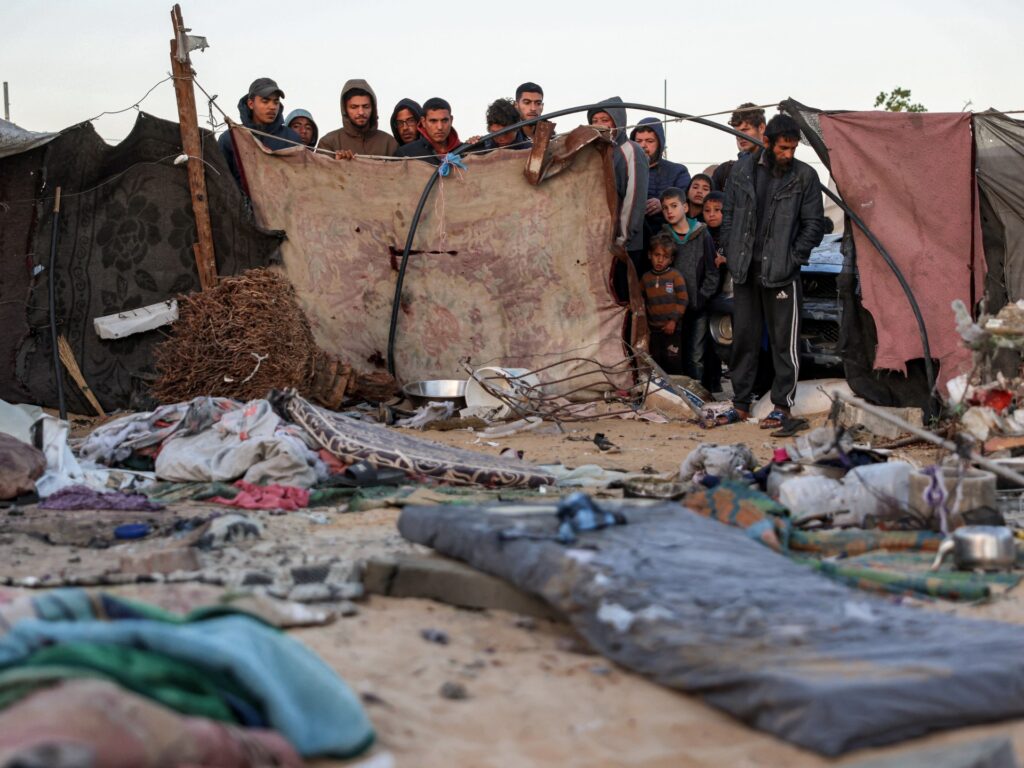
Israeli forces are pounding the besieged Gaza Strip, killing at least 25 Palestinians and wounding dozens more as indirect ceasefire talks between Israel and Hamas face more obstacles. Medics in the bombarded enclave said the Israeli military targeted yet another school sheltering displaced families on Wednesday in the Gaza City suburb of Sheikh Radwan. The strike killed three Palestinians, including a child, and injured several others. The attack came shortly after an earlier strike targeted a residential home in Gaza City, killing a pregnant woman. According to Al Jazeera’s Hind Khoudary, reporting from Deir el-Balah in central Gaza, medics were able to save the baby but “lost the mother”. “The situation is dire on every level across the Gaza Strip,” Khoudary said. “Elsewhere, a very famous Palestinian writer [Walaa Jumaa al-Ifranji] was killed along with her husband [Ahmed Saeed Salama] in an Israeli attack on their home south of the Nuseirat refugee camp,” in central Gaza, she added. Advertisement An Israeli attack on the Bureij refugee camp in central Gaza also killed two people on Wednesday. Separately, several Palestinians were killed and wounded in al-Mawasi, an area Israel has declared a “safe zone” for people forced to flee their homes in southern Gaza’s Khan Younis, where the military said it carried out a strike against a Hamas fighter. The Israeli military routinely targets displacement camps as well as schools-turned-shelters, killing mostly women and children in its genocide since October last year, which has killed more than 45,000 Palestinians. The military also targets hospitals and medical facilities. In the besieged north, where Israeli forces launched a renewed ground offensive more than two months ago, one of the last partially operating hospitals in Gaza has come under intense Israeli attack. An Israeli siege on Kamal Adwan Hospital has intensified over the past few days, and Al Jazeera’s Hani Mahmoud reports that it has now been “rendered nonoperational given all the constant attacks and the use of explosive devices”. Gaza’s Ministry of Health said Israeli forces have also continued to besiege two other medical facilities that are barely operational as they surround Beit Lahiya, Beit Hanoon and Jabalia. The Israeli army forced officials at the Indonesian Hospital to evacuate patients and staff on Tuesday and continued to operate close to nearby Kamal Adwan Hospital. They also ordered the emptying of that hospital, but officials there have refused, citing risks to dozens of patients. Advertisement Palestinians have accused Israel of seeking to permanently depopulate northern Gaza to create a buffer zone. The Israeli attacks came as Palestinians in Gaza saw yet another sombre Christmas. Pope Francis denounced the “extremely grave” humanitarian situation in Gaza and appealed for the freeing of Israeli captives held by Hamas in his traditional Christmas address at the Vatican. “May there be a ceasefire, may the hostages be released and aid be given to the people worn out by hunger and by war,” he said. Ceasefire talks hampered Meanwhile, Hamas and Israel traded blame on Wednesday over the failure to conclude a ceasefire agreement despite progress reported by both sides in the past days. Hamas said Israel had set new conditions while Israeli Prime Minister Benjamin Netanyahu accused the group of going back on understandings already reached. “The occupation has set new conditions related to withdrawal, ceasefire, prisoners, and the return of the displaced, which has delayed reaching the agreement that was available,” Hamas said in a statement. Hamas said, however, that it was showing flexibility and the talks, mediated by Qatar and Egypt, were going in a serious direction. Netanyahu blamed Hamas, saying the group “continues to lie, is reneging on understandings that have already been reached and is continuing to create difficulties in the negotiations”. Israeli negotiators returned to Israel from Qatar on Tuesday evening for consultations about a deal after a significant week of talks, Netanyahu’s office said on Tuesday. Advertisement The United States and the two Arab mediators have stepped up efforts to conclude a deal in the past two weeks. Adblock test (Why?)
Erdogan says YPG ‘will be buried’ in Syria if it doesn’t lay down arms
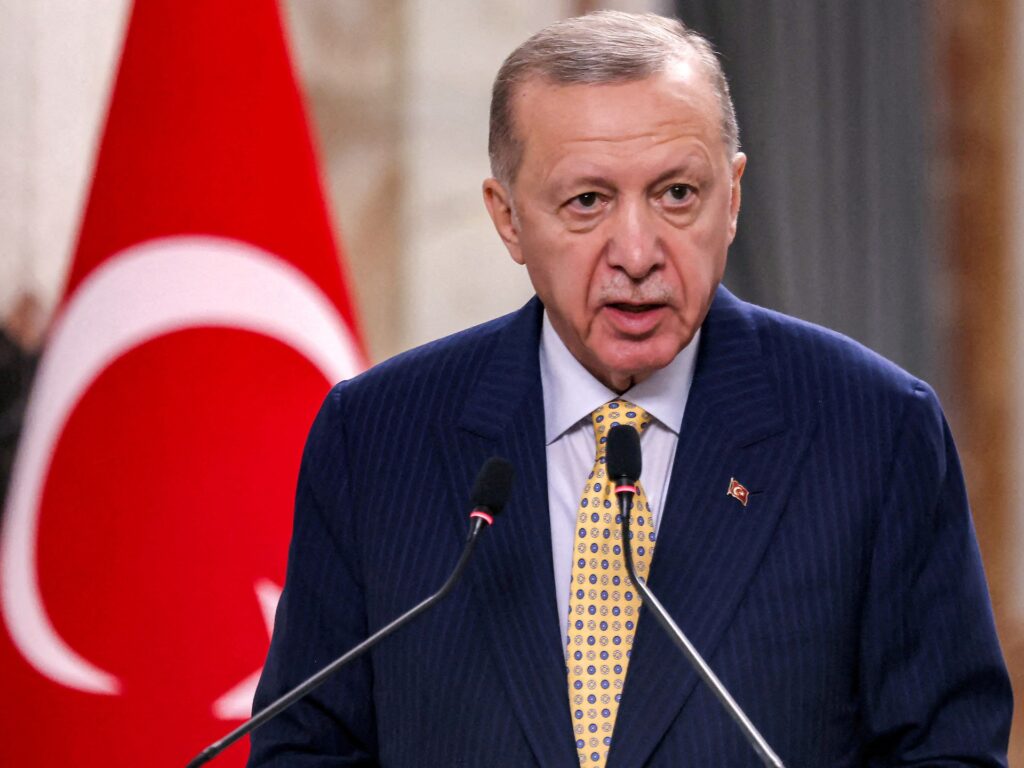
Ankara has repeatedly insisted that the Kurdish YPG militia must disband and called on the US to stop supporting it. Turkish President Recep Tayyip Erdogan has warned that Kurdish fighters in Syria will either lay down their weapons or “be buried”, amid hostilities between Turkiye-backed Syrian rebels and other armed groups since the fall of former Syrian President Bashar al-Assad earlier this month. Following al-Assad’s ouster on December 8, Ankara has repeatedly insisted that the Kurdish YPG militia must disband, asserting that the group has no place in Syria’s future. The change in Syria’s leadership has left the country’s main Kurdish factions on the back foot. “The separatist murderers will either bid farewell to their weapons, or they will be buried in Syrian lands along with their weapons,” Erdogan told lawmakers from his ruling AK Party in parliament on Wednesday. “We will eradicate the terrorist organisation that is trying to weave a wall of blood between us and our Kurdish siblings,” he added. Turkiye views the YPG militia – the main component of the United States-allied Syrian Democratic Forces (SDF) – as an extension of the outlawed Kurdistan Workers’ Party (PKK) militia, which has waged a rebellion against the Turkish state since 1984. Advertisement The PKK is designated a terrorist organisation by Turkiye, the US and the European Union. Ankara has repeatedly called on its NATO ally Washington and others to stop supporting the YPG. Al Jazeera’s Sinem Koseoglu, reporting from Istanbul, said this is not a surprising statement by Erdogan “as it is the official rhetoric of the Turkish government”. Since the YPG is considered “the Syrian branch of the PKK, Ankara believes that they should either lay down arms, or they should fight and they will be defeated,” Koseoglu said. Earlier, Turkiye’s defence ministry said the armed forces had killed 21 YPG-PKK fighters in northern Syria and Iraq. SDF commander Mazloum Abdi acknowledged last week the presence of PKK fighters in Syria for the first time, saying they had helped battle ISIL (also known as ISIS) fighters and would return home if a total ceasefire was agreed with Turkiye, a core demand from Ankara. He denied any organisational ties with the PKK. Erdogan also said Turkiye would soon open its consulate in Aleppo, adding that Ankara expected an increase in traffic at its borders in the summer of next year as some of the millions of Syrian migrants it hosts begin to return to their homes. Adblock test (Why?)
Taiwan struggles to reconcile climate ambitions and chip manufacturing

Hsinchu, Taiwan – A crane bird flies across a silent rice paddy, the water slowly trickling in the background. It is a tranquil and stereotypical image of an East-Asian countryside. Little seems to suggest I am just a few kilometres removed from one of the hearts of the global economy. This is Hsinchu, a small city close to Taipei in Taiwan. It is what you could literally call the Silicon Valley of the world. Just a few kilometres from the tranquil rice paddies, gargantuan buildings rise from the ground, air conditioning humming permanently over the bustle of traffic. These are the factories that build the silicon chips or semiconductors that make our smartphones, computers and even artificial intelligence (AI) systems such as ChatGPT work. Yet these two worlds, tranquil nature and high-tech manufacturing, are increasingly clashing on the island. Taiwan is the world leader in the production of computer chips. Taiwan Semiconductor Manufacturing Company Limited (TSMC) is the largest chip manufacturer in Taiwan. By the third quarter of 2024, it had conquered 64 percent of the global semiconductor market, according to research firm Counterpoint. Advertisement The second-biggest player, South Korea’s Samsung Foundry, represented only a distant 12 percent. Chip manufacturing makes up an outsized part of Taiwan’s economy and contributes 25 percent of the gross domestic product (GDP) of the island. In 2020, the market value of TSMC was equal to the size of half of Taiwan’s economy, as per a study at the time. Few countries seem to be able to outdo the Taiwanese at manufacturing chips. However, this semiconductor success is also raising sustainability issues. Chip manufacturing consumes large amounts of water and energy, and emits emissions through chemicals. TSMC alone consumes about 8 percent of the island’s electricity, according to a recent report by S&P Global Ratings. “After the petrochemical industry, the electronics industry is the biggest emitter of Taiwan,” Chia-Wei Chao, the research director at the nonprofit Taiwan Climate Action Network and adjunct assistant professor at the National Taiwan University, told Al Jazeera. “Semiconductors are also a rapidly growing industry, which is worrying, to say the least.” This is even bringing them into conflict with the farmers that Taiwan’s chip factories are located near. In 2021, during a drought, the Taiwanese government halted irrigation of farms, so the huge chip factories could use the saved water. Today, anxiety is growing over how solar farms, which are needed to power chip manufacturing, might take up farmland. “There seems to be a lack of systemic analysis on the environmental effects on semiconductor production,” Josh Lepawsky, a professor of geography at Memorial University of Newfoundland in Canada, told Al Jazeera. Advertisement “That’s a grave mistake.” In Taiwan’s Hsinchu countryside, tranquil nature and high-tech manufacturing are an example of the increasing clash on the island [Tom Cassauwers/Al Jazeera] ‘Crazy’ AI While the water use of chip factories has garnered much international attention in the past few years, on the island itself, it is considered old news. Semiconductor manufacturers are already recycling most of the water they use, and the government has invested in more water infrastructure since the drought of the past years. The Taiwanese today are worrying about the industry’s energy use. Artificial intelligence achieved large breakthroughs in the past years, driven by the large language models of US companies like OpenAI and tools such as ChatGPT. This revolution was powered by chips that were mostly manufactured in Taiwan. The AI hype, in turn, is causing Taiwan’s huge chip factories to go into overdrive. “The AI market is becoming more crazy than ever,” Lena Chang, a campaigner at Greenpeace East Asia, told Al Jazeera. “Because of it, the energy use of the semiconductor industry is becoming a major problem for Taiwan, because of increased emissions and even possible shortages.” In all the craziness, the climate might have been forgotten. “The main goal is now to develop AI and the related supply chains,” Chang said. “Energy is not a big concern. The government should be more active in developing sustainable energy.” Slow renewables One key issue here is the Taiwanese energy market. Taiwan is currently phasing out its nuclear reactors. Construction of solar and wind energy, however, has been lagging. Advertisement “Taiwan still heavily relies on fossil fuels,” Chang said. “More than 80 percent of our energy supply is from gas and coal.” Just 11 percent of Taiwan’s energy supply between September 2023 and August 2024 came from wind, solar and hydropower, according to the Energy Administration. A declining nuclear share contributed another 5.6 percent. The Taiwanese government in 2016 set a target of 20 percent renewables by 2025, which it will almost certainly miss. Offshore wind, for example, is lagging behind government targets. In 2018, Taiwan awarded 5.7 gigawatts (GW) of offshore wind to be installed by 2025. By 2024, the government had downgraded its targets, and hoped between 2.56GW and 3.04GW would be ready that year. “Offshore wind went quite well until 2022. But then, for the following auction rounds, Taiwan tried to get both cheap energy and high localisation of the supply chain,” Raoul Kubitschek, the managing director of the renewable energy consultant NIRAS Taiwan, told Al Jazeera. Wind energy is particularly running into Taiwan’s localisation rules. Taiwan’s government is demanding that very high percentages of its wind turbines and other components be produced locally. This local production, however, is not picking up fast enough. “You cannot build a new supply chain this fast,” Kubitschek said. “Taiwan only constructed its first commercial-sized offshore wind farm in 2017. It takes time to create a domestic wind energy industry.” Solar energy is also running into barriers. Rooftop solar has been largely saturated on the island. Larger-scale solar farms, in turn, are controversial because of land disputes. Groups like farmers are afraid they will encroach on farmland, leading to protests and lawsuits. Advertisement Chia-wei Chao is hoping to turn this around. He leads some pilot projects where farmers themselves place solar panels on their land. “We shouldn’t force farmers to
Armed men open fire on journalists during reopening of Haiti hospital

Haitian authorities have struggled to address rise of powerful armed gangs, and accountability for violence is rare. Armed men have opened fire on a group of journalists in Haiti who had gathered to cover the reopening of the capital’s largest public hospital. While authorities have not offered details on casualties from the attack on Tuesday, the Reuters news agency reported that two journalists and a police officer were killed, citing a journalist who witnessed the attack and asked not to be named. “We express our sympathy to all the victims’ families, in particular, to the PNH [Haiti’s national police] and all the journalists’ associations,” Haiti’s transitional presidential council stated in a social media post. “We guarantee them that this act will not remain without consequences.” The attack is the latest to roil Haiti, where continued political and economic instability have helped fuel the rise of violent armed gangs that have grown more powerful since the assassination of former President Jovenel Moise in 2021. Law enforcement authorities on the island nation have struggled to counter the criminal groups, which have exerted control over an estimated 80 percent of the capital, Port-Au-Prince, where widespread violence has hammered civilians and disrupted vital services. Advertisement One institution forced to close in March was the General Hospital, the country’s largest public hospital. Journalists had gathered on Tuesday morning to cover the facility’s reopening when gunmen opened fire at about 11am (16:00 GMT), Reuters reported. Government officials had convened to reopen the hospital in downtown Port-Au-Prince in July, but that event was also targeted by gunfire, which forced former Prime Minister Garry Conille to flee the scene. An unverified video posted online on Tuesday appears to show three journalists lying wounded on the floor of the building. A recent report by the United Nations stated that only 24 percent of health facilities in the Port-Au-Prince area are operational. Johnson “Izo” Andre, a powerful gang leader in a coalition known as Viv Ansanm, posted a video to social media on Tuesday taking credit for the attack. Adblock test (Why?)
US government agency targeting foreign disinformation shuts down
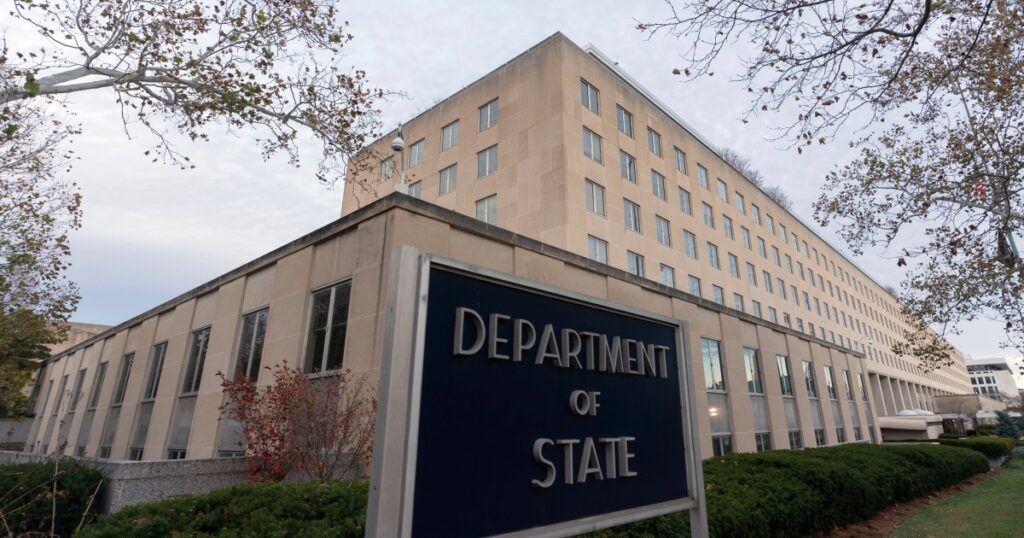
State Department unit established in 2016 closes after US Congress fails to extend funding amid Republican accusations. A leading United States government agency that tracks foreign disinformation has terminated its operations, the State Department has said, after Congress failed to extend its funding following years of Republican criticism. The Global Engagement Center (GEC), a State Department unit established in 2016, shuttered on Monday at a time when officials and experts tracking propaganda have been warning of the risk of disinformation campaigns from US adversaries such as Russia and China. “The State Department has consulted with Congress regarding next steps,” it said in a statement when asked what would happen to the GEC’s staff and its ongoing projects following the shutdown. The GEC had an annual budget of $61m and a staff of about 120. Its closing leaves the State Department without a dedicated office for tracking and countering disinformation from US rivals for the first time in eight years. A measure to extend funding for the centre was stripped out of the final version of the bipartisan federal spending bill that passed through the US Congress last week. Advertisement The GEC has long faced scrutiny from Republican lawmakers, who accused it of censoring and surveilling Americans. It also came under fire from Elon Musk, who accused the GEC in 2023 of being the “worst offender in US government censorship [and] media manipulation” and called the agency a “threat to our democracy.” The GEC’s leaders have pushed back on those views, calling their work crucial to combating foreign propaganda campaigns. Musk had loudly objected to the original budget bill that would have kept GEC funding, though without singling out the centre. The billionaire is an adviser to President-elect Donald Trump and has been tapped to run the new so-called Department of Government Efficiency (DOGE), tasked with reducing government spending, in Trump’s upcoming administration. In June, James Rubin, special envoy and coordinator for the GEC, announced the launch of a multinational group based in Warsaw to counter Russian disinformation on the war in neighbouring Ukraine. The State Department said the initiative, known as the Ukraine Communications Group, would bring together partner governments to coordinate messaging, promote accurate reporting of the war and expose Kremlin information manipulation. In a report last year, the GEC warned that China was spending billions of dollars globally to spread disinformation and threatening to cause a “sharp contraction” in freedom of speech around the world. Adblock test (Why?)
FAA lifts groundstop of American Airlines flights after technical issue

Brief halt to flights in US had threatened the travel plans of millions of people during busy holiday period. A groundstop of all American Airlines flights in the United States has been lifted, the Federal Aviation Administration (FAA) said, after an unspecified “technical issue” briefly halted flights across the country. Just before 7am Eastern time (12:00 GMT) on Tuesday, the FAA ordered all American Airlines flights grounded in the US at the airline’s request. “American Airlines reported a technical issue this morning and requested a nationwide ground stop. The ground stop has now been lifted,” Bridgett Frey, assistant administrator for communications at the FAA, said in a statement. The groundstop, early on Christmas Eve, had threatened the travel plans of millions of people across the US during the busy holiday period. American Airlines had said that “a technical issue” was affecting its flights. “We’re currently experiencing a technical issue with all American Airlines flights. Your safety is our utmost priority, once this is rectified, we’ll have you safely on your way to your destination,” the company said in a post on X. We’re currently experiencing a technical issue with all American Airlines flights. Your safety is our utmost priority, once this is rectified, we’ll have you safely on your way to your destination. — americanair (@AmericanAir) December 24, 2024 Advertisement American operates thousands of flights per day to more than 350 destinations in more than 60 countries. The grounding came months after airlines were hit by a global tech outage tied to Microsoft’s Azure cloud platform and a software issue at cybersecurity firm CrowdStrike. Two years ago, Southwest Airlines experienced a meltdown with its systems during the holidays that led to 16,900 flight cancellations and stranded 2 million passengers. It was eventually fined $140m in the largest-ever civil penalty for a travel disruption. This year, the Transportation Security Administration expects to screen 40 million passengers over the holidays and through January 2. Social media lit up on Tuesday morning with travellers complaining about how the American Airlines delay might impact their holidays or ruin their visit with family. “Heck of [a] way to start Christmas. Hey, @AmericanAir just tell us whether we should go home or not. Please don’t make us wait in the airport for hours,” one user wrote on X. Adblock test (Why?)